
21 July 2017
We set out early from Kuźnice, still wrapped in the cool, resin-scented air of the forest. At around 1,000 metres above sea level, the day had not yet fully warmed, and the light filtered softly through the spruce and fir trees. The blue and yellow trails led us steadily upward, their gravel and stone surfaces crunching rhythmically beneath our boots. Above us, the Tatra Mountains rose like a wall of grey limestone and dolomite, their pale rock faces sharply cut, folded and fractured by ancient tectonic forces.
After about forty-five minutes, the forest began to thin, and the landscape opened into the broad alpine pasture of Hala Gąsienicowa. The transition was sudden and beautiful. Dark green trees gave way to wide meadows washed in summer light, dotted with low, wooden shepherds’ huts — the traditional szałasy. Their weathered timber and sloping roofs seemed to grow naturally out of the land, shaped by wind, snow and centuries of seasonal use. Around us, the mountains formed a dramatic amphitheatre: steep ridges, sharp summits and deep gullies carved by frost and water.
The climb to Przełęcz między Kopami, also known as Karczmisko, demanded steady effort. Over 3.4 kilometres we gained about 500 metres in elevation, reaching the pass at 1,499 metres after roughly one hour and twenty minutes. The trail cut across slopes of broken limestone scree, pale grey and almost white in places, reflecting the sunlight. From the pass, the view widened, and the high-mountain character of the Tatras became unmistakable — raw, angular and alpine.
Gallery I
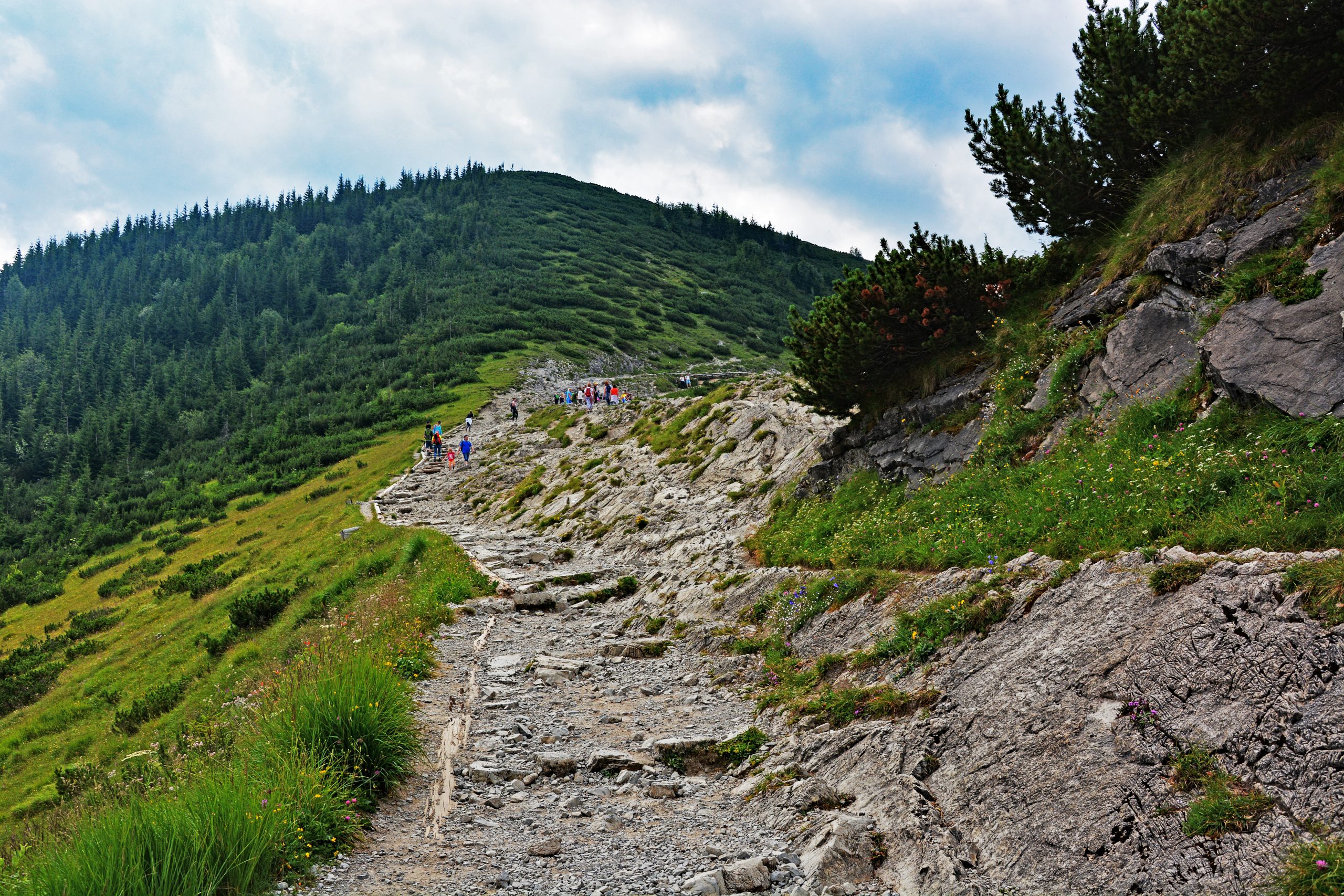
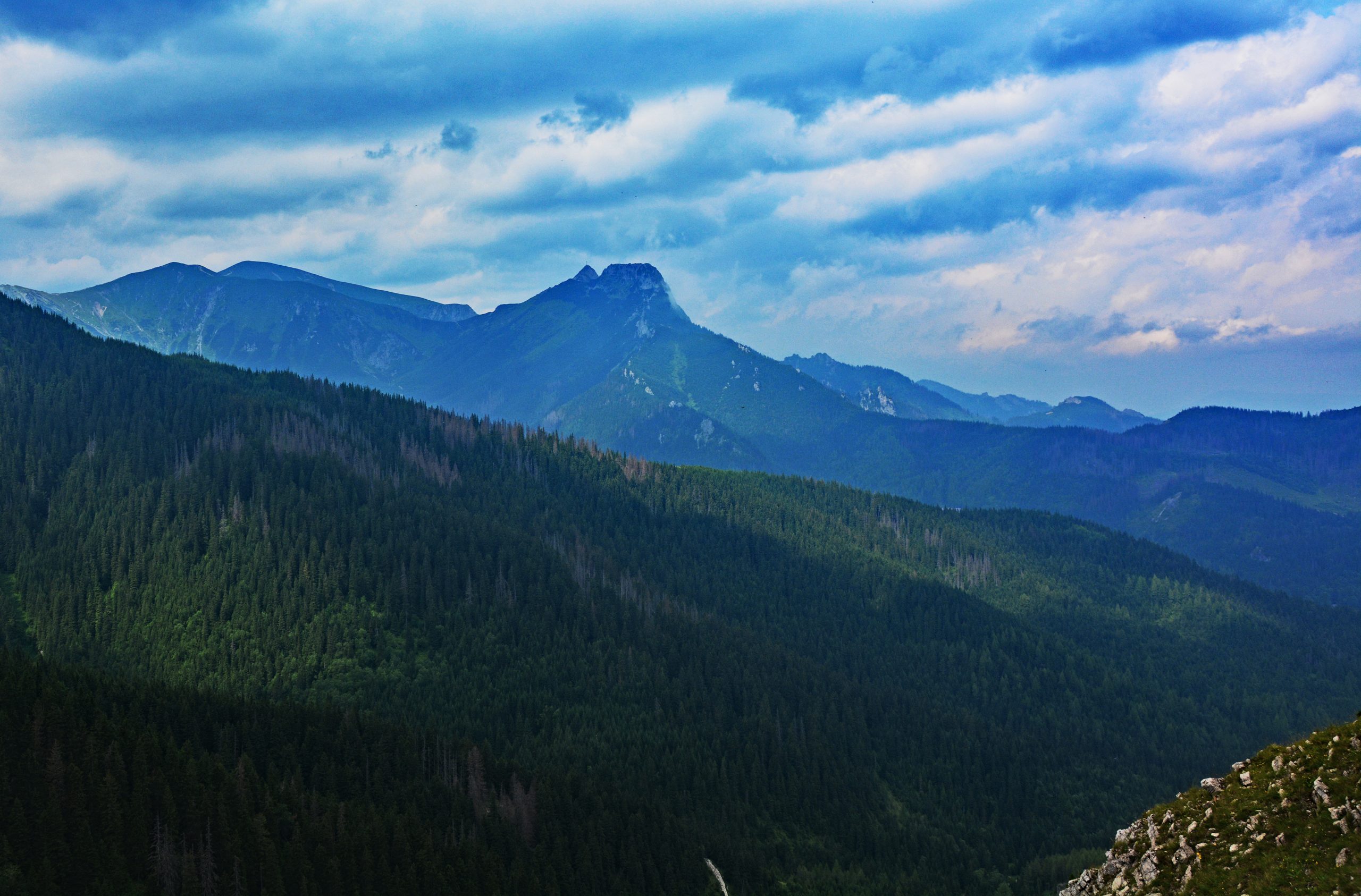
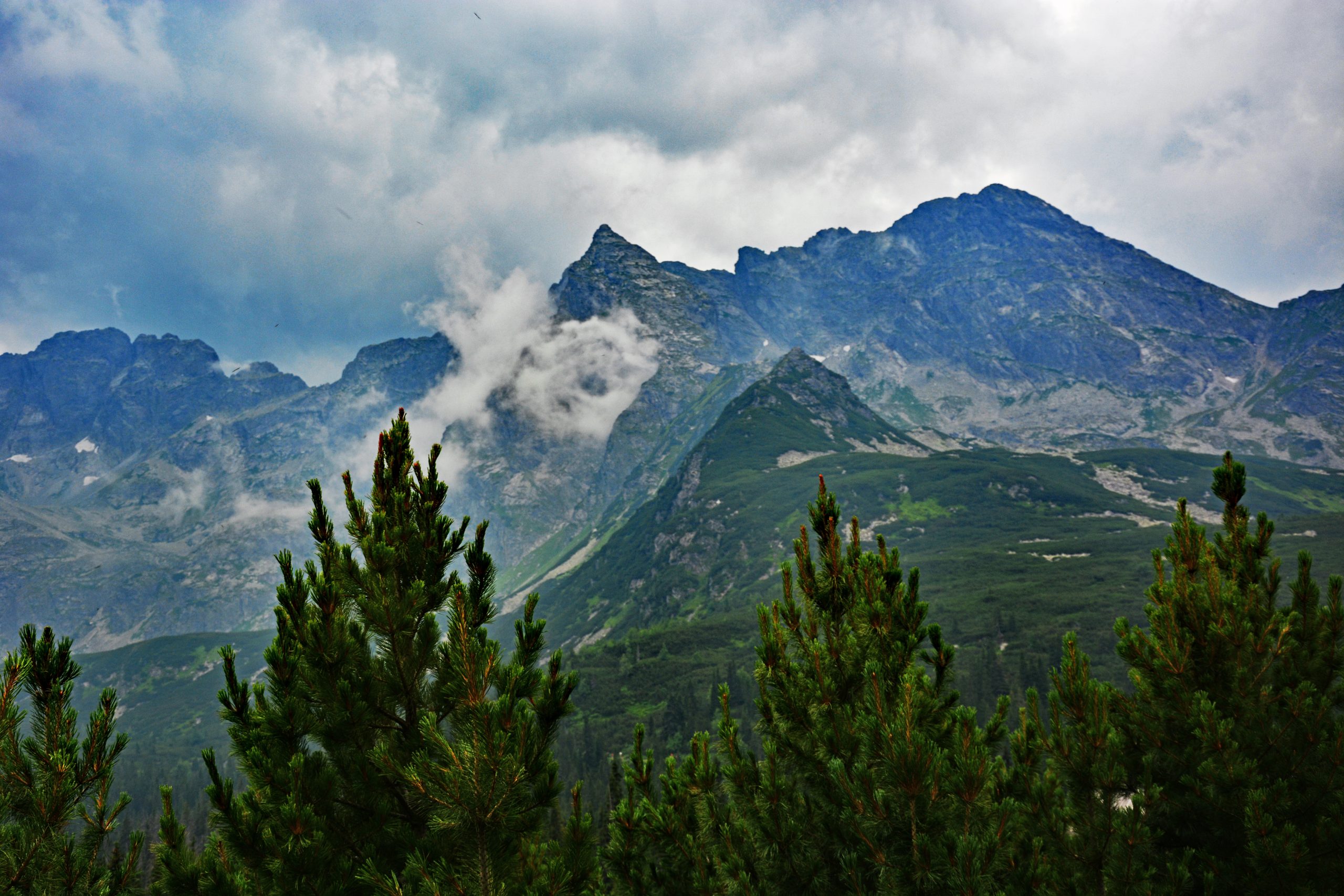
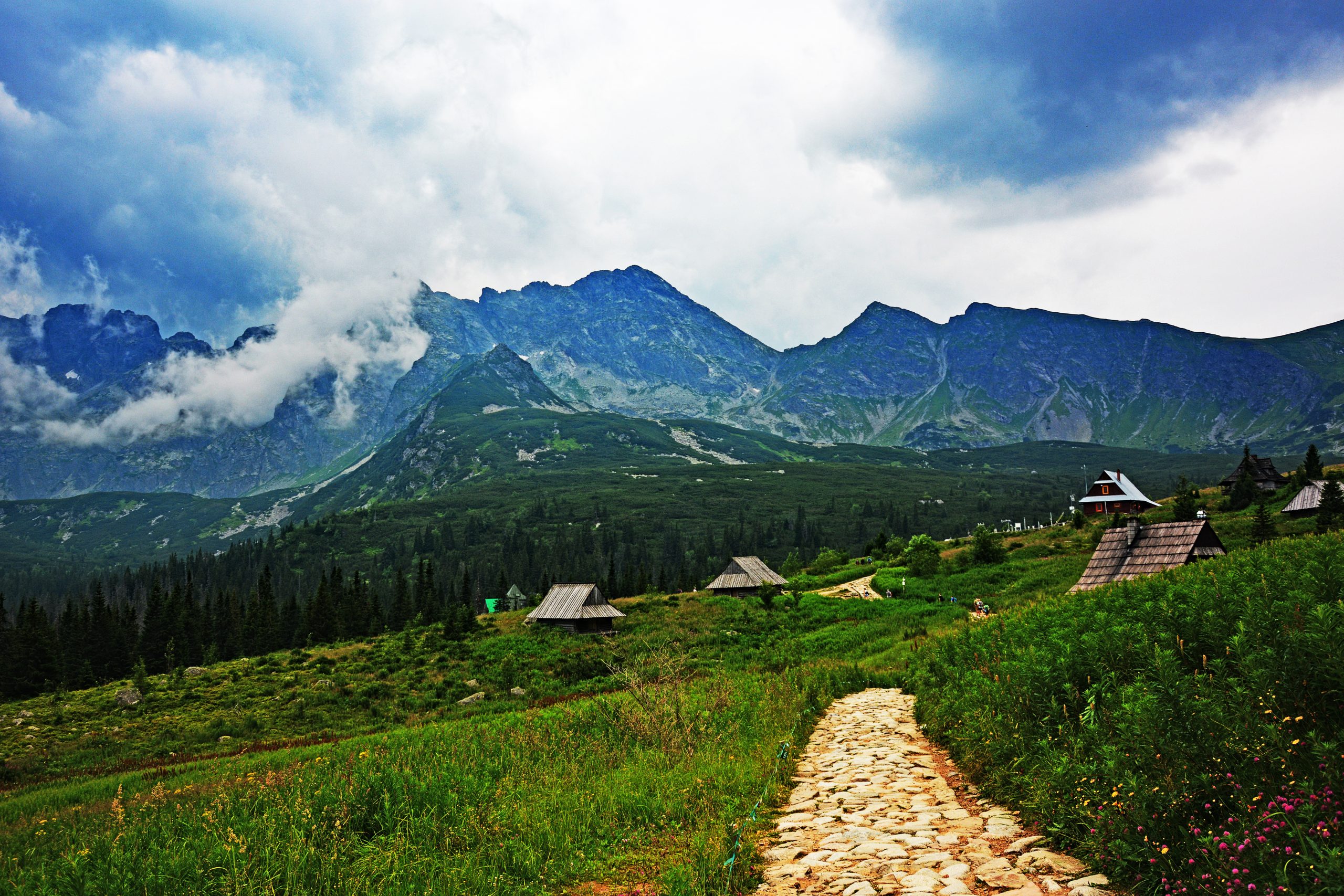
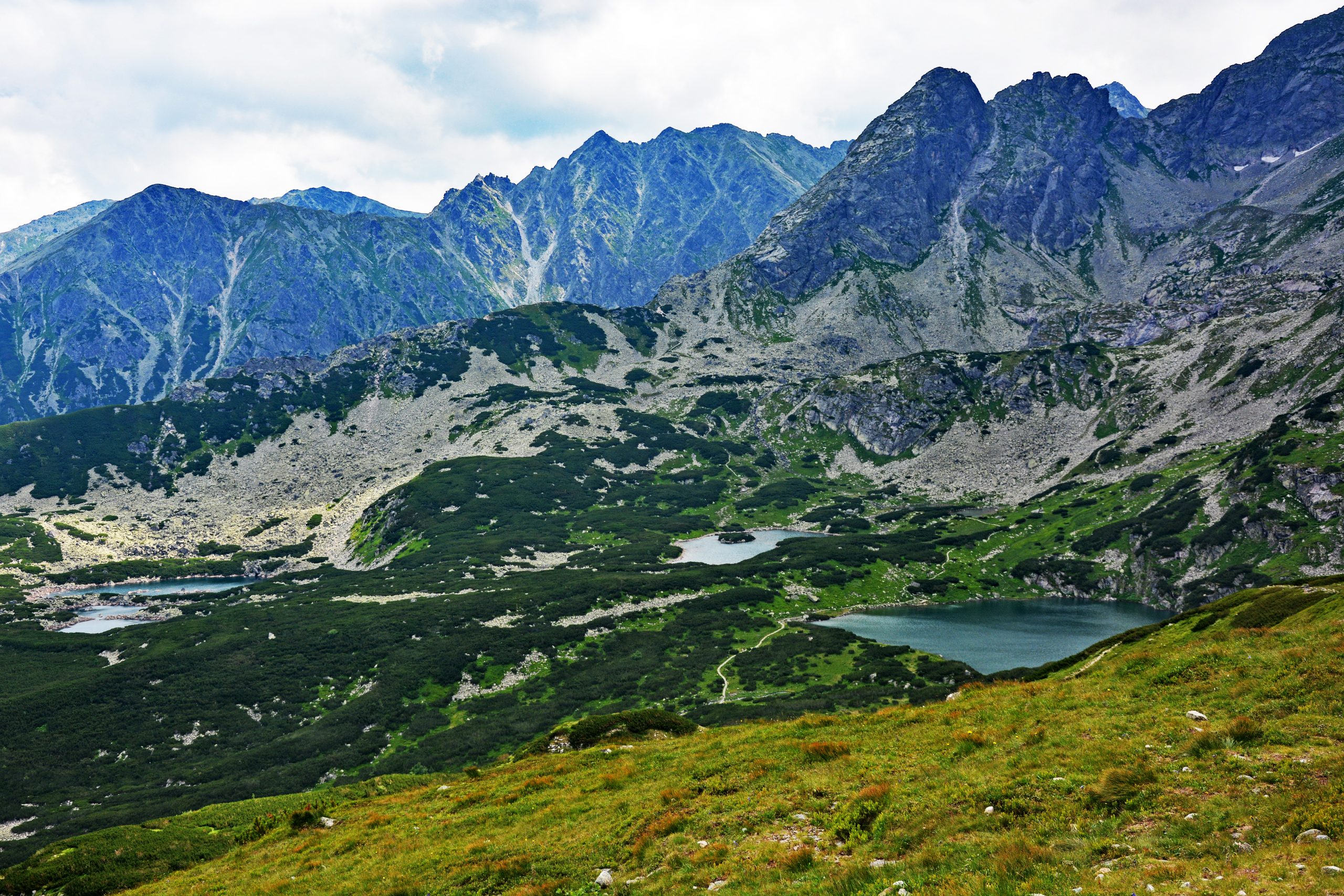
We rested briefly at the pass, breathing in the thin, clear air, before continuing into Dolina Gąsienicowa. The valley unfolded gently, shaped by ancient glaciers that had once flowed through here, leaving behind rounded basins and polished rock surfaces. The colours shifted constantly: deep green alpine grass, dark bands of dwarf pine, and the cool greys of exposed stone.
After another hour, we reached Zielony Staw Gąsienicowy at 1,672 metres. The lake lived up to its name — its water shimmered in shades of green and turquoise, reflecting both the sky and the mineral content of the surrounding rock. Here, our paths diverged. Hania, Simon and Victor decided not to continue up to Kasprowy Wierch; the final ascent rose steeply and relentlessly over rocky terrain. We said goodbye, and they remained in the valley, while I continued alone.
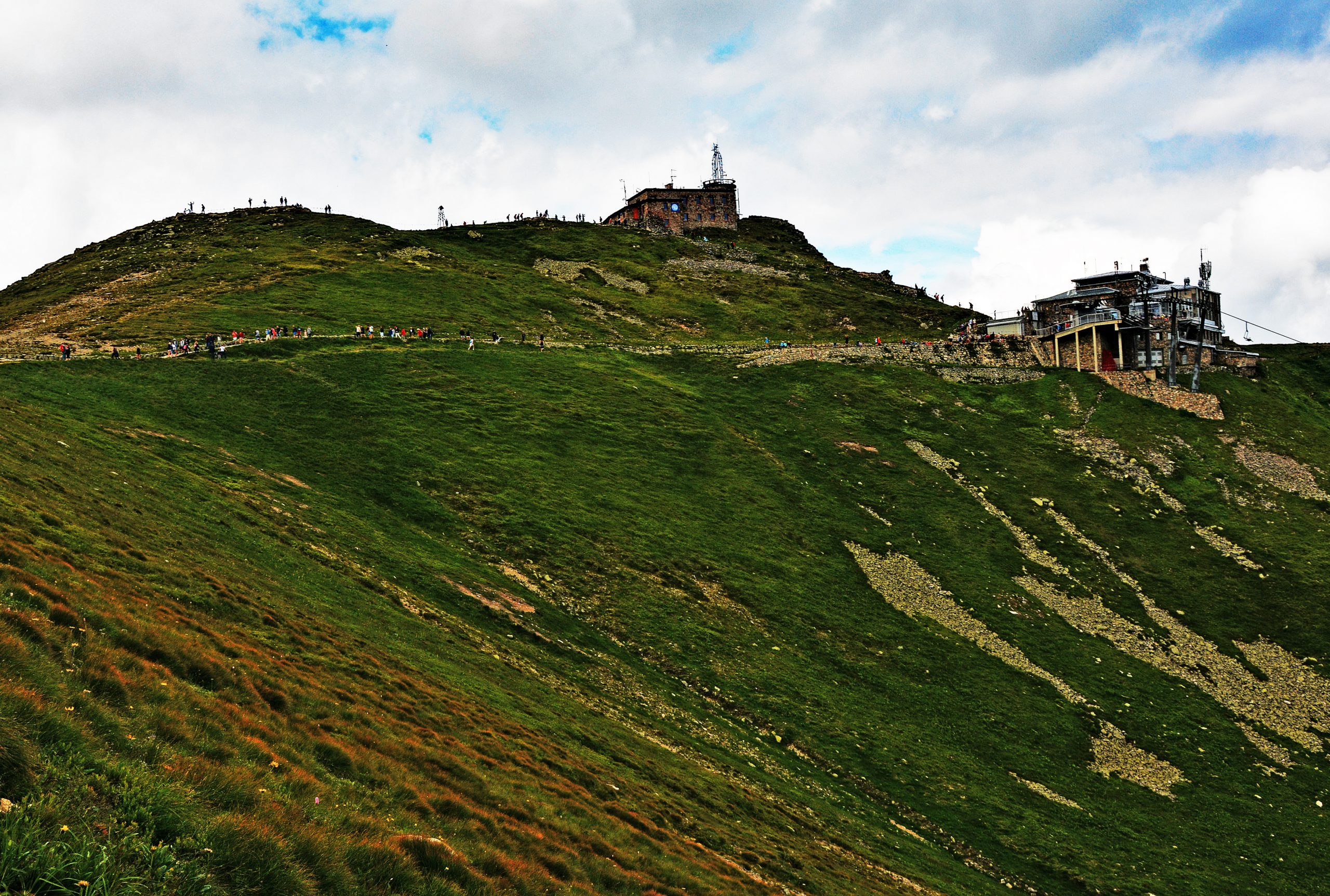
The climb to Kasprowy Wierch surprised me. Despite having undergone hallux surgery on both feet the previous winter, I moved upward faster than expected. The trail was steep, zigzagging across slopes of shattered limestone and darker metamorphic rock, the ground rough and unforgiving. As I gained height, the valley fell away beneath me, and the wind grew stronger. Reaching the summit at 1,987 metres, I allowed myself a quiet moment of triumph.
Inside the mountain restaurant, I took a coffee, went out and sat down in a comfortable chair, looking over the vast landscape. The Tatras stretched endlessly — ridges fading into bluish distance, clouds drifting low and fast, shadows racing across the slopes.
Gallery II
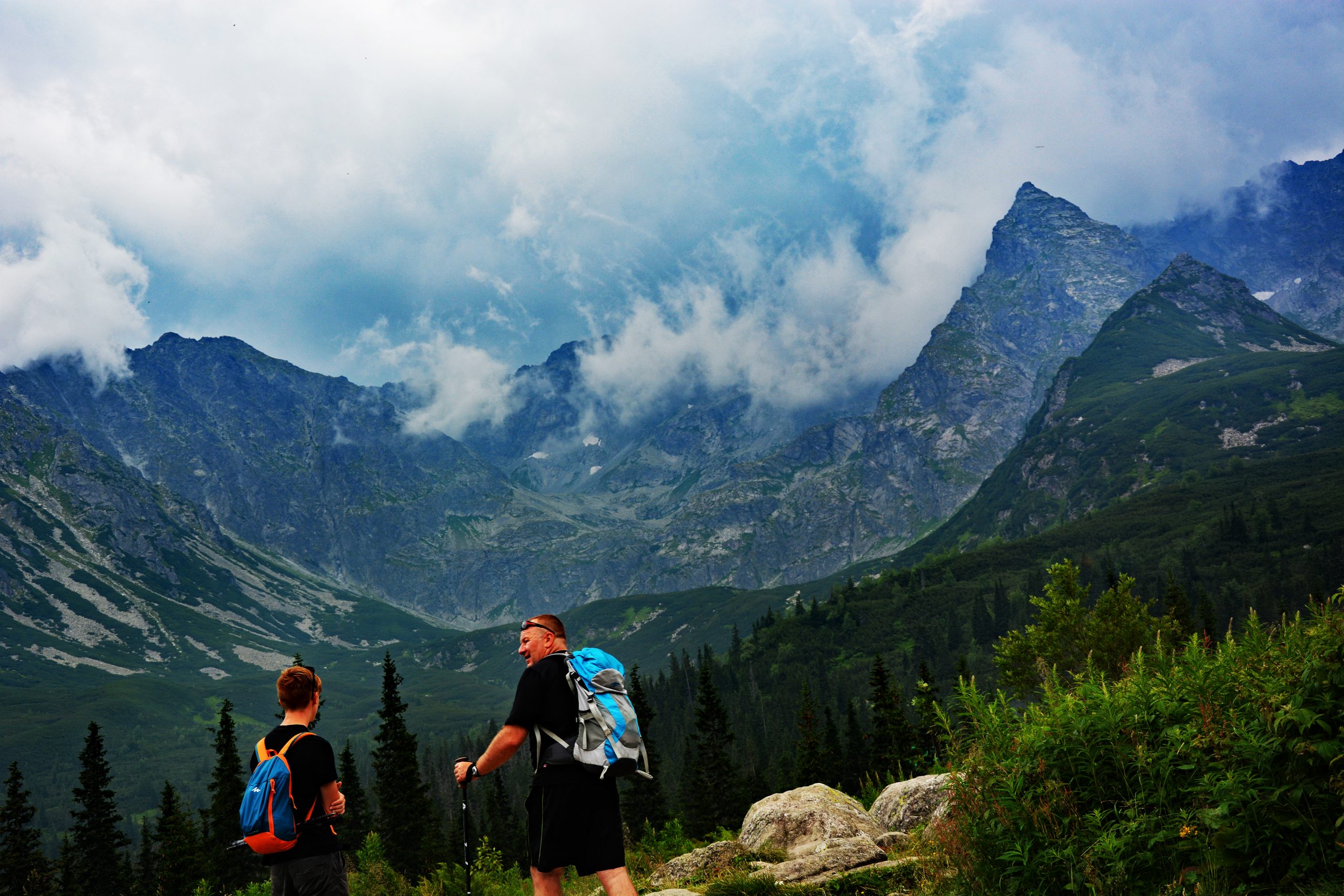
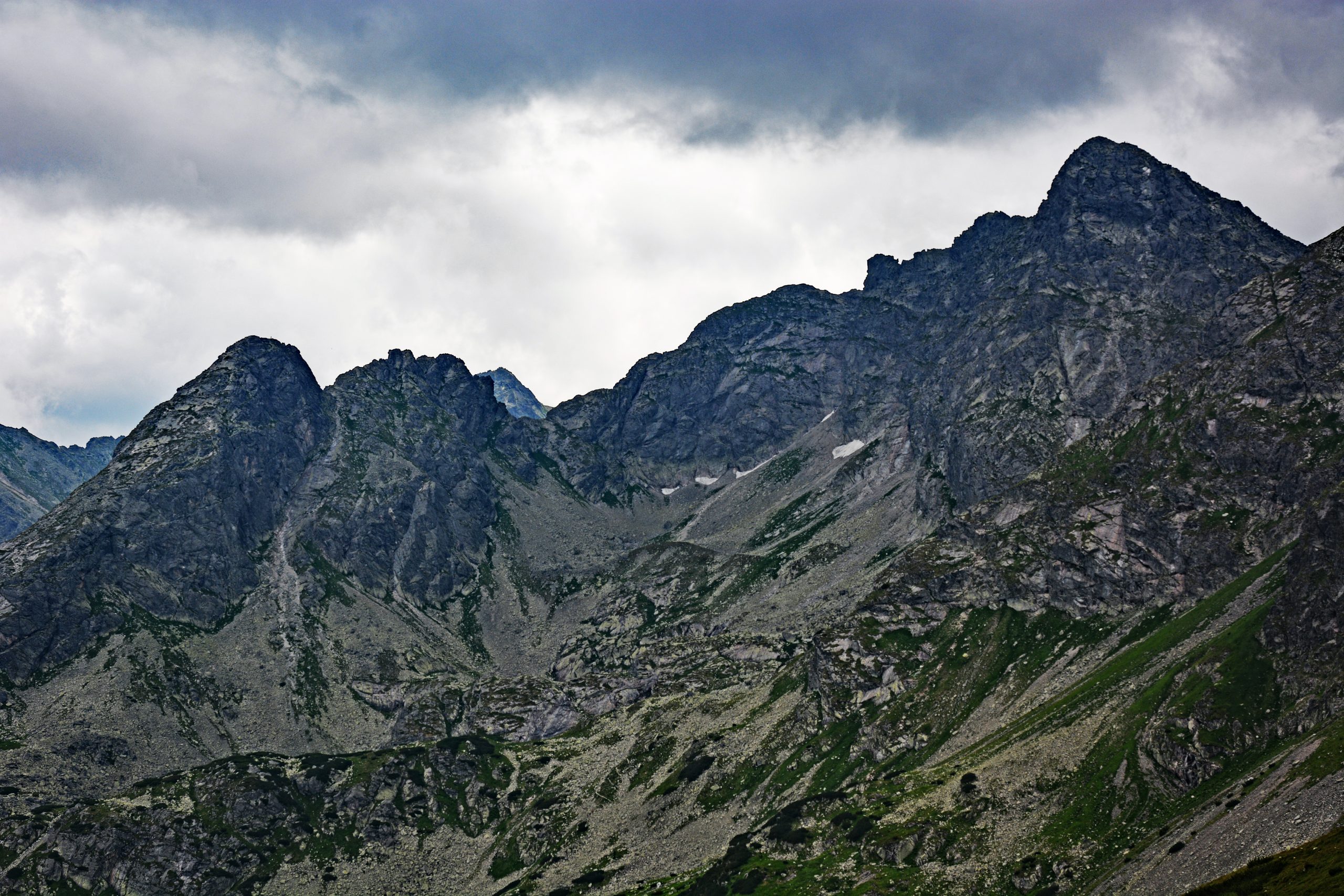
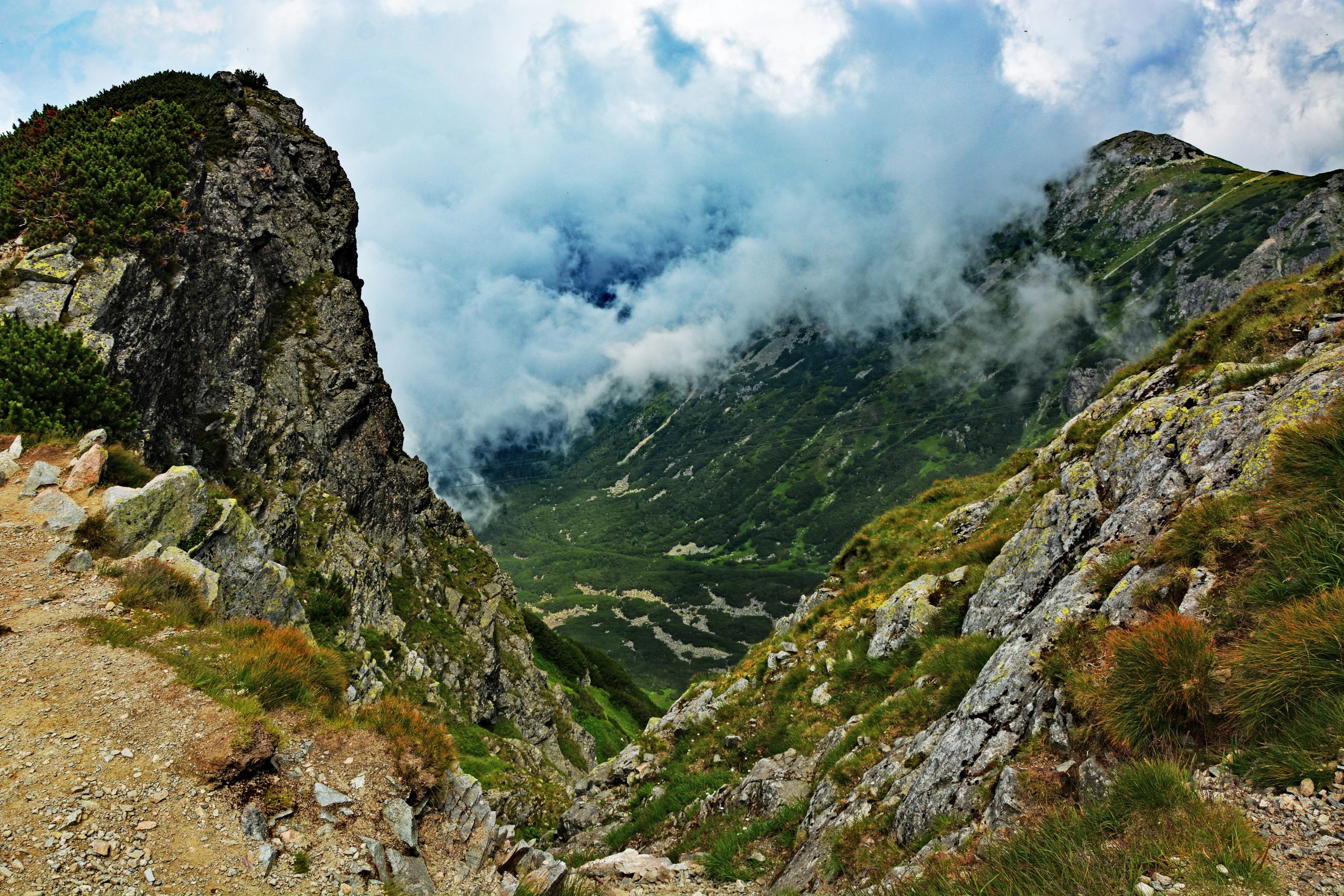
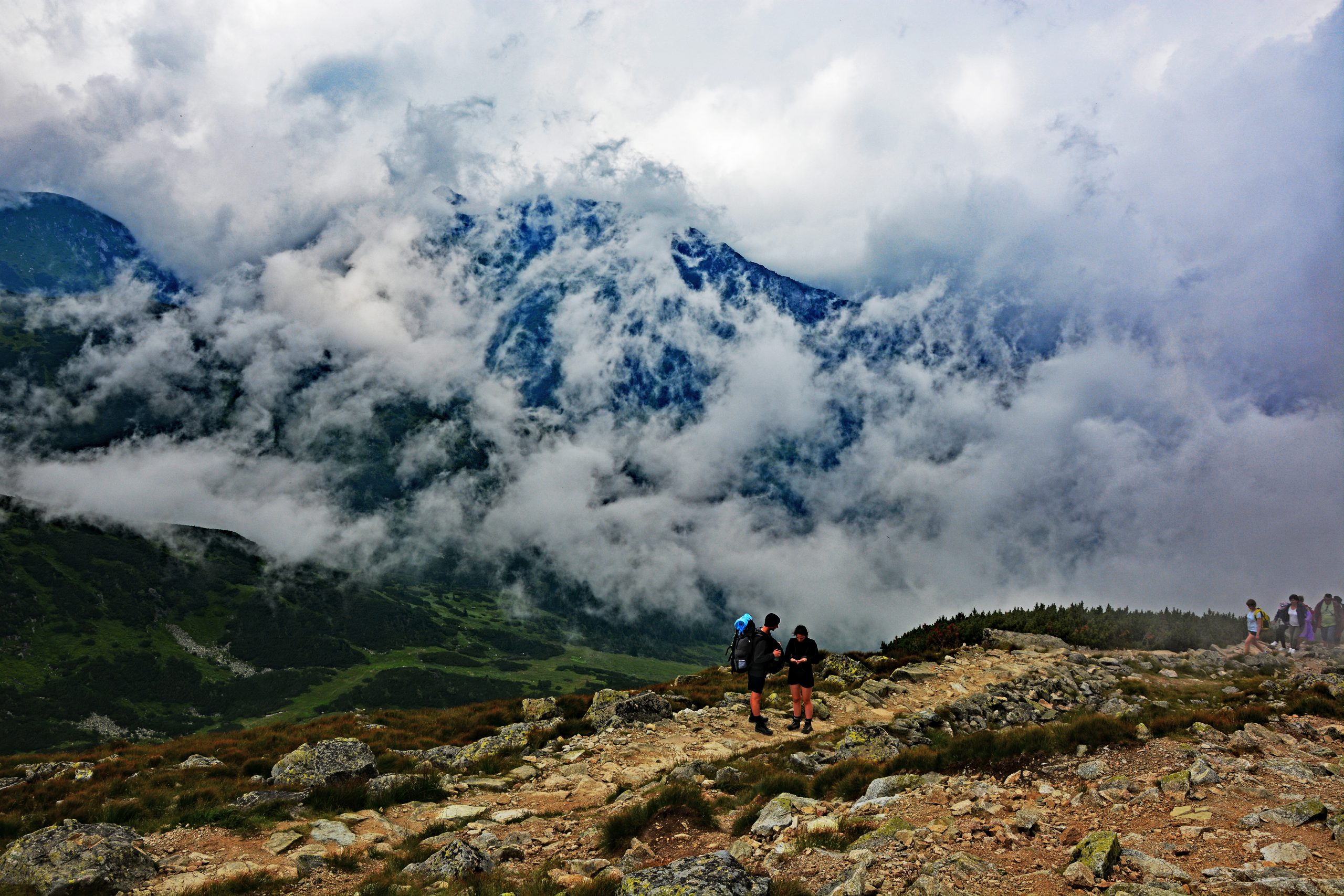
The return followed the green trail through Myślenickie Turnie, eventually passing Droga Brata Alberta 1 near Kuźnice. Walking down proved harder than expected. With every step, the pressure on my big toes increased, and the pain slowed my pace far more than the guidebooks suggested. Yet even discomfort could not fully distract from the beauty around me: clouds wrapping themselves around peaks, light breaking through in silver shafts, and the steady presence of the mountains, ancient and indifferent.
By the time I returned to Kuźnice, tired and sore, the day felt complete. It had been a long journey — nearly nine hours — through a landscape shaped by ice, stone and time, shared as a family, each of us finding our own rhythm within the vastness of the Tatra Mountains.