
23 km · 1,131 m elevation gain · 8–9 hours
18 July 2017
We set out very early in the morning, long before the parking lot in Palenica Białczańska filled with cars and voices. The length and seriousness of the route demanded this quiet beginning. We, my wife Hania and our sons Simon and Victor, and the particular anticipation that comes with a long day in high mountains. The air was cool and slightly damp, the light still soft, and above the forest the silhouettes of the High Tatras rose in layered shades of blue and graphite, their jagged outlines sharp even at a distance.
The first kilometres led along a wide paved road, gently ascending through dense spruce forest. Trunks rose straight and dark, their bark almost black in the morning shade, while patches of pale gravel and moss glimmered underfoot. It was an easy, almost meditative beginning, deceptive in its calm. After 4.3 kilometres and about 130 metres of elevation gain, the road bent, the forest opened slightly, and the sound of water grew louder. At Wodogrzmoty Mickiewicza the trail narrowed and turned green, and the mountains suddenly announced themselves. White water thundered down stepped rock walls, the stone darkened by constant spray, and the air smelled of wet granite and cold water.
Gallery I – From Wodogrzmoty Mickiewicza to Siklawa
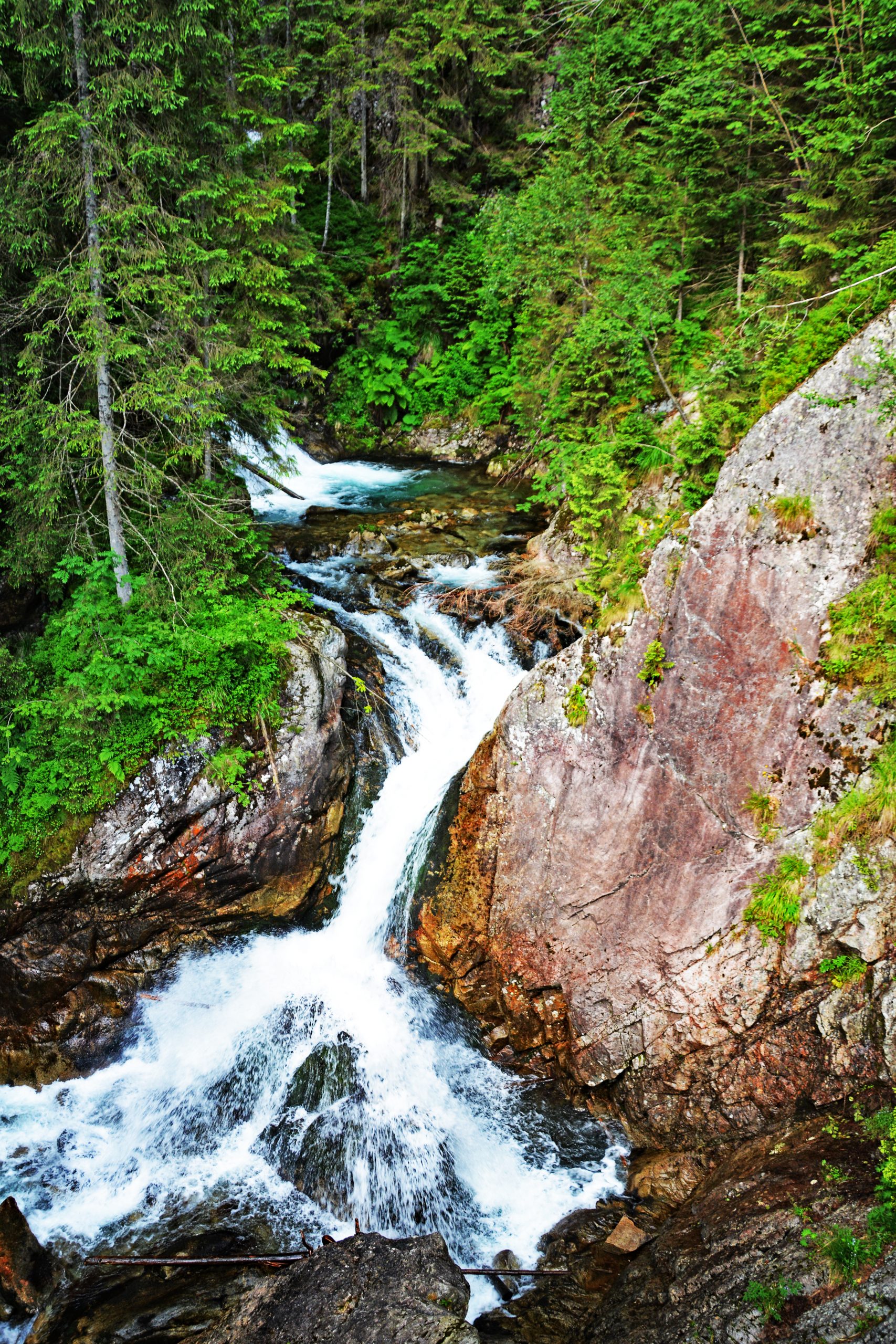
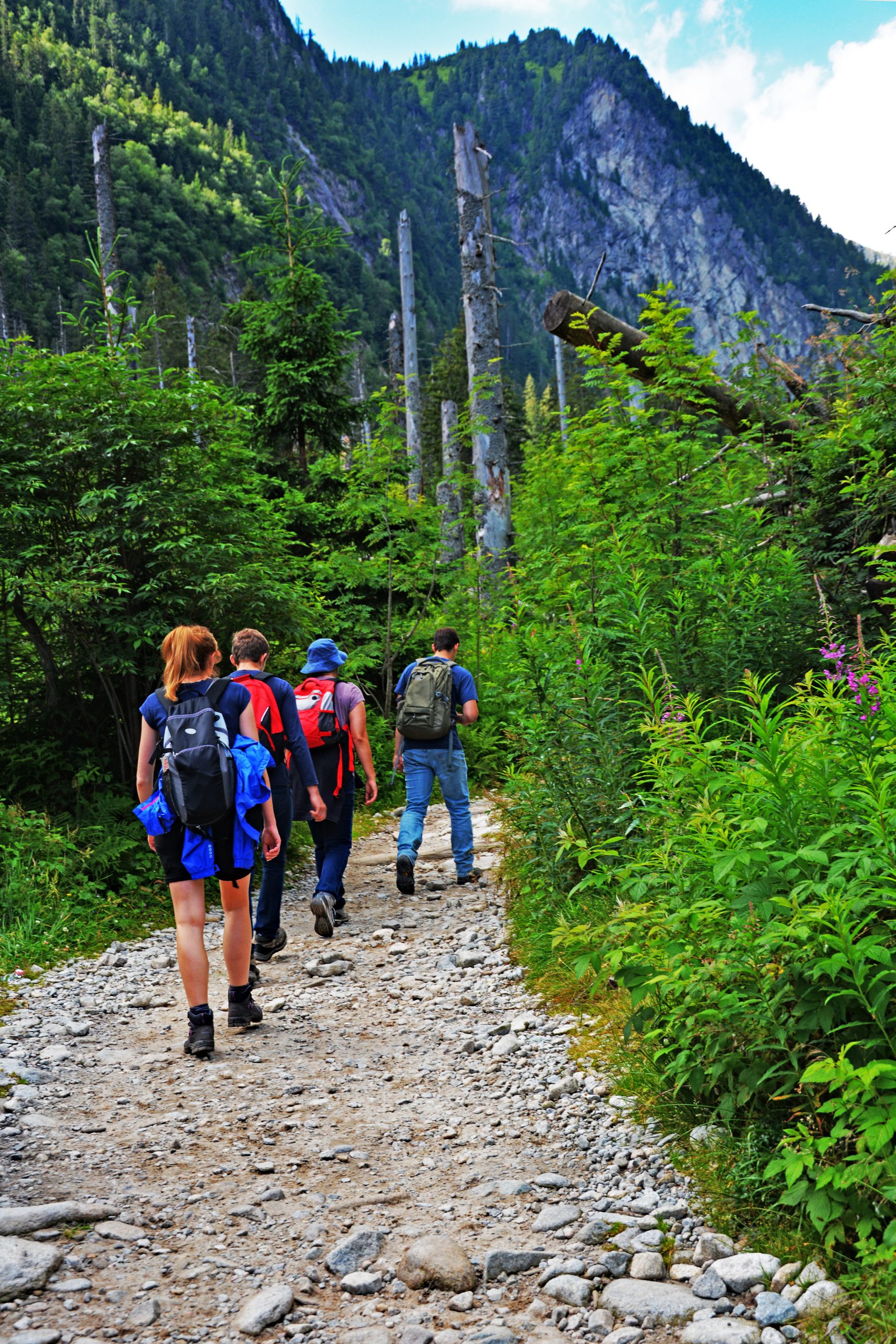
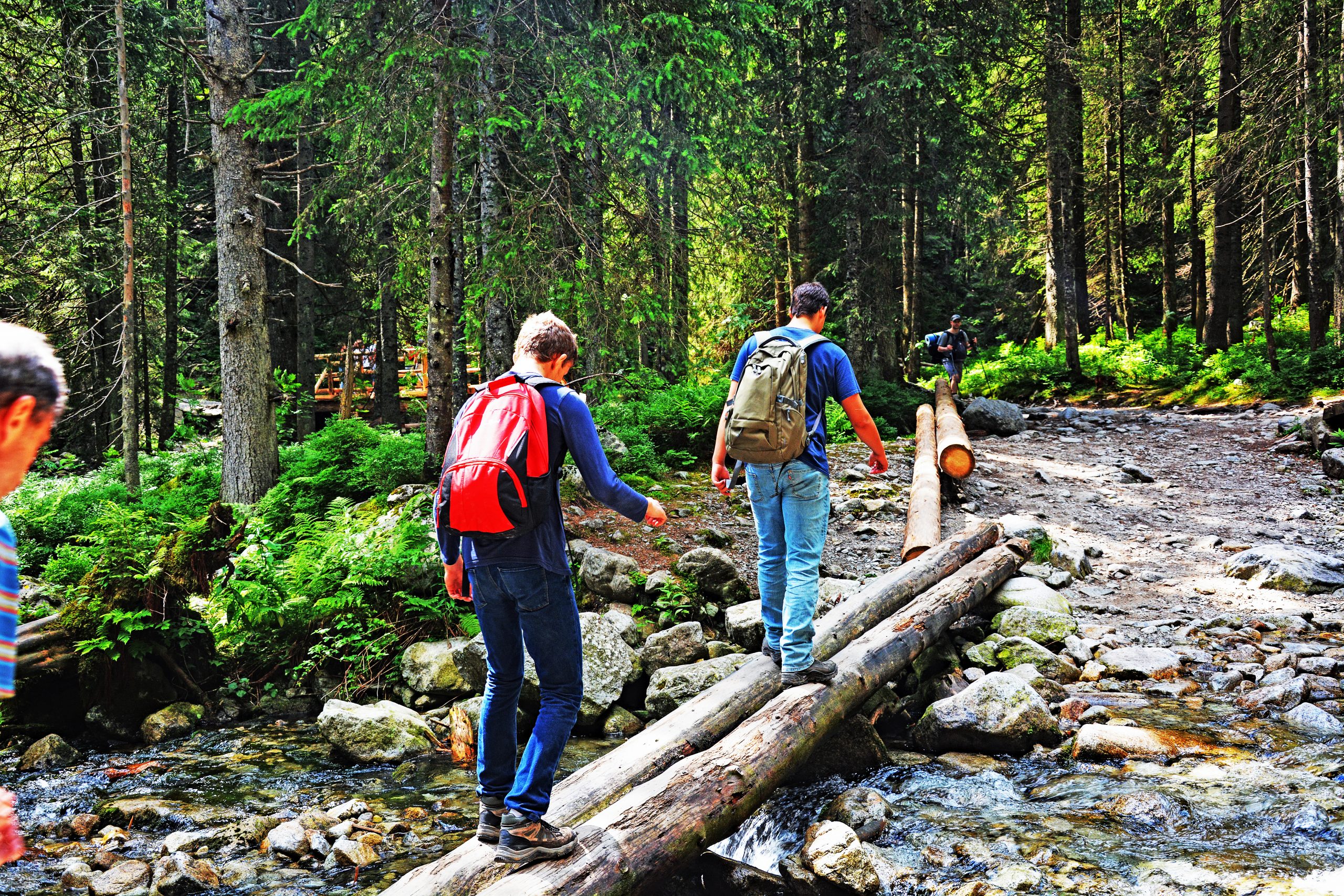
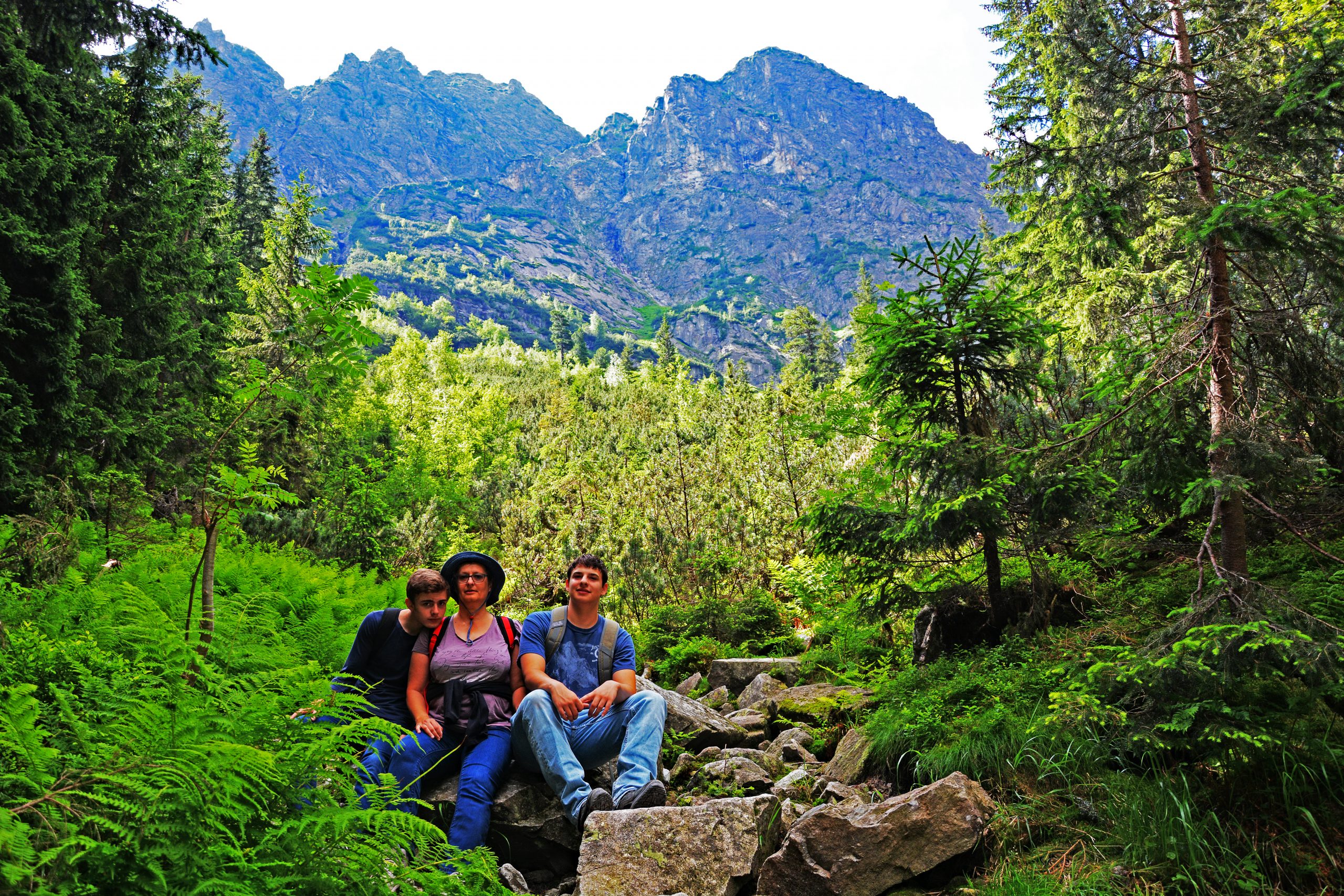
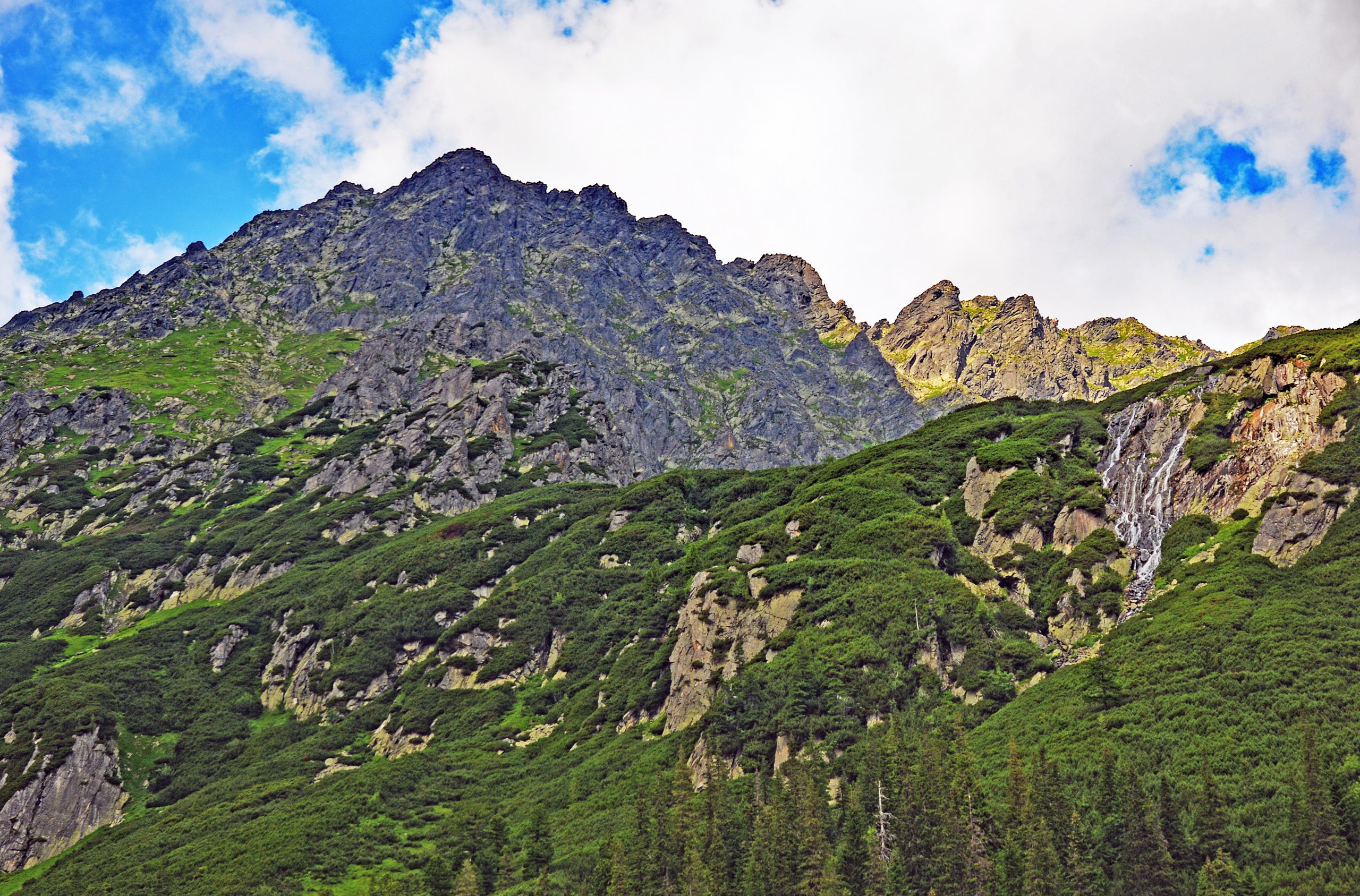
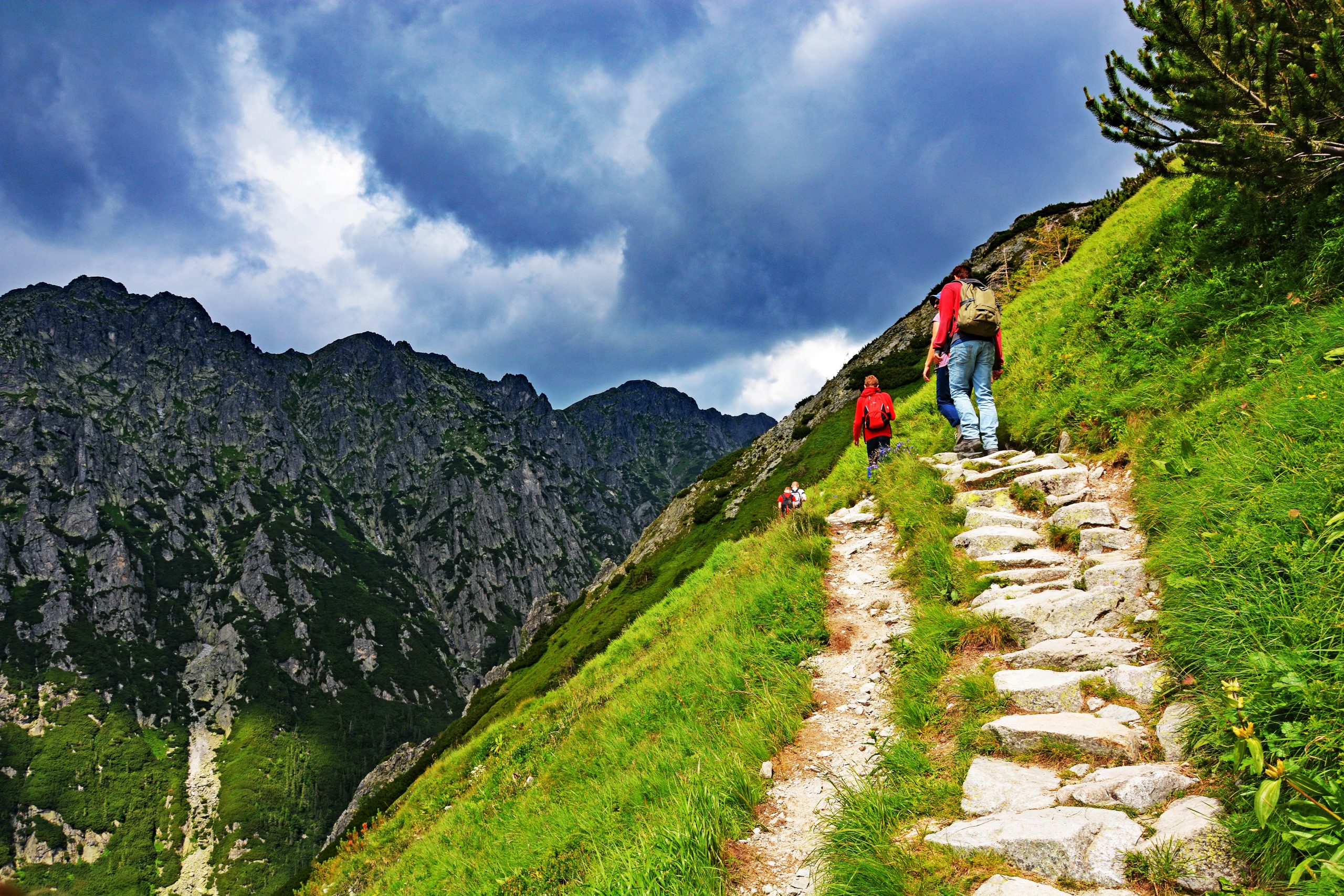
Beyond the waterfalls the trail steepened decisively. For the next 3.7 kilometres we climbed through the Roztoka Valley, at first sharply, then in longer, steadier stretches, following a restless stream that cut through stone and gravel. Underfoot, large stone slabs alternated with loose scree, forcing us into a careful rhythm. On the eastern side rose the great walls of Skrajny Wołoszyn, Pośredni Wołoszyn and Wielki Wołoszyn. Their faces were built of layered limestone and granite, streaked with lighter scree fans and darker vertical scars where water and ice had torn at the rock. Patches of alpine grass clung improbably to ledges, adding muted greens to the dominant greys.
As we gained another 570 metres in altitude, the valley narrowed and the mountains pressed closer, their slopes forming a monumental corridor. The light shifted constantly: deep shade beneath rock walls, sudden brightness where the valley widened, flashes of white water below. In the Tatras, one is never truly alone. Voices echoed, footsteps scraped on stone, and now and then we crossed paths with other hikers, all moving upward with the same quiet determination.
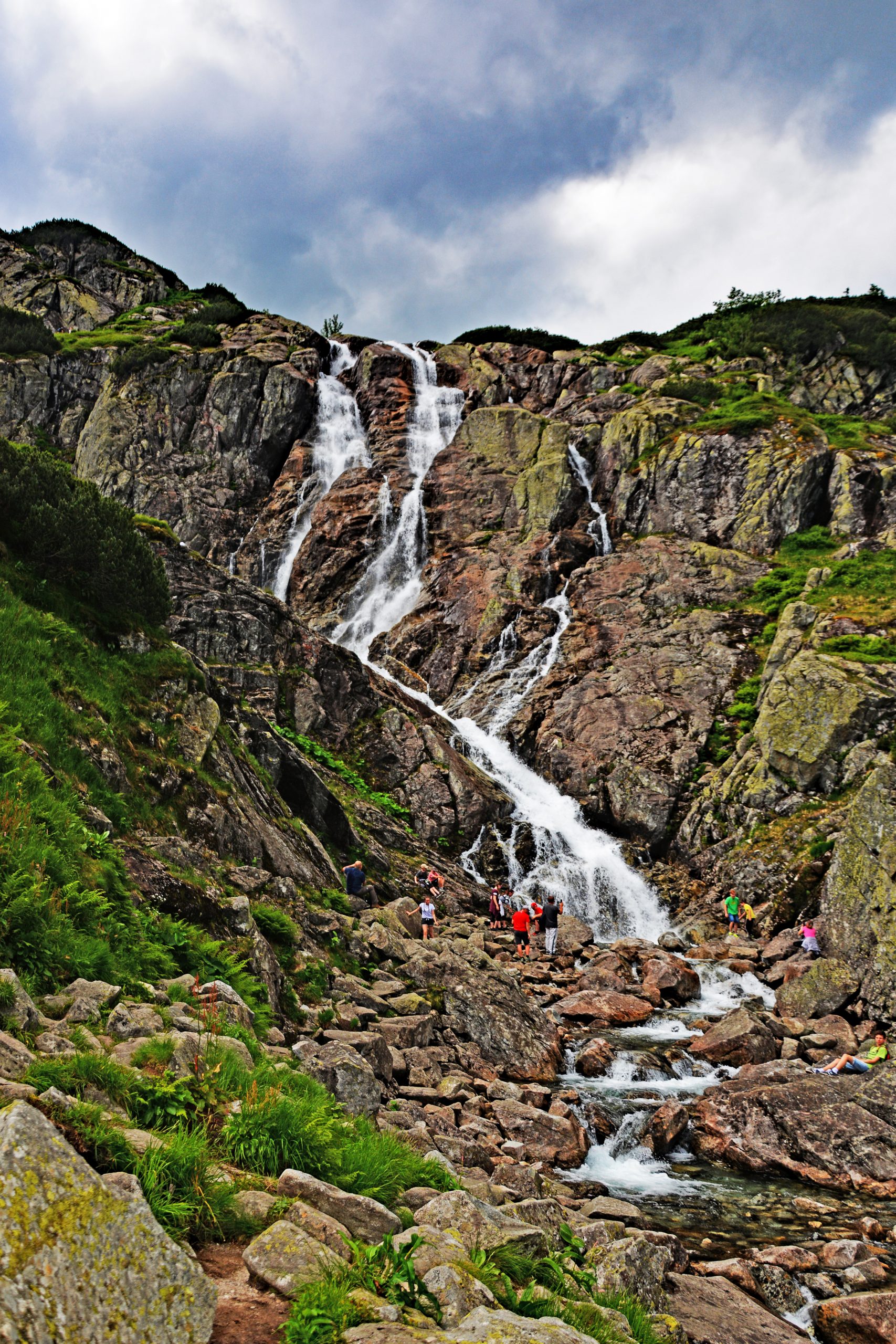
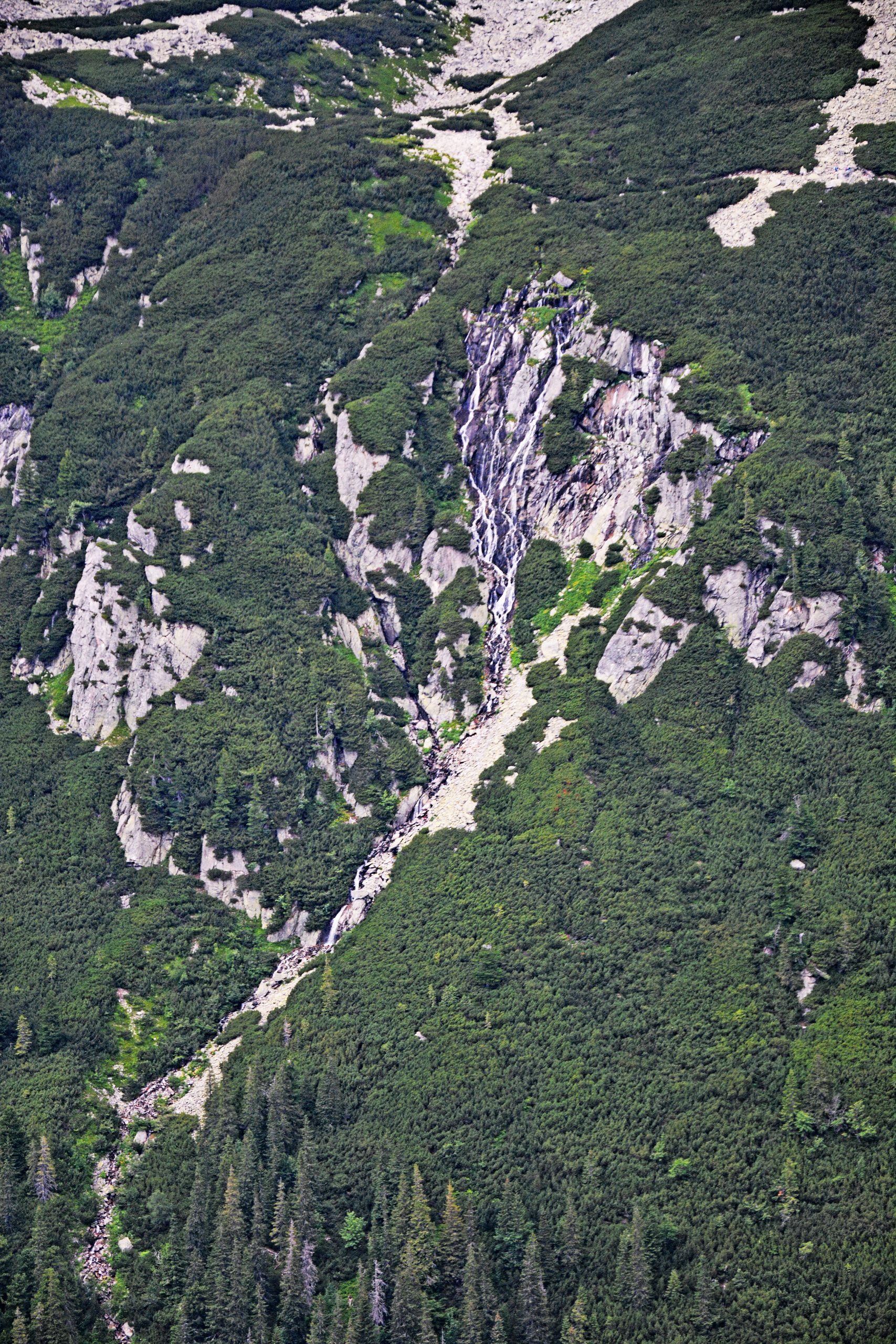
Siklawa announced itself long before we stood beneath it. The sound grew into a continuous roar, and then the waterfall revealed its full height: a broad, powerful curtain of white water plunging from a high rocky shelf, breaking into spray before crashing into the basin below. The surrounding rock was dark, angular and severe, amplifying the sense of scale. We stood silently for a while, reduced to spectators in front of something far larger than ourselves.
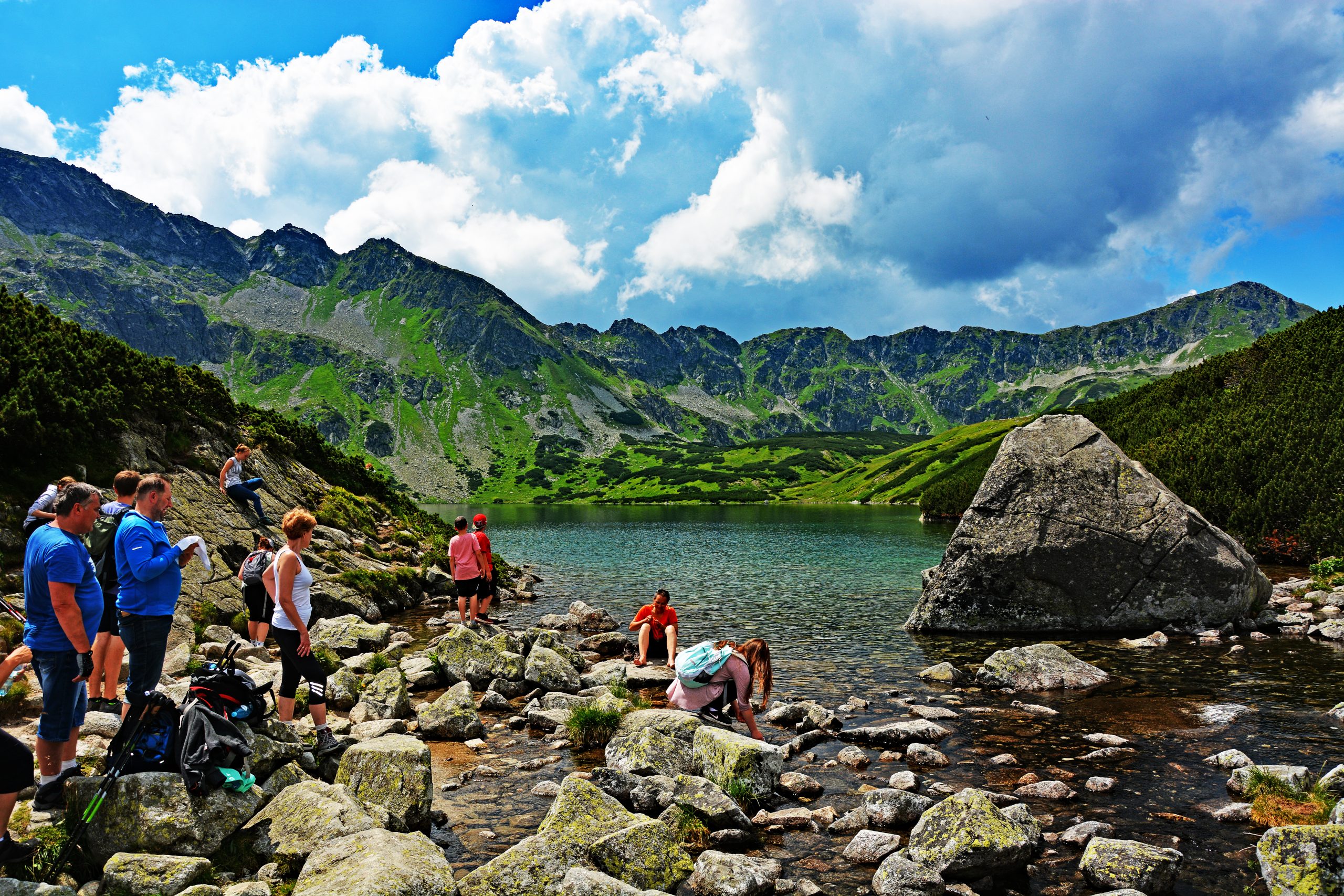
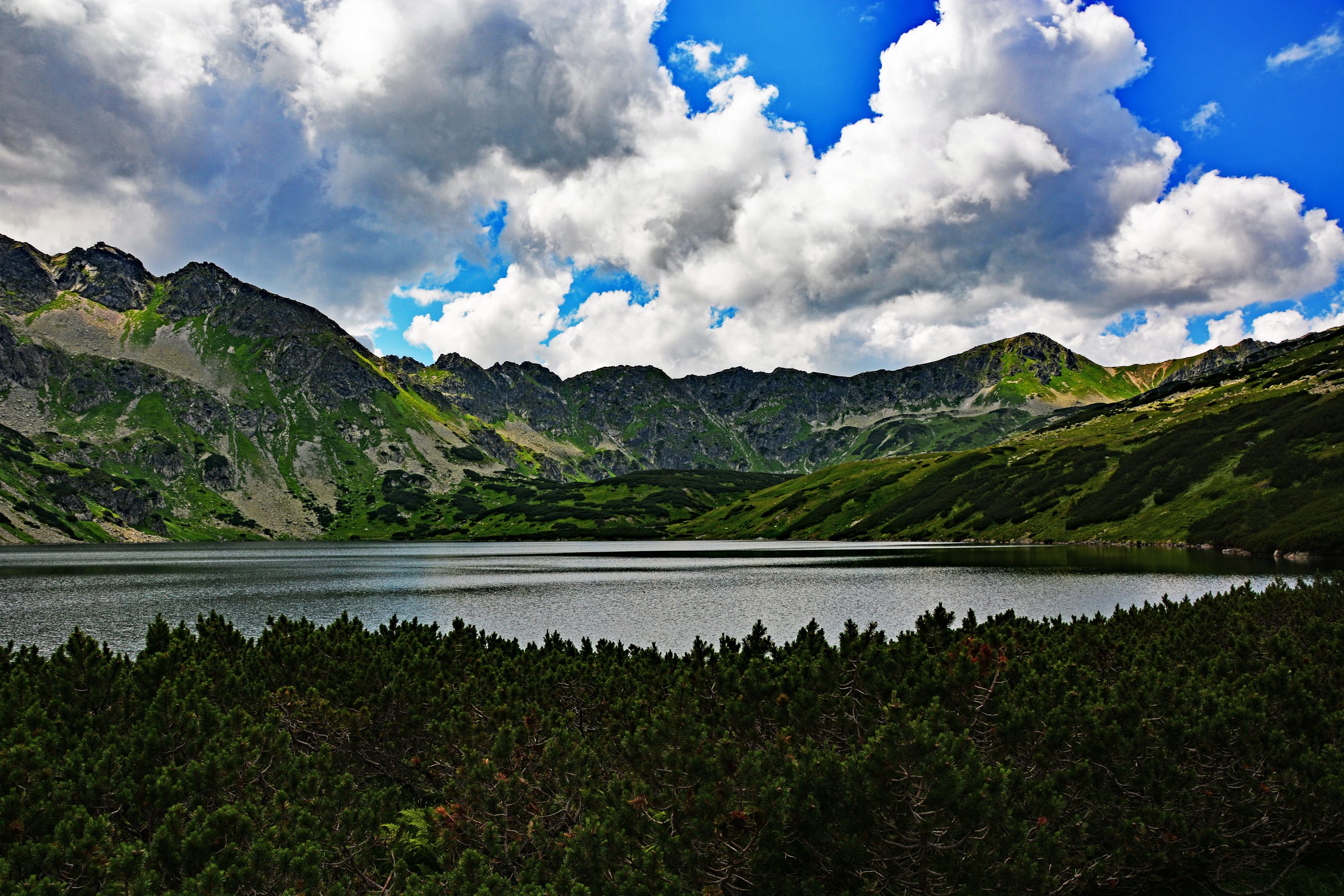
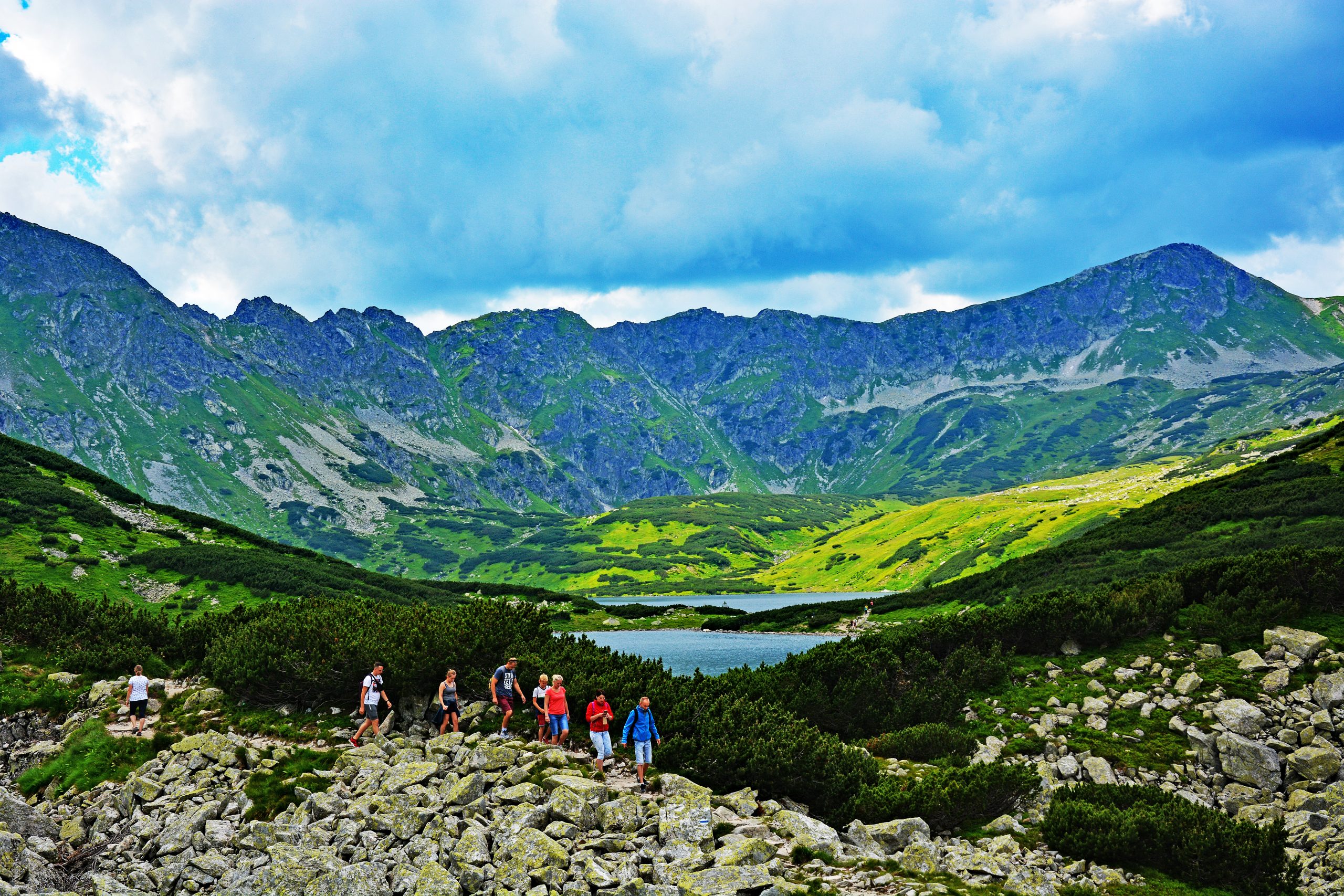
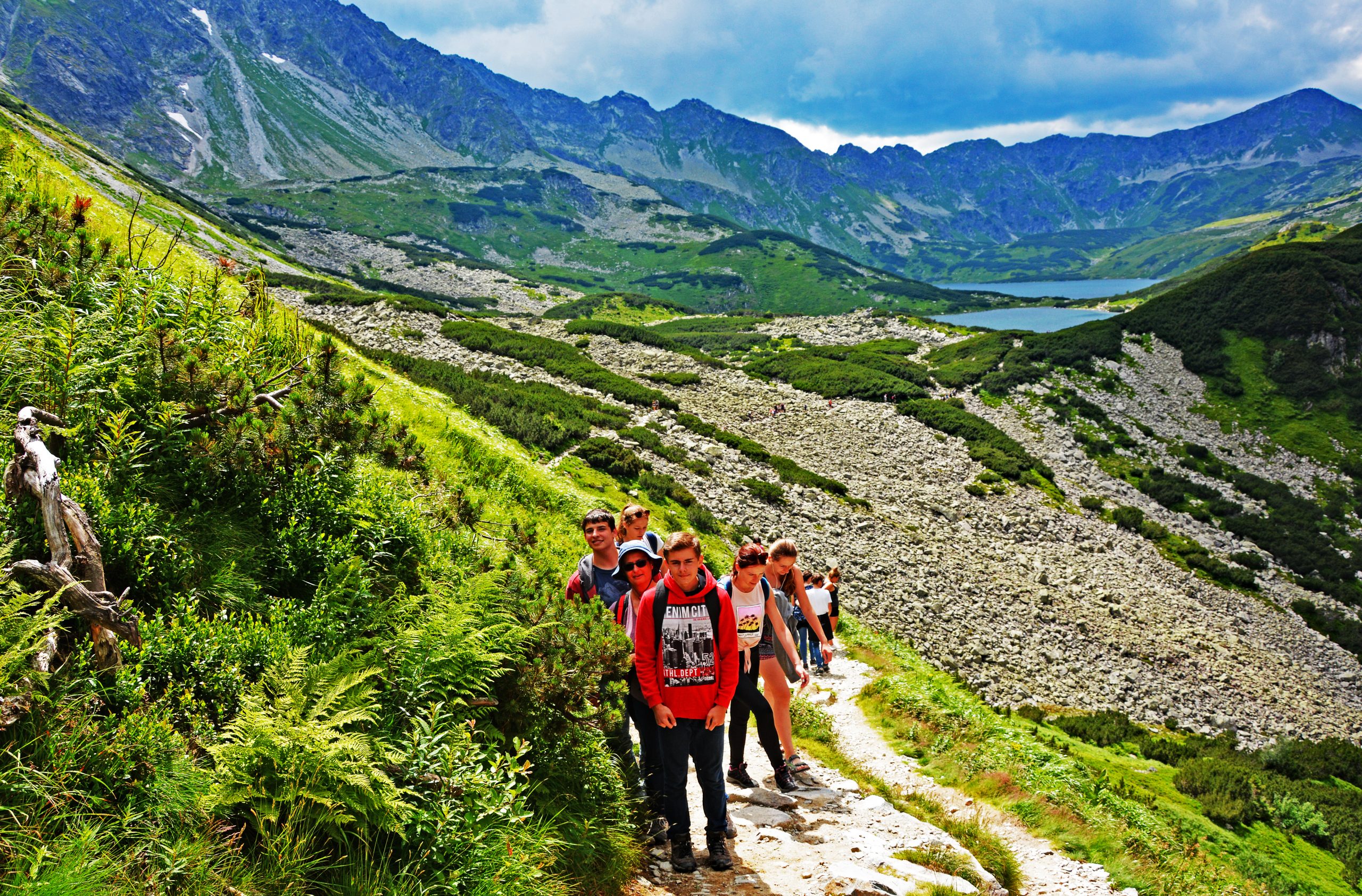
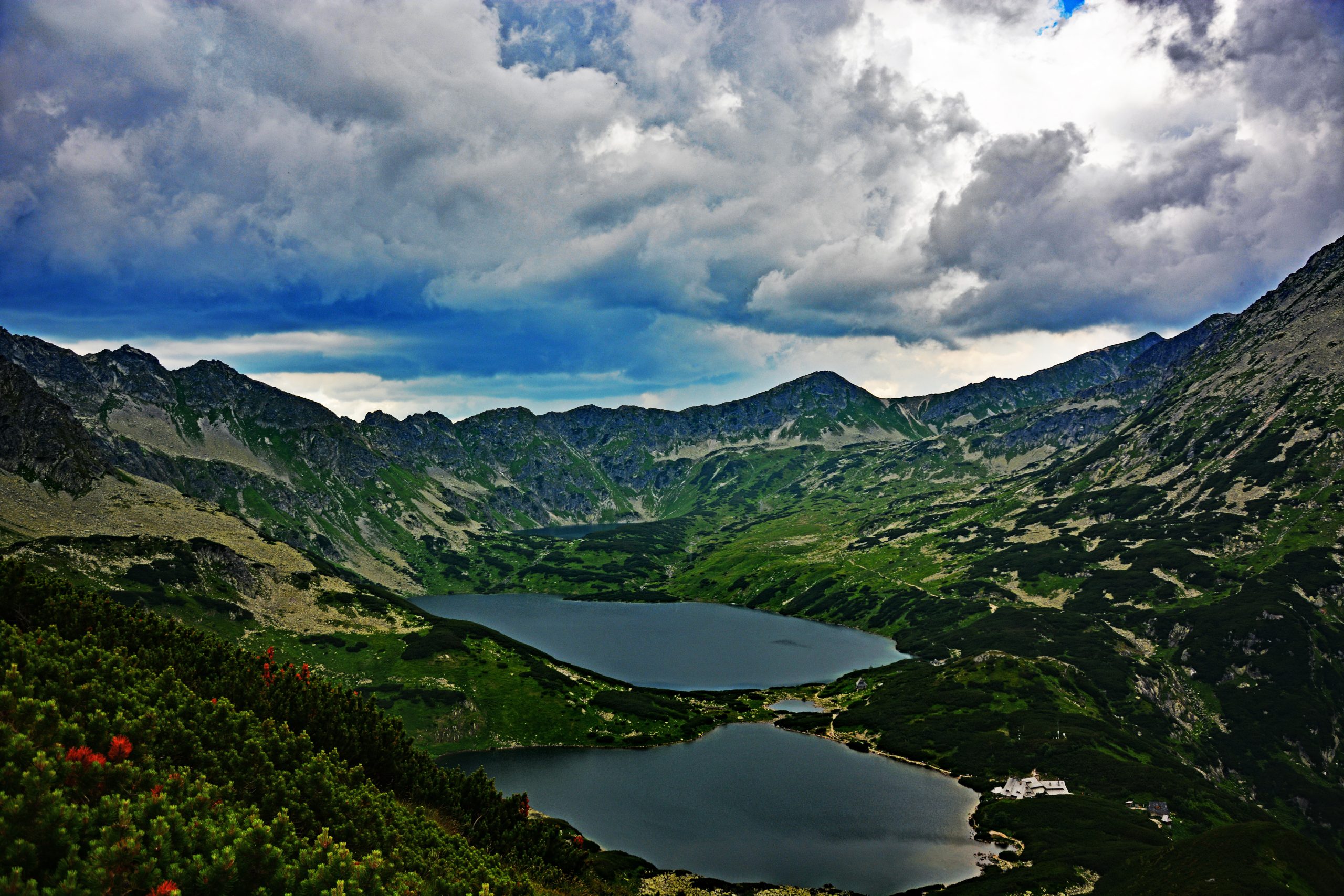
Above Siklawa the landscape changed abruptly. The terrain opened into the Five Polish Ponds Valley, wide and luminous, with space and sky returning all at once. The mountains stepped back, forming a grand amphitheatre of peaks and ridges. Near the trail stood the PTTK mountain hut, busy and inviting, but we continued onward to Wielki Staw Polski. We settled on the stones along its shore, joining many others drawn instinctively to the water.
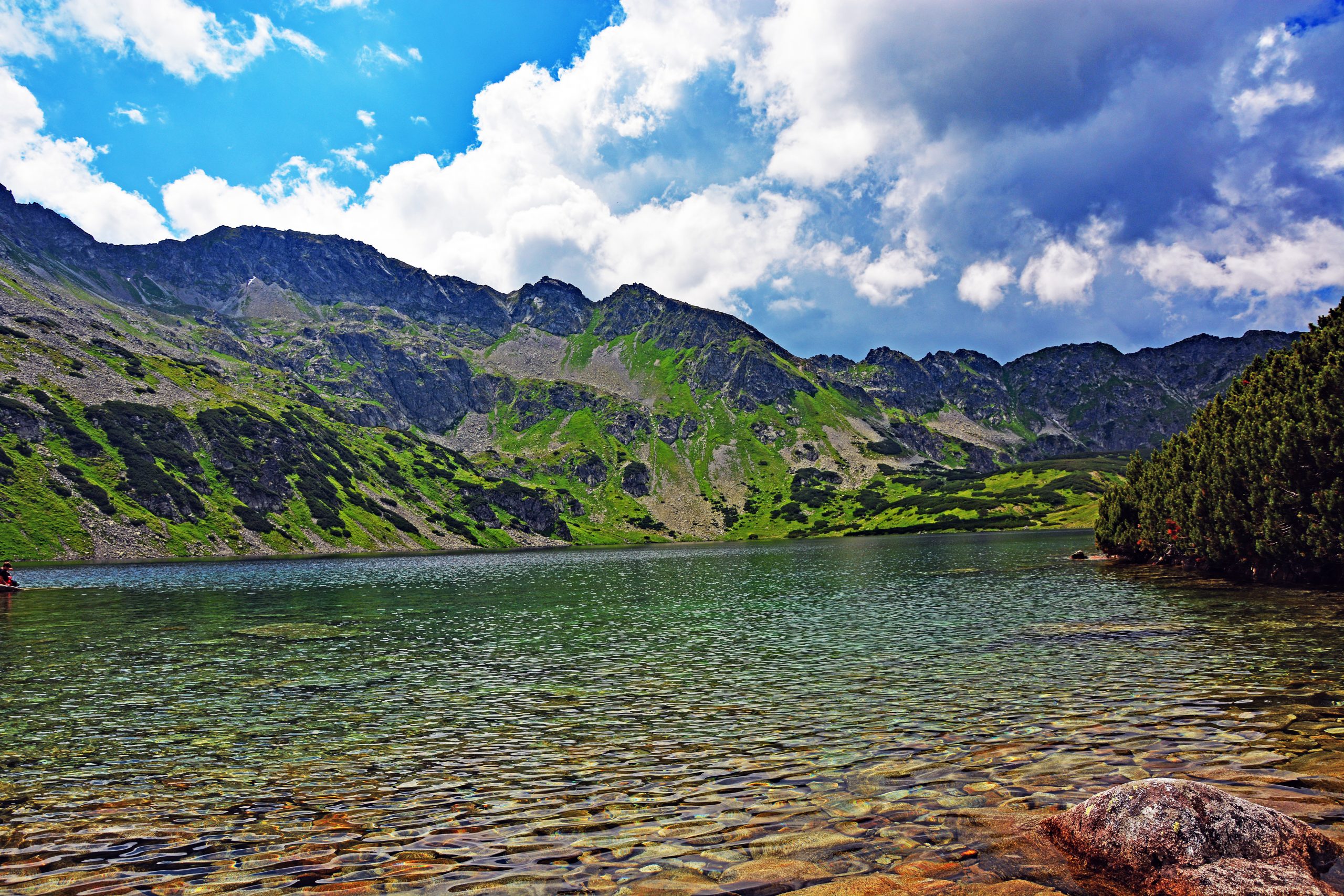
The lake lay deep and still, its surface a dark steel‑blue, reflecting the surrounding mountains with remarkable clarity. The peaks around it showed subtle colour: cool greys and silvers in the rock, warmer brown and rust tones where iron‑rich stone was exposed, and streaks of lingering snow tucked into shaded gullies. Eating our lunch there, we felt suspended between water and sky, enclosed yet free.
Gallery II – Five Polish Ponds Valley
From the lakeshore the route climbed again, gaining roughly 430 metres to about 1,720 metres in altitude. The path led us higher into thinner air, and with each step the palette sharpened. Vegetation became sparse, giving way to bare rock: pale limestone, fractured granite, angular blocks piled by frost and gravity. Dwarf pines twisted low to the ground, sculpted by wind and snow. The mountains here felt ancient and uncompromising, shaped over millennia by ice and water.
Then the trail turned downward. Following the blue markings, we began the descent toward Morskie Oko through rocky terrain that felt harsher and more exposed. The path wound between boulders and steep slopes, opening suddenly onto dramatic viewpoints. Far below, dark lakes appeared like polished stones set into the earth, their surfaces calm despite the rugged surroundings.
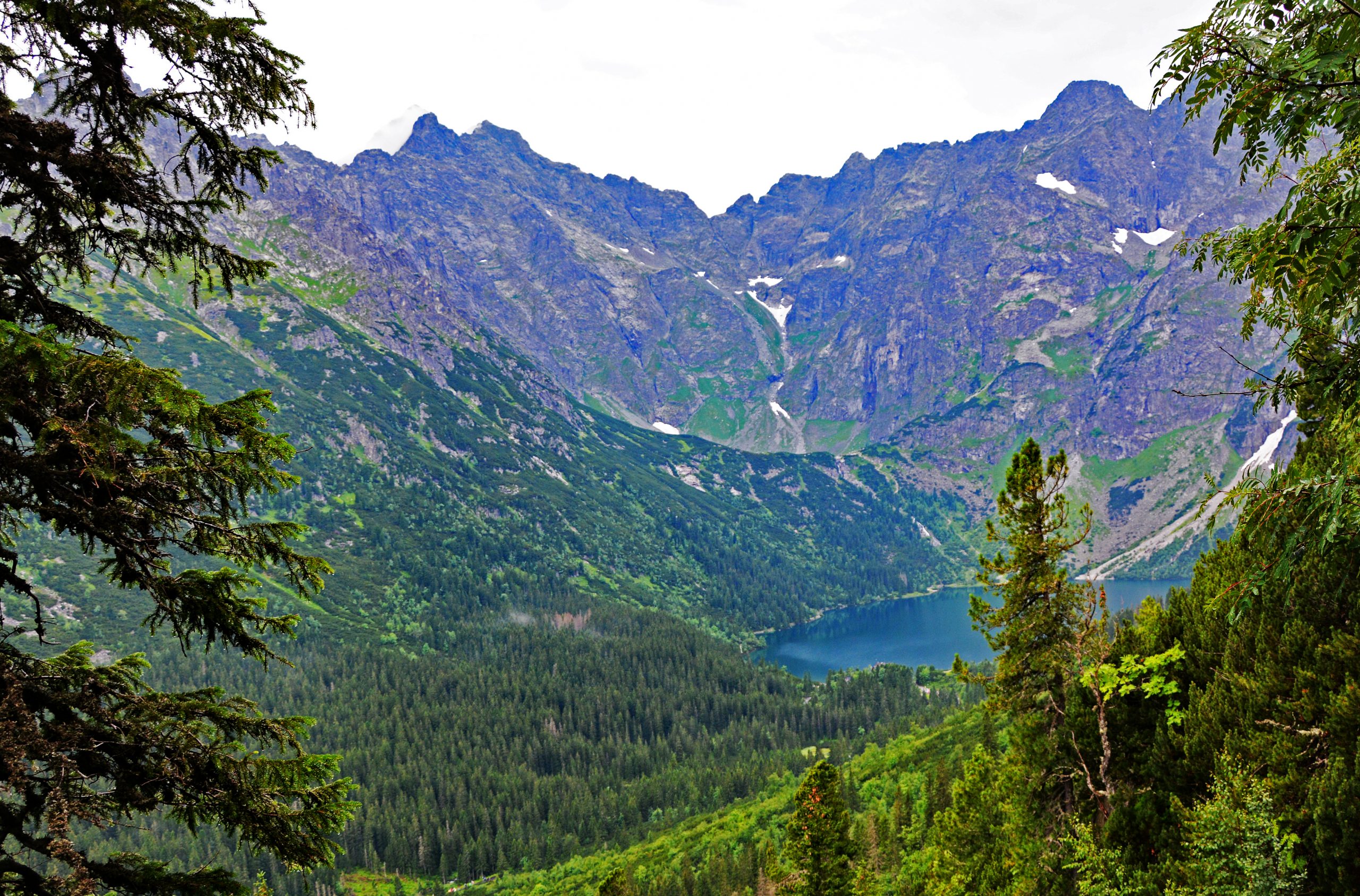
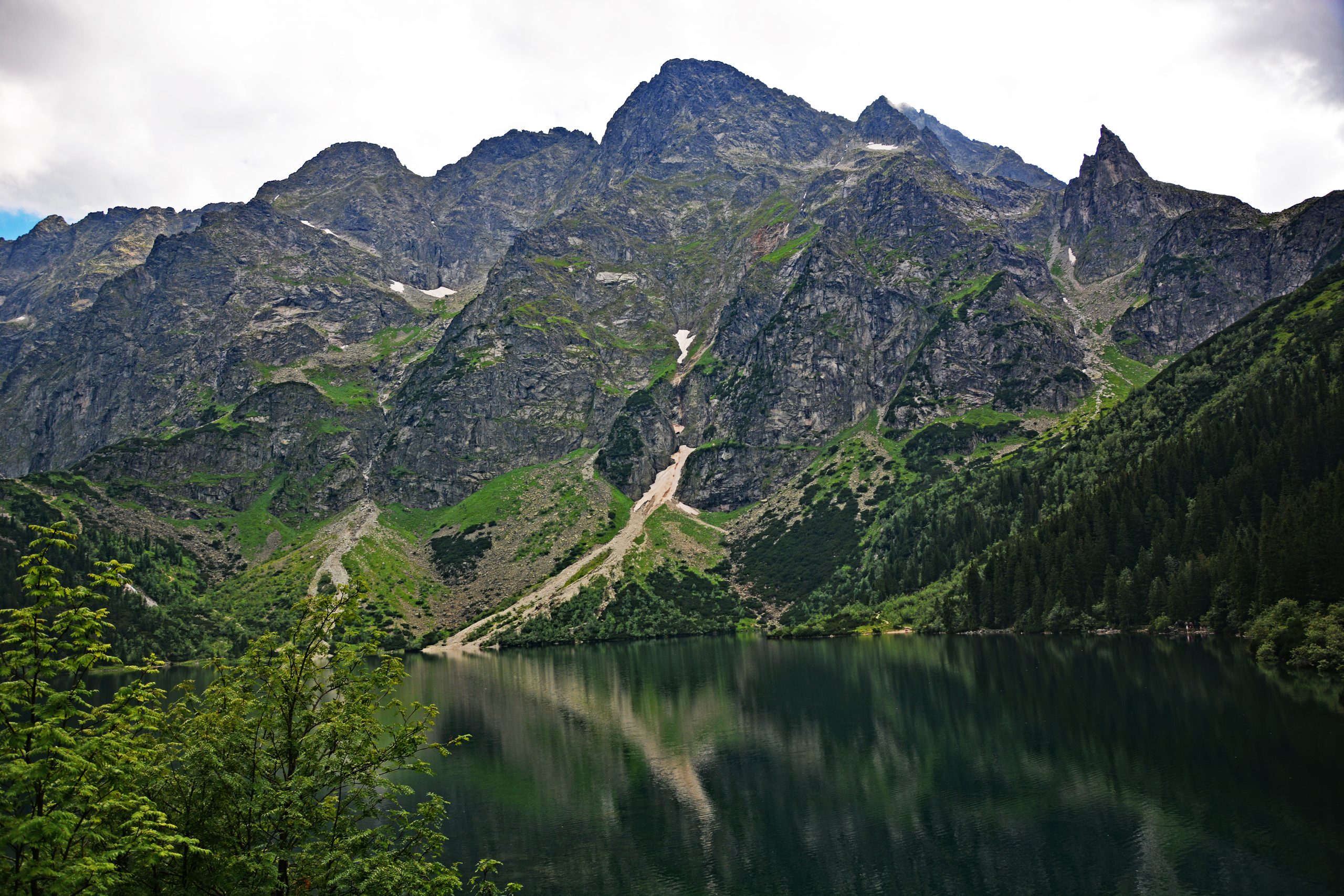
Eventually the rock gave way to pavement. Above Morskie Oko stood another PTTK hut, lively and crowded, and below it the lake itself, dark green and almost opaque, enclosed by towering walls of rock. The peaks rose steeply from the water, their reflections trembling slightly with every movement of air. When our boots touched asphalt, relief washed over us. After hours of uneven ground, the smooth surface felt almost luxurious.
Gallery III – Descent toward Morskie Oko
From Morskie Oko back to Palenica Białczańska, the route runs almost entirely downhill on an asphalt road. We were deeply tired by now, our legs heavy, our steps slower. The idea of a horse‑drawn carriage was tempting, but the queue stretched endlessly, and after some hesitation we chose to walk. Halfway down, the novelty of asphalt had vanished. The road felt long and unyielding, the forest repetitive, our thoughts narrowing to the simple act of moving forward.
When we finally reached the car, exhaustion washed over us completely. We felt drained, almost lifeless—and at the same time quietly fulfilled. It had been a demanding day through roaring waterfalls, narrow valleys, high alpine basins and immense mountain walls, a journey written into our muscles and into memory, shaped as much by stone and water as by effort and persistence.