
3 September 2019
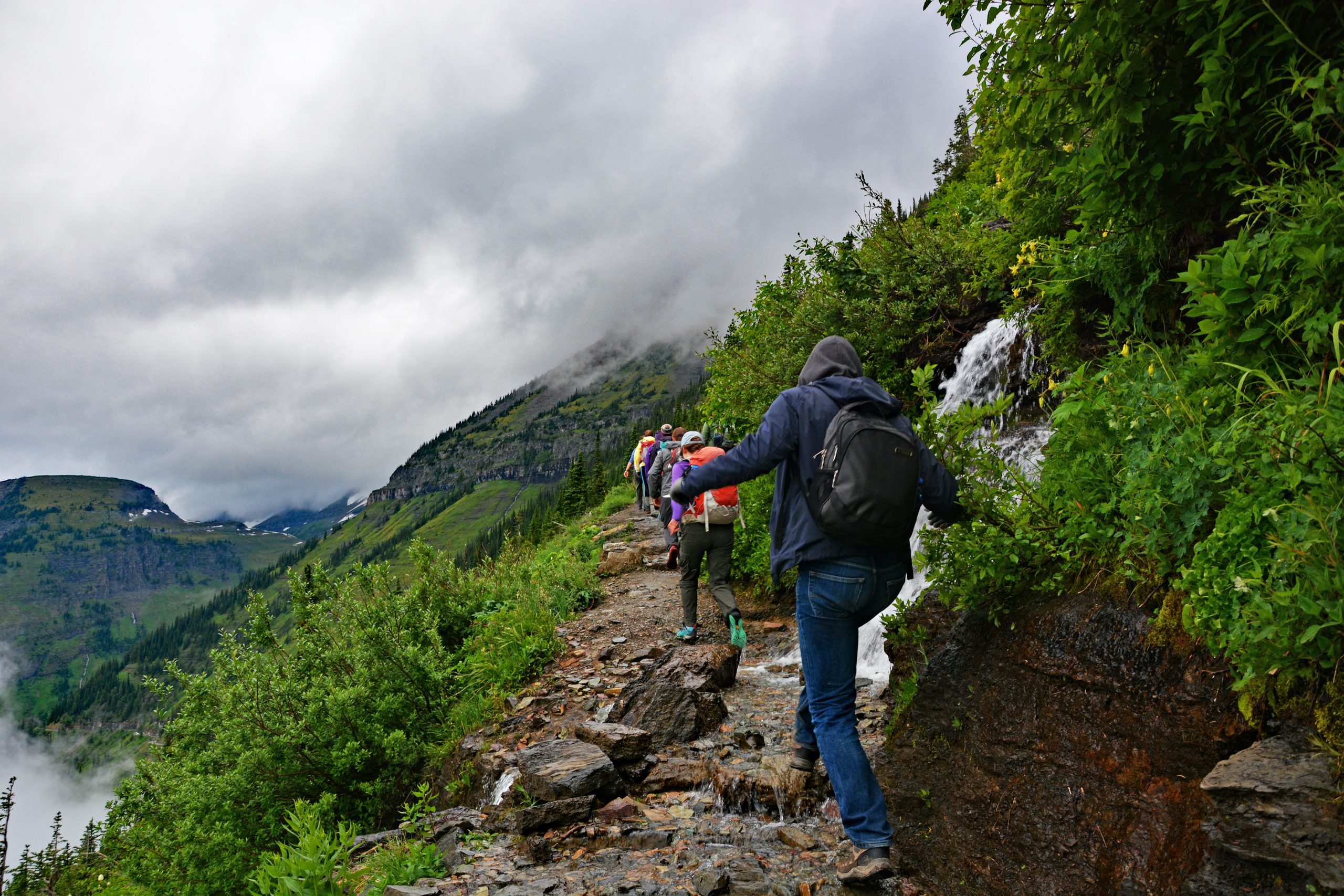
I started the Highline Trail shortly before midday, stepping out onto the sun-washed boardwalk of Logan Pass at 10:30. The air was clear, the sky a flawless blue dome, and the mountains stood sharply against it—so different from the gloom and fog that had hung over the trail three years earlier when I hiked here with my son Simon. On 12 July 2016, the clouds had pressed low, wetting our jackets and swallowing most of the landscape. I remembered that weight of grey as I looked now at the generous sunlight pouring across the ridge.
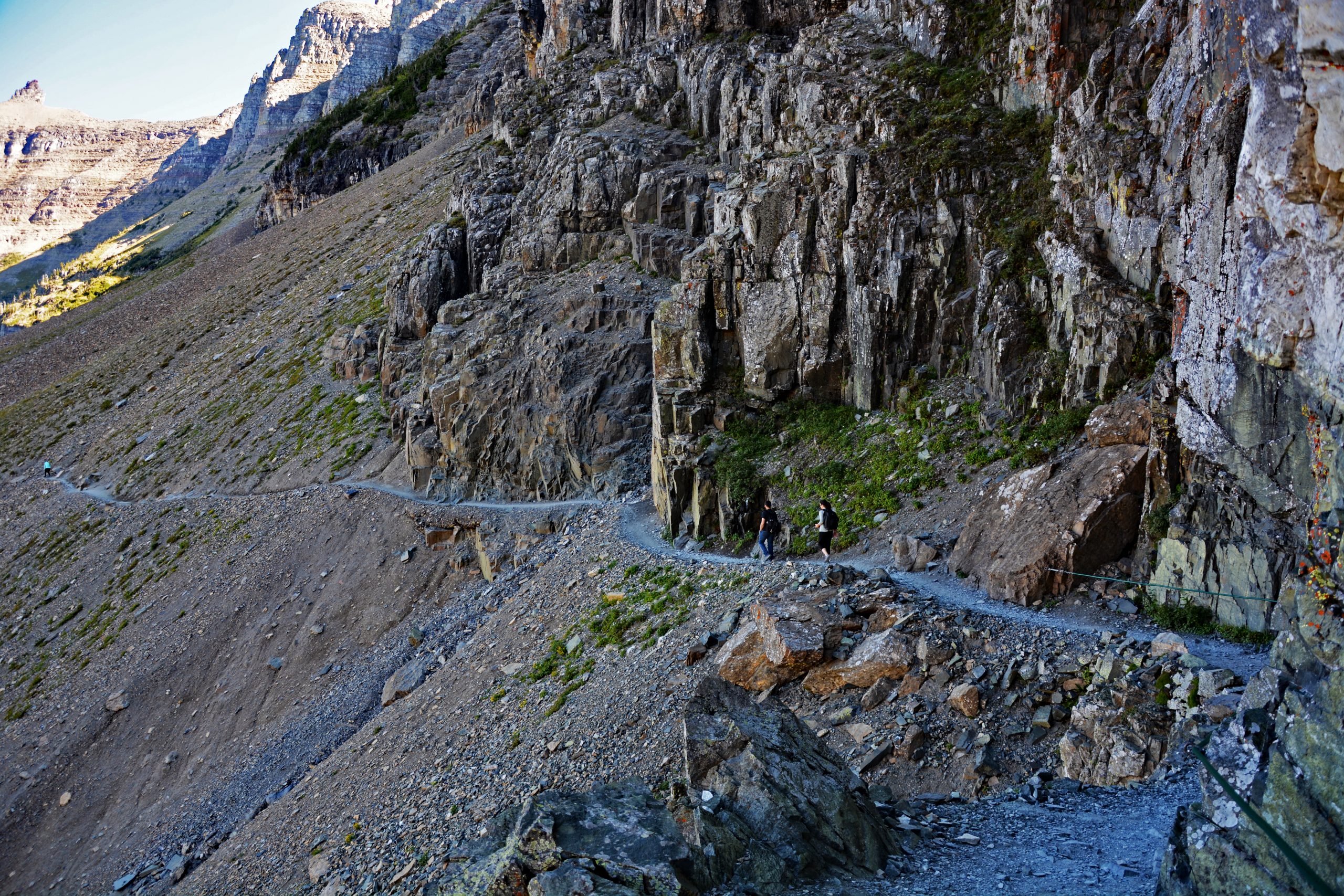
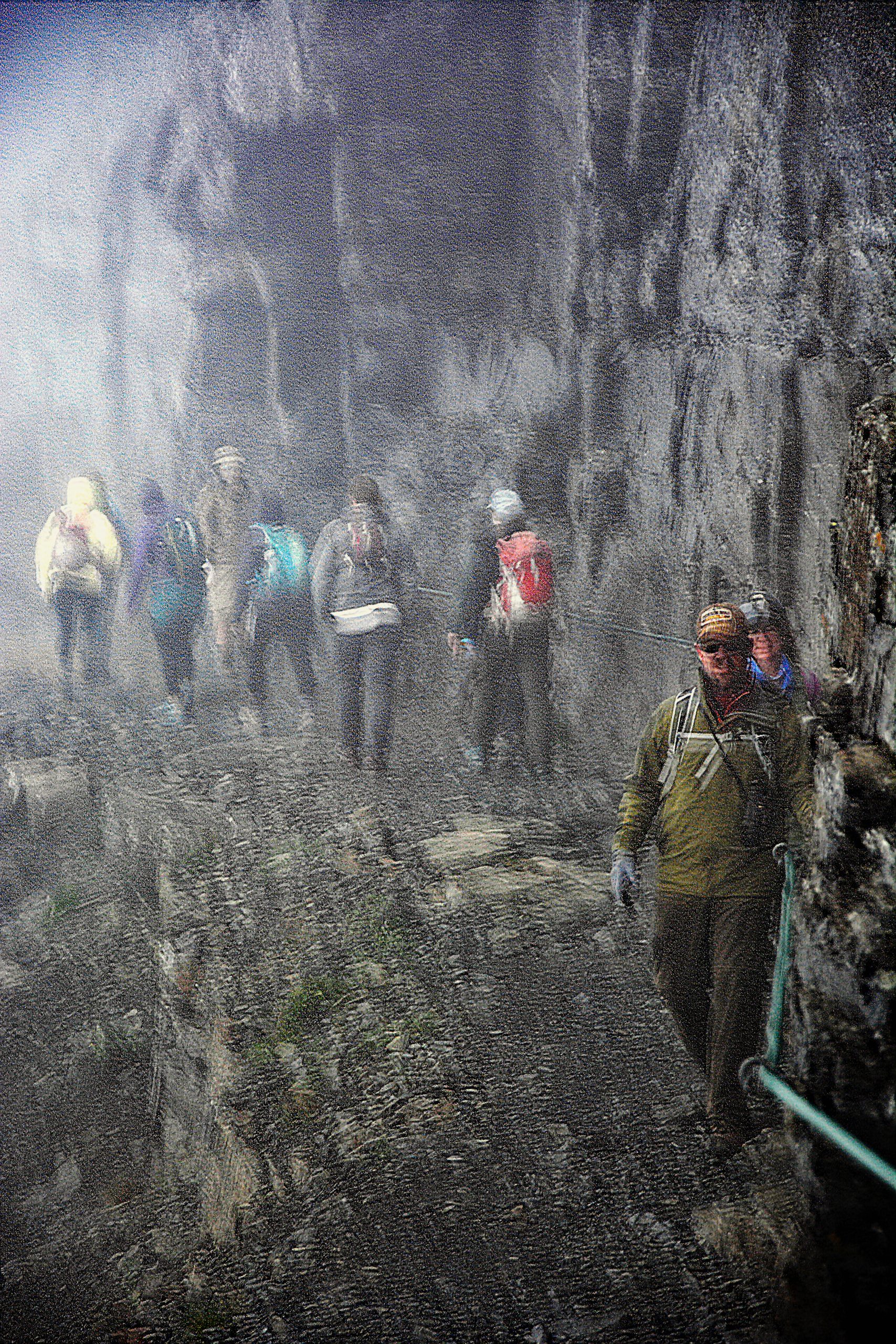
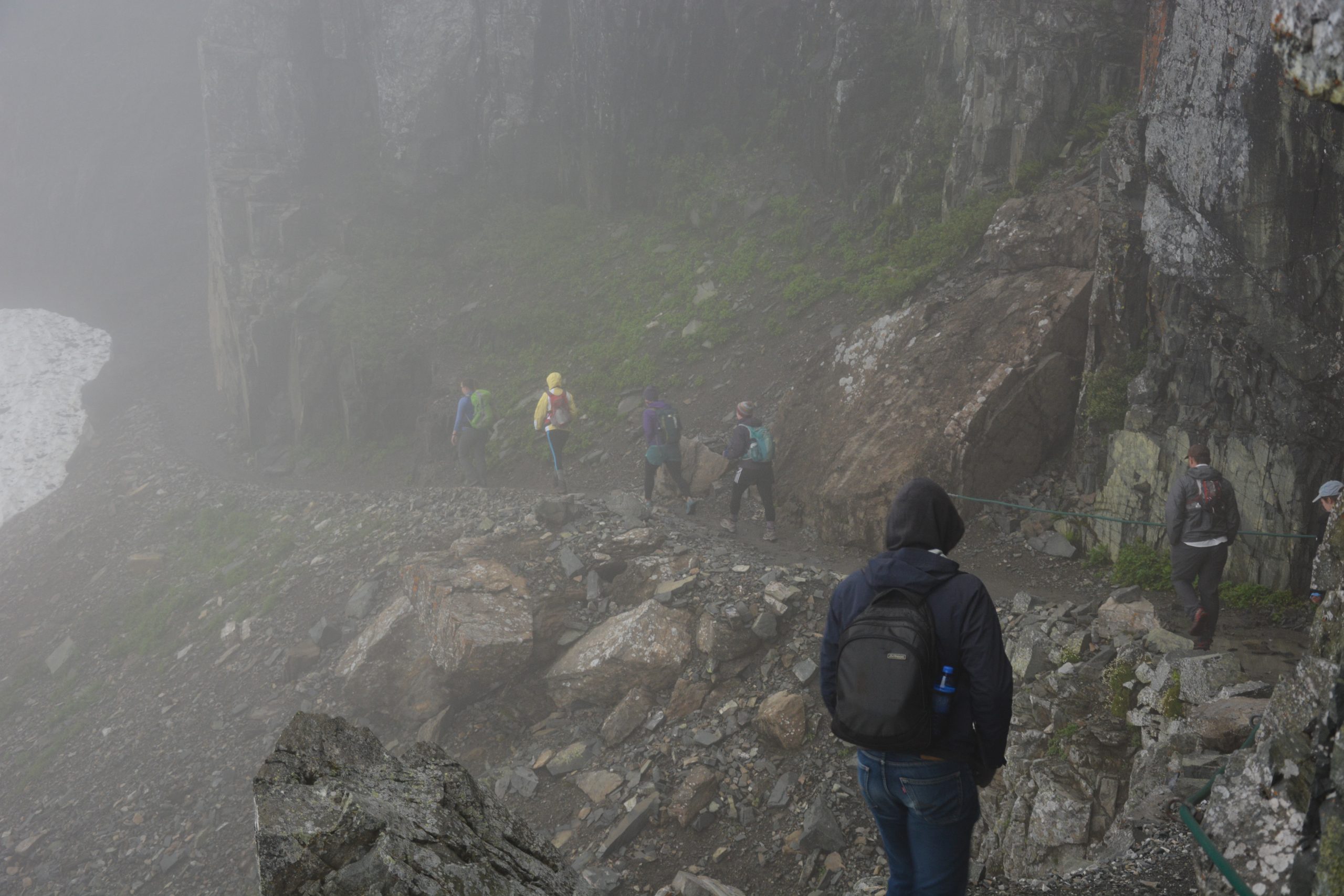
Barely eight minutes after leaving the pass, I reached the narrow ledge where an iron chain is anchored directly into the cliff. The rock dropped away to my right—steep, rough, and deep—yet the sunshine lent confidence, and the path felt friendlier than it had in the damp mist of 2016.
Gallery I – The Narrow Ledge, Two Very Different Days
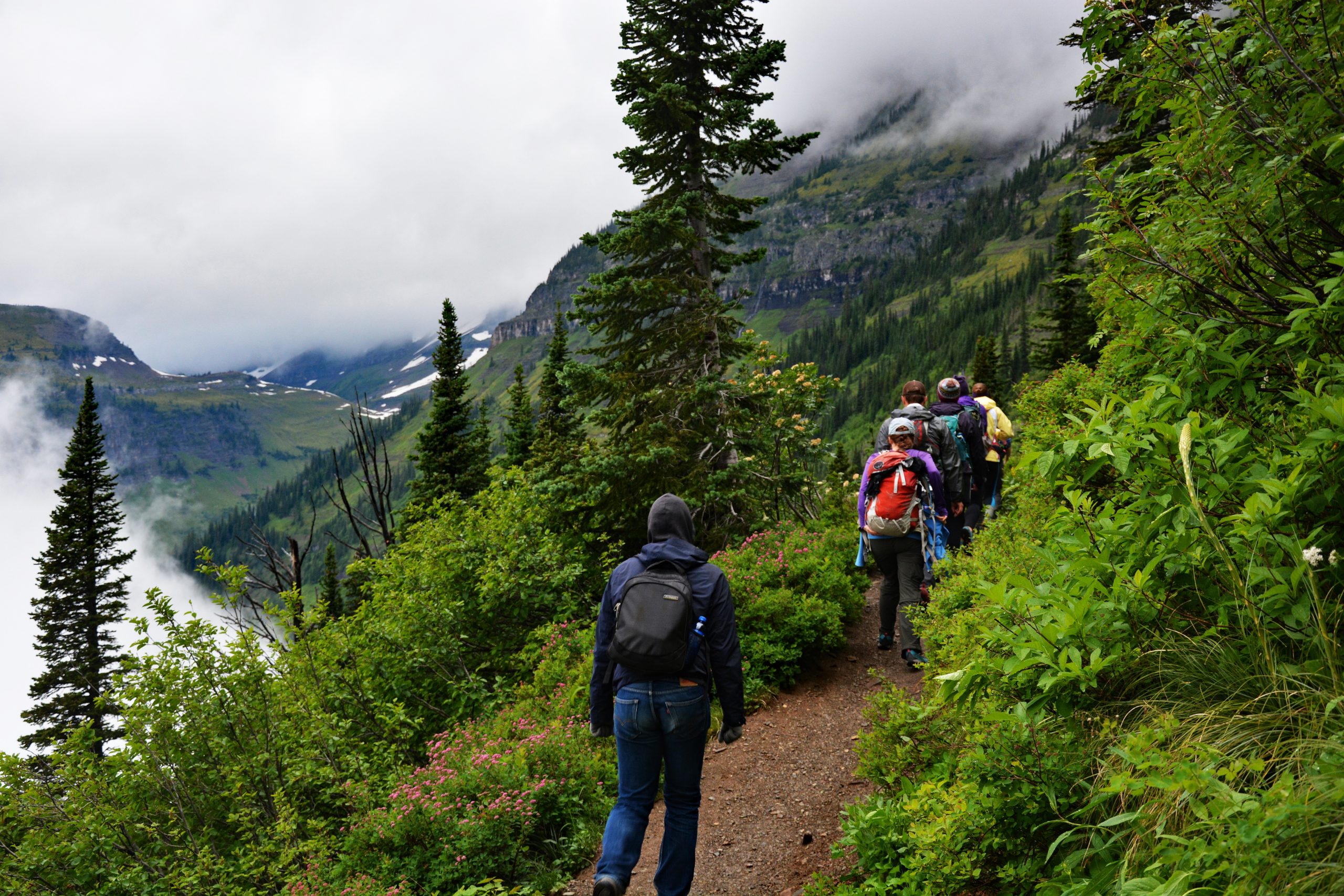
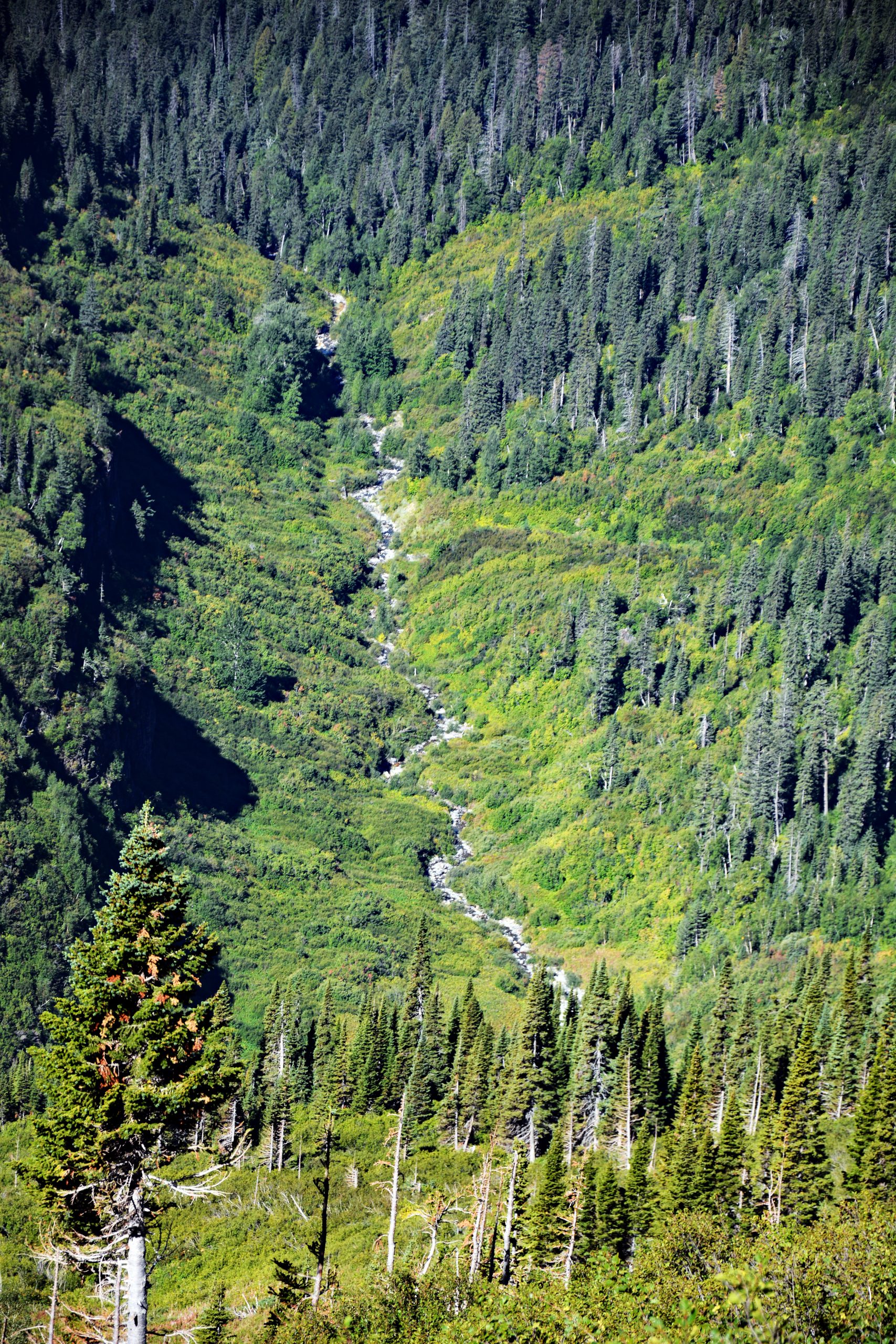
A few minutes later Haystack Butte appeared, its massive limestone dome glowing warmly in the sunlight. Half an hour beyond that, I passed the small waterfall that tumbles down the west slope of Pollock Mountain, its trickle catching the light like splinters of glass. To the east, Mt. Oberlin rose in ever-changing angles, its broad shoulders striped by light and shadow. When I looked down into the valley, I could see Logan Creek threading its way through the greenery, sometimes running almost parallel to the trail, as if keeping me company.
Farther ahead, the silhouettes of Bishop’s Cap, Mount Gould, and Haystack Butte gathered in one sweeping line. Their shapes—sharp, muscular, ancient—held my gaze again and again.
Gallery II – The Mountains Unfold
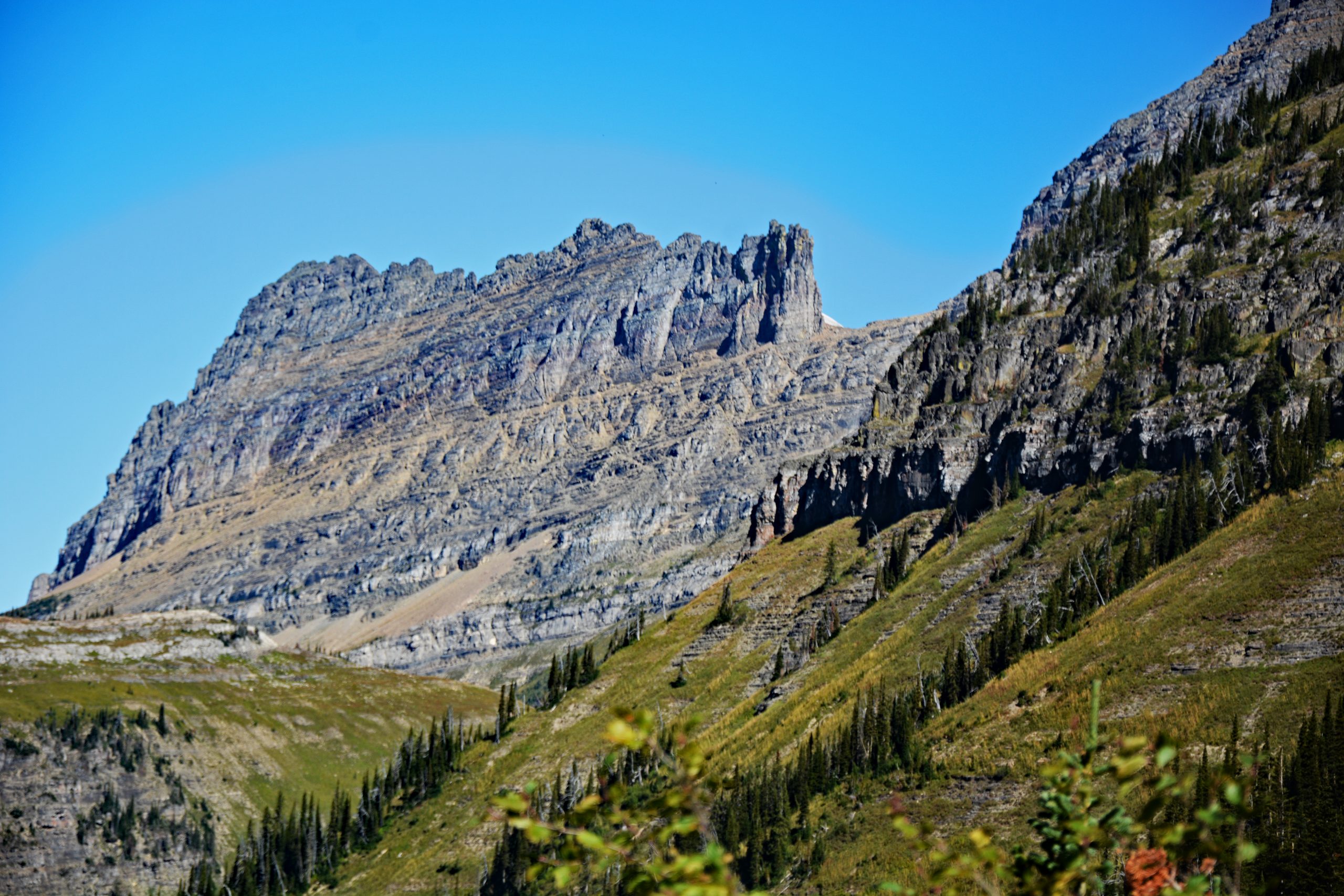
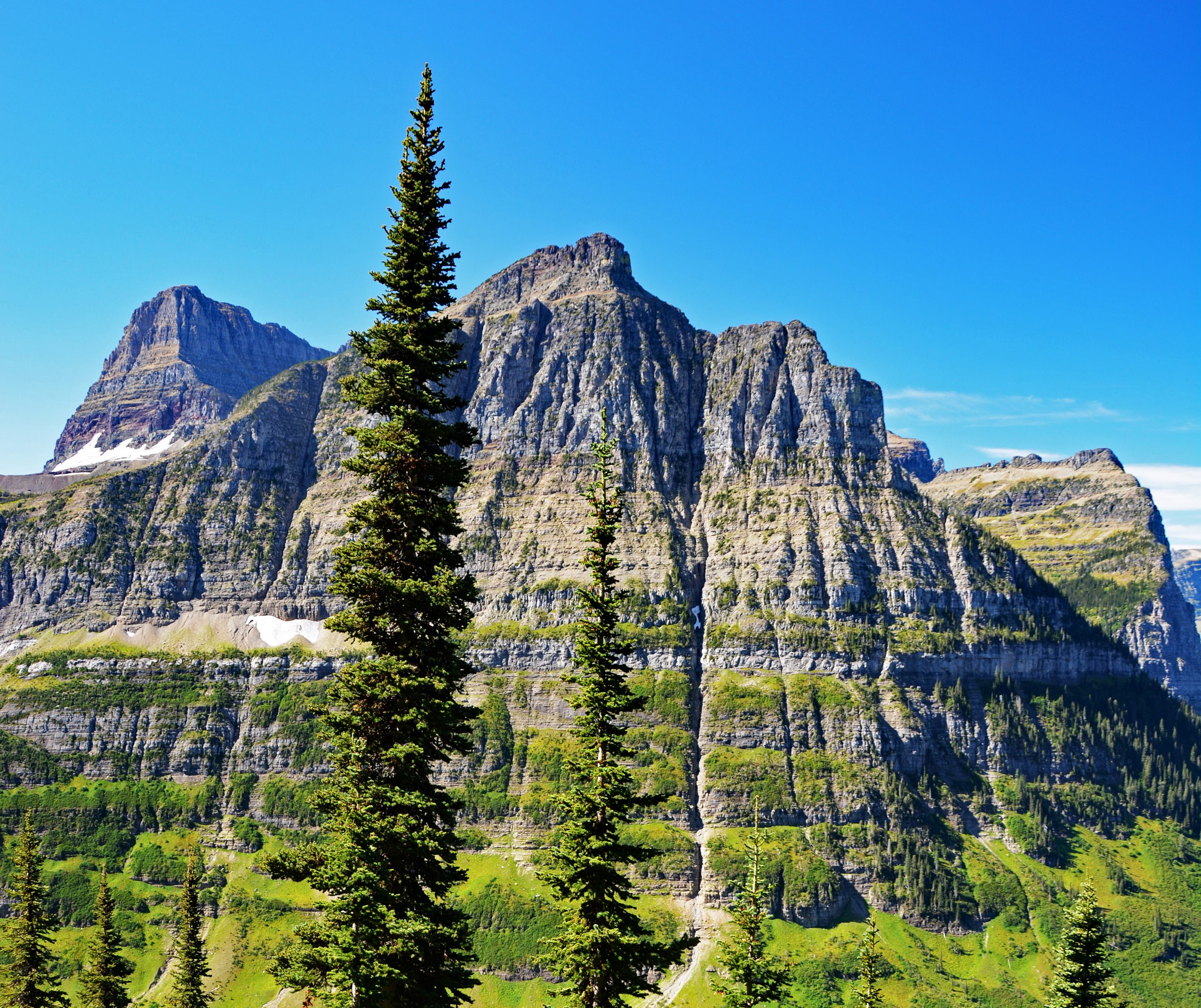
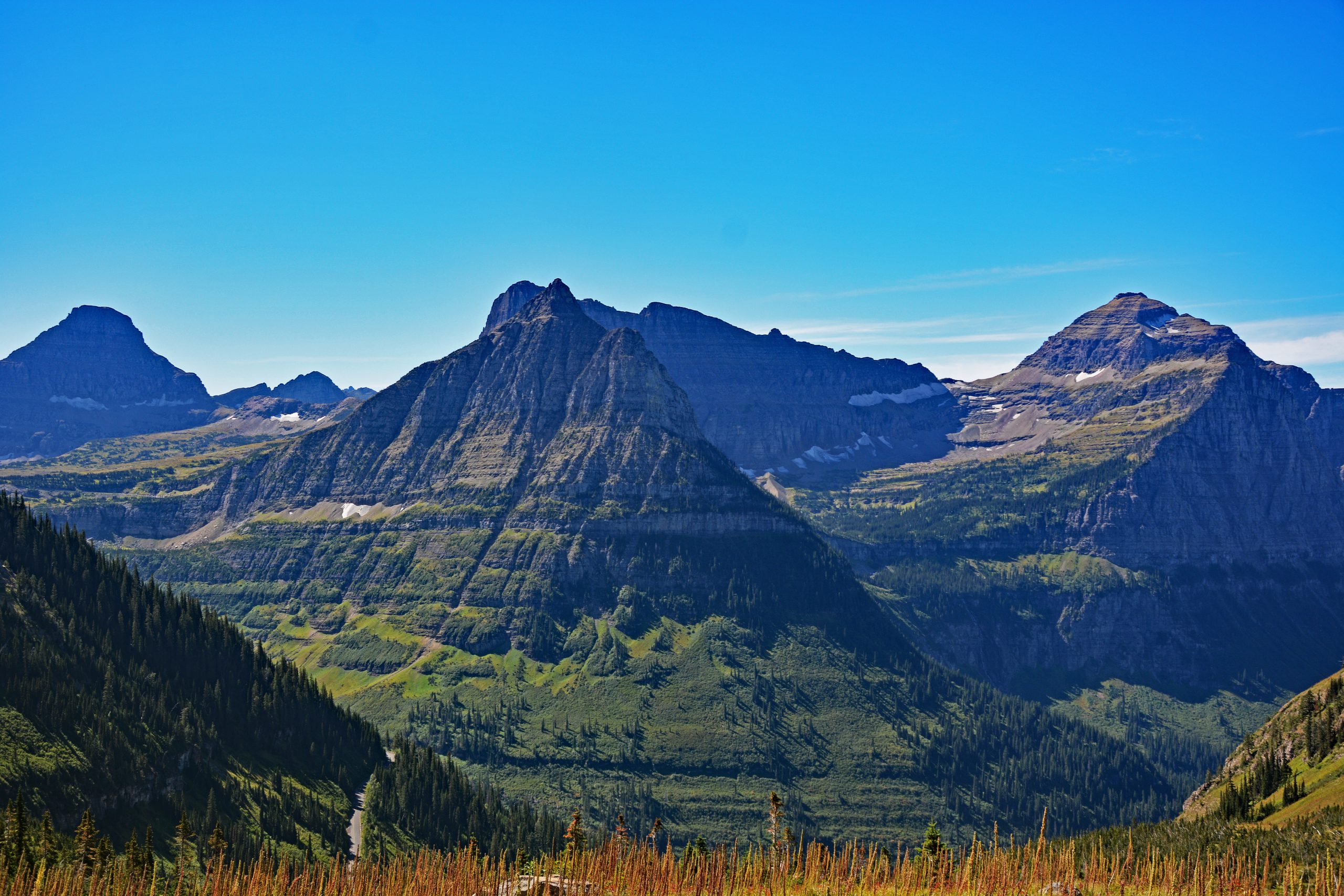
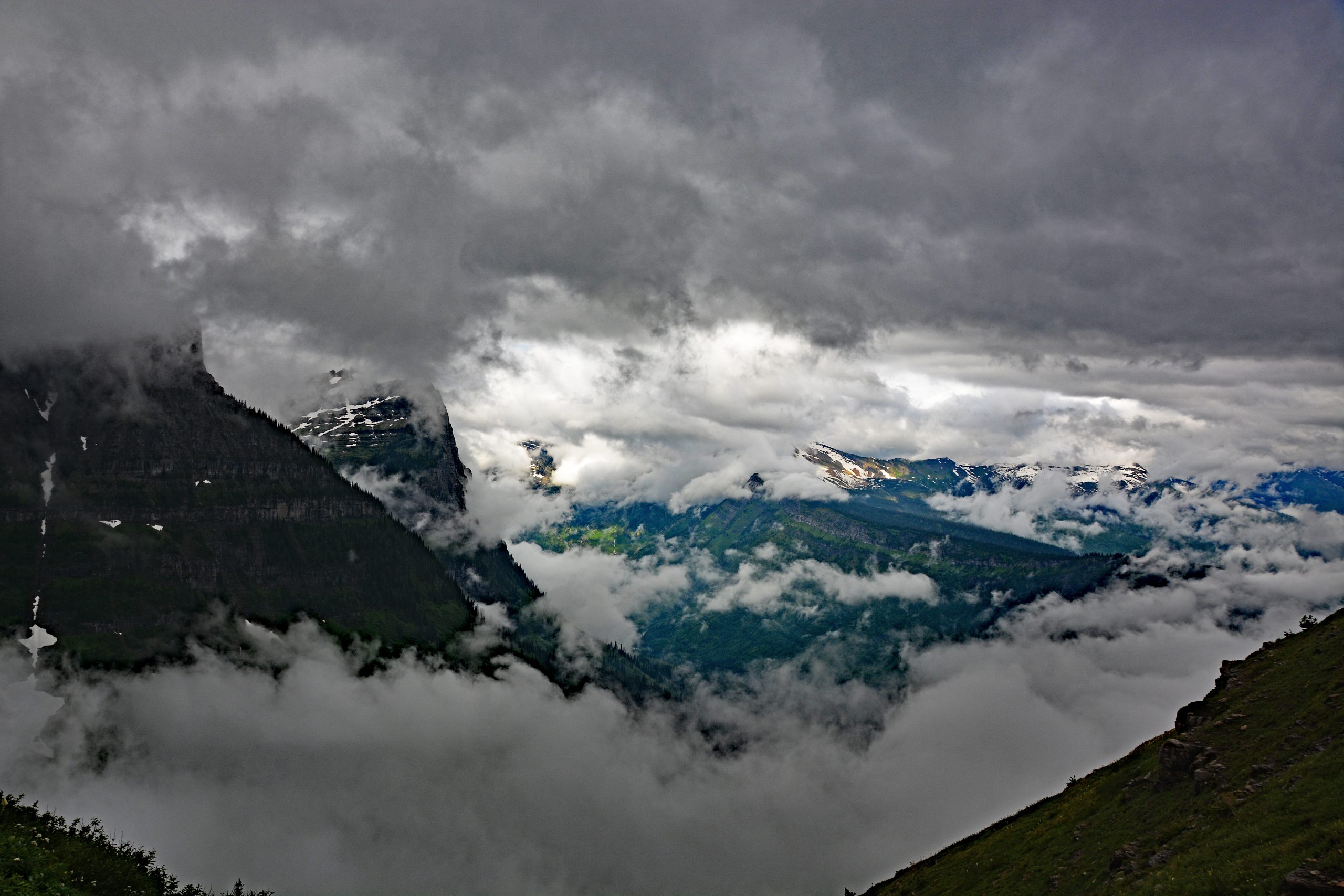
Mt. Oberlin to my left and Haystack Butte to my right now became constant companions. After an hour and ten minutes of hiking, Cannon Mountain appeared beside Oberlin—grey, jagged, and beautifully exposed. What a view it was: a whole architecture of stone, carved by ancient glaciers and sharpened by wind.
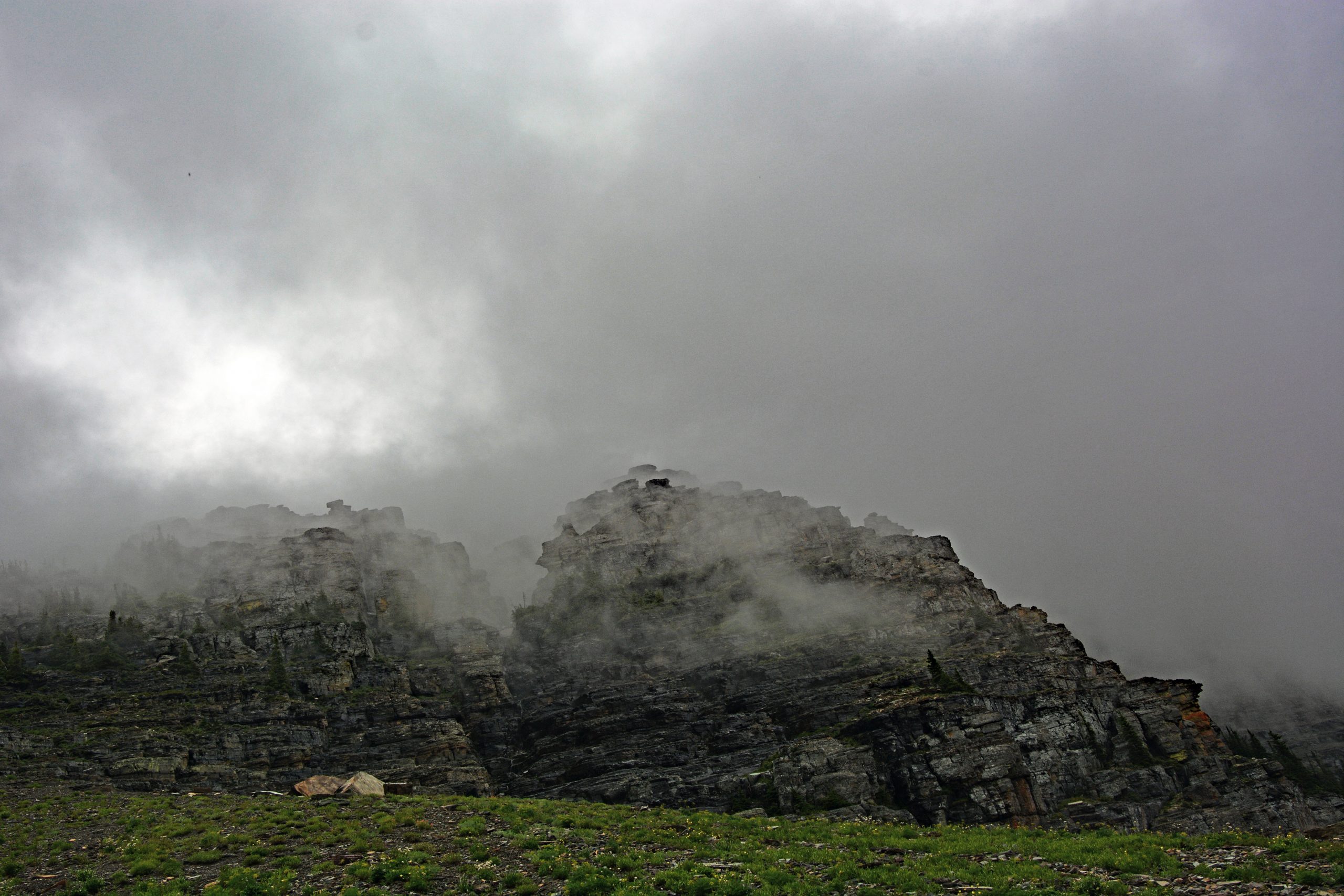
Three years earlier, Simon and I had only guessed at these shapes through the fog. We imagined more than we saw, walking in a world reduced to silhouettes.
Another half hour brought the first clear views of the Livingston Range—a long procession of peaks stretching to the northwest, glowing softly in the afternoon light.
Gallery III – Clear Skies and Memories of Fog
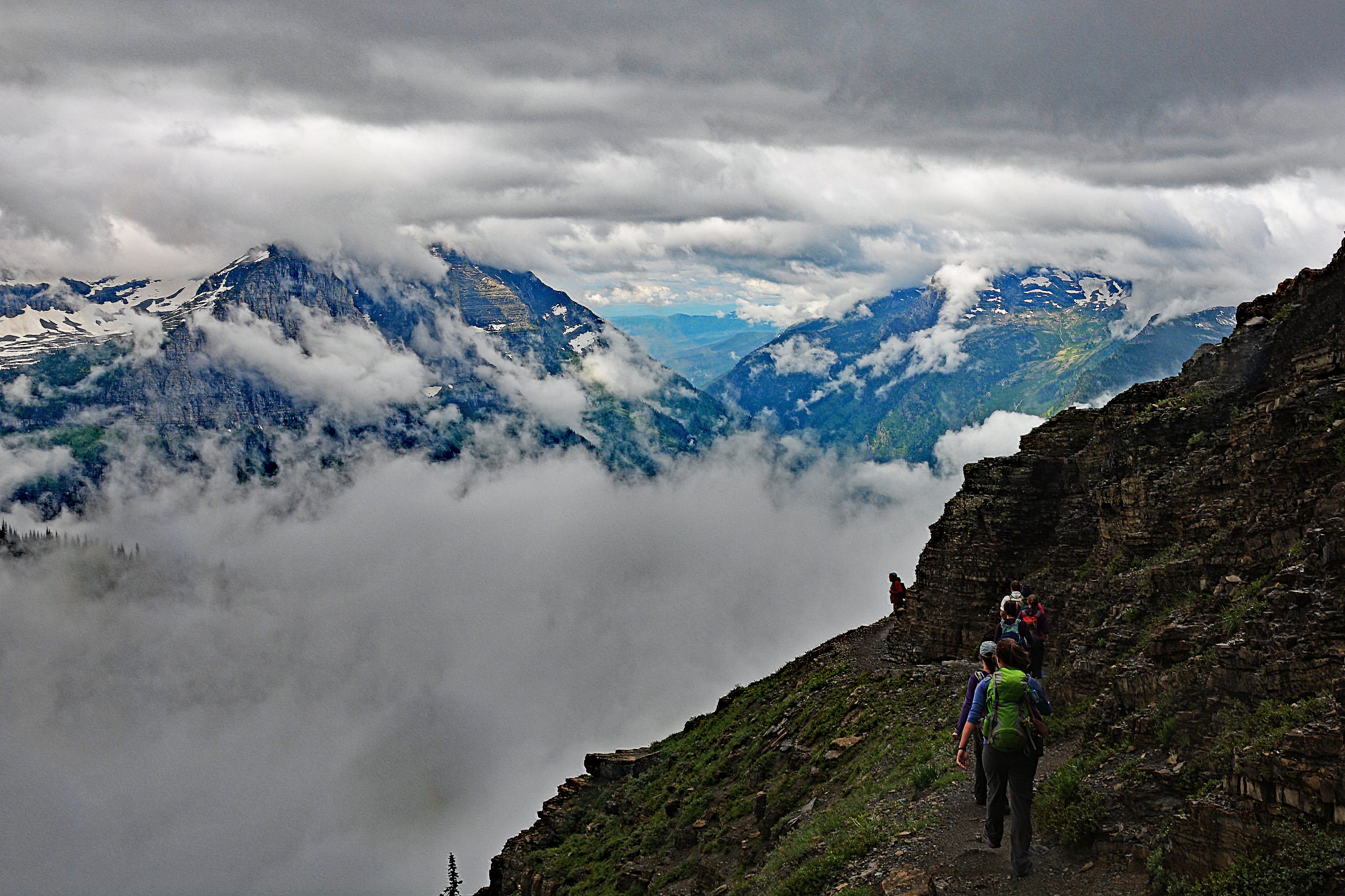
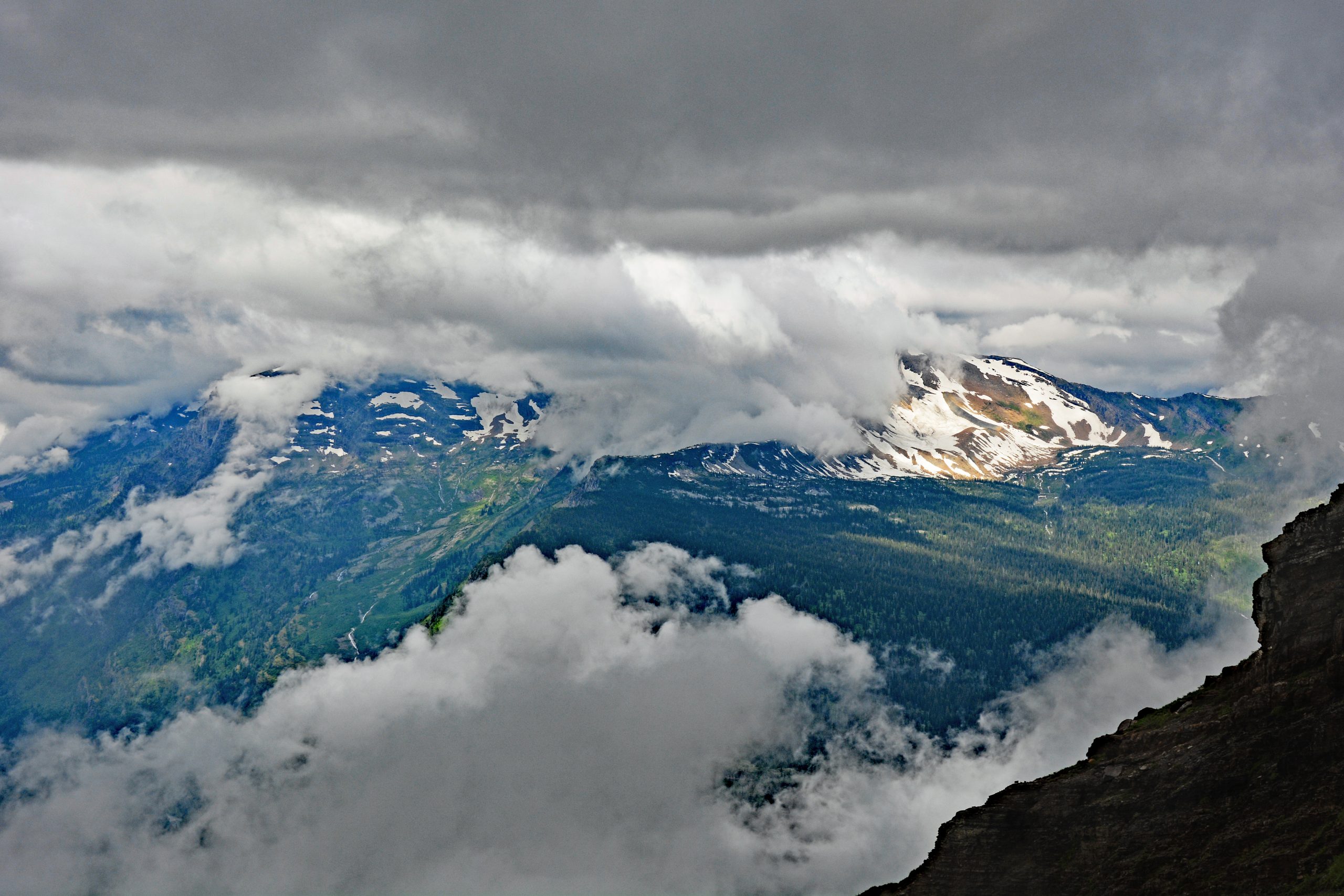
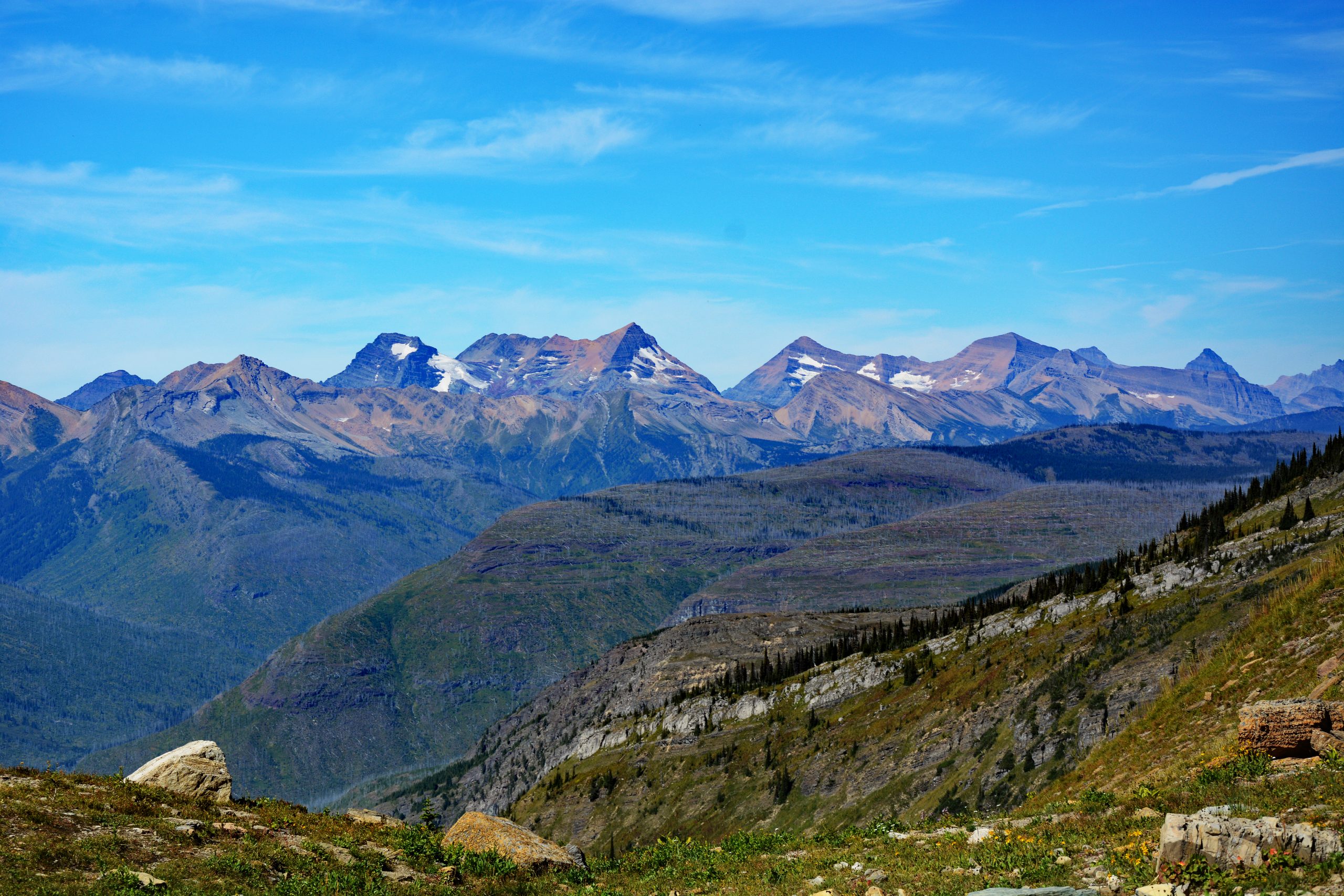
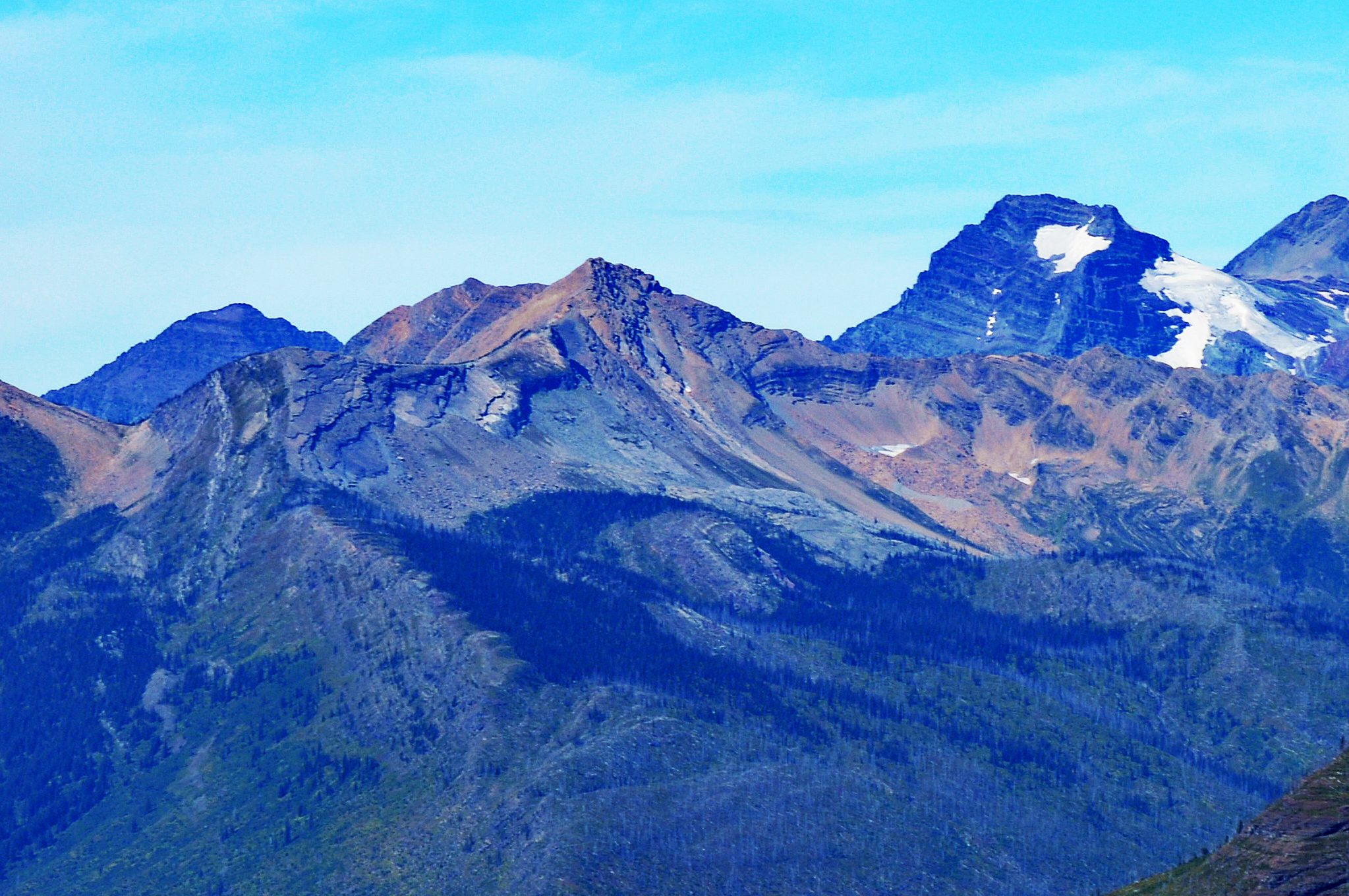
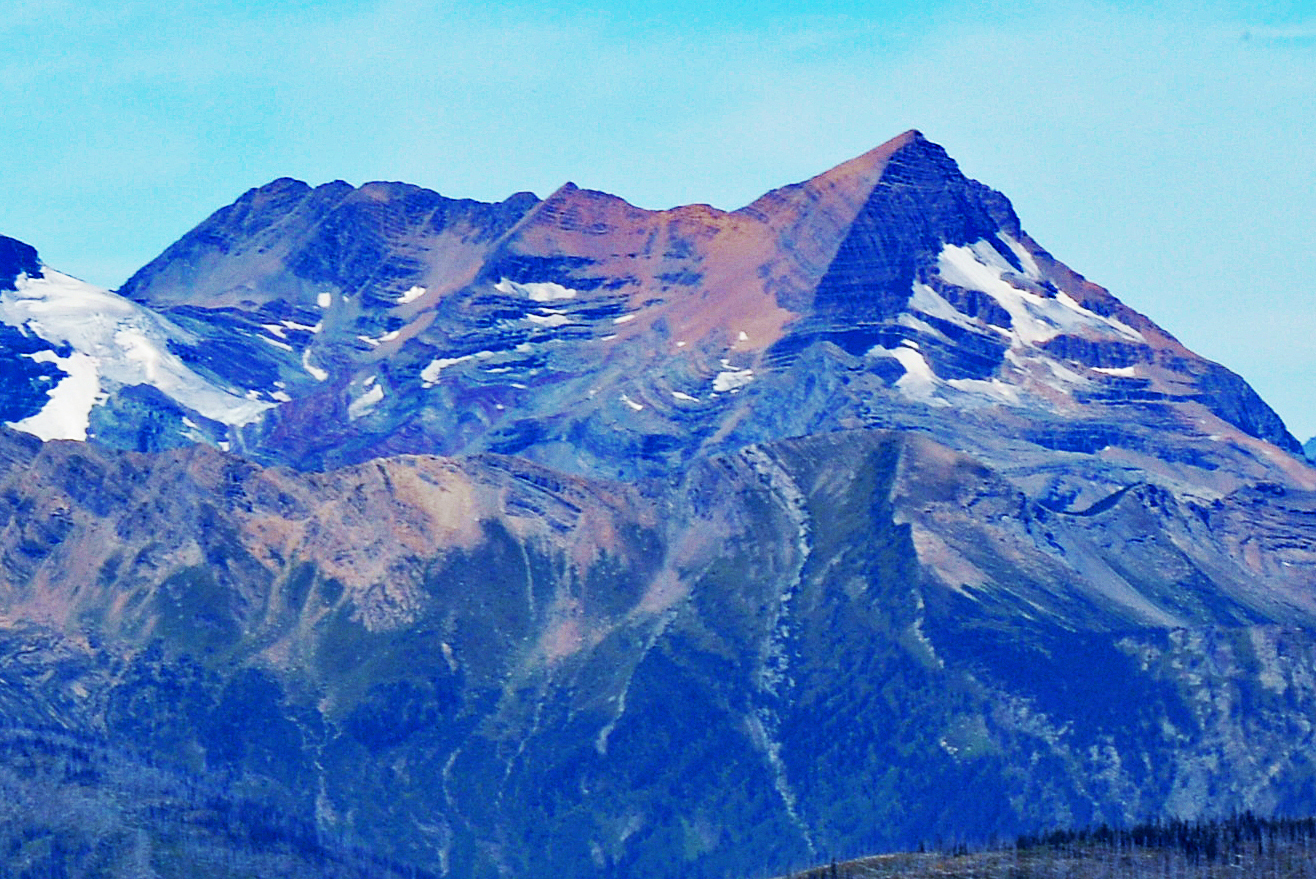
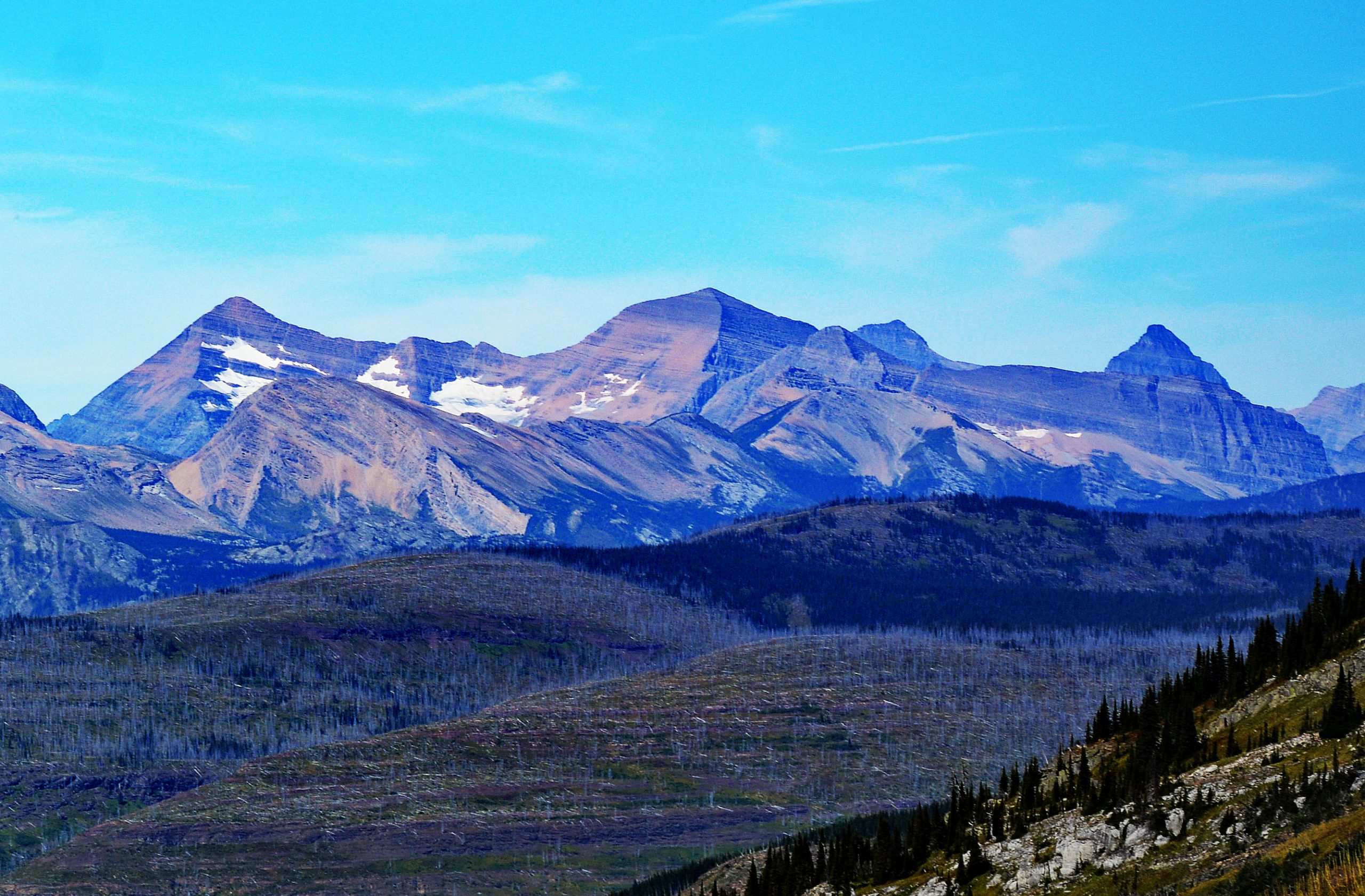
In 2016, we had hiked more quickly, trying to keep pace with a group of young Americans just ahead of us. Because of them, we reached the snowfield at Haystack Butte in only one hour and twenty minutes. I remember the crunch of old snow underfoot, the fog creeping around us, and the faint outline of Heavens Peak somewhere beyond the clouds.
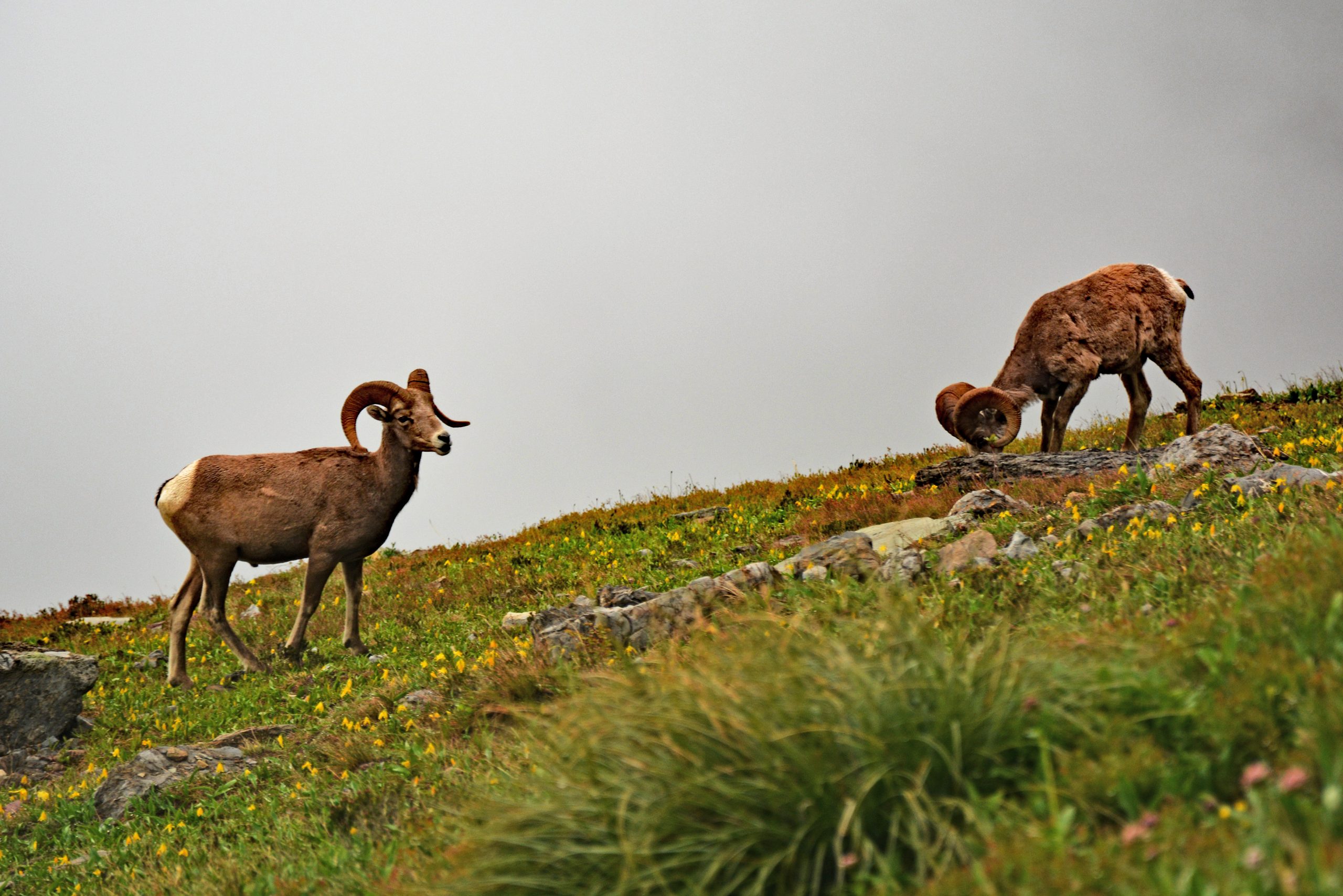
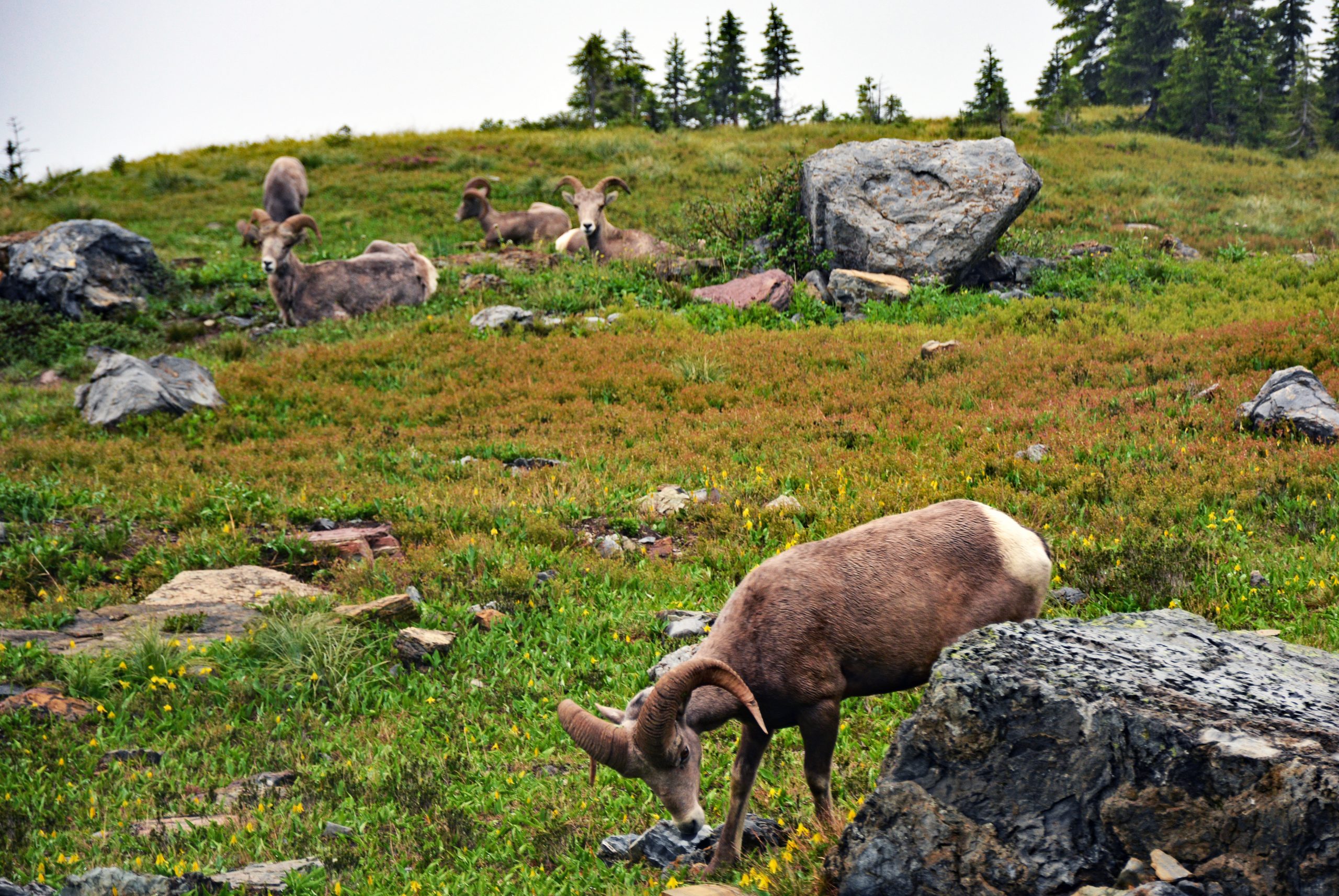
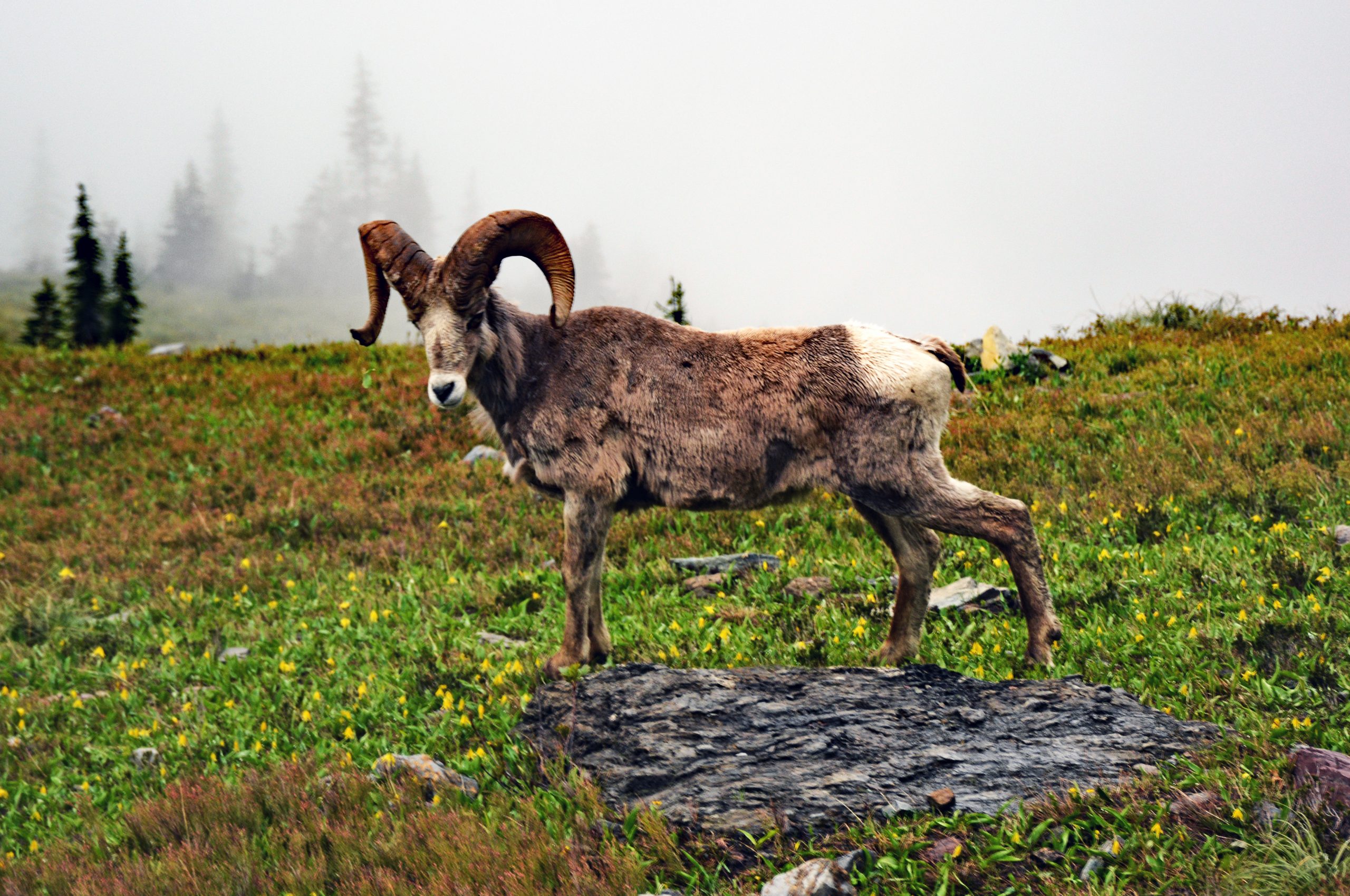
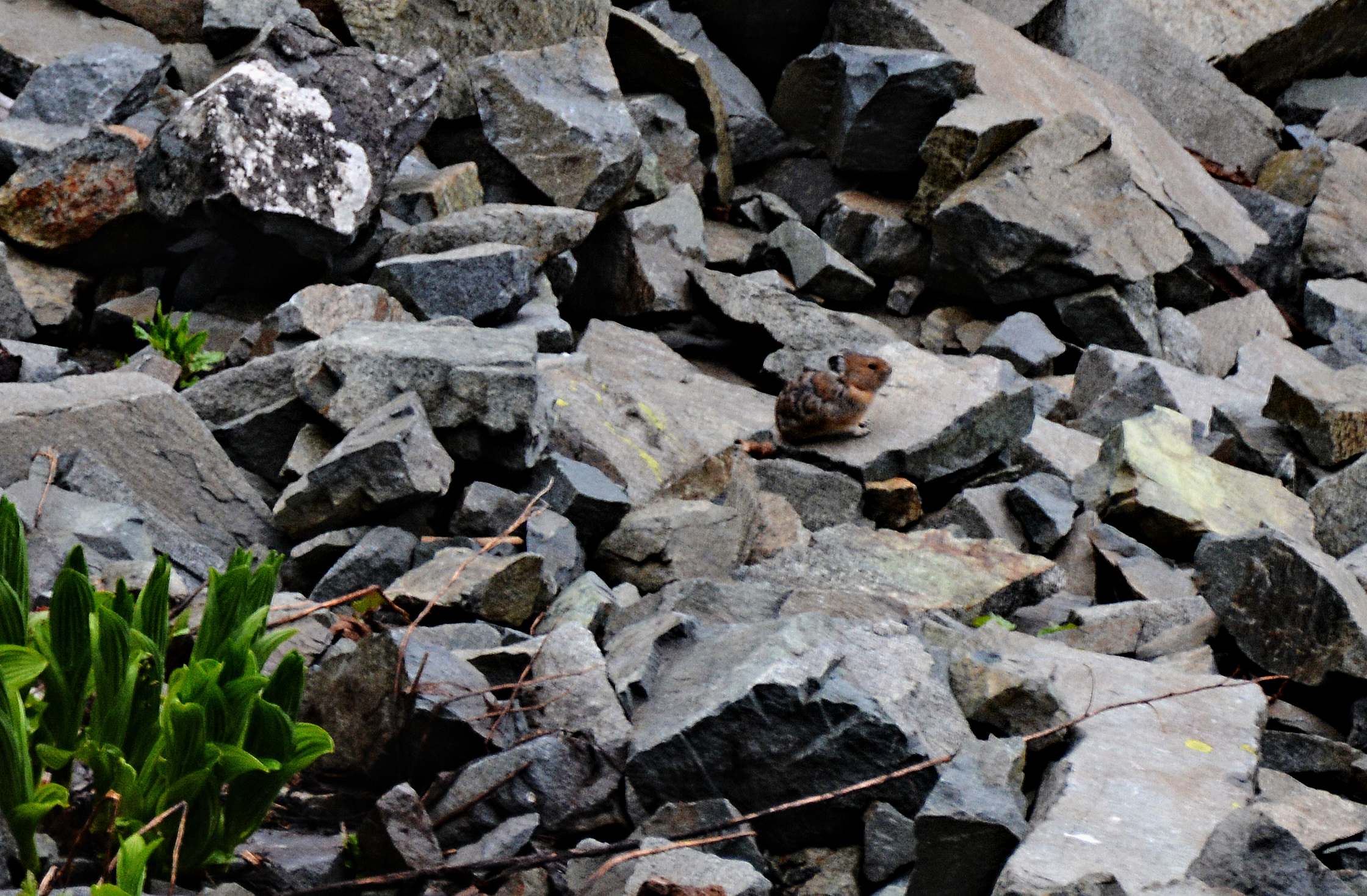
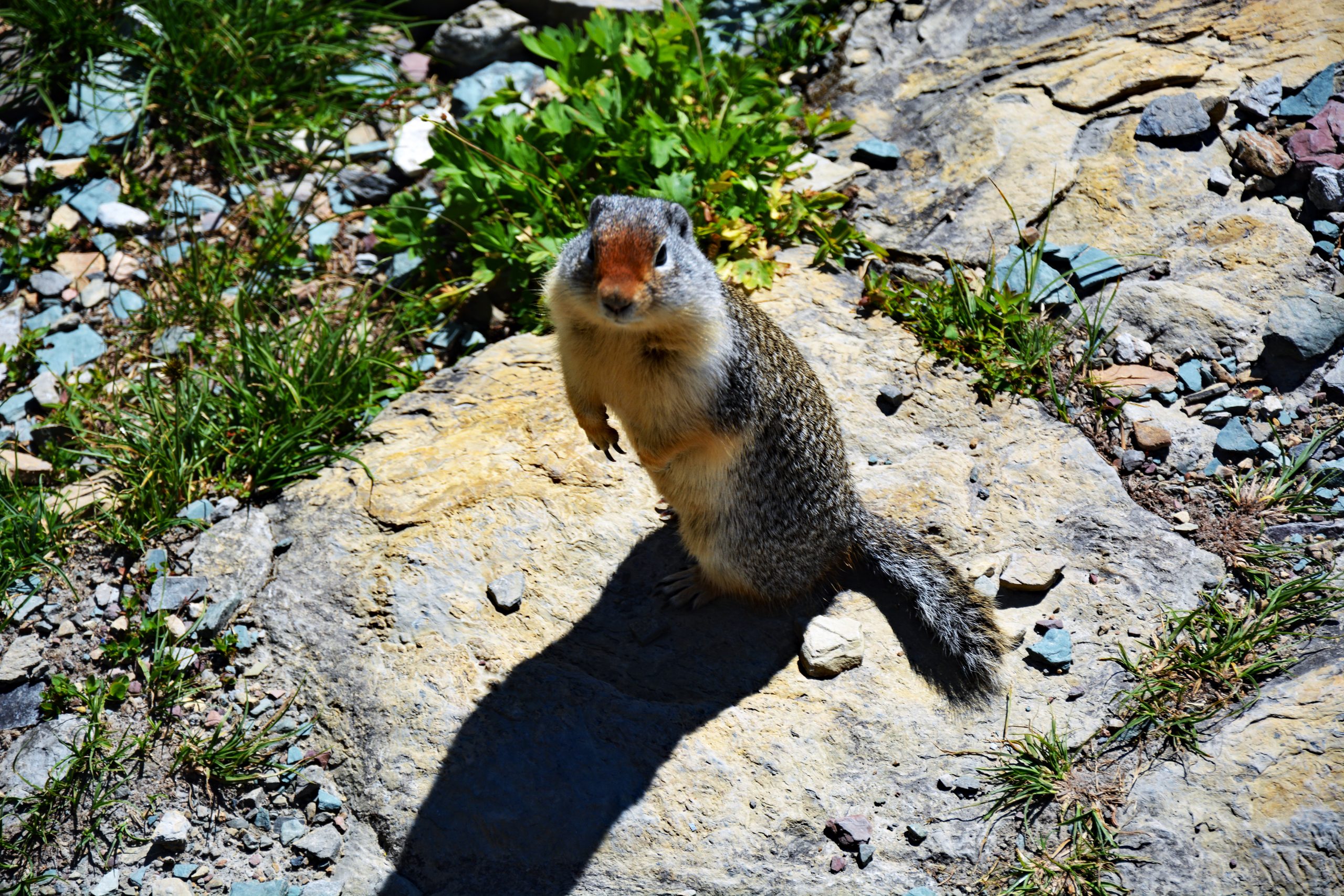
Around the corner in 2016, we had also been lucky enough to encounter a group of about seven Bighorn Sheep. They stood calmly on the slope, grass in their mouths, indifferent to our presence. Later, we saw marmots and even a small mouse darting across the rocks.
This time, in 2019, I saw only marmots—but the mountains more than compensated with their clarity.
Gallery IV – Wildlife and Weather
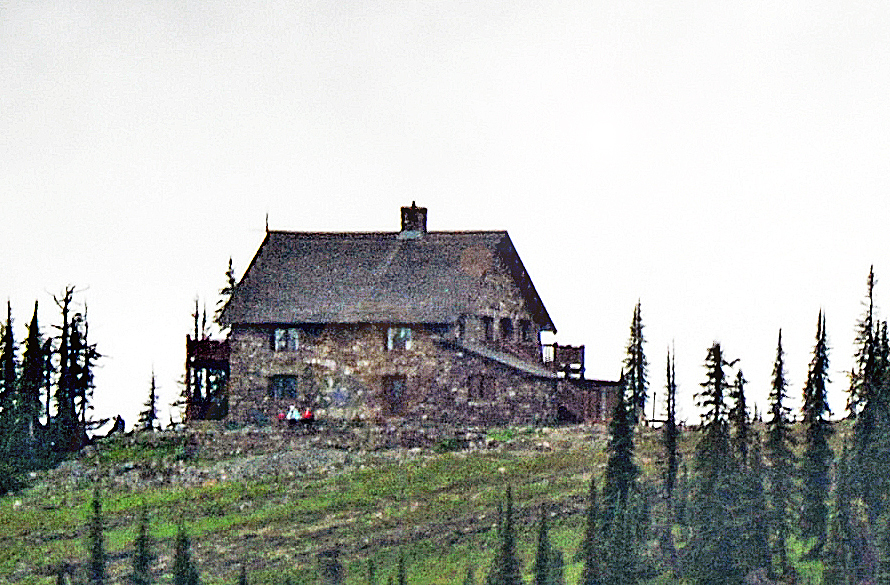
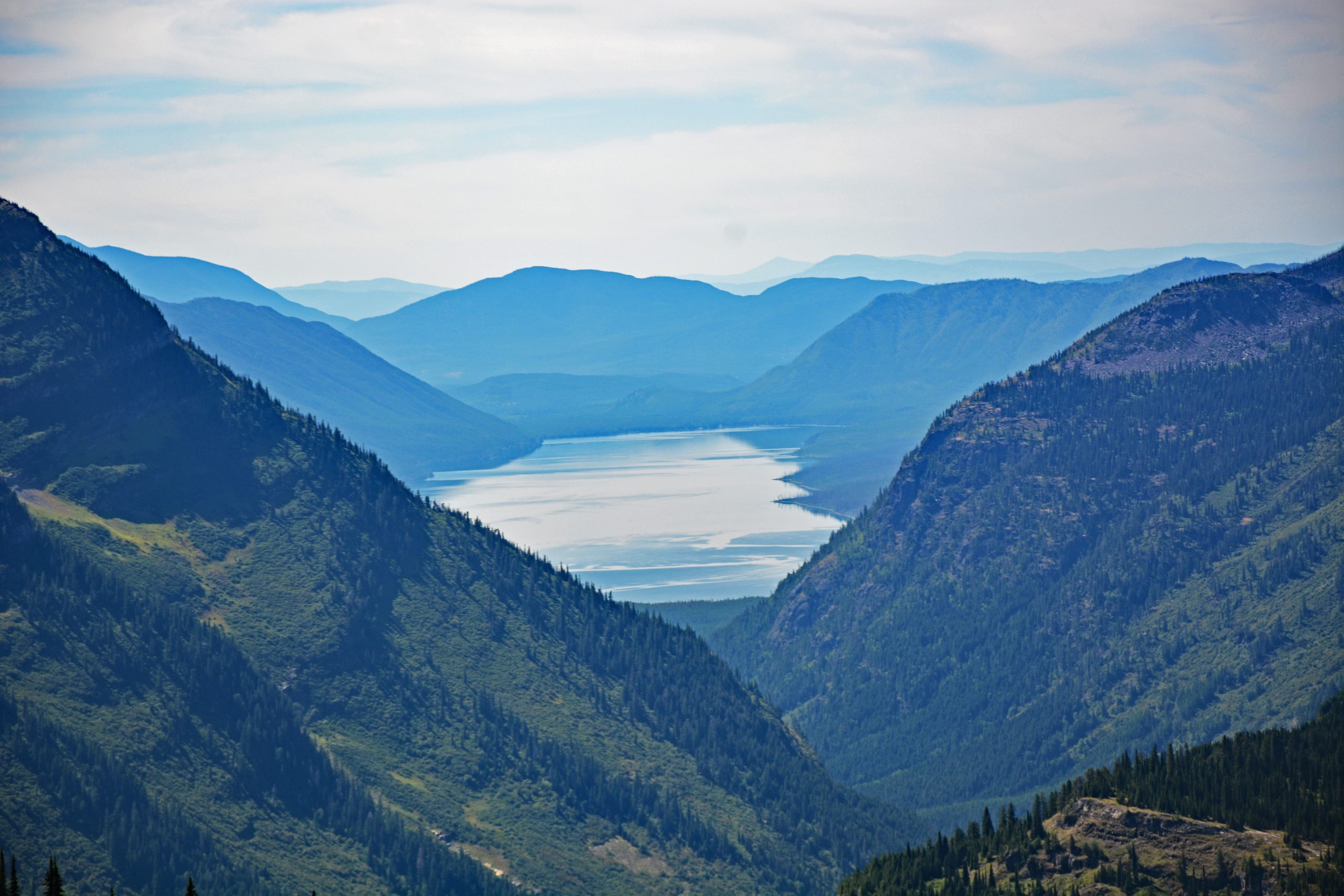
The trail continued around the slopes, curving gently with the contours of the mountains. After two hours and twenty-two minutes in 2016, we had glimpsed the Granite Park Chalet for the first time—small, isolated, and solid among the rocks. In 2019, I reached that point a bit later, slowed by pauses for photographs and admiration. When I arrived at the chalet, I rested outside and soaked in the views: the deep valley, Lake McDonald far below, the ridge lines, and the great, distant shape of Heavens Peak now entirely free of cloud.
As I sat there, I overheard someone talking about the shuttle bus schedule. Only then did I learn that the last bus from Logan Pass to St. Mary now left at 6 p.m.—since Thanksgiving the day before. I packed up quickly and began the long descent.
Gallery V – At the Granite Park Chalet
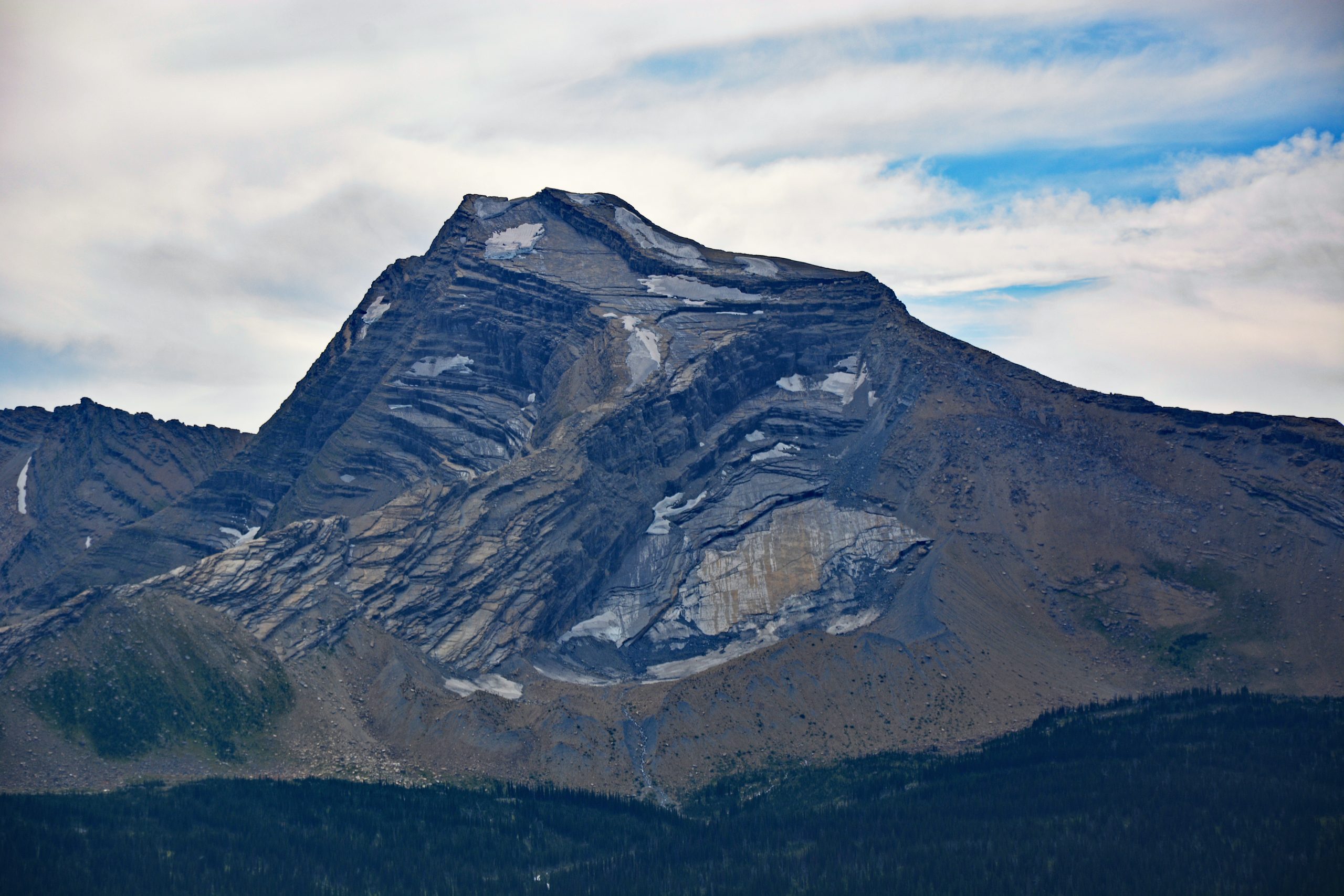
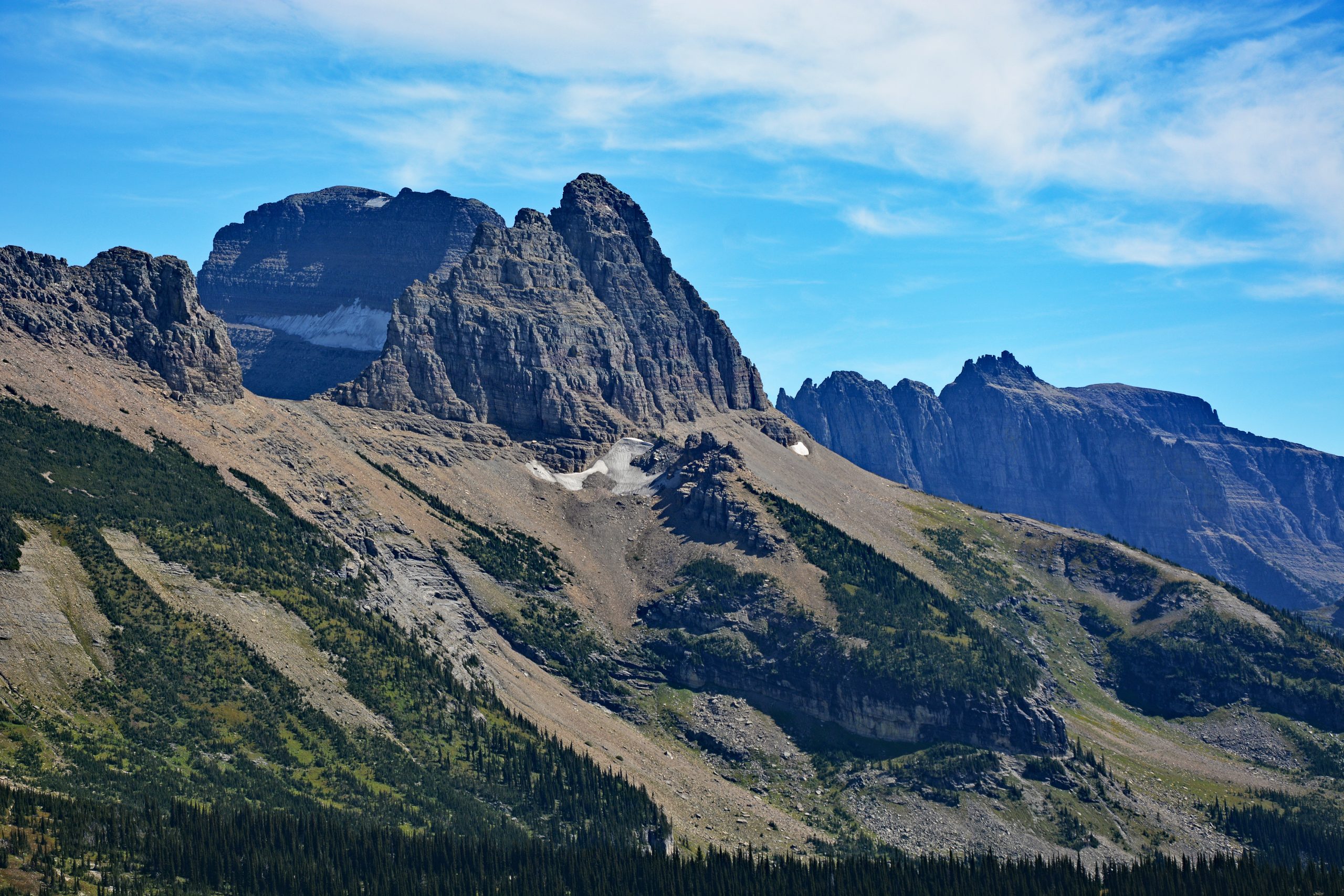
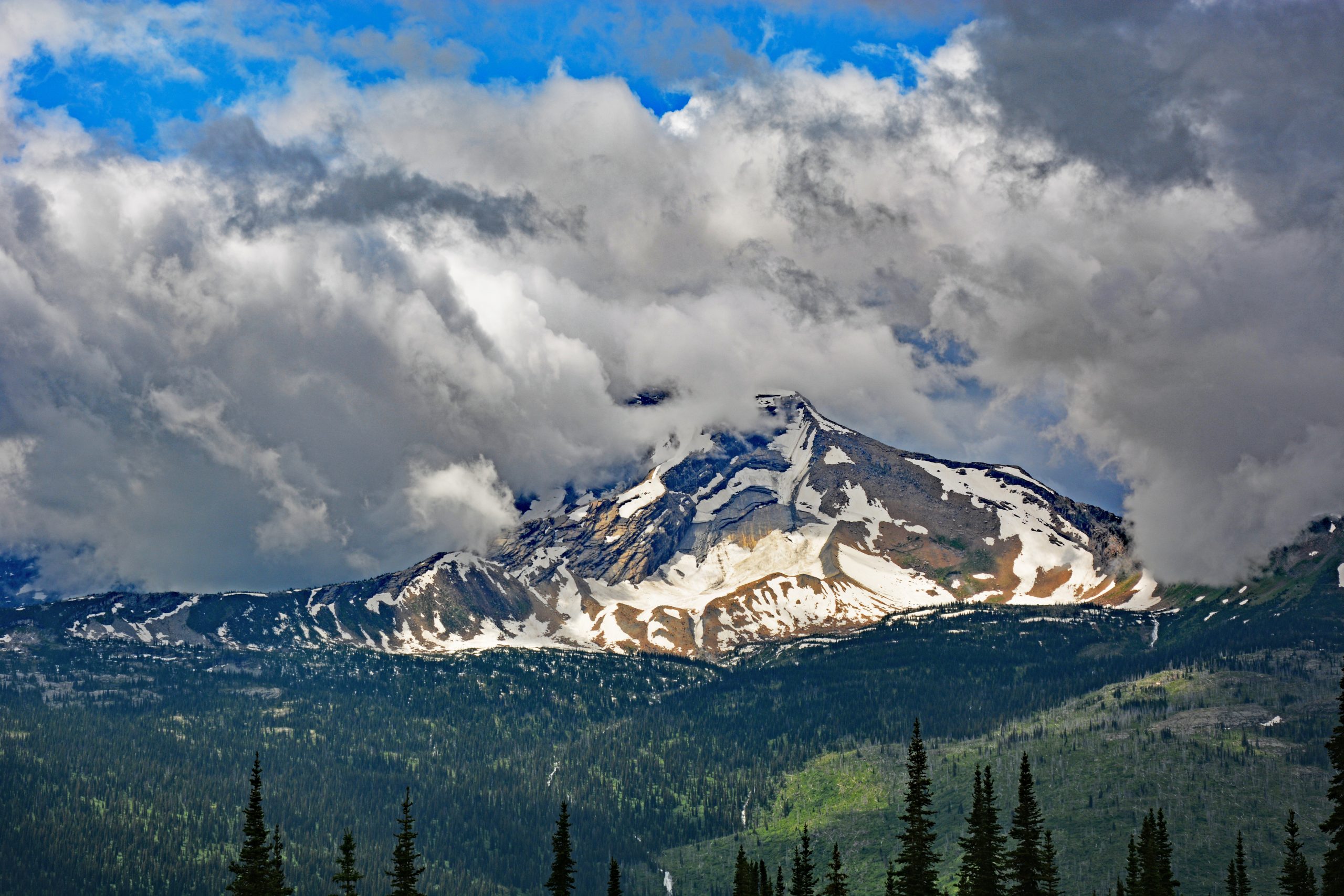
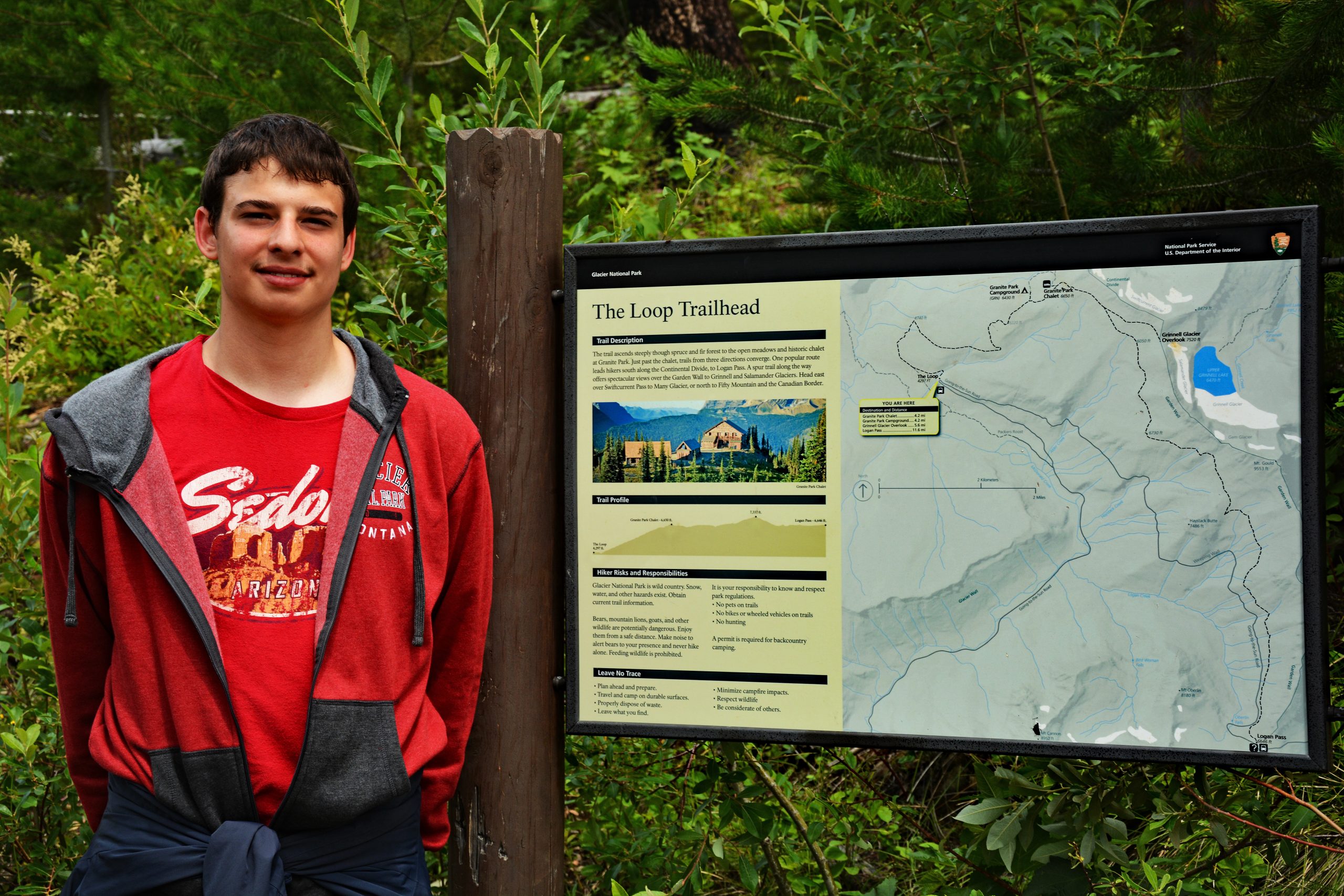
The descent to Going-to-the-Sun Road is 7.3 km long and drops 605 meters, and I felt every one of those meters in my knees. But the scenery stayed loyal: Heavens Peak and the Livingston Range accompanied me all the way down, glowing softly in the declining light.
At the road, I reached the shuttle stop around 5:45 p.m. The line was long—too long for comfort—so I lifted my thumb toward the passing cars. After about seven minutes, a couple stopped. They were from South Korea, had lived thirty-eight years in Seattle, and were now U.S. citizens. I thanked them warmly as they drove me back toward Logan Pass.
There, I walked with the husband to the Hidden Lake Overlook while his wife preferred to stay in the car. Later, they drove me onward to the St. Mary Visitor Center, stopping several times so I could point out mountains and explain parts of the landscape. Their kindness made the end of the day feel even more special.
Gallery VI – Views, together with the Couple from South Korea
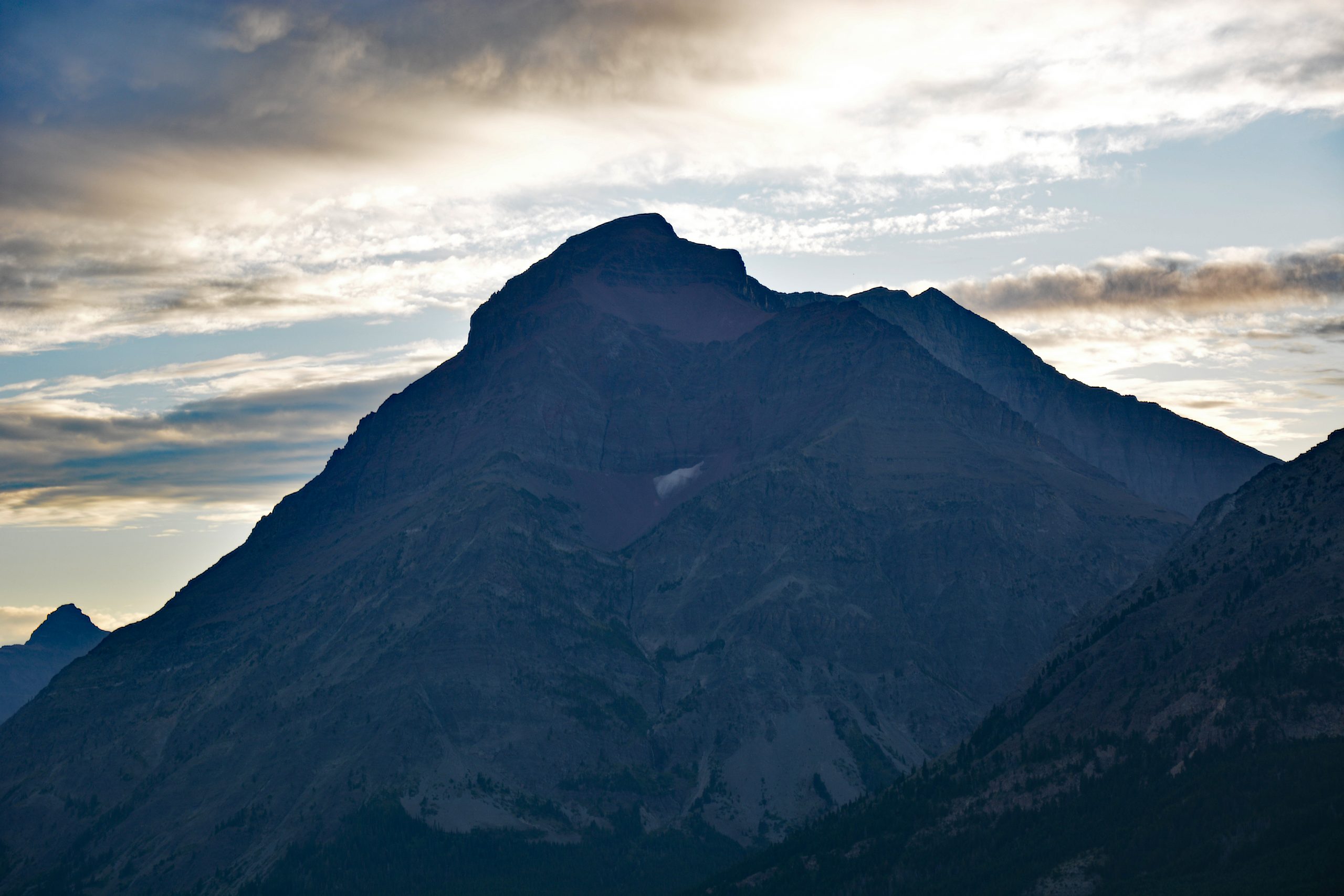
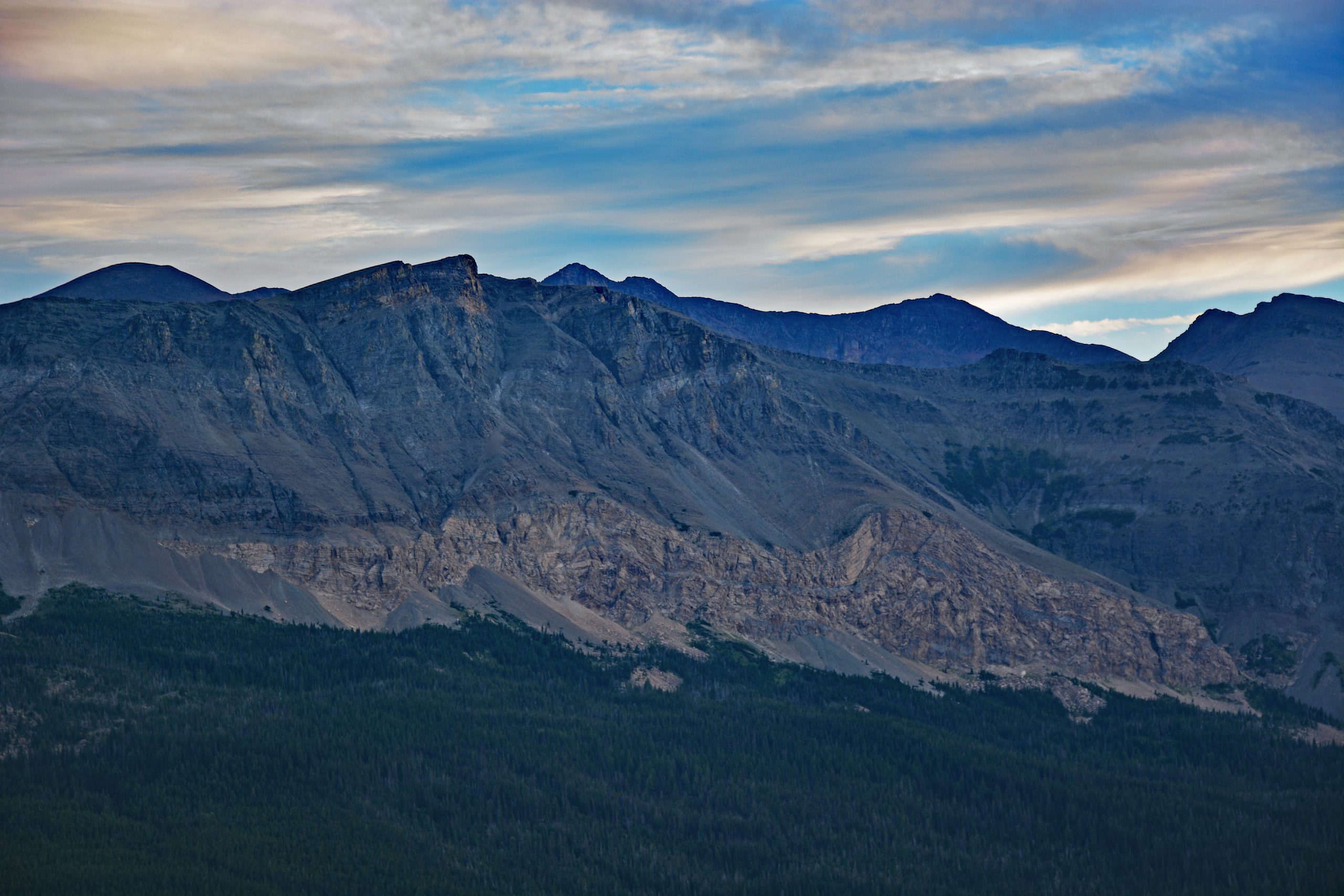
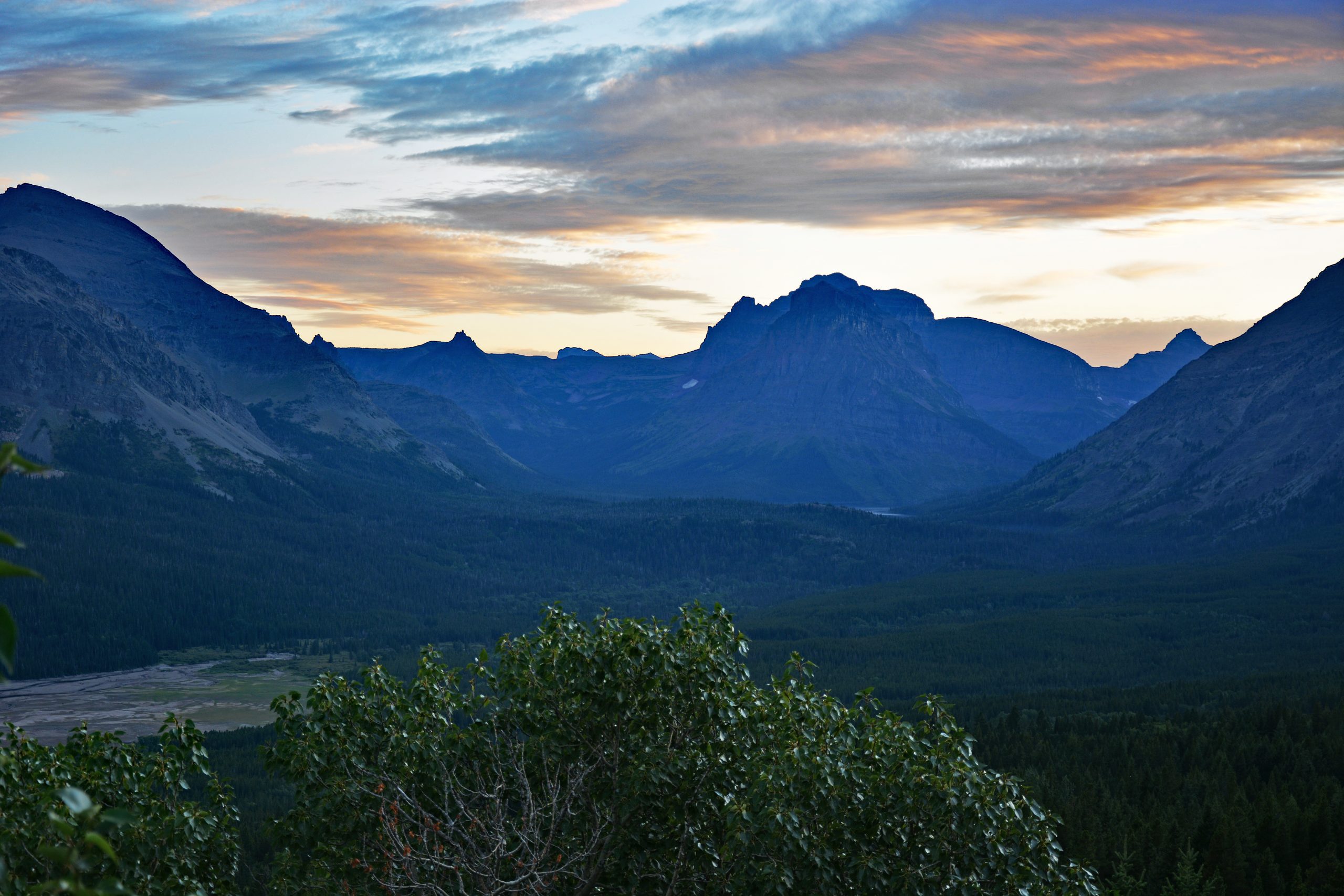
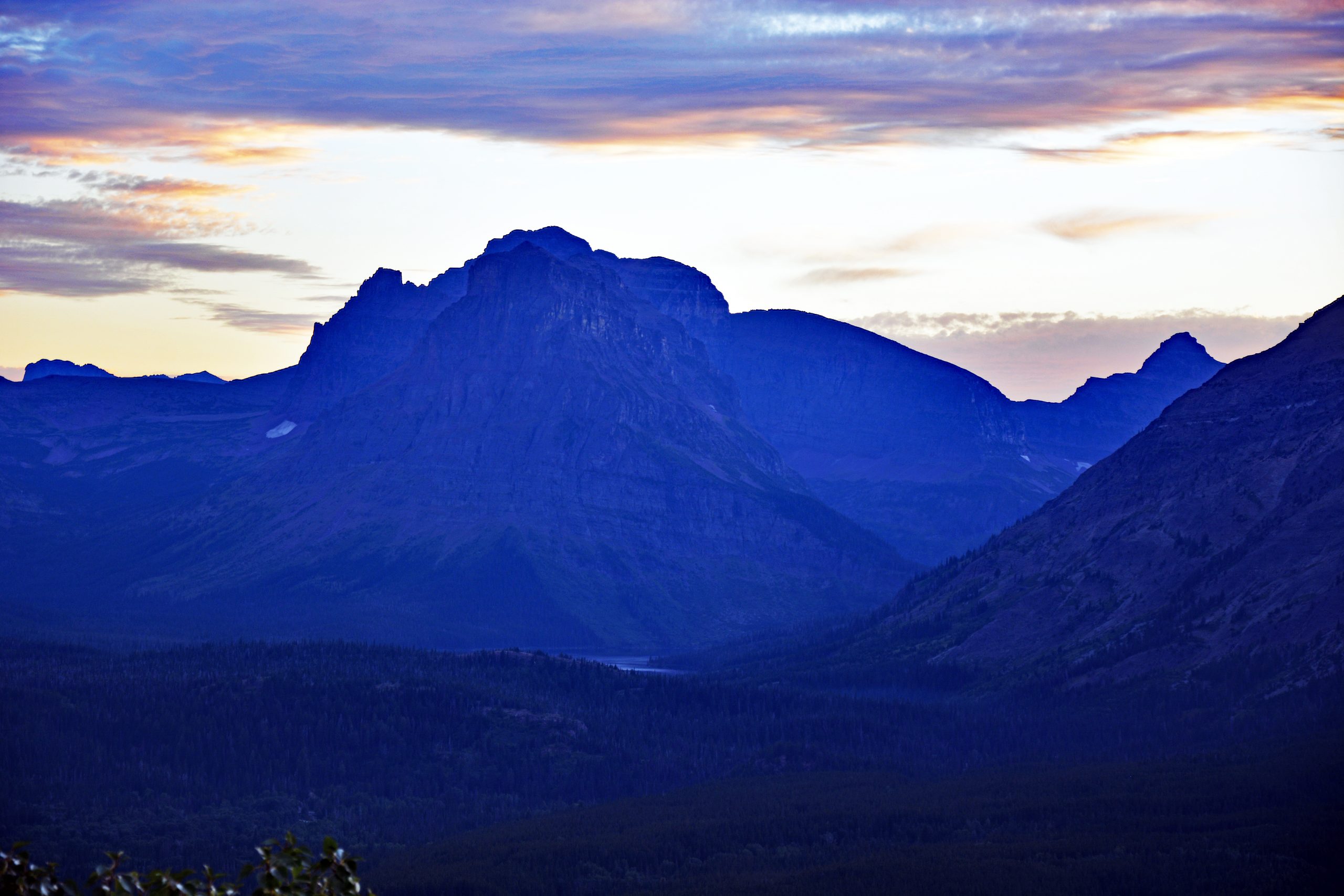
Only later, when I looked through my photos, did I realize how few images I had taken on the descent—2016 because of fog, 2019 because I was almost running to catch the bus. And so, I know I will return. The Highline Trail still has more to offer me, more light, more shadow, more colors of stone and sky.
And next time, I will linger.