
Thursday, March 19, 2026
The morning in Las Vegas already felt like a harbinger of a scorching day. After checking out of the Excalibur, my wife and I picked up our car from the self-storage on Robindale—a small act of liberation from the city’s neon bustle. Our destination: Red Rock Canyon. Upon arriving at the Visitor Center, we felt the dry, crisp air of the desert. We replenished our water supplies, studied a small map, and dived into a world that looked as if a giant had poured buckets of vibrant paint over the horizon.
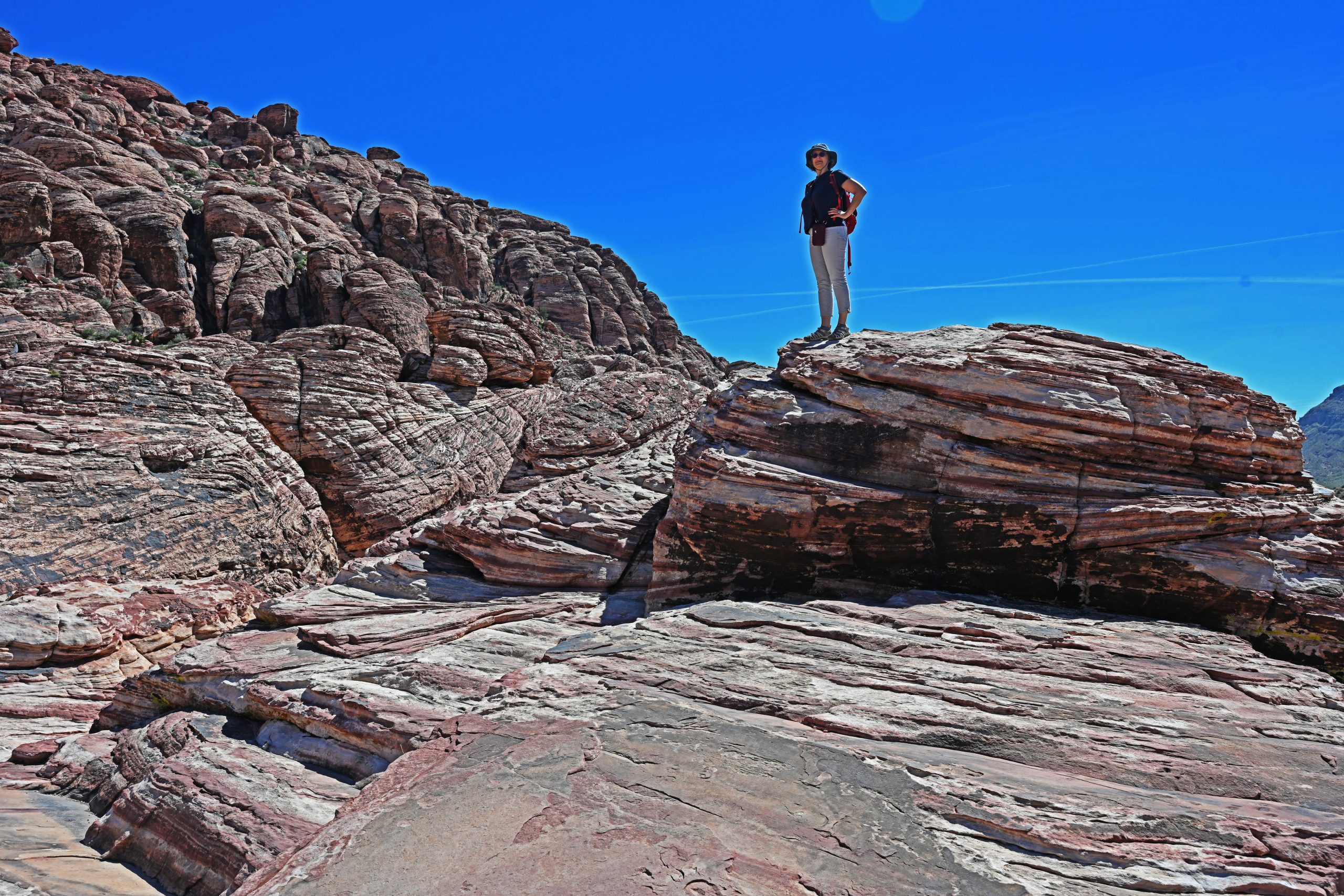
At our first stop, Calico I, we were greeted by a brilliant blue sky and a temperature of 27 degrees Celsius. As we stepped out of the car and descended the hiking trail, the silence of the desert enveloped us, broken only by the crunch of our boots. We climbed onto a massive rock to soak in the panorama. The colors here are almost surreal: a deep, saturated red meets soft, weathered grey. In the distance, the backside of White Rock Mountain loomed—a massive, triangular block with flanks that slope down so evenly it looks as if someone had placed a ruler against the sky. Behind it sat the mighty La Madre Range, acting like a protective wall. The contrast between the burning red of the foreground and the cool, grey majesty of the distant peaks was breathtaking.
Gallery I: First Impressions


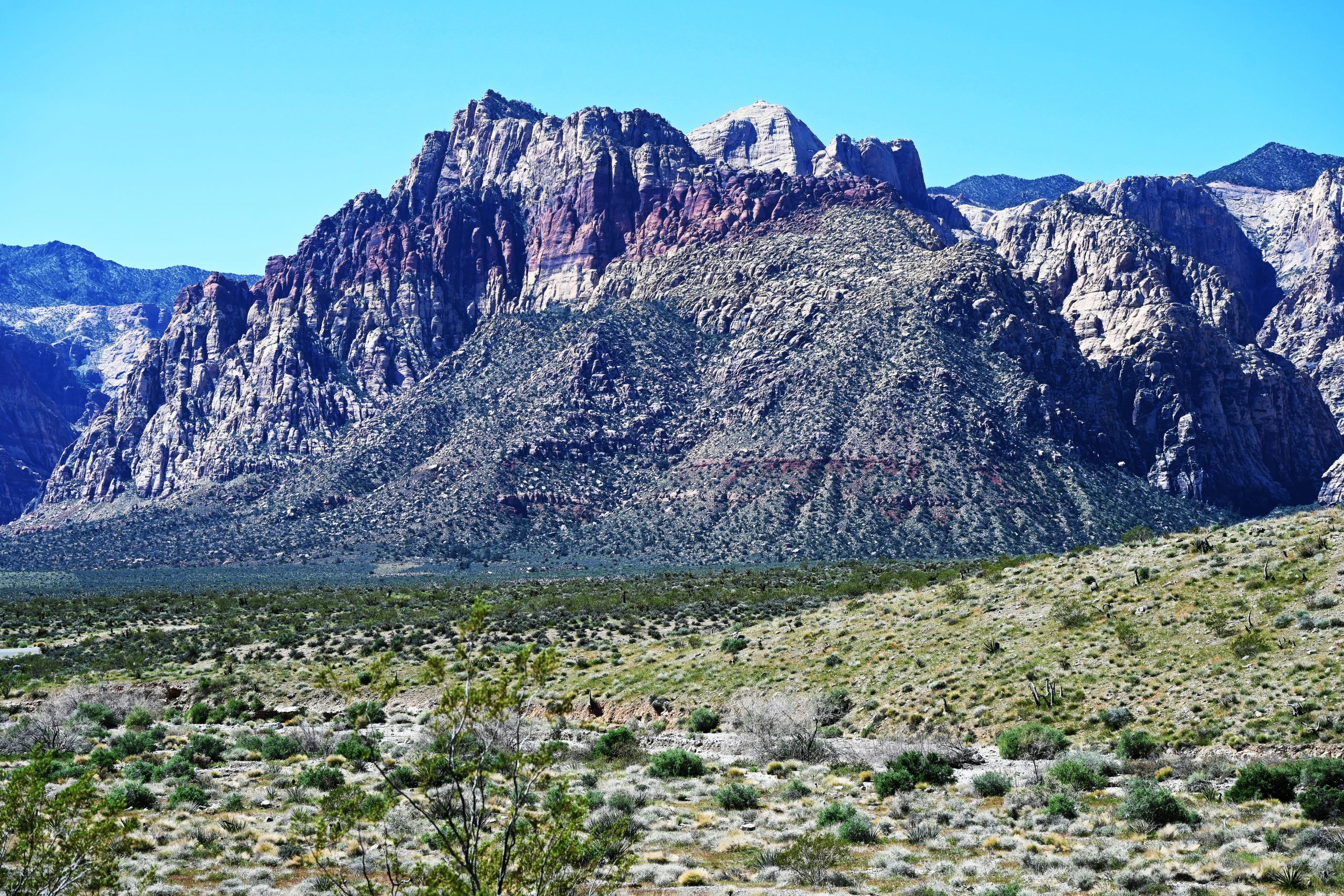
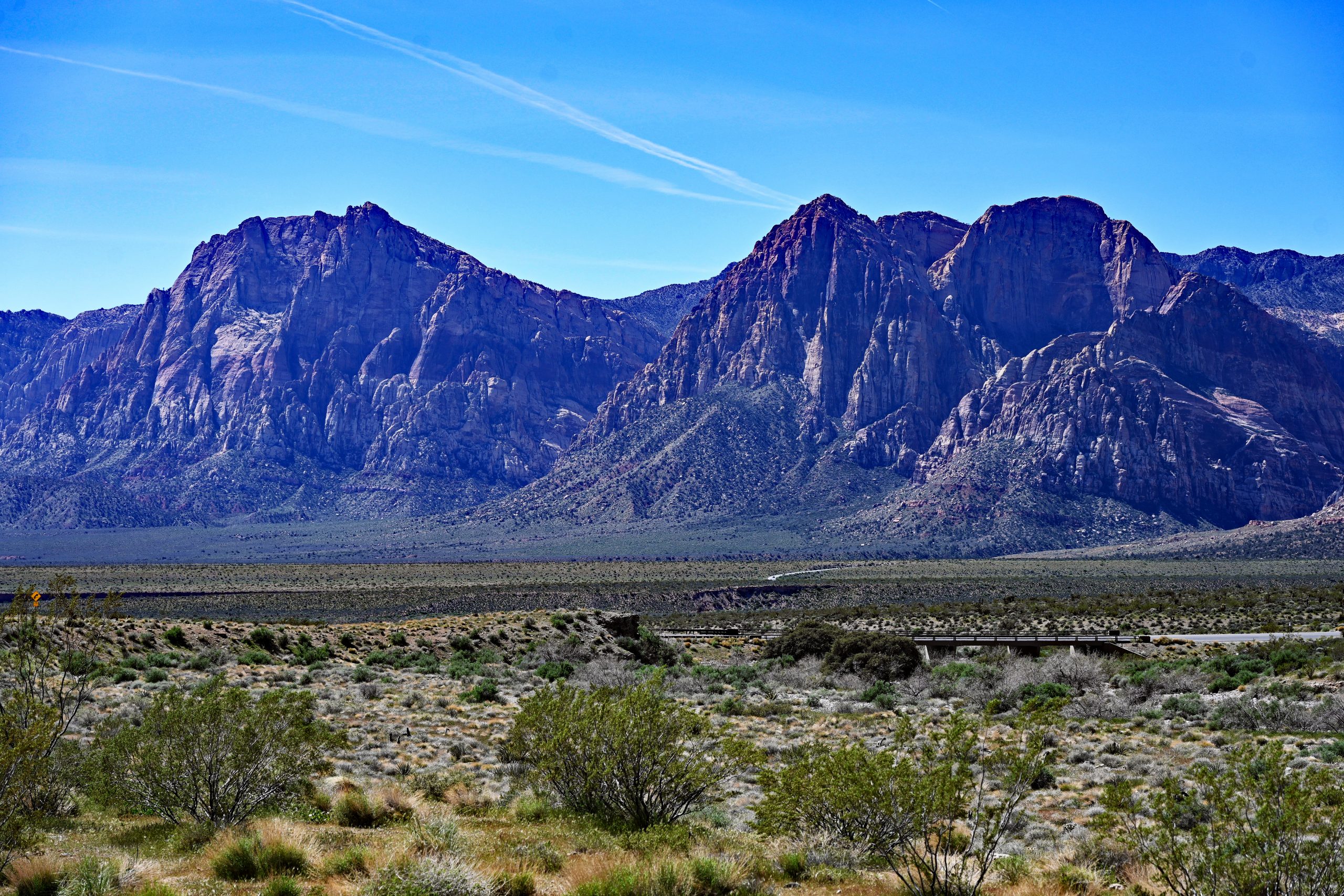
Our journey continued to the Sandstone Quarry Overlook. Here, I had to pause at the western edge of the parking lot to capture the mountains in focus. Rising before us was Rainbow Mountain—a high, pointed peak that thrusts into the sky like a pyramid. Its most striking features are the horizontal bands of red sandstone at the summit, giving it an almost decorative, photogenic quality.
Right next to it stands Bridge Mountain, appearing significantly more massive with its dome-like structure. Its most unique feature is the giant, bowl-shaped depression or amphitheater just below the summit, which hides the namesake “Natural Bridge.” To the left of these two beauties stands Mount Wilson, a blocky giant. He is a square, stoic sentinel—a massive reef of stone watching unshakeably over the valley.
Gallery II: Guardians of the Canyon
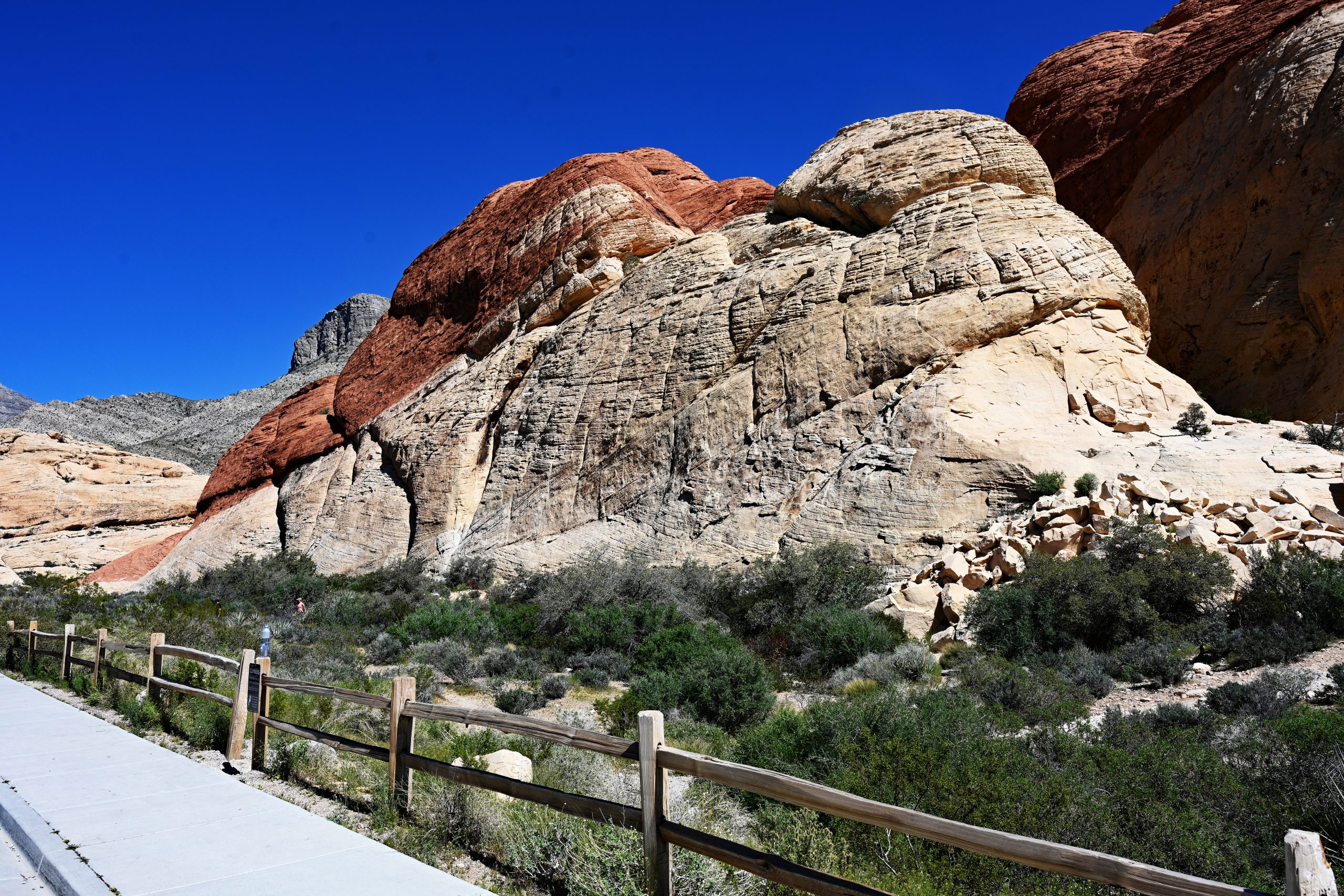
We laced up our hiking boots and prepared for the trail to the Calico Tanks. The path began flat, leading us through gravel ways and desert shrubs. Yet, the views forced us to stop repeatedly. We were particularly drawn to Turtlehead Mountain. It is part of the famous Keystone Thrust Fault—a geological marvel where older, grey limestone was pushed over younger, red sandstone. This dramatic color break tells the story of violent tectonic forces clashing millions of years ago.
Gallery III: Geological Contrasts
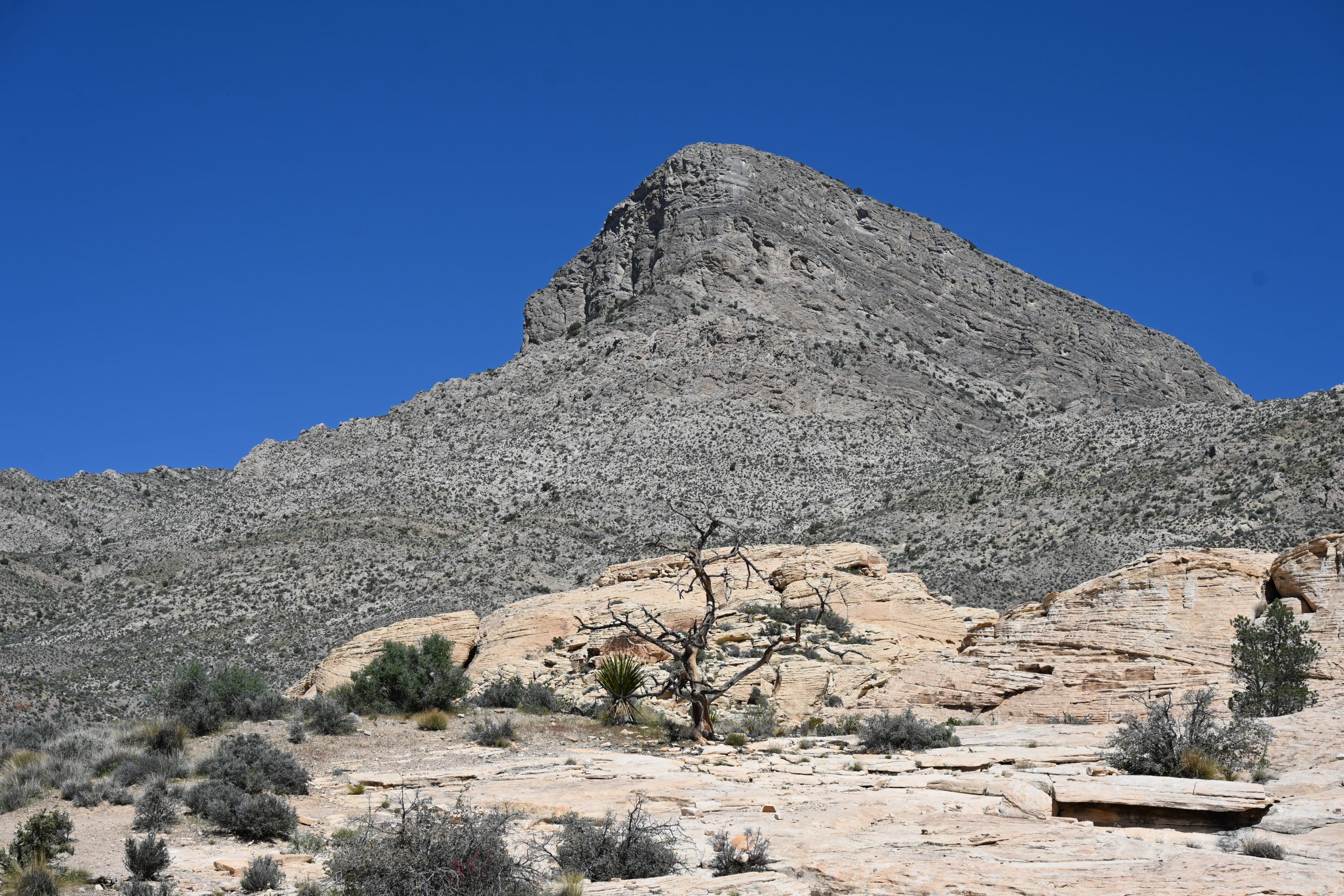
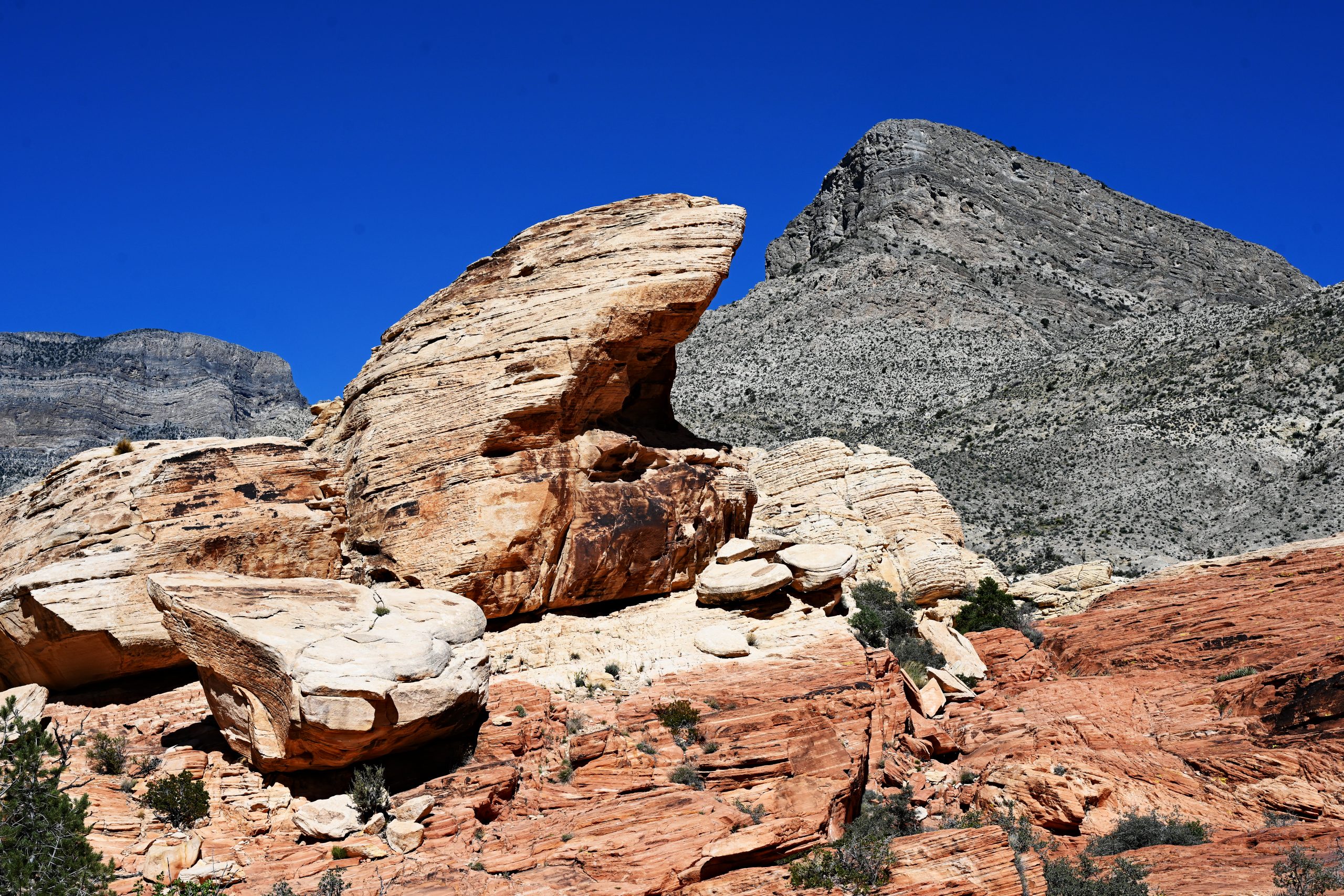
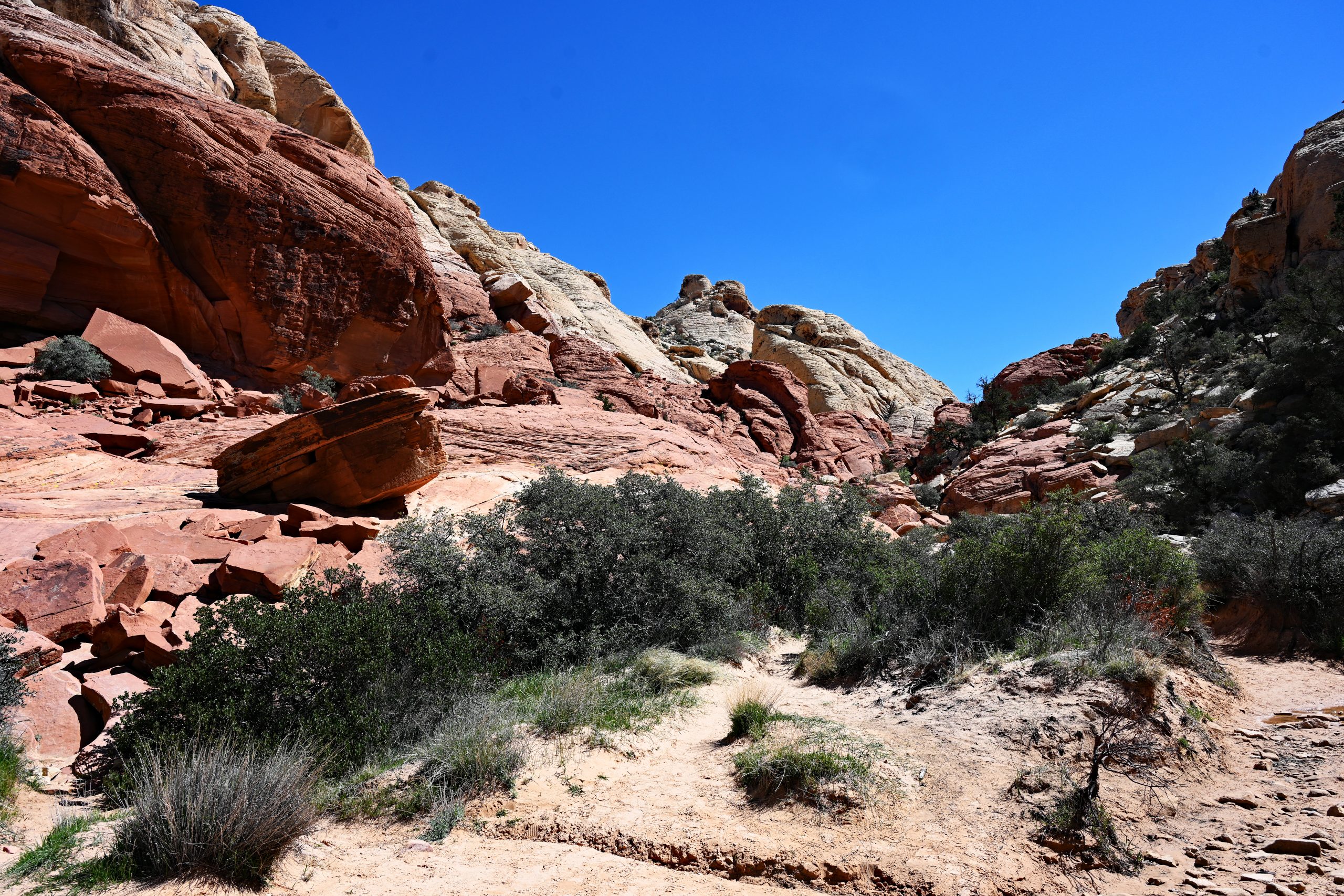
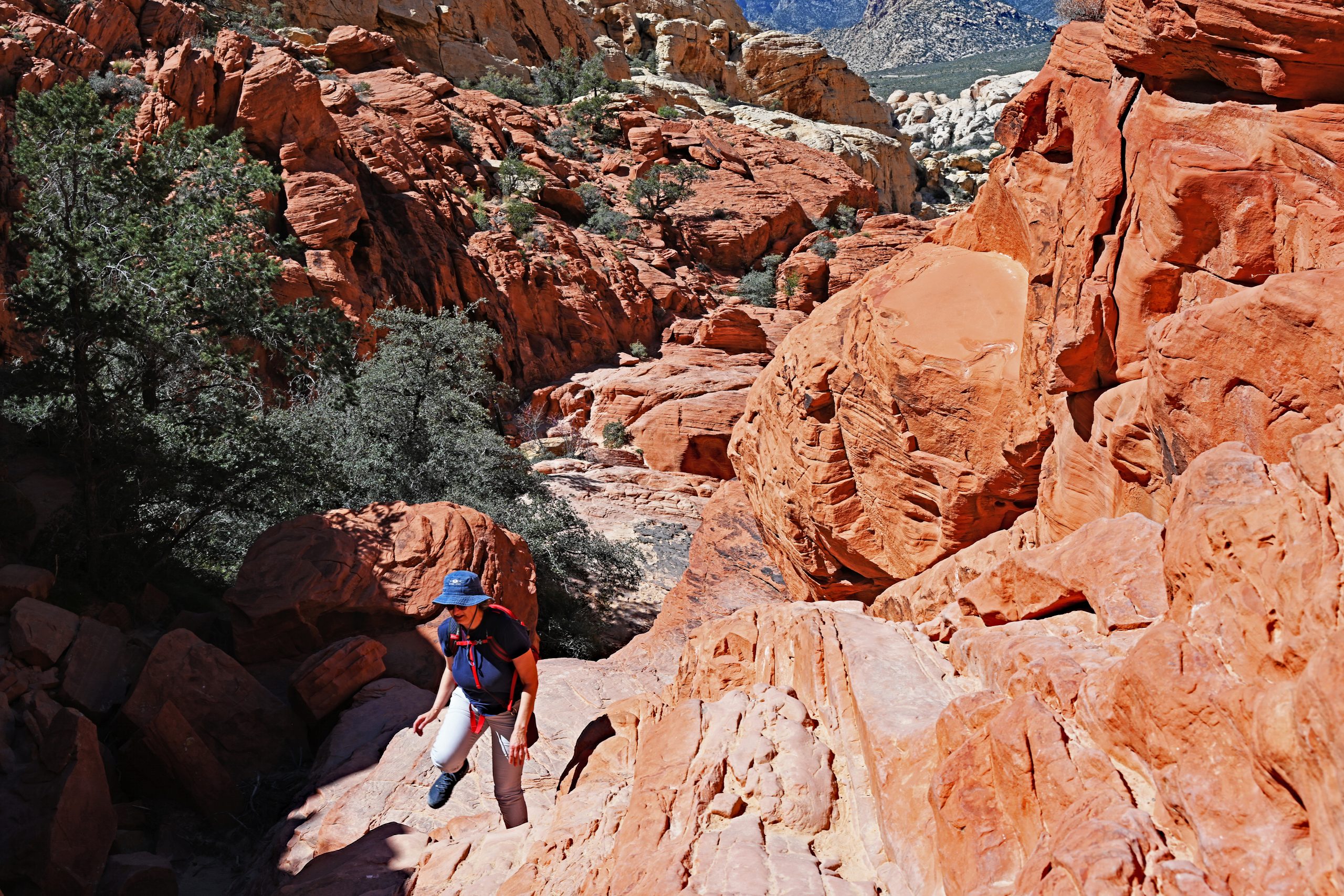
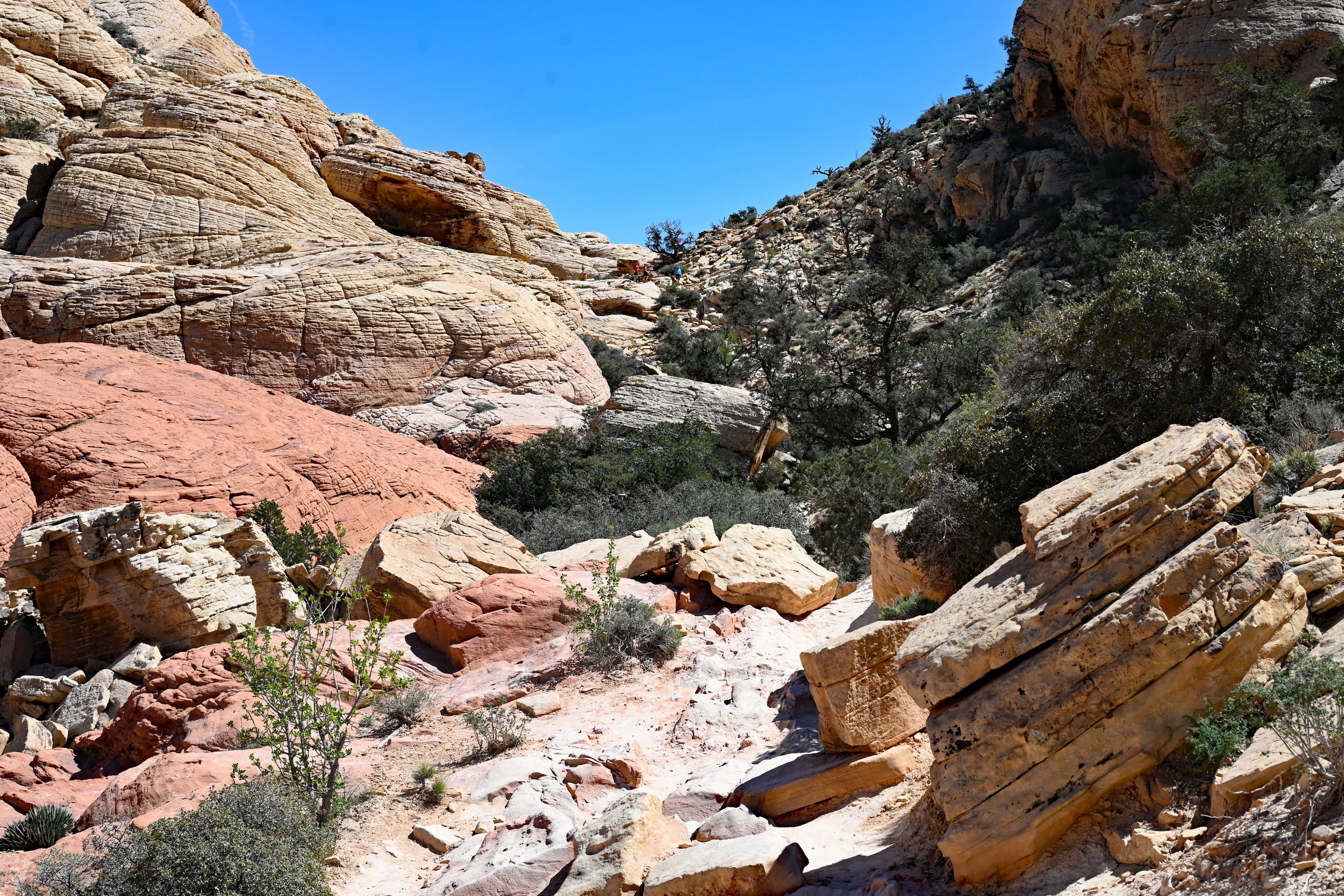
As we moved toward the Calico Tanks, we felt like we were walking through a time capsule. The Aztec Sandstone flanking the trail is the beating heart of the Calico Hills. It is hard to imagine that these solid walls were once wandering sand dunes in a vast Jurassic desert nearly 200 million years ago.
The colors are the result of chemical magic: the deep reds and oranges come from iron oxide—the rock literally “rusted” over eons as it was exposed to air and water. Where the stone glows golden-yellow or white, the iron was either leached out by groundwater or was absent from the sand from the very beginning. We scrambled over these stony witnesses of time while the path wound deeper into the labyrinth of shapes and hues.
Gallery IV: Path Through Time
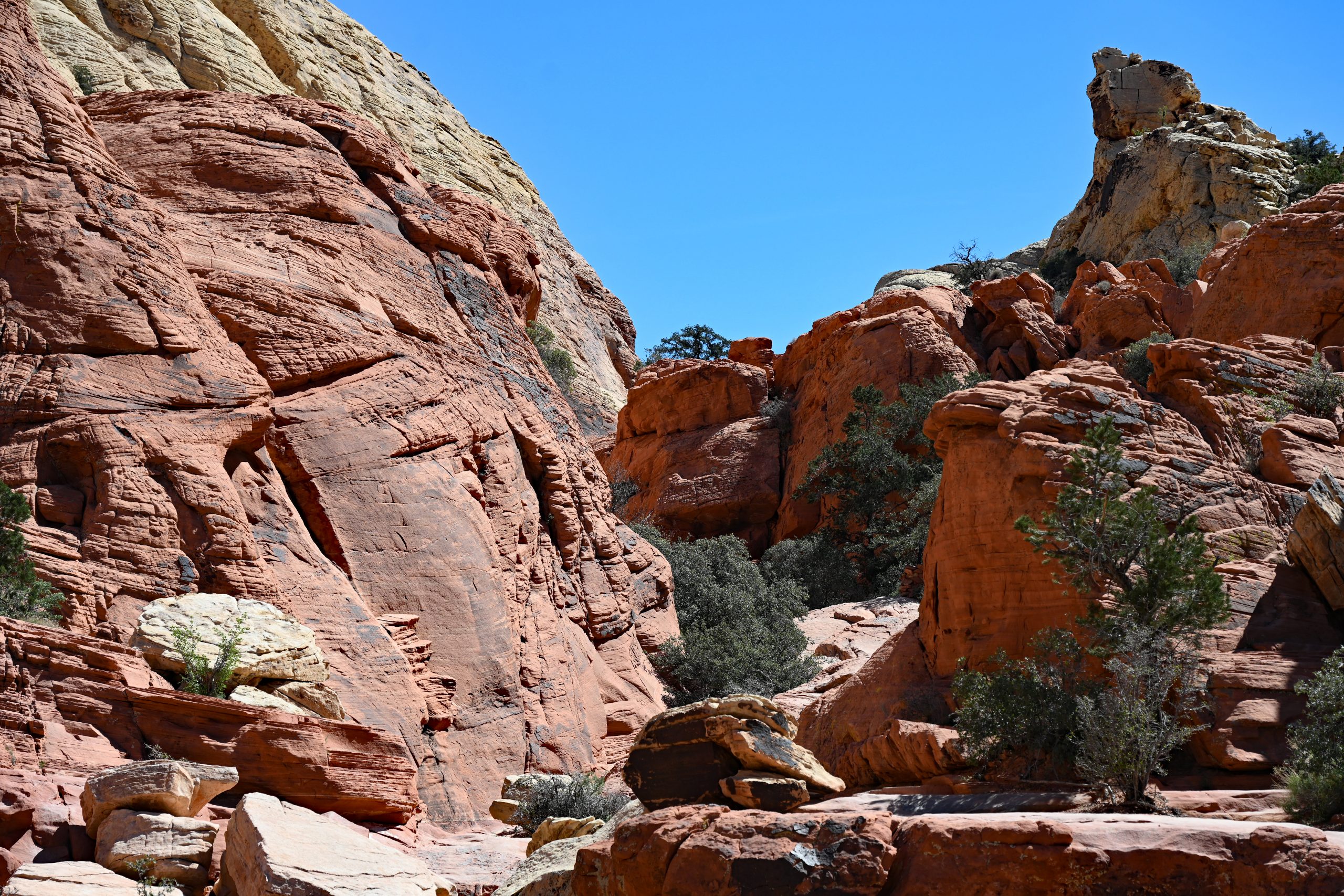
Summit Bliss and Desert Dwellers
The climb to the Calico Tanks was quite demanding. The trail wound upwards over steep stone steps, and near the smaller water pockets—the “tanks”—the path became so narrow that you almost felt fused with the rock. In a moment of misplaced bravado, I tried to bypass the passage from below. A mistake: the ground was treacherous, and I nearly lost my footing. It wasn’t until the way back that I used the upper crossing, which proved to be significantly safer and easier.
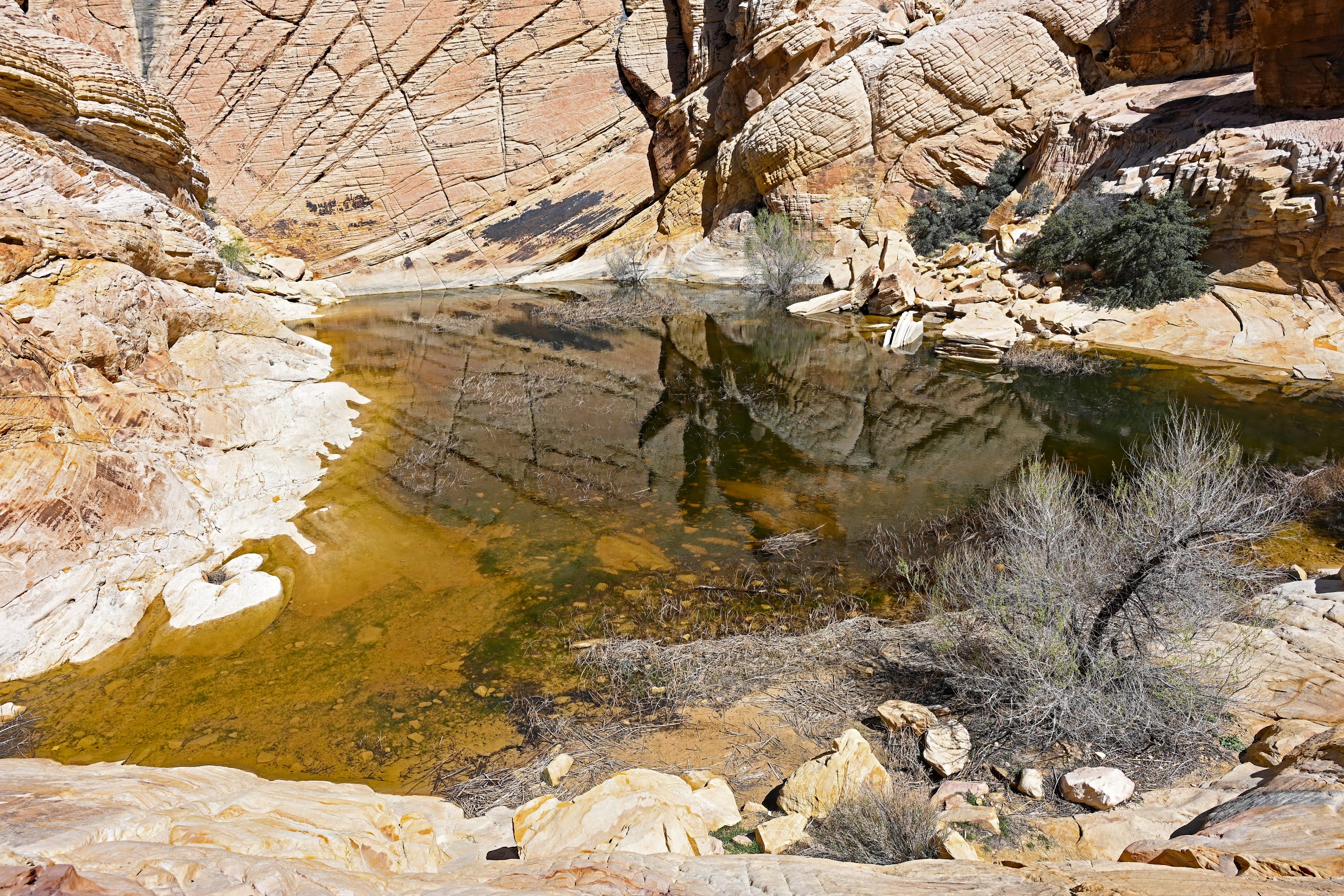
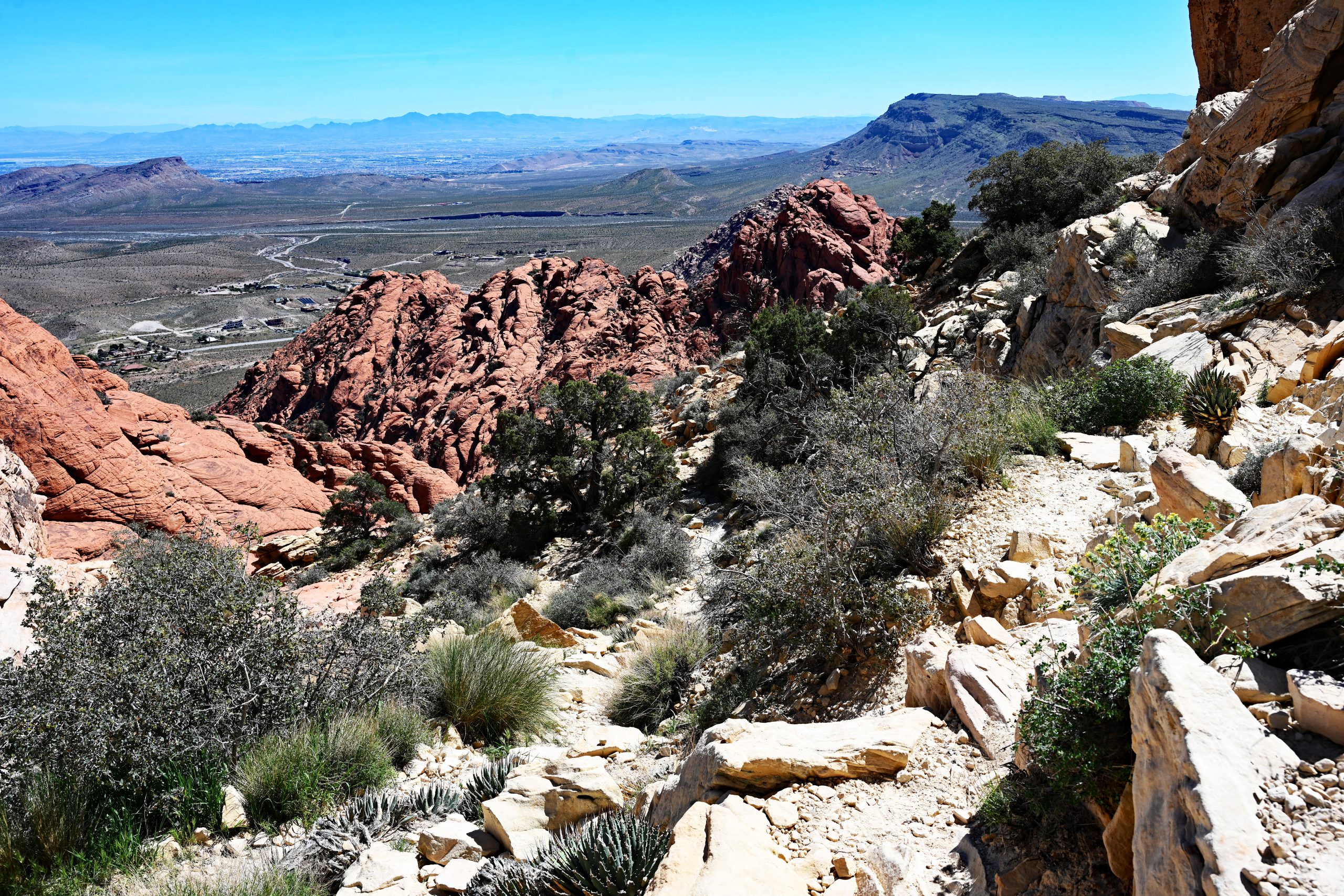
At the top, a bizarre sight awaited us. The rock walls were reflected in the tanks, even though the standing water was stained yellow and red by minerals. Looking back, a panorama opened up over the backside of the Calico Hills, with the skyline of Las Vegas shimmering in the desert heat in the distance.
Gallery V: The Tank and the Peak
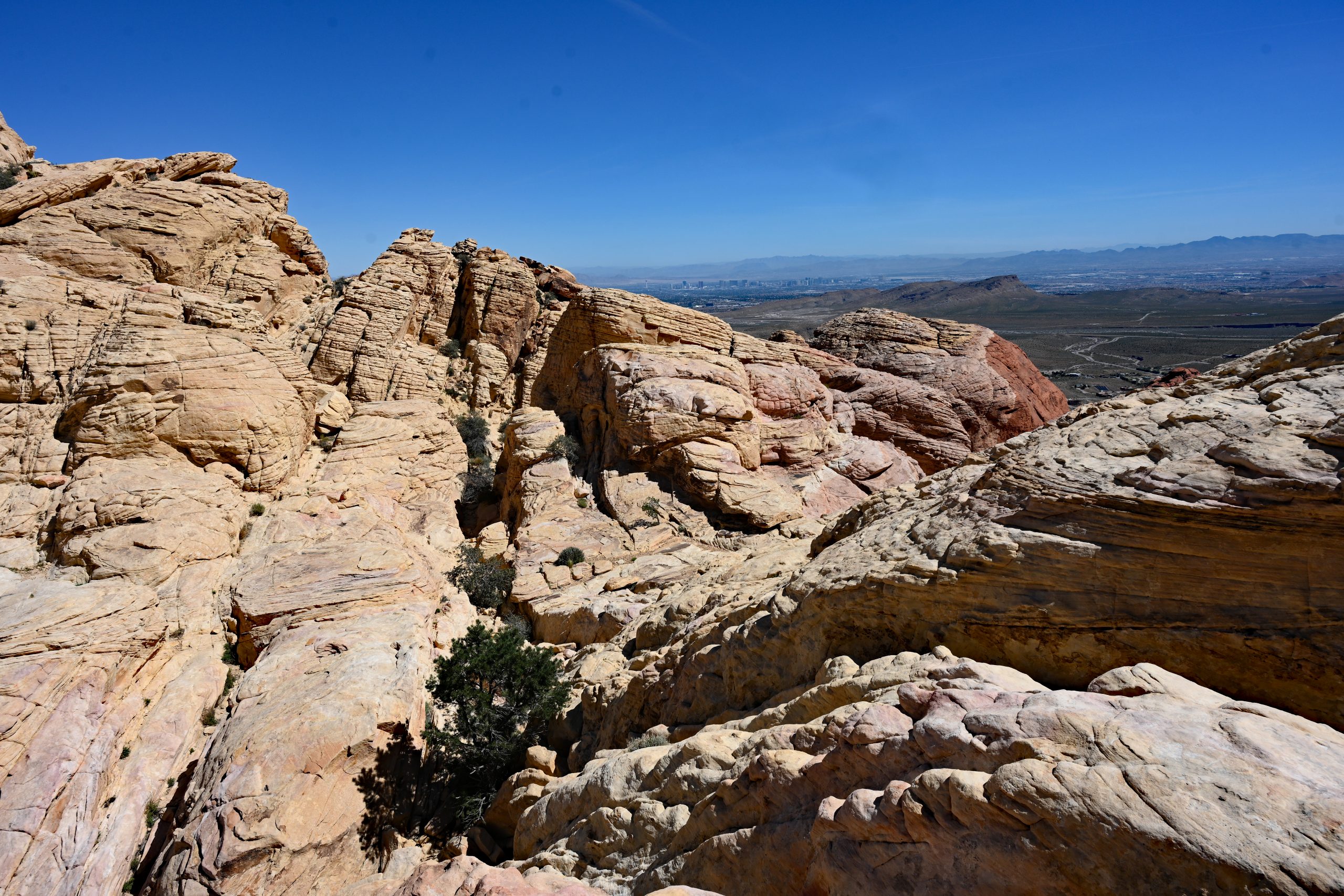
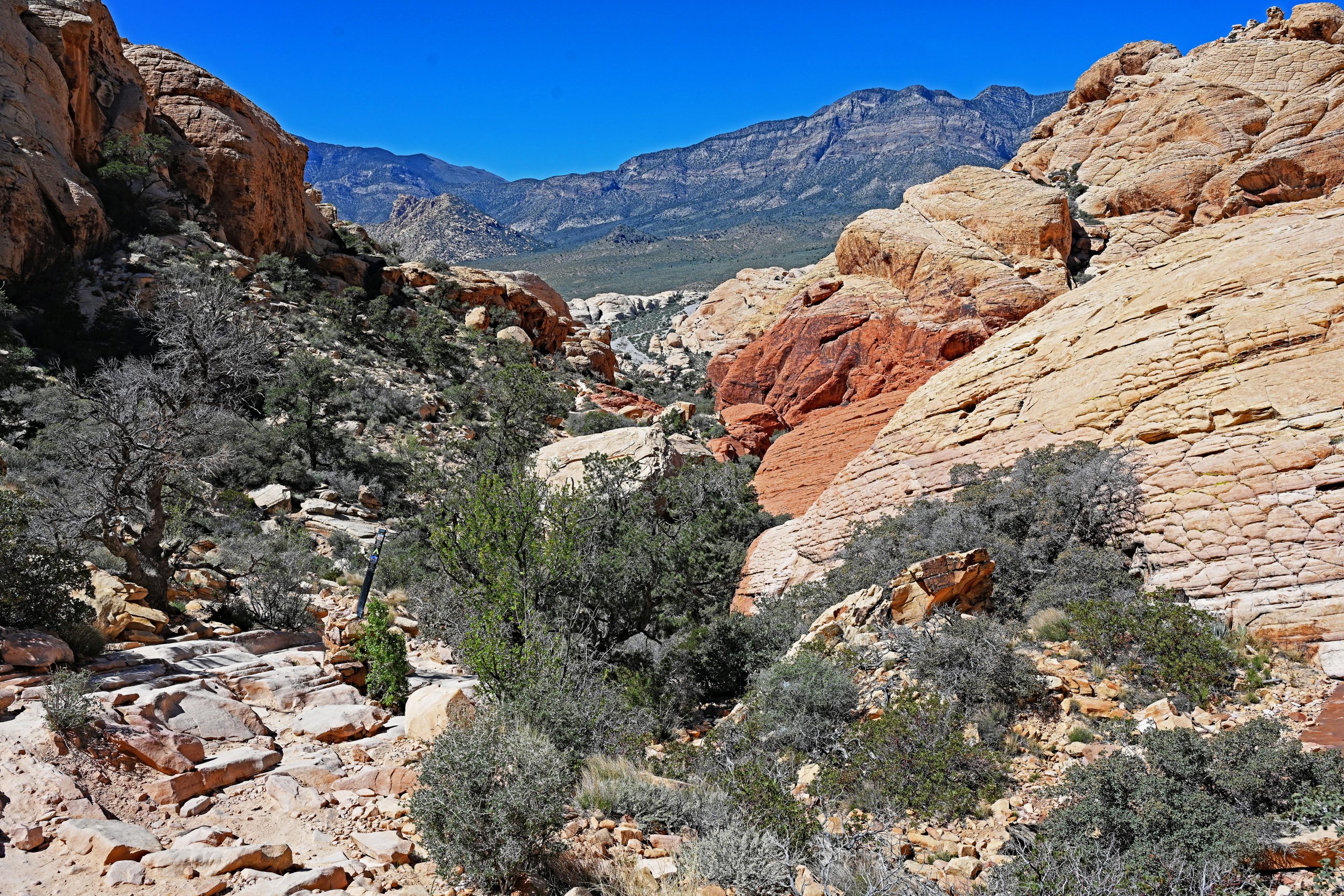
On the descent, a special encounter awaited us. A small desert tortoise crossed our path. It was heading purposefully toward Turtlehead Mountain—an amusing sight, though it’s unlikely to reach the summit at that pace.
Gallery VI: The Encounter
Back at the car, we followed the scenic loop to High Point Overlook. The panorama to the south is immense: Mount Wilson stands as the massive anchor of the Wilson Cliffs. To its right lies the colorful Rainbow Mountain Wilderness. Although the light was very harsh now, Bridge Mountain was clearly visible, sitting slightly offset behind the front ridges. To the southeast, the flatter limestone of Blue Diamond Hill was silhouetted.
Gallery VII: Rainbow Mountain Wilderness
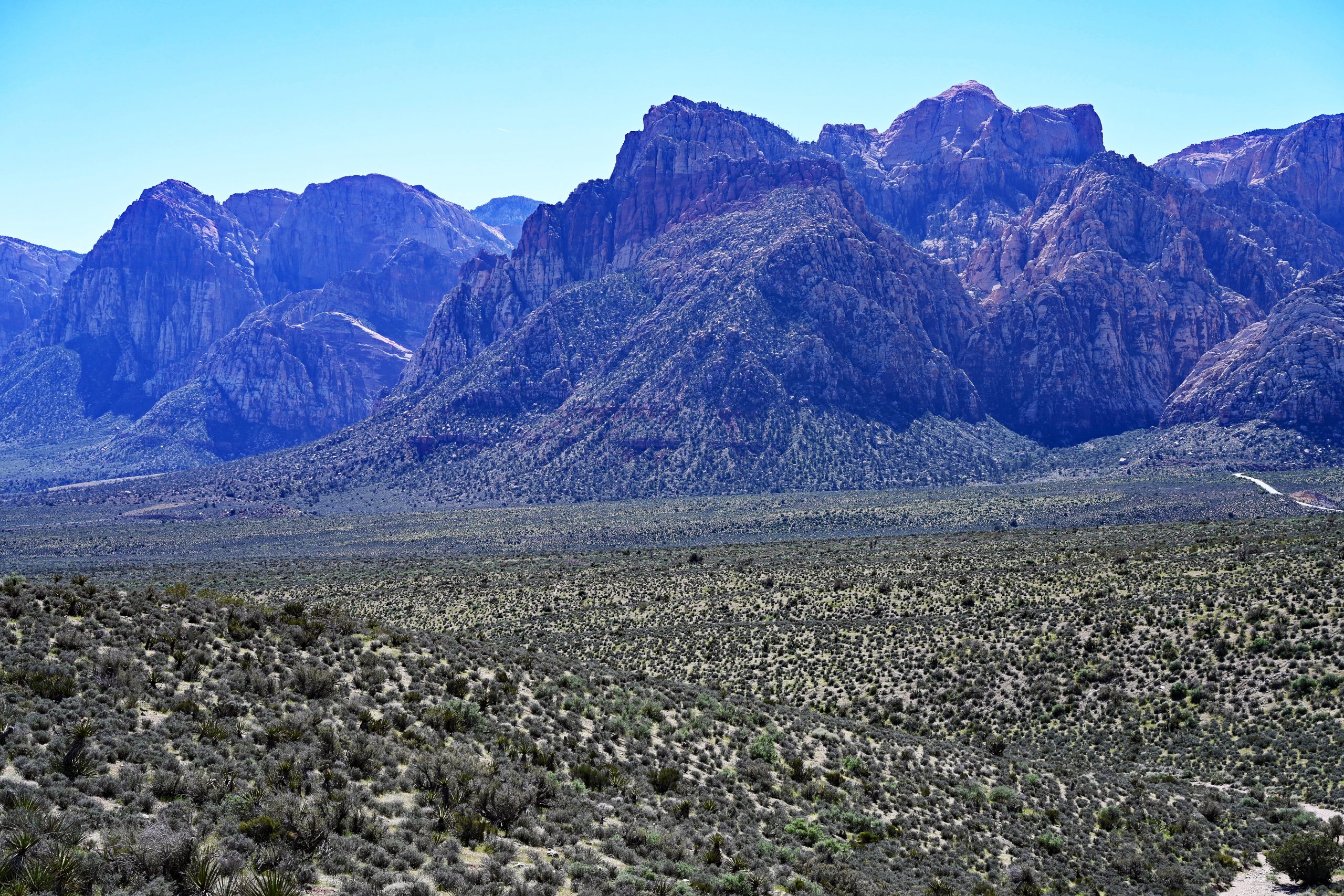
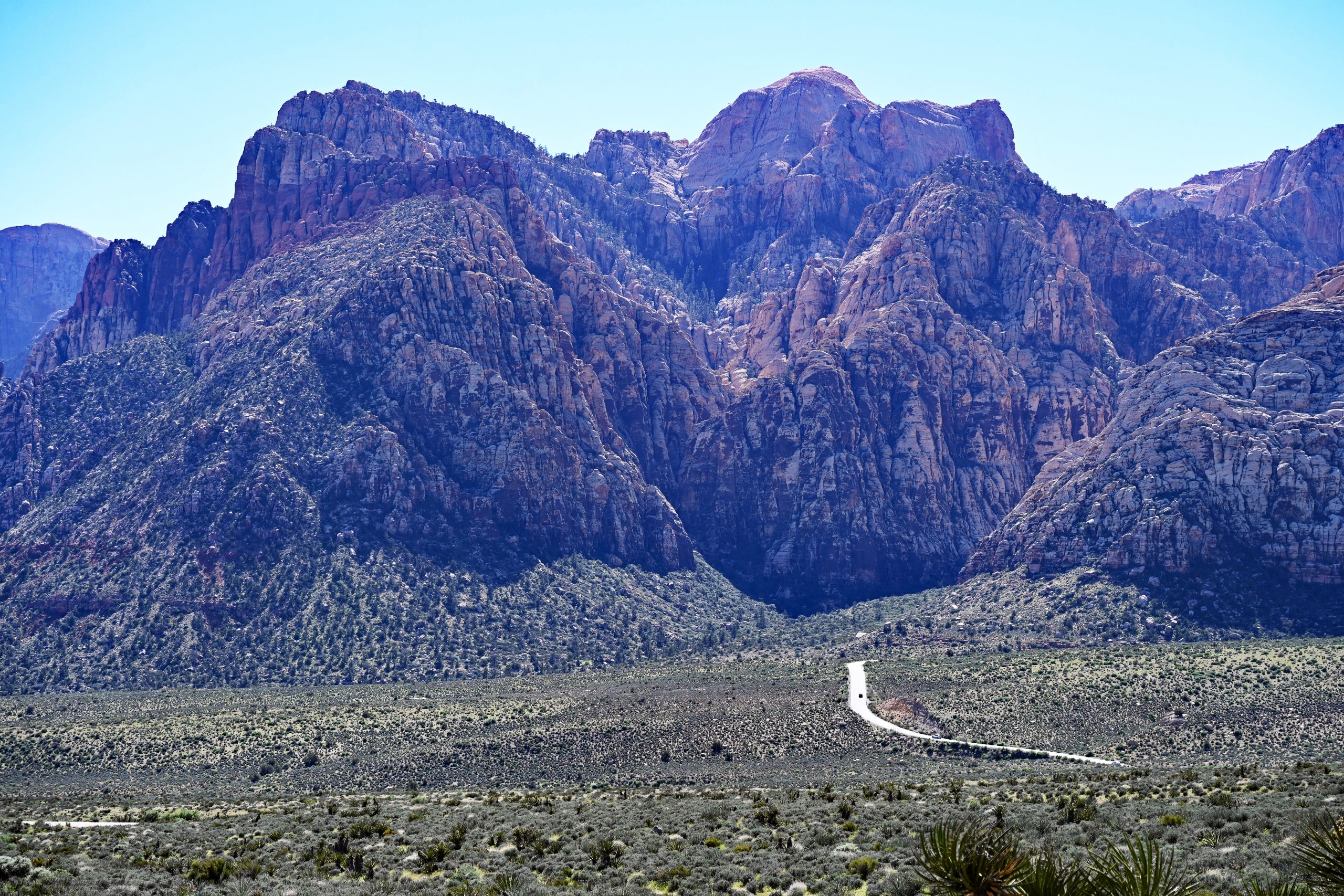
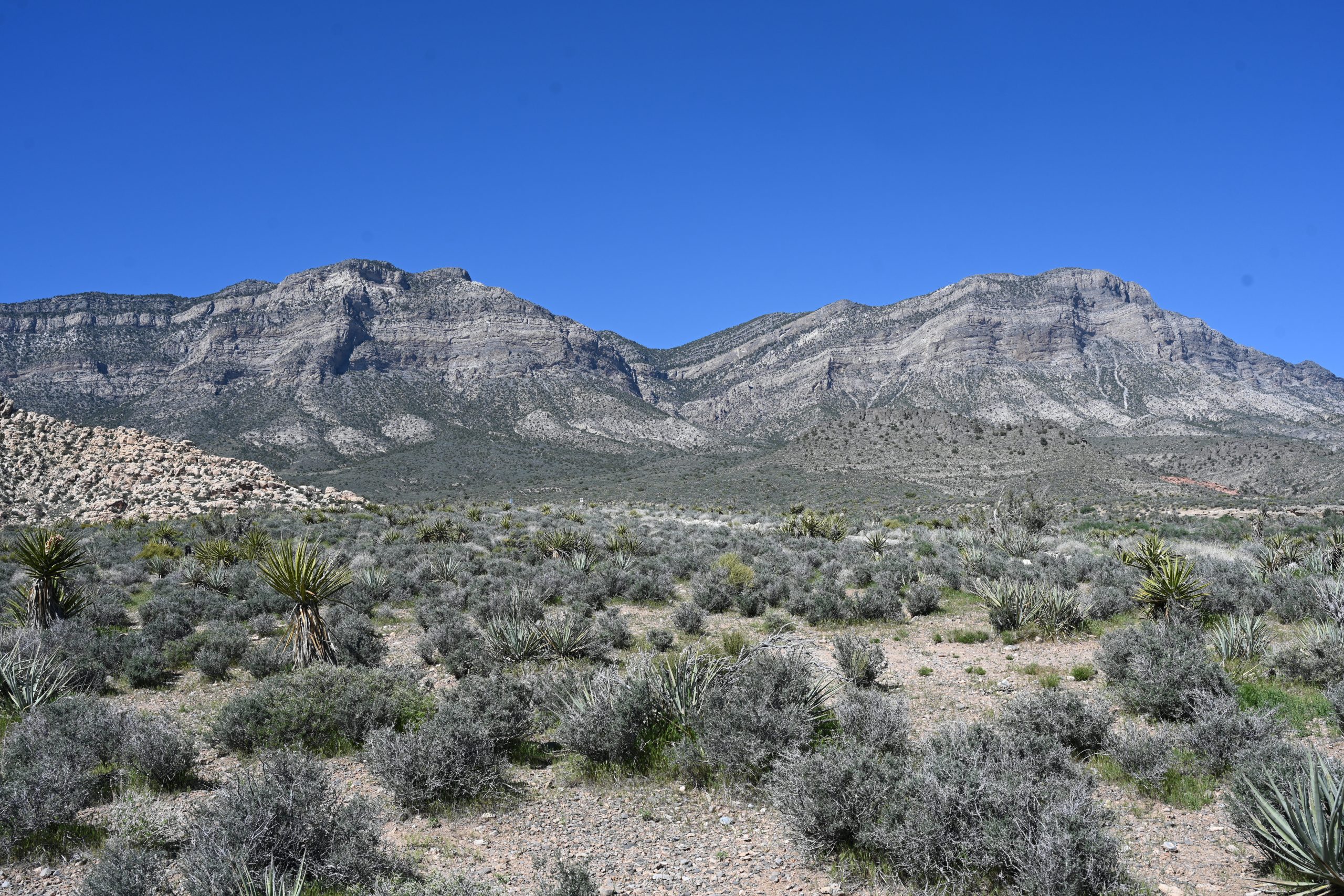
Unser letzter geologischer Stopp war der White Rock Mountain. In einem gewaltigen, durch Erosion entstandenen Kar wird der Keystone Thrust perfekt sichtbar: Unten der helle, junge Aztec-Sandstein und darüber wie eine dunkle Kappe der uralte, graue Kalkstein. Ein faszinierendes Schichtspiel der Erdgeschichte.
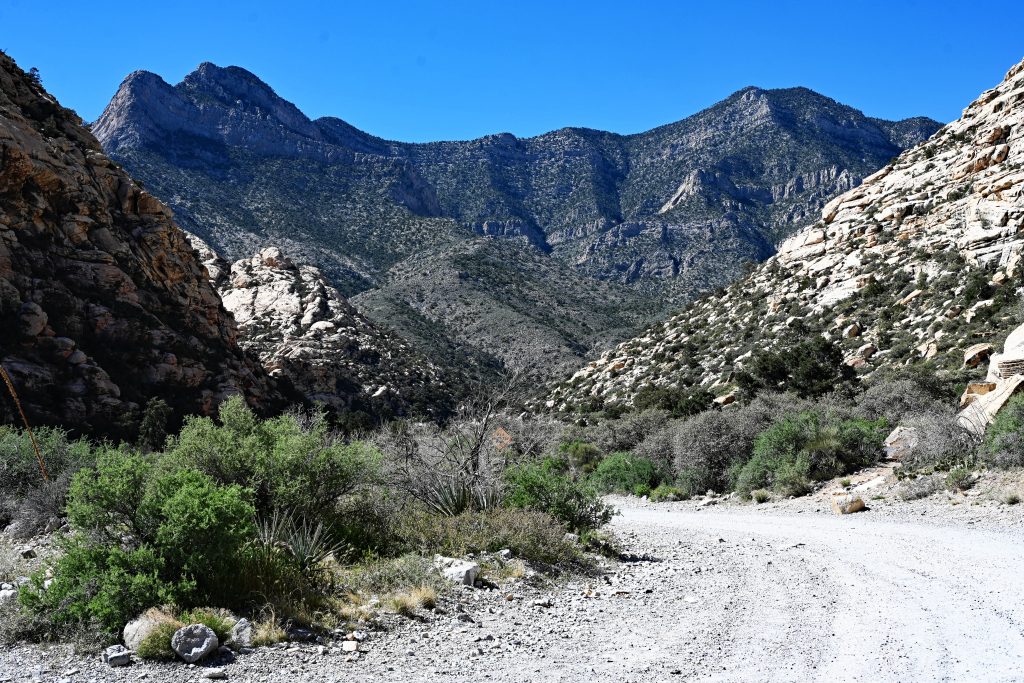
The striking White Rock Mountain with its contrasting rock layers.
At 32 degrees, our thirst for exploration was finally quenched. After a quick shop at the Walmart in Boulder, we checked into our hotel. A lovely surprise awaited us: a voucher for a hearty breakfast tomorrow morning. Now, in the evening, I reflect on this wonderful, albeit very hot day.