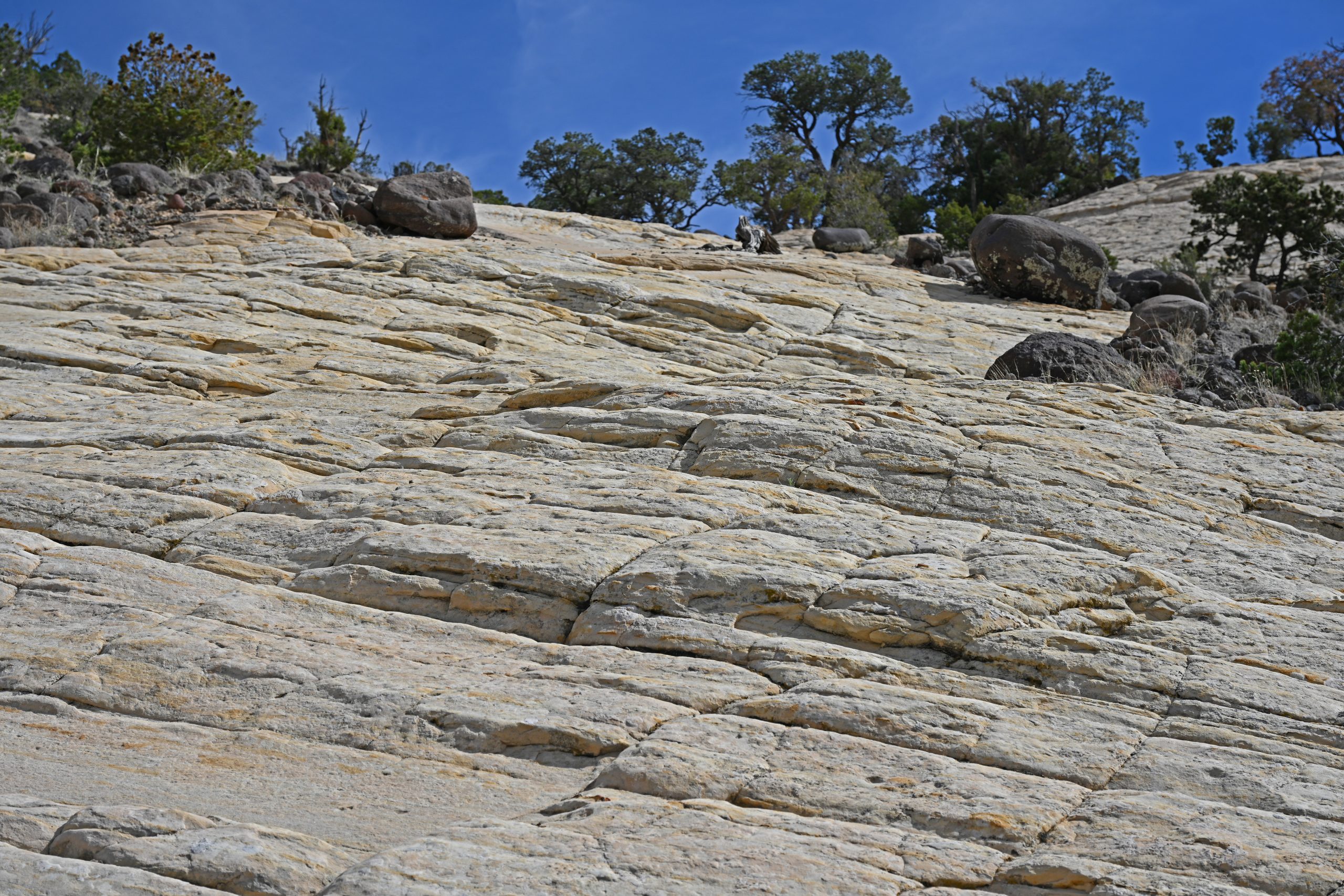
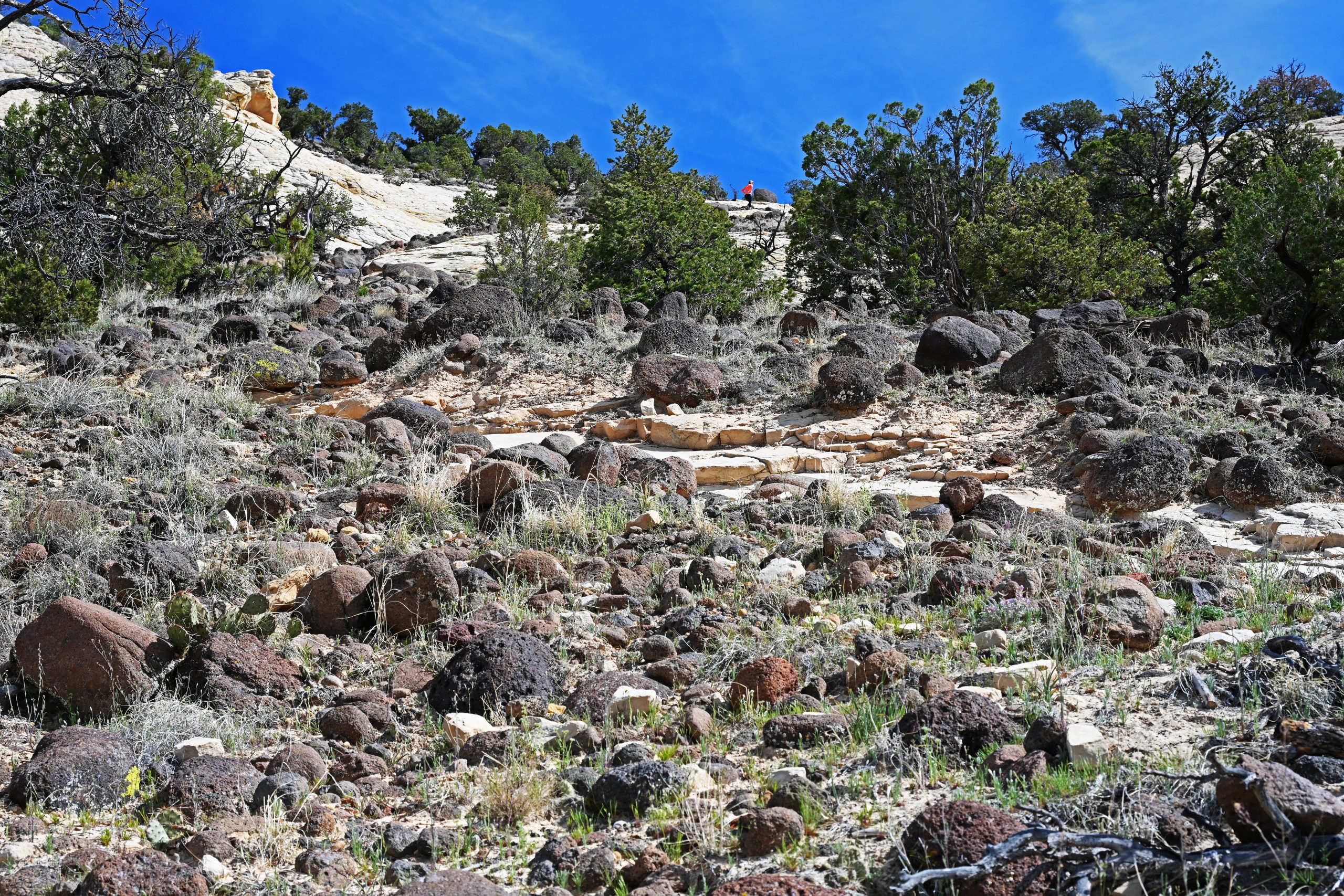
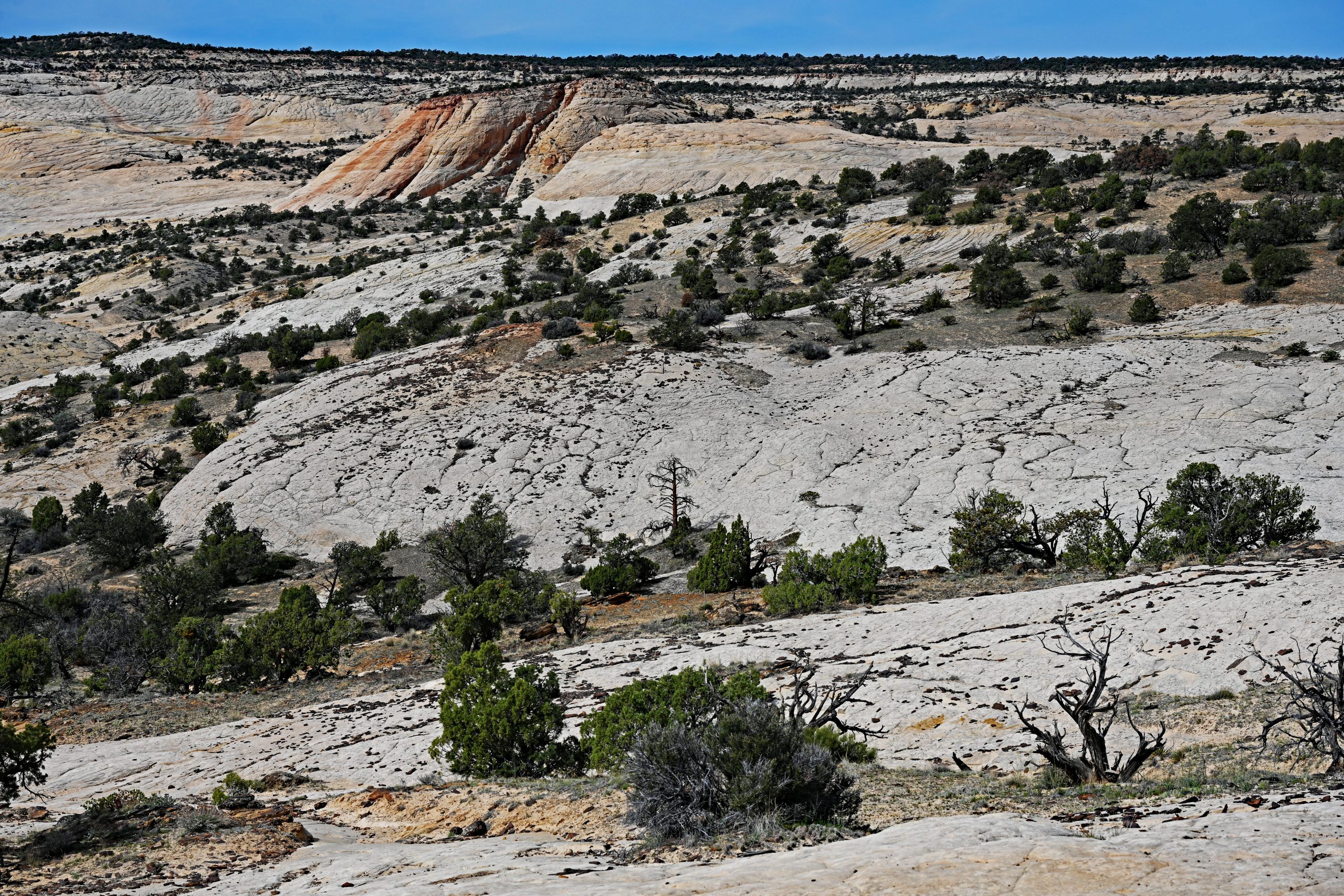
Our morning begins on one of the most spectacular sections of Highway 12. Our destination is the trailhead for Upper Calf Creek Falls, where our adventure into the depths begins. From the very first step onto the path, we are greeted by a surreal landscape: we descend a steep slope of pale Navajo Sandstone, which lies beneath our feet like a frozen sea of stone waves. What makes this place truly unique are the dark, almost black basalt boulders scattered everywhere like forgotten marbles of a giant. They tell a story millions of years old; these volcanic witnesses originally came from Boulder Mountain to the north and were transported here by the sheer force of erosion and water.
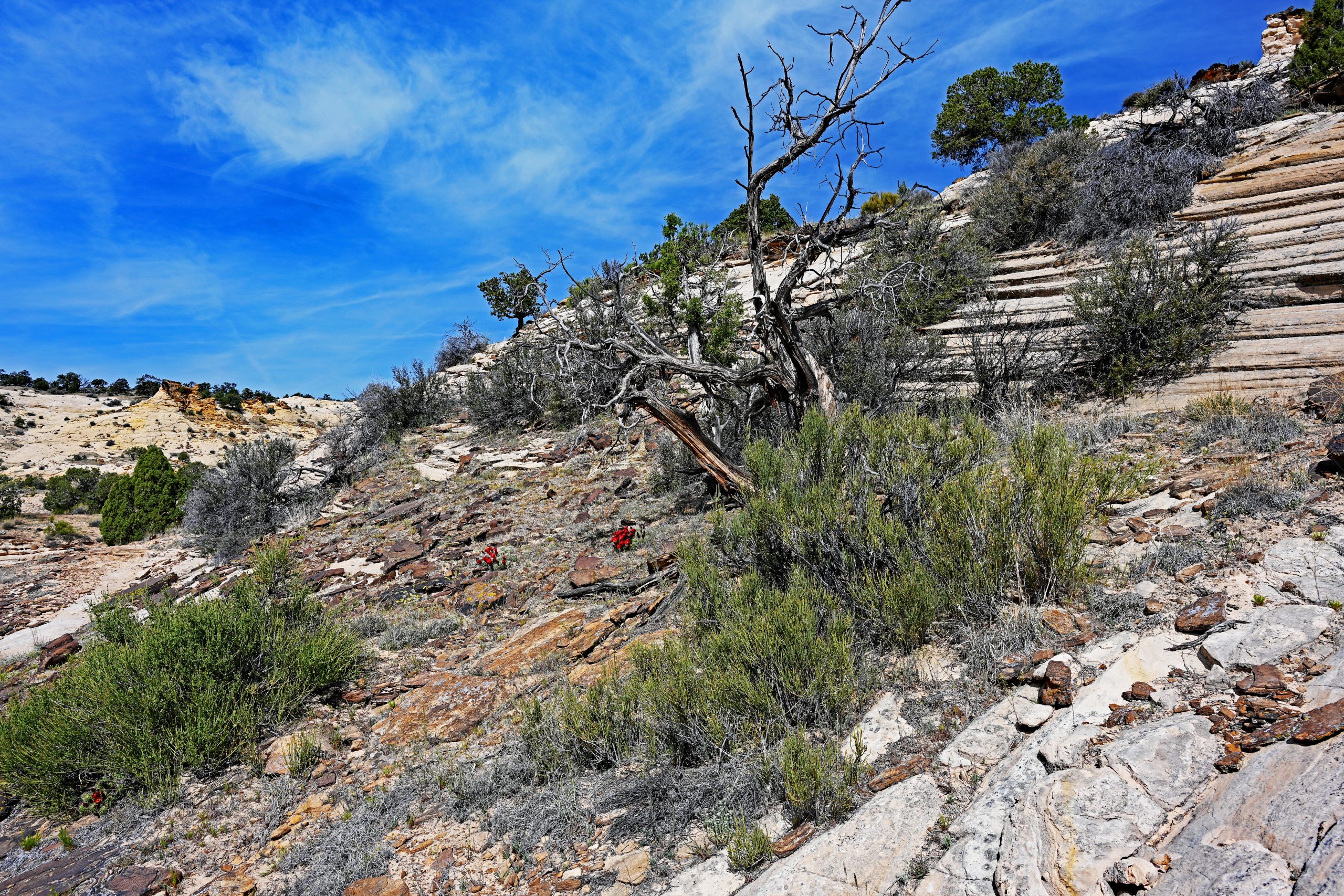
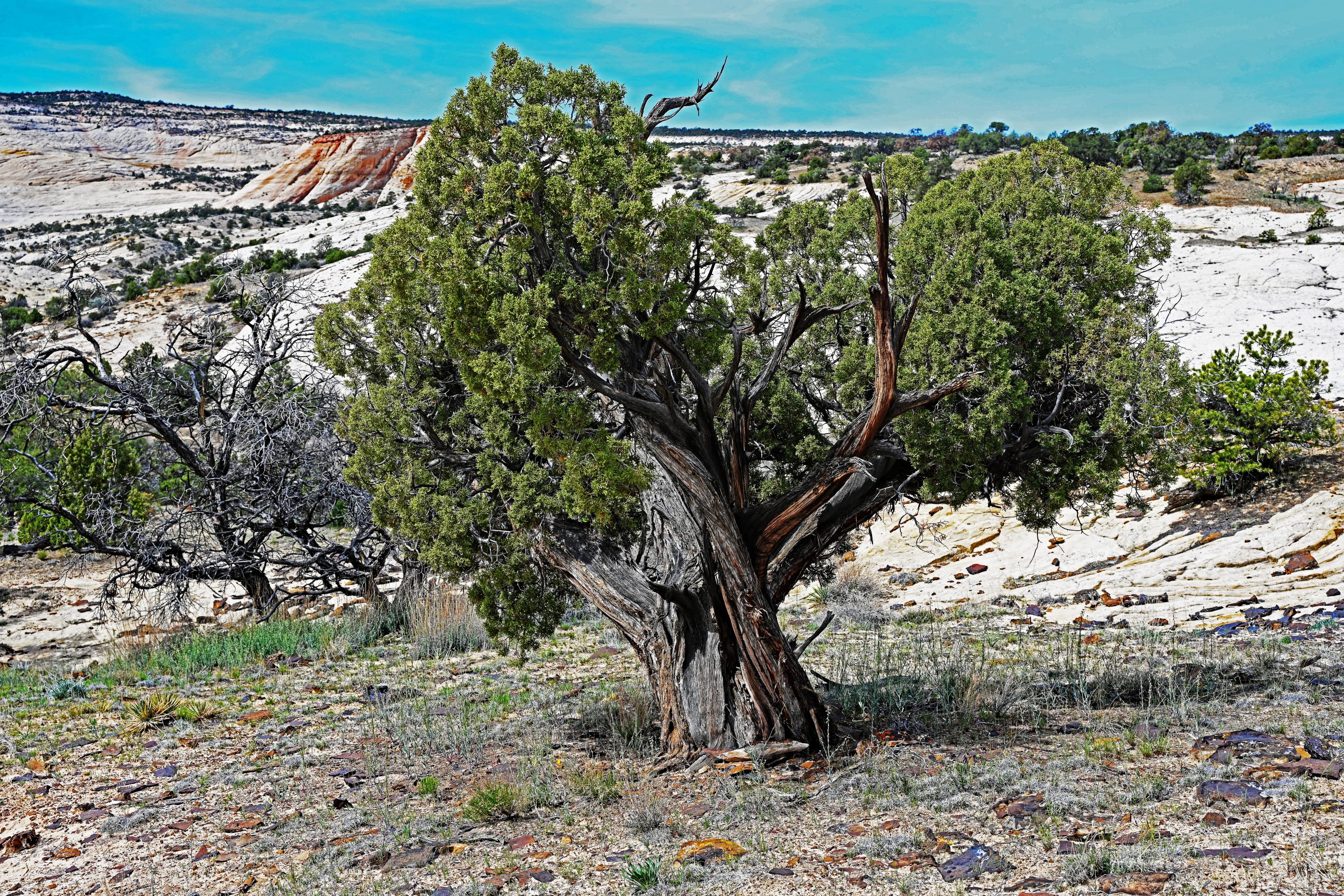
We continue hiking across the naked rock, known as slickrock. It takes concentration not to lose our footing on the rounded basalt chunks, but the view rewards our every effort. Between the hard stones, pinyon pines and juniper trees cling to the smallest rock crevices—true survivalists in this arid splendor. Before us, the vast slickrock labyrinth above the falls unfolds in colors ranging from blinding white to soft ochre.
Gallery I: Traces of Prehistory in the Slickrock
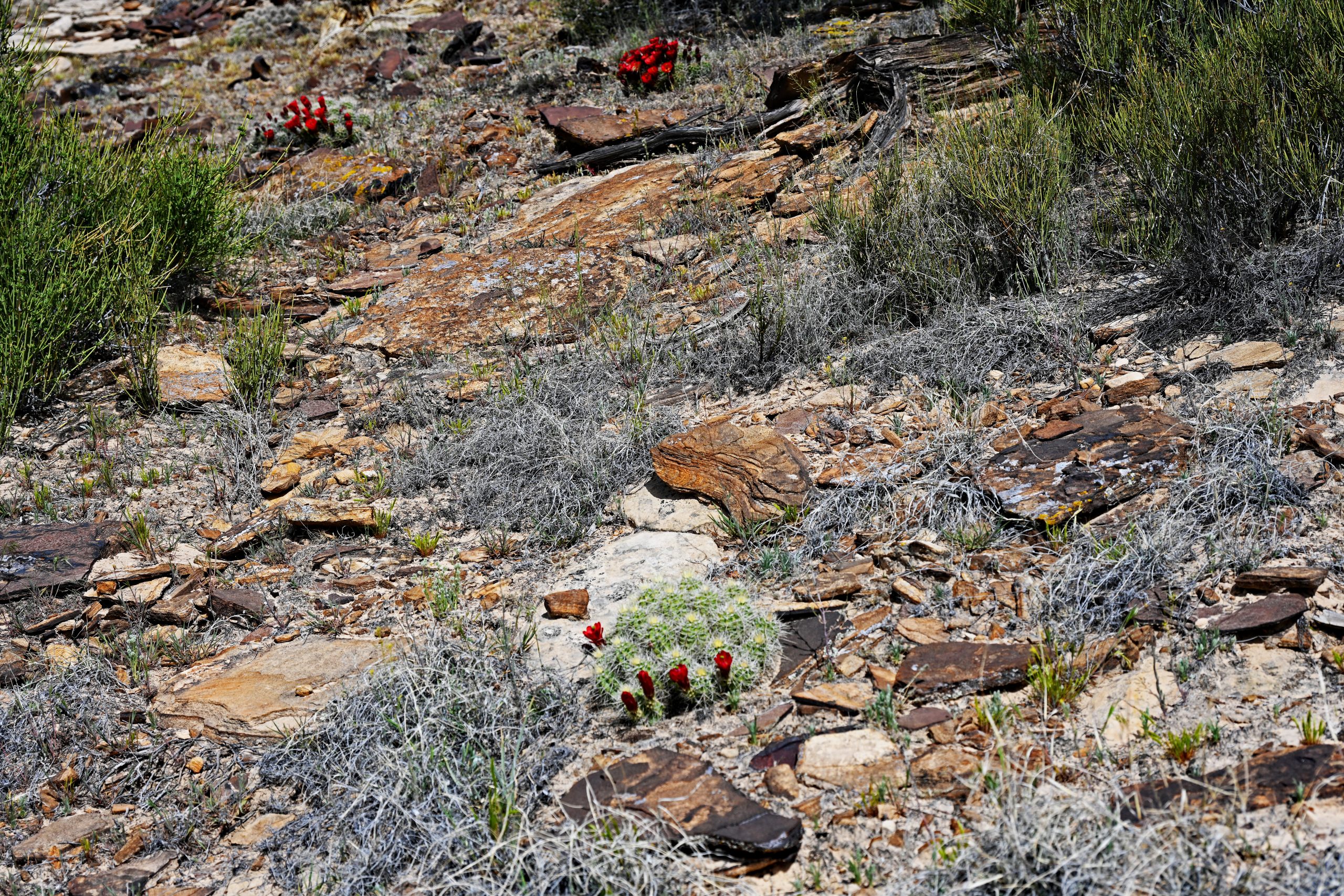
As we venture deeper into the canyon, we notice the unexpectedly rich vegetation. The absolute star along the way is the Claret Cup Cactus. Its brilliant scarlet, cup-shaped flowers provide an almost otherworldly contrast to the gray rock. We pause for a moment, hoping to spot one of the hummingbirds that are magnetically drawn to this vibrant red. Everywhere we encounter Mormon Tea with its broom-like green branches, which take on a yellowish hue with age—a herb that served early settlers as a medicinal brew.
Finally, we reach the canyon floor. Exhausted but happy, we sit on a warm stone and take in our surroundings. Just a short distance further, the secret is revealed: the waterfall plunges into a cool, shimmering pool, protectively framed by towering sandstone walls.
Gallery II: The Hidden Jewel of Calf Creek
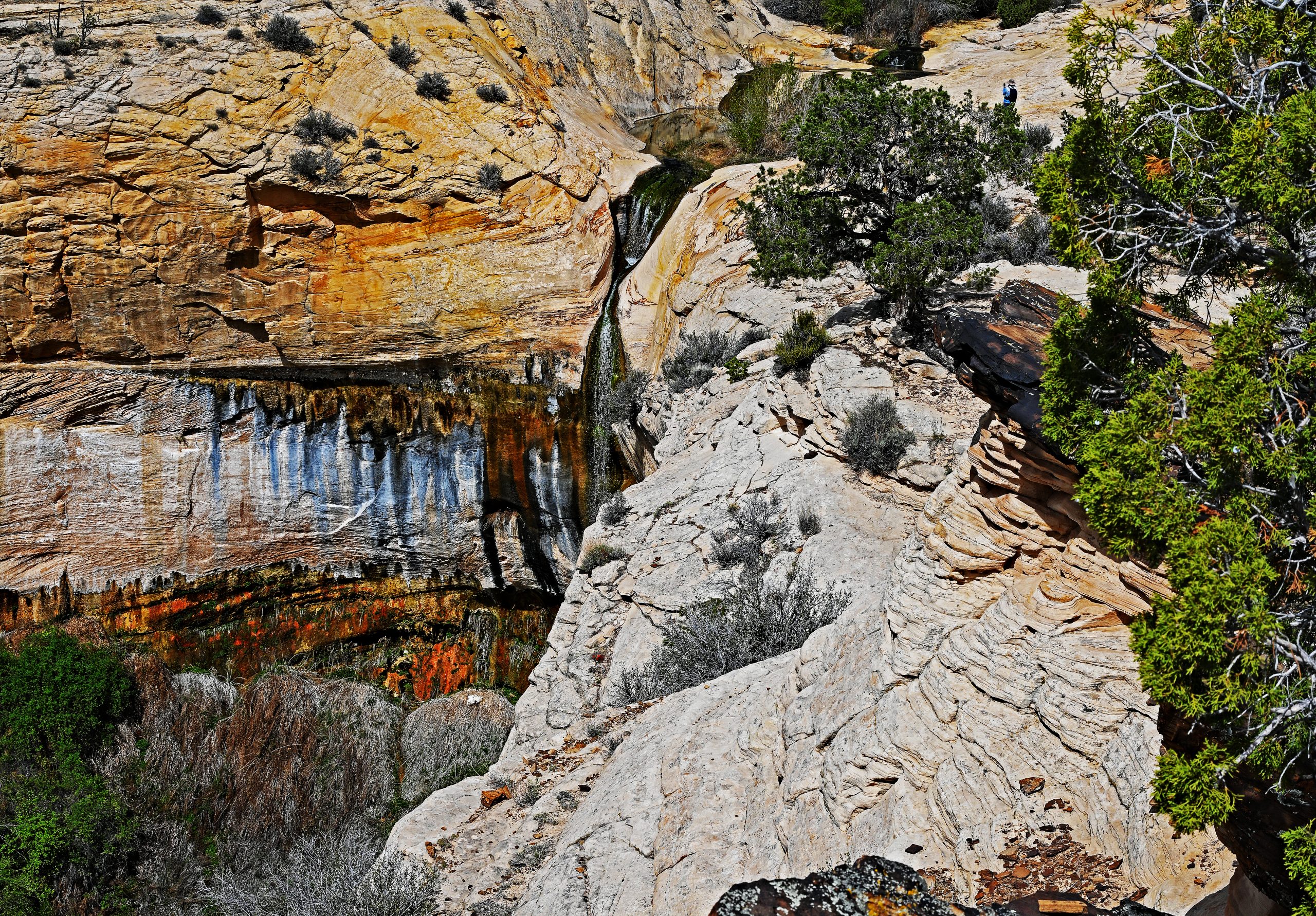
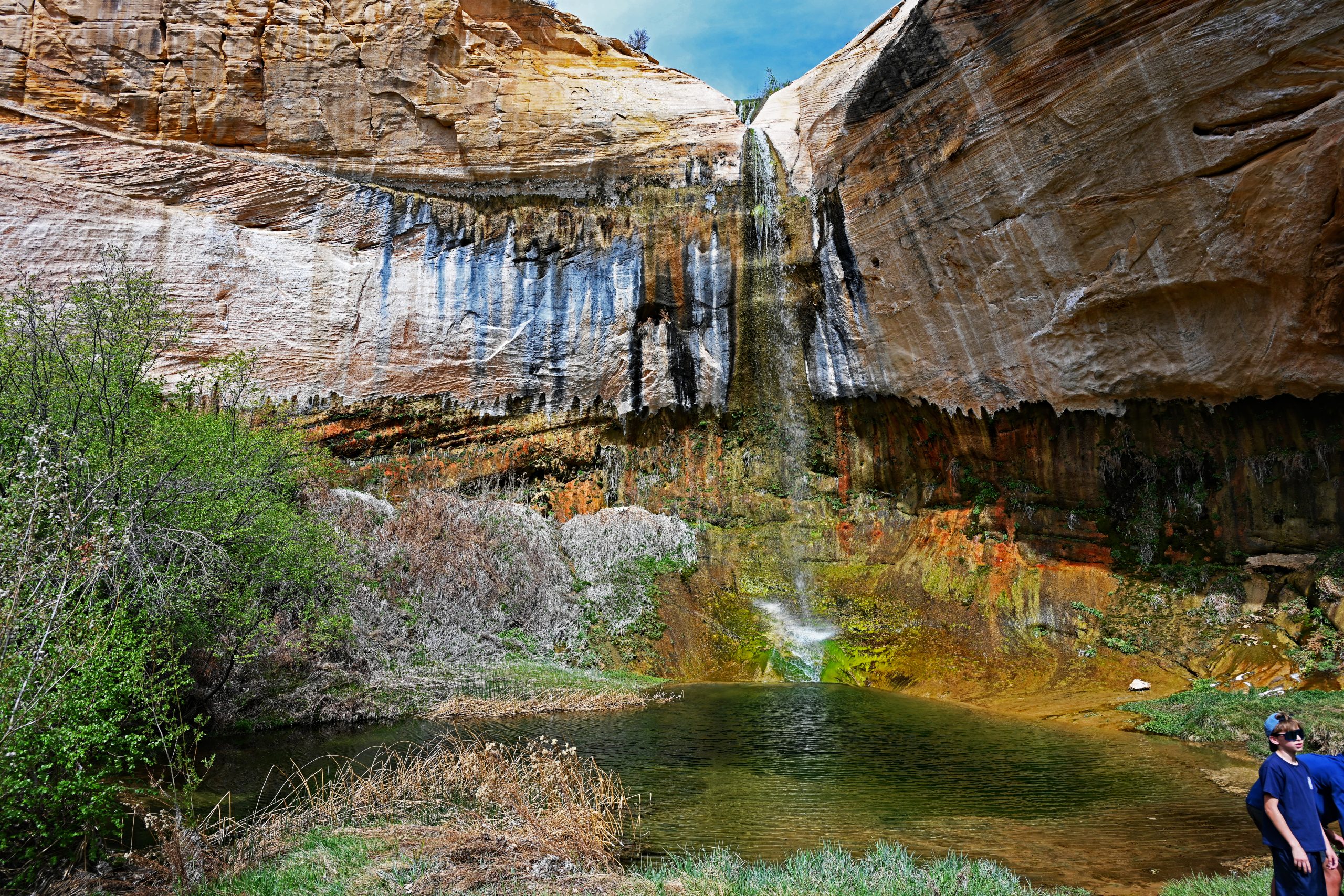
The climb back proves to be significantly more strenuous than the descent. The steep pitch of the sandstone tests our endurance, but we use the necessary breathing room to study the details of the flora once more. Every blooming cactus and every gnarled pine now seems like a small miracle of nature to us.
Gallery III: Survivalists on the Steep Slope
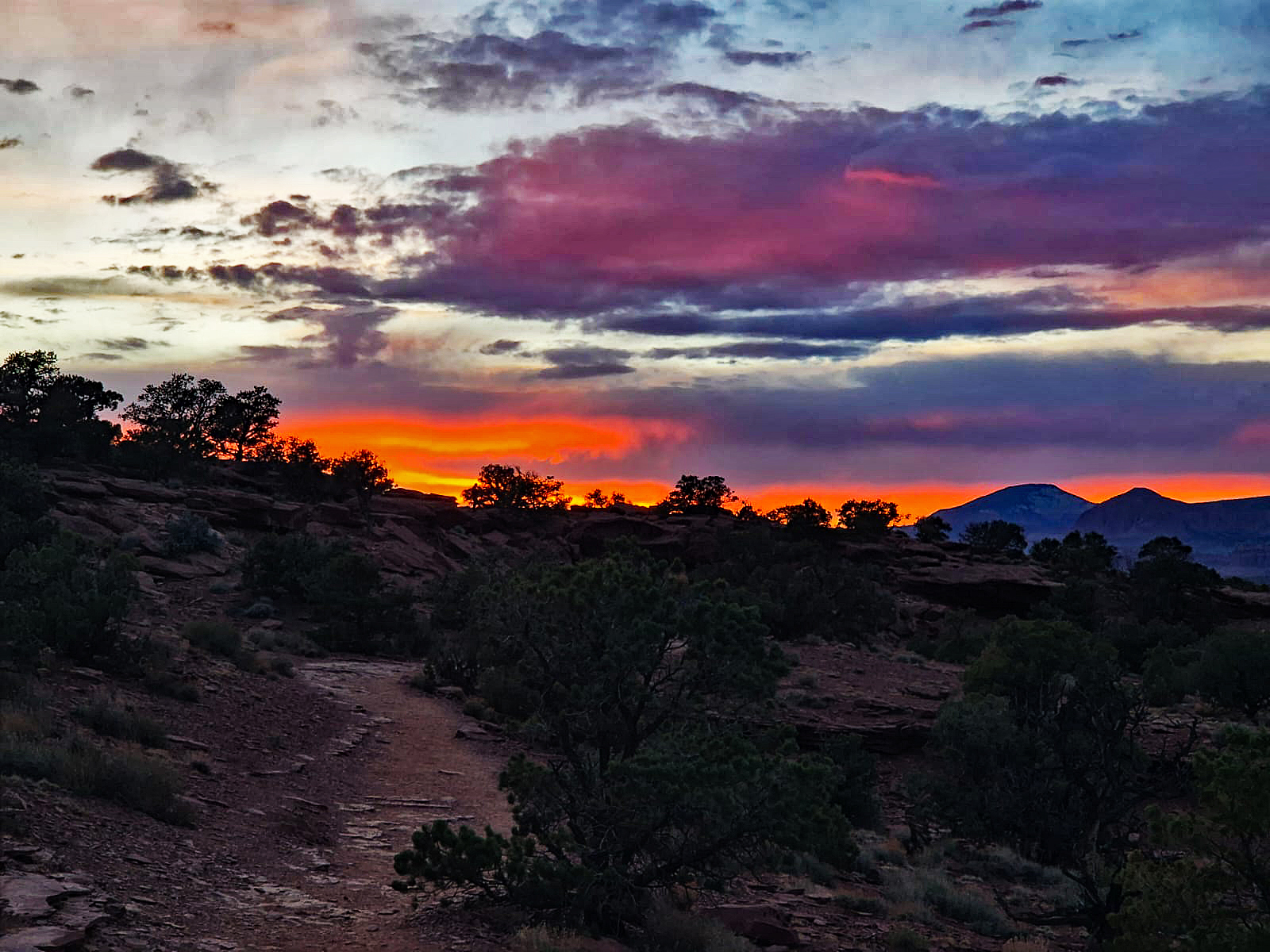
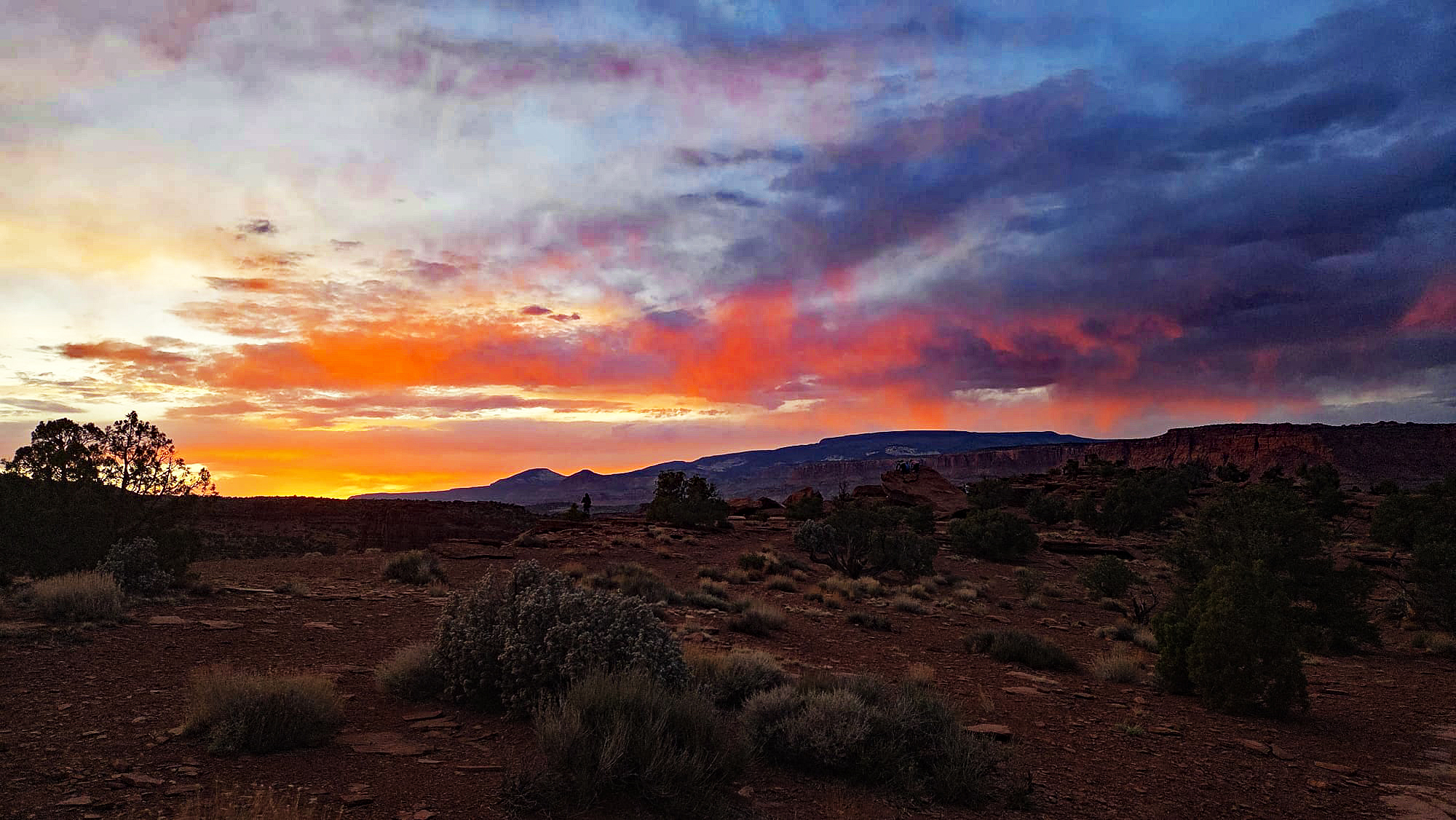
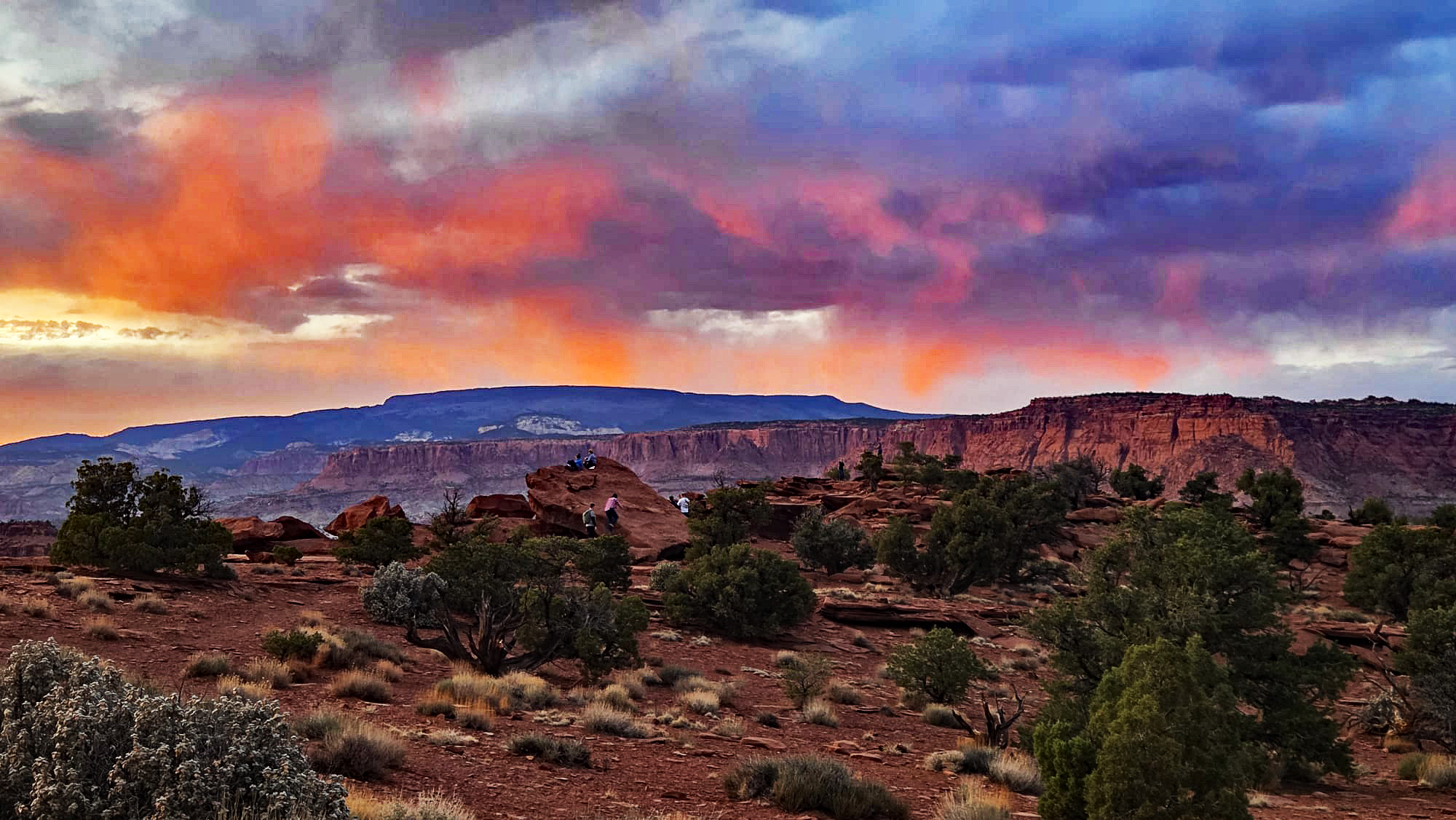
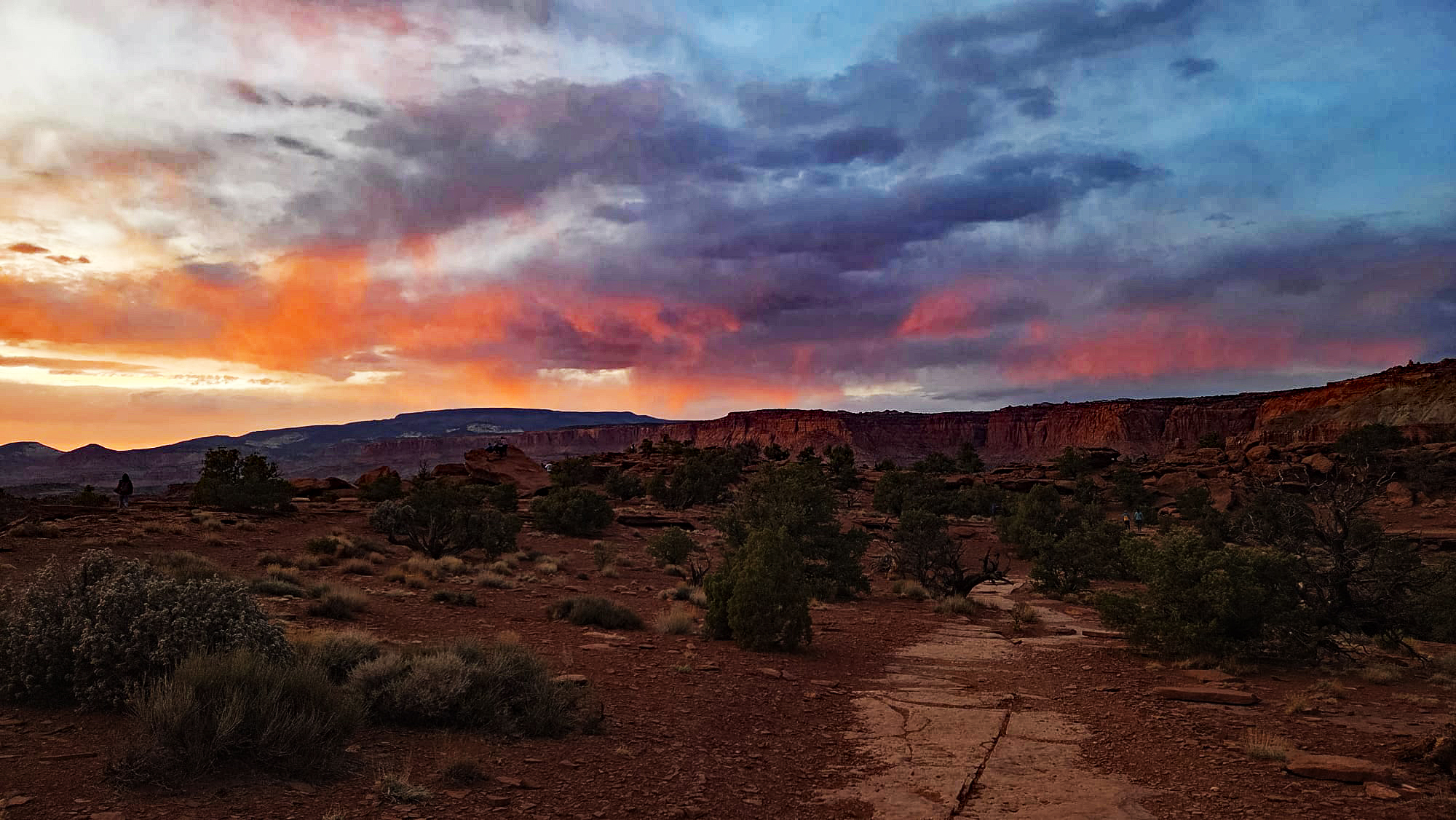
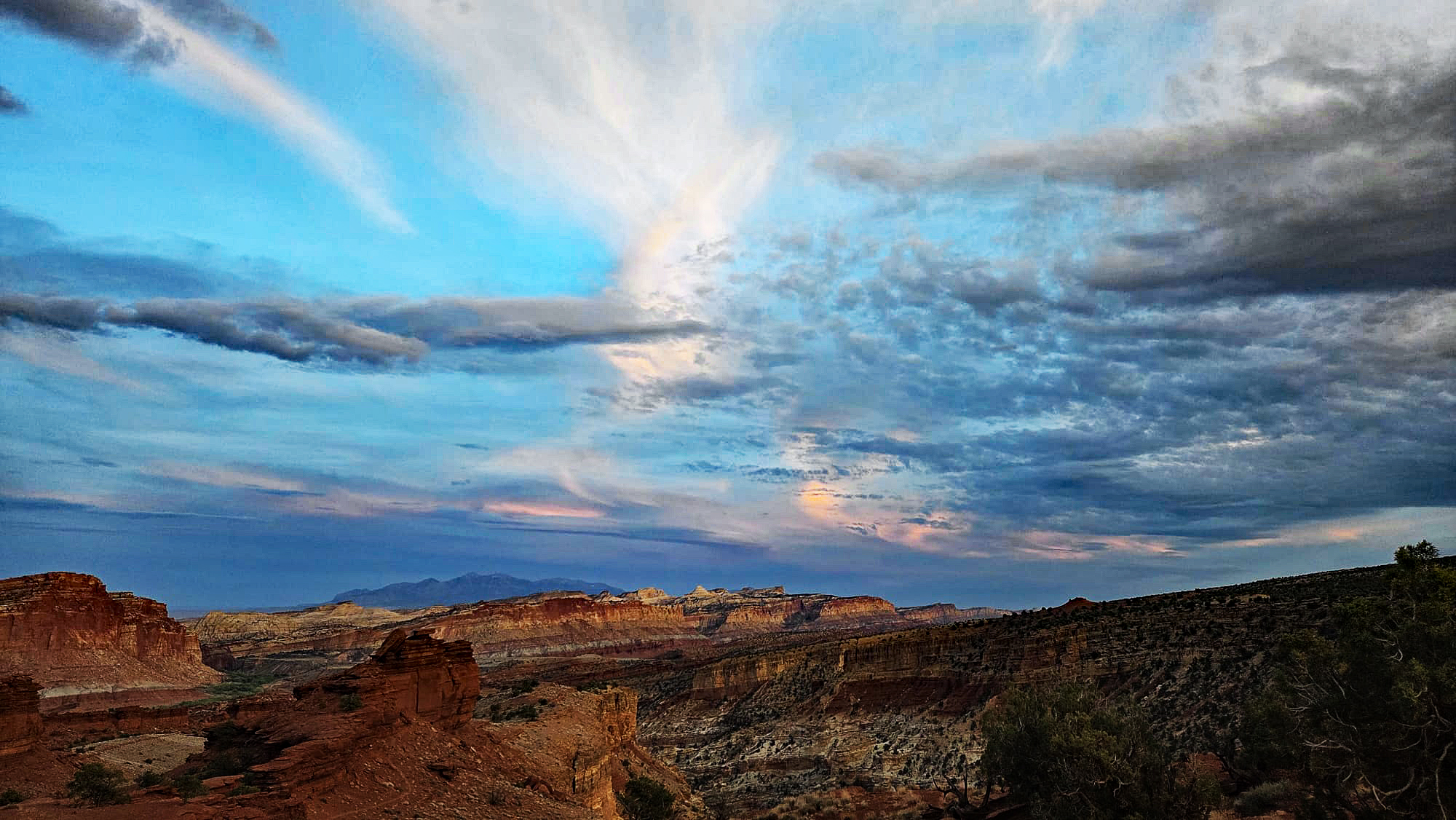
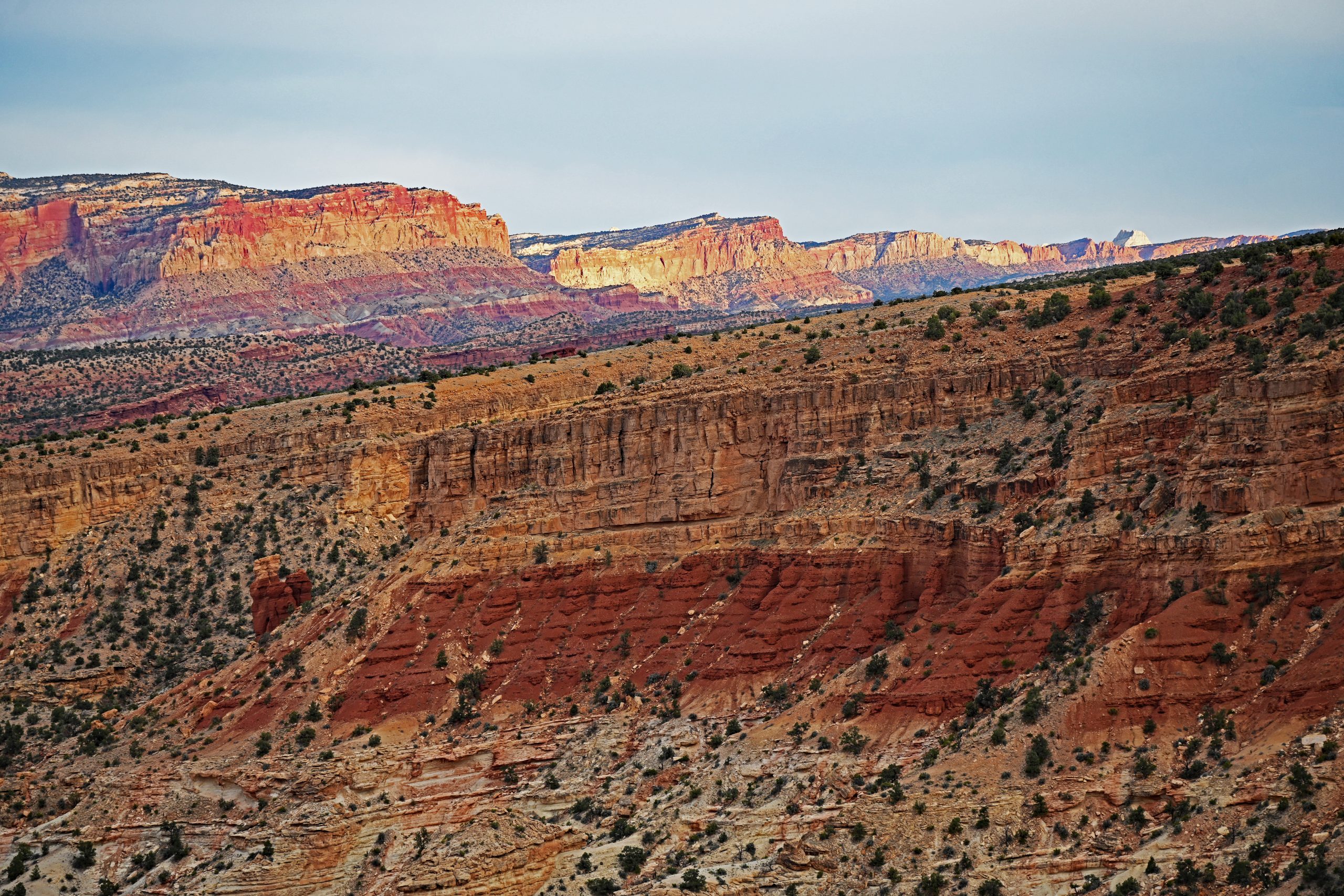
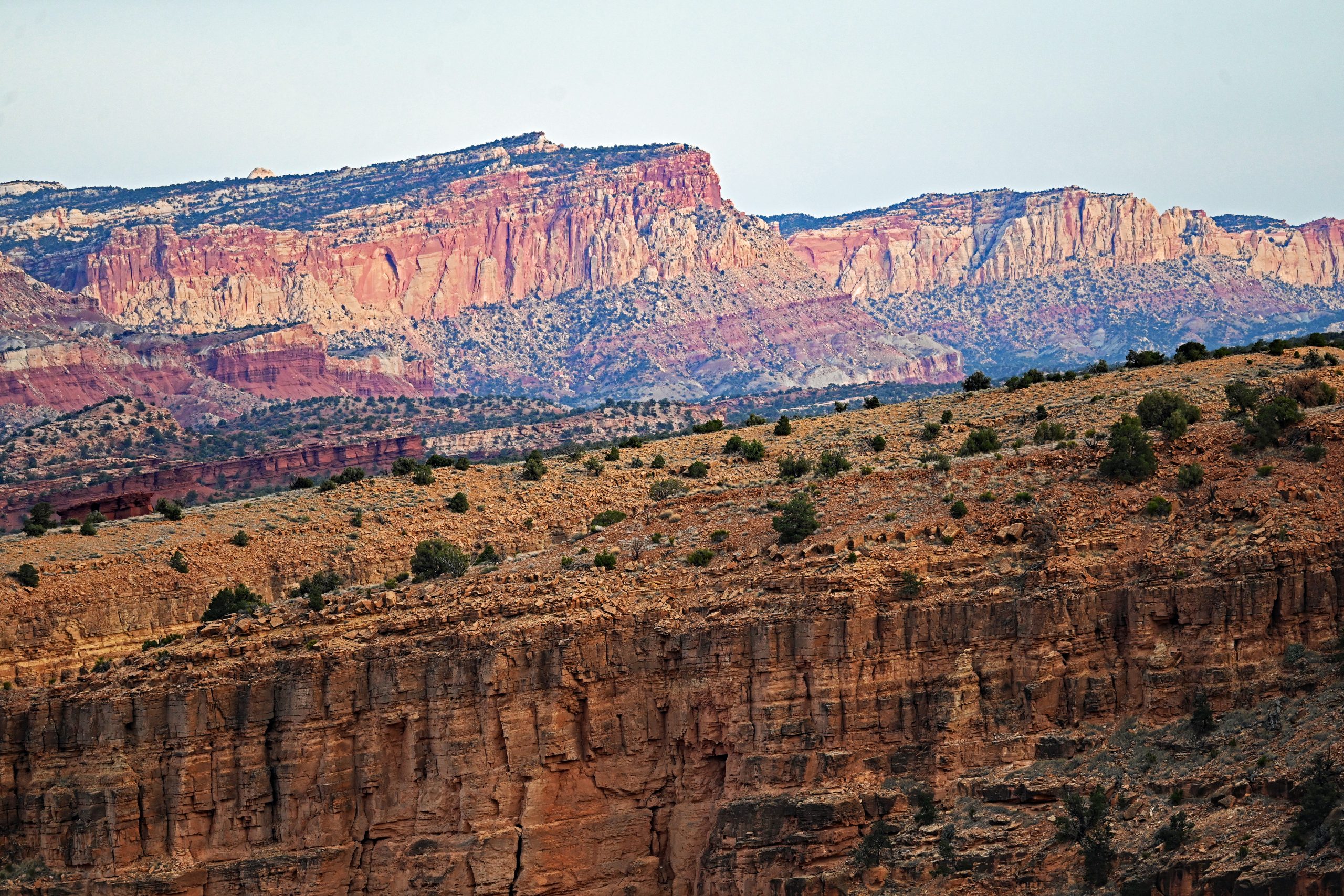
After a short rest at our hotel, the Rim Rock Inn, we are drawn back out around 5:30 PM. We drive to Sunset Point in Capitol Reef National Park. The sky is initially a disappointing gray, with the sun stubbornly hiding behind a thick layer of clouds. But we don’t let that deter us. And indeed, a small miracle occurs: just as no one believes in a sunset anymore, the sun steals out from under the clouds and begins its daily masterpiece.
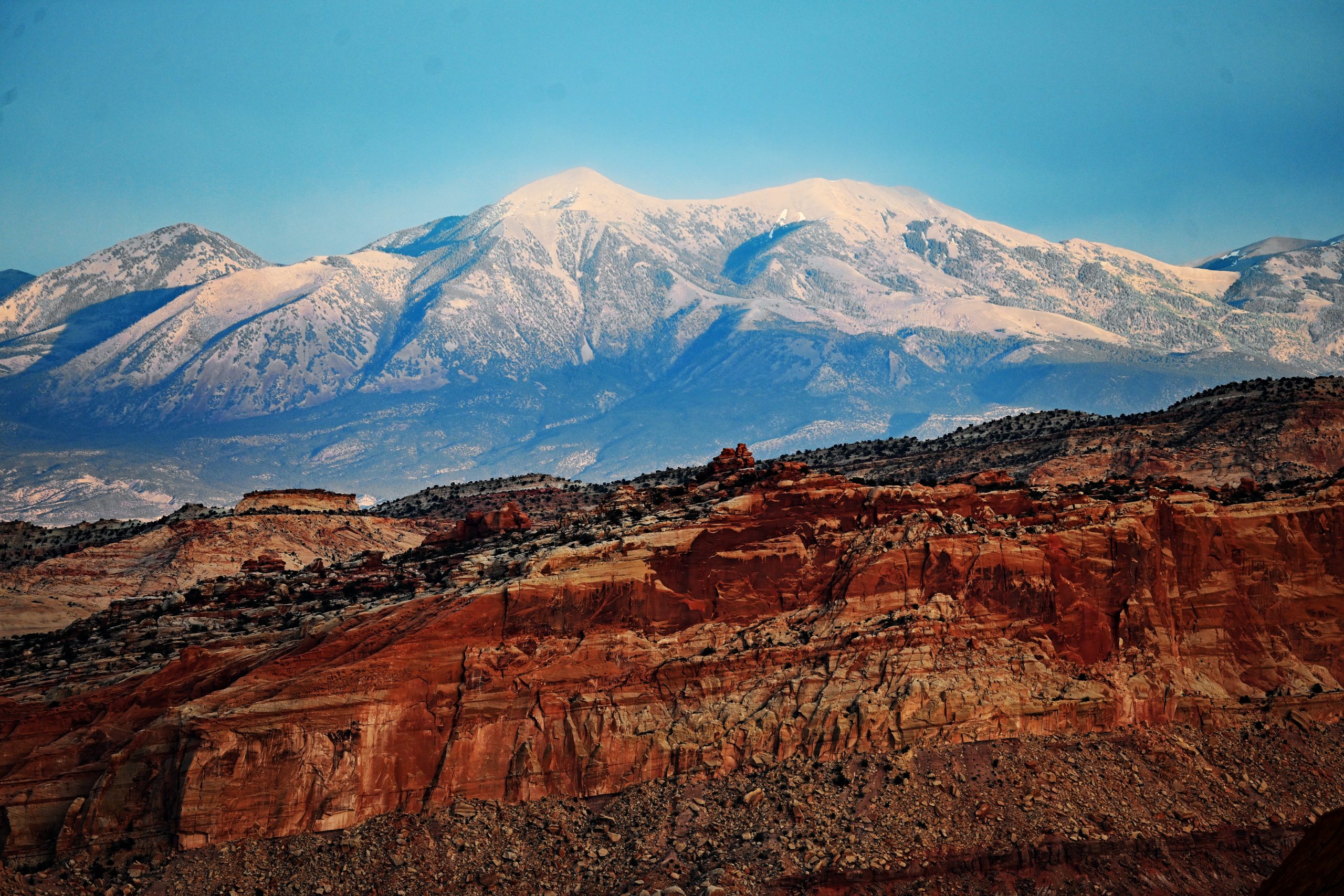
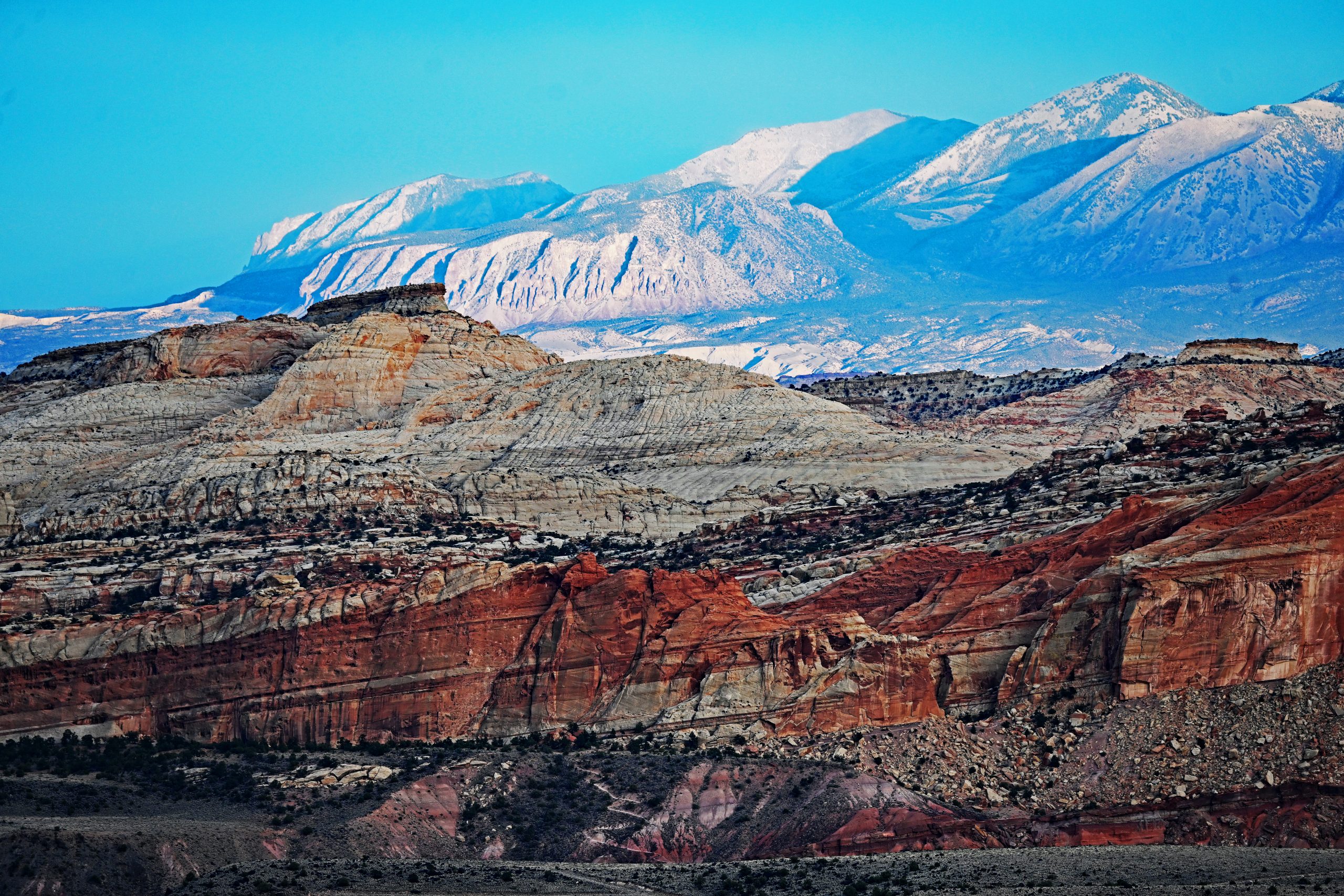
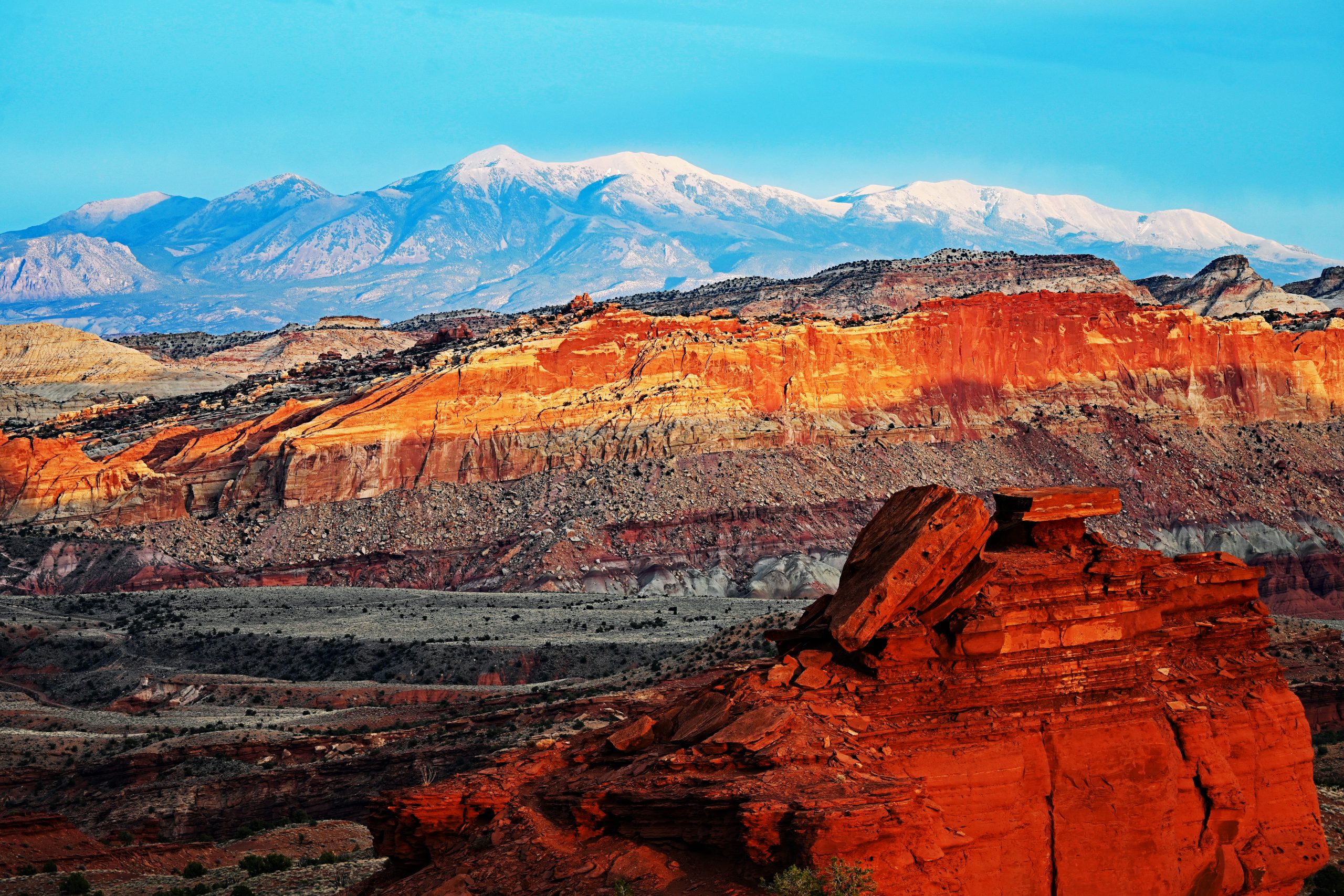
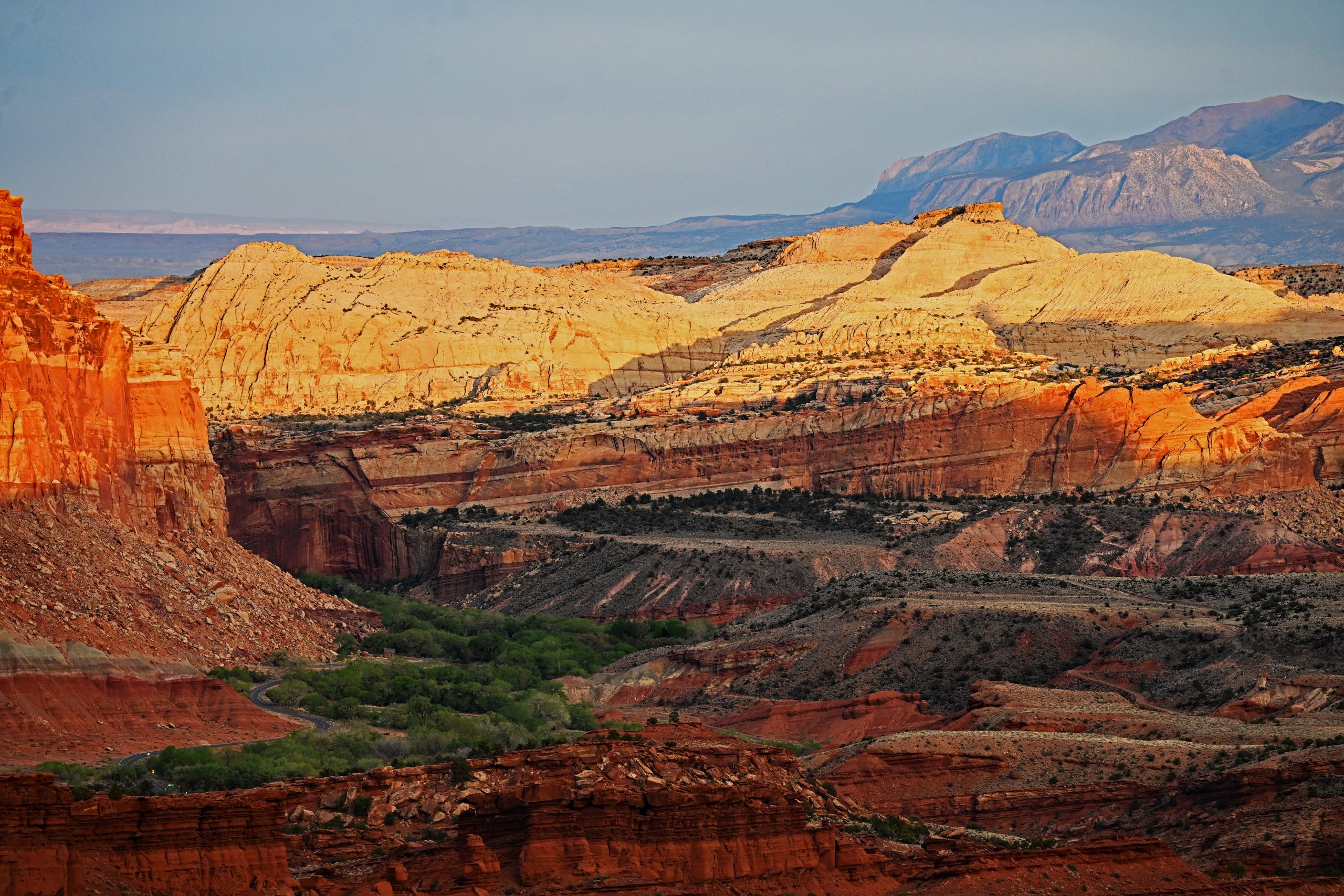
Here at Sunset Point, we don’t look directly at the setting sun; instead, we witness the opposite Waterpocket Fold catch fire. First, we see the white peaks of the Navajo formation in the northeast being illuminated. They glow in a delicate pink and white, reminiscent of the marble domes in Washington. Then the light wanders lower to the yellowish cliffs of the Kayenta formation, until finally the massive Wingate sandstone of the “Fluted Cliffs” lights up in a deep, almost bloody red-orange.
On the far horizon, the bluish silhouettes of the Henry Mountains and Mount Ellen appear, while closer to us, the golden Navajo domes of Fern’s Nipple and the plateau-like Pectols Pyramid compete in radiance. Deep below in the shadows, the lush green of the trees marks the secret course of Sulphur Creek.
Gallery IV: The Glow of the Waterpocket Fold
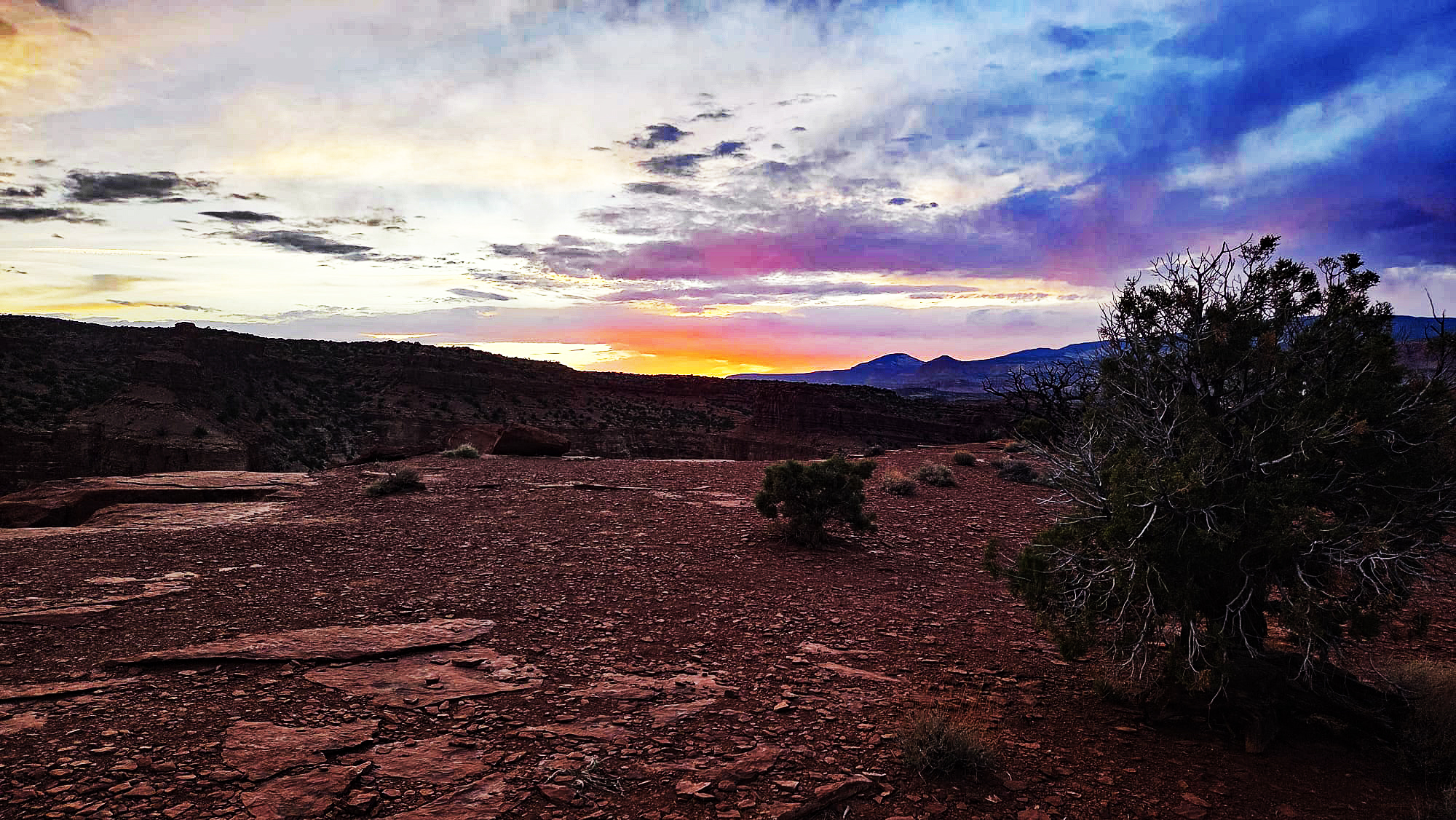
Completely intoxicated by these colors, we start our way back to the parking lot. But the spectacle isn’t over yet. Over the Gooseneck Overlook, the sky is now burning in shades of purple and orange—a final, dramatic surge of the day that simply leaves us enraptured. It was the perfect conclusion to a day that offered everything from the silence of white sandstone to the fire of the evening sky.
Gallery V: Farewell in the Heavenly Fire