
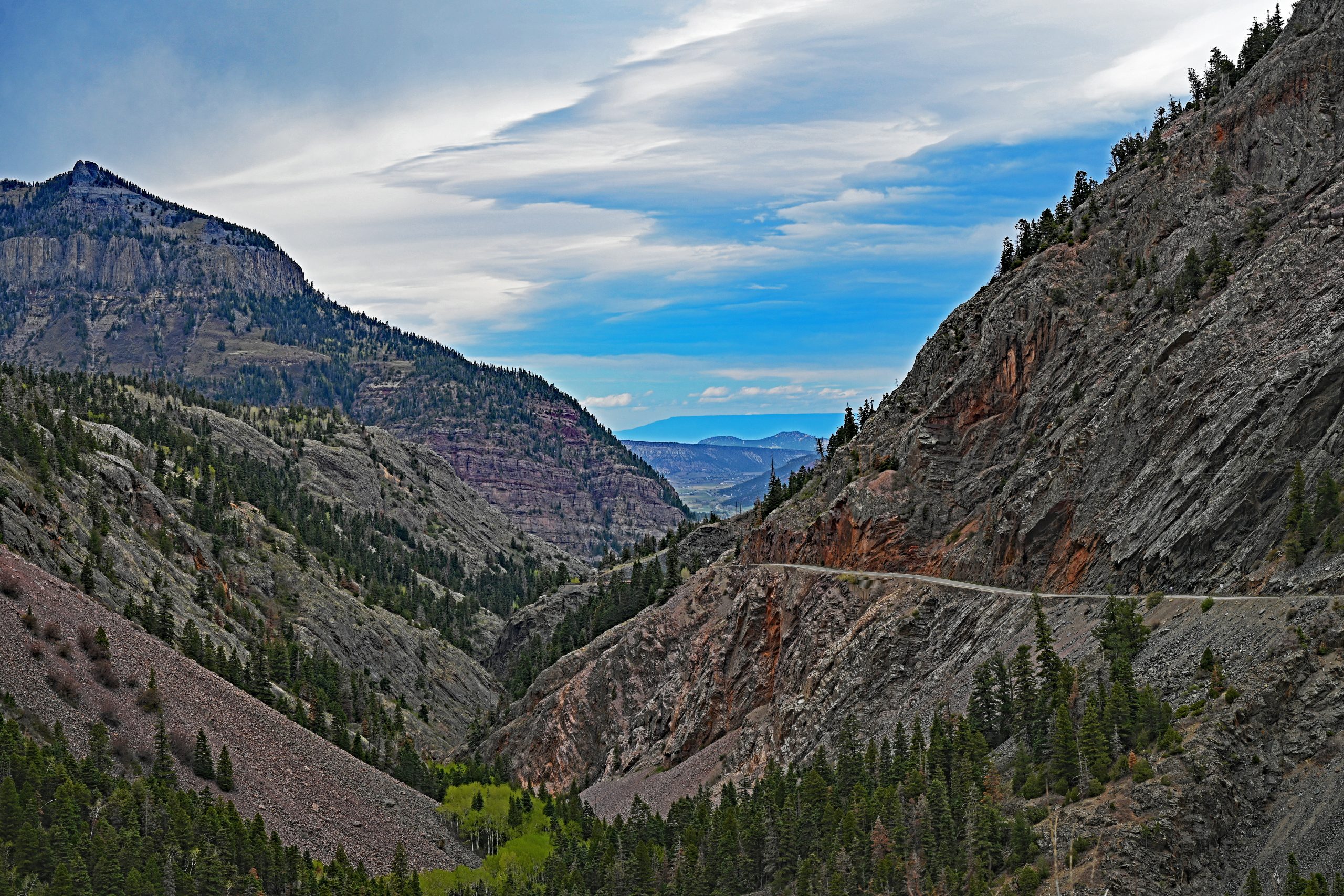
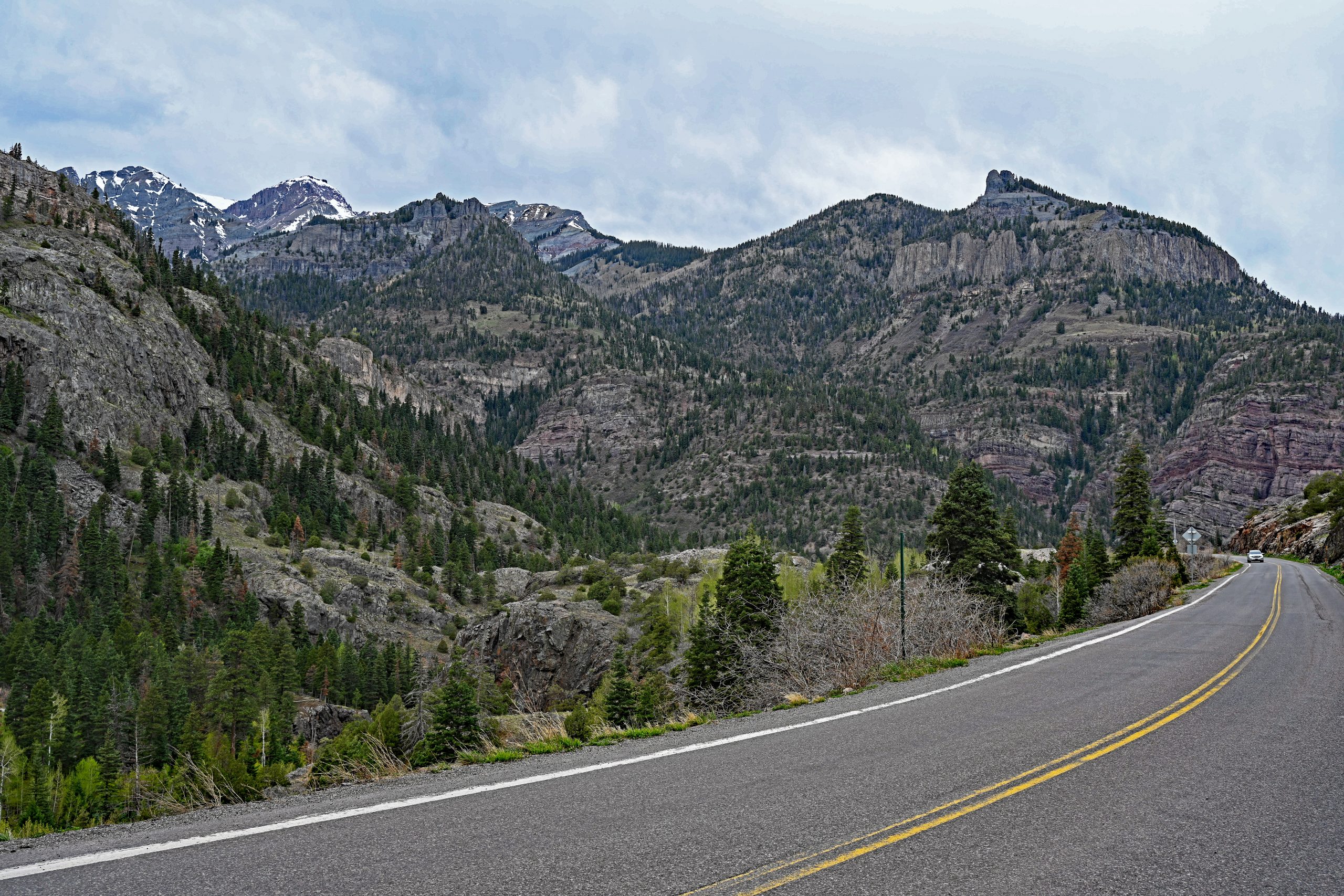
It is a cool morning as I turn my back on Silverton. Ahead of me lies more than just a road; it is a legend: the Million Dollar Highway. This 25-mile stretch of US Highway 550, winding its way to Ouray, is a technical masterpiece blasted into vertical rock walls by Otto Mears in the 1880s. Whether the name stems from the astronomical construction costs, the gold ore in the roadbed, or simply the priceless view, becomes irrelevant the moment I take the wheel. The guardrails disappear, and the road clings to the cliffs like a narrow gray ribbon, while the abyss yawns just inches from my tires.
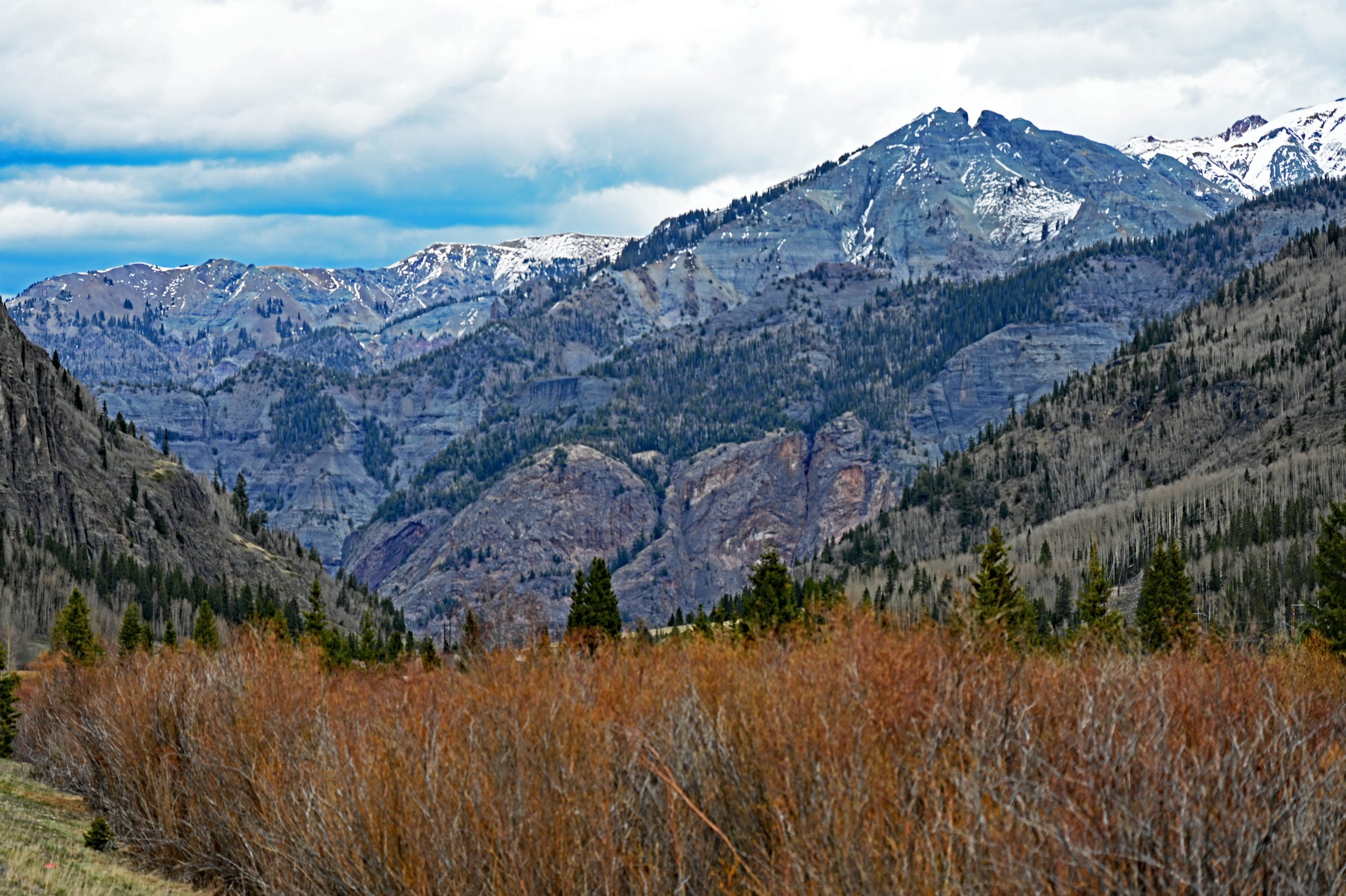
Early in the drive, the giants of the San Juan Mountains demand my full attention. Bear Mountain rises in a perfect pyramid, its peak still buried deep in eternal white, while the massive Abrams Mountain stands beside it like an invincible sentinel. However, my gaze is caught by the jagged profile of Ulysses S. Grant Peak. Its rugged rock pinnacles look like the teeth of a predator against the steel-blue sky. Located near the Ice Lake Basin, this peak is a longing for mountaineers and a motif I simply must capture.
Gallery I: The Ascent to Red Mountain Pass
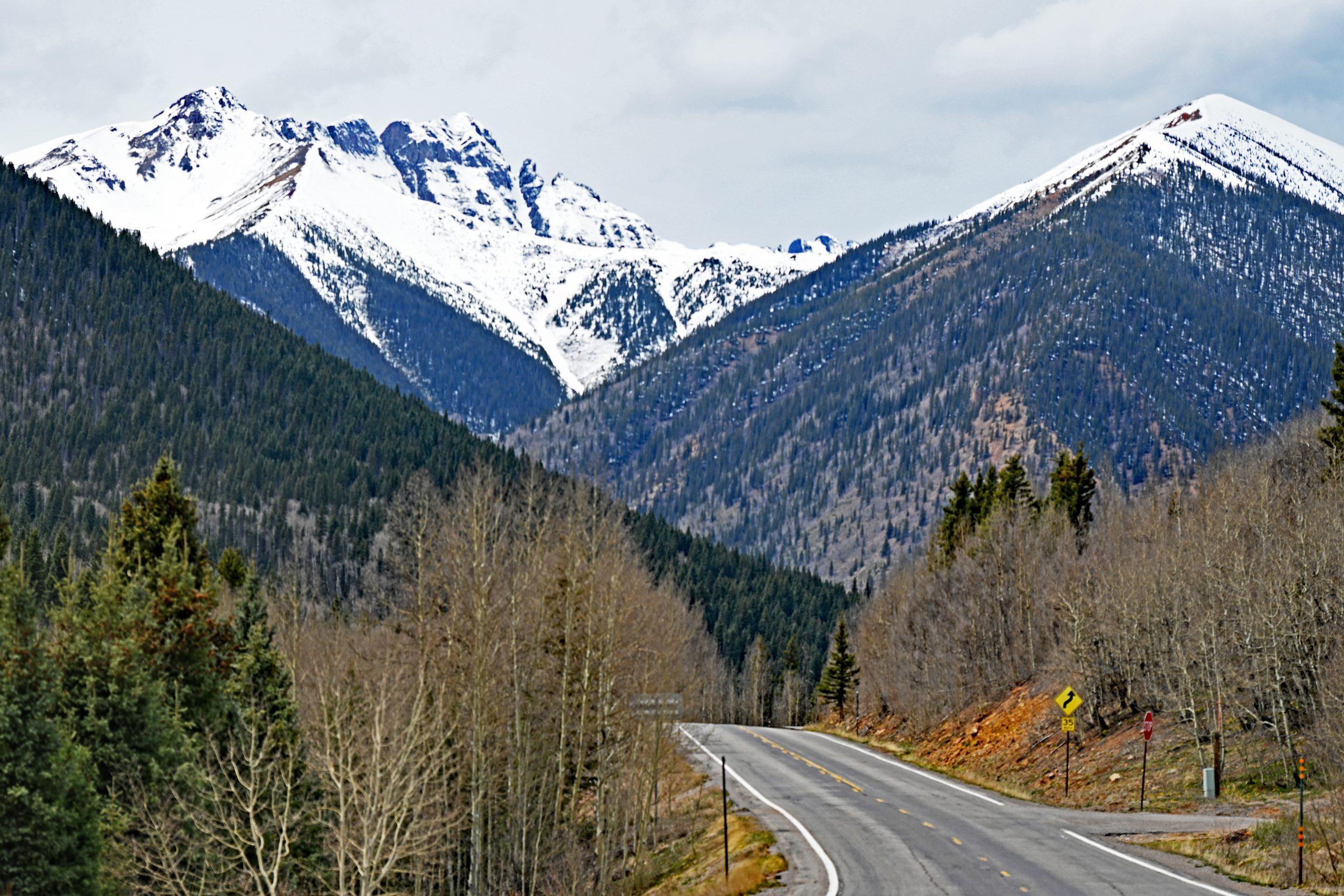
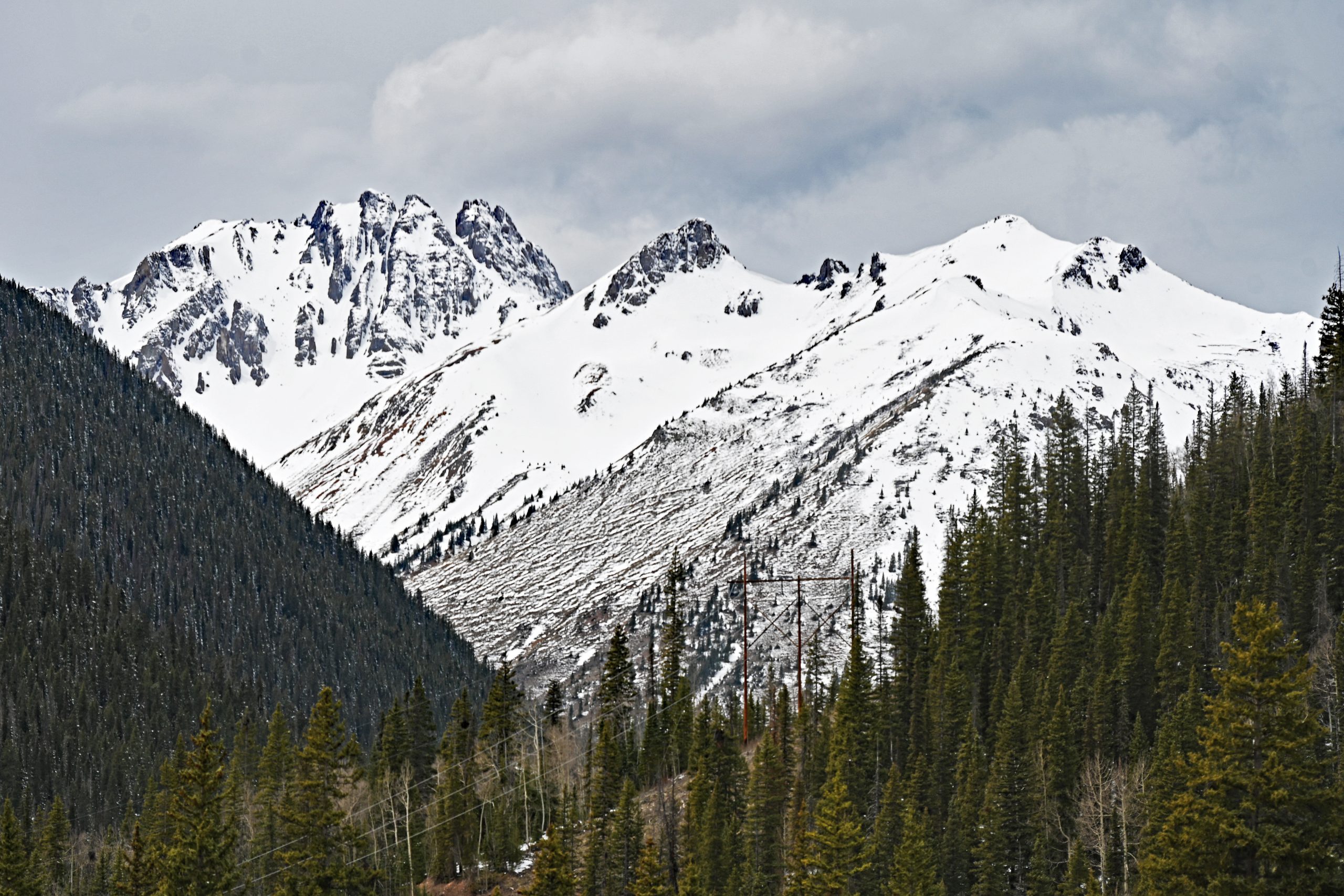
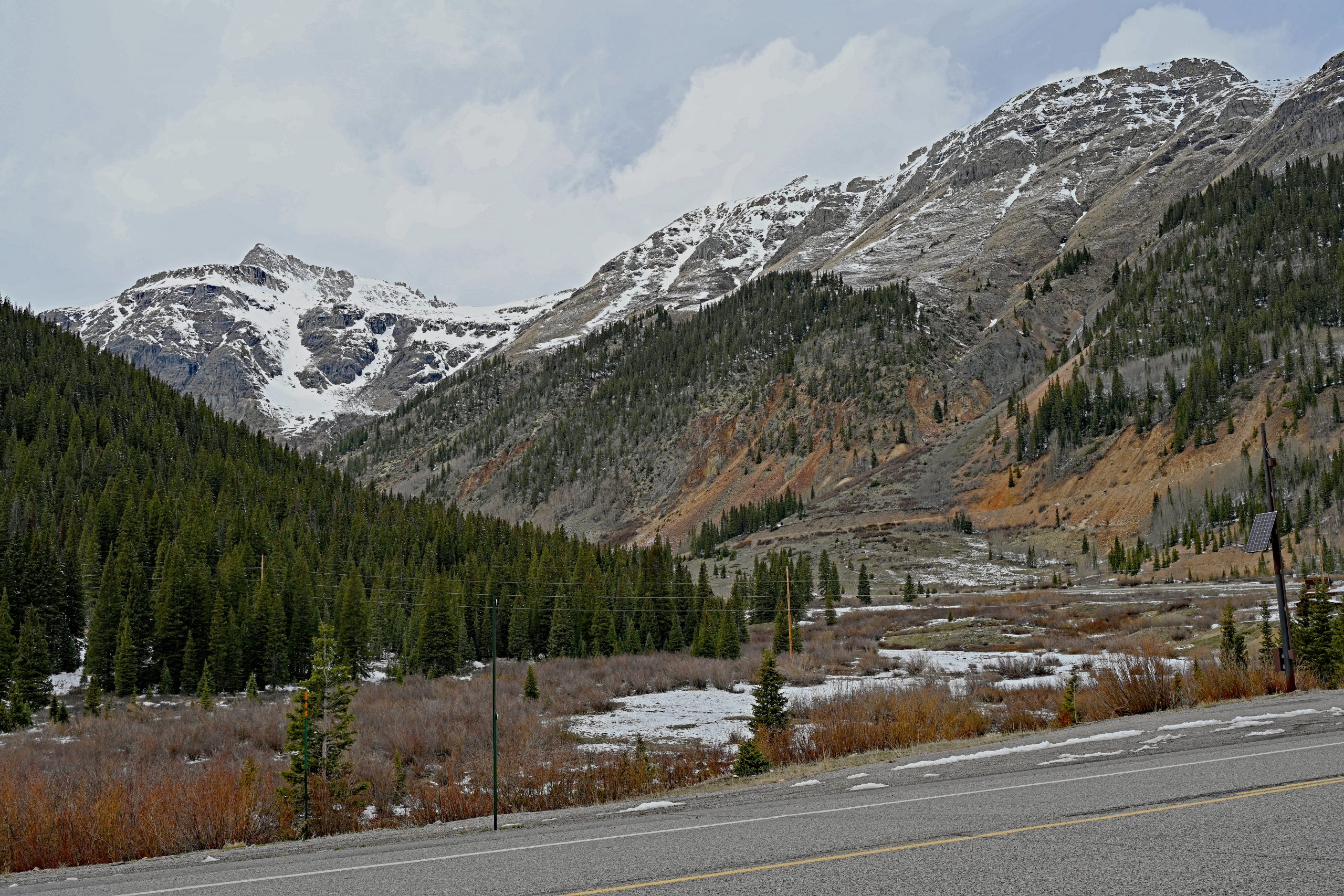
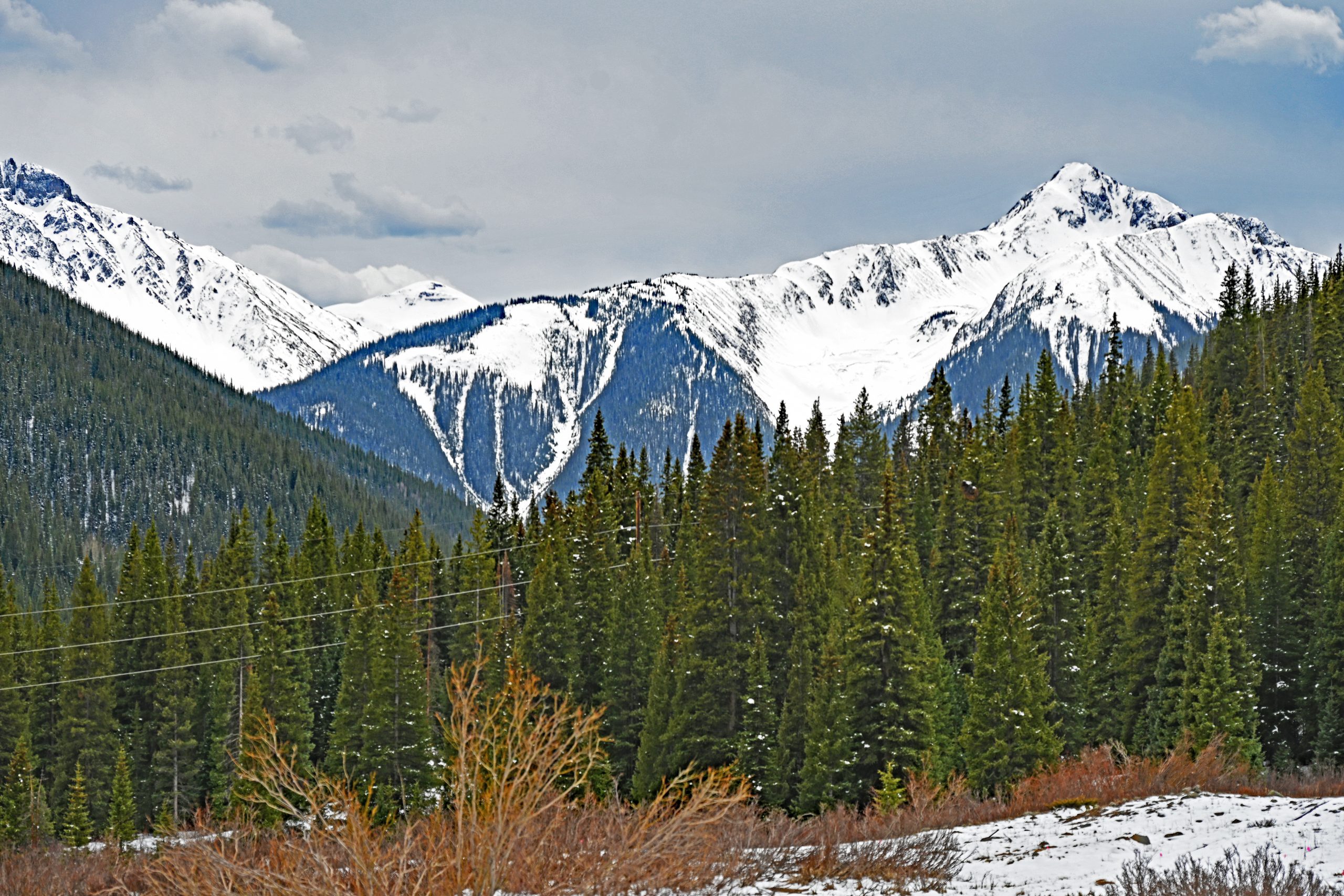
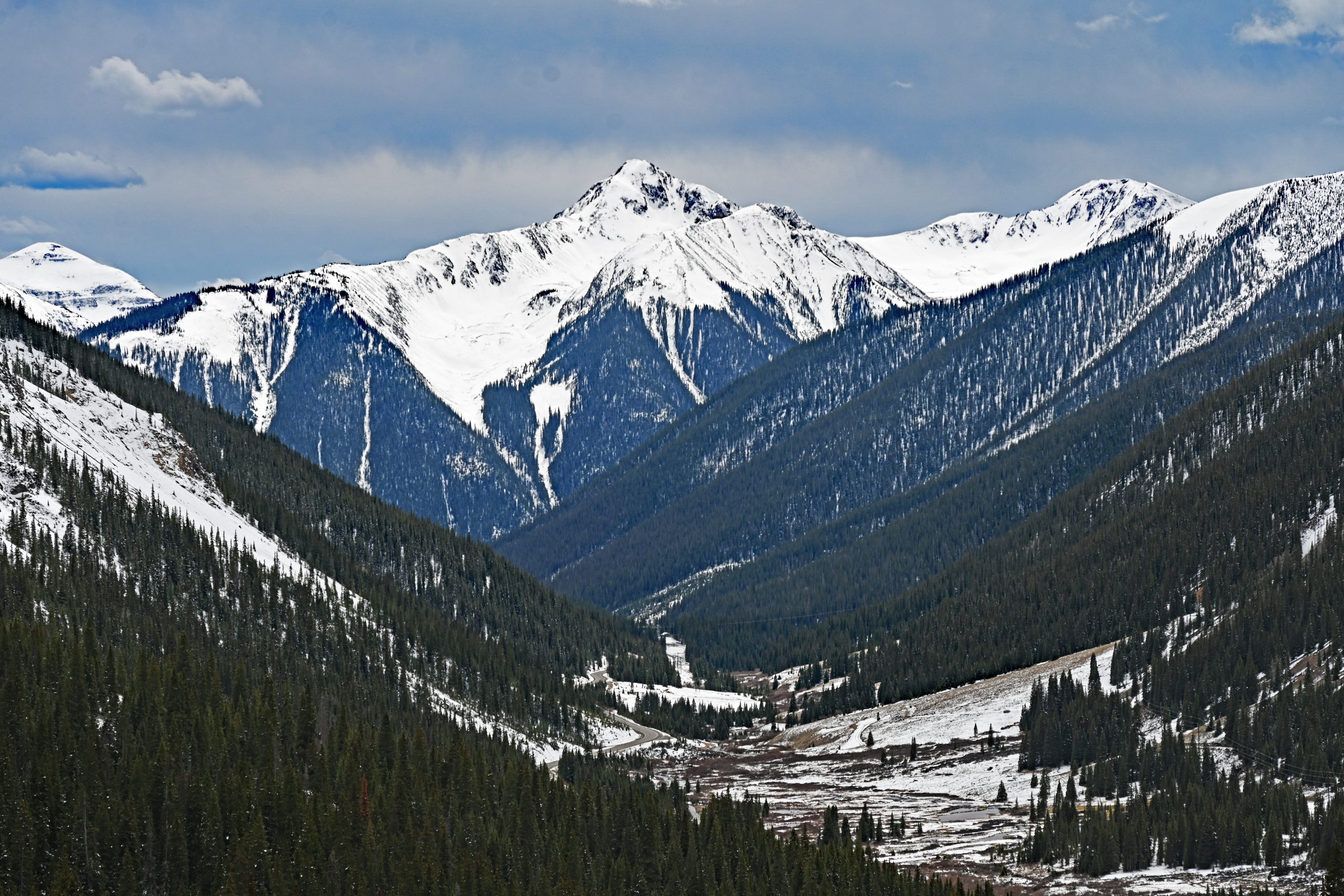
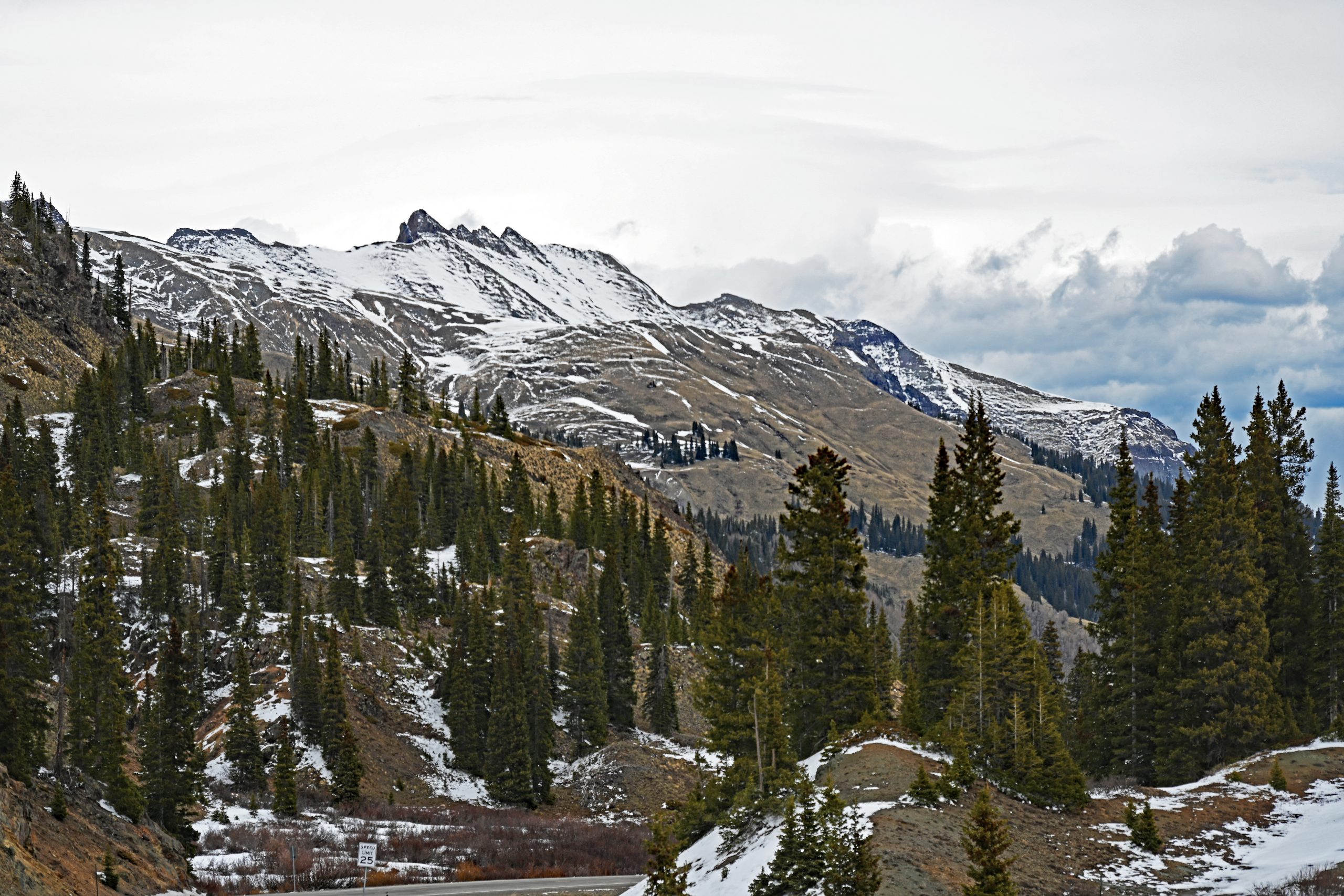
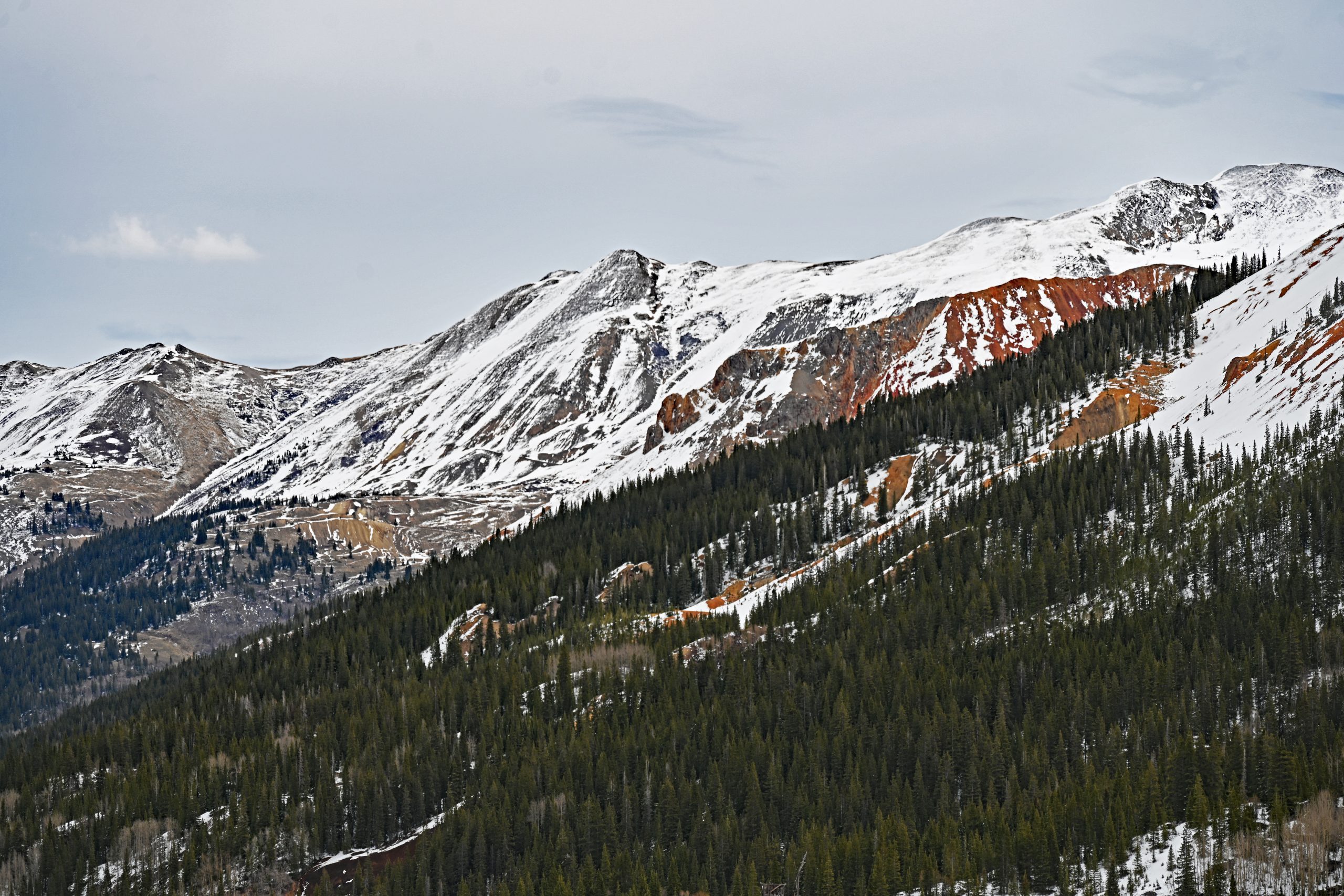
The journey takes me deeper into the Red Mountain Mining District. Here, the scenery changes dramatically. On the left side, Red Mountain No. 3 dominates. It is the most striking of the trio, famous for its deep, often snow-covered cirque. The slopes glow in an almost surreal orange-red—an effect of weathered iron sulfide, or pyrite, sleeping deep within the rock. To the right lies Red Mountain No. 2, whose massive scree slopes gave the entire range its name.
The drive over Red Mountain Pass is a balancing act. While naked rock towers on one side, the terrain drops hundreds of meters on the other. No guardrail disturbs the view—a conscious decision to allow snowplows to push the massive drifts over the edge in winter. Now, in April, the contrast is intoxicating: the deep oxide-red of the slopes clashes with the blinding white of the remaining snow. Around a bend, Red Mountain No. 1 suddenly appears, followed by McNamee Peak, which borders the Mineral Creek Valley.
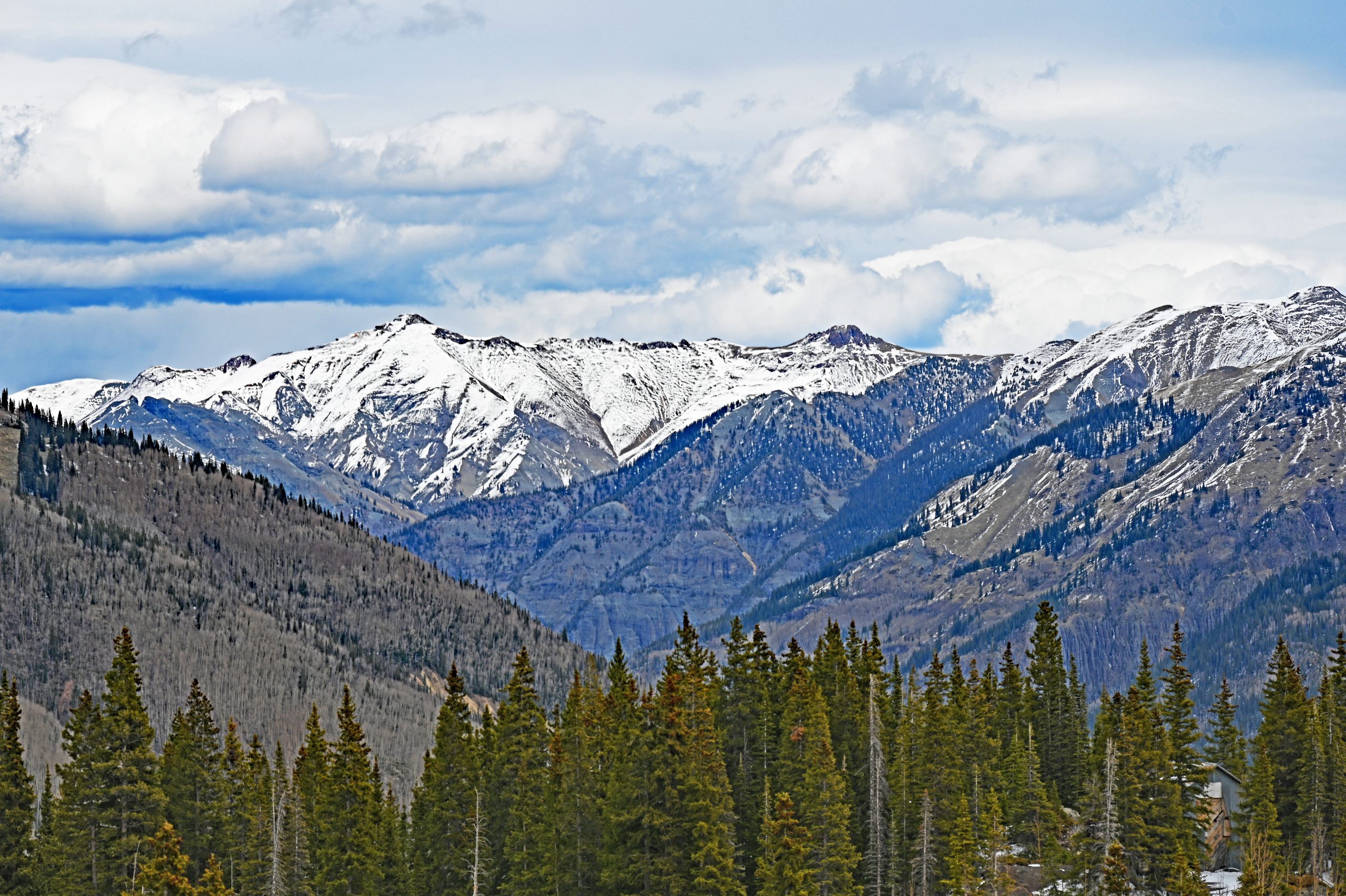
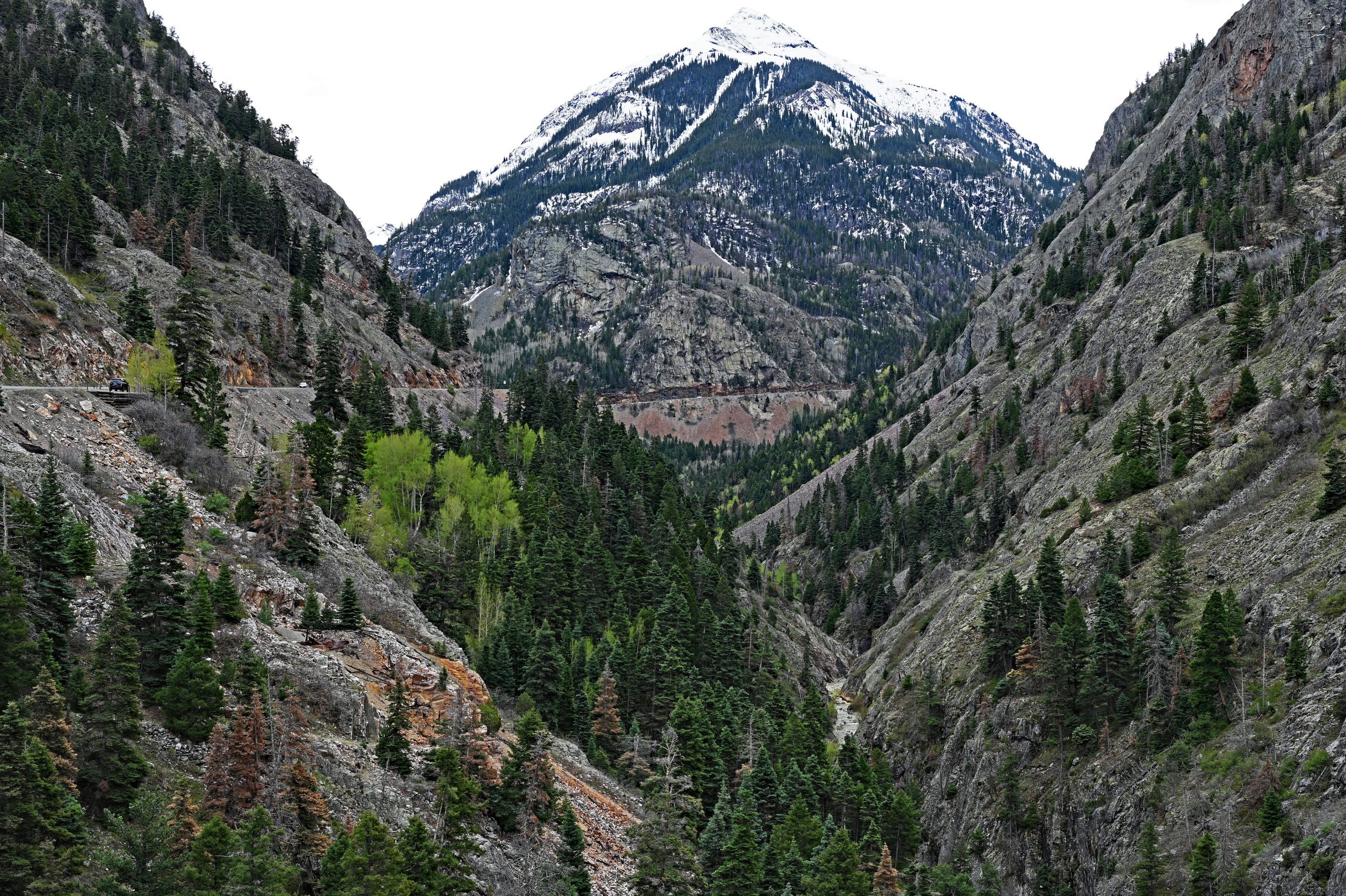
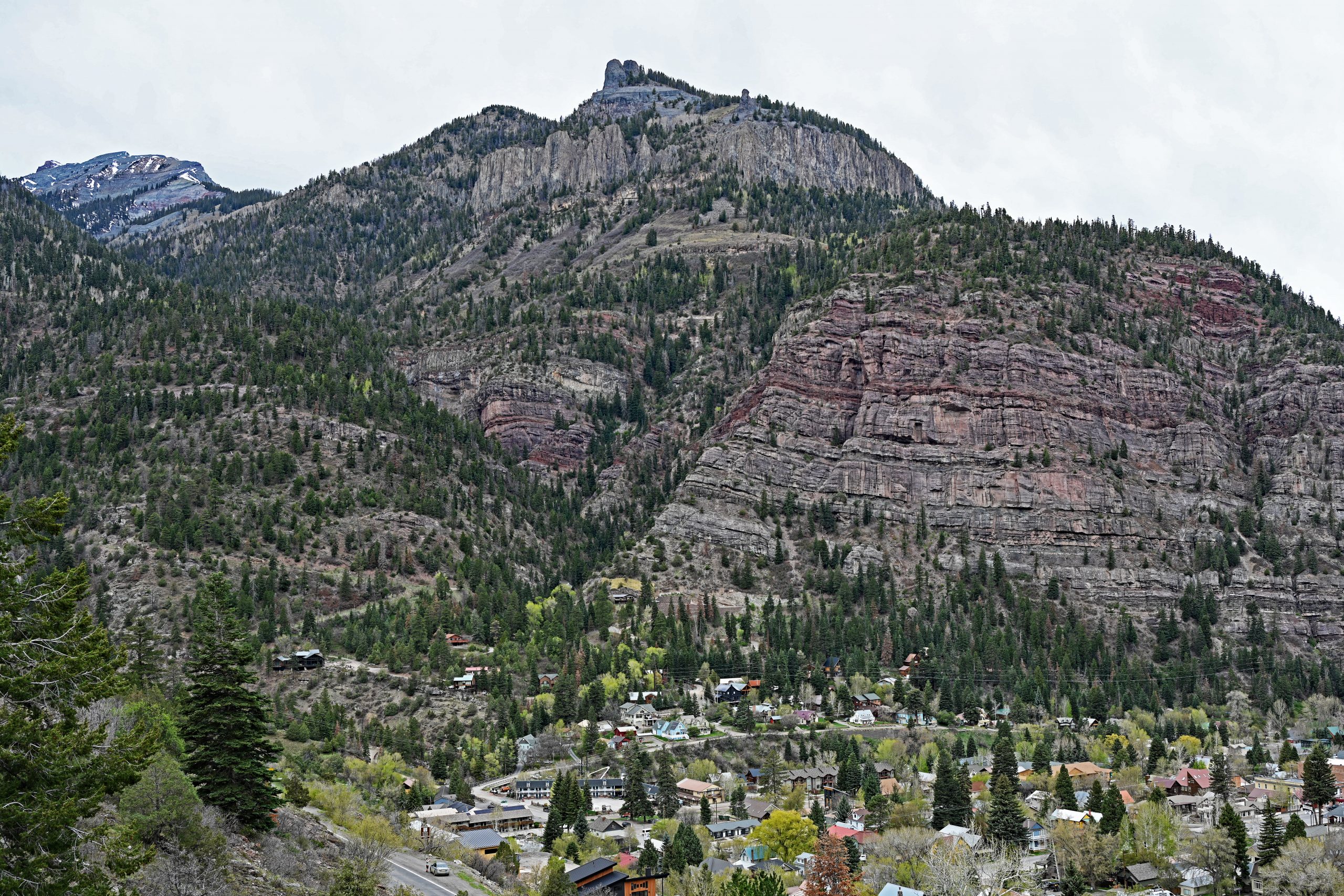
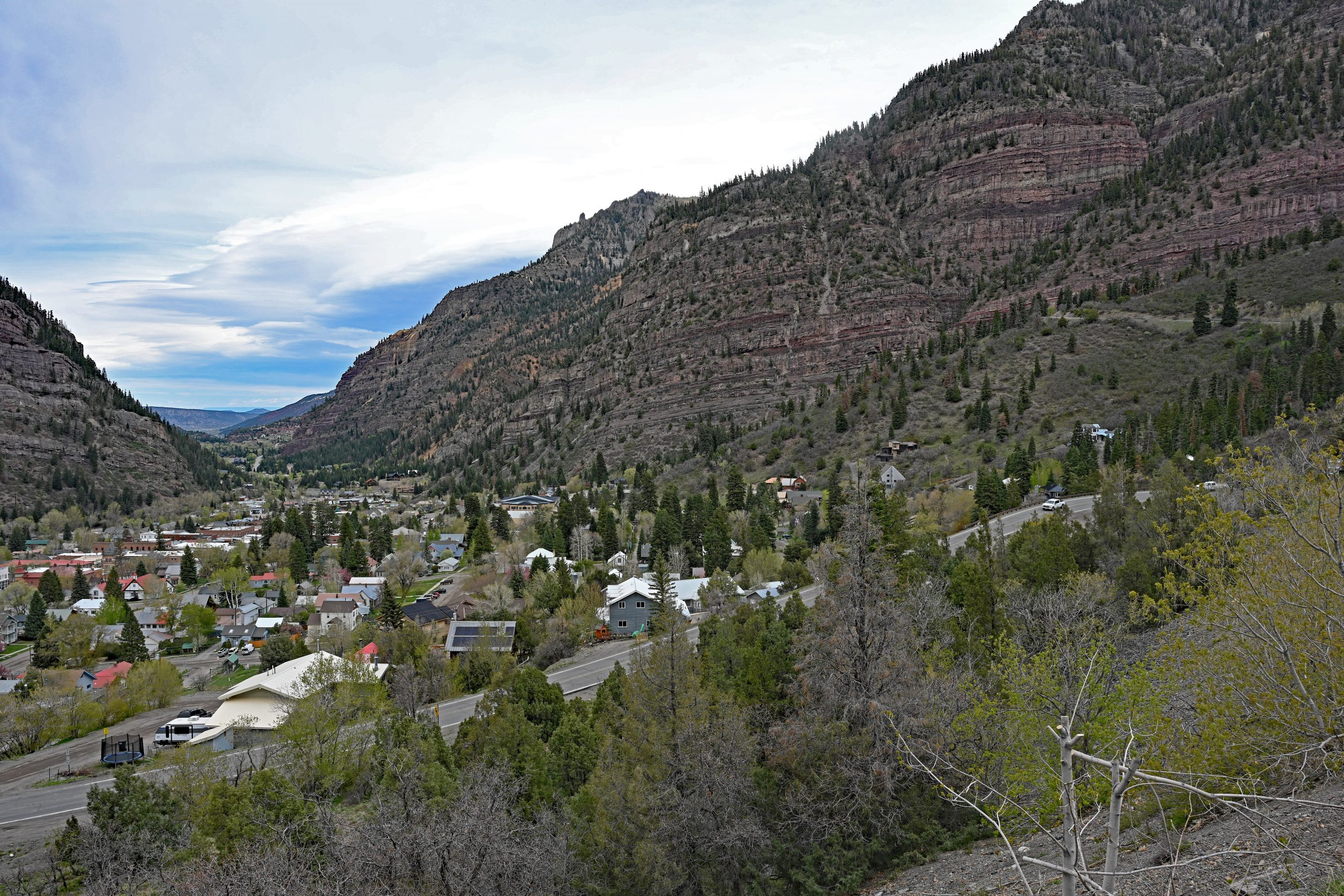
Before the road plunges into the dark twists of the Uncompahgre Gorge, the land briefly opens up at Ironton Park. Here, Abrams Mountain reveals itself again in full glory, flanked by the long ridge of Brown Mountain, its slopes riddled with old mine entrances like Swiss cheese. In the background, Hayden Mountain watches over the silent valley. The final descent is a rush of hairpins until I reach the Switzerland of America Lookout. Deep below me, cradled by steep rock walls, lies Ouray.
Gallery IX: Descent into the “Switzerland of America”
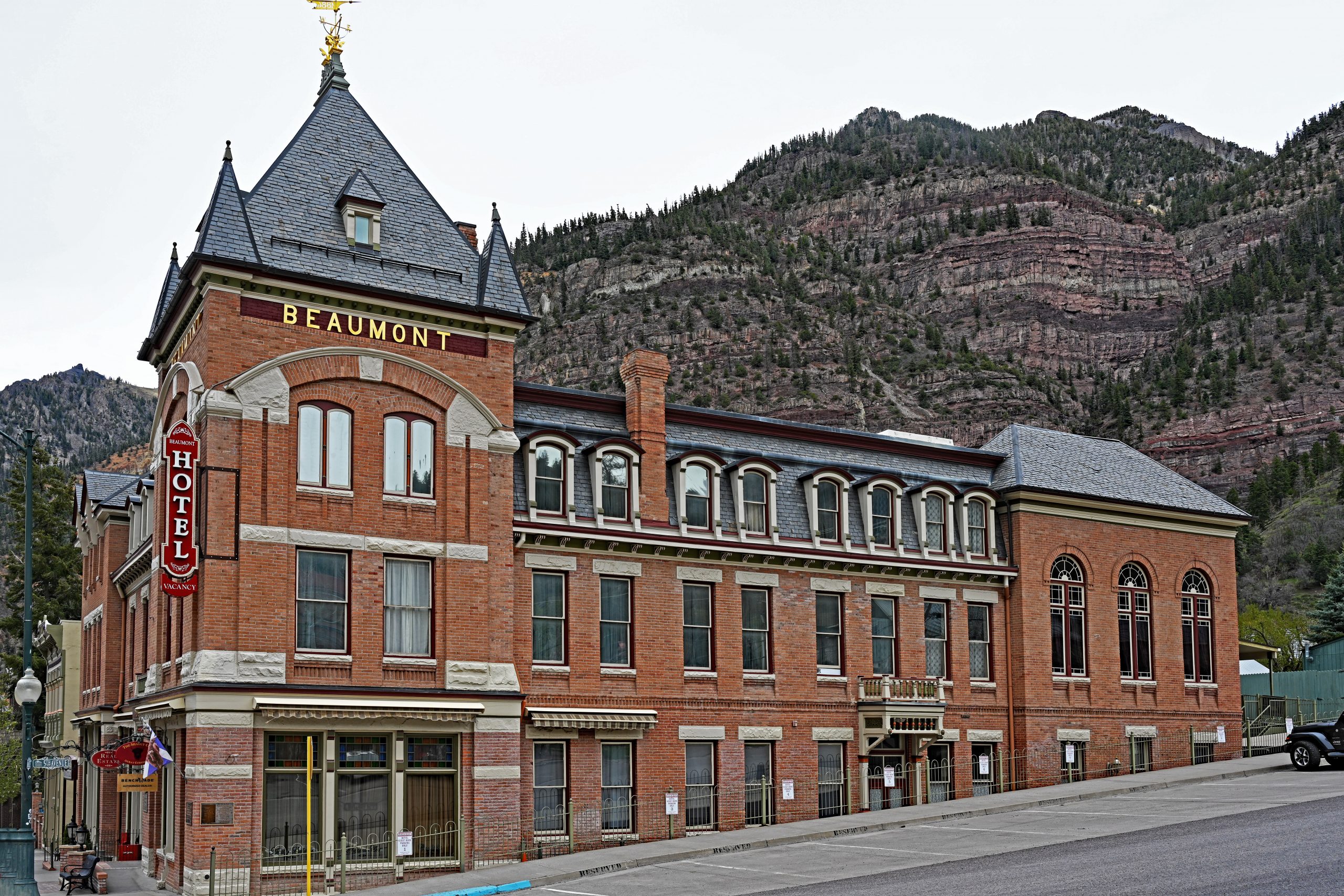
As a Swiss native, I feel immediately at home in Ouray, even if the dimensions here are typically American. I park directly across from the Beaumont Hotel & Spa. This “Flagship of the San Juans,” built in 1886, is an architectural journey through time. With its opulent Victorian facade and striking mansard roof, it exudes an elegance once appreciated by Theodore Roosevelt and Herbert Hoover. It is a stone testament to the gold boom that still breathes the spirit of the pioneer era today.
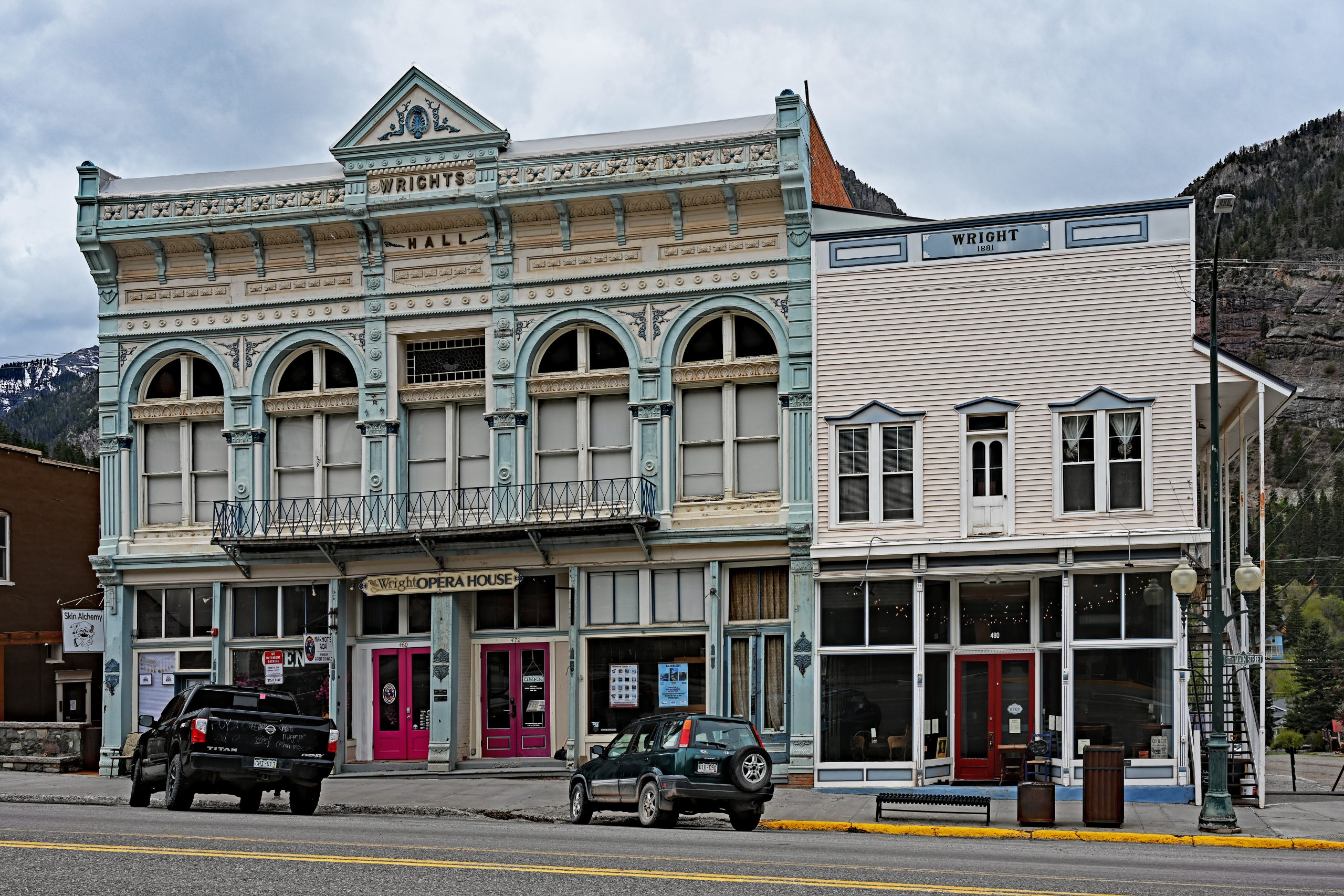
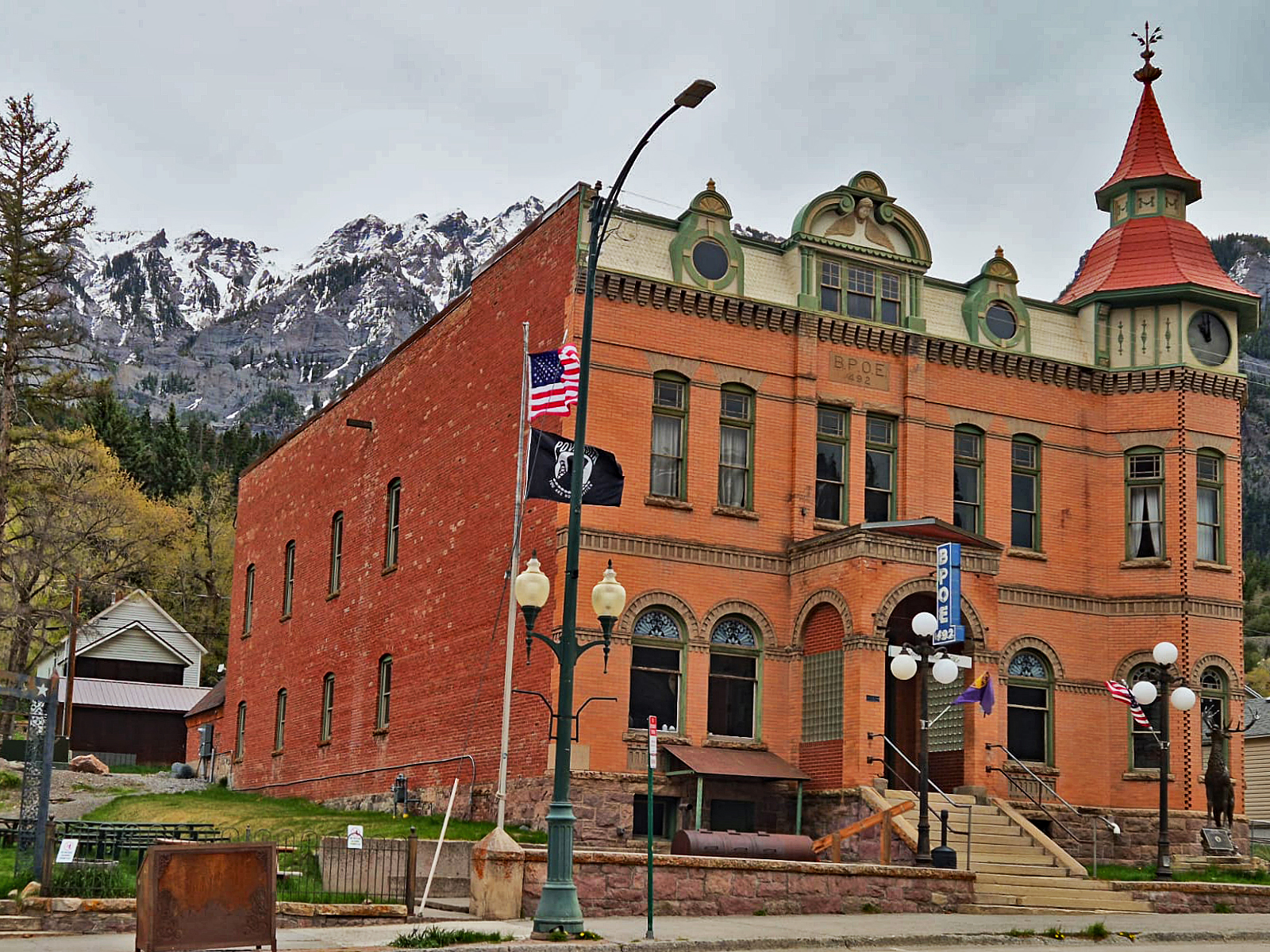
A few steps further stands the Wright Opera House. The brothers Ed and George Wright had it built in 1888—a bold attempt to counter the rough mining culture with education and theater. The ornate brick facade is considered one of the best-preserved examples of Victorian architecture in the entire Rockies. Right next to it, the Ouray Elks Lodge (BPOE) bears witness to the town’s long tradition. Built in 1904, the brick building with its proud arches has been the social anchor of the community for over a century.
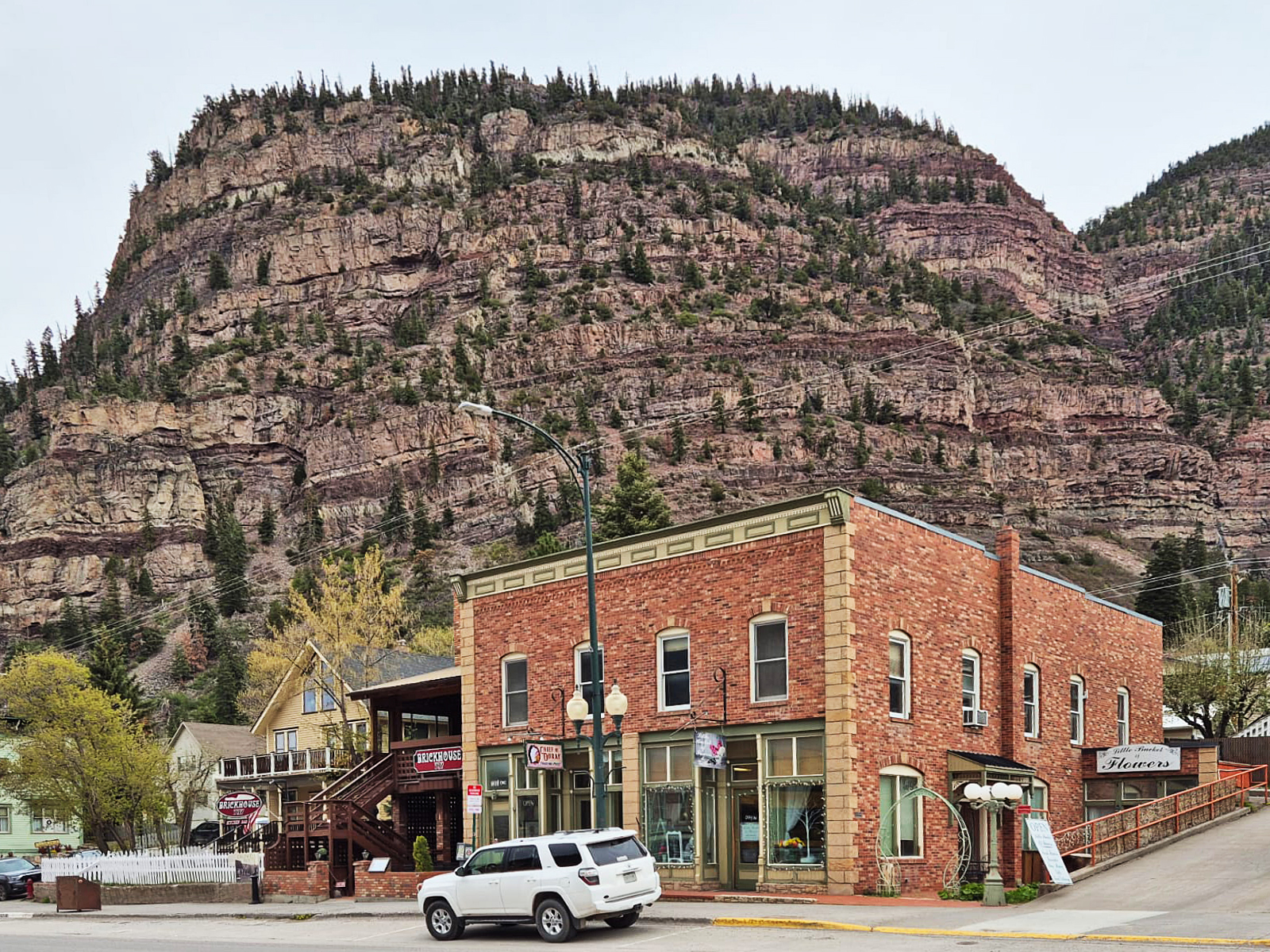
To finish, I am drawn by the scent from Brickhouse 737, a restaurant known for its modern farm-to-table cuisine, perfectly blending historical charm with modern culinary delight.
Gallery III: Historical Splendor in Ouray
I would have loved to soak in the famous hot springs, but the sky over the peaks is darkening. Snow is threatened starting at 4 PM, and I want to have the pass behind me before the white powder turns the roads back into a slide. Ouray remains behind—a jewel of stone and history in the heart of the mountains.