
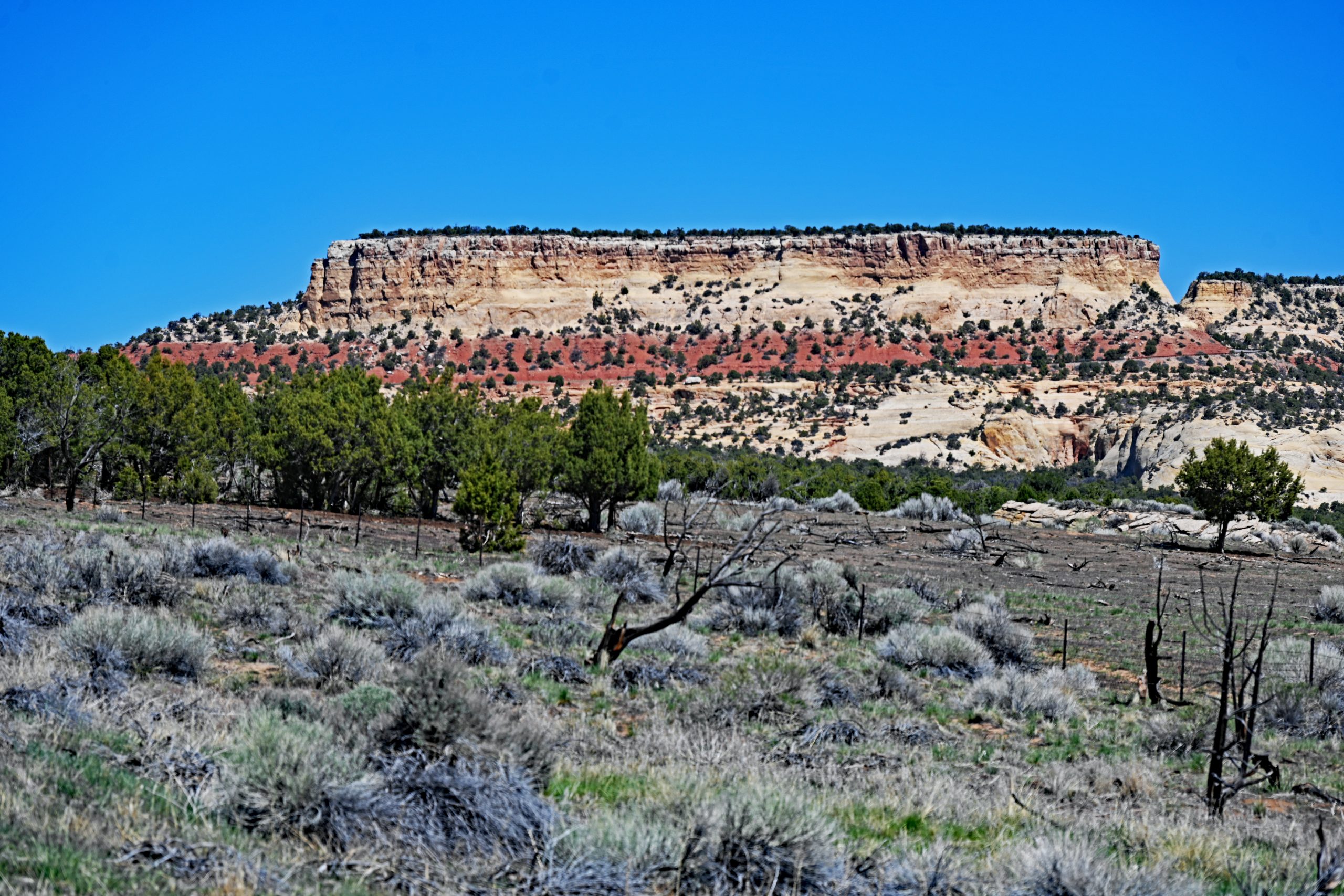
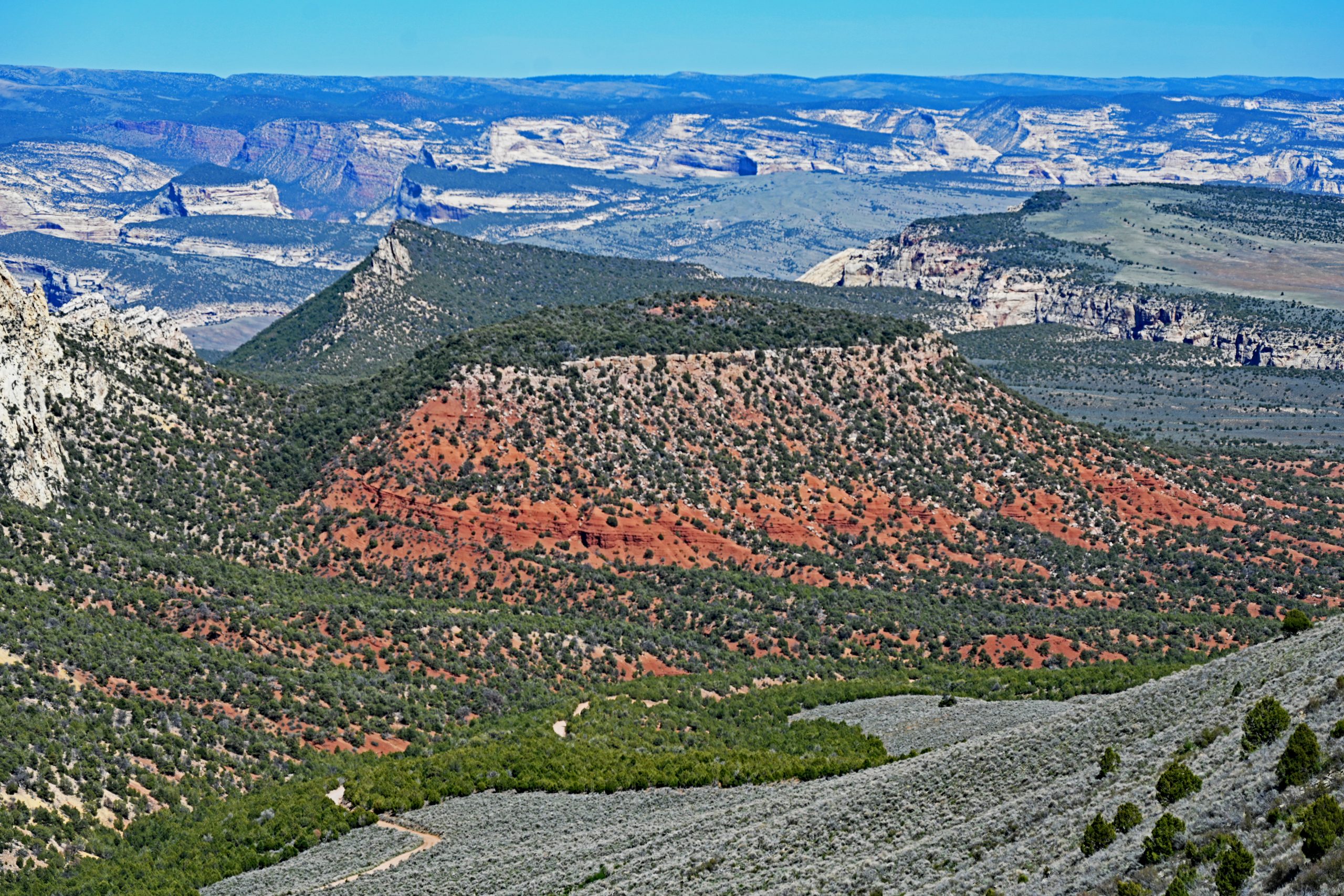
The road to Harpers Corner captivates me instantly. It is a drive through Earth’s history, where every bend in the road opens a new chapter. After just a few miles, Plug Hat Butte emerges before me—a colossal stony guardian whose sight forces me to pull over. Its layered structure is a masterpiece of nature: from bright, almost dazzling sandstone cliffs at the summit, the colors bleed down into deep, reddish earth tones. It feels as though time itself has curated a vibrant archive here.
Further to the right, the Schoonover Buttes join the scene. These mesas look almost surreal in the morning light, their flanks glowing in warm nuances, creating a sharp contrast against the deep blue sky.Gallery I: A Symphony of Color by the Wayside
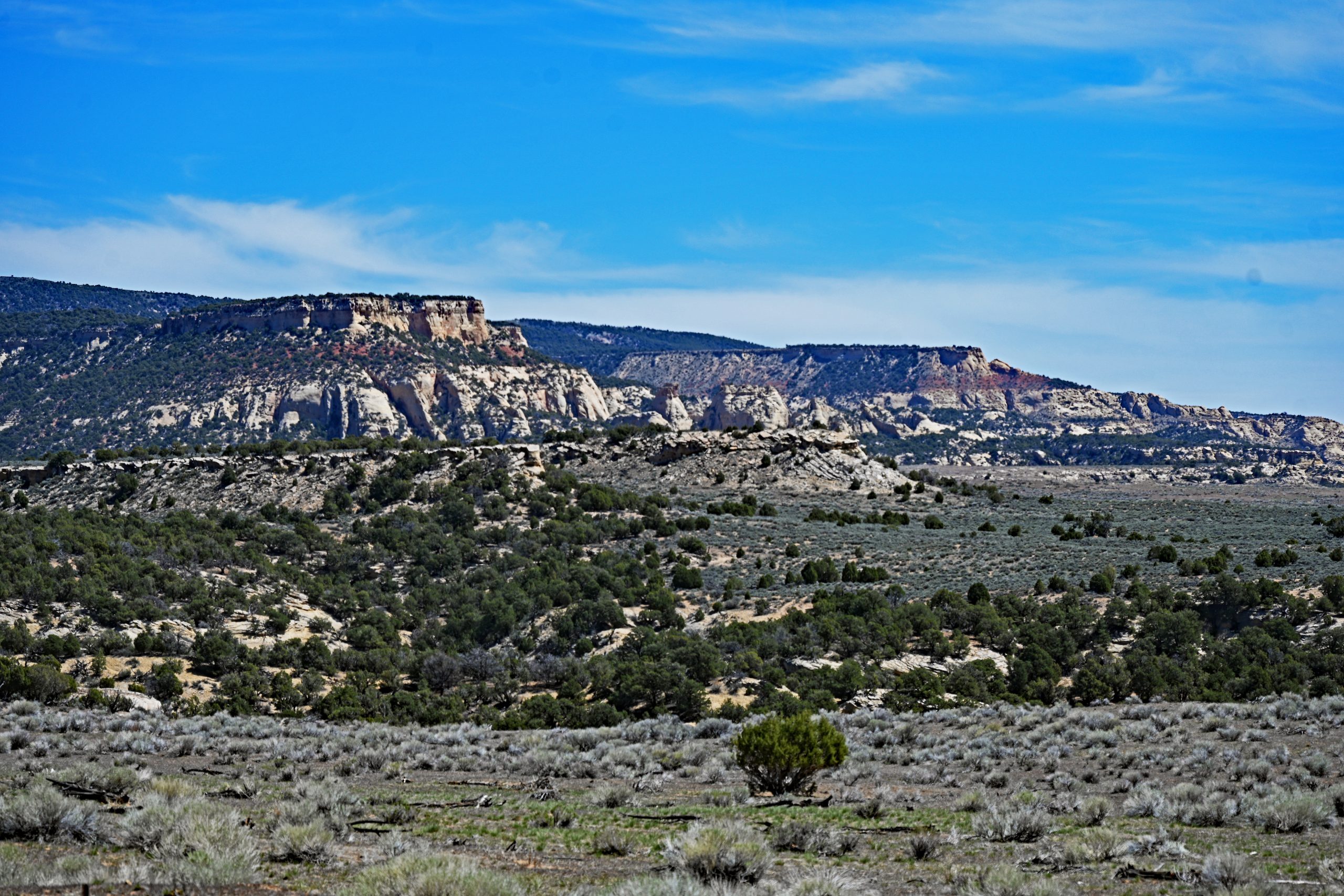
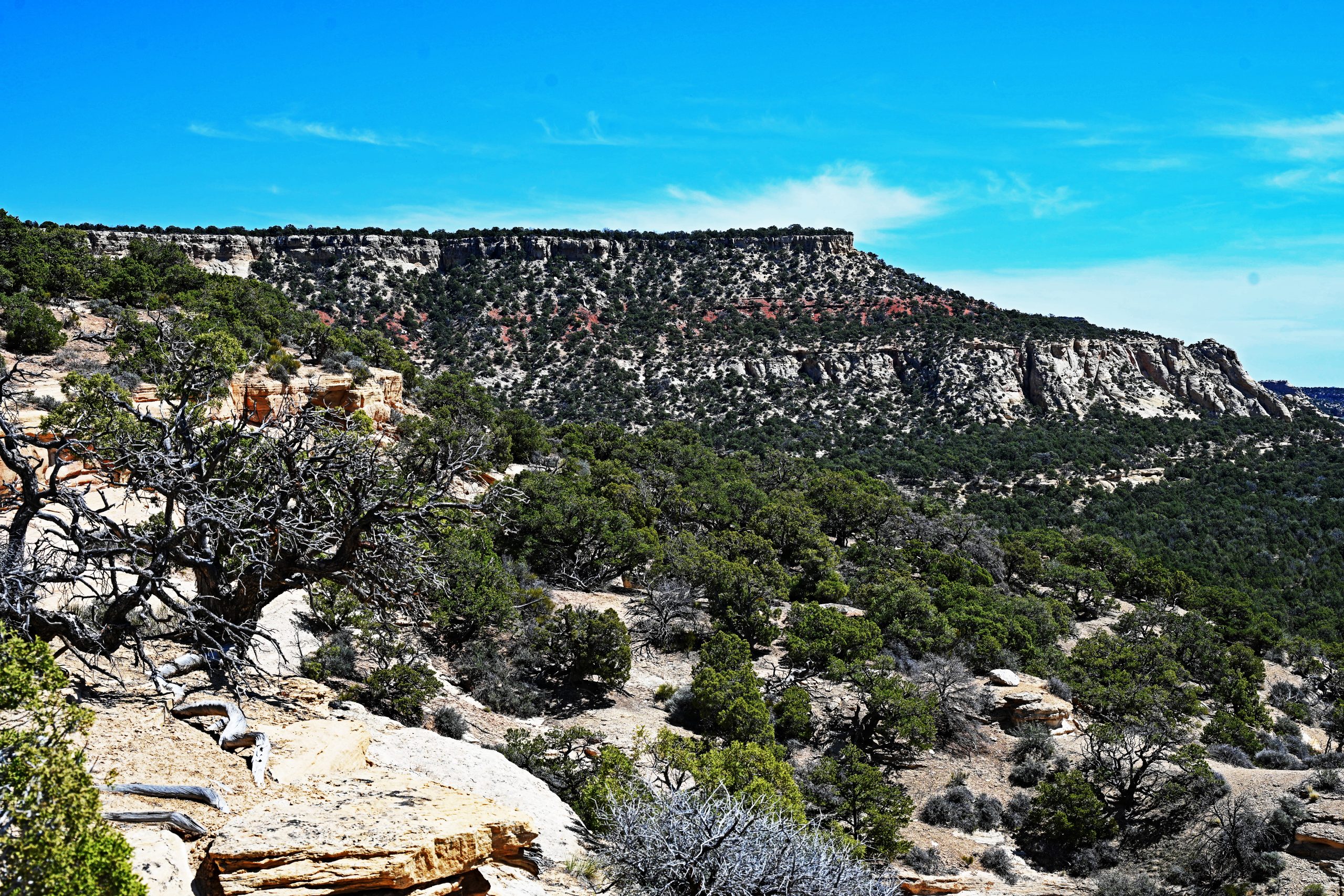
My path continues to the parking area for the Bull Canyon Rim Trail. I lace up my hiking boots and follow the path along the edge of the abyss. The view that opens up here almost takes my breath away. Before me stretch striking, pale rock faces of Entrada Sandstone, lying in the landscape like frozen waves. Beneath them shimmer reddish and greenish layers—the famous Morrison Formation.
I pause for a moment to let the colors sink in. The rich reds and oranges tell of a time when iron oxides “rusted” under the blazing sun in ancient riverbeds. The pure white and light grey, however, whisper stories of prehistoric deserts and massive quartz sand dunes. I am particularly fascinated by the blue and green hues; they are the remnants of deep, oxygen-poor lakes and swamps where dinosaurs met their end 150 million years ago. Here, their carcasses were covered by mud and turned to stone over eons. Today, through the uplifting of the Earth’s crust and the relentless power of erosion, these fossils emerge back into the light like silent witnesses of prehistory.
On the horizon, the Blue Mountain enthrones itself unyieldingly, its massive, flat ridge marking a natural boundary in this vast wilderness.
Gallery II: Depths and Distant Views
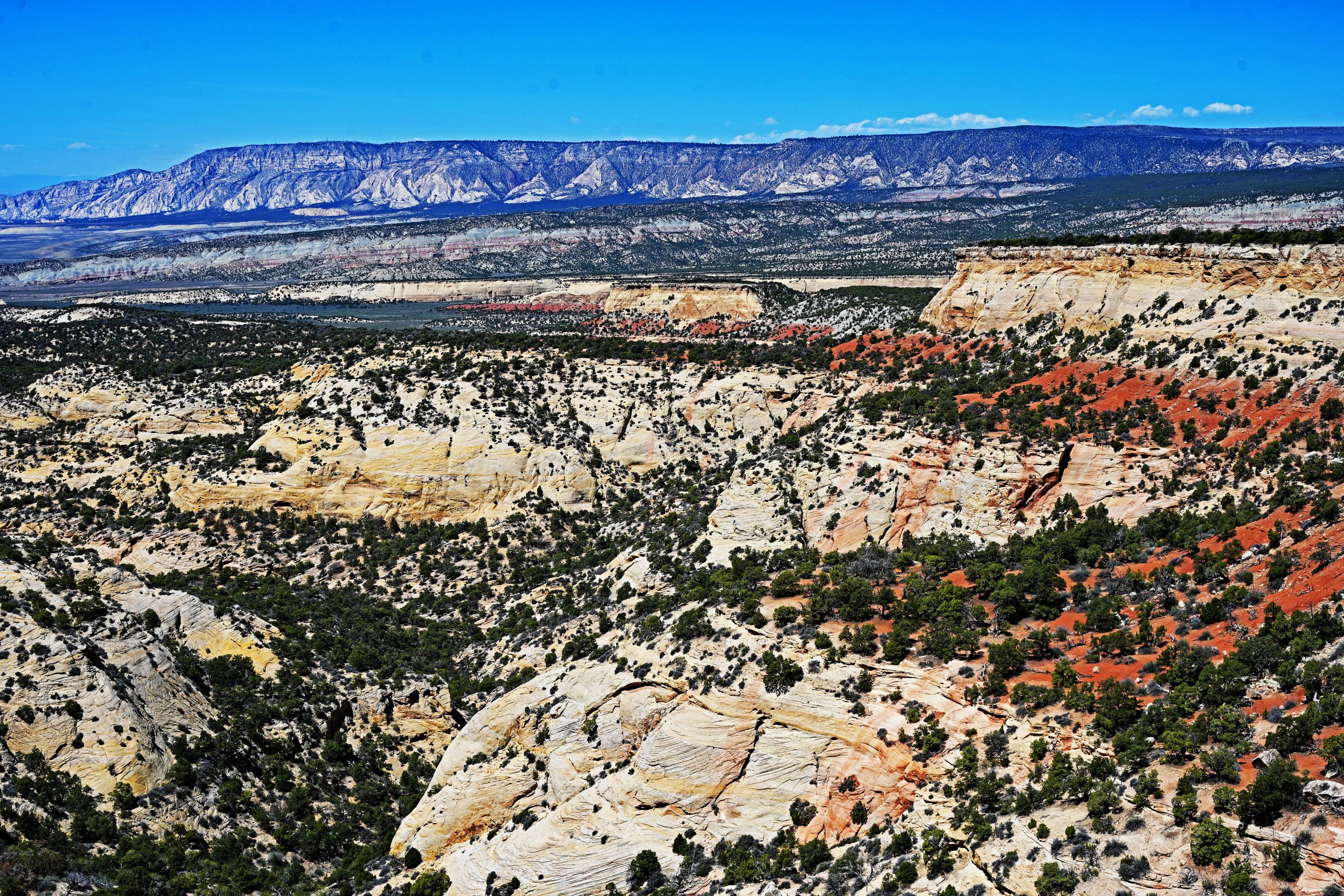
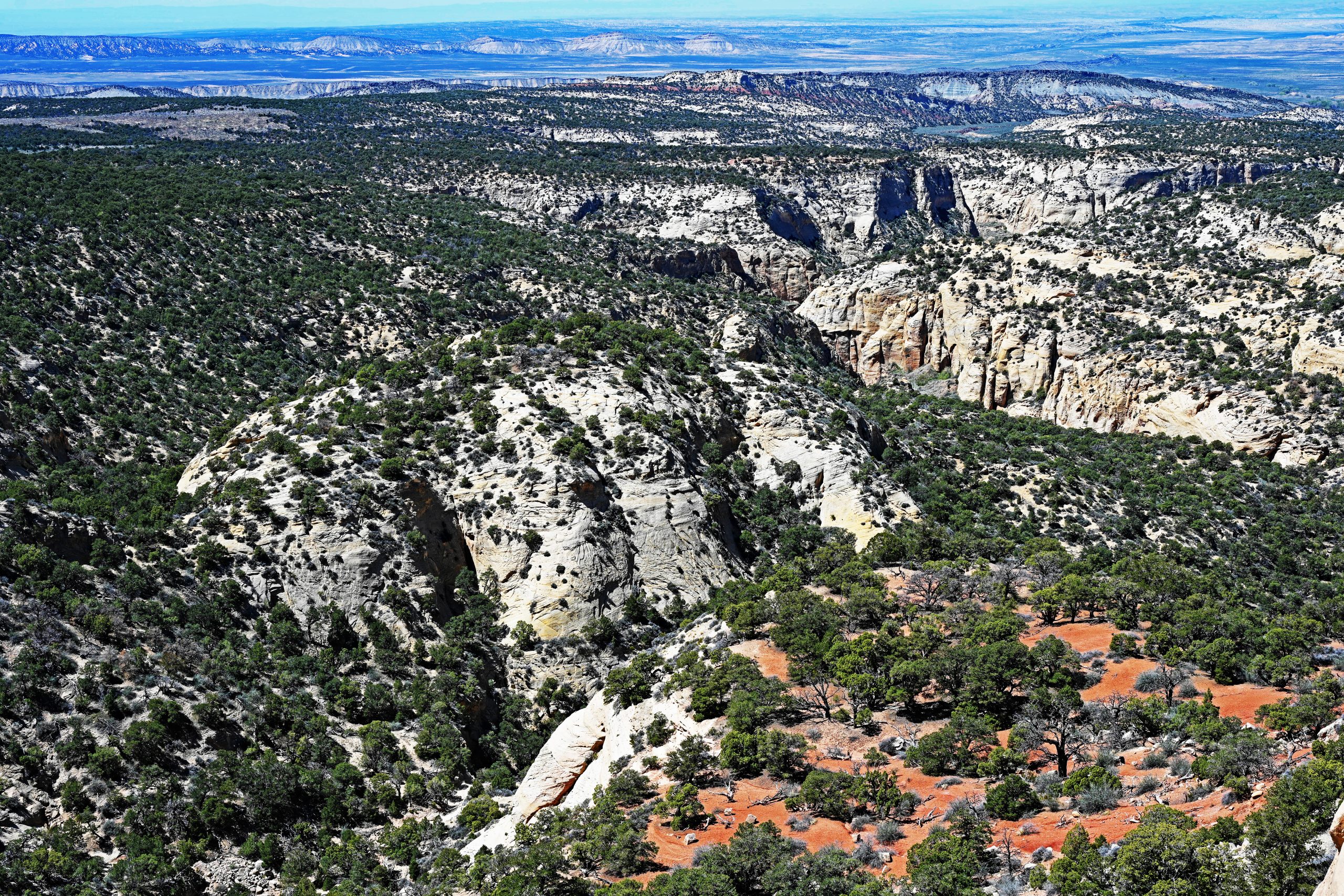
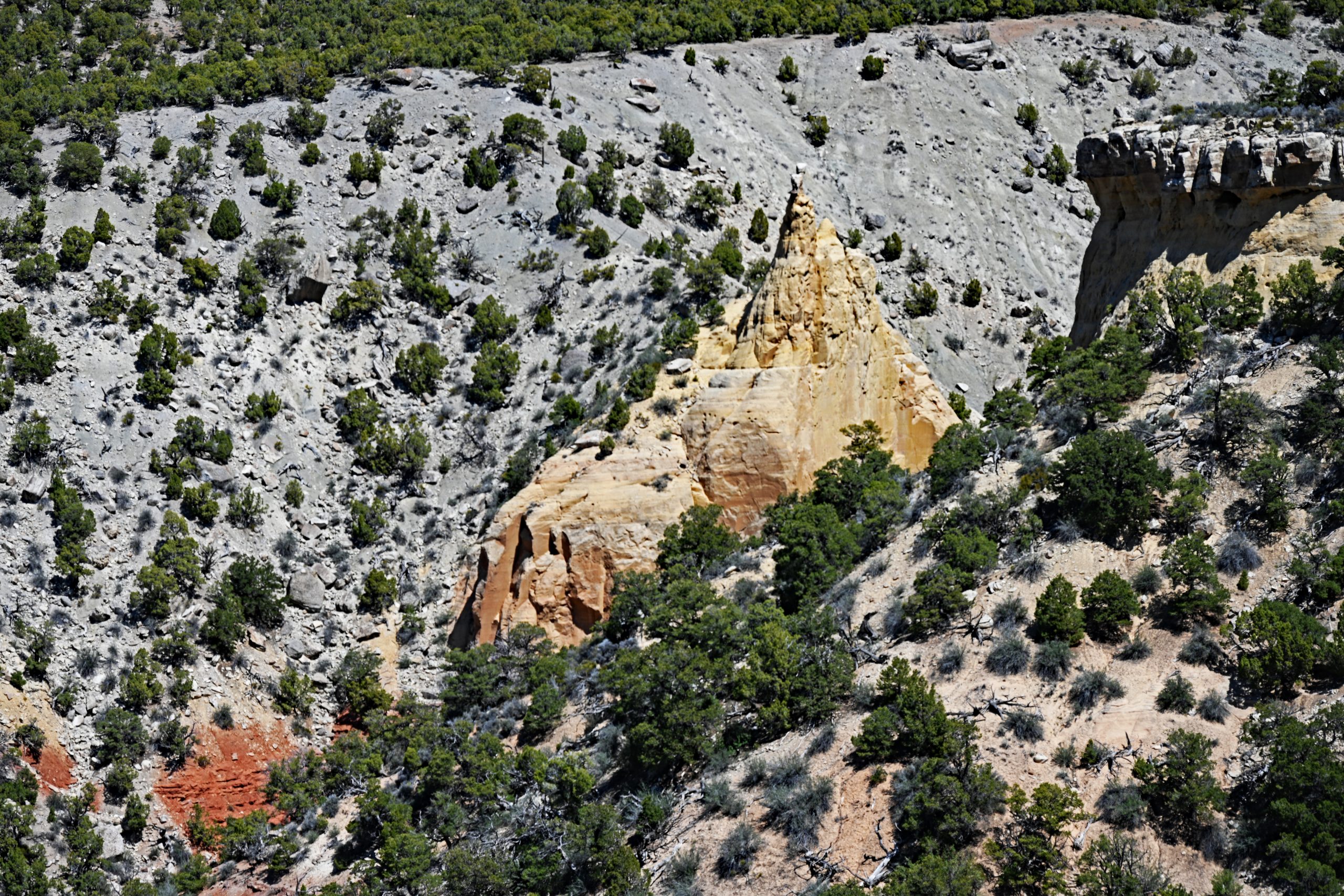
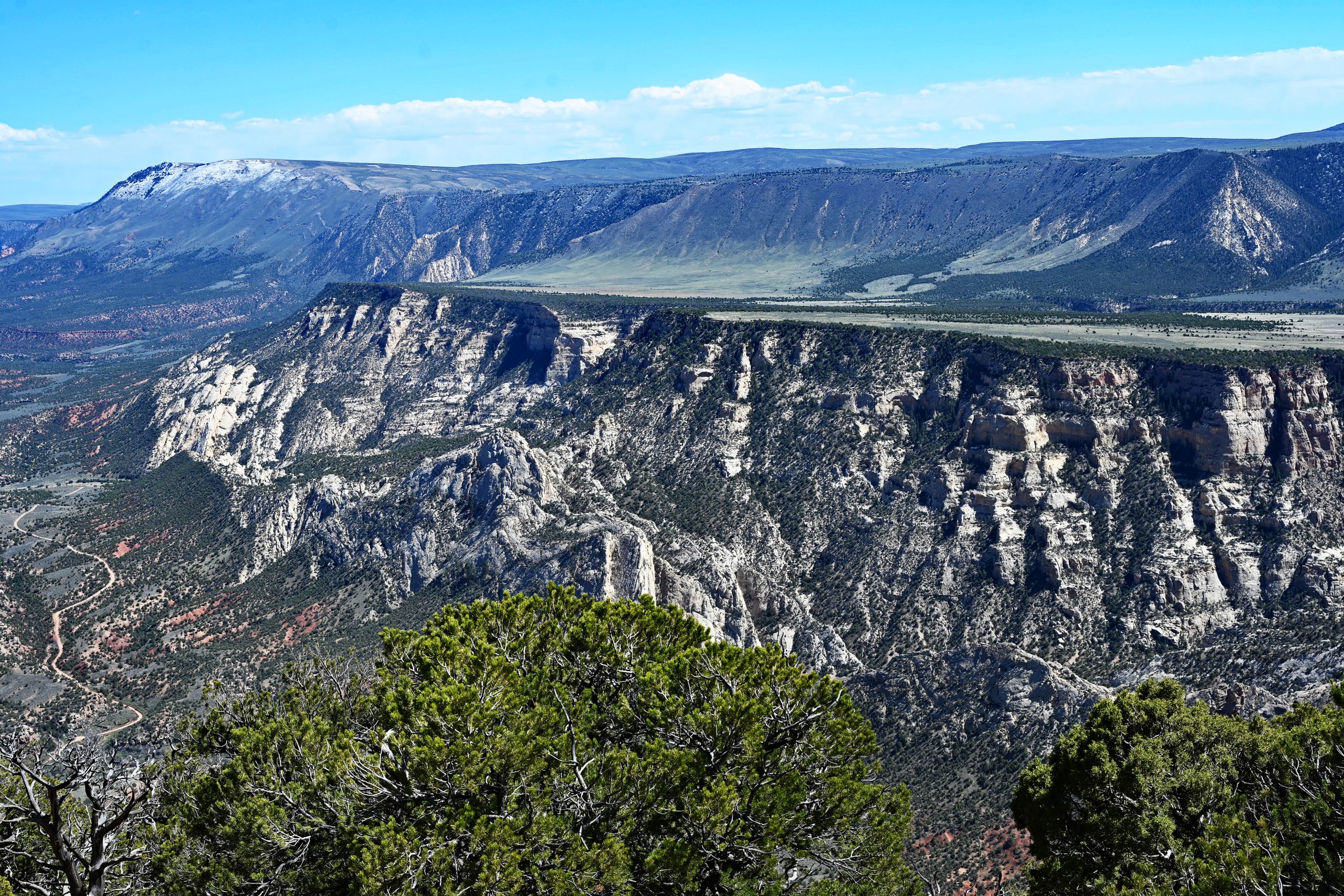
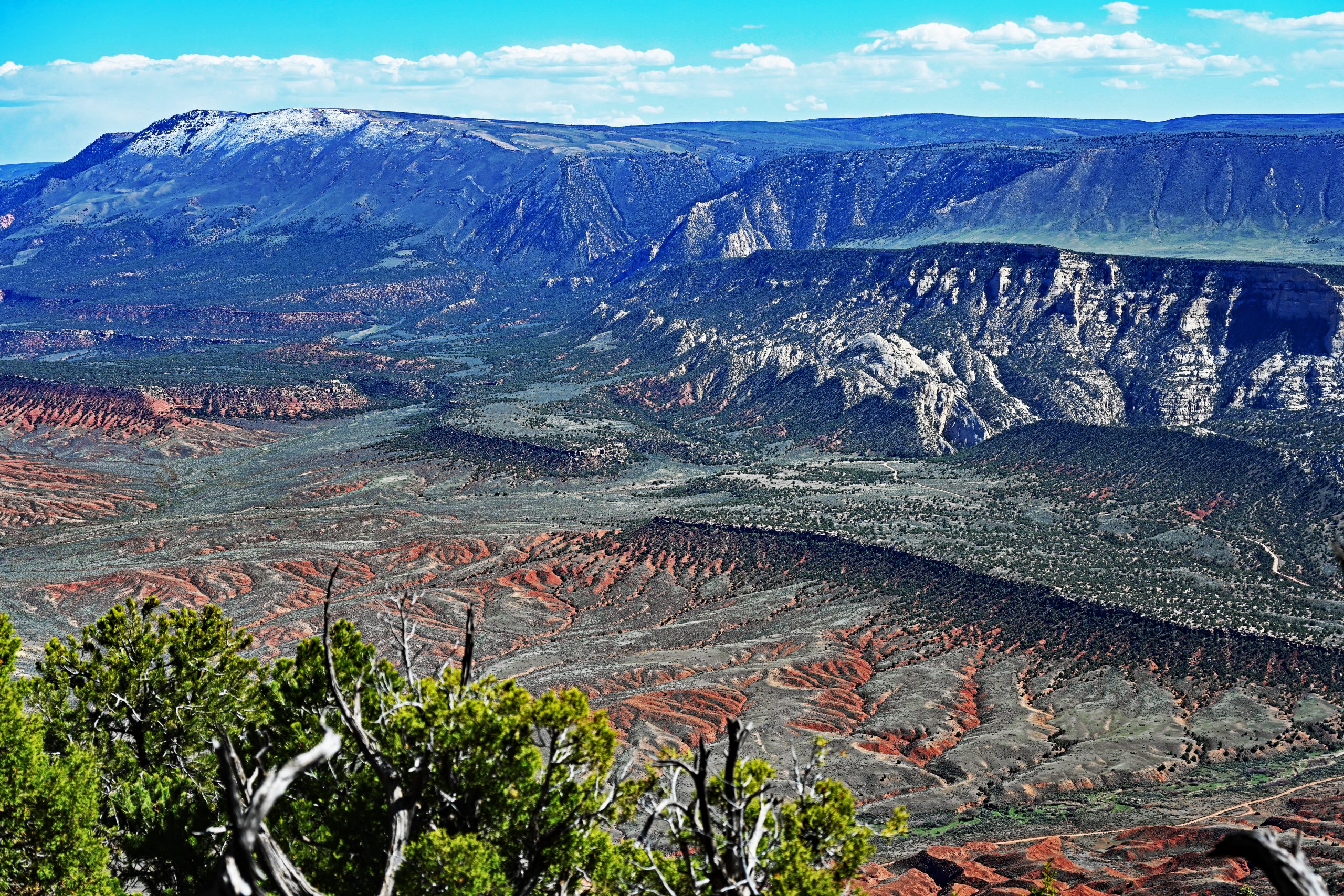
Continuing my drive, I reach the Canyon Overlook. Here, one of the Schoonover Buttes particularly stands out: its steep, vibrant red flanks of the Morrison Formation look like a burning throne amidst the wasteland. But the real fireworks are happening to the right. The pale cliffs of the Yampa Plateau dominate the horizon with a ridgeline that gleams almost white-yellow in the light. This resilient Weber Sandstone stretches through the valley like a bright ribbon, forming a visual bridge to the distant Blue Mountain.
Gallery III: Thrones of Sand and Light
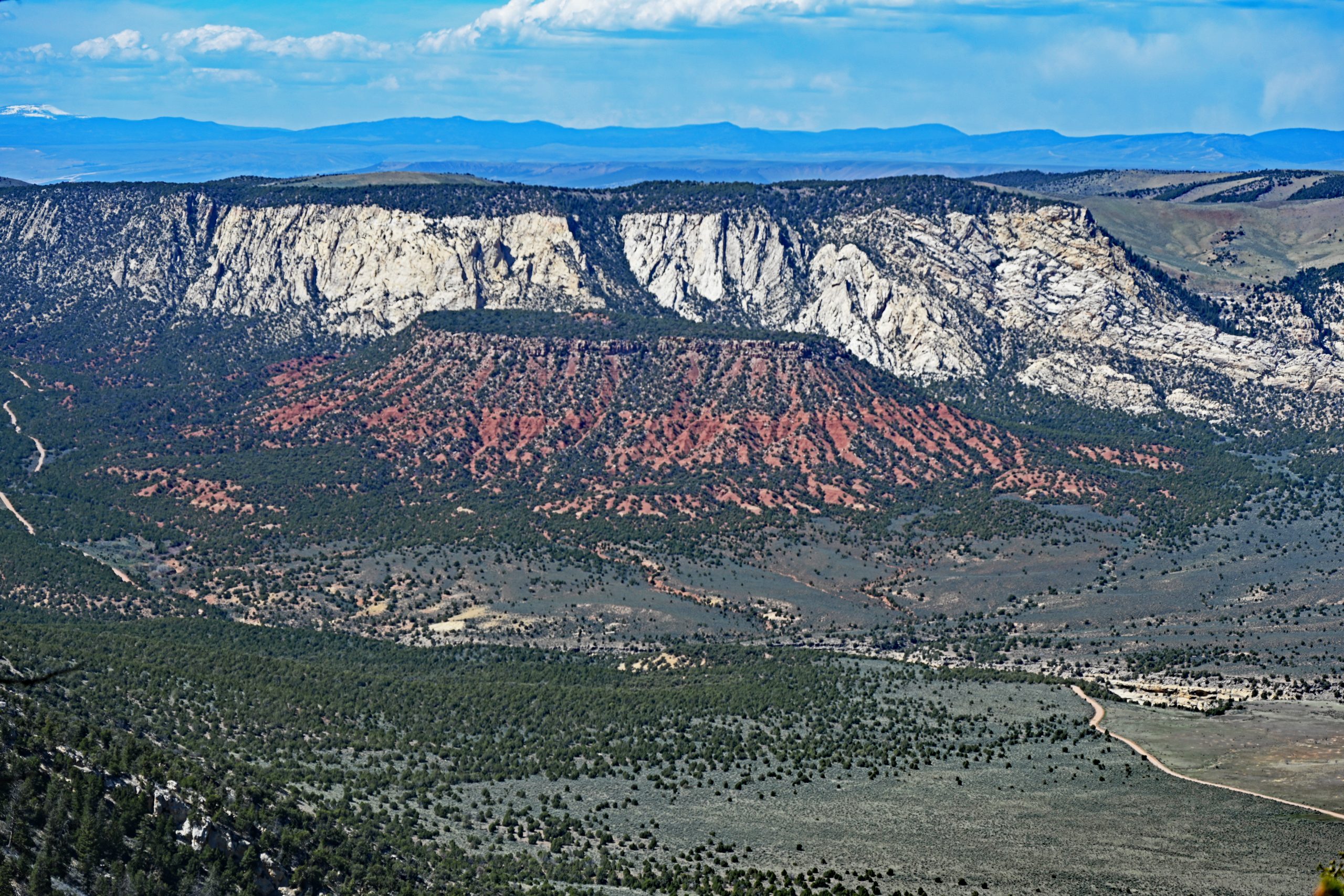
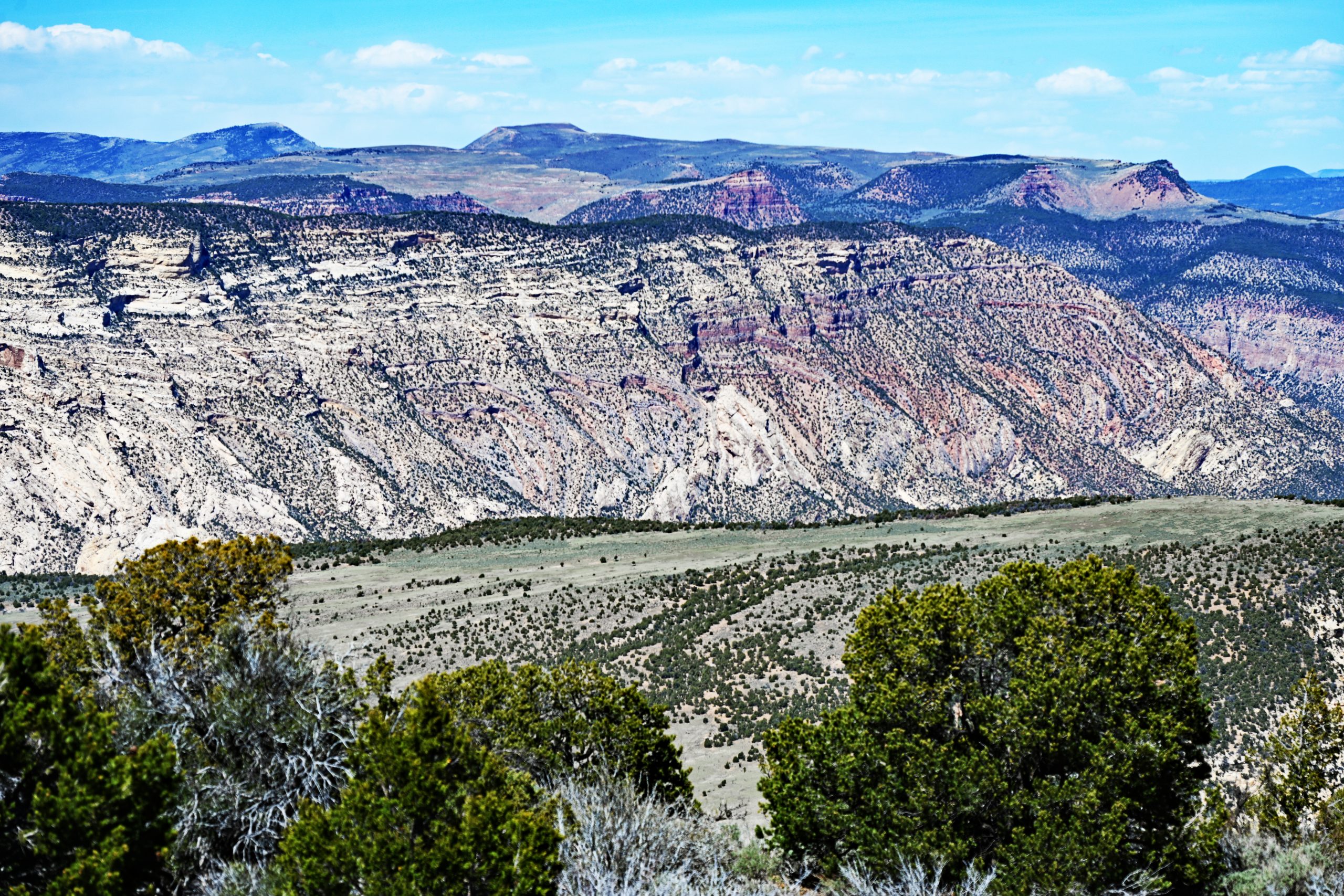
The next stop, the Iron Springs Bench Overlook, reveals the raw power of geology. Before me rises Huntsman Ridge, a massive mountain spine whose white walls drop steeply into the Yampa Basin. It is fascinating: I am standing on the same Weber Sandstone that I can also see deep down in the valley. Massive faults have displaced the Earth’s crust here like a gigantic staircase.
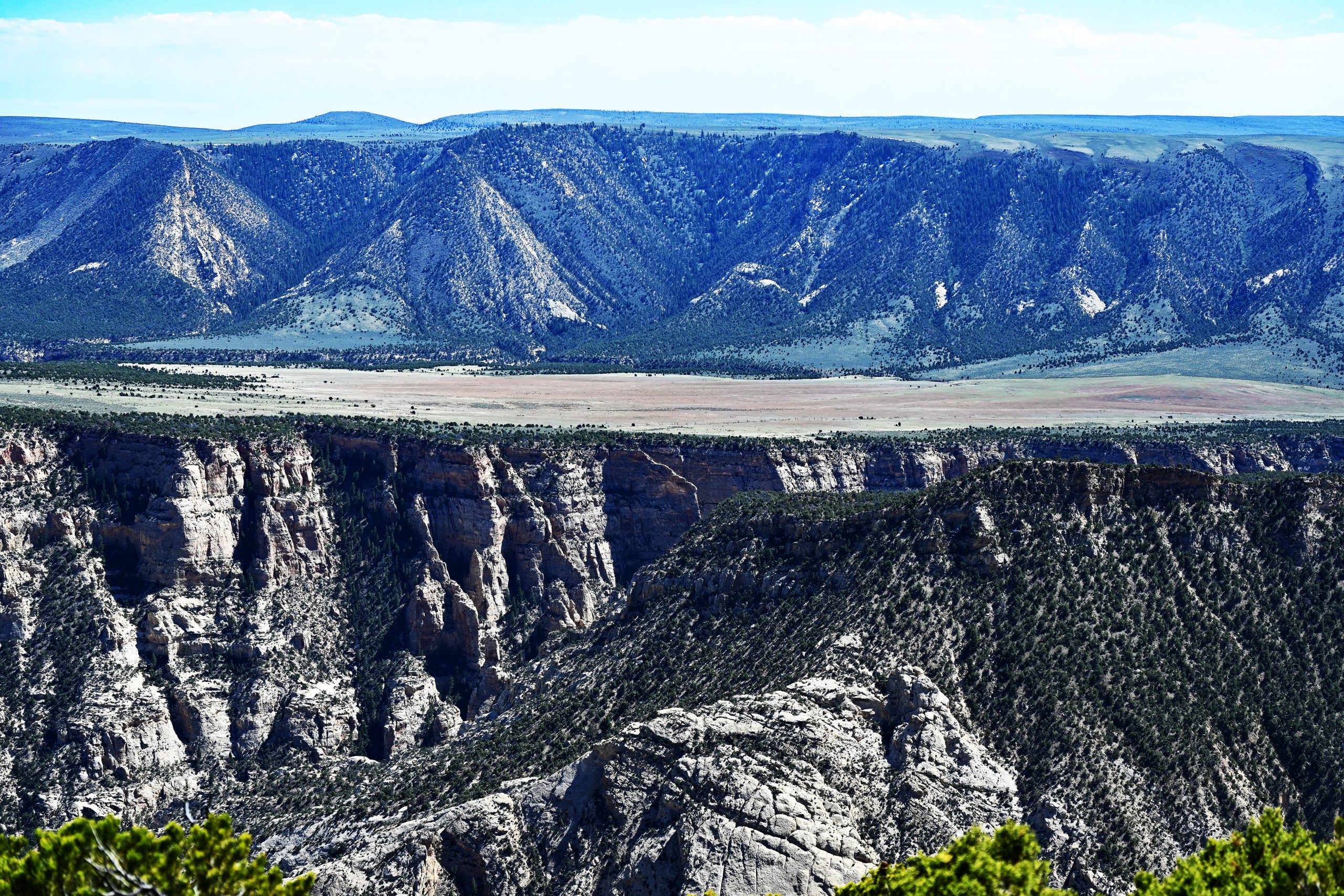
The white flank of Huntsman Ridge also accompanies me to the Echo Park Overlook. Deep below me lies the Yampa Bench, a sprawling sandstone terrace high above the river. Echo Canyon, carved into the stone over millions of years by the Yampa River, offers a spectacular contrast: the pale, almost vertical walls clash with the dark green of juniper and pinyon pines. There is a silence over the abyss, broken only by the wind whistling through the jagged rocks.
Gallery IV: Nature’s Monumental Staircase
Where rivers wind and mountains bare their teeth
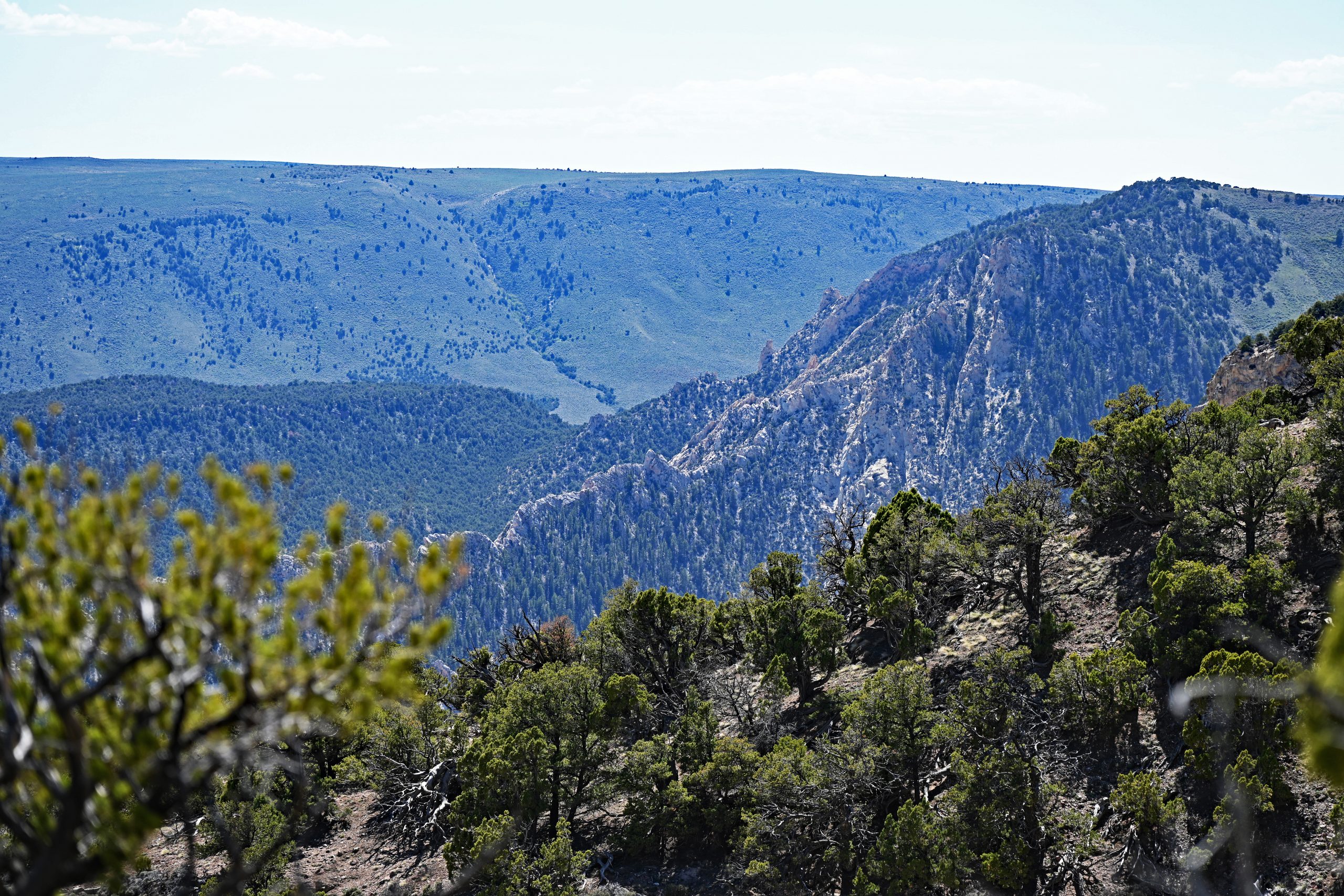
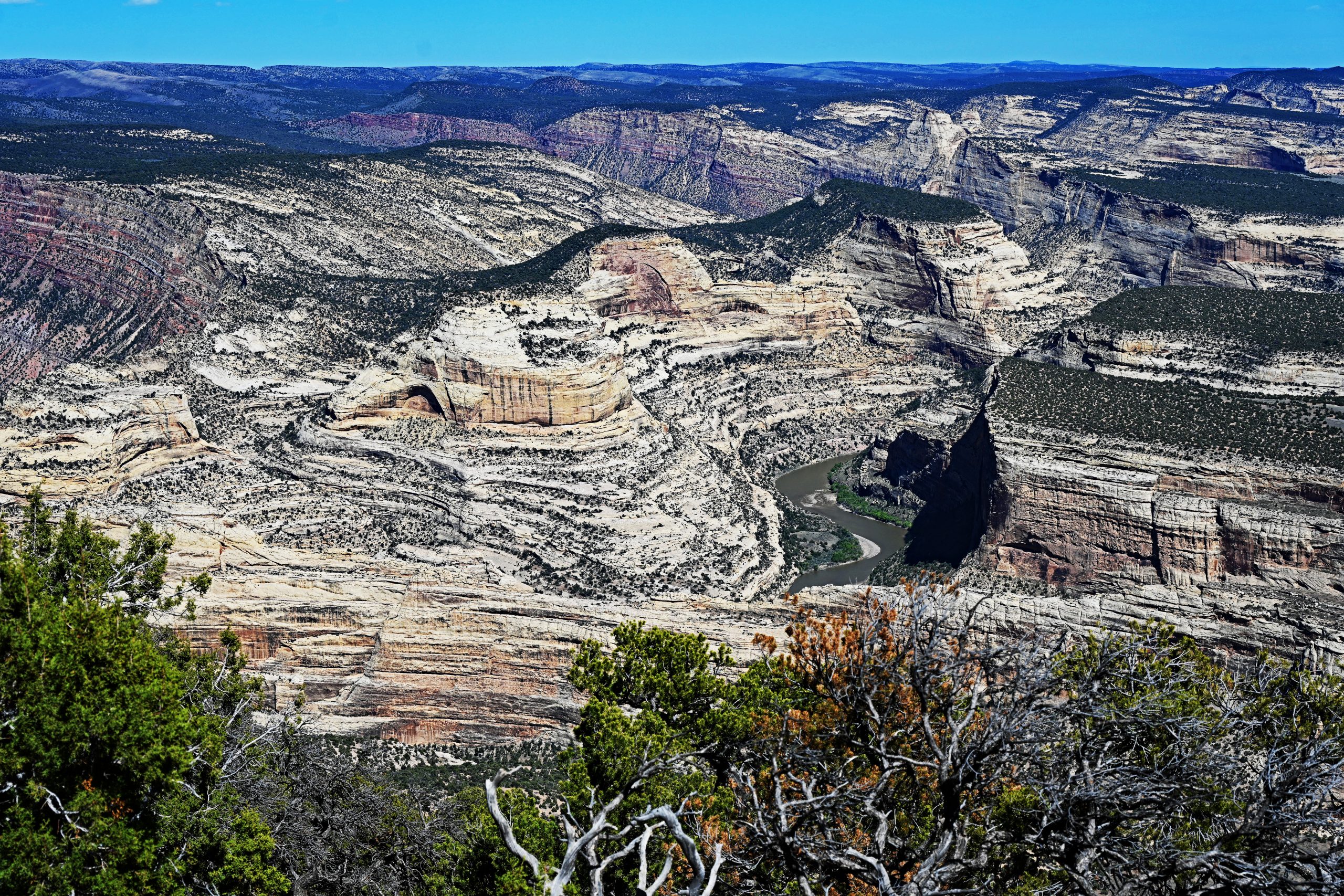
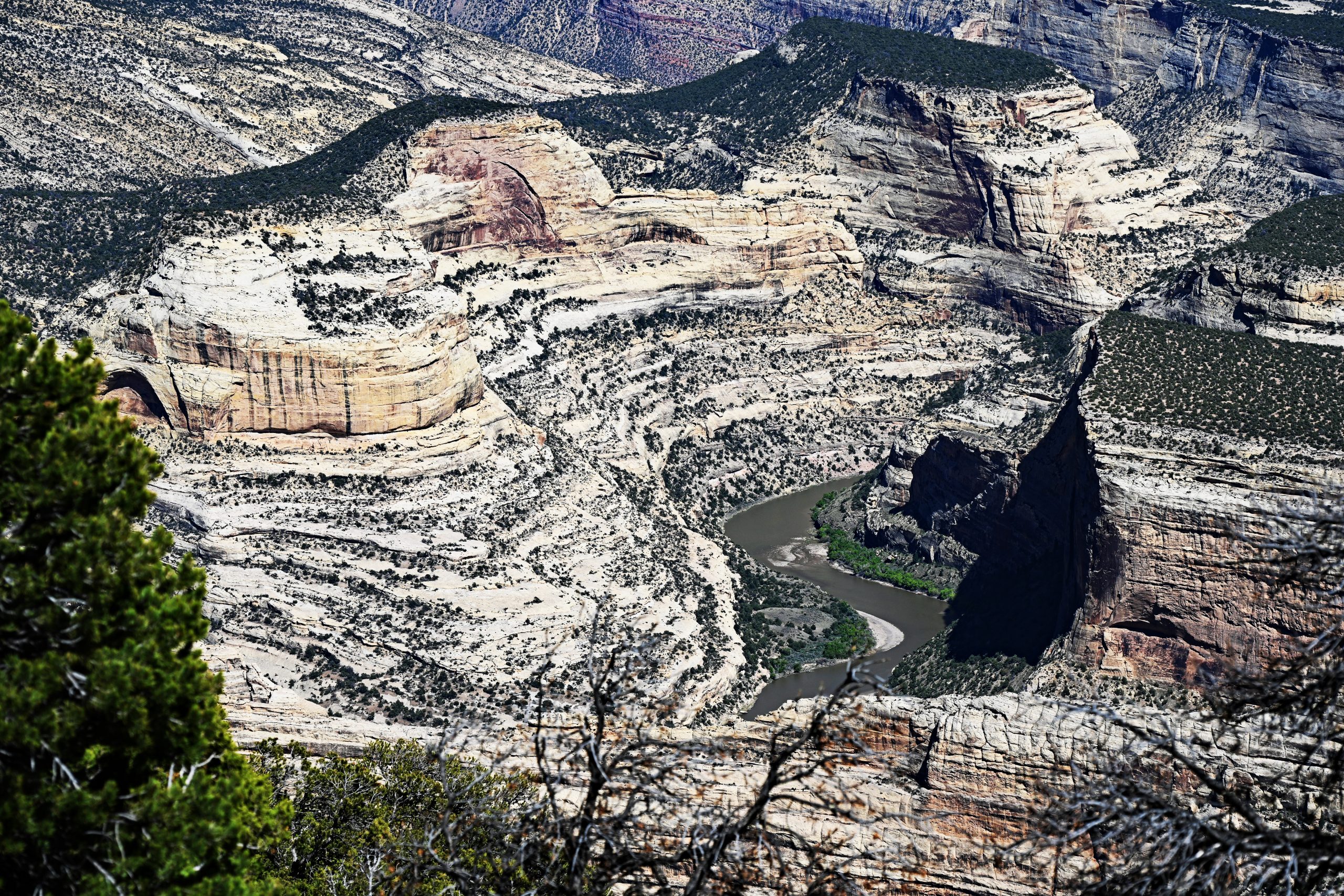
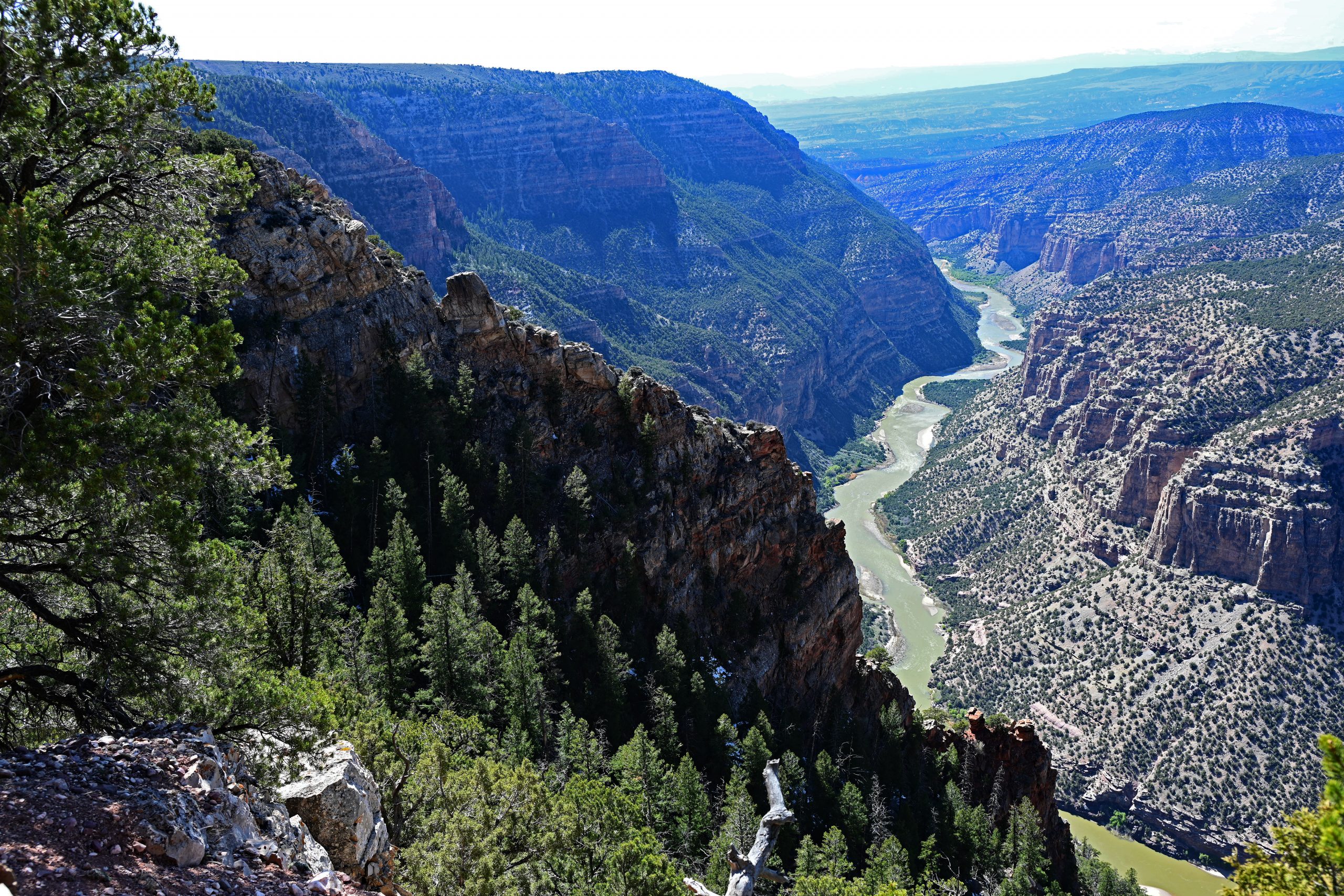
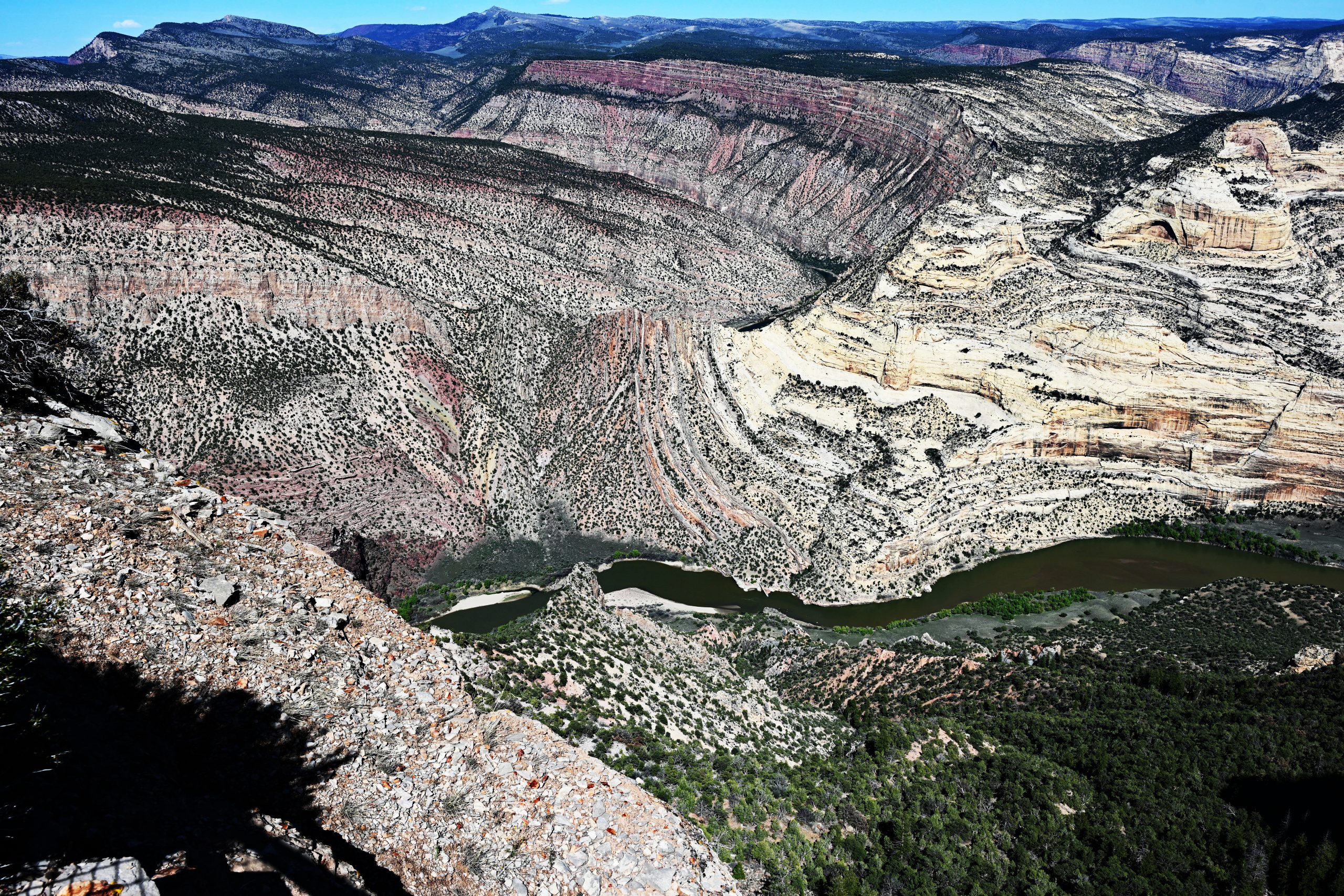
At the end of the road, I reach the trailhead for Harpers Corner. From here, the view of the entire Echo Park is even more spectacular. The countless white limestone and sandstone layers below look like a giant, petrified labyrinth. Deep down, the ribbon of the Yampa River glistens—a force that, along with wind and rain, has carved these massive gorges out of the rock over millions of years.
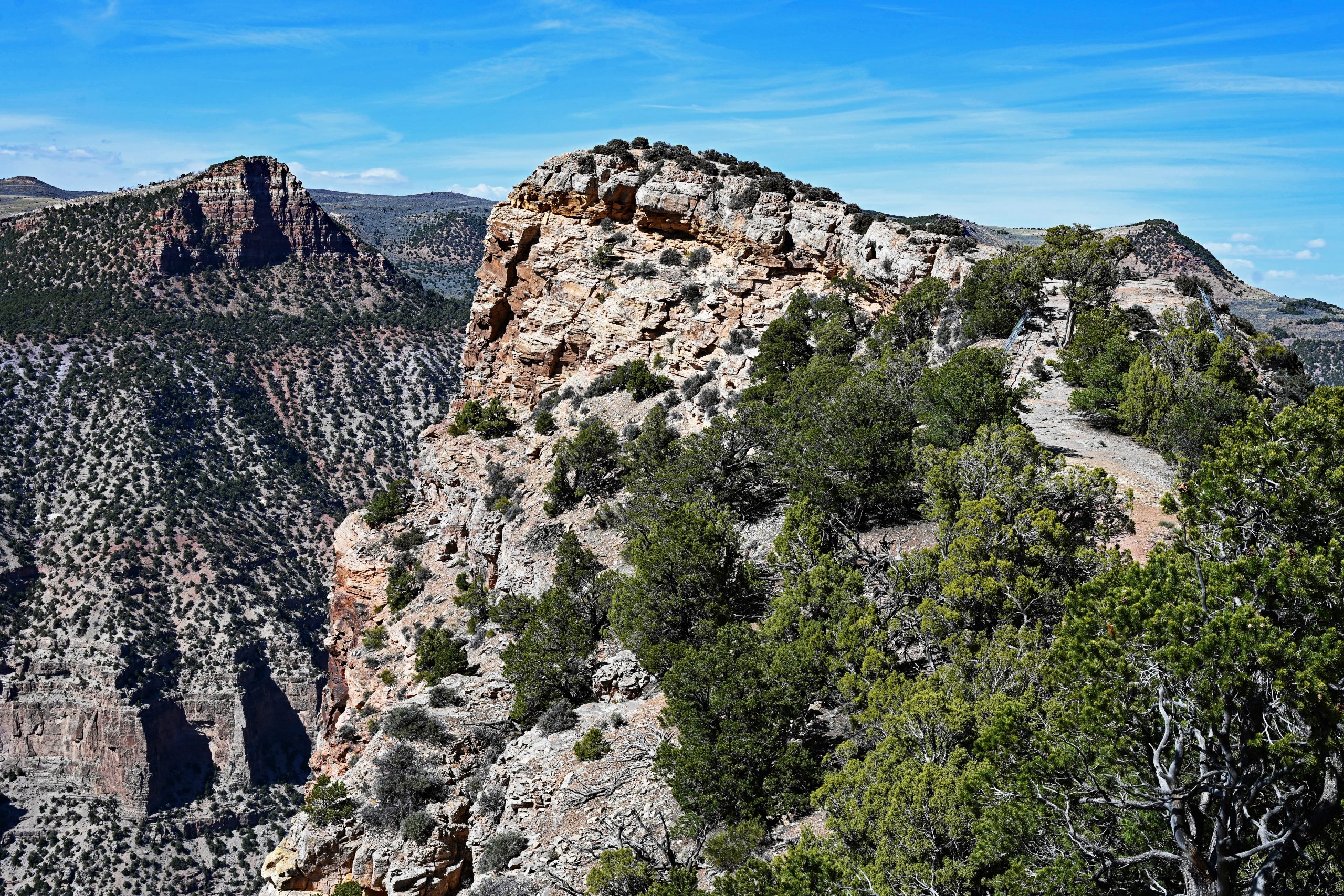
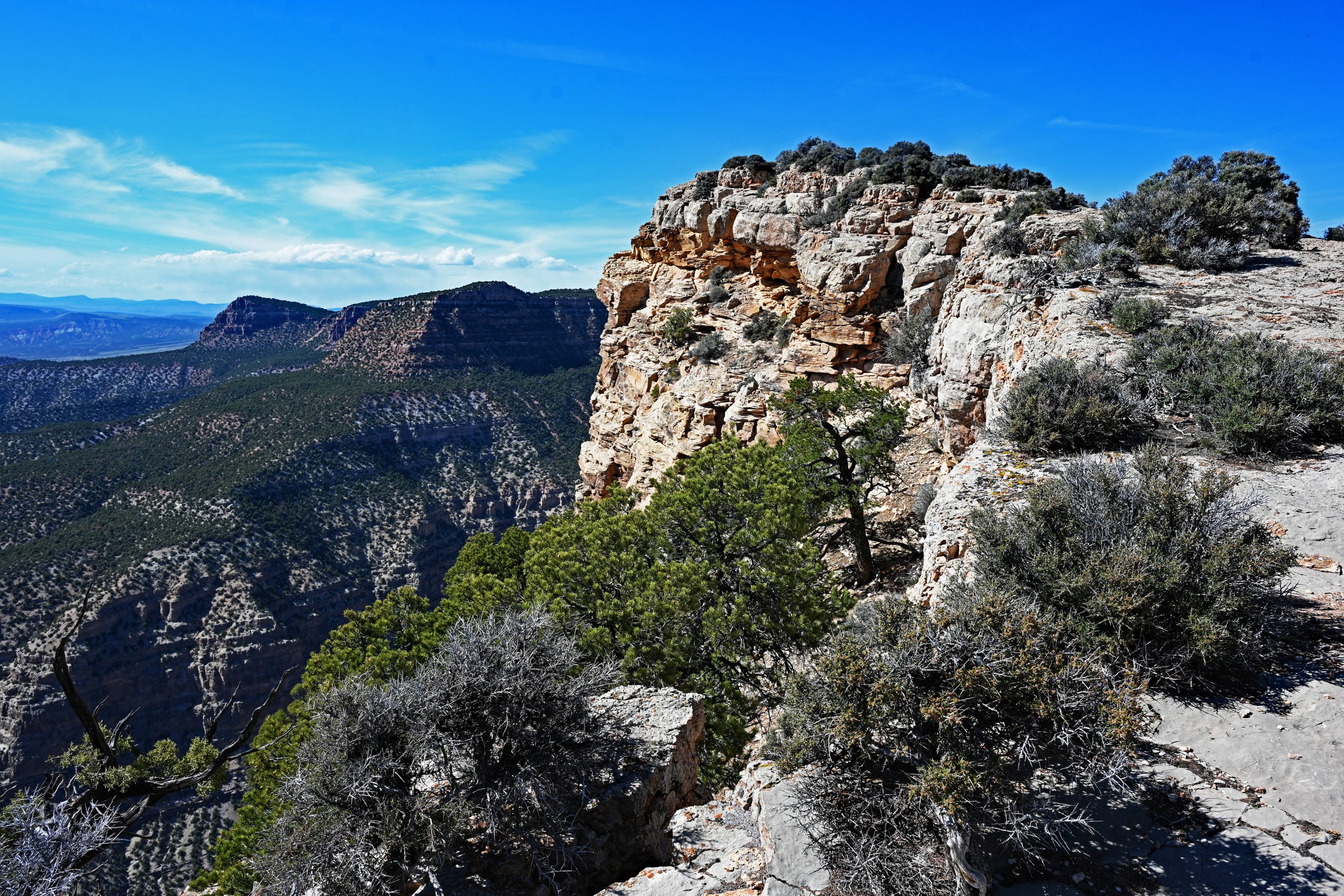
I hike along a narrow ridge that offers dizzying panoramic views on both sides. On the opposite side of Echo Park, I watch the Green River meander into Whirlpool Canyon after passing through the valley. Particularly impressive is the Mitten Park Fault on the left side of the canyon—a massive fault line where layers of rock were literally torn and shifted against each other. The sharp, jagged edge plunging steeply toward the river makes the raw energy of tectonic forces palpable.
Just before the end of the trail, I look across to the prominent Ruple Point. It’s a fascinating thought: while I am standing in Colorado on the Harpers Corner Trail, that striking peak on the other side of the canyon already belongs to the state of Utah. Deep on the valley floor, the red sediments of the Moenkopi and Chinle formations glow. Their rich red, caused by oxidized iron, makes the rocks appear almost incandescent in the evening light. Amidst these giants, I discover the Bishop Quartzites—rounded, reddish pebbles carried here eons ago by an ancient river system from the distant Uinta Mountains.
Gallery V: Walking the Line Between Elements
It is already after 4:00 PM when I start my way back. I encounter only two other hikers—the silence of the wilderness is almost mine alone. The ranger at the information office had advised me to take the unpaved R16 for the return journey. A decision I don’t regret. The track leads me along Stuntz Ridge and Crest Ridge.
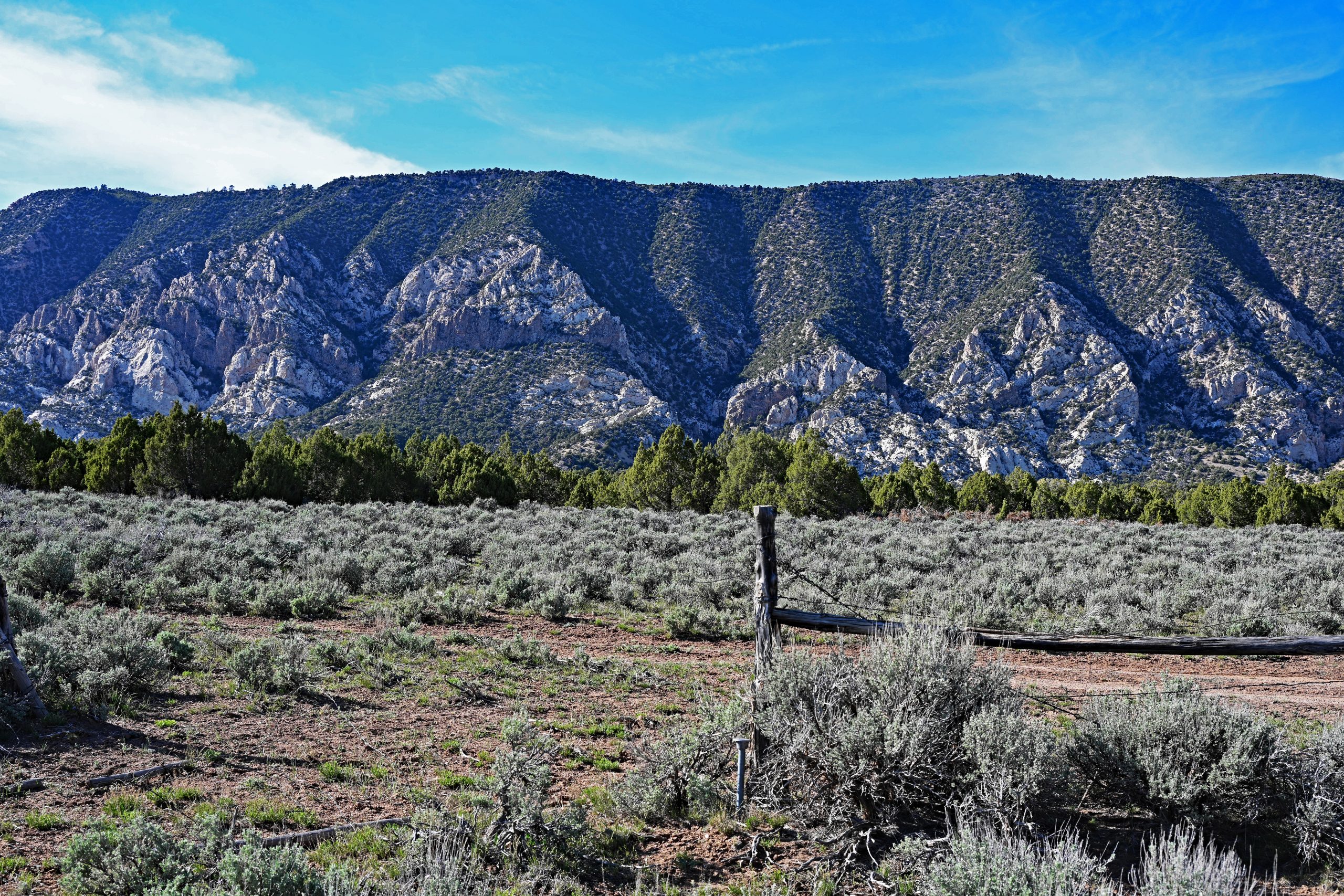
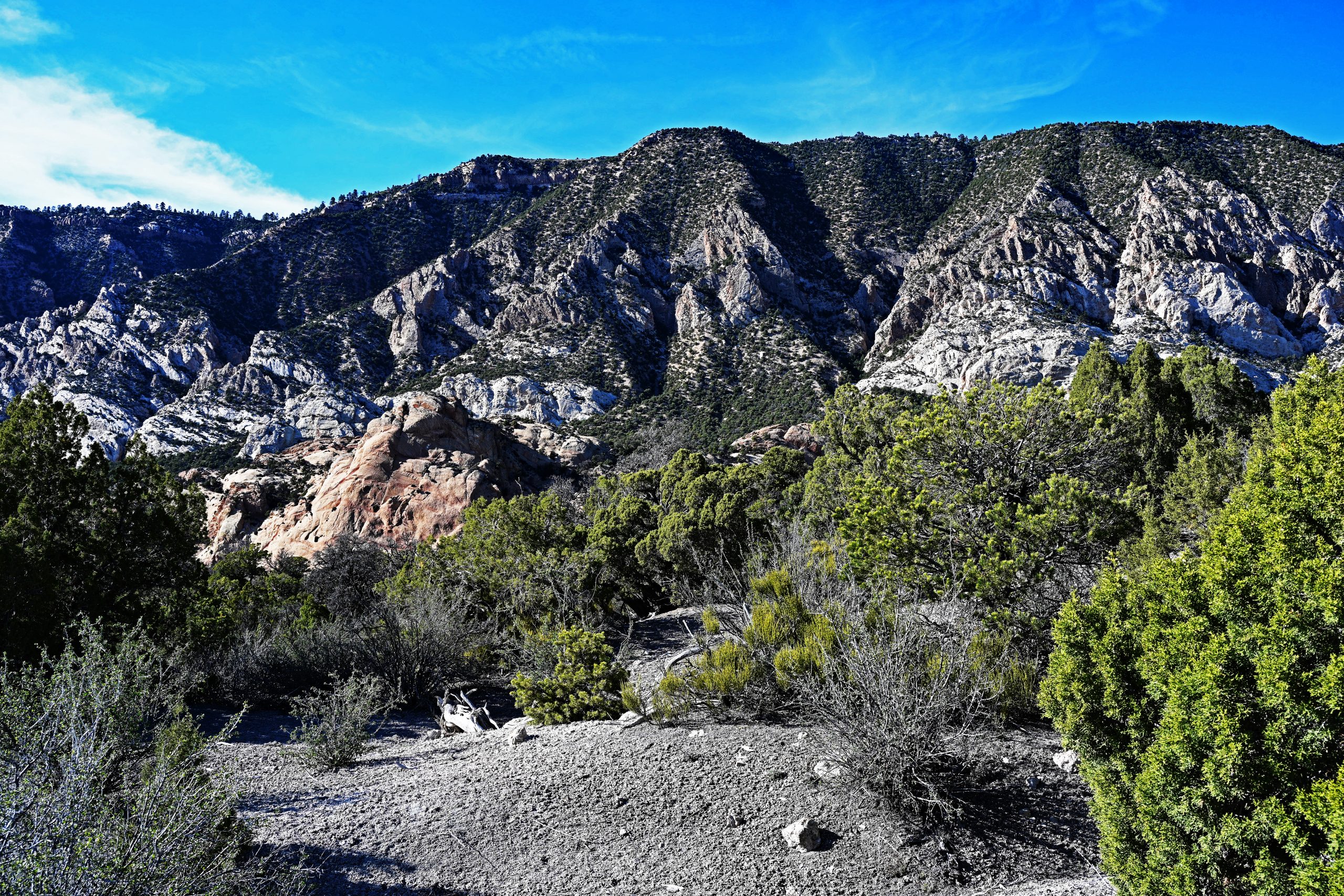
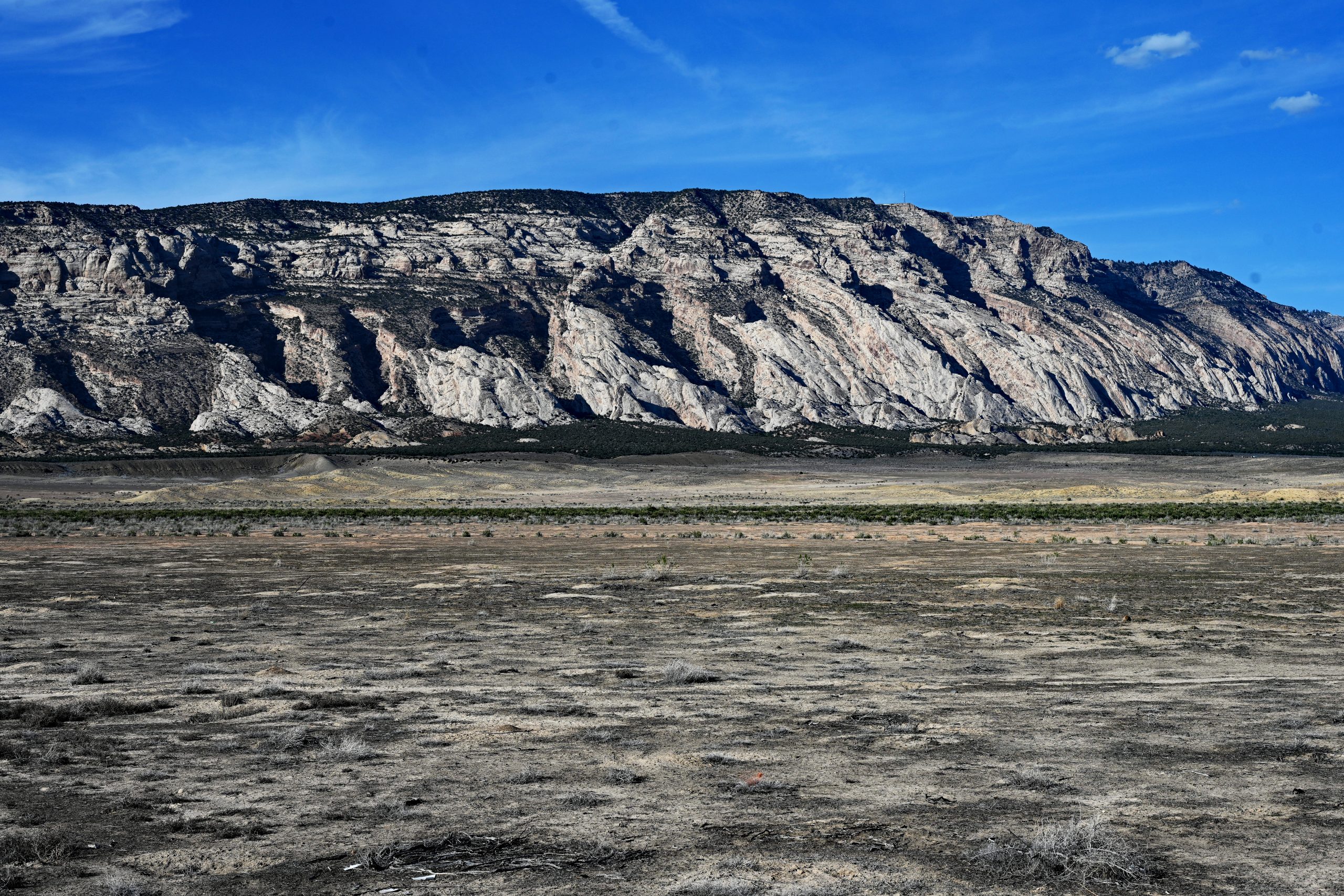
Everywhere I see the bright, almost whitish-glowing layers of Weber Sandstone, which are tilted or folded extremely steeply here—an open-air geological textbook. The road cuts through silvery sagebrush steppes, while pinyon pines and junipers climb the slopes. I am particularly fascinated by the “Flatirons“: triangular rock faces that jut out of the plain like the petrified shark teeth of a prehistoric monster. They bear witness to the immense power with which the Uinta Mountains were once pushed upward.
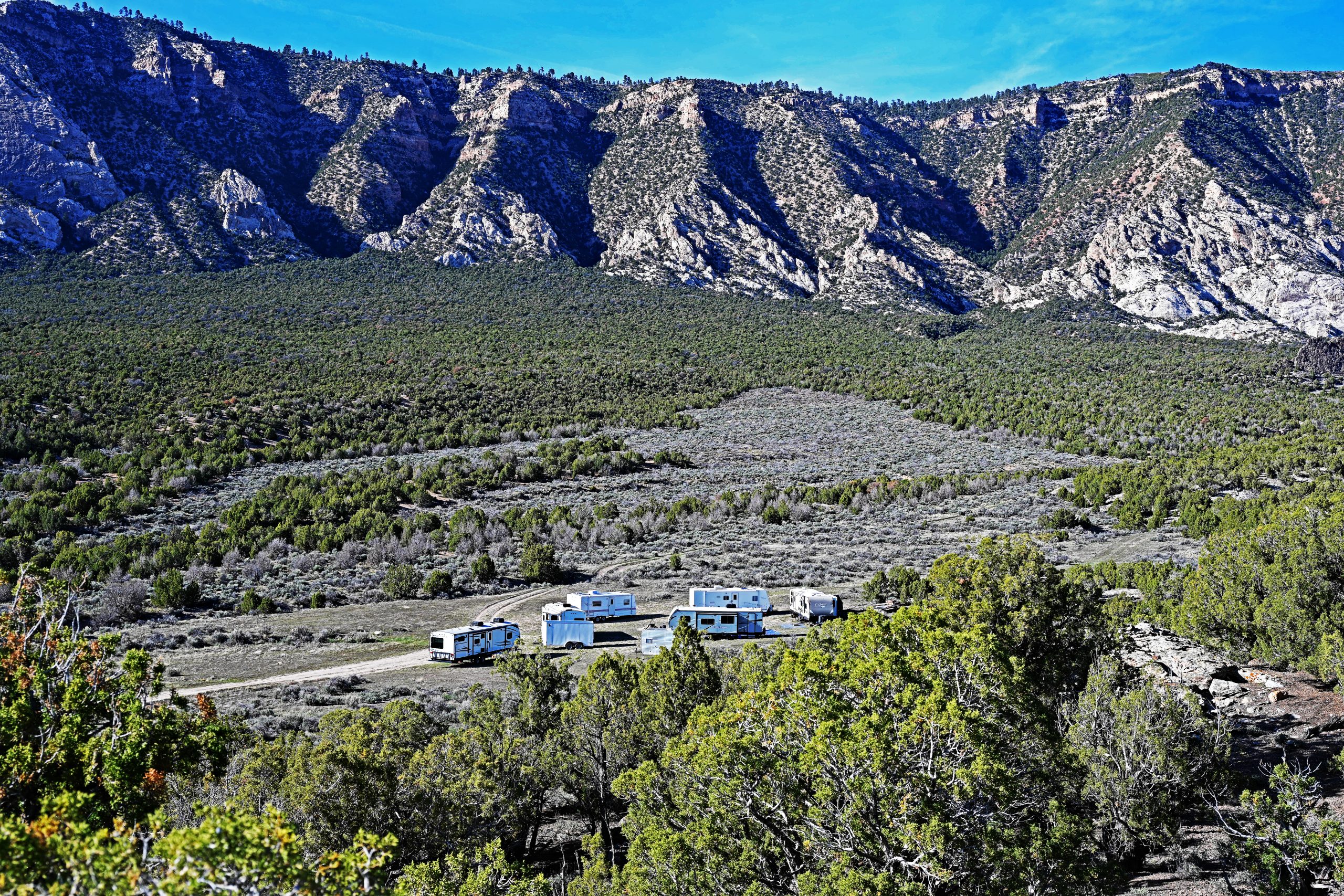
At one idyllic spot, I see a group of motorhomes. A hint of envy creeps in—spending the night in this solitude under the stars would have been wonderful. But it’s definitely too cold for my tent these nights. So I continue driving west, as Crest Ridge fades in the rearview mirror like a stony spine of the landscape.
Gallery VI: The Stony Archive of Tectonics
This landscape is more than just stone and color—it is a living book of time, of which I was privileged to read but a single, wonderful page today.