
The wind carries a dry warmth today as I step off the Blue Line at Court House. I pause for a moment, letting my gaze sweep over the distinct grid pattern of the streets. It is fascinating to think that right here, in this once semi-arid valley, Brigham Young stood in July 1847 and, with the words “This is the right place,” laid the foundation for everything that surrounds me today. You can almost still feel the iron will of the Mormon pioneers who transformed this desert into such a thriving place.
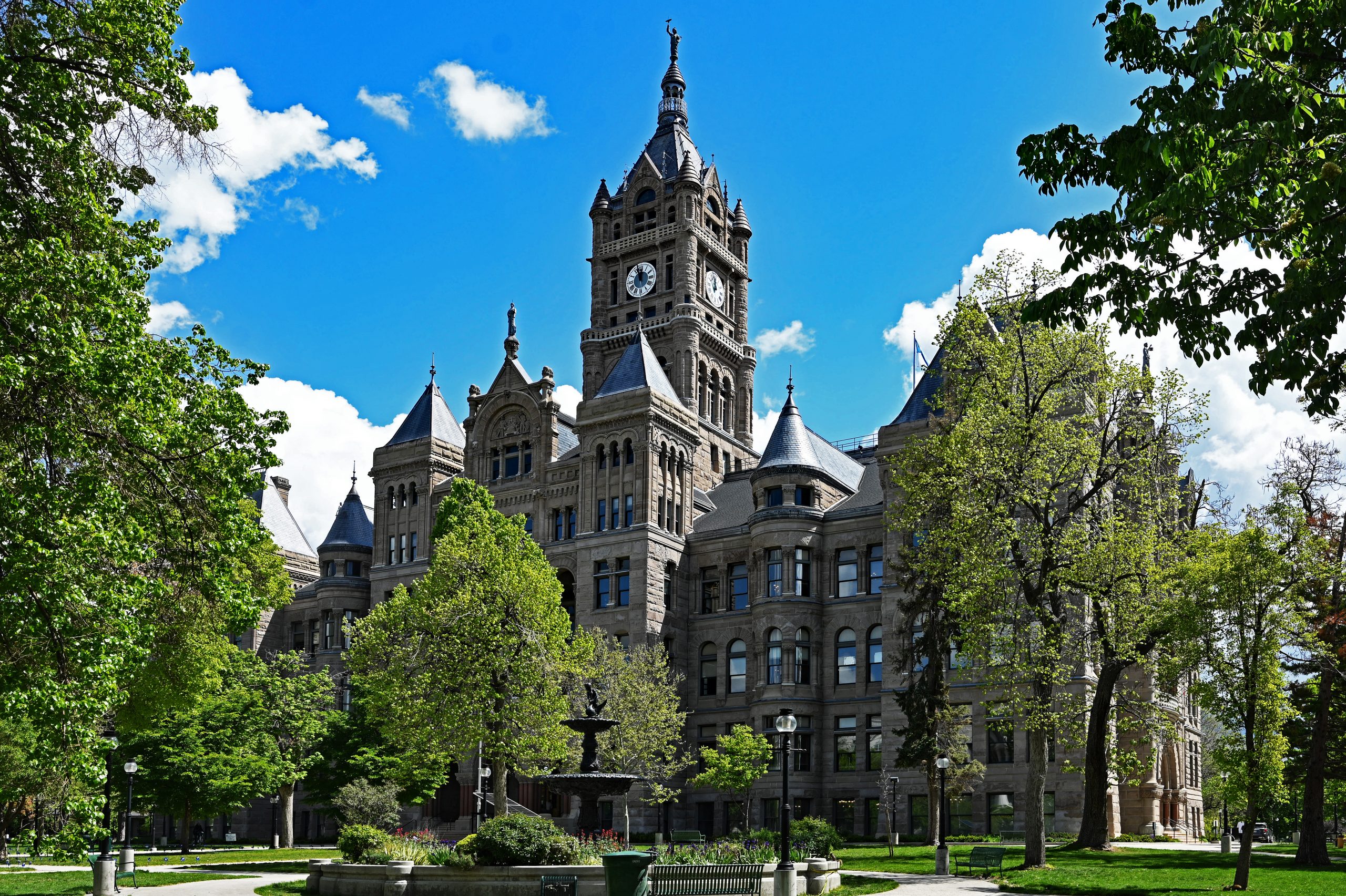
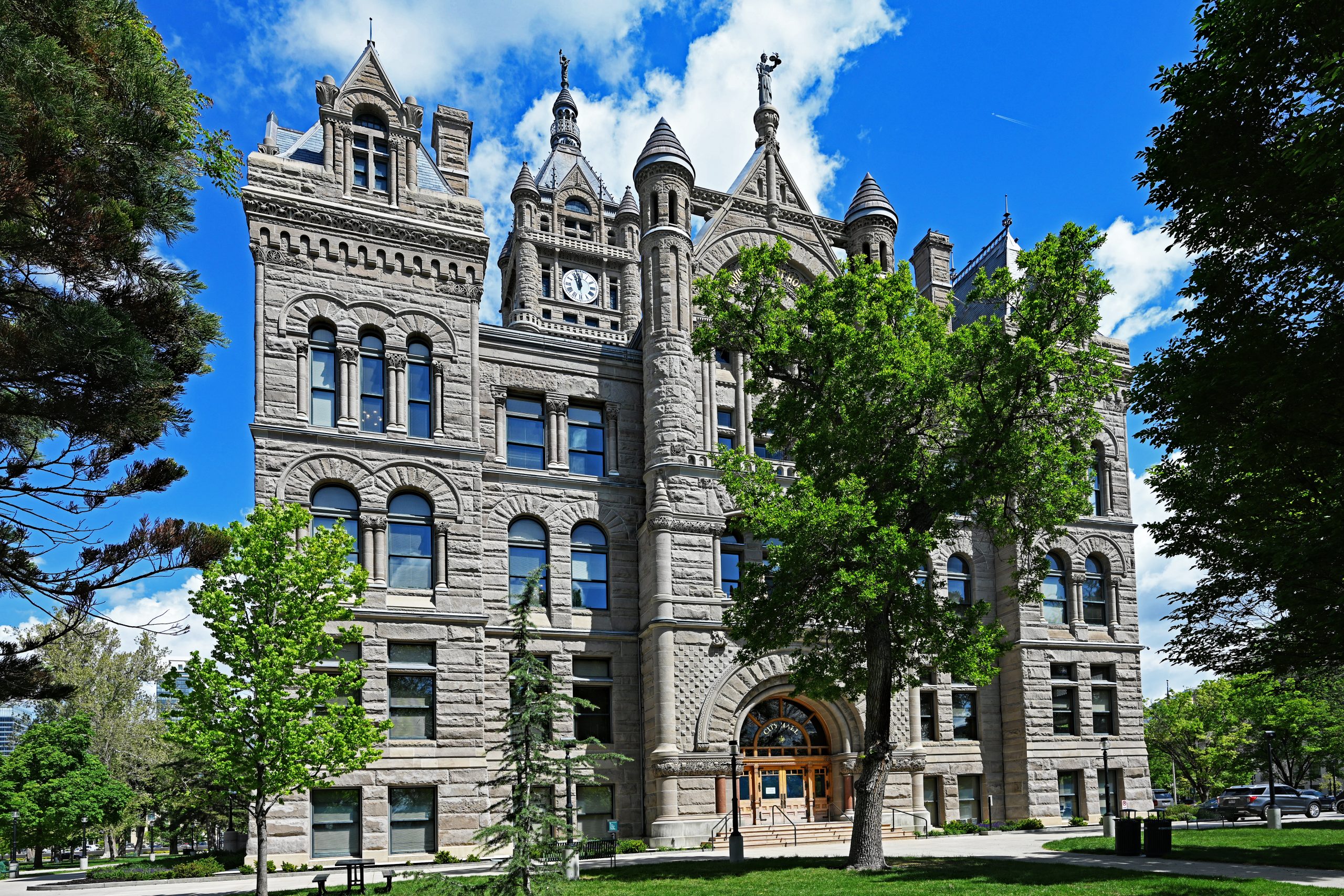
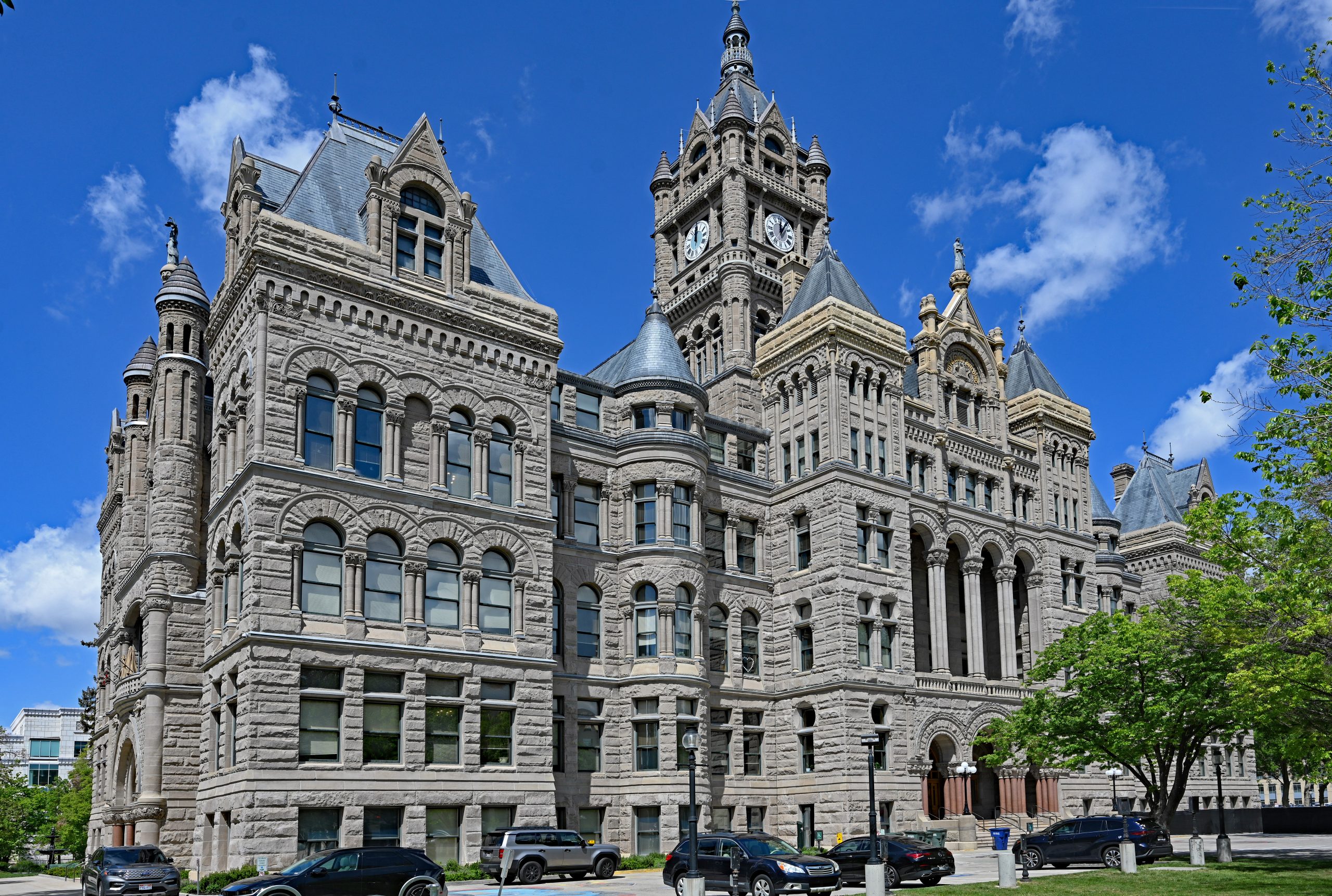
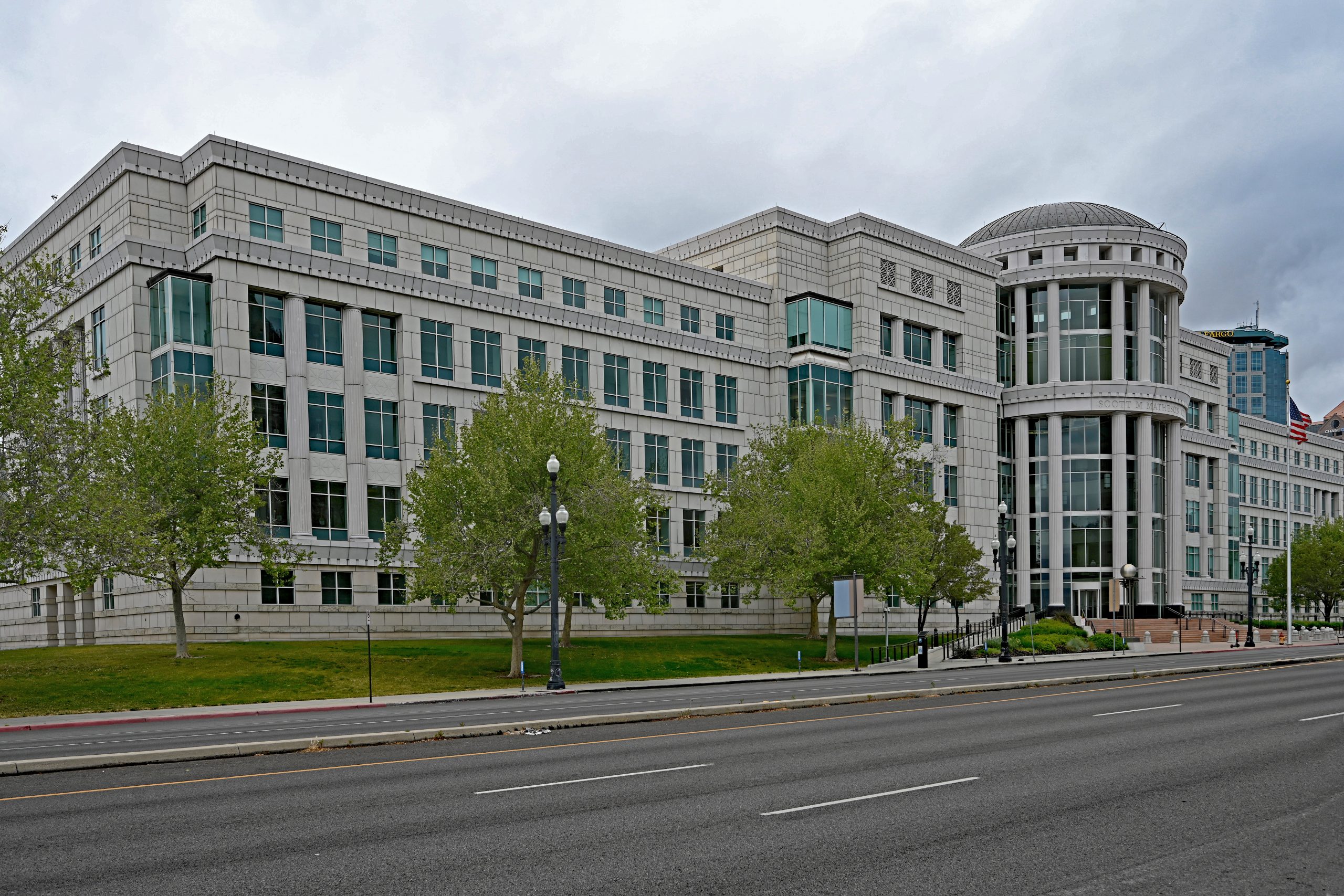
My path first leads me to the Salt Lake City and County Building. It looks like a stone fortress from another time. The Richardsonian Romanesque style gives it an immense weight and dignity; the dark stone is covered with intricate carvings telling stories of Spanish explorers and hardworking pioneers. Towering above it all is the 78-meter clock tower, a vertical landmark against the azure sky. Yet, if I turn just a bit to the side, I look into the future: the Scott M. Matheson Courthouse forms a sharp, almost playful contrast. Where massive granite reigns over there, cool concrete and a rounded glass tower, reflecting the clouds, dominate here.
Gallery I: Stony Dignity and Modern Splendor
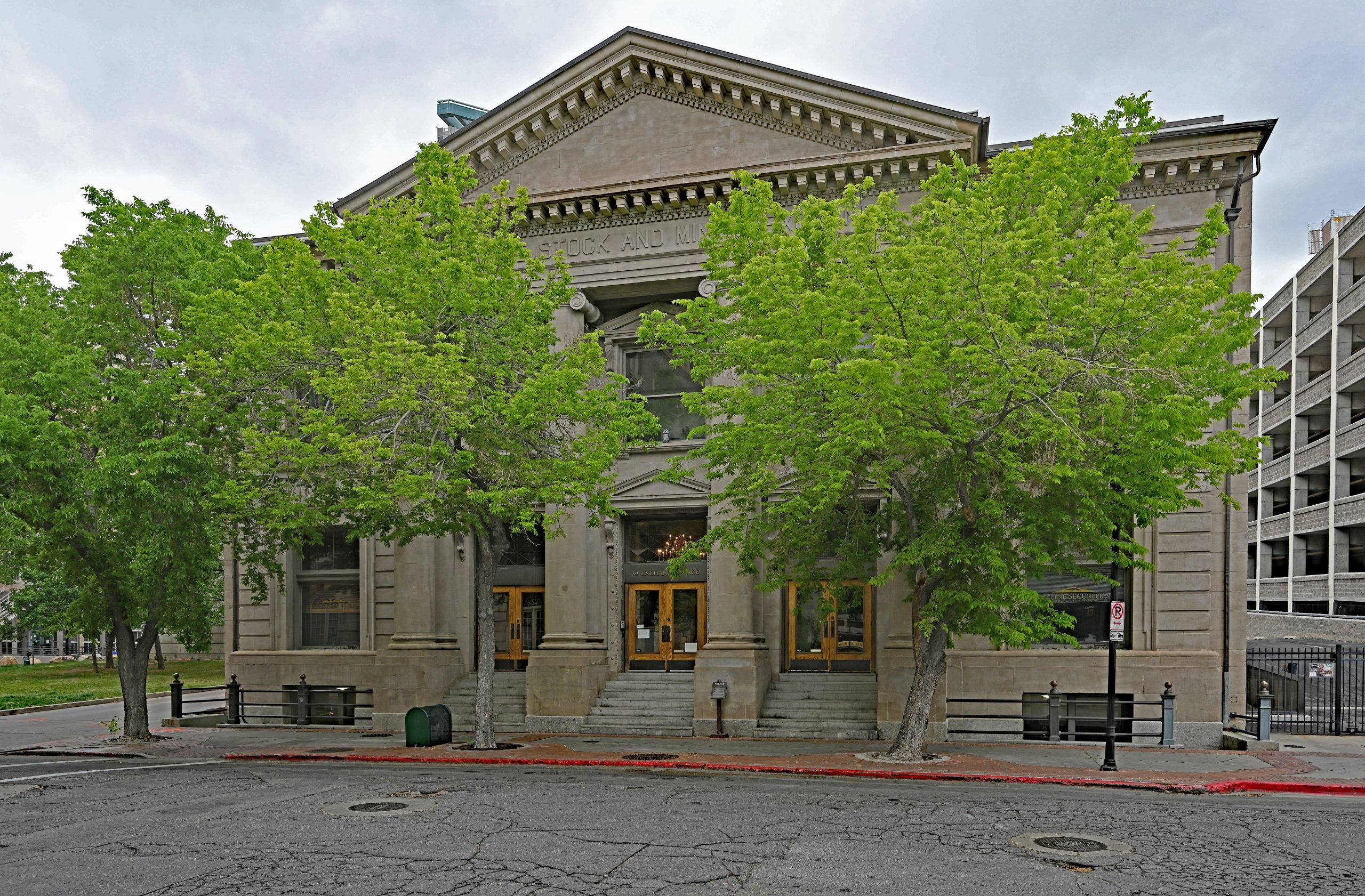
I continue my way and reach Exchange Place. Here, every facade breathes the ambition of bygone days when people tried to make Salt Lake City the “Wall Street of the West.” It is a world of its own, away from the religious Temple Square. The Stock and Mining Exchange, with its Neoclassical Ionic columns, radiates an almost defiant stability—a monument to the uranium boom and the wild times of “penny stocks.”
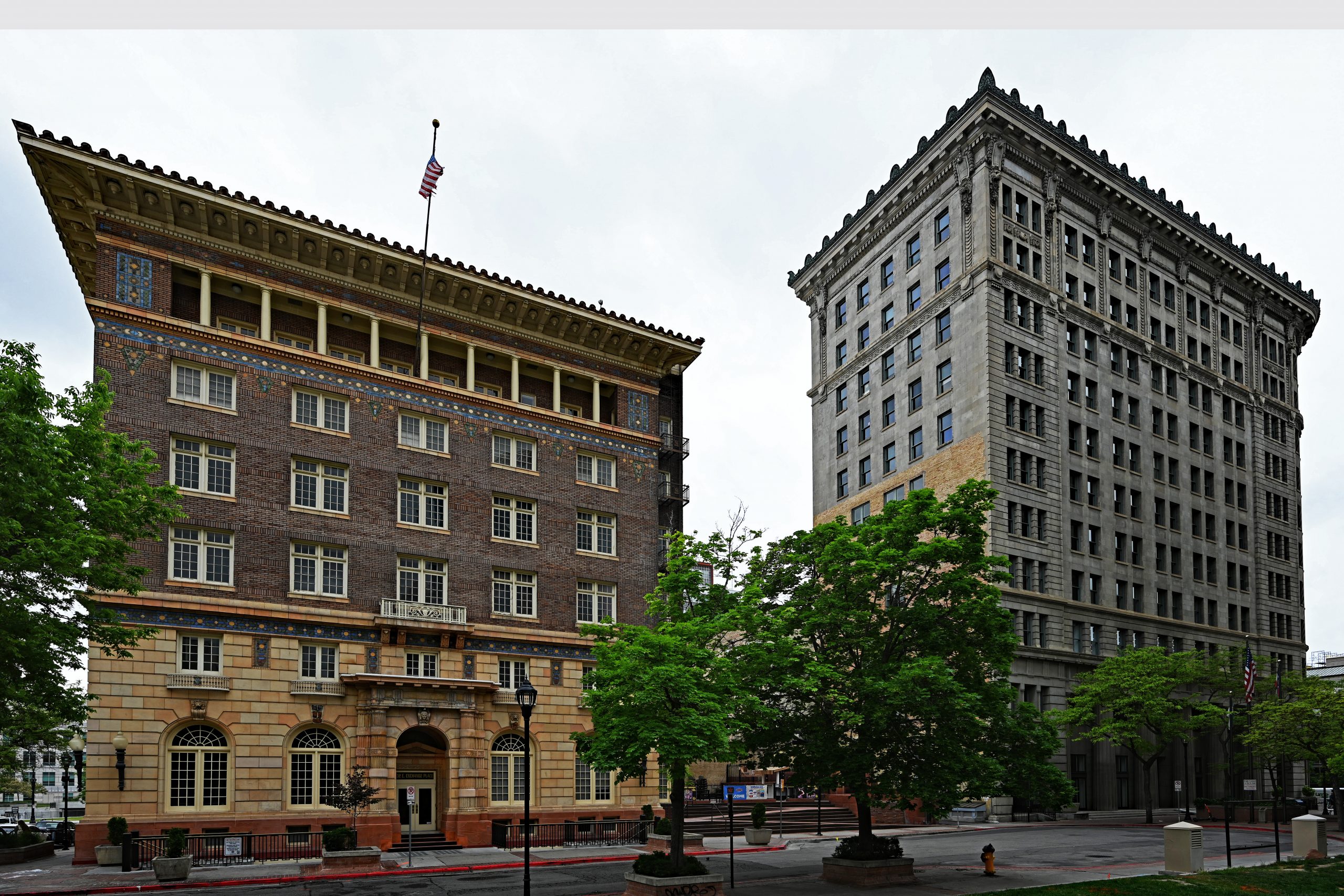
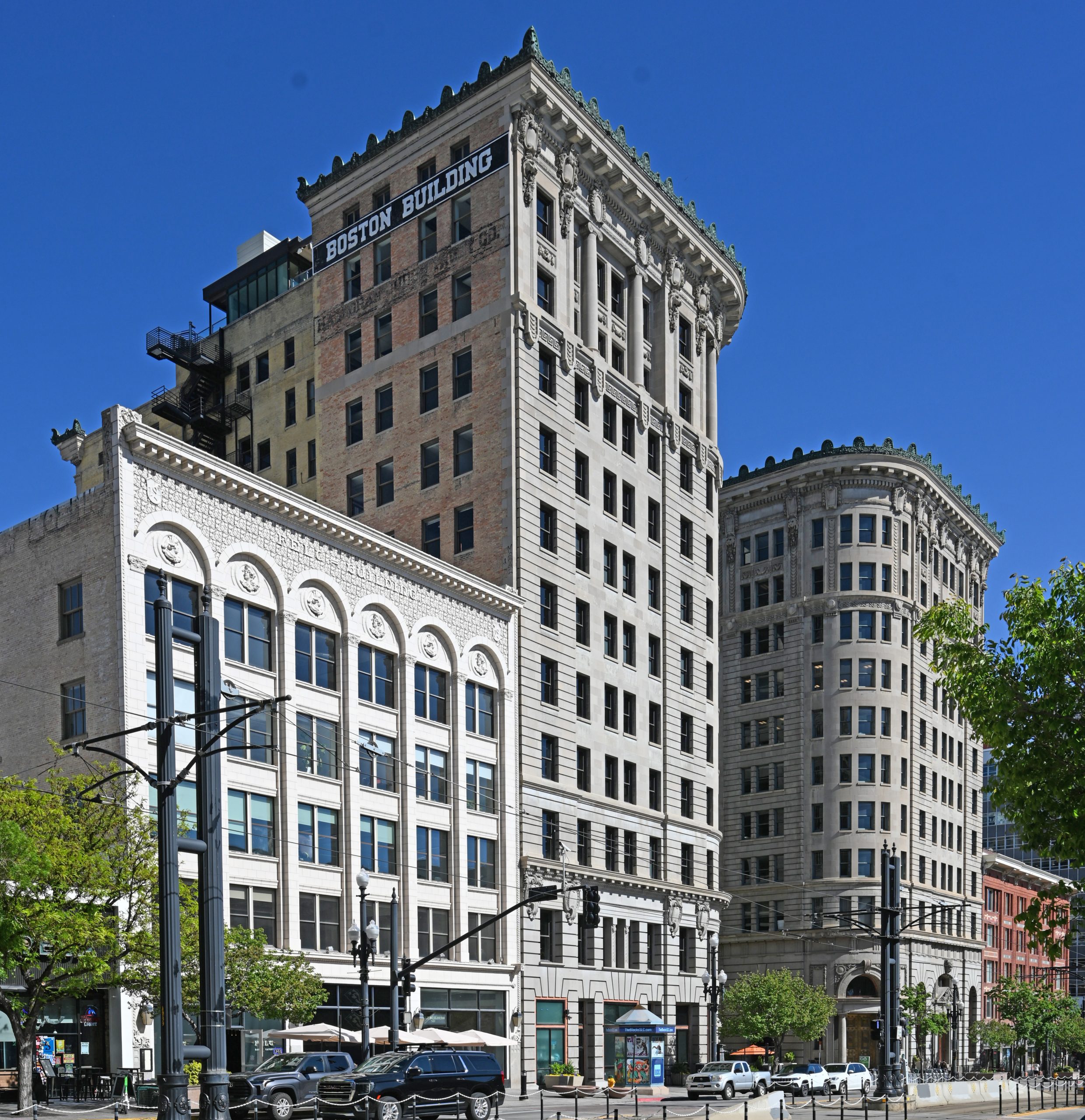
Directly opposite, the Commercial Club Building shows its elegant side; one can almost imagine how the city’s elite once socialized in magnificent ballrooms here. The scene is flanked by the “fraternal twins,” the Boston and Newhouse Buildings. These first skyscrapers in Utah are masterpieces of deception: while they boast noble Indiana limestone toward the street, they show their backs in simple brick—a charming nod to the commercial pragmatism of that era. The adjacent Newhouse Realty Building completes the picture with its soft arched windows.
Gallery II: The Dream of Big Money
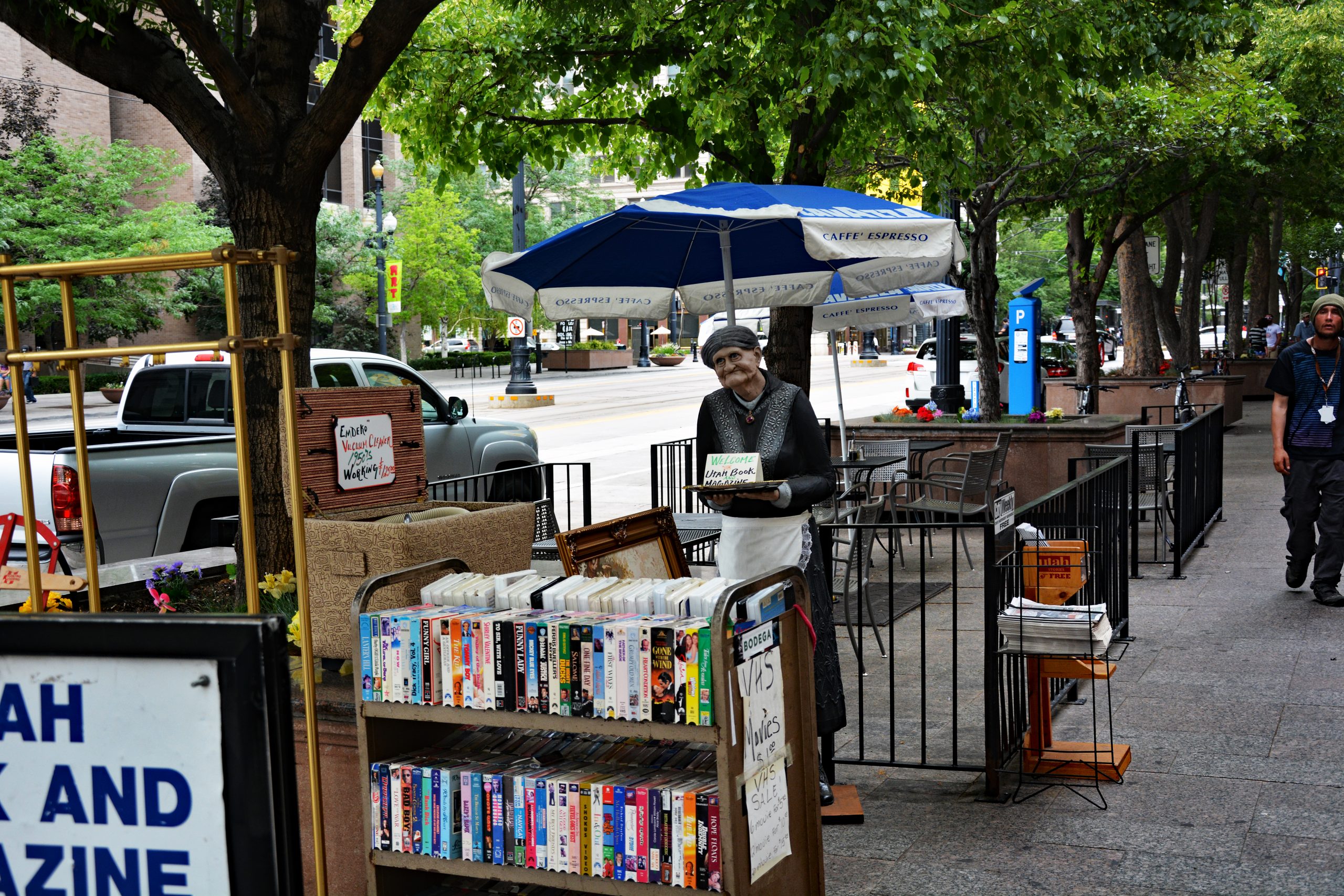
Finally, I stroll down Main Street. Suddenly, I stop in my tracks—a figure under a blue and white umbrella seems completely absorbed in his task. Only at second glance do I recognize the deceptively real bronze art by J. Seward Johnson Jr. right in front of the legendary Utah Book & Magazine shop. It is a wonderfully human moment in this monumental city.
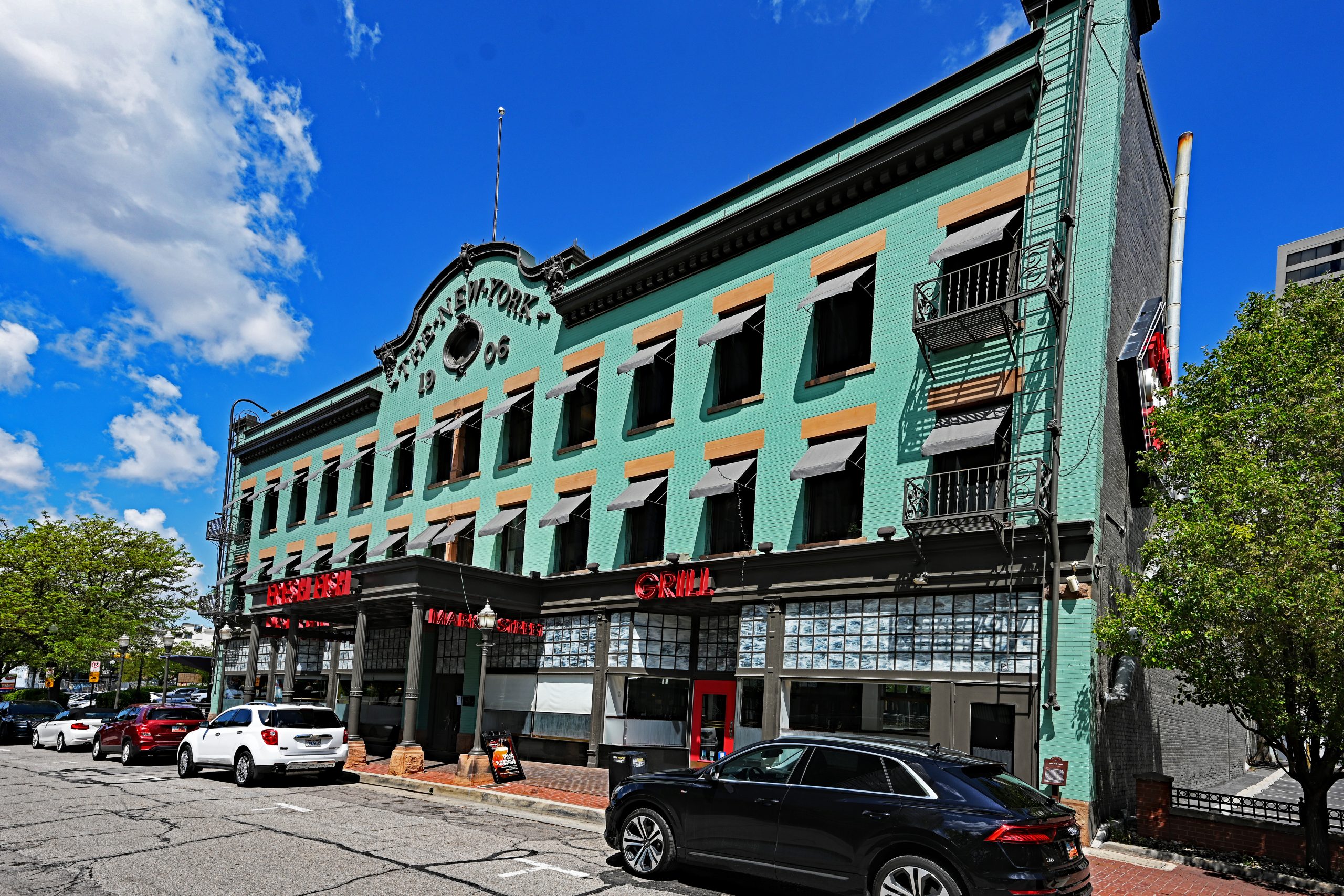
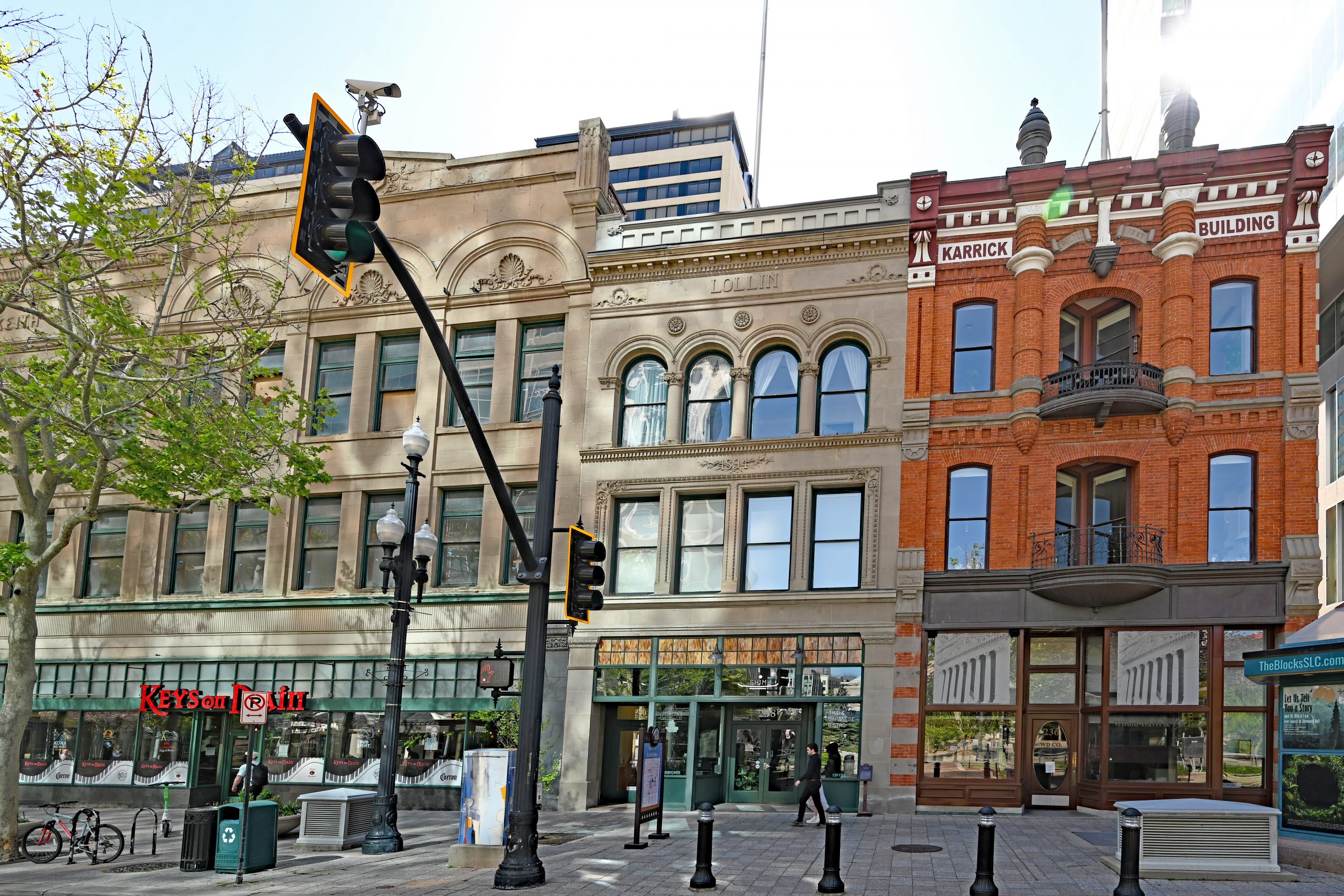
Just a few steps further, the New York Building glows towards me. With its emerald green accents and historic charm, it recalls the days when “The New Yorker” was still the most exclusive spot in town. The crowning conclusion of my walk is formed by the Karrick and Lollin Buildings. It is heartening to see how these survivors from the 19th century, with their ornate cornices and cast-iron columns, hold their own among the modern giants. Especially the Karrick Building, with its colorful history—from a pharmacy to a notorious brothel—gives Main Street a very unique, almost tangible depth.
Gallery III: Stories in Bronze and Brick
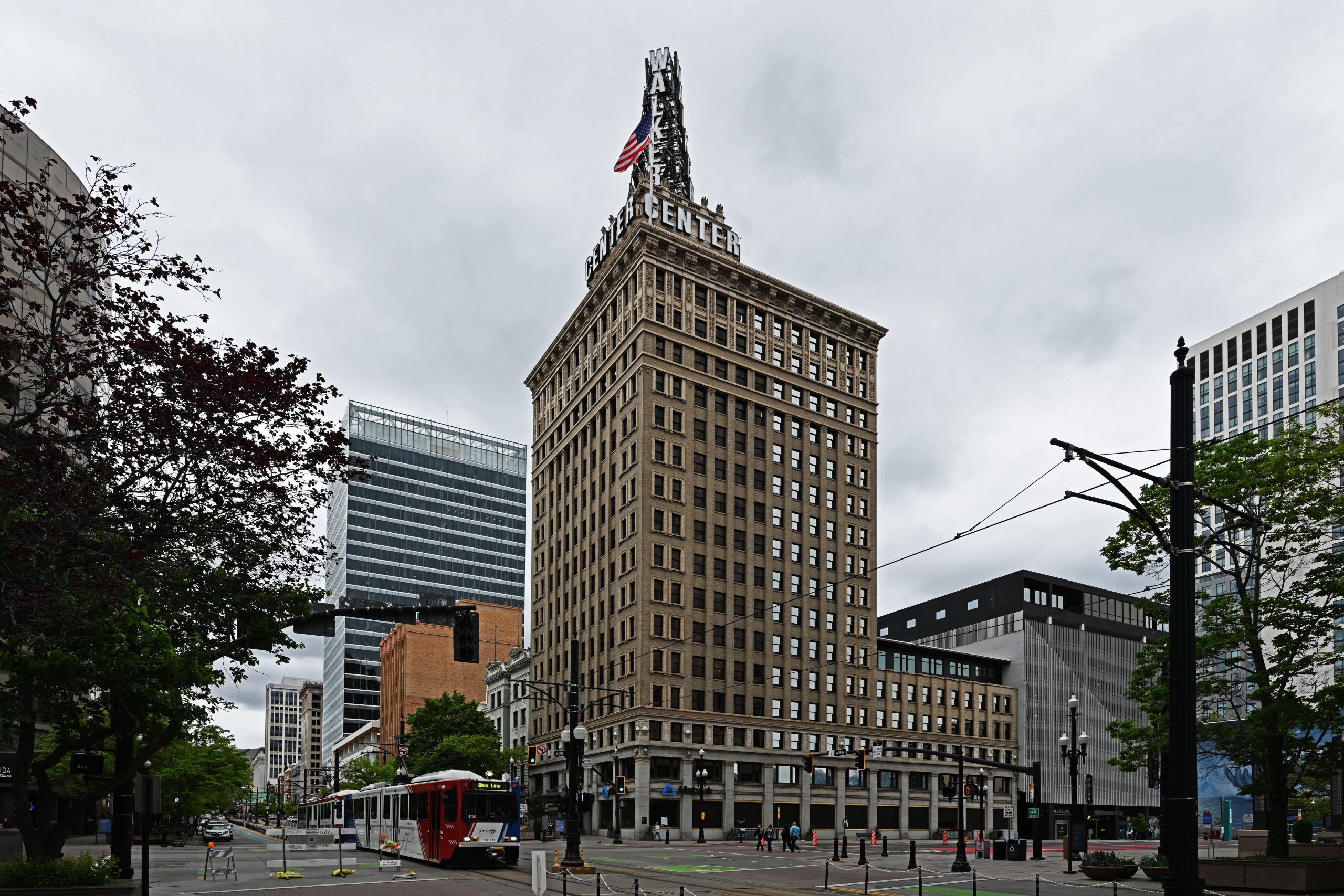
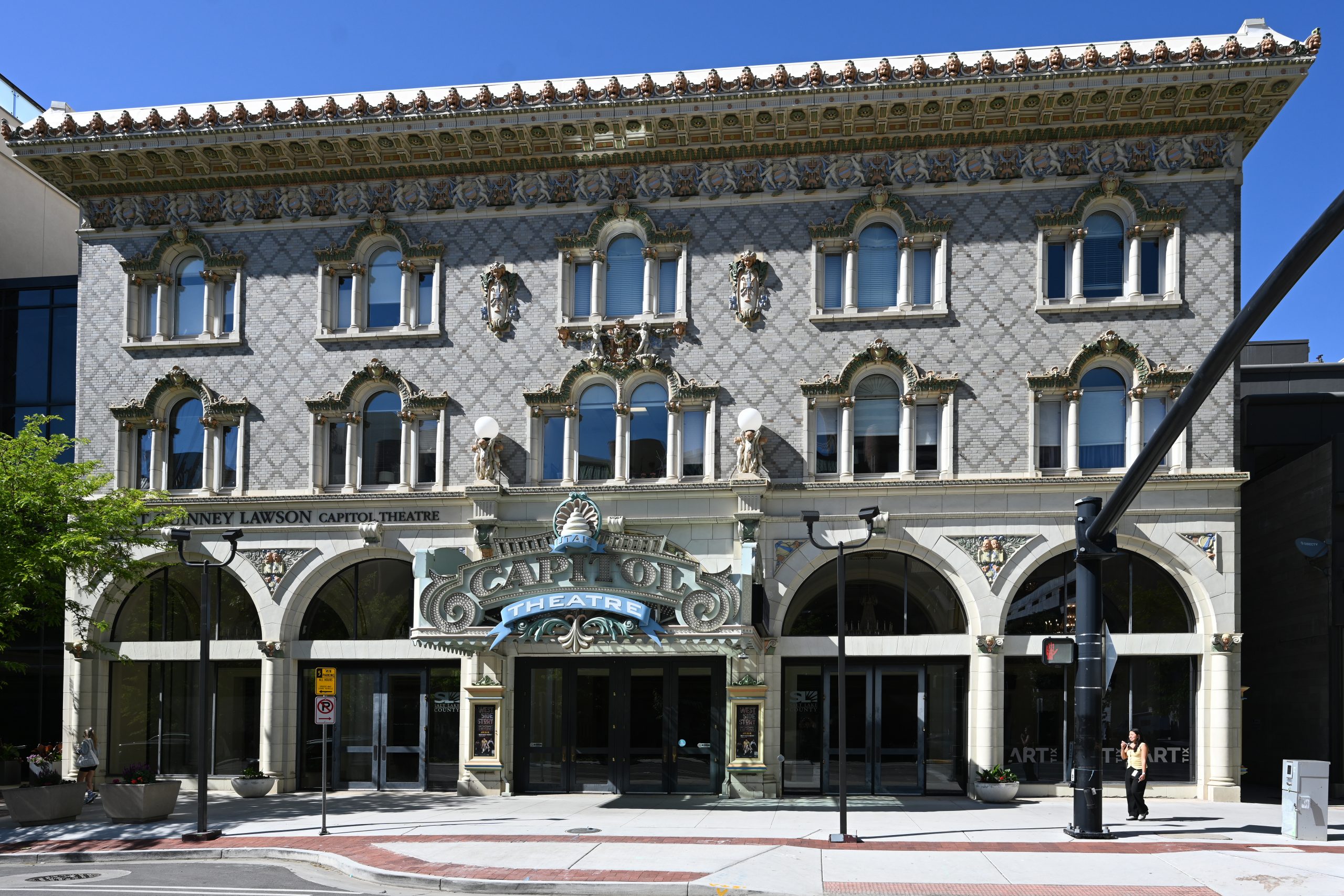
My path leads me deeper into the urban canyons, where the pride of the early 20th century is palpable in every facade. I stand before the Walker Center, which was a technical wonder of the world in 1912 as the tallest building between Chicago and San Francisco. The Sullivanesque style, with its vertical lines, reflects the rapid rise of the Walker brothers—from simple traders to world-class bankers. Just a few blocks away, I am greeted by the elegant glow of the Janet Quinney Lawson Capitol Theatre. Its facade of fine terracotta in the Italian Renaissance style still breathes the spirit of the vaudeville theater that moved in here in 1913. Where vaudeville greats once performed, Ballet West and touring Broadway productions now enchant audiences in one of the first air-conditioned buildings in the region.
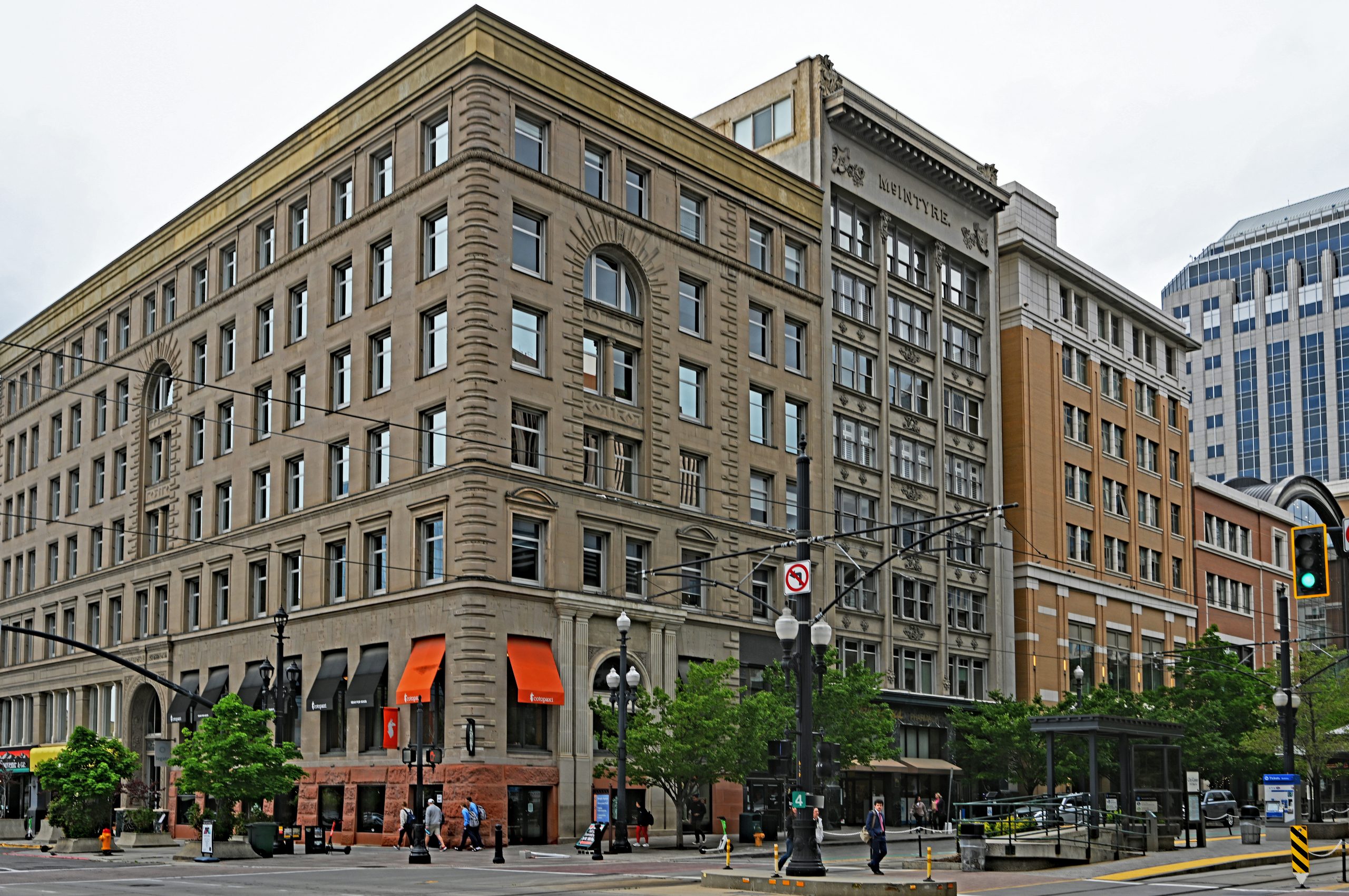
I am particularly impressed by the McIntyre Ensemble. The narrow McIntyre Building squeezes elegantly between its neighbors, while the bulky McCornick Building on the corner dominates with the authority of what was once the city’s largest private office building. It is a dense mosaic of stone showing the absolute will to establish Main Street as a financial center.
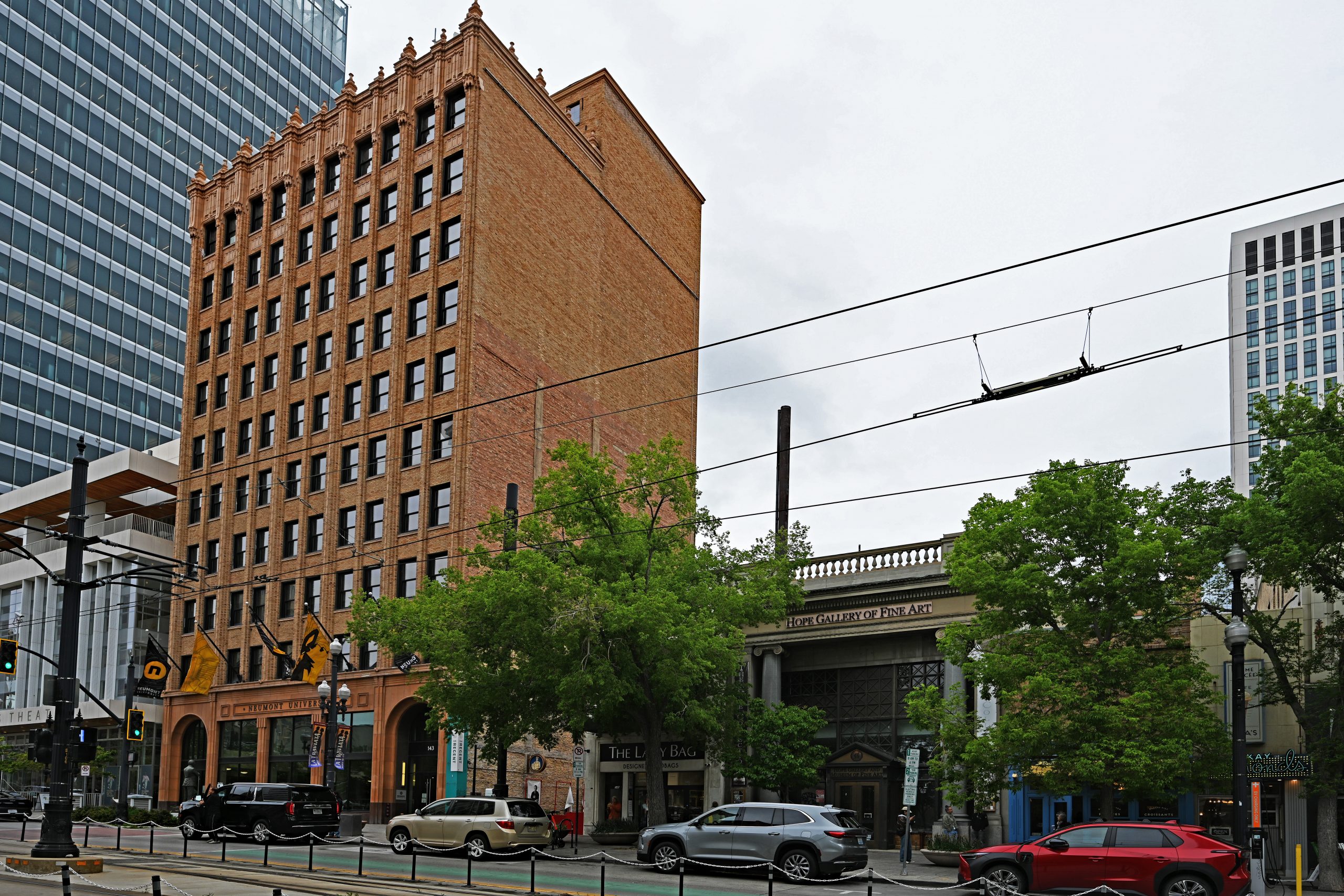
A little further on, I step almost reverently before the Tracy Loan & Trust Building. With its massive Neoclassical columns, it looks like an ancient temple radiating steadfastness and trust. Today it houses the Hope Gallery, and the marble inside provides the perfect setting for European masterpieces. Right next to it towers the Ezra Thompson Building. Where the famous red “Tribune” sign glowed for decades and printing presses rattled, students of Neumont College now program the future—a fascinating transformation from a newspaper district to “Silicon Slopes.”
Gallery IV: Between Broadway Glamour and Stony Giants
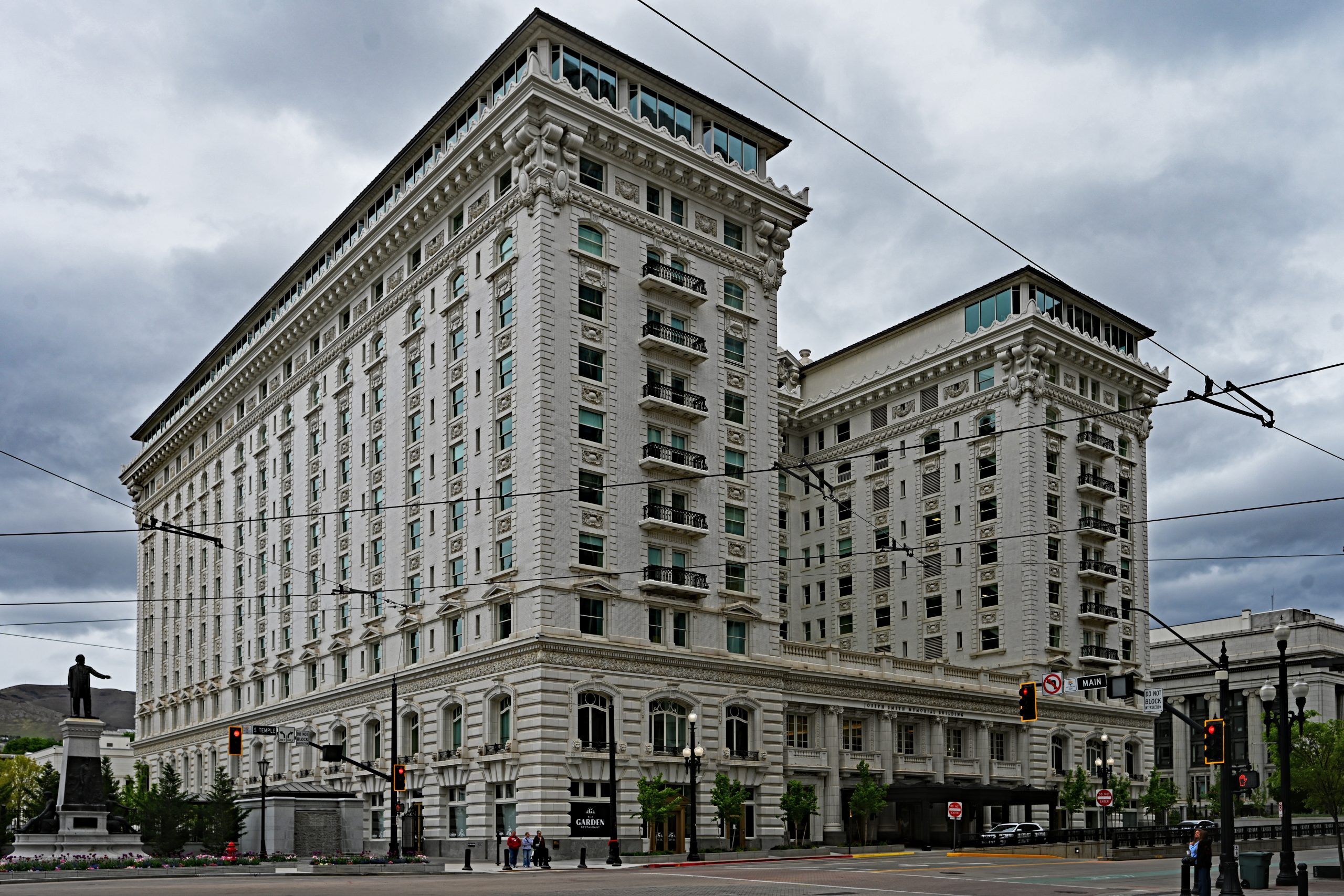
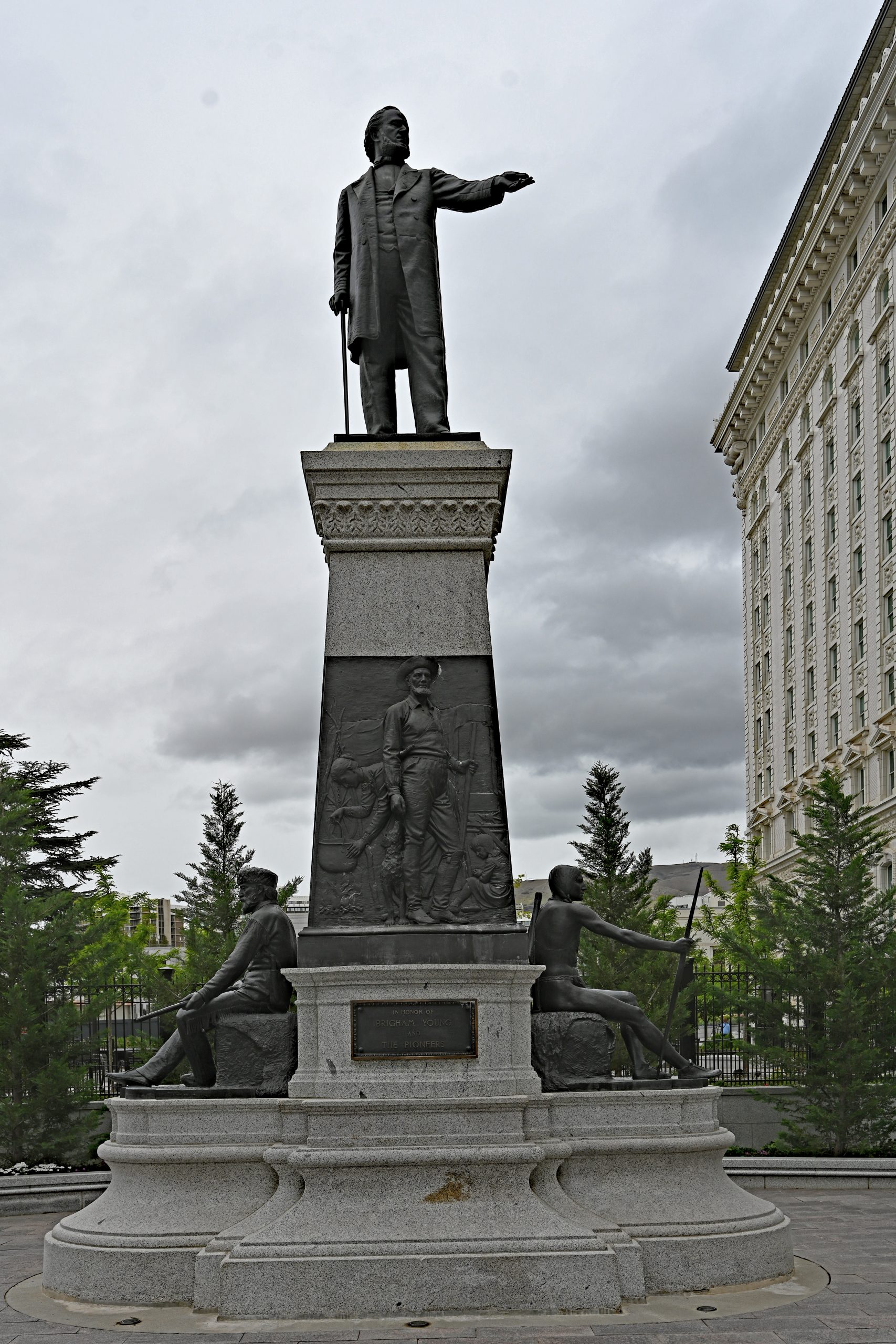
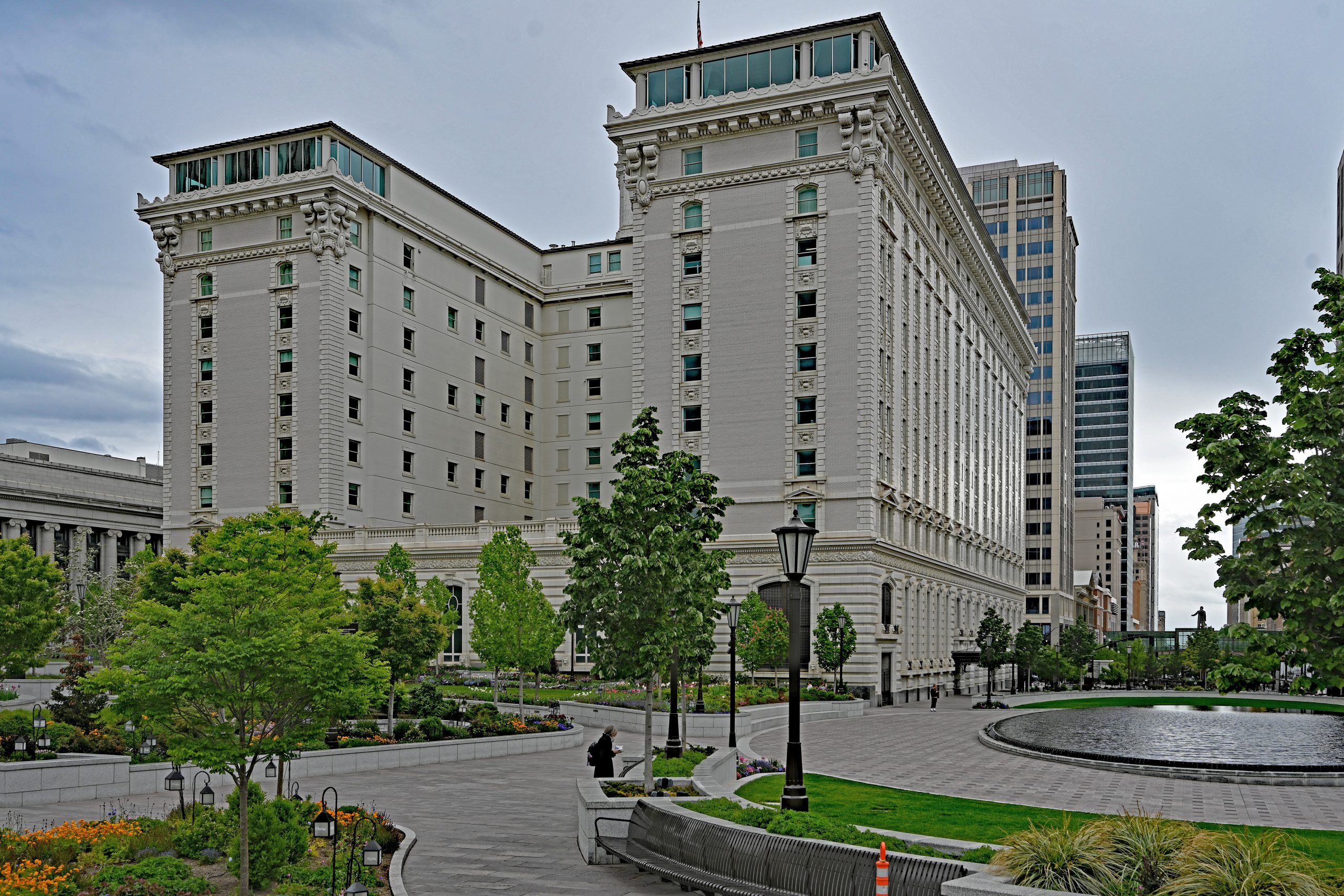
Finally, I approach the spiritual heart of the city. The Joseph Smith Memorial Building shines in pure white. Formerly the “Hotel Utah,” it hosted US presidents and Hollywood legends like Katharine Hepburn. The facade of glazed terracotta looks almost ethereal in the sunlight, and the magnificent lobby with its stained-glass ceiling is a place of timeless elegance. Directly in front of it stands the Brigham Young Monument. Young gazes determinedly into the distance, while at his feet, figures of indigenous people and fur trappers remind us that this history has many fathers and mothers. It is a harmonious interplay of white architecture and bronze history that perfectly introduces the transition to the temple district.
Gallery V: The White Heart of Salt Lake City
The Heart of the West: A Day in the Sanctuary of the Temple Precinct
I step through the gates of Temple Square, and immediately a very unique, prayerful silence envelops me, simply swallowing the noise of Salt Lake City. Before me spreads a four-hectare area that is so much more than just a religious center—it is a stone testament to unimaginable perseverance.
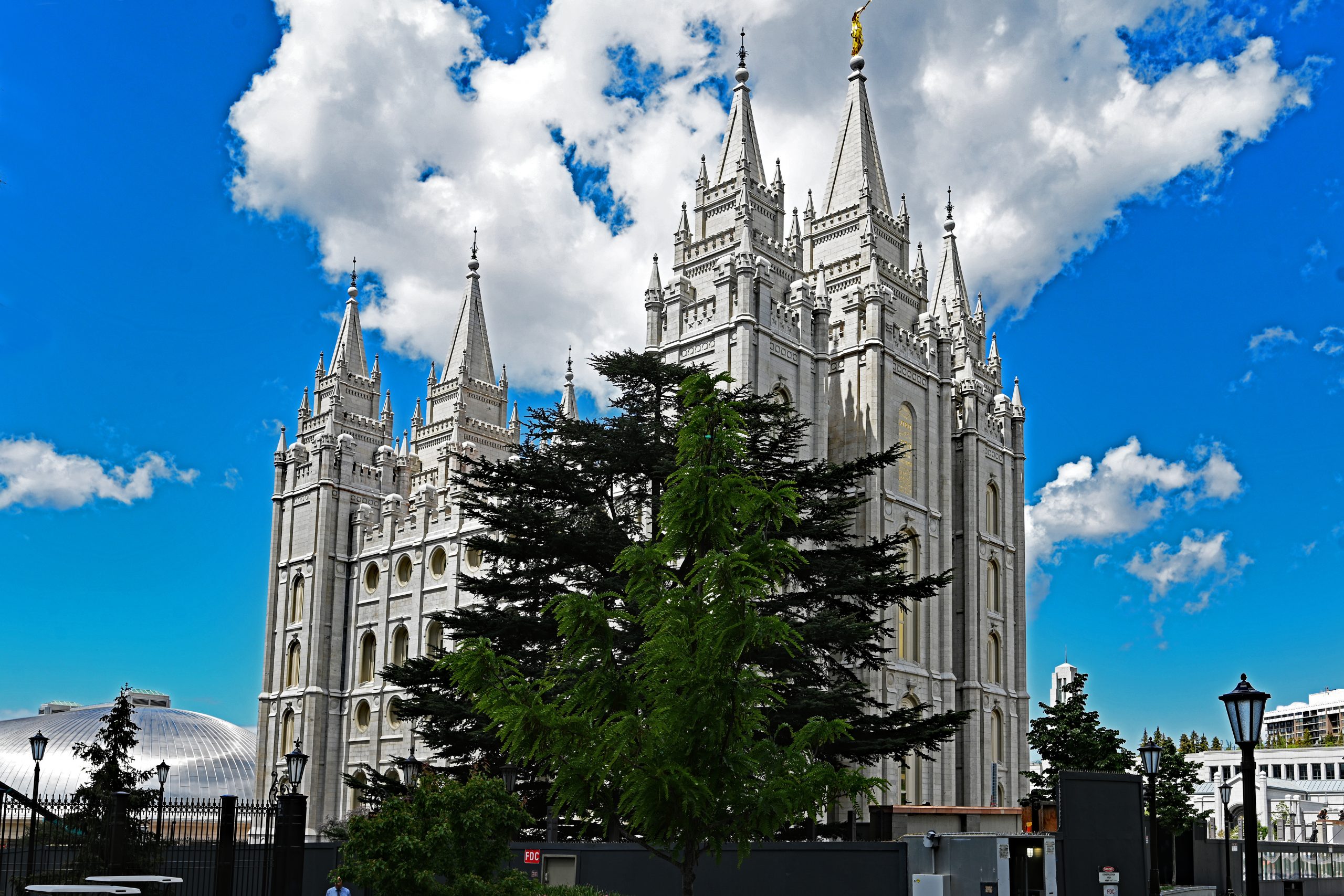
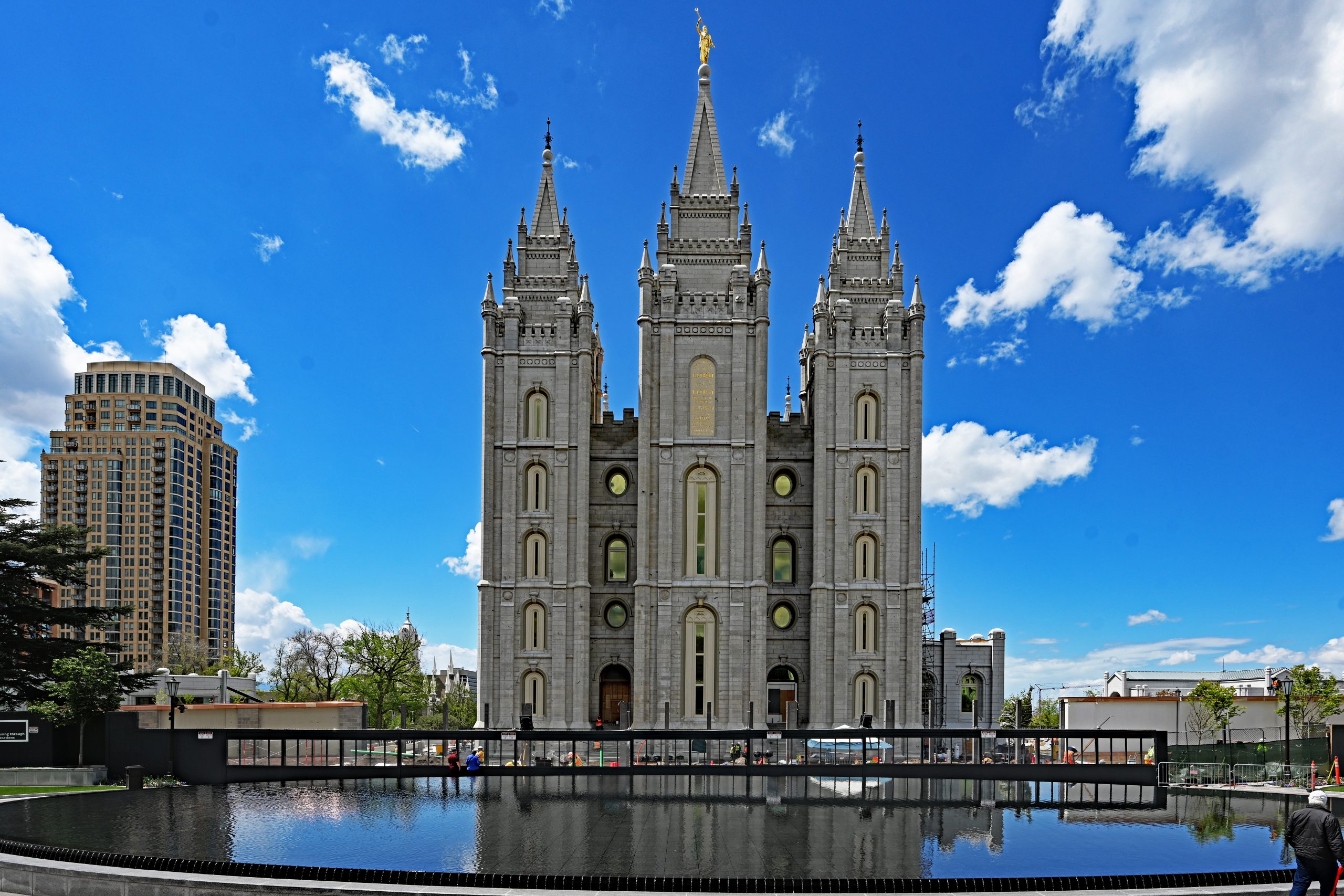
My gaze is immediately caught by the Salt Lake Temple. This edifice of eternity seems so massive yet so intricate. Considering that the pioneers worked for 40 years on this centerpiece and laboriously hauled the quartz monzonite from the canyon 30 kilometers away using ox carts, every stone appears in a different light. I let my eyes wander over the facade and discover the fascinating symbolism: the moonstones at the base, the sunstones further up, and on the center west tower, even the Big Dipper, carved into the stone as a guide to the North Star. At the very top, glistening in the sun, the gilded Angel Moroni stands as a guardian over the valley. It is a sight full of grandeur, especially when the spires are reflected in the water of the surrounding pools.
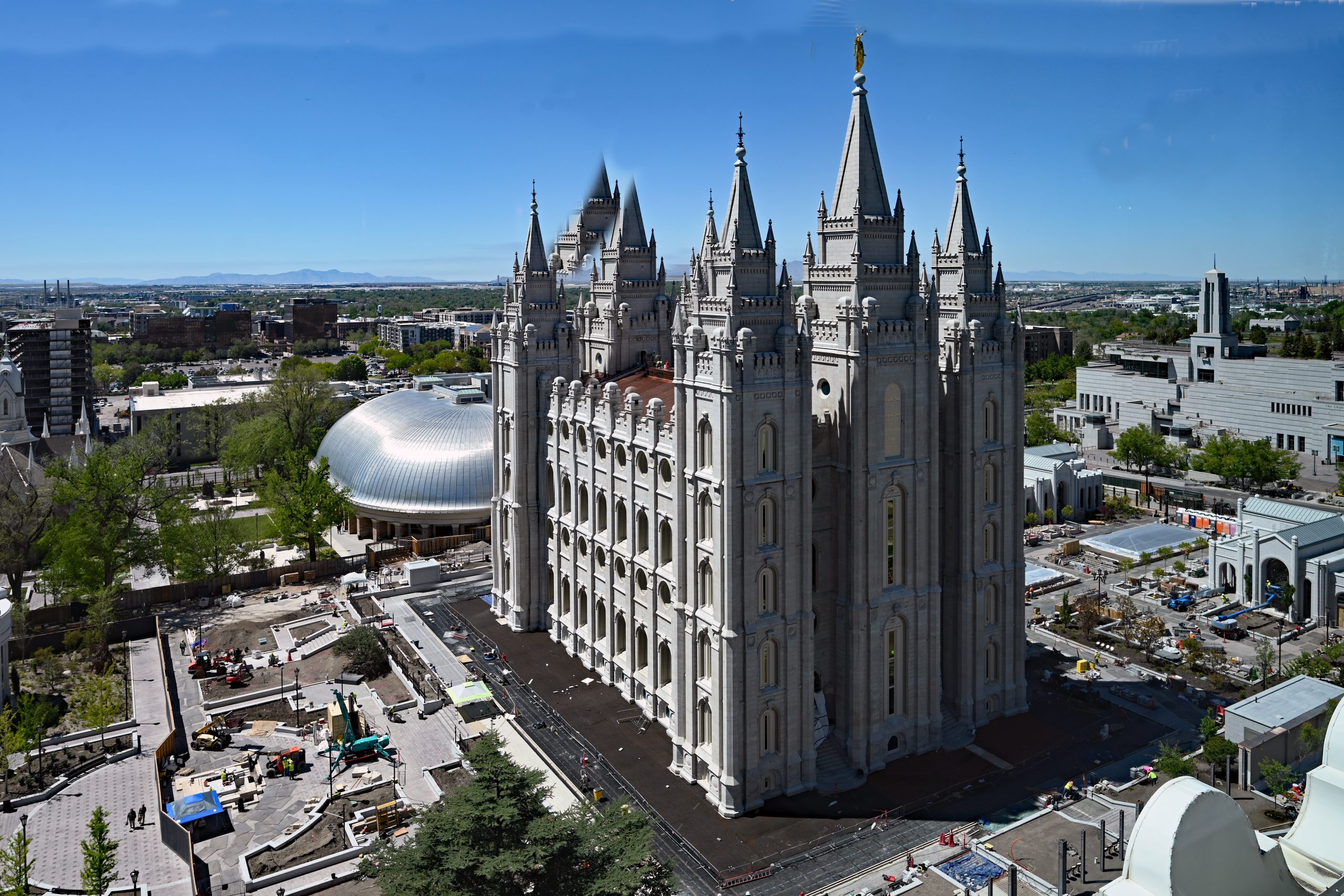
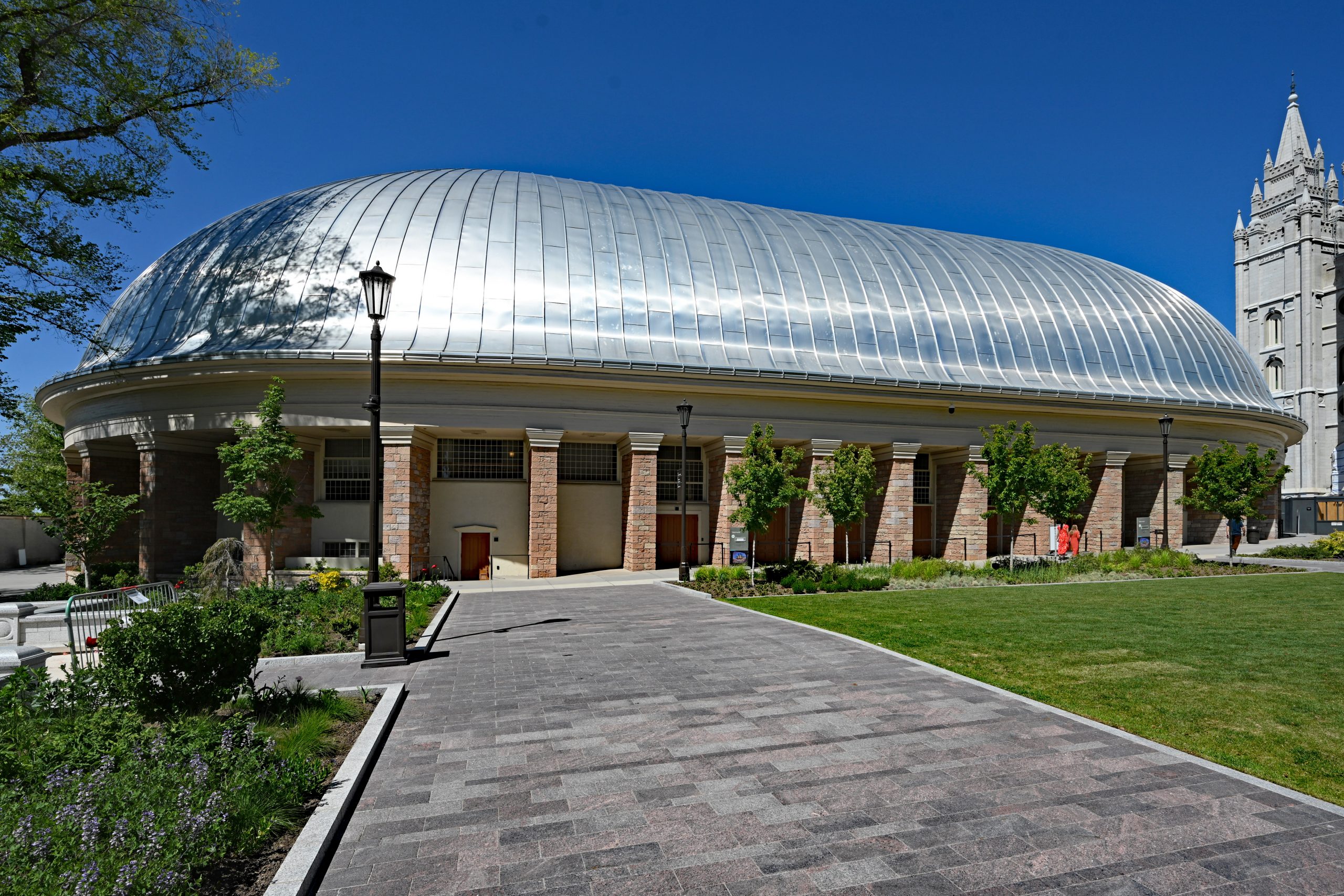
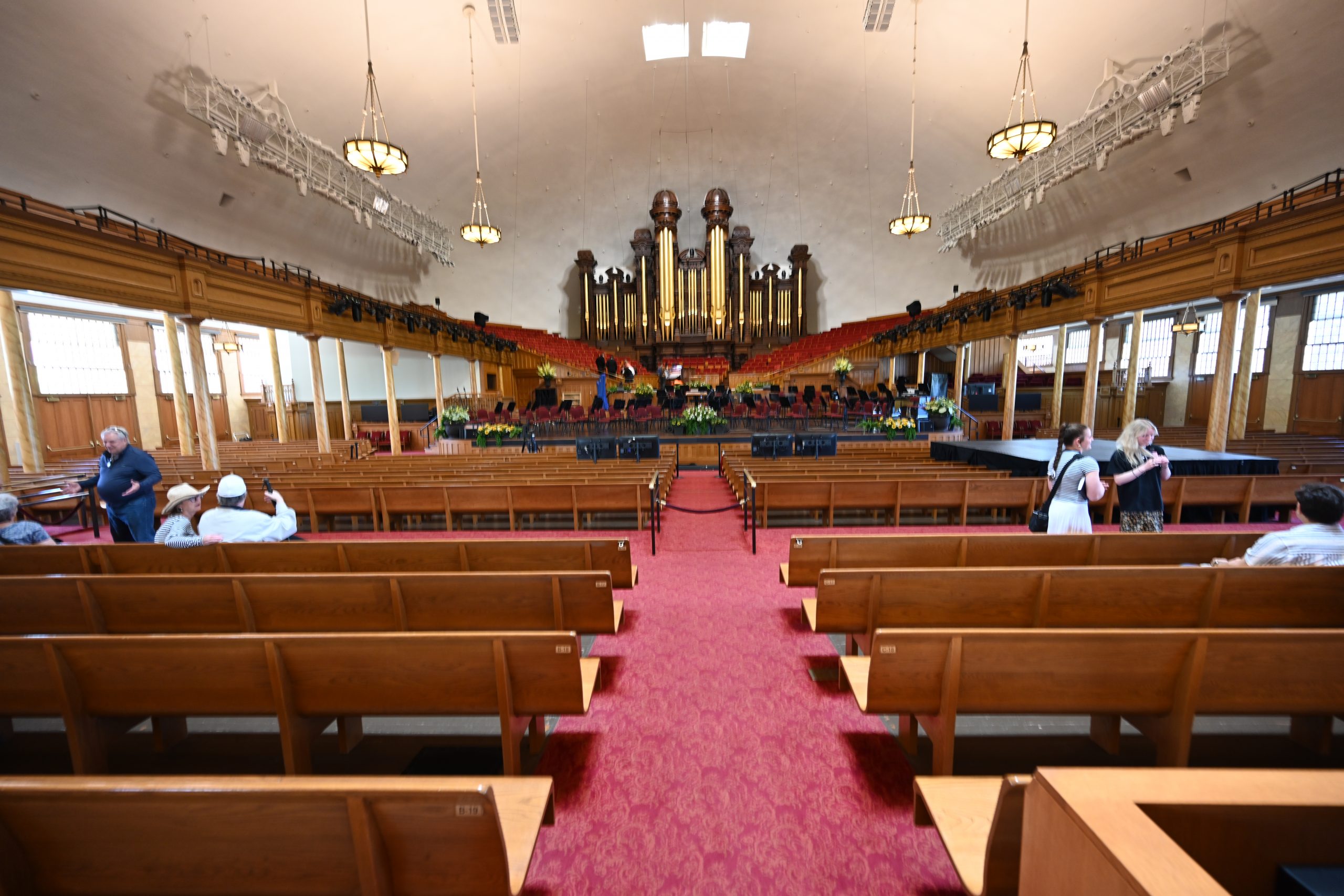
Right next to it, I discover the Tabernacle, which, with its rounded shape, looks almost like a giant silver eggshell. As I enter the interior, my breath catches for a moment. The acoustics in here are legendary, but what truly touches me is the story of its creation. Without steel, the settlers built this massive roof using only wooden lattices and rawhide thongs. And a small secret is hidden in the pews: what looks like noble oak or marble is actually artistically painted pine—a moving proof that the pioneers wanted to create the most beautiful things for their faith with the simplest means.
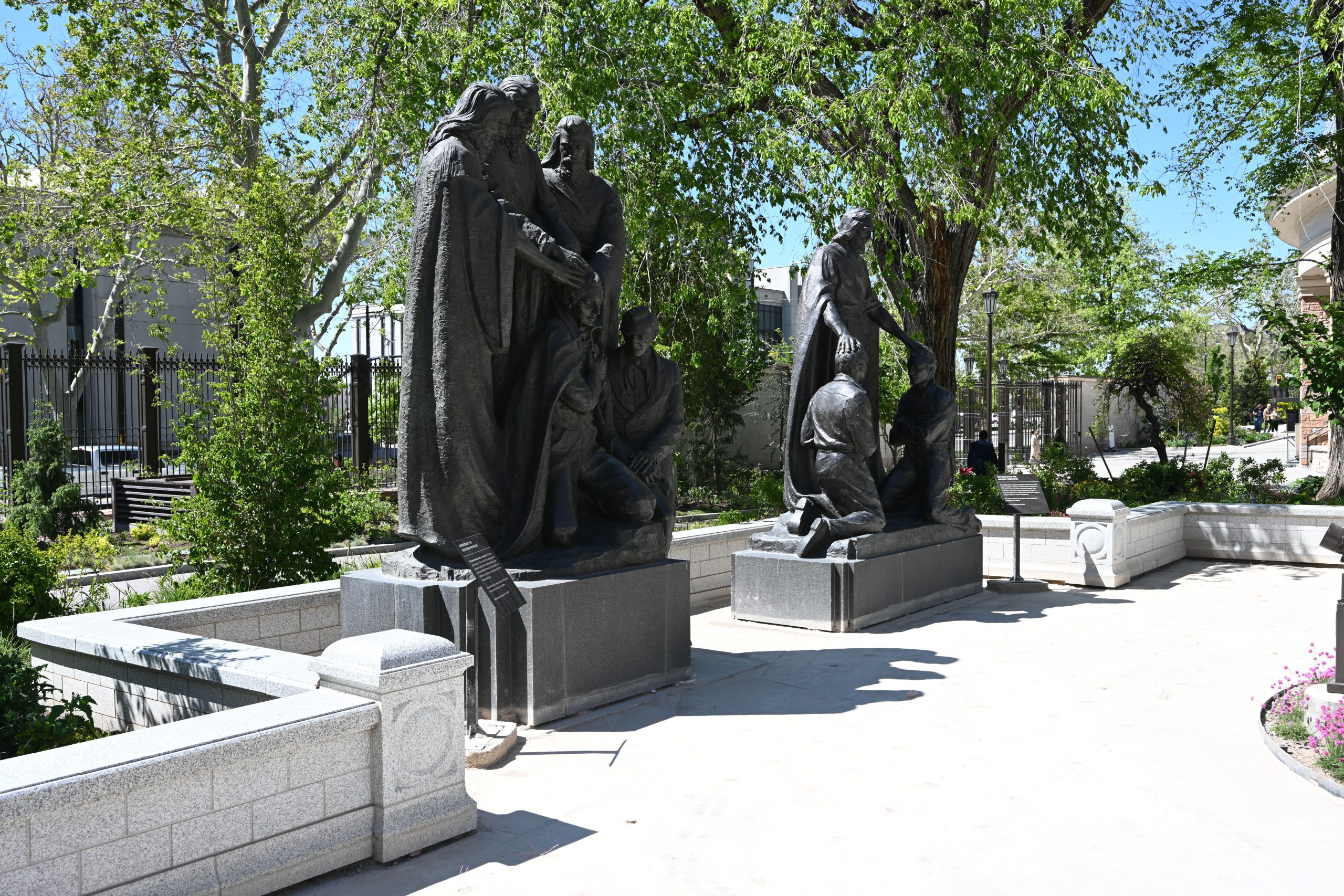
Outside, in the shadow of the Tabernacle, I encounter the bronze sculptures by Avard Fairbanks. The statues representing the Restoration of the Priesthood seem almost alive in their dynamism. I observe the depiction of Peter, James, and John laying their hands on Joseph Smith, while John the Baptist watches in the background. These are moments of deep spirituality cast in metal.
Gallery VII: Acoustic Wonders and Bronze History
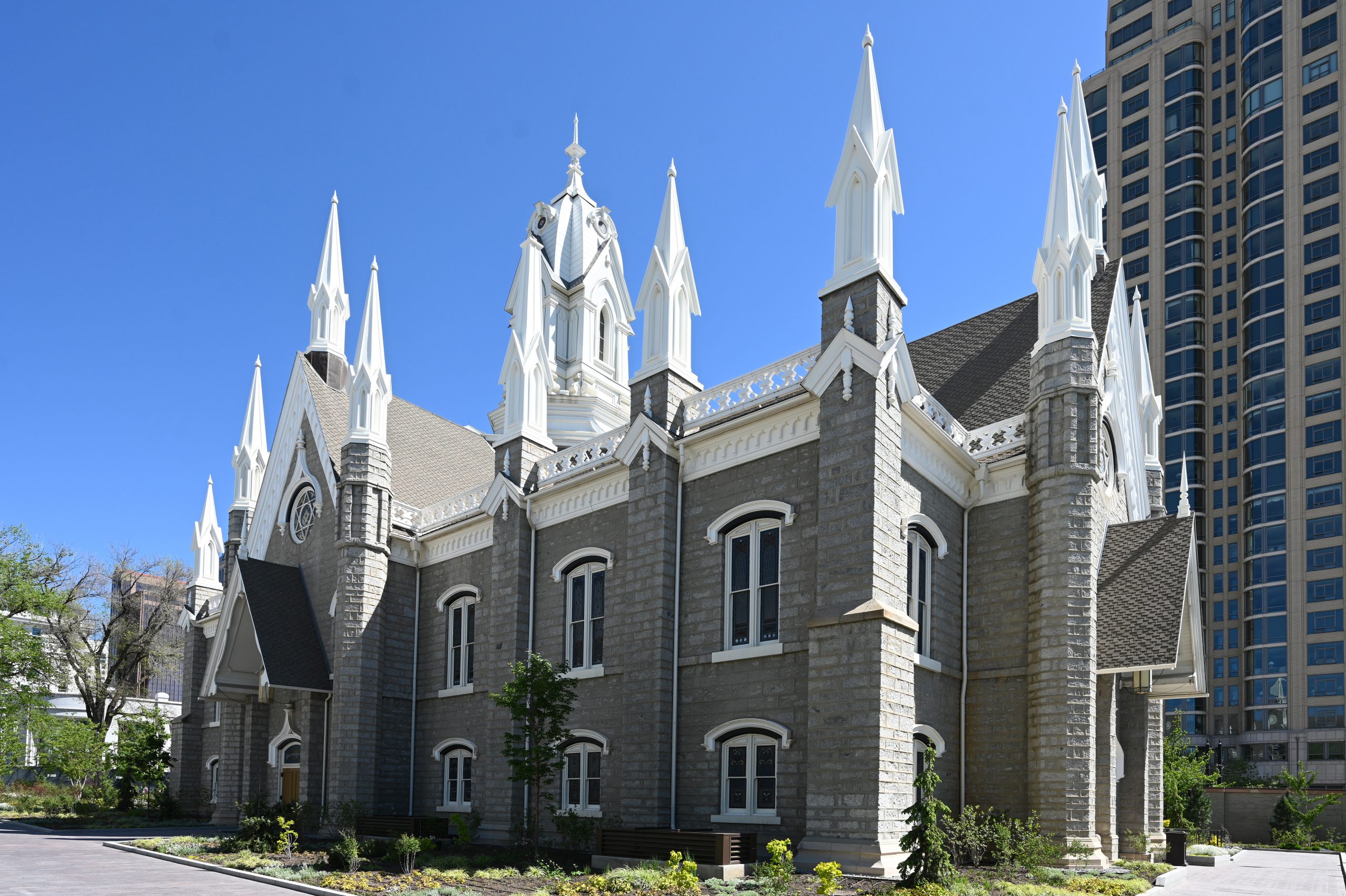
My stroll leads me further to Assembly Hall. This Neo-Gothic gem is a wonderful example of early recycling: the pioneers simply used the granite scraps left over from building the great temple. With its pointed turrets and stained-glass windows, it brings an almost European, dreamy contrast to the otherwise massive complex.
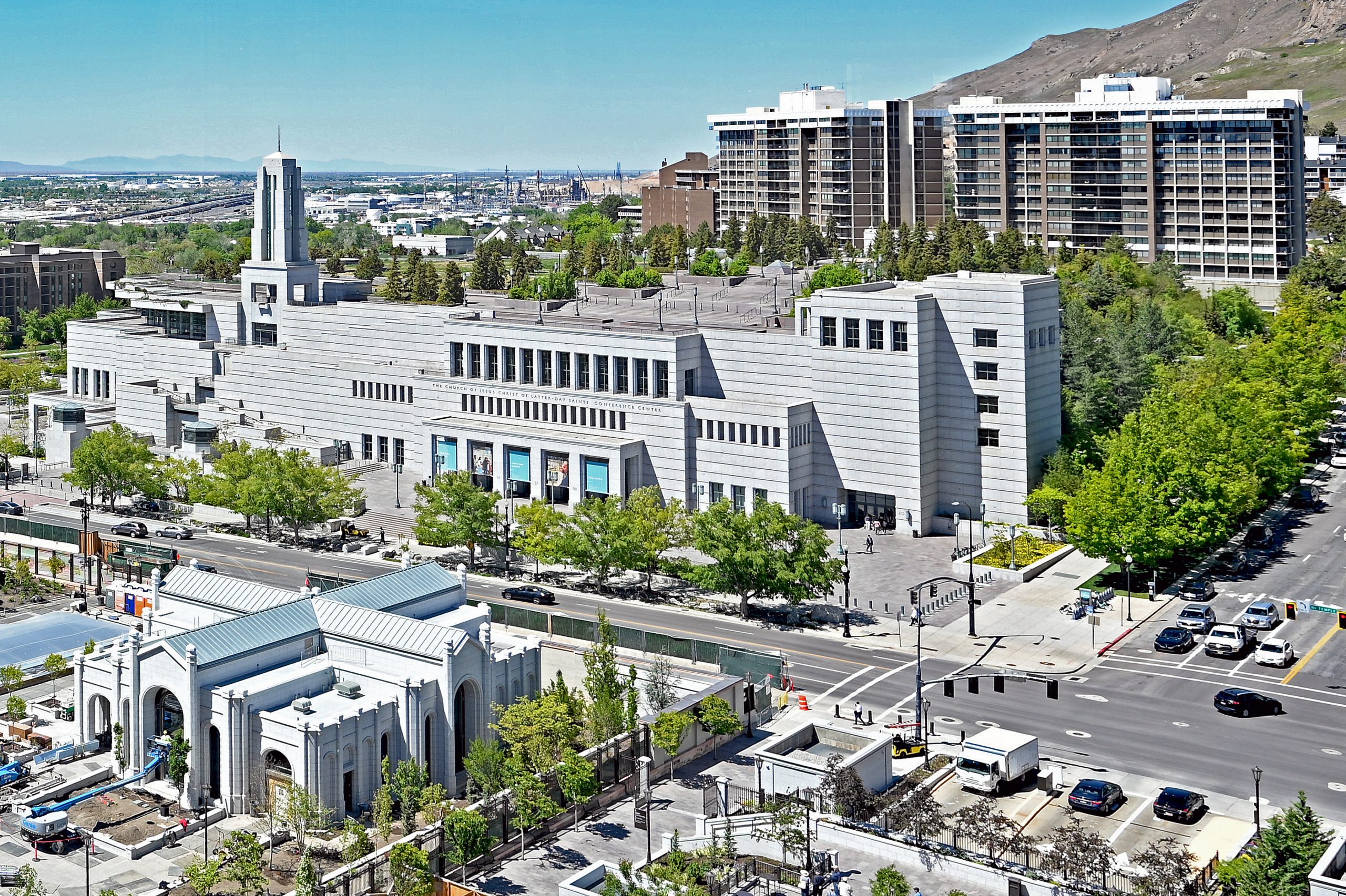
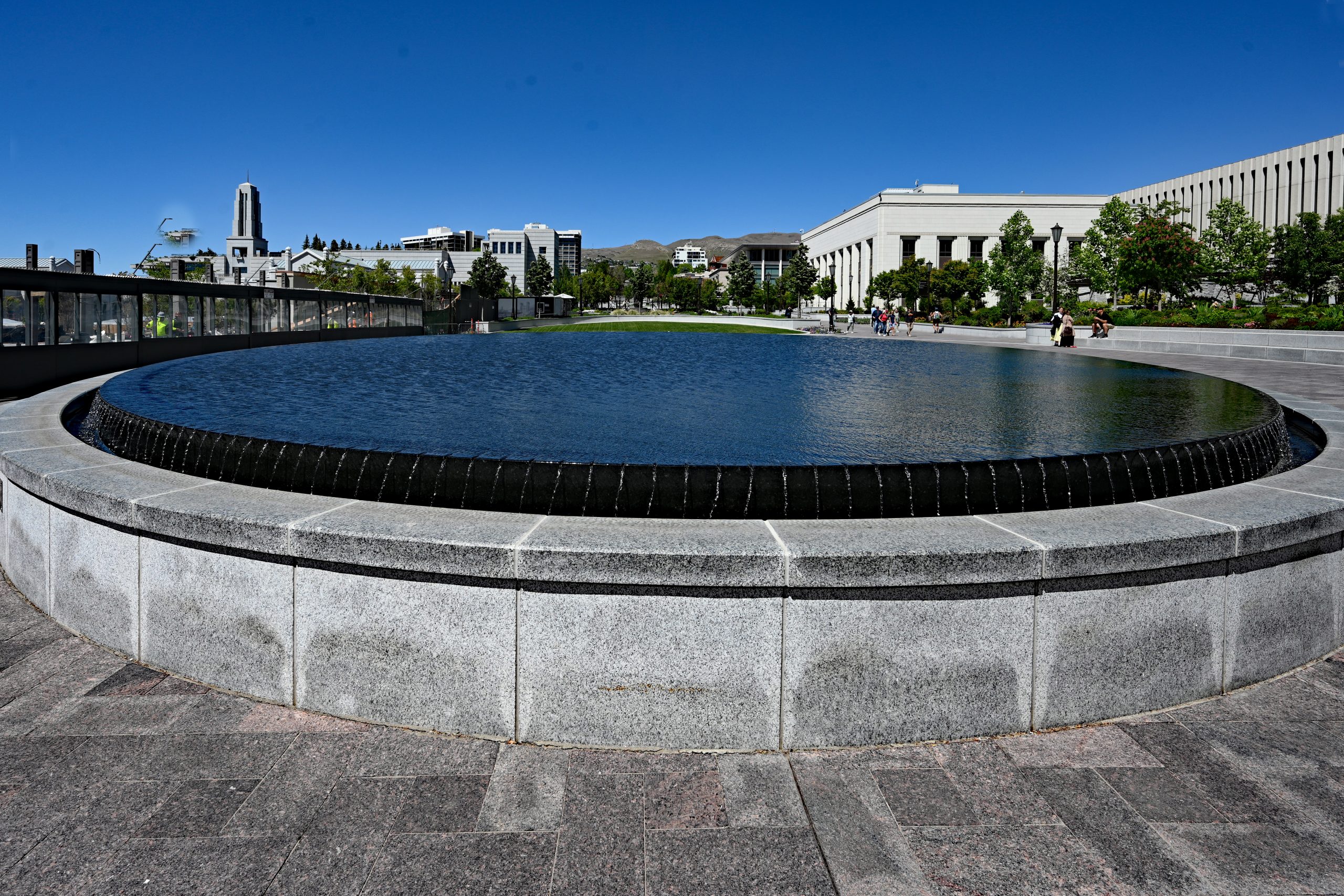
Behind the temple towers the modern Conference Center. It is gigantic, but what fascinates me most is the roof garden. Meadows and trees bloom up there—a green tribute to the Utah wilderness that the pioneers found upon their arrival. Even waterfalls plunge down the outer walls, symbolizing “living water” in the midst of the granite.
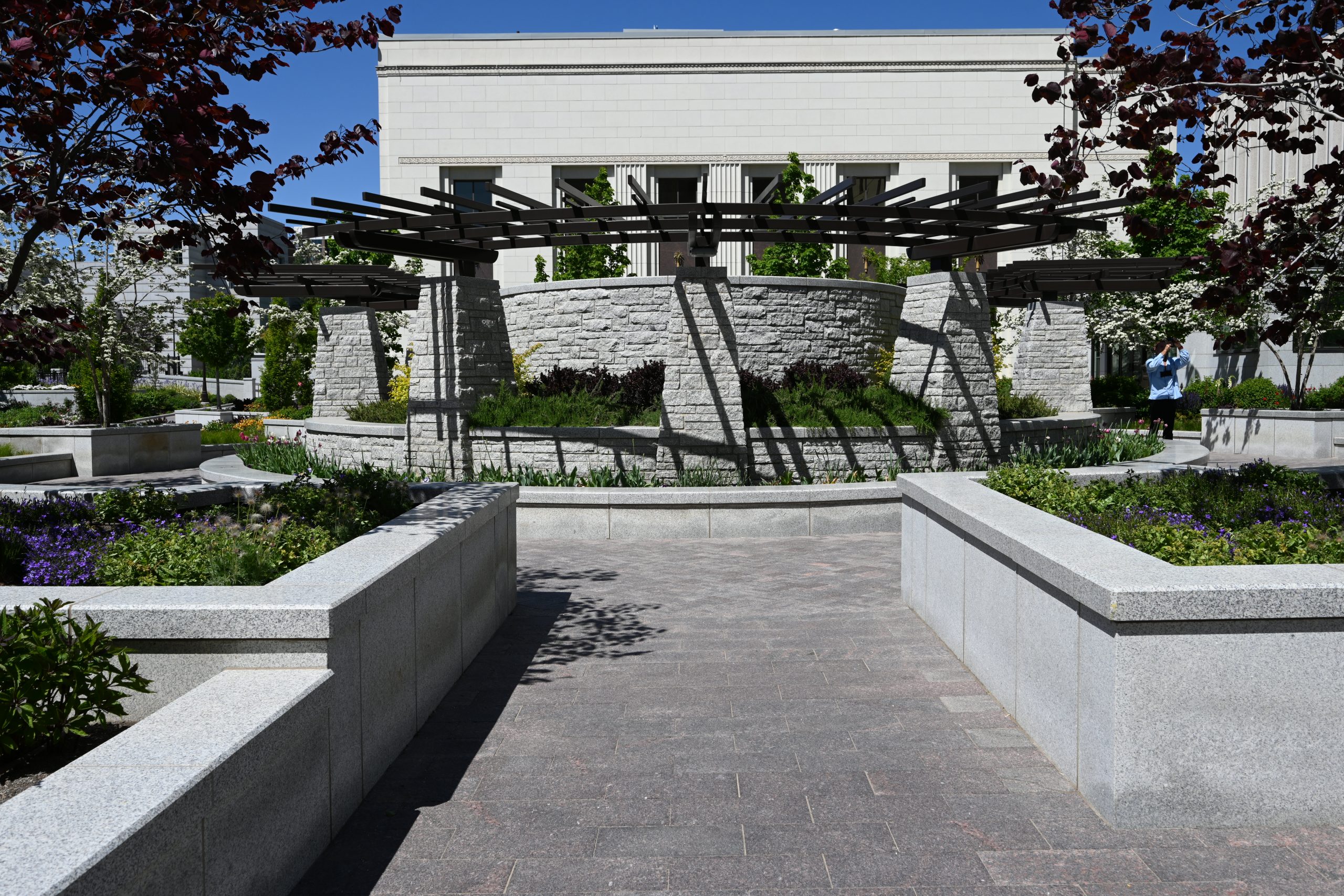
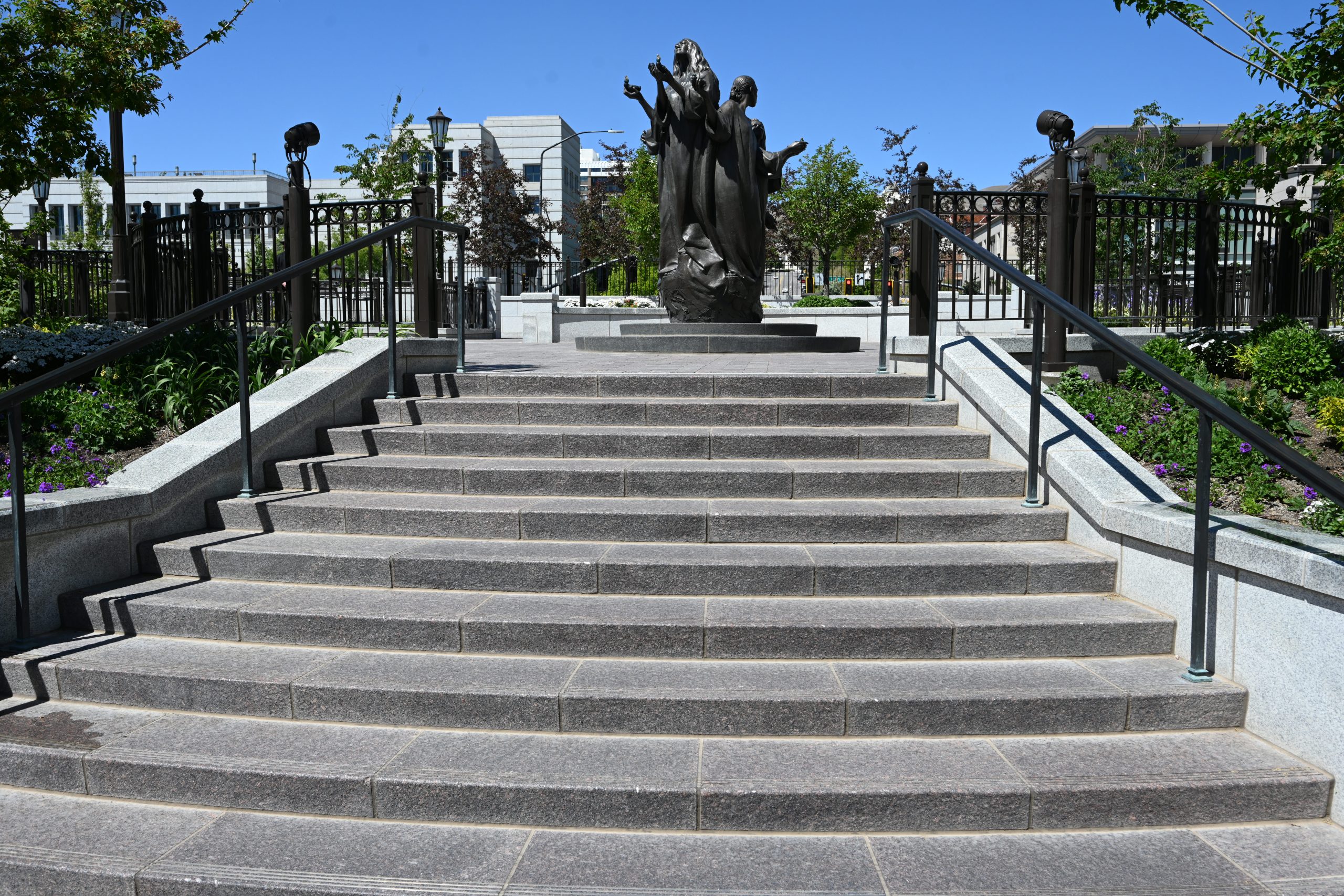
To conclude, I return to the Plaza. The pergolas, made of the same light stone as the temple, create a harmonious connection between old and new. I sit for a moment on one of the steps and observe the sculpture of the Five Wise Virgins. The way they stand there with their lamps, ready for what is to come, reflects the entire feeling of this place: preparation, faith, and a deep sense of peace.
Gallery VIII: Light, Water, and Stony Silence
I leave Temple Square with the feeling that, despite the hours spent here, I certainly haven’t discovered everything yet. But what I have seen—this mixture of pioneer spirit, deep symbolism, and architectural mastery—will hold a very special place in my memories forever.