
Between Volcanic Fire and Stone Waves:
Thursday, March 20, 2026
The day begins early, at 6:30 AM, with a breakfast that provides the necessary strength for the desert: two perfectly fried eggs, crispy hash browns, and golden-brown toast. The air is still fresh as we start the car and head toward Valley of Fire.
Our first stop takes us to the Scenic Overlook on Lakeshore Road near Boulder City. The wide view across the deep blue waters of Lake Mead is impressive, even if the early morning sun tends to swallow the contrasts—for those perfect professional photos, one would likely have to return at dusk. Yet, even as we drive on, a giant catches my eye: Fortification Hill. It stands there like a dark, unapproachable block of black volcanic rock. Its flat plateau, which slopes gently to the left, forms a harsh contrast to the beige, almost soft-looking Muddy Mountains, which line up in the background like a pale curtain of sedimentary layers.
Gallery I: Awakening at Lake Mead
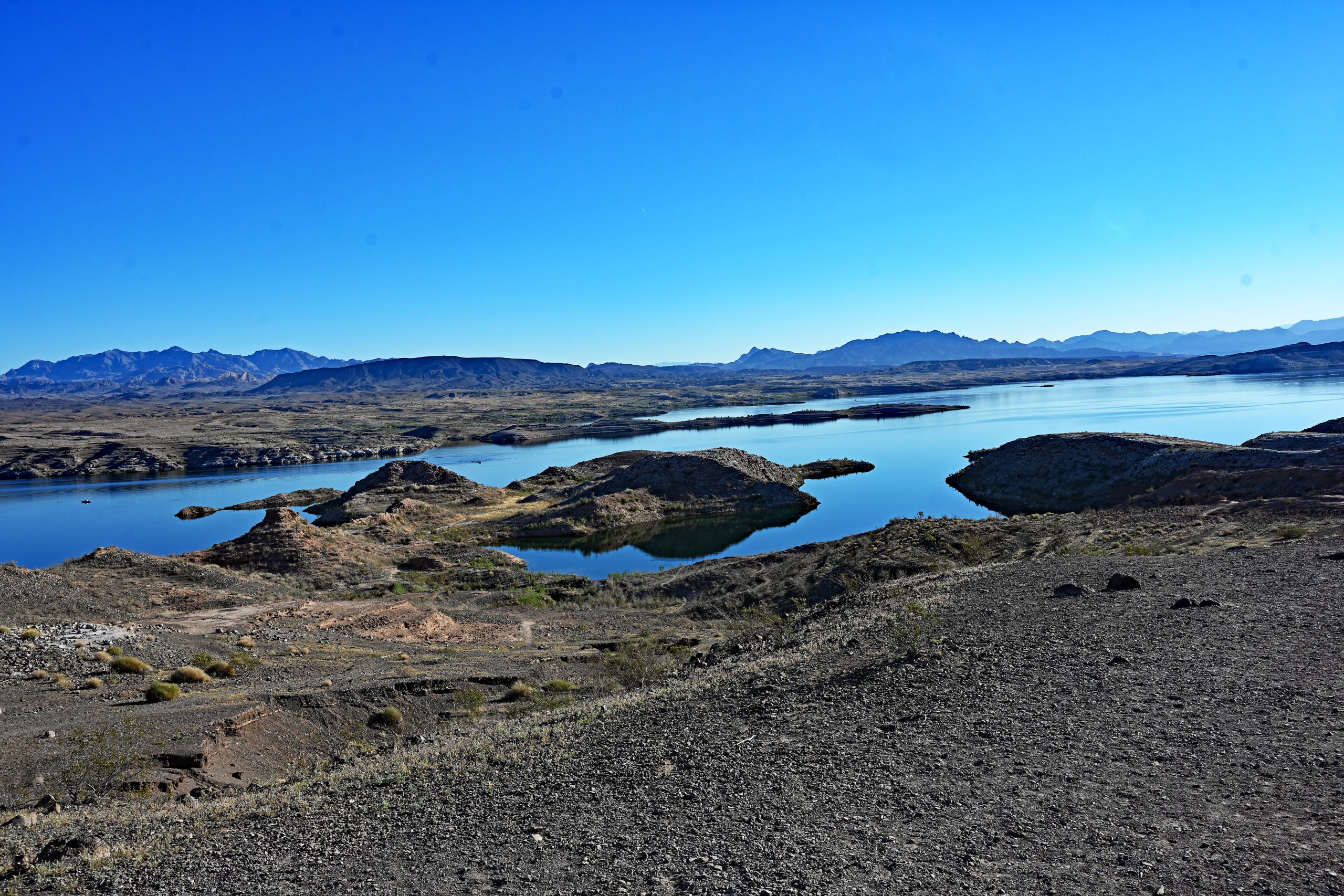
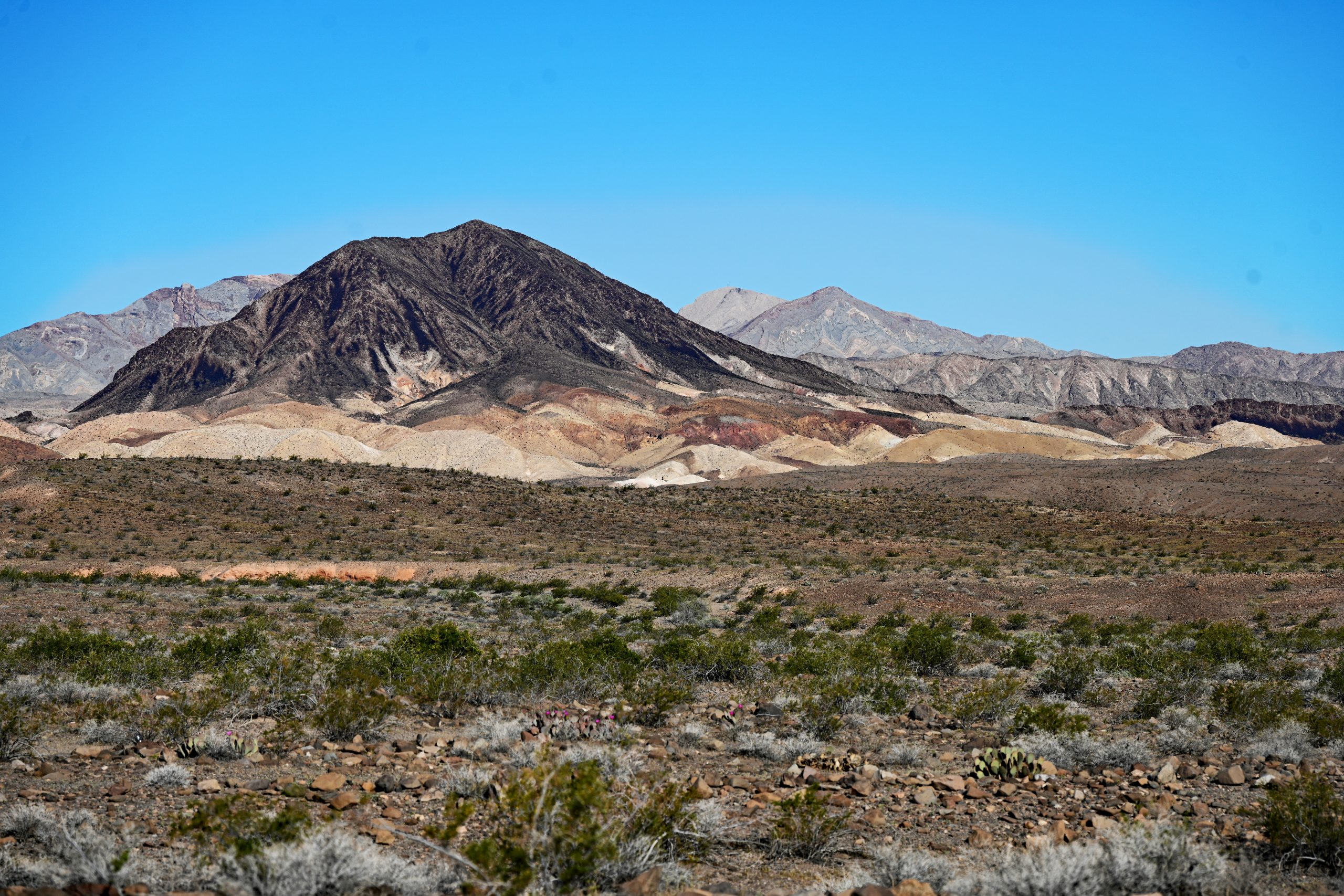
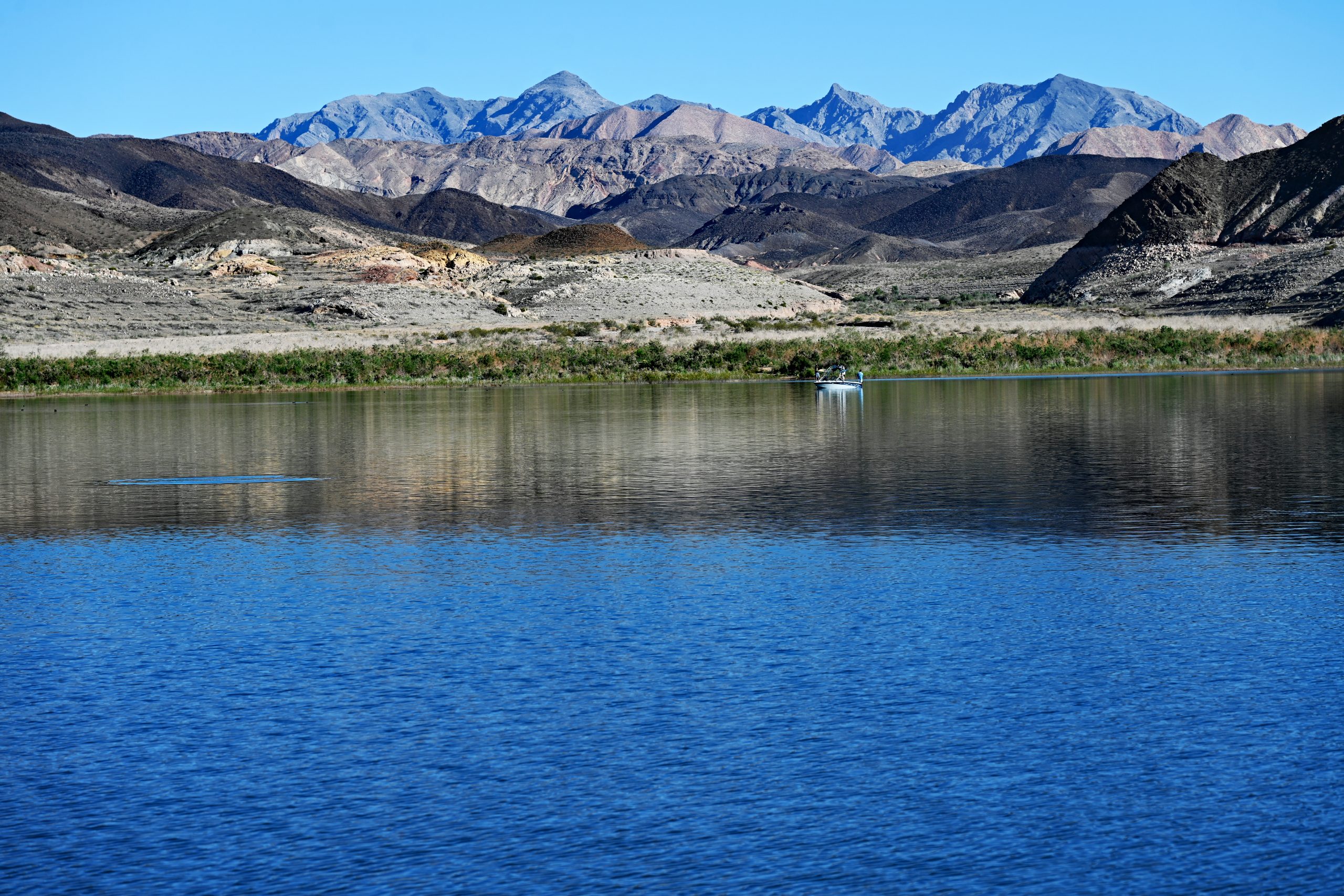
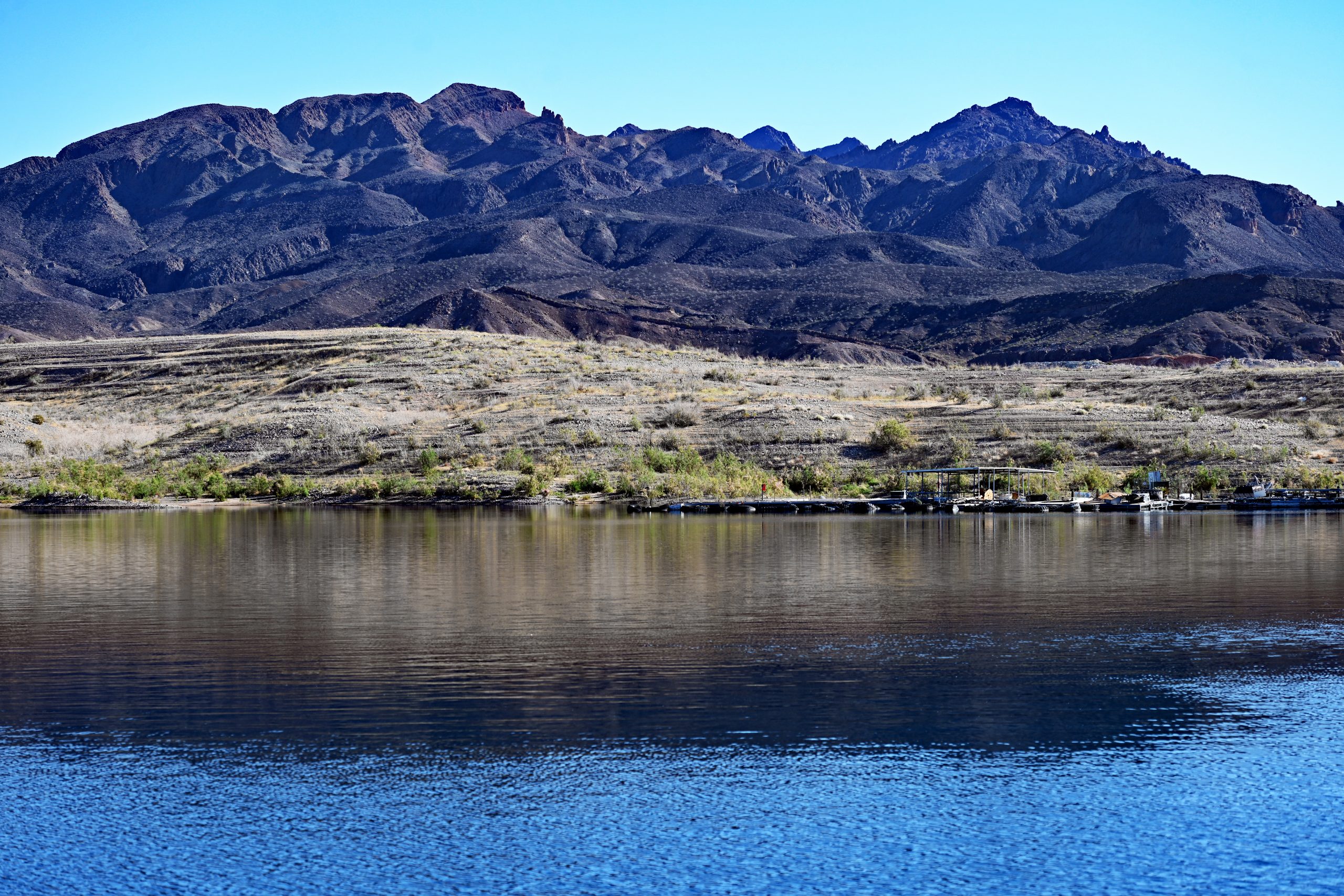
At Callville Point, we get out and stroll down to the docks. It’s a place for boat lovers; those who don’t have their own can rent one here to seek freedom on the water. We wander along the piers and look north. There, the first anglers are already paddling across the mirror-smooth lake in their small canoes. Behind them, the Muddy Mountains move back into view, much more present this time. I recognize their two faces: on one hand, the light, almost white limestone, and on the other, the brilliant red Aztec Sandstone. Muddy Peak towers at 1,643 meters (approx. 5,390 ft) like a guardian over this natural barrier. Slightly to the west rises Callville Mesa, a flat, dark elevation that reminds us of the fiery, volcanic past of this region.
We follow Northshore Road further north. Near mile 17, we pass the Gale Hills. They seem almost fragile, “crinkled” like old paper, with a fascinating mix of light and dark earth layers. From mile 25 onwards, the Black Mountains push into our field of vision—dark, volcanic massifs flanking the Overton Arm of the lake.
Gallery II: Sand Dunes and Bizarre Mountains
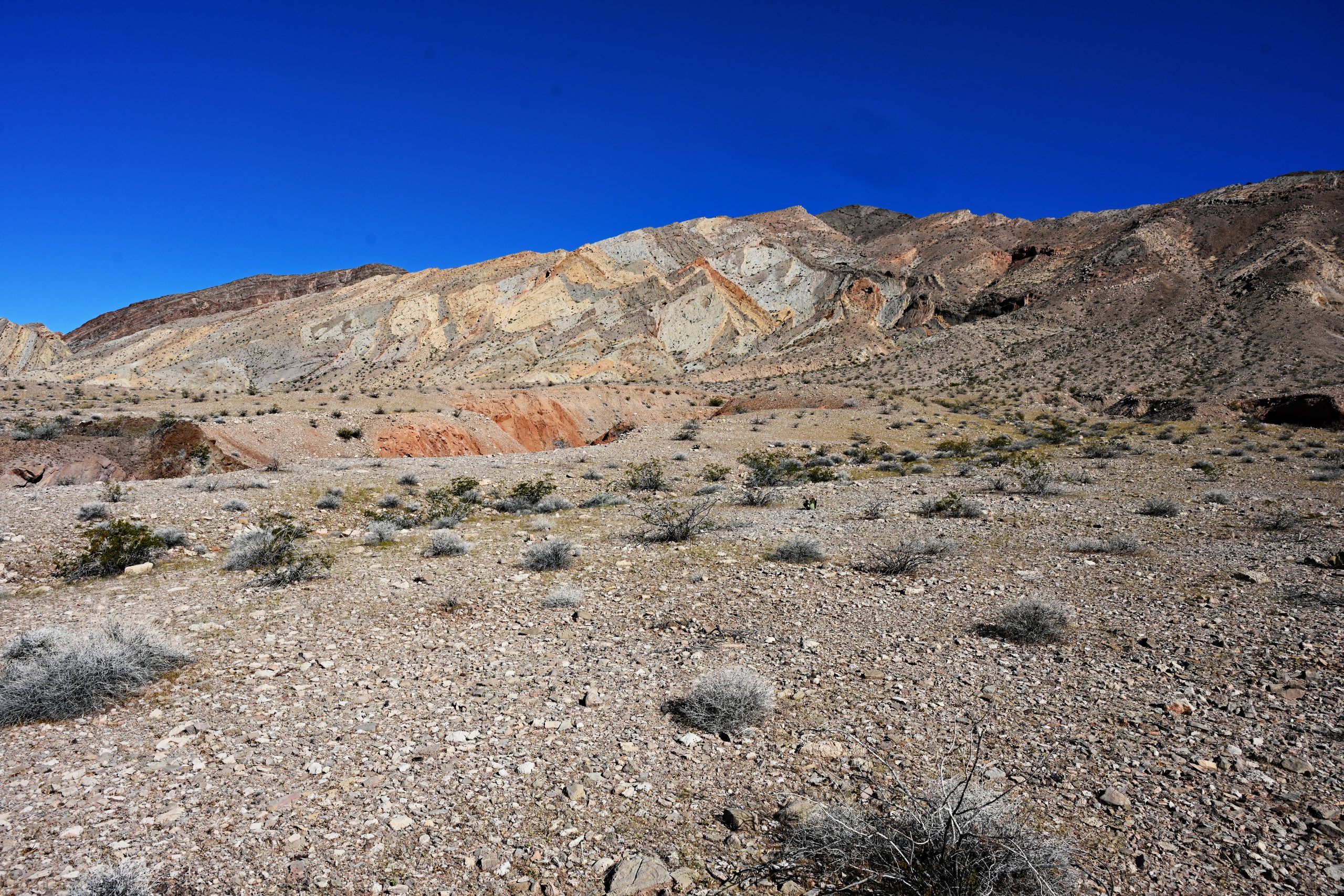
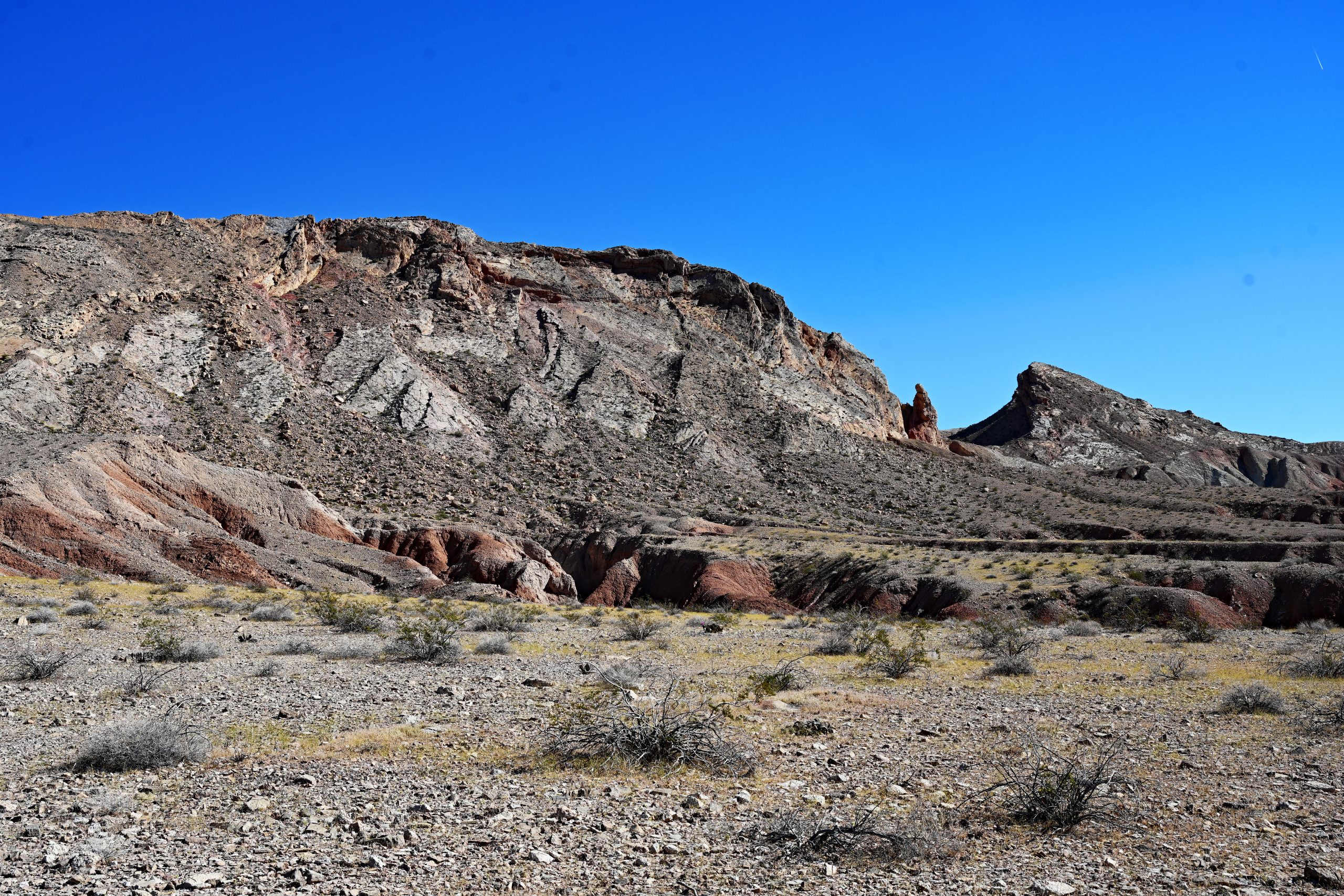
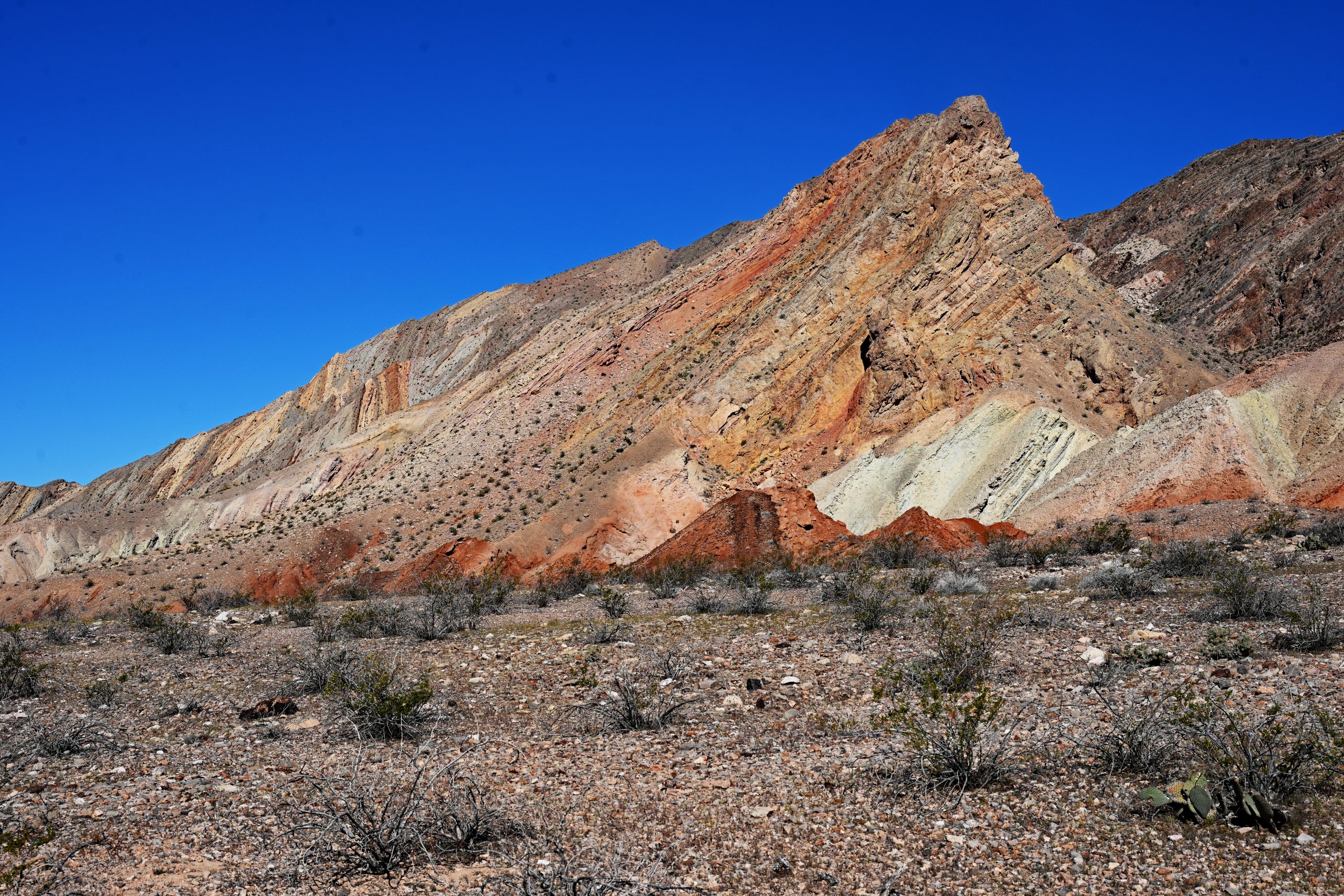
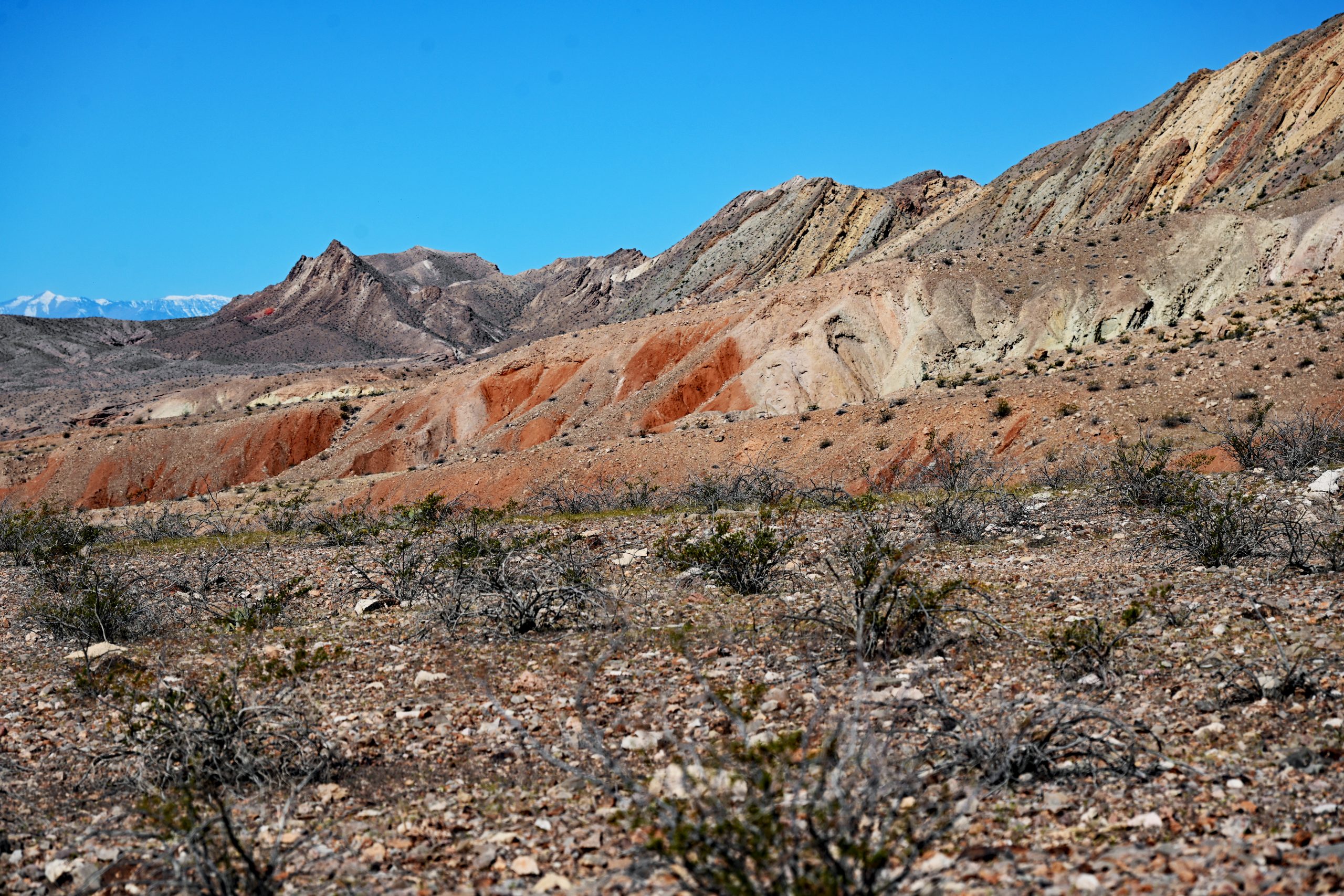
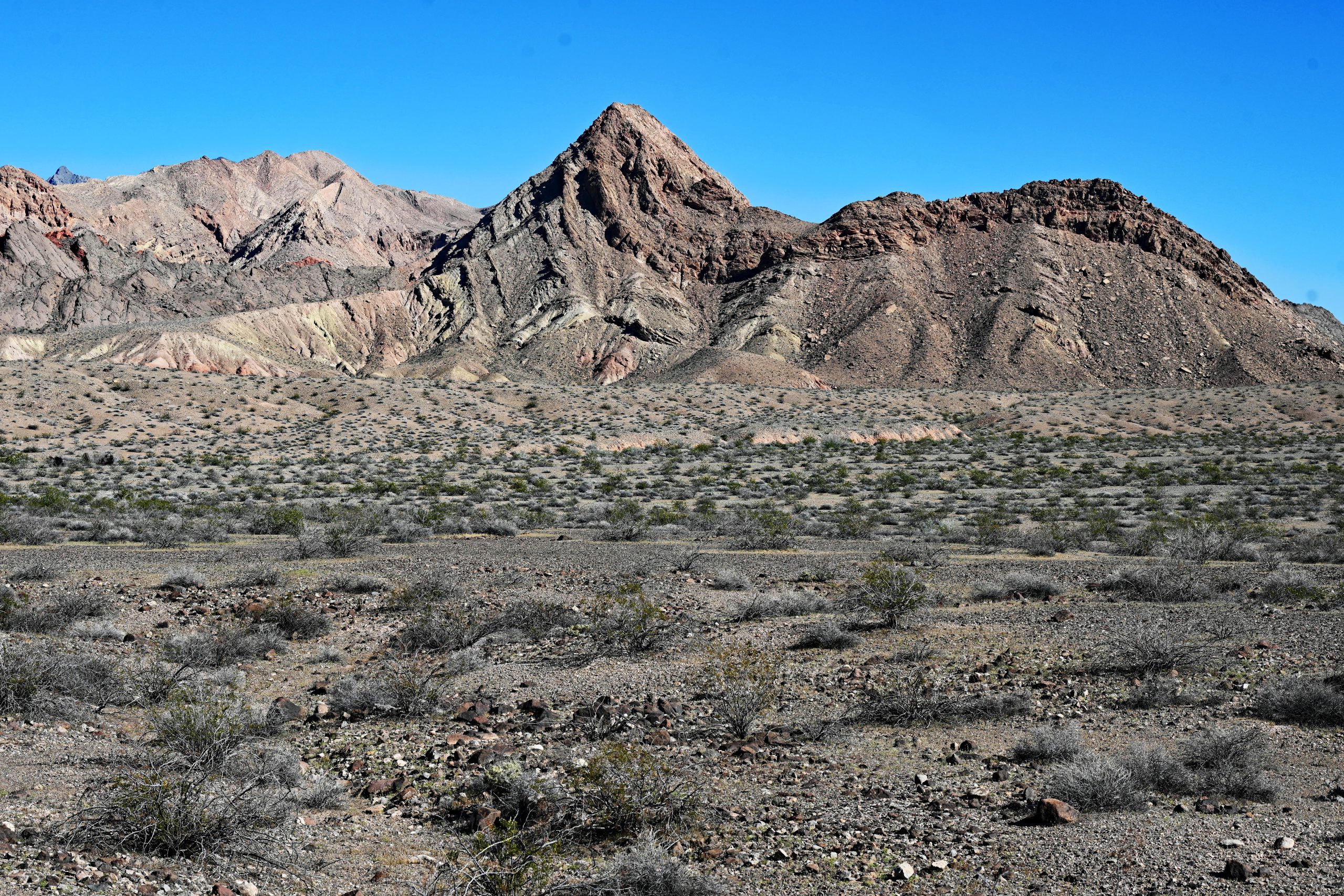
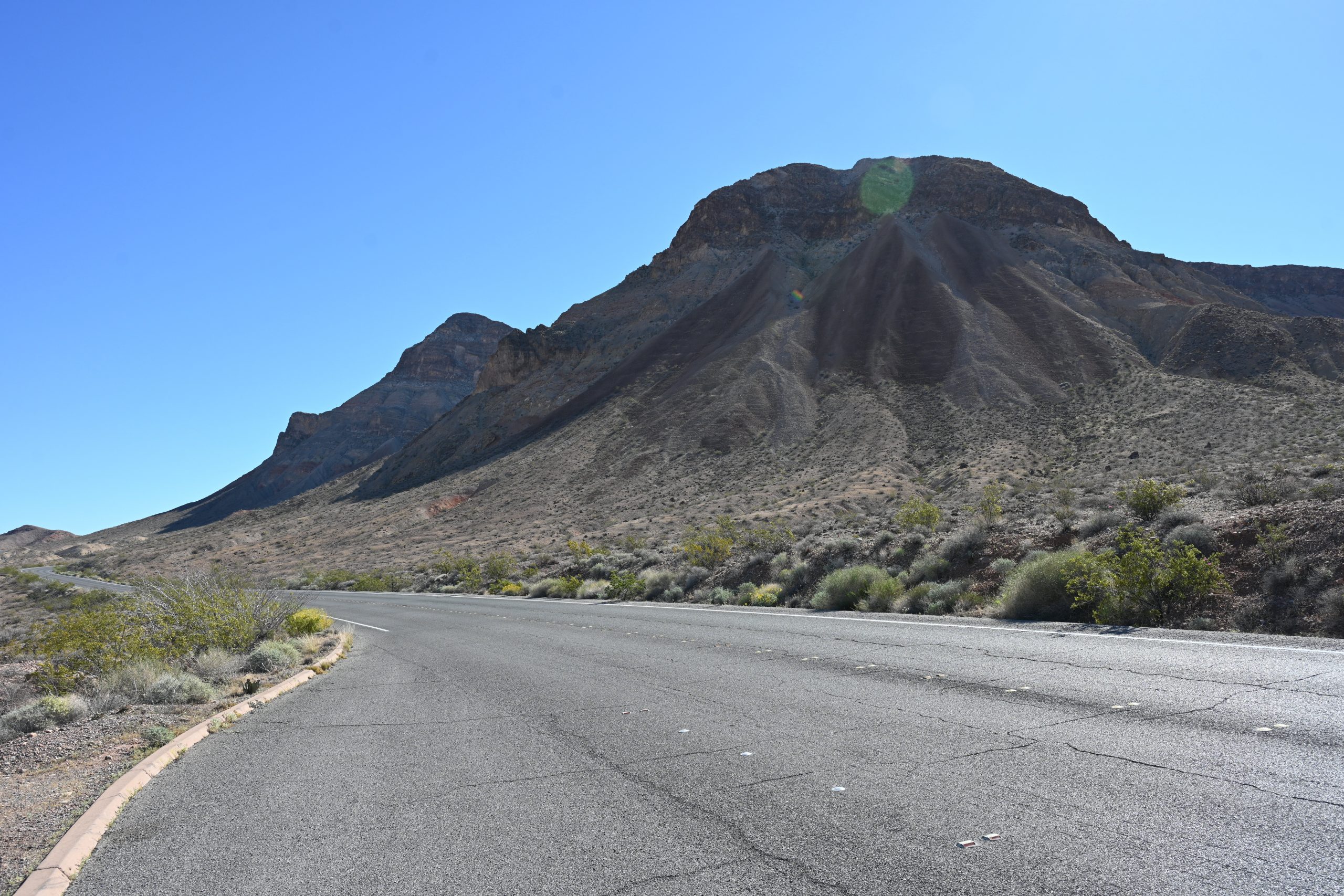
Particularly impressive is Bitter Ridge near mile 27, a steep limestone rib that looks so sharp-edged you feel you could cut yourself on it. Right next to it lie the Redstone Dunes, fossilized witnesses of an ancient desert world in intense red. In the distance, far to the east across the Overton Arm, the South Virgin Mountains shimmer in a delicate, hazy blue—a dramatic backdrop that bounds the horizon.
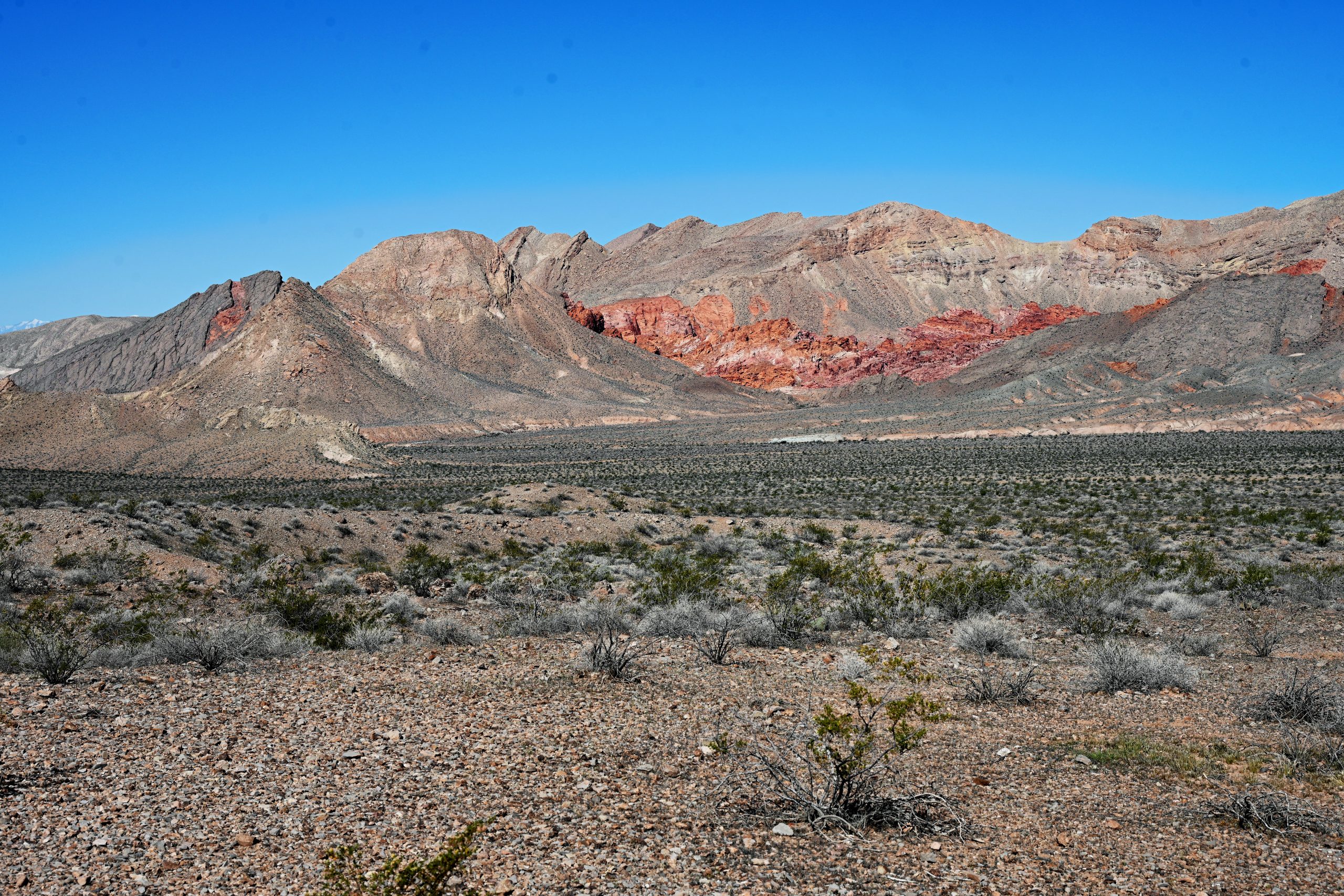
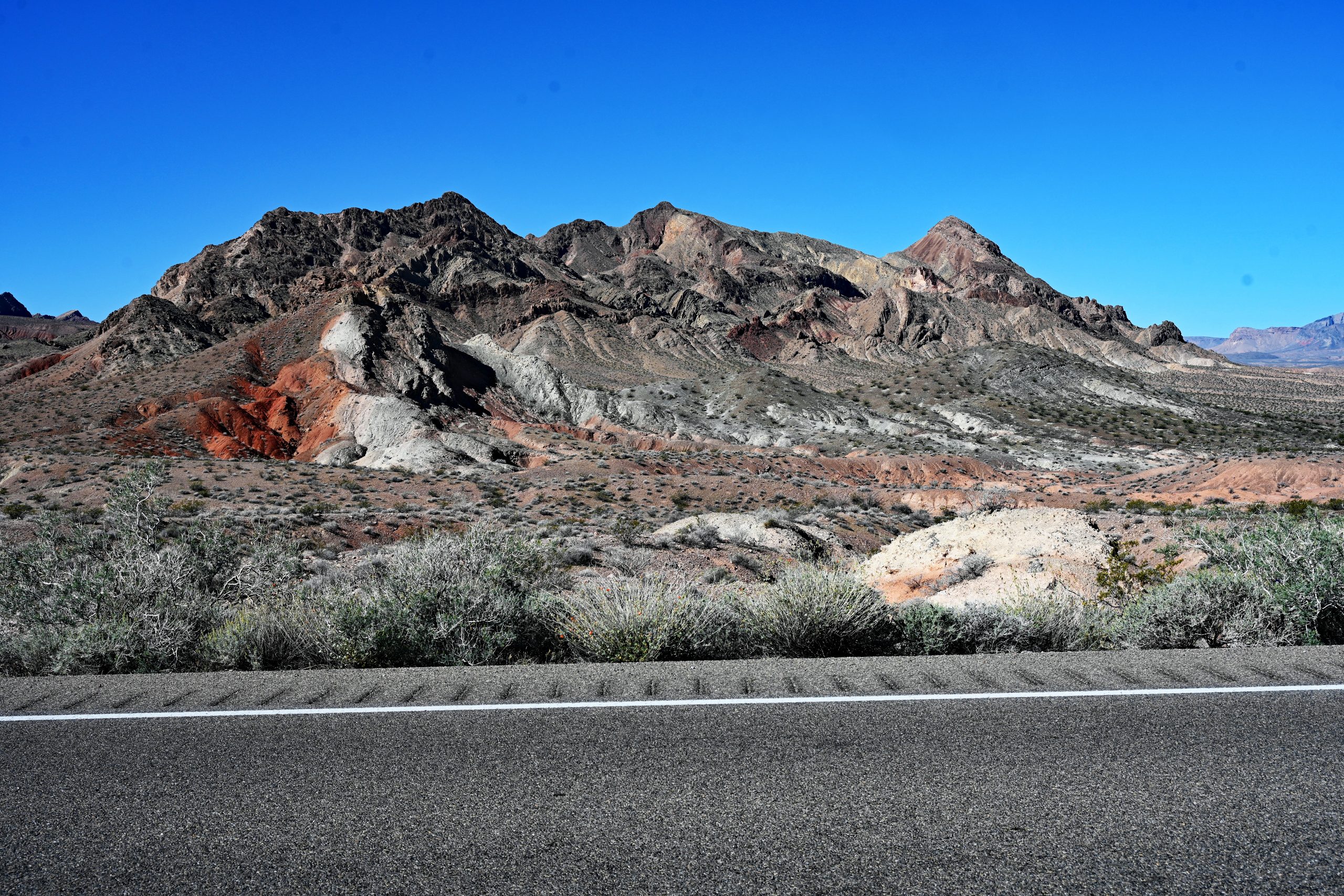
Shortly thereafter, the double play of the Muddy Mountains reveals itself to us again: at the bottom, a strip of red Aztec Sandstone from the Jurassic period glows, while above it lies heavy, gray limestone that is hundreds of millions of years older. A geological puzzle laid bare here. A little later, we see a swirling mountain ridge with a black “cap” of basalt lava. It is fascinating to know that this lava once flowed through valleys that have now become peaks due to erosion. To the right, the sandstone glows in shades of orange and red, a harbinger of the Bowl of Fire. Behind it, the gray giant, Muddy Peak, towers again—a jagged monument to the shifting of the Earth’s crust.
Gallery III: The Color Play of Earth’s History


In the Heart of the Fire
Only a short drive separates us from the turn-off into Valley of Fire. At the small entrance station, we pay the $15 fee—a fair price for entry into another world. After four miles, we turn onto Mouse’s Tank Road. My wife is so captivated by the scenery that we have to stop every few hundred yards.
Rainbow Vista, in particular, takes our breath away. Before us stretches a sea of sandstone glowing in countless shades of red and yellow. To the left rise The Pinnacles—a wild, jagged massif with needle-sharp peaks that forms a fascinating contrast to the calm, almost horizontal top edge of The Wall. Both formations display the park’s signature look: glowing red Aztec sandstone on top, supported by a near-white base of ancient limestone pushed underneath by the massive Keystone Thrust Fault. Shortly after, we reach Silica Dome. The brilliant white domes look like snow in the desert and served as an otherworldly backdrop for Star Trek.
Gallery IV: Vibrant Colors and Movie Sets

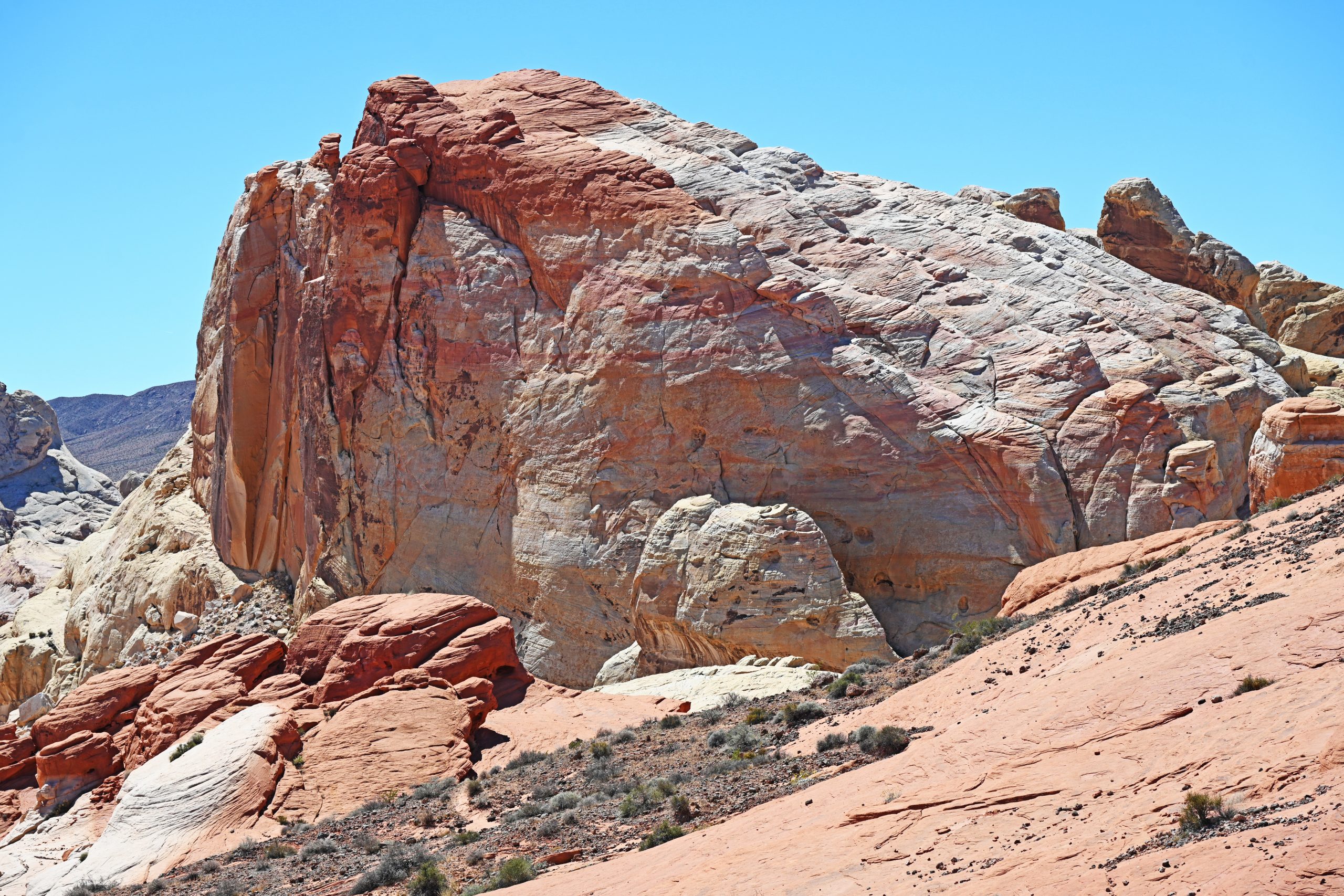
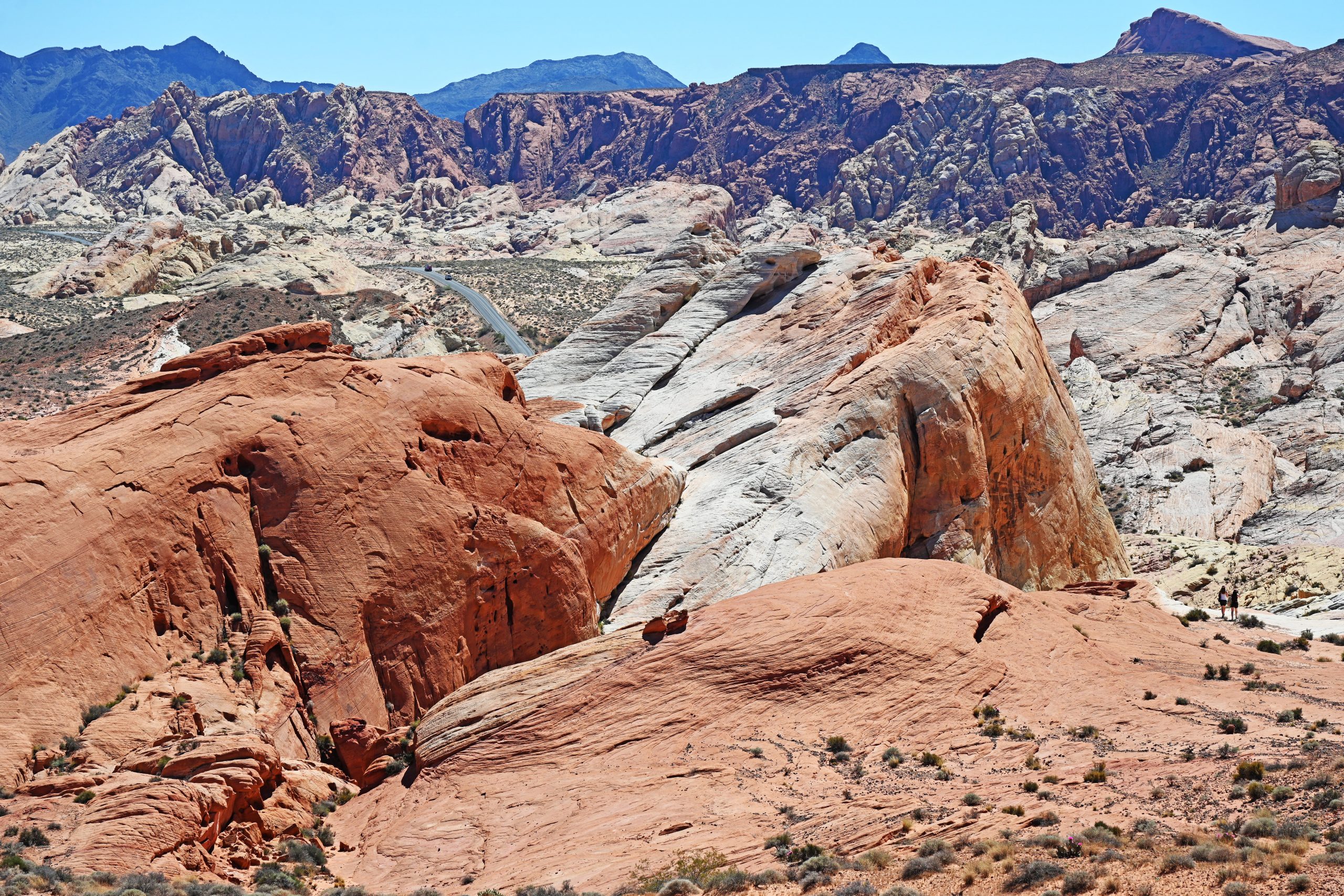
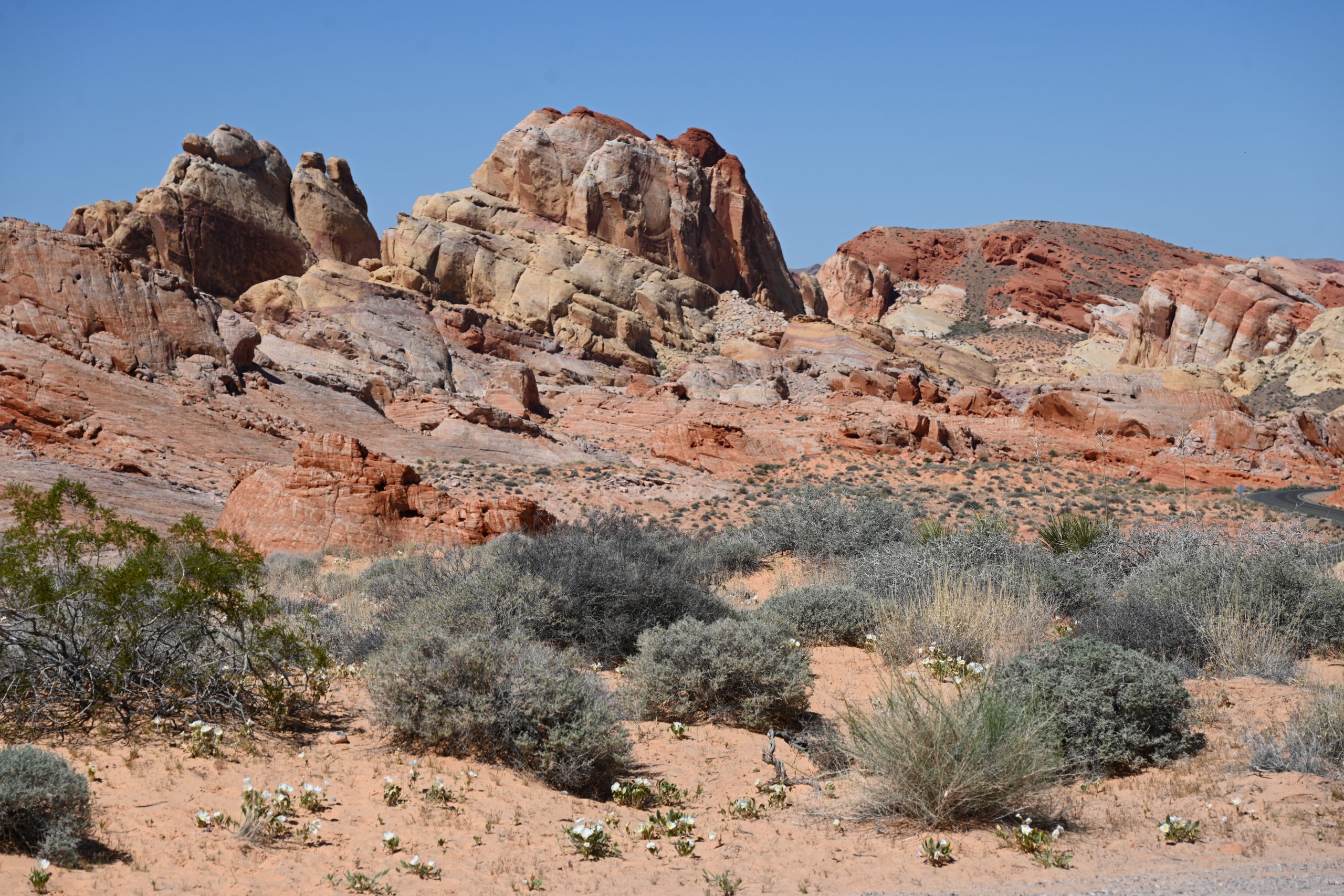
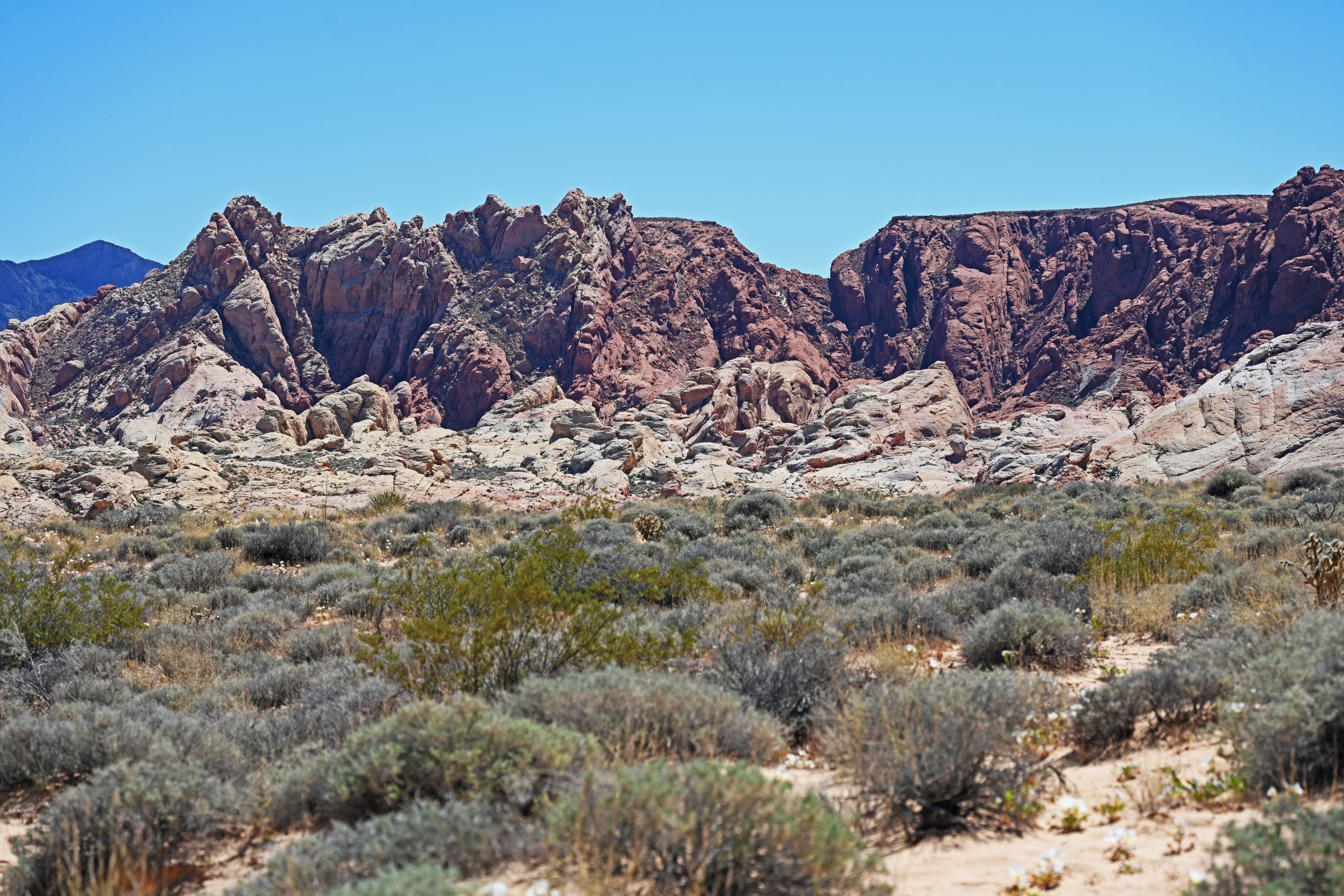
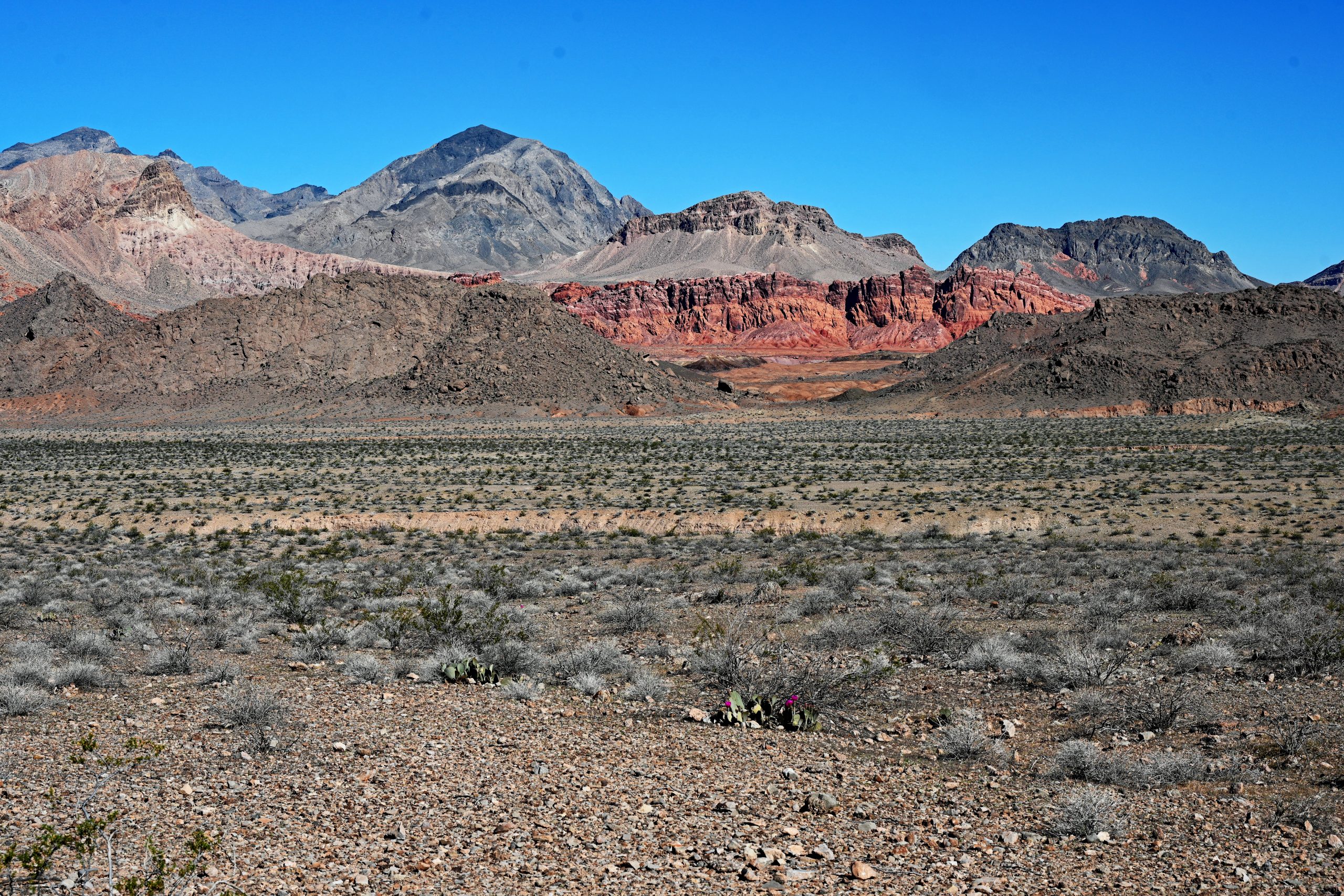
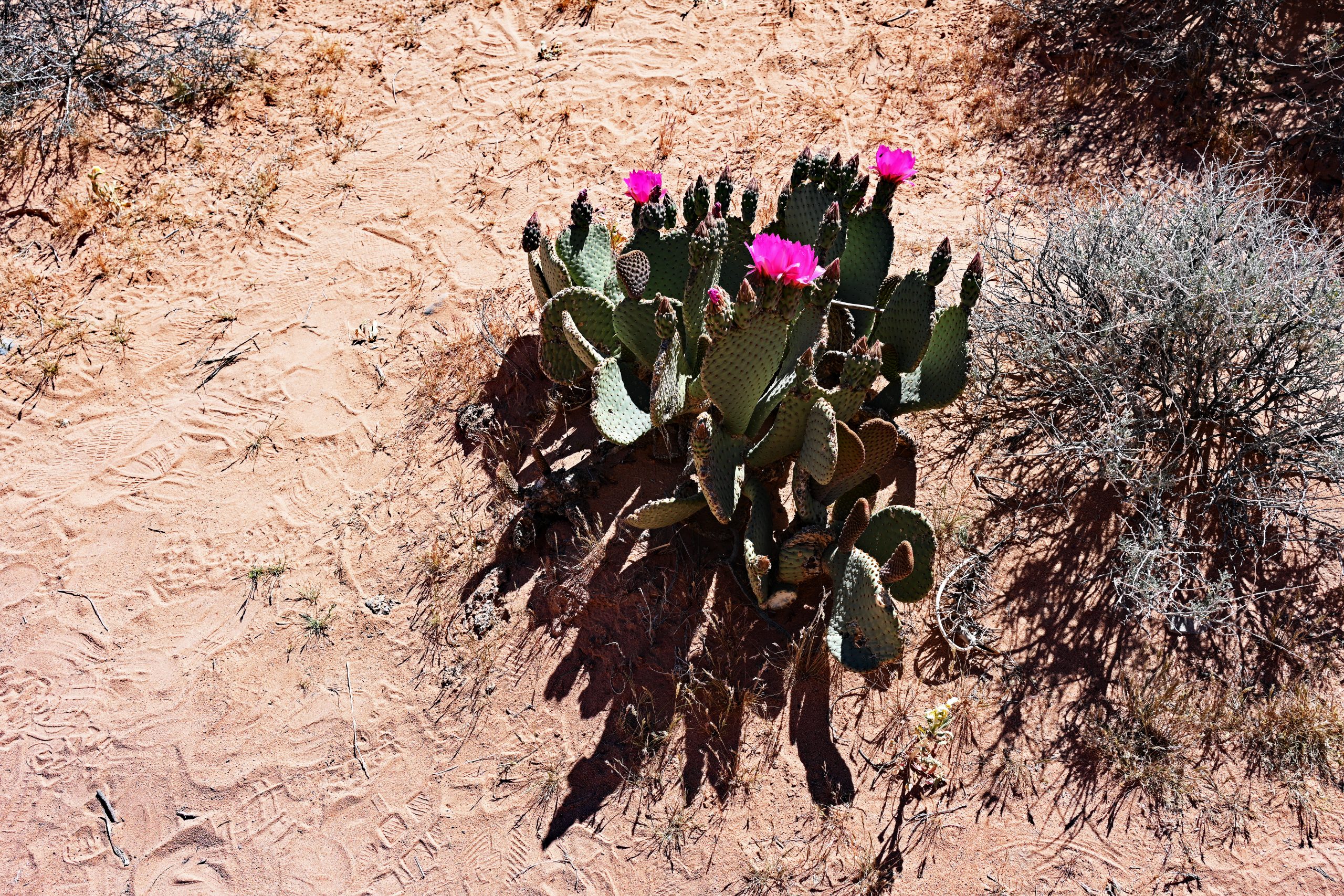
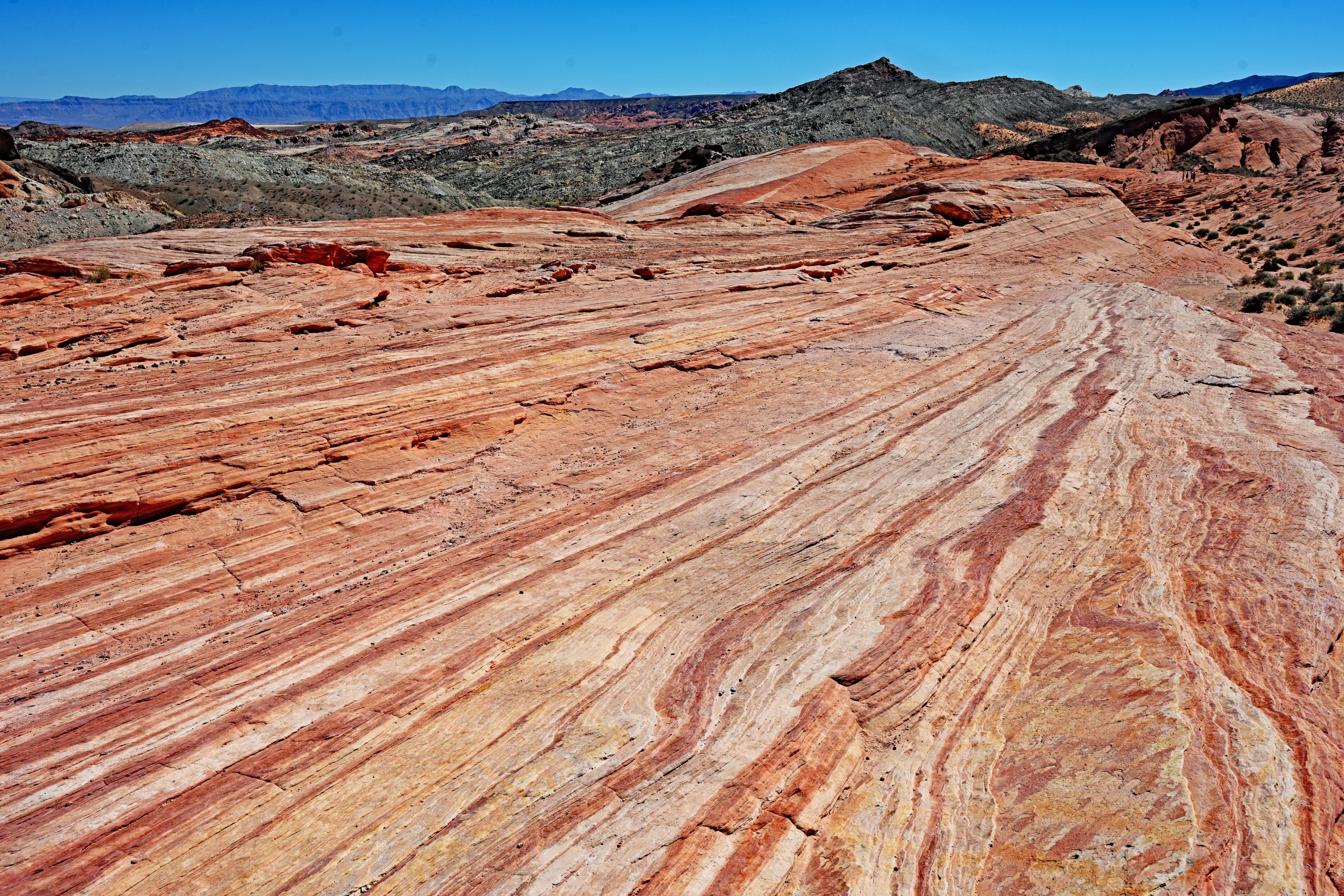
Then we reach the trailhead for the Fire Wave. The path isn’t long, but the heat is already pressing. The only shaded bench after about 800 meters is, unsurprisingly, constantly occupied. Although no bighorn sheep greet us this time like on our last visit, the vibrant cactus blossoms along the path compensate us. We hike across a wide red plateau, from which we see the “Fire Wave” for the first time in its striped glory. In the hazy background, Charleston Peak towers at 3,633 meters, guarding the Spring Mountains.
Gallery V: The Dancing Wave
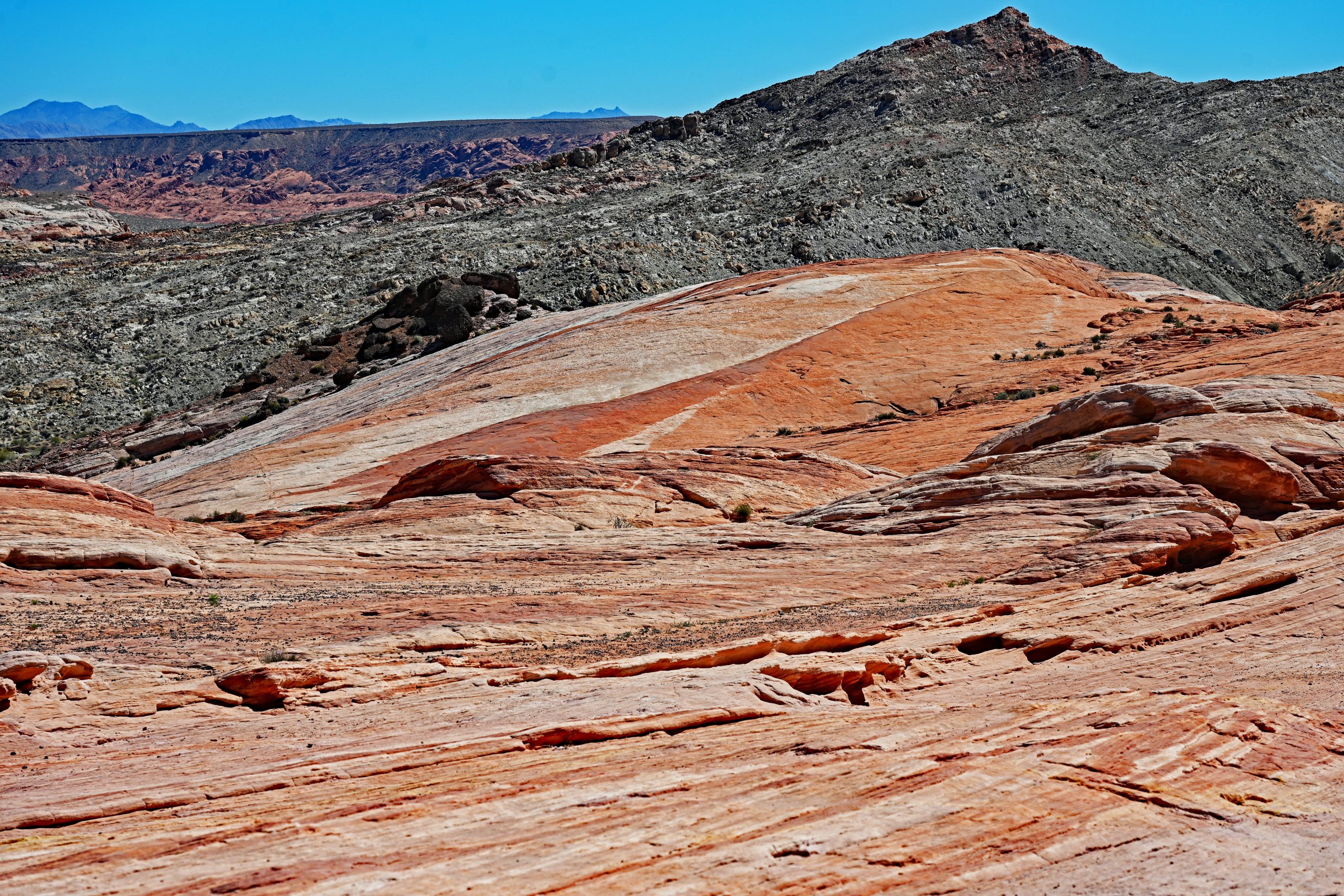
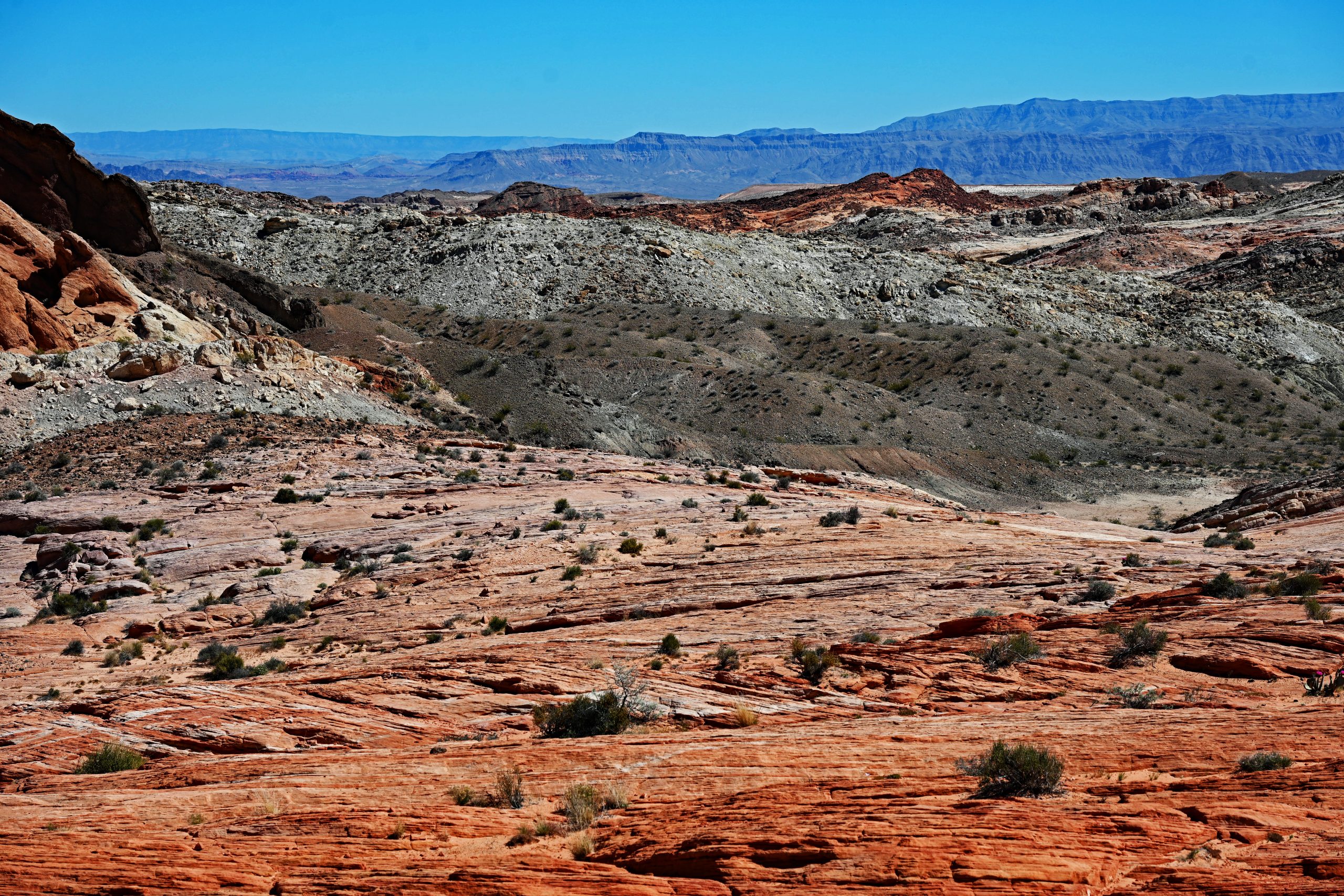
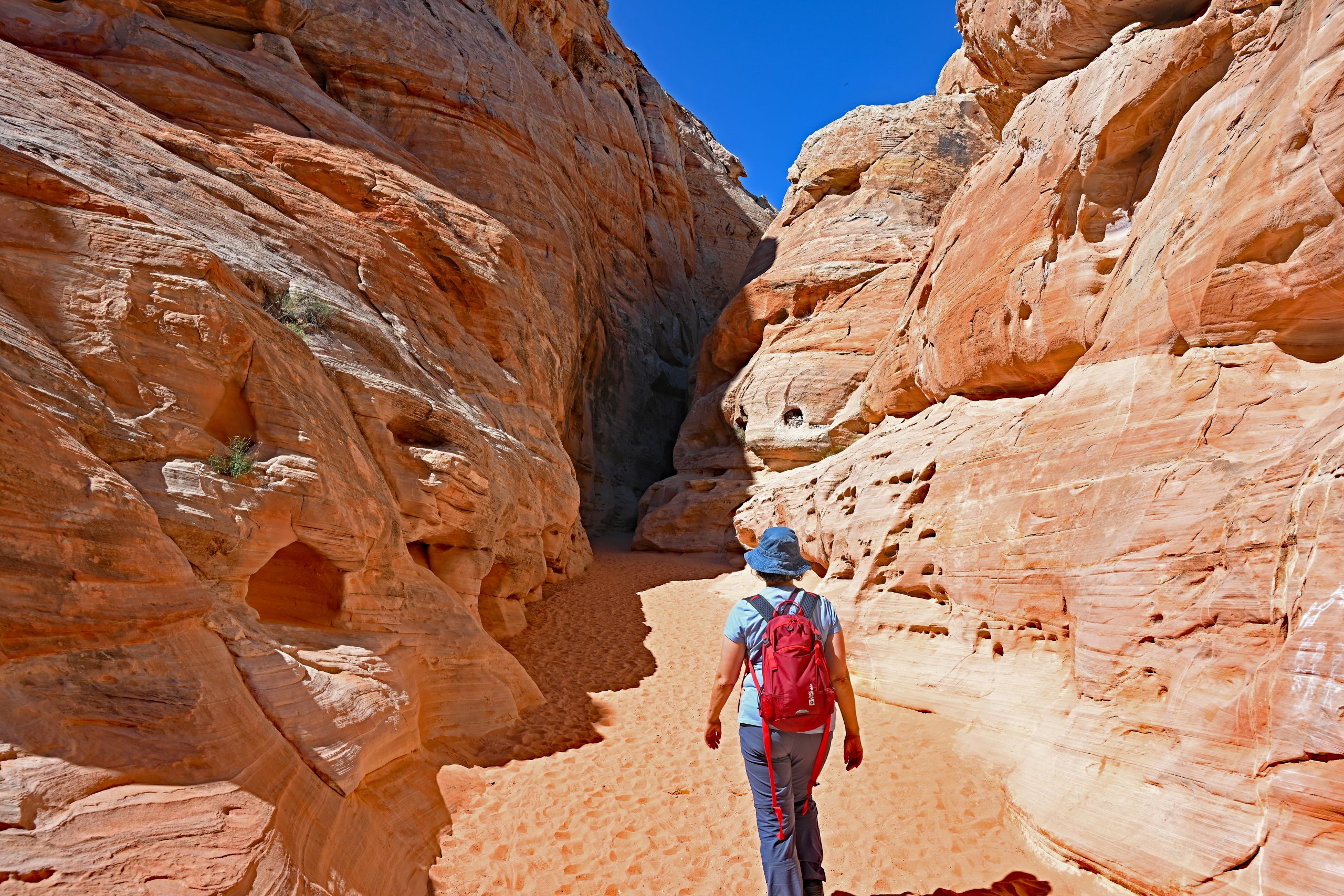
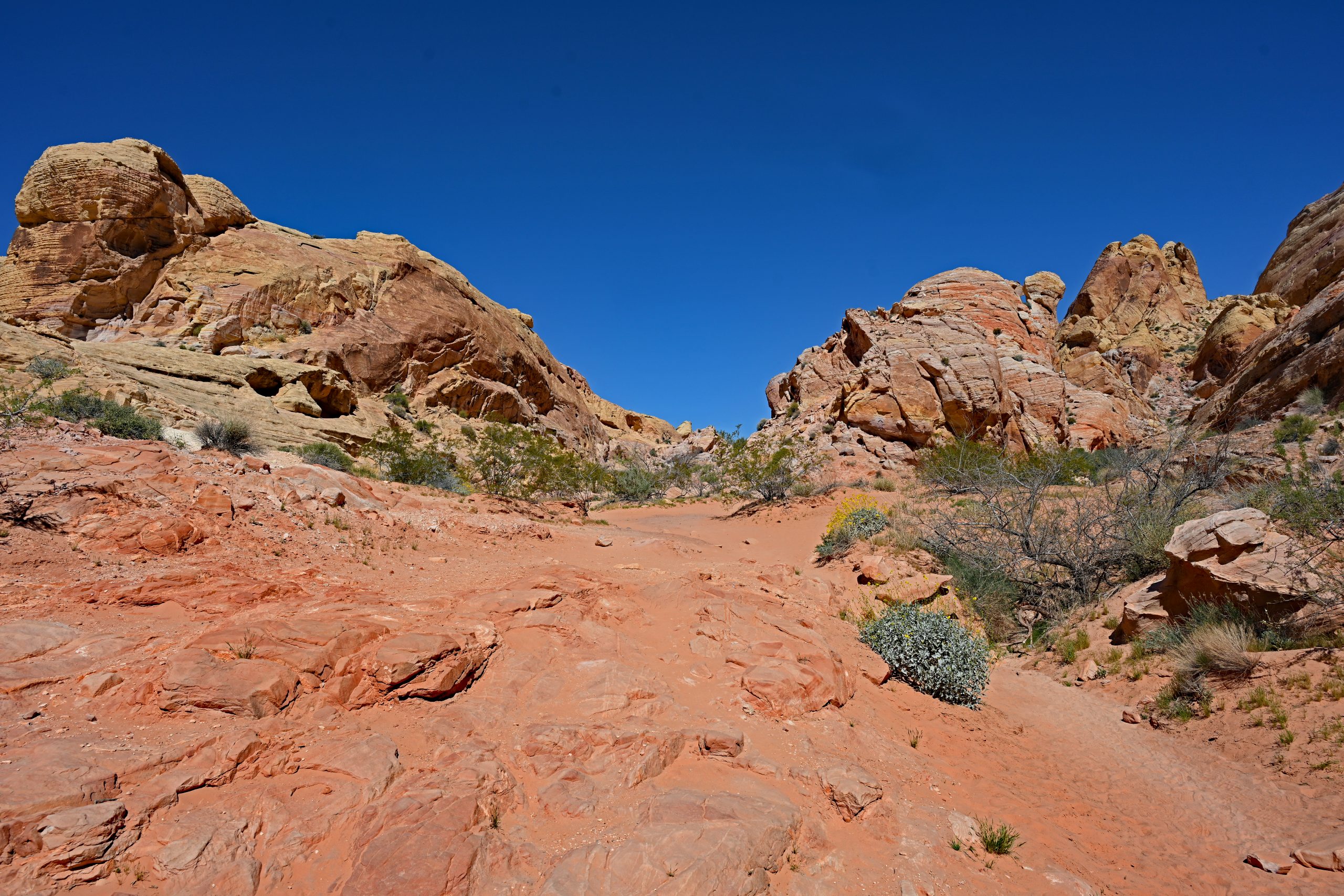
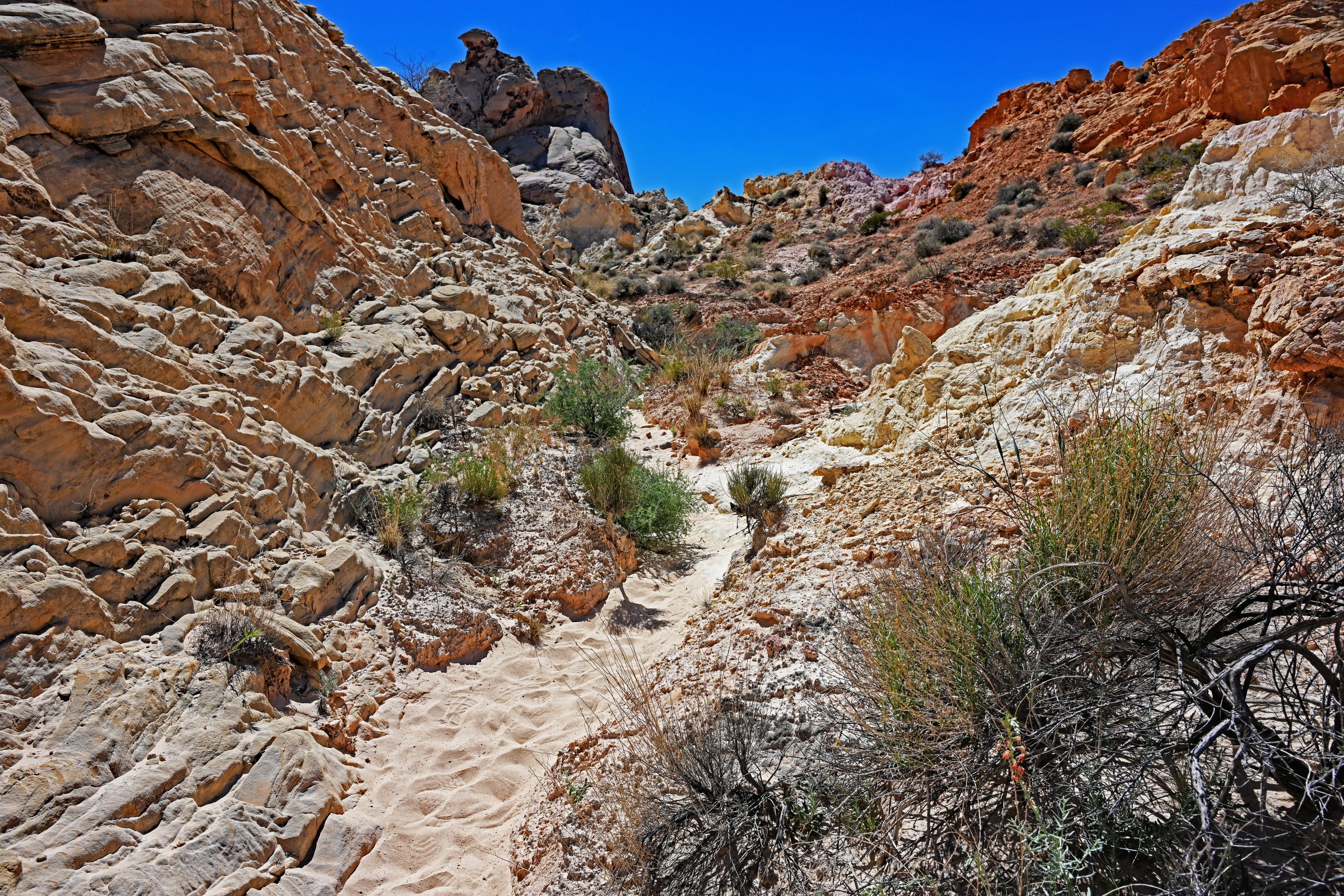
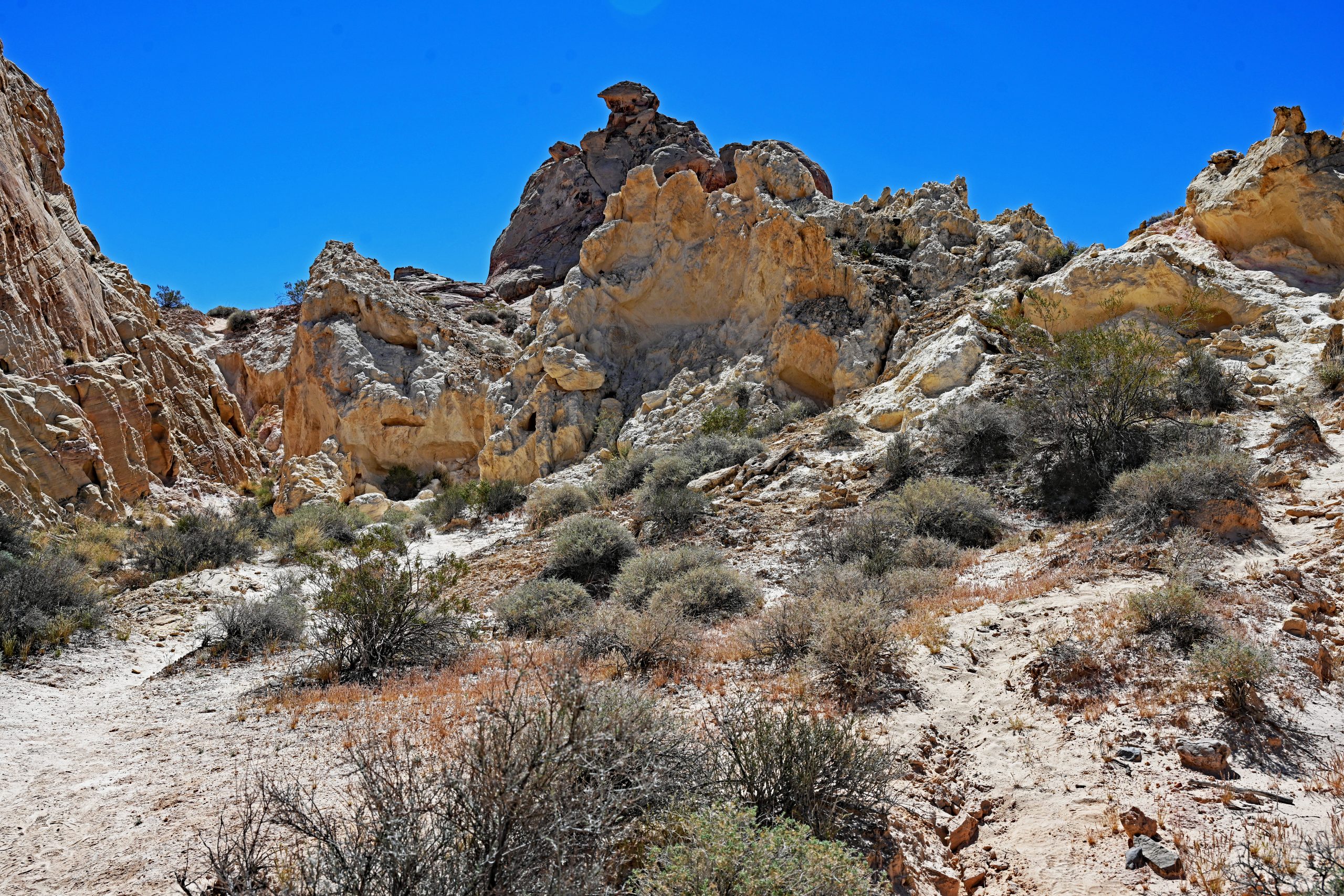
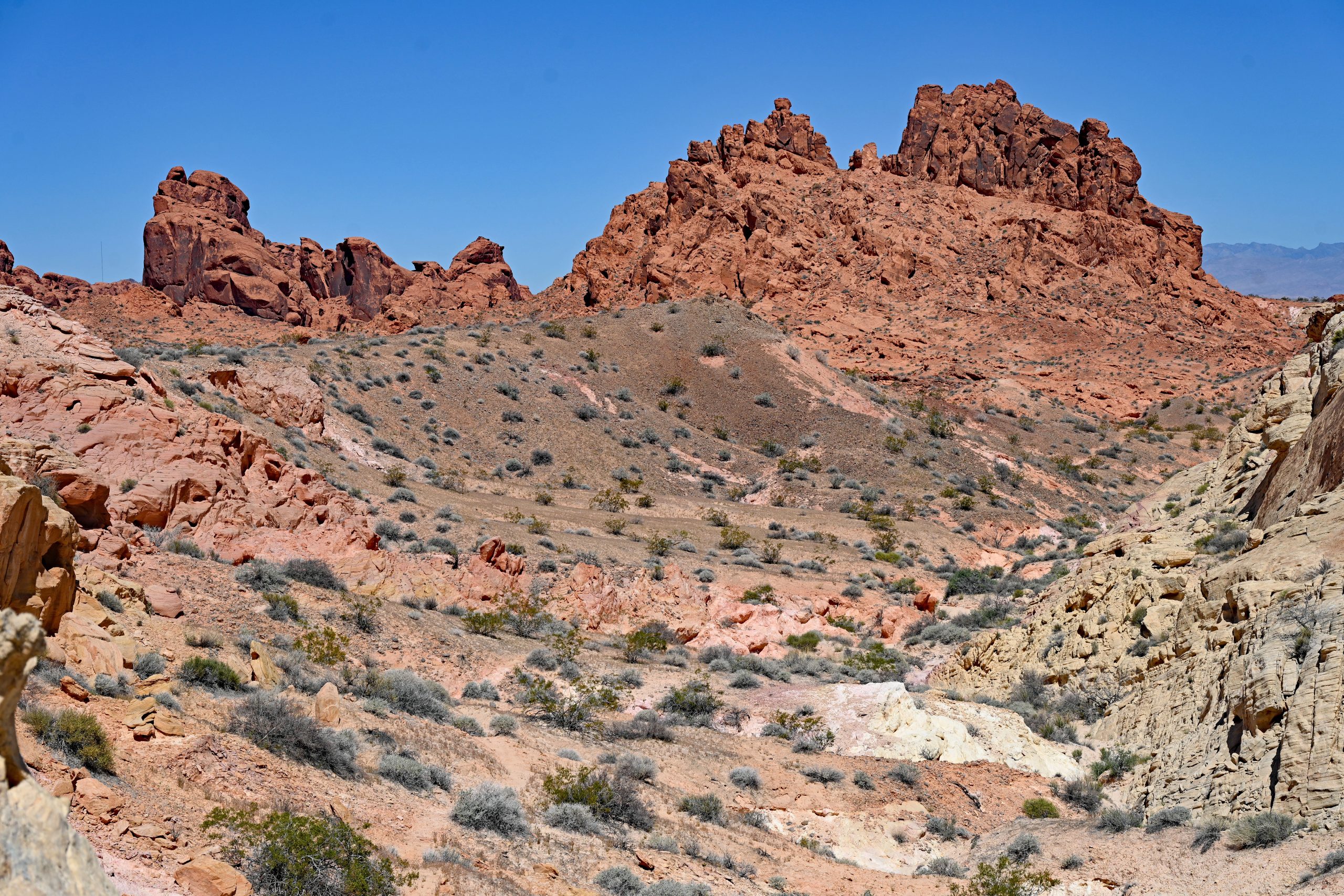
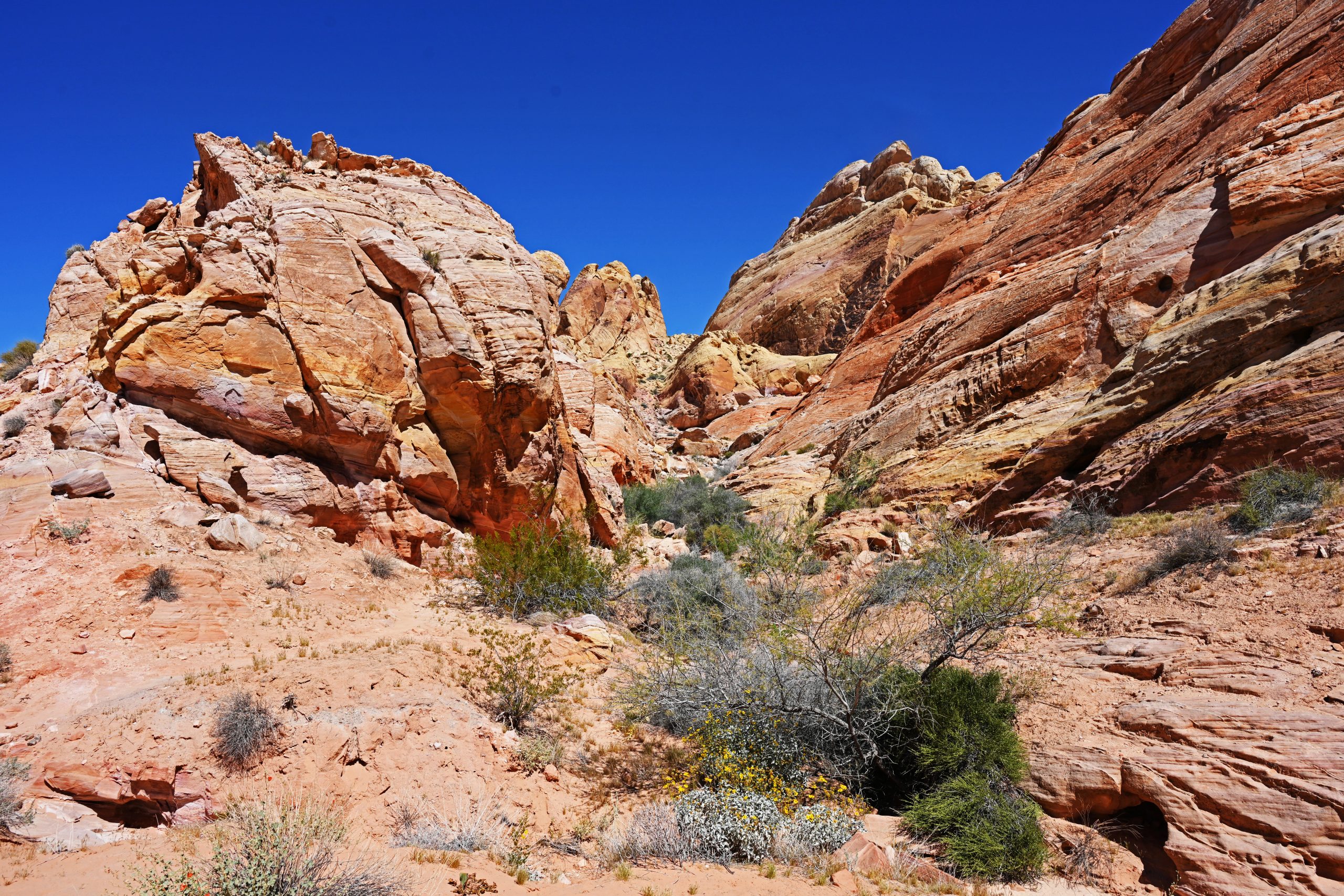
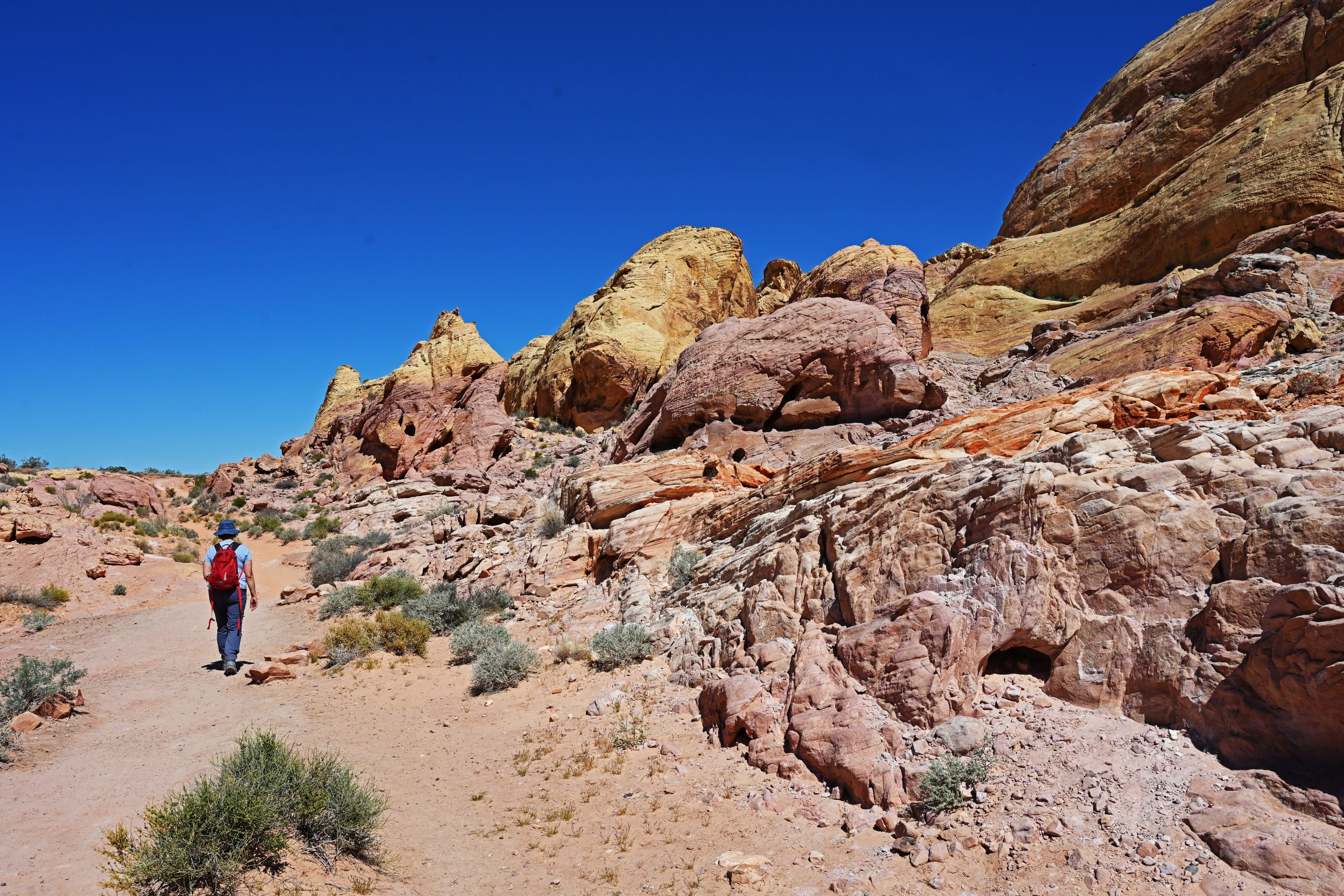
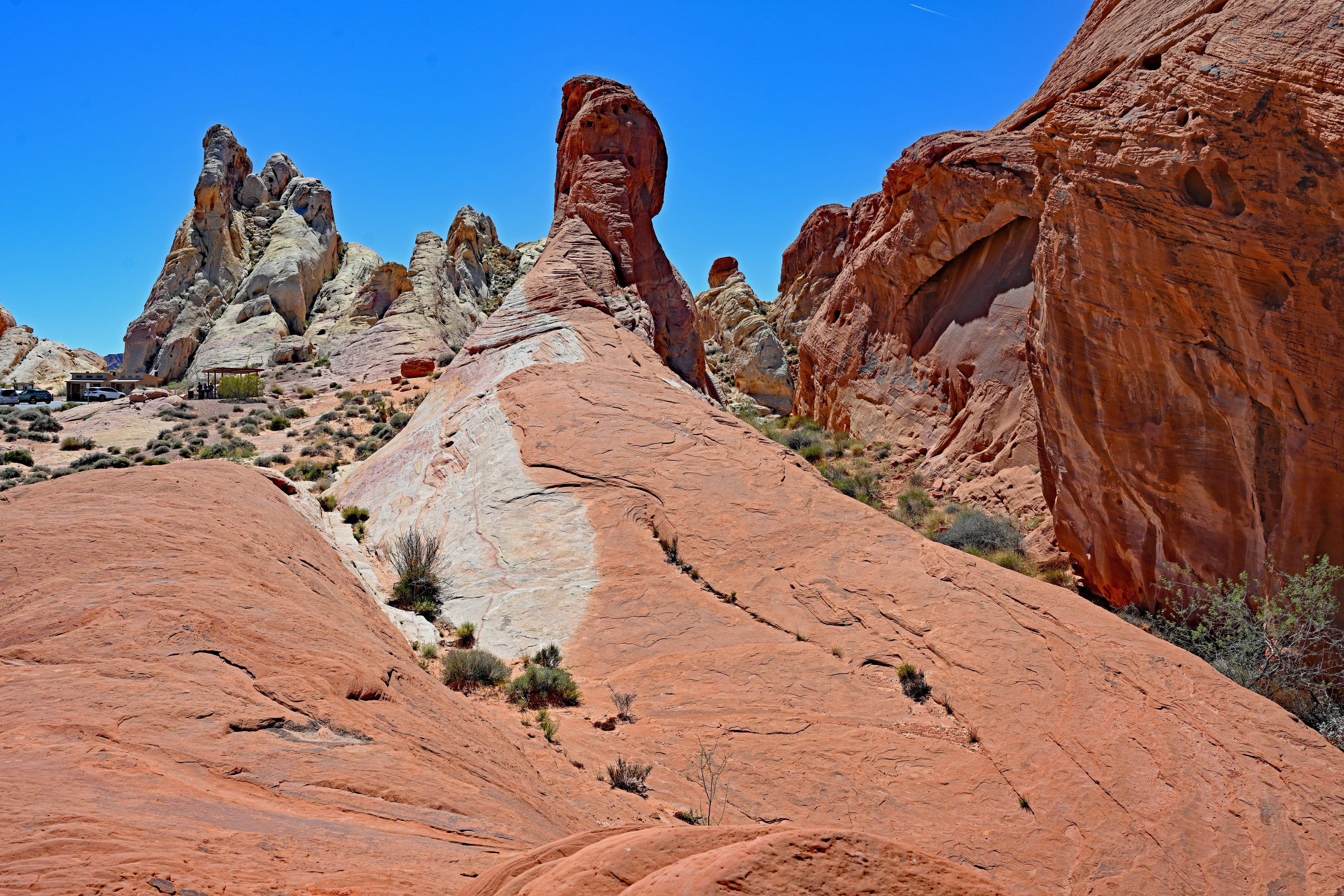
At the end of the road, at White Domes, we recharge at a shaded picnic spot before starting the loop trail. We trudge through deep sand past the namesake white domes. From a rocky plateau, we look down into the depths and capture the moment. The descent leads us to the remains of a movie set from the 1966 Western The Professionals. A look back reveals a spectacle: the rocks rise steeply, and in their center stands a formation running toward us like the bow of a giant stone ship.
Gallery VI: Into the Depths of White Domes
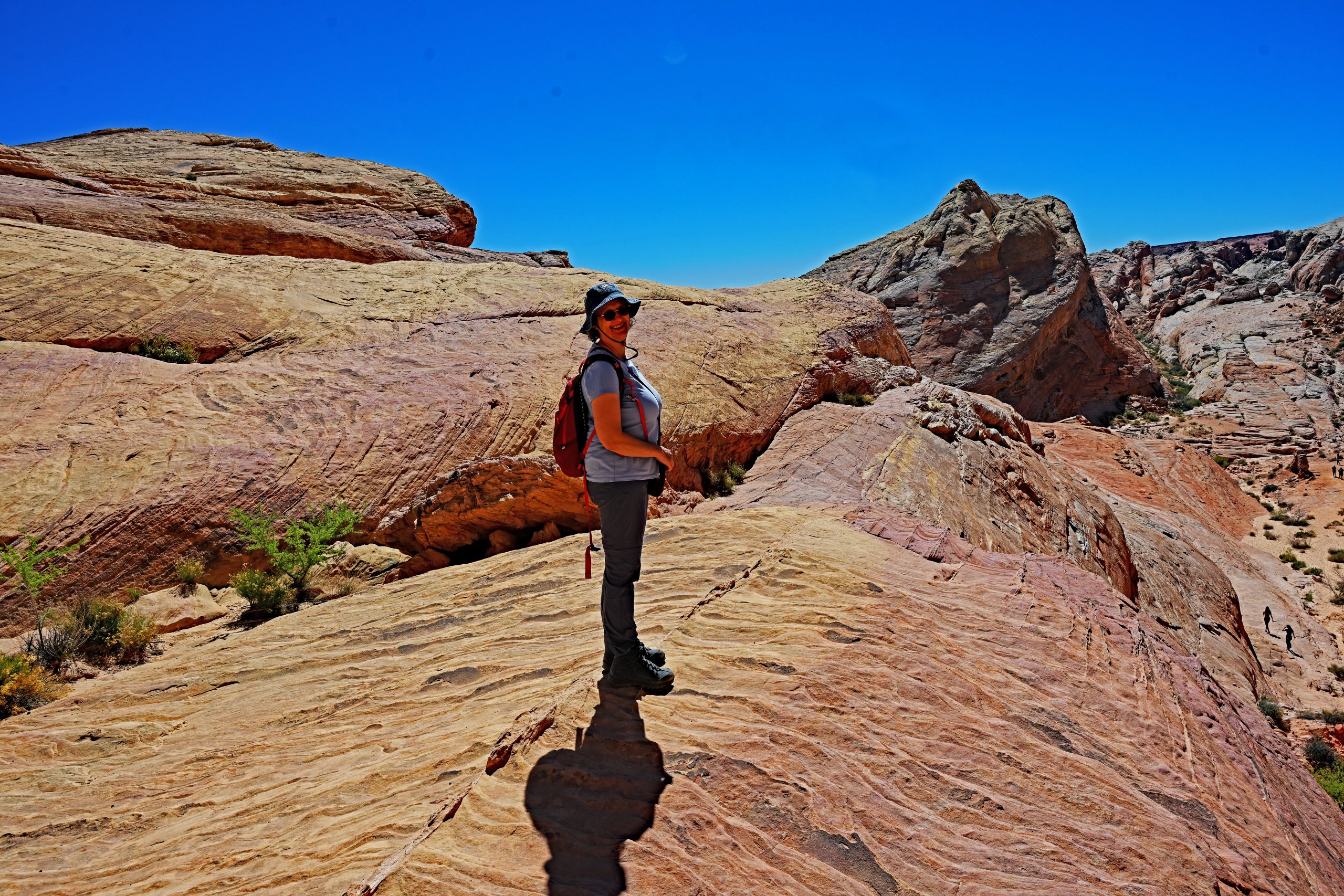
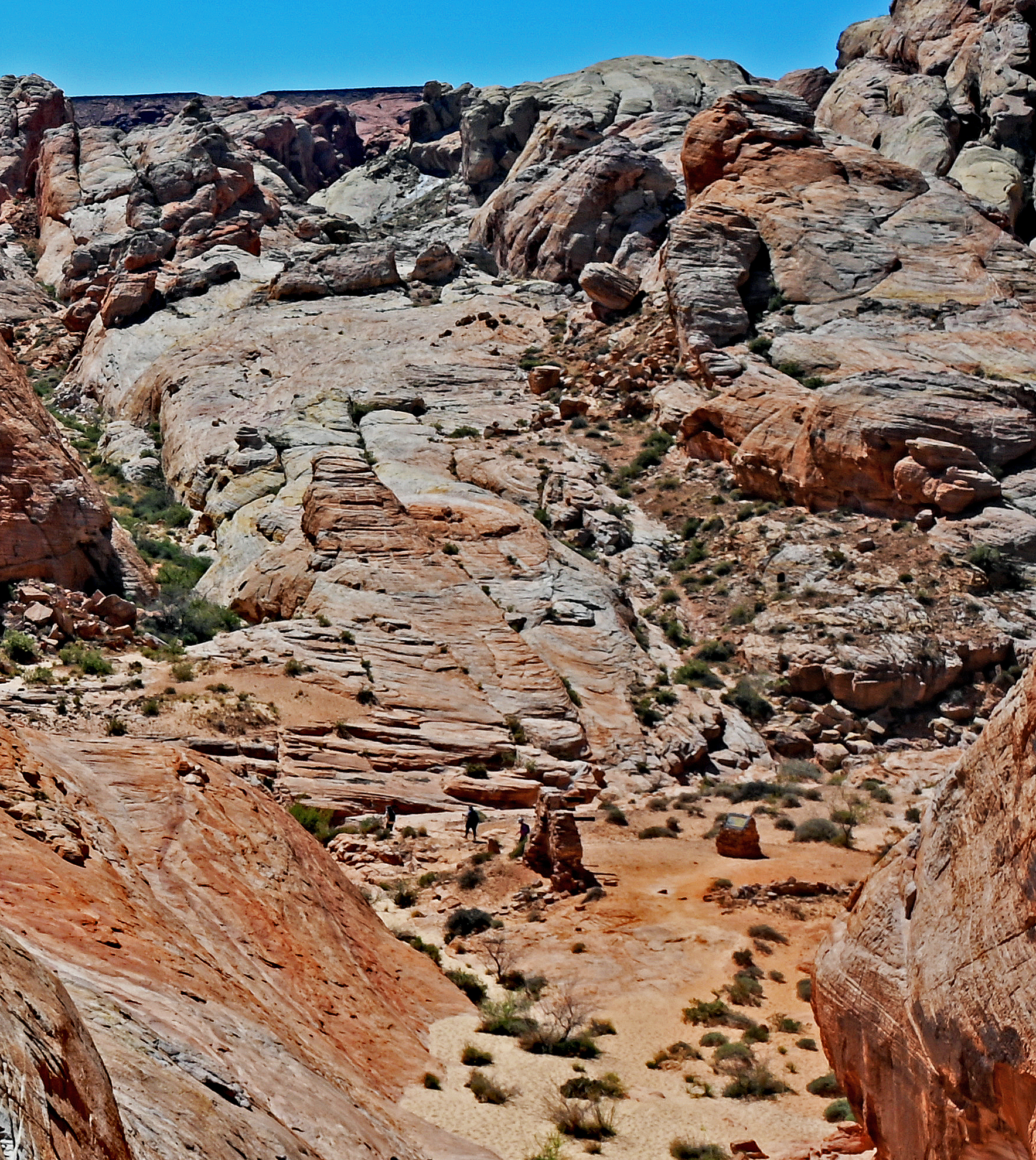
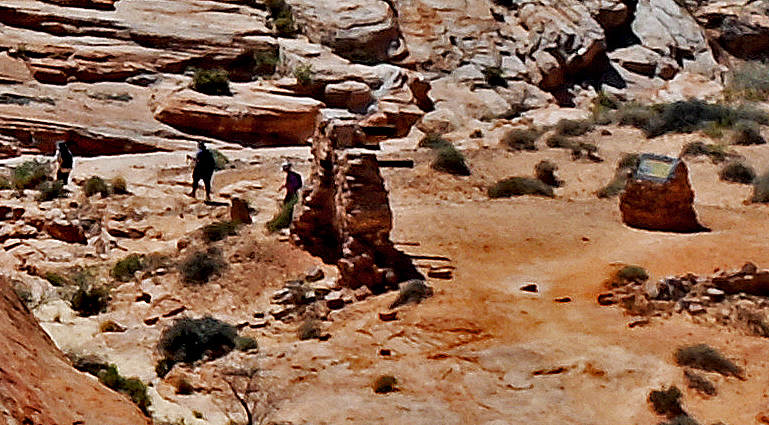
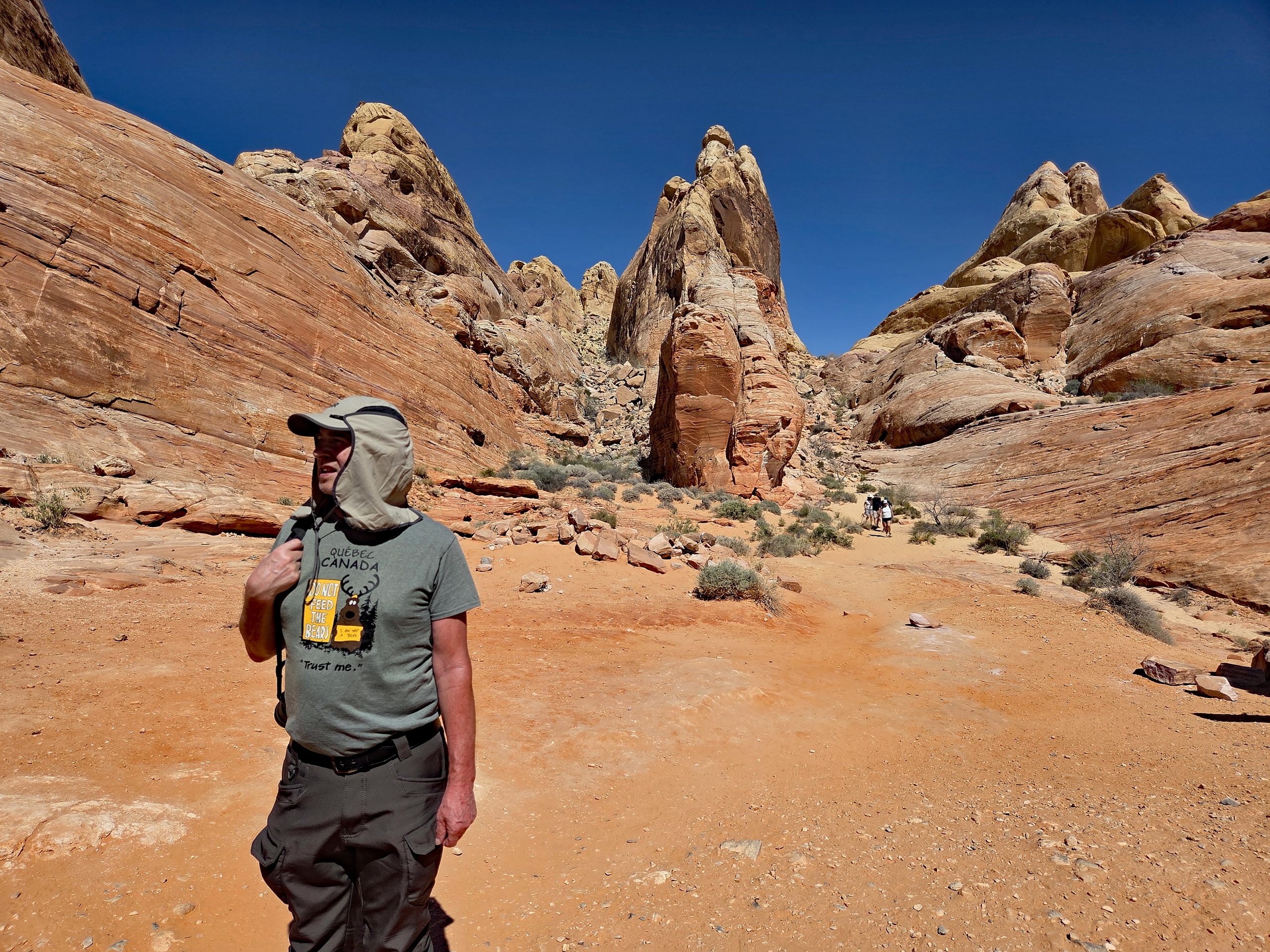
At the end of the road, at White Domes, we recharge at a shaded picnic spot before starting the loop trail. We trudge through deep sand past the namesake white domes. From a rocky plateau, we look down into the depths and capture the moment. The descent leads us to the remains of a movie set from the 1966 Western The Professionals. A look back reveals a spectacle: the rocks rise steeply, and in their center stands a formation running toward us like the bow of a giant stone ship.
Gallery VI: Into the Depths of White Domes

Exhausted, yet filled with the impressions of this bizarre world of stone, we finally got back into the car. Our drive took us to our hotel for the night: the North Shore Inn at Lake Mead. Although it isn’t situated directly on the shores of Lake Mead—as the name might suggest—it proved to be an excellent choice. Here, in the quiet of the evening, we are taking the time to calmly look back on this magnificent day.