
The morning breaks clear and frosty as we set off toward Deer Mountain. The drive leads us deeper into the heart of the national park, and with every turn, a new, even more massive panorama seems to unfold. The air is so pure that the contours of the mountains are etched against the blue sky with almost unnatural sharpness. We pause time and again to capture this monumental silence and the impressive forms of the Continental Divide.
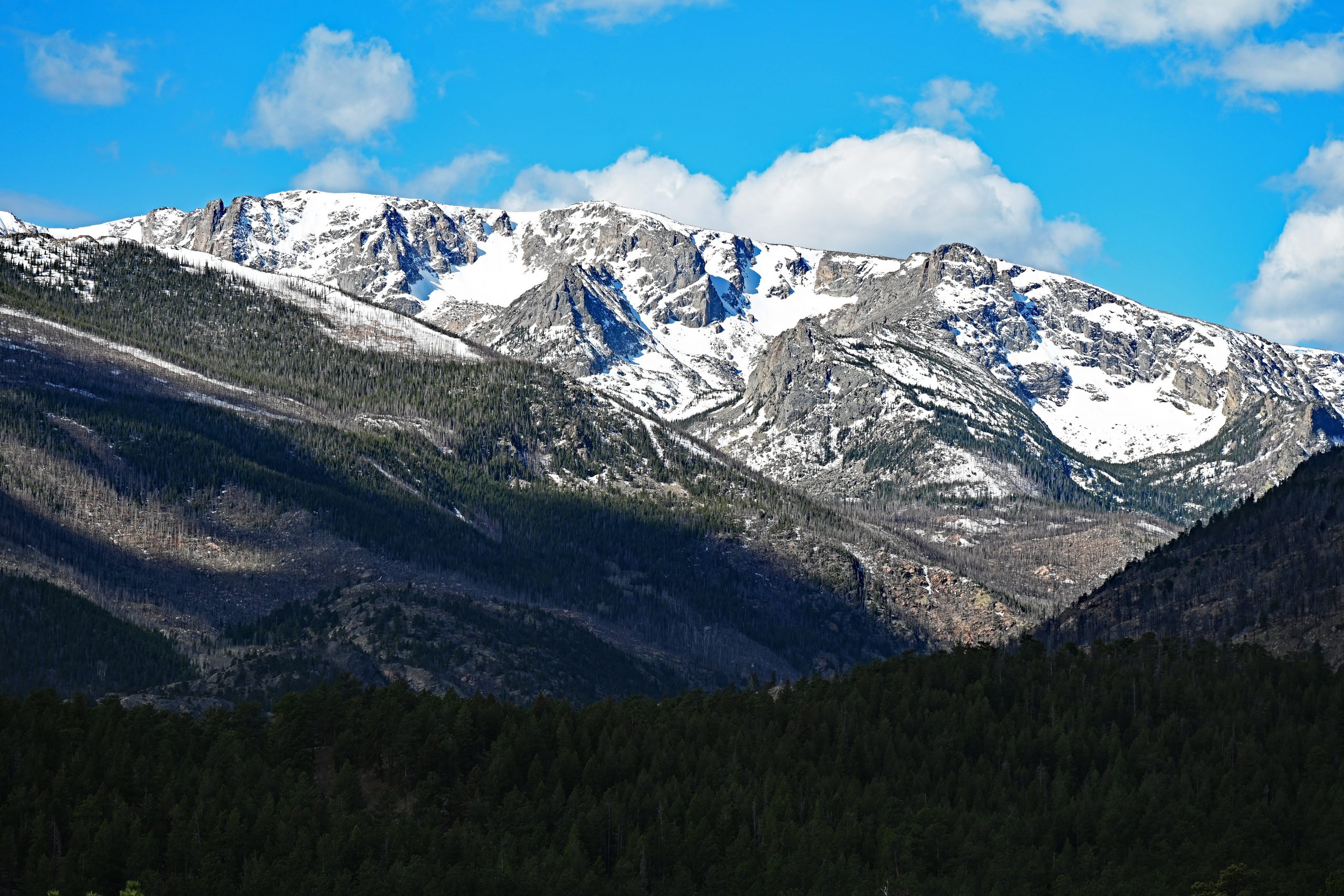
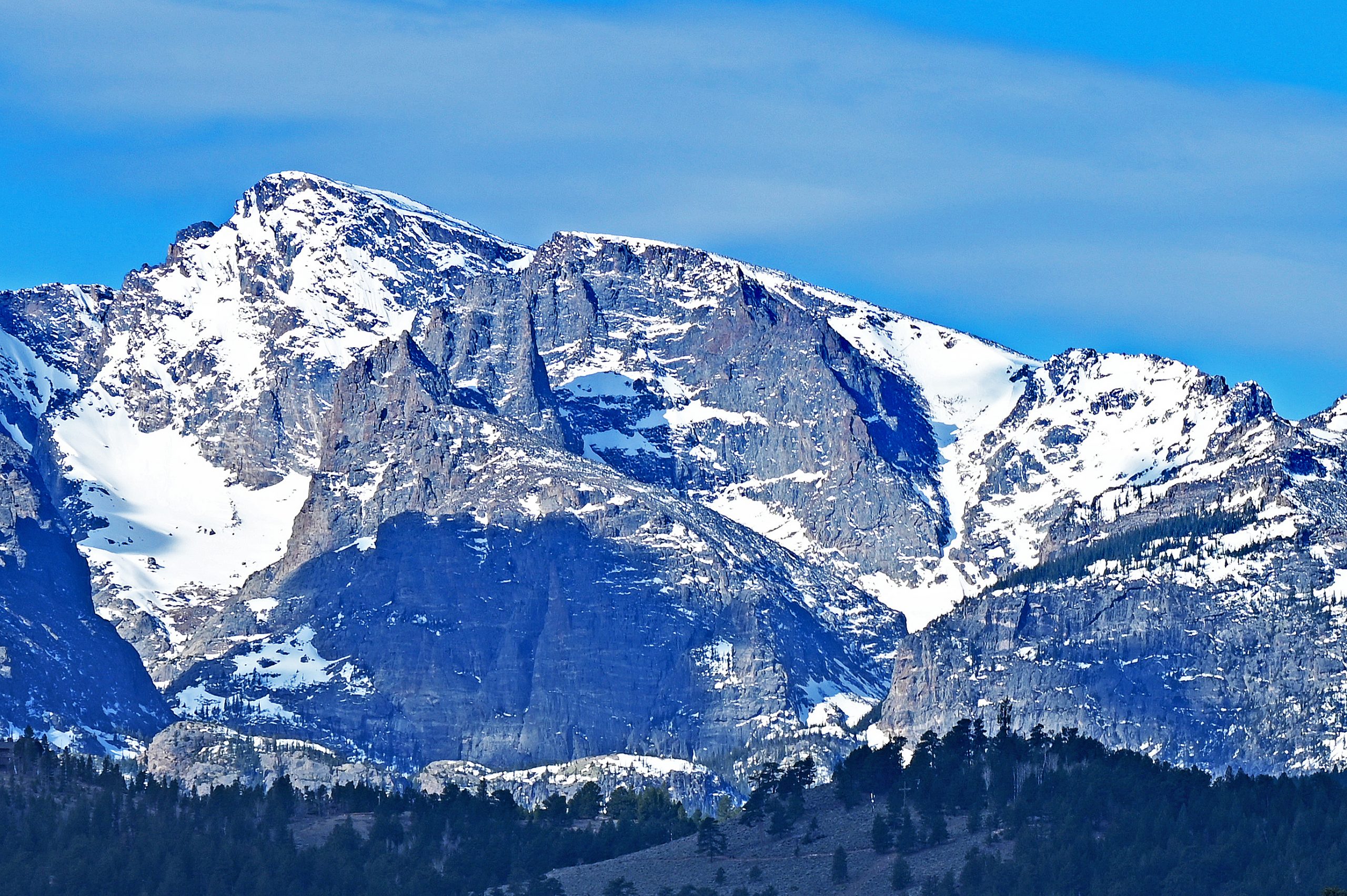
We are particularly fascinated by the area around the Tyndall Cirque. From afar, it looks like a giant amphitheater carved into the rock. Even on the drive into the national park, the scenery captivates us. To the right, we recognize the jagged Notchtop Mountain, its distinctive notch appearing like a cut in time. Directly adjacent is the flat ridge of Flattop Mountain, whose perfect horizontal line serves as a point of calm in a sea of jagged peaks. Then follows the rugged Hallett Peak, its steep walls plunging almost vertically into the depths, followed by the glowing ribbon of the Tyndall Glacier. Further south, Otis Peak and the massive Taylor Peaks continue this endless chain of ice and stone.
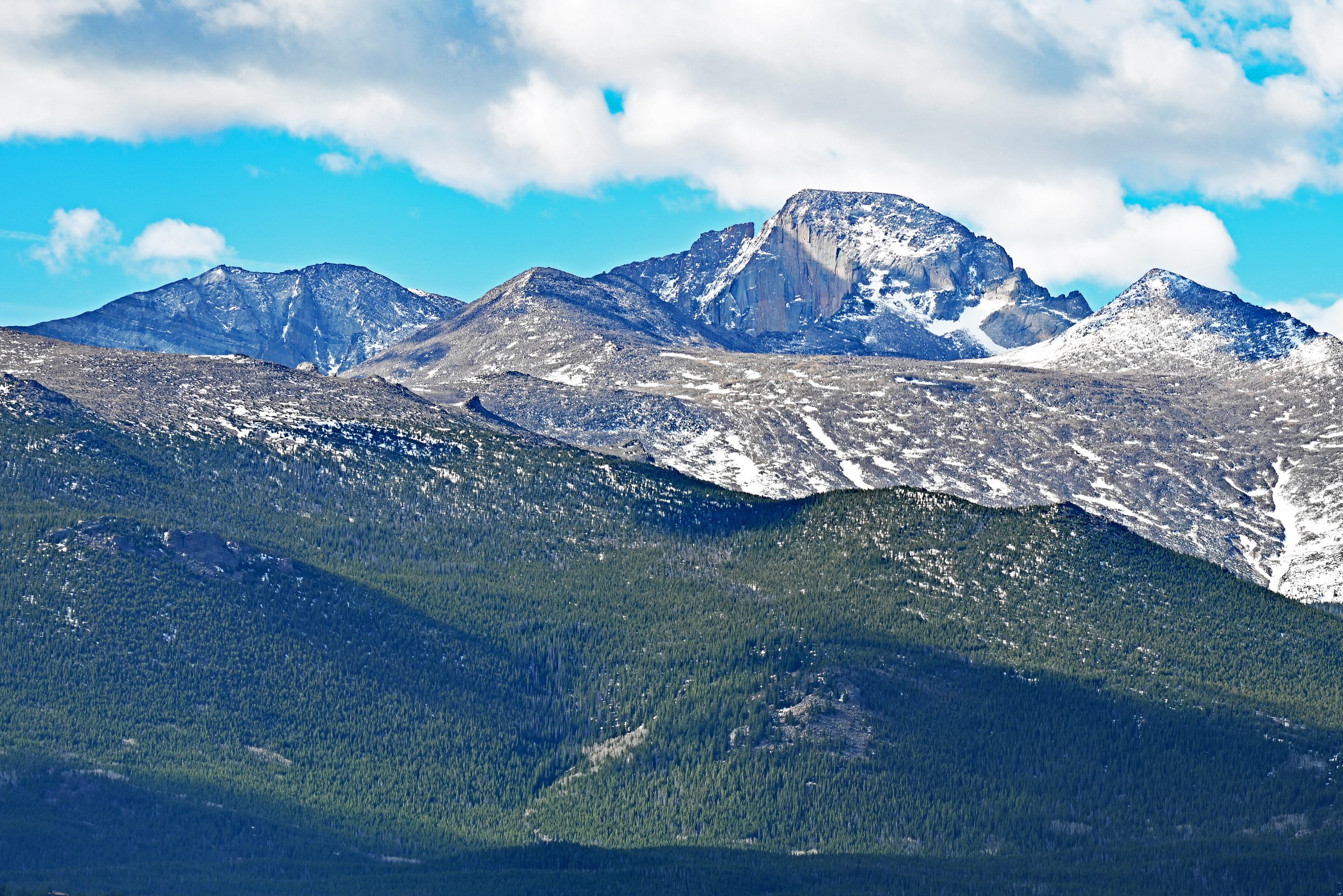
Arriving at the Deer Mountain parking lot, we immediately notice that the sun is positioned much better for photos today than it was yesterday. An absolute highlight of this trip reveals itself here in all its glory: the majestic Longs Peak thrones like a king over his realm. Its deeply snow-covered flanks glisten in the bright April sun like polished marble, and the shadows in the deep couloirs lend the massif a sculptural depth. Right next to it, the deep ridge of The Loft leads the eye over to the proud Mount Meeker. It is a landscape that needs no words to prove its grandeur—we stand there, breathing the cold mountain air and feeling the timeless power of these giants.
Gallery I: The Snow-Capped Crown of the Rocky Mountains
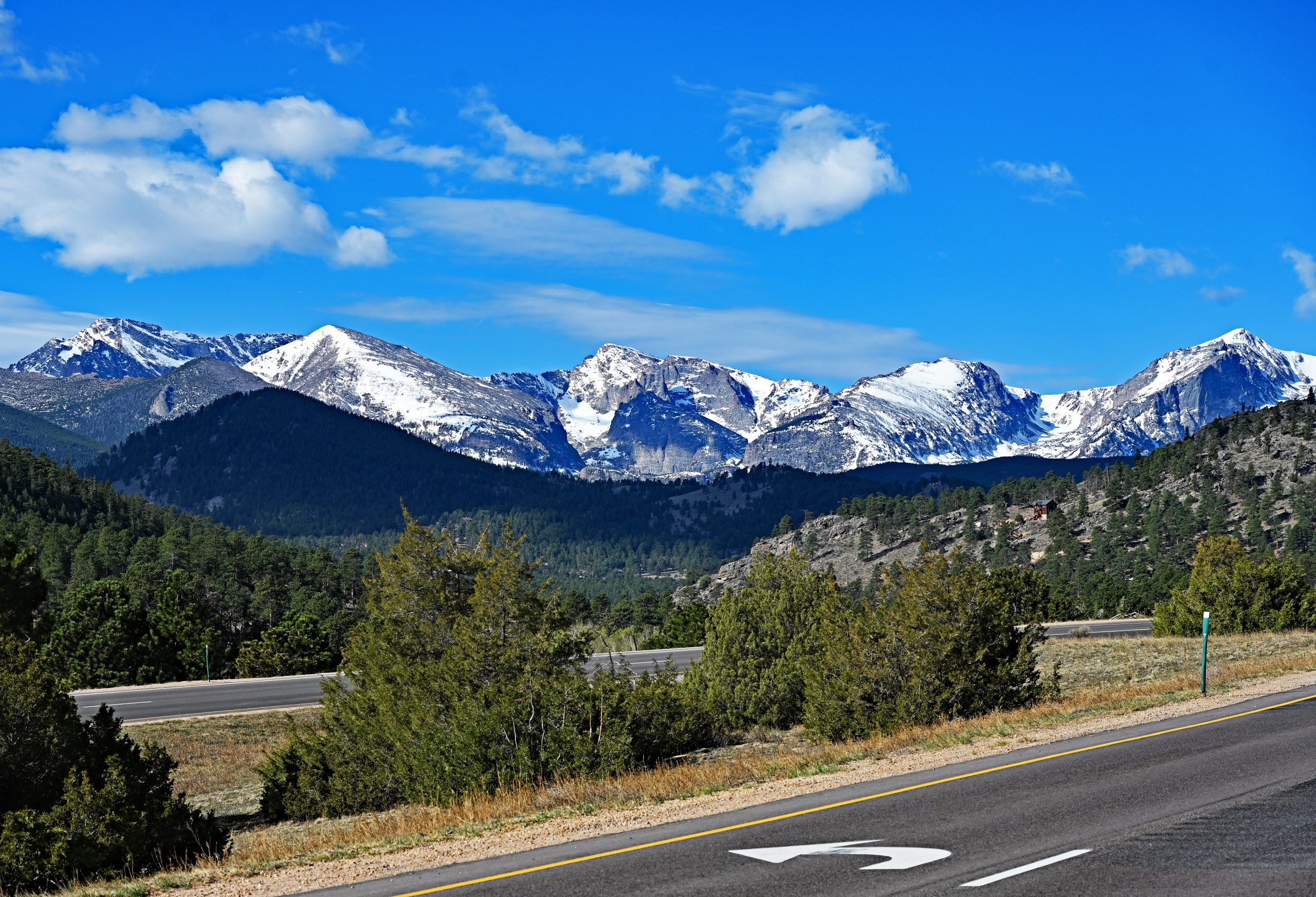
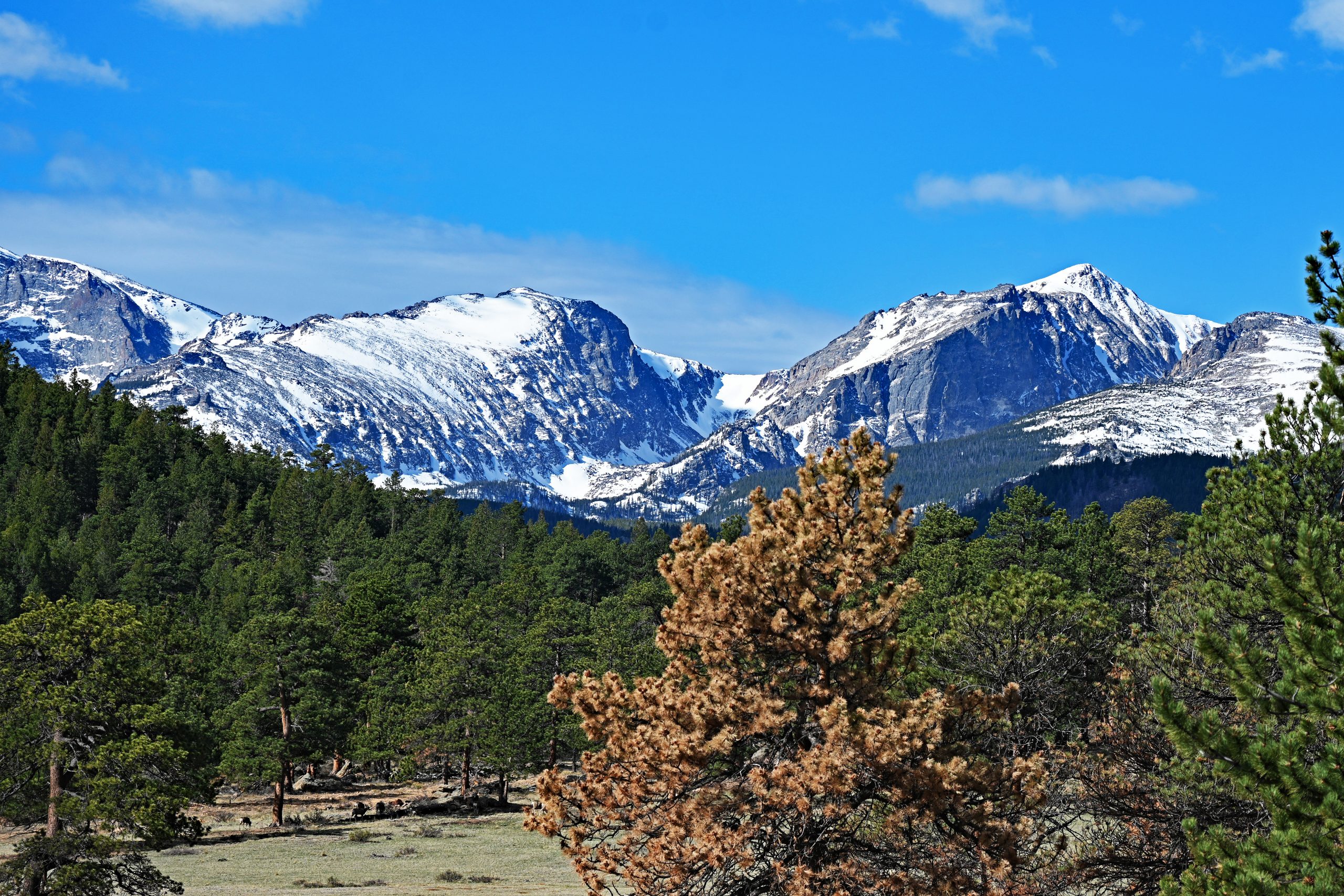
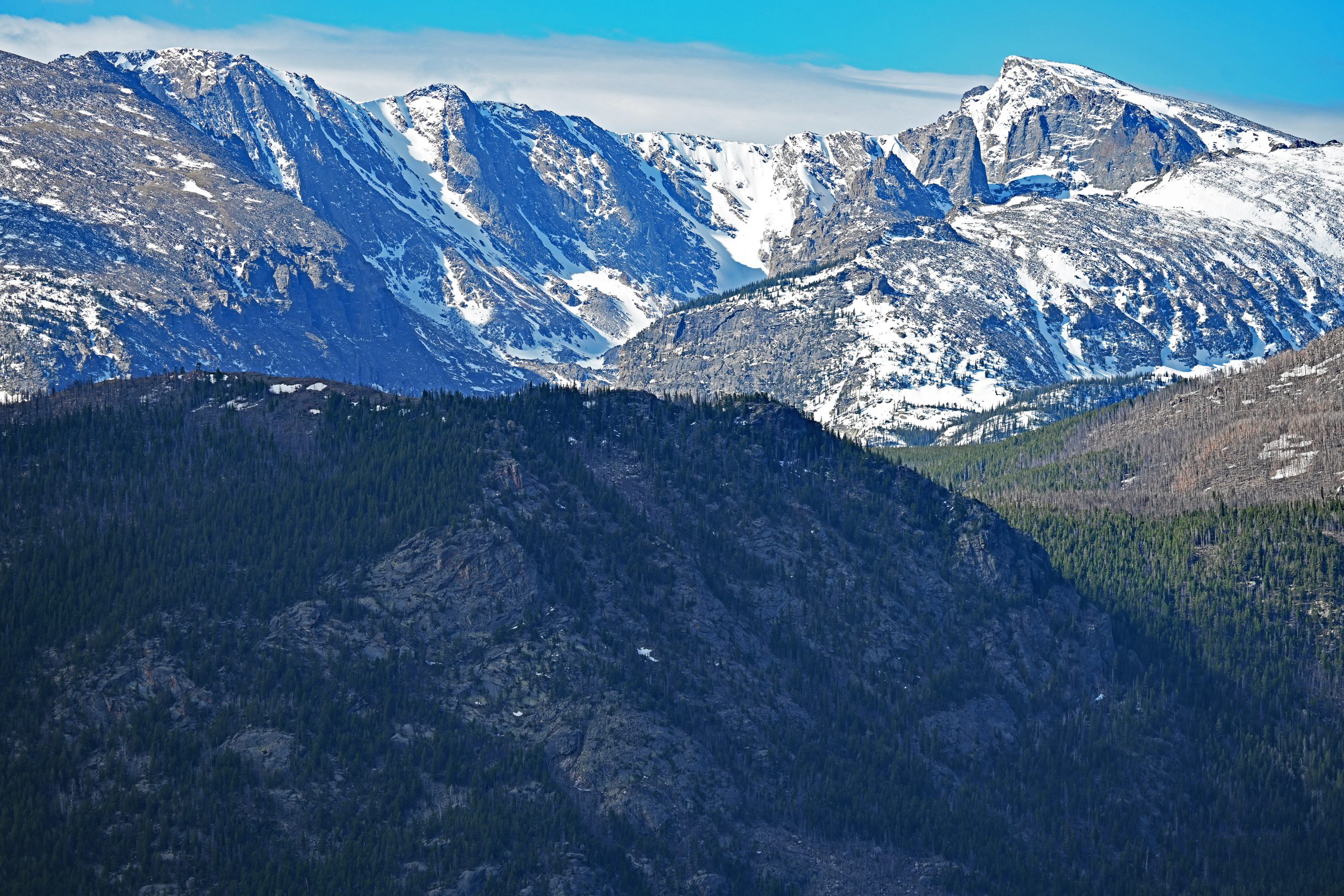
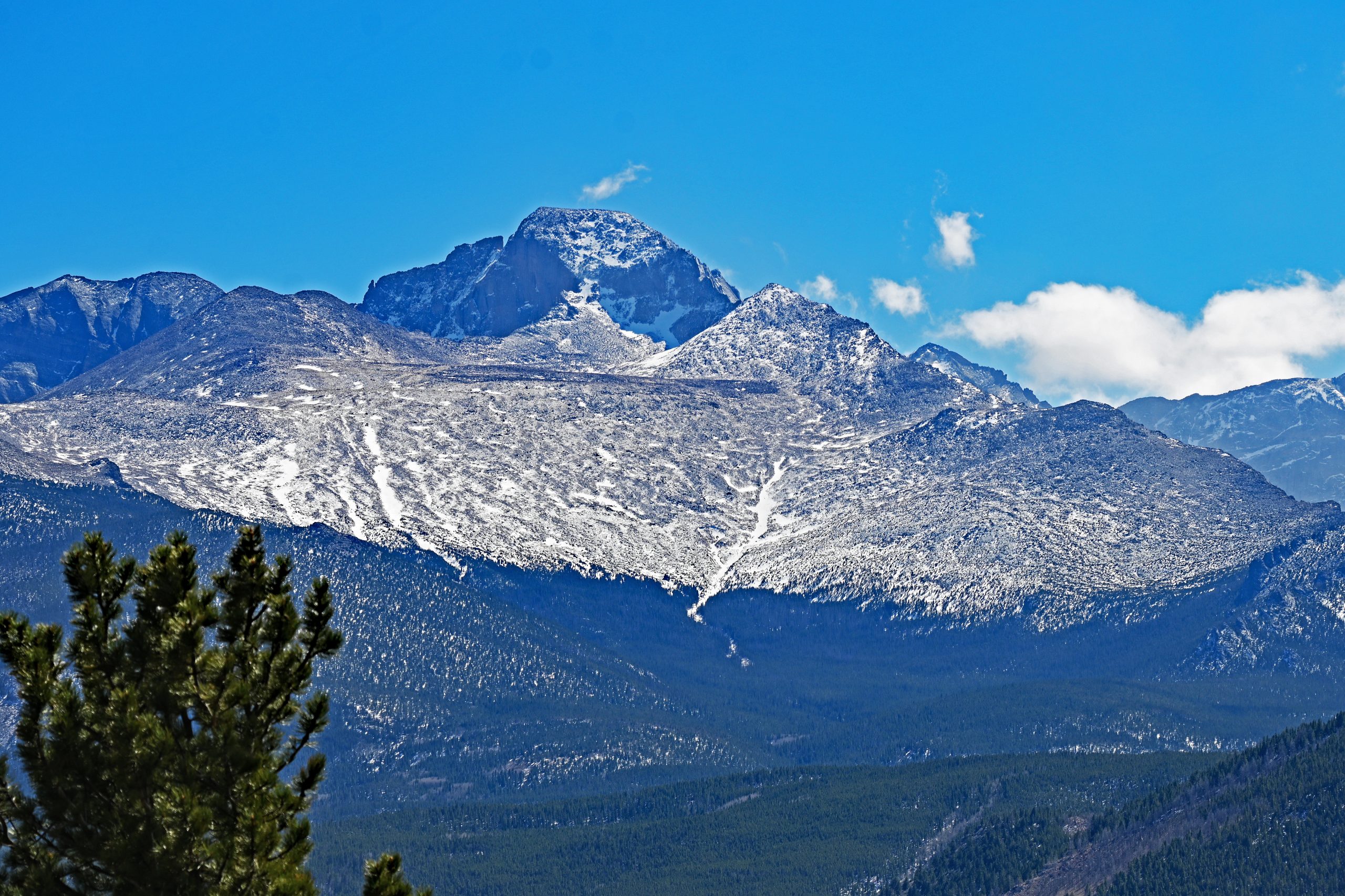
We pack our rucksacks and set off. We have hardly covered the first hundred meters on the trail to Deer Mountain when nature forces us to make our first, awe-struck halt. We have just left the edge of the dense forest behind when the view opens to the west, revealing a panorama that takes our breath away. It is as if the earth has turned its innermost self outward here.
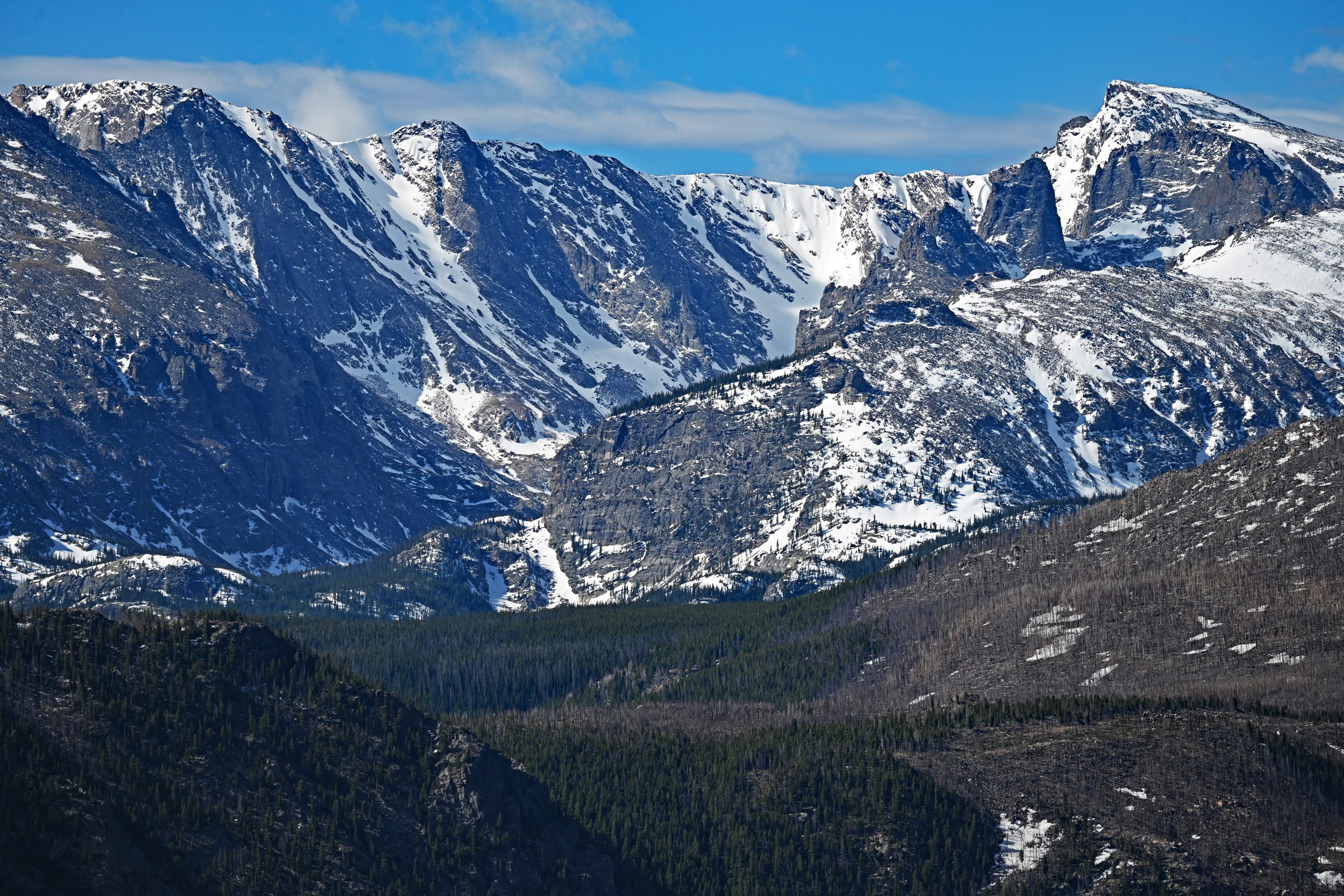
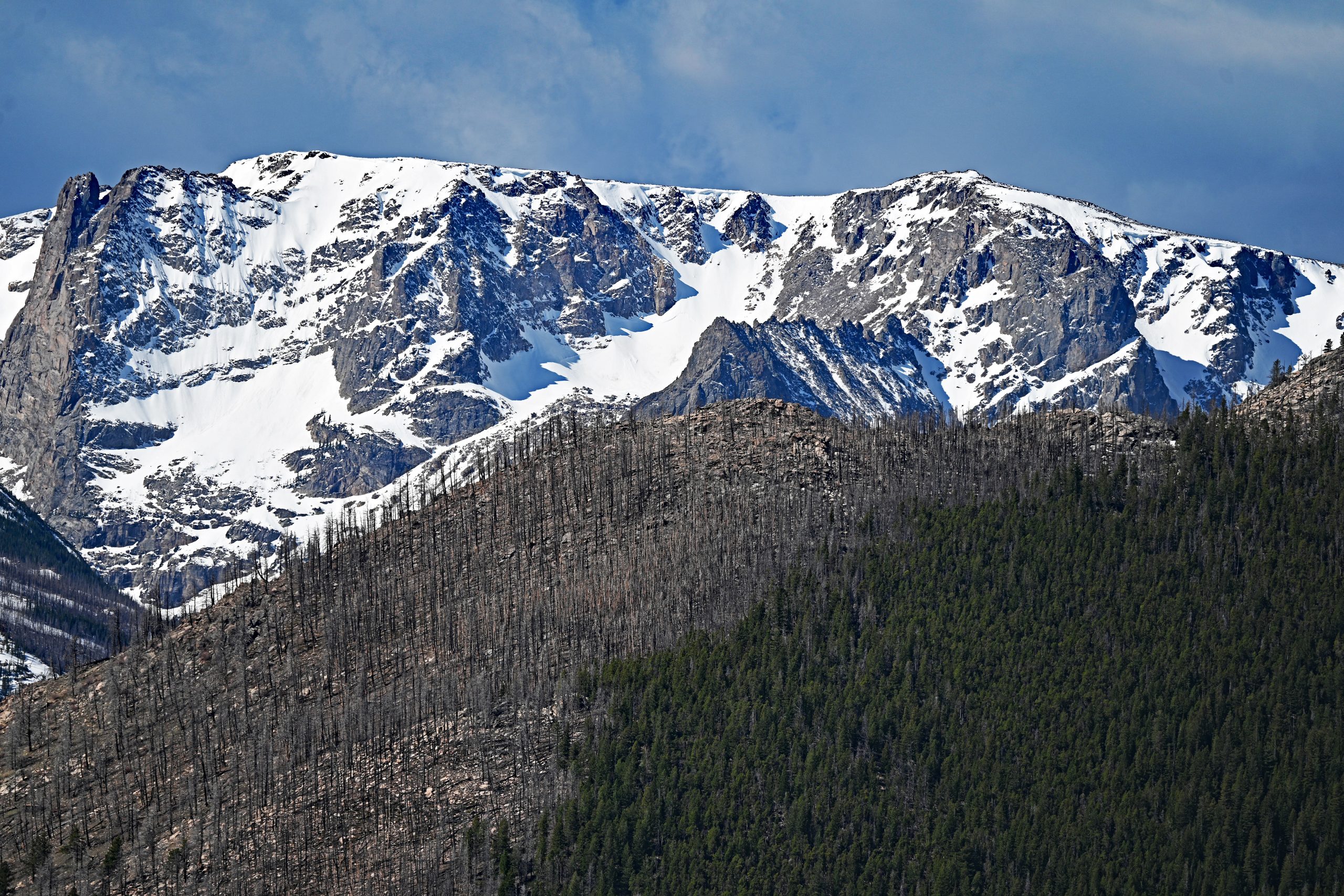
Directly before us, carved deep into the heart of the mountain world, lies a formation that immediately sparks our imagination: below the mighty summits, two enormous rocky ridges seem to gape open like the maw of a giant beast. The “upper jaw” is formed by the jagged crests of Notchtop Mountain, its rugged spires reaching into the blue April sky like petrified teeth. The “lower jaw” is formed by the foothills of Flattop Mountain, and between them opens the dark, mysterious throat of the Tyndall Cirque, where the eternal snow lingers like a bright glow.
Behind it, the giants of the Continental Divide line up like sleeping sentinels. To the far right, Flattop Mountain thrones with its seemingly endless, snow-white plateau—a perfect plain amidst the alpine chaos. Directly next to it, Hallett Peak rises as a massive, dark block of rock, its nearly vertical walls creating a dramatic contrast to the soft white of the snowfields. Further left, Otis Peak and the massively rising Taylor Peak continue this chain of ice and stone. Everything about this scenery feels monumental and unapproachable, yet here we stand, allowed to be a part of this moment.
Gallery II: The Awakening of the Mountain Giants

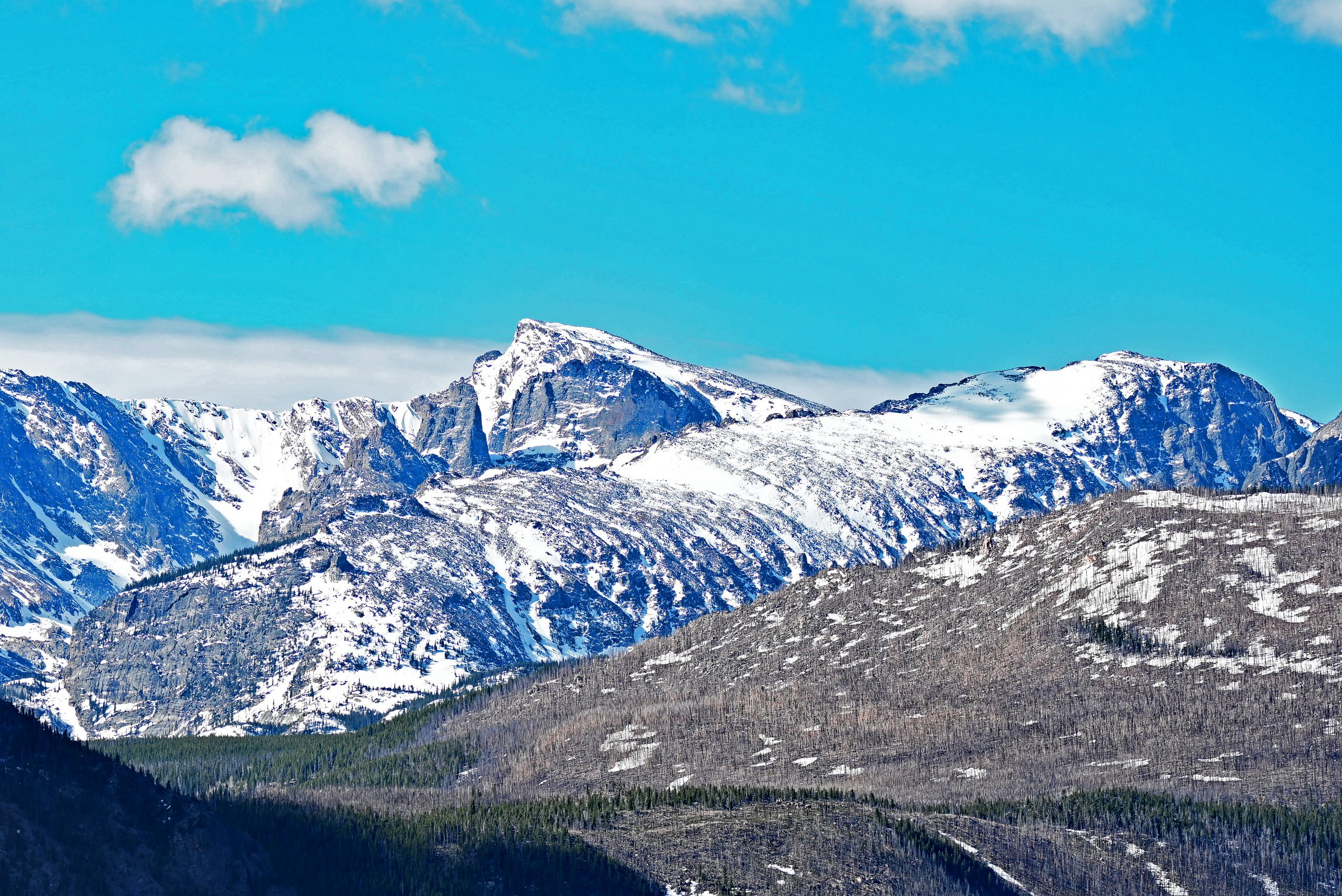
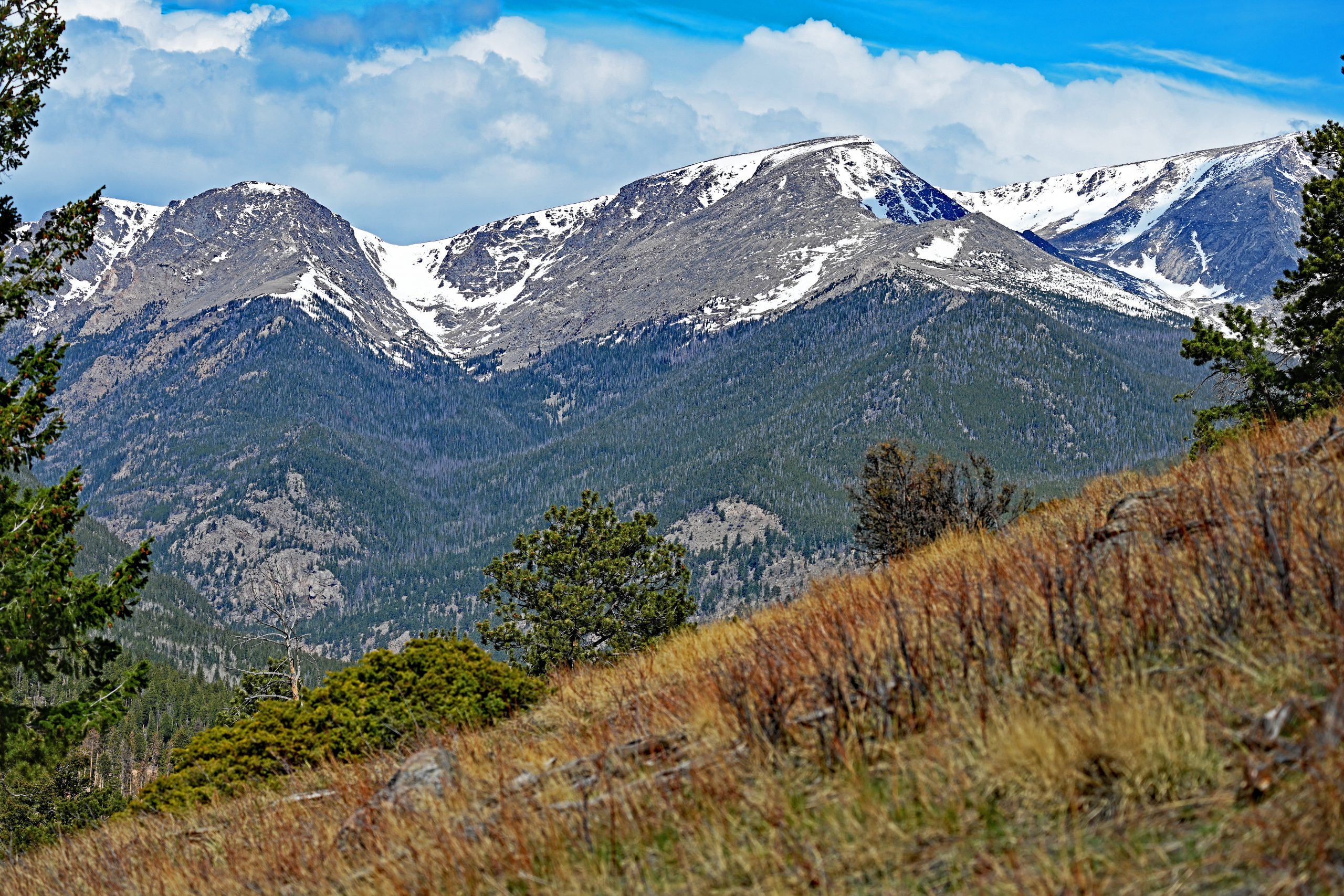
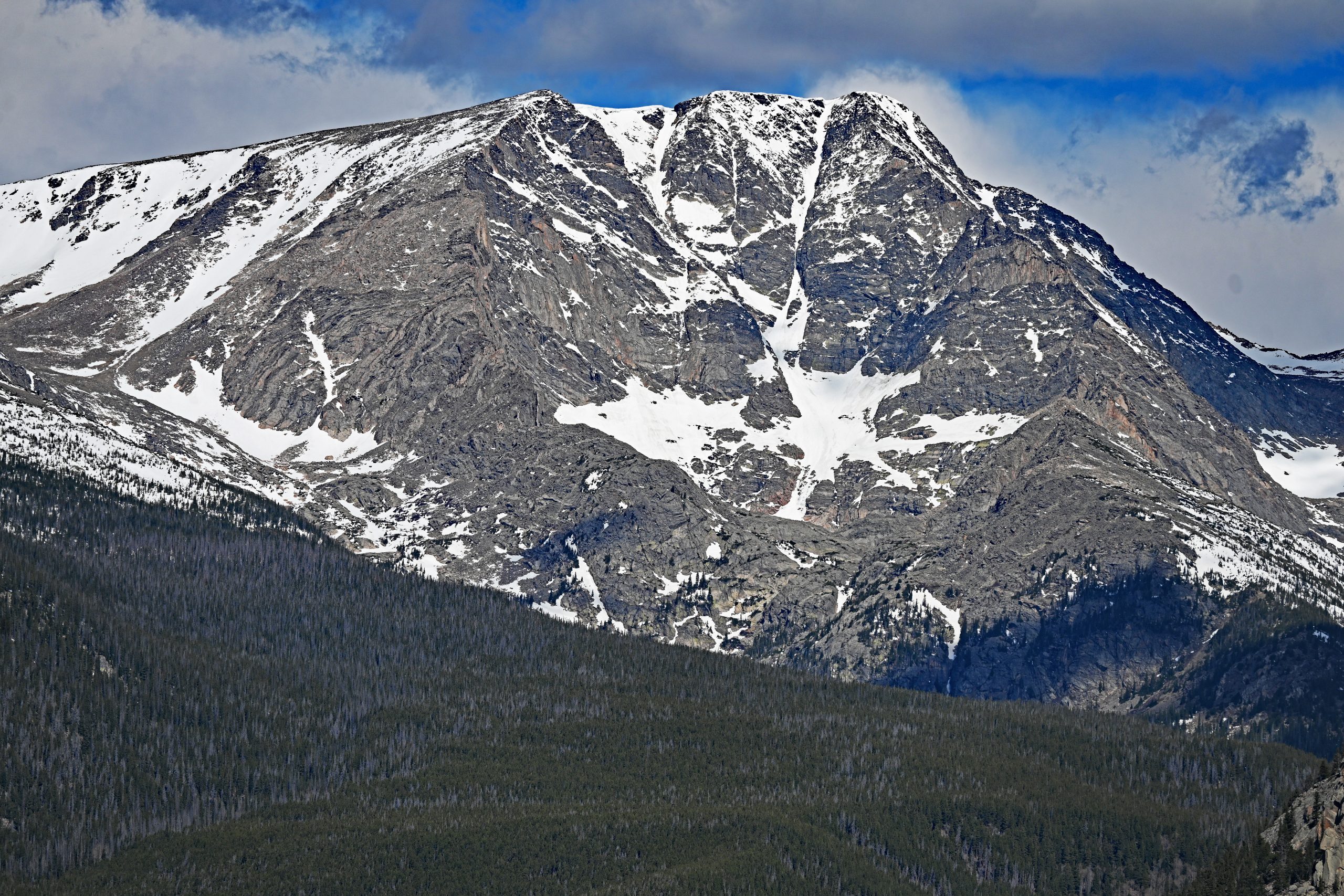
As we continue to climb, the trail offers another fascinating feature: our gaze repeatedly wanders to the opposite, northern side of the valley. There rises the Mummy Range, which radiates an almost gentle yet overwhelming presence with its broad, snow-covered ridges. The trio of the so-called “CCY peaks” stands out particularly prominently, lined up before us.
On the far left, Mount Chapin reaches upward, followed by the massive Mount Chiquita in the middle, which already breaks the proud 13,000-foot mark. The crowning achievement to the right is Ypsilon Mountain. Even from a distance, the namesake Y-shaped indentation in its steep flanks can be discerned, filled deep with fresh April snow. In the soft morning light, these mountains look almost as if they were molded from white porcelain, while the dark coniferous forests at their feet provide a deep green contrast. It is a constant interplay of perspectives: behind us, the rugged peaks of the Continental Divide, and before us, the sublime tranquility of the Mummy Range.
Gallery III: The View Toward the Mummy Range
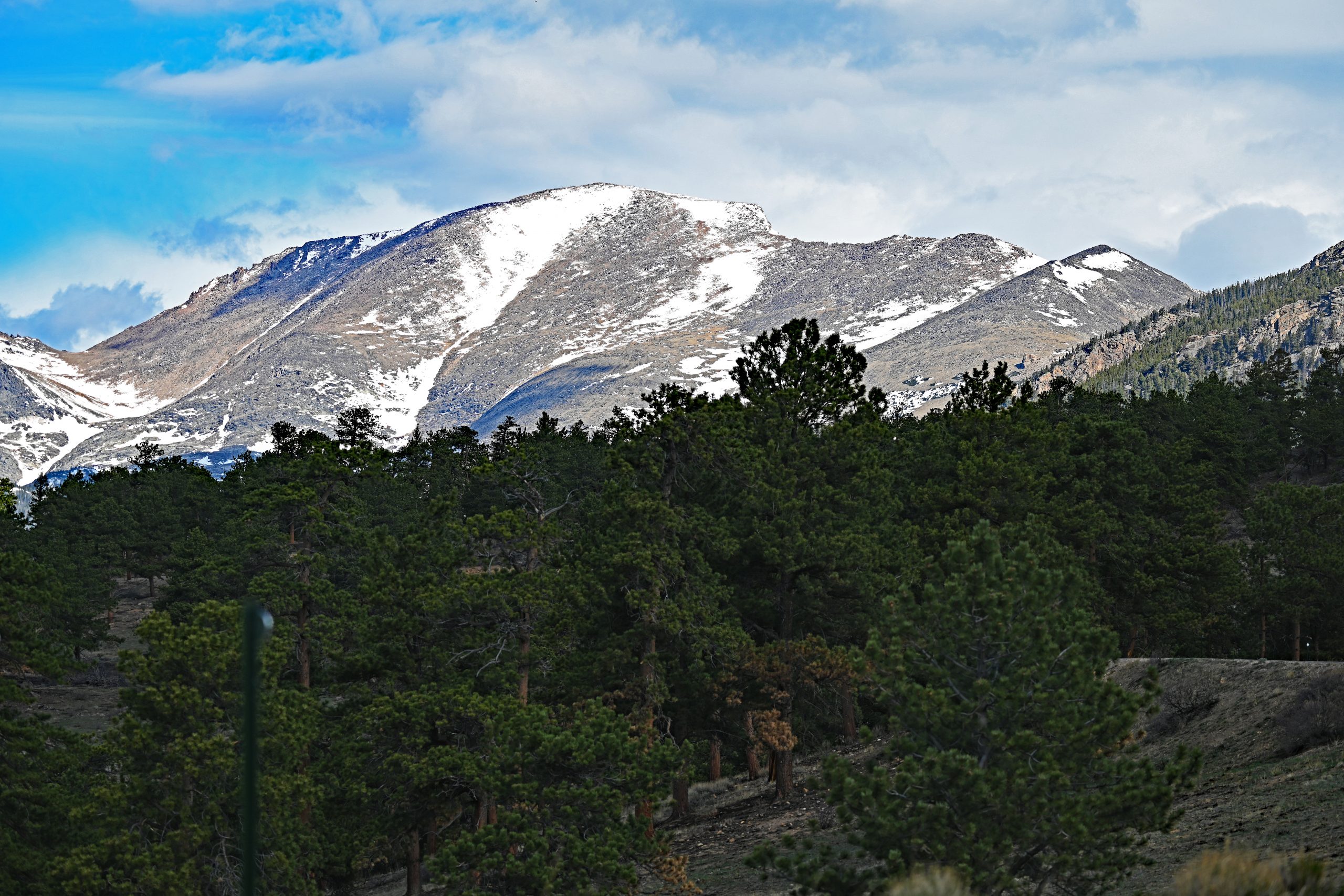
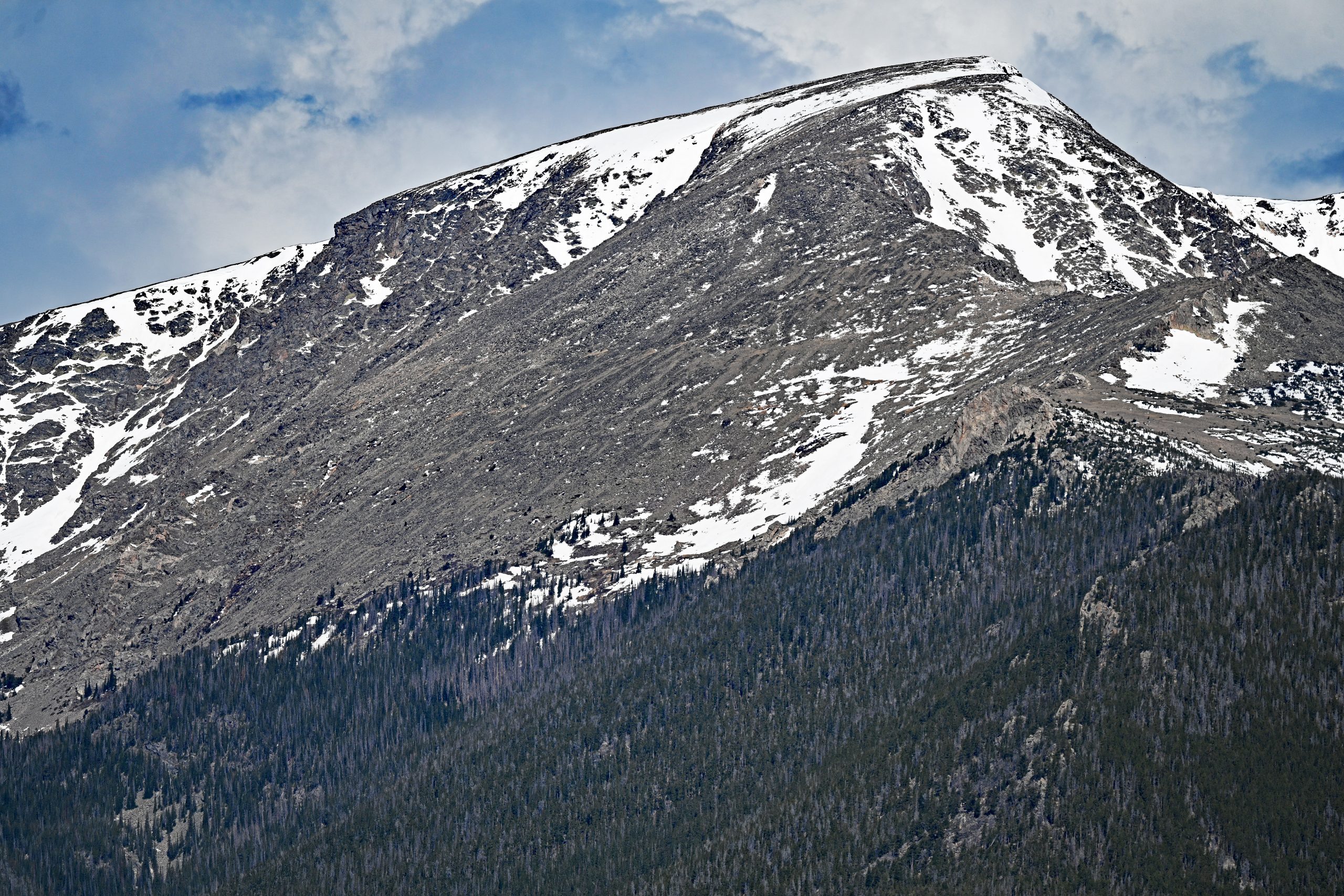
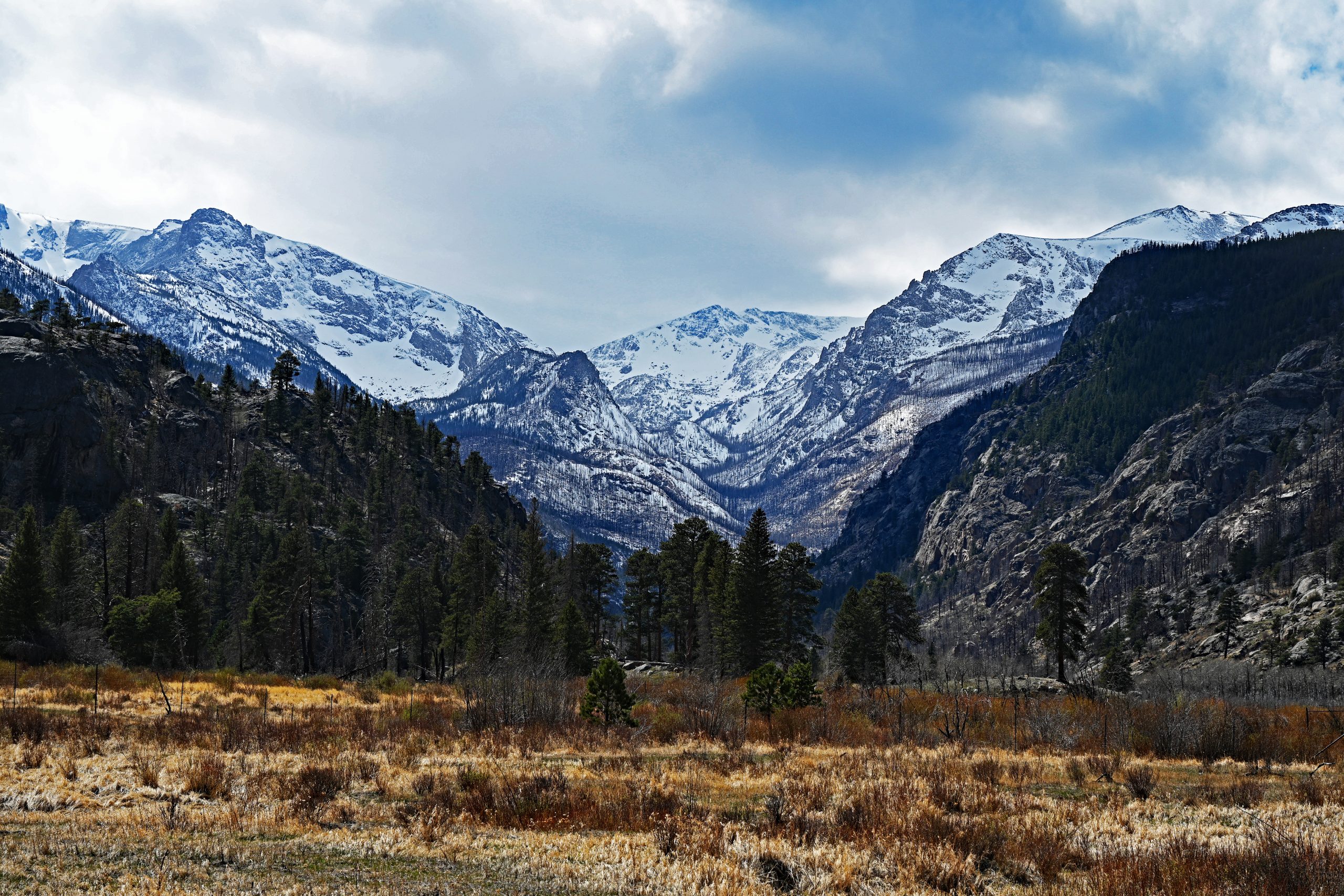
After about 1.5 miles, we decide to turn back, as we want to explore other trails today. Our path leads us deeper into the park to the parking lot of the Cub Lake Trail. From here, our gaze sweeps far to the west, into the deep recesses of Forest Canyon and toward the distant peaks of the Continental Divide. In the immediate foreground rises the forested ridge of Bighorn Mountain, which defies spring by being almost entirely snow-free. To its left, the snow-capped Stones Peak reigns dominant, while Terra Tomah Mountain watches over the scene at the far end of the valley. To the right, the more massive, white-glowing summit of Mount Julian completes this alpine painting. Between these giants lies the deeply carved Forest Canyon, through whose floor the Big Thompson River carves its path.
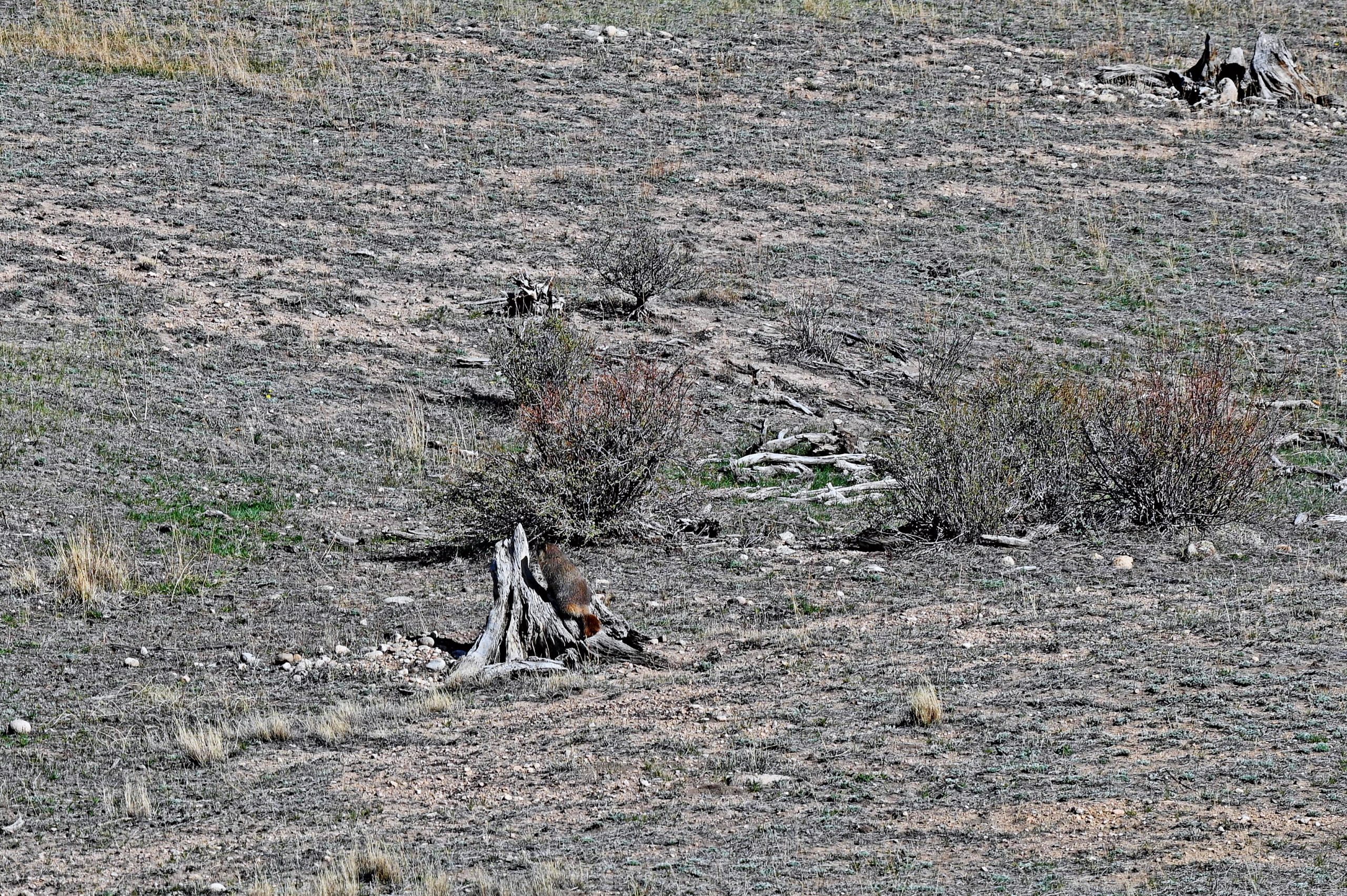
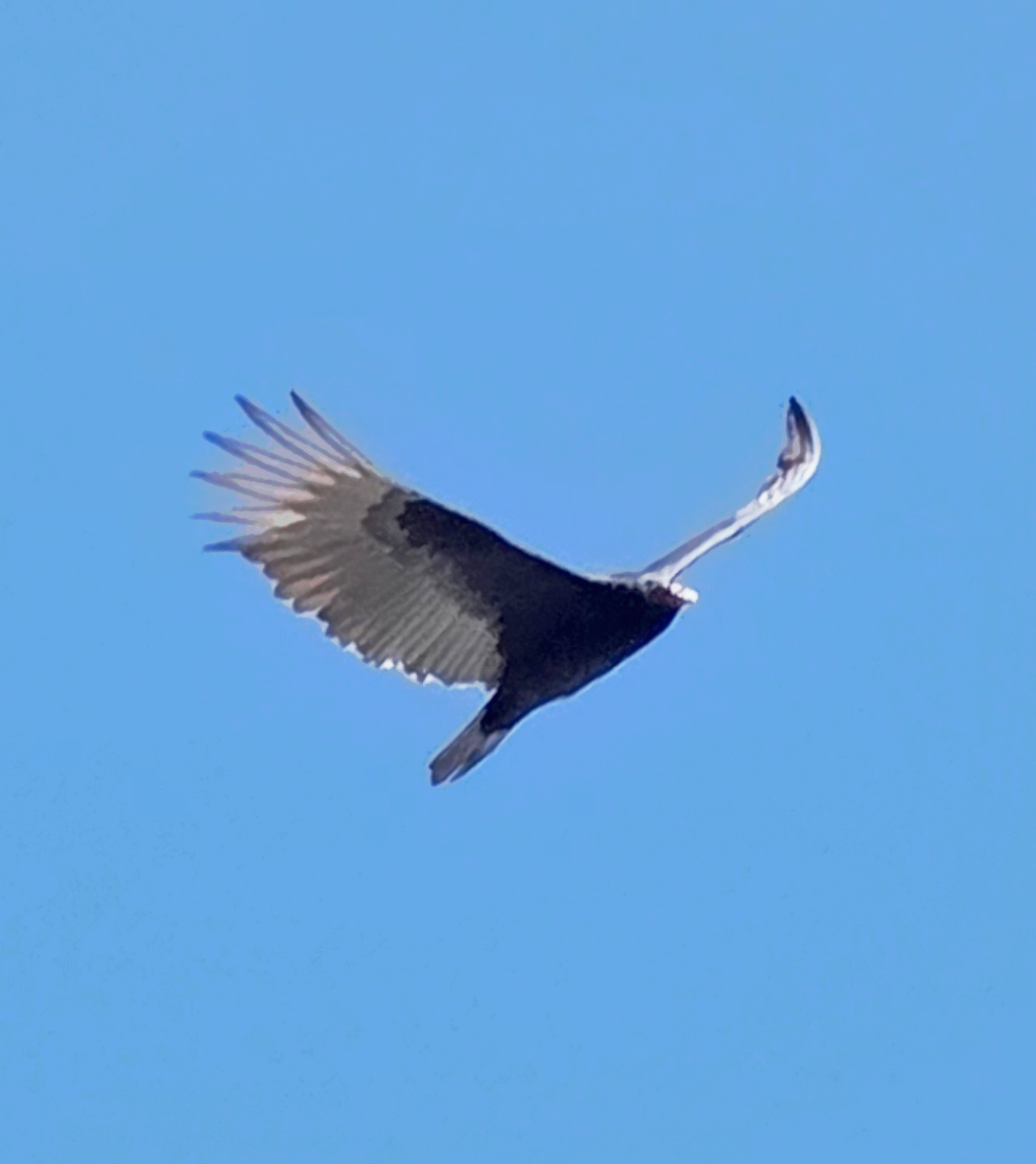
We hike about a mile into this silence and witness a small alpine drama. A marmot and two birds of prey cross our path. We sit down and watch, fascinated, as the marmot scurries with surprising speed to the entrance of its burrow, letting out piercing warning calls. The birds of prey circle patiently but eventually give up and move on. As soon as the danger has passed, the marmot begins to graze peacefully again—though it keeps a close eye on the safety of its burrow and repeatedly peeks over at us curiously. After fifteen minutes, we gather ourselves and head back to the car.
Gallery IV: Encounters at Forest Canyon
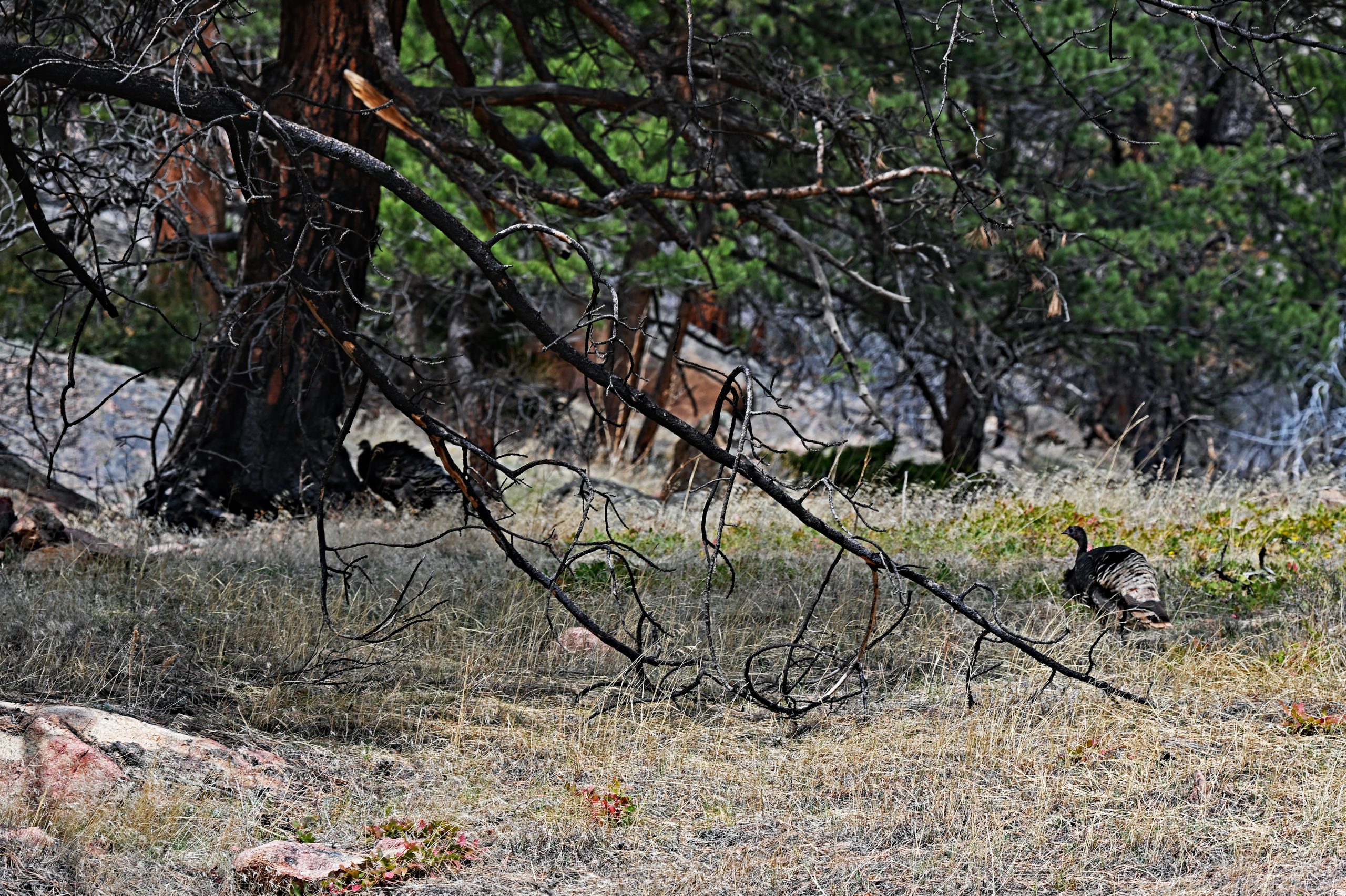
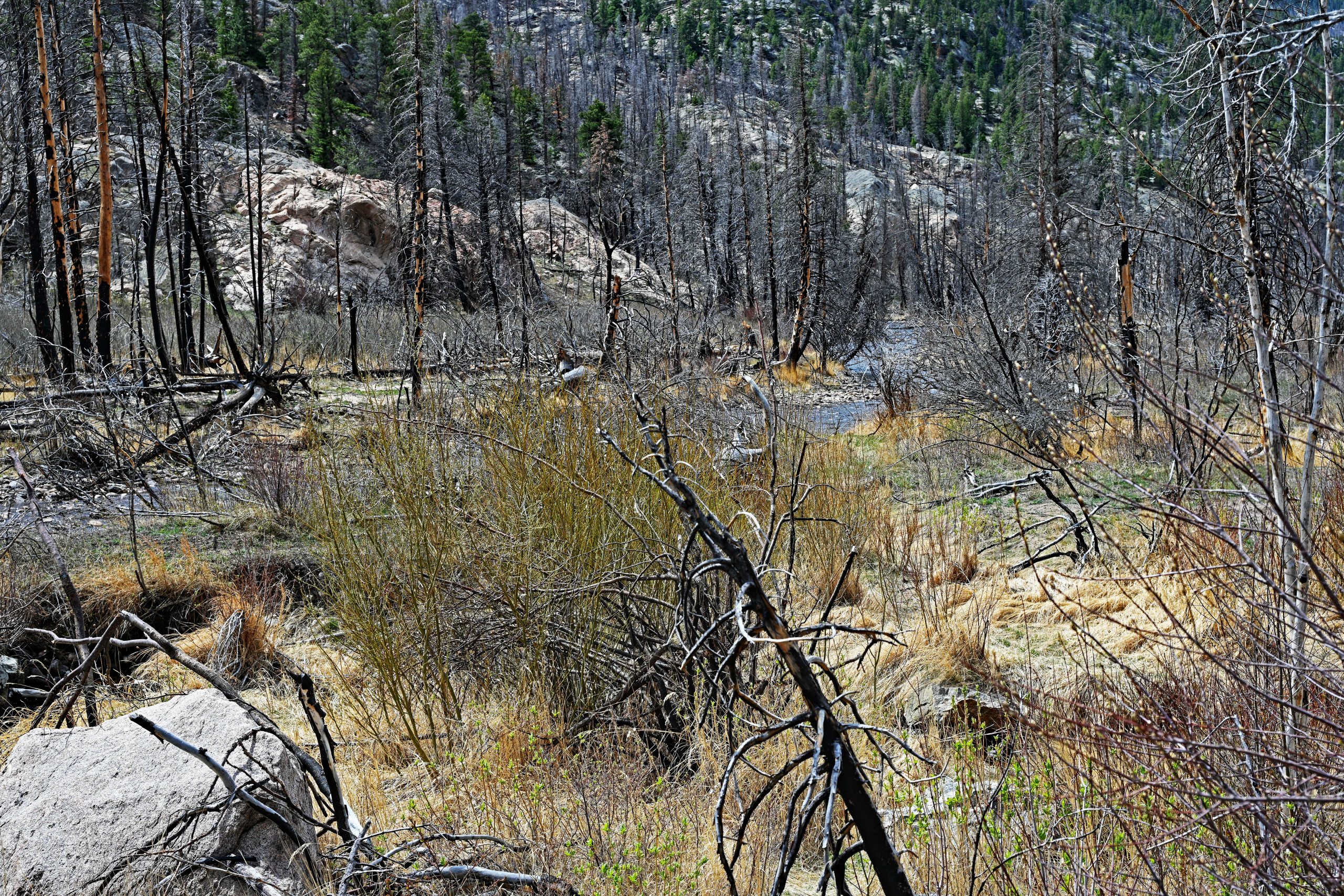
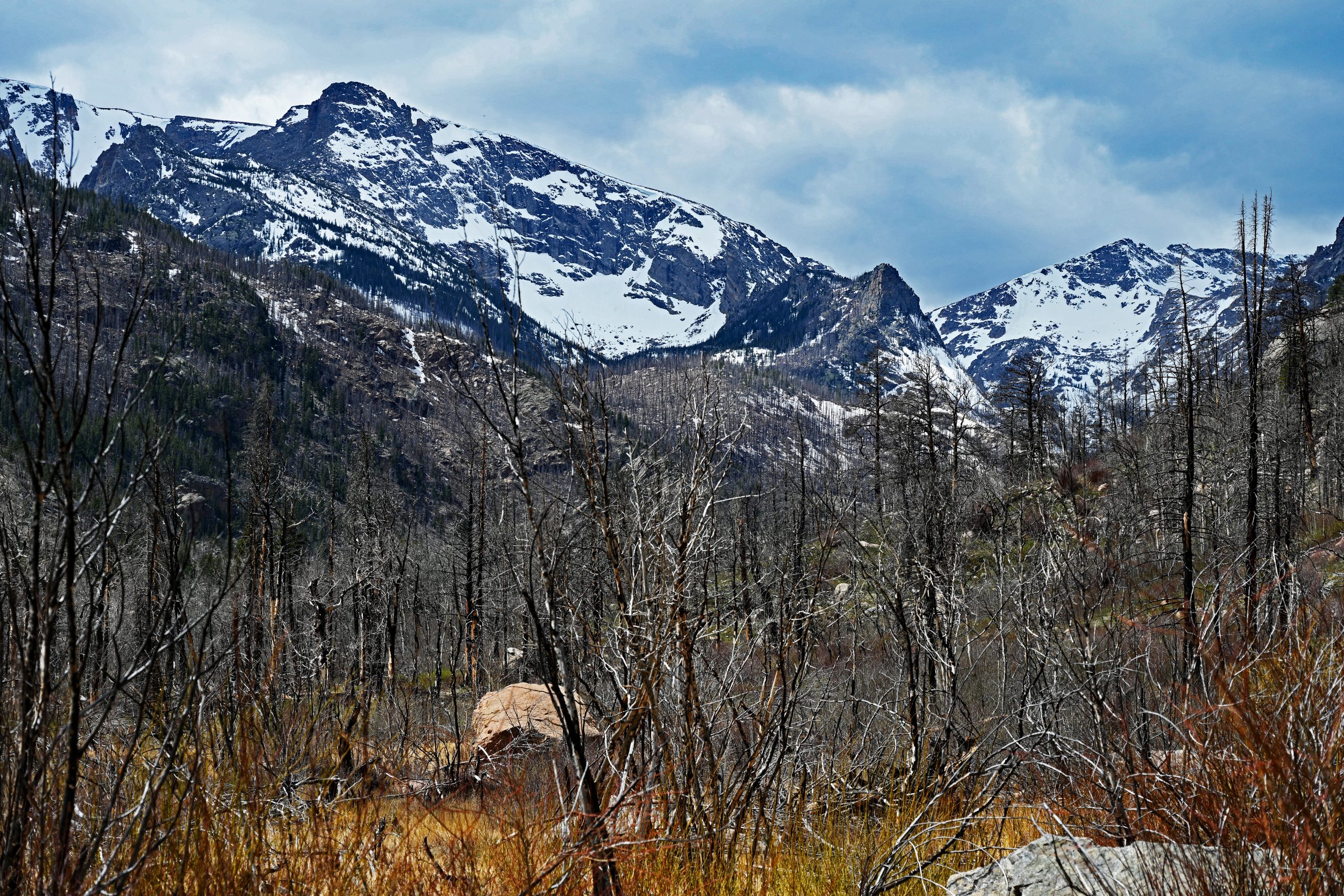
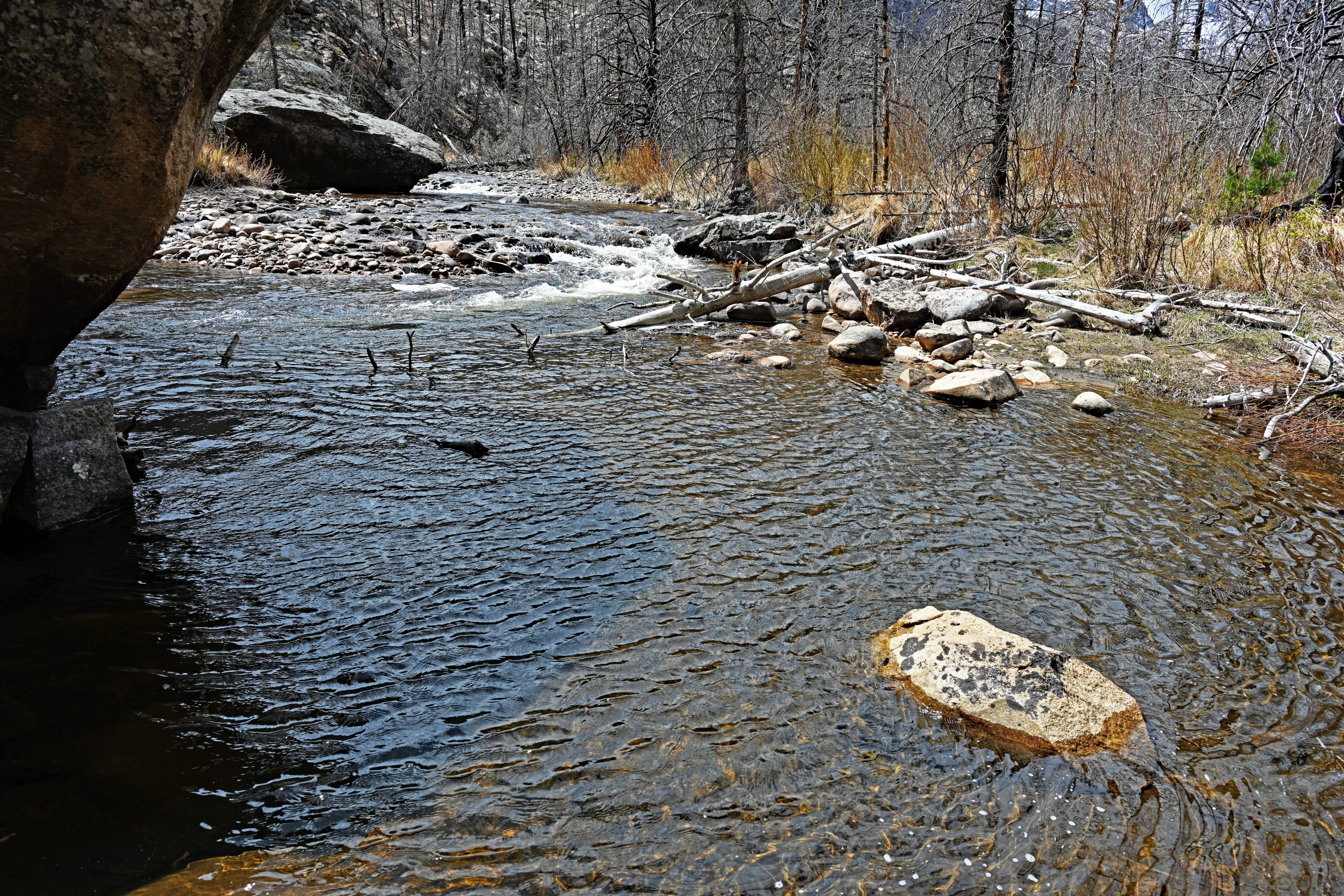
The journey continues toward the trail to “The Pool,” but the road is closed after only half a mile. As we get out, we experience an unexpected surprise: above the parking lot, two peacocks strut through the area. We have to cover the first 0.7 miles on the dusty road before we finally reach the actual trail and leave the dust behind. The path leads us through a forest that is scarred; a large fire raged here years ago. Among the silvery skeletons of the dead trees, a few green survivors stand scattered, and the new growth is already pushing vigorously toward the light at a height of up to two meters—a hopeful sight amidst the destruction.
The view here is less spectacular, and after a short time, the path moves away from the Big Thompson River. The weather finally turns; light rain showers alternate, and menacingly dark clouds gather over Terra Tomah Mountain. When the rain intensifies and orientation becomes difficult without a cell signal, we decide with a heavy heart to turn back. Only when we have reception again do we notice that we were probably just before the destination at Windy Gulch. Almost mockingly, the sun breaks through the clouds again—the weather luck is truly not on our side today.
Gallery V: Between Ash and New Life
To conclude the day, we head for Sprague Lake. No sooner is the engine turned off than rain drums on the car roof again. We do not let ourselves be discouraged and venture a walk along the right shore of the lake. But a biting cold wind soon drives us back. Suddenly, it is no longer just drops, but small hailstones pelting down on us. April shows us its uncomfortable side today. Despite the vagaries of the weather and the cut-short hikes, we take home images and experiences that will stay with us for a long time—from the raw power of the mountains to the brave little marmot.