
It is a profound feeling to stand before the Utah State Capitol. Even from a distance, the building thrones majestically upon its hill, its massive white dome catching the sunlight and radiating softly over Salt Lake City. As I approach the main entrance, I feel the monumental power of this place. Architect Richard K.A. Kletting created a masterpiece of Neoclassical Revival here; the 52 Corinthian columns stand like guardians of democracy. The gray exterior, made of quartz monzonite quarried from the depths of Little Cottonwood Canyon, lends the structure an almost eternal permanence. It is hard to imagine that 800 train carloads of stone were required for this feat, financed in part by the inheritance tax from the death of railroad tycoon Edward Henry Harriman.
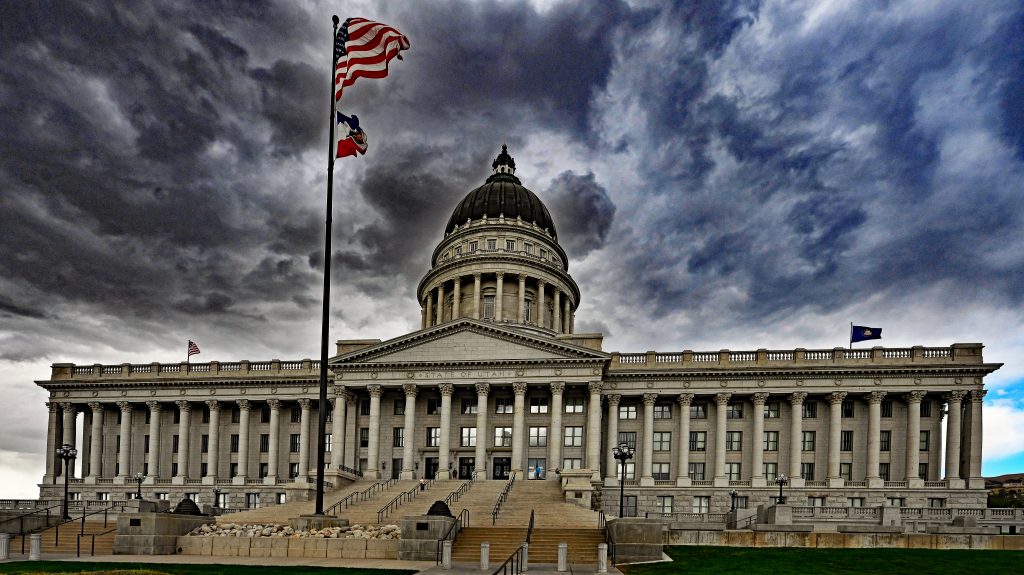
The monument of the gold rush in the evening light
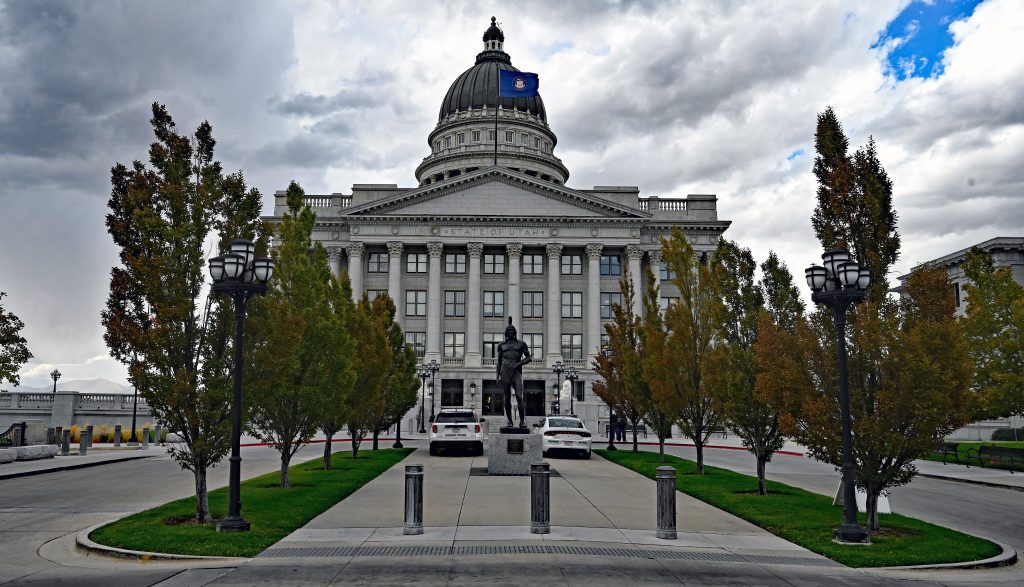
Origin and present
The moment I step inside, I am greeted by a cool, venerable atmosphere. The white Georgia marble gleams beneath my feet, and my gaze inevitably wanders upward into the vast rotunda. On the walls, murals such as “The Passing of the Wagons” tell of the hardships of the pioneers who looked into this valley in 1847 and decided: this is the place.
In one of the niches, I discover a piece of American symbolism: a gleaming replica of the Liberty Bell. It appears massive and heavy, nearly a ton of bronze. Unlike the cracked original in Philadelphia, this bell here in the Capitol could ring out with a full, pure tone of freedom, just as the biblical inscription around its rim promises.
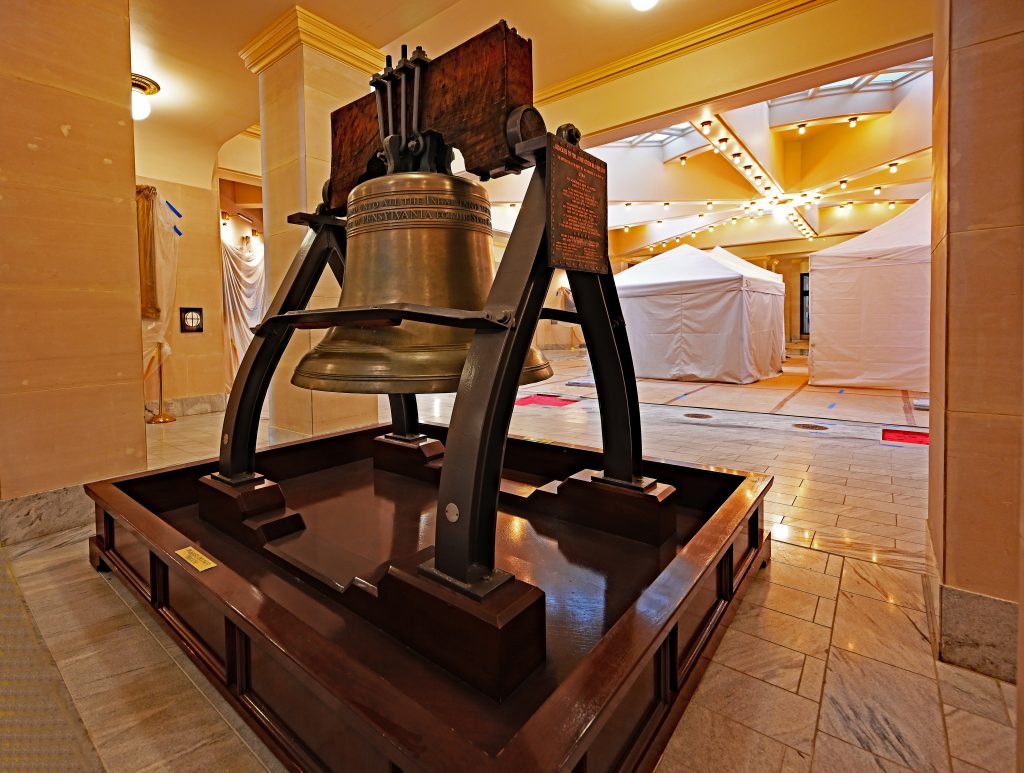
Freedom in the heart of Utah: The Liberty Bell replica in the State Capitol
I ascend the wide flights of stairs and am greeted by “The Great Utahns.” These allegorical bronze statues, standing over eleven feet tall, seem almost alive. One muse in particular, guiding a young girl as she reads, captures my attention—a beautiful symbol of the passing on of knowledge and culture.
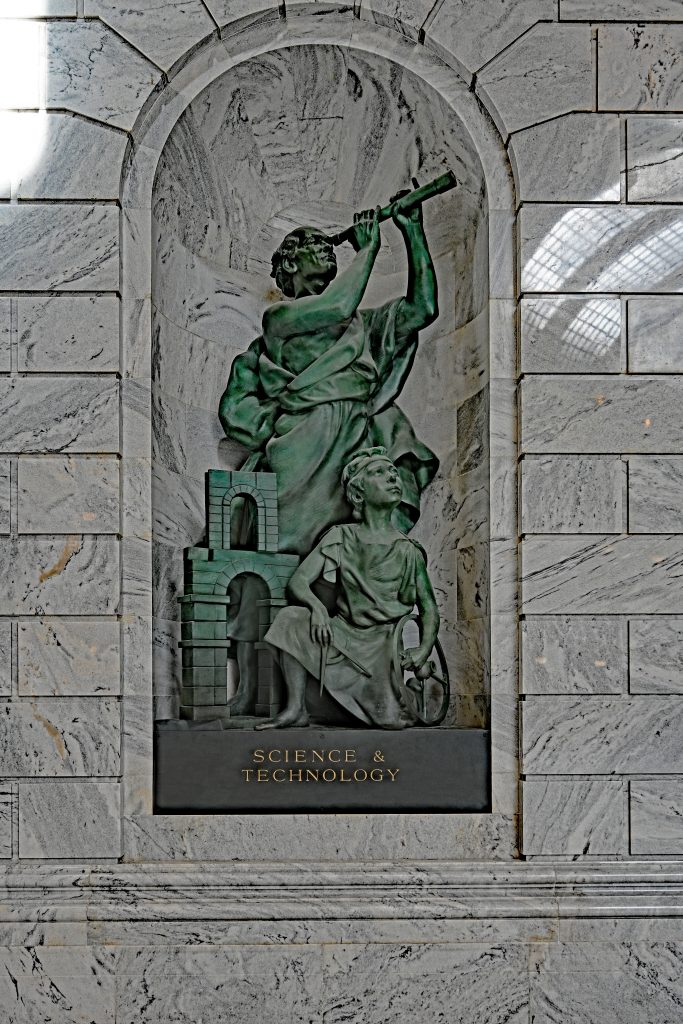
One of the four “The Great Utahns”
My path leads me further to the Governor’s Reception Room, famously known as the Gold Room. The name is literal here: genuine leaf gold shimmers everywhere on the walls and ceiling. The opulence is almost overwhelming—a place created for state visits and formal receptions.
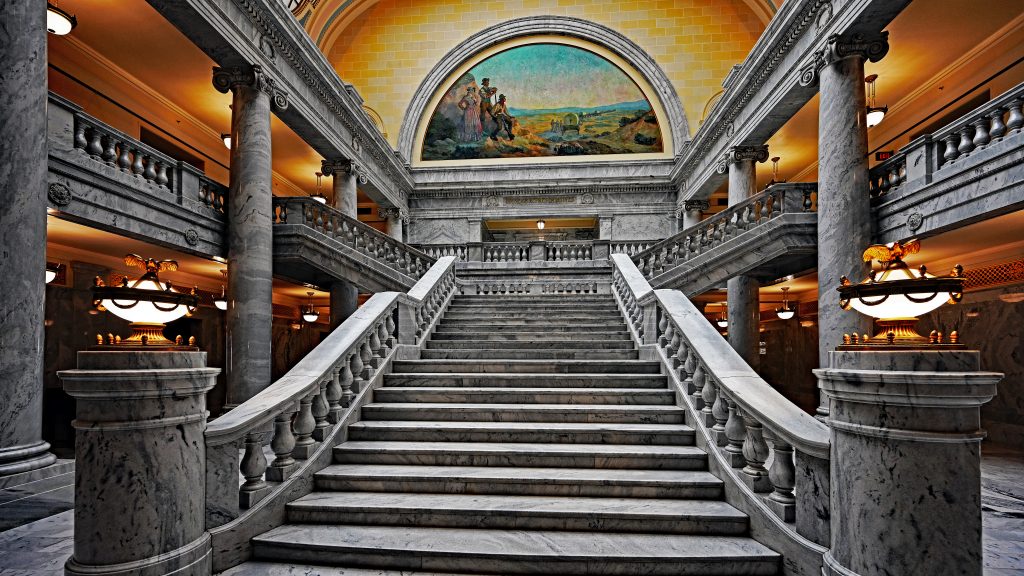
Symmetry of democracy
Only a few steps away, I enter the Supreme Court Chamber. Here, the mood is serious and focused. The golden-brown Utah honeycomb limestone gives the room a warm, earthy note. Behind the justices’ bench, a painting of Rainbow Bridge dominates the scene—a natural wonder from southern Utah serving as a silent witness to the administration of justice.
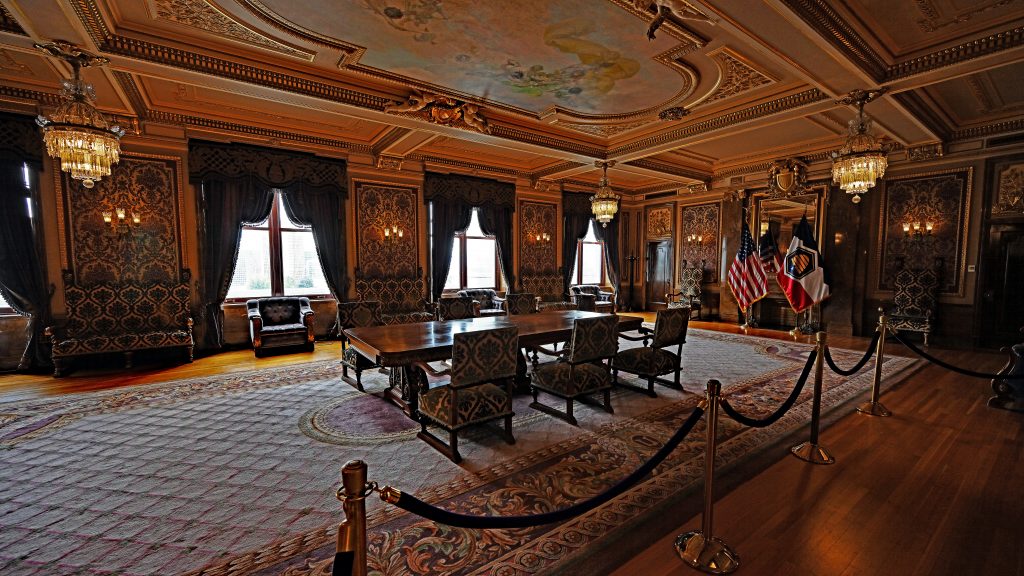
The magnificent Governor’s Reception Room
My next stop is the Senate Chamber. What makes this hall so special is its commitment to tradition. While modern office furniture often feels sterile, the original dark wood roll-top desks are still in use here. Every senator has a permanent place at one of these historical pieces. Stretched across the front of the chamber is a massive landscape painting that brings Utah’s vast nature into the room—a constant reminder to the representatives of the people for whom they work.
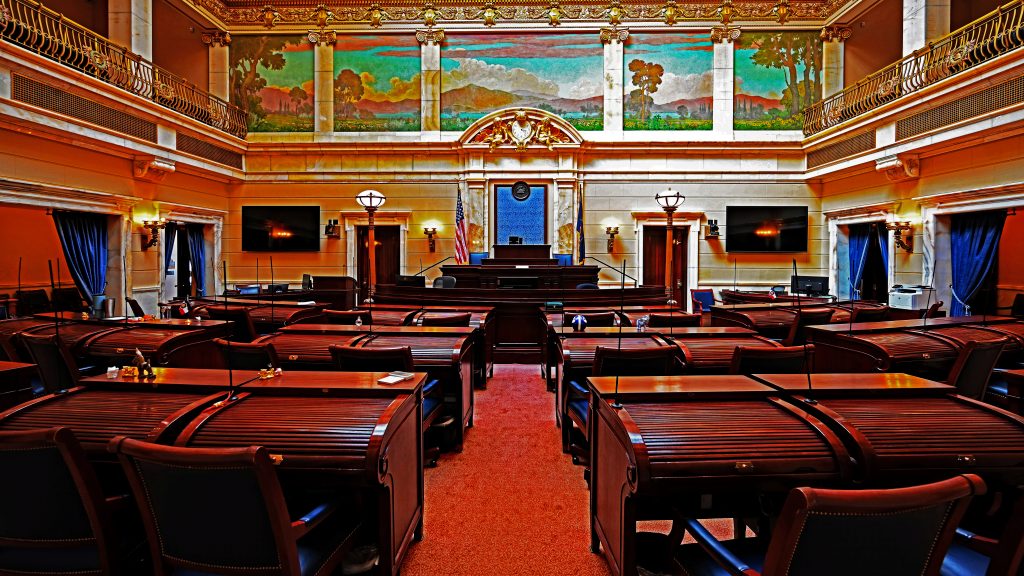
Chamber of Senate
In the center of the building, I look up once more. A colossal chandelier hangs like a glass star from a long cable directly beneath the dome. The light streaming through the windows in the drum of the dome refracts off the marble of the ionic columns, making the entire rotunda glow. It is a play of light, shadow, and architecture that makes me pause for a moment.
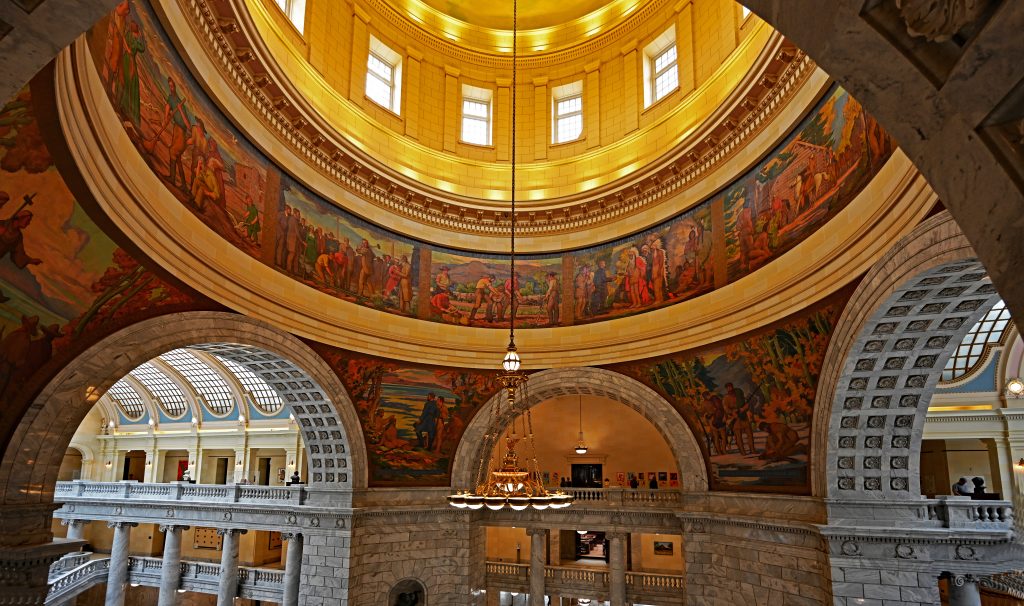
Under the golden dome
The atmosphere in the House of Representatives Chamber is different. Here beats the heart of active legislation. Seventy-five representatives find their seats at modern desks, surrounded by Corinthian columns and beneath an impressive glass ceiling. Above the Speaker’s rostrum, the words “Vox Populi”—the voice of the people—are inscribed simply but powerfully. It is a stirring commitment that echoes through this neoclassical hall.
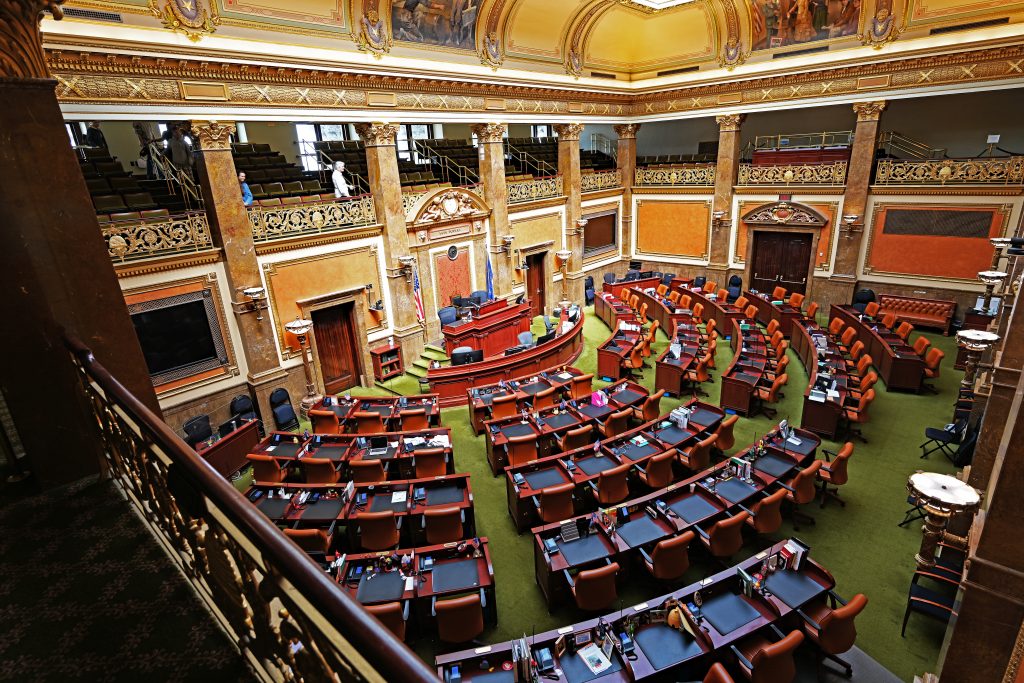
The heart of legislation: The House of Representatives Chamber in the Utah State Capitol
Before finally leaving the building through the heavy portals, I stop once more in front of the statue of Brigham Young. Cast in bronze, the former governor and pioneer appears resolute. He gazes out over the land he once helped settle, connecting the various threads of Utah’s history as a “Religious Leader, Pioneer, and Statesman.”
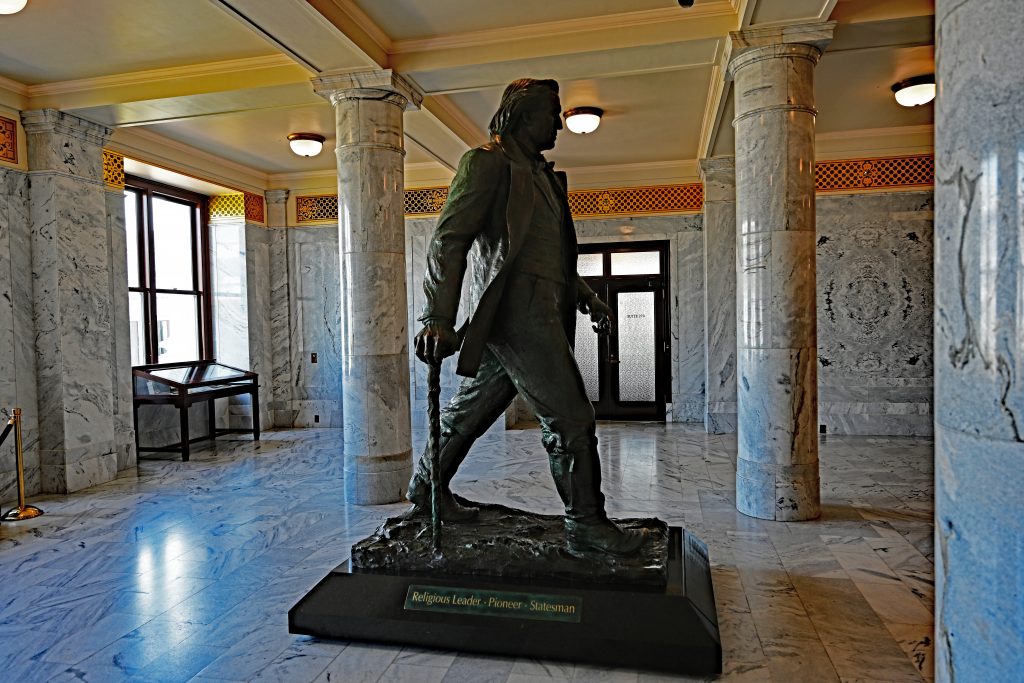
Governor, Prophet, and Pioneer: A monument to Brigham Young
Between Yesterday and Tomorrow – The Evolving Capitol Complex
As I step back outside through the heavy portals of the Capitol, I am met with a sight that completes the history of Utah. Directly opposite lies the new North Capitol Building. It is fascinating to know that this structure, which officially opened in January 2026, completes a master plan for Capitol Hill that remained unfinished for over a century. Its neoclassical design in white granite blends so seamlessly with the historic main building that one could almost forget how modern it is on the inside. Here, the cultural heart of the state now beats: the entire first floor houses the first museum dedicated exclusively to Utah’s history—a high-security shrine for over 30,000 treasures and artworks.
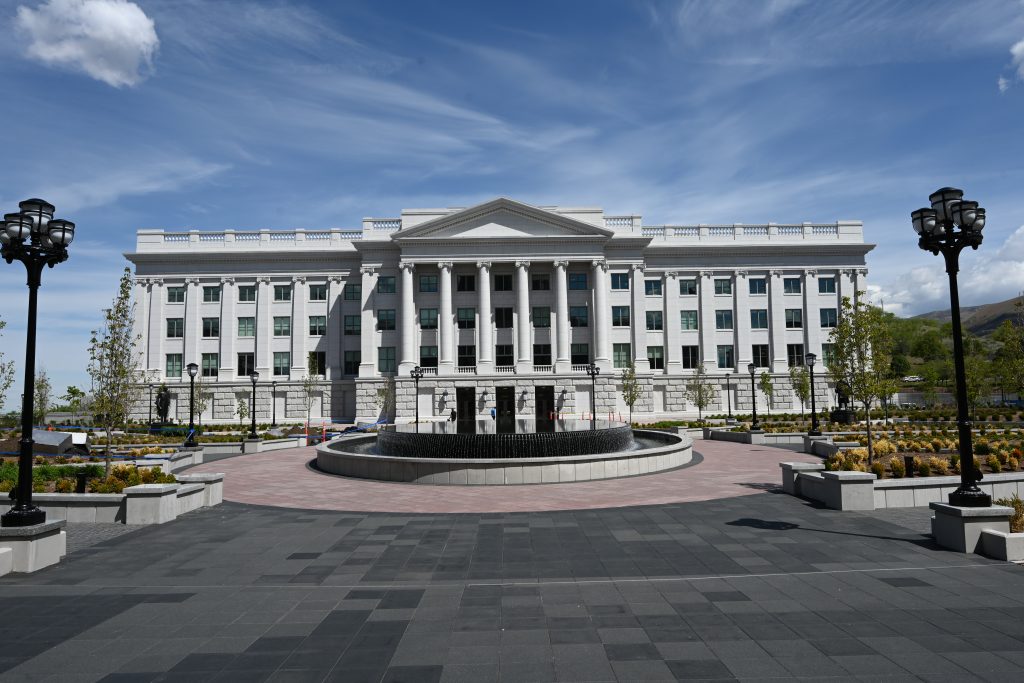
The new North Capitol Building: Home of the Museum of Utah in Salt Lake City
My gaze shifts to the left, where the Senate Building (also known as the East Office Building) stands. It acts like a loyal wingman to the Capitol. Together with its counterpart on the other side, it frames the central plaza, creating an impressive symmetry. Inside this four-story building, there is a constant buzz of activity; this is where senators have their offices and where passionate debates often take place in the committee rooms. Standing tall in the foreground is the monument to Daniel C. Jackling, a tribute to a man who shaped the mining industry and, with it, the region’s prosperity
The Senate Building: Modern government architecture on Capitol Hill in Salt Lake City
I wander over to the west side of the complex to its architectural twin, the House Building. It is both a mirror image and a functional counterpart, housing the workspaces for the 75 representatives of the House. But what fascinates me most here is the statue in the foreground: Dr. Martha Hughes Cannon. A woman who made history in 1896 as the first woman in the U.S. to be elected to a state senate. The irony that she defeated her own husband in the election adds a very special, human touch of determination and pioneering spirit to this monument.
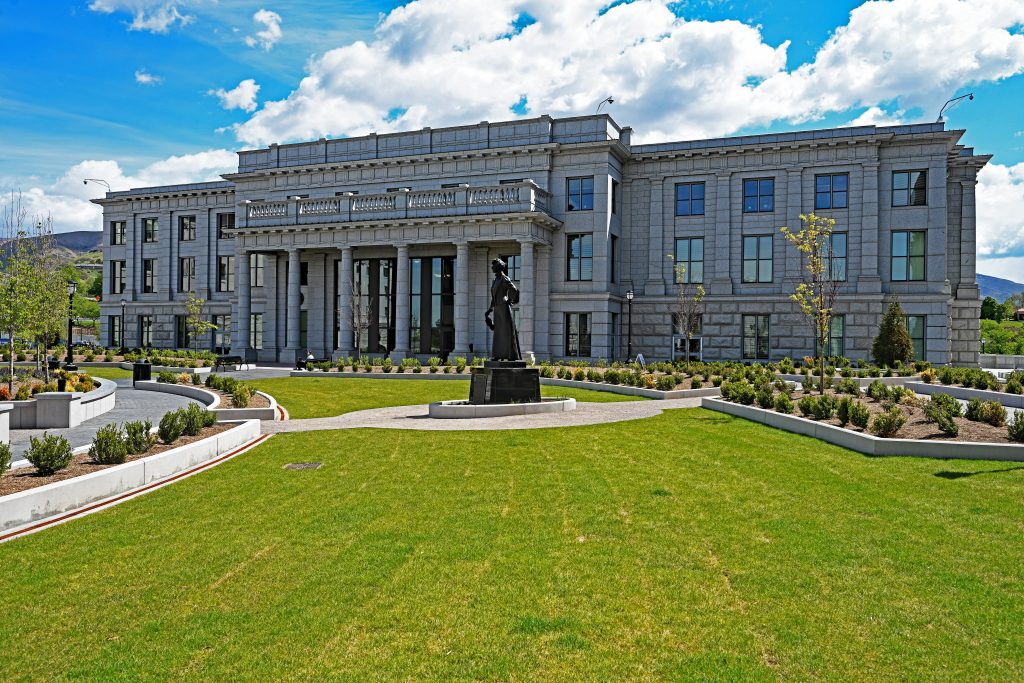
Pioneer of Democracy: The House Building with the Martha Hughes Cannon statue
That is enough architecture and history for one day. In truth, I gathered these impressions over two separate days—if you look closely, you can tell by the changing play of the clouds and the color of the sky, which was at times steel blue and at others softly overcast above Utah’s monumental structures.