
The Awakening of the Mountain World in Val Piora
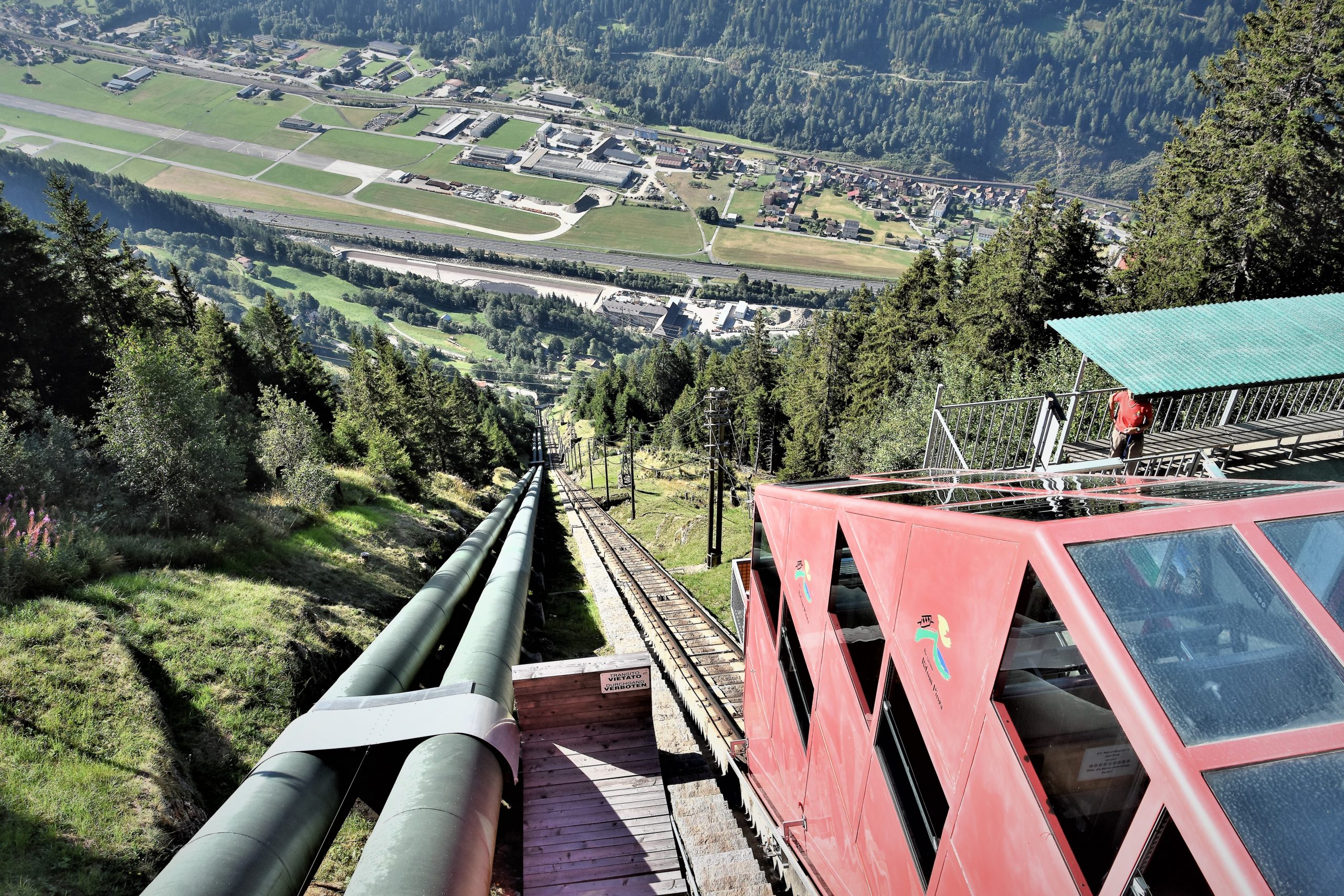
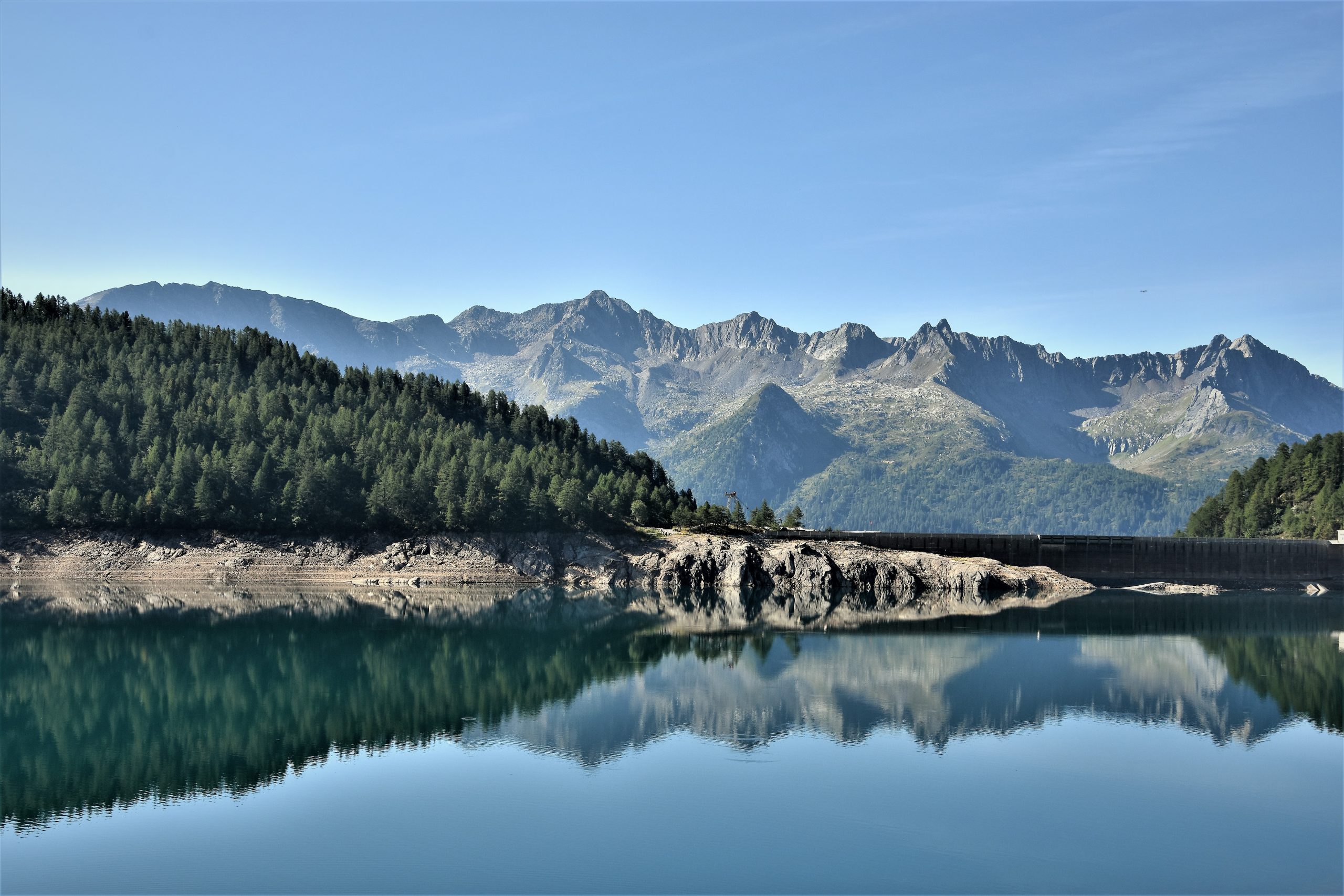
The adventure begins with a gentle jolt. Beneath us, the historic Ritom Funicular rattles, and as we stand inside the red carriages, we feel the dizzying incline of up to 87.8%. Outside, the green Ticino landscape flashes past at a rapid pace while the train doggedly fights its way up the steep flank to the Piora mountain station in just twelve minutes. Upon arrival at the top, the cool, crisp mountain air welcomes us at around 1800 metres above sea level. An easy, carefree walk of about twenty minutes leads us through the gently awakening high plateau to the massive dam wall of Lago Ritom.
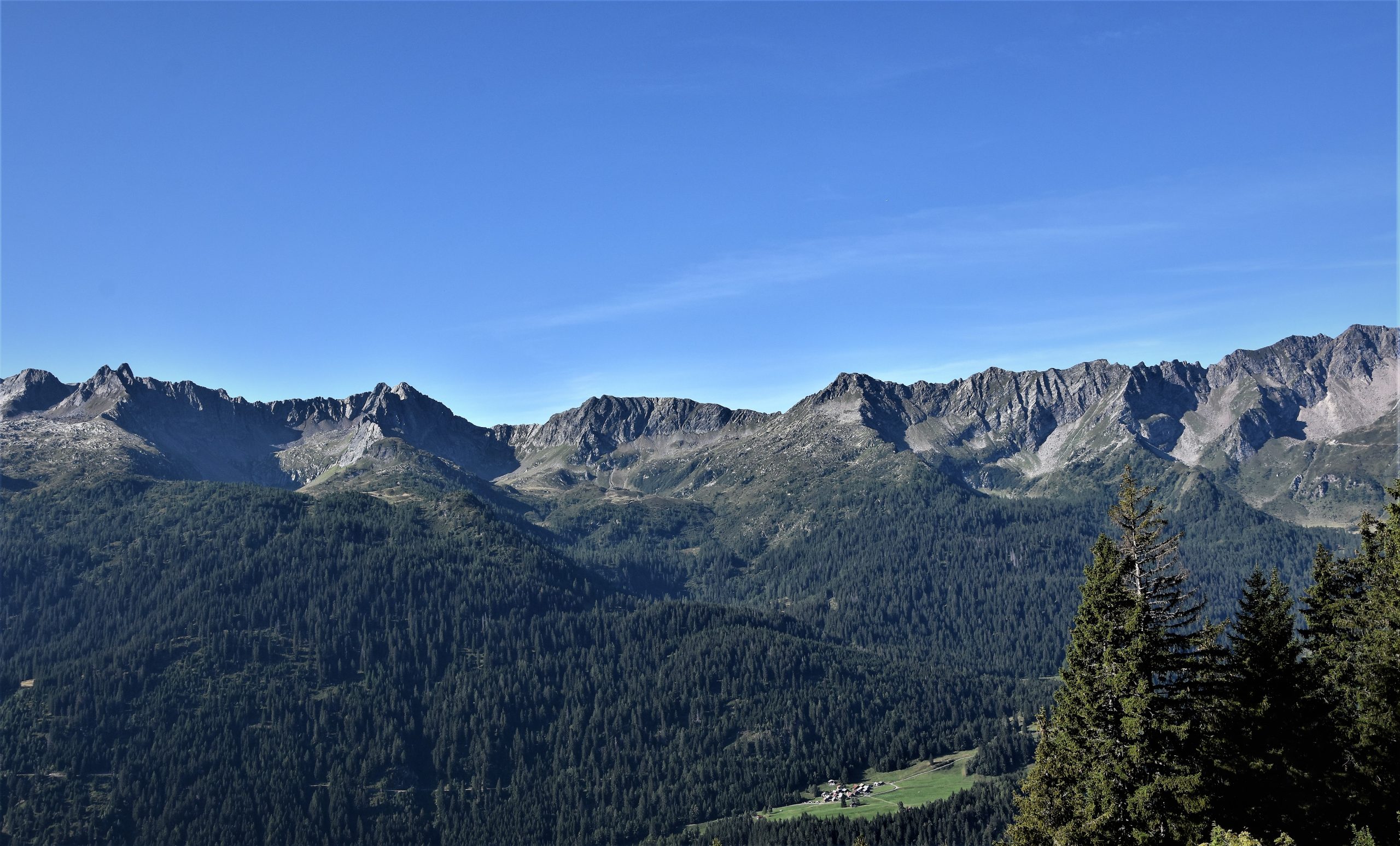
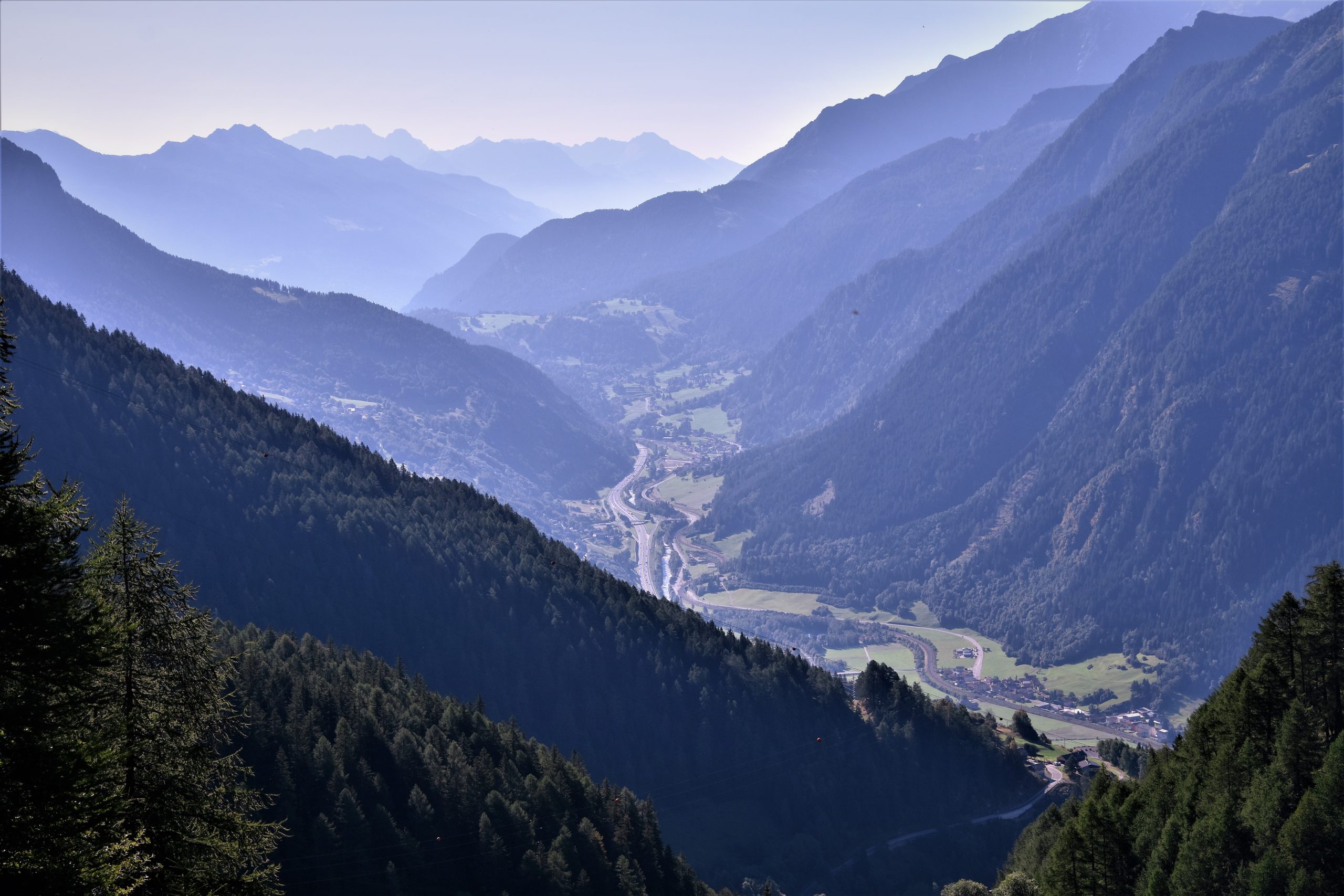
Even here, the scenery completely captivates us. Our gaze sweeps far across the valley directly to the south. There, the rocky peaks of the Gotthard Group, sharply defined by the sunlight, sit enthroned like giants. Their mighty ridges form an insurmountable stone wall separating the main Leventina Valley from Val Lavizzara to the west. Pizzo d’Olino and Pizzo di Prata rise with particular prominence, their grey rocky crests creating a rugged contrast against the deep blue sky. Just ten minutes later, we pause again to look down the valley towards Biasca and Bellinzona. On the right side, the steep slopes of the southern Gotthard extensions are our constant companions, while the softer foothills of the Adula Alps, shimmering in the warm light, stretch out on the left, eastern side of the valley. The massive flanks of Pizzo del Sole and the striking silhouette of Pizzo Prevat dominate the landscape here.
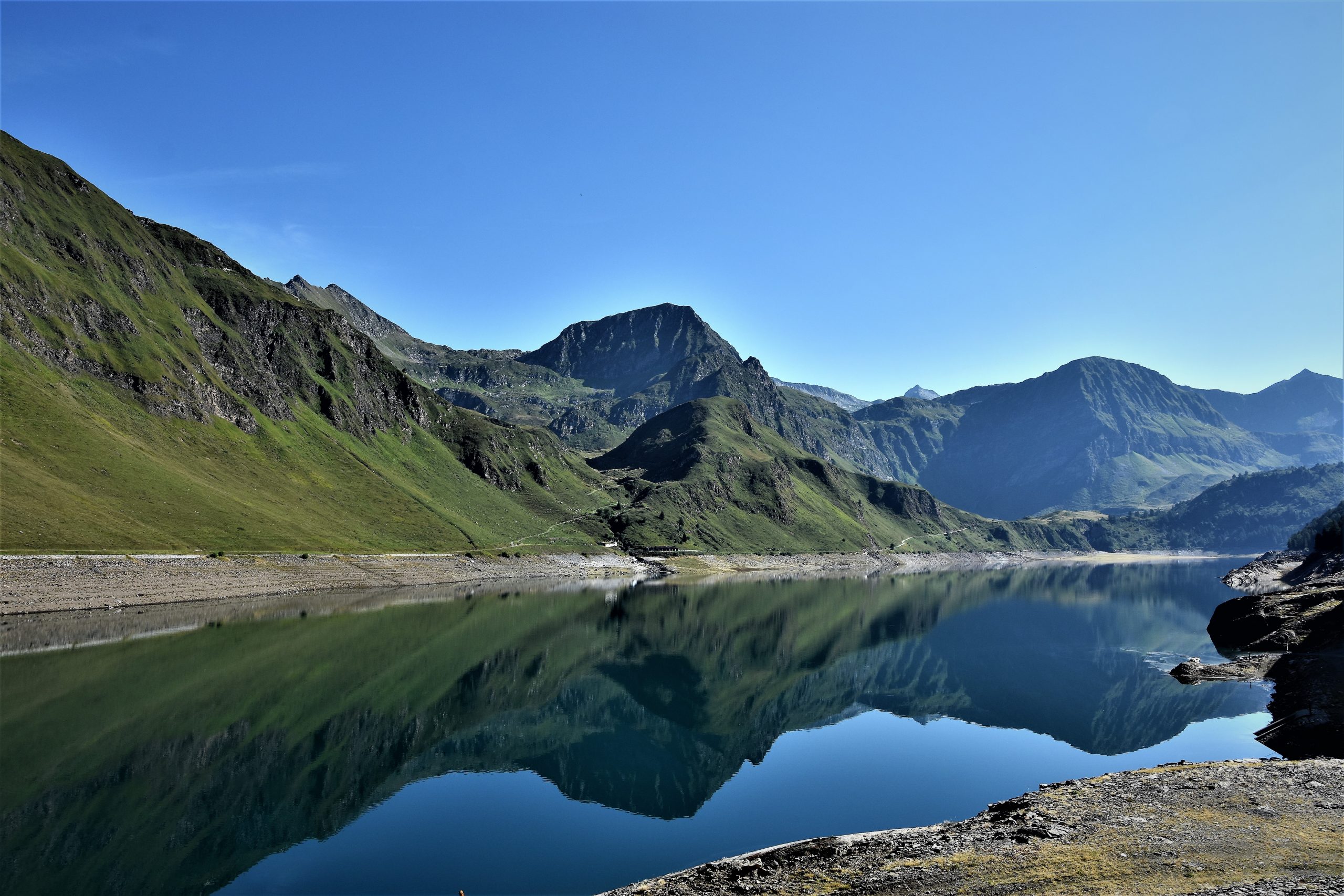
Arriving at the lakeshore, we look northeast across the vast waters of Lago Ritom. Right in the centre of the panorama, the majestic Pizzo Garzon towers like a colossal, sharp-edged pyramid. Directly in front of it and slightly to the lower right stands Pizzo Toira, a softly shaped, cone-like foothills mountain whose slopes are draped in lush green alpine meadows. Further to the right, the rugged, dark peaks of Pizzo Pioda and Pizzo d’Invert follow, bounding the horizon like a jagged crown. On the left side, the gentle, grassy ridge of Motta rounds out the view, with the narrow shoreline road winding gently along its base. Before leaving the lake behind, we turn around once more to look southwest over the dam wall back into the Valle Leventina, where the distant peaks shimmer in a soft blue morning haze.
Gallery I: The Gateway to Val Piora and the Vastness of Lake Ritom
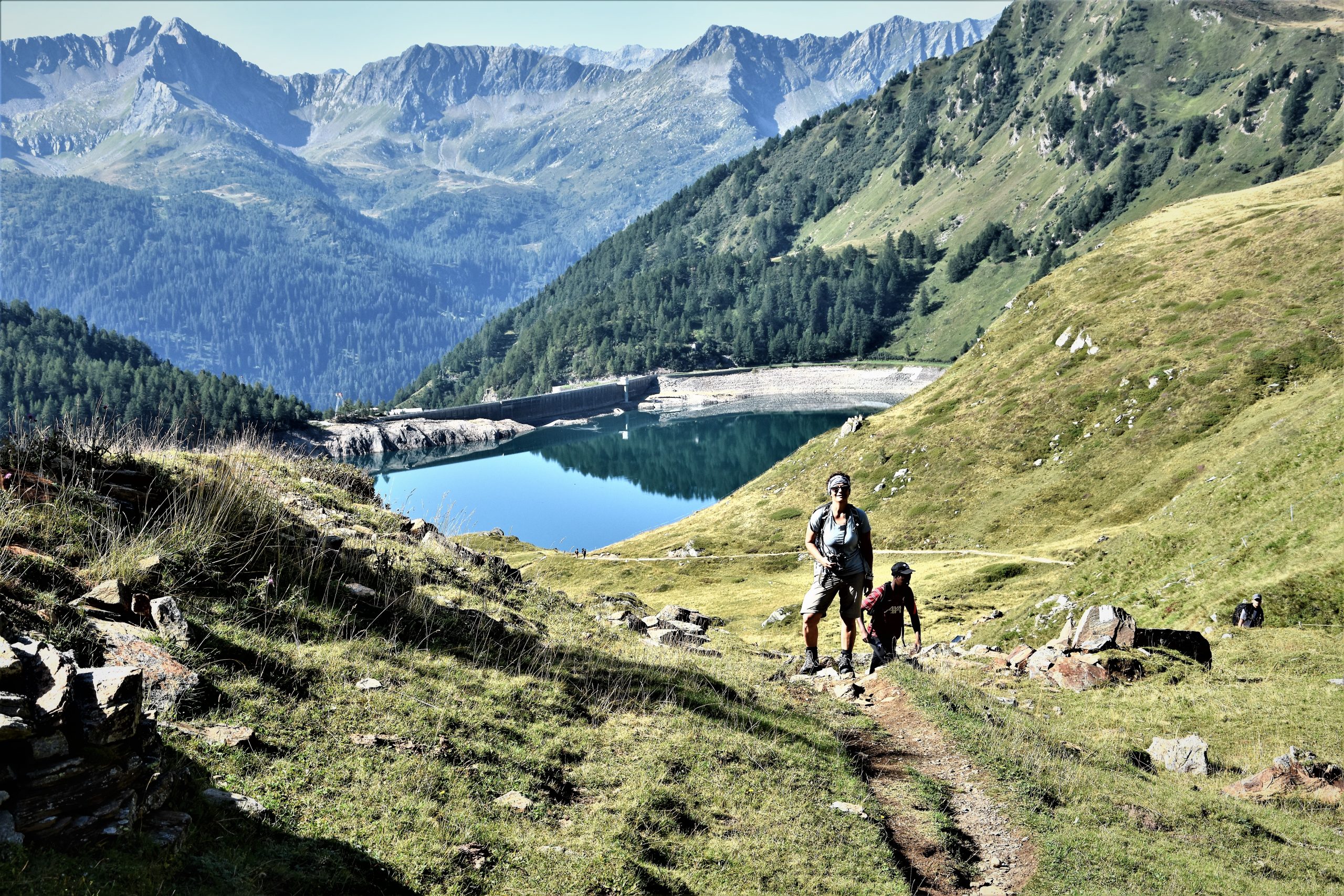
Now we leave the gentle shores of Lago Ritom, and the trail begins to climb noticeably. On our path up towards Lago di Tom, the scenery changes step by step. The wide valleys give way to a more intimate, rugged mountain landscape, which is now dominated by the striking, dark rocky peak of Pizzo Tom. Its mighty, almost intimidating rock face pushes into our field of vision again and again as we hike across lush alpine meadows dotted with colourful mountain wildflowers. It is a stony but rewarding climb, where every step feels like a path to pure happiness. A quick glance back rewards us with a fantastic bird’s-eye view of Lago Ritom, now lying deep below us, resting like a giant sapphire in its green valley basin.
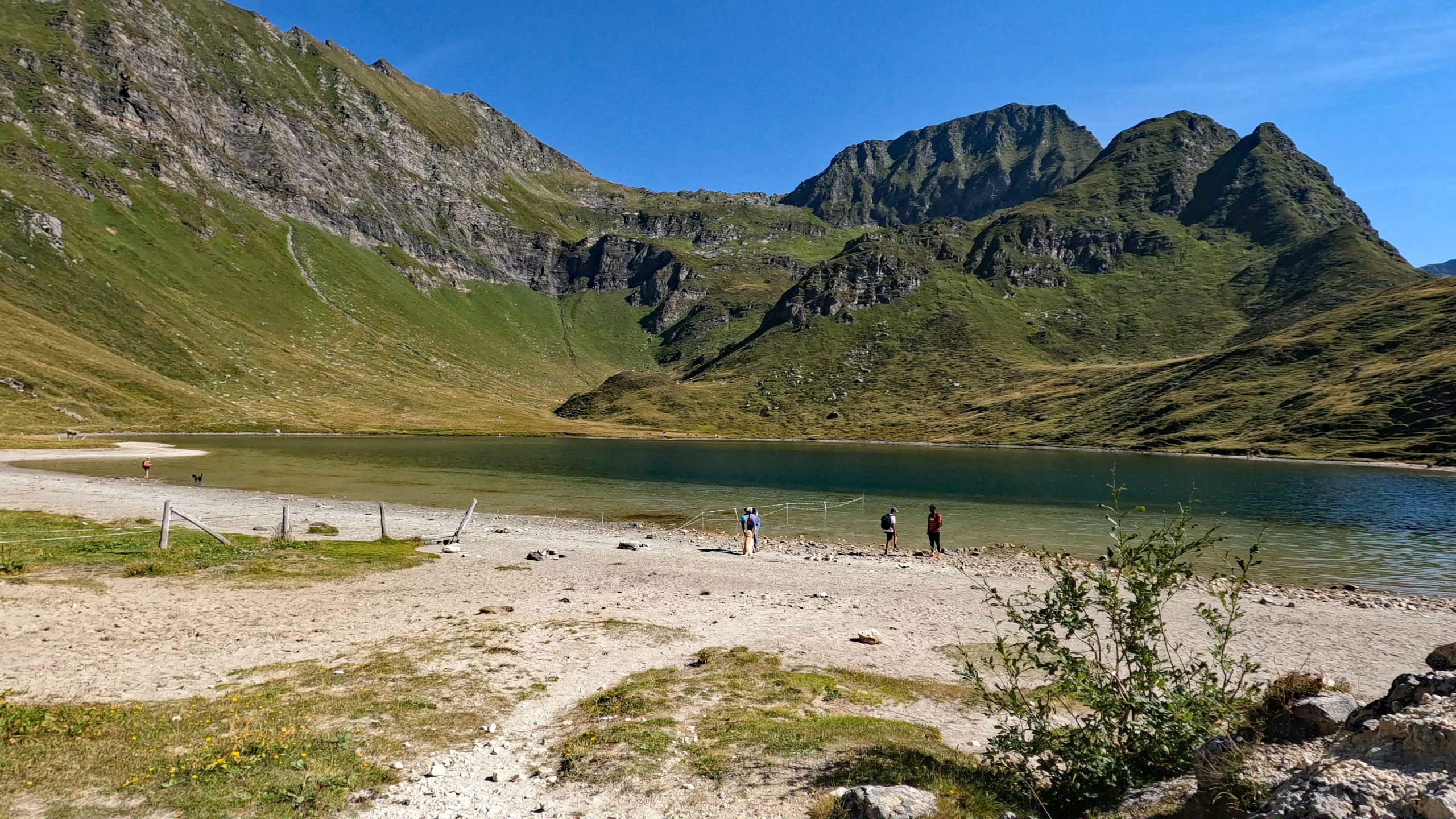
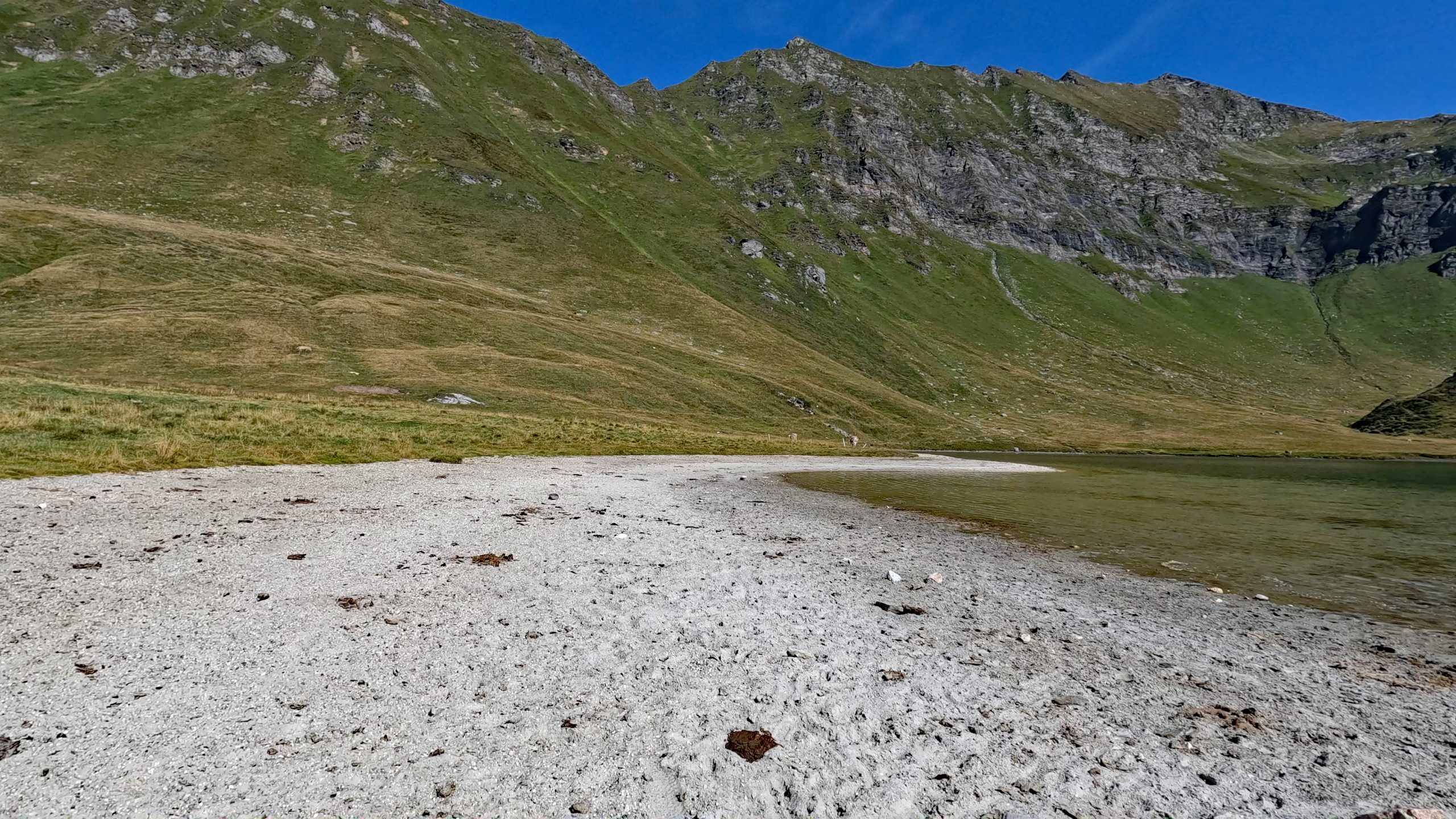
Reaching the top, the view takes our breath away. A completely unexpected, surreal panorama opens up before us. Nestled in a barren high valley lies Lago di Tom at 2020 metres. Directly behind the lake basin, the dark, forbidding rock face of Pizzo Tom towers upwards, joined on the right by the slightly lower Iréi—a grassy double-peak that drops steeply to the right. But what makes this place truly magical lies directly at our feet: the world-famous, brilliant white beach made of crushed sugar dolomite stone. The bright rock makes the water at the shore glow in an almost Caribbean turquoise.
We look across the glittering surface of the lake to a small, rustic alpine hut, behind which rises the gentle, green ridge of Motta. Right next to it, the sharper grassy peak of Iréi rises, framing the idyllic valley perfectly. In the far distance, way beyond the Valle Leventina, the bluish-shimmering, rugged peaks of Corona di Redòrta and Pizzo di Prata sparkle on the horizon. We descend completely to the shore and stroll right along the fine, pale sand beach. From this low perspective, the Caribbean atmosphere suddenly shifts into a wild, untouched solitude. The landscape feels almost arctic, like a barren, timeless moonscape in the middle of the Alps. The massive, grassy mountain slopes surround the lake like a natural fortress of stone, giving us a deep sense of peace and seclusion.
Gallery II: The Alpine Paradox at the White Beach of Lago di Tom
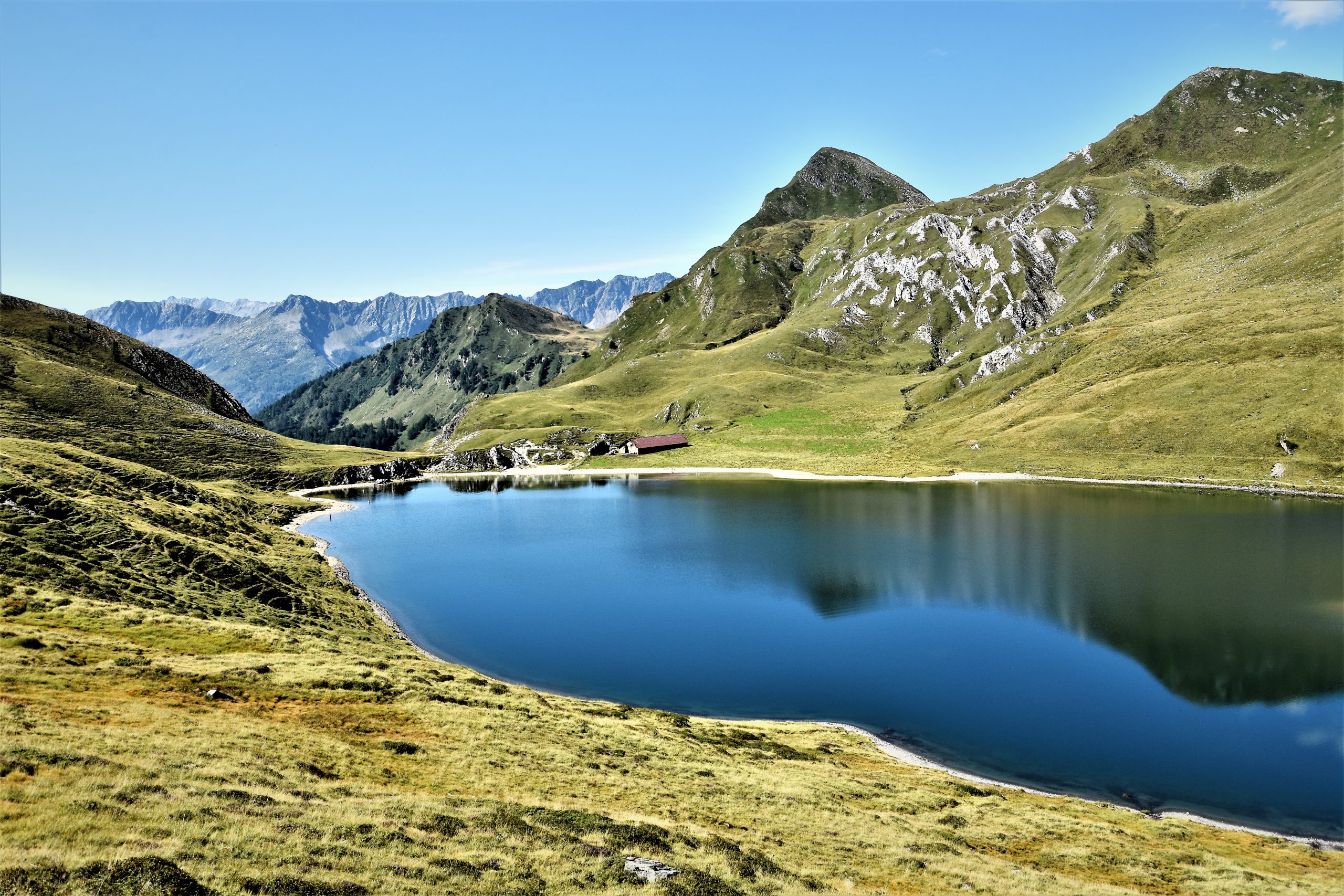
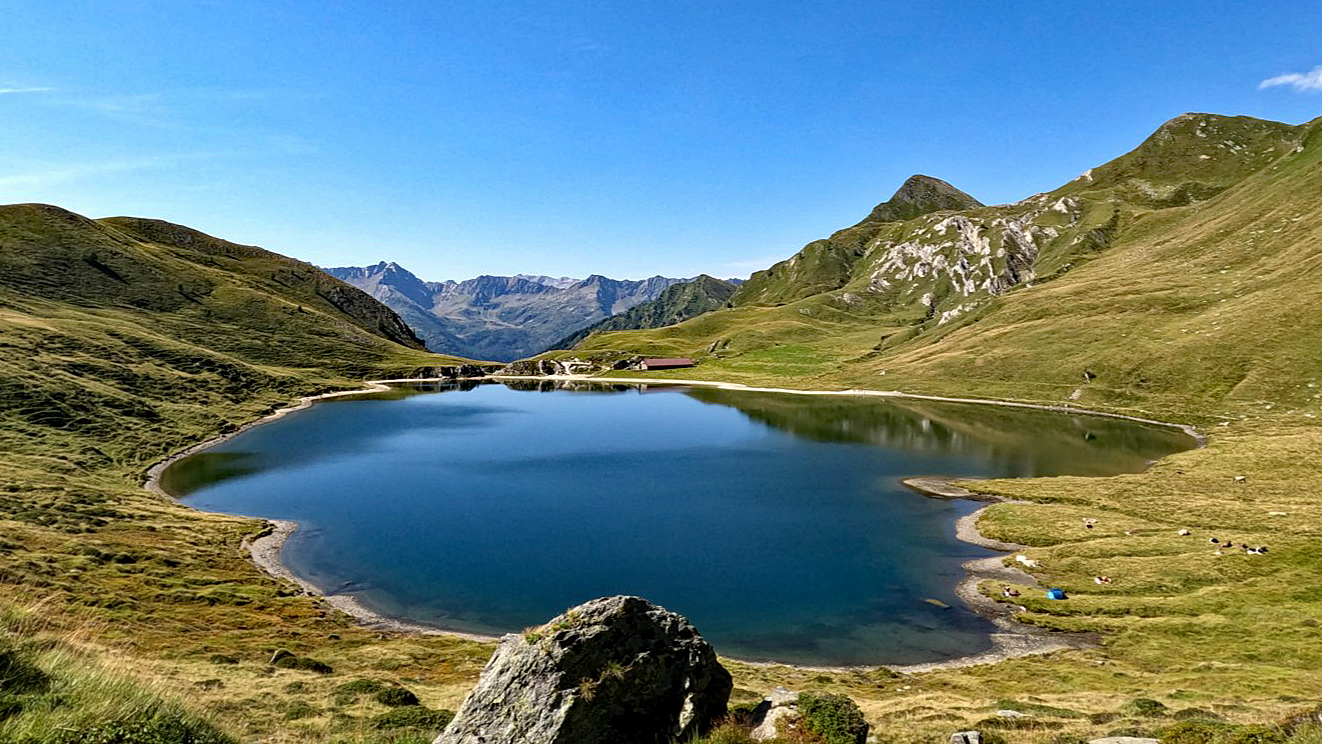
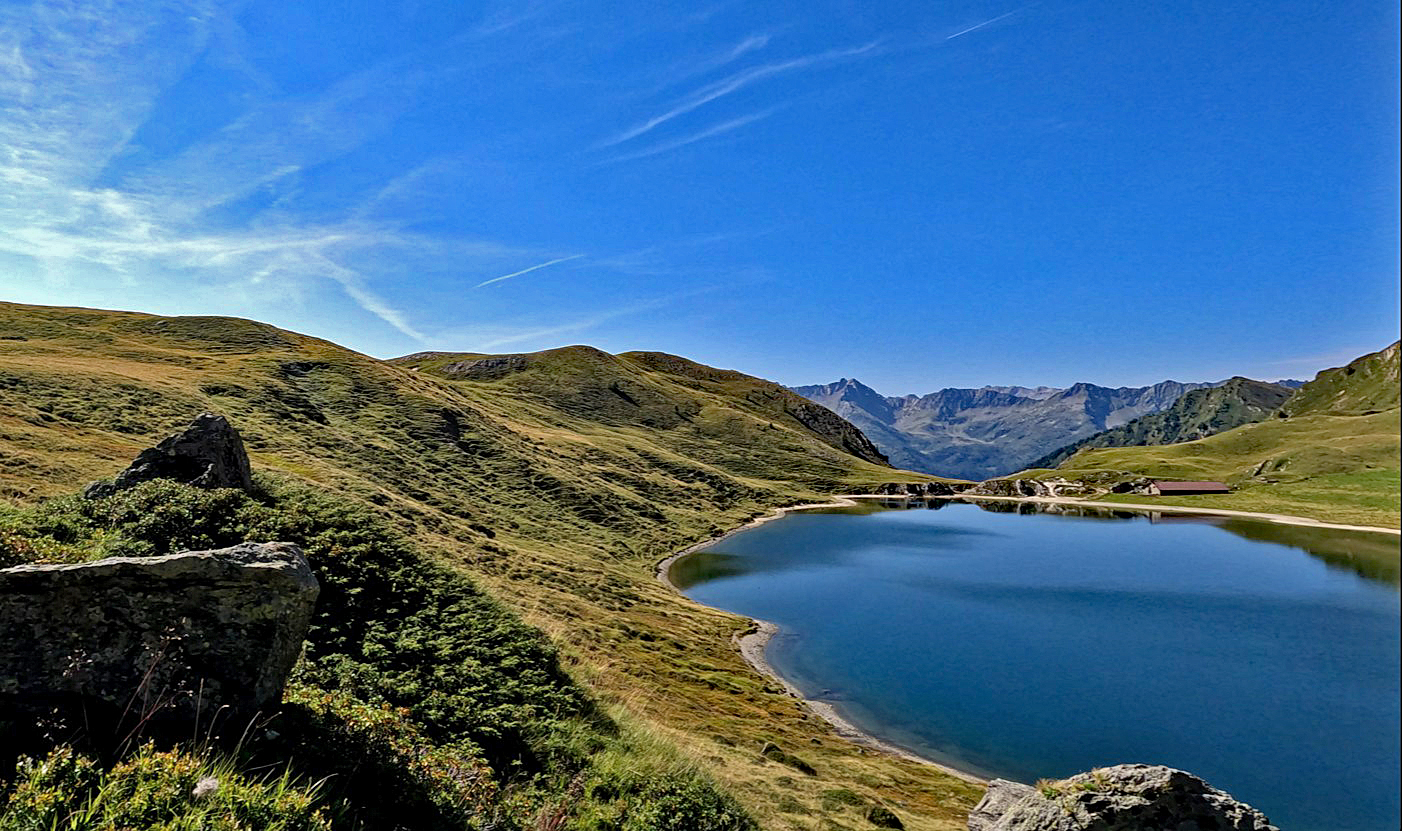
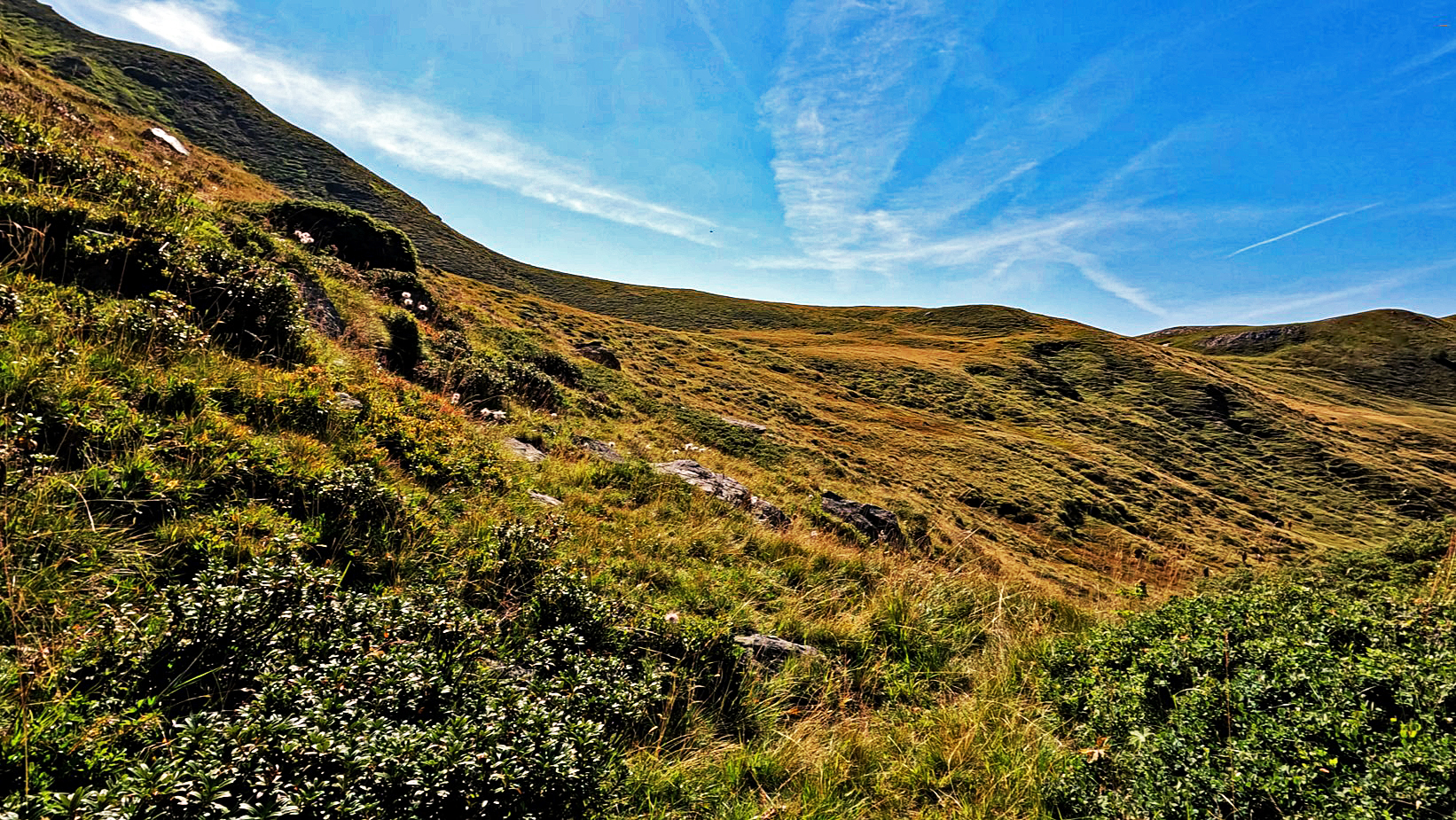
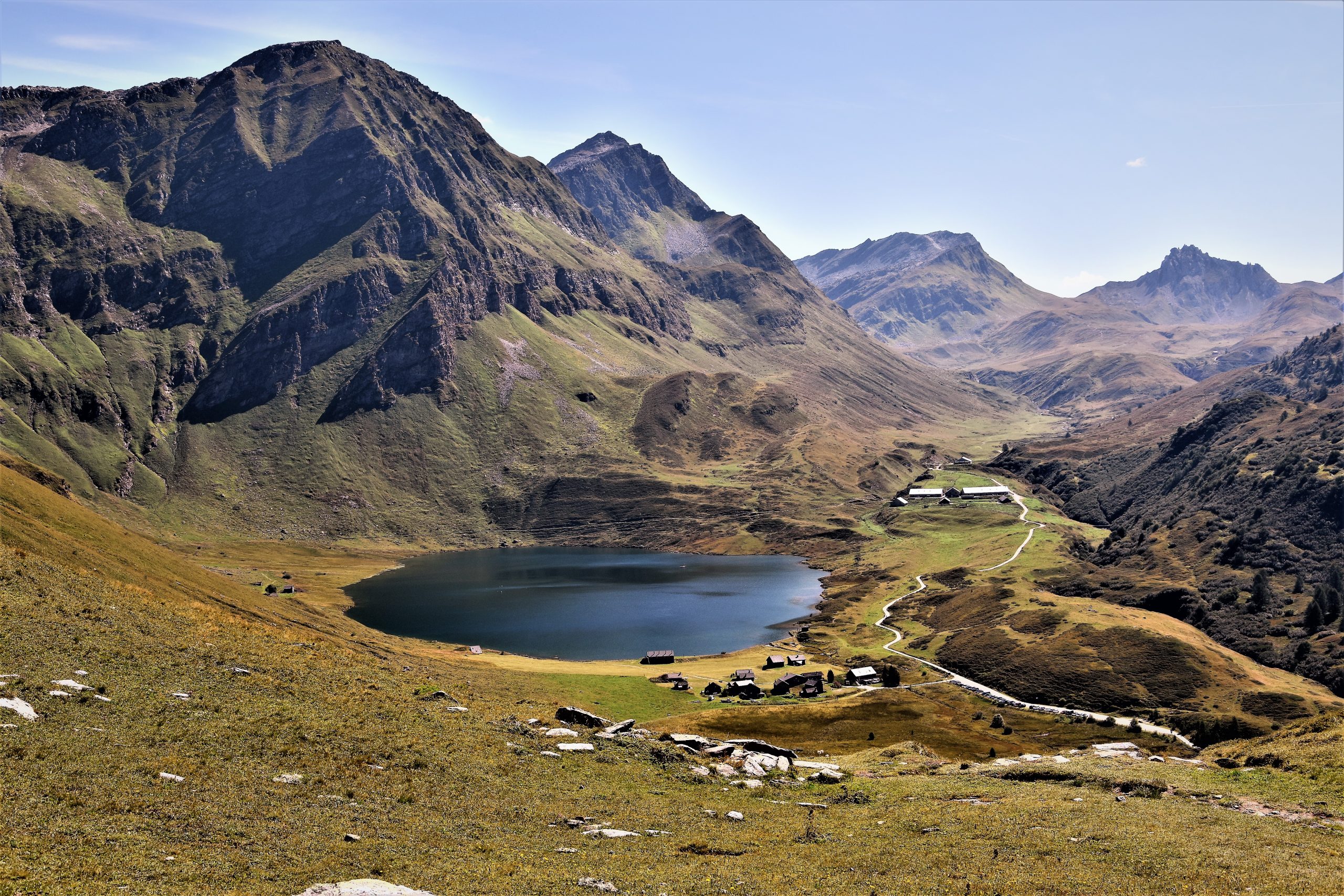
Behind the alp, the trail leads us relentlessly upwards. Down at the beach, Lago di Tom still looked like a gentle, elongated bay. But the higher we climb, the more impressive the picture becomes: when we finally stand on top of the ridge and look down, our breath catches. From this vantage point, the lake reveals the perfect, almost unreal shape of a deep blue heart. The brilliant white sand beach frames the deep blue on the right side like a shining ribbon of liquid silver. On this rugged section, we sometimes lose the trail and just trot cross-country over the barren meadows. Yet the vast, untouched solitude and the wild power of this alpine mountain world make us instantly forget the exertion that the ascent demands of us. The surroundings exude a deep peace, freedom, and an infinite vastness far above the tree line. The warm, golden sunlight dances on the soft alpine grass, which has turned an autumnal brown, quietly heralding the approaching change of seasons.
Gallery III: The Bird’s-Eye View Over the Heights of the Piora Valley
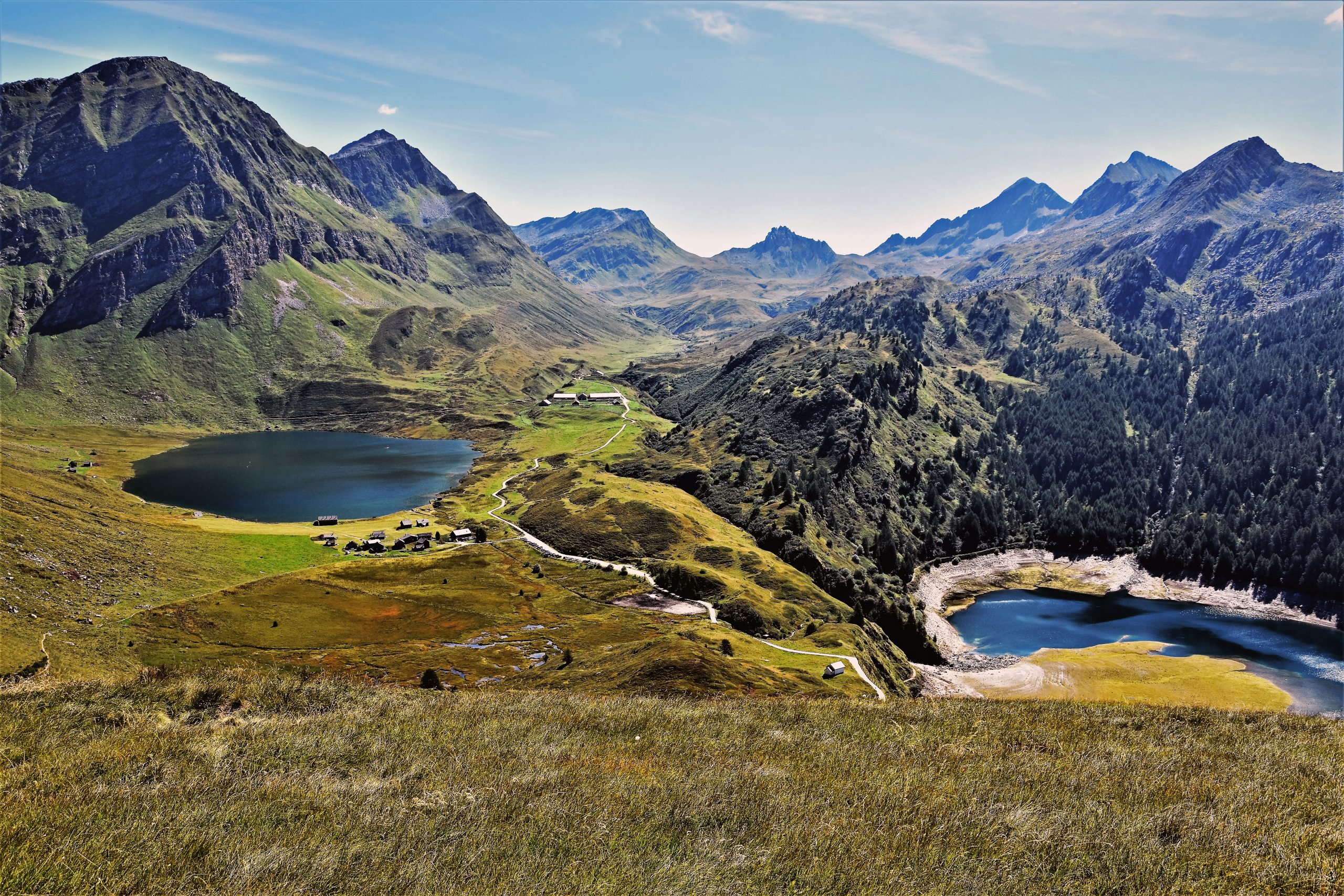
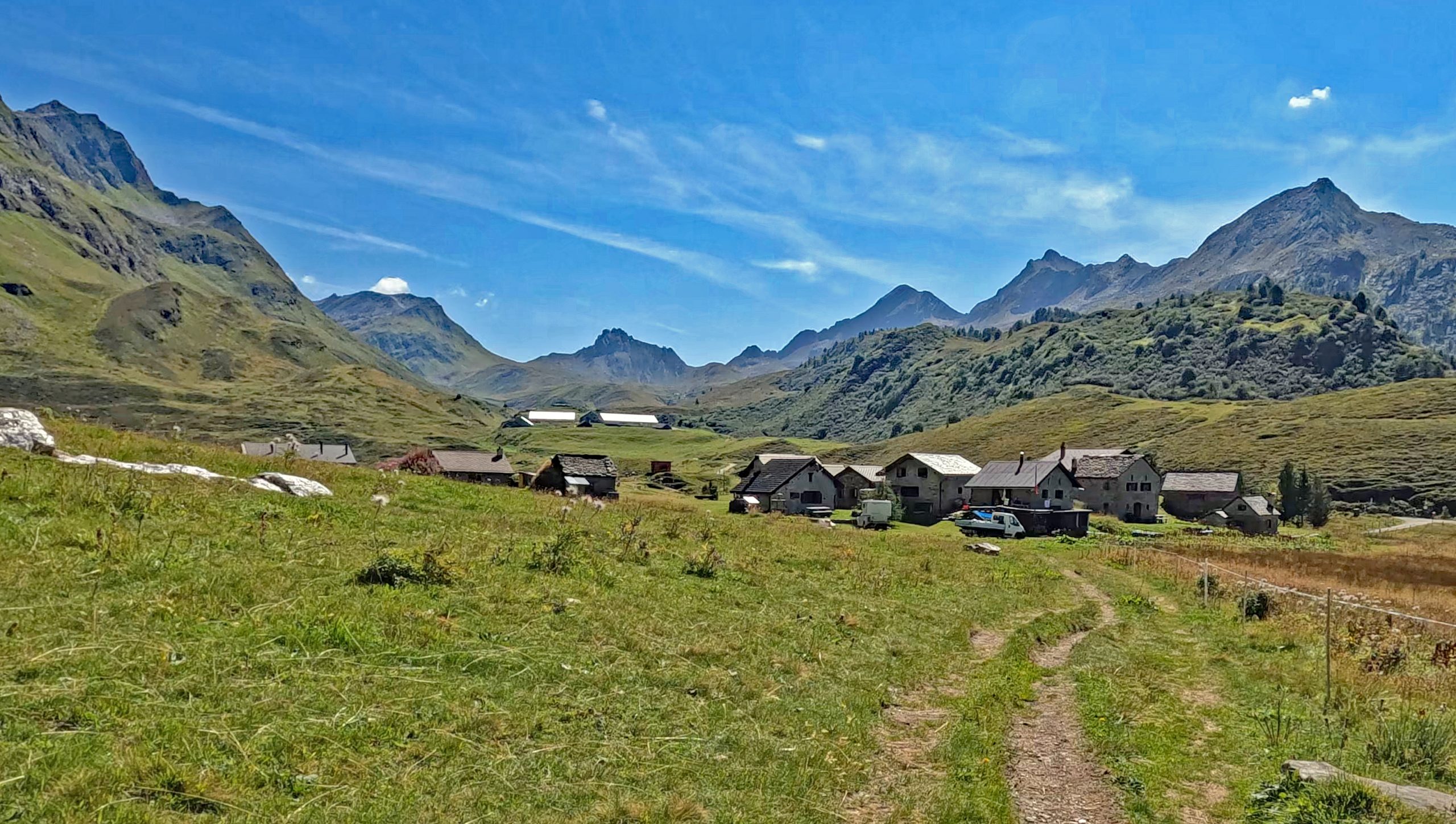
A little later, we reach a prominent hill from which we can look deep down into the upper Piora Valley. In a gentle hollow, the shimmering Lago Cadagno rests at 1921 metres. This lake is world-famous for its biological uniqueness—a mystical body of water consisting of two distinct layers that never mix due to their differing salt and density ratios. At the front, lower shore, the rustic stone houses of the alpine settlement of Murinasco nestle into the landscape. Slightly further to the right, elegantly situated on a bend in the path, spreads the large Alpe Piora, where the precious Piora cheese is traditionally produced during the summer months. This basin is flanked on the left by the towering Pizzo Garzon, whose dark, rugged rock faces drop almost vertically to the lake, closely followed by the sharp pyramid of Pizzo Pioda. In the background, the broad, lighter ridge of Pizzo d’Invert and the sharp, dark rock spire of Punta Negra dominate the horizon.
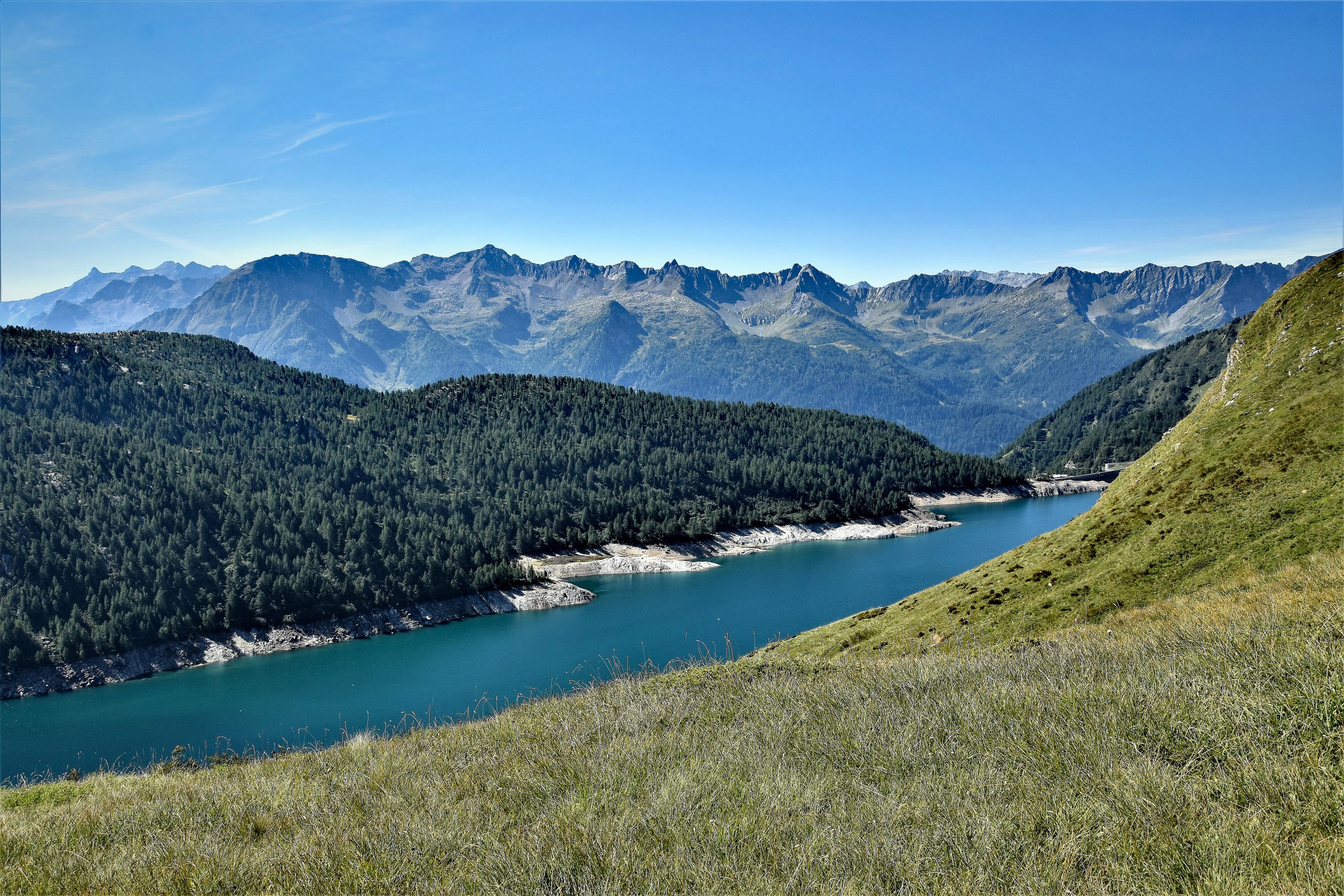
Yet curiosity drives us onward: we want to climb the next hill, hoping for an even more spectacular view. At the top, we are richly rewarded. A sensational two-lake view opens up before us. On the left side sparkles Lago Cadagno, while on the lower right, the rear extension of Lago Ritom edges into view. Above Lake Ritom stretches the elongated, densely wooded ridge of Motta, its dark pine forests sloping steeply down to the shore. On the eastern horizon, the rugged mountain chain rises, starting from the sharp Pizzo d’Invert, moving across the jagged Punta Negra, to the massive, rocky ridge of Pizzo Taneda. Right in the middle of the far horizon, we recognize the flat saddle of the Passo dell’Uomo, the historic gateway to the Lukmanier Pass, behind which the bright, pyramid-shaped peaks of Pizzo del Sole rise majestically into the sky.
Gallery IV: The Panorama of the Two Lakes
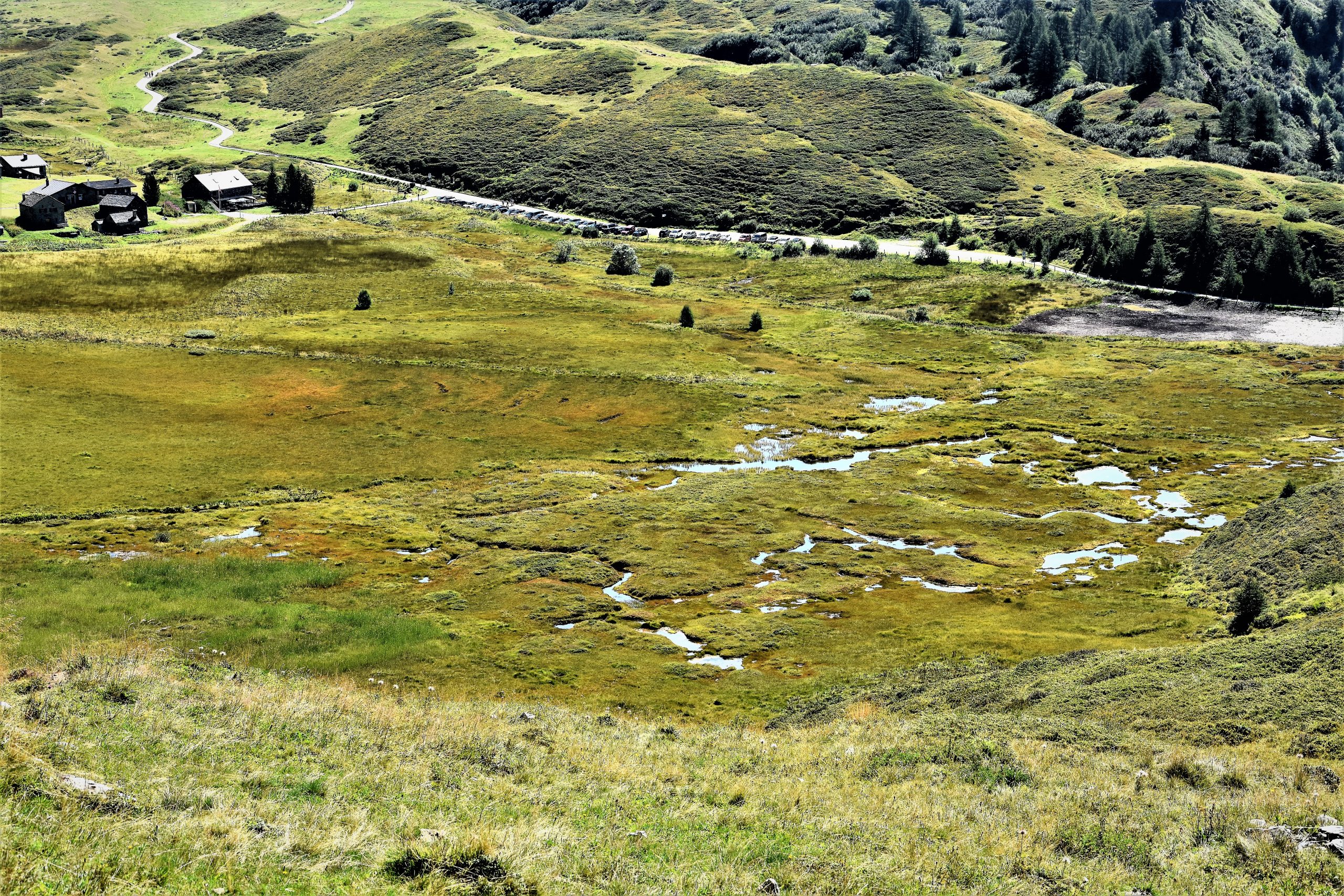
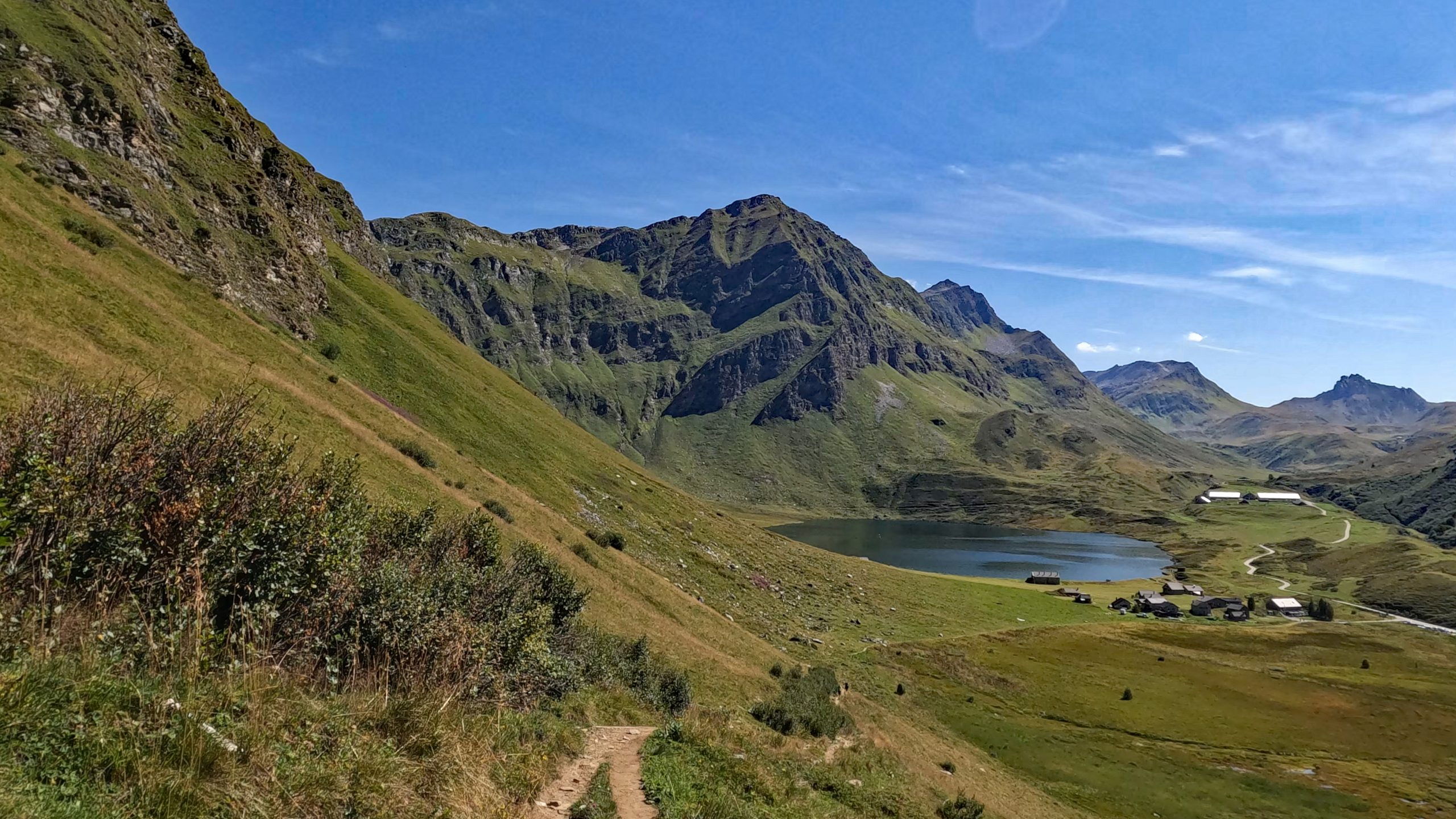
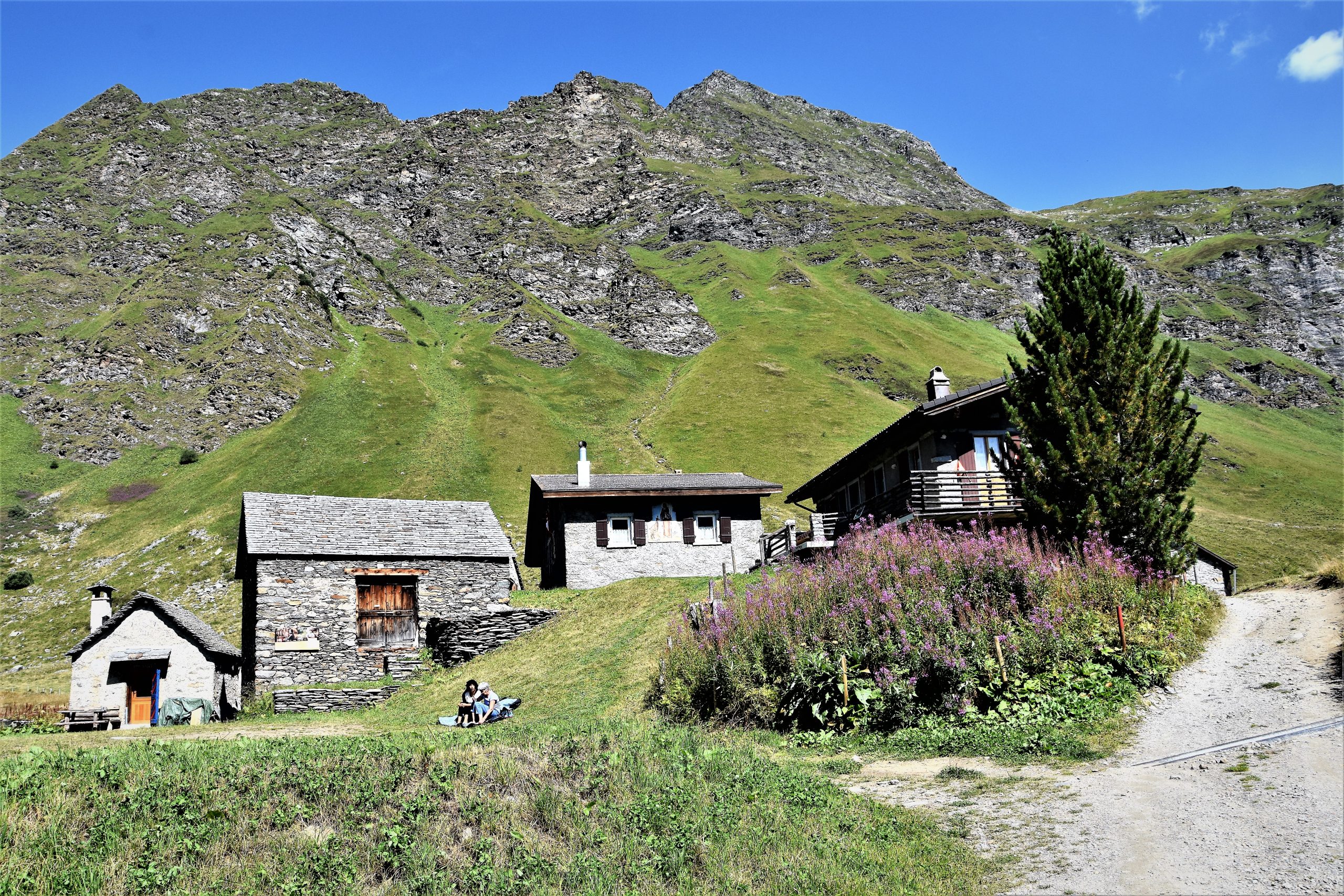
The cool high-altitude air finally drives us back down into the valley. As we descend, a fascinating, untouched marshland unfolds before our eyes. A dense, elegantly meandering network of narrow streams and small water pools winds through the valley floor. The still water lies glassy in the hollows, reflecting the bright light of the sky. The damp soils are covered with lush green alpine grass and moss, and everywhere along the banks, the delicate, white tufts of cottongrass sway gently in the wind. On the far horizon, this idyll comes to an abrupt halt: the terrain rises steeply, and the rugged, grey rock faces and scree slopes of the Pizzo Tom massif form a stark, fascinating contrast to the gentle plain. The colour palette is sharply divided into two—below, the fresh, vibrant green and blue tones of the water-rich marshland plain prevail, while above, the barren, earthy grey and brown tones of the naked rock seal off the world. Just before reaching Lago Cadagno, we pass the historic, weather-beaten stone houses of Murinasco. Directly behind the huts, the steep, green mountain flank of Pizzo Garzon shoots skyward. It is a place that conveys the sublime feeling of a wild river estuary gently transitioning into a tranquil mountain lake.
Gallery V: Marshlands and Living Tradition
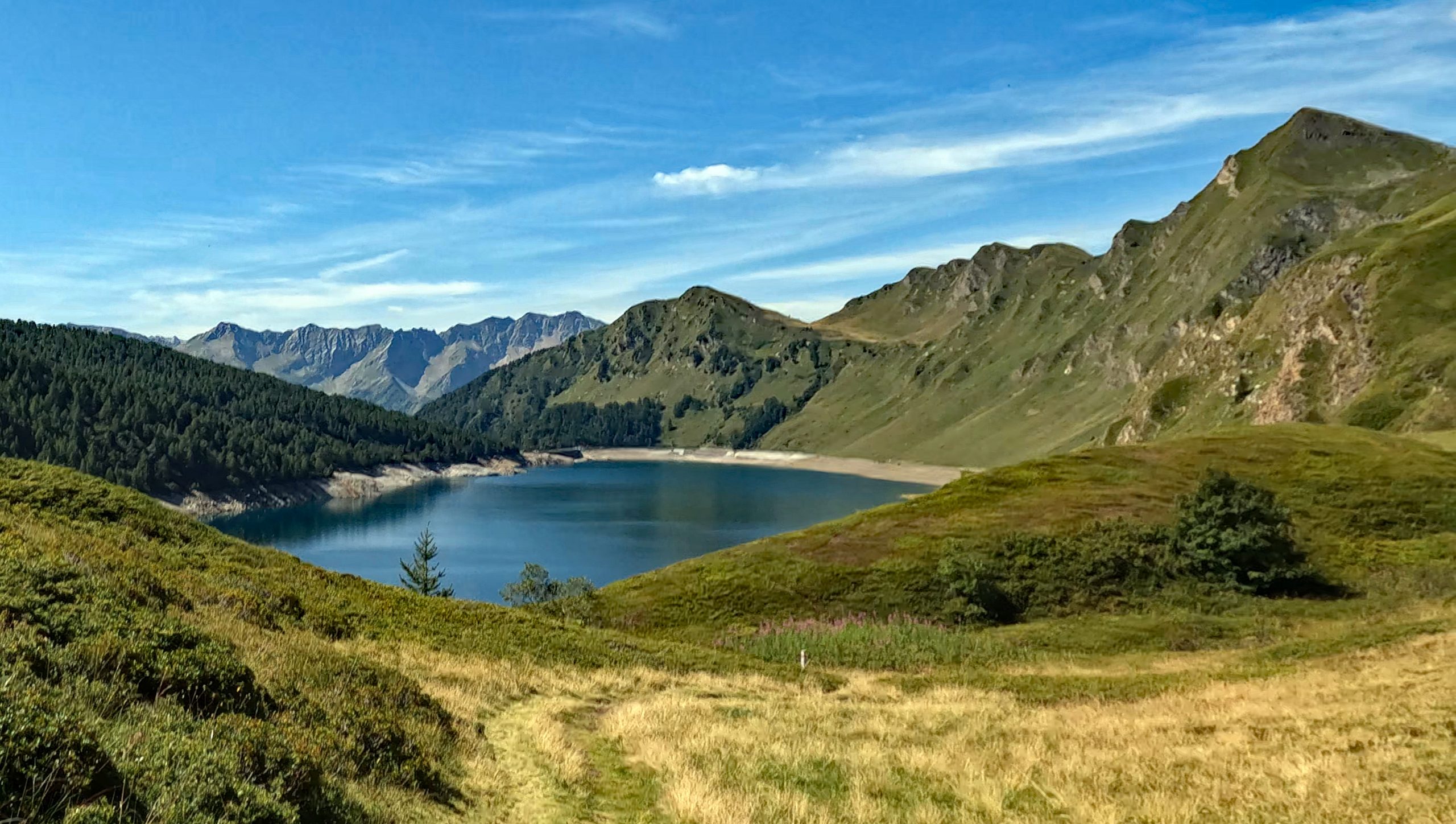
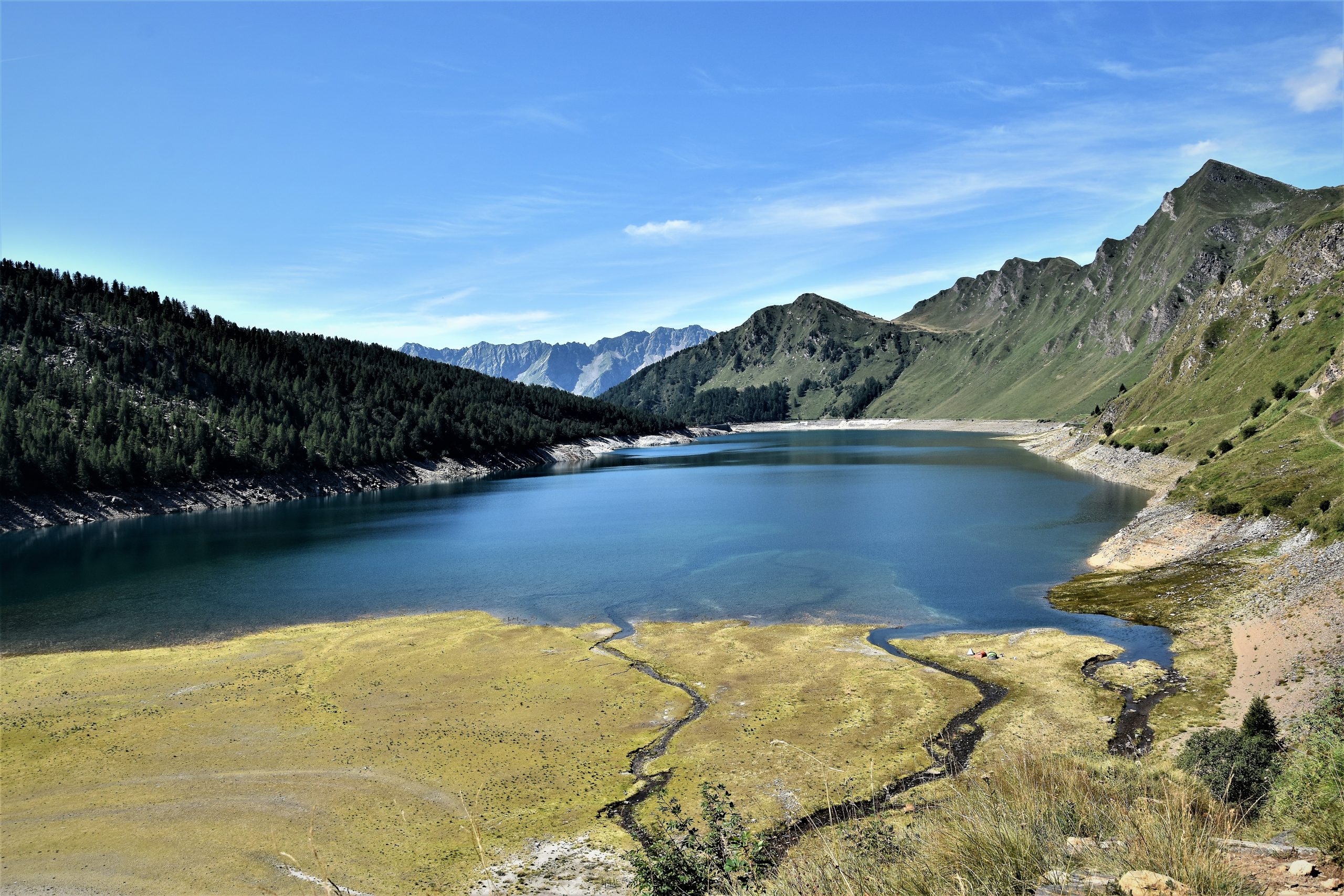
We continue hiking down the valley and eventually rejoin the famous Piora nature trail. Here, Lago Ritom unfolds before us once more in its full glory. In the foreground stretches a flat, soft, yellow-green alluvial plain through which several small streams wind playfully into the deep blue lake. While the wooded slope of Motta drops steeply on the left, the rugged slope of Pizzo Toira rises on the right, with our hiking trail winding gently along its flank. In the far distance, the dam wall can already be glimpsed. On the horizon, exactly in the gap behind the lake, the sharp, light-grey peaks of the Gotthard Group rise, while fine, white wisps of cloud decorate the bright blue sky.
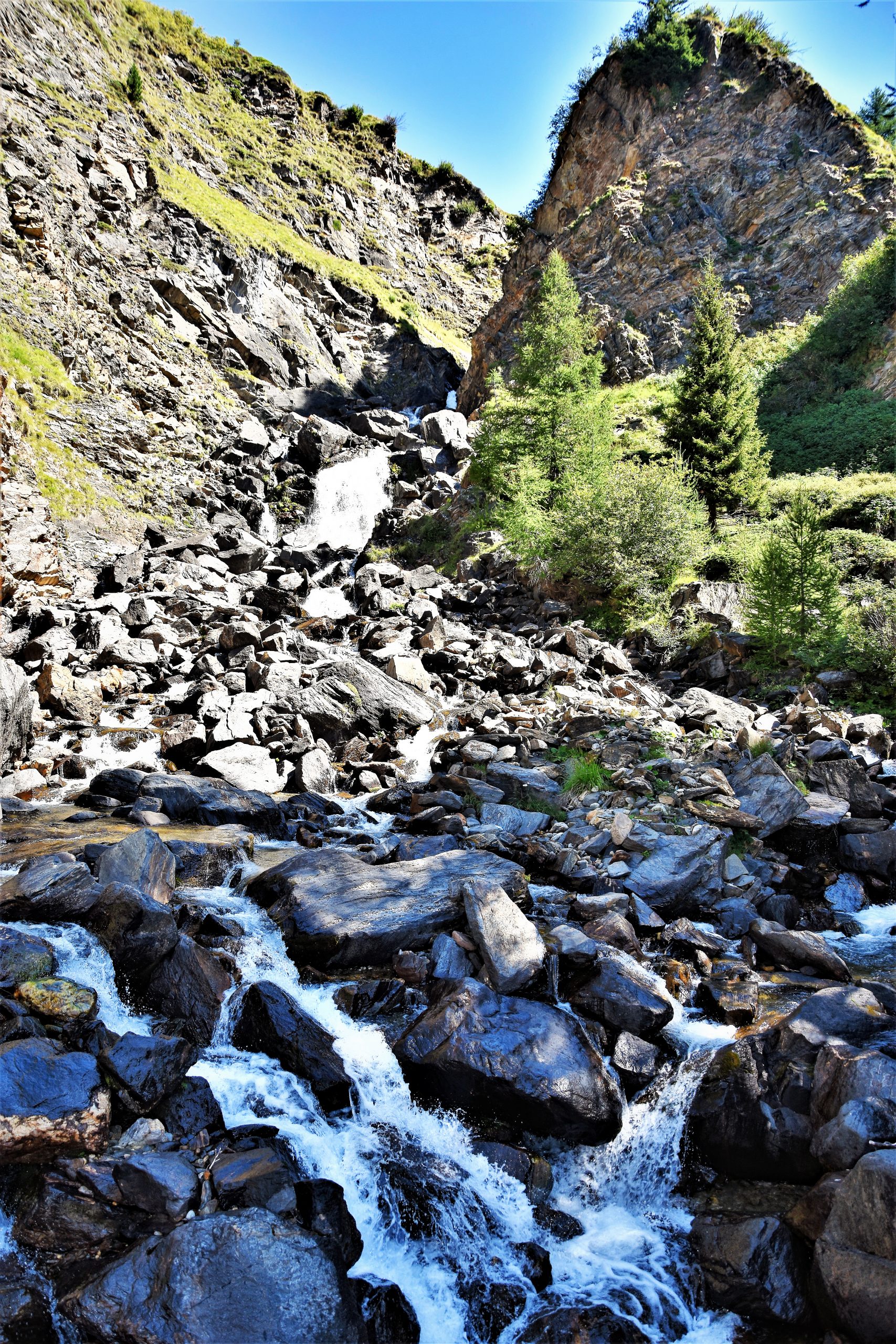
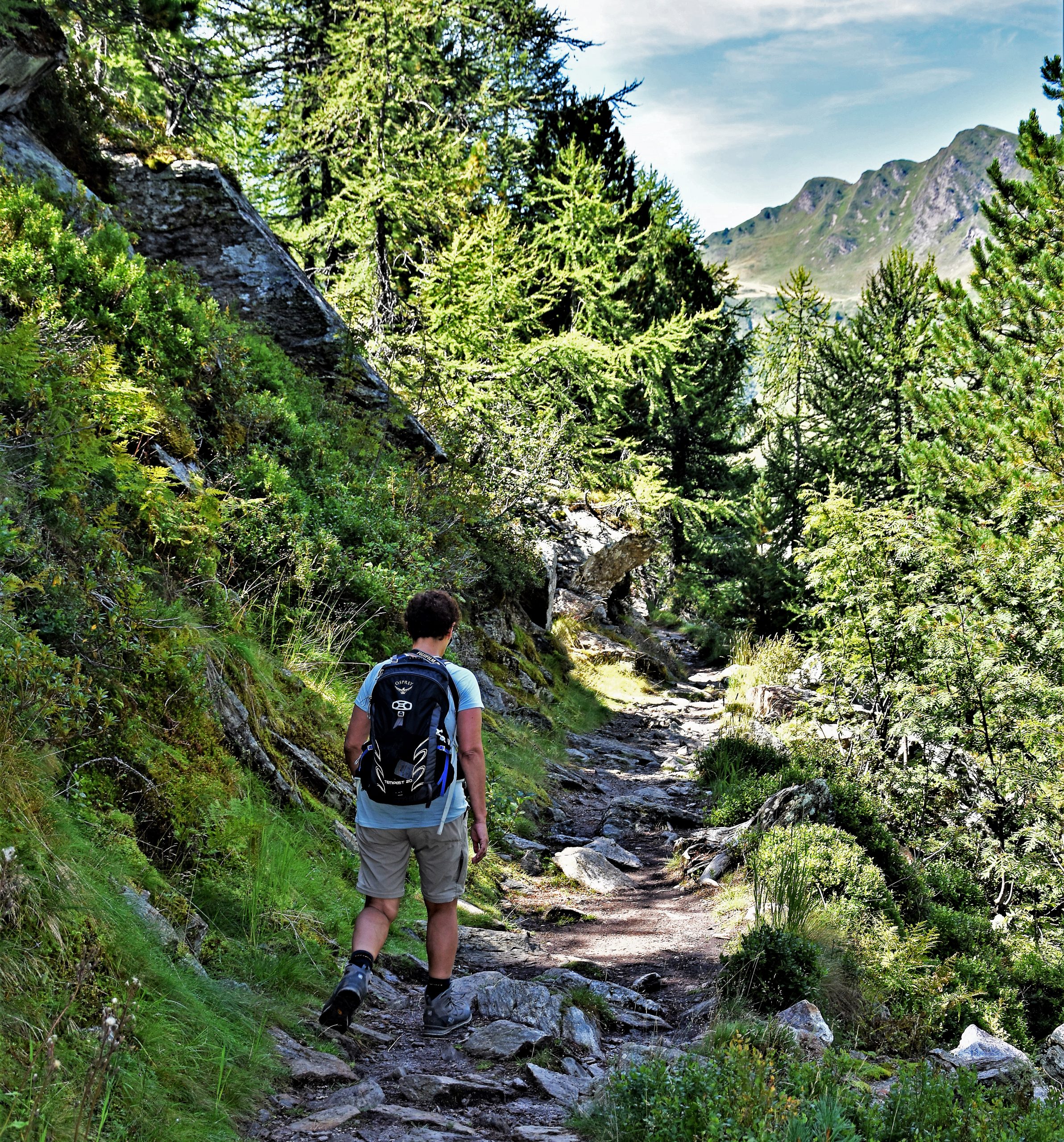
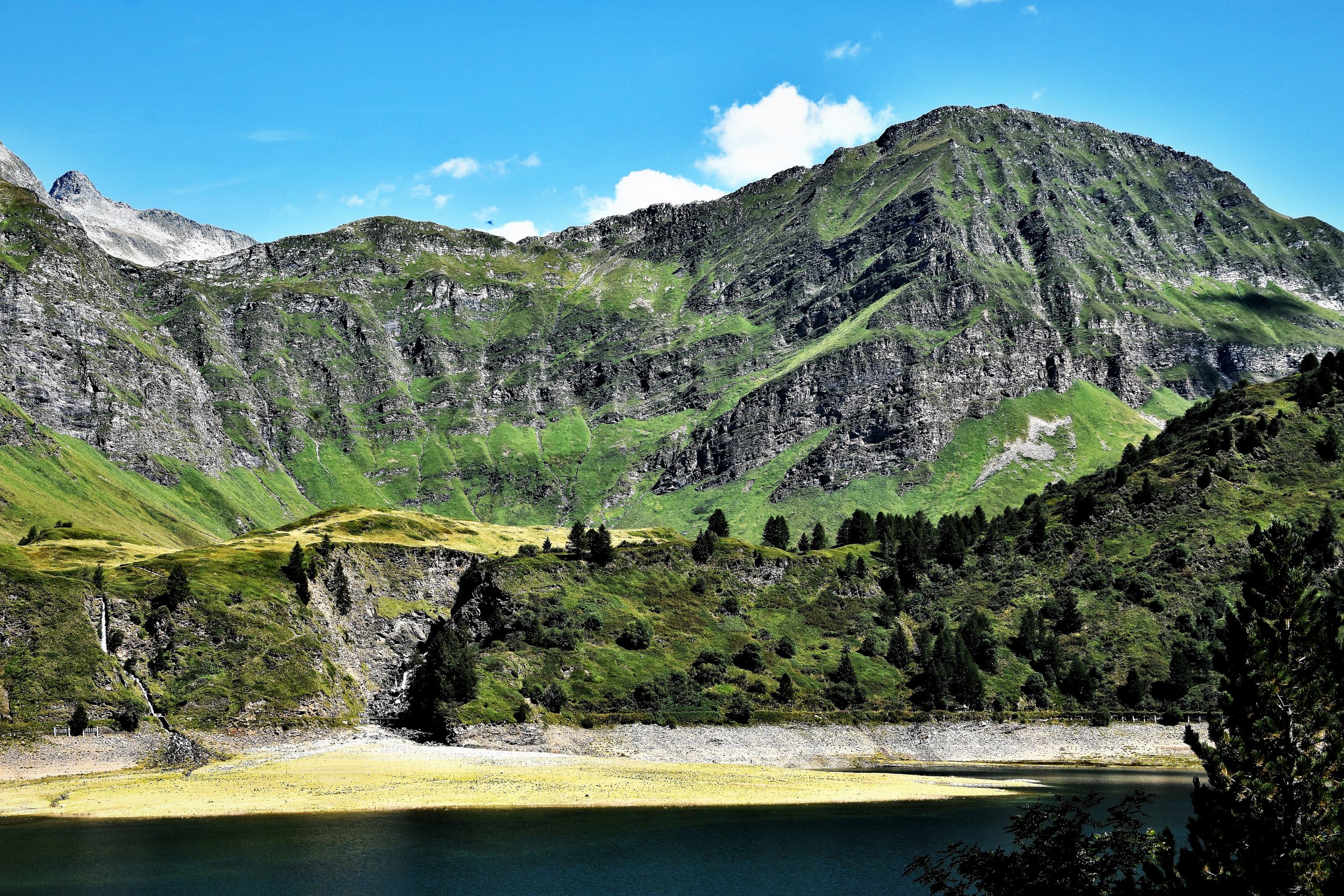
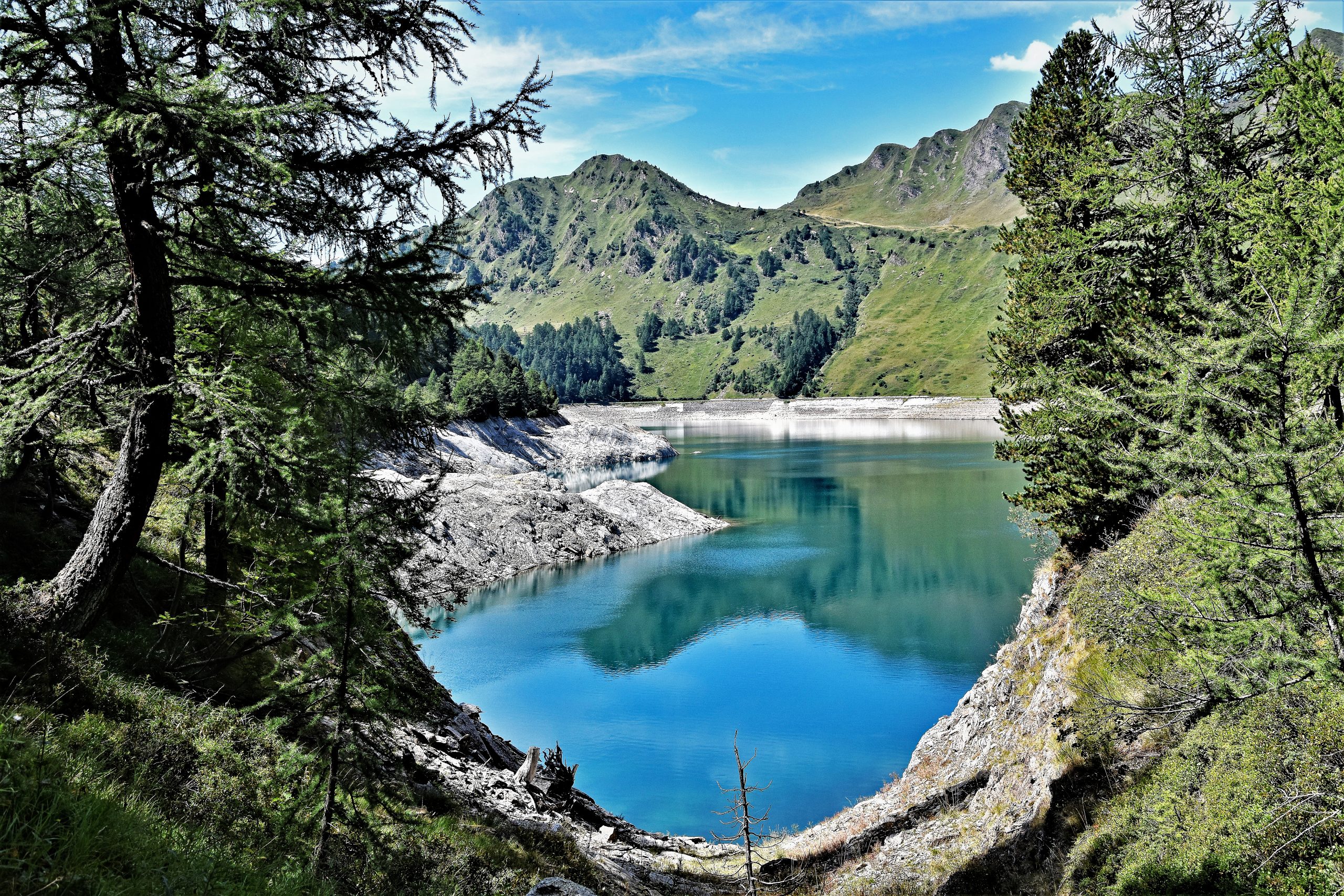
After a well-deserved lunch break, we continue our path directly along the lakeshore. The trail is stony, wonderfully natural, and hugs the overgrown rock face to our left. A dense larch forest stretches above us. The thick canopy of the trees filters the sunlight, casting a beautiful, lively play of light and shadow onto the forest floor. Time and again we stop, deeply impressed by the mighty backdrop of the opposite mountain range rising above the dark forests, while on the far left, a wild waterfall plunges into the valley, foaming white. We pause at a small cove. As if through a natural, dark window formed by pine trees, we look out at the water. The surface of the lake is so calm and smooth here that the green mountain slopes and the blue sky are perfectly mirrored within it. On the left shore, the bright boulder and rock riprap of the reservoir forms a great colour contrast to the deep blue of the water, while far above on the opposite slope, we can make out the faint path of the high-altitude trail.
Gallery VI: The Return Path Along the Ritom Shoreline Trail
Finally, the circle closes. Basia and I stroll comfortably back to the funicular station and let the red carriages glide us back down into the valley. Arriving at the bottom, we finally reunite with my wife Hani, Simon, and Ania. Sitting together in a cosy café, our hands wrapped around warm cups, we happily let the magnificent, unforgettable impressions of this alpine day in Ticino fade out over a creamy cappuccino.