Chapter 1: Dreams of Stone and the Scent of Cypresses – Castello di Giomici
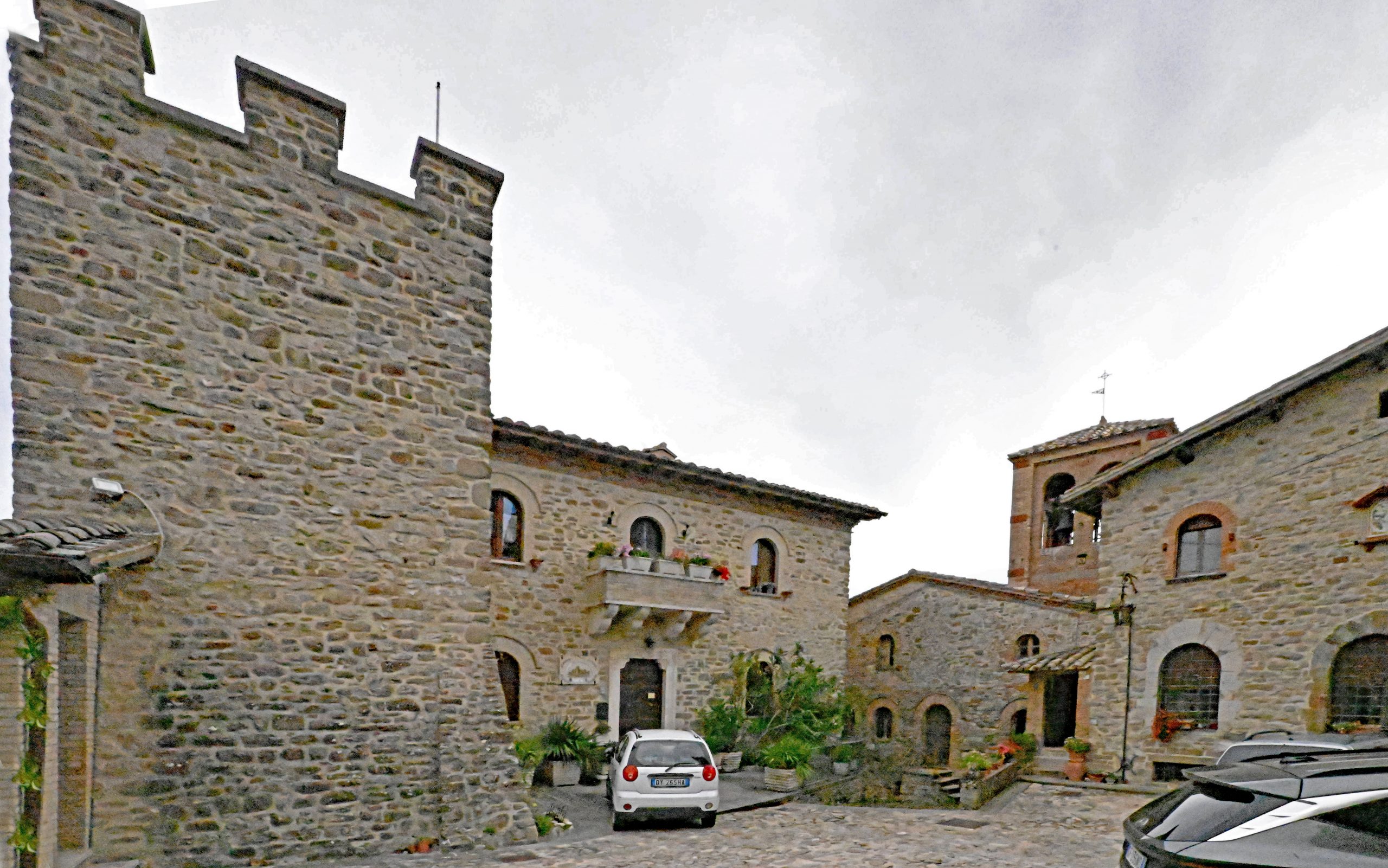
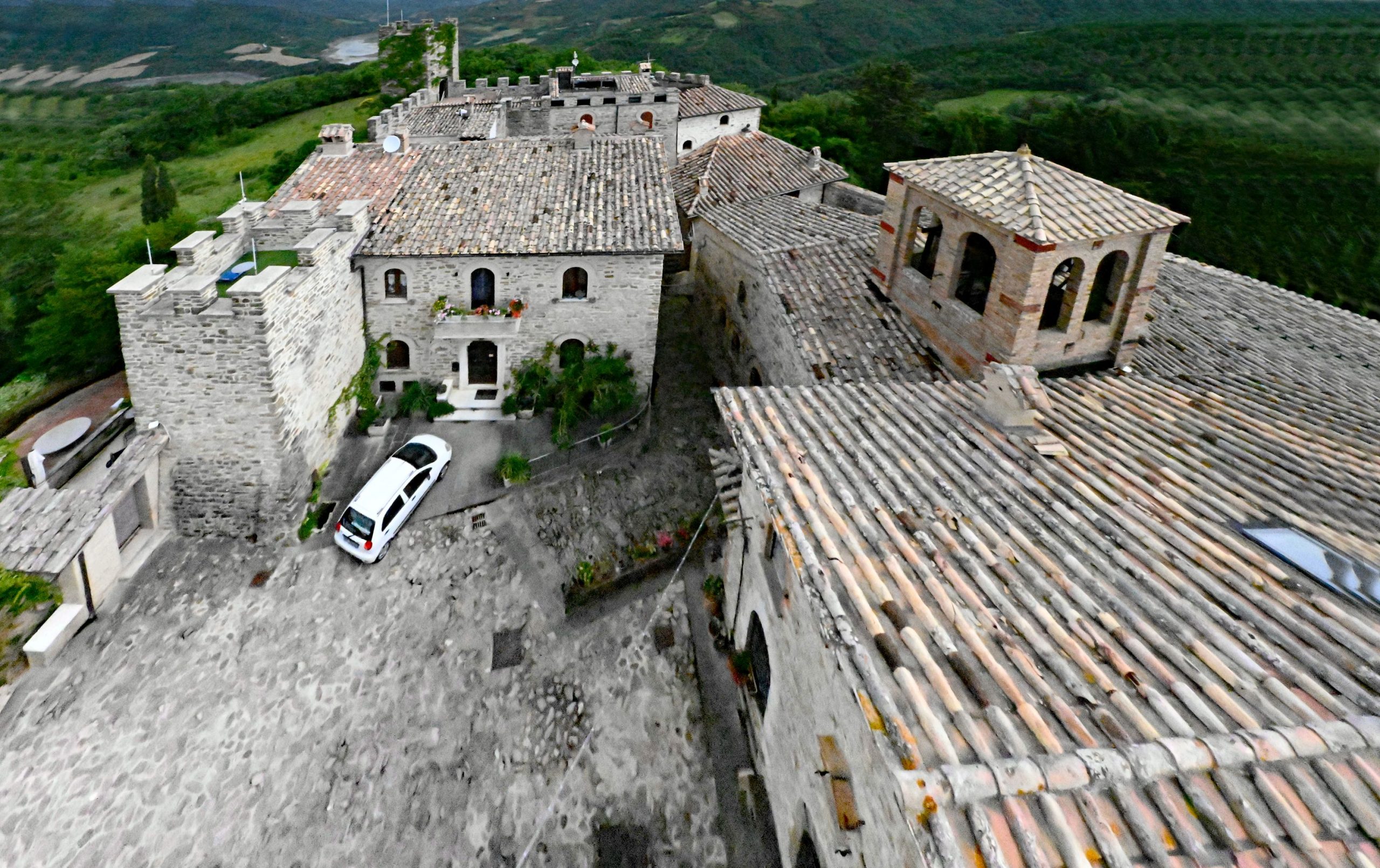
When I arrive at Castello di Giomici near Perugia on the evening of June 12, the hectic pace of travel instantly gives way to a deep, reverent calm. The thick, rough natural stone walls and the mighty, square watchtower rise defensively into the Umbrian sky, immediately inspiring respect for past centuries. It feels like a deliberate step out of the present and into an era full of knights and lords of the castle.
This impression is heightened when I enter my room: the spaces radiate a deep sense of history, breathing the scent of old wood and stone, enveloping me in a cozy, almost awe-inspiring atmosphere. In the evening, I am treated to an excellent dinner that perfectly brings the earthy, honest flavors of Umbria to the plate – a culinary welcome that breathes the spirit of the region.
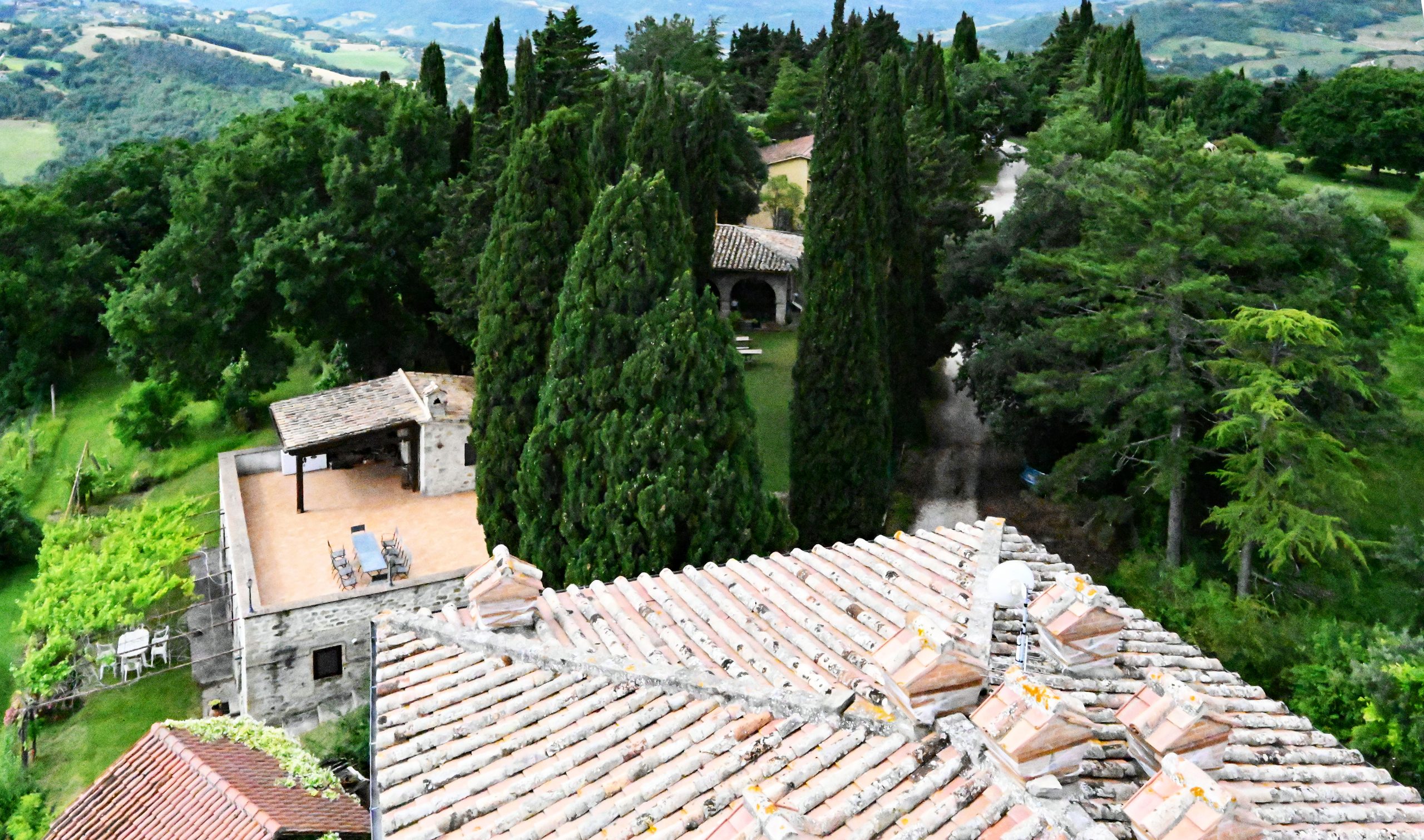
The next morning rewards me with a magical view. Looking down at the estate from an elevated perspective, the paved courtyard still rests peacefully in the soft early light. The dense rows of weathered terracotta tiled roofs glow in warm earth and orange tones. Turning toward the other side, an idyllic paradise unfolds: a spacious stone terrace with a long dining table awaits convivial hours, while slender, deep green cypresses rise up like loyal guardians. Beyond them, the eye loses itself in the endless, wooded hills of Umbria, softly blurring in the morning mist.
Gallery I: The Idyll of the Castle
Chapter 2: The Stone Labyrinth of the Upper City
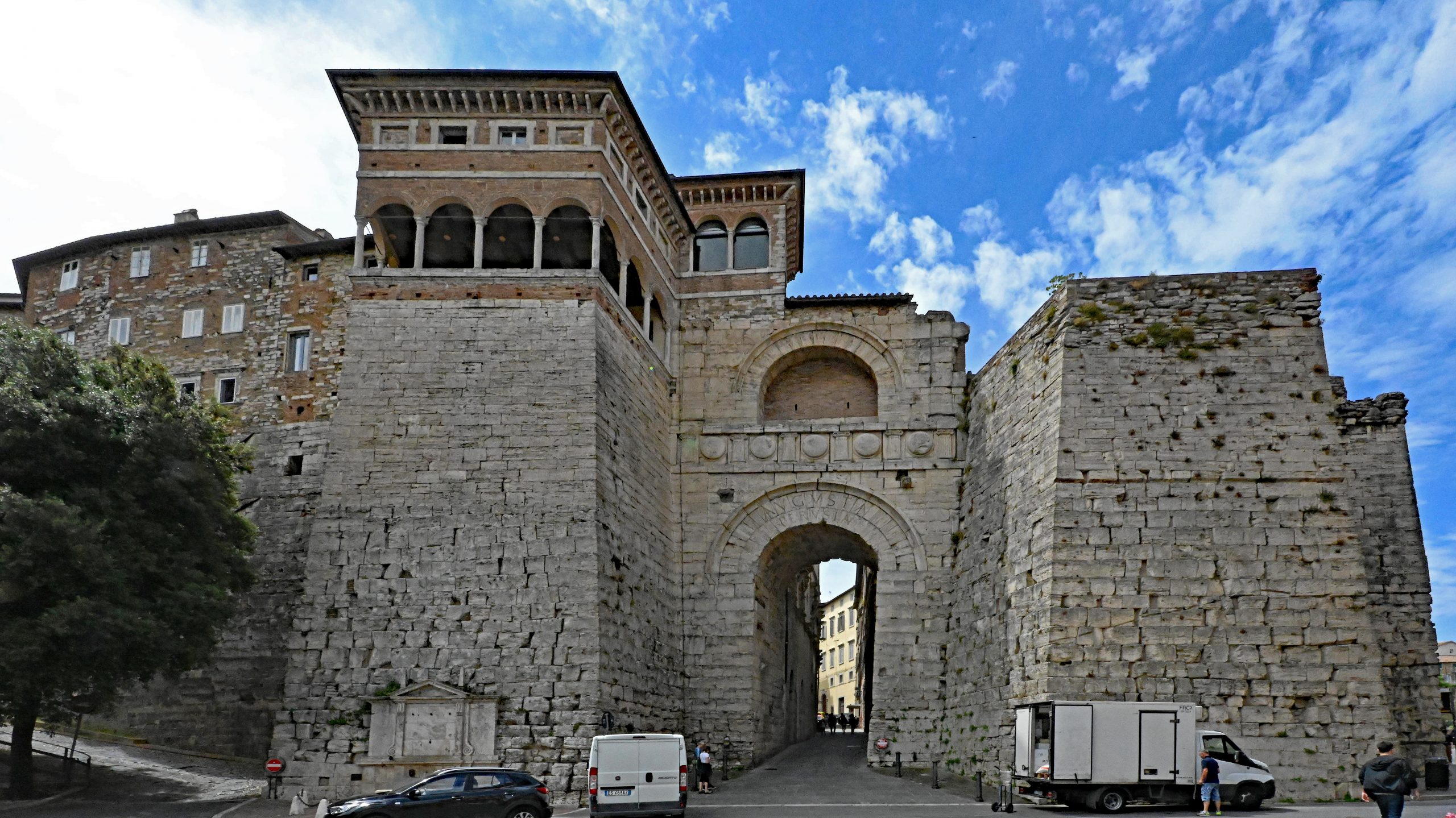
The drive to Perugia leads me straight into the pulsating heart of history. My entry into the Umbrian capital could hardly be more monumental: I pass through the majestic Arco Etrusco. Standing before this eleven-meter-high giant made of massive, mortarless travertine blocks, I feel tiny. It is fascinating to see how eras merge here – the ancient Etruscan archway is topped by a Roman frieze and crowned on the left by a delicate Renaissance loggia.
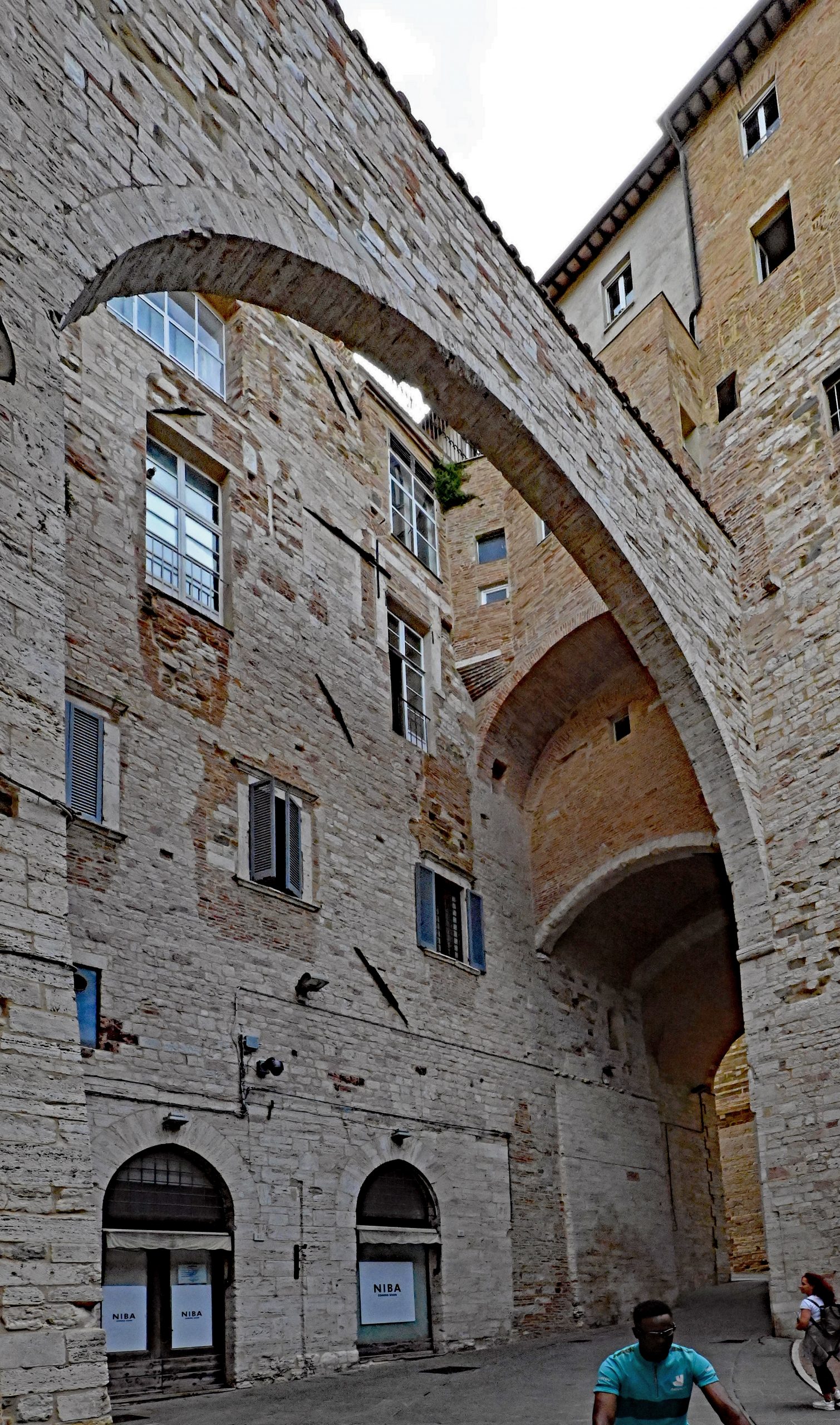
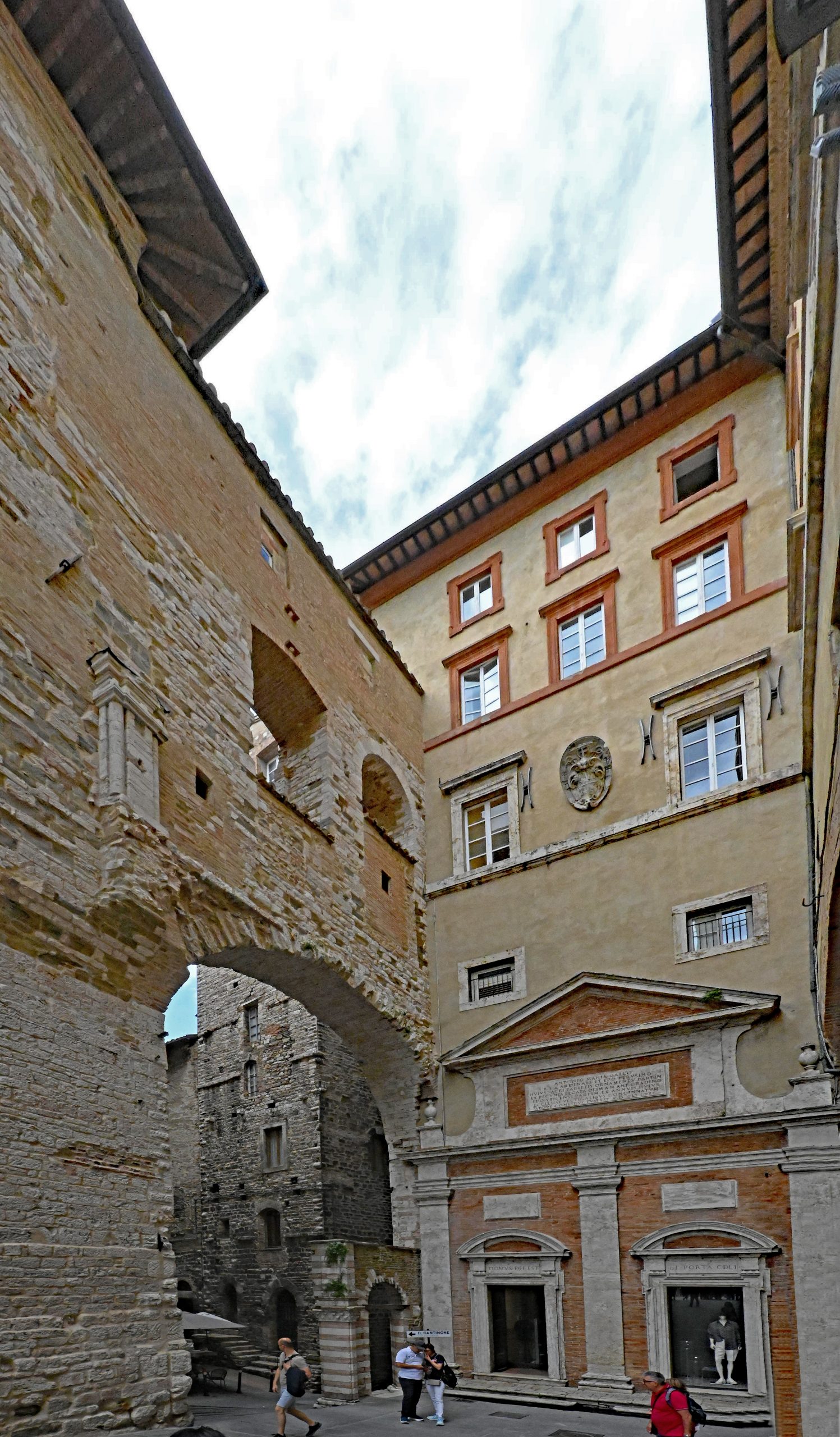
Behind the gate, Perugia’s wonderful labyrinth captures me. Every step on the rough cobblestones is a pleasure. The alleys are narrow and steep, the light natural stone facades of the palazzi rise so high that they only let the sunlight reach the ground in narrow strips. Breathtaking are the spots where massive, brick buttress arches span boldly from one house wall to the next in dizzying heights to structurally stabilize the giant buildings. I simply let myself drift, passing Palazzo Gallenga Stuart, whose warm, ochre-colored Baroque facade with reddish window frames forms an elegant contrast to the rough, medieval stone architecture and the towering tower-houses around it.
Gallery II: Palaces, Fountains and Gothic Splendor
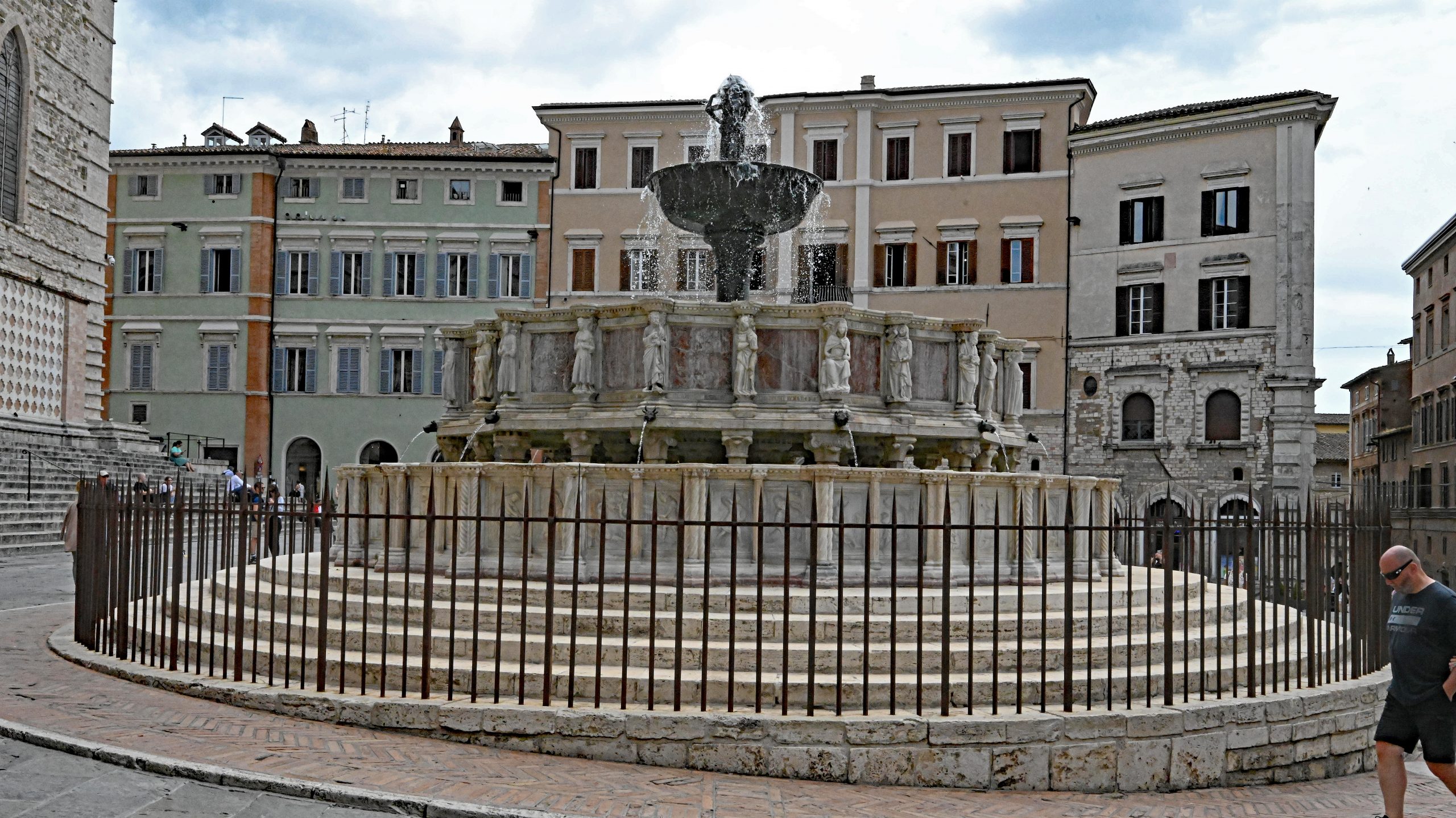
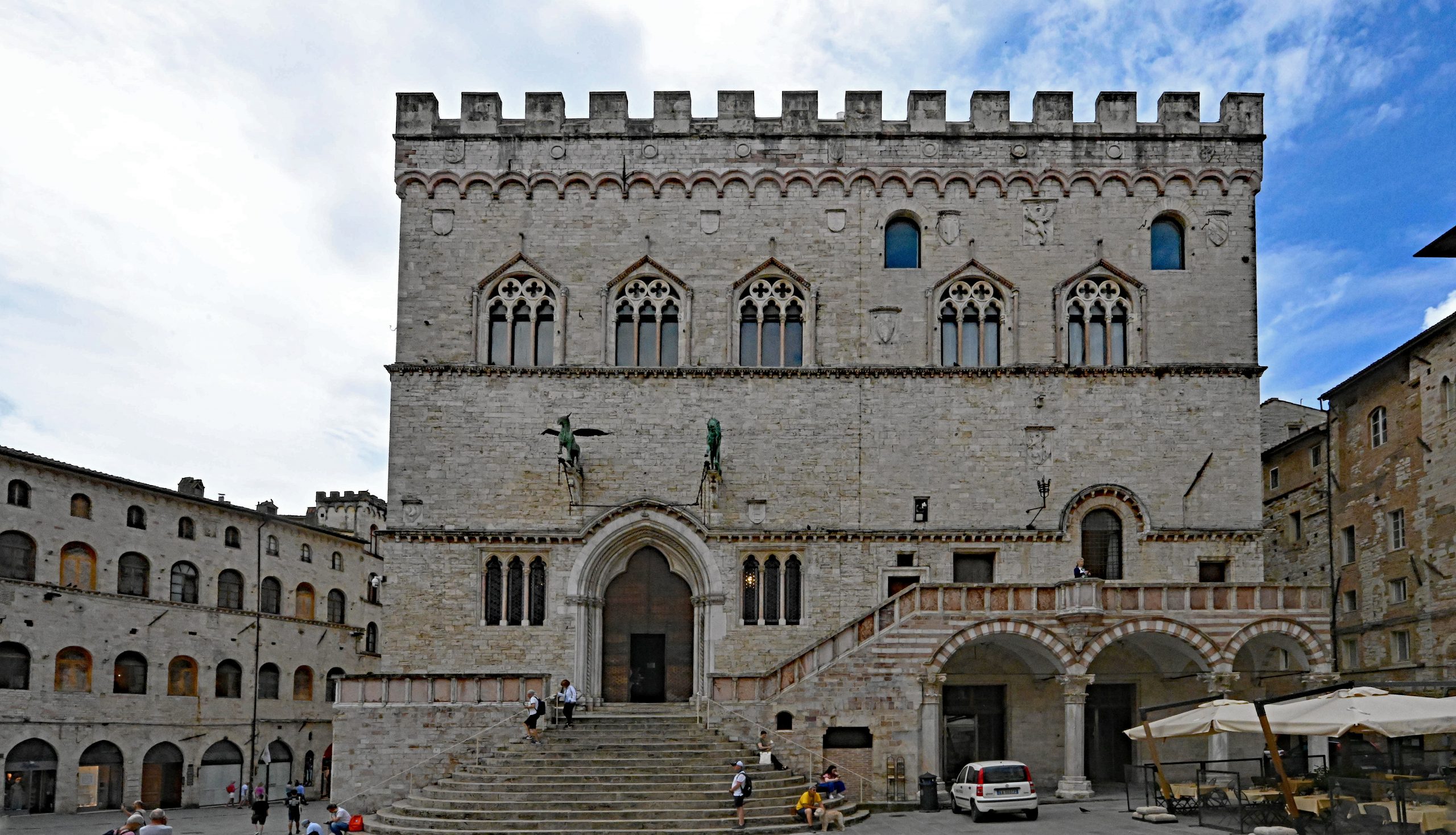
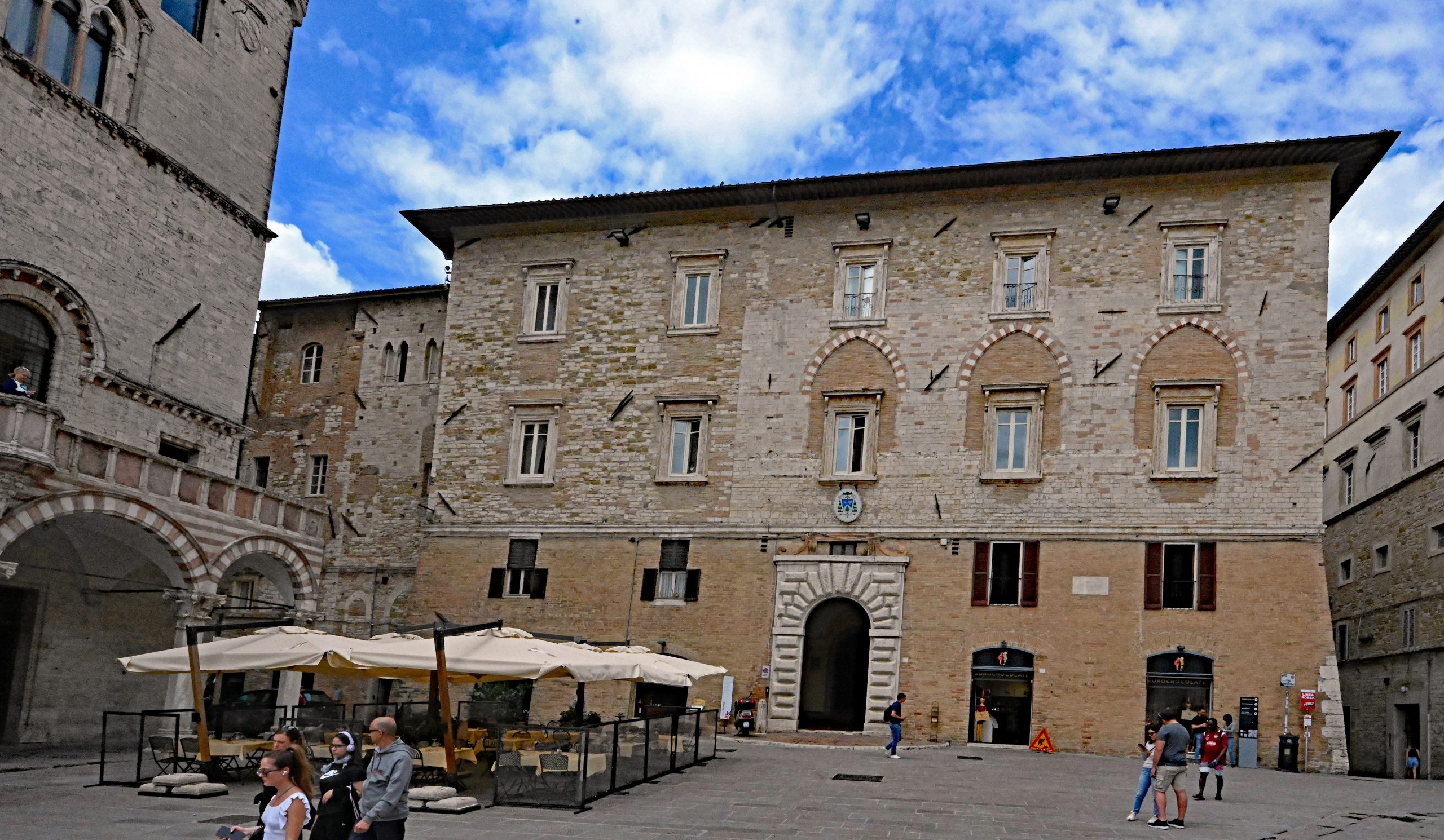
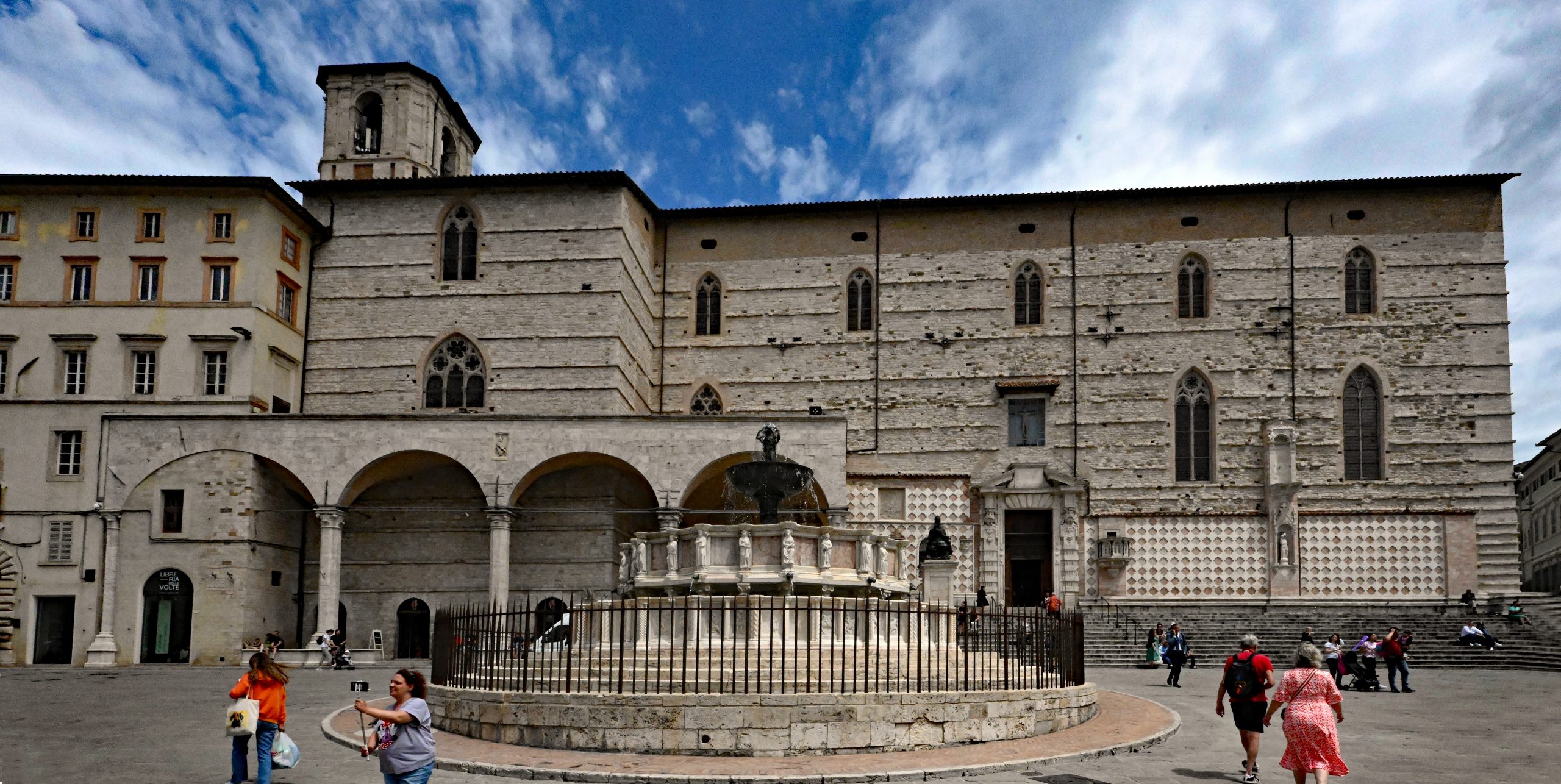
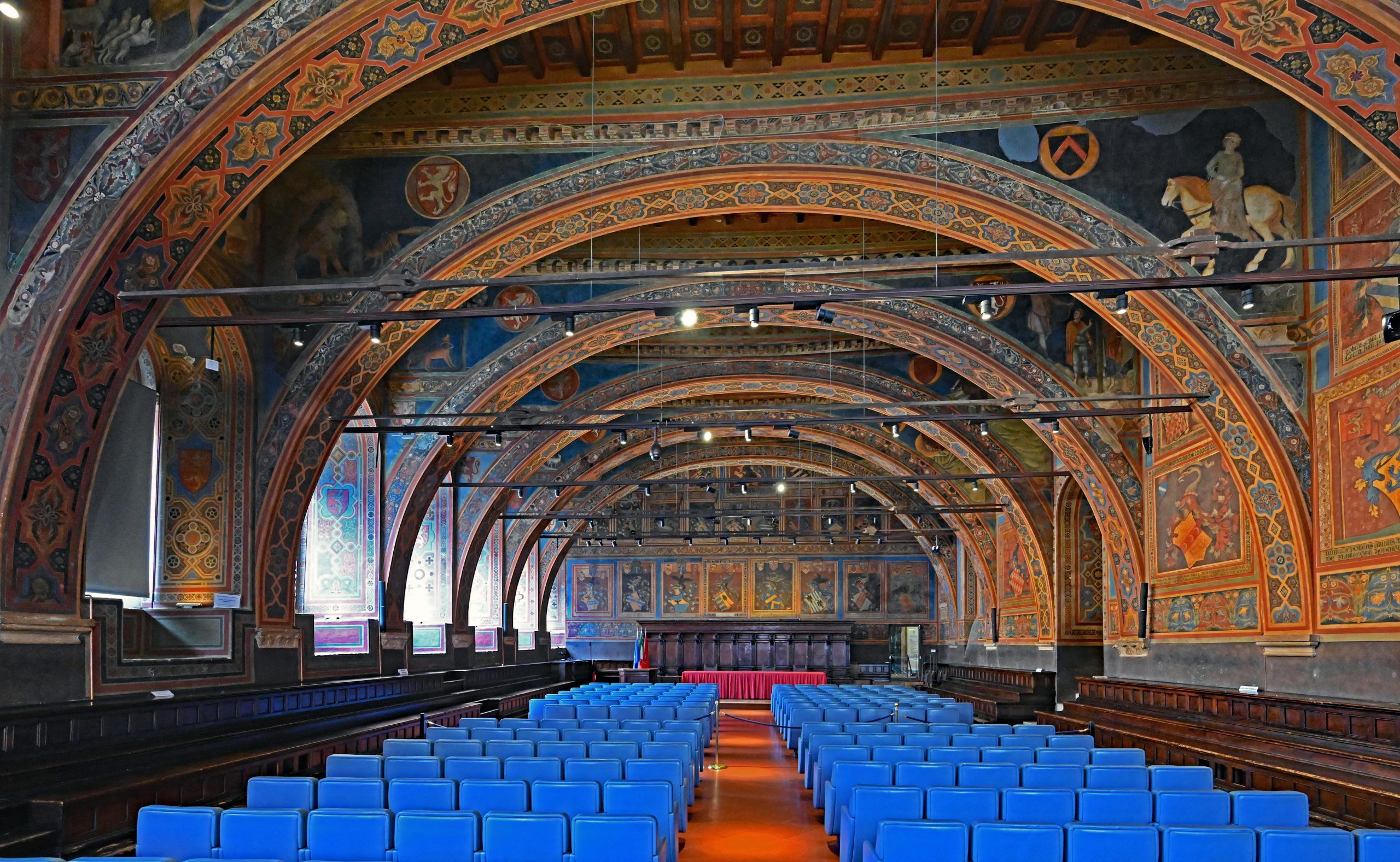
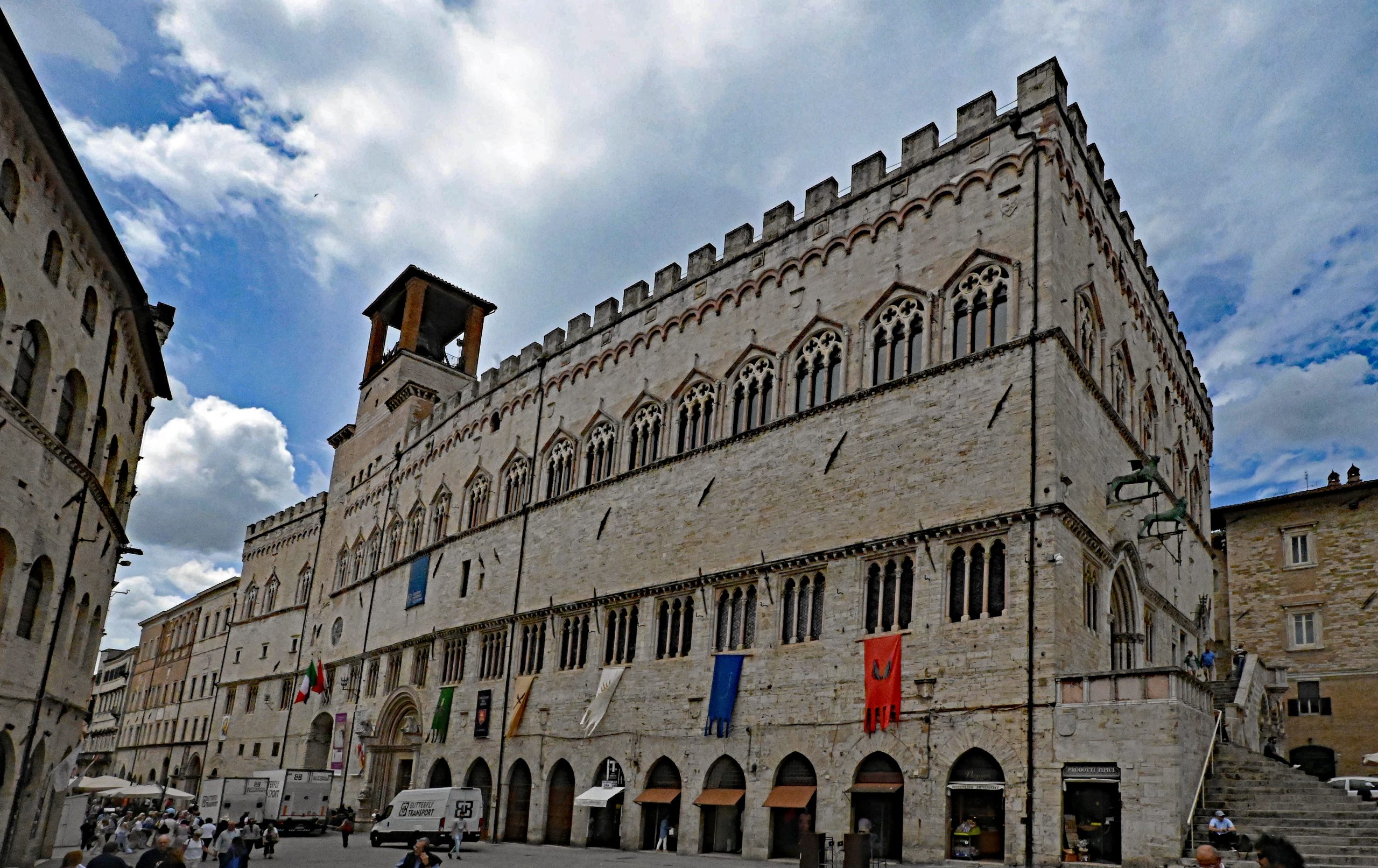
Finally, I stand in Piazza IV Novembre, the undisputed, lively center of the city. Here thrones the magnificent Fontana Maggiore. Its white and pink marble reliefs gleam in the sun, telling stories of saints and zodiac signs like a stone picture book, while fine water ripples from the dark bronze bowl. The square is framed by monumental architecture: on one side stands the mighty flank of Palazzo dei Priori, which looks almost like an impregnable fortress with its defensive battlements and the proud bronze figures of the griffin and the lion above the main portal. Right next to it, the Archbishop’s Palace nestles against the square, with the colorful hustle and bustle of street cafes spreading out under large white umbrellas in front of its rustic stone facade.
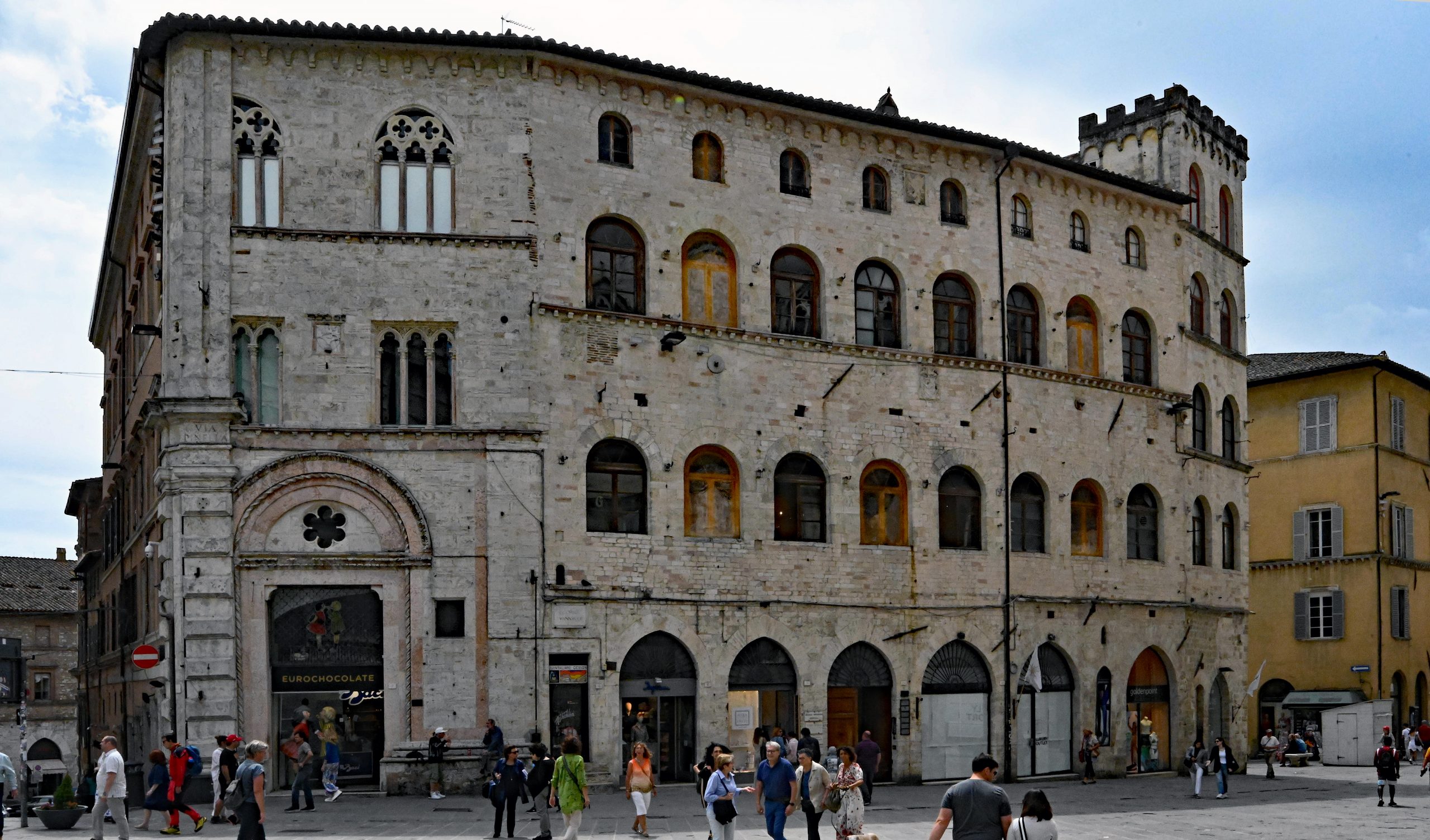
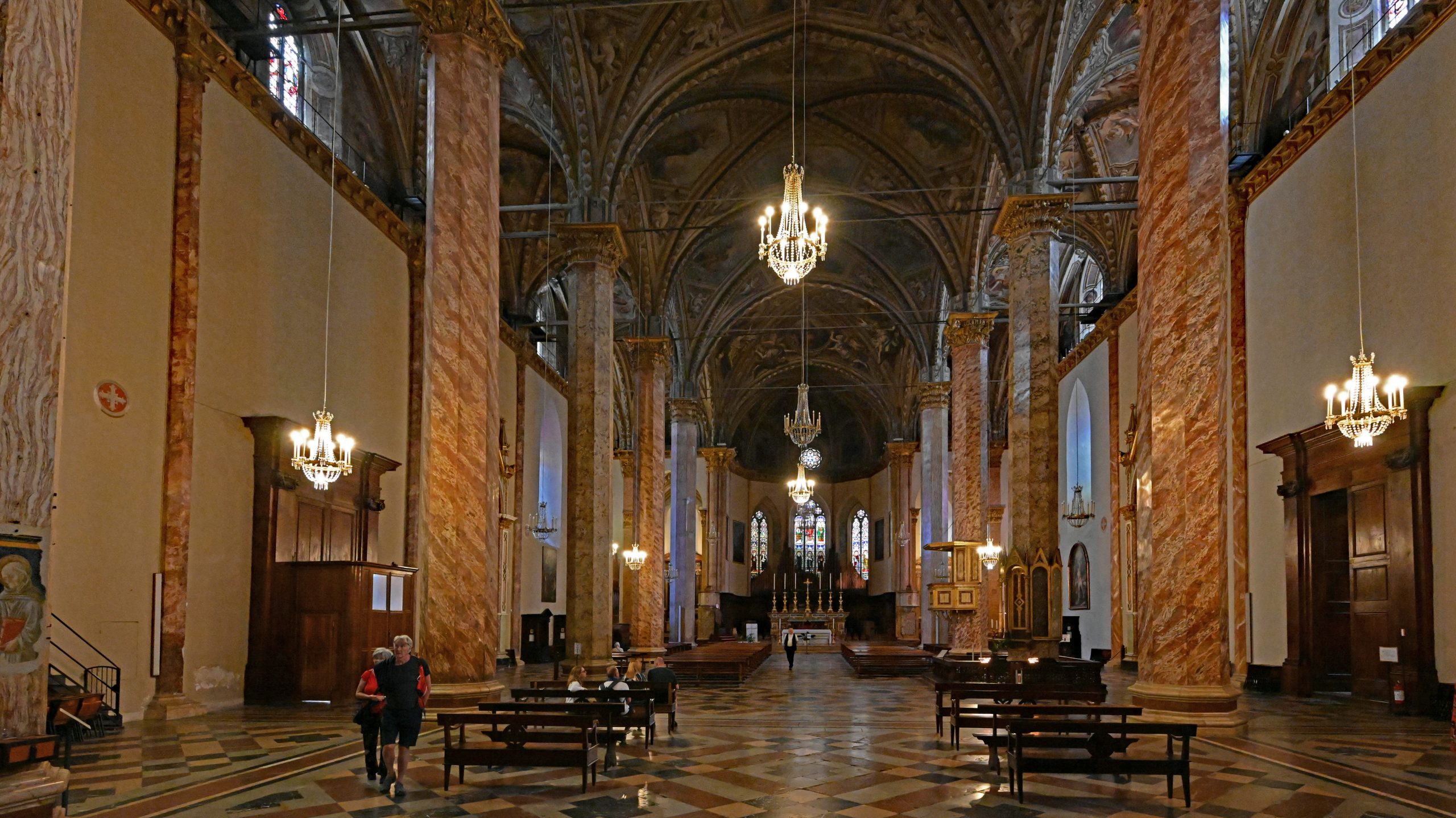
At the edge of the piazza, I pass Palazzo Capocci, which houses the Eurochocolate Store in its Gothic ground-floor portal, tempting me with the sweet scent of the famous Baci chocolate. Directly opposite, the unfinished flank of Cattedrale di San Lorenzo catches my eye – the geometric diamond pattern of pink and white marble stops abruptly, revealing the rough, original masonry. But as I enter the interior of the cathedral, my breath catches: I am standing in a huge, late Gothic hall church. Mighty, red-marbled columns support a high ribbed vault, completely painted with colorful Renaissance frescoes. Chandeliers bathe the reverent space in a warm, golden light. Back outside, I follow the seemingly endless longitudinal facade of Palazzo dei Priori along Corso Vannucci, where colorful, historic banners flutter in the wind on the ground-floor arcades, giving a solemn vividness to the mighty stone structure.
Gallery III: The Monumental Center
Chapter 3: The Dolce Vita and the Discovery of the Underworld
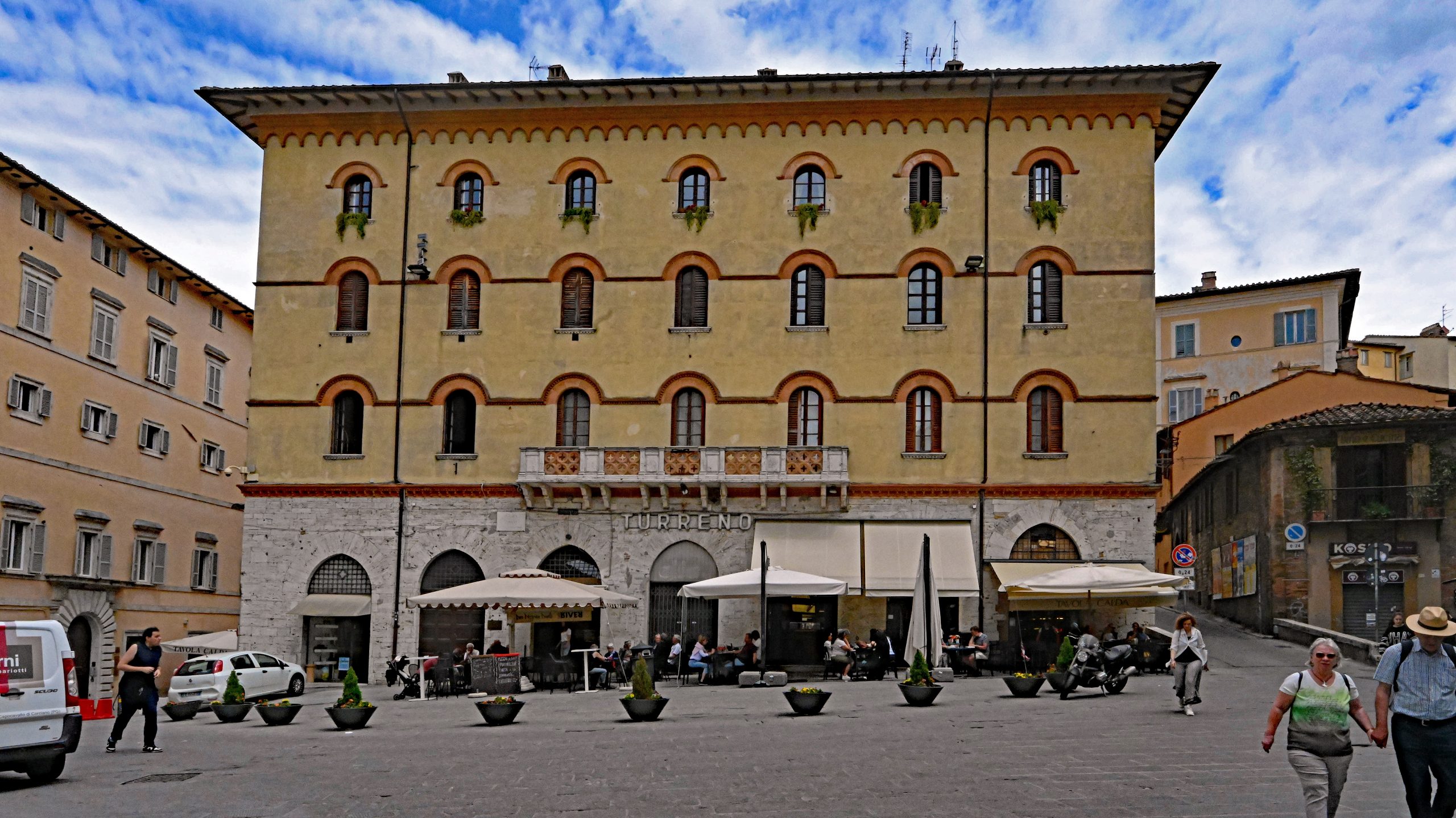
To process all these impressions, I head to the charming Piazza Danti directly in front of Palazzo Turreno. The symmetrical, ochre-colored facade with its even rows of arched windows and green planter boxes exudes a wonderful elegance. Sitting in the street cafe with a perfect espresso, I enjoy the pure dolce vita: the rattling of a passing Vespa, the lively murmur of passerby voices, and the view of the ancient walls make me completely forget about time.
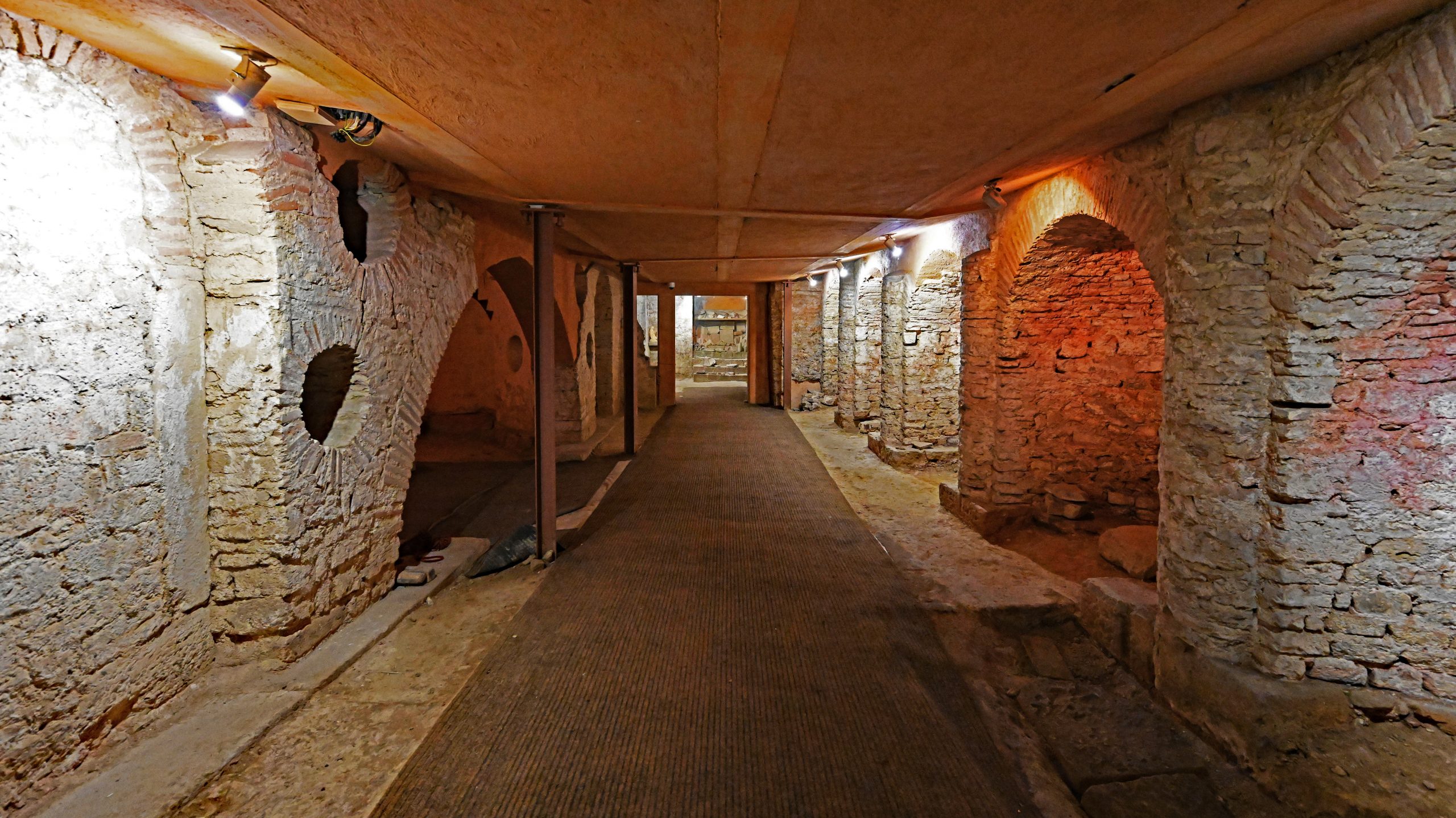
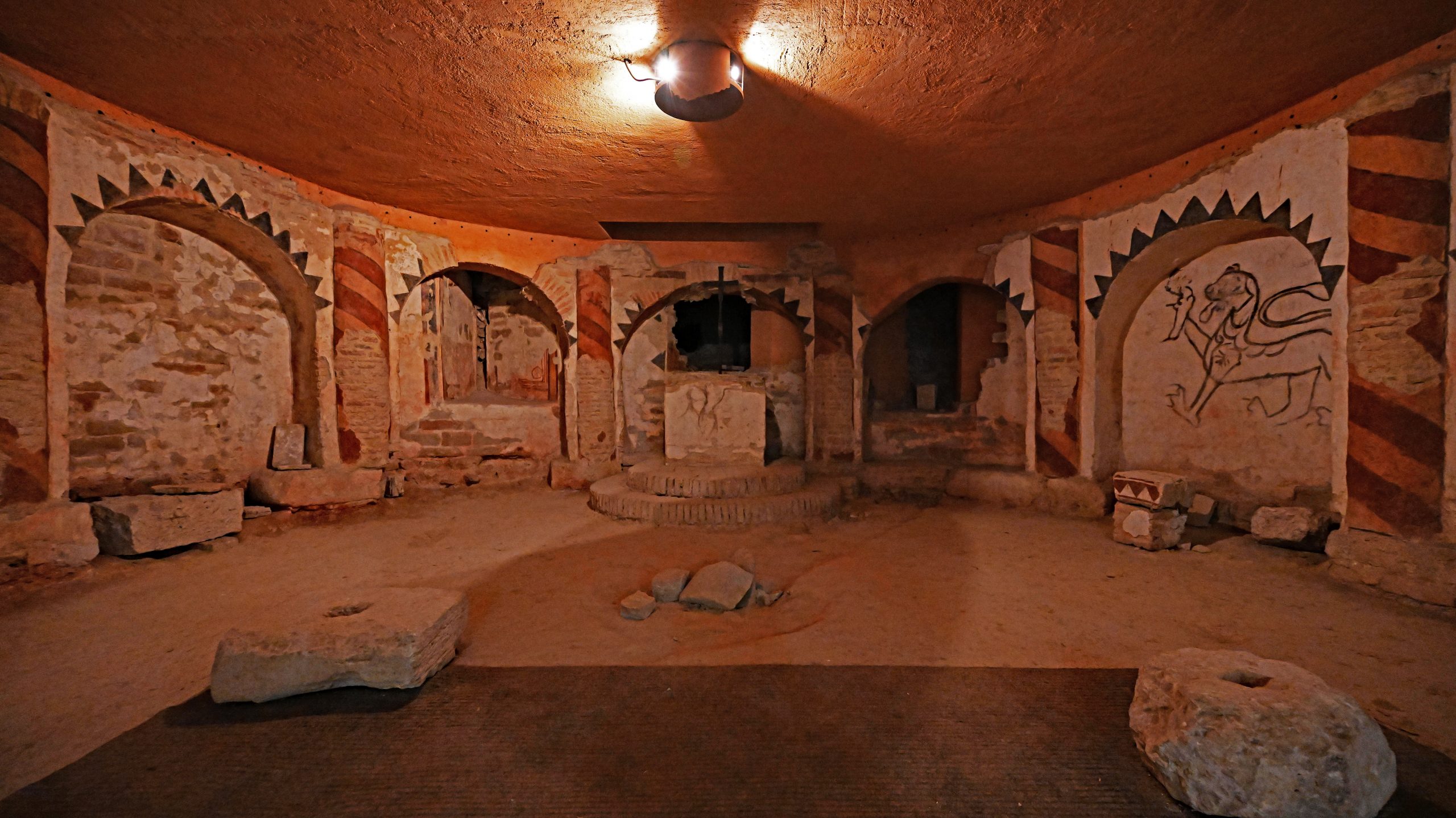
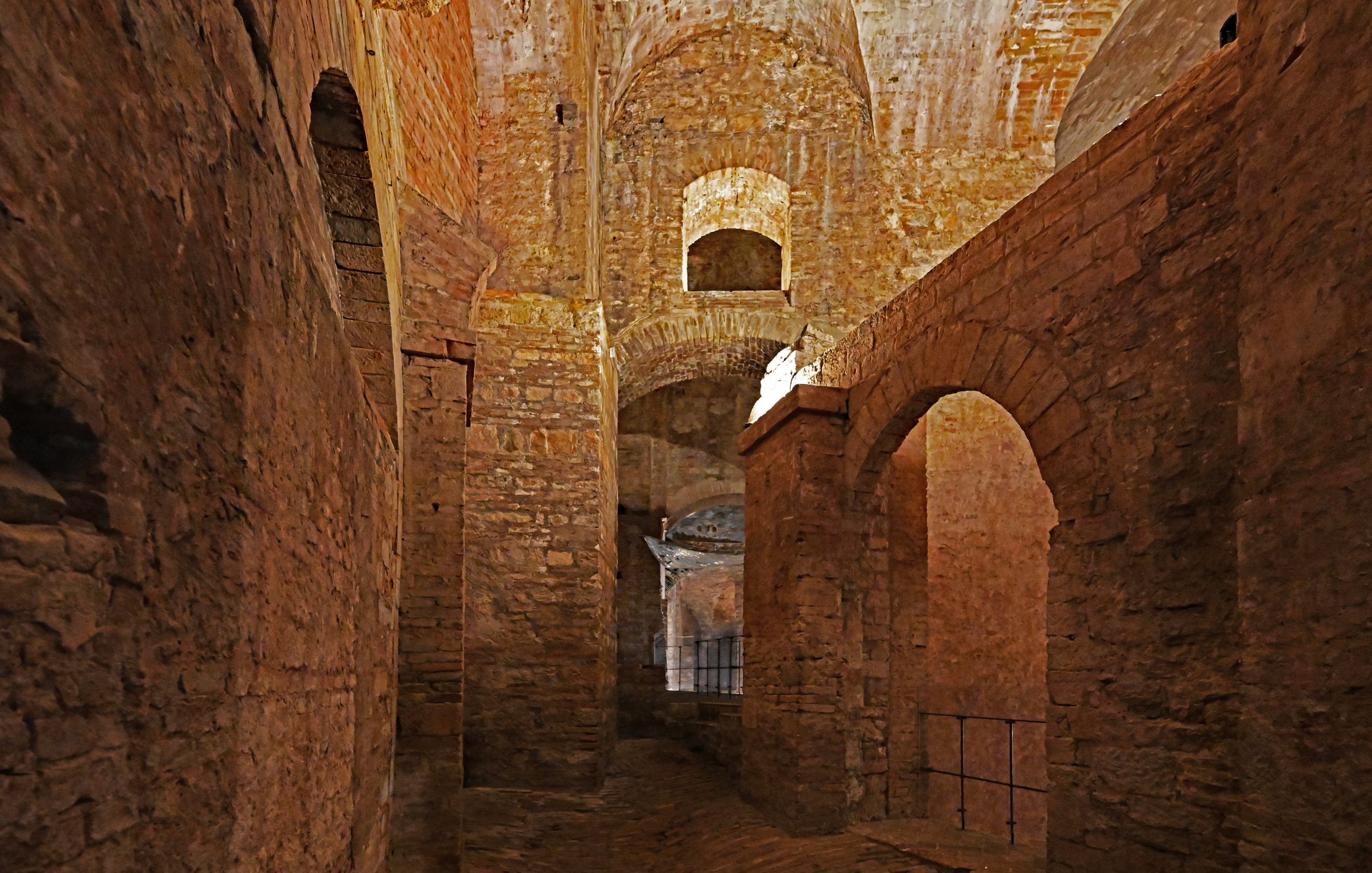
Yet, Perugia holds another, mysterious face in store. My path leads me literally one level deeper – into the fascinating underworld of the city. First, I explore the archaeological excavations beneath the foundations of the upper city. A modern, dark walkway guides me deep into cool, stony halls. Here I stand eye-to-eye with gigantic Etruscan and Roman walls. In one of the dim chambers, I come across a circular, mystical sanctuary: the pillars are decorated with archaic, red-brown stripes and zigzag patterns, and in a wall niche, I discover a historic plaster drawing of the Griffin of Perugia.
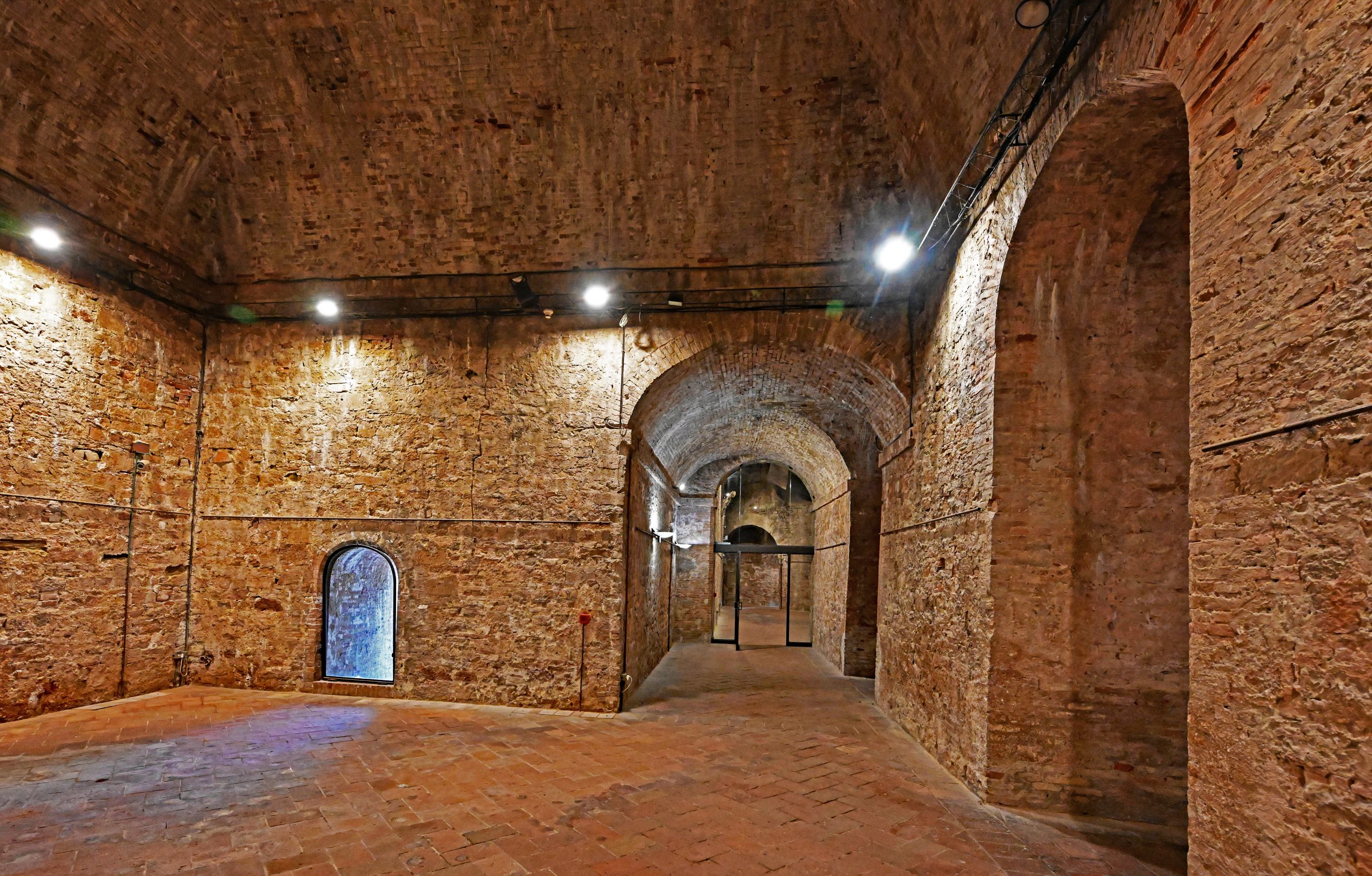
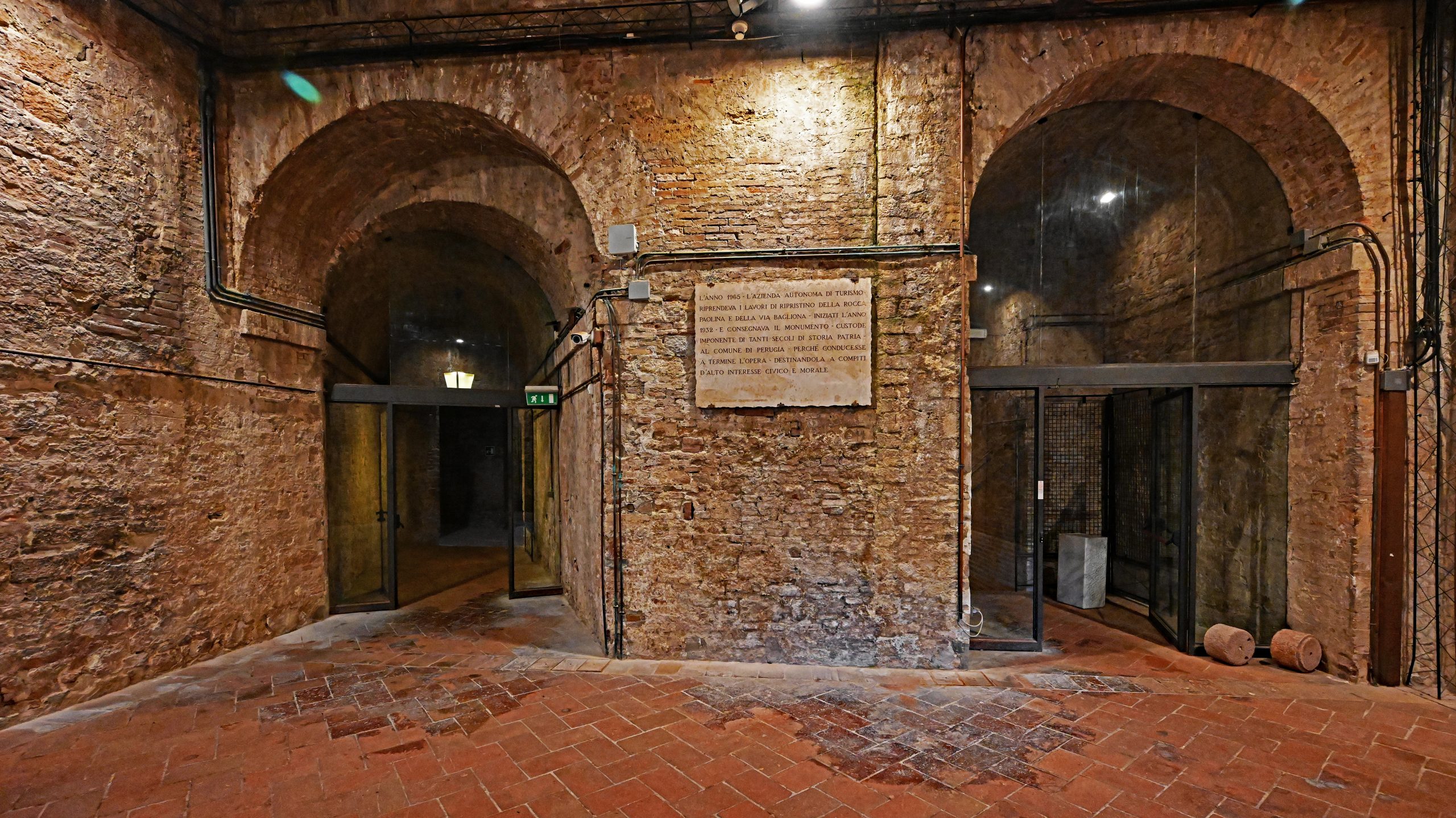
The absolute highlight of the underworld, however, is the Rocca Paolina [IMAGE_CONTEXT]. This gigantic Renaissance fortress was built in the 16th century over what was then a lively neighborhood. Walking through these vast vaulted halls with their beautiful reddish terracotta floors in a herringbone pattern, I feel almost dizzy with awe. You walk through monumental archways that were once normal house entrances under the open sky, and look up at wall-high barrel vaults. Modern spotlights highlight the rough brick structures perfectly, while deep arched windows in the meter-thick walls let in occasional daylight. On one wall, a large marble plaque embedded in the stone features a Latin inscription, serving like a stone memory of the turbulent papal history of this rock fortress.
Gallery IV: Coffee Breaks and Underground Worlds
Chapter 4: Above the Roofs to the Green Paradise
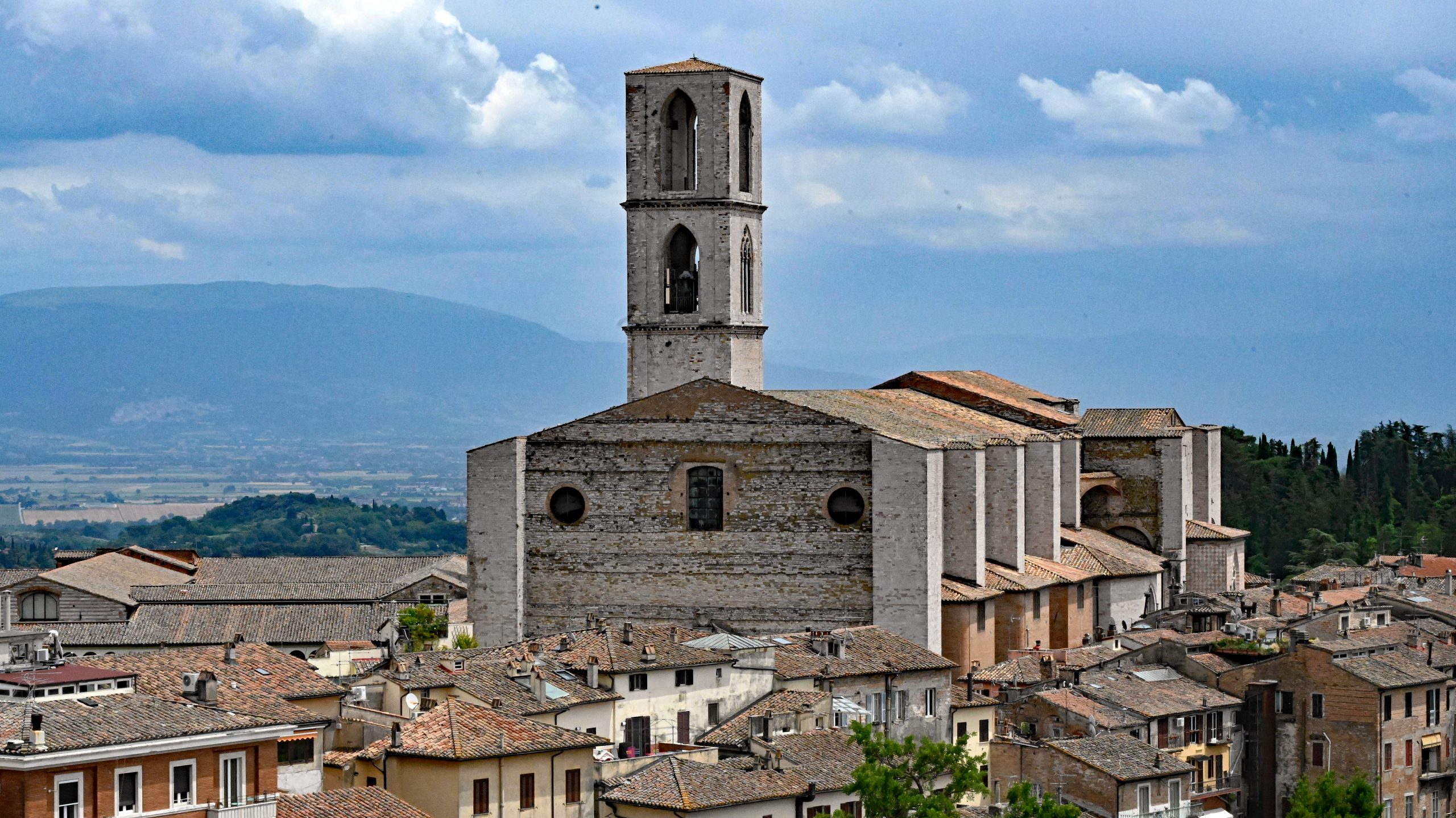
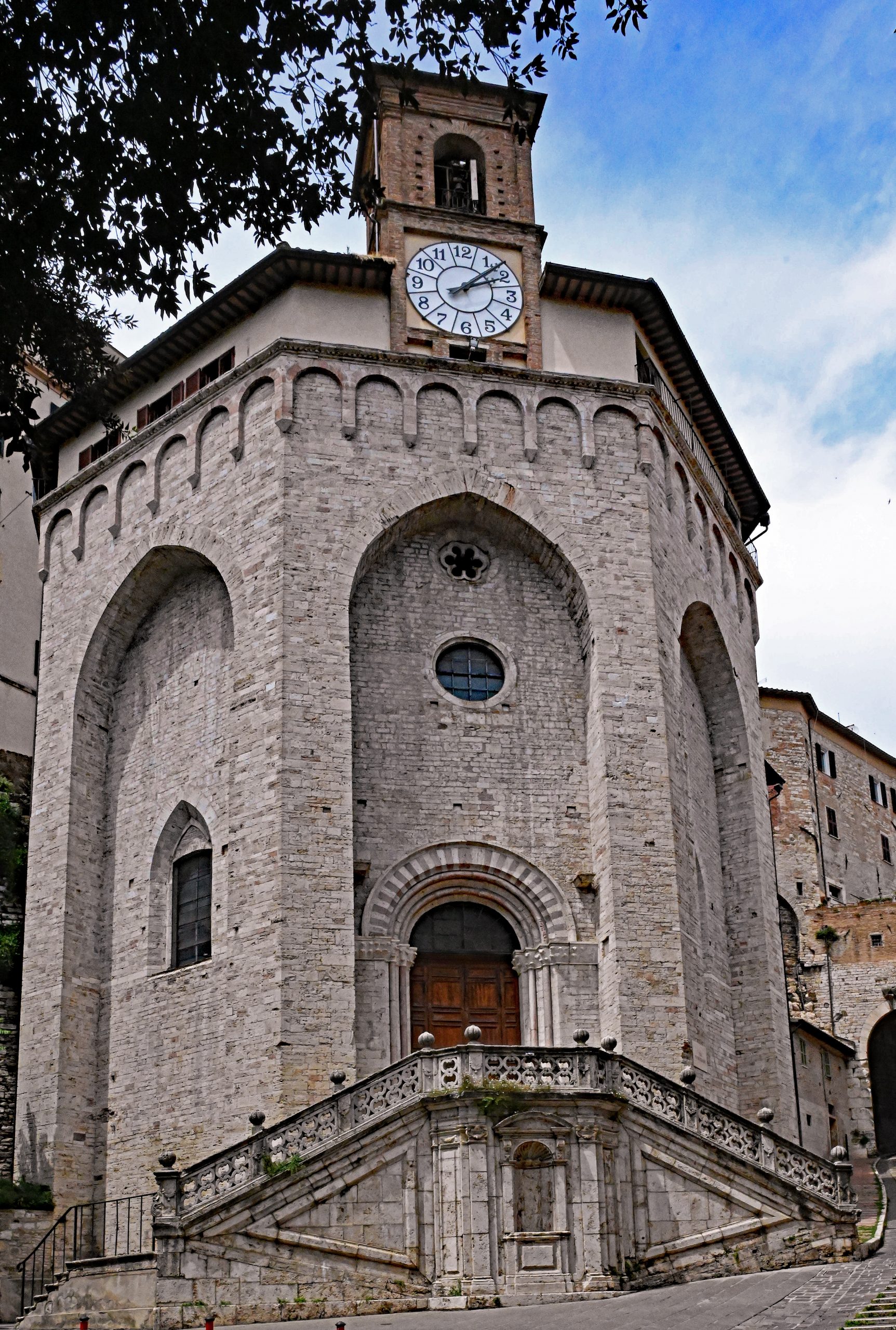
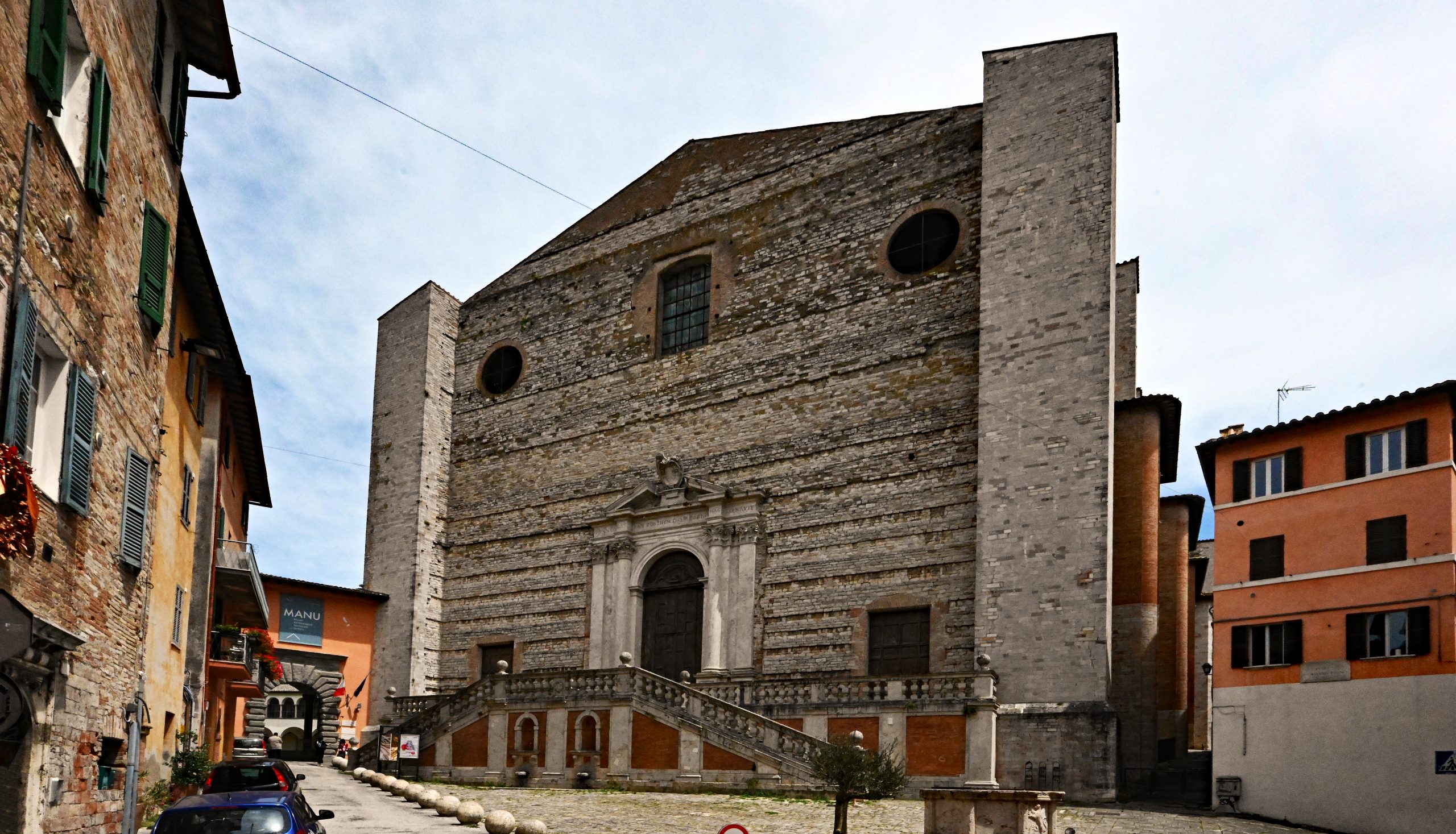
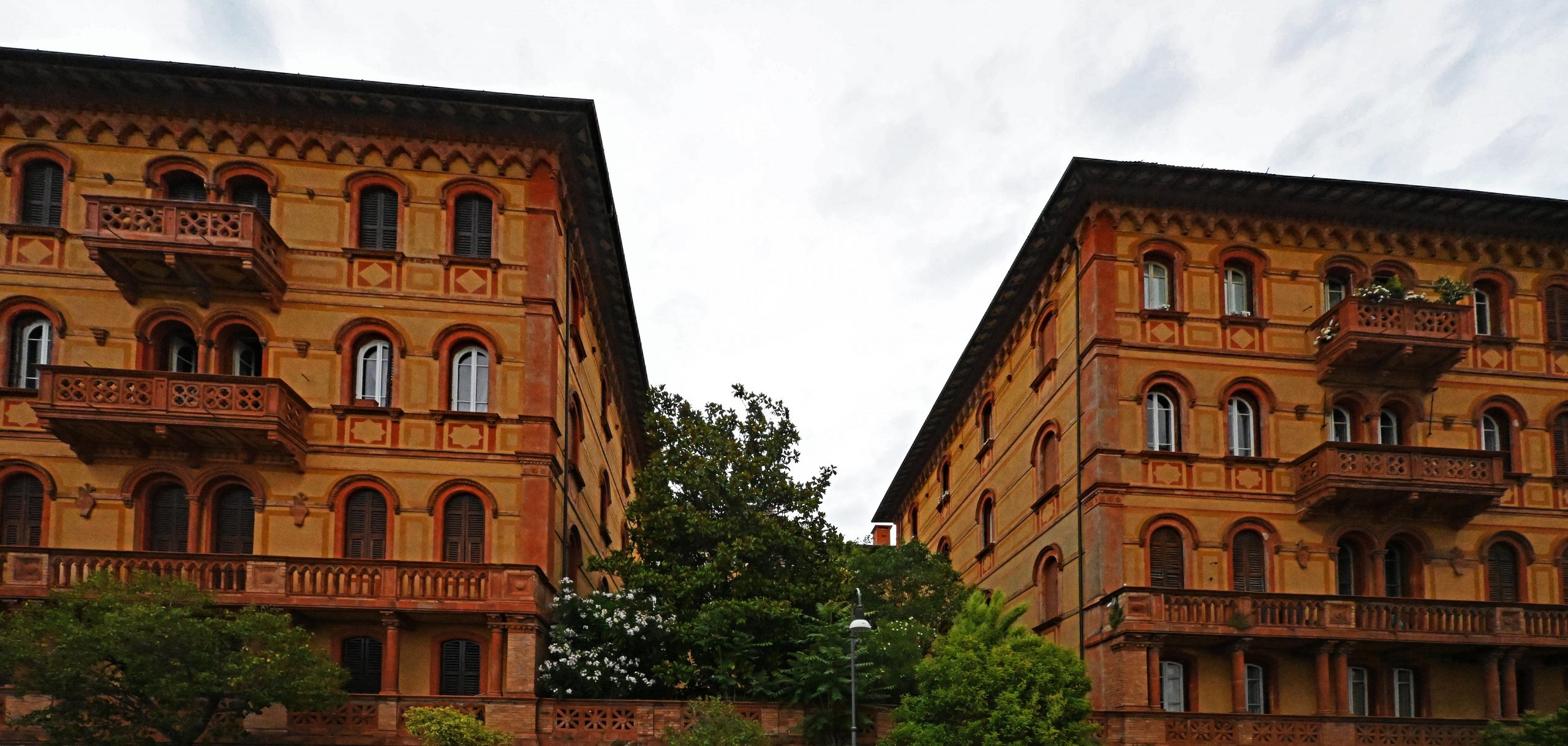
Stepping back out into the daylight, I seek out the city’s elevated viewpoints. The view from up here is breathtaking: a seemingly endless sea of brown and red terracotta roofs spreads out before me, from which the gigantic Basilica of San Domenico with its distinct, open-work bell tower rises majestically. Descending through the steep alleys, I pass the church of Sant’Ercolano, which, with its wuchtig octagonal shape and Baroque, double-flight grand staircase, merges directly into the old city wall like a defensive fortress tower. A little later, I stand in Piazza Giordano Bruno right in front of the rough, unfinished west facade of San Domenico, whose horizontal layers of stone radiate a tremendous, primal power. Just a few steps further, the impressive neogothic twin palazzi glow in warm terracotta and ochre tones in the soft daylight.
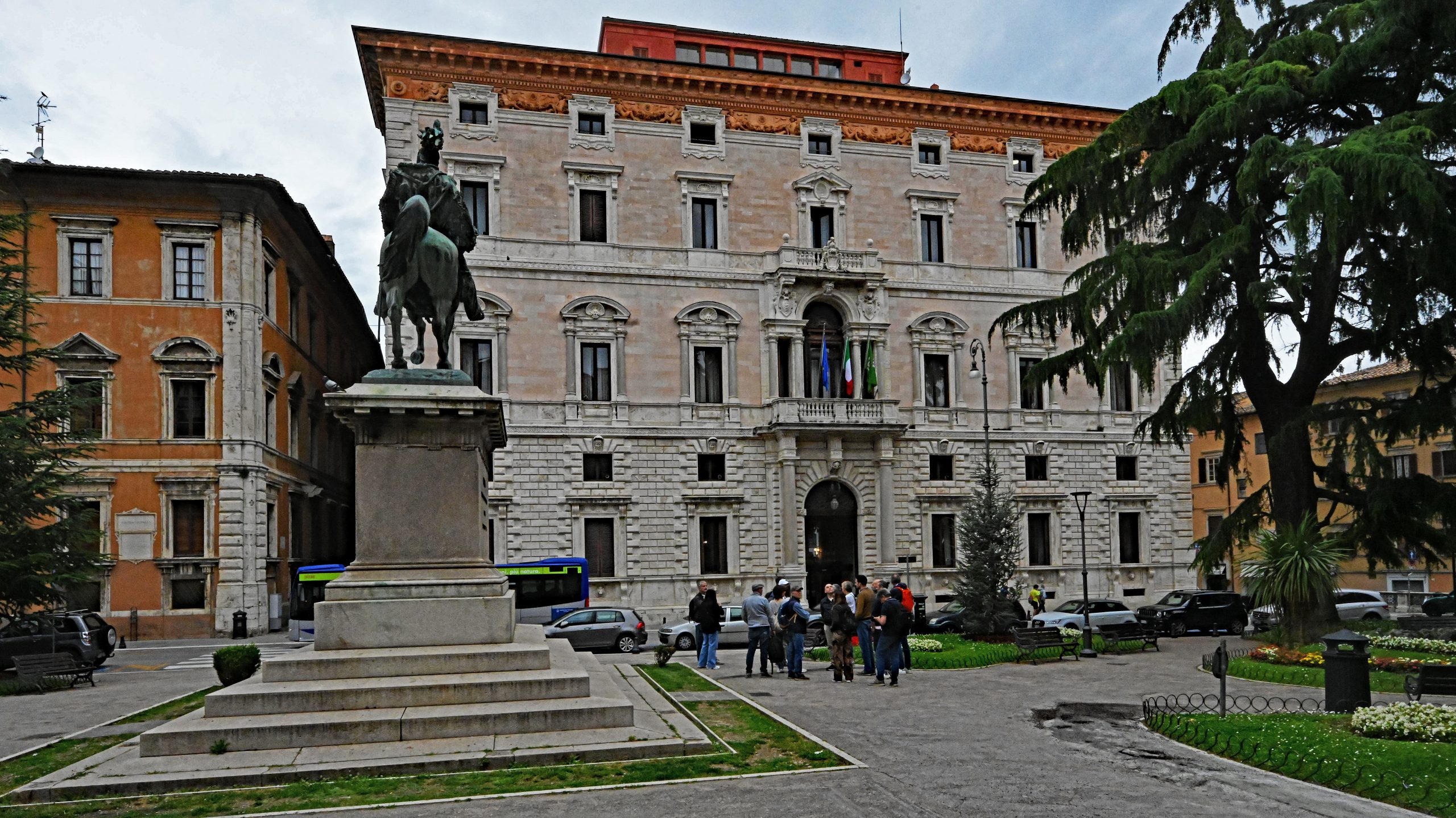
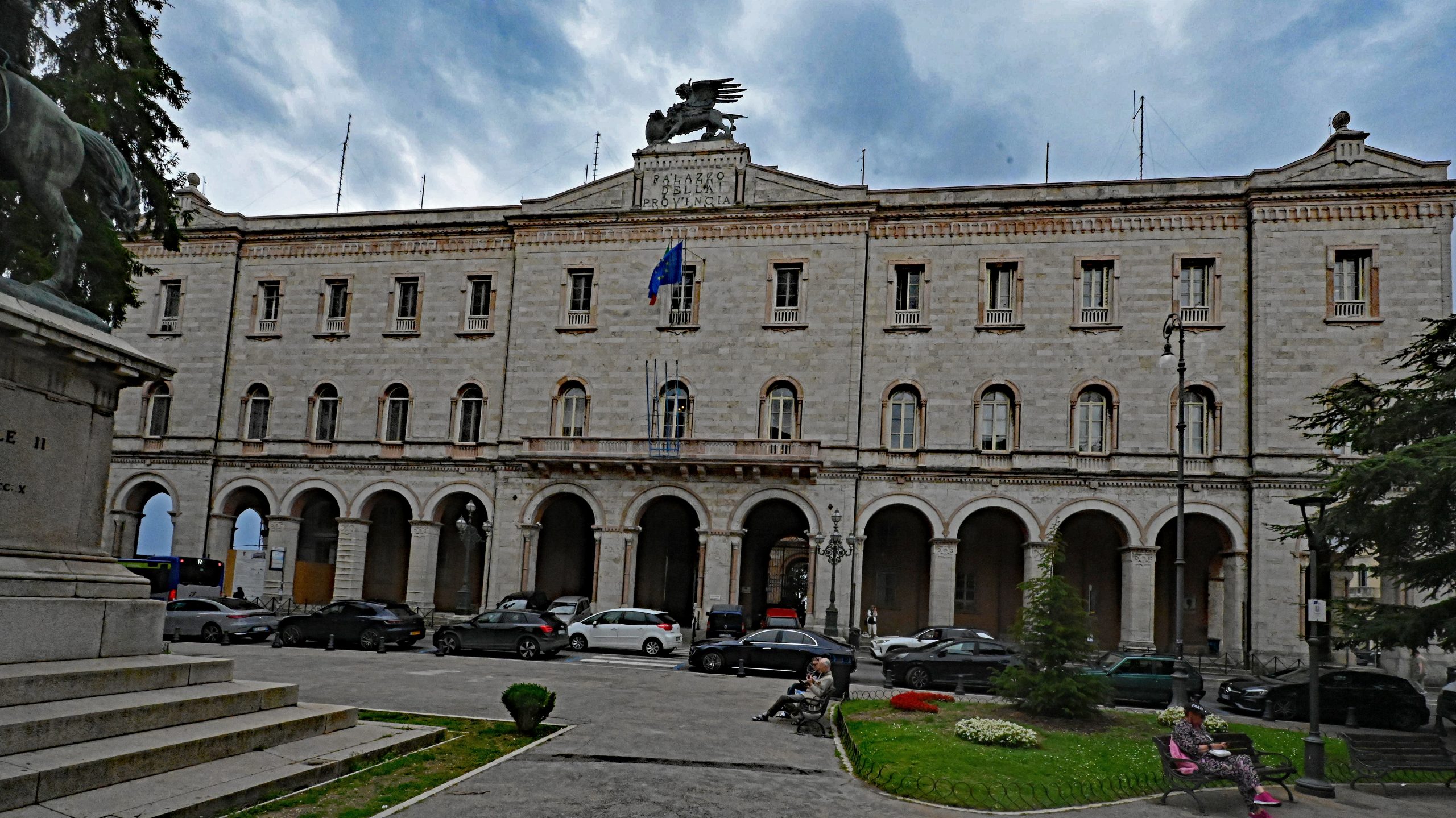
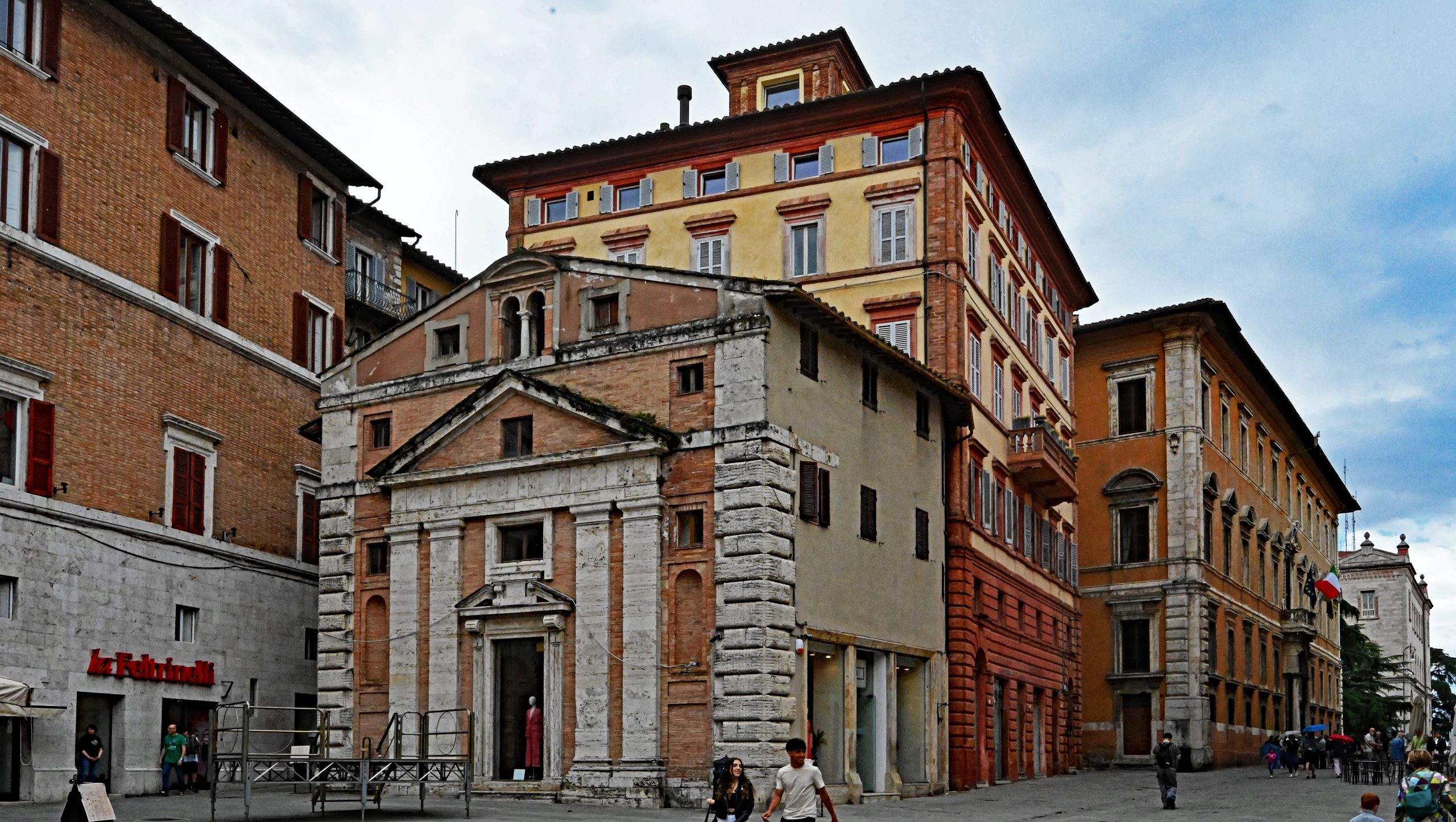
My path continues south to Piazza Italia, the elegant, political center of Perugia. Here, magnificent palaces of the late 19th century line up. The monumental Palazzo Cesaroni impresses with its neoclassical symmetry and the reddish-gold roof frieze, while a dark bronze equestrian statue thrones in front of it. Directly opposite, Palazzo della Provincia forms a shaded walkway with its tall rows of arched arcades, and high up on its roof gable, a huge bronze sculpture of the winged griffin watches over the square. Nestled into this line of palaces lies the small church of Sant’Isidoro, whose narrow Renaissance facade with four white columns looks like a small ancient temple portal.
Gallery V: Views and the Splendor of Piazza Italia
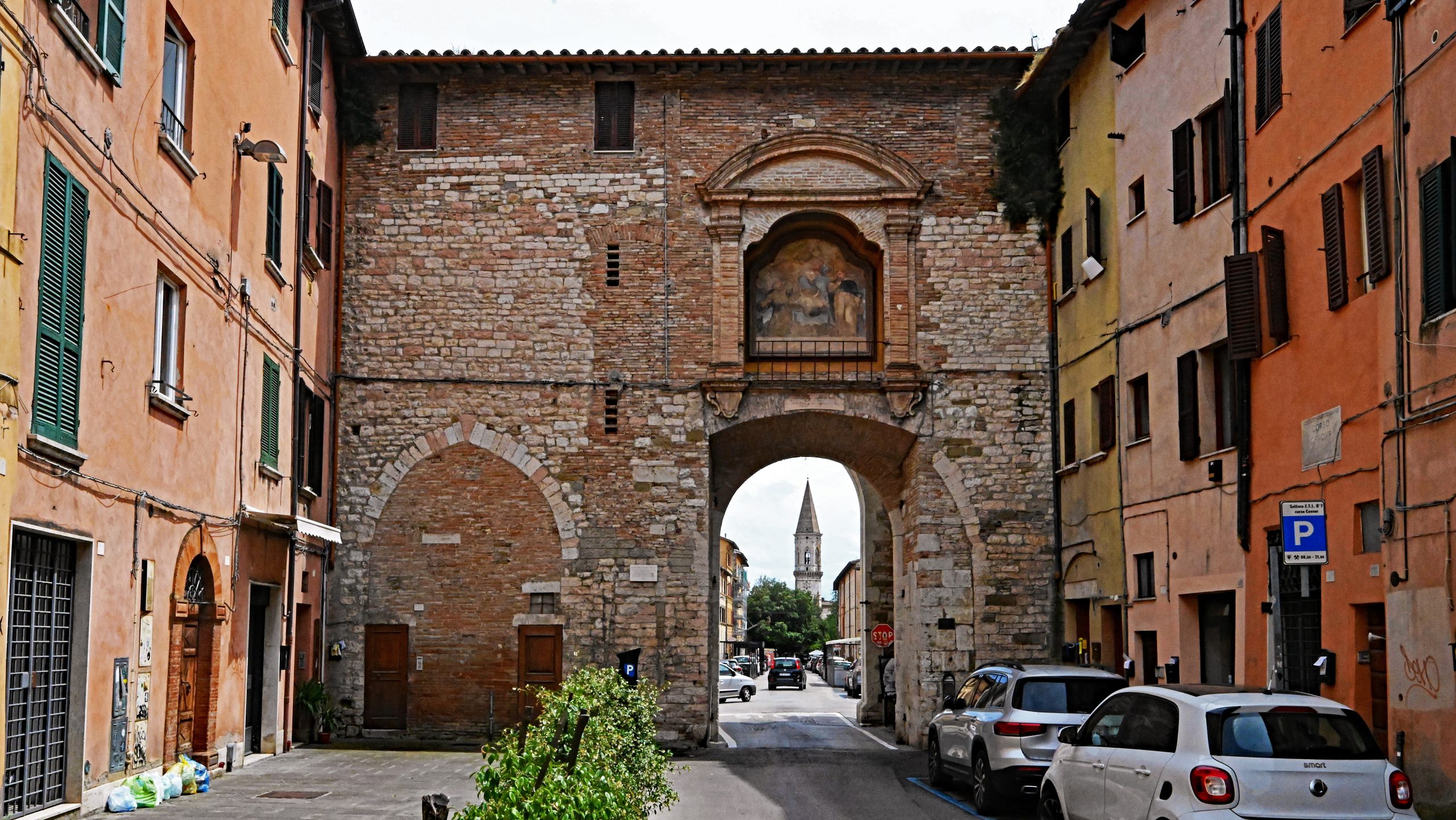
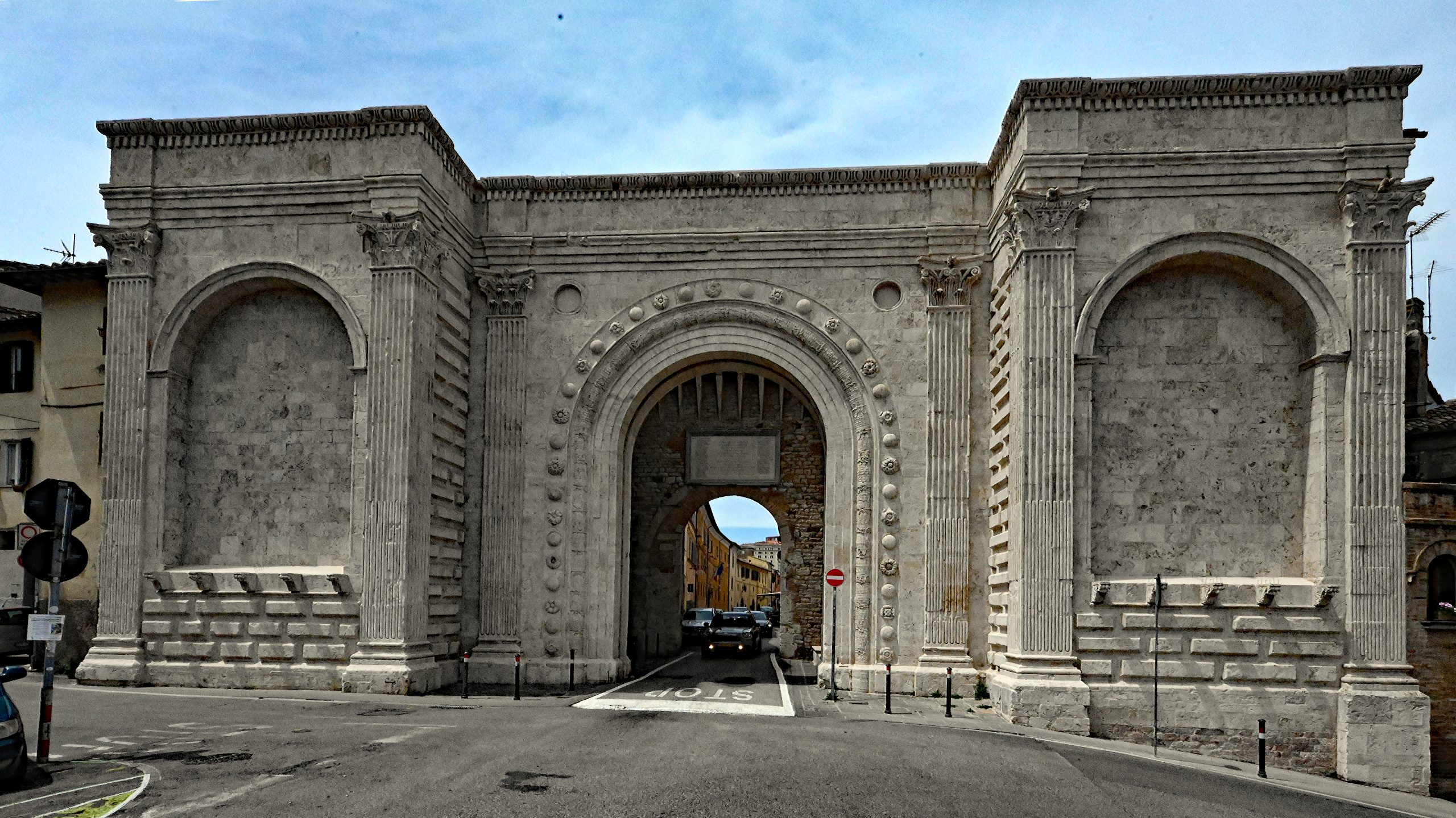
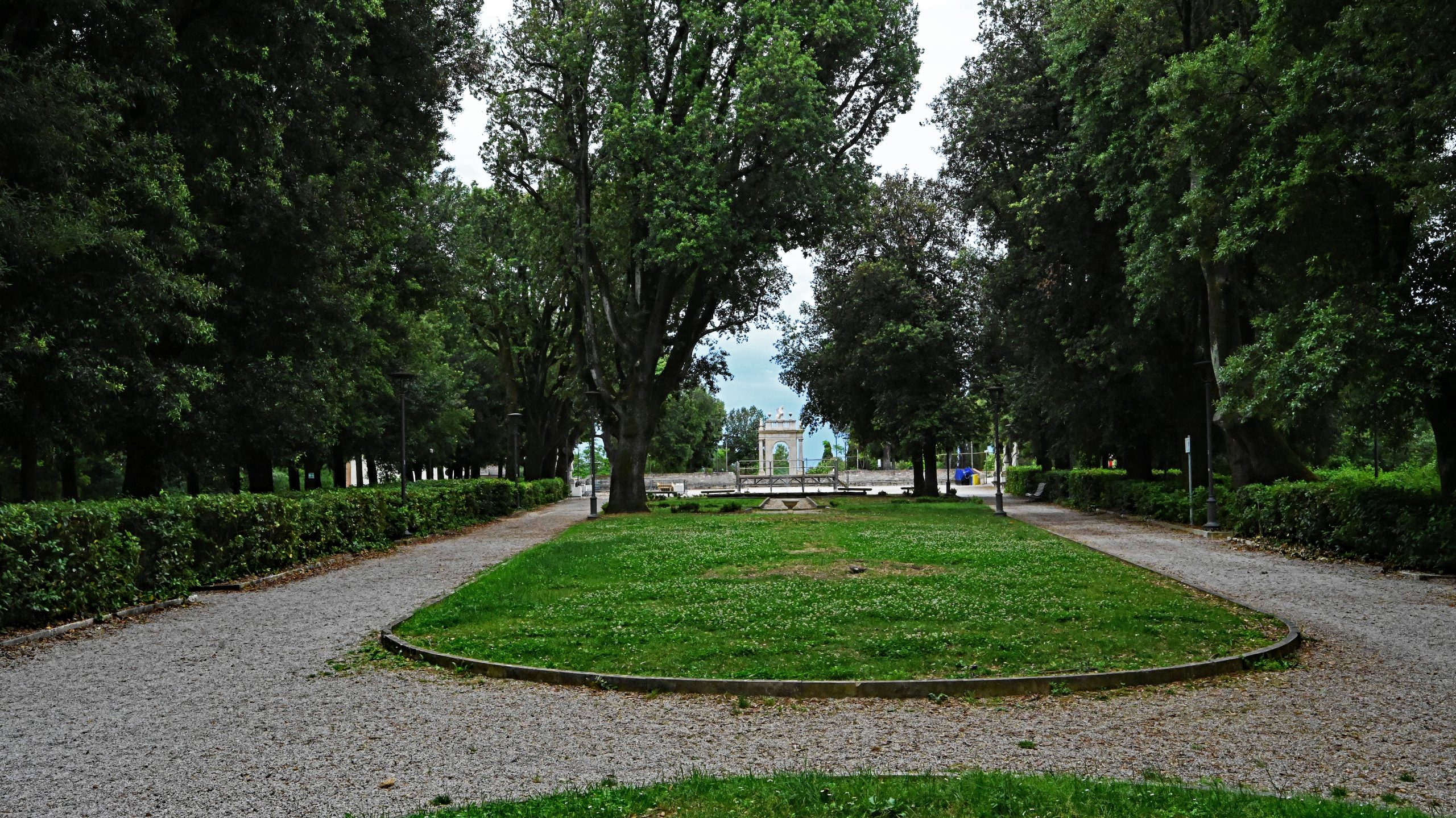
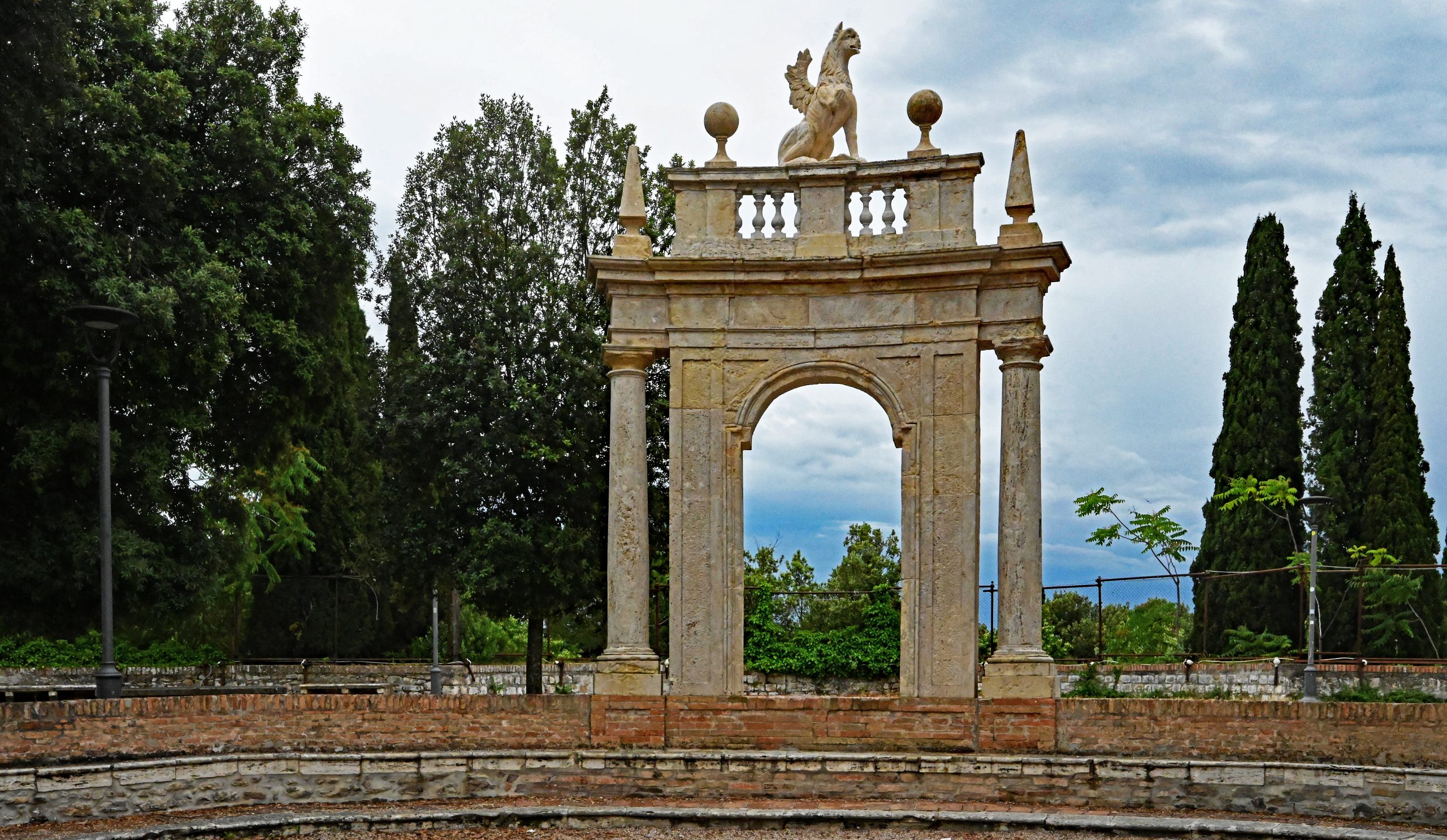
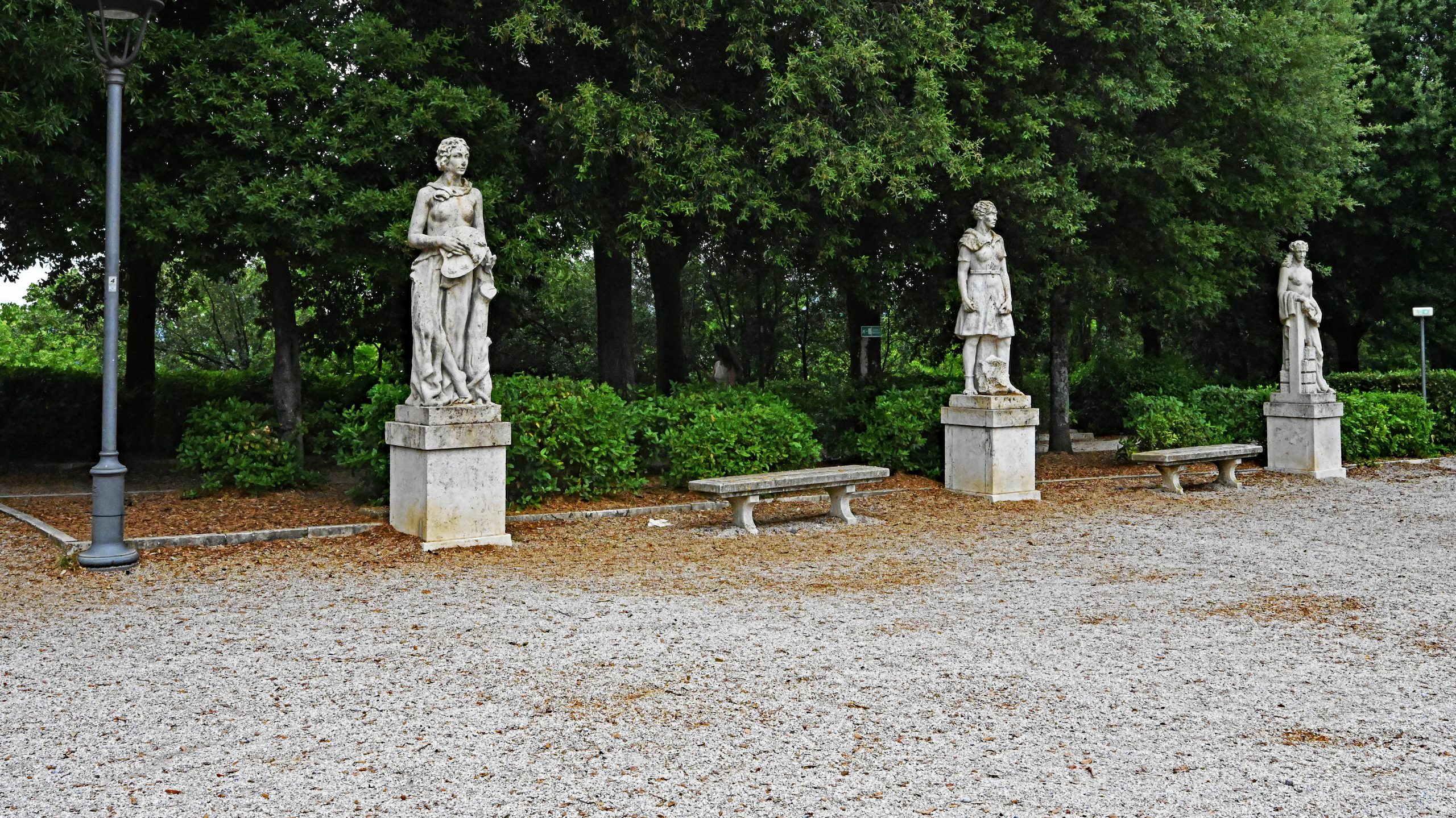
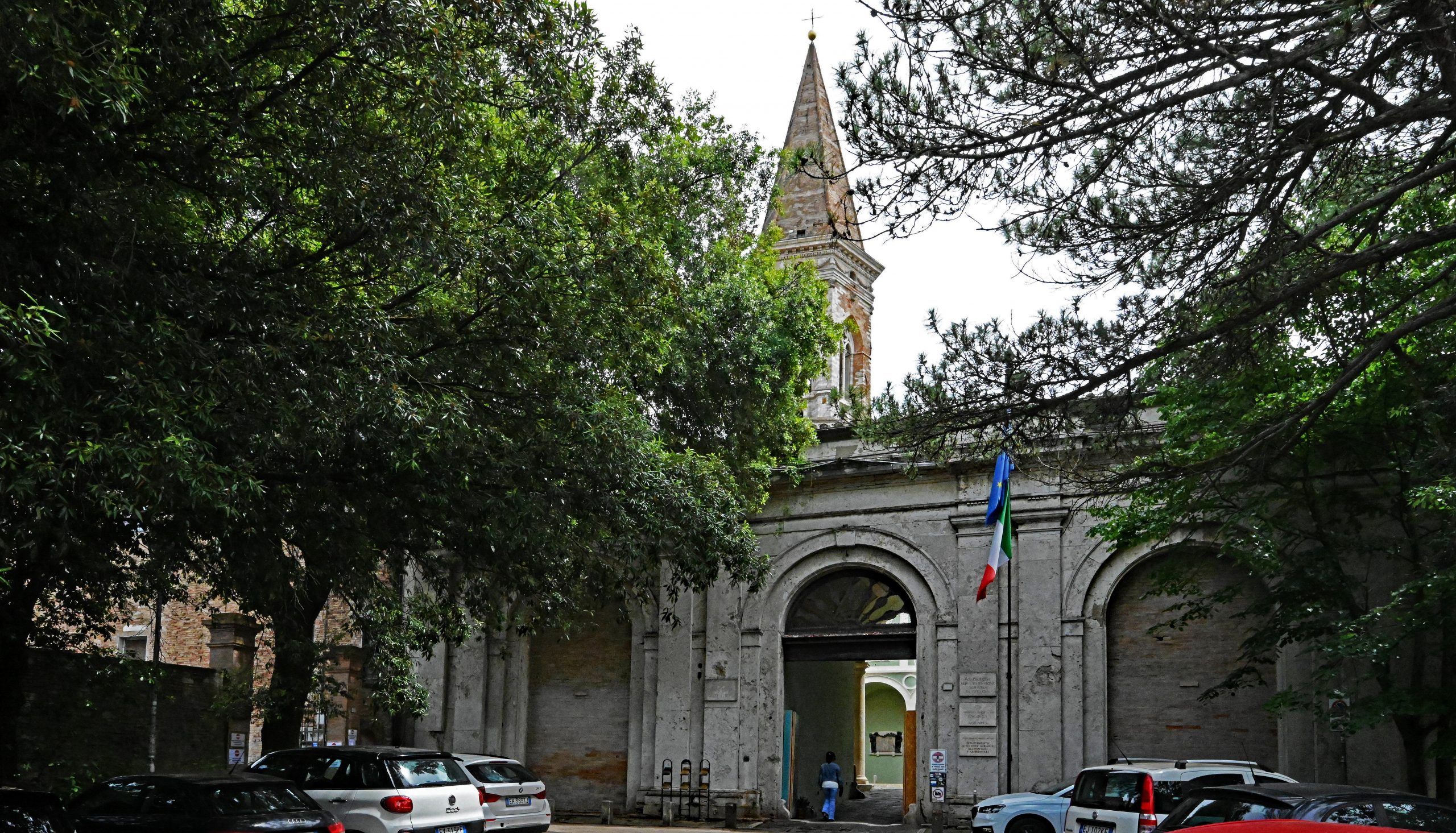
Finally, I reach the historic Porta San Pietro. From the city side, the gate presents itself in rustic natural stone – and holds a magical surprise: looking through the open archway, you can see straight down the street, perfectly framed like a picture, right to the pointed bell tower of the Abbey of San Pietro. As I walk through the gate and look back, it reveals its second face: a magnificent Renaissance show-facade made of light stone, modeled after a Roman triumph arch. Right next to it, a green oasis opens up: the Giardini del Frontone. Strolling between the avenues of centuries-old holm oaks feels incredibly good after the hard city pavement. The gravel paths lead me along perfectly symmetrical lawns straight to the Arco dell’Arcadia at the end of the garden. On the peak of this small triumph arch, a sculpture of the winged griffin once again proudly spreads its wings.
Gallery VI: The Gates and Gardens of San Pietro
Chapter 5: The Grand Finale in the Temple of Art of San Pietro
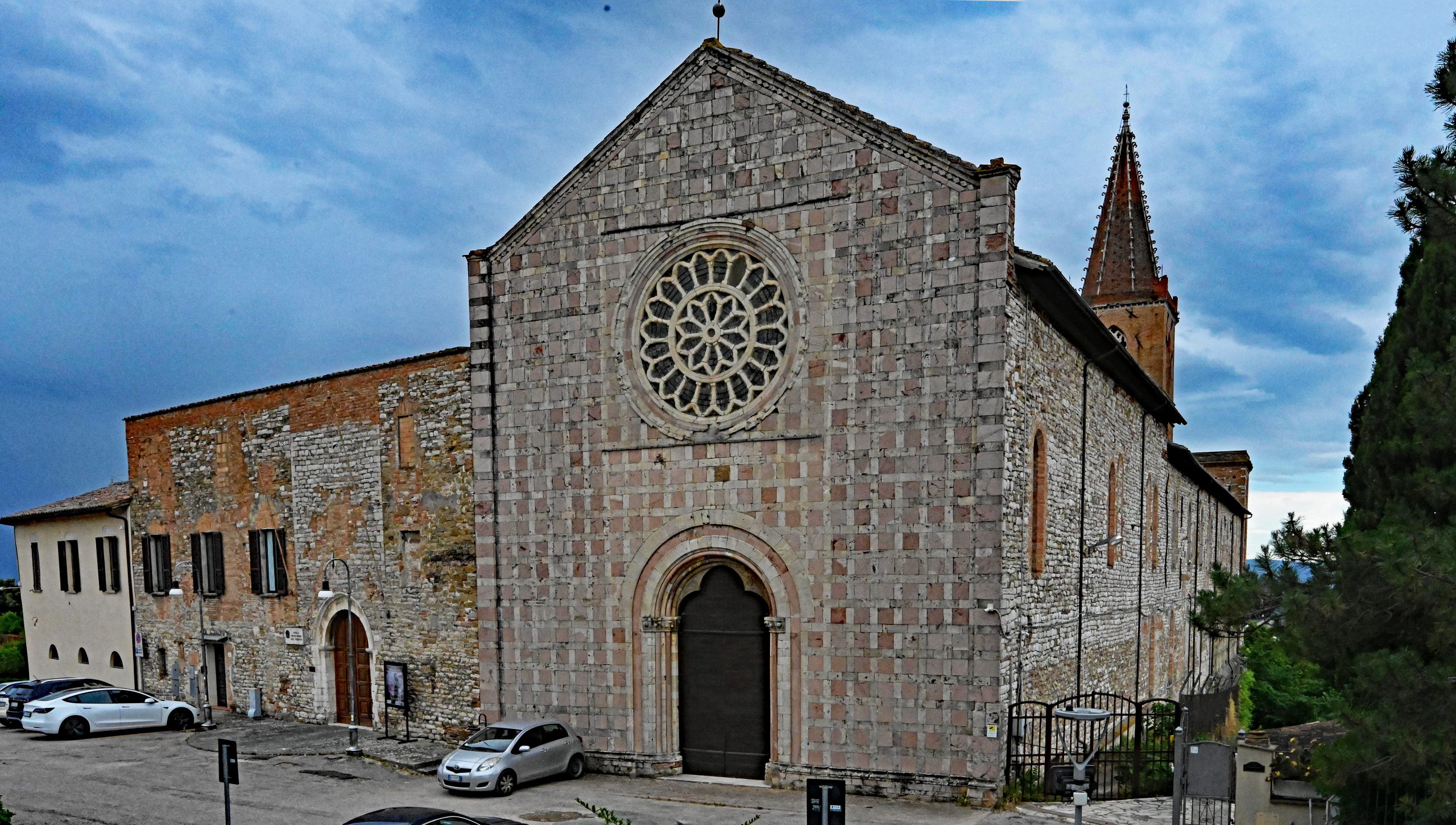
My final destination is the historic monastery complex of San Pietro, which rises majestically against the wide Umbrian landscape. Standing in front of the west facade of the basilica, I am fascinated by its checkerboard pattern of pink and white marble, in the center of which a huge, intricately carved stone rose window sits like a stone wheel. The entrance to the abbey is hidden behind an elegant, classical arched wall, above which the distinct spire towers.
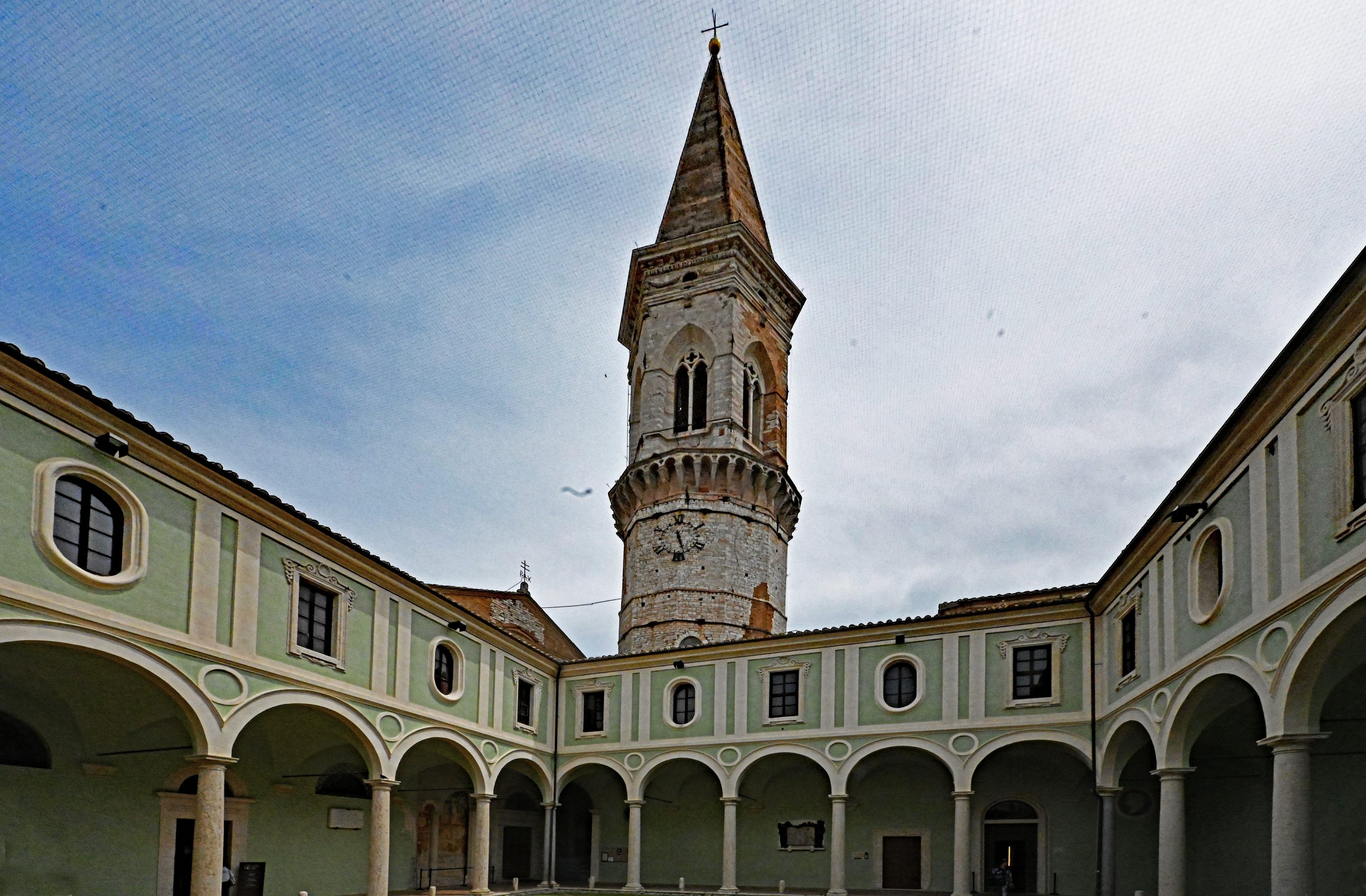
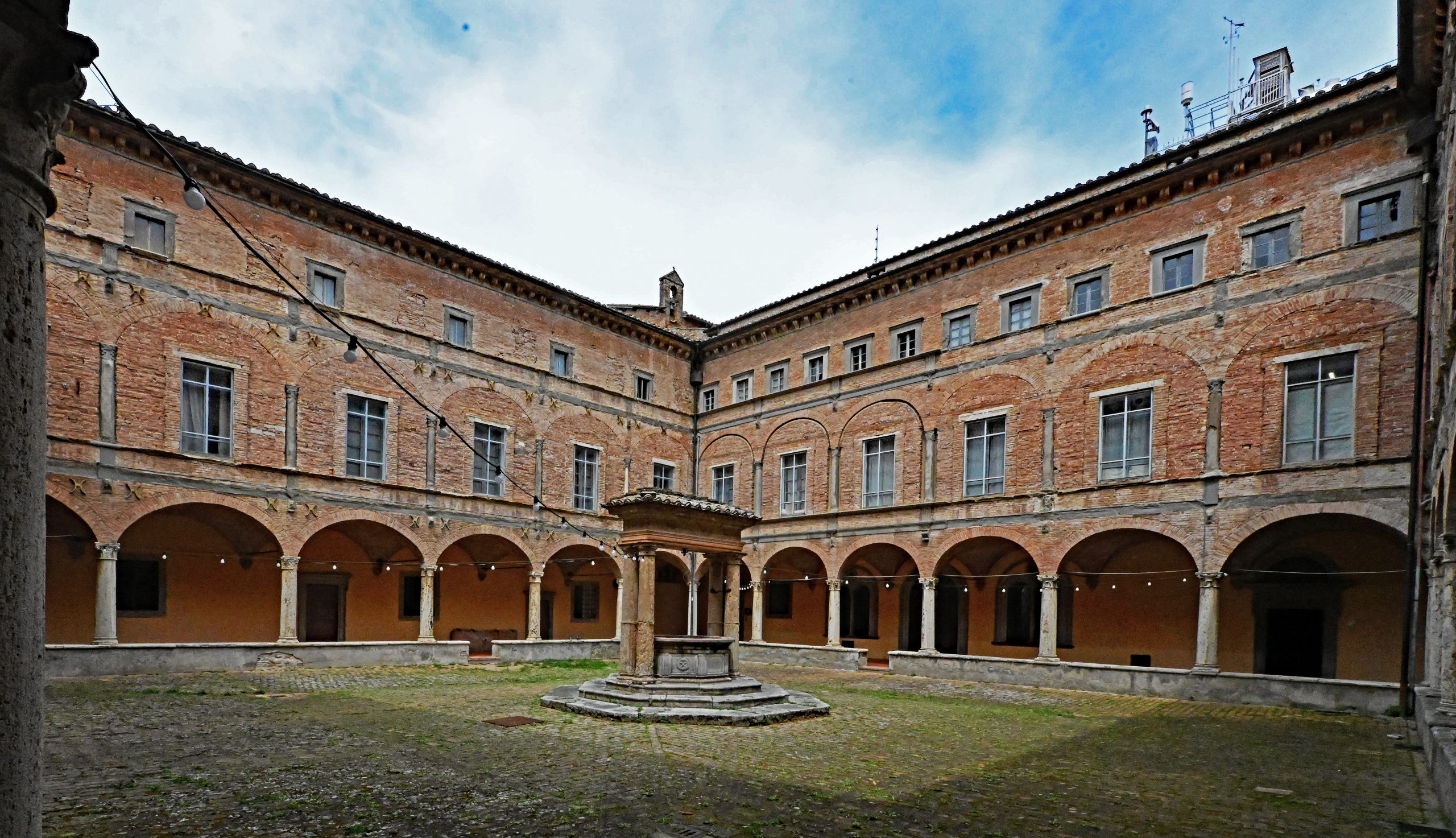
Entering the interior of the monastery, a complete, monastic silence welcomes me. The first large Renaissance cloister, the Chiostro Maggiore, impresses with its delicate arched arcades on slender columns and a soft, light green facade. Looking up to the sky from here, the monumental, polygonal bell tower rises directly above you. Just a few steps further, the Chiostro delle Stelle opens up. Here, the warm, reddish brick of the three-story facades dominates, and in the middle of the slightly mossy pavement stands a beautiful, old stone fountain with a small columnar roof.
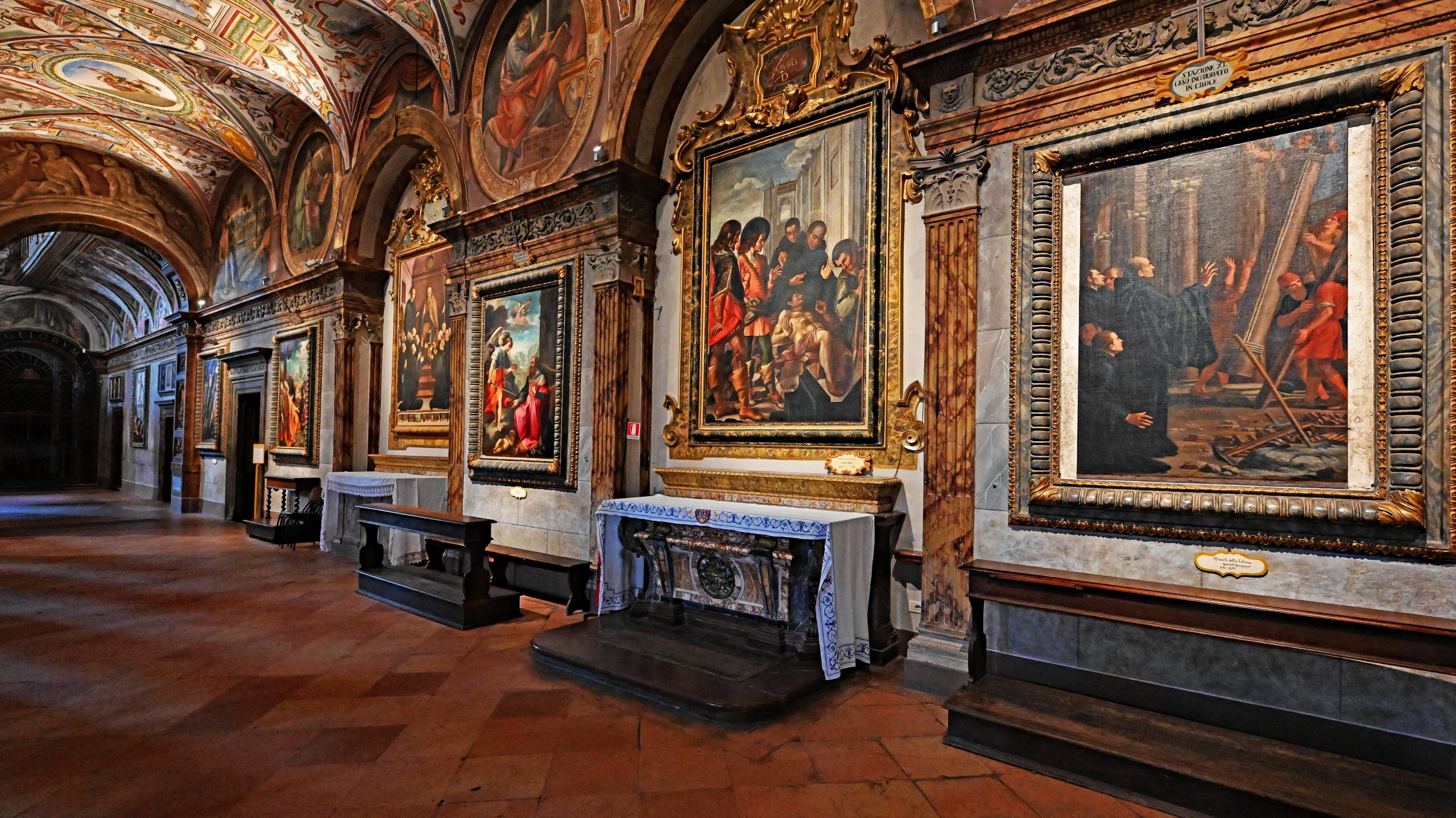
The crowning and overwhelming finale is formed by the interior of the Basilica of San Pietro. The space does not resemble an ordinary church, but rather a huge, sacred art museum. Two rows of mighty, dark marble columns support arched arcades, above which the walls are wall-to-wall covered with monumental, color-intense oil paintings. Above me thrones a deep-dark wooden coffered ceiling, its rich gildings shimmering in the soft light of the church. In the side aisles, magnificent Baroque altars line up, their heavy, gilded frames looking almost like independent sculptures, while the light reflects on the old terracotta floor.
Gallery VII: The Monumental Heritage of San Pietro
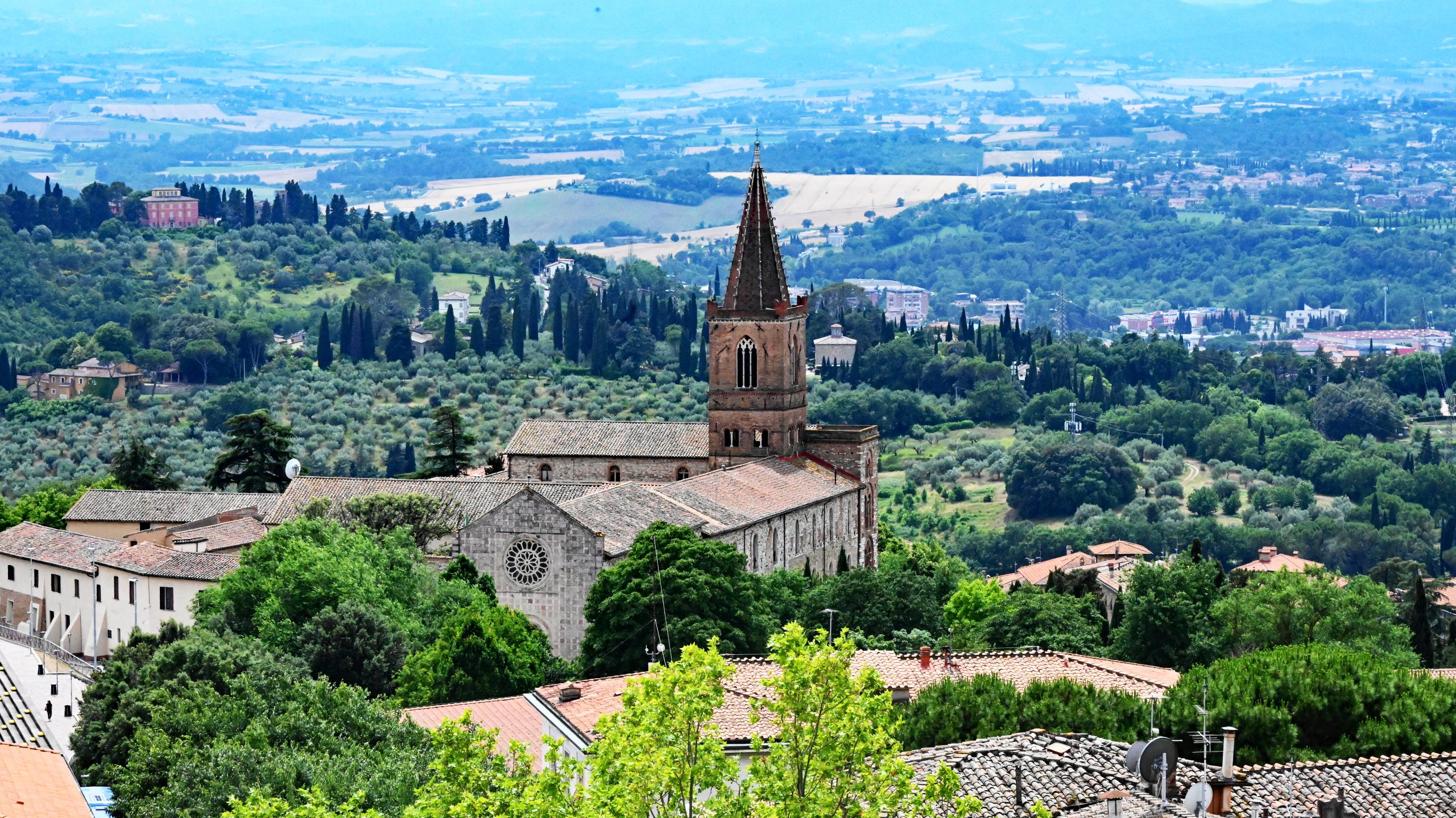
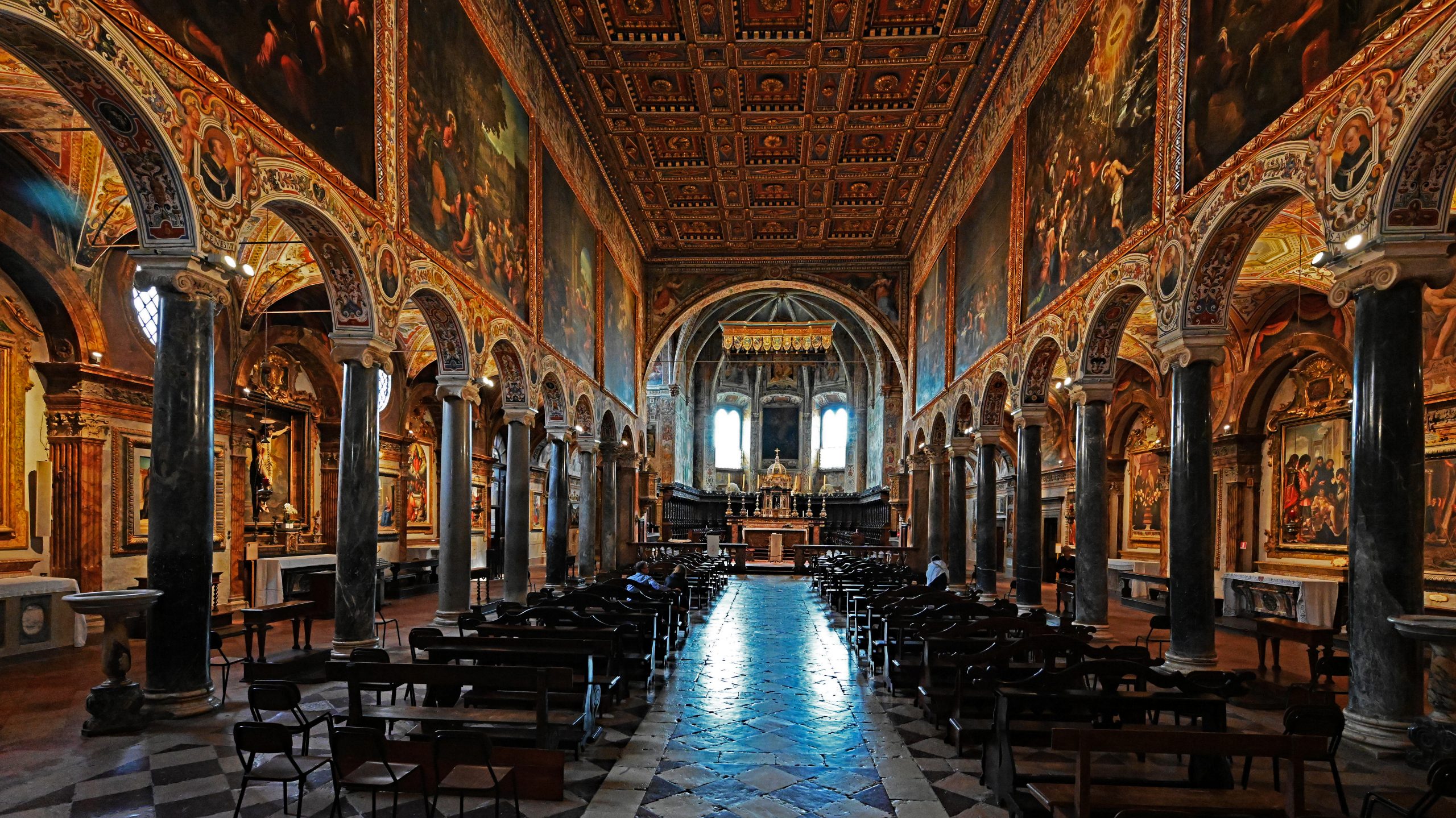
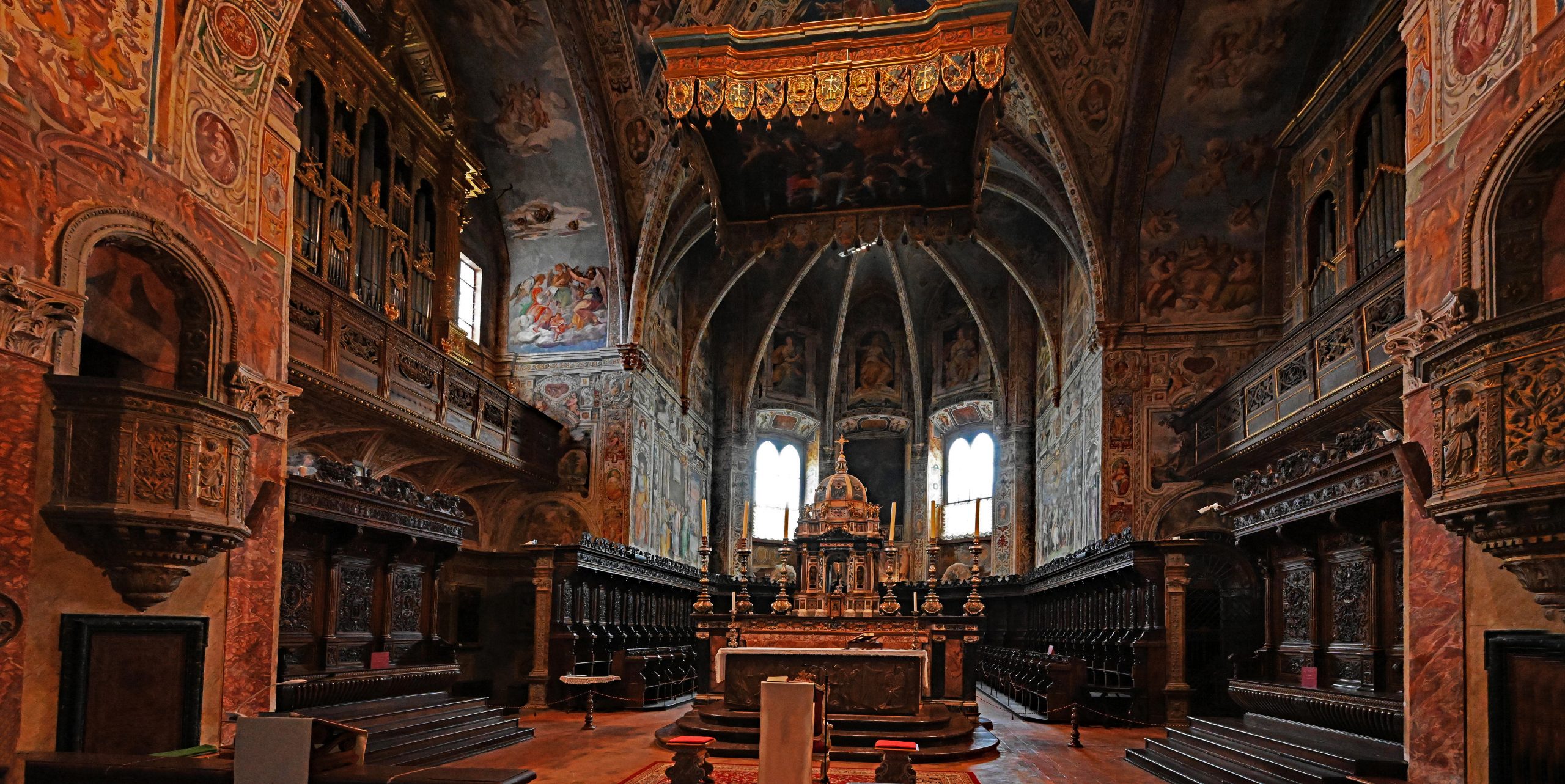
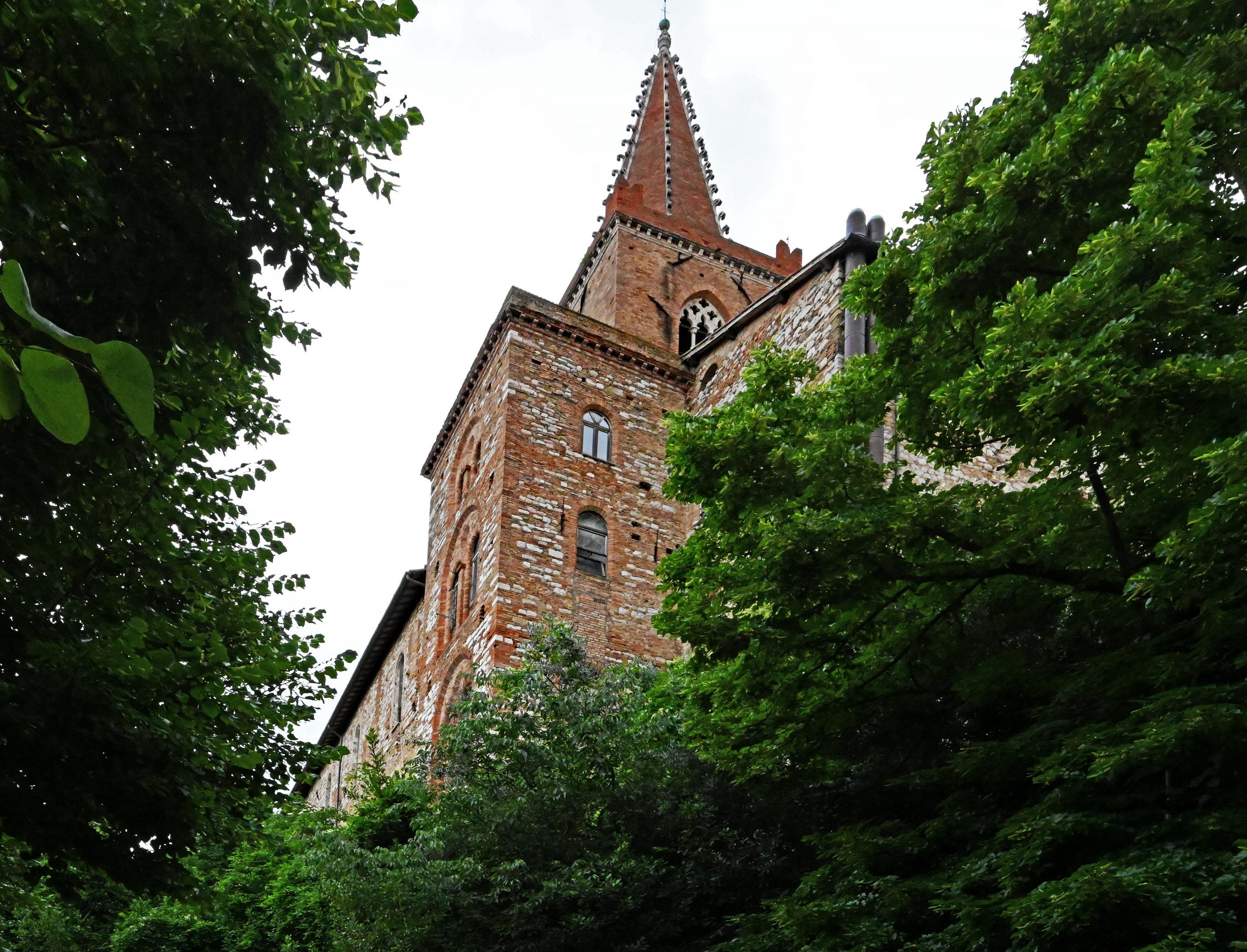
At the deepest point of the church, I reach the presbytery around the high altar. Surrounded by the intricately carved, dark wooden choir stalls, the mighty organ lofts on the sides, and the huge, gold-decorated canopy beneath the vivid ceiling frescoes, I pause in reverent wonder. Finally, descending the hill and looking up one last time through the dense green tree crowns at the wuchtig outer walls and the reddish pyramid peak of the bell tower, I know that this journey through historic Umbria will remain unforgettable.
Gallery VIII: The Sacred Art Treasure