
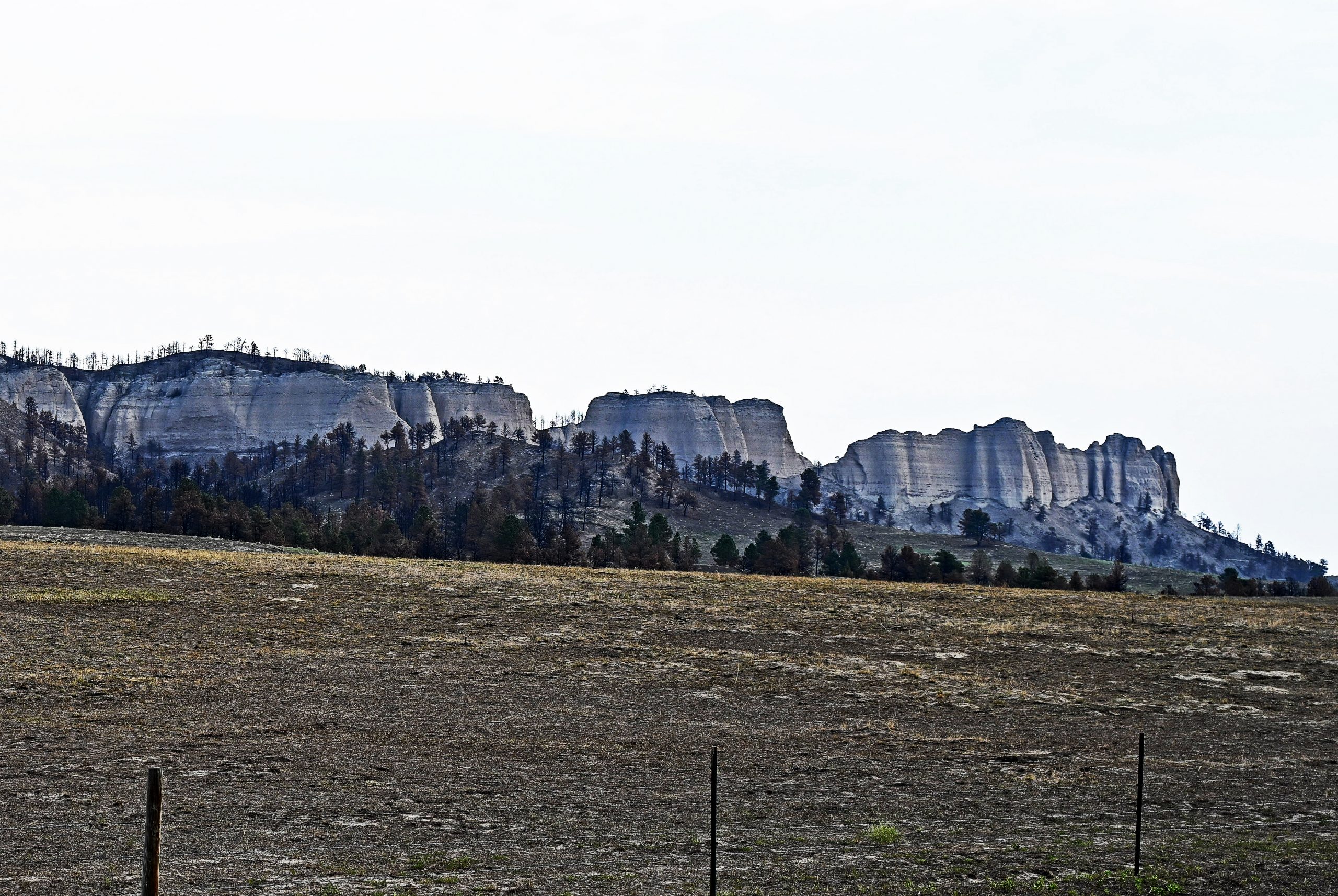
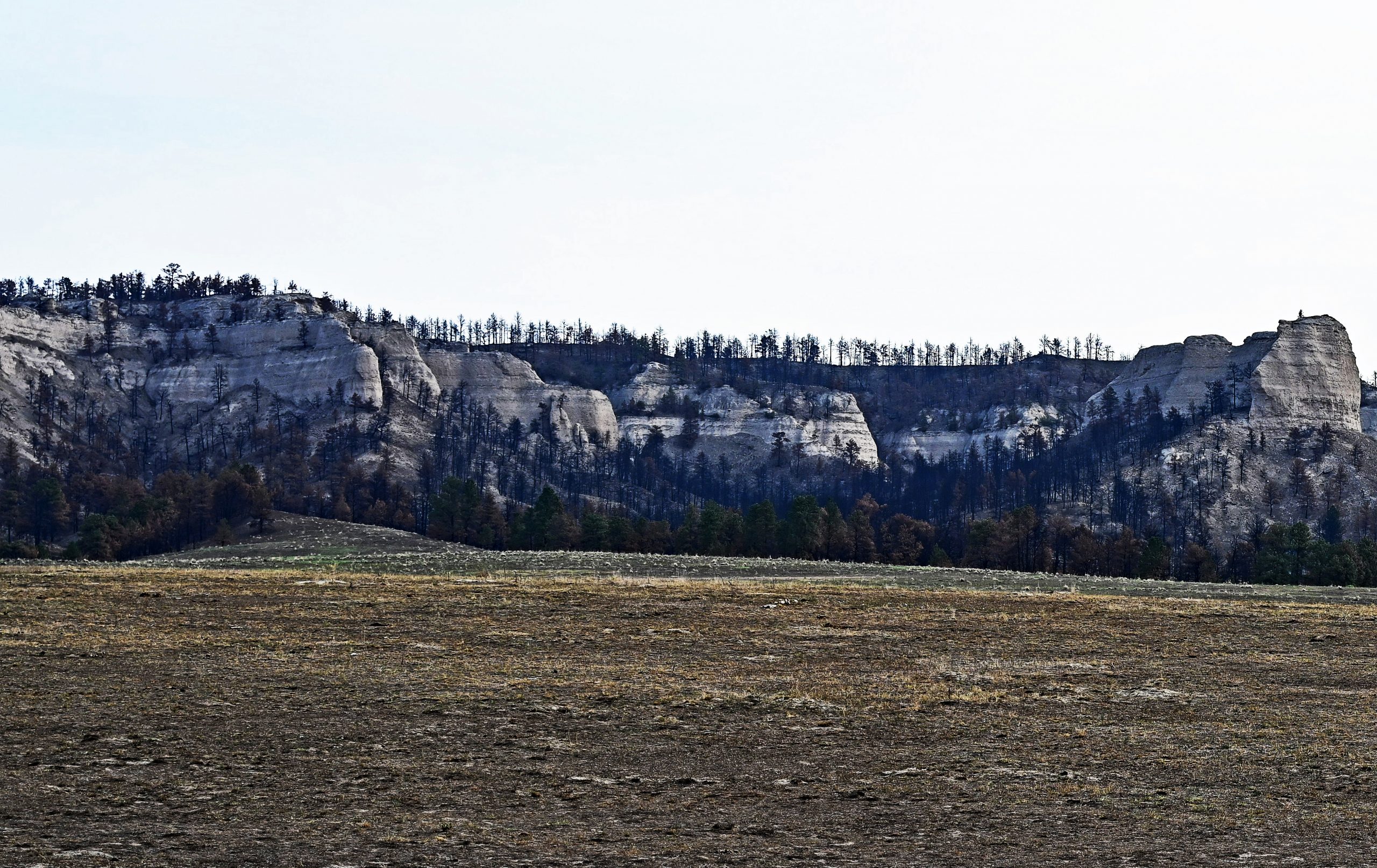
August 12, 2026 – Hours before you even reach the actual grounds of Fort Robinson State Park, the landscape of northwestern Nebraska completely captivates you. Along the seemingly endless highway, the vast prairie rolls by—a flat plain, tinted a yellowish-brown in the late summer, stretching beneath an infinite sky. Suddenly, the horizon changes shape: rugged, pale cliffs rise from the gentle waves of the steppe, signaling the famous Pine Ridge region. These are the monumental Red Cloud Buttes and their neighboring bluffs. Their snow-white sedimentary rock gleams almost like chalk in the bright light, crowned by dense, deep-dark pine canopies. Standing like silent sentinels by the roadside, these massive natural landmarks point the way into a setting that holds both natural wonders and deep, often tragic history.
Gallery I: Arrival in Pine Ridge Country
The Red Cloud Buttes form the majestic gateway to a place filled with historic contrasts.
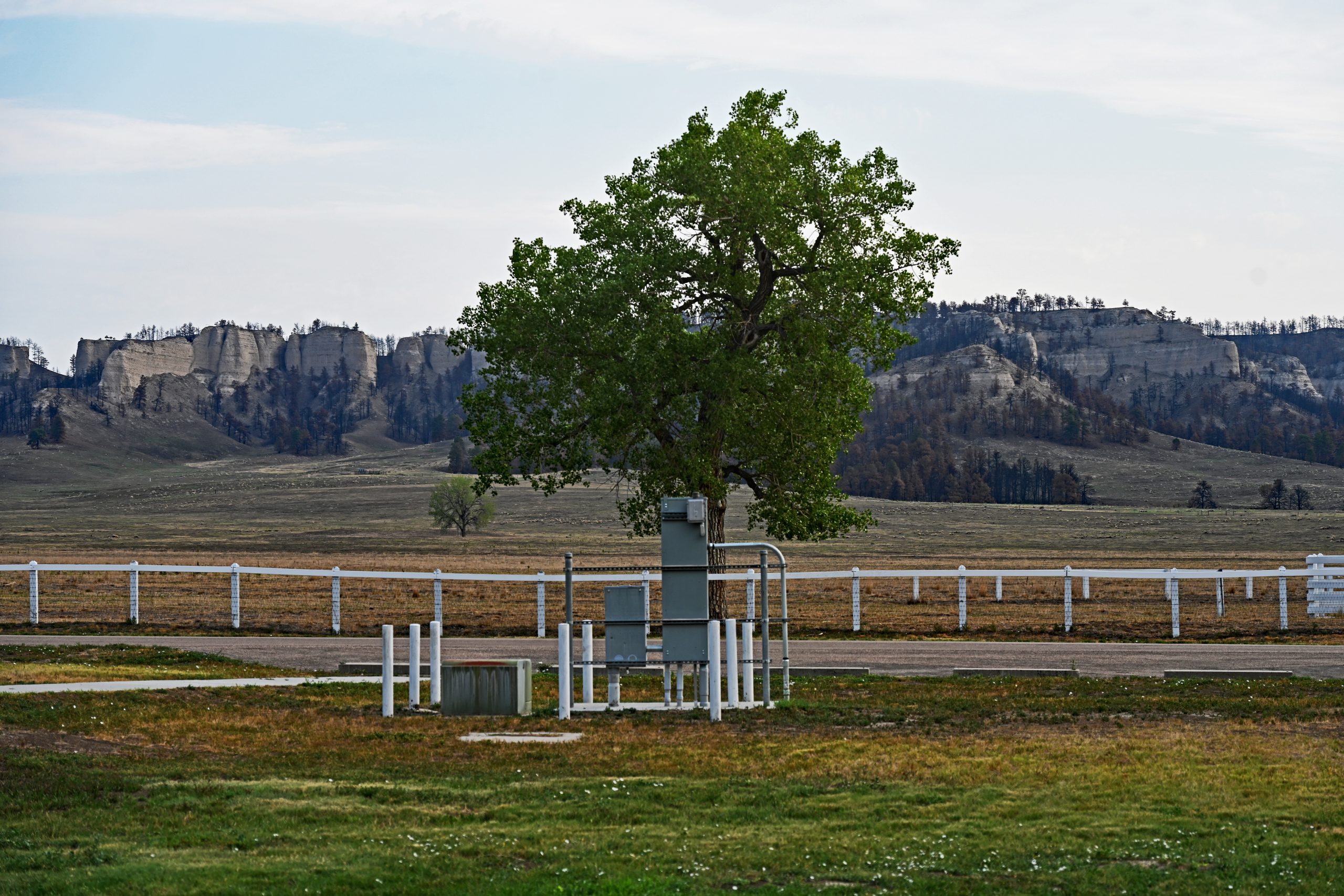
You can truly feel the atmosphere the moment you step through the gates of the outpost. Founded in 1874 as Camp Robinson to protect the nearby Red Cloud Agency, it evolved over the following decades into one of the largest military bases in the northern plains and stood at the center of the fierce Indian Wars. It was here that the legendary Oglala Lakota Chief Crazy Horse surrendered in 1877, tragically losing his life shortly thereafter while in custody. Just two years later, in January 1879, the bloody outbreak of the Northern Cheyenne occurred at this very site under Chief Dull Knife, as they made a desperate bid to return to their homeland. The fort remained of immense strategic importance into the 20th century as well: it transformed into the world’s largest U.S. Army Remount Depot, training up to 30,000 horses at a time, served as a training center for war dogs during World War II, and housed a German prisoner-of-war camp before finally being protected as a State Park in 1962.
Gallery II: In the Footsteps of the Cavalry
The massive brick buildings and sprawling grounds bear witness to the days when clattering hooves and military hustle determined the daily rhythm.
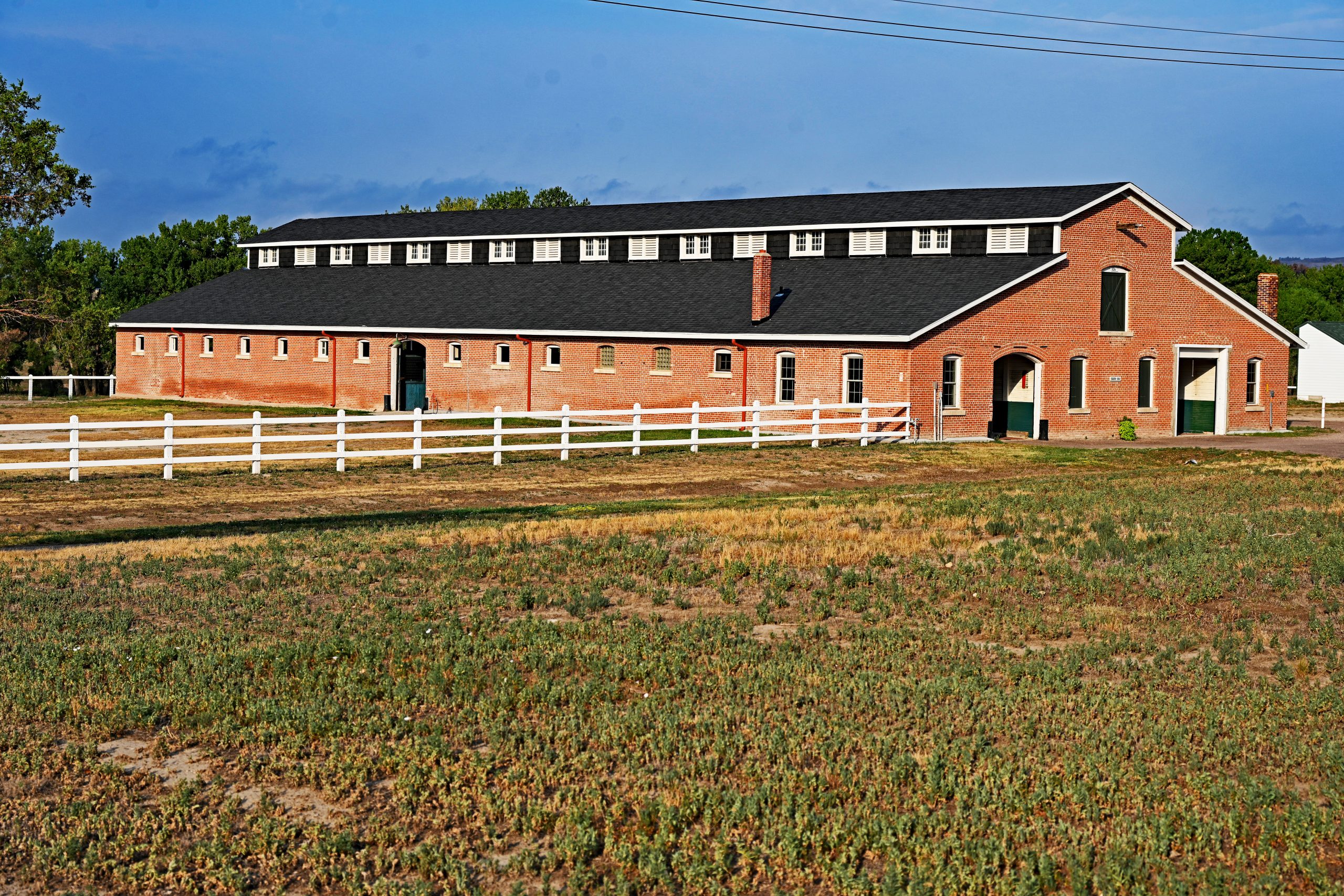
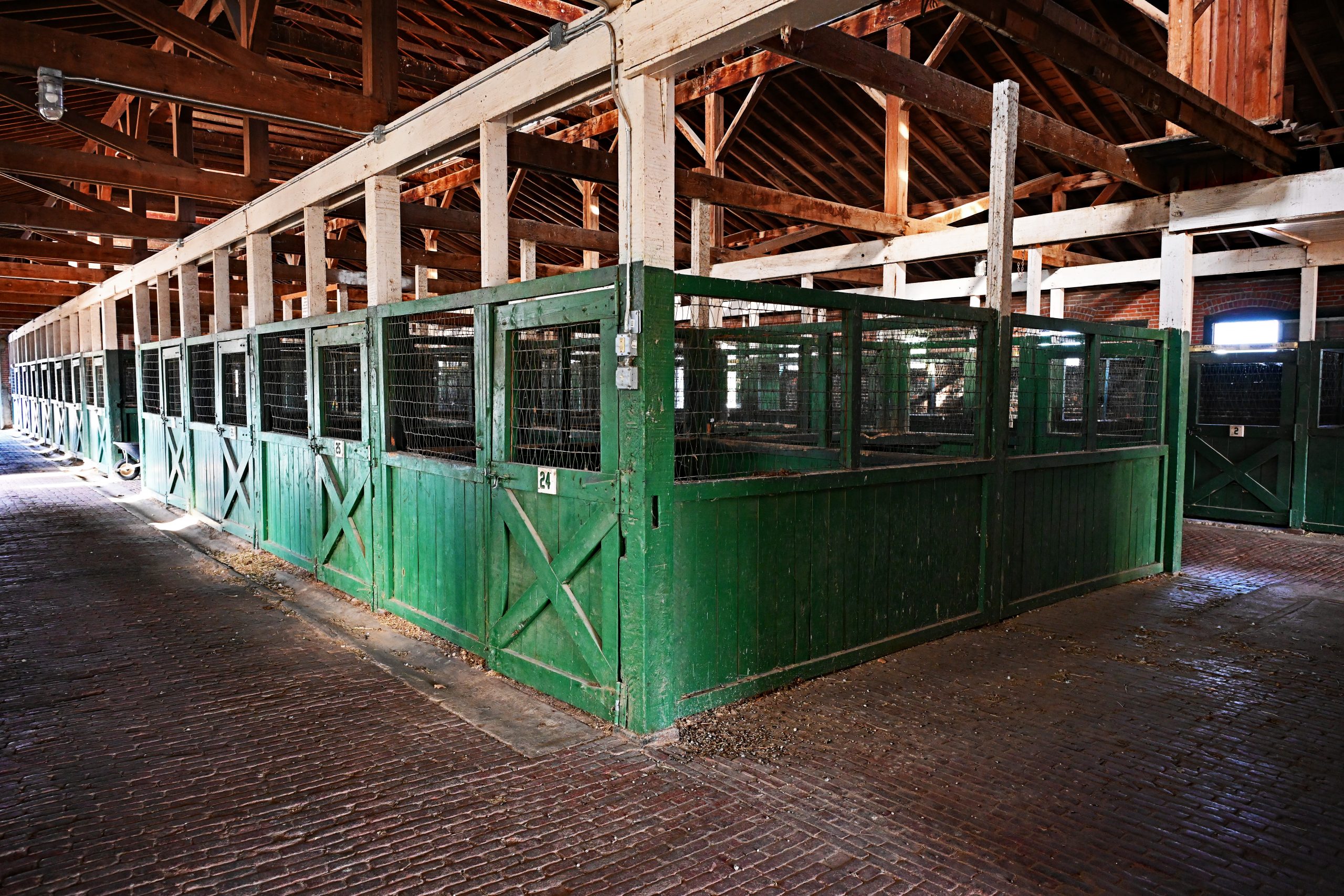
Strolling across the park-like grounds, you notice how flawlessly these eras have been preserved. The mighty 1909 cavalry stables fascinate from the outside with their rich red brickwork and the distinctive rows of ventilation windows along the roof. Stepping through the wooden sliding doors into the interior (8988), you are greeted by the scent of wood and hay. The floor of historic, extremely durable brick pavers catches the light filtering through small windows, casting a warm glow. Every single dark green-painted wooden stall is numbered. It takes very little imagination to bring the snorting of army horses and the clatter of hooves on the rough pavement to life in your mind’s eye.
Gallery III: The Legacy of Officers and Enlisted Men
Stretching along the massive parade ground is a line of grand quarters and soldiers’ barracks, which today serve as very unique holiday accommodations.
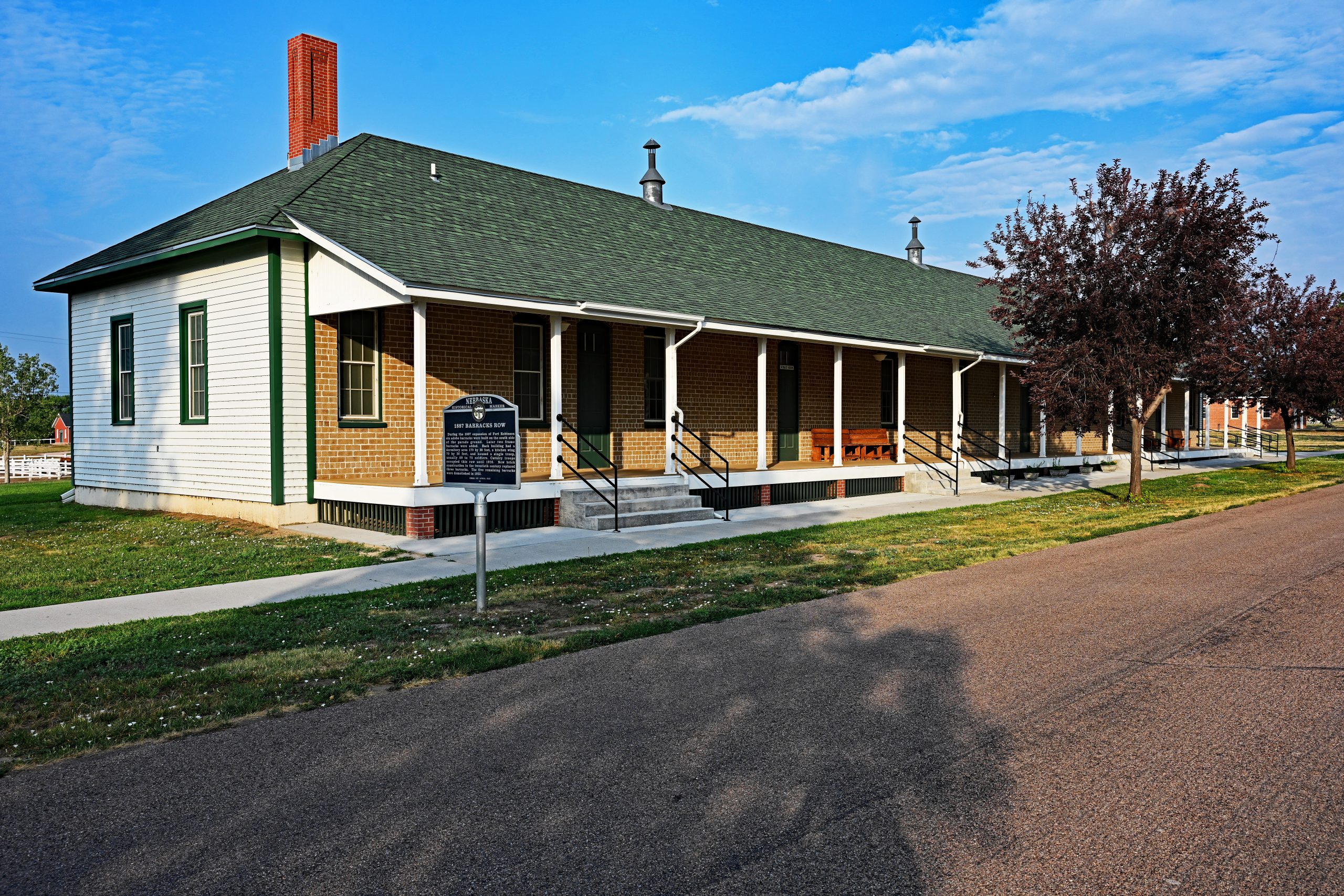
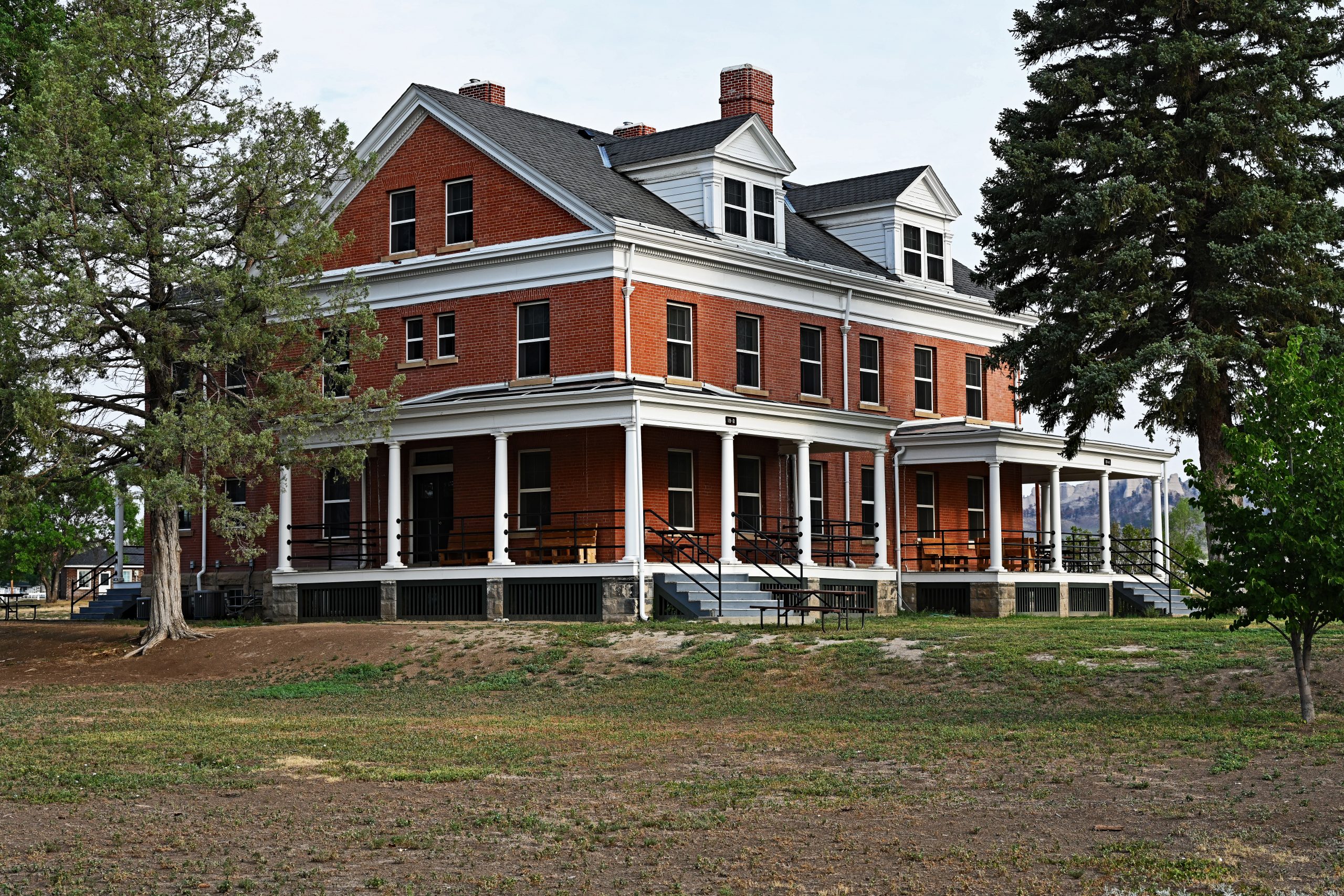
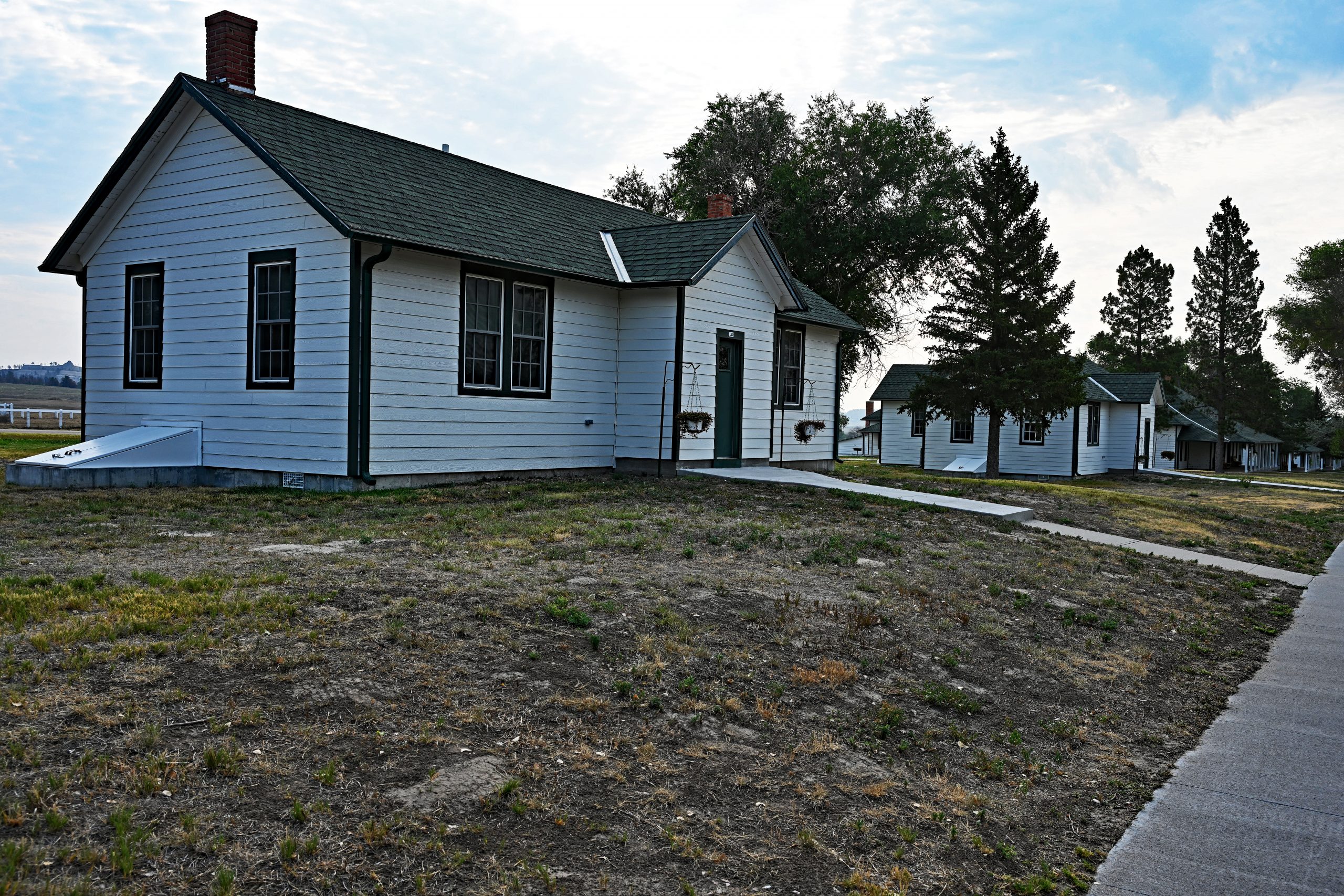
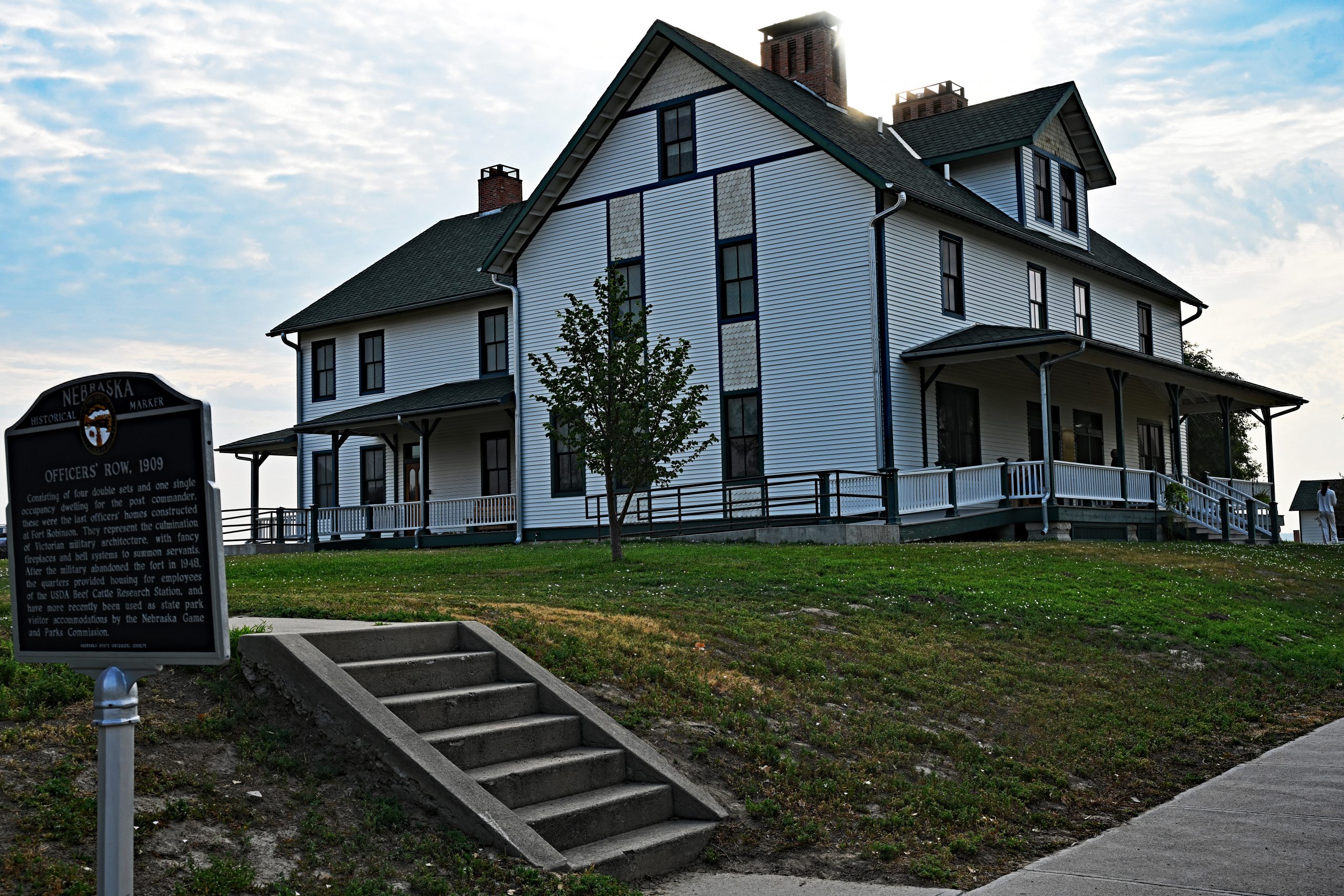
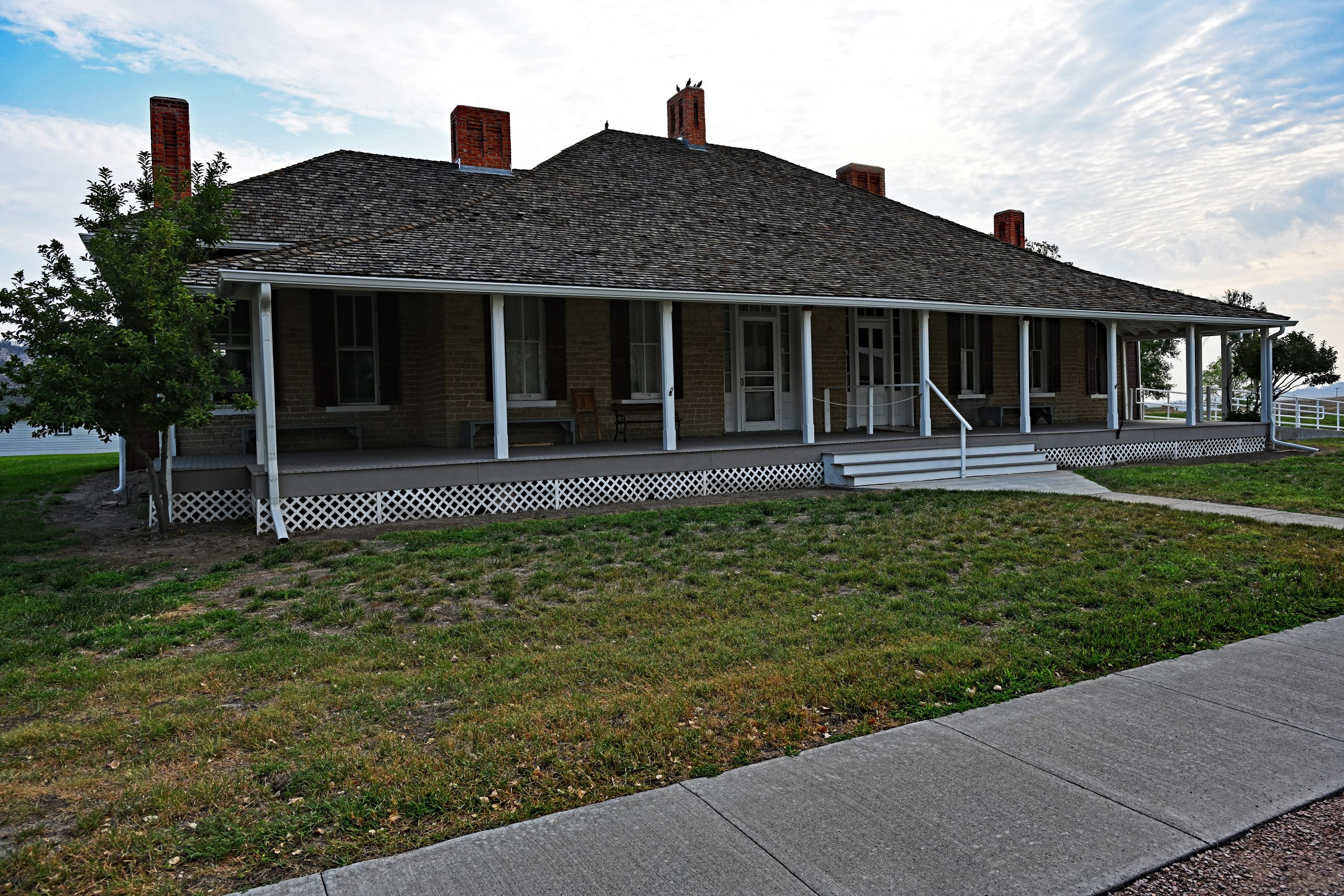
The fort’s architecture perfectly mirrors the military hierarchy. On one side stands the rustic, elongated adobe lodging of the 1887 Barracks Row (8985), where the legendary African-American Buffalo Soldiers of the 9th and 10th Cavalry once lived in close quarters. On the other side tier the grand, multi-story villas of Officers’ Row from 1909 (8990, dm8RrI), adorned with white columned porches and Victorian detailing. From there, high-ranking officers enjoyed—and today’s vacation guests still enjoy—a front-row seat to the Red Cloud Buttes rising directly behind. Yet, the absolute pinnacle of historical authenticity is a modest, single-story house at the edge: the original 1874 Adobe Officers’ Quarters (8994). As the oldest structure on the property, its weathered wood shingles and brick chimneys have weathered every storm of time, leaving me at the end of the day with the profound feeling of having taken a true time-travel journey into the Old West.