June 16, 2026
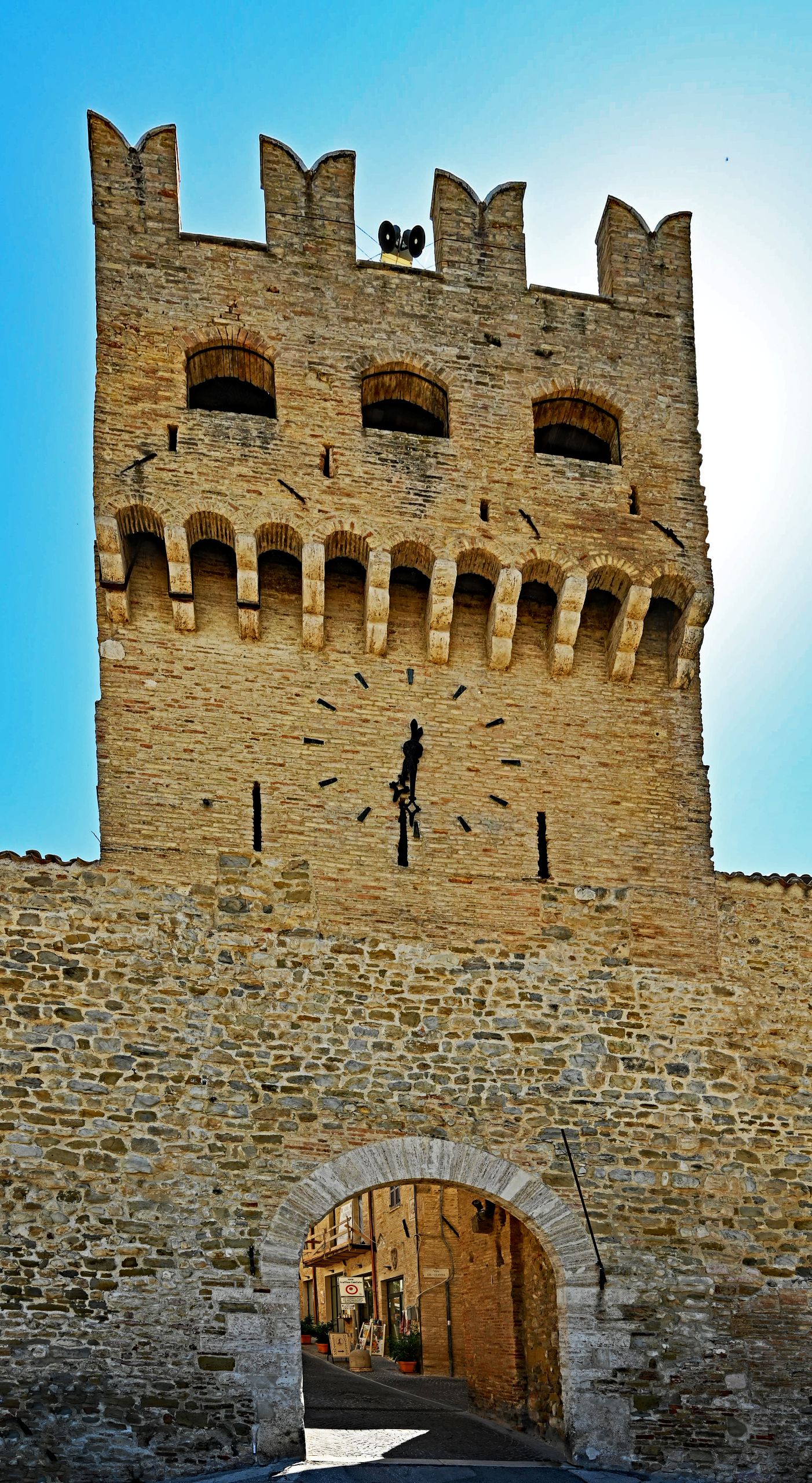
The morning in Montefalco welcomes me with a cloudless, deep blue sky that makes the warm colors of the ancient stones glow intensely. My stroll through this history-steeped town, which sits majestically high above the Topino and Clitunno valleys, begins at the imposing main entrance of the medieval fortifications. I stand before the mighty Porta di Sant’Agostino. This rustic town gate from the 14th century stands like a defiant guardian of time. The upper section of the tower is particularly fascinating: swallowtail battlements in the Ghibelline style and defensive walkways bear witness to the commune’s combative past. In the center of the rough facade, a simple wall clock catches the sunlight, while at the very top, a small bell hangs beneath a metal cross. Looking through the cool, rounded archway into the sun-drenched old town feels like the beginning of a journey into another era.
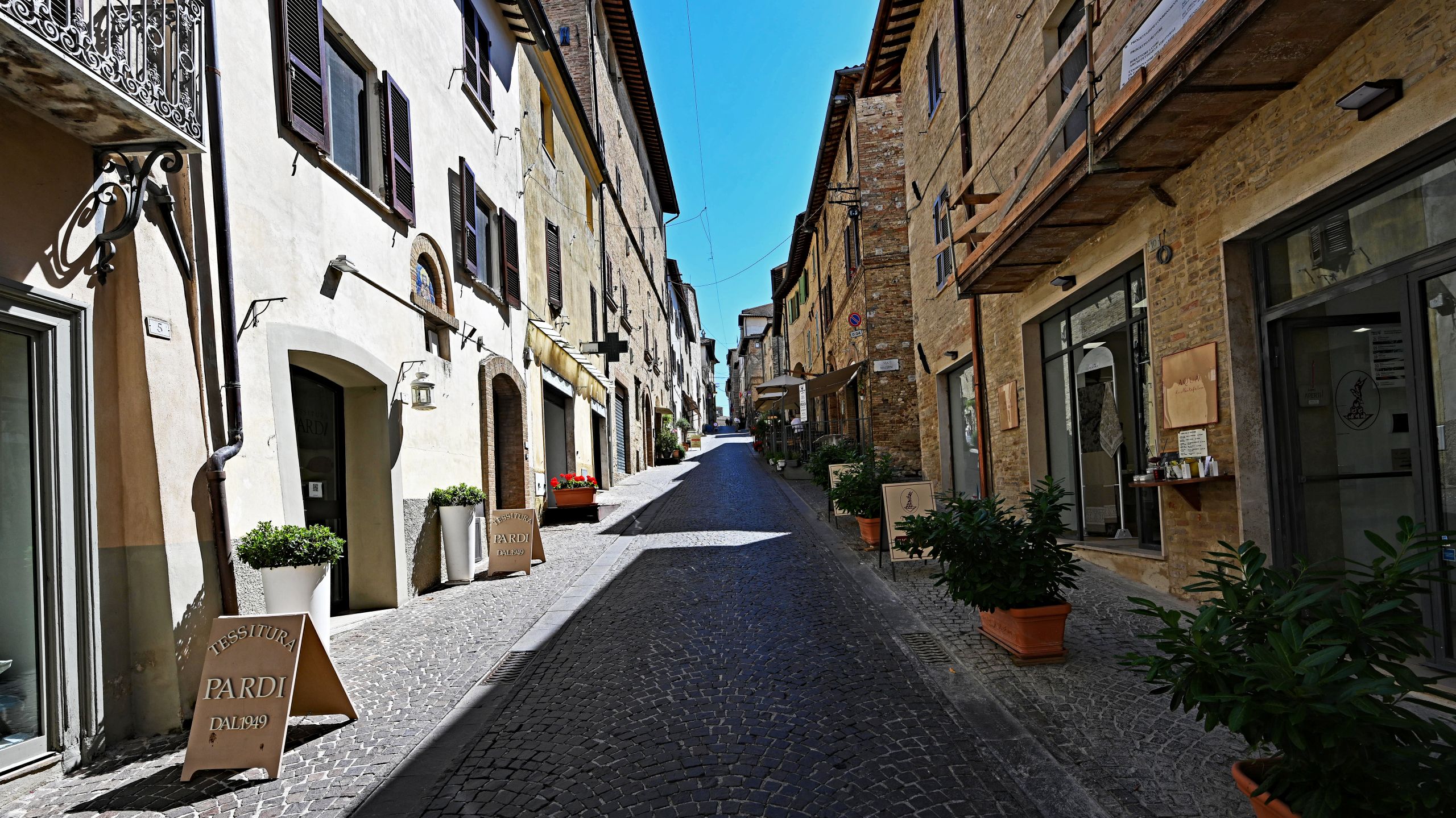
I follow the inviting street and emerge directly onto Corso Goffredo Mameli. The historic alley slopes gently upward and is lined with closely packed, multi-story palazzi. On the left side, light-colored plastered facades with dark shutters dominate, while on the right, the warm, rough natural stone and brickwork captivate the eye. In front of the entrances to small boutiques, terracotta pots filled with lush greenery add vibrant touches of color. A wooden sign for the traditional weaving workshop Tessitura Pardi reminds me that Montefalco has been famous for its fine linen fabrics for centuries. The sharp, diagonal shadow cast by the row of houses guides my steps naturally up toward the civic center of the town.
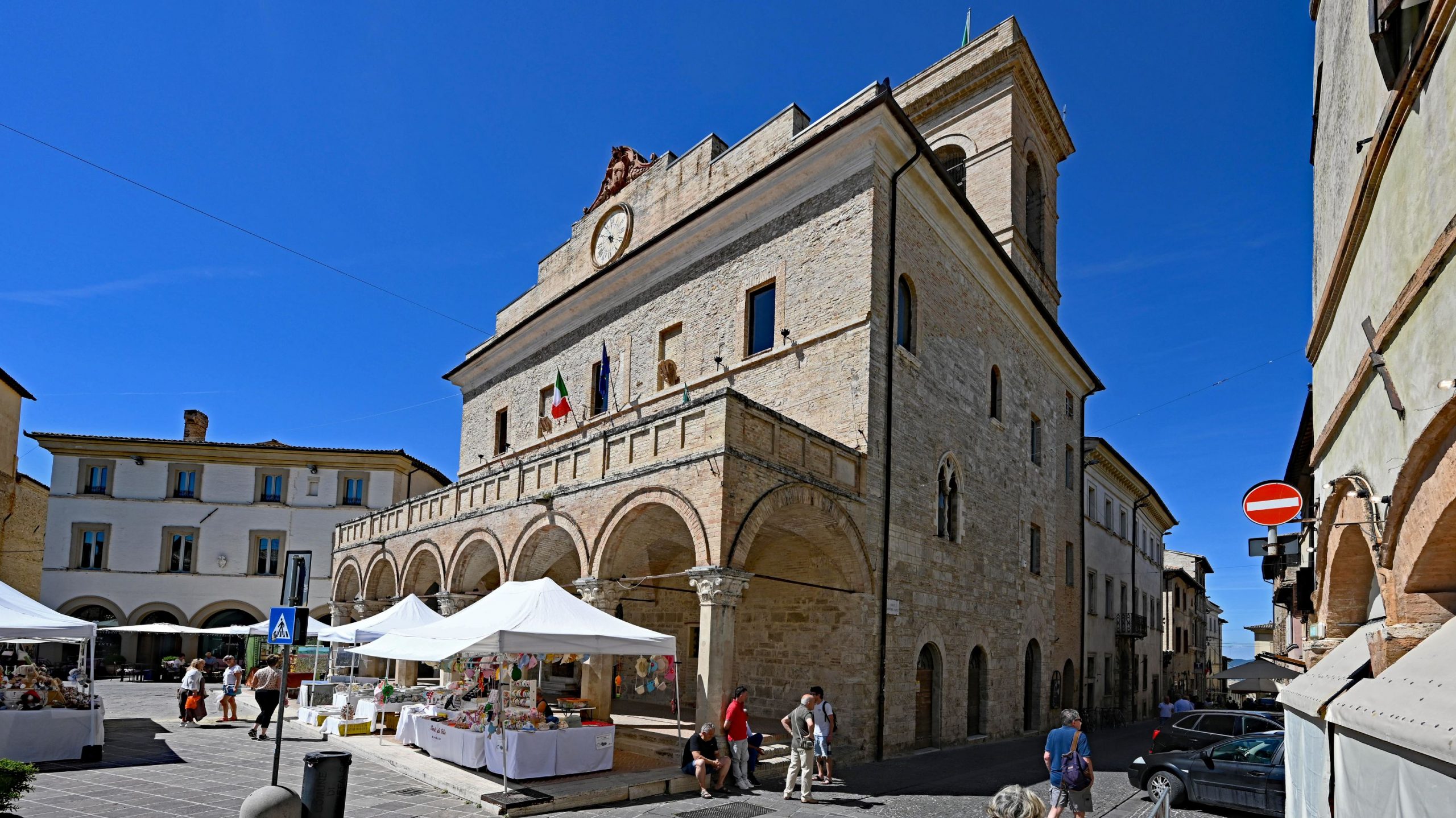
At the end of the Corso, the space opens up and I step into the almost circular, magnificent Piazza del Comune. My gaze is immediately drawn to the monumental Palazzo Comunale, the town hall, whose core dates back to 1270. The elegant 15th-century loggia with its rounded arches provides pleasant shade for the market tents set up beneath it. Above the large panoramic terrace, three flags wave proudly, while my eyes wander further up the gabled wall, which is crowned by a large clock and the bell tower rising behind it. A bustling yet relaxed market atmosphere fills the wide square.
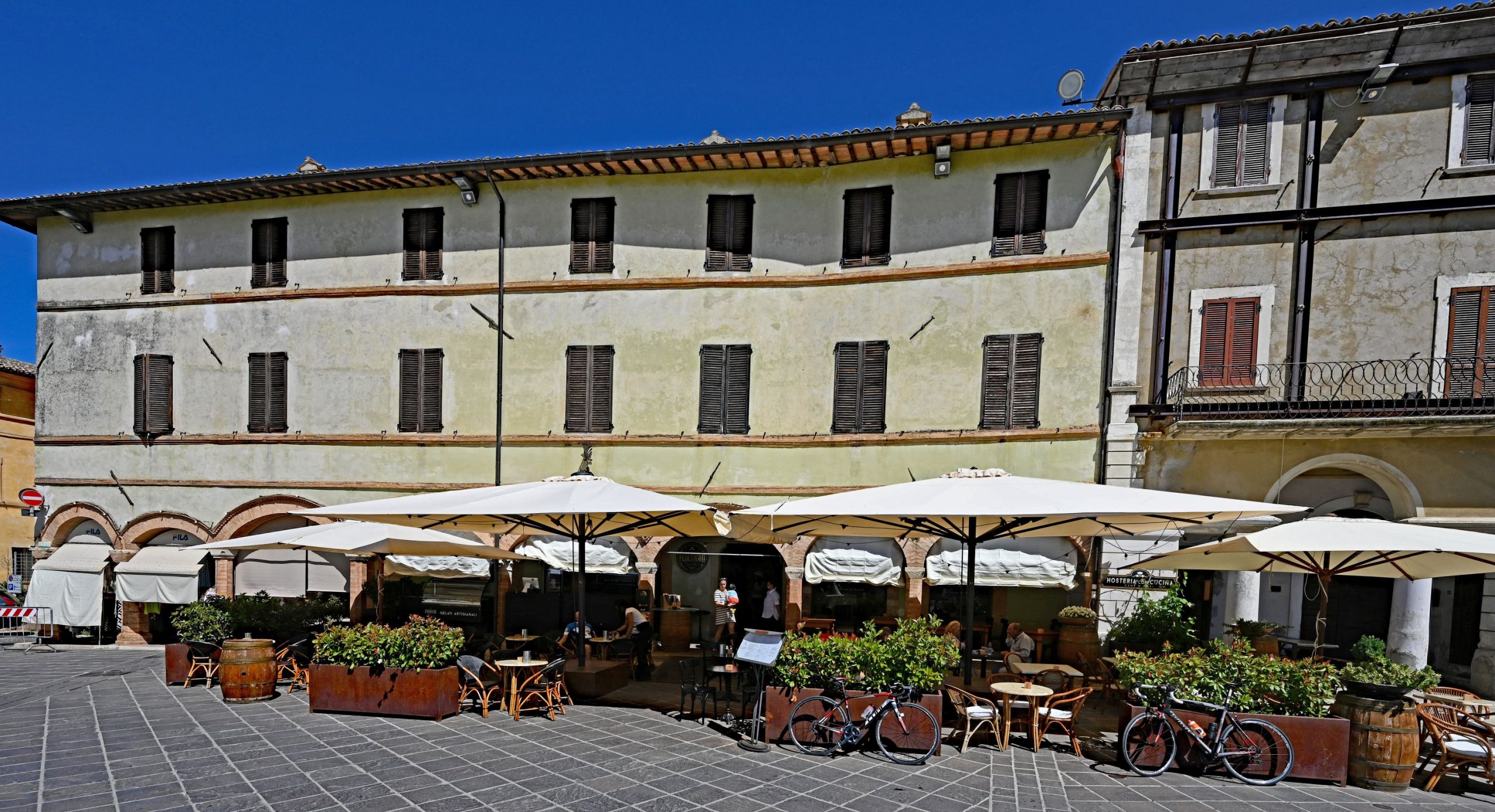
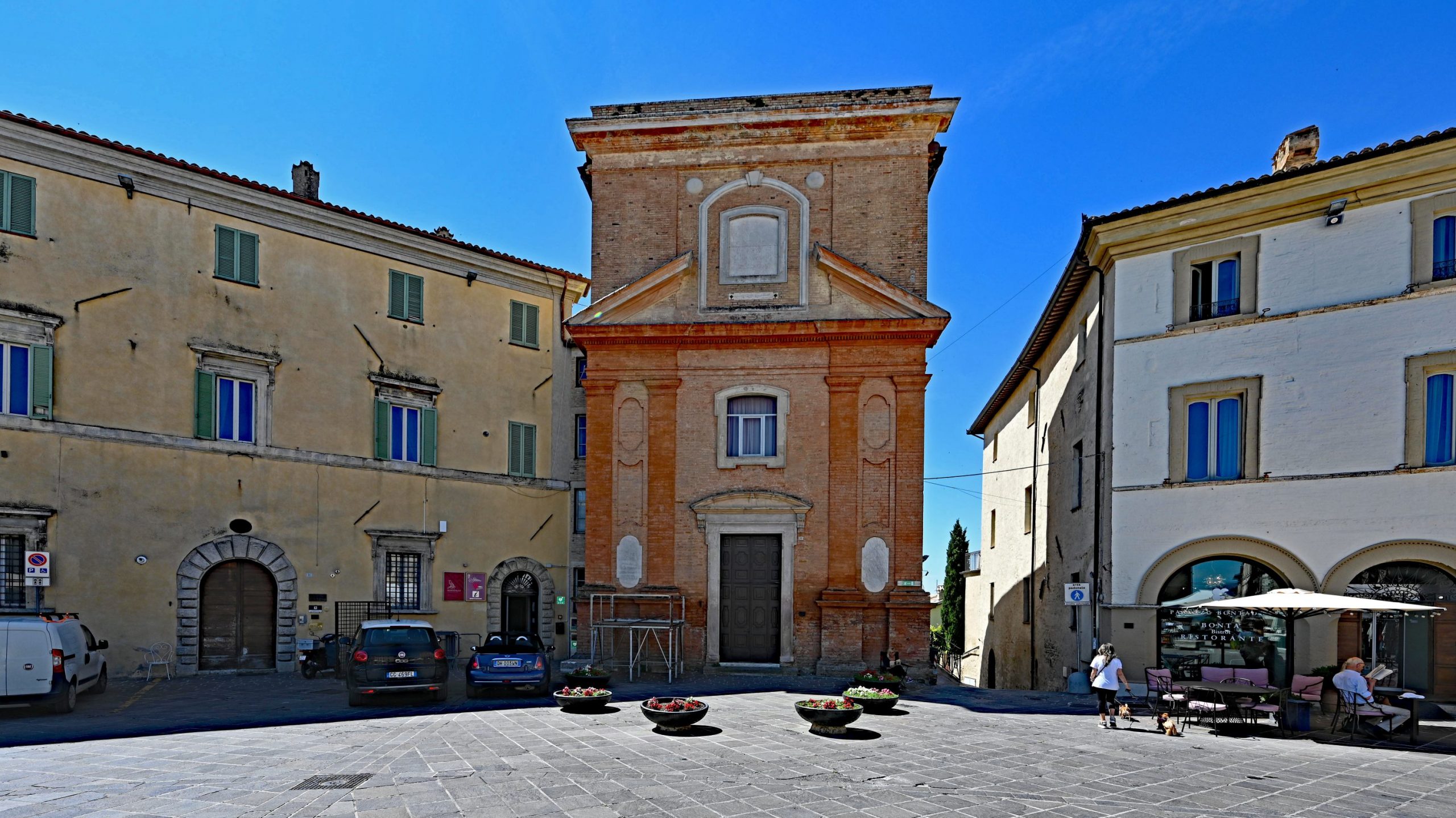
Just a few steps away, summer café terraces beneath large, white umbrellas invite me to linger. The elongated, cream-colored building facades with their closed brown wooden shutters exude pure Italian charm. Between rustic wooden barrels and green planters, road cyclists have parked their racing bikes—Montefalco is clearly a popular stop for active travelers recharging their batteries while looking at the impressive Baroque facade of the Teatro San Filippo Neri. This former church building from 1705 captivates me with its red bricks, monumental pilasters, and distinctive triangular gable. Following its deconsecration in 1860, the sacred structure found a new purpose as a municipal cultural and theater center.
Gallery: The Vibrant Center Around Piazza del Comune
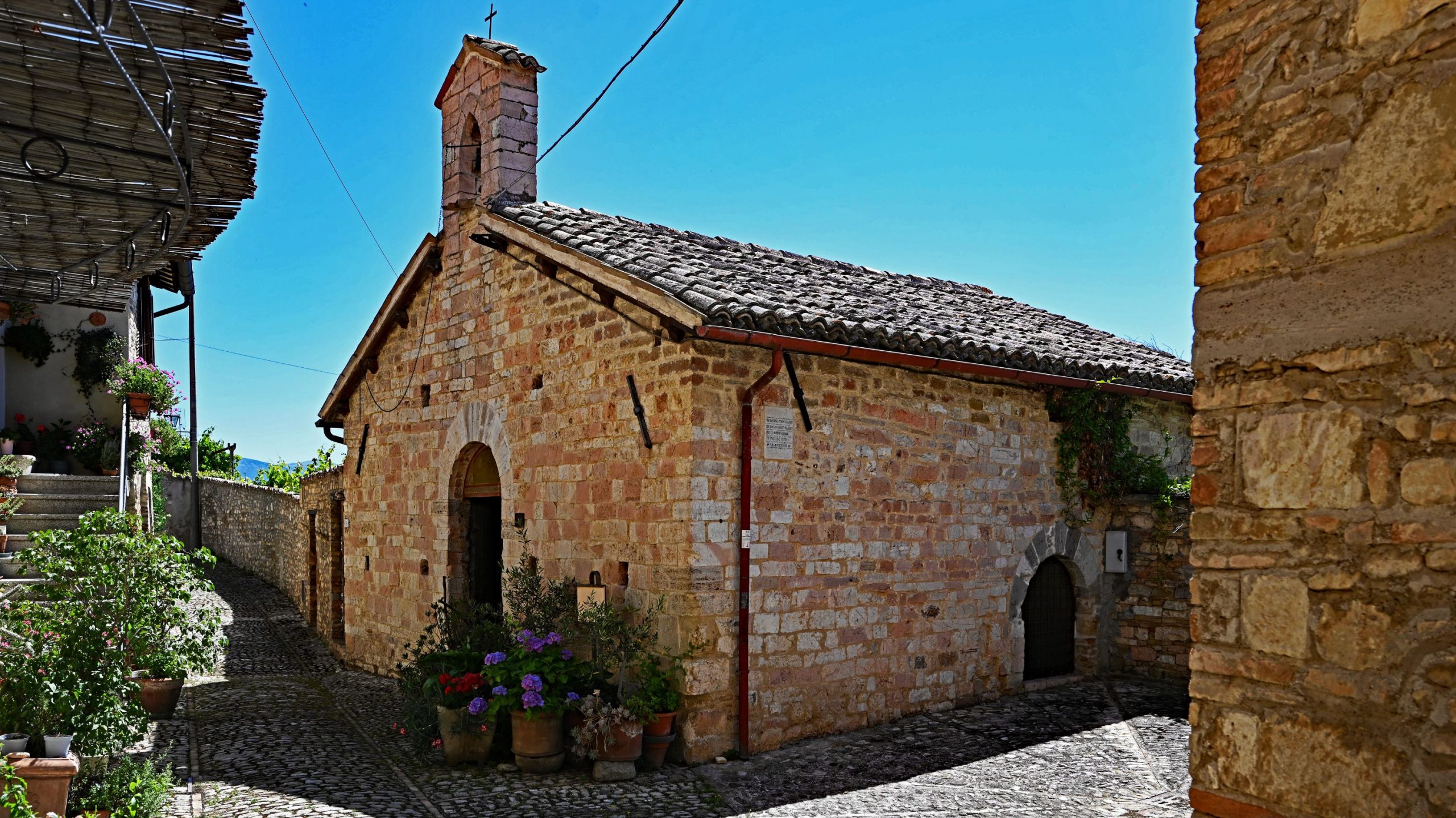
Afterward, I am drawn to the quieter side streets, away from the busy main square. Here, I discover a true gem of Romanesque architecture: the Chiesa di Santa Lucia. This small place of worship from the 12th century nestles tightly against the neighboring stone houses. Its irregular natural stone facade, simple tiled roof, and delicate bell-gable exude a touching timelessness. The wooden round-arched door is framed by beautiful pots of purple and red hydrangeas.
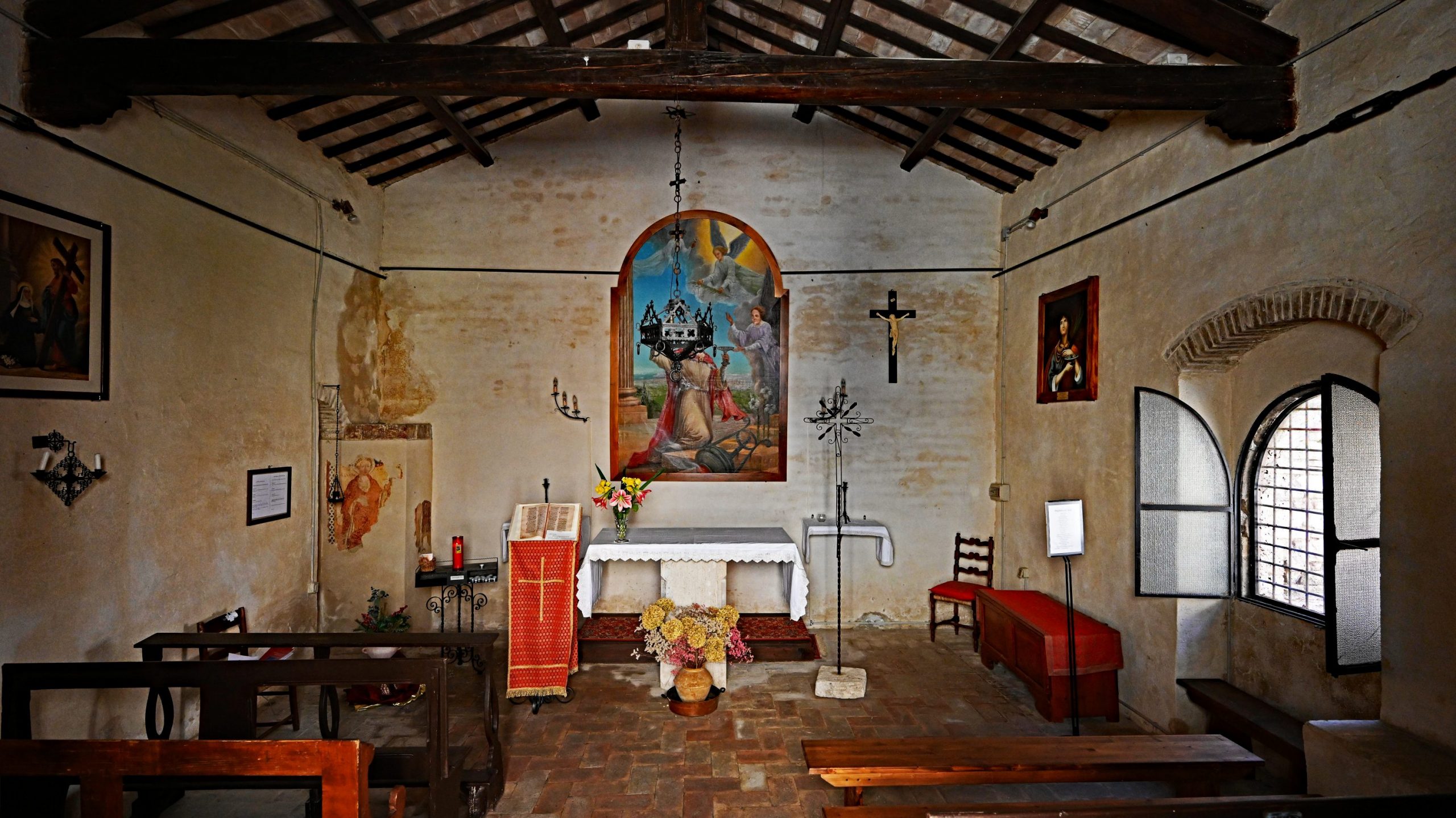
As I step through the portal, a very special, sacred simplicity welcomes me inside. The single-nave space dispenses with Baroque pomp. Instead, I look up into an open wooden roof structure made of dark timber beams and terracotta tiles. The floor consists of worn, old brick tiles, and on the simply plastered walls, faint fragments of historic frescoes can still be discerned. The soft daylight filtering through a low-set, barred round-arched window illuminates the simple stone altar. It is covered with a white cloth, adorned with fresh flowers, and dominated by a color-intensive altarpiece depicting Saint Lucy.
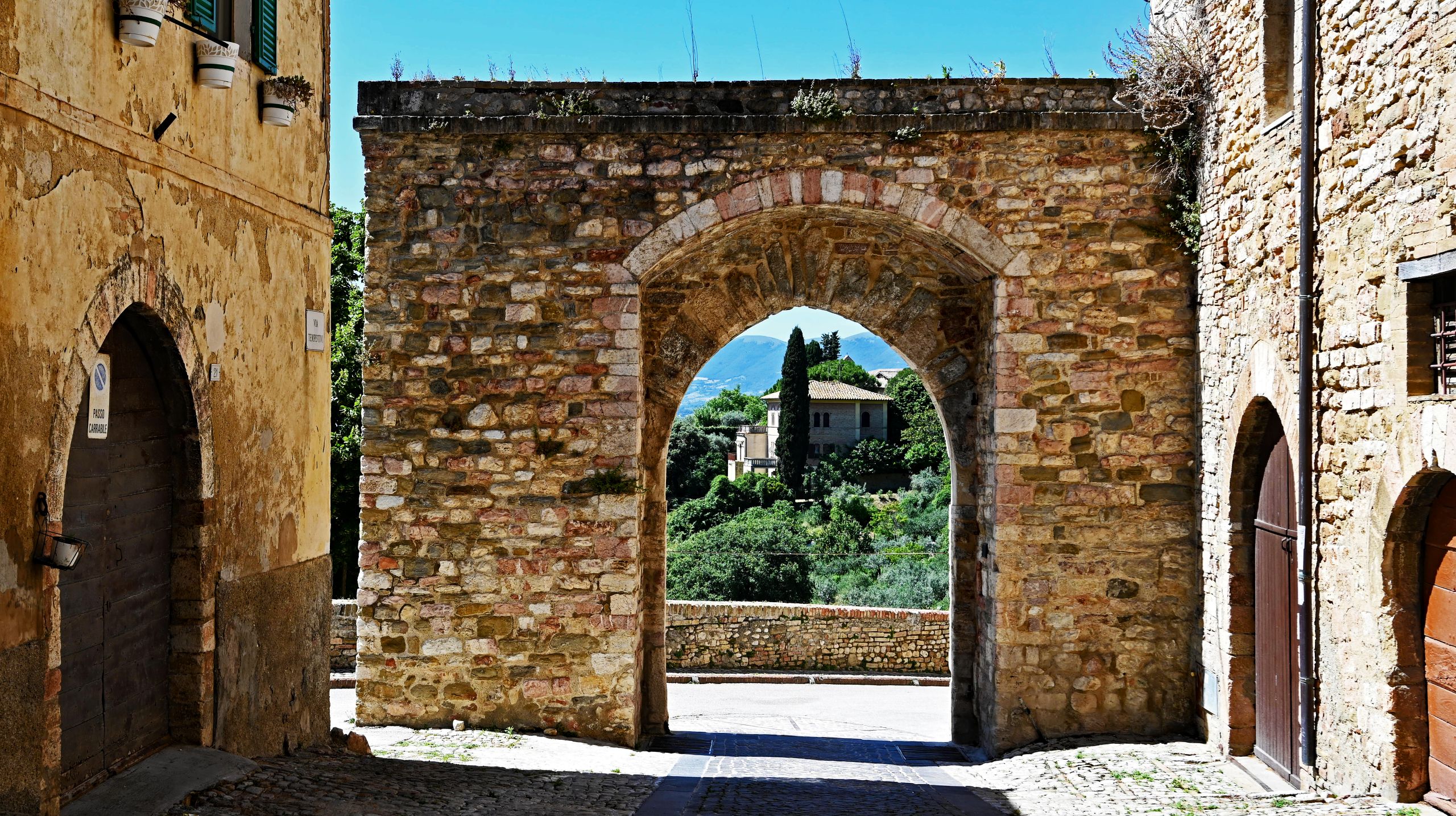
Back out in the warm sunshine, I follow the street down to the historic Porta Camiano. This rustic archway from the 13th century frames the Umbrian countryside like a living painting. Looking through the stone gate, I gaze out at gentle, bluish-shimmering hills in the distance, cypresses, and an idyllic country house. It is a moment of quiet contemplation before I continue my way to the Chiesa di San Bartolomeo.
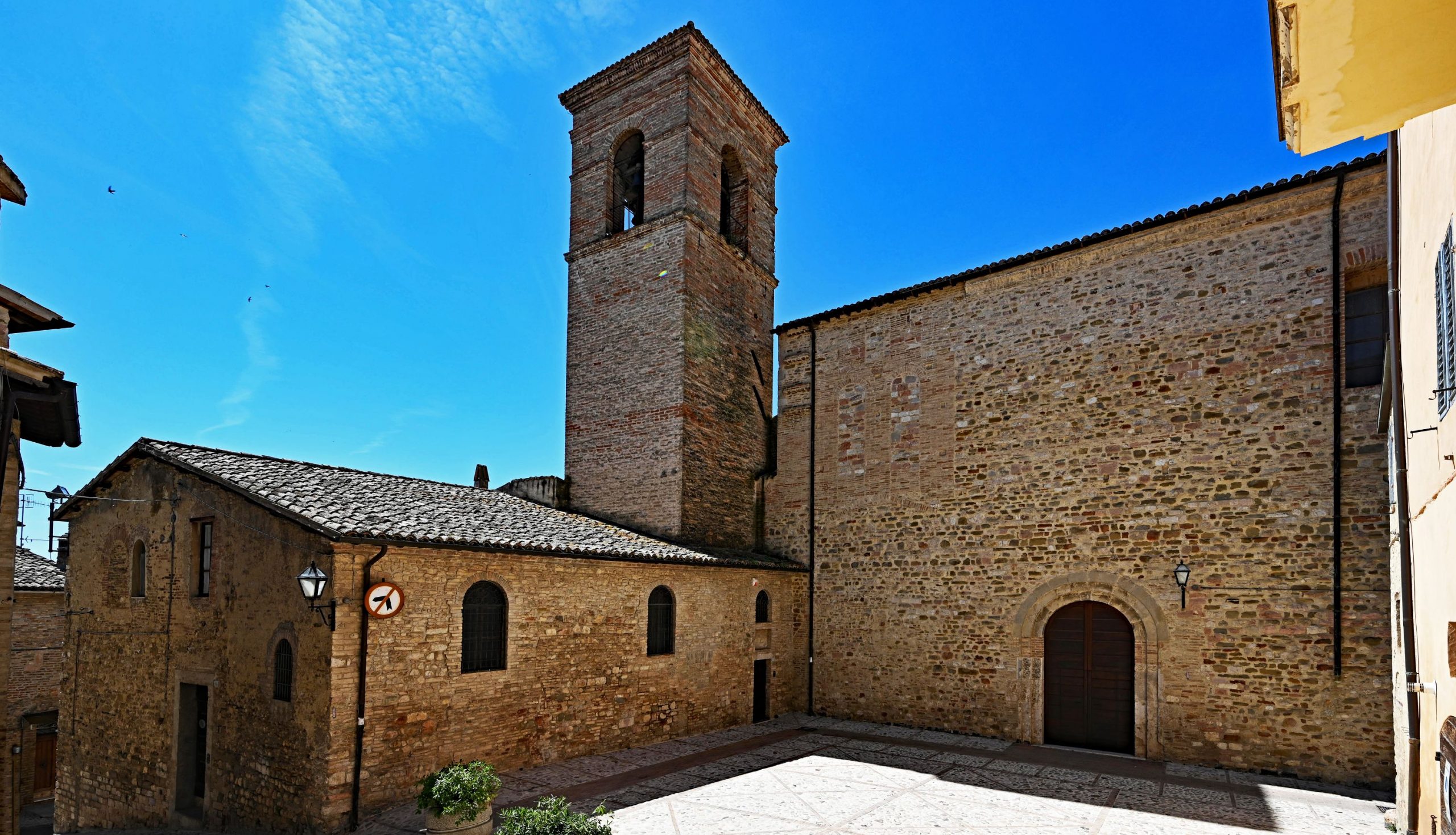
The former collegiate church presents itself to me across a sun-drenched forecourt. Its simple, mighty stone facade with the round-arched portal is overlooked in the background by a majestic, square bell tower made of reddish-warm bricks. When I take a few steps back, an expanded perspective opens up: the rugged natural stone wall on the left and an ocher-colored residential house with a delicate wrought-iron balcony on the right frame the medieval ensemble perfectly, enhancing the impressive sense of depth of this historic site.
Gallery: Hidden Churches and Historic Vistas
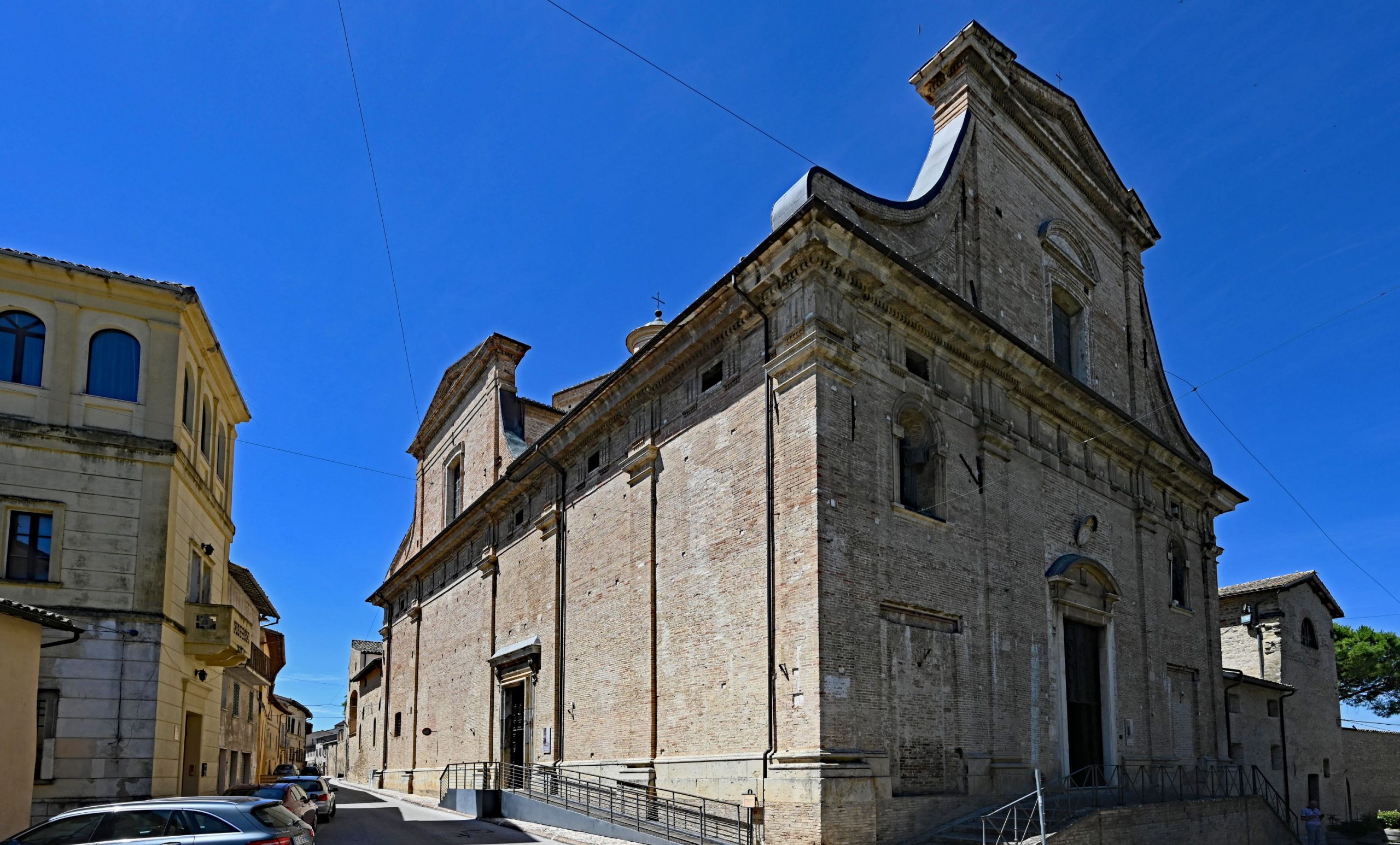
My path now leads me to what is arguably the most imposing religious center in the town: the Santuario di Santa Chiara della Croce. The massive, unplastered brick facade of this Baroque convent church of the Augustinian nuns rises imposingly along an ascending street. Monumentale pilasters, deeply recessed niches, and a sweeping triangular gable give the structure an immense visual impact. A modern, accessible ramp with a wrought-iron railing integrates functionally with the elongated nave.
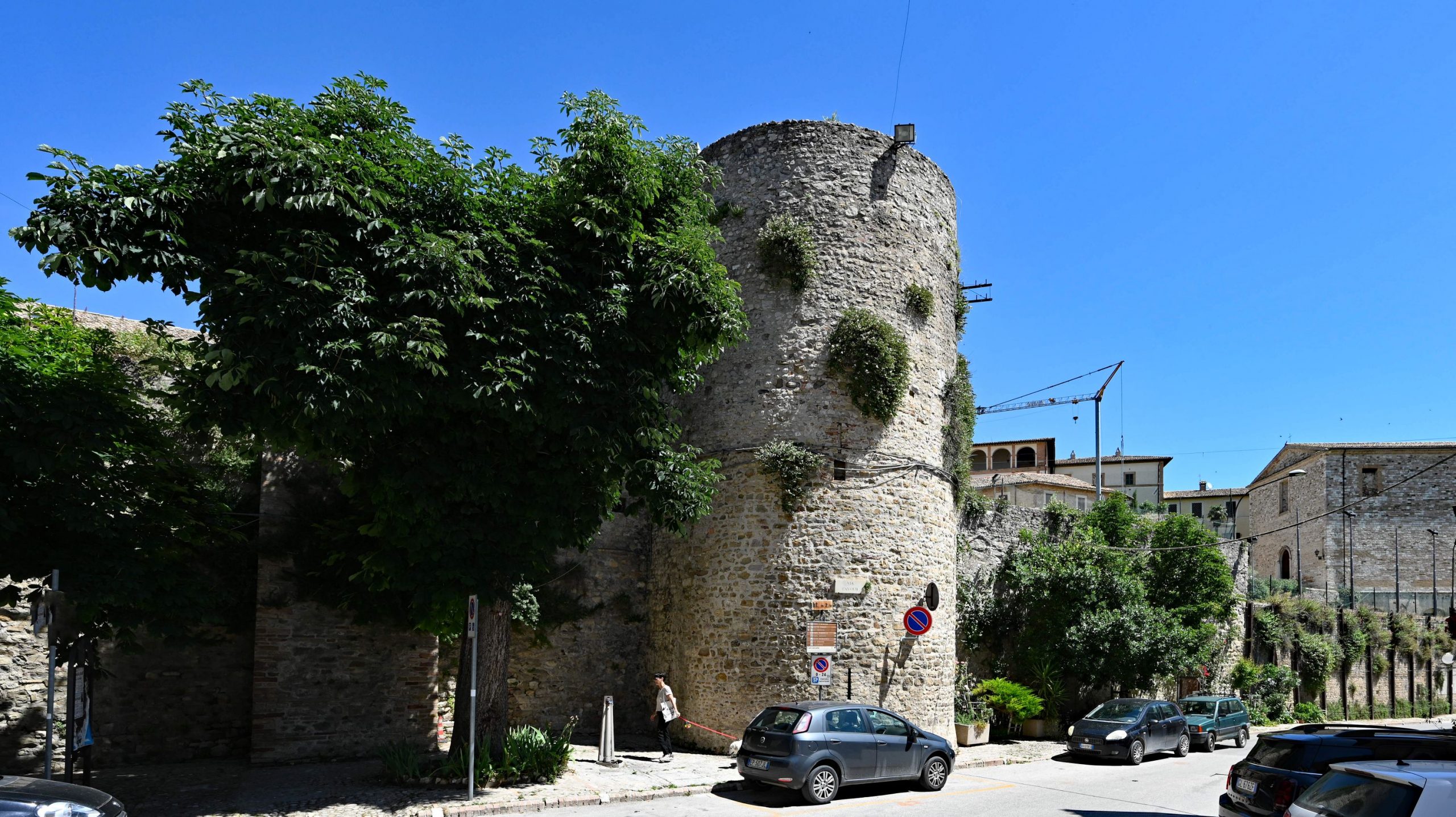
Right opposite, a mighty, cylindrical defensive tower on the old town wall serves as a reminder of Montefalco’s historical strategic importance. The rough, light-colored natural stone of the round tower is overgrown with ivy in places, while a large leafy tree casts dense shade onto the sidewalk.
Gallery: Monumental Landmarks of Montefalco
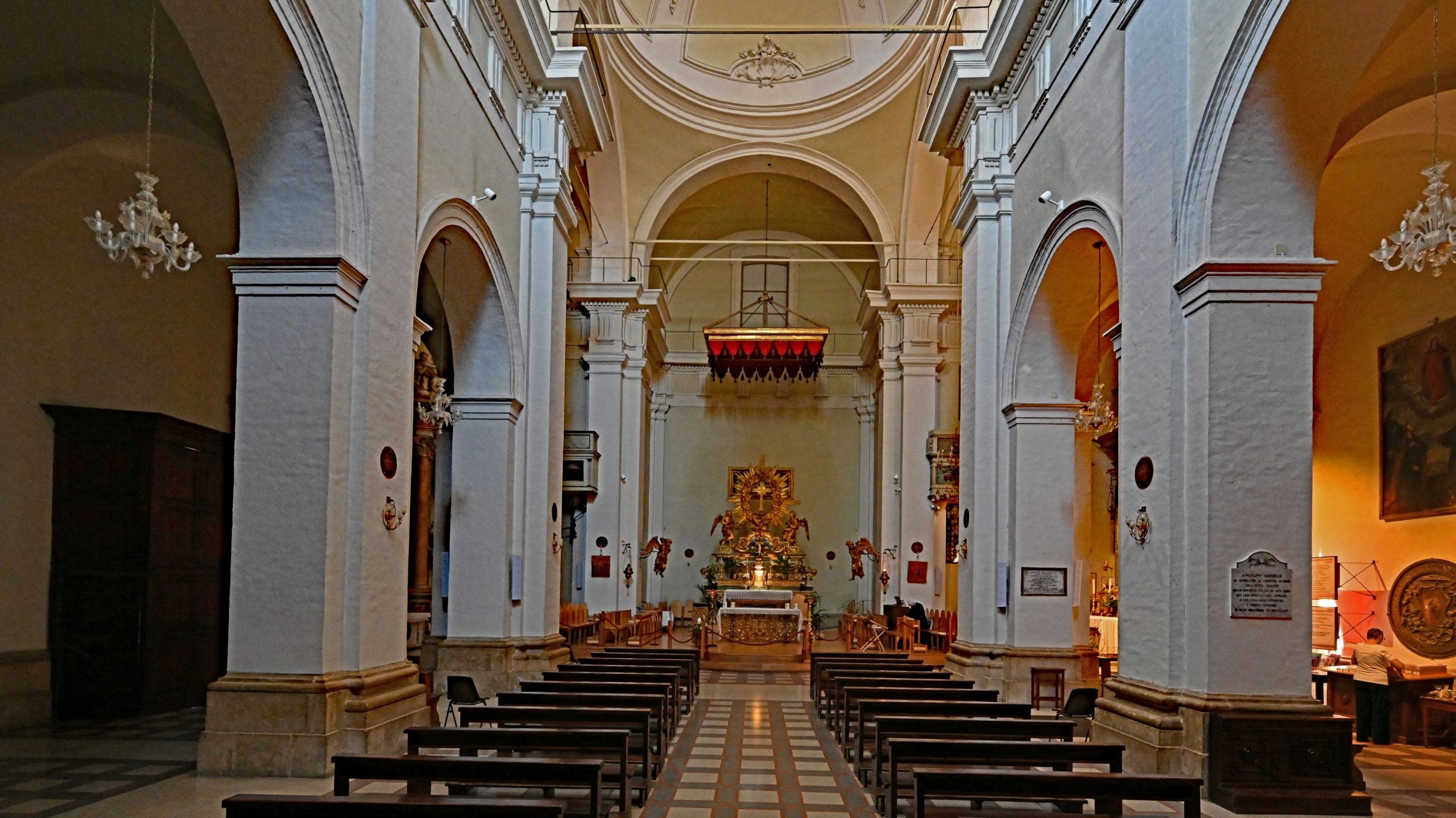
As I step inside the Santuario, my breath catches for a moment. The vast church interior shines in Baroque splendor. Massive, white-plastered pillars and high round arches support the vaulting and guide the eye straight down the symmetrical center aisle toward the main altar. An elegant dome with fine stucco work arches over the transept crossing, while delicate glass chandeliers hang from the ceilings of the side aisles.
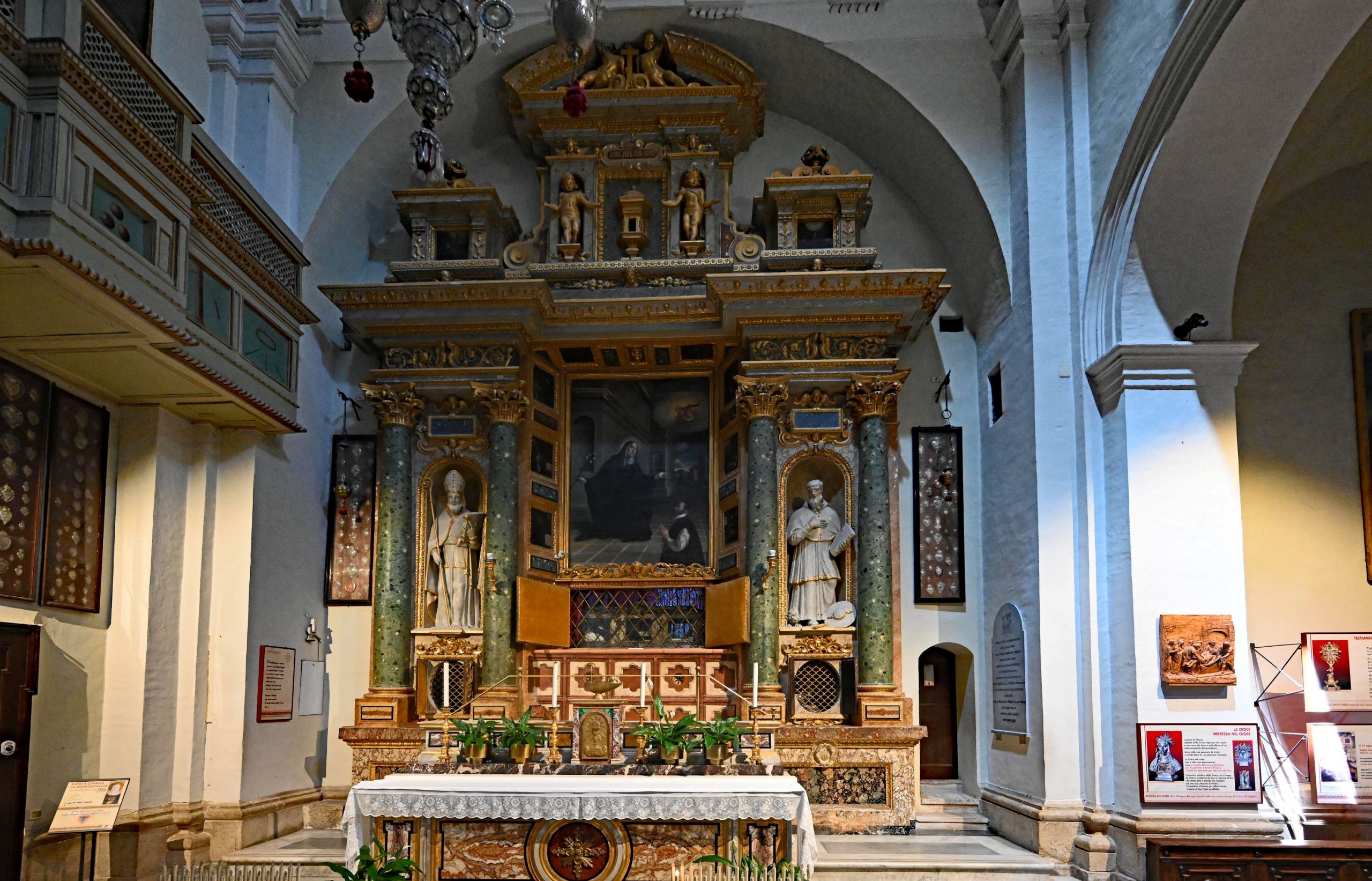
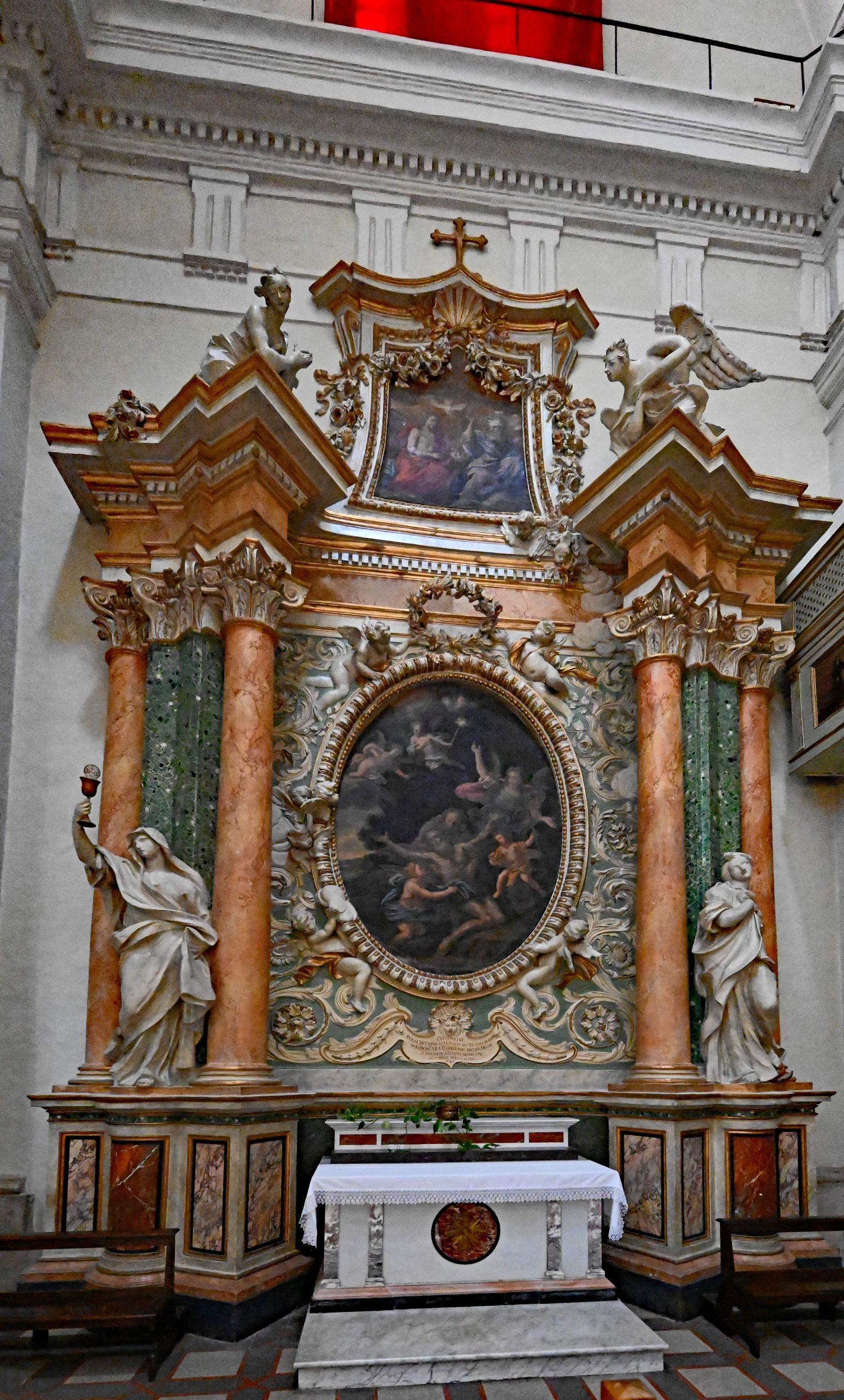
I draw closer to the magnificent, gilded main altar. Elaborate wood carvings, colored marble elements, and a central oil painting frame a glass-enclosed, brightly lit niche beneath the altarpiece. Here rests the historic, incorrupt body of Saint Clare of Montefalco. The Baroque masterpieces continue in the side aisles: an imposing side altar of the Crucifixion, supported by columns in warm peach and green marble tones, captivates me with its sculptural cherubs and life-sized statues of saints.
Gallery: Inside the Sanctuary of Saint Clare
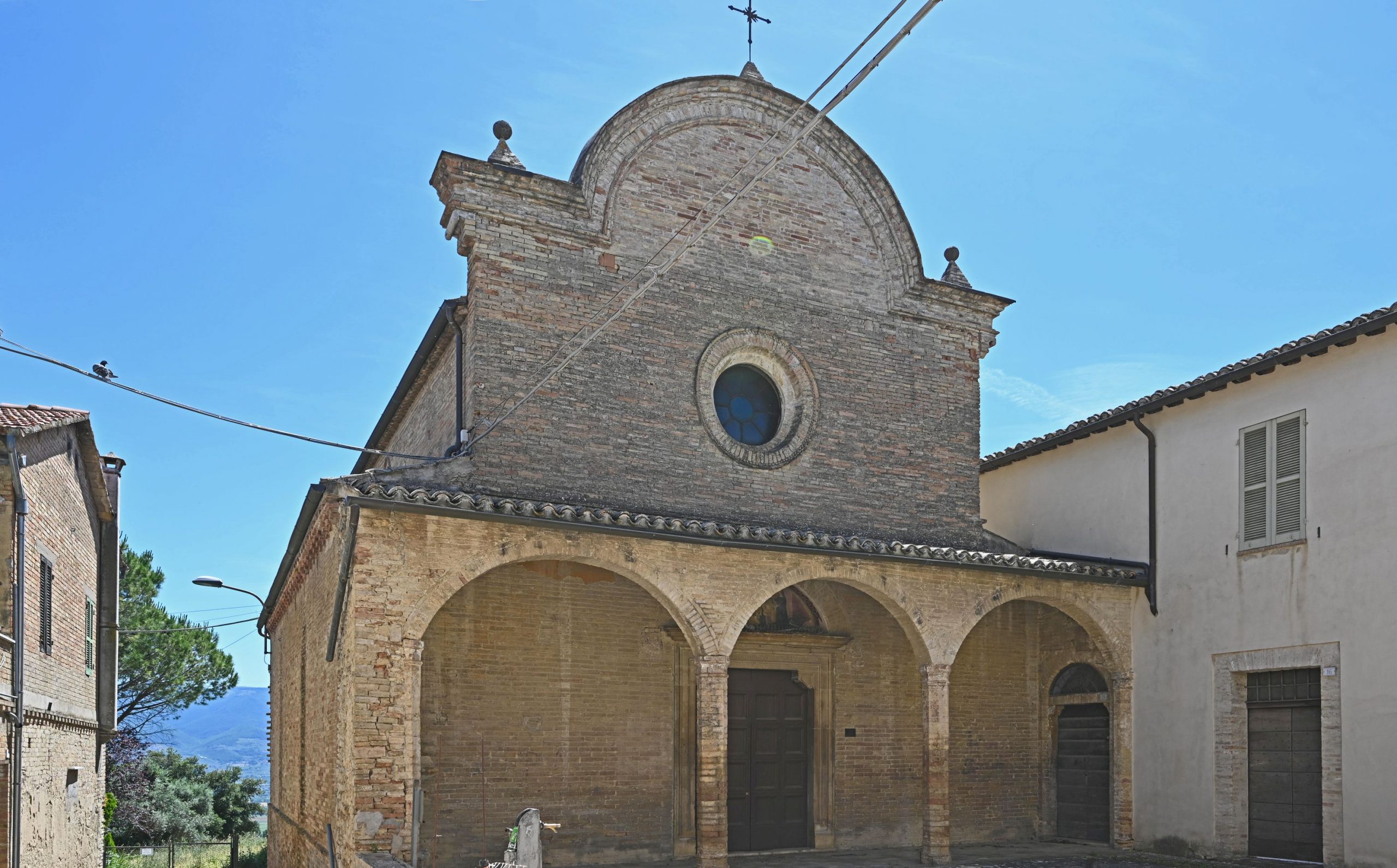
To wrap up my tour, I pass the early 16th-century Chiesa di Santa Illuminata. Its Renaissance facade is fascinating due to its unusual, semicircular arched gable and central round window. The projecting portico with its four elegant round arches invites me to take a short rest, where I can once again look out over the wide landscape.
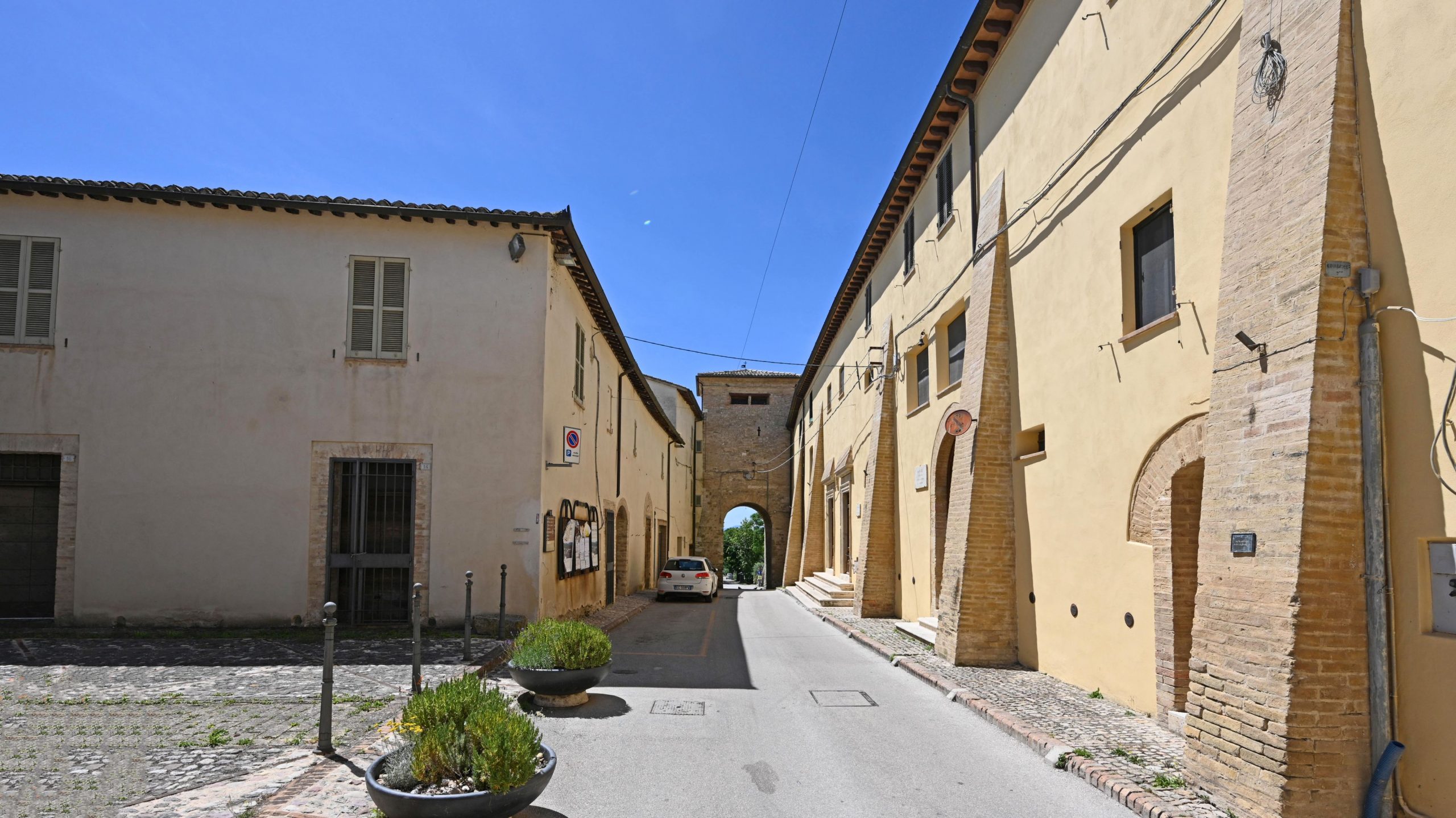
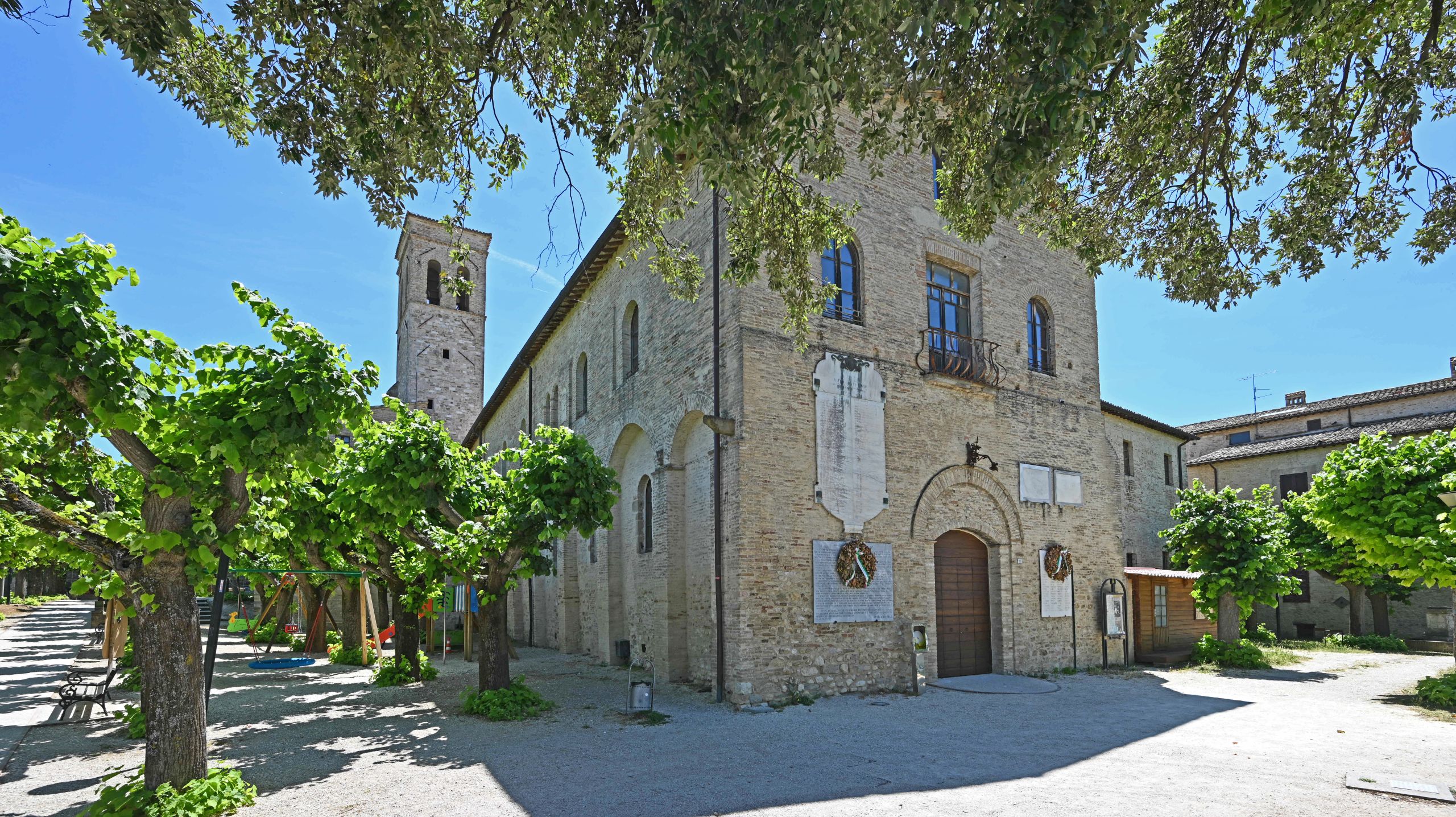
I follow the traffic-calmed street, flanked by an ocher-yellow palazzo with heavy brick buttresses, heading toward Porta di San Leonardo. The view through this street canyon forms a perfect vanishing line. Finally, I reach the park-like, shaded area in front of the Museo di San Francesco. This former 14th-century Franciscan church features a simple natural stone facade adorned with large marble memorial plaques. In the shade of the artfully pruned trees, there is a small playground—a wonderful spot where history and modern everyday life meet.
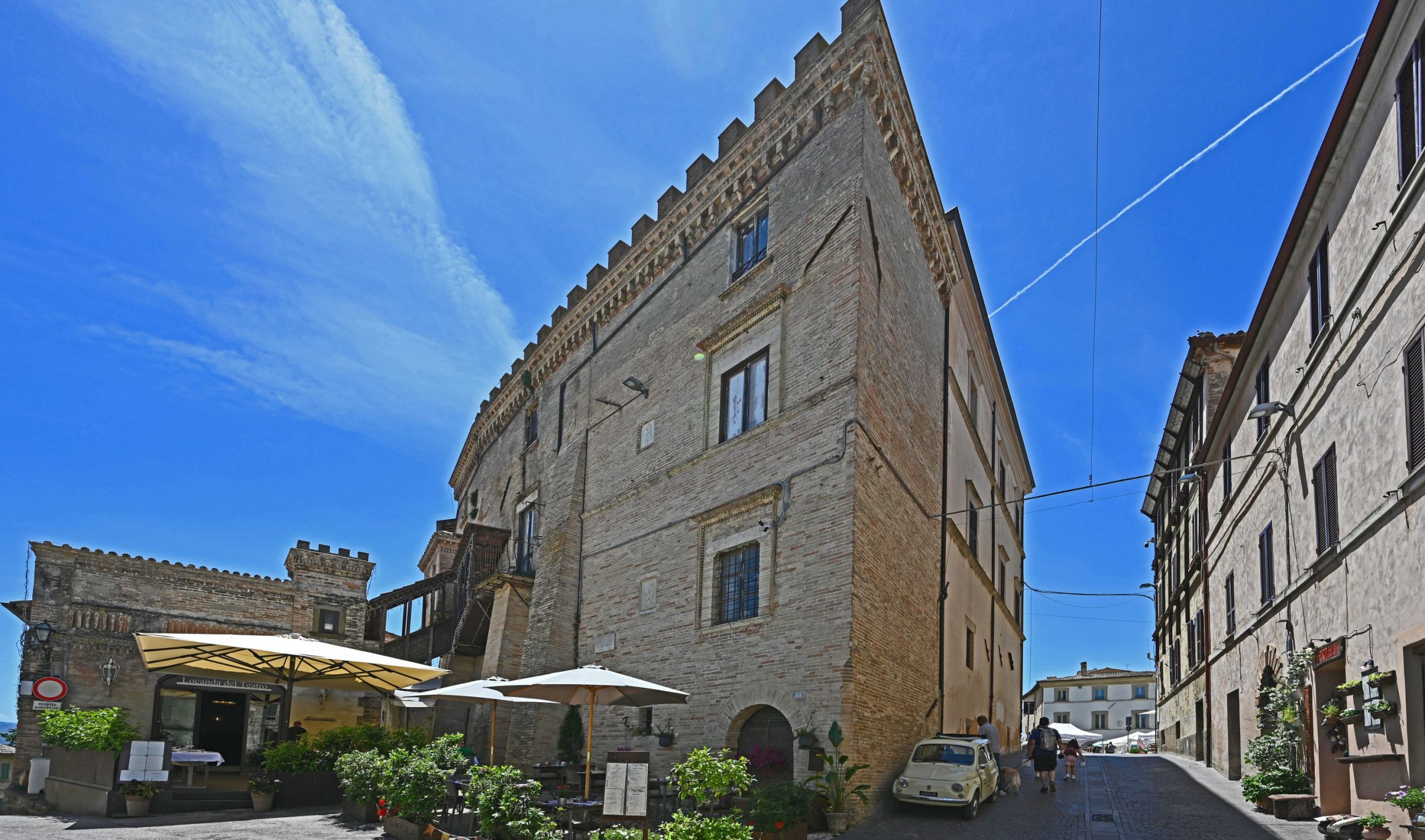
My unforgettable day eventually ends back at the central piazza in front of Palazzo de Cuppis. The gently curved brick facade with its distinctive swallowtail battlements forms a dreamlike backdrop. A white vintage Fiat 500 parks by the side of the road, completing the picture of a perfect Italian summer day. As I leave the old town, I cast one last look back at the entire ensemble of the Santuario di Santa Chiara della Croce and the historic Porta della Spella. The massive, pointed Gothic arch of the gate ruins, overgrown with green ivy, stands in stark contrast to the mighty crossing dome of the convent church, bidding me farewell from this pearl of Umbria.
Gallery: Renaissance Architecture and the Franciscan Heritage