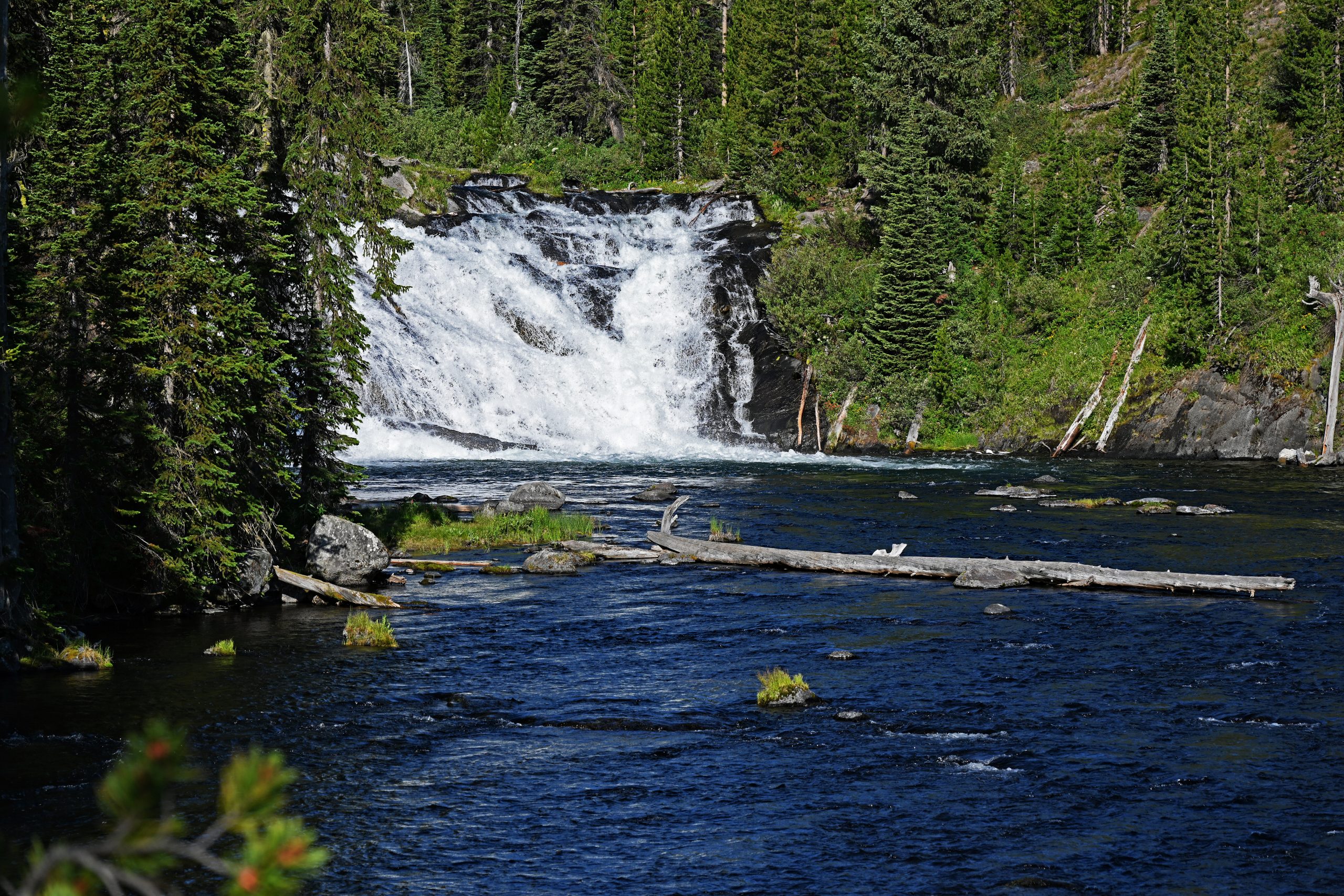
The morning of July 13, 2026, began with the promise of a perfect summer day. From the historic Flagg Ranch, the trail led north, deeper into the untamed heart of Yellowstone National Park. Just a few miles past the south entrance, the dense coniferous forest opened up for a fascinating first stop: Lewis Falls. Right by the road, the outlet of Lewis Lake cascades down rugged, dark rock shelves about thirty feet high. The water crashes loudly and foamingly through the rustic riverbed, where giant tree trunks, bleached silver-gray by the water, lie wedged like natural sculptures. The white spray stood out in brilliant contrast against the deep, dark blues of the river and the rich green of the conifers clinging defiantly to the cliff faces.
Only a short distance further, the landscape expands dramatically. The dense forest gives way to the vast, deep blue expanse of Lewis Lake. In the clear, warm July air, an unforgettable postcard motif presented itself here. Where the lake’s forested basin opens to the south, the jagged, snow-capped peaks of the Teton Range rose on the distant horizon. Although the majestic summits of Grand Teton and Mount Moran lie miles away, they appeared close enough to touch through the zoom lens—a magnificent interplay of the gentle waves of the lake in the foreground and the glacial giants in the distance. Yet it was not only the geology that fascinated this morning: an American white pelican suddenly appeared over the glittering surface of the water. In a fast, elegant low flight, the mighty waterfowl glided just inches above the surface, photographed at the exact moment its wings were powerfully extended upward on the upstroke.
Gallery: From the Waterfall to the Great Lake
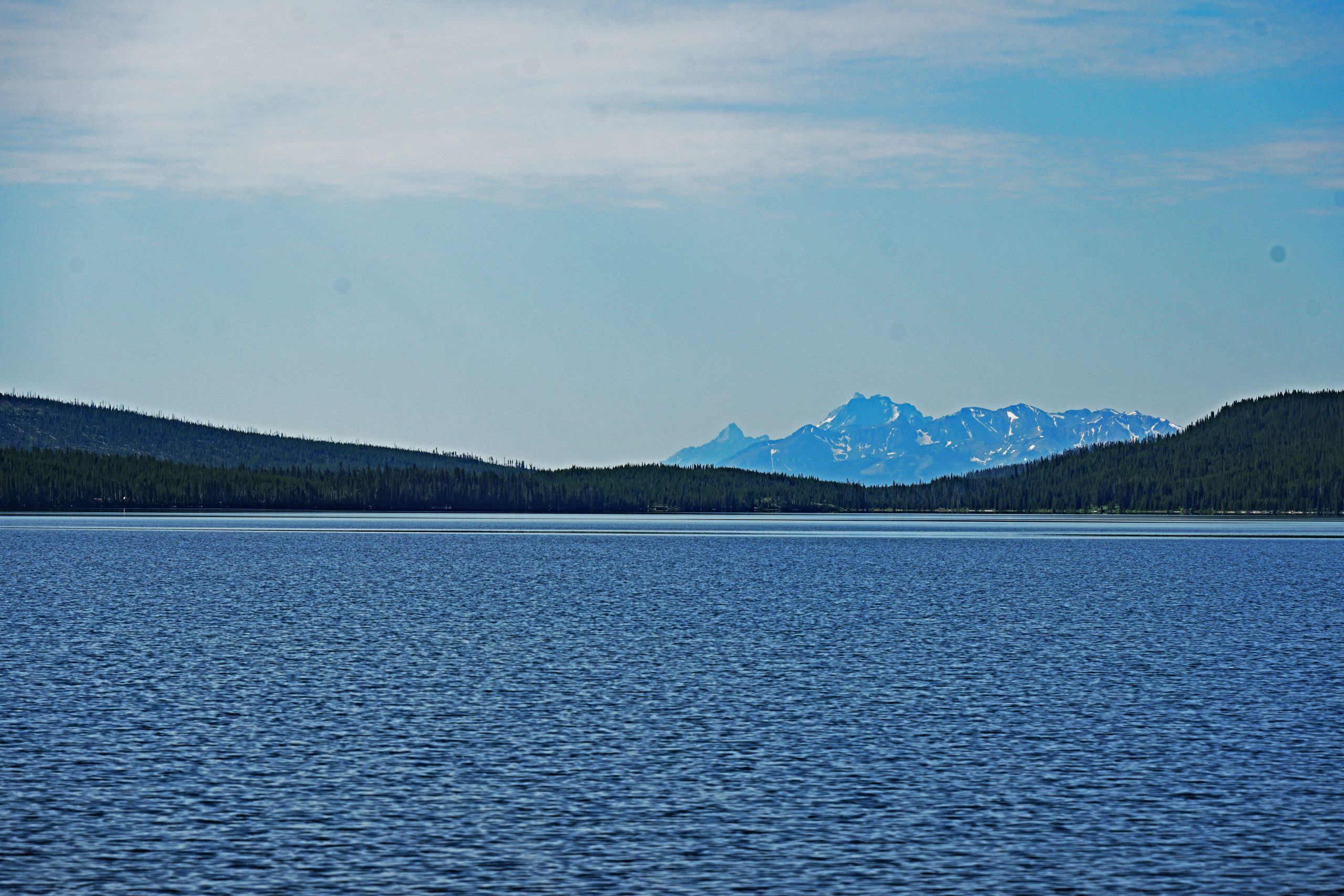
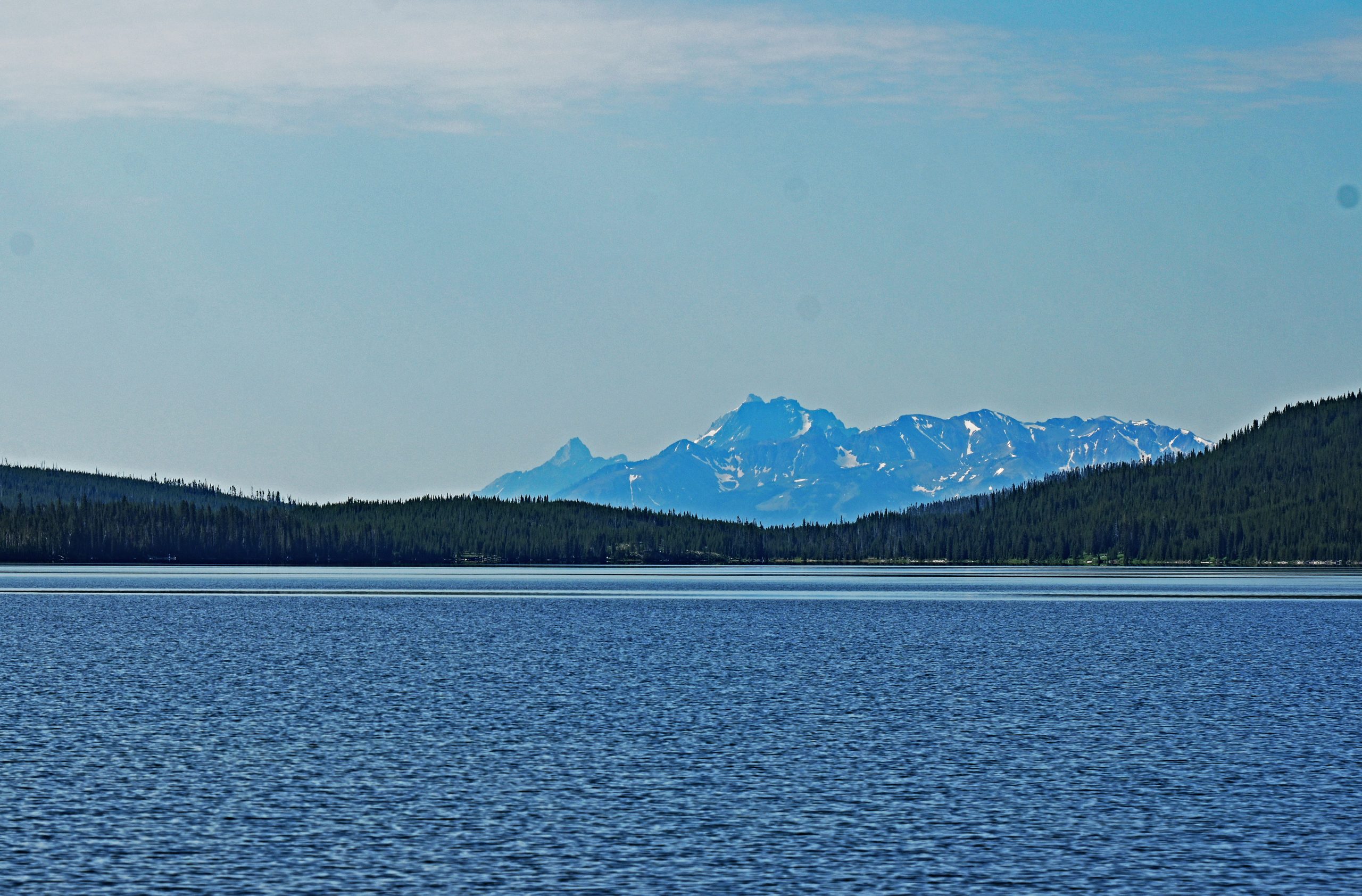
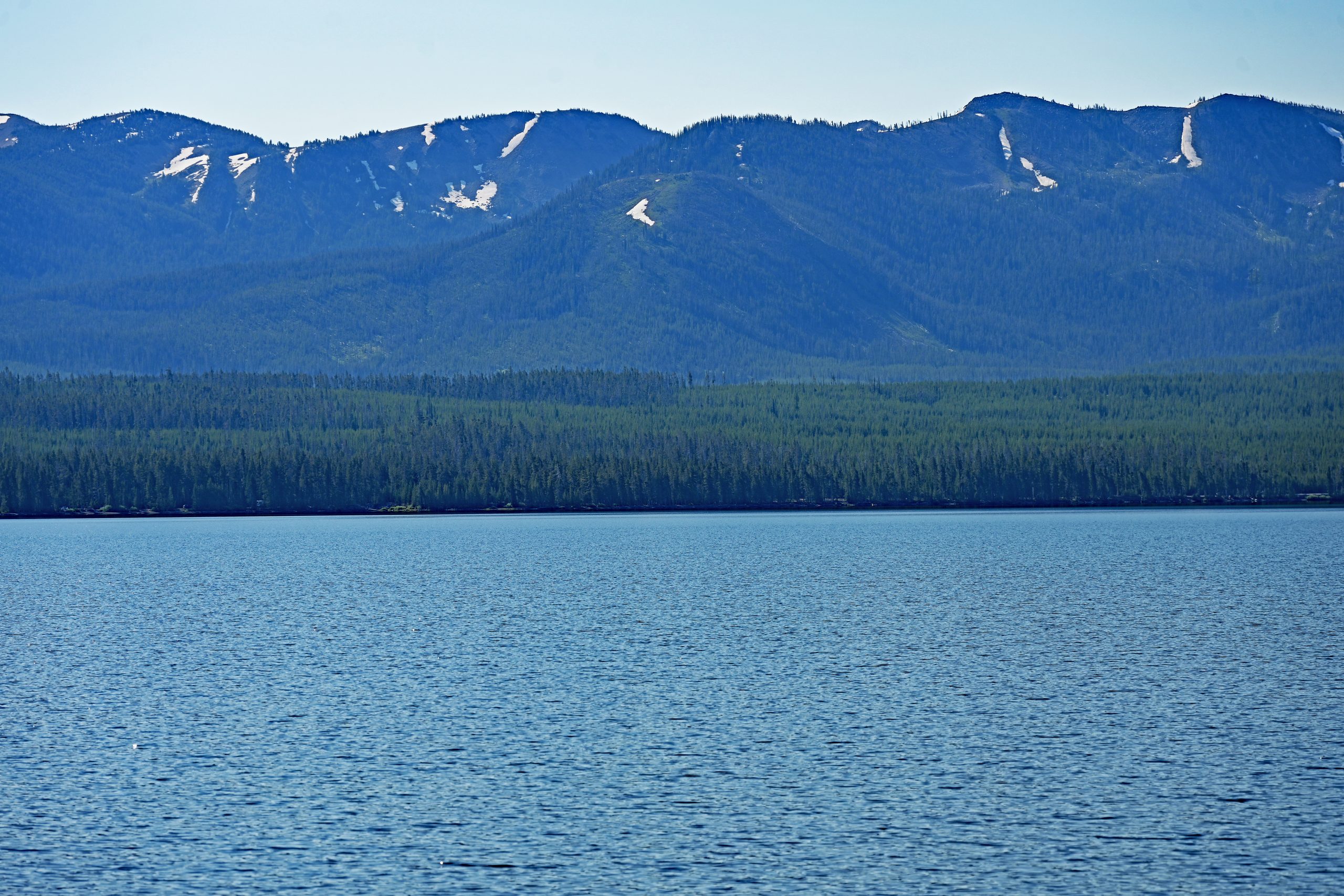
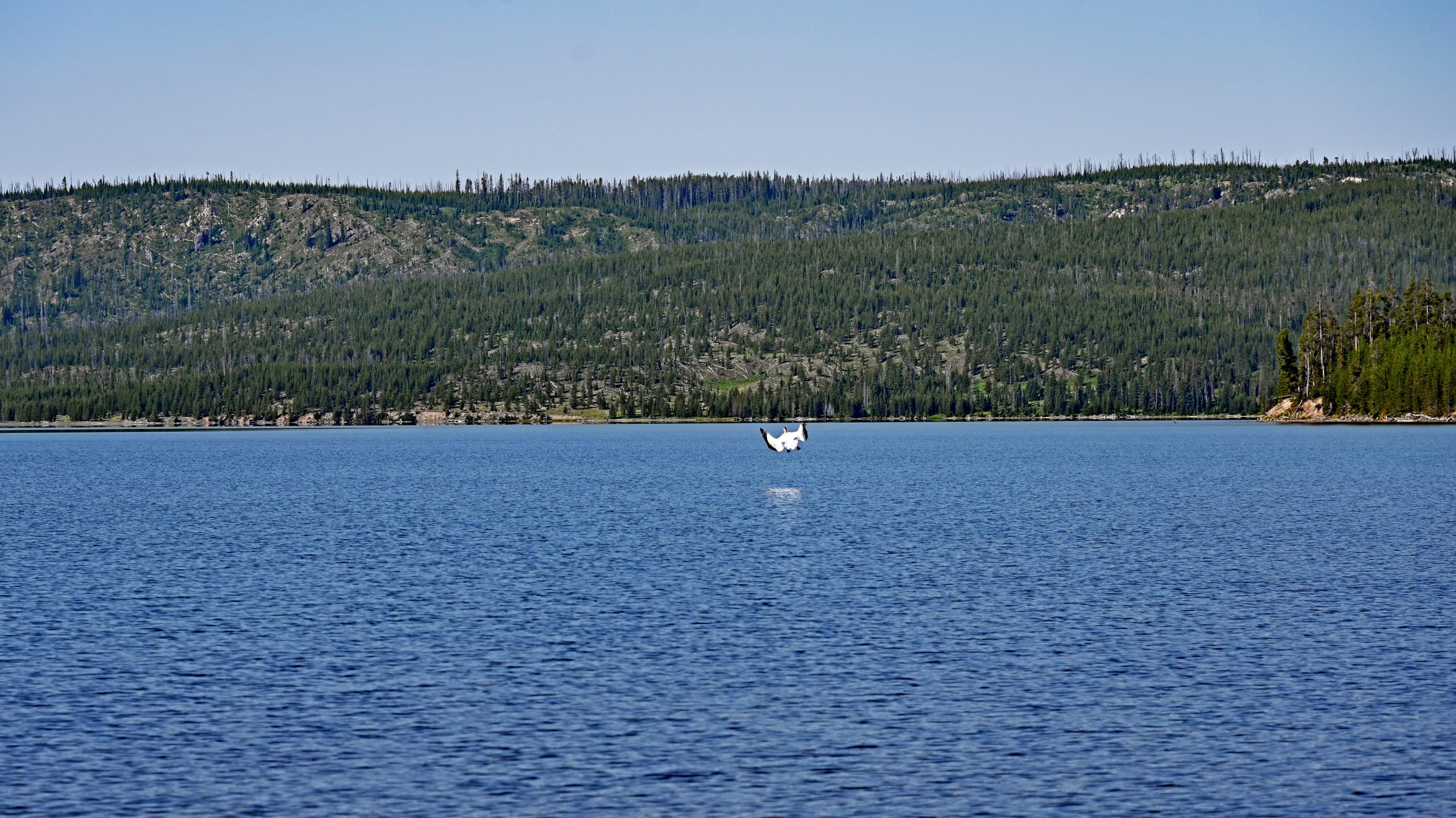
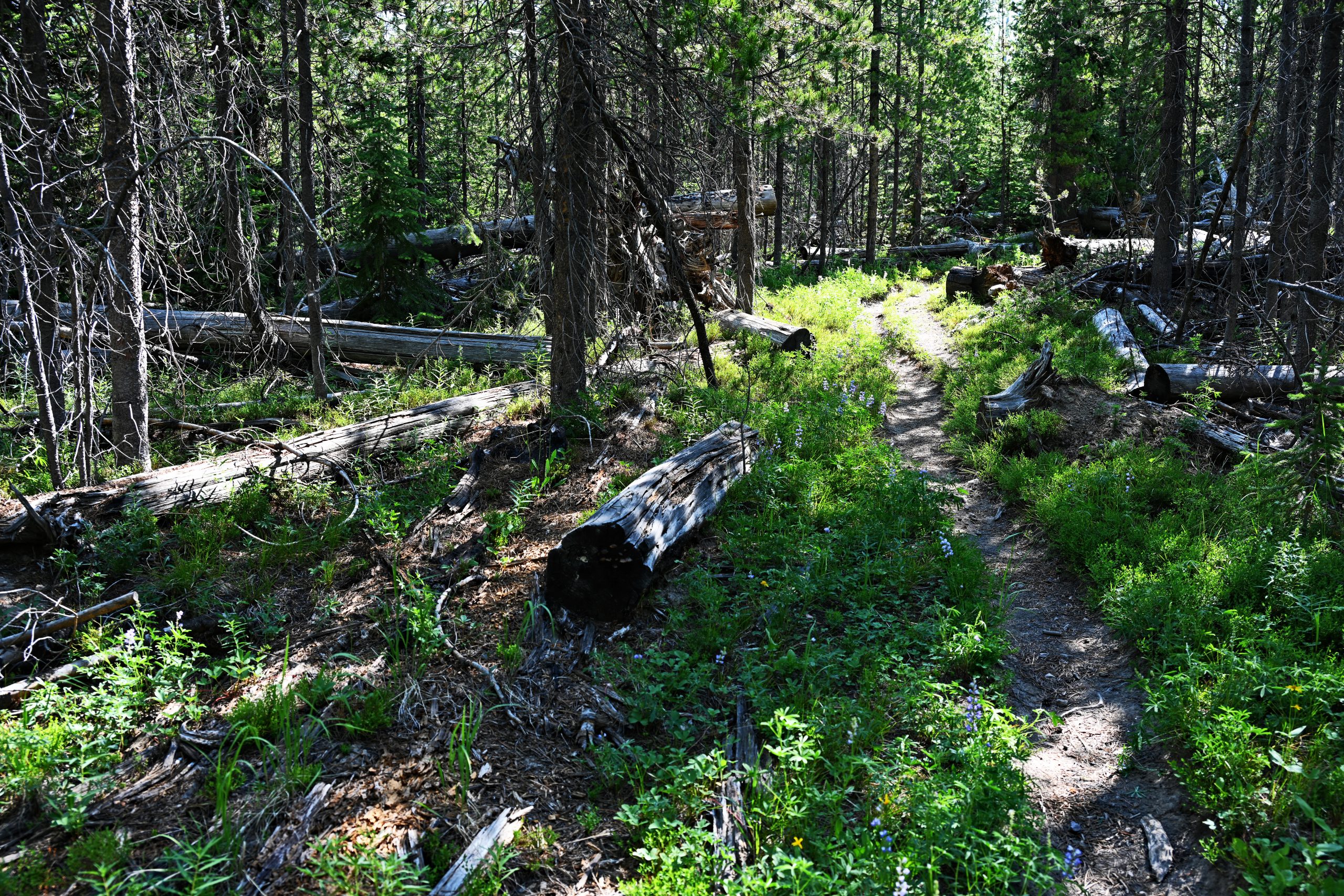
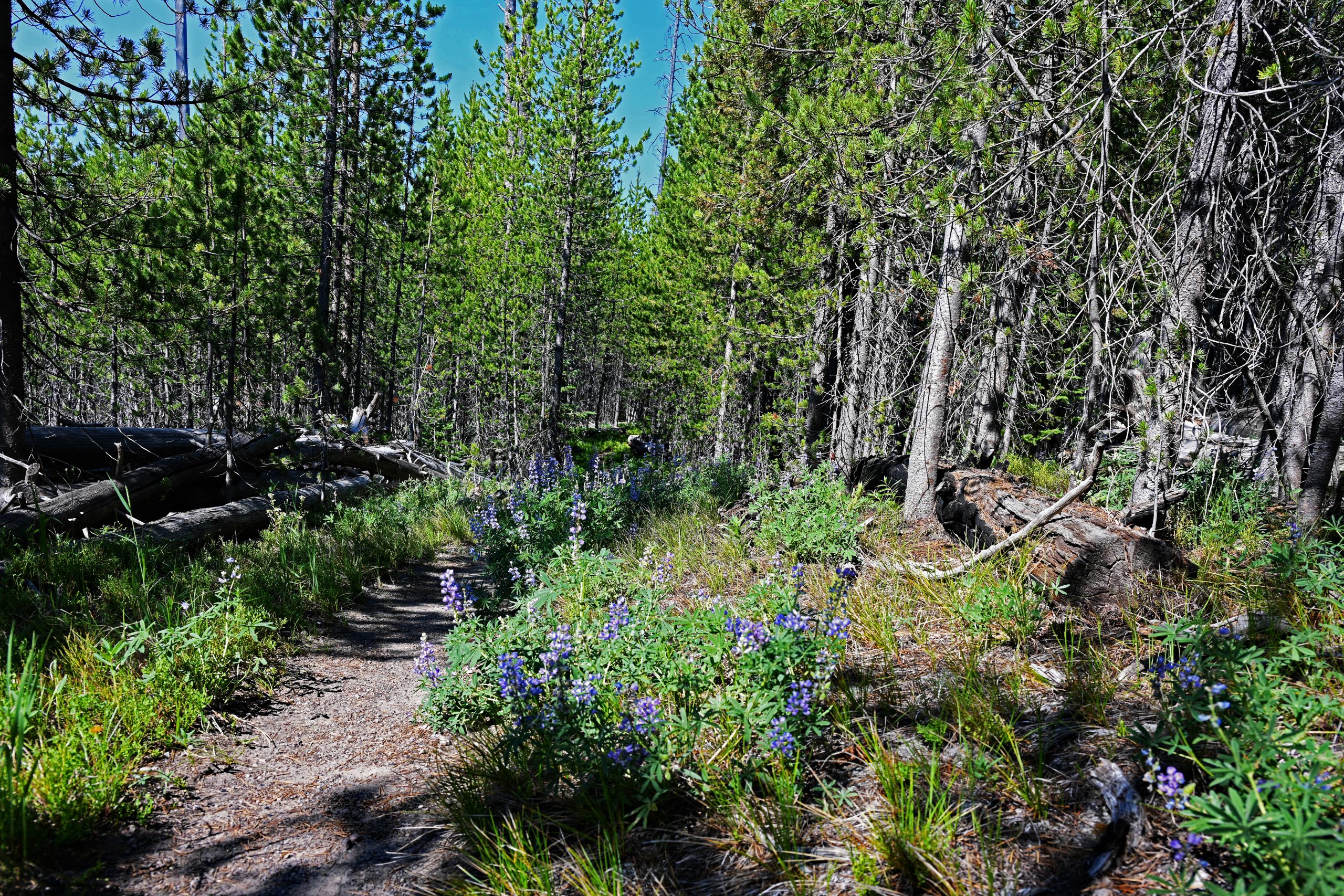
At the shore of the lake, the actual hike finally began on the trail along the Lewis River. Right from the first few yards, the turbulent natural history of this region becomes tangibly close. The path winds through a mosaic of past and new beginnings. Everywhere on the forest floor lie the weathered, gray remains of giant tree trunks—silent witnesses to the historic wildfires of 1988. Almost four decades have passed since then, and in the barren, volcanic soil of the Yellowstone Plateau, nature recovers agonizingly slowly. Yet among the old deadwood, a new generation of lodgepole pines is relentlessly forging its way upward. They already stand several feet high and glow in a fresh, vibrant green. The wayside is lined with true seas of silver lupines, whose candle-like, purple-blue flower spikes provide intense splashes of color in the bright sunlight.
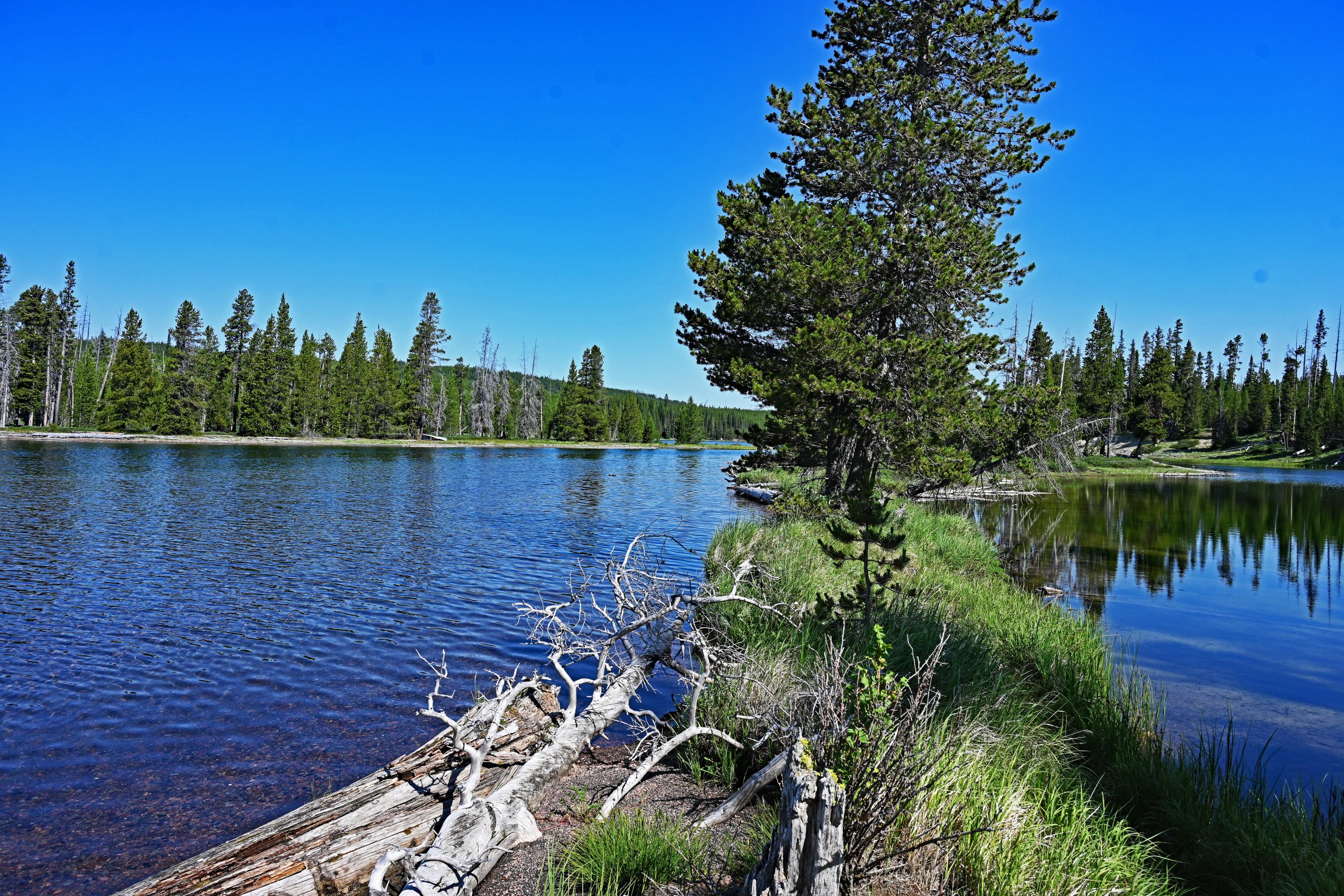
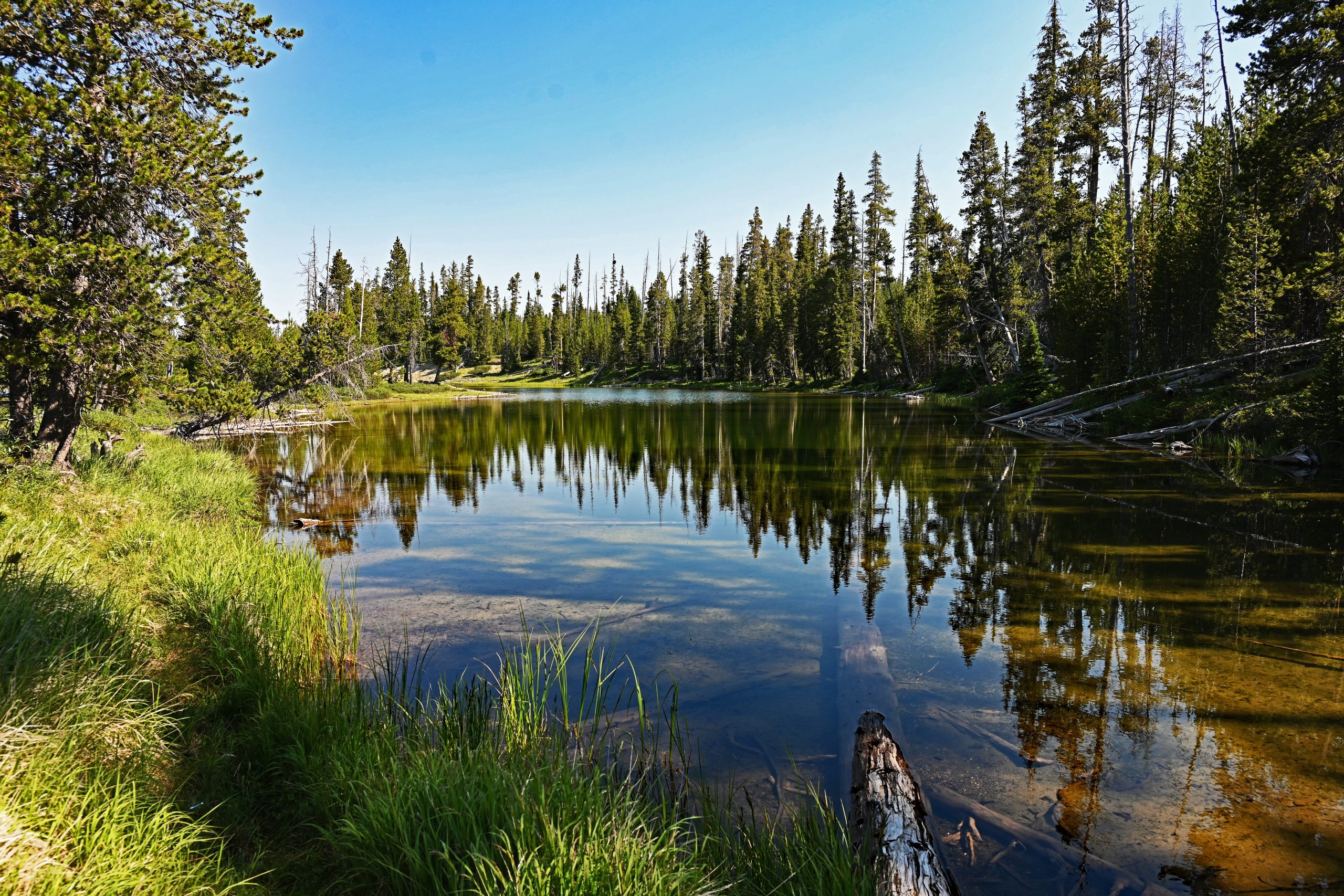
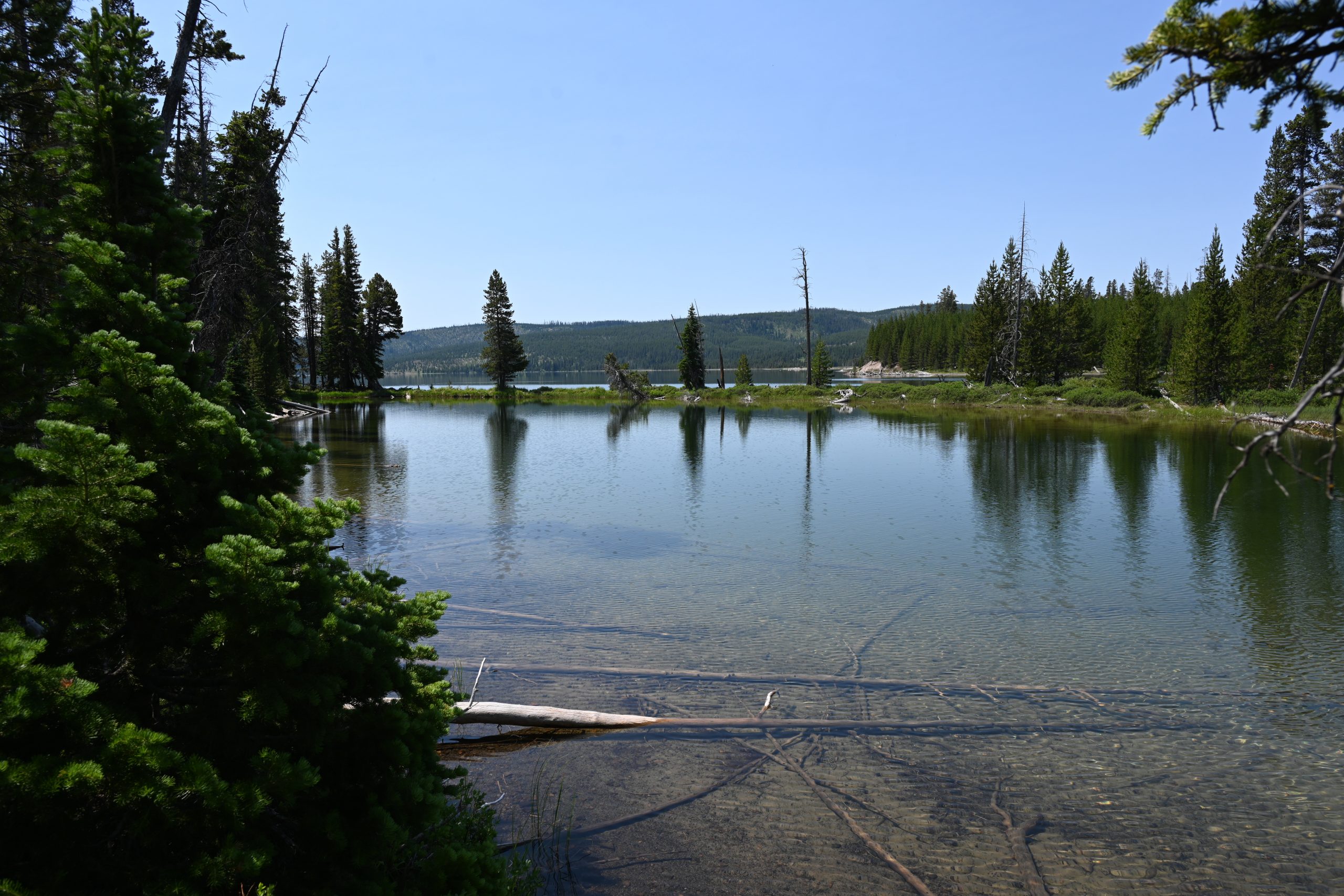
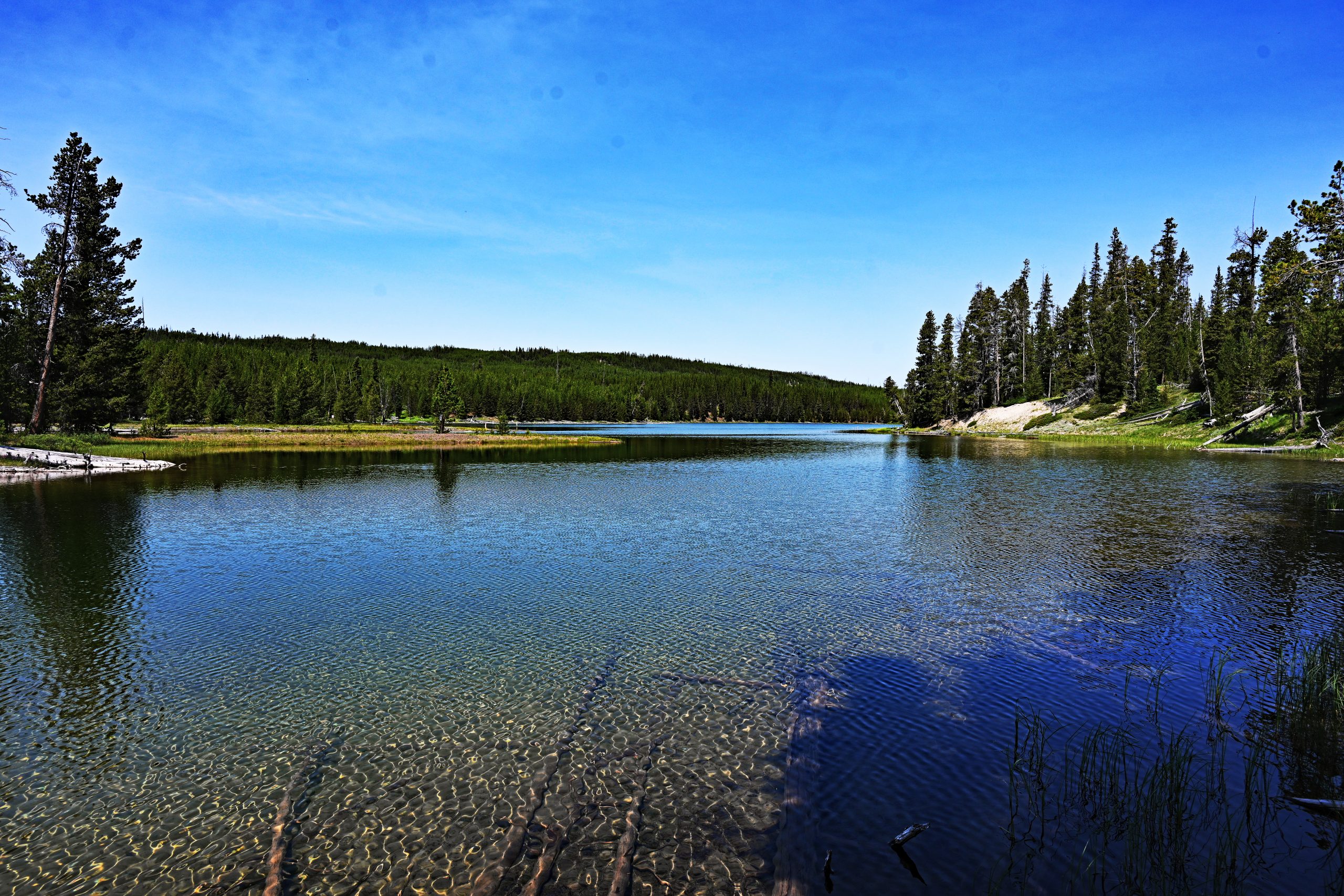
When the trail finally reaches the riverbank itself, the atmosphere changes. A deep, meditative silence settles over the landscape, interrupted only by the gentle, soothing murmur of the water. Away from the main current of the Lewis River, a sheltered, completely windless side channel enchanted the senses. The water there lay as still as liquid glass, so that the pointed crowns of the pines reflected in perfect symmetry on the surface. Due to the absolute clarity of the shallow shore, every pebble on the sandy bottom could be seen, where an ancient, mossy trunk rests in the shallow water.
Gallery: On the Trail of the Lodgepole Pines
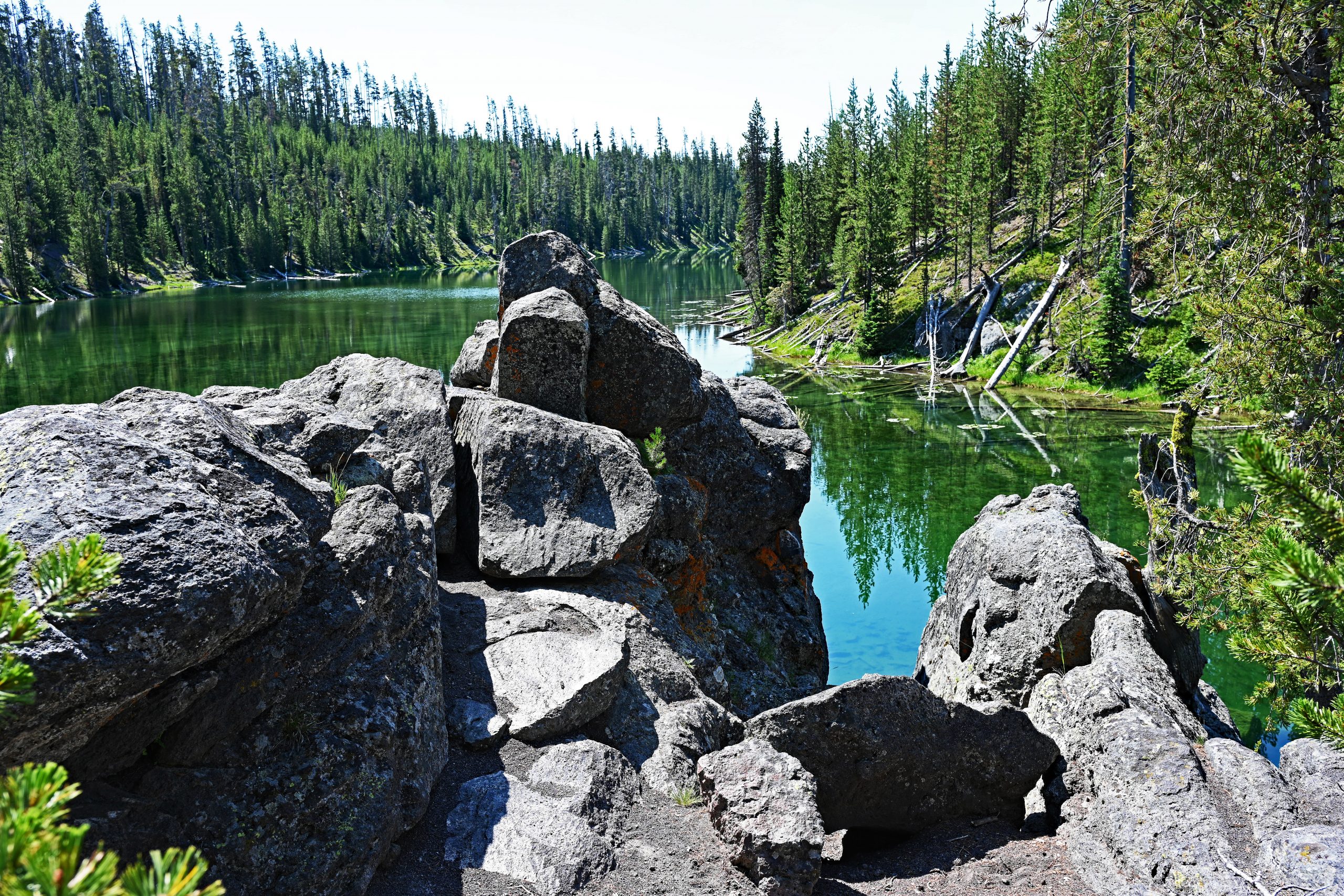
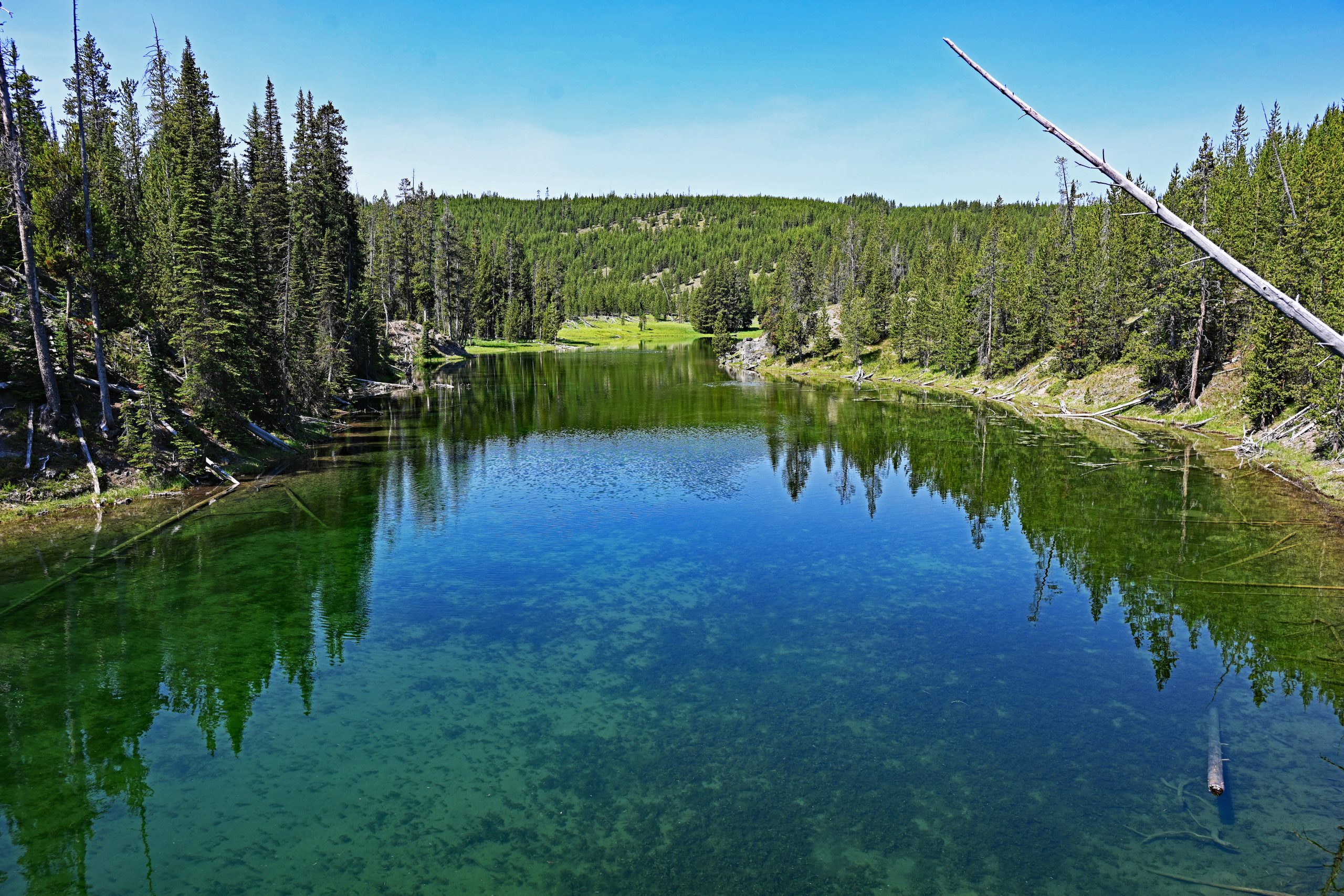
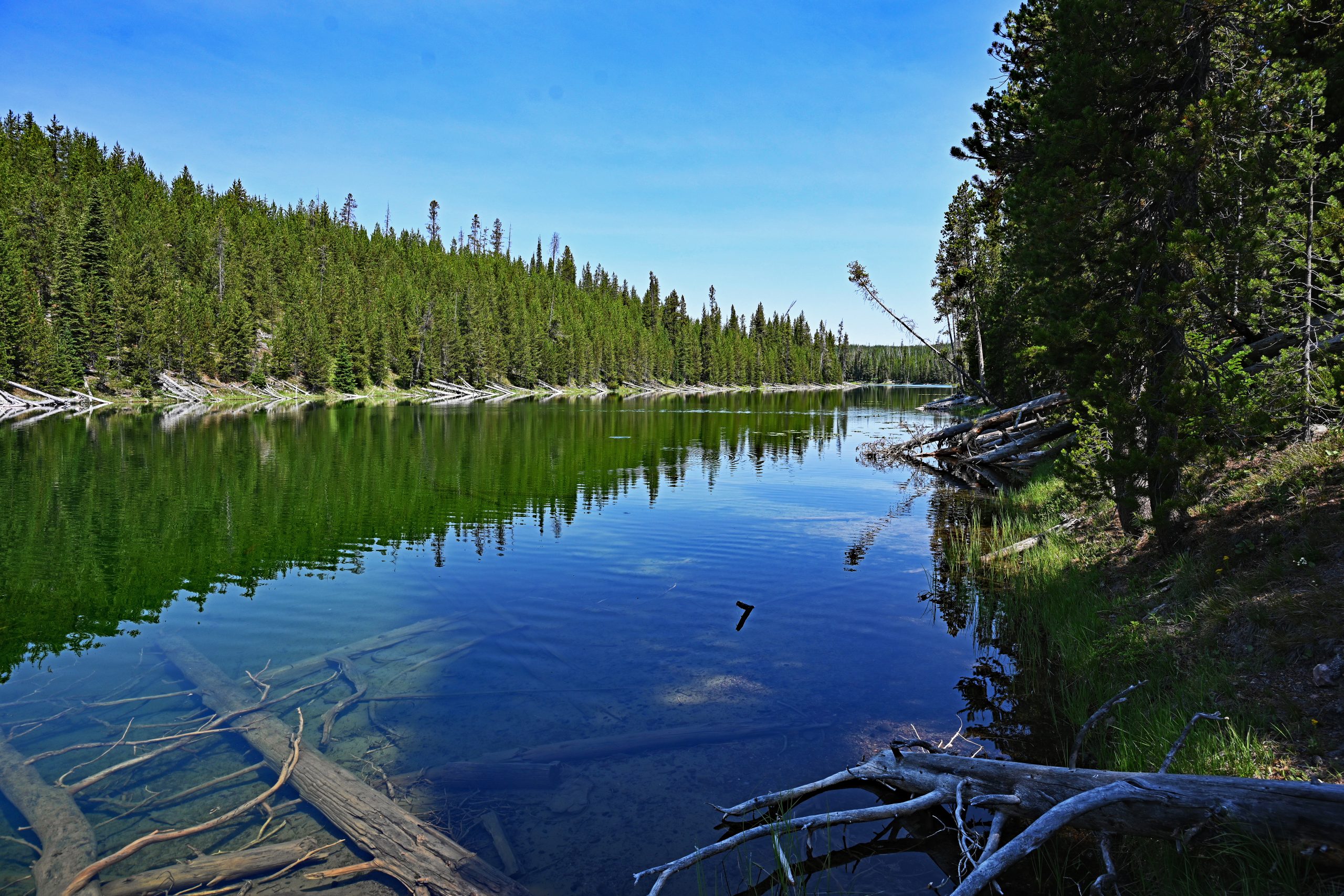
The absolute highlight of the hike was reached when the trail ascended and led onto a massive, jagged barrier of dark volcanic rock. From these rugged cliffs, a breathtaking view offered itself deep down into the Lewis River Channel—that narrow, mysterious vein of water that connects Lewis Lake with the remote Shoshone Lake. The water here shimmers in a deep, almost magical emerald green. It is so incredibly clear that the entire river course from above looks like a giant, natural aquarium, where algae structures and sunken logs can be spotted in sharp detail on the bottom. Upstream, this green ribbon winds in complete solitude through the steeply rising forested slopes, an untouched passage on the threshold of the trackless backcountry.
The return journey also held new visual treasures in the shifting afternoon light. At several points, the shore revealed skeleton-like, sun-bleached branches and massive tree trunks resting beneath the crystal-clear water surface of the canyon like in a display case, while the flawlessly blue sky and dark shore forests were reflected above.
Gallery: The Emerald Channel
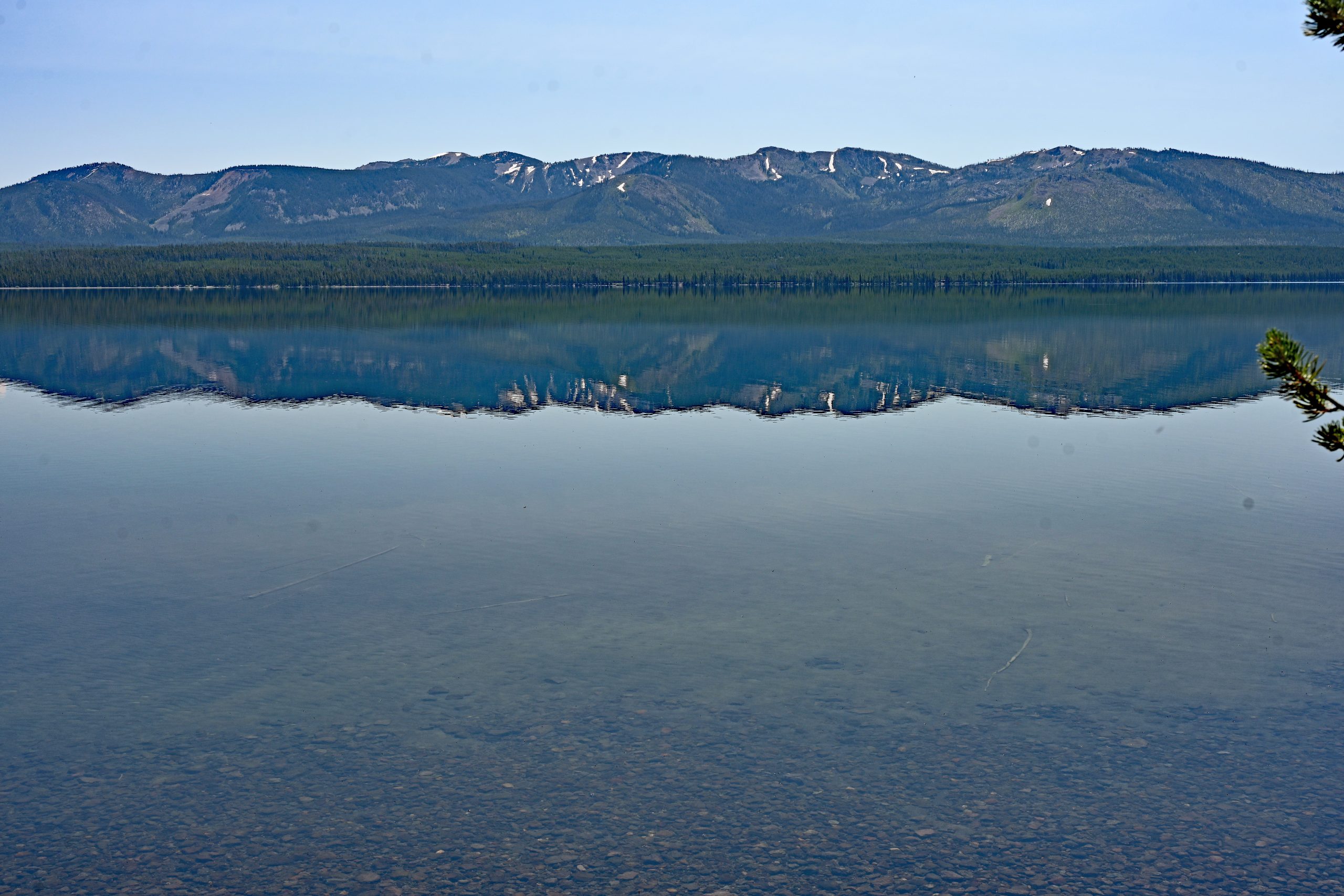
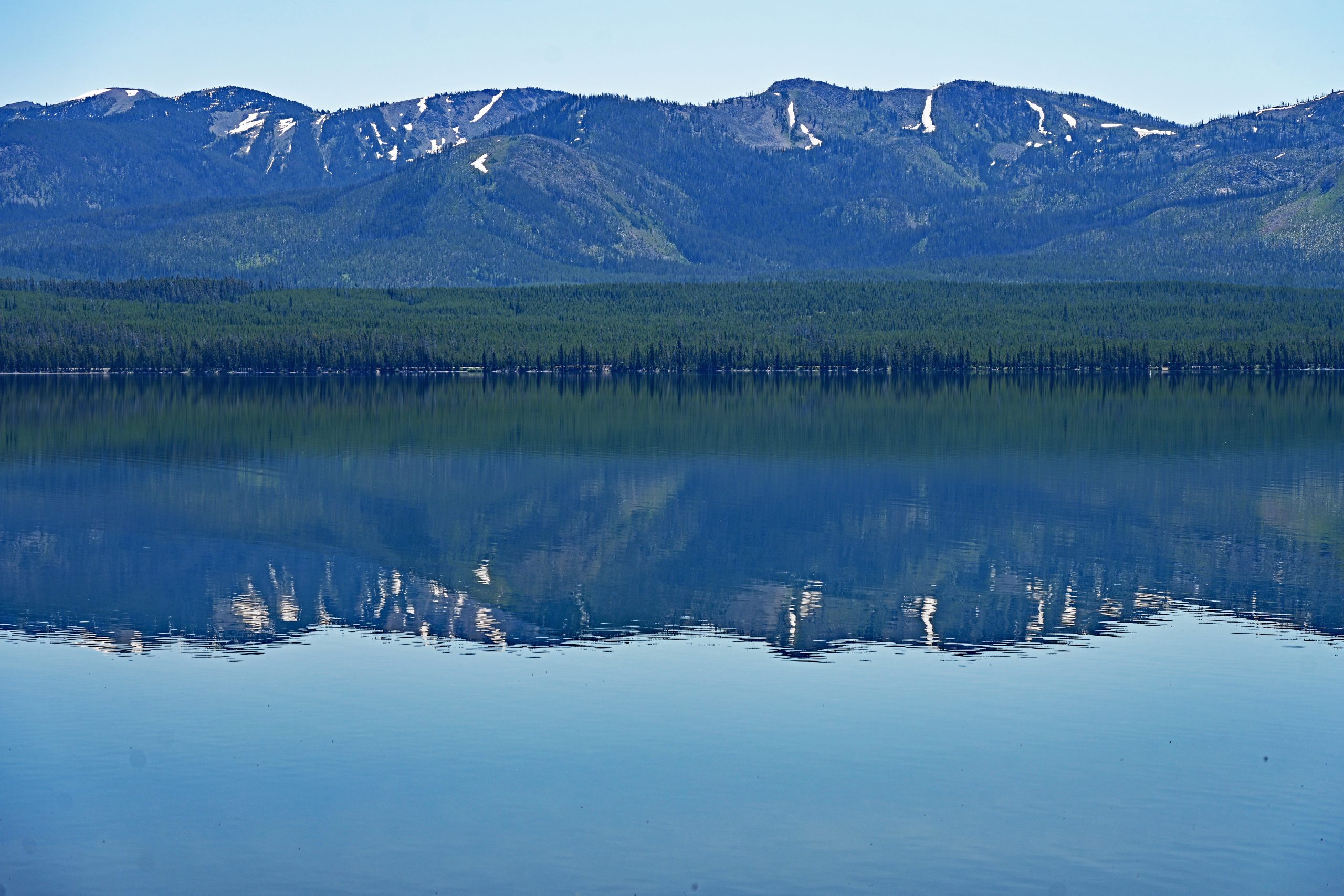
Upon returning to the starting point at Lewis Lake, nature had one final, very special surprise in store. The wind had died down completely, and the vast expanse of water presented itself as a monumental, flawless mirror. On the horizon rose the gentler, sweeping slopes of the Red Mountains, anchored by the distinctive peak of Mount Sheridan. Despite the soft, warm backlight that veiled the distant ridges in a silvery haze, the last remaining white snowfields in the steep gullies stood out with razor-sharp clarity in the reflection. Every contour of the landscape was mirrored in the still water, while in the shallows of the foreground, the fine, colorful pebbles of the lakebed shimmered through the crystal-clear depths.
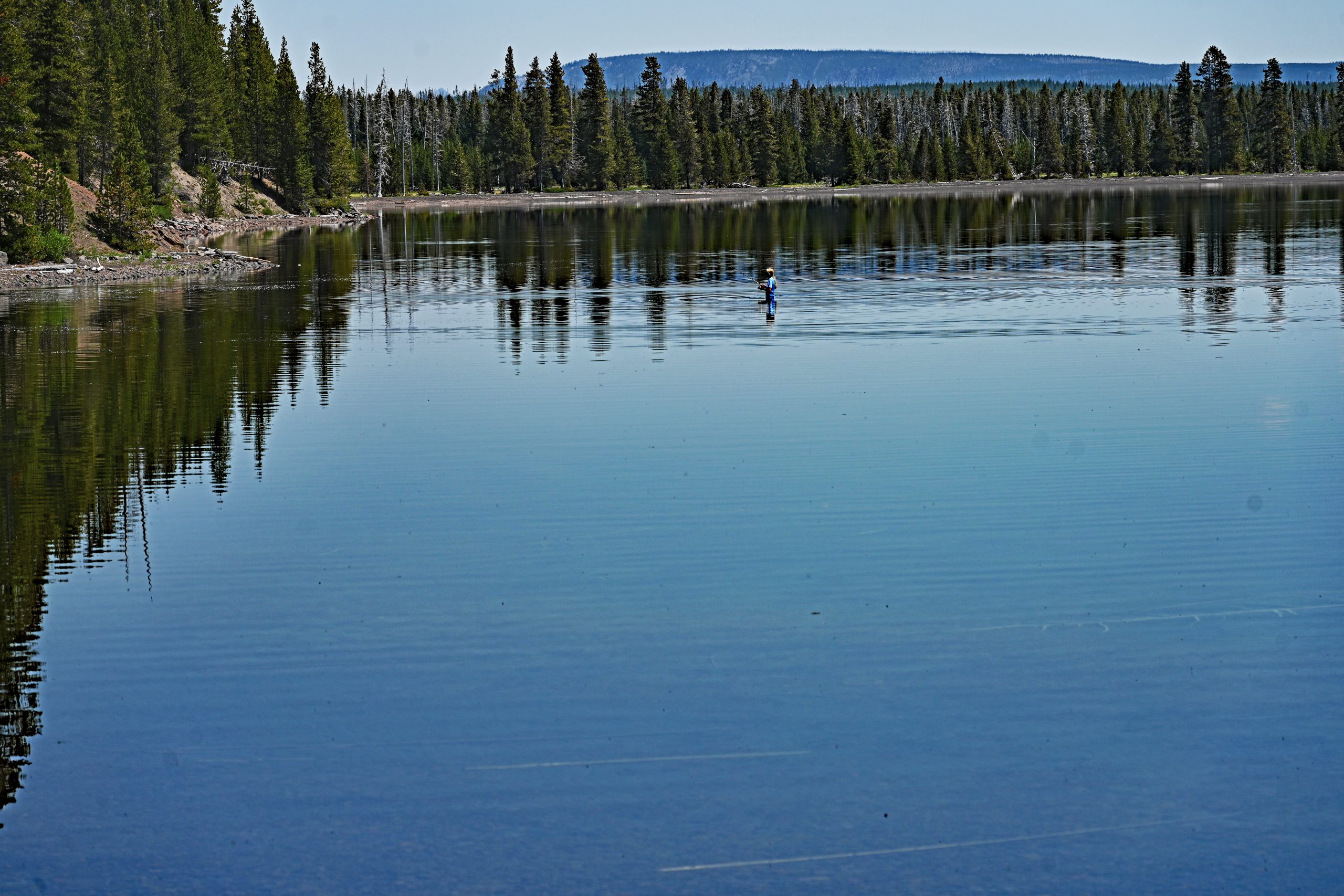
It was against this peaceful backdrop that the trip’s final, deeply moving scene unfolded: a fly fisherman stood in waders far out in the shallow, tranquil water. Each fluid cast of his rod sent fine, concentric ripples across the smooth surface, gently breaking the perfect reflection of the trees along the shore. It was the embodiment of absolute patience and solitude—a truly fitting and quiet conclusion to an unforgettable journey through the Yellowstone wilderness.
Gallery: Farewell at the Silent Lake