Walking in the Footsteps of the Past
When we took our first steps into the Old Town on the evening of September 4, 2026, it felt like a homecoming for me. Eight years ago, I had worked in this beautiful city for fifteen months. Now I was back – together with my wife and our loyal dog. The mild late summer air accompanied us as Nuremberg transformed into a sparkling sea of lights before our eyes.
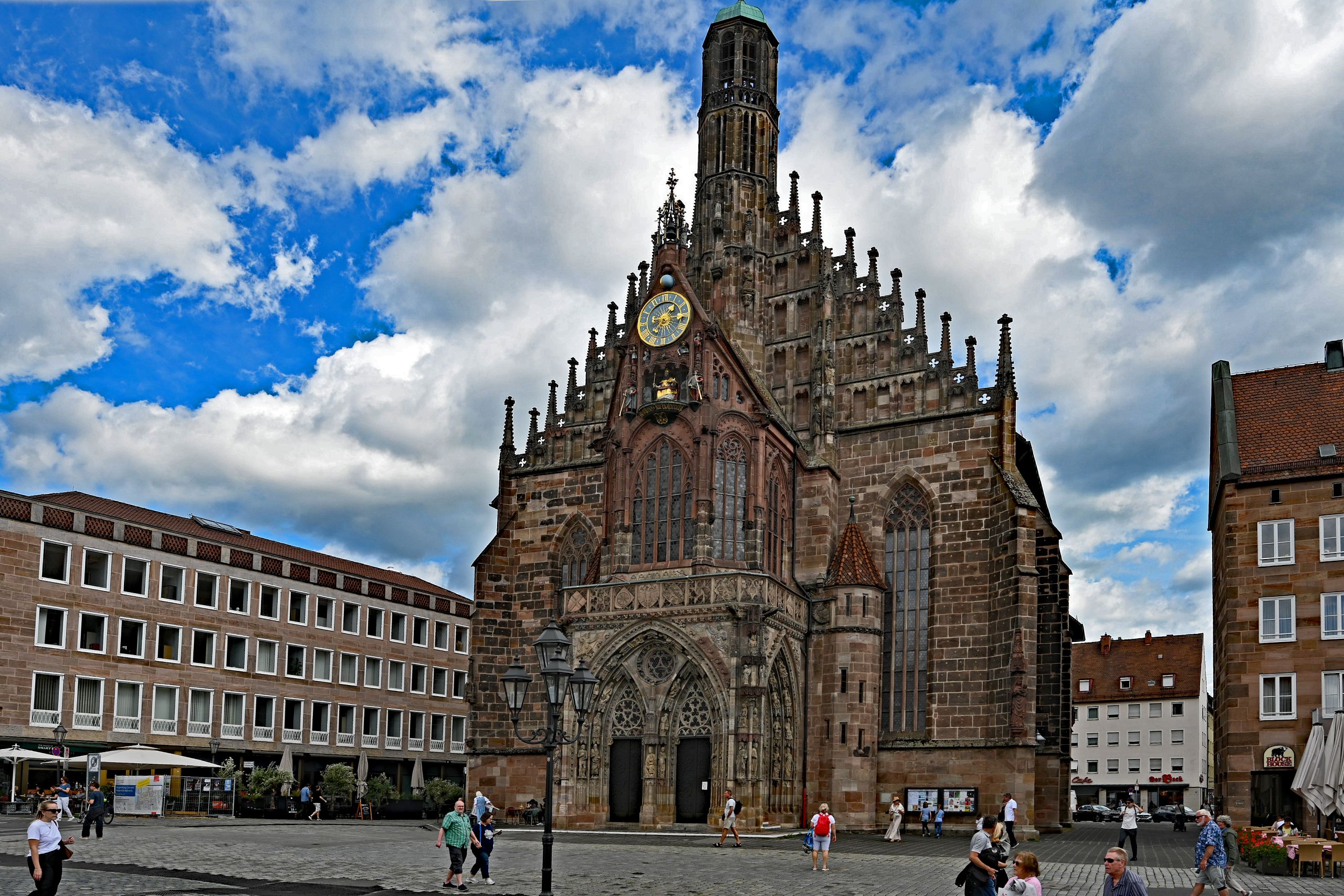
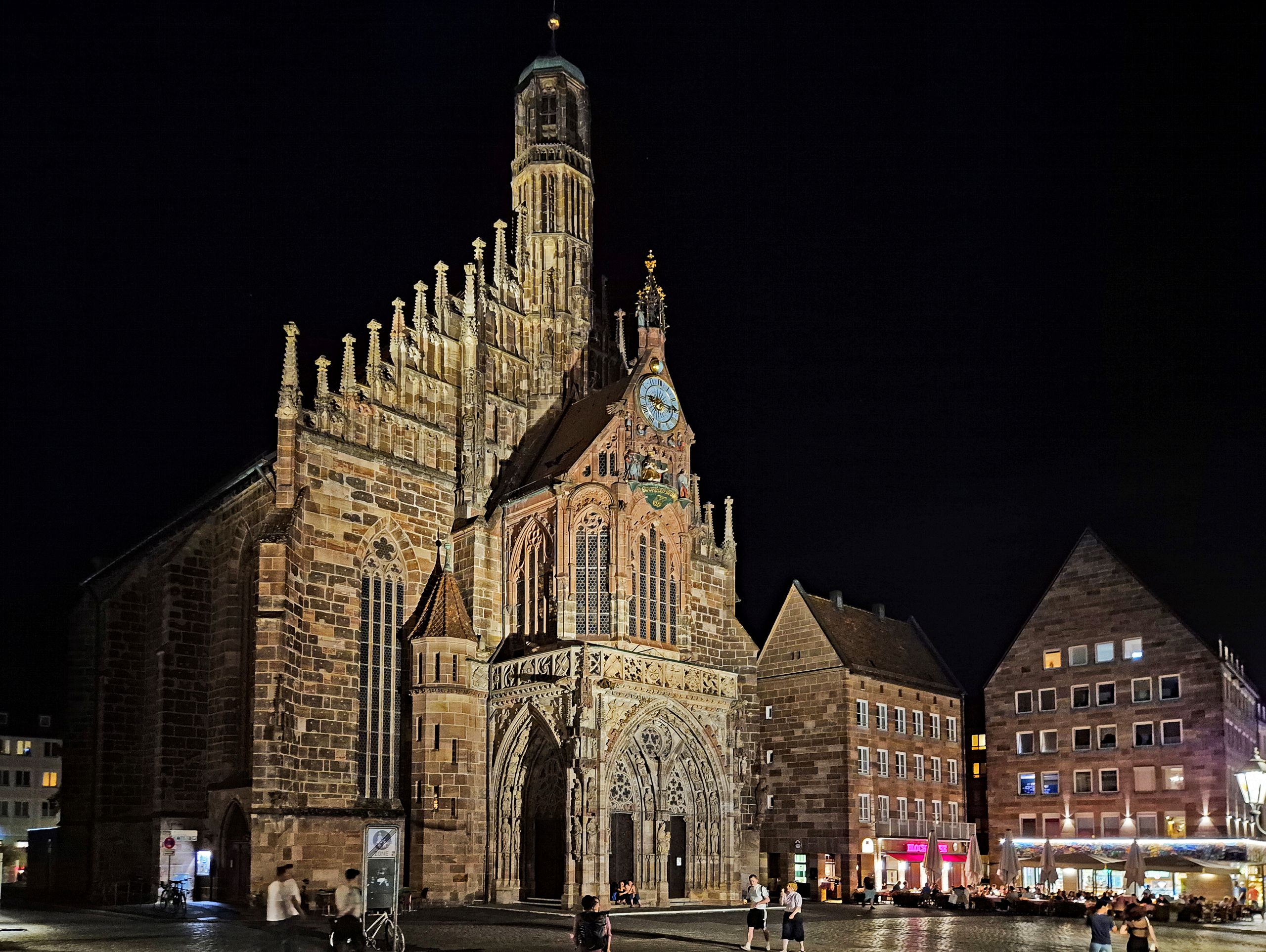
Our evening stroll began at the bustling Hauptmarkt (Main Market Square). The mighty west facade of the gothic Frauenkirche (Church of Our Lady) caught our attention immediately. Built in the 14th century at the behest of Emperor Charles IV, it exuded a sublime tranquility that evening. Its famous stepped gable and delicate porch seemed to float in the spotlight. High up on that porch sits the famous mechanical clock of the Männleinlaufen, which still commemorates the Golden Bull. Right next to it, people were enjoying the historic ambiance in the outdoor dining areas while we strolled further towards City Hall Square.
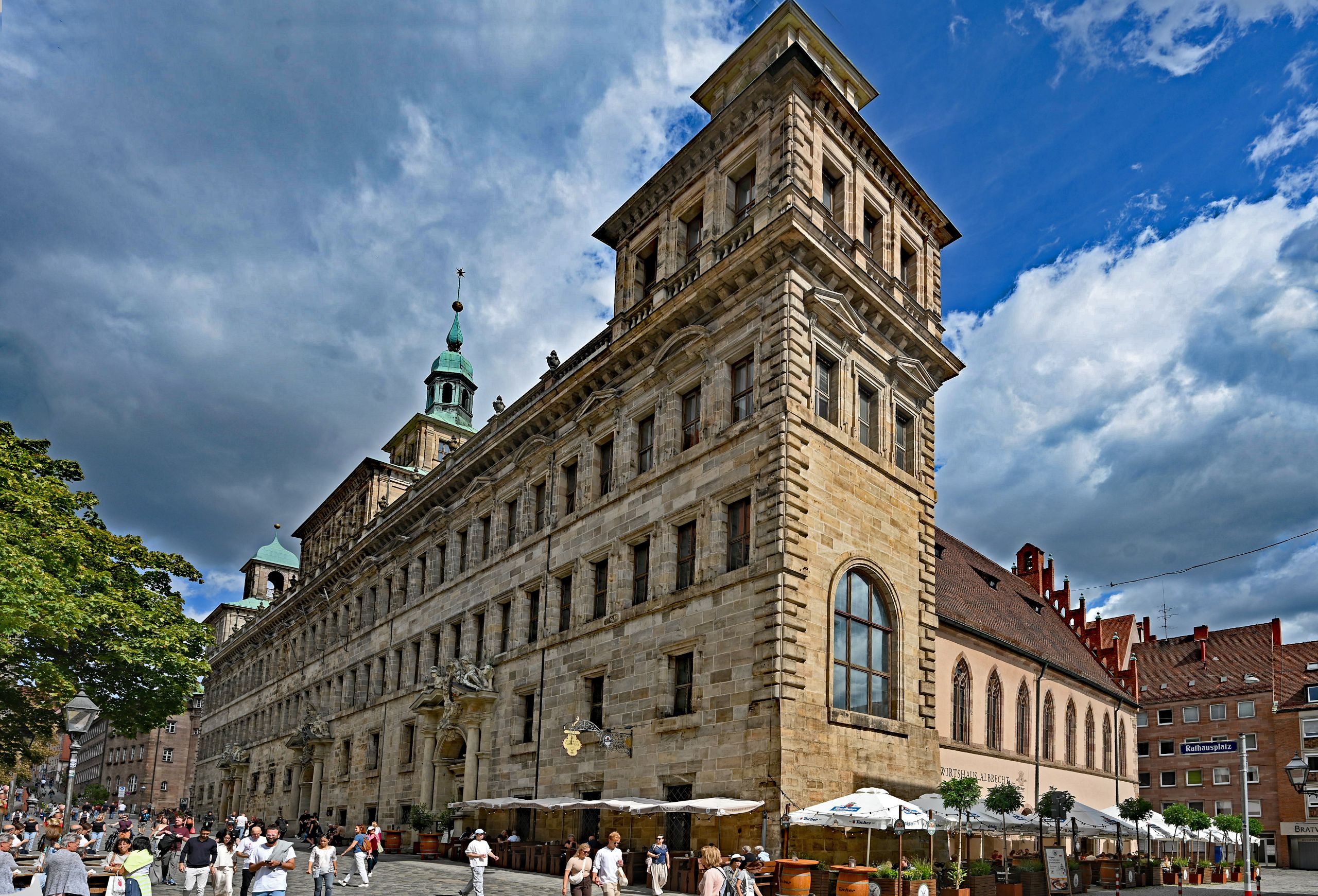
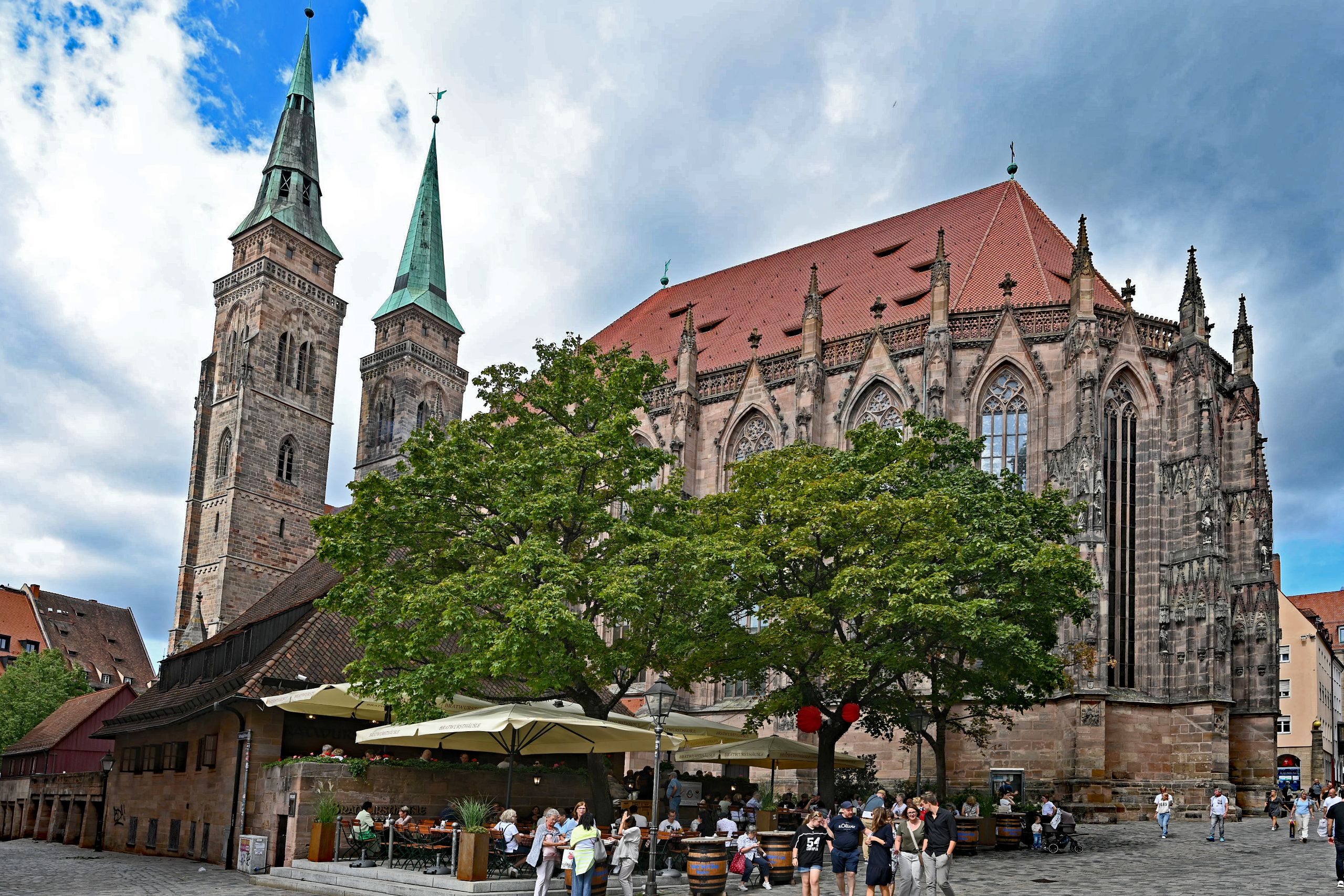
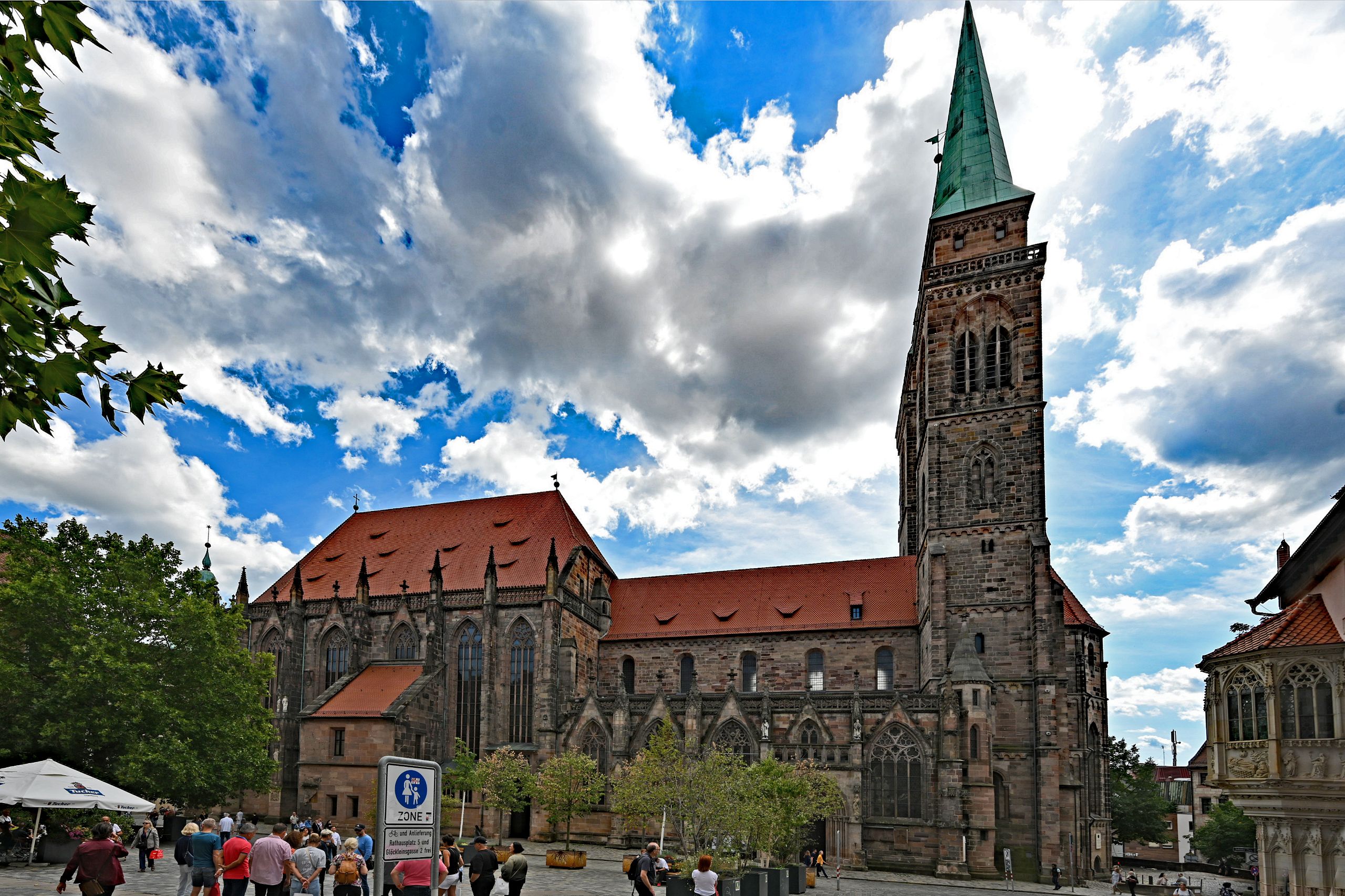
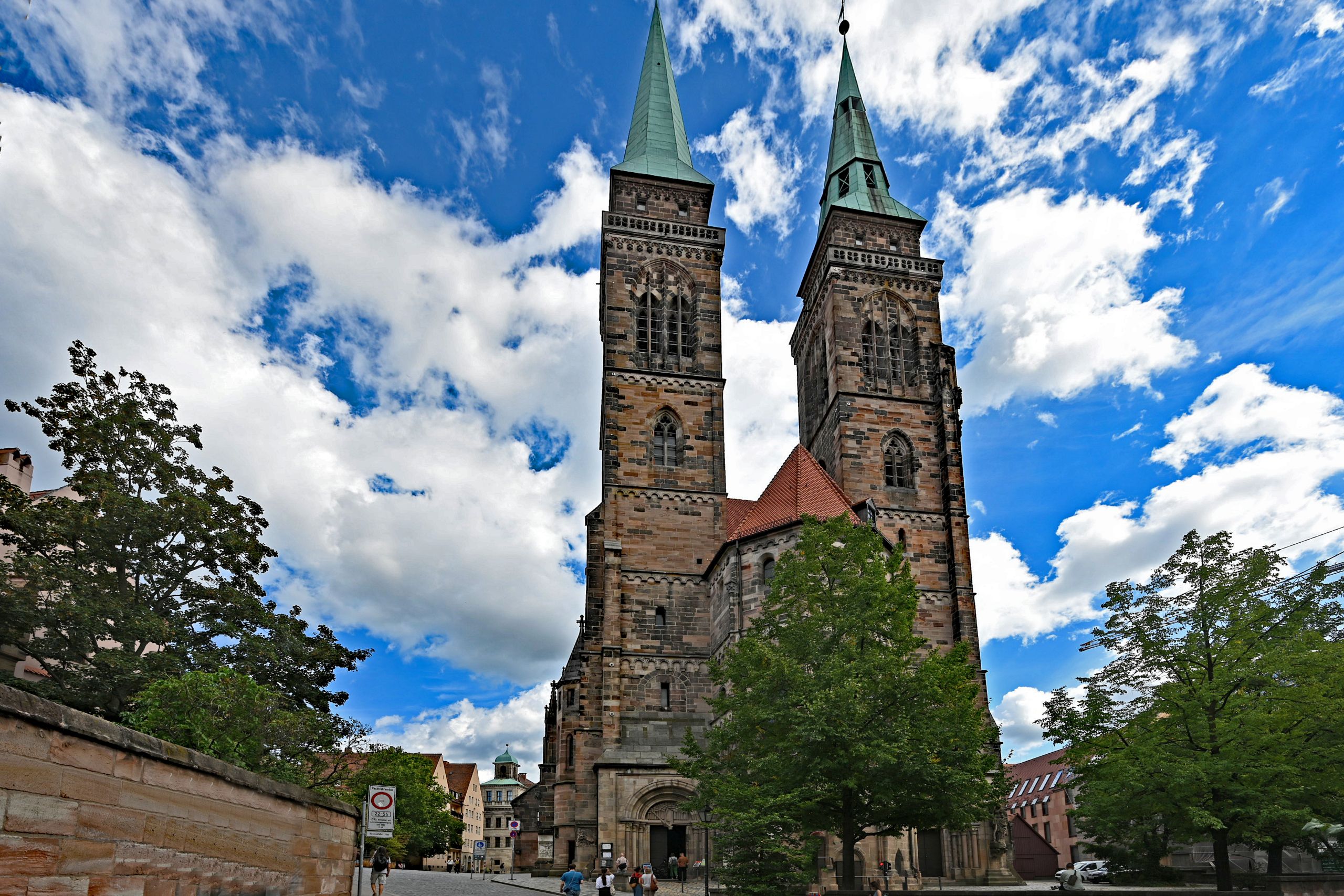
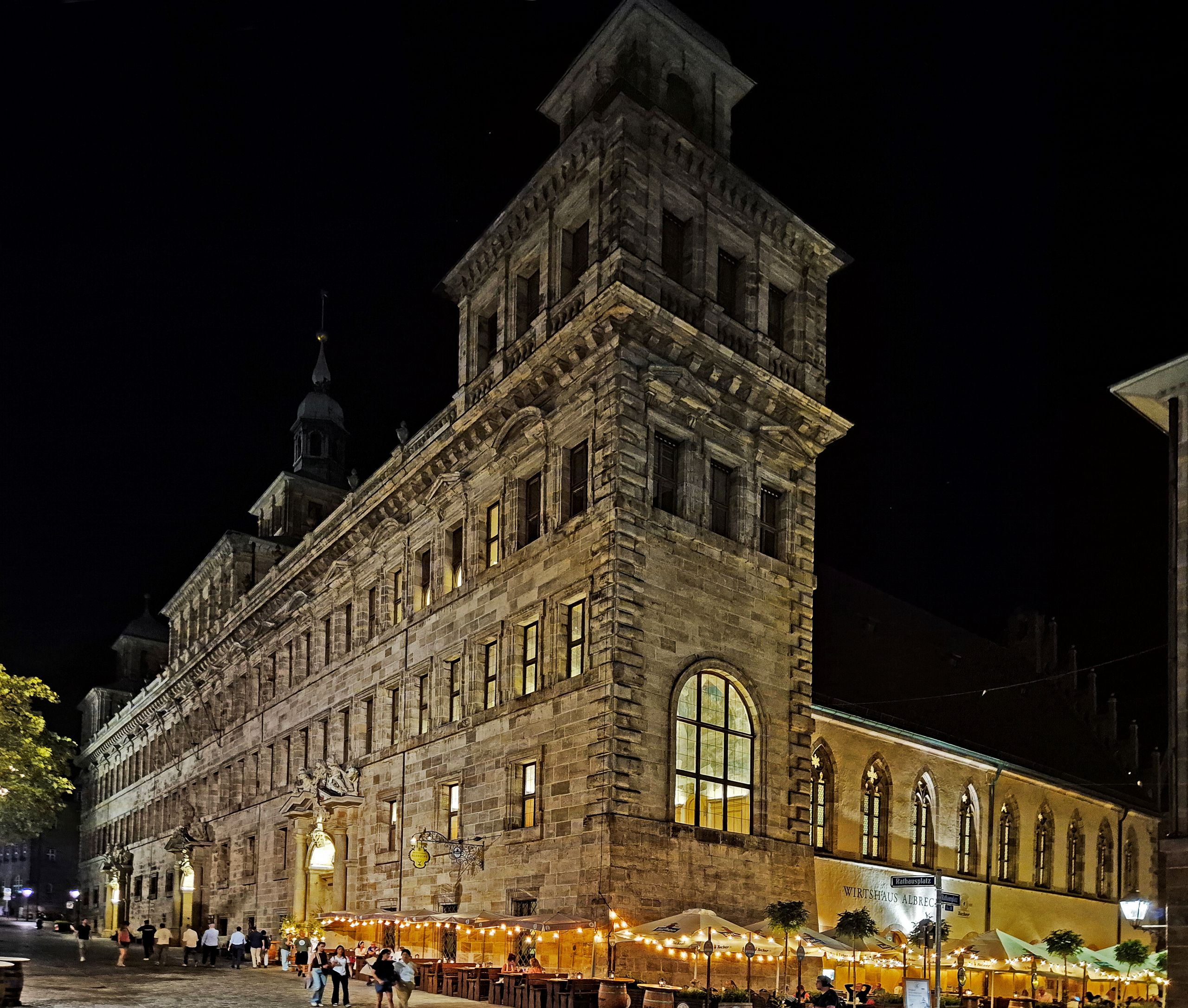
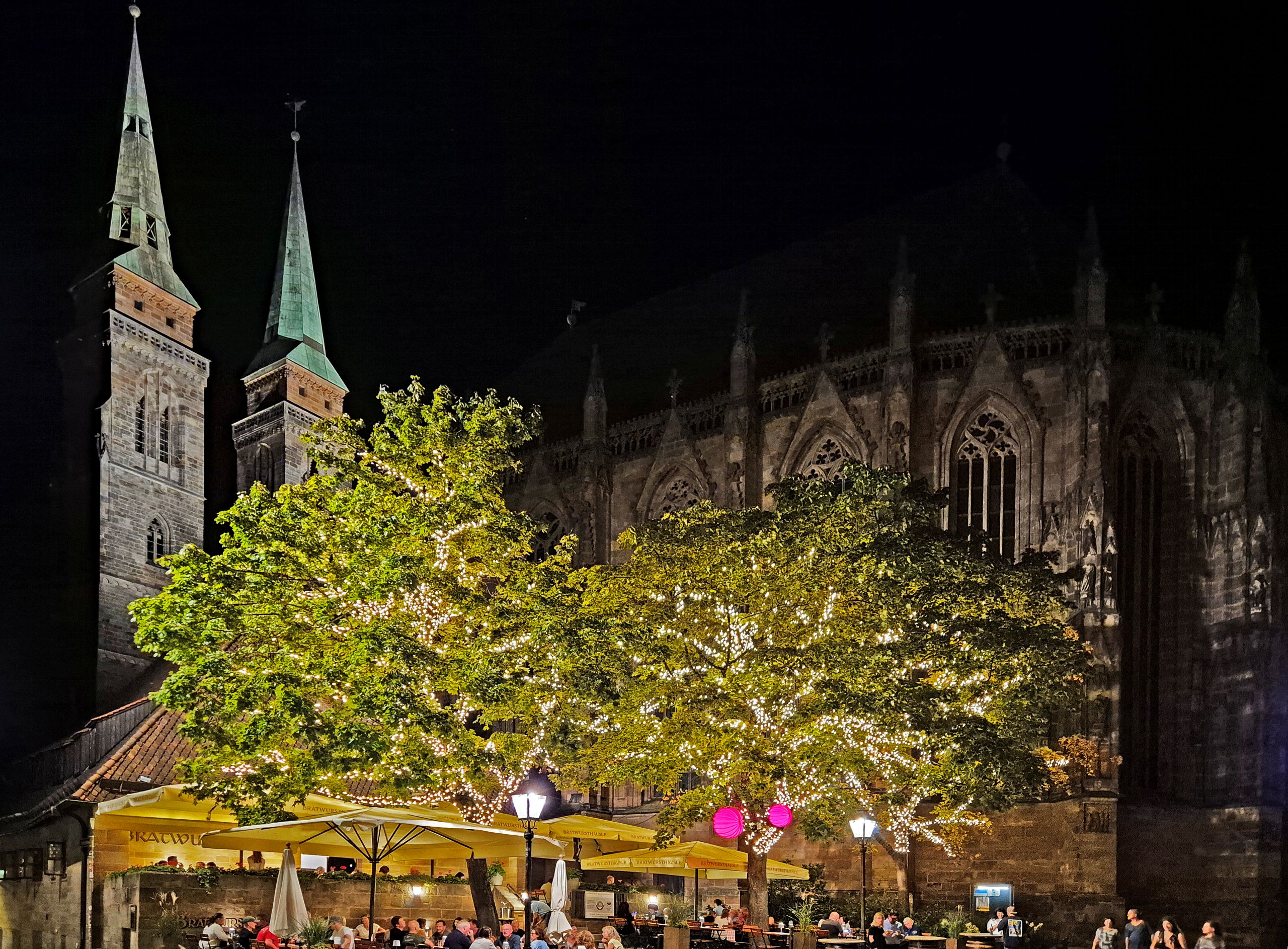
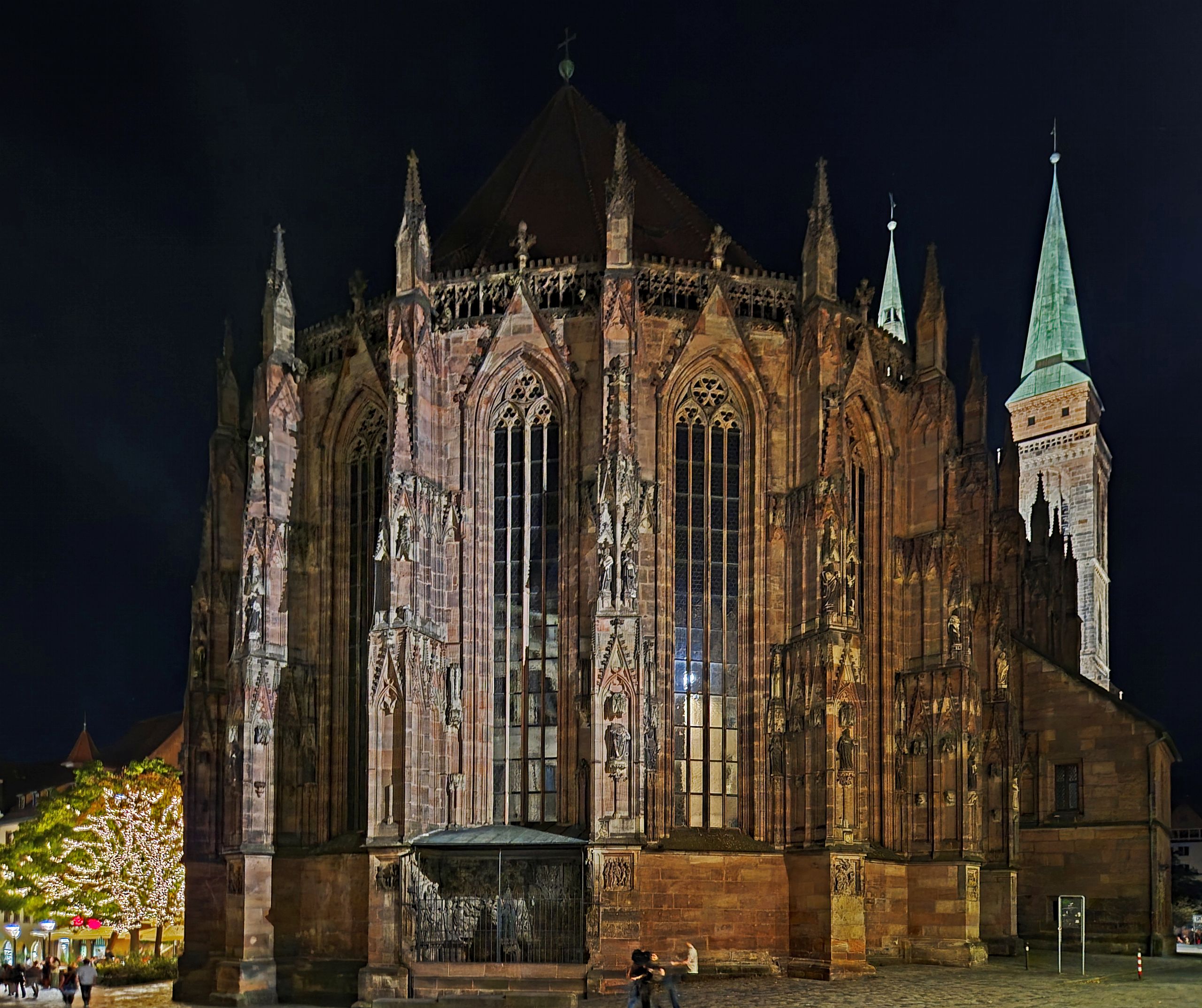
There, the Old City Hall awaited us with the monumental Wolff’scher Bau. Its mighty Renaissance facade, influenced by early 17th-century Italian architecture, rose majestically above the cobblestones. The baroque portals and the striking corner tower looked almost three-dimensional in the illumination. Just a few steps further opened up the Sebalder Platz, where the mighty Sebalduskirche (St. Sebald Church) – the city’s oldest Evangelical Lutheran parish church – pierced the night sky. Against the backdrop of its late gothic hall choir and Romanesque twin towers, fairy lights twinkled in the trees. Directly beneath them, the aroma of Nuremberg specialties wafted from the Bratwursthäusle while passersby celebrated the mild night.
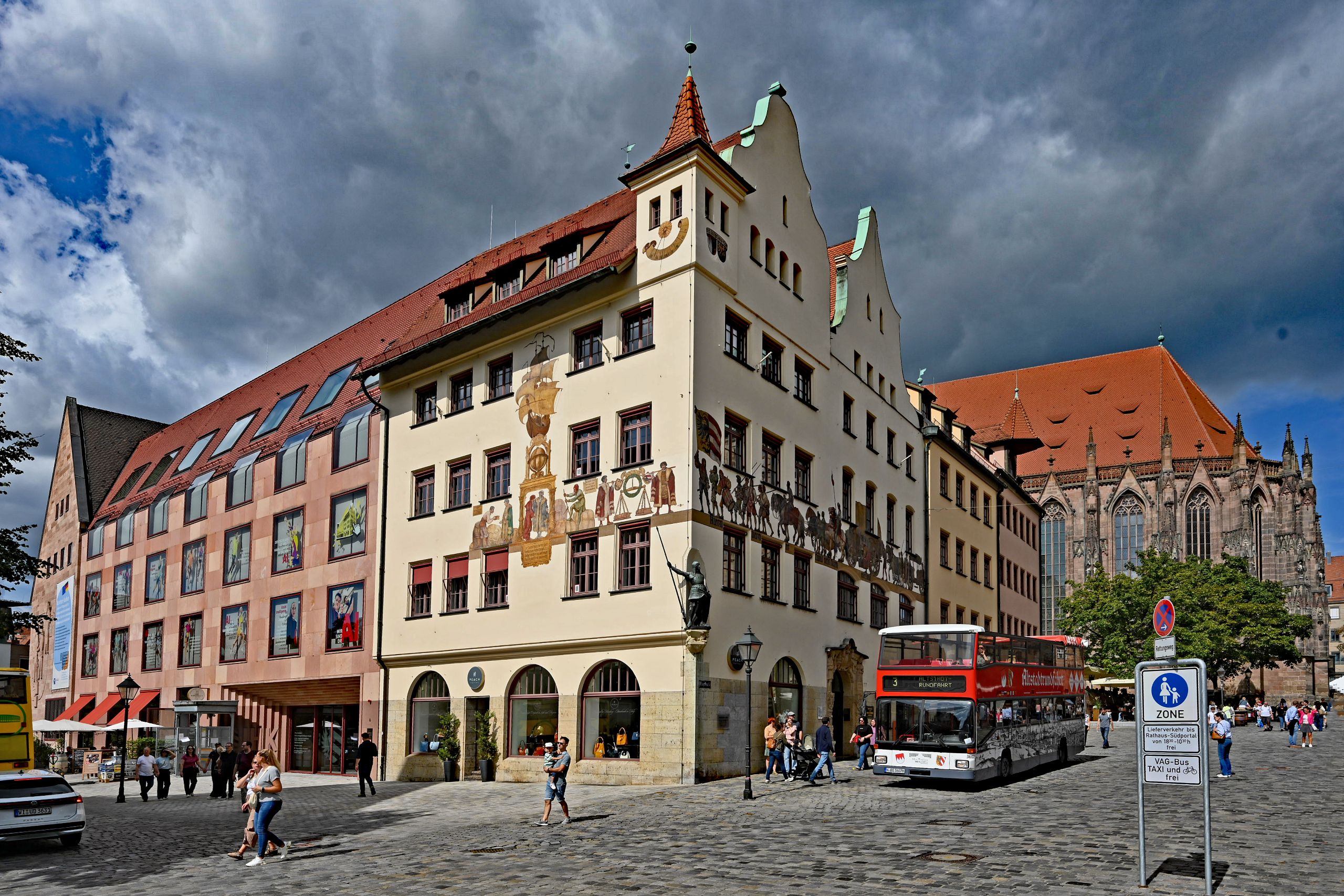
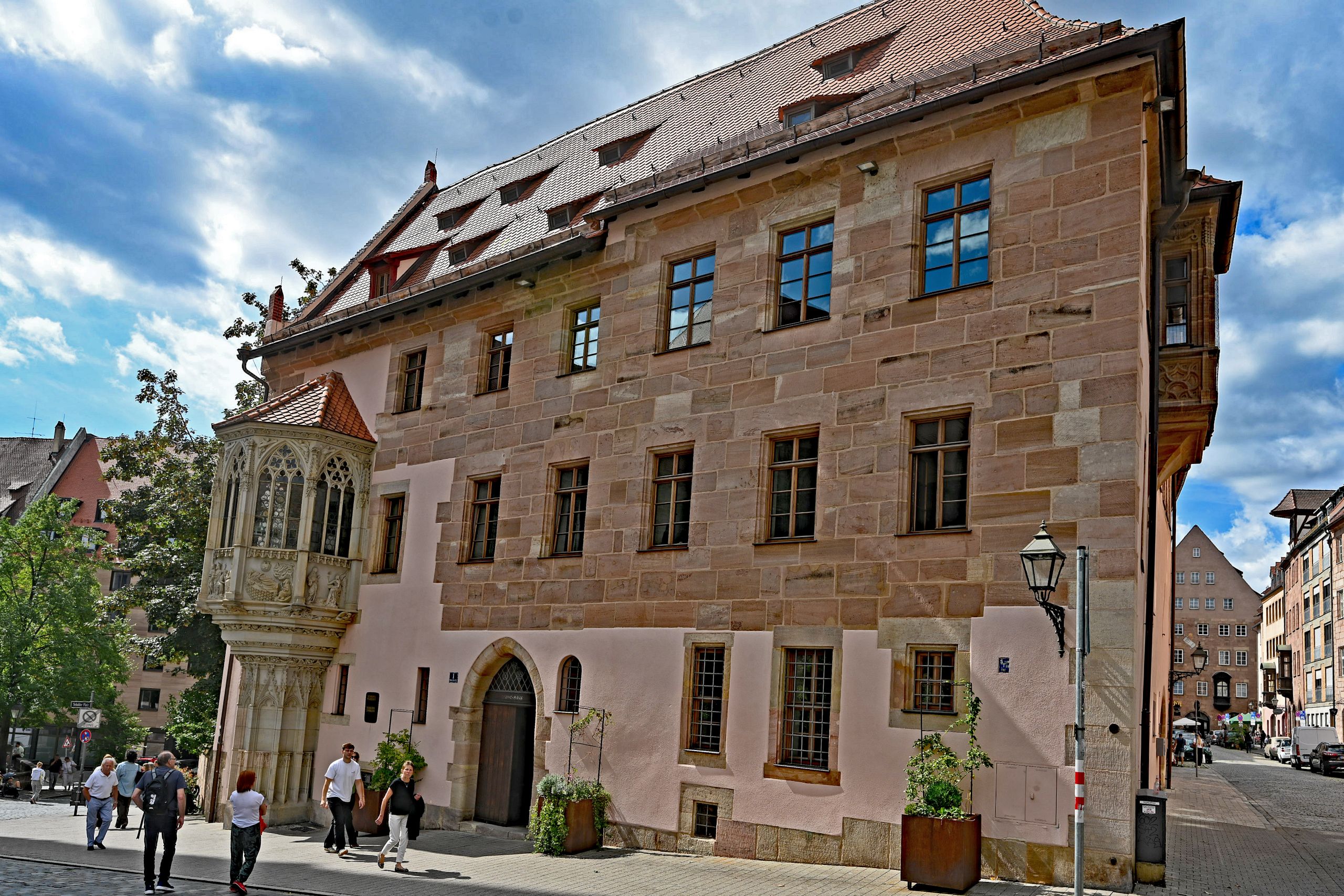
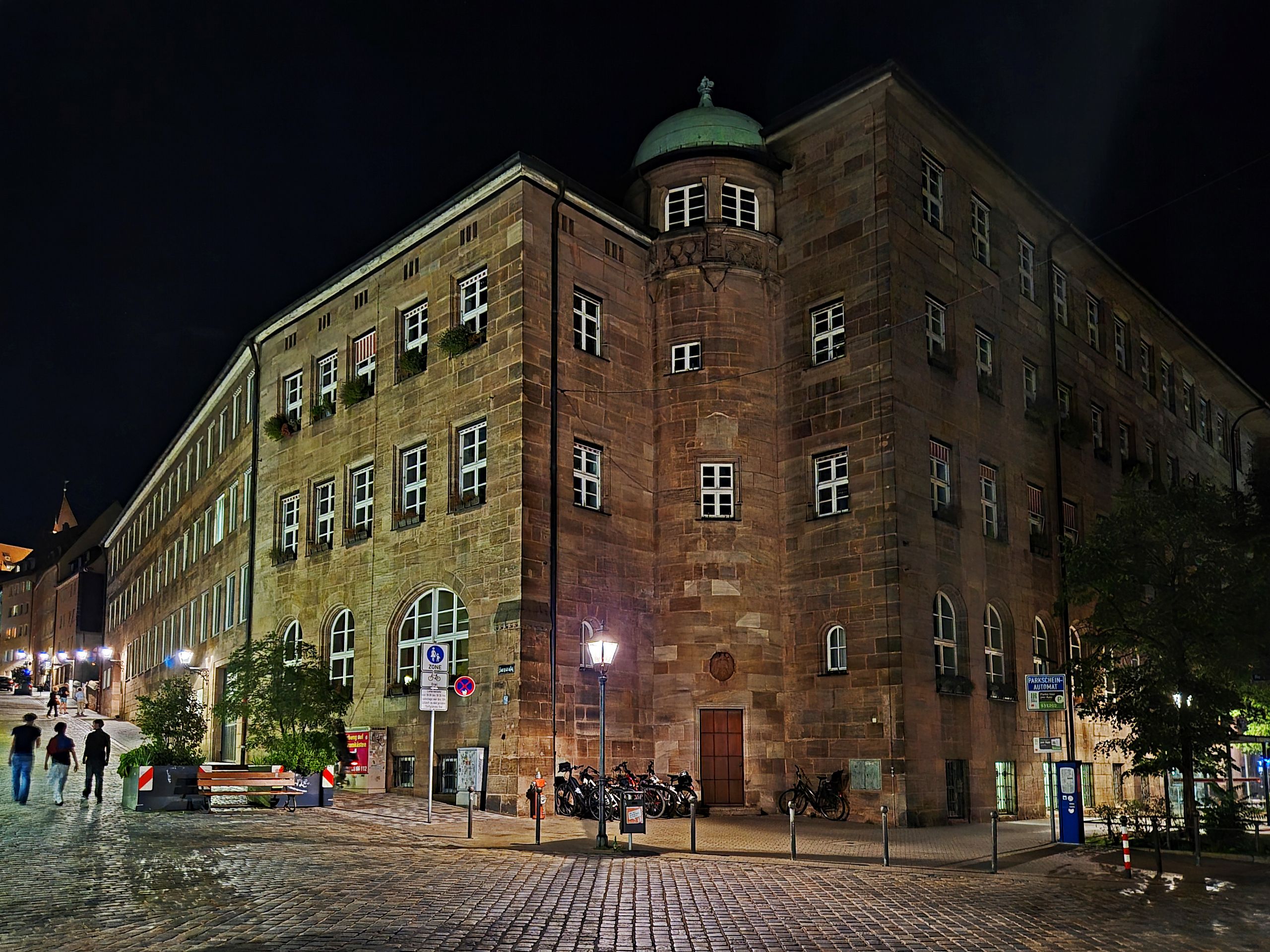
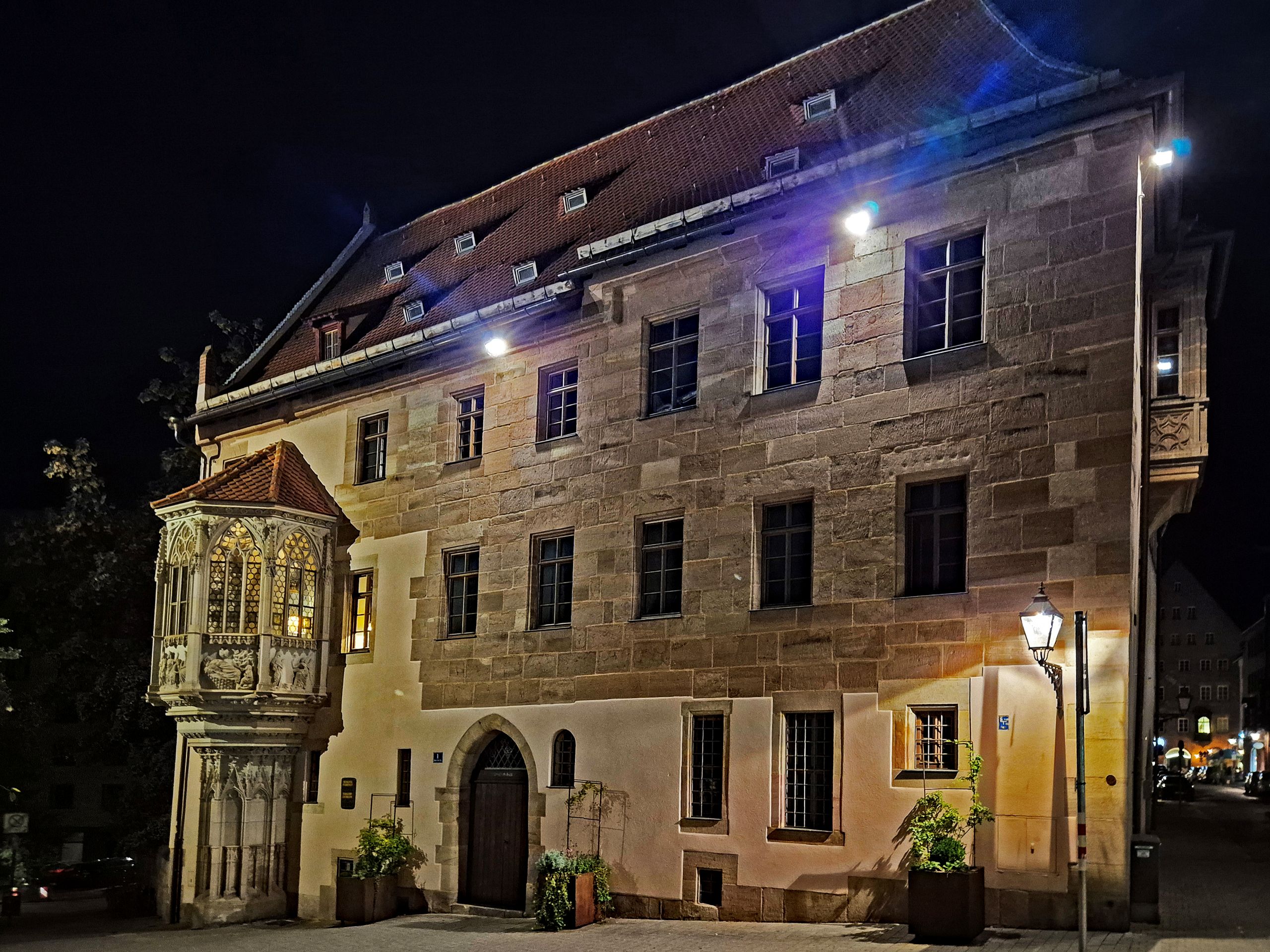
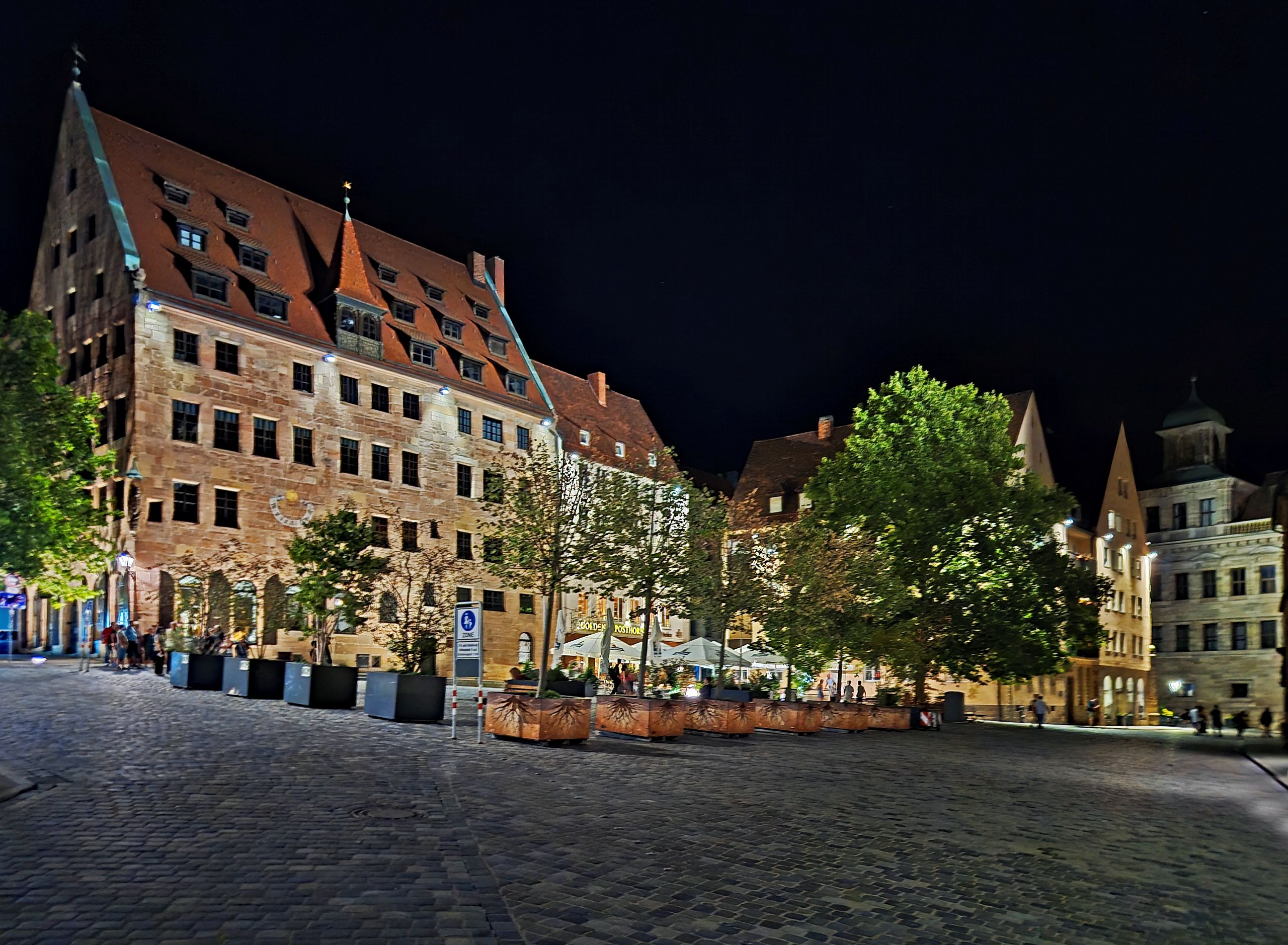
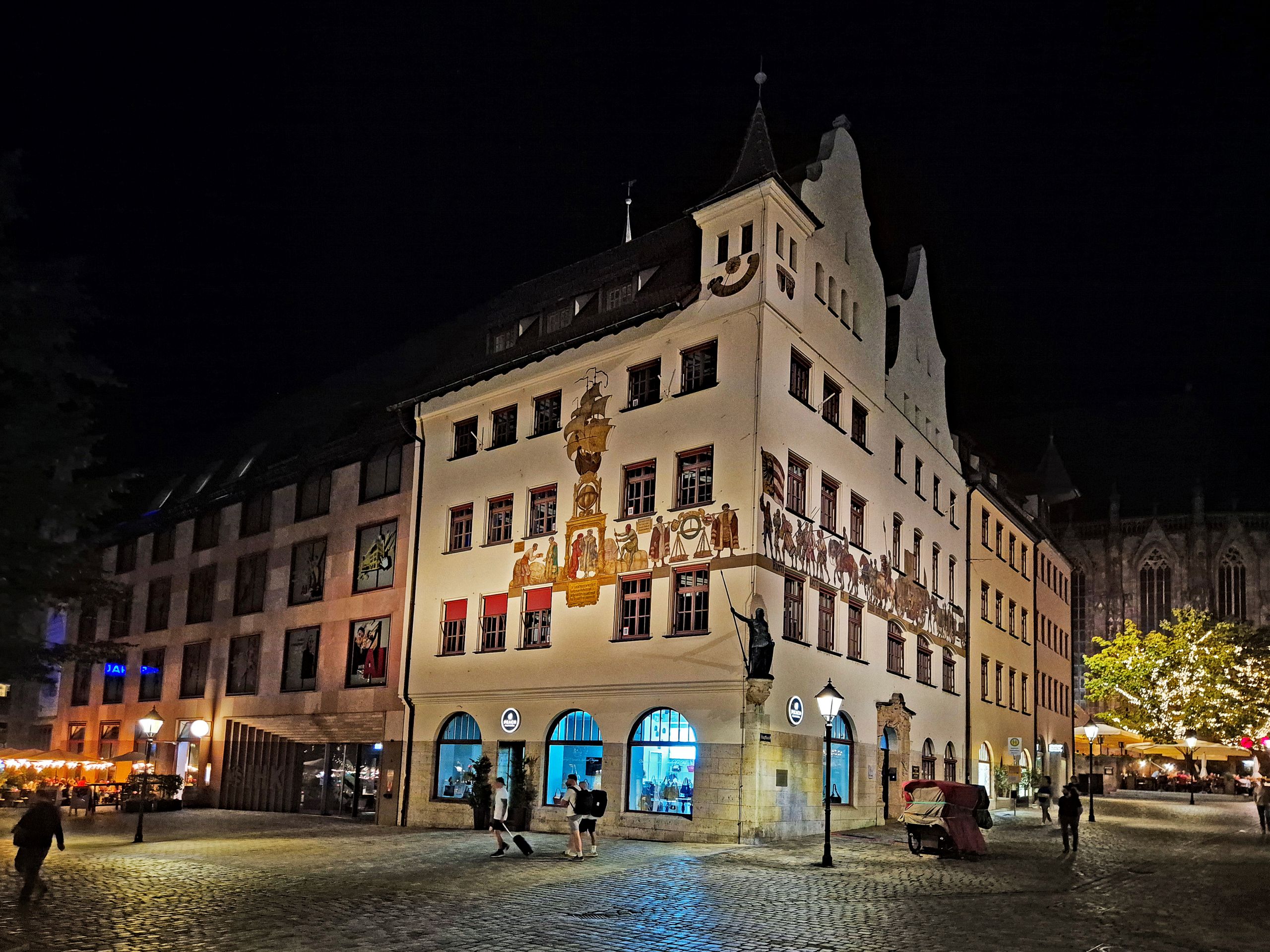
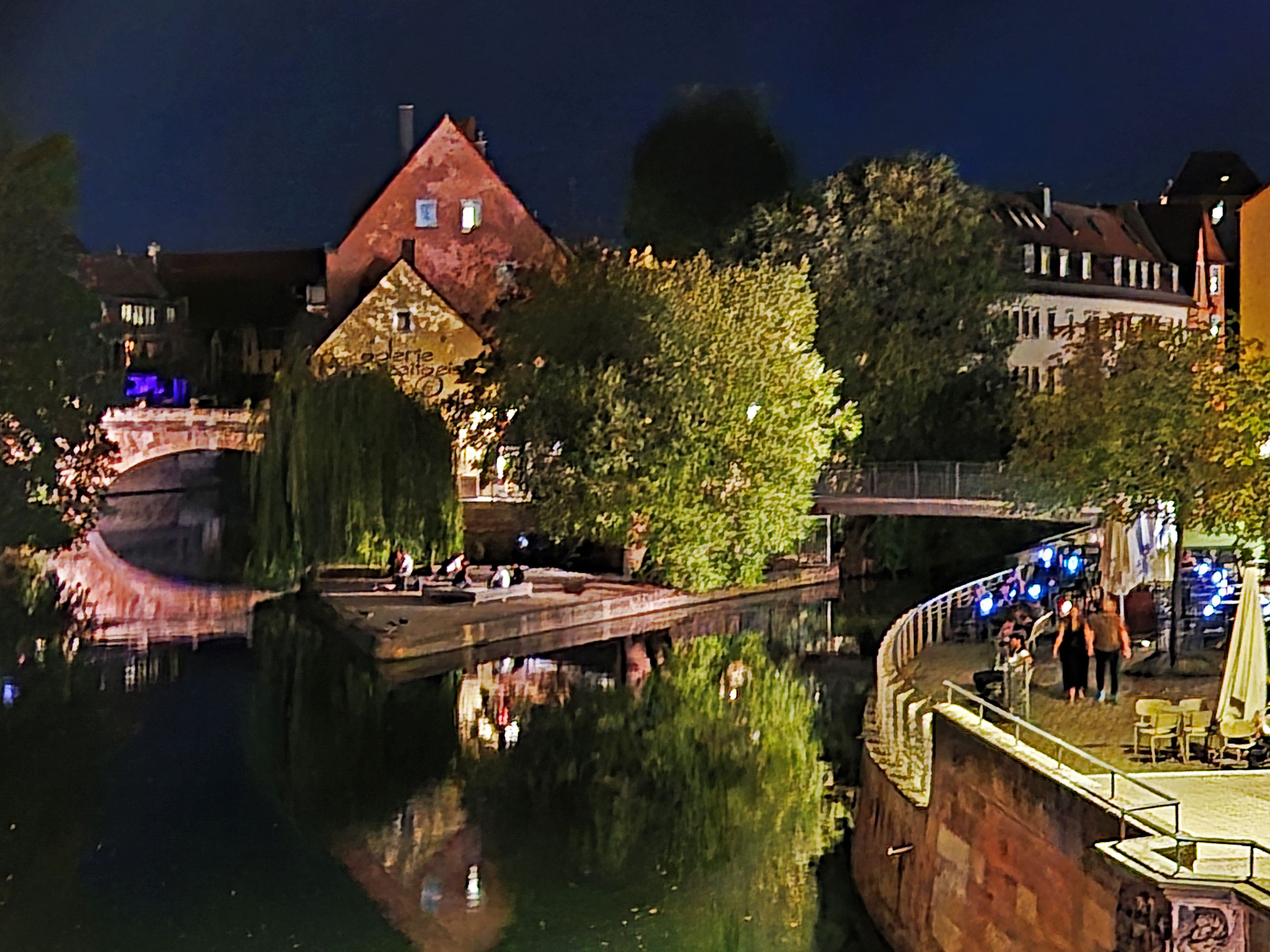
We continued our way through Theresienstraße, where the monumental municipal office building made of Burgsandstein (castle sandstone) radiated an almost mystical calm with its copper-roofed corner bay window. Shortly afterwards, we stood in front of the Sebalder Pfarrhof (St. Sebald Rectory). Its gothic Chörlein, a masterfully decorated oriel window from the 14th century, drew everyone’s gaze. Across the spacious Albrecht-Dürer-Platz with the magnificent, gothic Schürstabhaus, our path led us back to the Hauptmarkt. The Haus der Wirtschaft (House of Commerce), headquarters of the IHK, shone towards us with its artistic mural of the Nuremberg merchant train. To conclude this magical evening, we listened to the gentle rustling of the Pegnitz River at the Liebesinsel (Love Island), where the lights of the Maxbrücke and the Karlssteg bridges reflected romantically in the dark water.
🌌 Gallery: Nuremberg’s Magic of Lights by Night
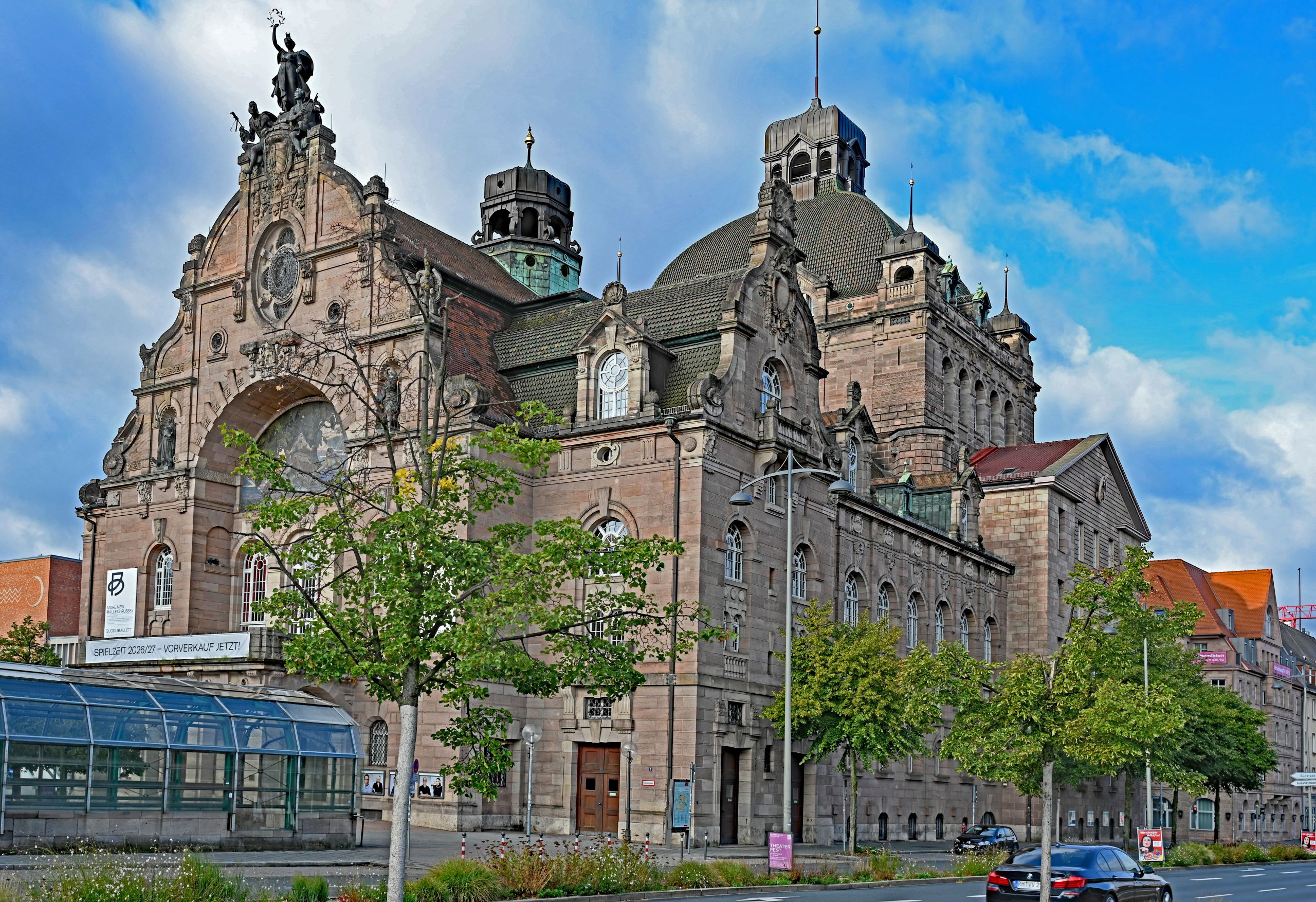
The next morning we woke up full of anticipation. For our day trip, we deliberately chose a different access point to the Old Town from the southern side. Our first destination was the Opera House of the Staatstheater Nürnberg (Nuremberg State Theatre) on Frauentorgraben. This magnificent monumental building from the early 20th century impressed us in the bright daylight with its detailed Art Nouveau facade, the curved gable, and the massive stage tower made of Nuremberg sandstone.
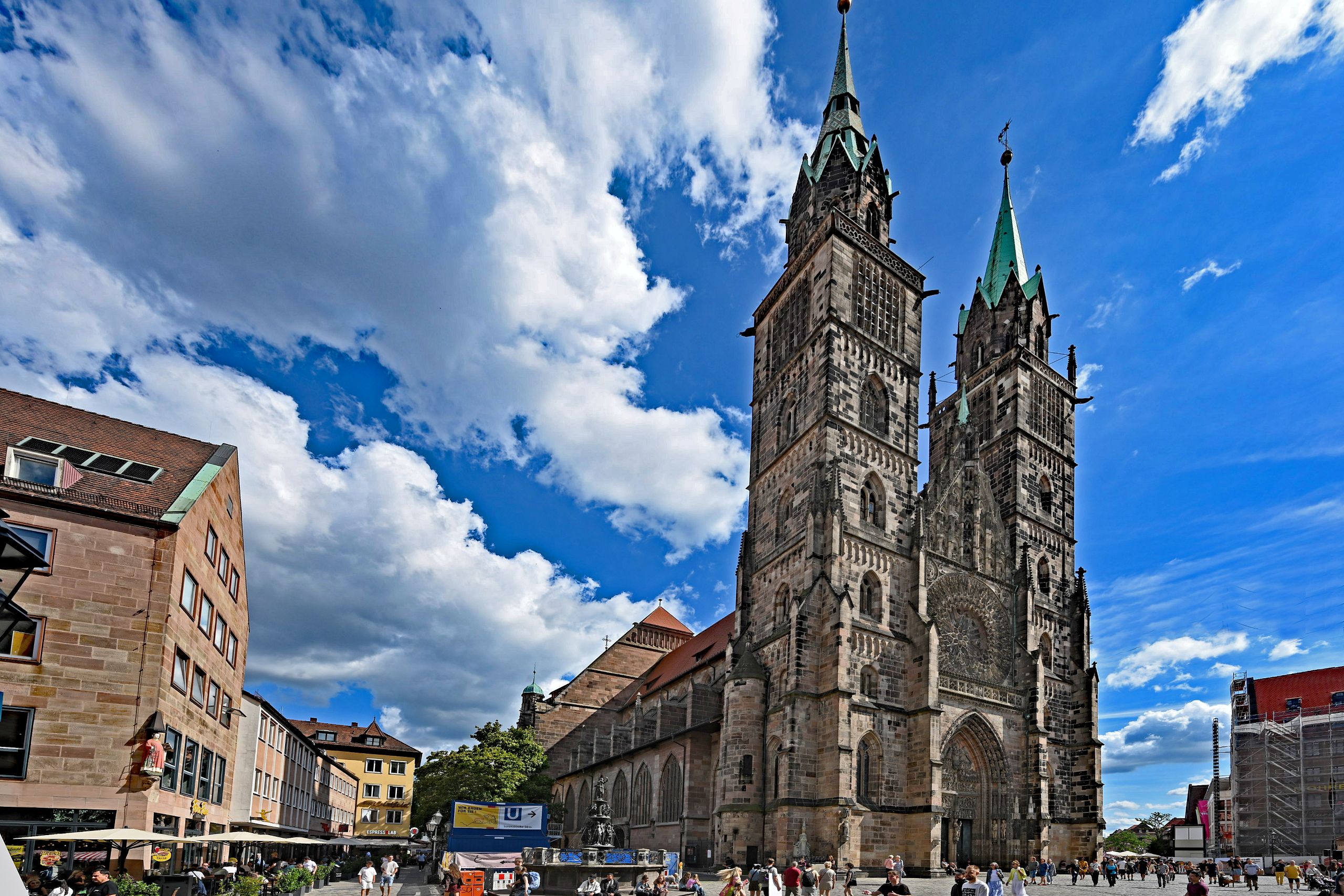
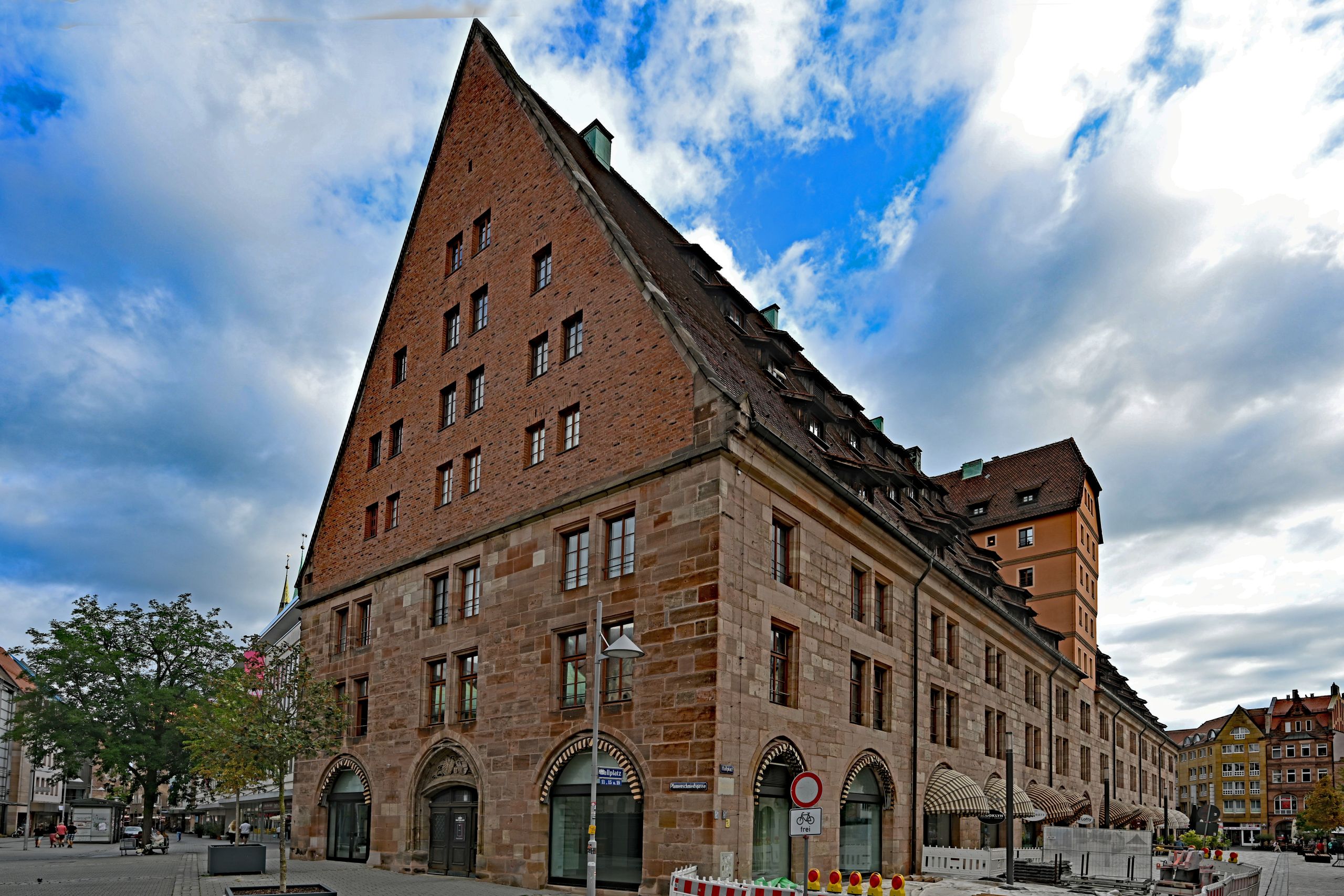
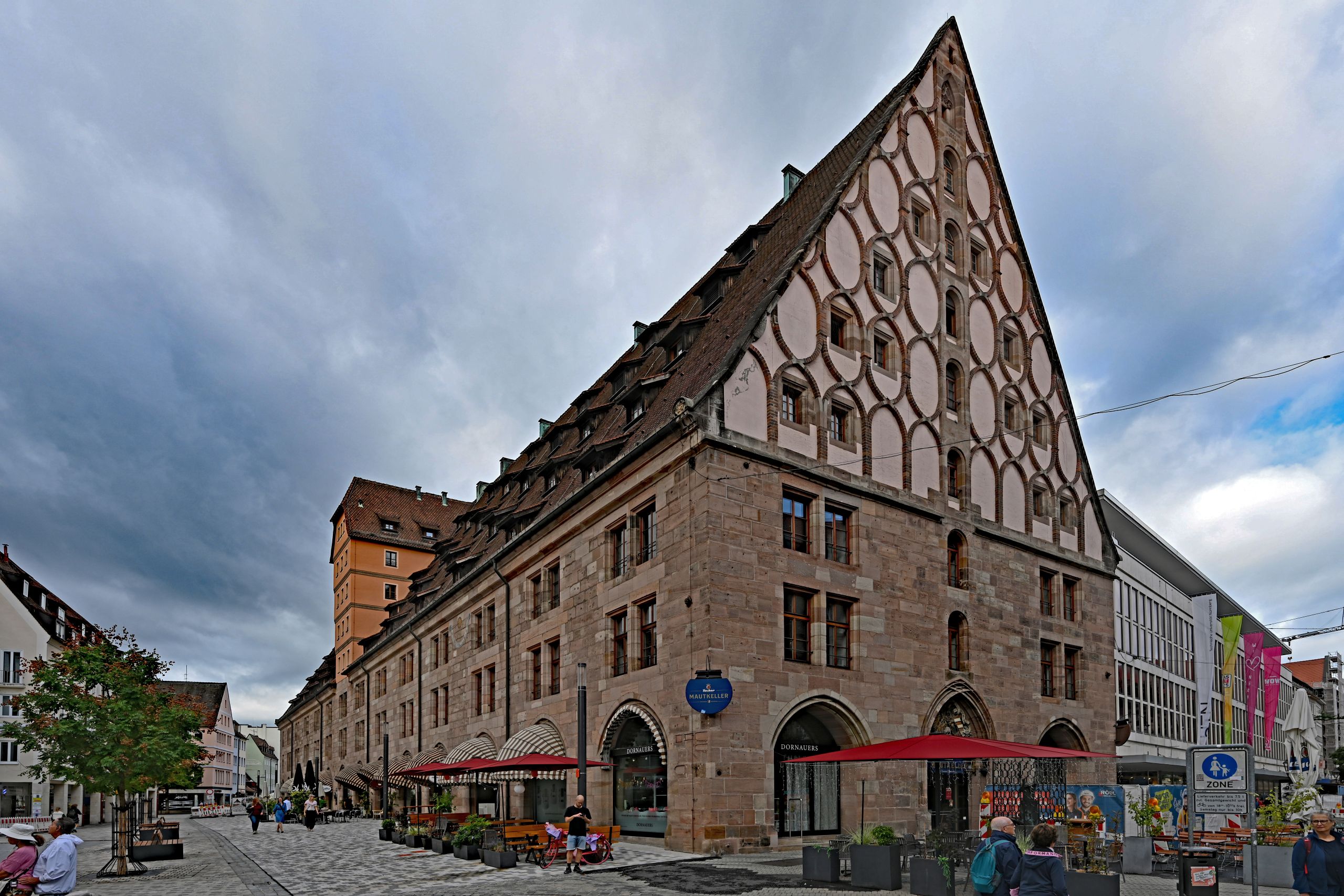
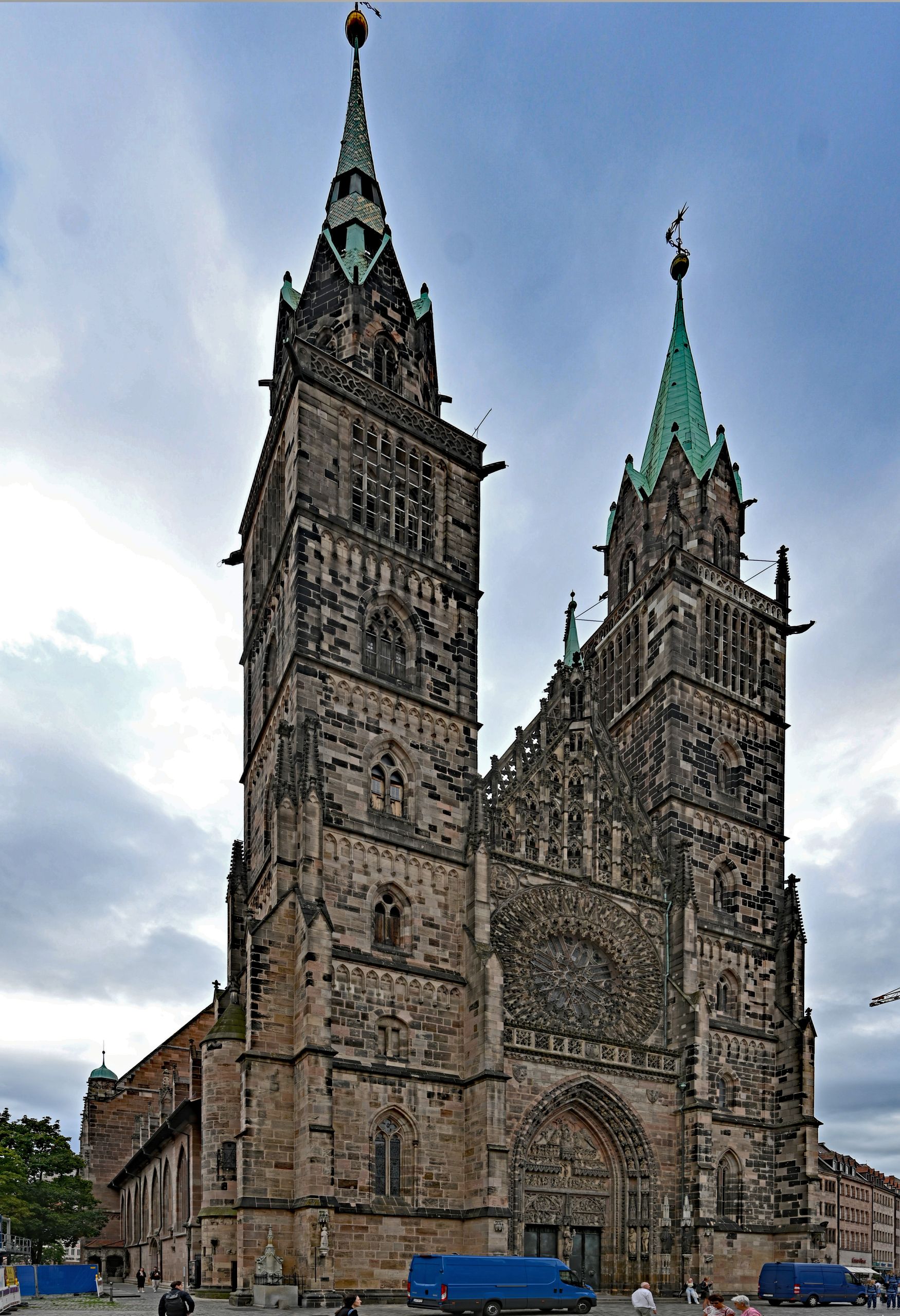
Upon entering the Lorenzer Altstadt (Lorenz Old Town), we soon came across the Mauthalle (Customs Hall) on Hallplatz. Built between 1498 and 1502, this masterpiece by Hans Beheim the Elder was once the city’s largest granary and salt warehouse. The massive, six-story pitched roof looked particularly fascinating. As we walked around the building, we recognized the net-like blind arches in the gable on the east side, which were formerly used for ventilating the grain. On the nearby Königstraße, we passed the traditional Hotel “Deutscher Kaiser”, whose red Neo-Renaissance facade with its delicate oriel windows glowed in the morning light. Finally, we stood before the monumental west facade of St. Lorenz. The twin towers of the gothic parish church, rising over 80 meters high, towered proudly, while the huge stone rose window above the main portal sparkled in the sunlight.
☀️ Gallery: Morning Stroll through the Lorenzer Altstadt

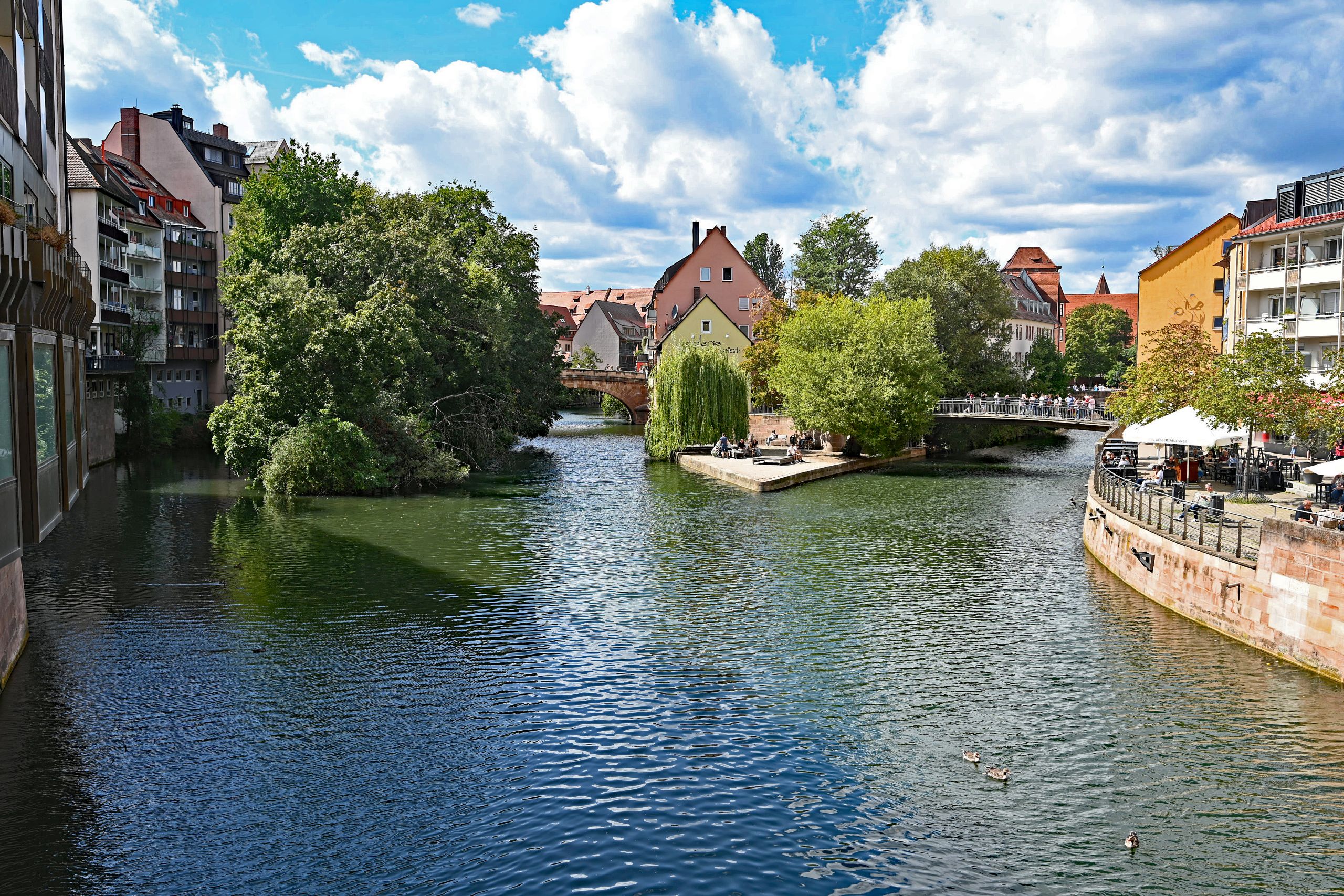
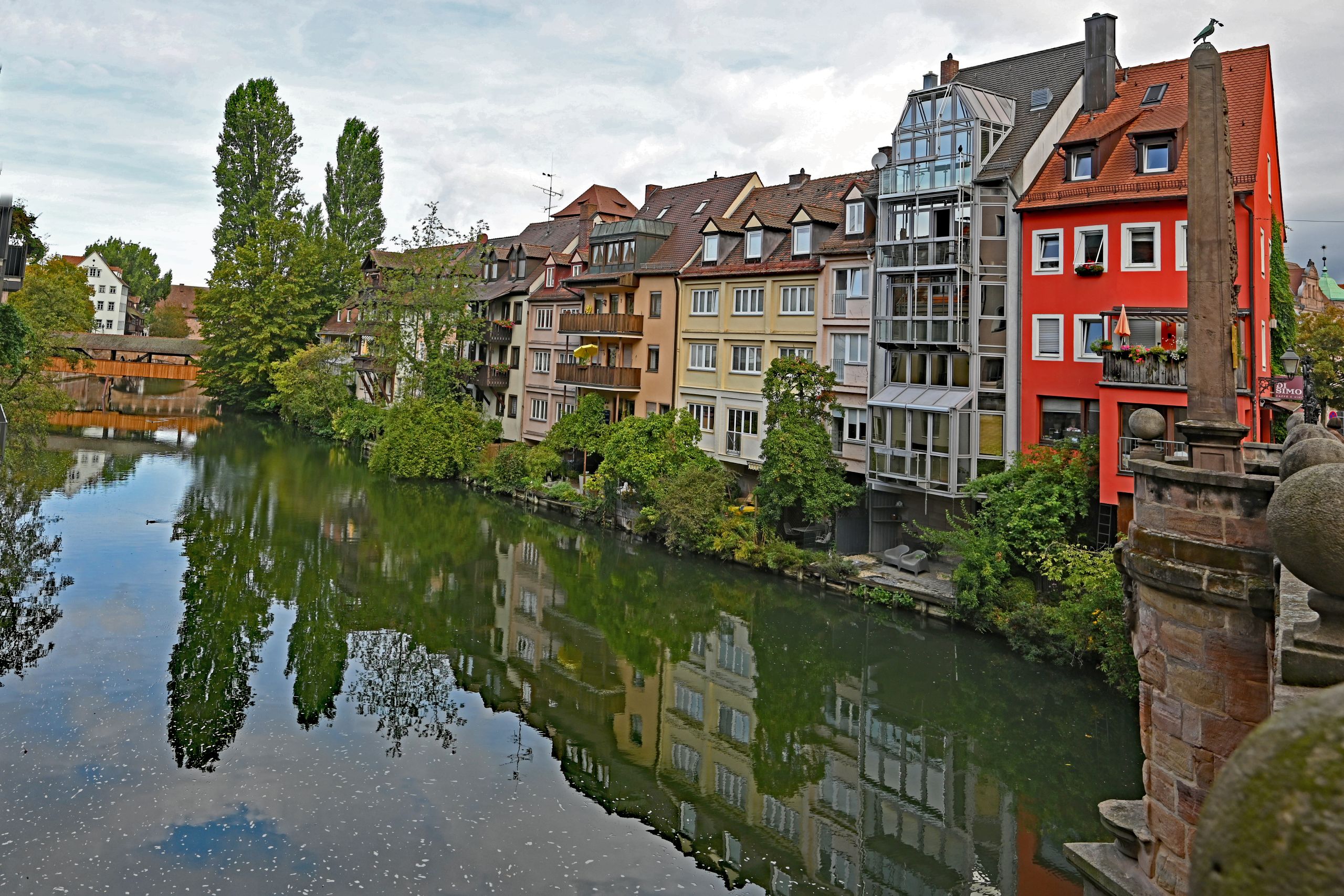
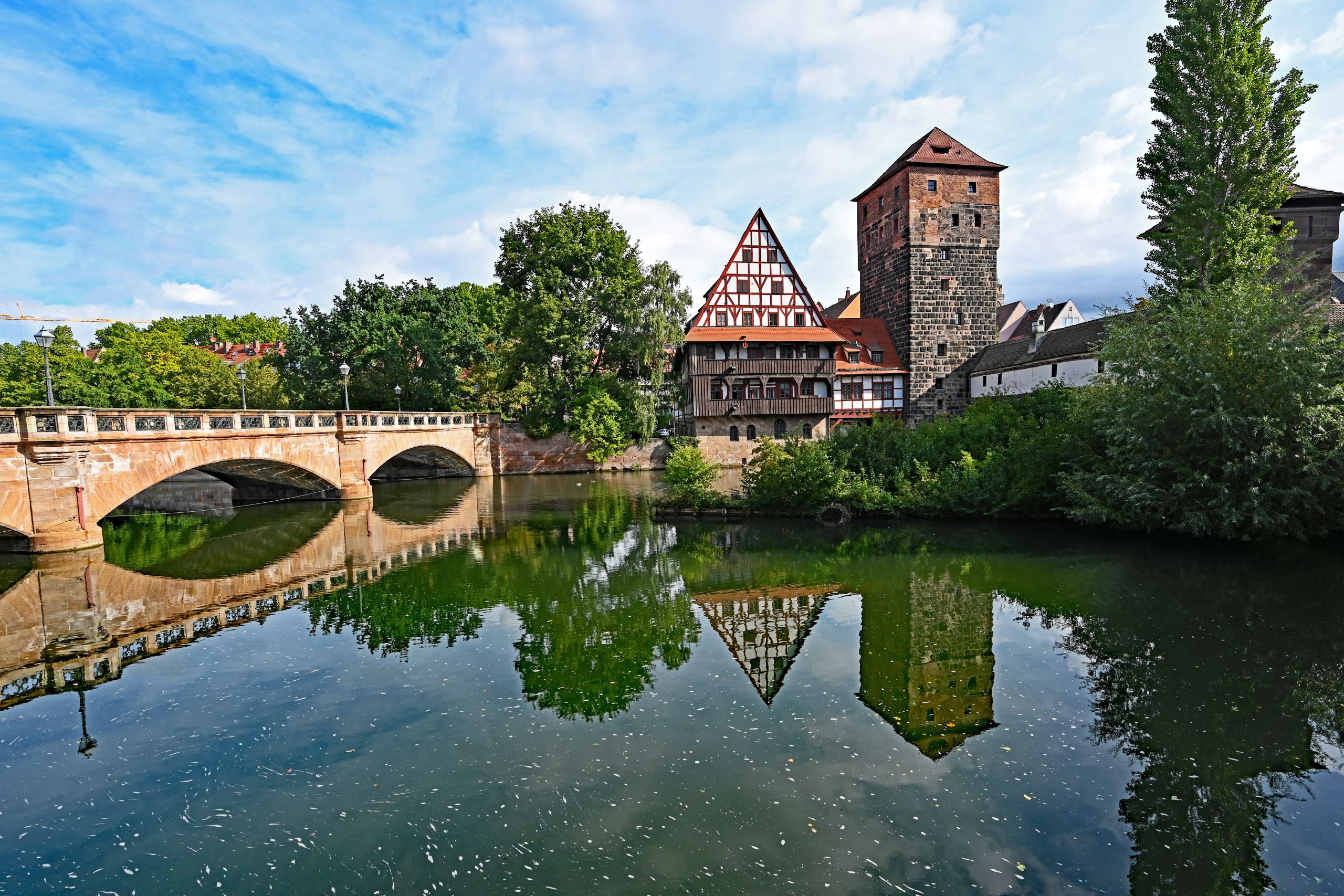
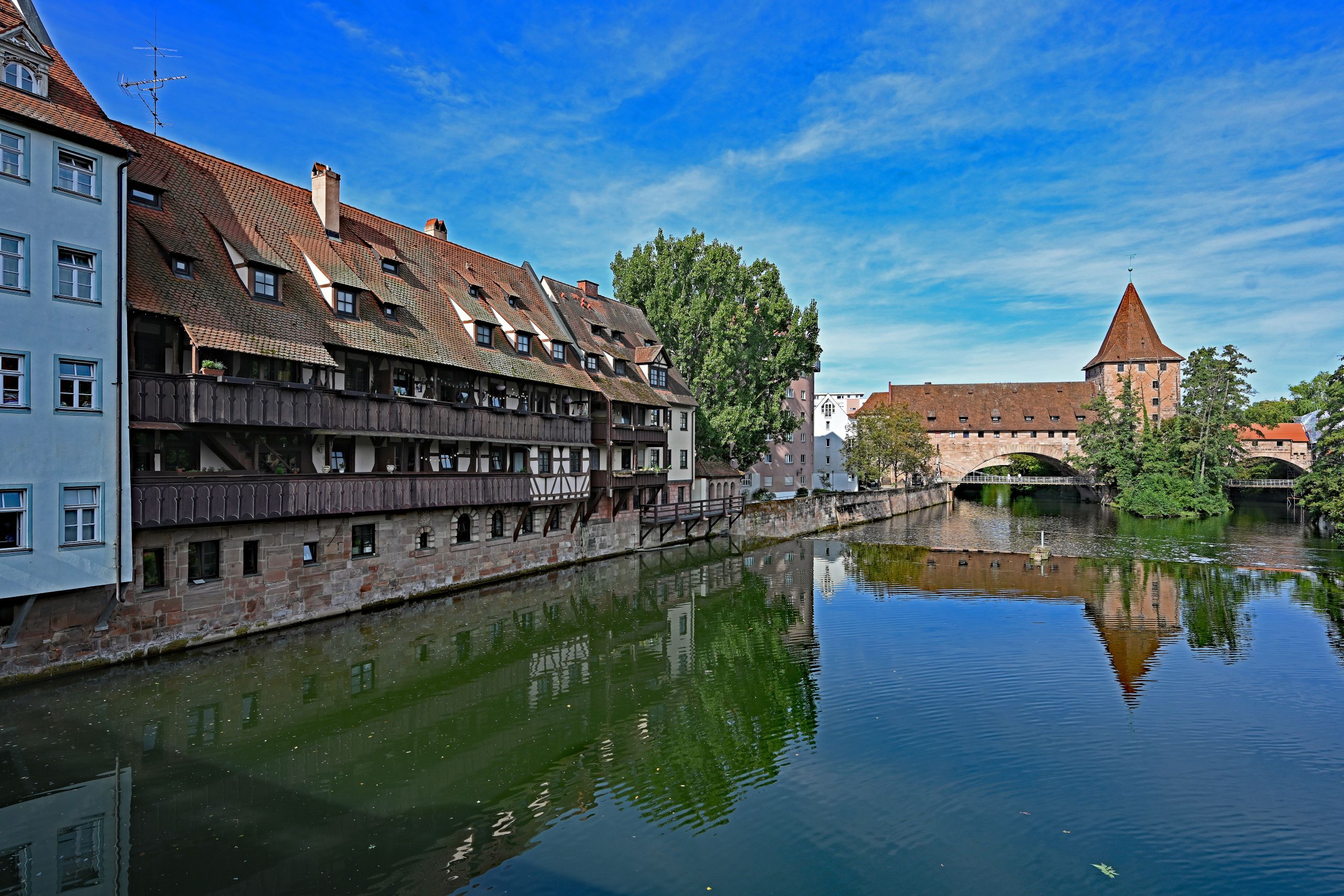
Our path now led us over to the Pegnitz River. From the Museumsbrücke (Museum Bridge), we enjoyed the picturesque view downstream, where historic facades and thick green trees reflected in the water. Further upstream, the world-famous ensemble of the mighty Wasserturm (Water Tower) and the Weinstadel (Wine Depot) presented itself – one of the largest timber-framed houses in Germany, built in the 15th century as a leper house. Directly next to it, the stone Maxbrücke bridge spanned the river elegantly. On the other side of the Museumsbrücke, the wooden Henkersteg (Hangman’s Bridge) with the fortified Henkerturm (Hangman’s Tower) came into view, as well as the picturesque timber-framed houses of Unschlittplatz, whose wooden galleries tower directly over the water.
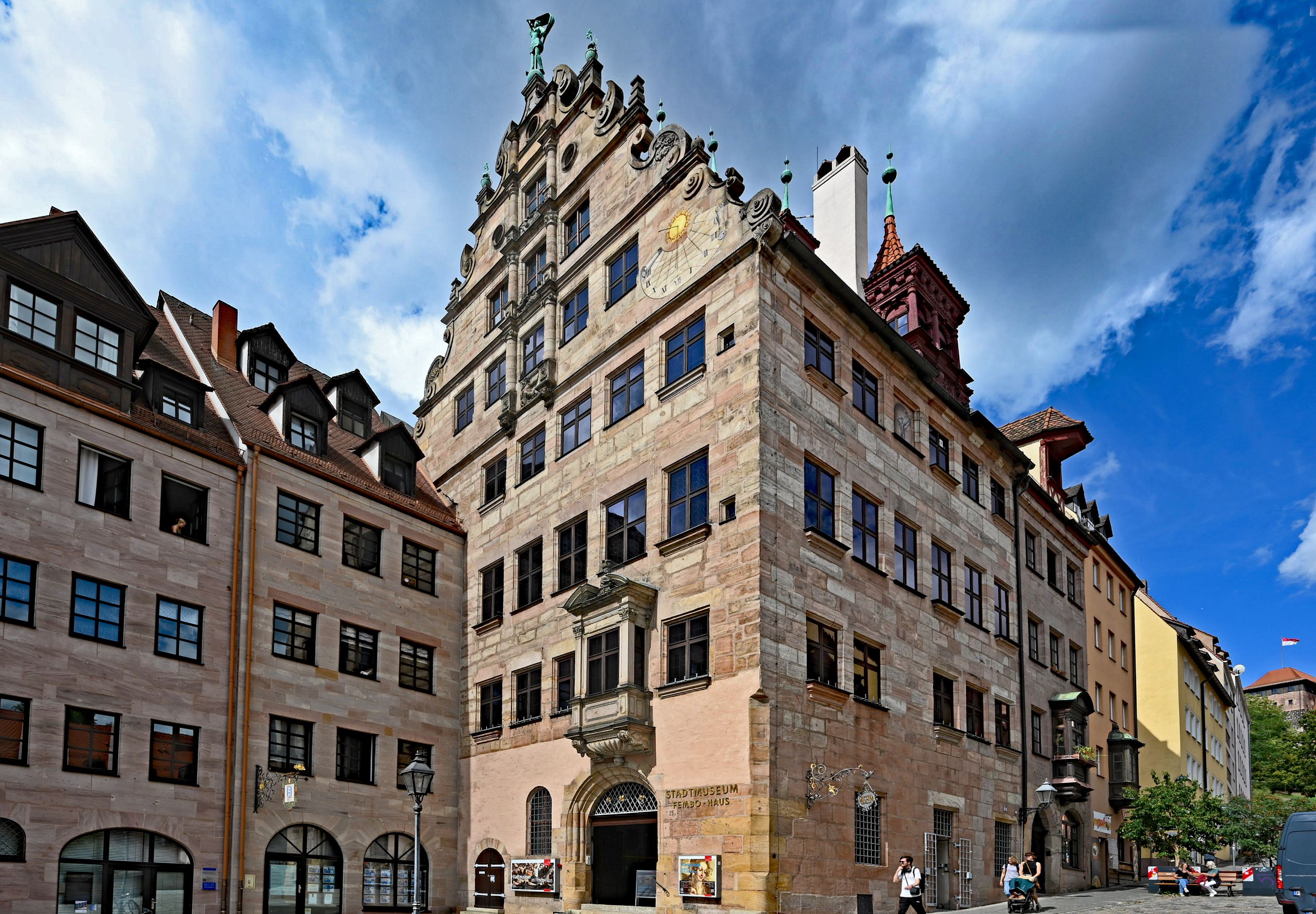
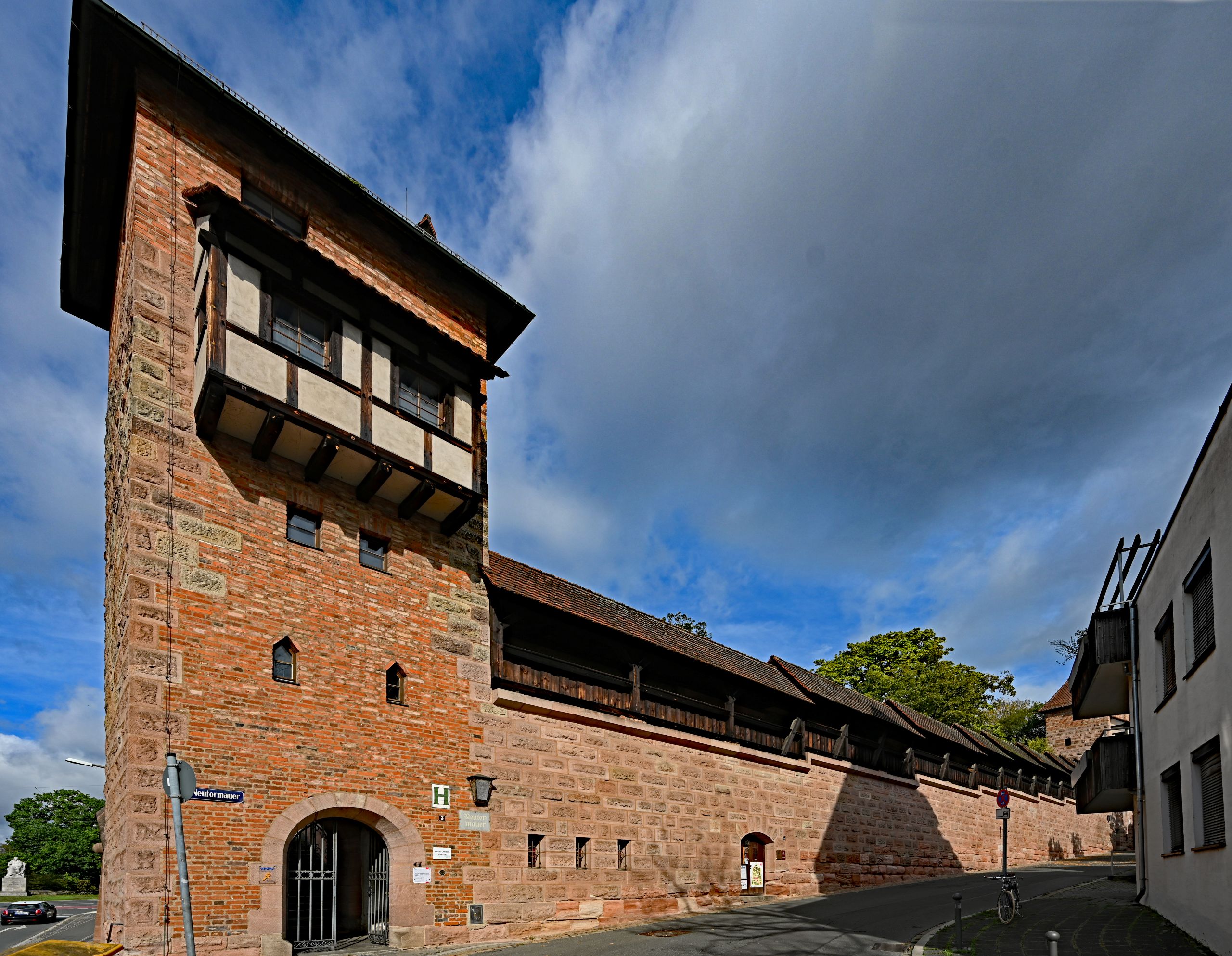
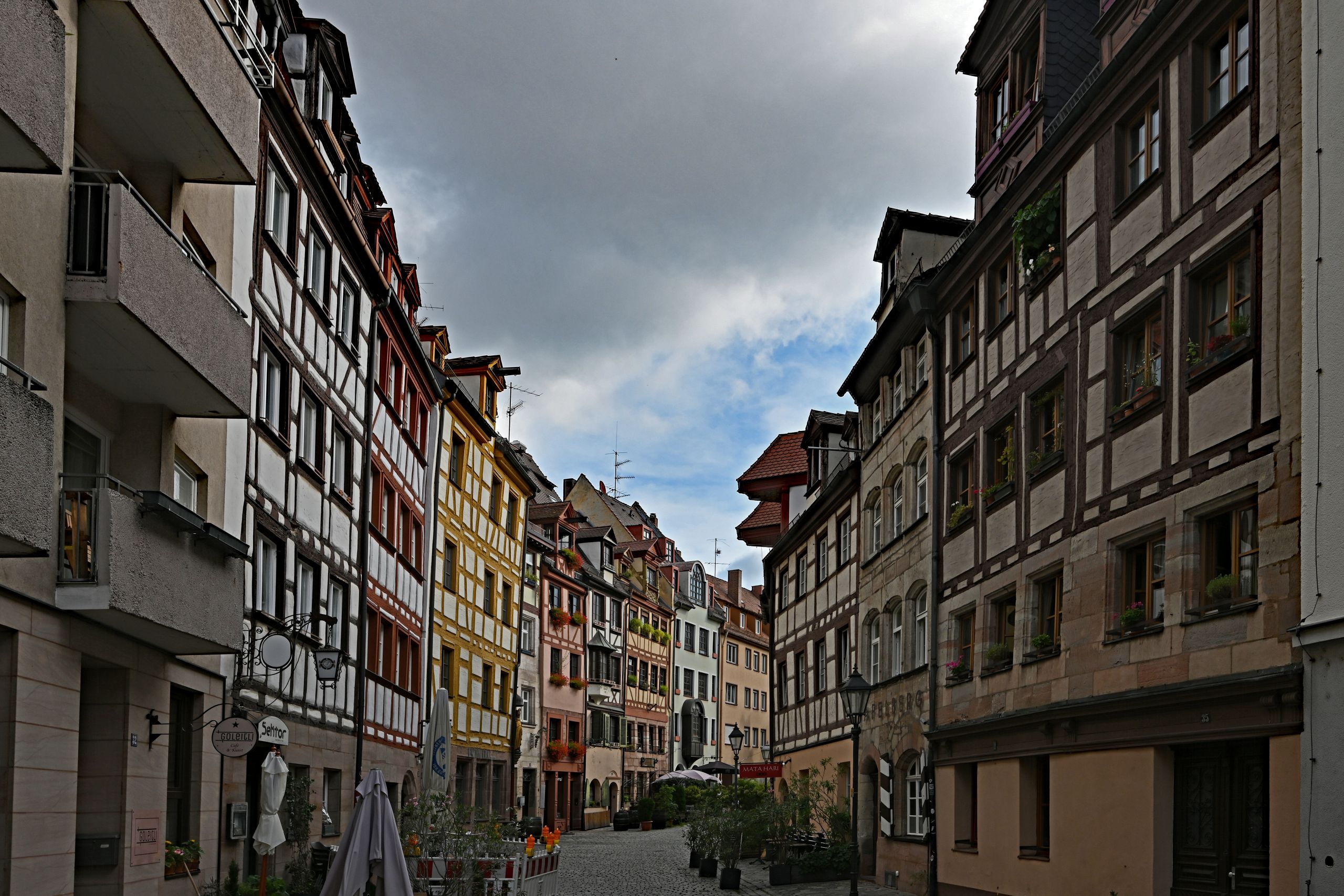
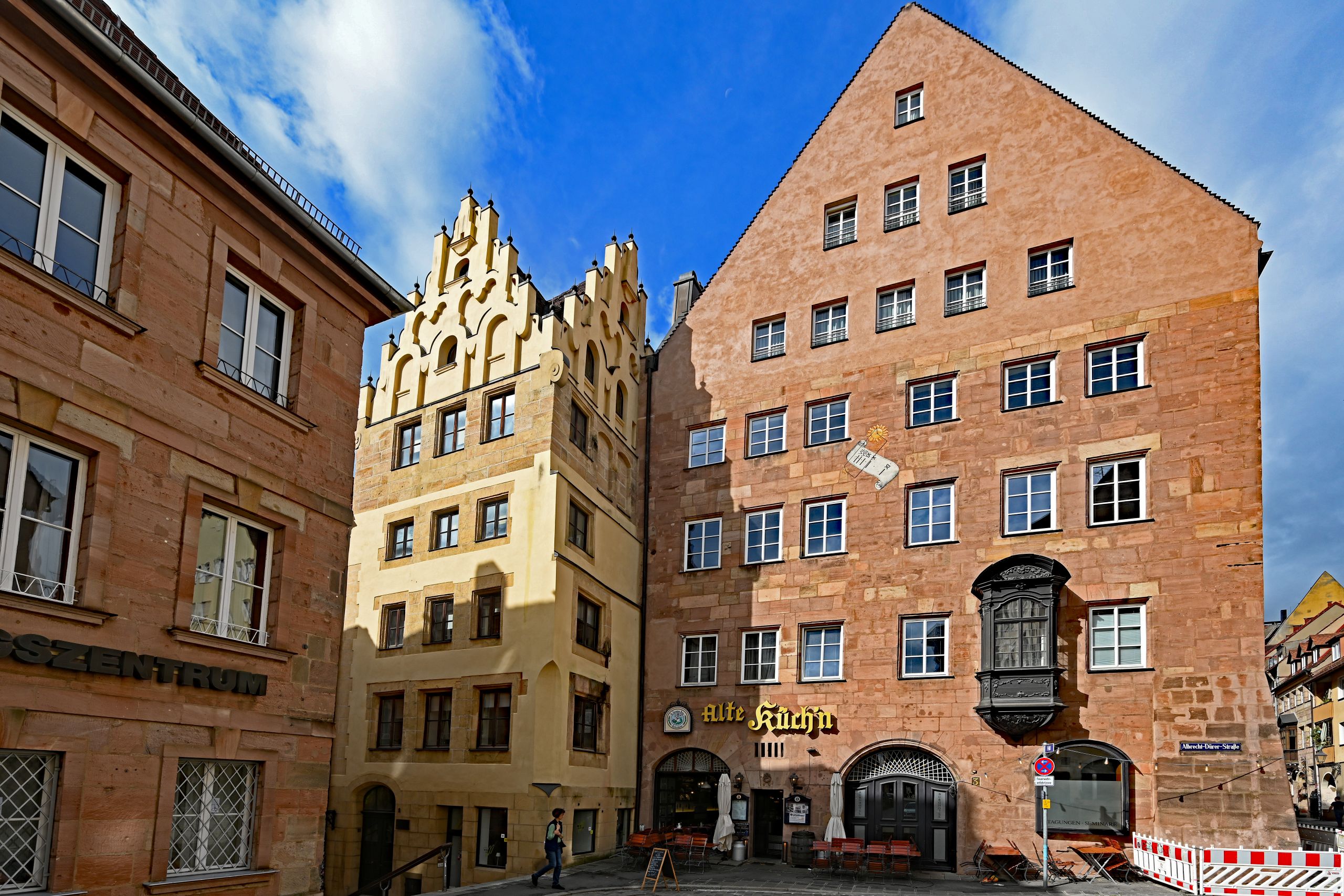
We left the riverbank and followed the historic town wall along the Neutormauer, where the Schulthurm (Debt Tower) with its mix of sandstone and timber framing demonstrated Nuremberg’s medieval defensiveness. From there, we turned into the famous Weißgerbergasse (Tanners’ Lane). It was a sublime moment to wander through this cobblestone alley, which is almost completely lined with magnificent, colorful timber-framed houses – a living testimony to the old artisans’ quarter. At Albrecht-Dürer-Platz, we admired the Stadtmuseum Fembohaus (Fembo House City Museum), Nuremberg’s only surviving large merchant’s house from the Late Renaissance with its artistically curved volute gable, located directly next to the traditional tavern “Alte Küchn”.
🌊 Gallery: Along the Pegnitz and through the Historic Alleys
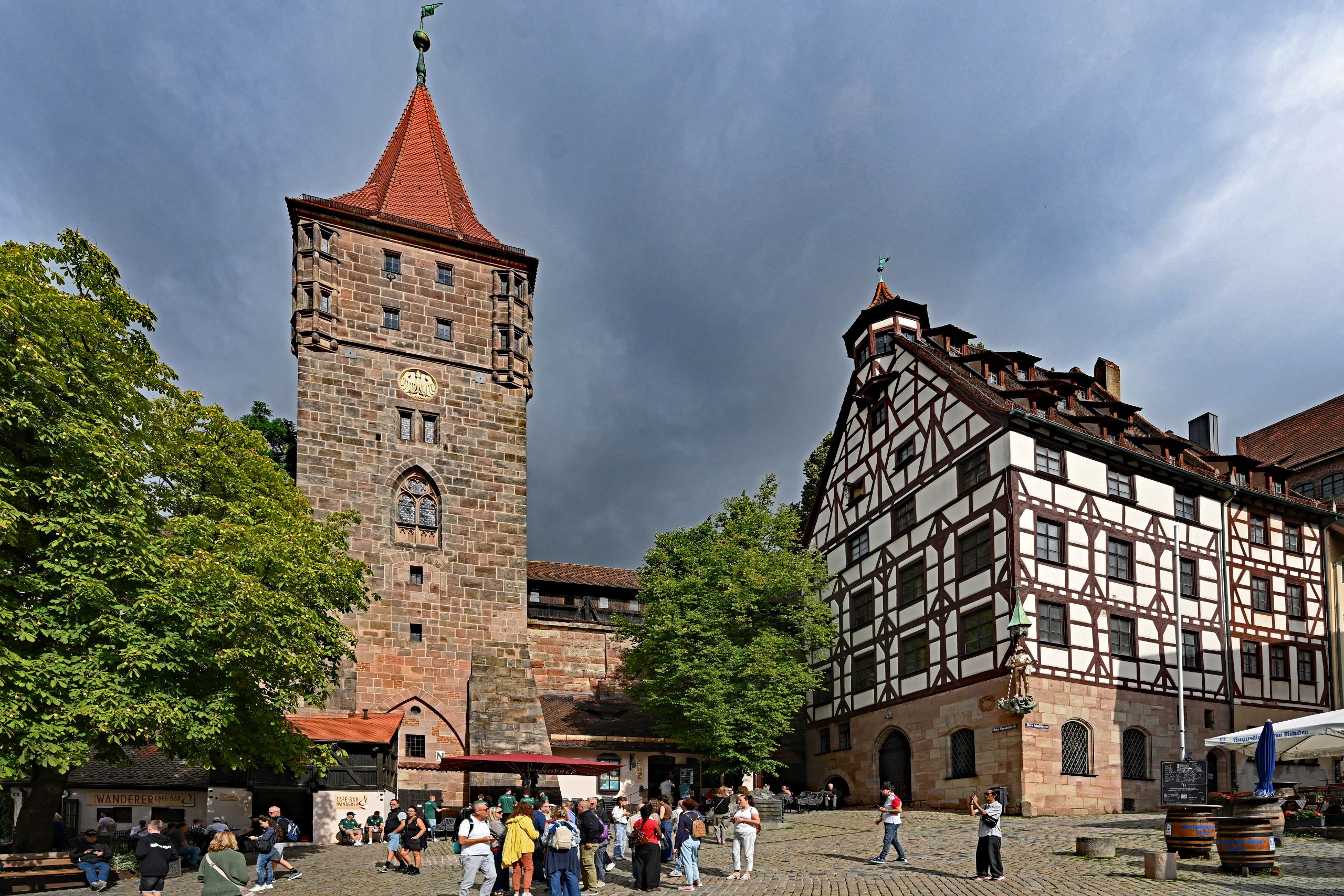
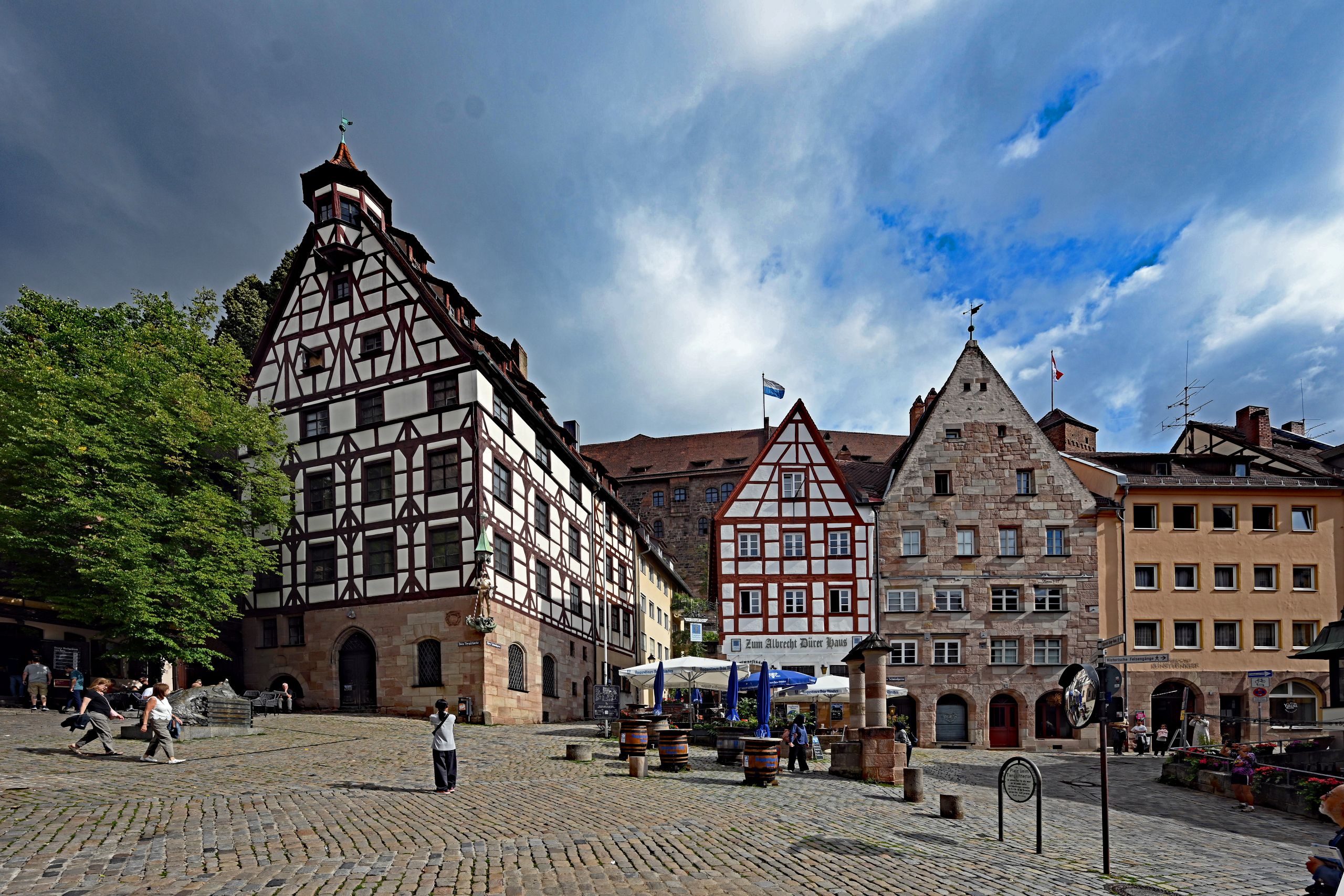
Now, of course, we purposefully made our way up to the castle. We took a short break at the historic Tiergärtnertorplatz. The square was framed by the square Tiergärtnertorturm tower, the late gothic Pilatushaus with its intricate timber-framed structure, and the majestic Albrecht-Dürer-Haus, the former residence of the genius. Above the square, the mighty defensive walls of the Kaiserburg (Imperial Castle) already rose high.
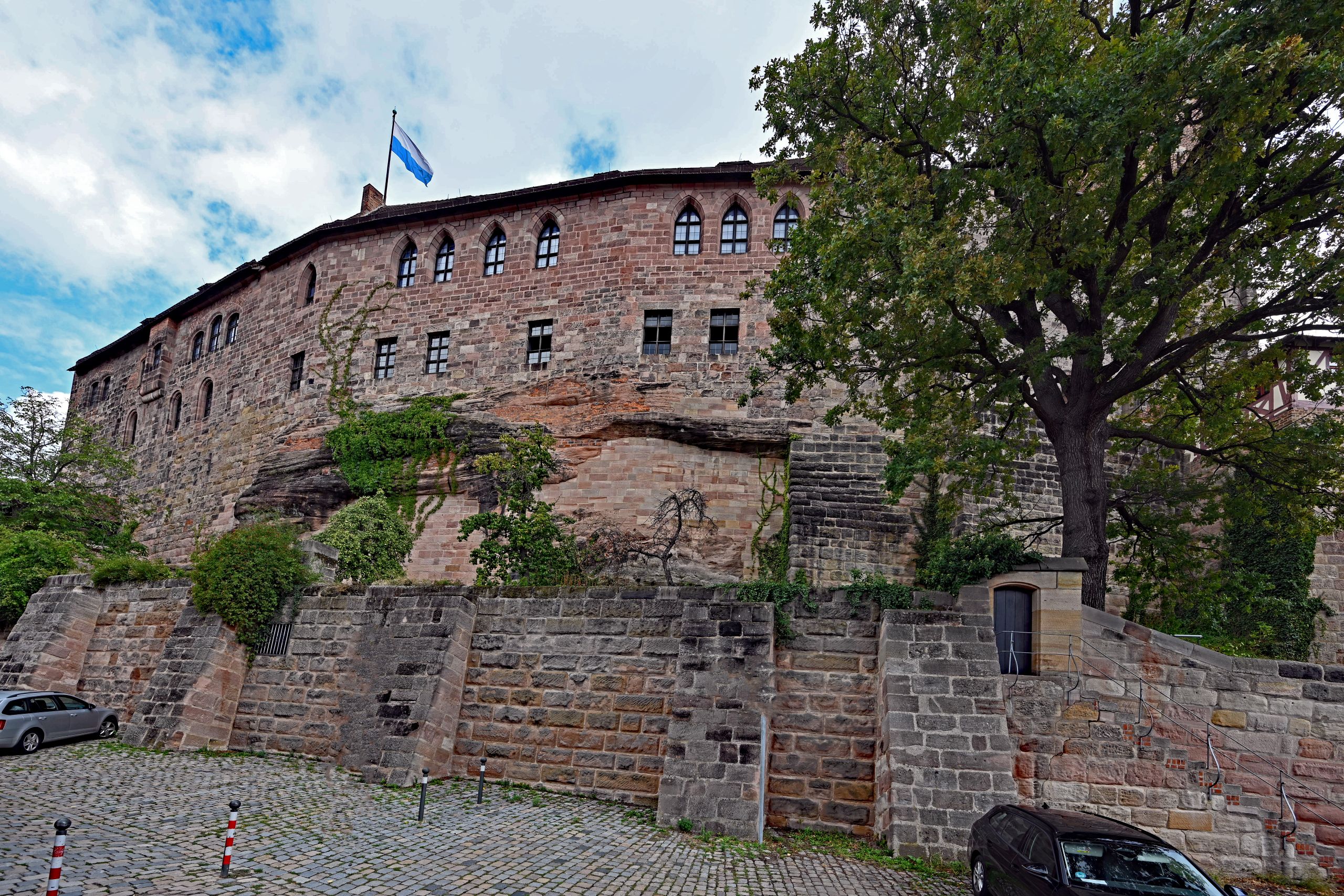
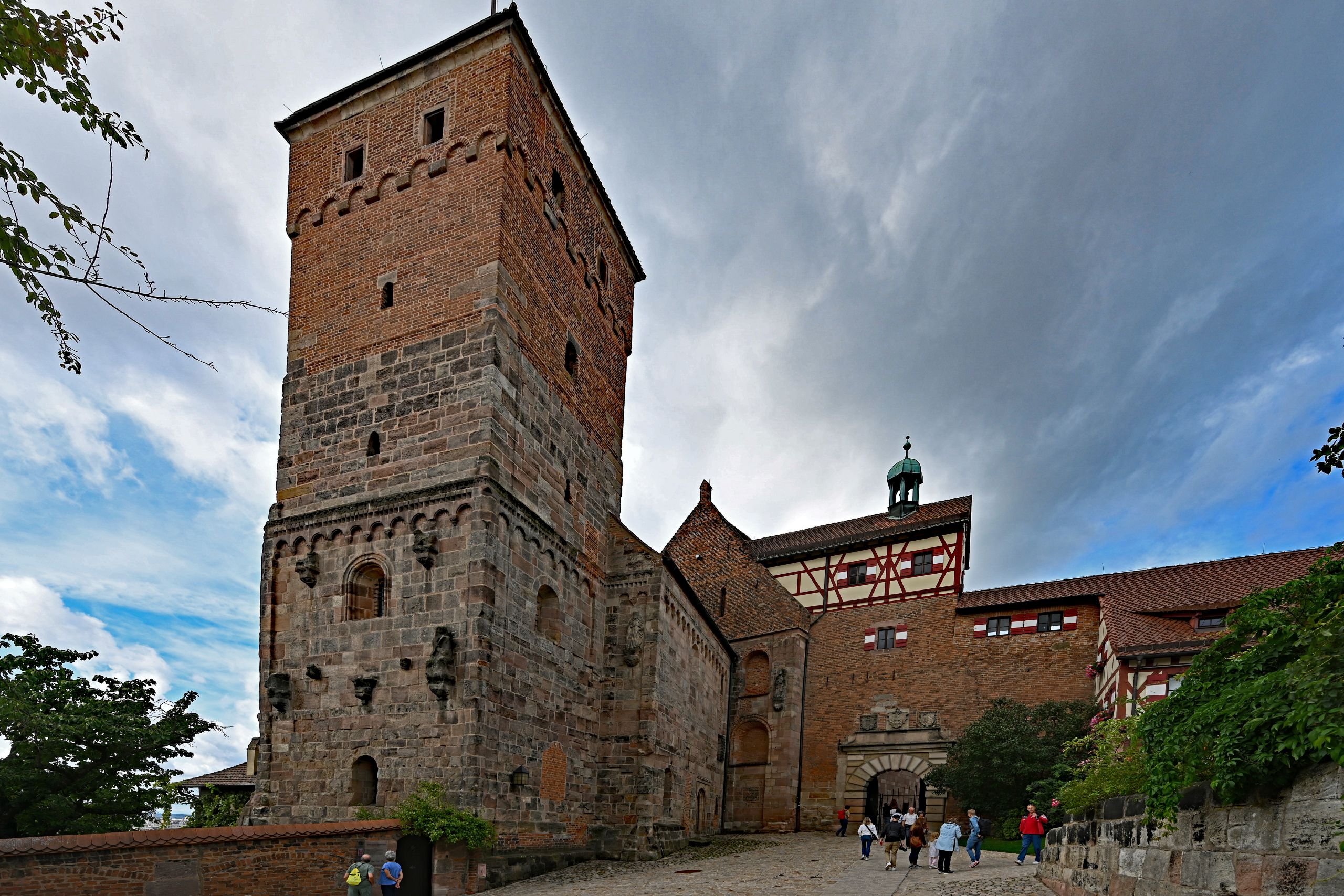
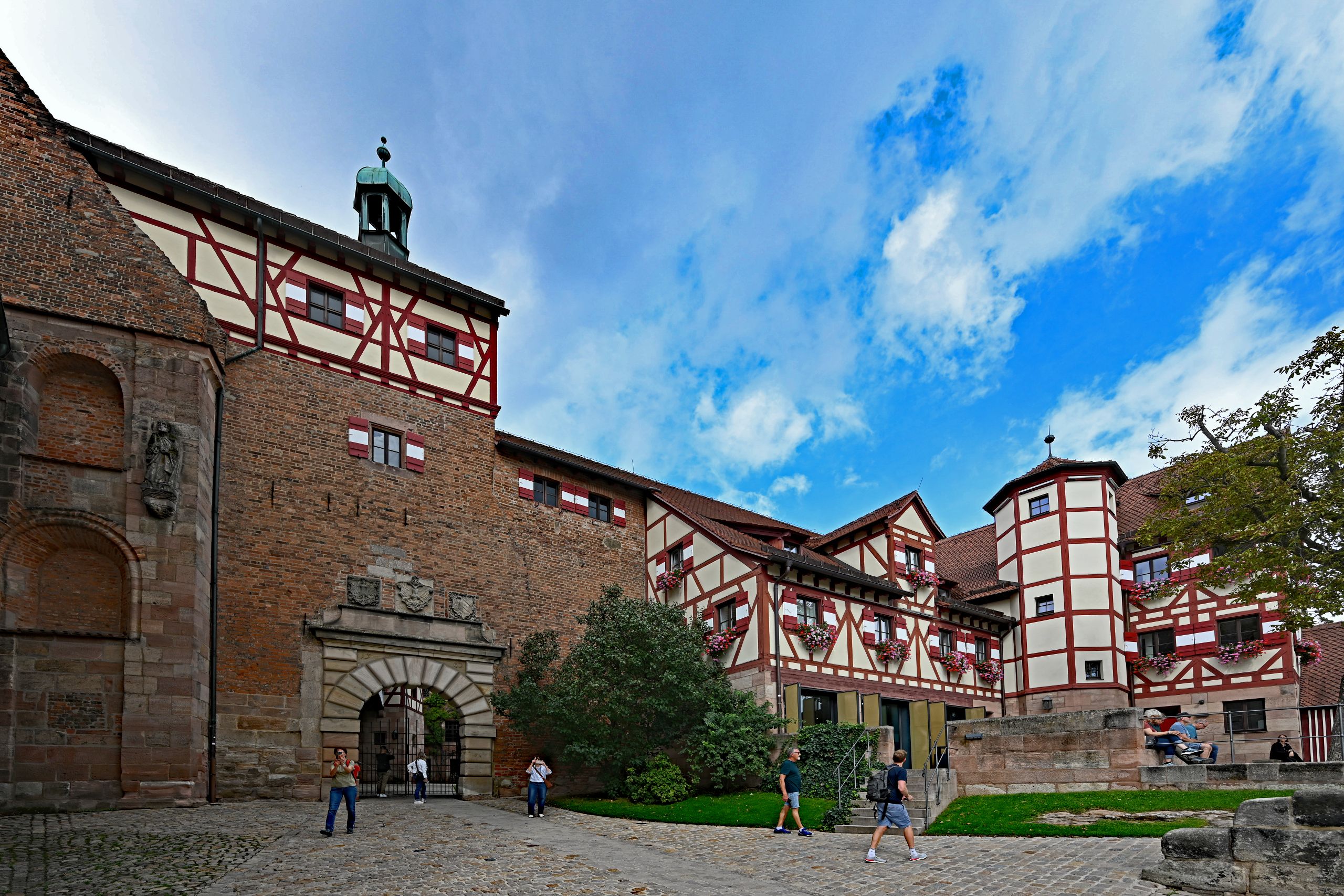
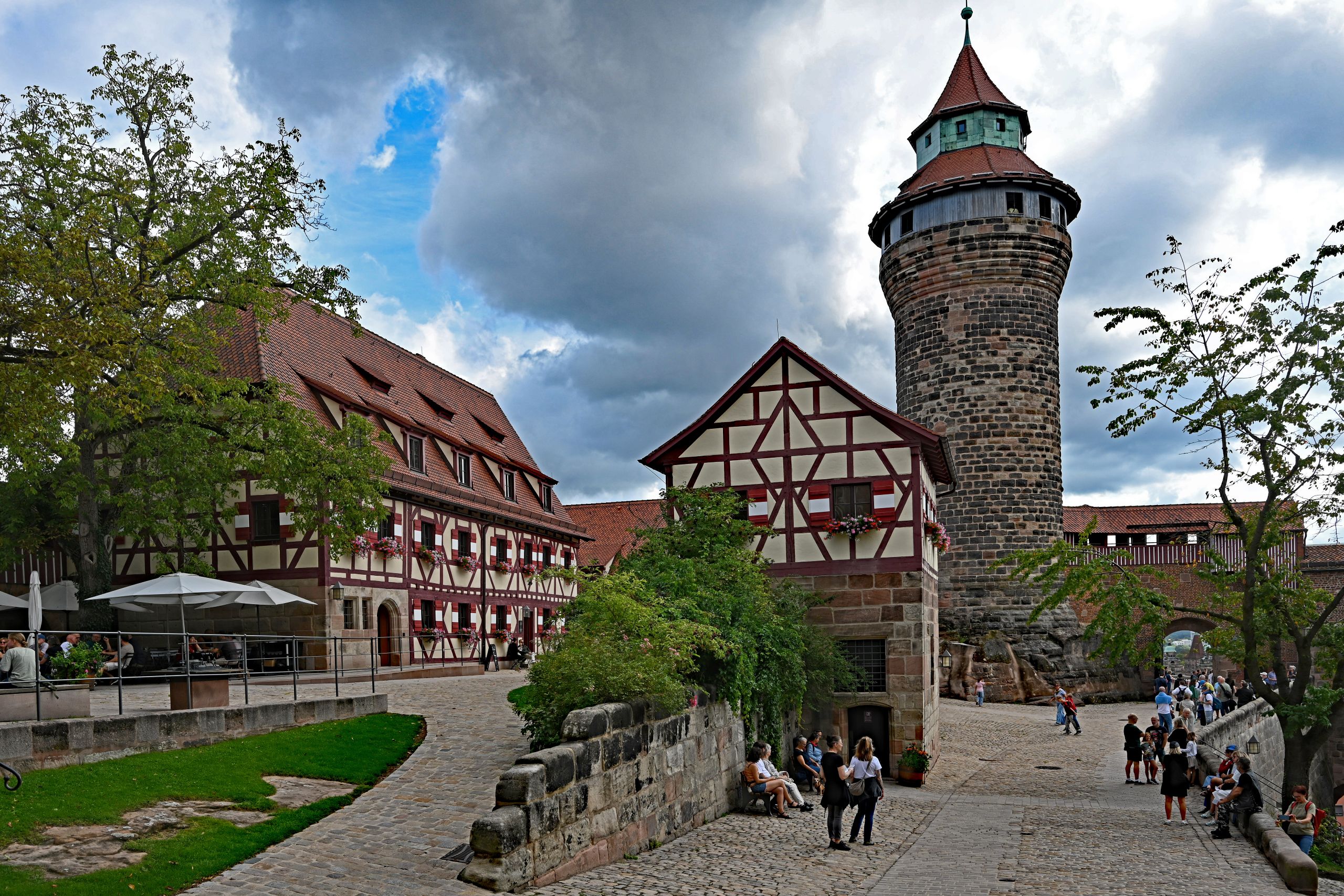
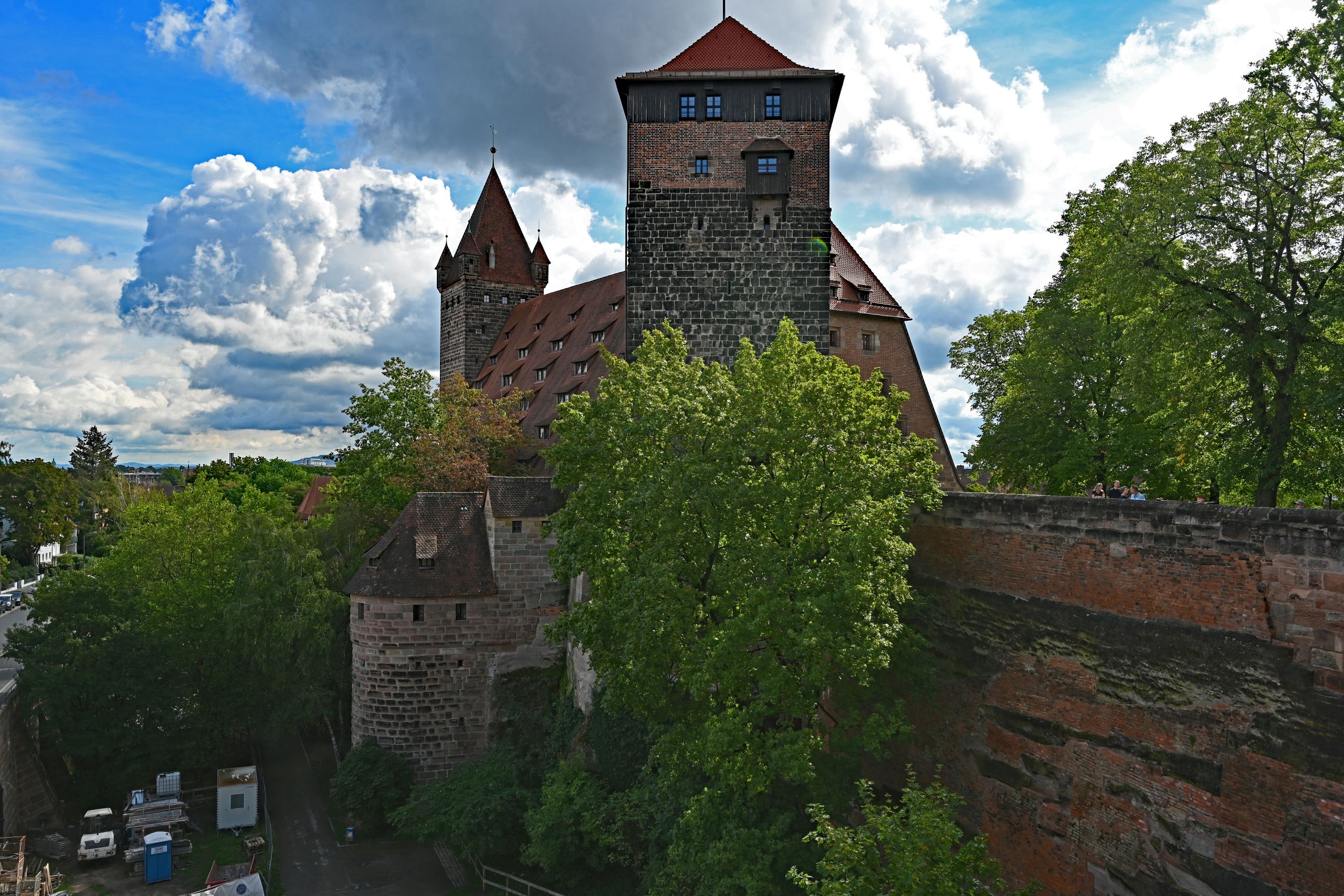
The climb required some effort, but the sight of the mighty bastions of reddish sandstone, growing seamlessly out of the natural castle rock, compensated for everything. Once at the top, the Bavarian flag fluttered proudly on the Palas. We entered the inner castle area and admired the Heidenturm (Heathens’ Tower), the oldest Staufen-era part of the fortress, and the double-storied Kaiserkapelle (Imperial Chapel). In the inner courtyard, we were fascinated by the harmonious interplay of the baroque Inner Castle Gate, the brick building of the Secretariat, and the flower-decorated timber framing of the Finanzstadel. Above it all towered the monumental Sinwellturm, the round keep from the 13th century. Looking east, the square Luginsland tower, the Fünfeckturm (Pentagonal Tower), and the massive pitched roof of the former Imperial Stables finally revealed themselves to us.
🏰 Gallery: The Kaiserburg Towering High Above
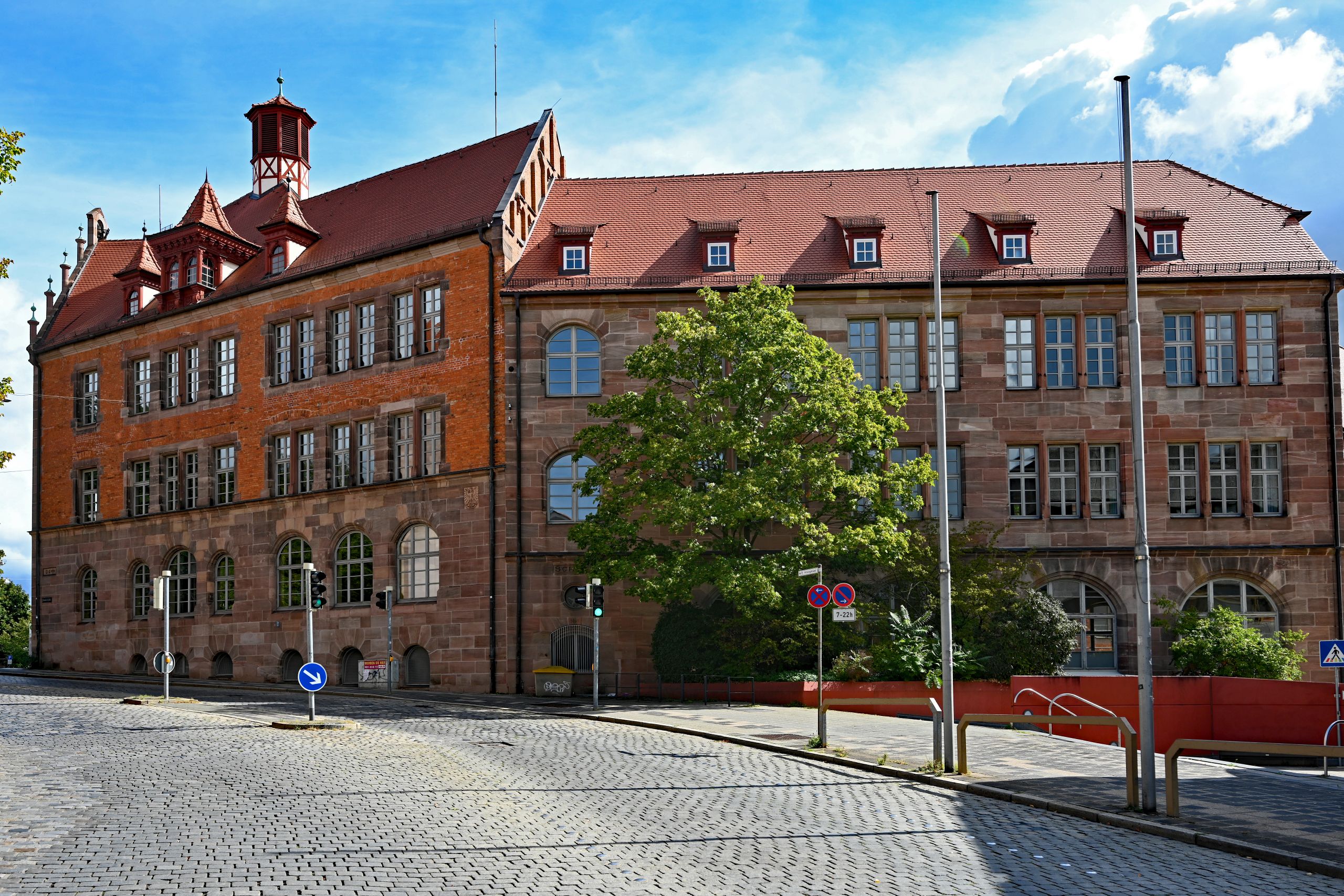
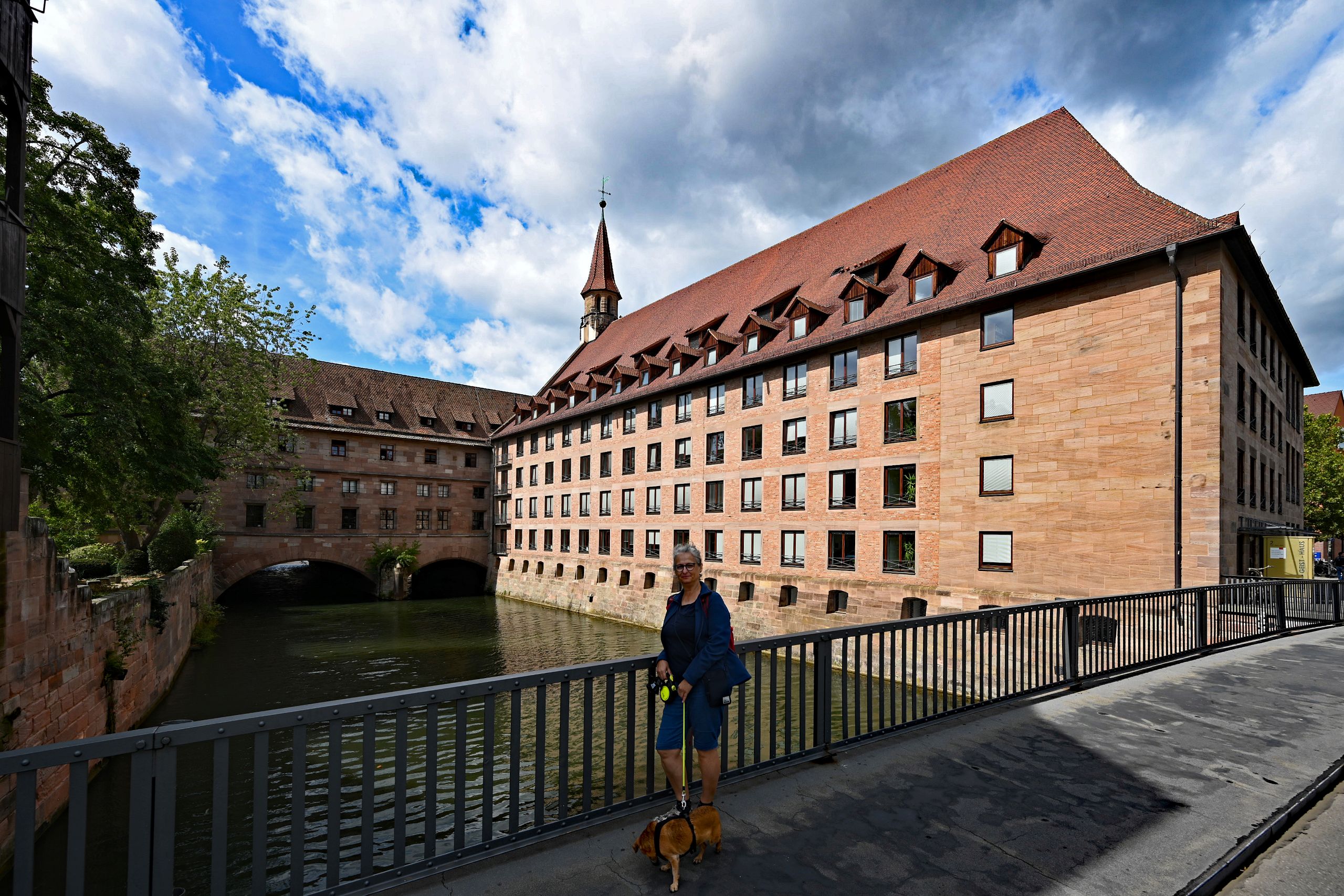
During the descent from the castle, the sun emerged with full power from behind the clouds and flooded the Old Town with golden light. It brought out the intense radiance of the warm sandstone and red brick tones of the traditional Johannes-Scharrer-Gymnasium on Tetzelplatz. Back at the Pegnitz, we used the glorious weather on the Museumsbrücke for a beautiful family photo: my wife and our dog posed happily against the backdrop of the 14th-century Heilig-Geist-Spital (Holy Spirit Hospital), whose mighty arches majestically span the river.
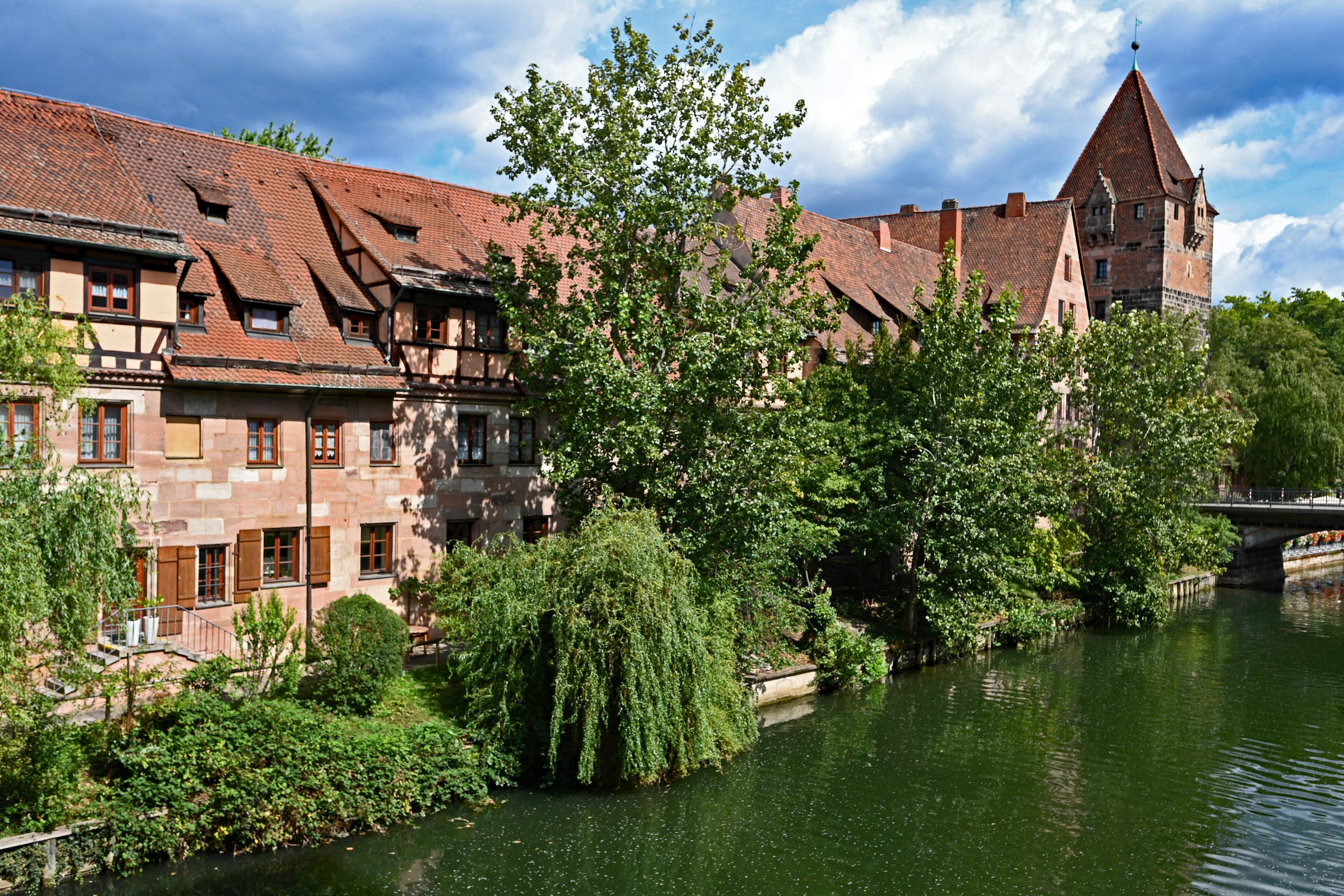
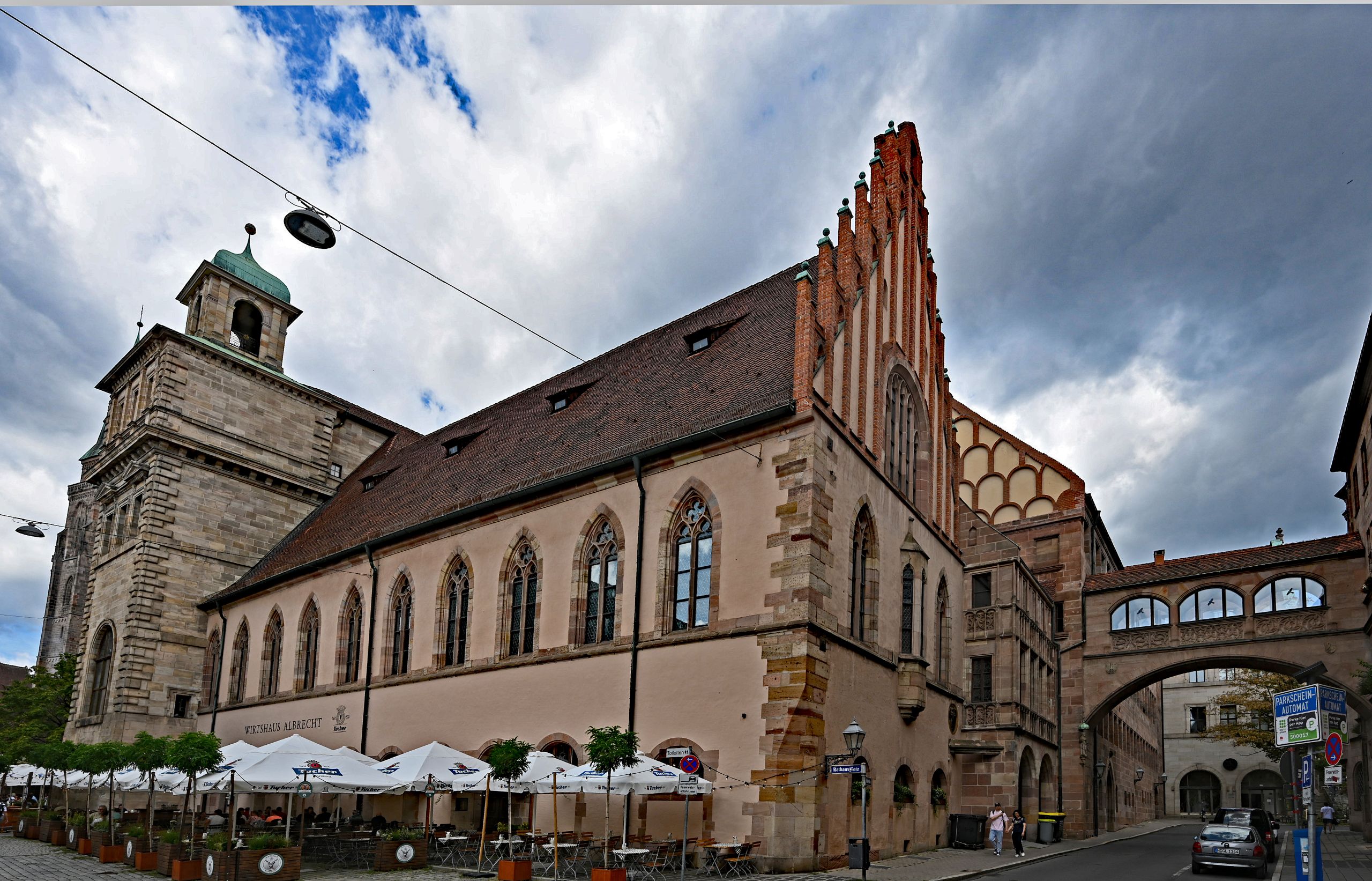
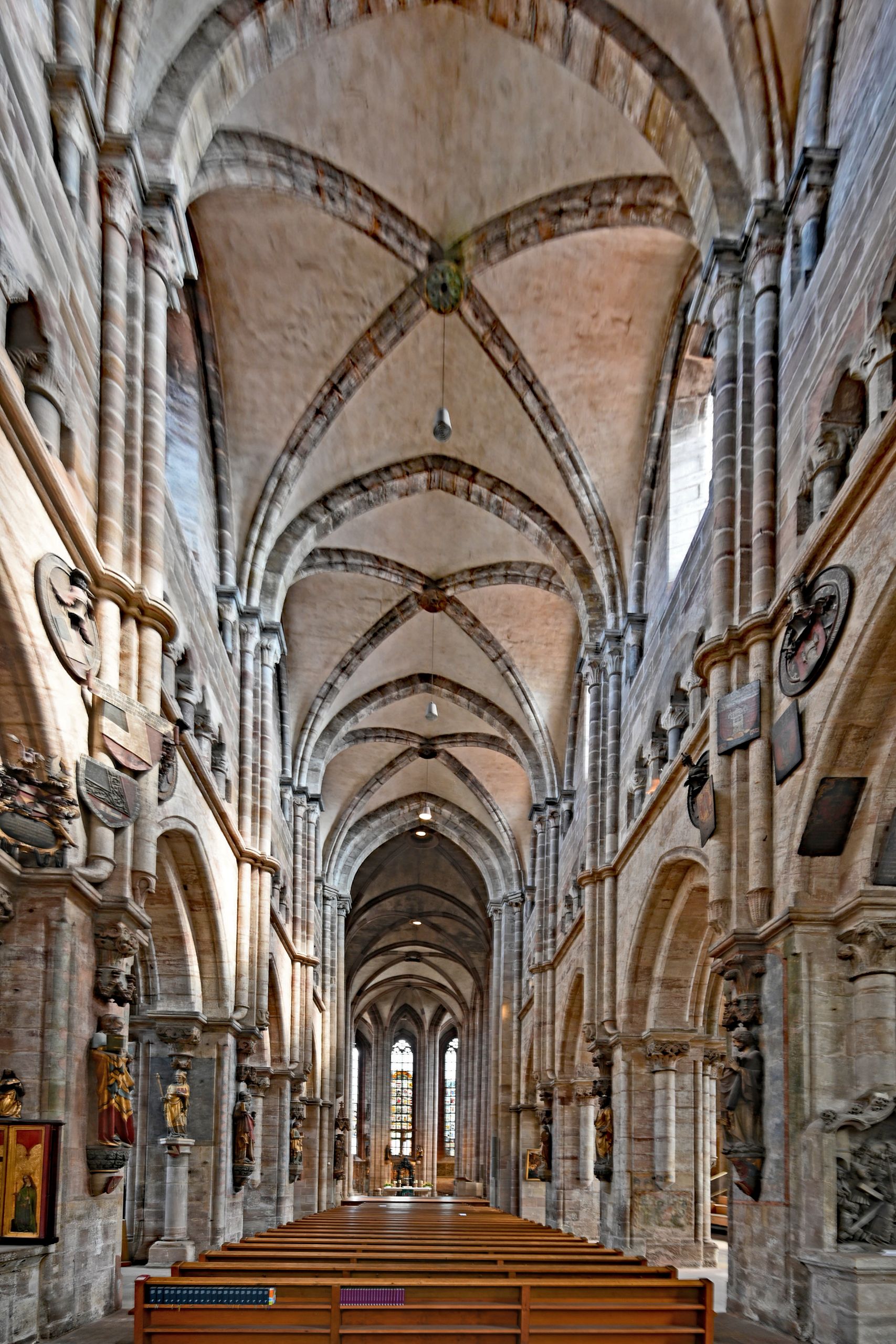
We let the day wind down at the Heubrücke (Hay Bridge), where the old sandstone and timber-framed houses mirrored themselves in the green river water under hanging willows. To finish, we were drawn once more to the main sights in the heart of the city. The Frauenkirche and the Haus der Wirtschaft (IHK) showed themselves to us from a completely new, bustling side in the daylight. At City Hall Square, we once again admired the magnificent gothic Great City Hall Hall Building with its striking stepped gable and large pointed arch windows. The crowning glory was the Sebalduskirche: after a wide view of the imposing west facade and its massive twin towers, we entered the sacred interior. The nave welcomed us with sacred grandeur, mighty rib vaults, and a light-flooded hall choir – a worthy and deeply moving conclusion to our journey.
☀️ Gallery: Farewell to the Treasures of the Old Town