In the Footsteps of the Renaissance and the Baroque
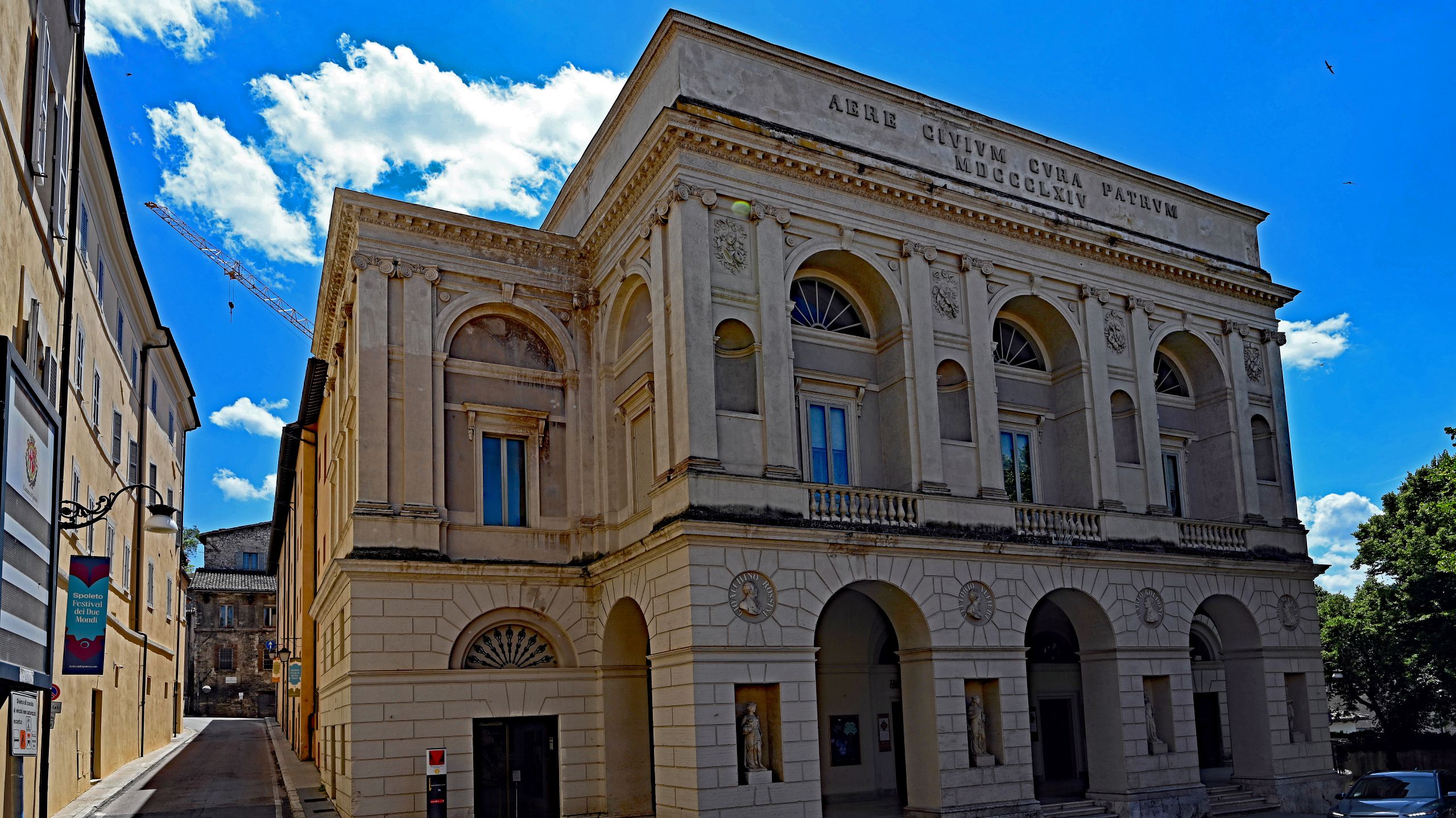
My day in the Umbrian town of Spoleto began amidst elegant alleys that breathe an almost tangible theatrical history. Strolling through the historic center, I first came across a monumental building whose neoclassical facade immediately caught my attention. It was the imposing Teatro Nuovo Gian Carlo Menotti. Designed in the 19th century by architect Ireneo Aleandri, this opera house features a striking two-story appearance with an open arcaded hall on the ground floor and elegant round-arched windows above. On the upper cornice, a Latin inscription proudly displays the opening year, 1864.
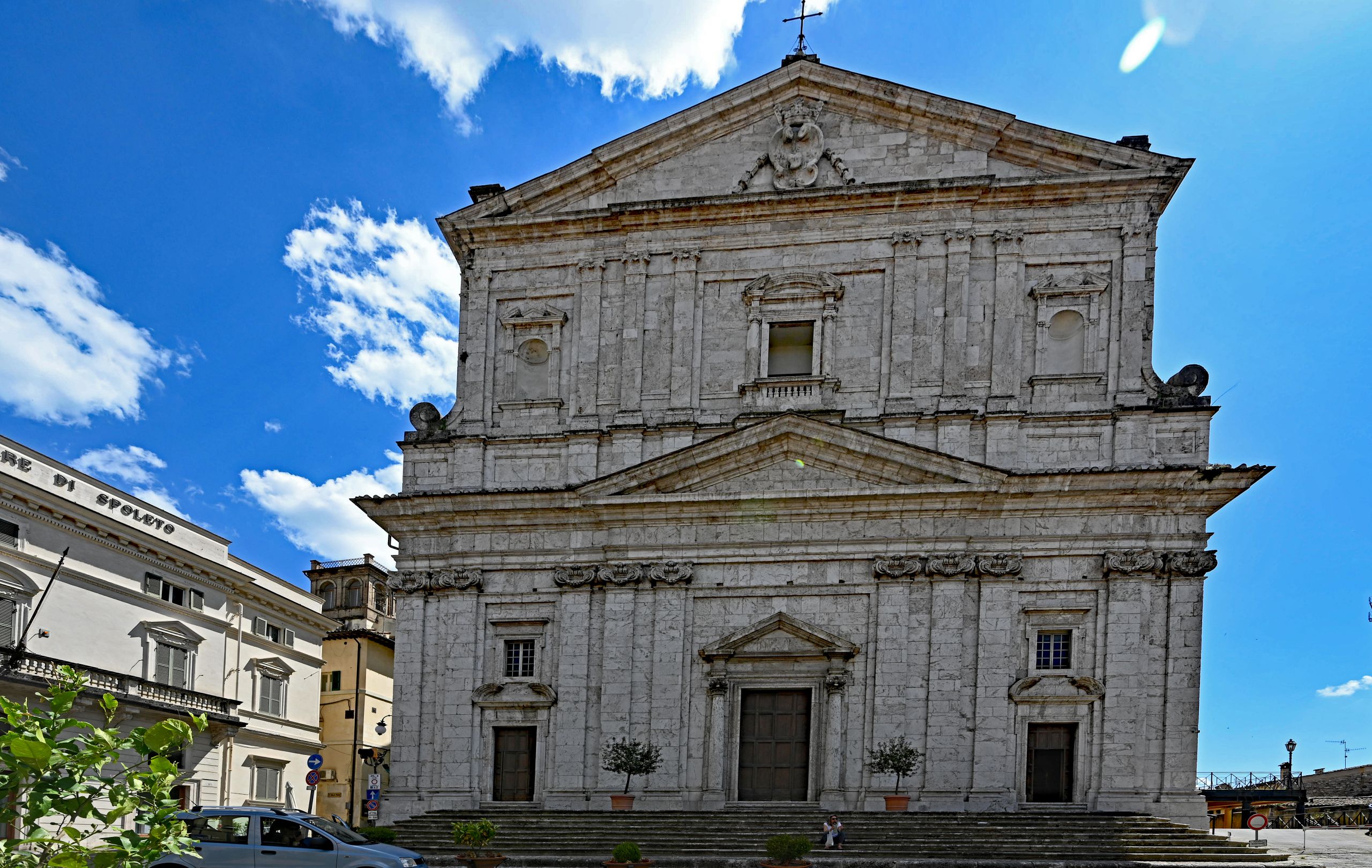
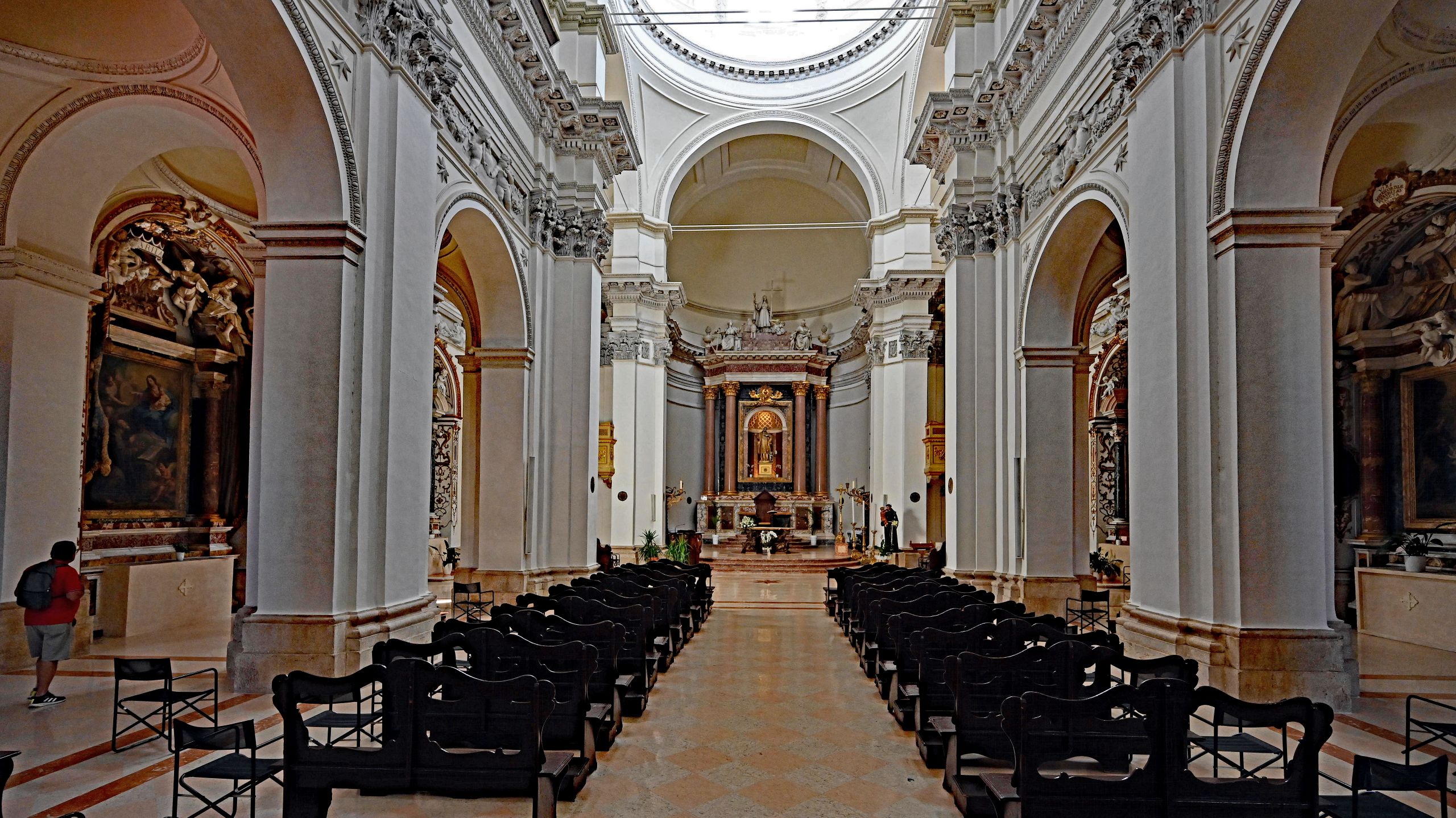
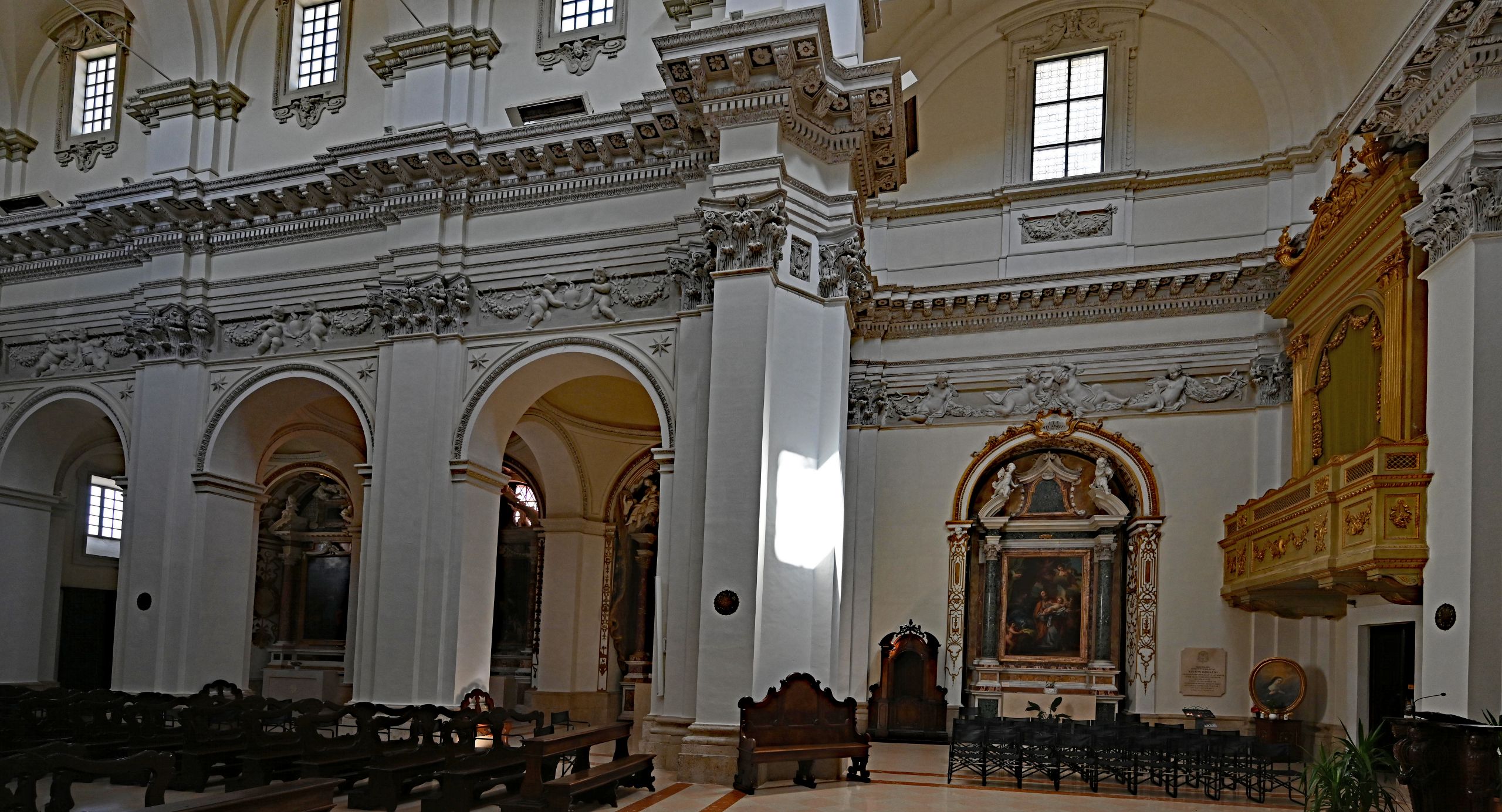
Only a few steps further, a true masterpiece of Baroque architecture revealed itself: the Chiesa di San Filippo Neri. Its monumental, light-colored stone facade rises grandly above a wide flight of steps. Powerful Corinthian pilasters structure the vertical lines, while ornate triangular gables and a central coat of arms emphasize its grandeur. Stepping through the portal into the vast nave, I was welcomed by a light-filled, elegant space. White pillars support the arches leading to the side aisles, and a large dome rises above the transept, flooding the Baroque interior with natural light. Looking closely, I was fascinated by the transition to the right transept. A delicate stucco frieze adorned with cherubs and floral elements runs along the entire entablature, below which a magnificently gilded wooden organ loft enthrones a richly decorated side altar.
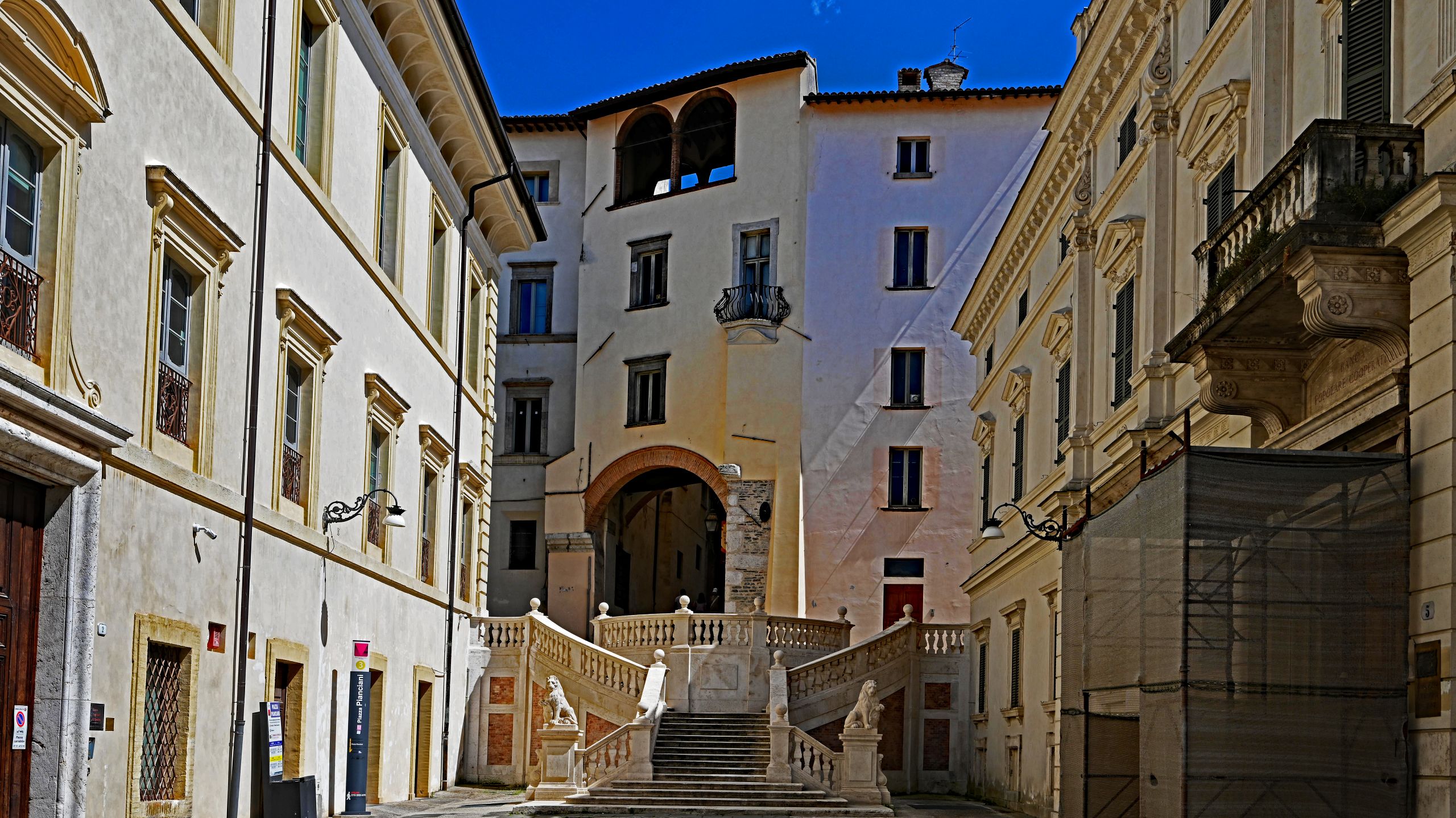
Back outside, my path led me across a Baroque external staircase that gracefully connects two levels of the old town. Flanked by sculpted lion figures, it leads up to a large round arch at the Palazzo Leti Sansi, whose magnificent facade—complete with elegantly framed windows and a characteristic loggia on the top floor—forms the splendid conclusion to this quarter.
Gallery: Theatrical Splendor and Baroque Sacred Art
Romanesque Treasures and the Magic of the Cathedral Square
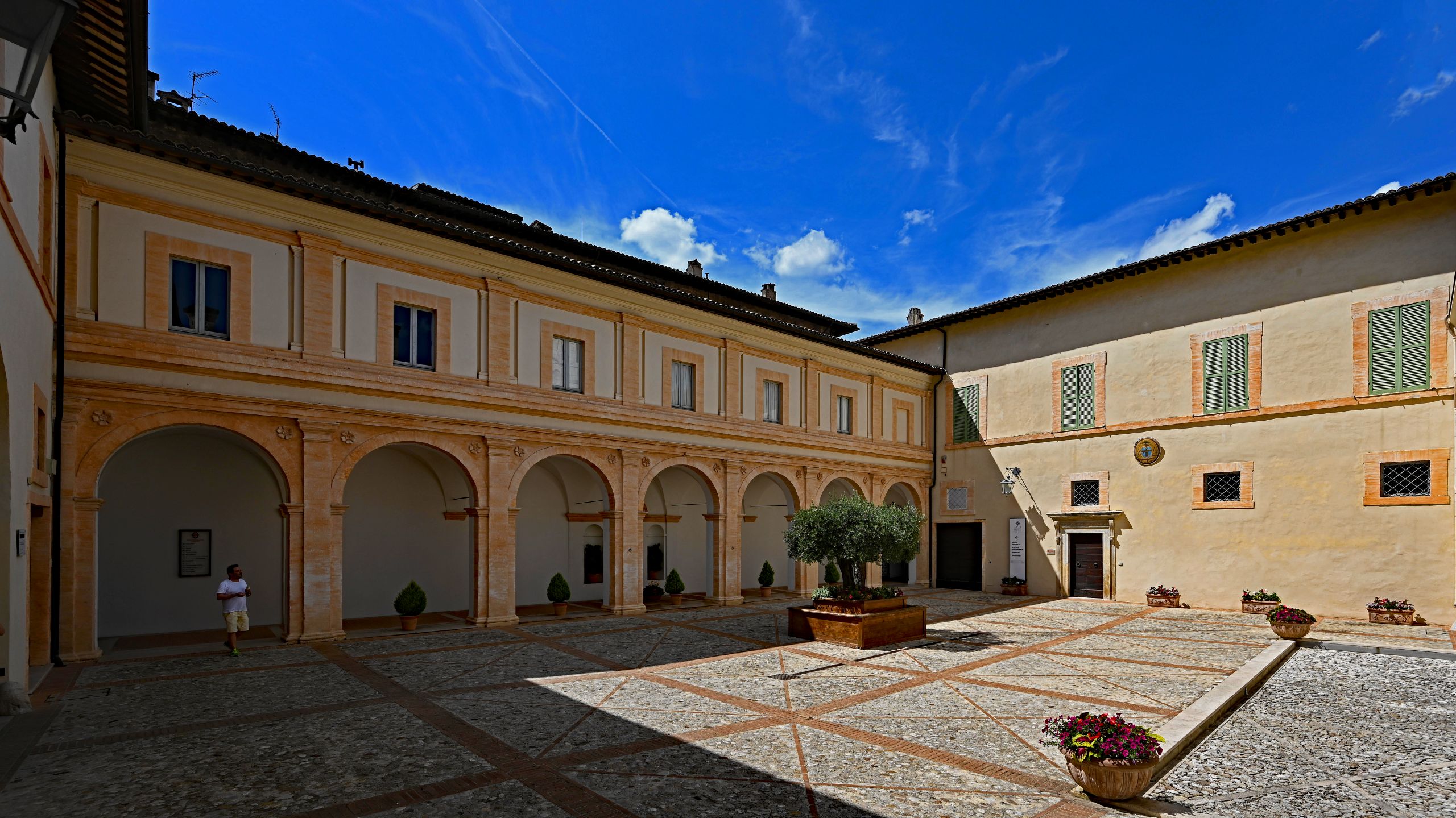
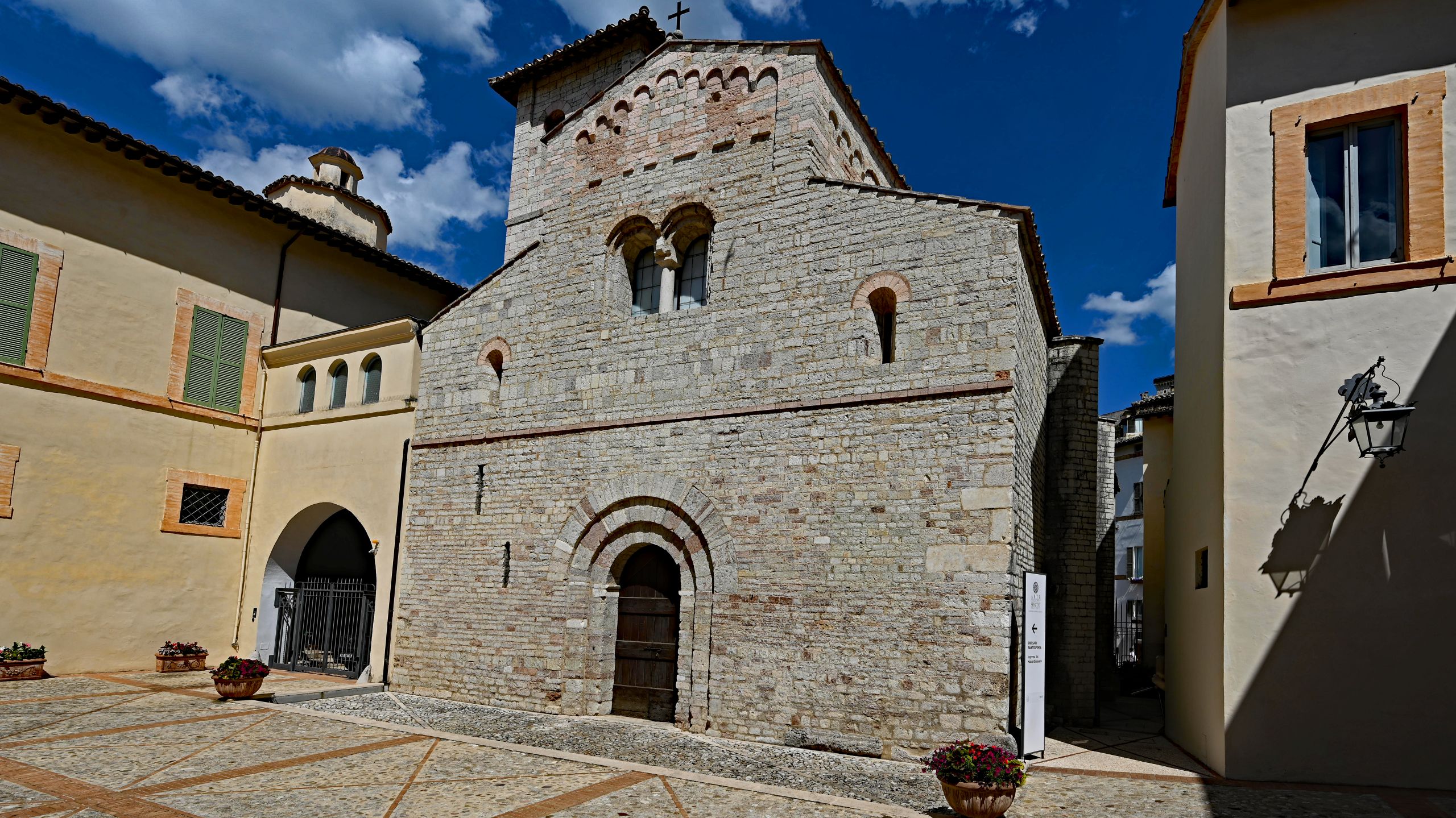
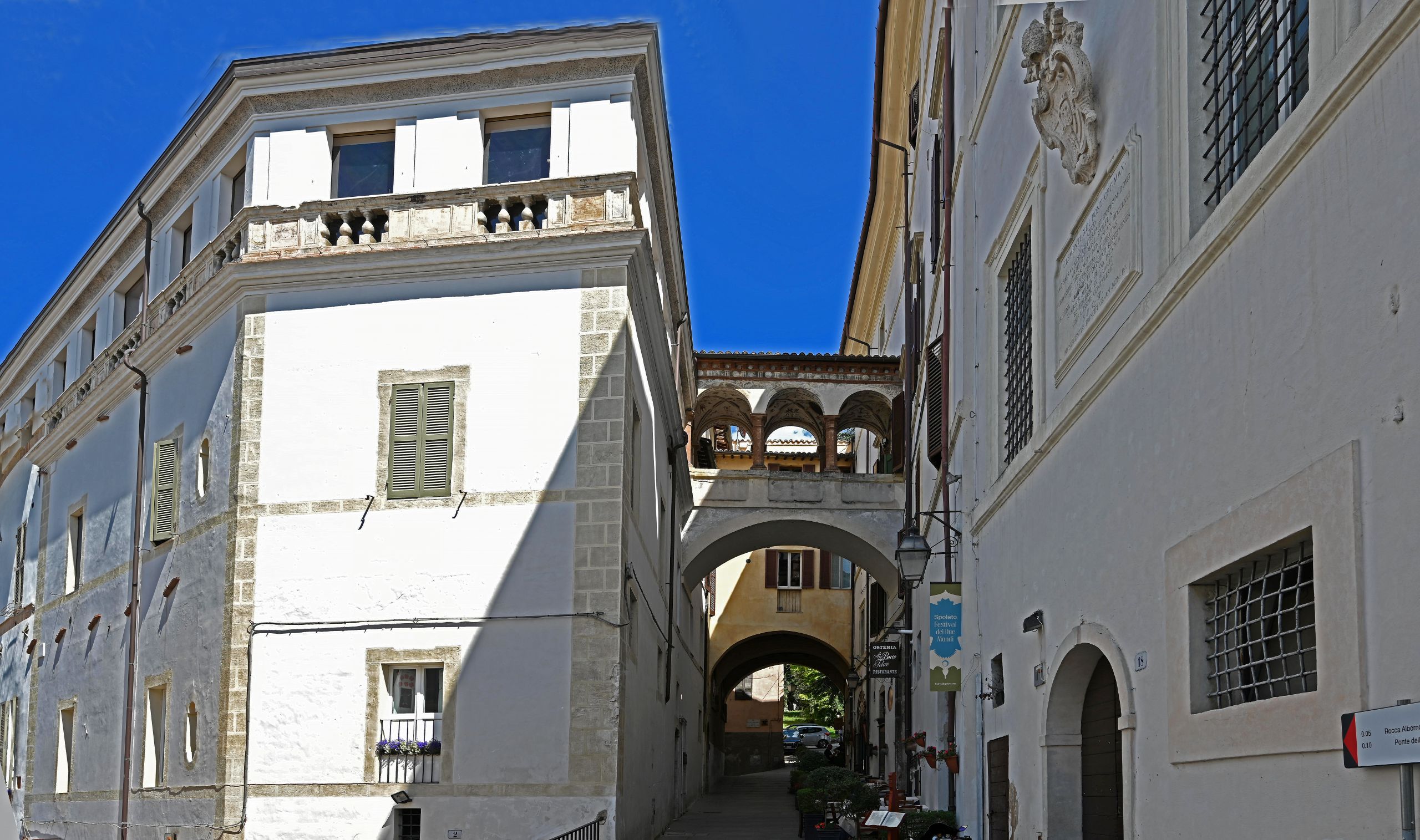
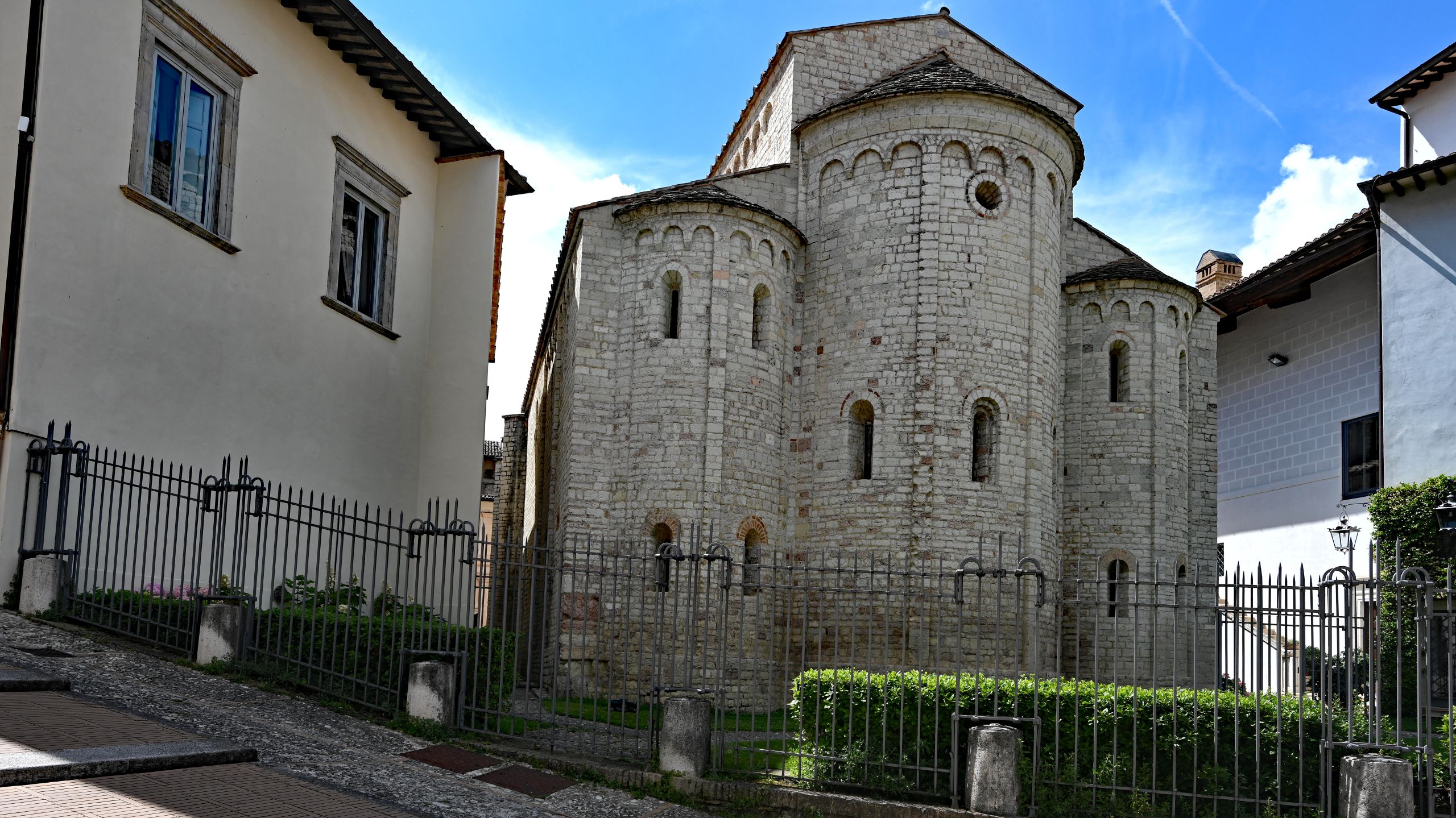
The route guided me deeper into the spiritual and cultural heart of the city. I entered the sun-drenched courtyard of the Museo Diocesano. This place enchants with its two-story Renaissance wing featuring an elegant loggia whose round arches rest on classical columns. A decorative olive tree stands in the center of the geometrically paved floor. Yet, the true hidden gem in this courtyard is the 12th-century Basilica di Sant’Eufemia. Its simple Romanesque facade made of unpolished quarry stone features an elegant biforium window and a delicate blind arcade decoration beneath the roof gable. As I walked around the complex, the impressive rear view of the church revealed itself along the sloping street: a triple-structured choir area where the high main apse is flanked by two smaller side apses—a prime example of Romanesque architecture. A small brick arch with an open loggia elegantly connects the Archbishop’s Palace with the neighboring buildings.
Gallery: From the Diocesan Museum to the Teatro Caio Melisso
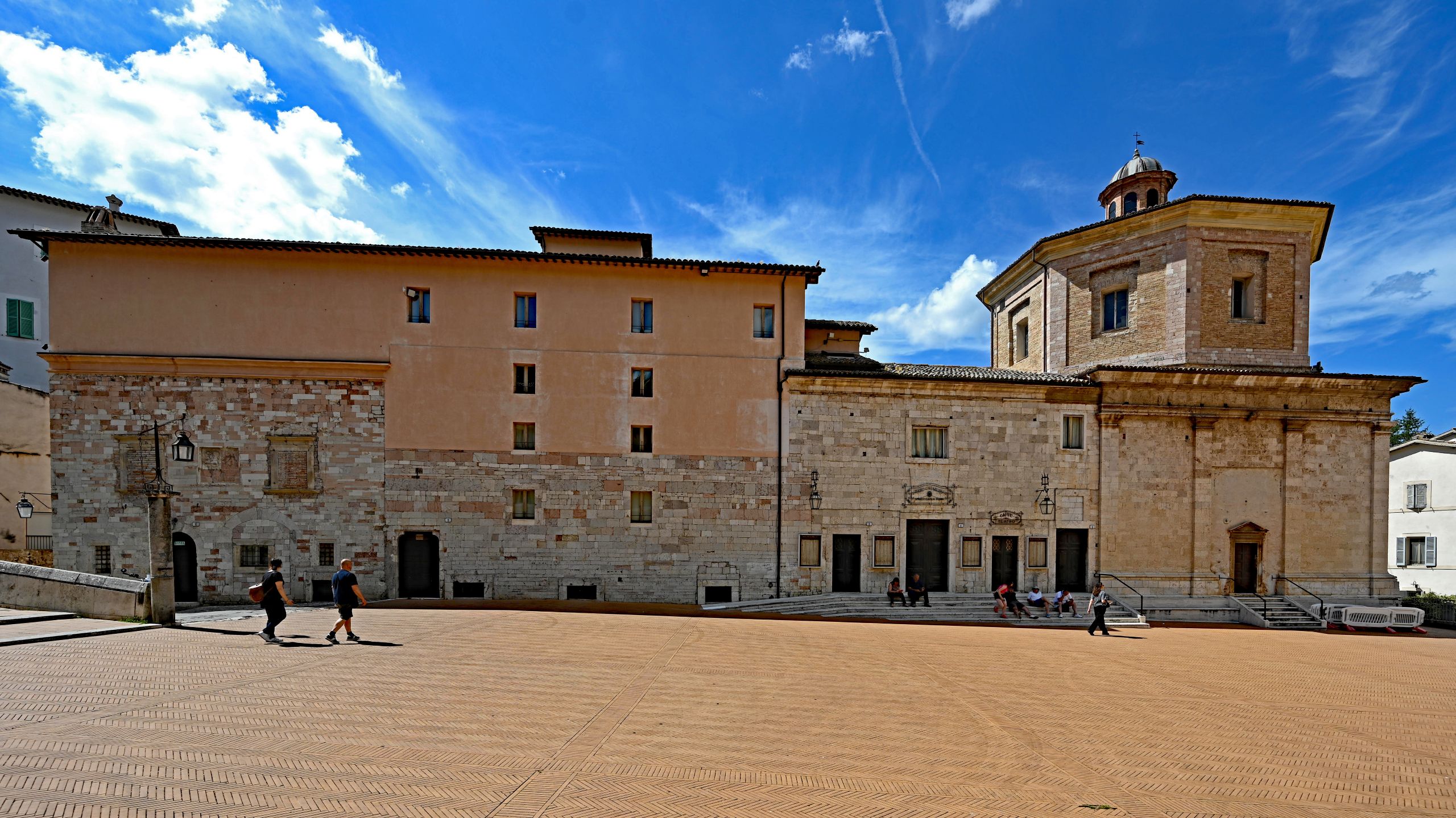
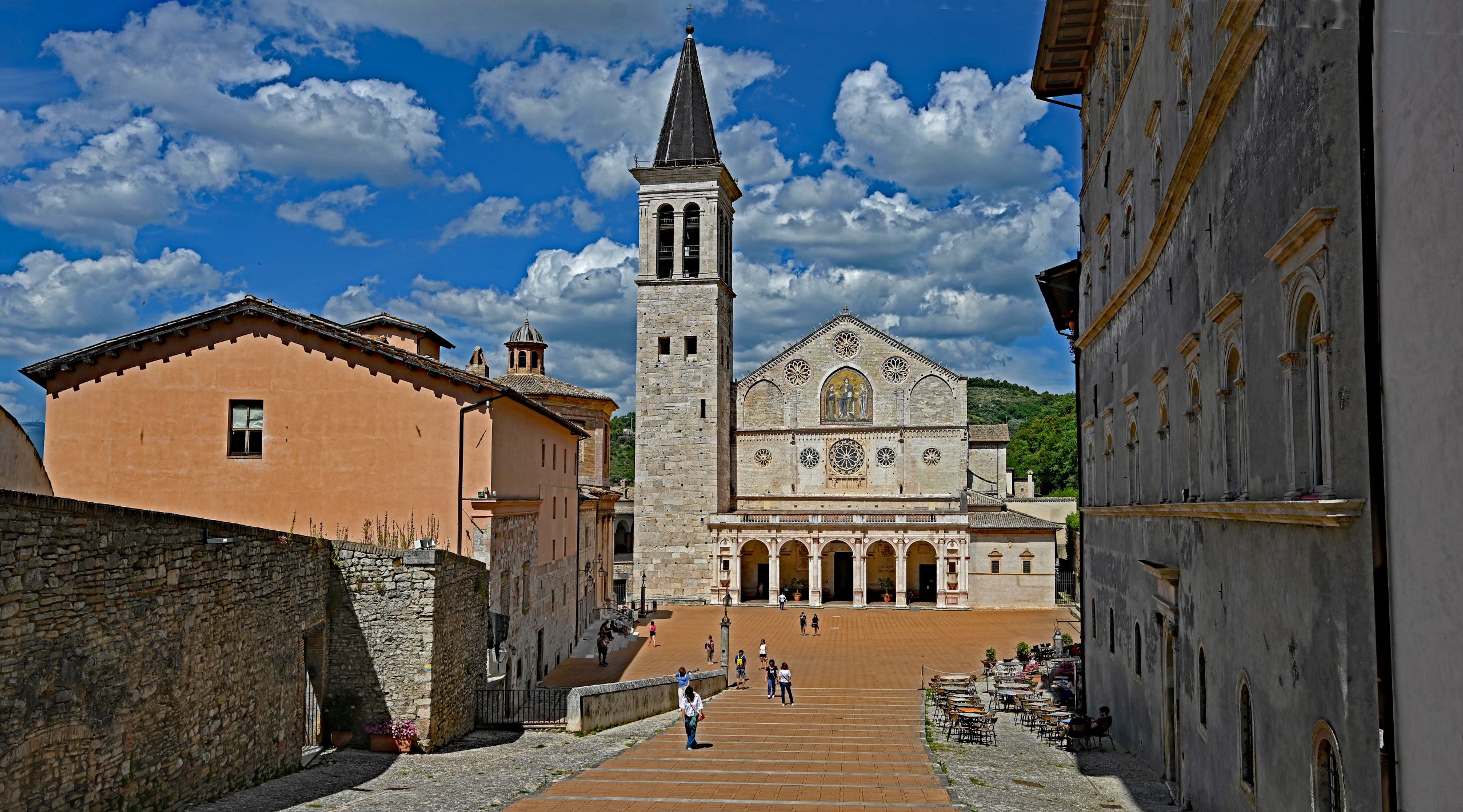
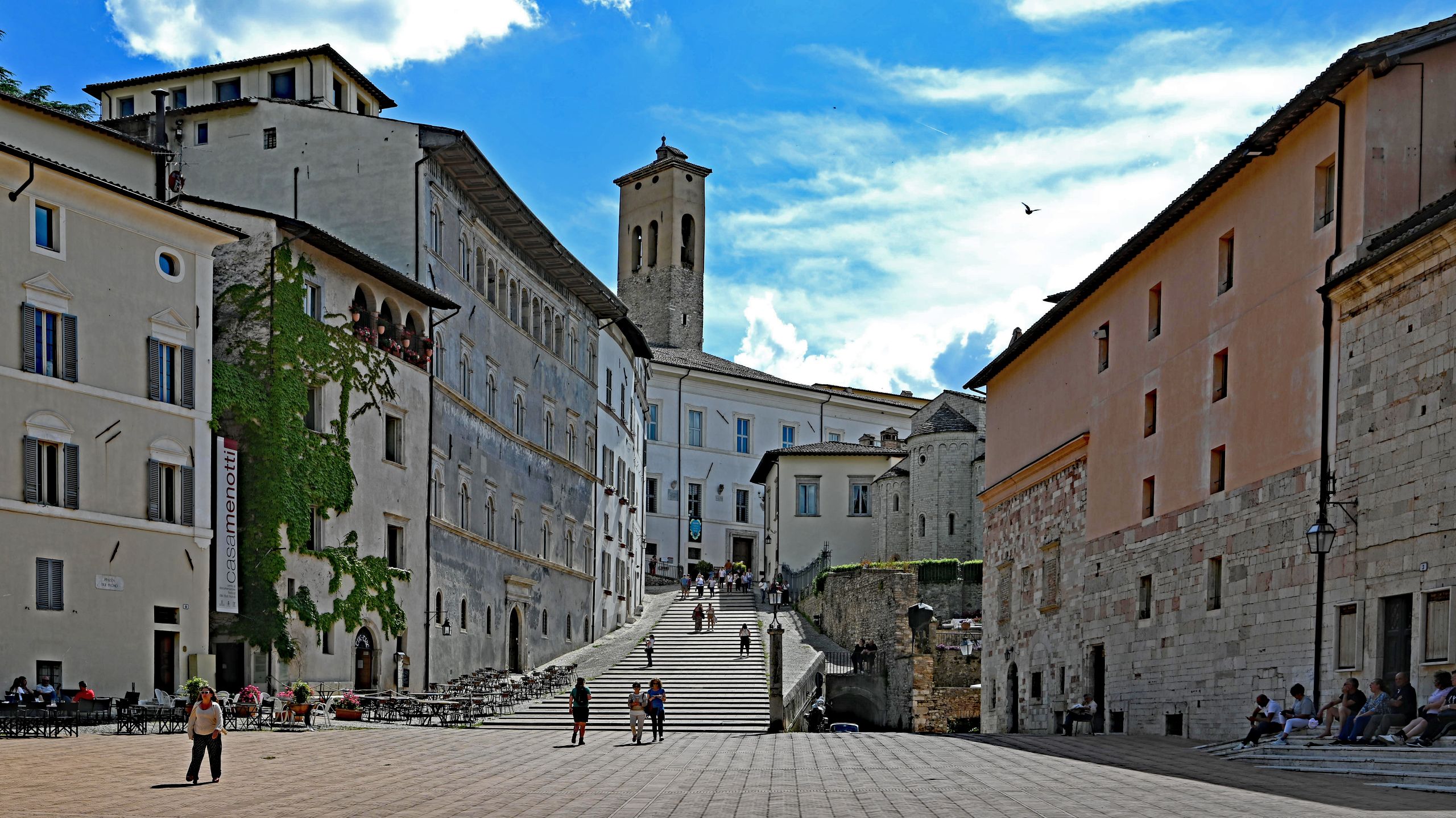
Finally, I reached the absolute highlight of Spoleto: the spectacular cathedral square. From an elevated vantage point, I enjoyed a breathtaking view down onto the Piazza Duomo and the Cathedral of Santa Maria Assunta. The Romanesque facade of the Duomo, with its Renaissance portico, intricate rose windows, and the golden mosaic shimmering in the gable, almost took my breath away. Directly next to it, the historic Teatro Caio Melisso and the ex Chiesa di Santa Maria della Manna d’Oro, with its distinctive octagonal dome, nestle against the square.
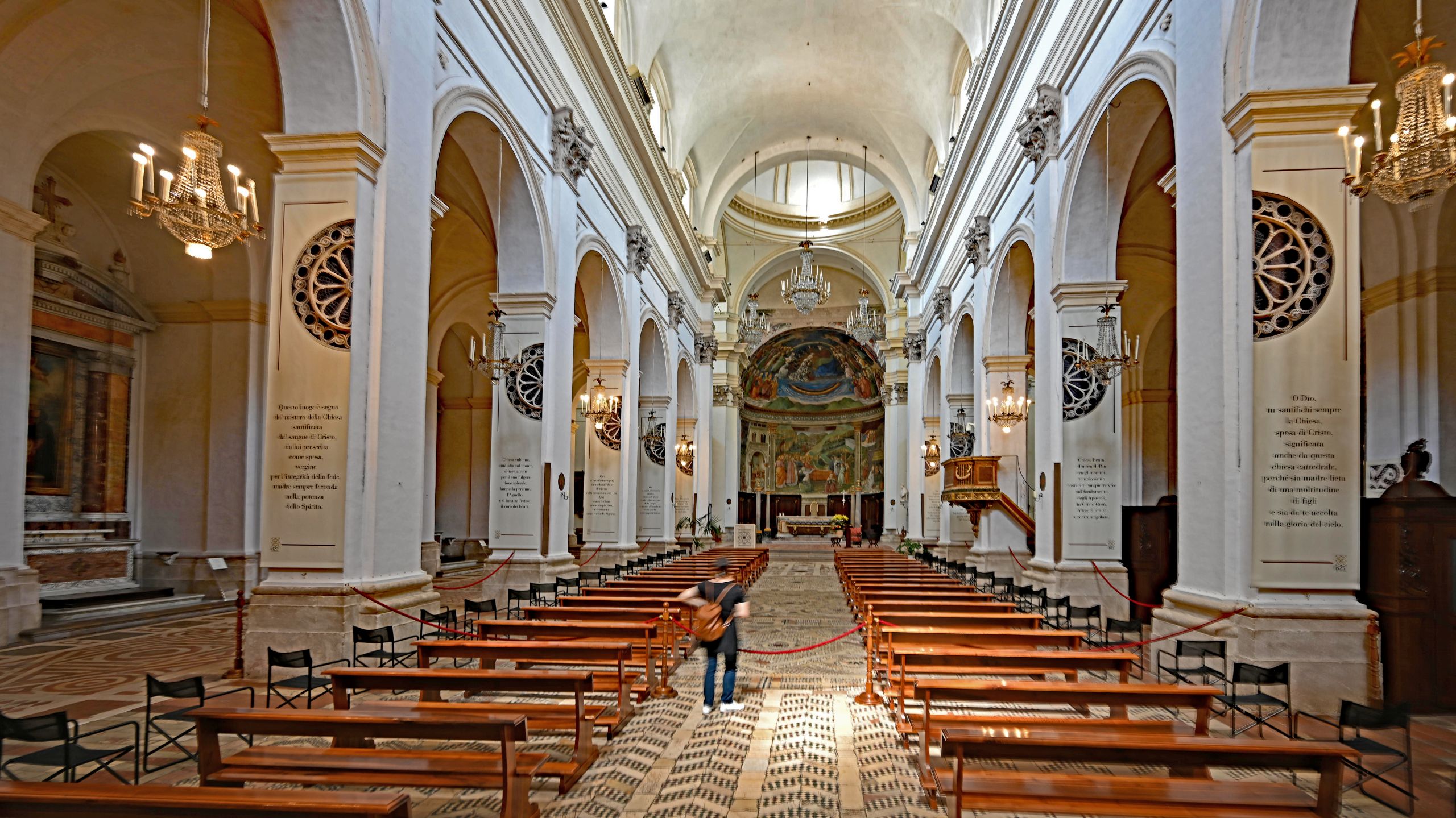
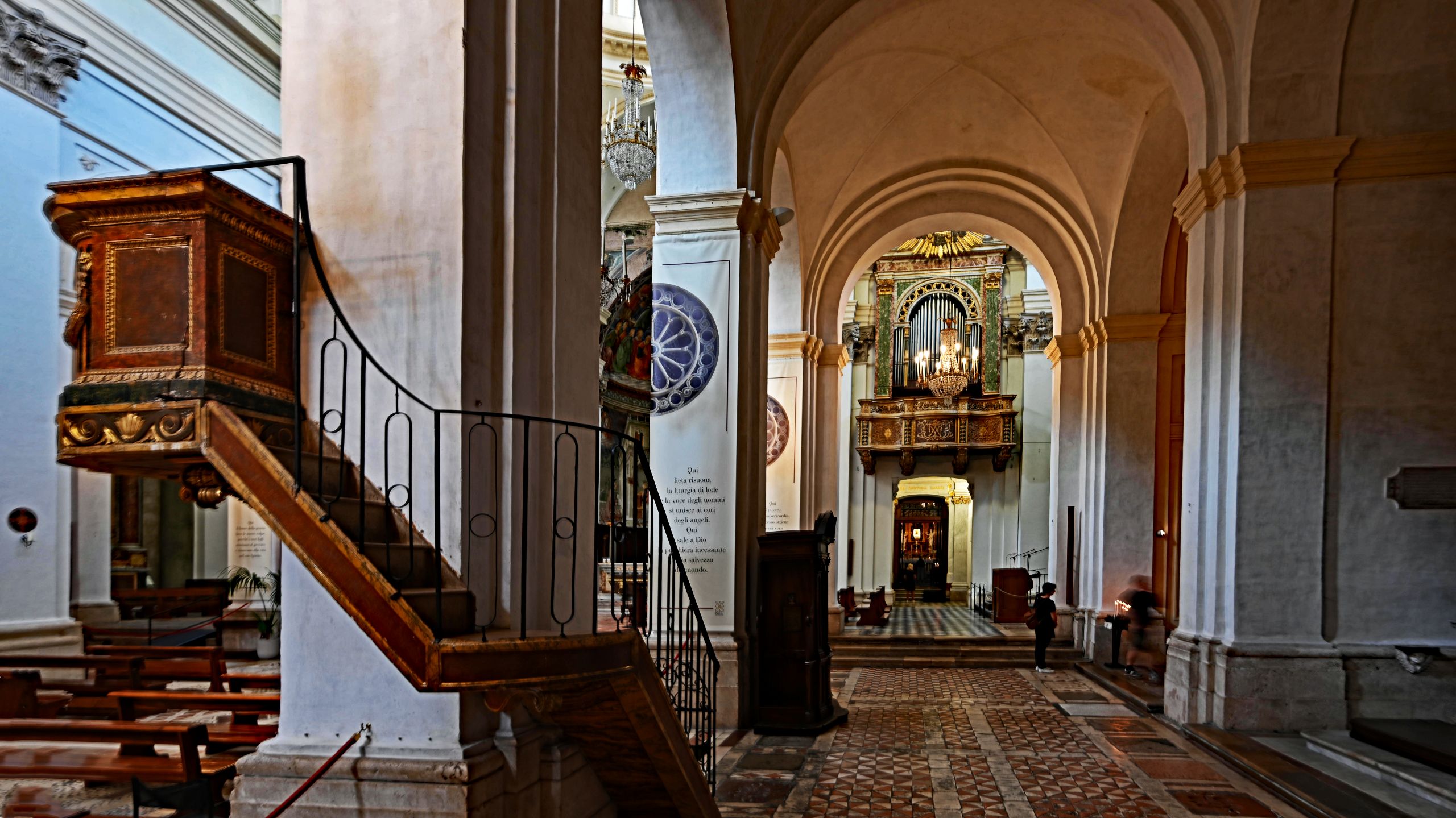
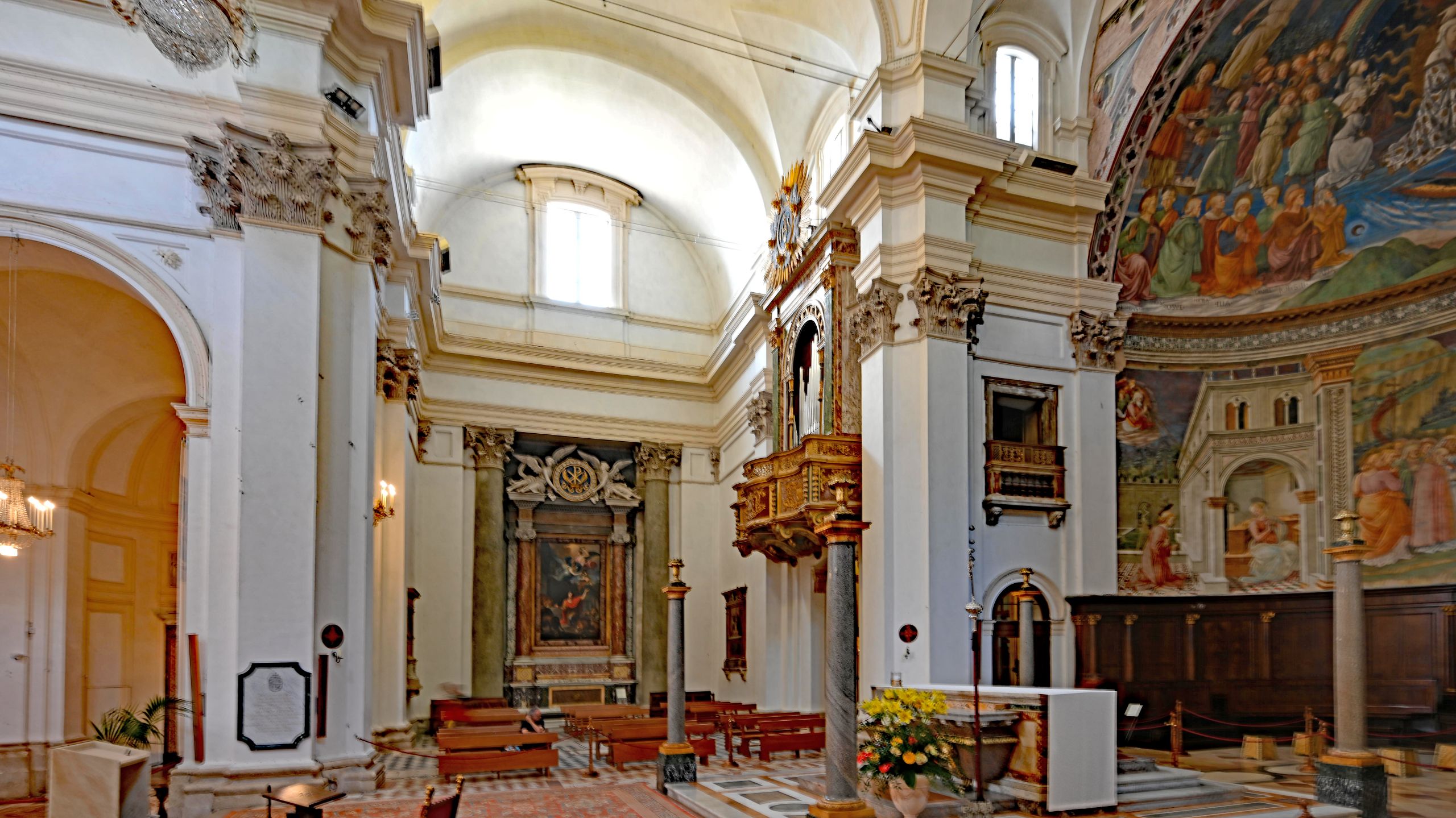
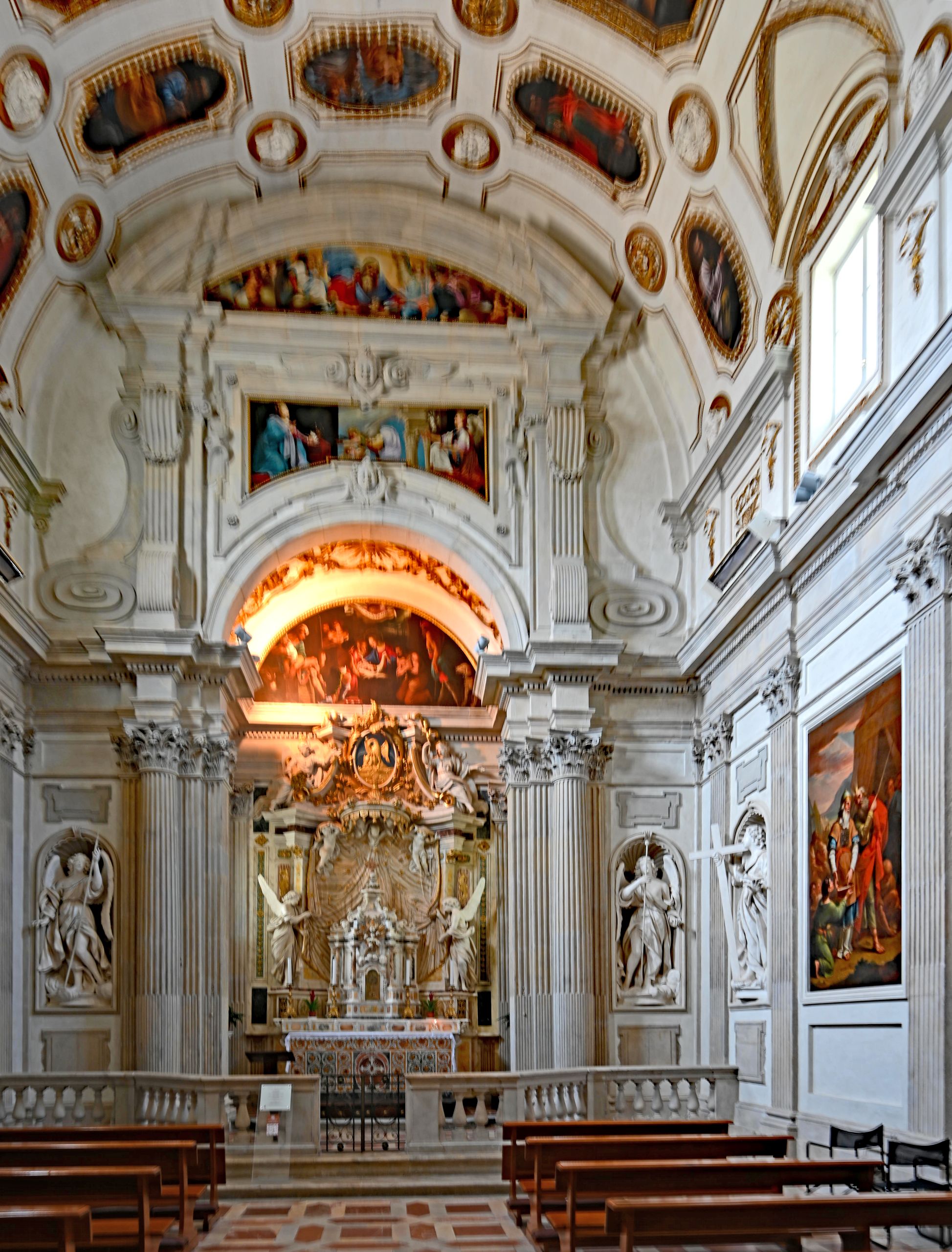
The interior of the cathedral is in no way inferior to its external grandeur. Remodeled in the Baroque style by Luigi Vanvitelli in the 18th century, the bright nave is lined with powerful pillar arcades. As my eyes swept across the intricately patterned Cosmatesque floor, I was captivated by the dark wood pulpit and the Baroque organ loft. However, the absolute highlight awaited in the choir: the world-famous, colorful Renaissance frescoes painted by Fra Filippo Lippi in the 15th century. In one of the side chapels, the Cappella della Santissima Icone, the Baroque decorative frenzy culminated in gilded stucco, monumental marble statues, and richly decorated ceilings. A subsequent look back from the Piazza Duomo up toward the sweeping steps of Via Saffi highlighted once again the magnificent urban design of this location.
Gallery: The Monumental Cathedral District
Fortress Views and the Solitude of the Forests
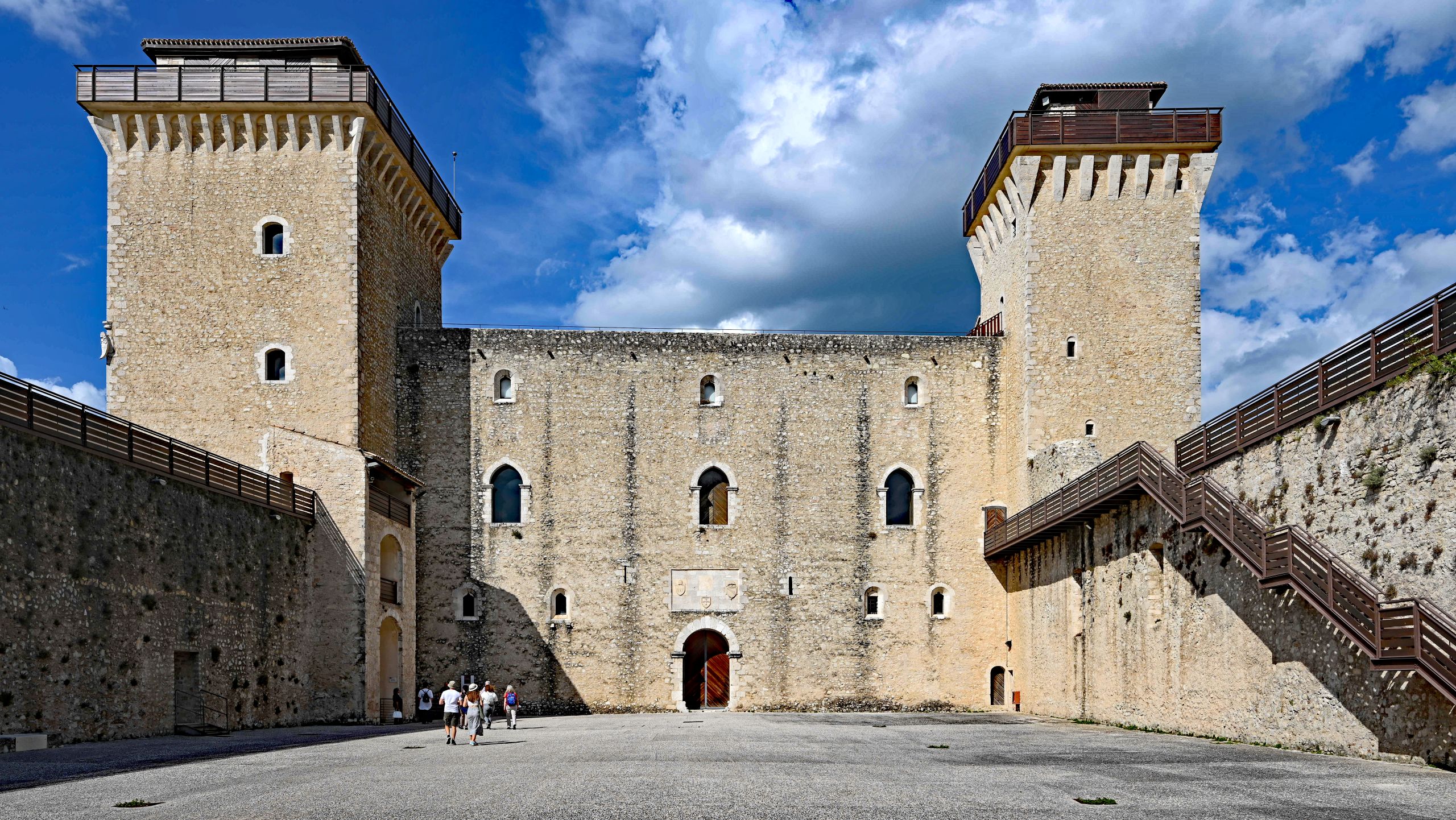
My path eventually led me up to the crown of the city, the mighty 14th-century fortress Rocca Albornoziana. As I entered the vast, gravel-laid courtyard of honor (Cortile d’Onore), I felt transported back to the Middle Ages. The massive quarry stone defensive walls are flanked by imposing, square watchtowers equipped with wooden walkways.
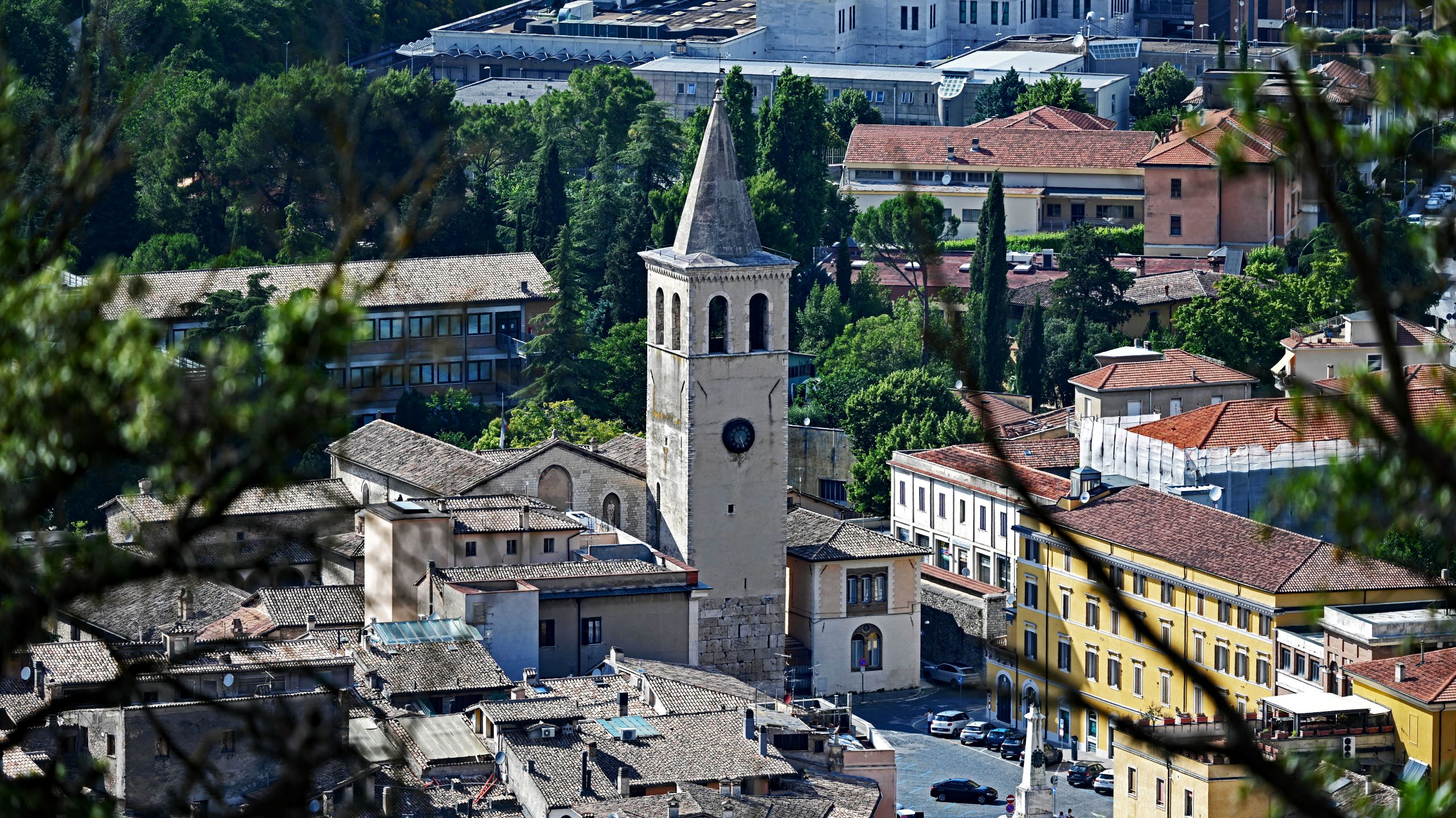
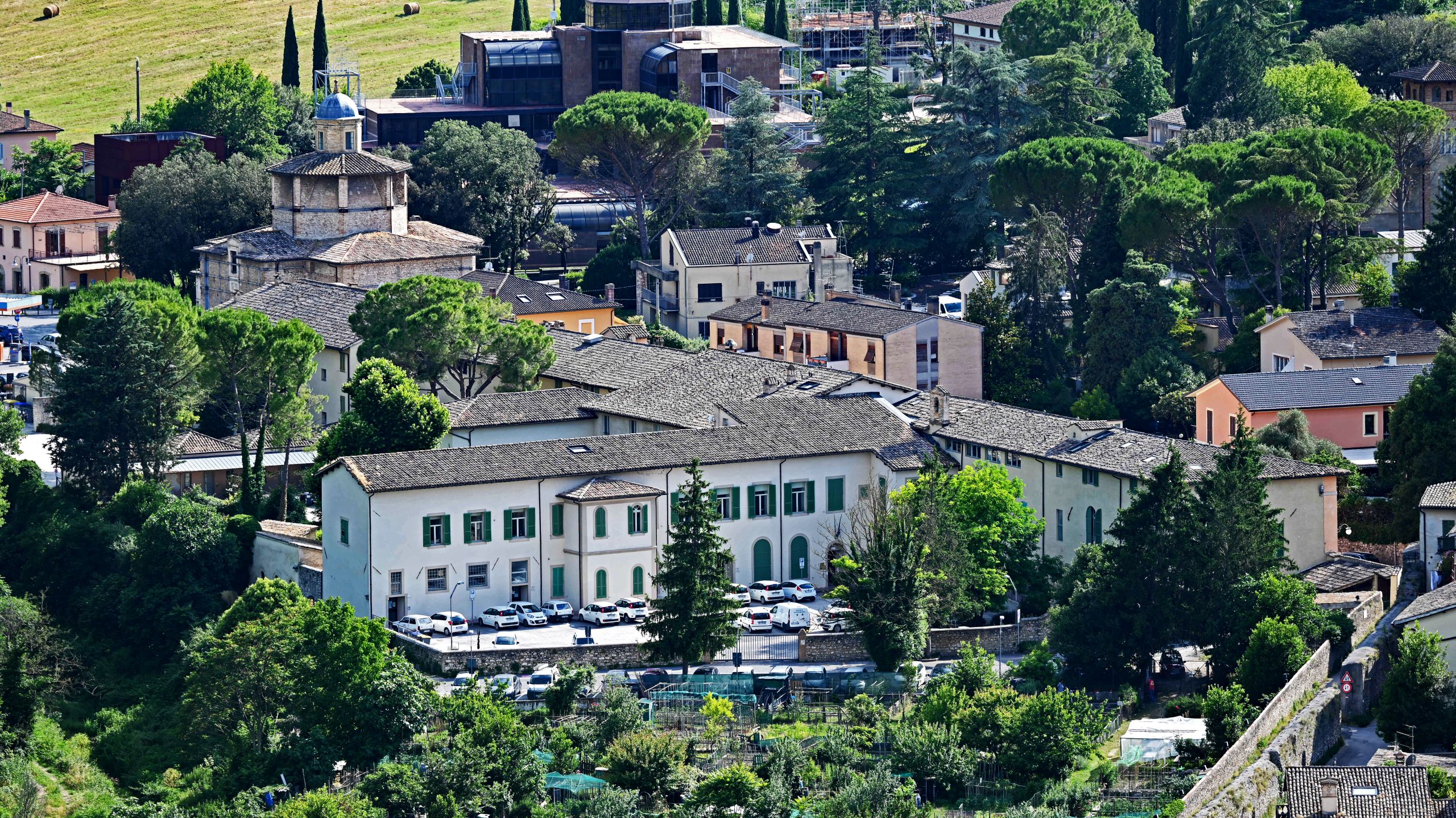
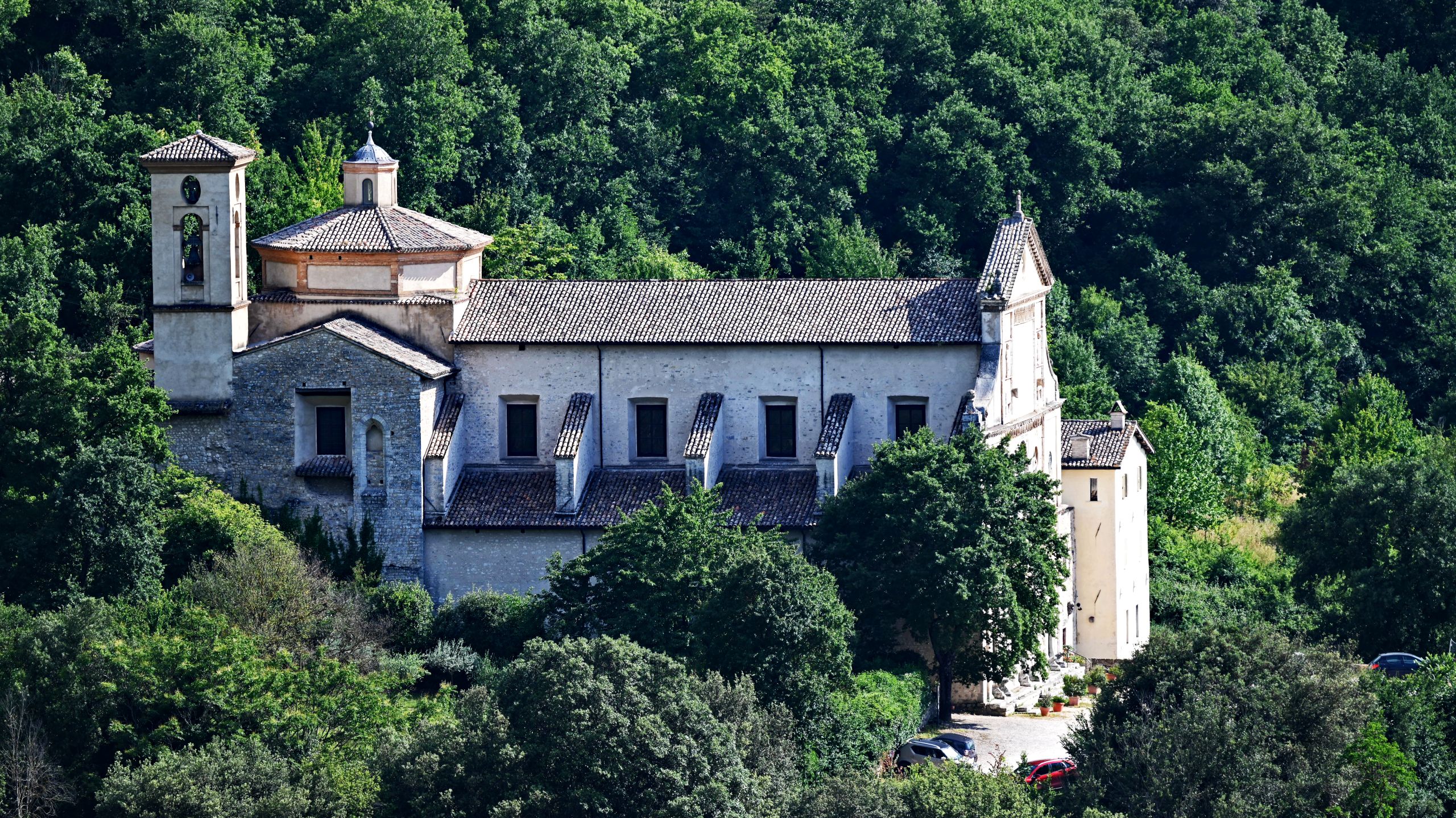
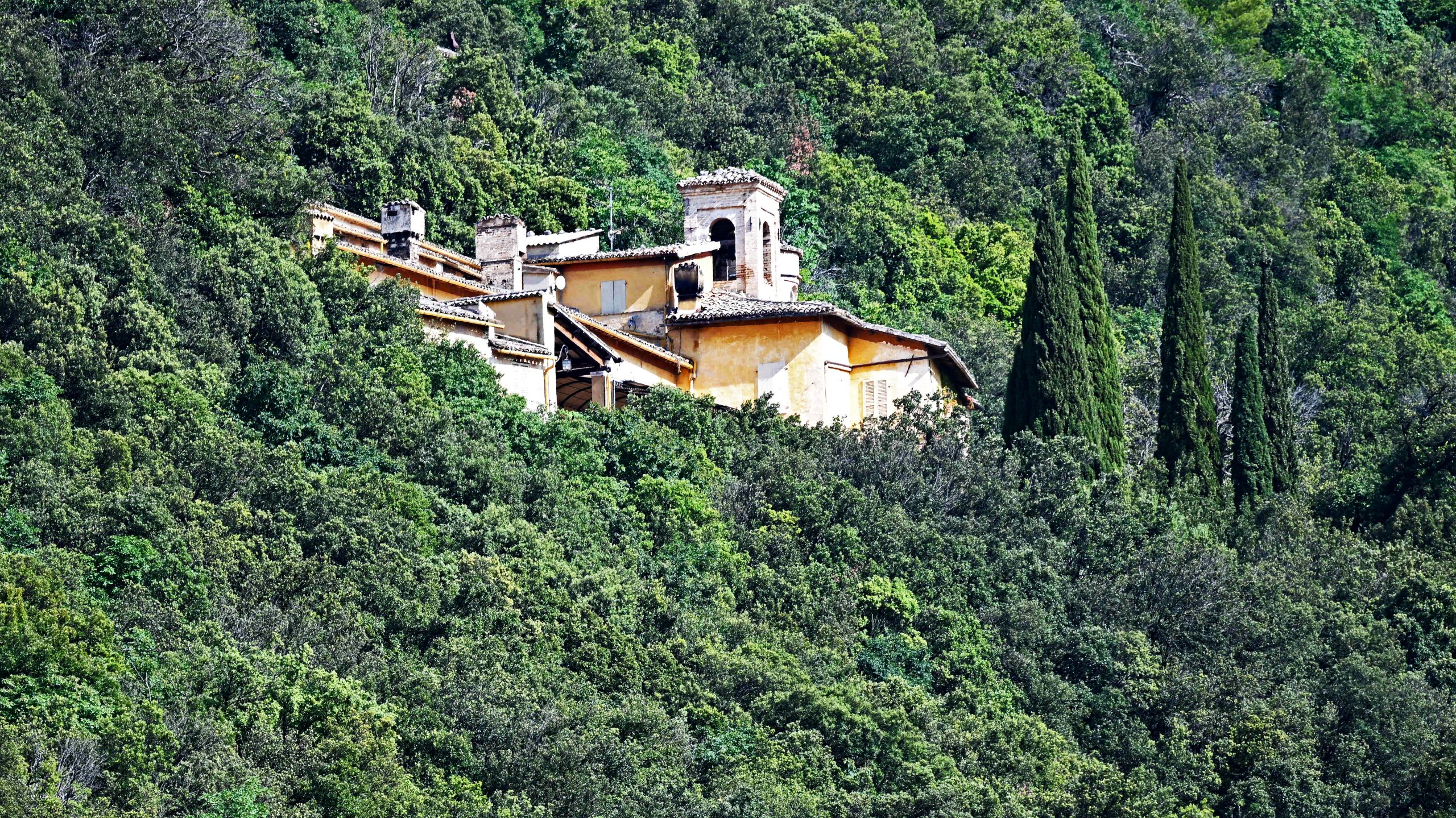
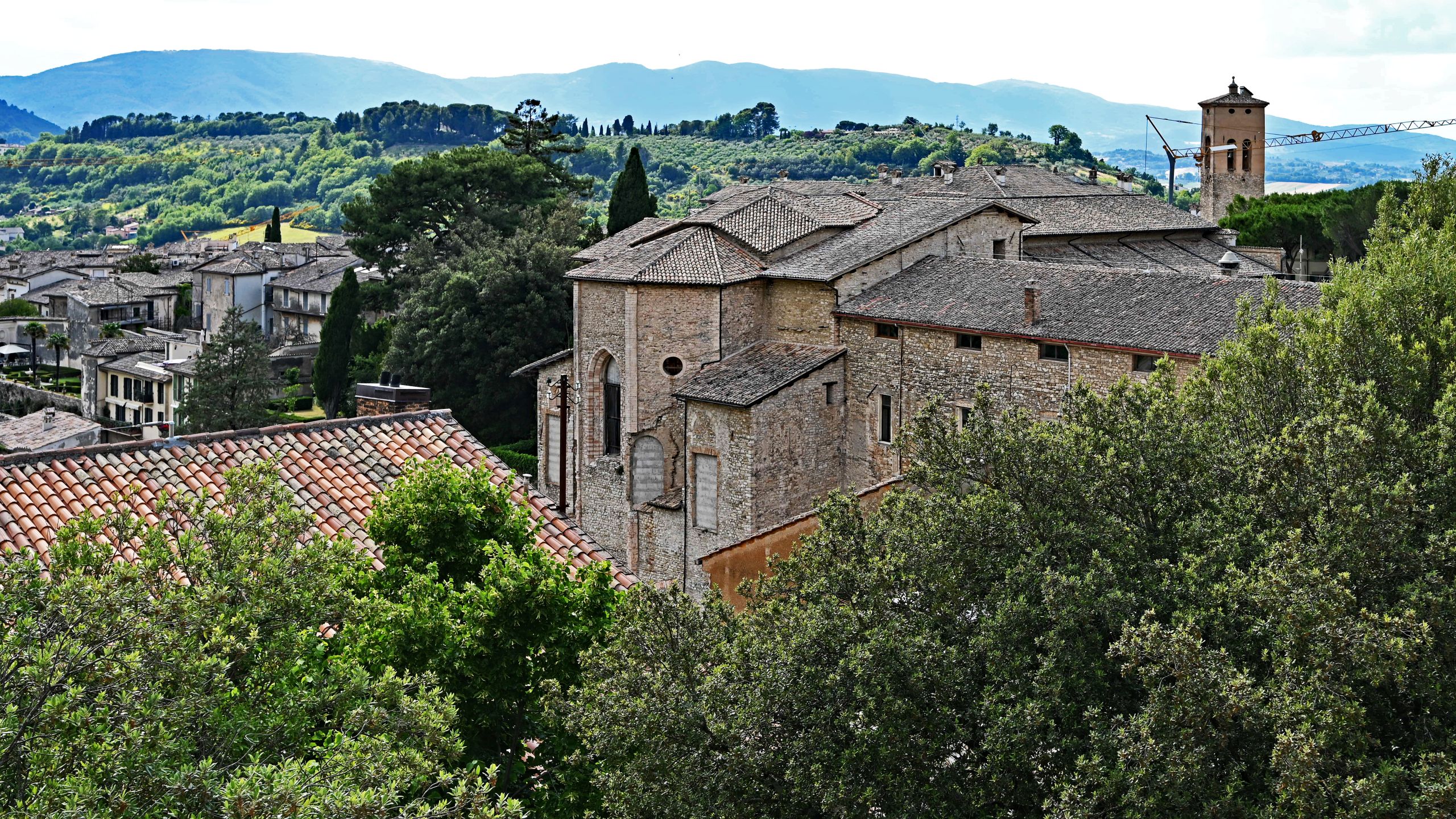
From this elevated position, fantastic panoramic views opened up over the city and the surrounding countryside. Deep in the valley, I spotted the freestanding bell tower of the Basilica di San Gregorio Maggiore with its characteristic pyramidal stone spire, as well as the sprawling, light-colored monastery complex of the Santuario della Madonna di Loreto with its striking octagonal dome. Further east, standing solitary and idyllic on the forested slopes of Monte Luco, rose the Basilica di San Pietro extra moenia. Its fine structure with its supporting buttresses stood out beautifully against the dense greenery. Even higher up, almost completely hidden in the dense holm oak forest of the mountain, enthroned the ocher-colored hermitage Eremo di San Girolamo—a place of absolute silence. A final wide glance back over the roofs of the old town showed once more the clustered terracotta roof of the Chiesa di San Filippo Neri set against the rolling Umbrian mountain ranges.
Gallery: Fortifications and Sacred Buildings of the Surrounding Area
Vibrant Life on the Ancient Squares
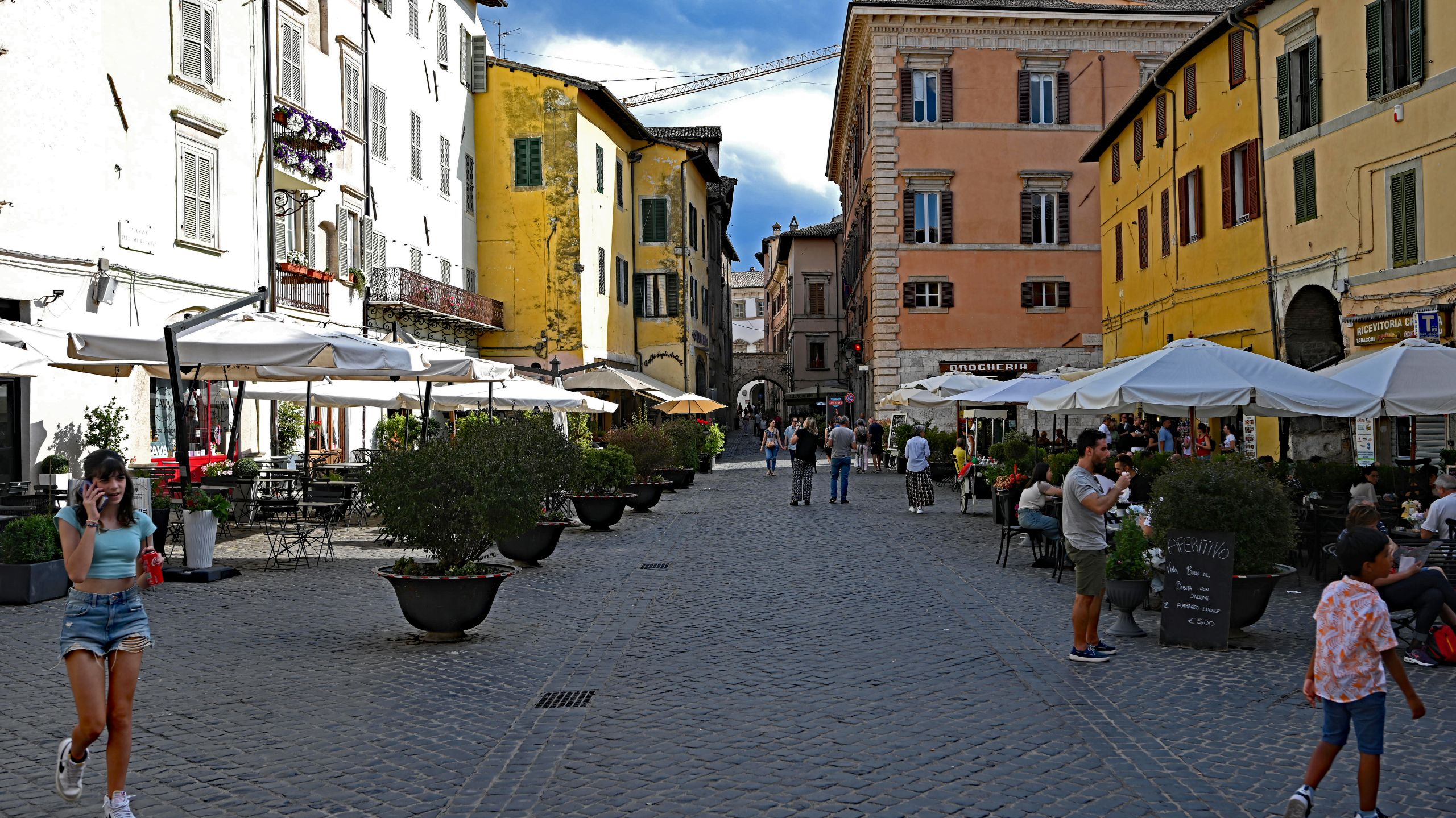
To round off the day, I was drawn back into the lively, urban heart of Spoleto. I reached the bustling Piazza del Mercato, which sits precisely on the site of the ancient Roman forum. The facades of the townhouses, characterized by warm yellow, ocher, and pastel tones, frame the square perfectly. Large white umbrellas belonging to cozy cafes invited me to linger, while locals and travelers alike strolled over the historic cobblestones.
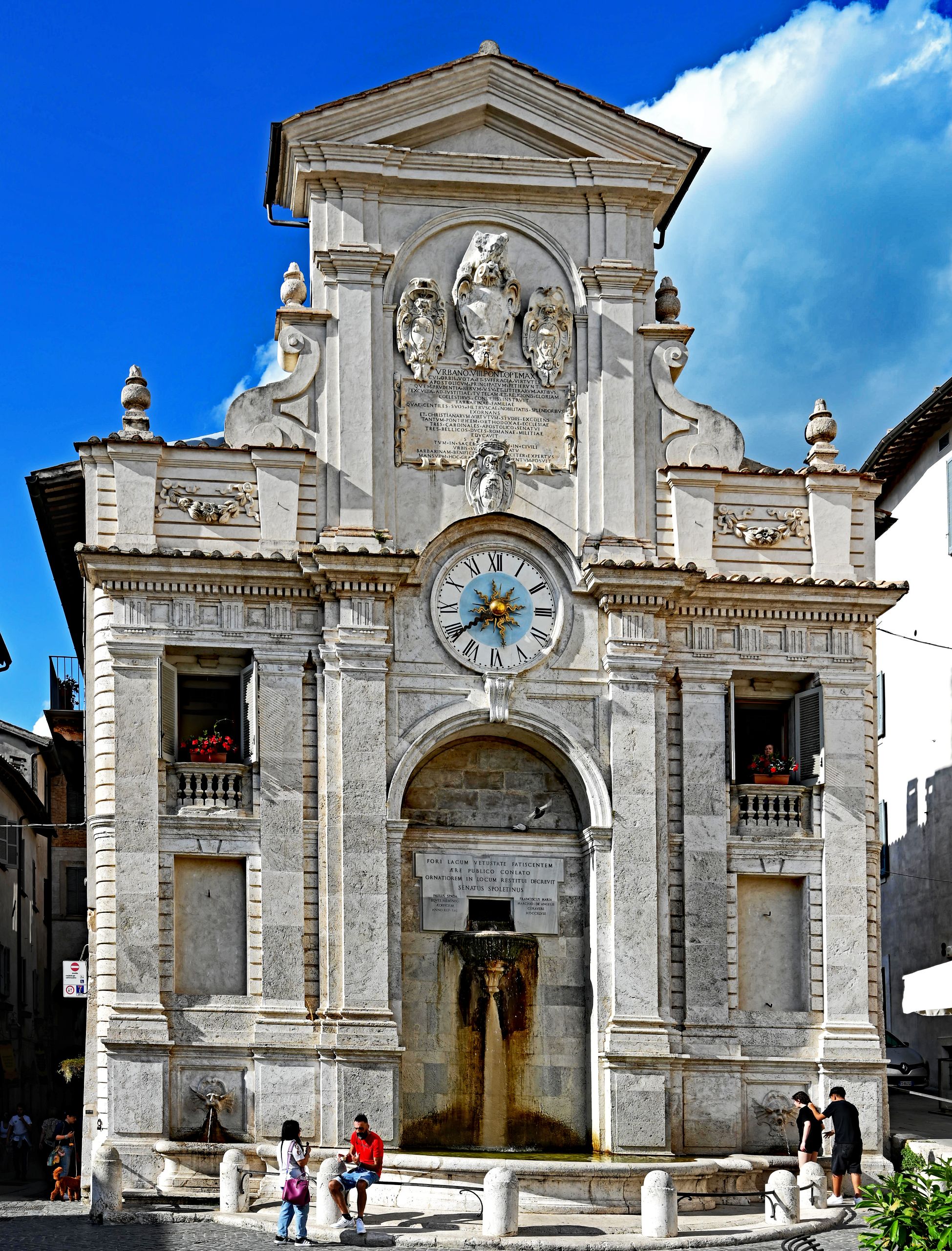
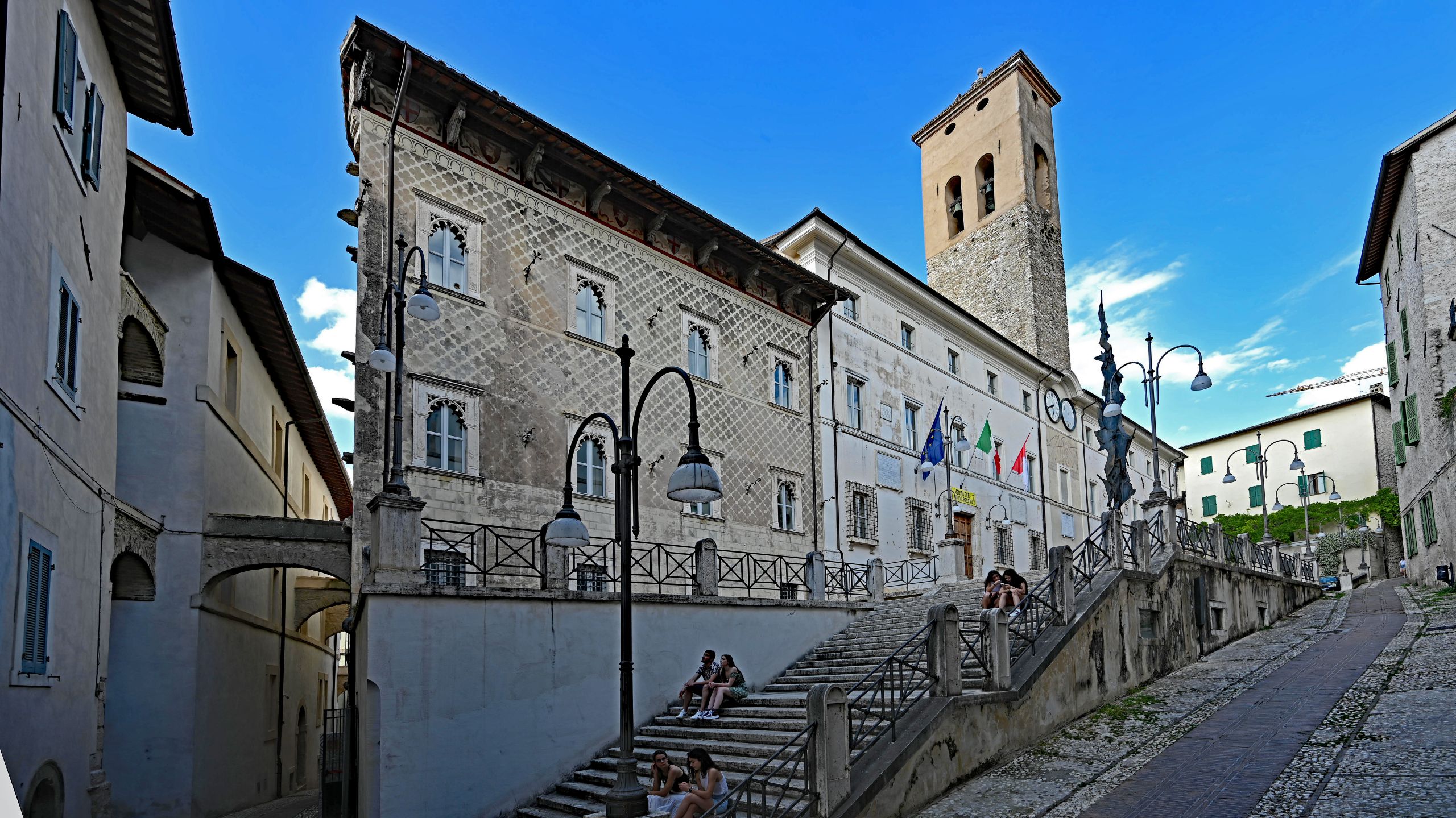
The entire west side of the market square is occupied by the monumental Baroque fountain facade of the Fonte di Piazza. Built from light travertine stone to resemble a palace, the large, ornate clock with its golden sunrays captures every eye. Just one alley away, I finally came across the Palazzo Comunale, the city’s town hall. Directly next to it, I was fascinated by the Palazzo Racani Arroni, whose extraordinary facade is decorated with magnificent, monochromatic sgraffito patterns dating from the 16th century. Watching over the entire complex is the medieval bell tower from the 13th century—a worthy, history-steeped conclusion to this unforgettable summer day.
Gallery: Bustling Squares and Stately Palaces