August 29th 2022
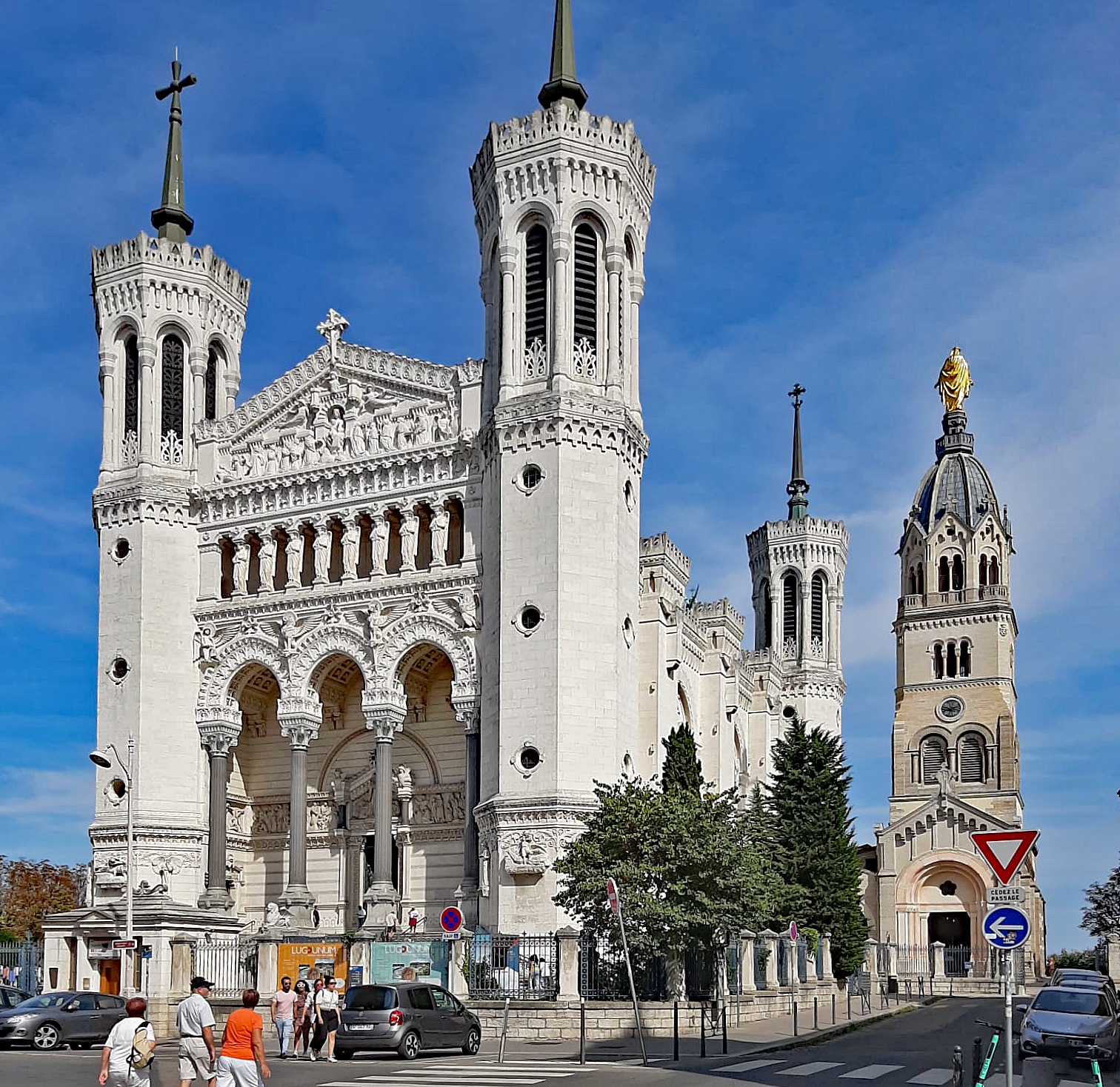
The morning in Lyon begins with an unceasing interplay of light and stone. Approaching the city, a mighty, almost unearthly white palace of devotion draws every gaze: the Basilica of Notre-Dame de Fourvière thrones high atop its hill, as if watching over the earthly bustle of the city below. In the daylight, its snow-white facade projects an almost majestic coolness, which is softly tempered by the warm, Neo-Byzantine and Romanesque curves of its four corner towers. Directly adjacent, the old bell tower reaches into the sky, its peak crowned by the famous golden statue of the Virgin Mary that catches the light, gleaming like a tiny, sparkling star over the rooftops of Lyon.
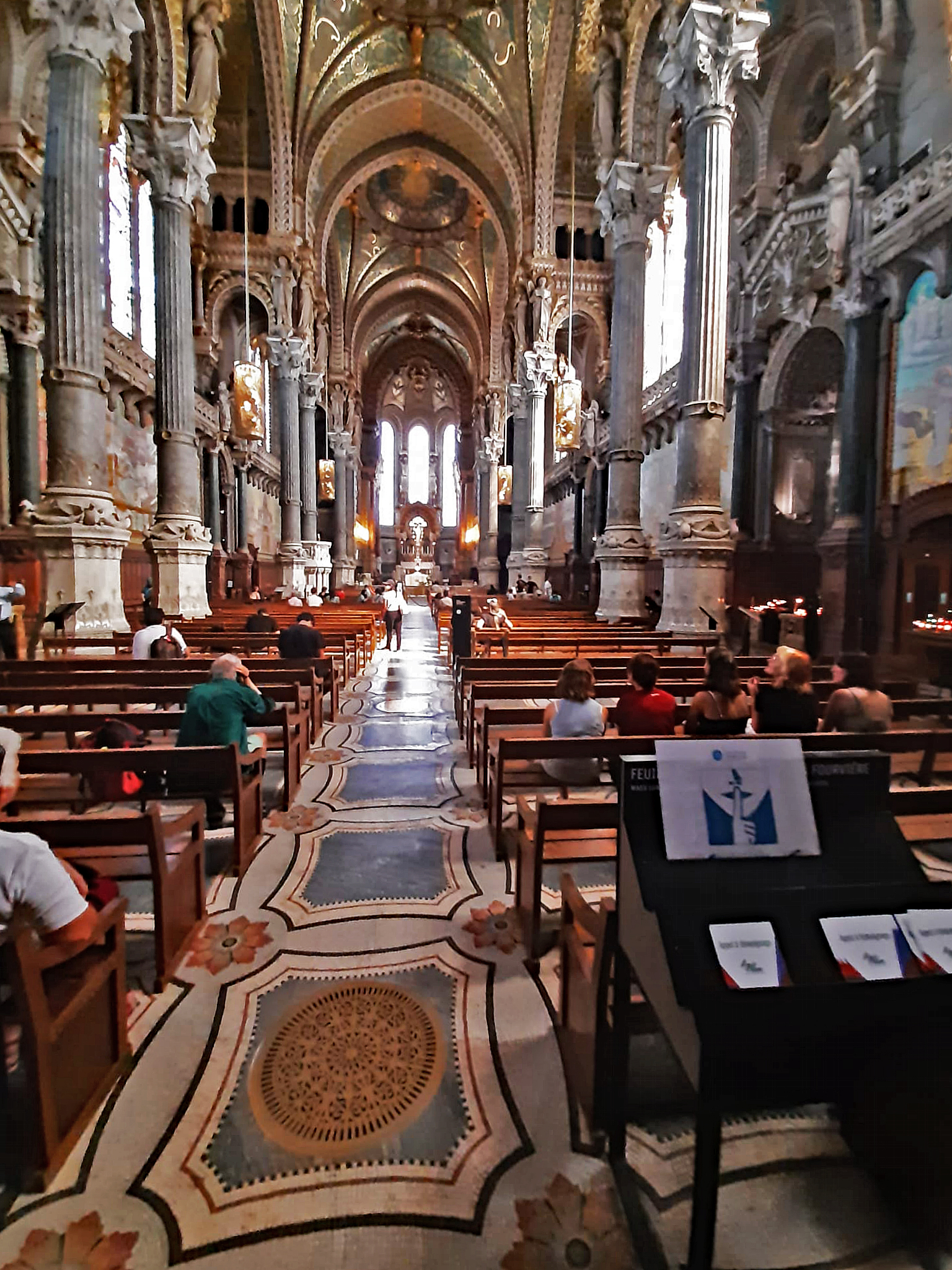
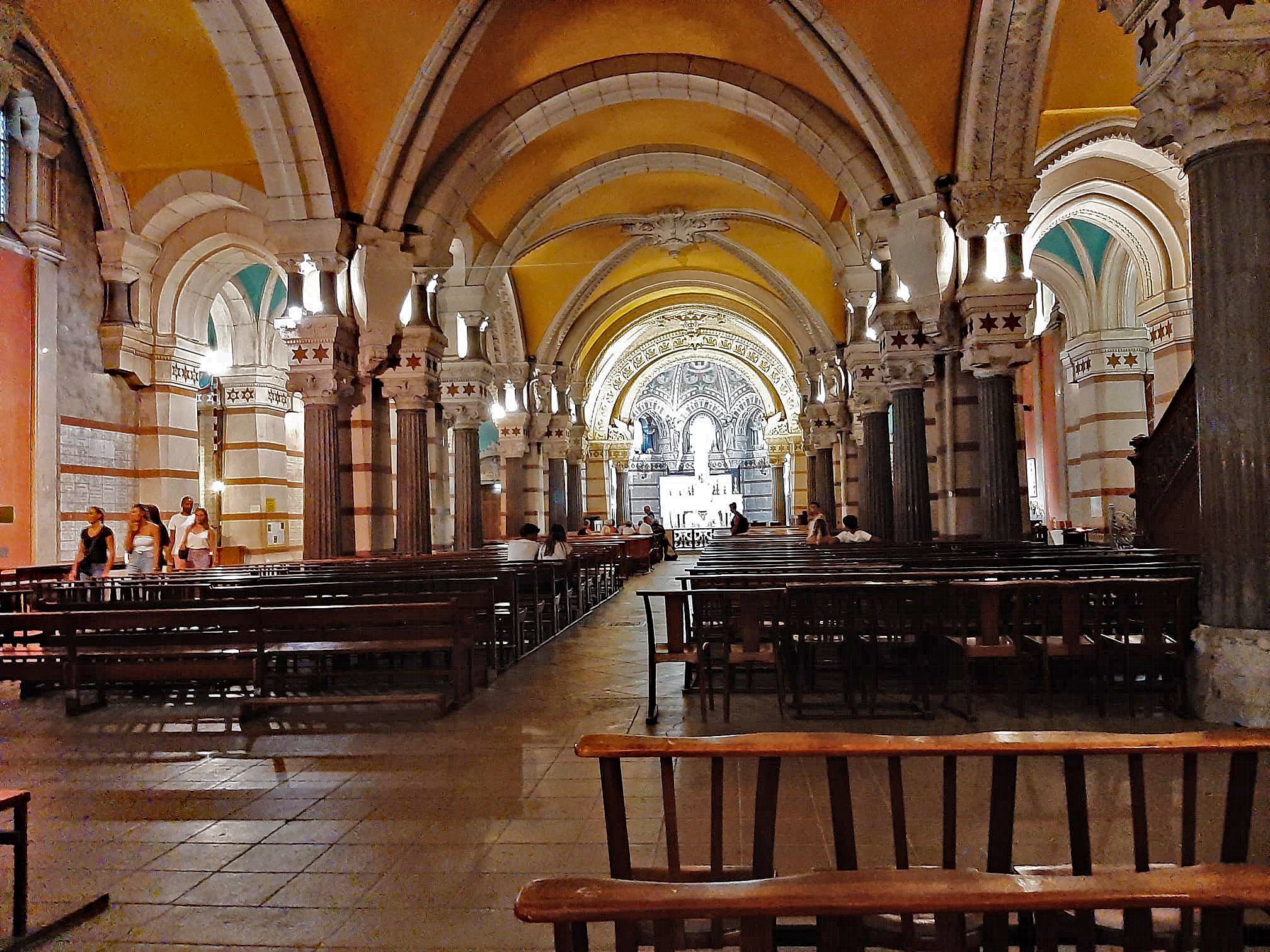
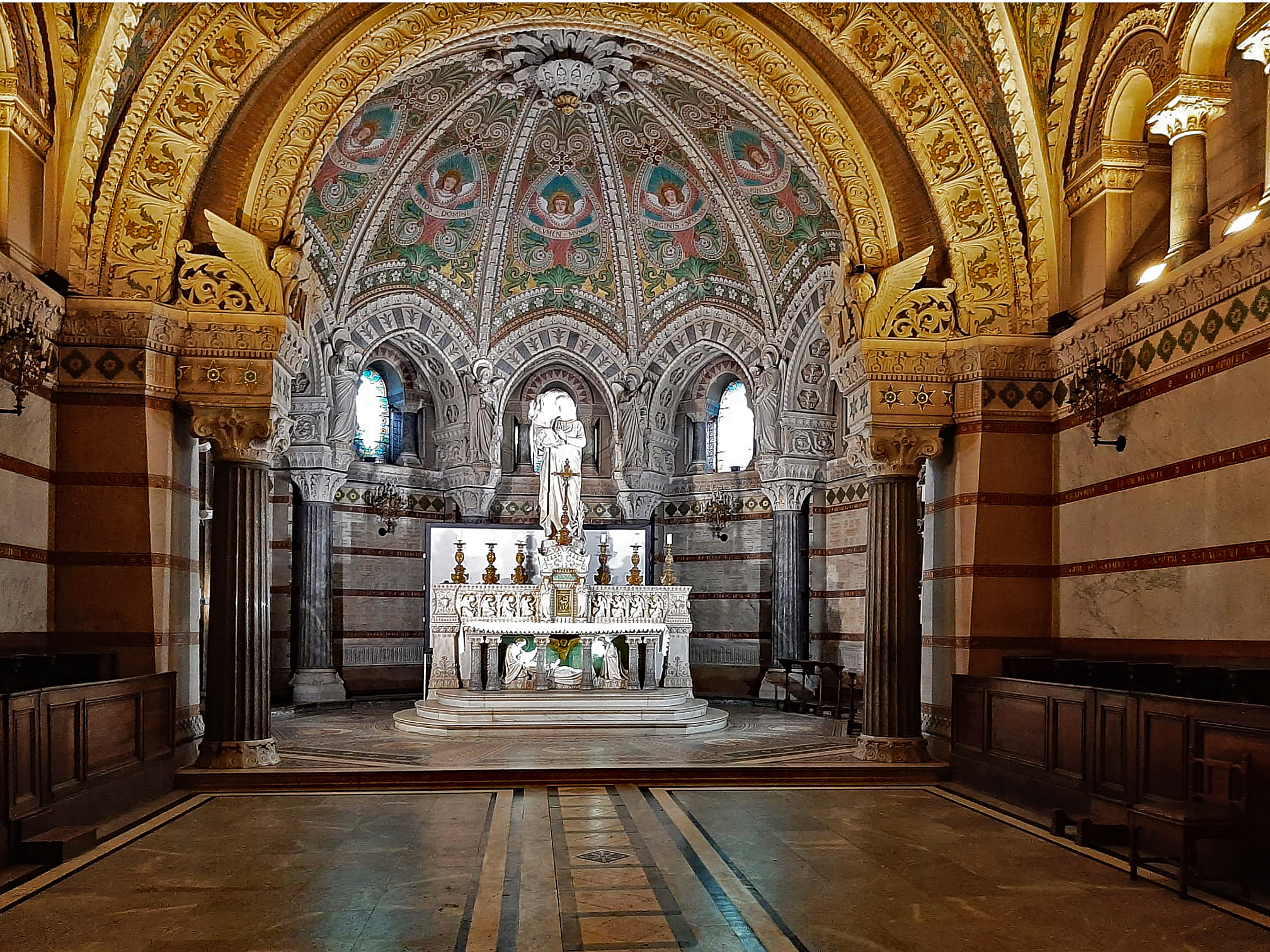
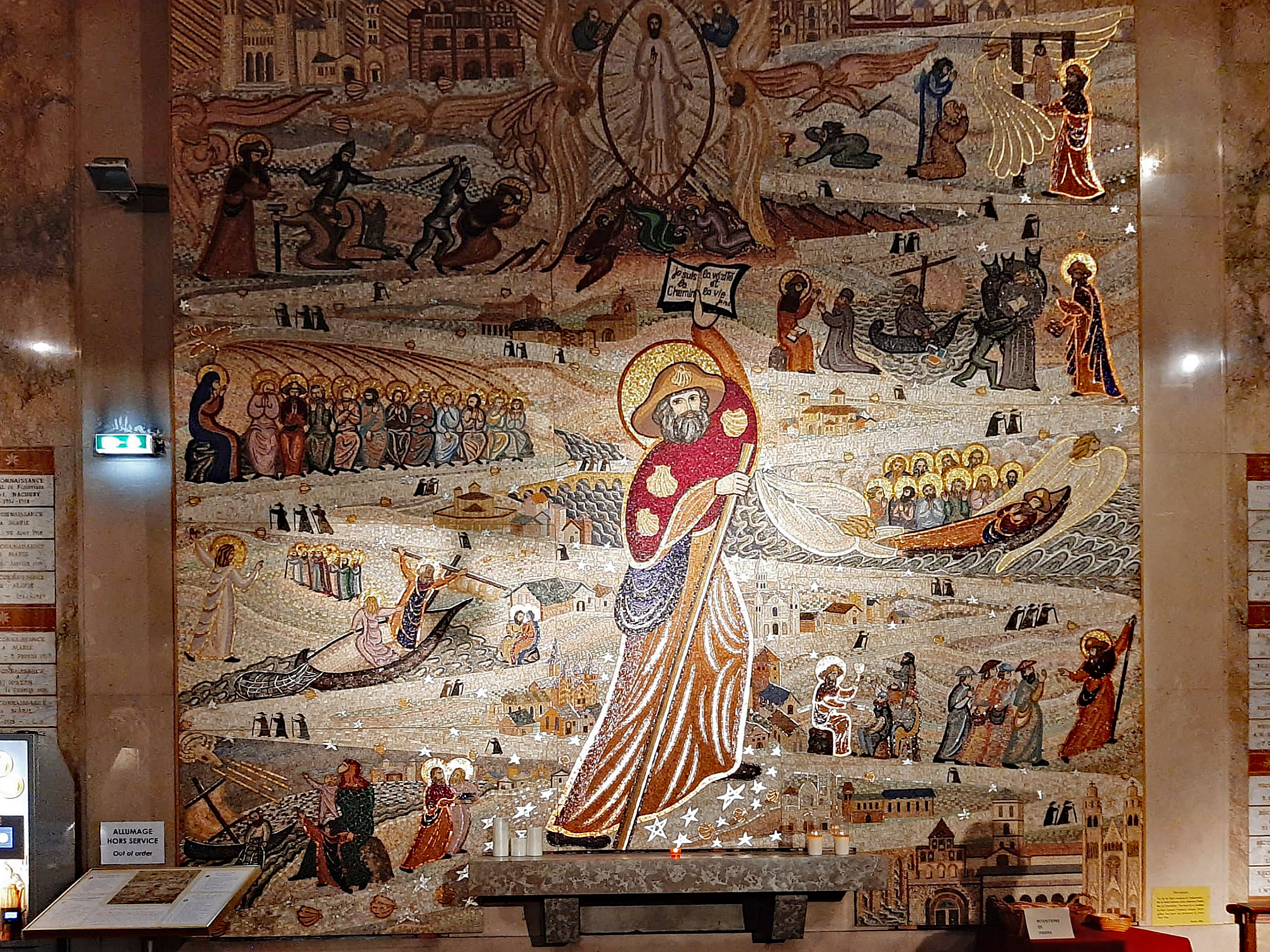
Step inside the basilica directly after this external impression, and you are instantly overwhelmed by a sheer sensory overload of gold and color. The main nave virtually explodes with Neo-Byzantine opulence. Monumental, fluted columns of dark, almost black marble support heavy vaults that are completely covered in shimmering gold leaf, intricate mosaics, and vibrant paintings. Beneath your feet stretches a highly detailed mosaic floor, its geometric patterns effortlessly guiding your eyes forward. Descending the stairs from here into the crypt—the lower church—the atmosphere changes completely. In this intimate, protective space, the arches display a rhythmic alternating pattern of light and dark stone. At the end of the central aisle, your gaze rests upon the magnificent main altar dedicated to Saint Joseph; a white marble statue of the saint holding the Christ Child is flanked by angels intricately carved into the stone with wide, outstretched wings. Hidden along the walls is also a modern masterpiece: the monumental Camino de Santiago (Way of Saint James) mosaic. Spanning 23 square meters, a life-sized Saint James the Greater shines with his walking staff, surrounded by stars and the colorful, detailed stations of the historic pilgrimage route, all embedded in a deep, symbolic blue.
The Splendor of Notre-Dame de Fourvière: Exterior and Interior
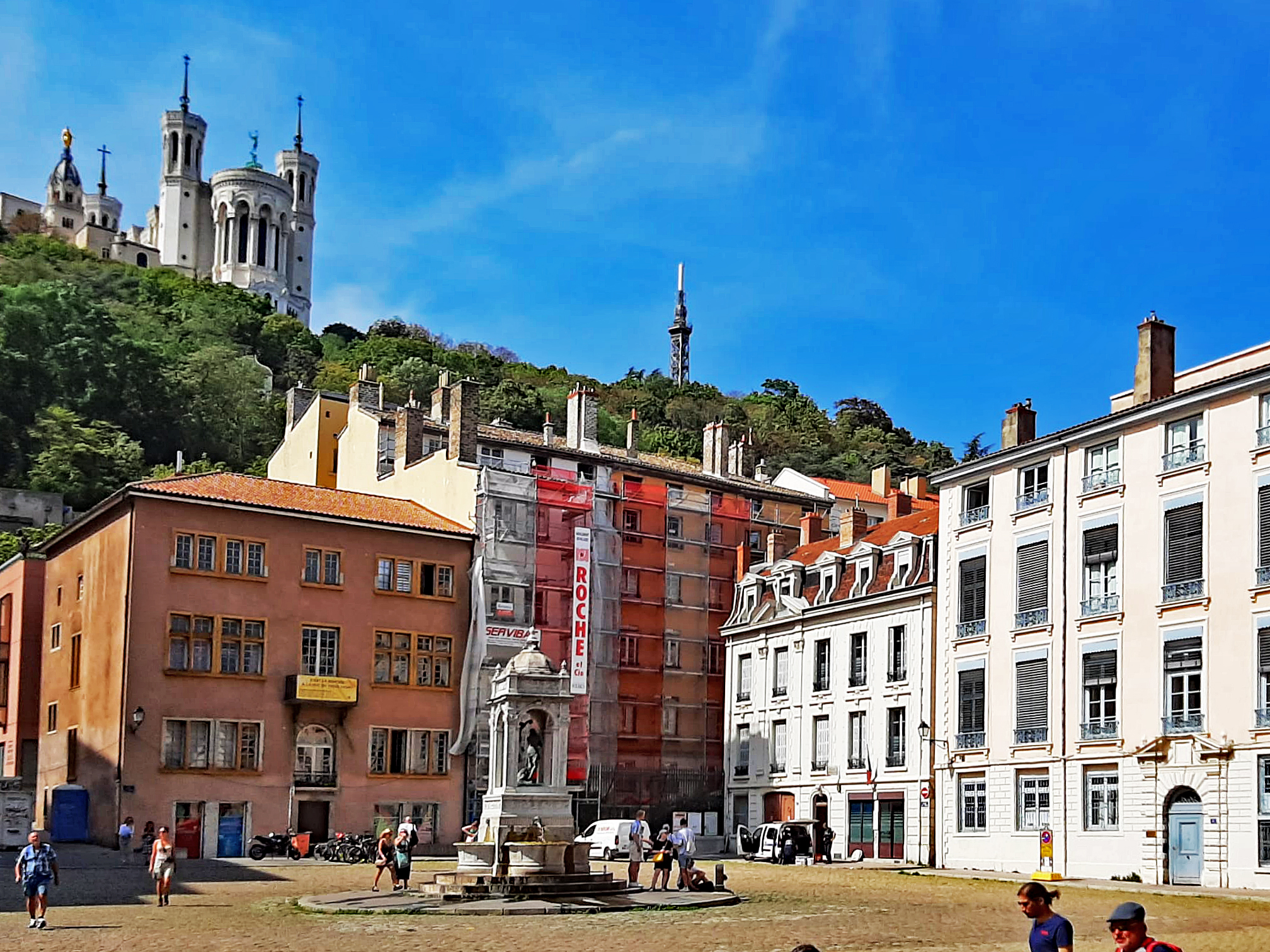
Descending the hill into the historic old town, Vieux Lyon, the atmosphere shifts instantly. At Place Saint-Jean, every cobblestone breathes history. Rows of Renaissance and Classical buildings frame the square in warm shades of ochre, terracotta, and soft rose. In the heart of the square murmurs the Neo-Gothic Saint-Jean Fountain, its detailed sculptures depicting the baptism of Christ, while the delicate steel lattice of the Tour métallique rises above the treetops in the background.
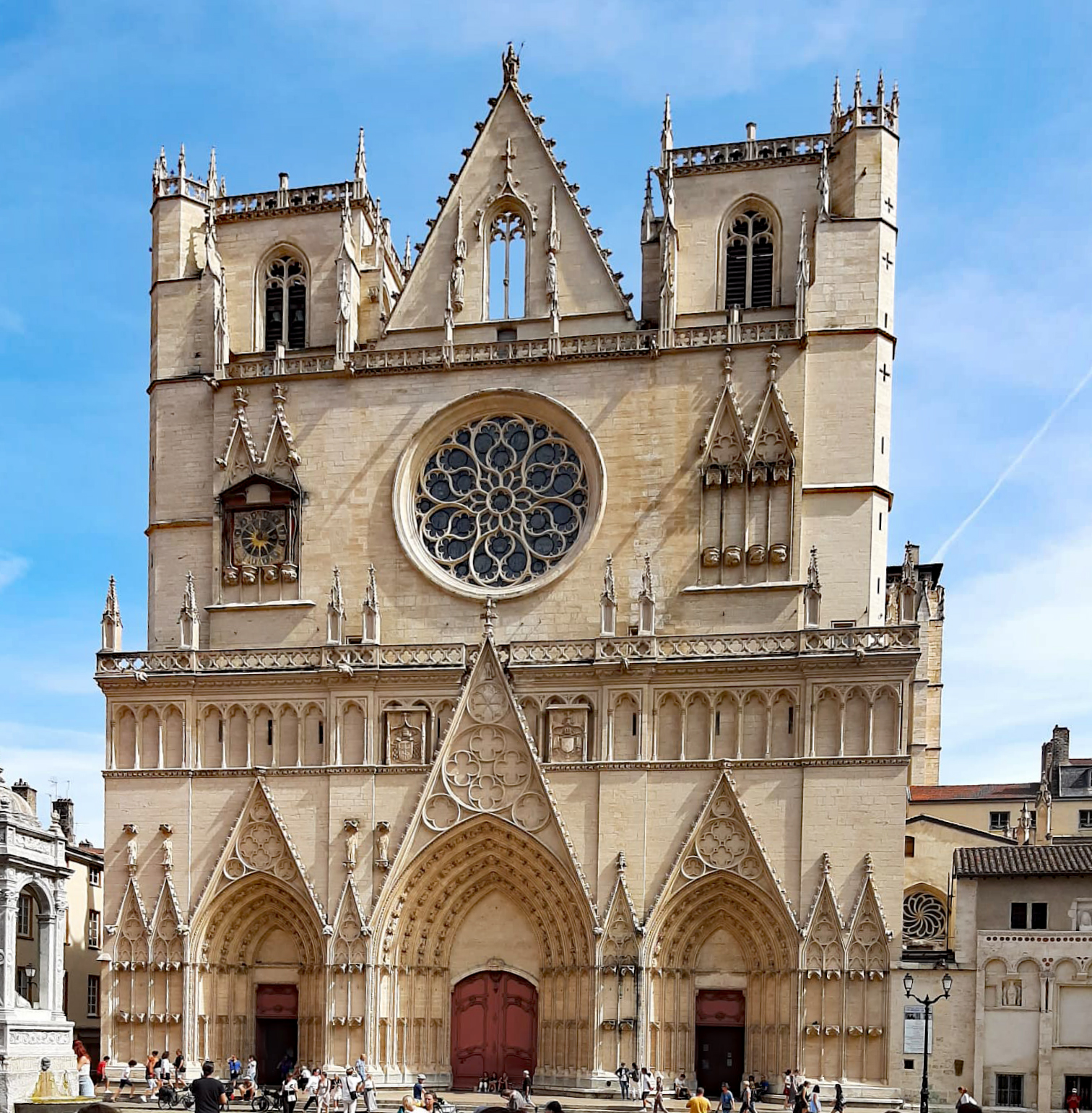
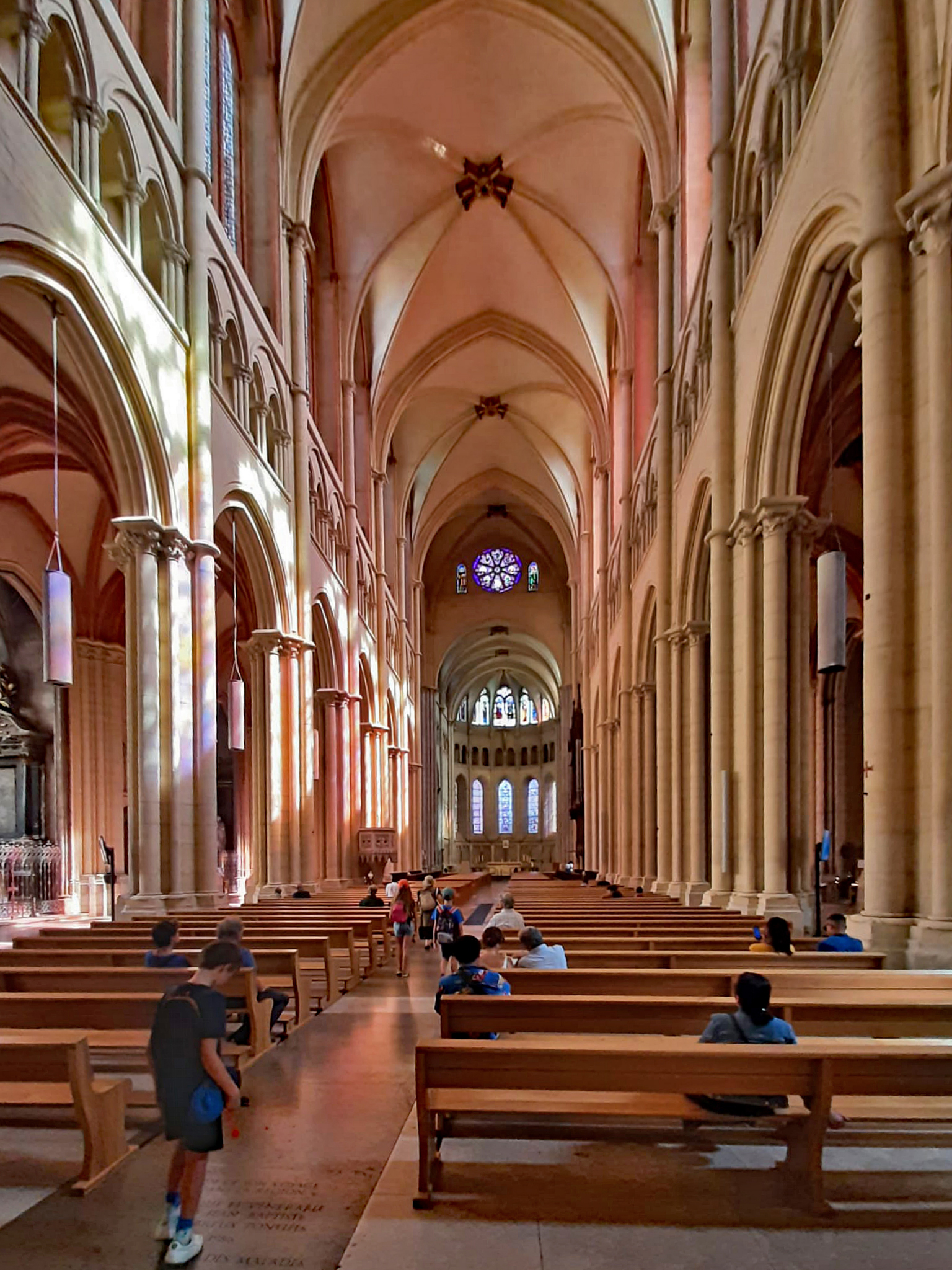
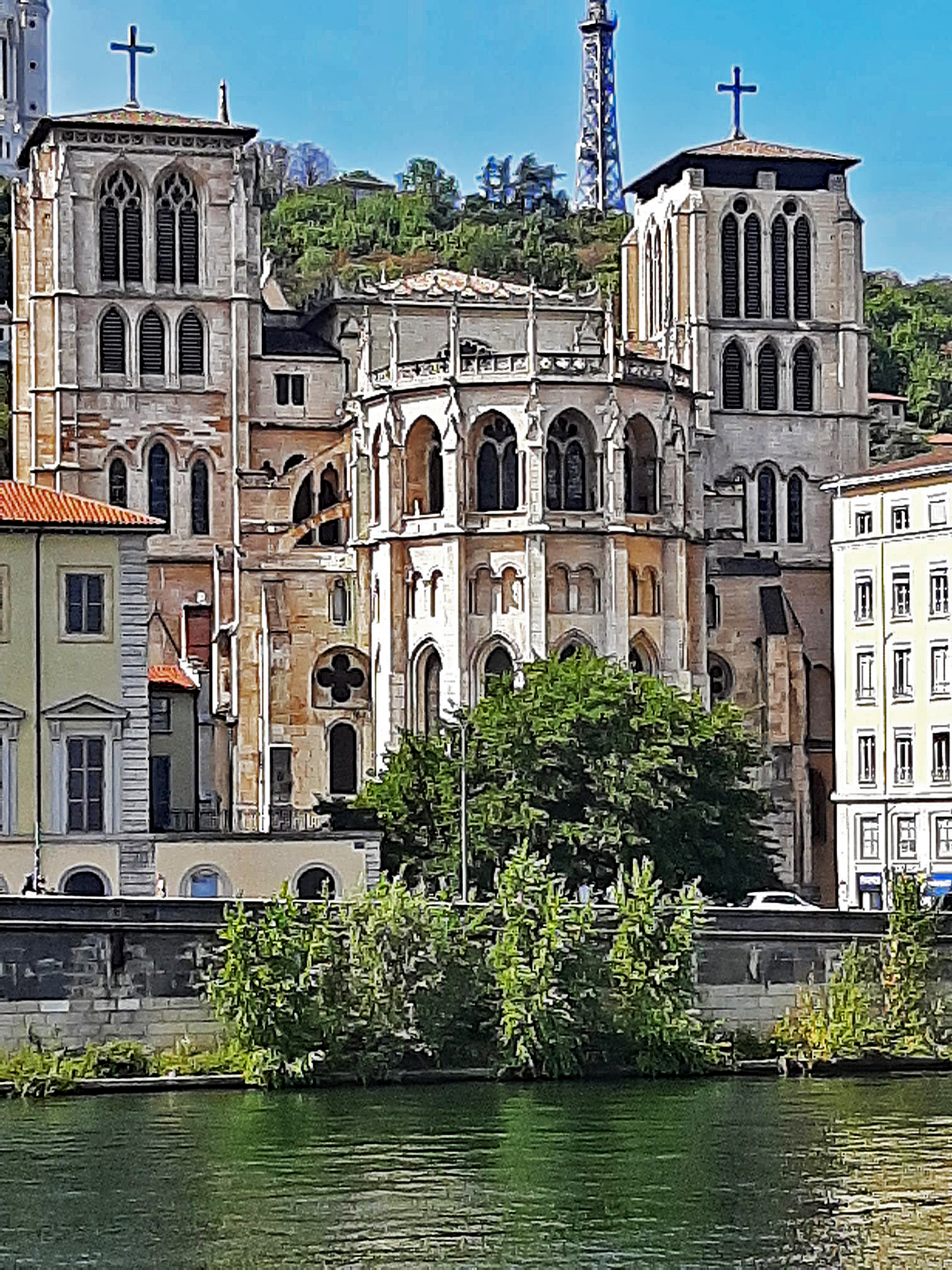
Just a few steps away, the view opens up to the monumental west facade of the Cathedral of Saint-Jean-Baptiste. Its unfinished, massive towers give it an earthy, powerful presence. The enormous, circular rose window in the center of the Gothic facade looks like a stone piece of lace, guarding the three deep, pointed entrance portals below. Stepping through these gates, the reverent silence of the Gothic nave embraces you. The sexpartite rib vault spans high above like a protective canopy over long rows of dark wooden pews, while at the far end of the space, the distant, colorful stained-glass windows of the choir transform the incoming light into mystical shades of blue and red. Strolling finally to the opposite bank of the Saône, the cathedral reveals itself in its full, picturesque glory: the Romanesque apse is beautifully mirrored in the gentle green waters of the river.
Place Saint-Jean and the Cathedral in the Valley
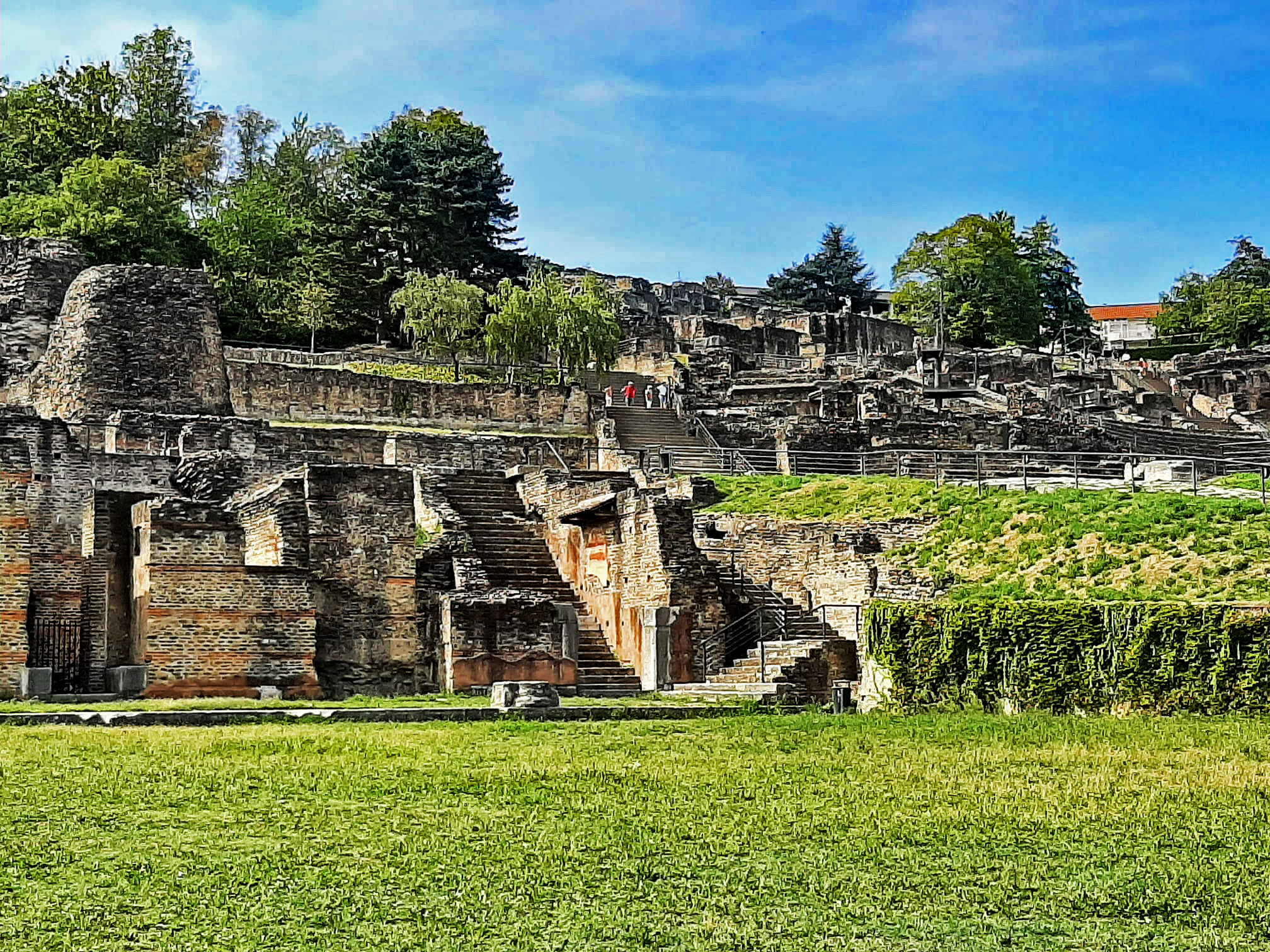
Leaving the medieval center behind to wander further across the slopes of the hill, you step into a completely different era. Here, where the Roman metropolis of Lugdunum once stood, the earth opens up to reveal the monumental witnesses of antiquity. The Ancient Odeon nests gently into the slope with its semicircular rows of grey stone. Where 3,000 select citizens once listened to the sounds of poetry and music, a peaceful, almost prayerful silence reigns today, punctuated only by the lush green lawns covering the former orchestra pit.
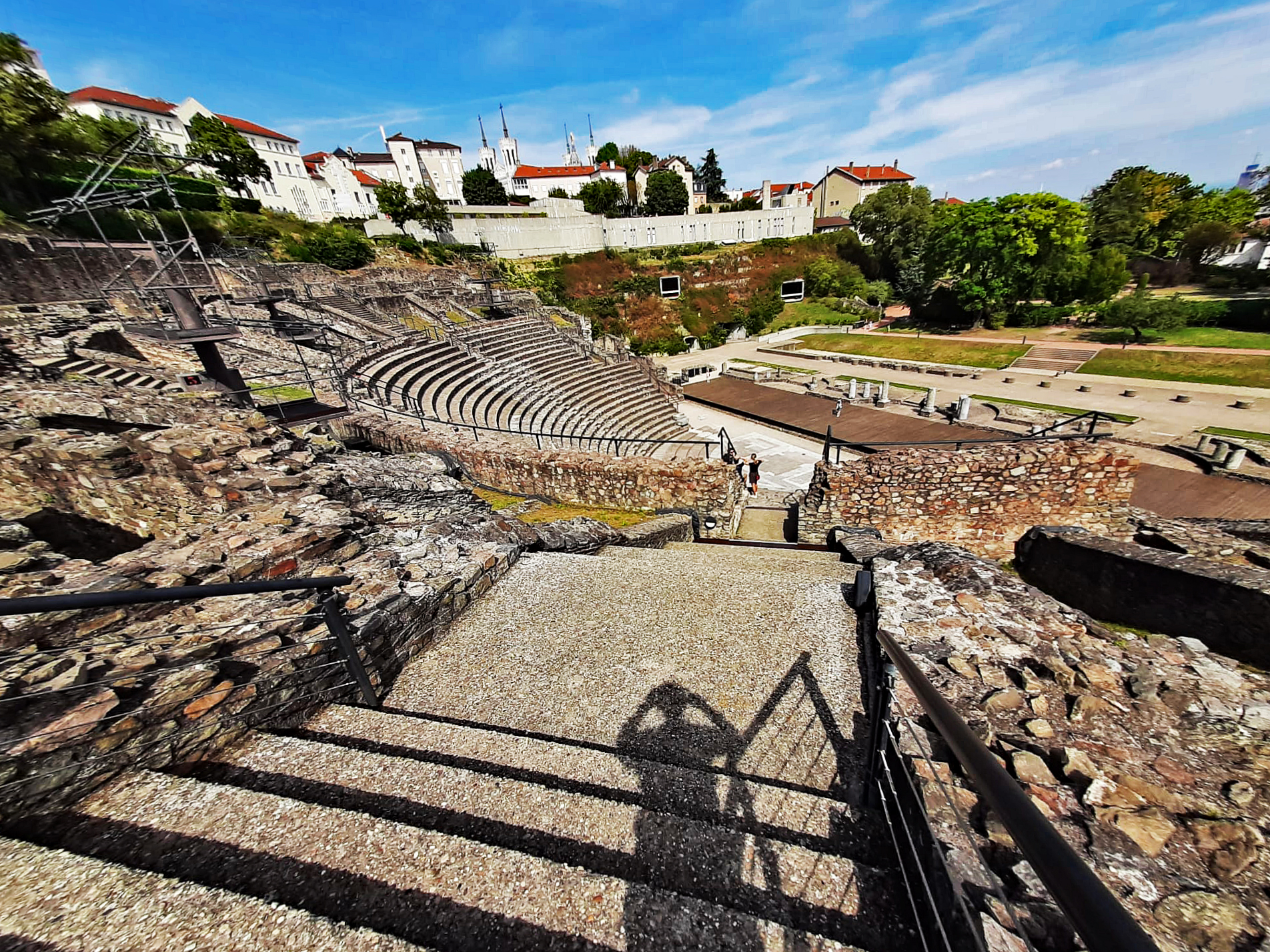
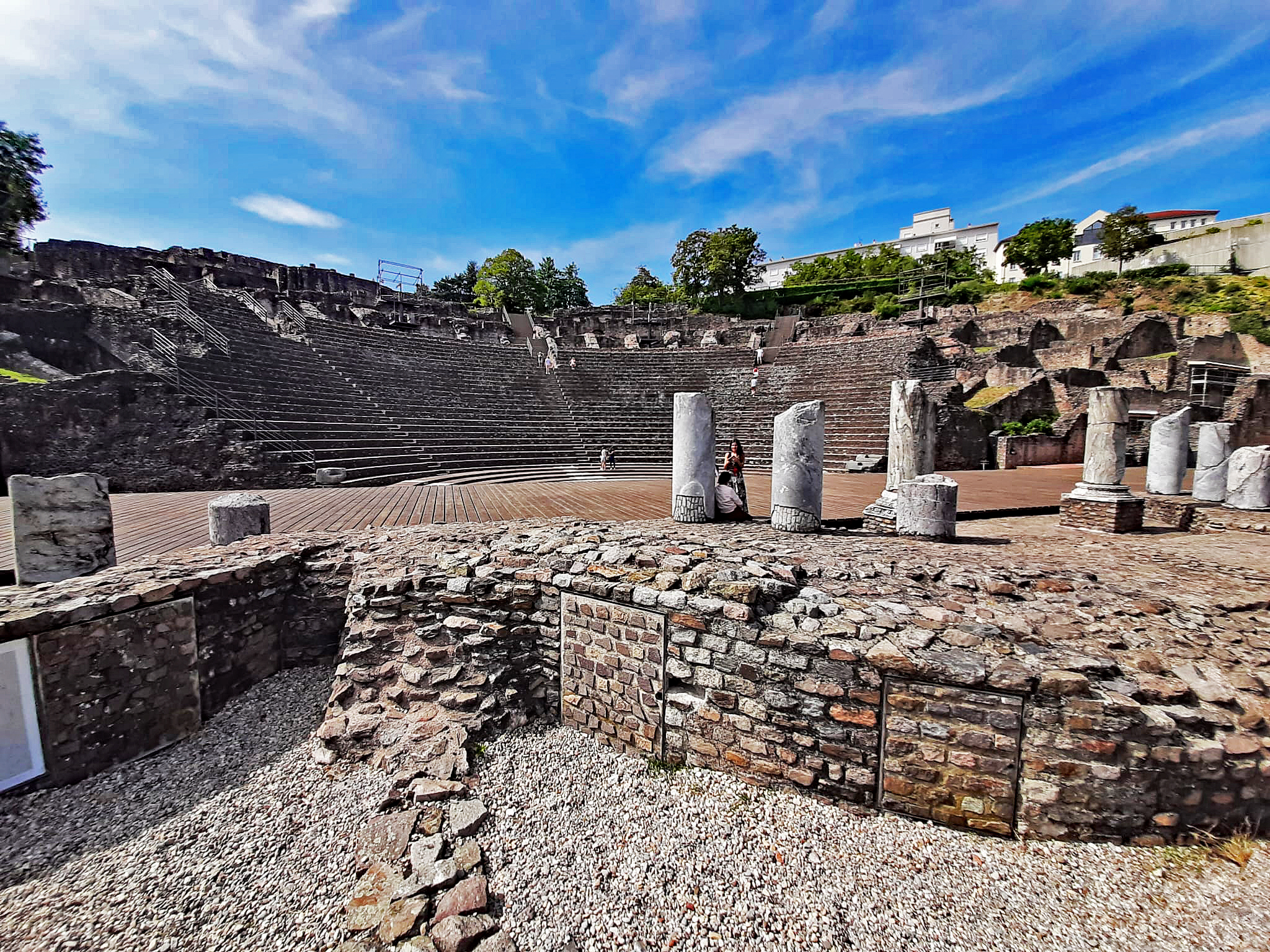
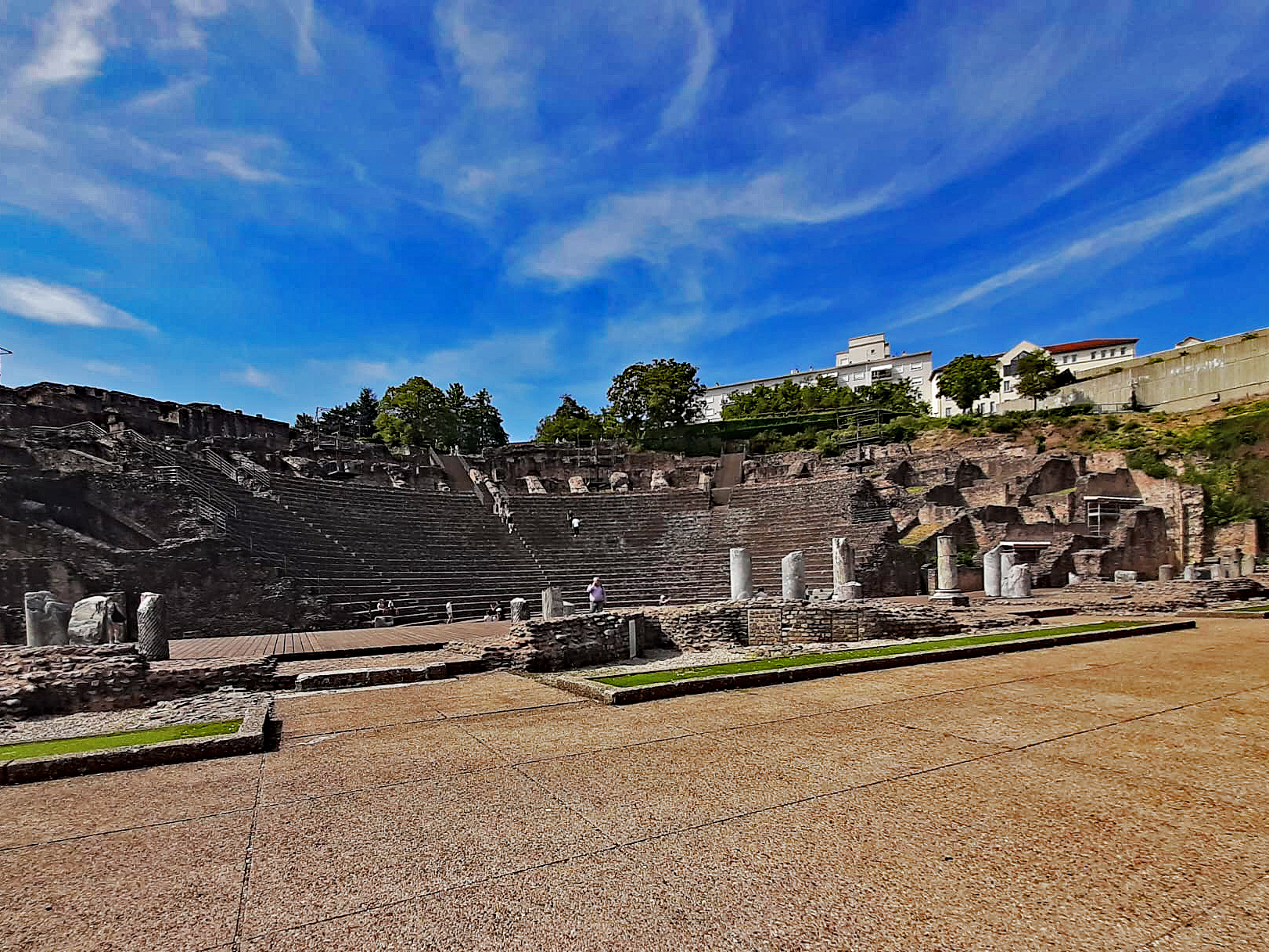
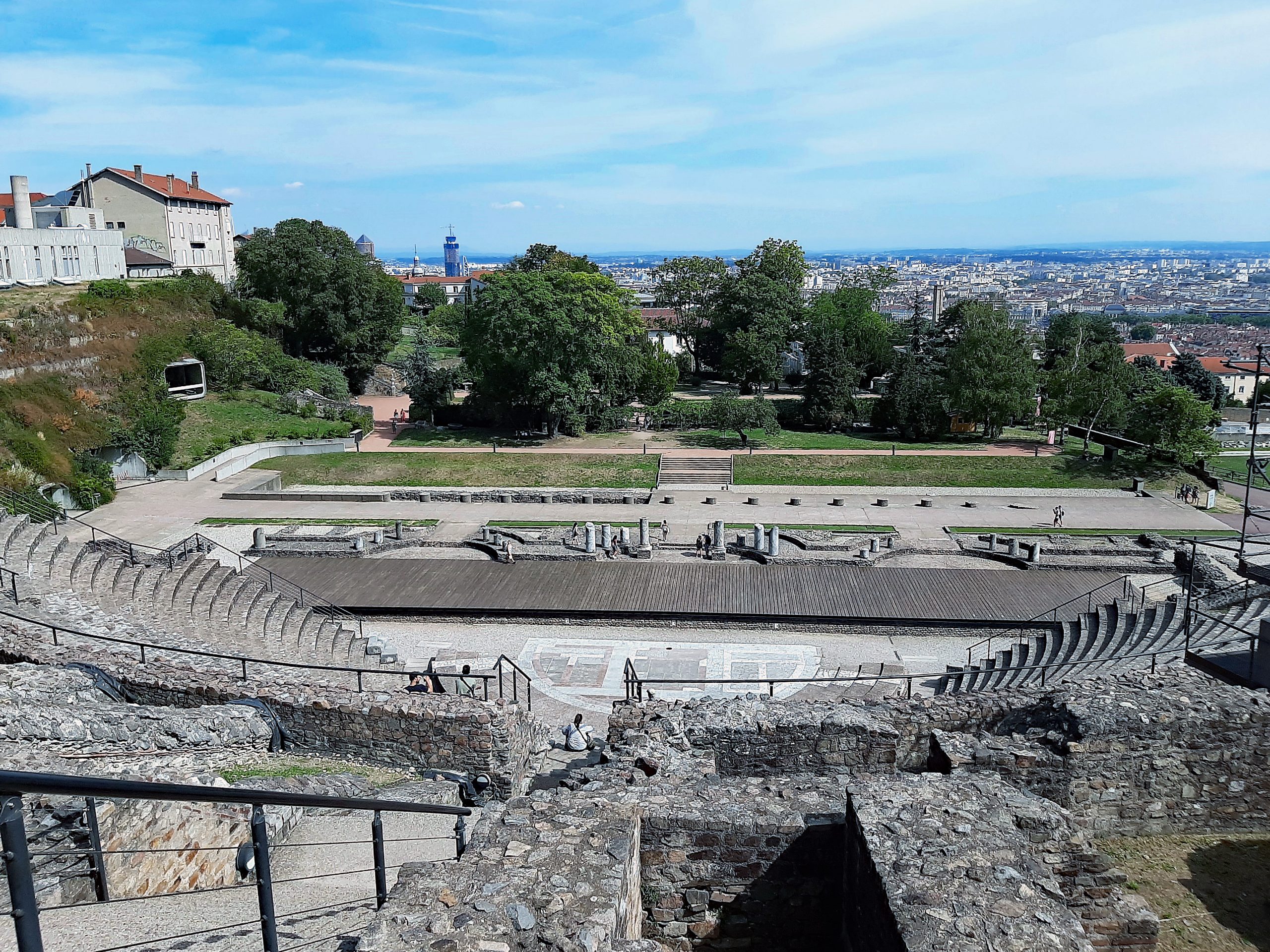
Right next to it, a wide, monumental stone staircase leads further up, connecting the intimate Odeon with the vast Ancient Theater. With every step upward, the perspective expands until you are looking down from the very top rows. The dimensions of this oldest Roman theater in Gaul are breathtaking: room for 10,000 people, steeply rising stone tiers, and the foundations of the once-grand back screen in the stage area. A few white, reconstructed marble column stumps rise like stone fingers from the ancient bricks and masonry. Standing at the very top by the deep, grid-like foundation walls of the archaeological site, past and present merge: the gaze sweeps past the ancient arena onto the endless, modern sea of houses of Lyon, dissolving into the haze of the horizon.
The Roman Heritage on the Fourvière Hill