September 3, 2022
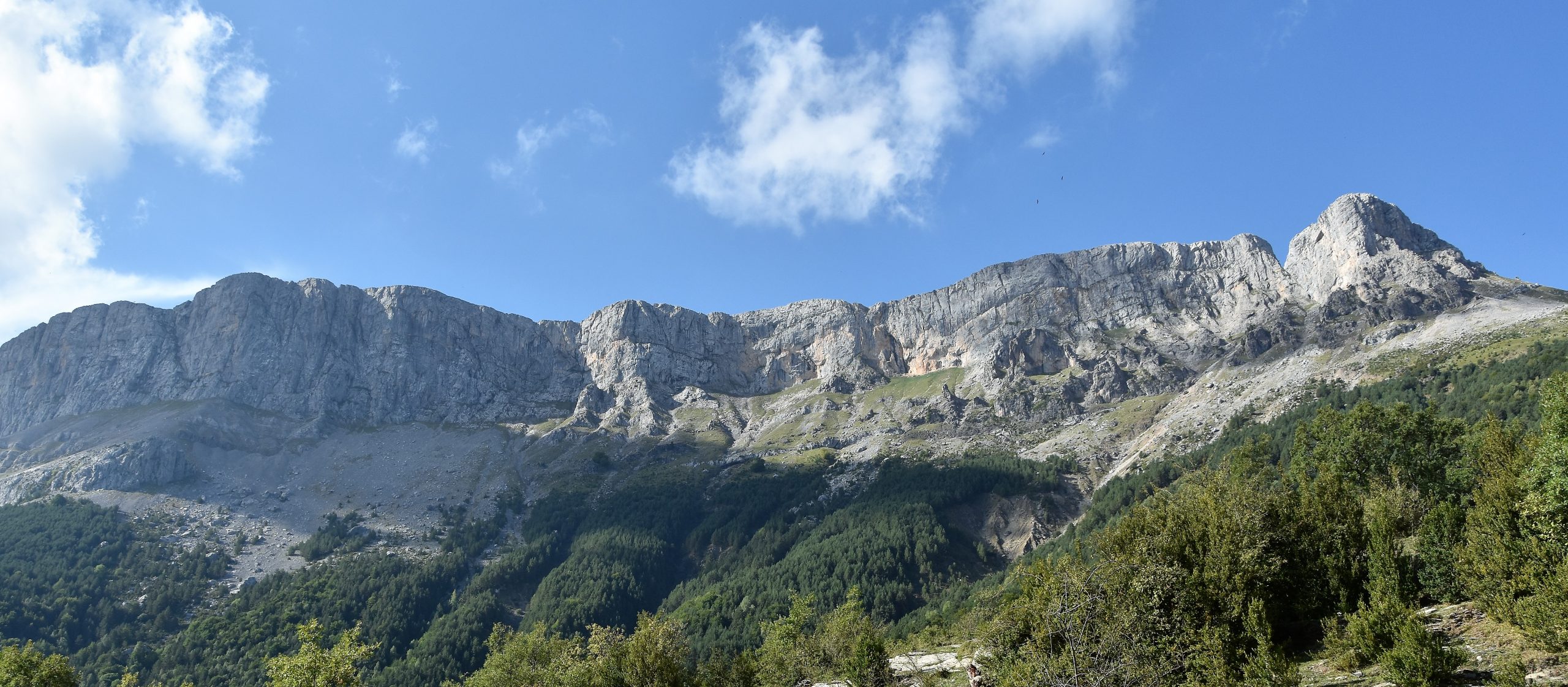
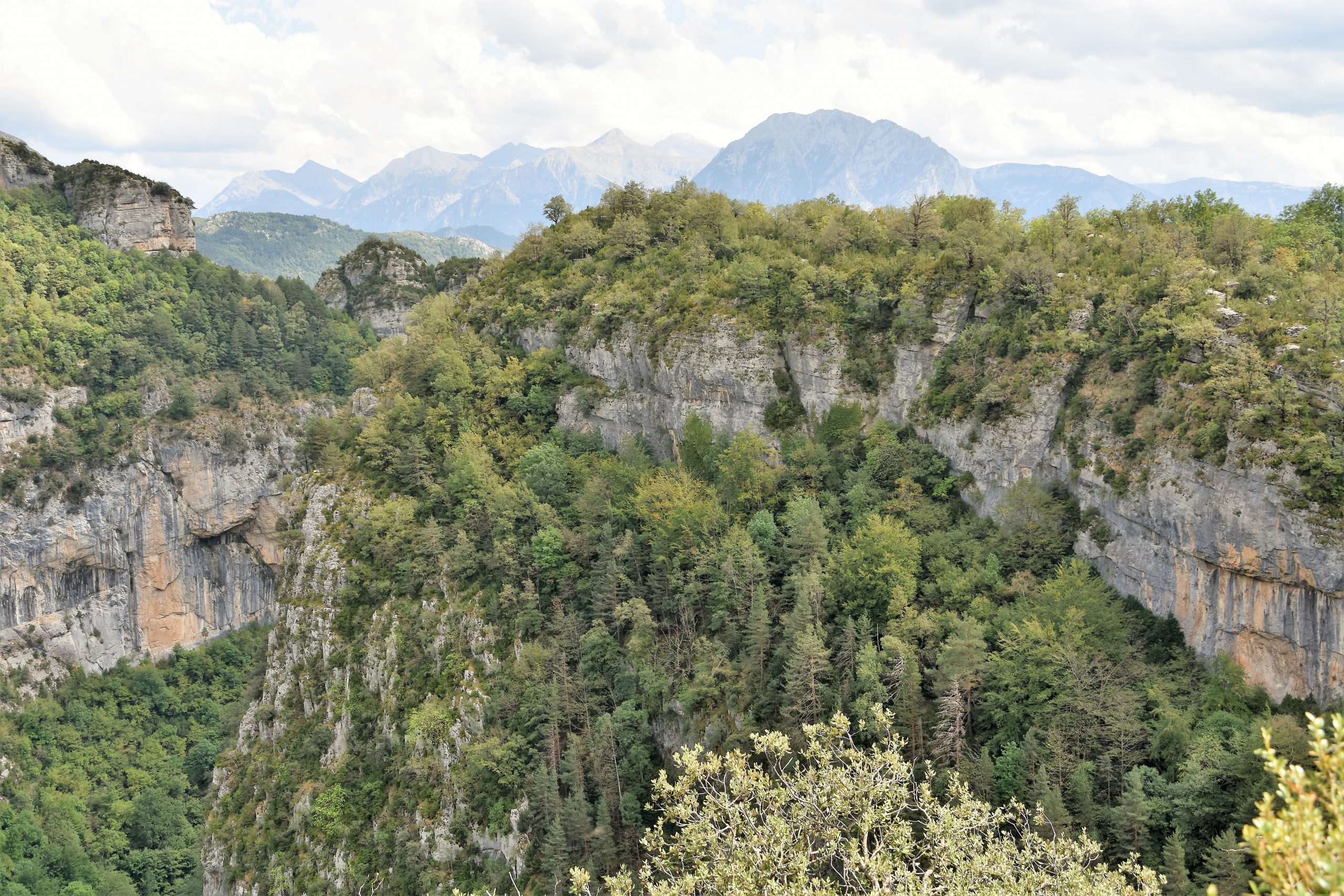
The morning begins with the comforting hum of the engine as I turn off from Adrall onto the C-14, setting a course southward. The road follows the wide path of the Segre River, which snakes like a silver ribbon through the valley. After just a few kilometers, the face of the landscape changes dramatically. The gentle rolling hills give way to the first harbingers of an untamed mountain world: massive, dizzyingly steep limestone walls rise to my left and right, forming a monumental gateway to the Pyrenean foothills. The rock shimmers in a cool light gray, almost white under the glaring sun, interspersed with deep, shadowy crevices.
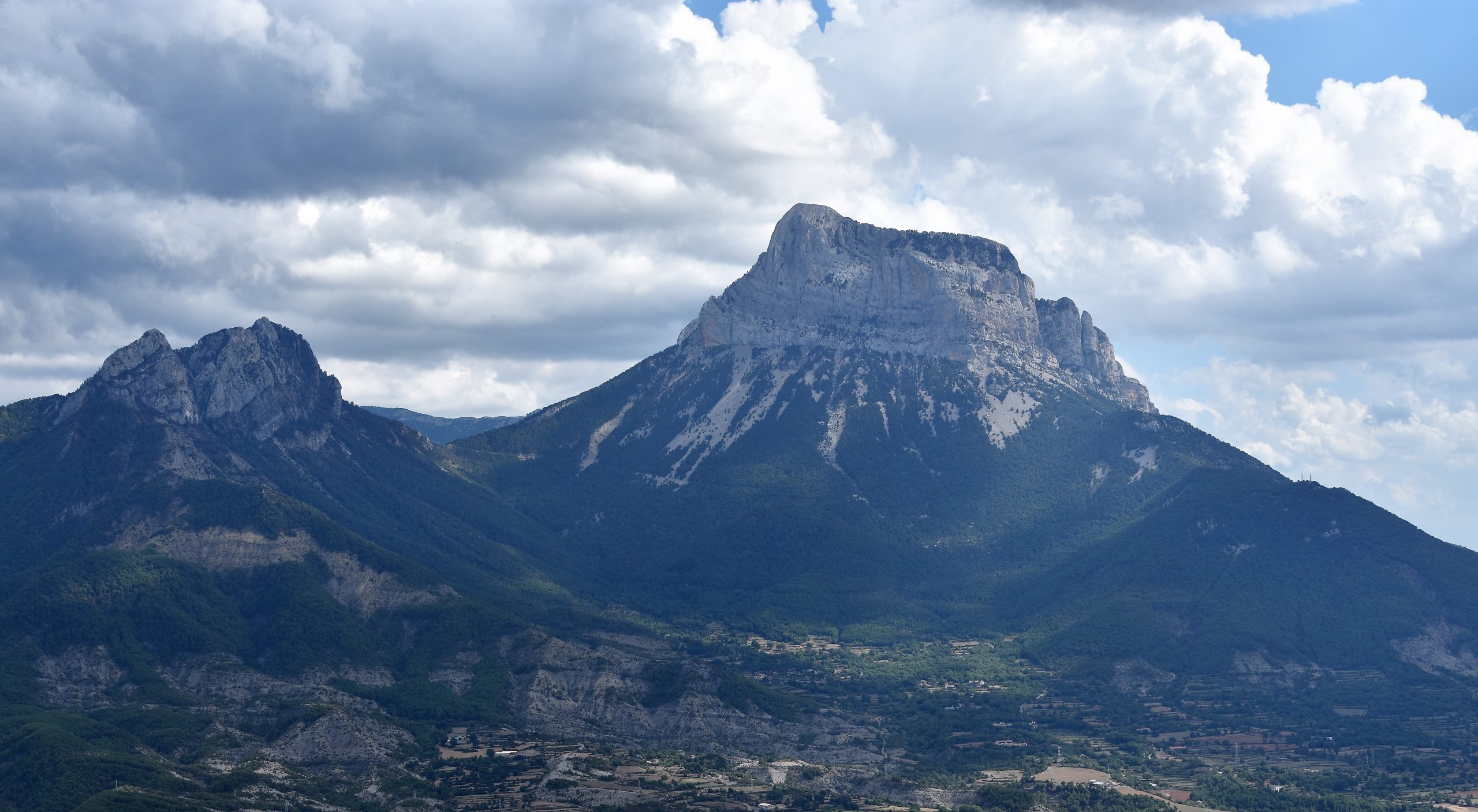
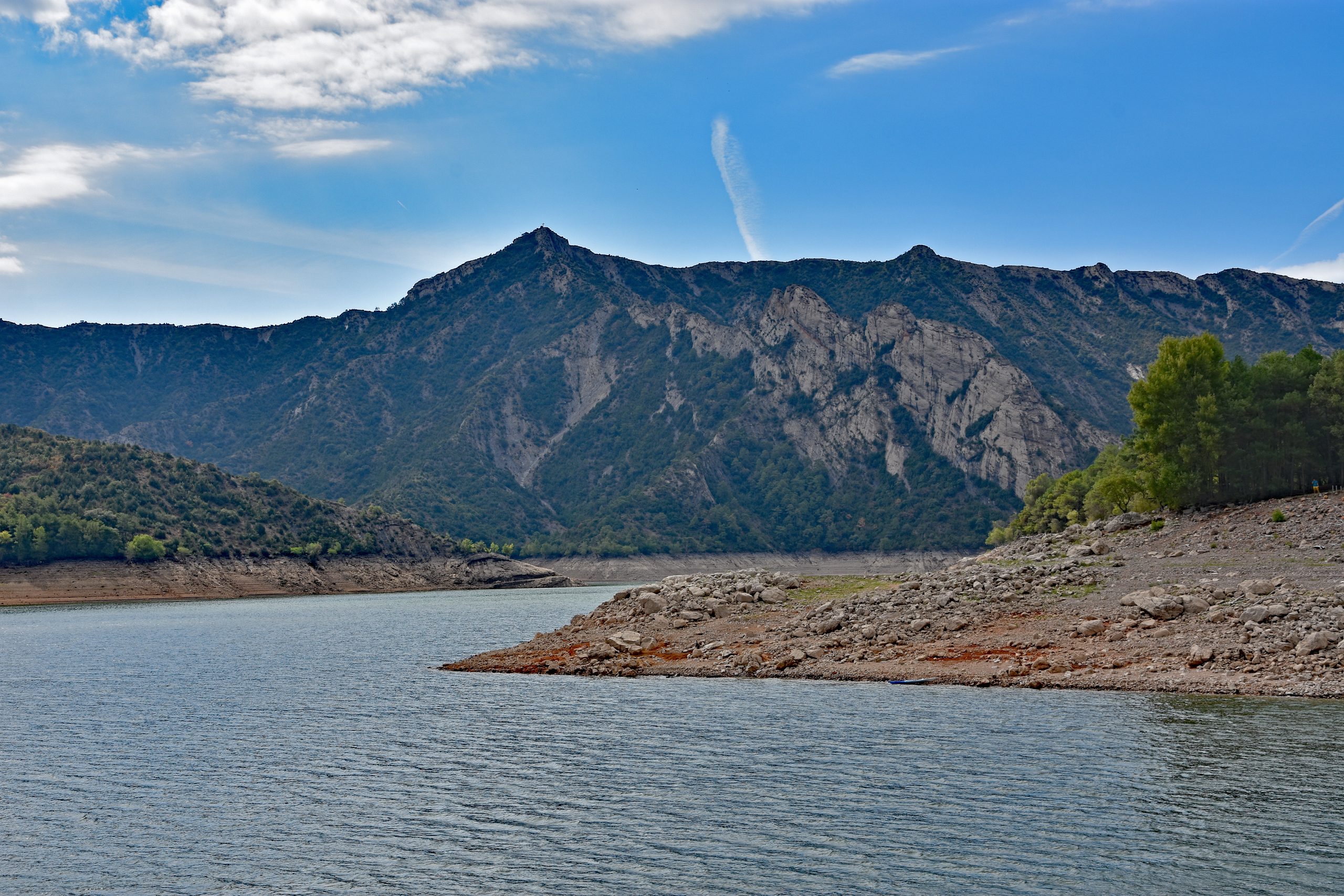
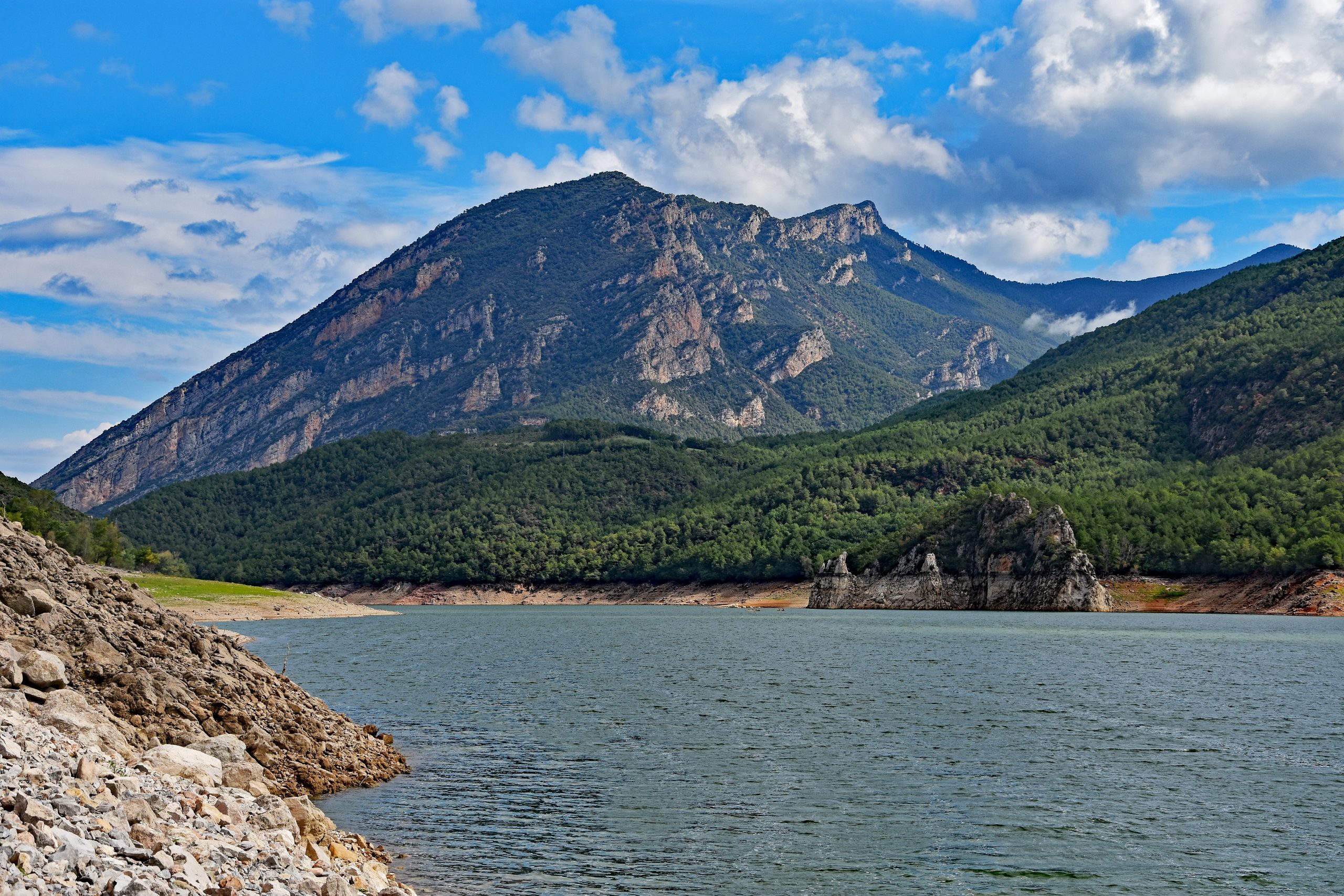
My gaze is inevitably drawn to the striking silhouette of the Serra d’Aubenç. It builds up before me like an unapproachable protective wall, culminating in the flat rocky crown of El Coscollet. At 1,610 meters, it dominates the entire Alt Urgell region. Its summit appears flat and smooth, almost as if shaped by a giant’s hand, while its flanks break downward in rugged cascades.
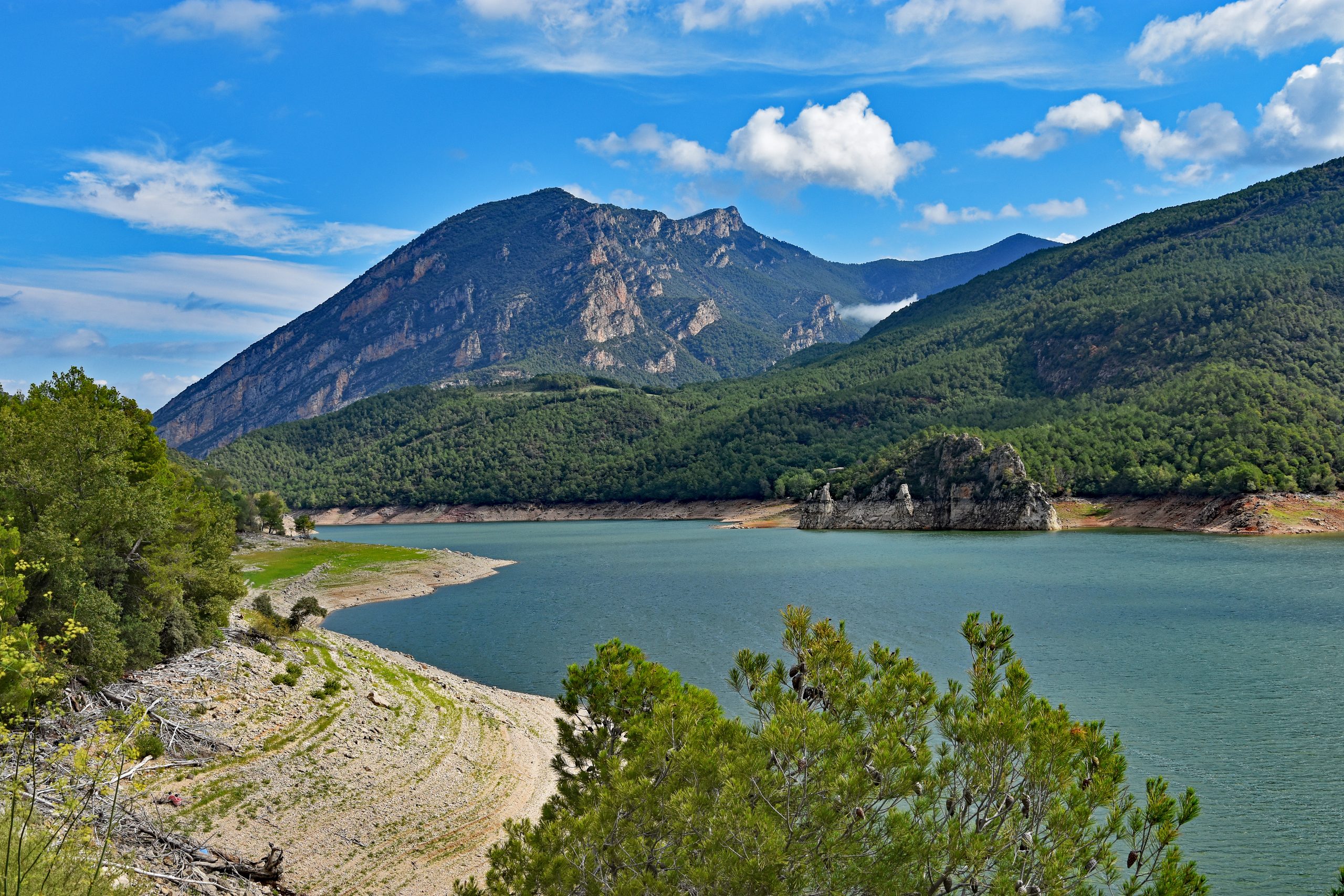
A short while later, I reach the Oliana Reservoir, which looks like a sparkling oasis embedded in this harsh mountain environment. The water of the Pantà d’Oliana glows in an intense, almost surreal turquoise blue. An isolated, jagged rocky tongue—a tiny, rugged islet defying the current—rises right out of the floods. Along the shore, a wide strip of pale, dry stones and washed-out gravel stands as a silent witness to the reservoir’s fluctuating water levels. Above it, the steep slopes of the mountains stretch upward, their sparse vegetation standing in stark contrast to the deep blue of the sky.
Impressions Between Rock and Water
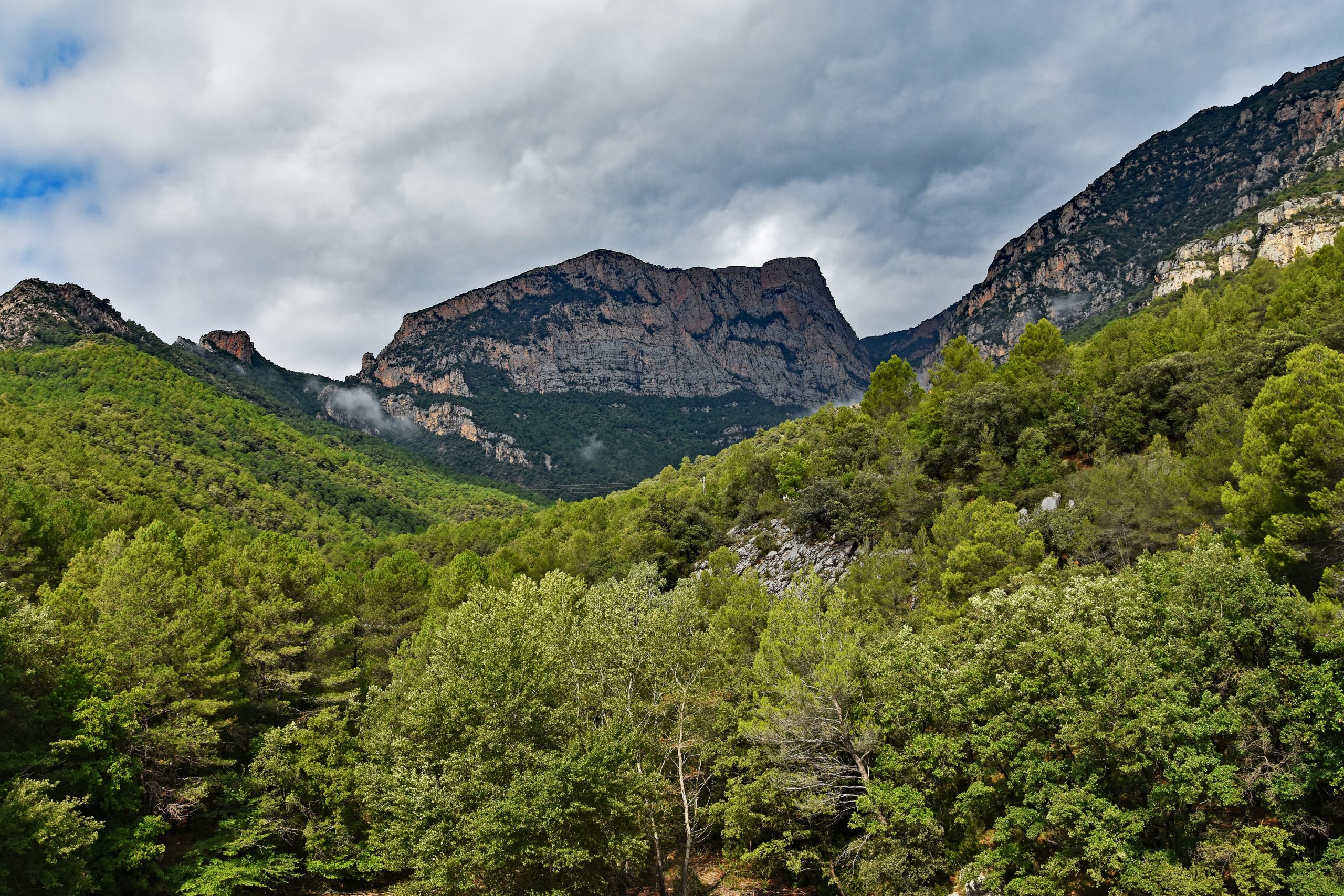
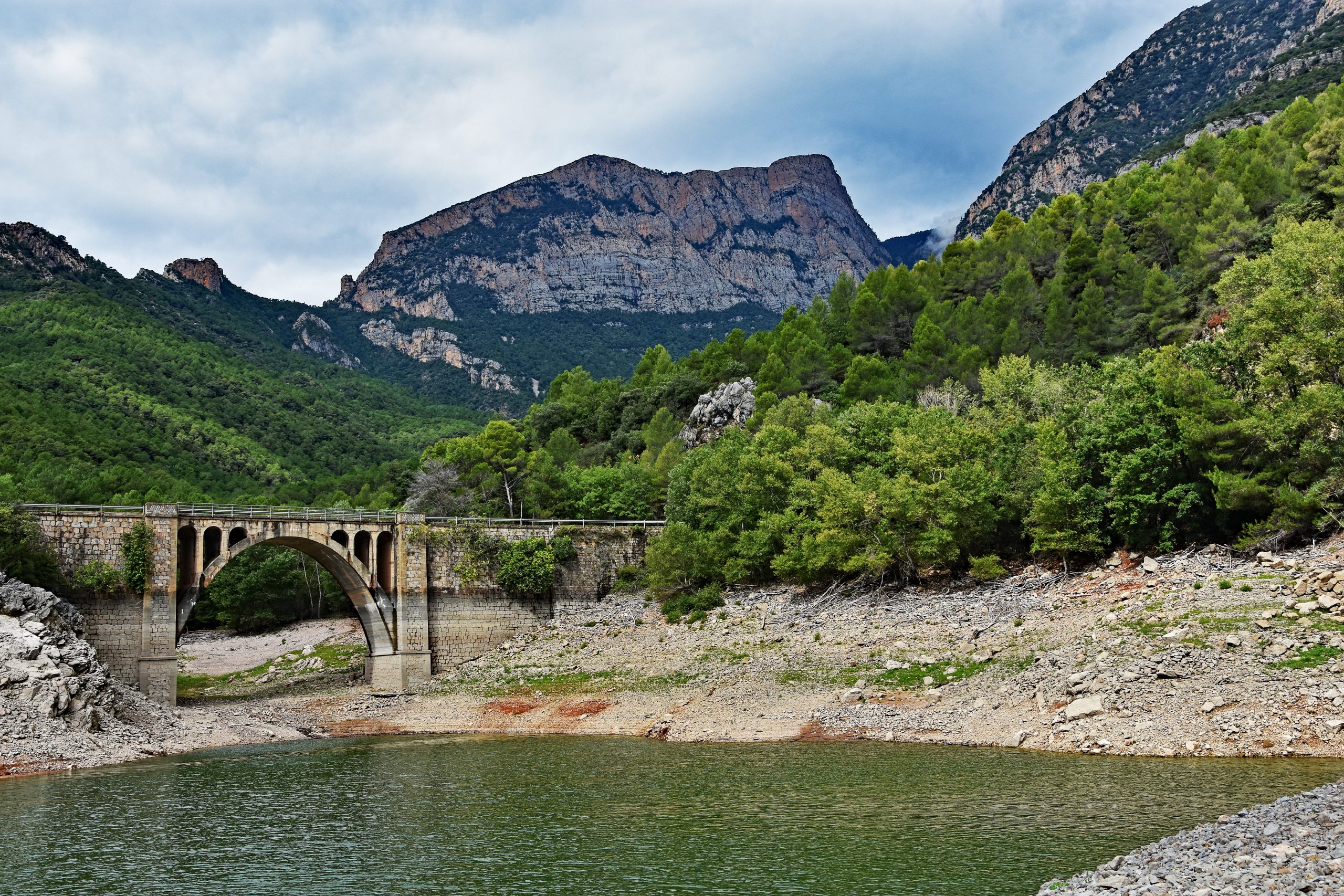
A little further on, I pause at the shore of a side arm. The historic stone arch bridge, Pont de l’Espina, spans the calm water elegantly. Its old, time-worn stones tell stories of days long past, while the mighty Serra d’Aubenç rises once more in the background. From this lower perspective, right by the glittering water, El Coscollet seems even more gigantic and awe-inspiring.
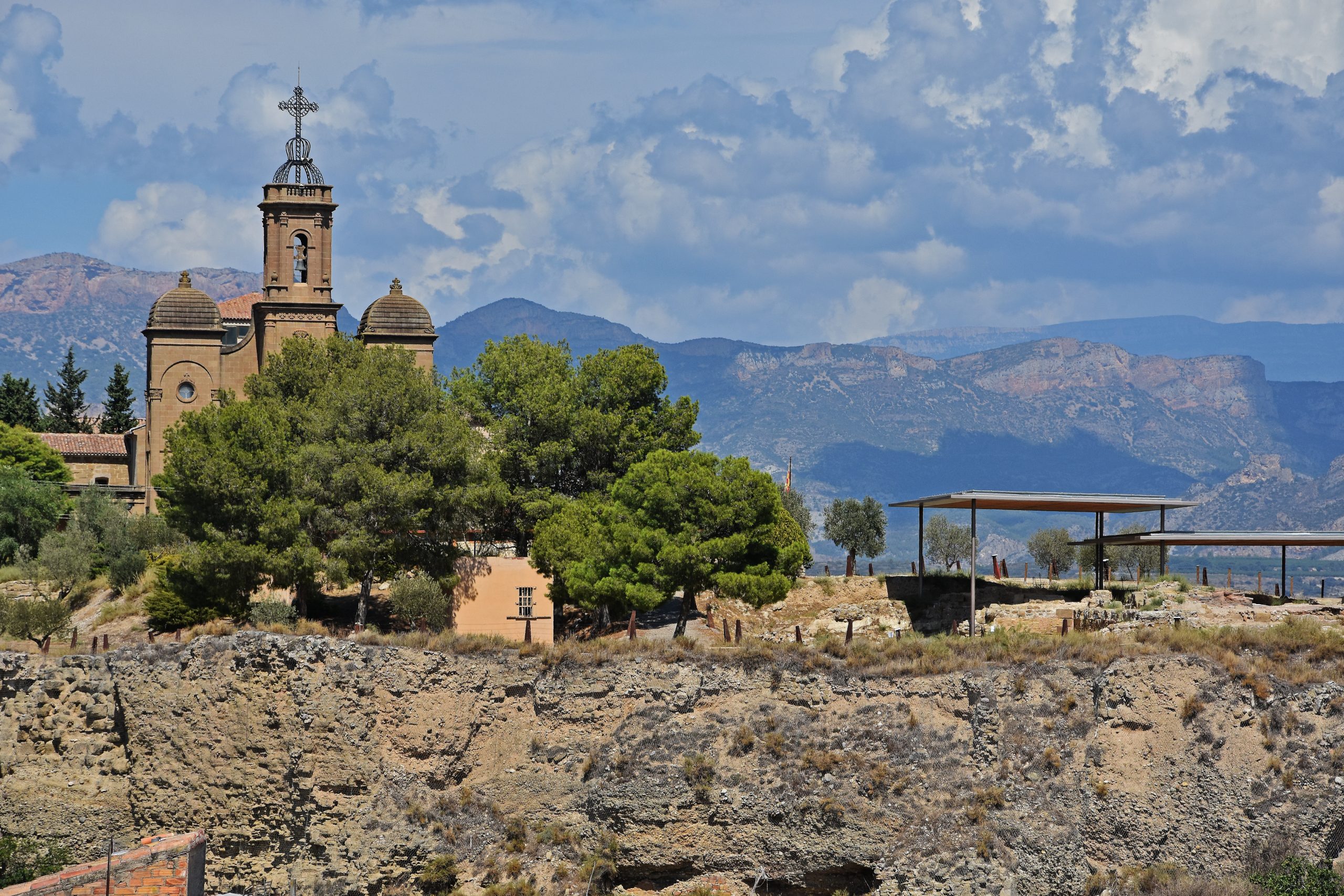
The journey takes me further south to Balaguer in the province of Lleida. Here, wild nature gives way to history for a brief moment. The city’s silhouette greets me from afar, dominated by two monumental structures. The Sanctuary of Santuari del Sant Crist sits enthroned on a hill. Its elegant domed towers stand out sharply against the horizon, and the delicate metal cross atop the bell tower catches the sun’s rays. Right beside it, the silent remains of the former Moorish fortress, Pla d’Almatà, rest under protective, modern roofs.
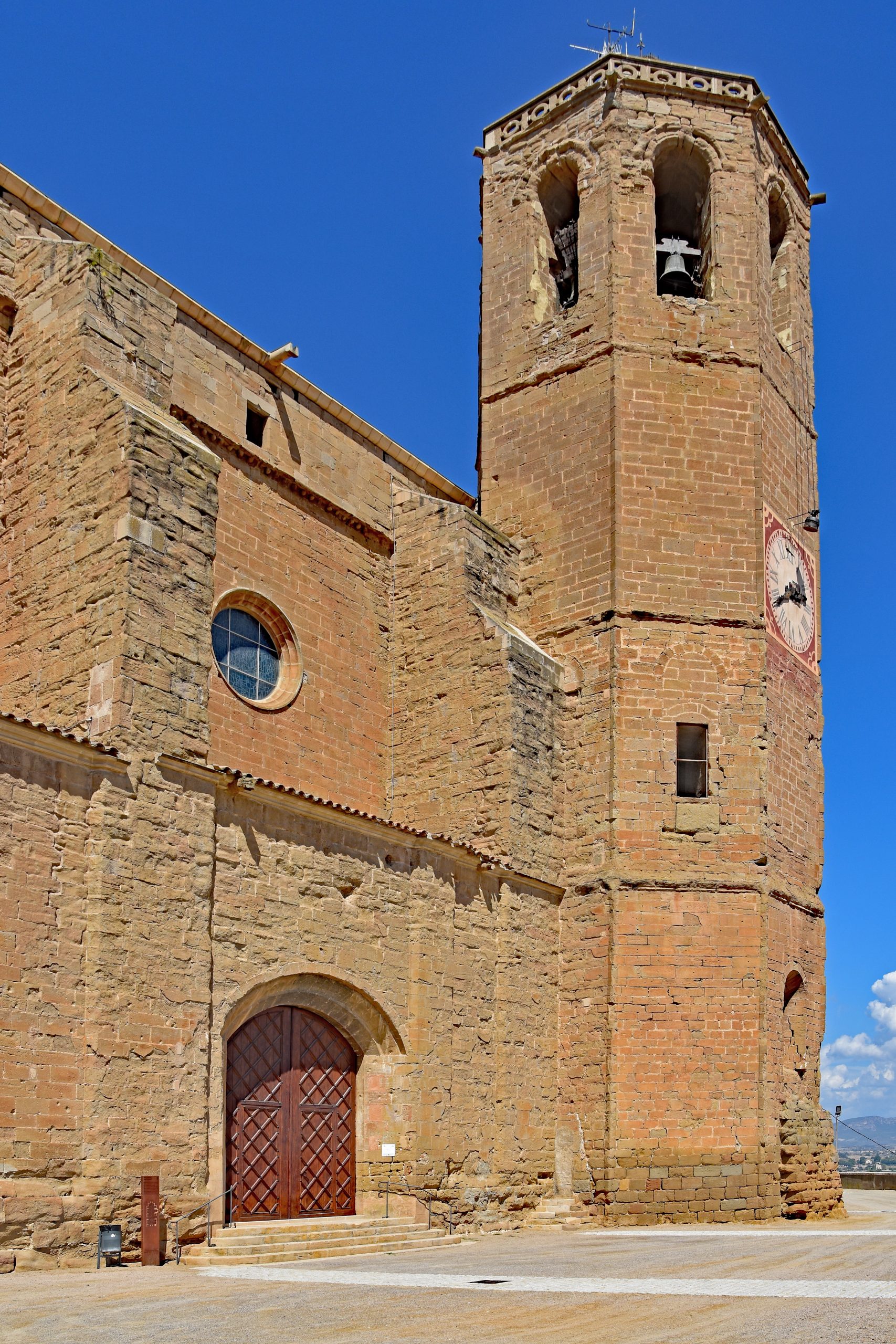
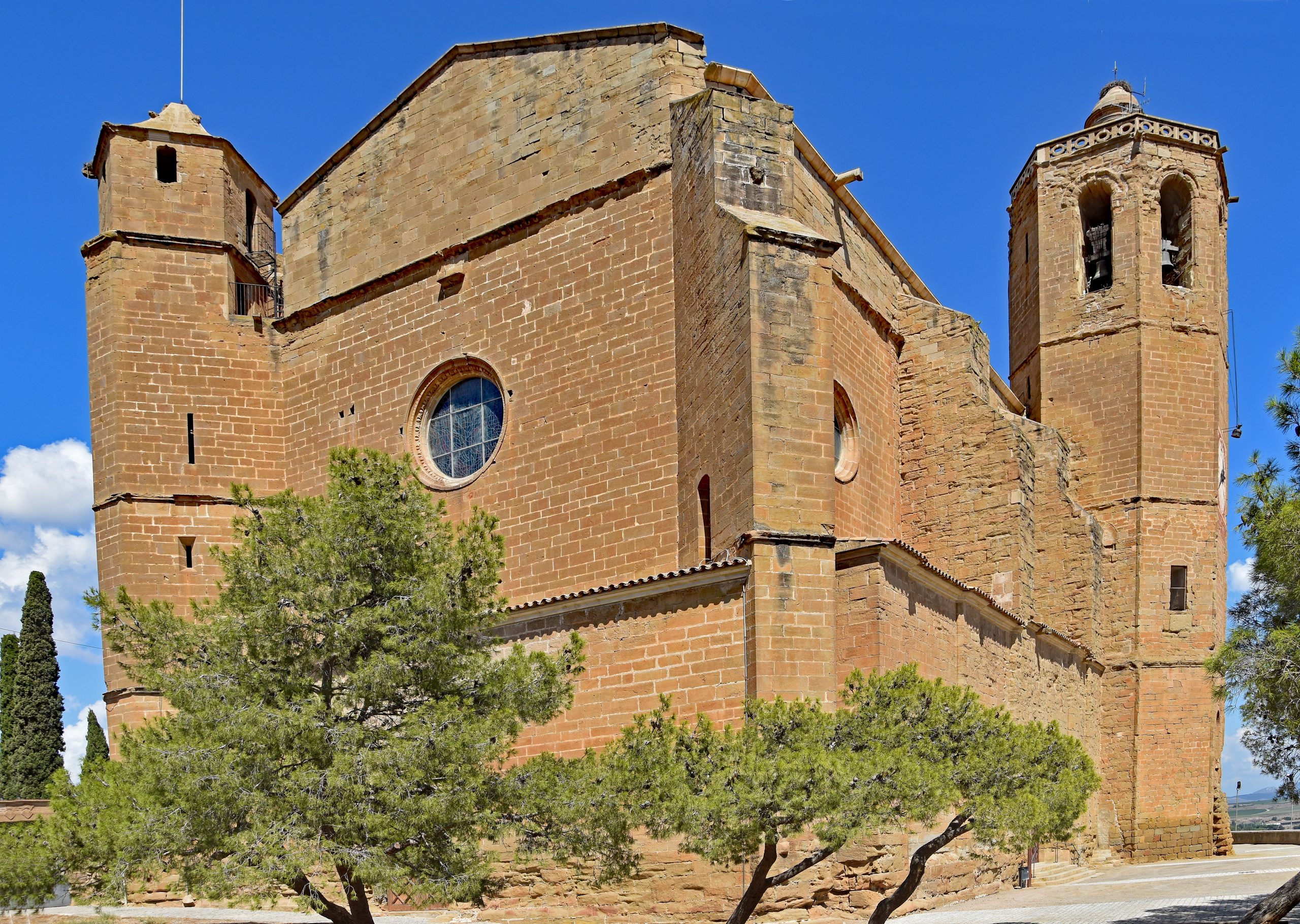
Just a few steps away rises the imposing Church of Santa Maria de Balaguer. The 14th-century Gothic hall church immediately captivates me with its warm, reddish-golden sandstone, which seems almost to glow in the pale light of the Pyrenean foothills. The massive, octagonal bell tower towers into the sky like a stone guardian, giving the city its unmistakable face.
Historical Treasures in the Province of Lleida
September 5, 2022
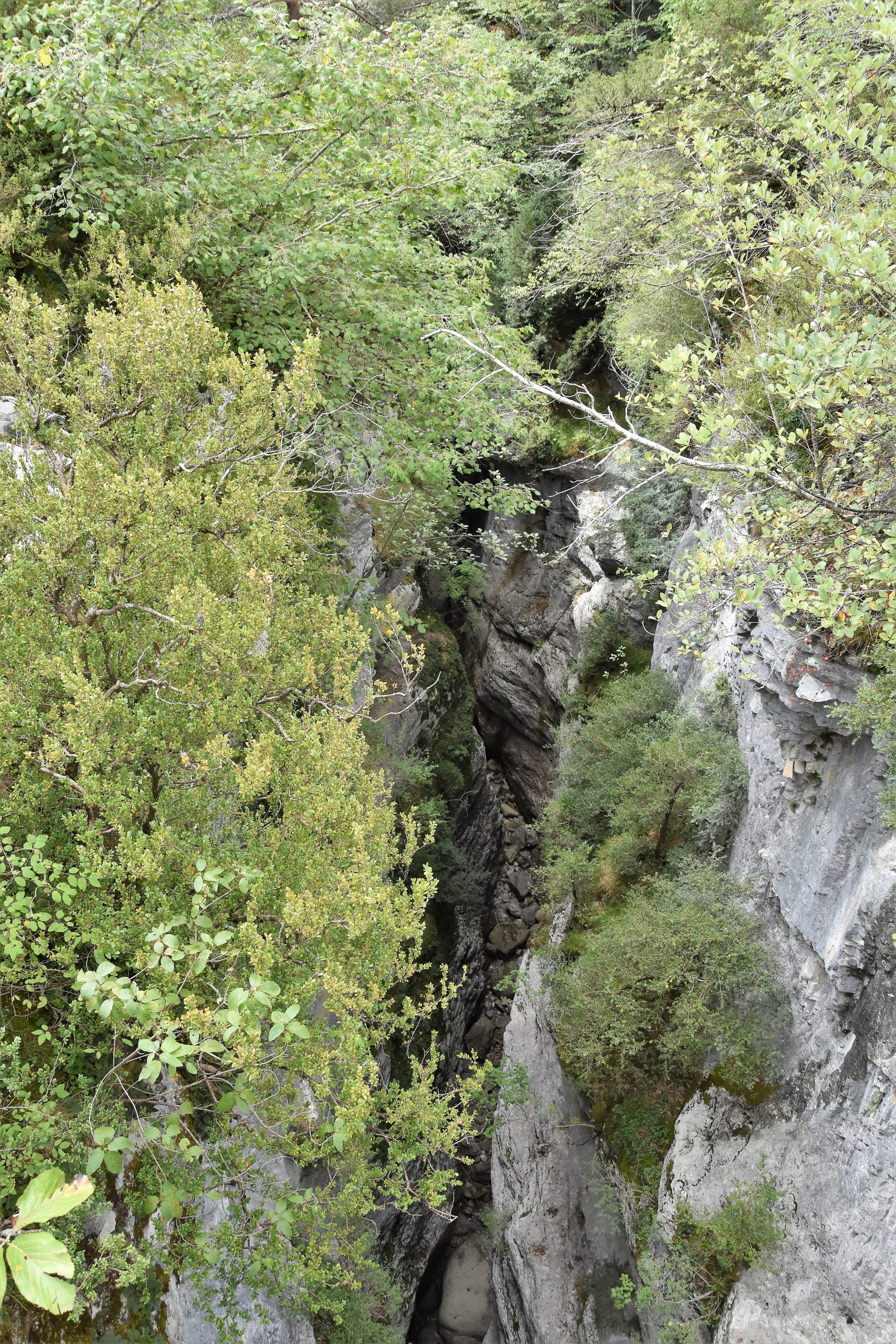
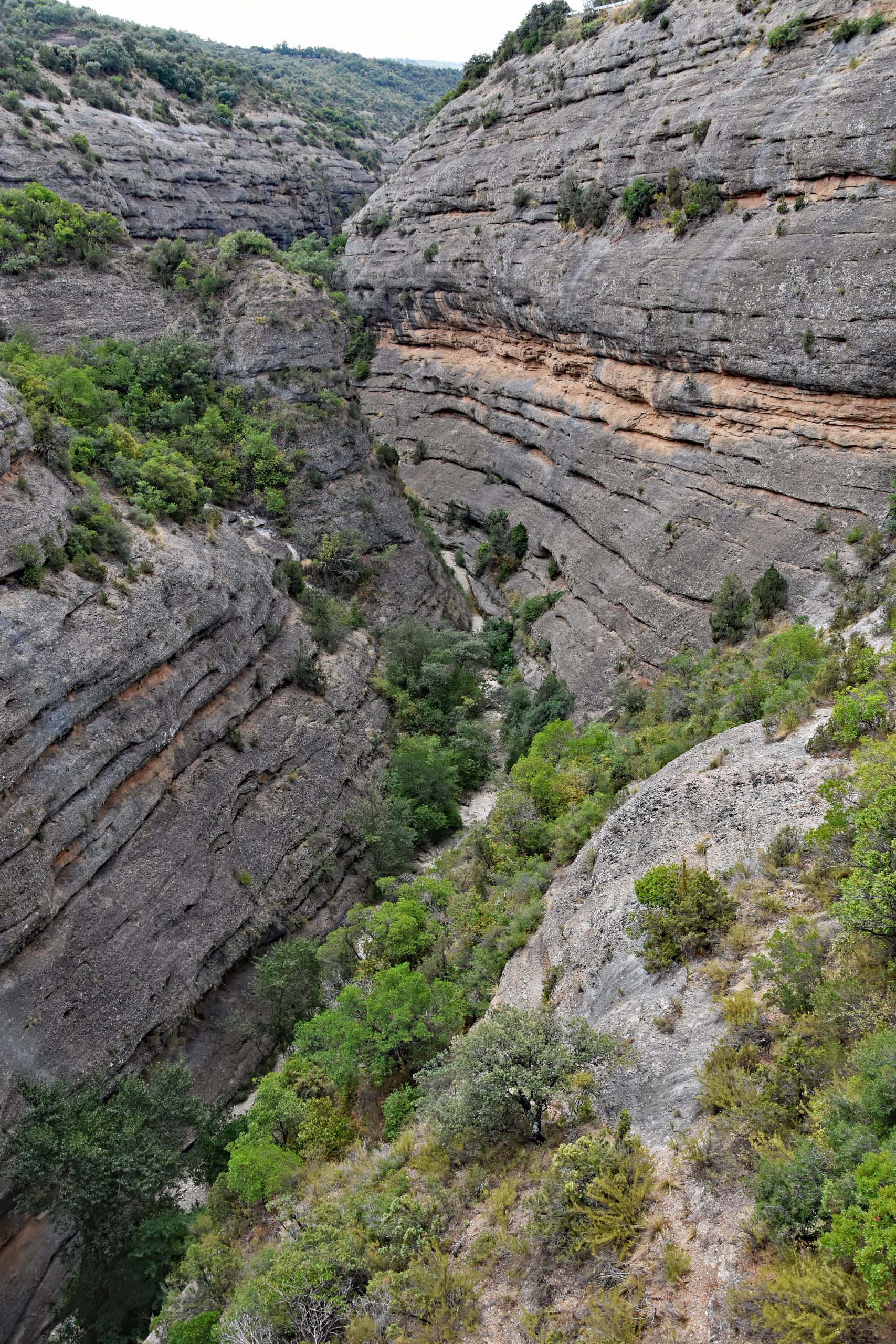
After this historical excursion, I am drawn back into the raw, untamed solitude of nature. I reach the region around Colungo in the Sierra de Guara, and the landscape changes abruptly. Here, the elements have spent thousands of years crafting masterpieces out of stone. My first stop brings me to the edge of the Barranco de las Palomeras. The view down into this extremely narrow, deeply carved gorge is dizzying. The walls of coarse conglomerate rock are deeply eroded, looking as if a sculptor had chiseled waves directly into the stone. Mediterranean shrubs and gnarled holm oaks cling defiantly to the crevices. The gorge is so narrow that the rocks almost touch at the top, closing off the view of the sky to a mere sliver—a mystical place where the tributary flows into the main canyon of the Río Fornocal.
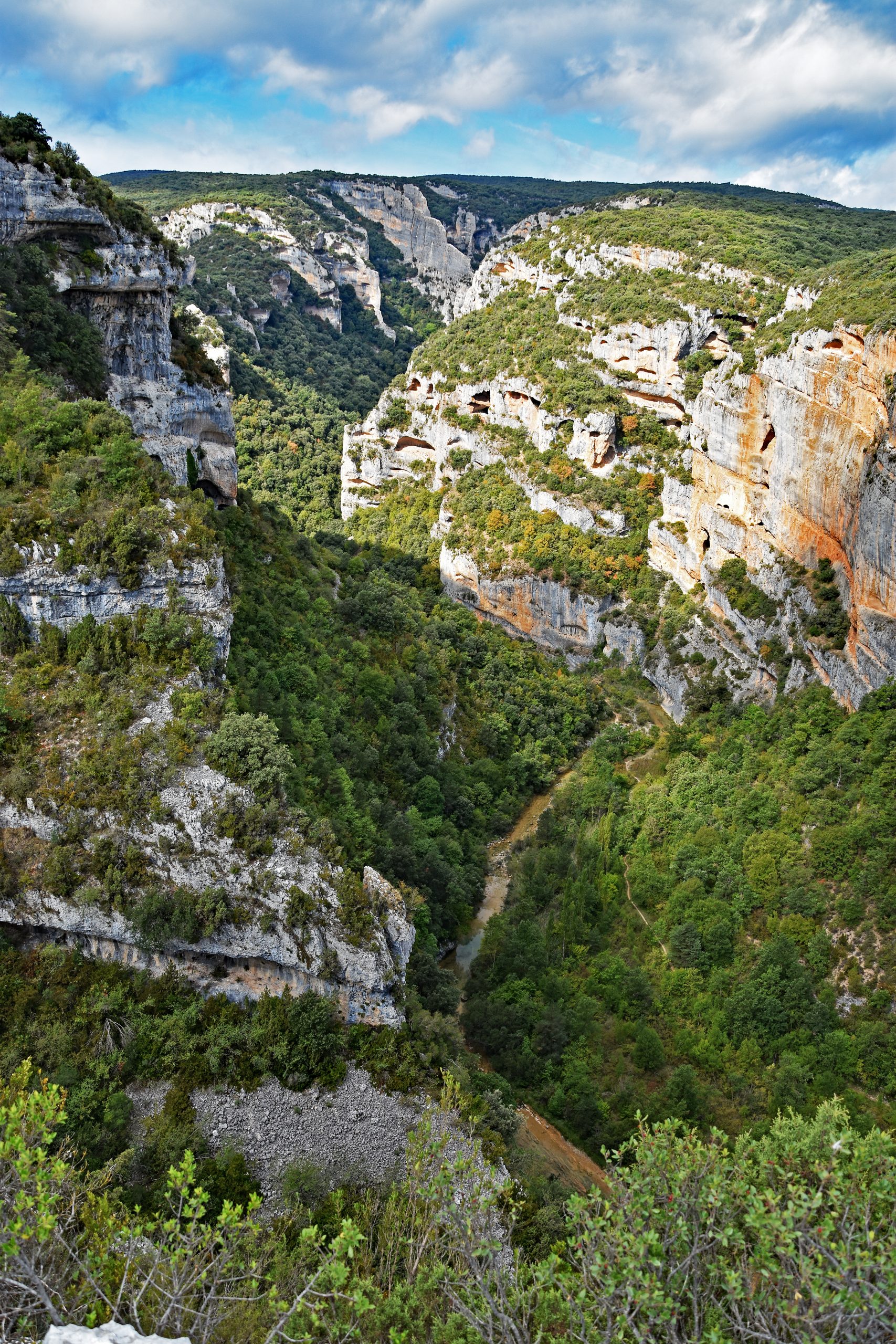
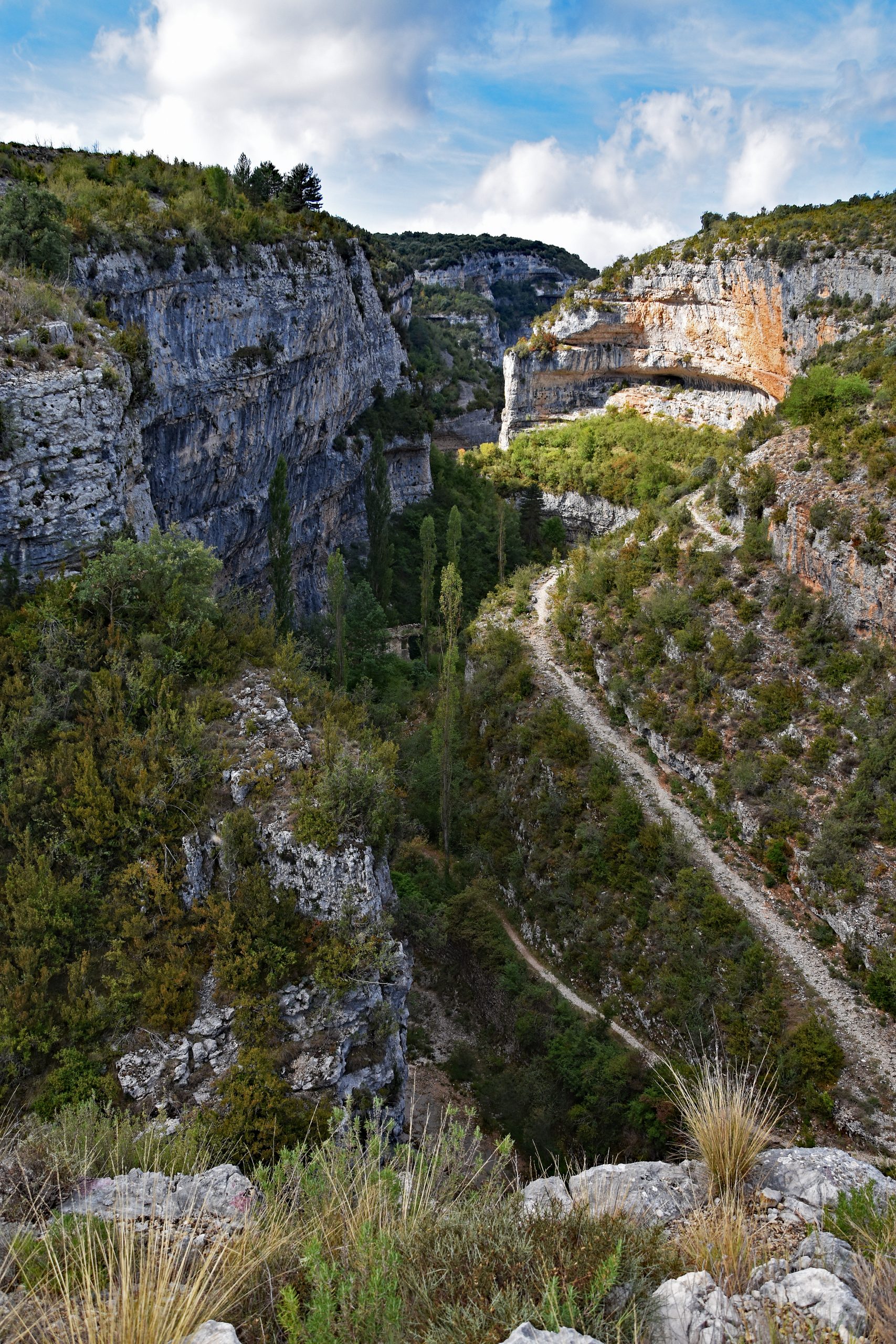
A little later, I reach the famous Mirador del Río Vero viewpoint. What a monumental panorama! The gigantic canyon of the Río Vero opens up before me. On the right side, the reddish-gray limestone walls of Tozal de Mallata literally burn in the light. Thousands of years of prehistoric cave painting secrets lie hidden within their wind-worn niches and hollows.
Deep down at the bottom of the gorge, the Río Vero winds like a narrow, green ribbon through dense, Mediterranean vegetation. As I follow the narrow, twisting hiking trail a little way down, the perspective changes. The reddish-orange rock walls of Covacho de Mallata seem to hover above me, while slender, bright green poplars rise like lances from the damp canyon floor, creating a beautiful contrast to the warm earth tones of the stone.
The Wild Gorges of the Sierra de Guara
Gorges and Giants of the Ordesa National Park
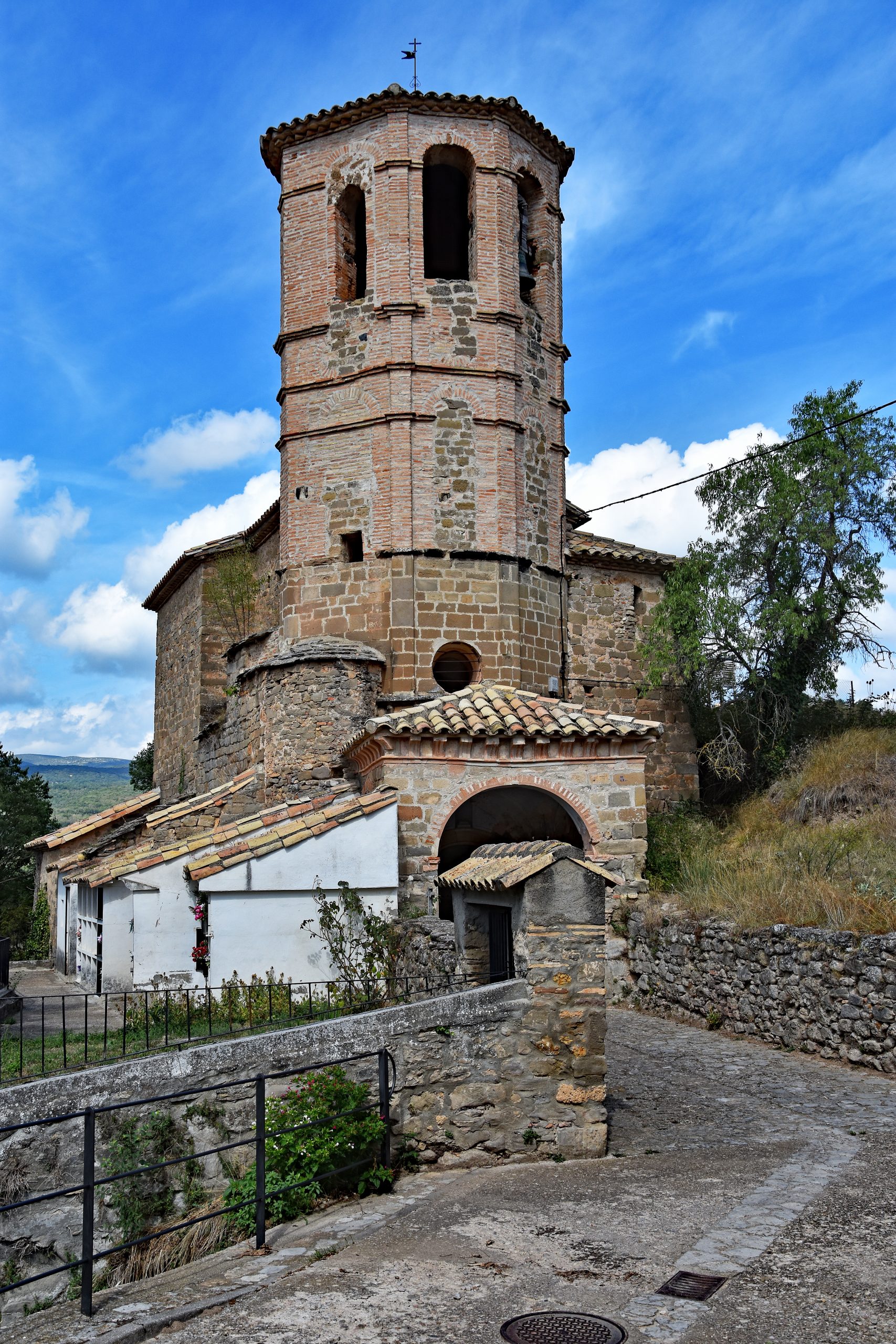
The next morning begins in idyllic Colungo. Before answering the call of the wilderness once more, I stroll up the gently sloping, paved pathway of this Aragonese mountain village. The Iglesia de San Esteban rises before me. This 16th-century late-Gothic hall church radiates a deep, rural tranquility. Its characteristic, soaring octagonal bell tower cuts sharply into the morning sky, while the entrance atrium lies in soft shadow. It is a peaceful farewell to civilization, because just beyond the village, the clouds break apart to reveal what makes this journey so incomparable: the bare, massive geology of the Pyrenees.
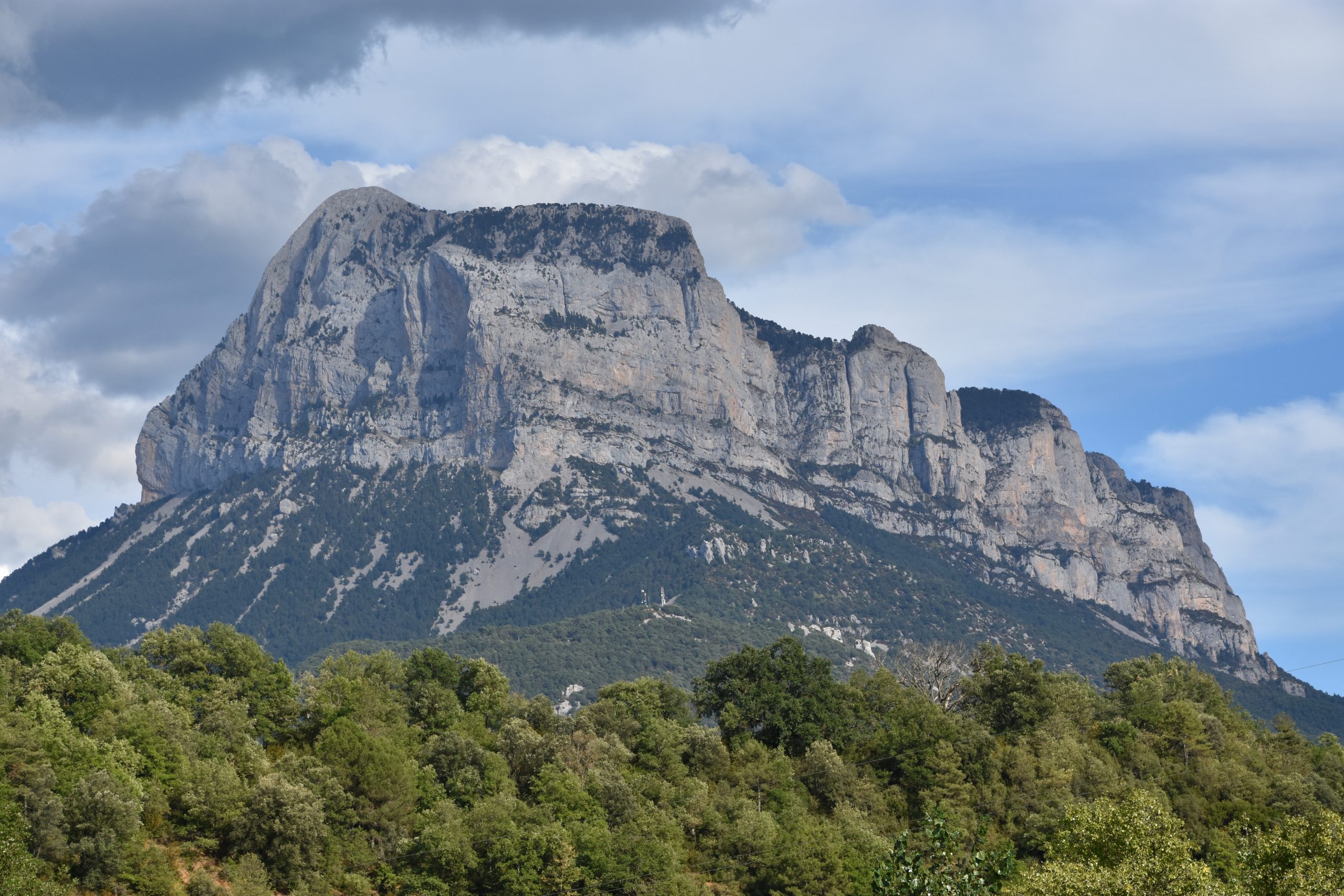
Soon, a legend shifts into my field of vision—the Peña Montañesa. Standing at 2,295 meters, it is the undisputed king of the Sobrarbe region. This giant bursts out of the dense, lush green mixed forests like a monumental, isolated limestone fortress. Its rugged flanks glow in a cool silver-gray. It forms the defiant, western end of the Sierra Ferrera and draws my gaze like a magnet.
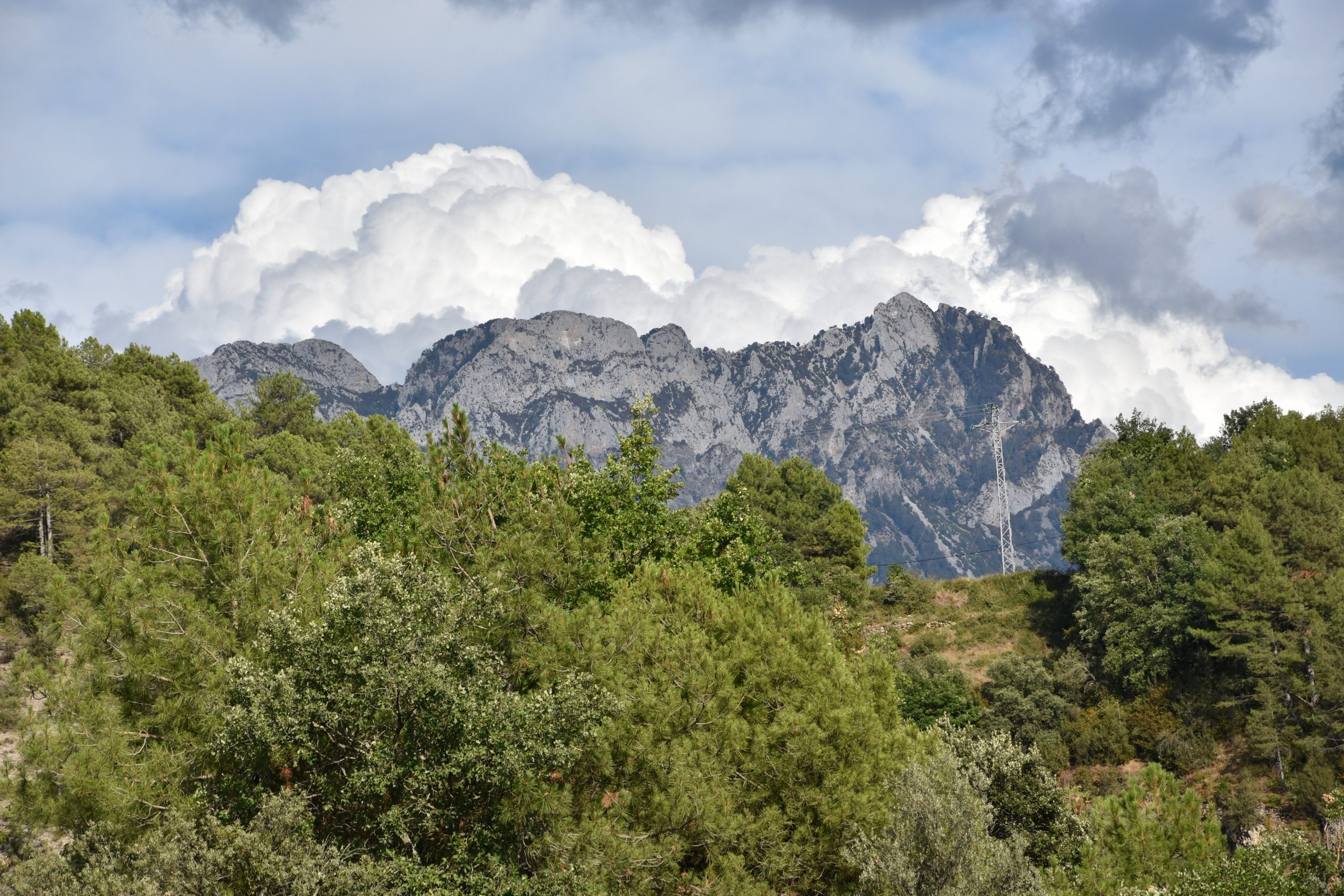
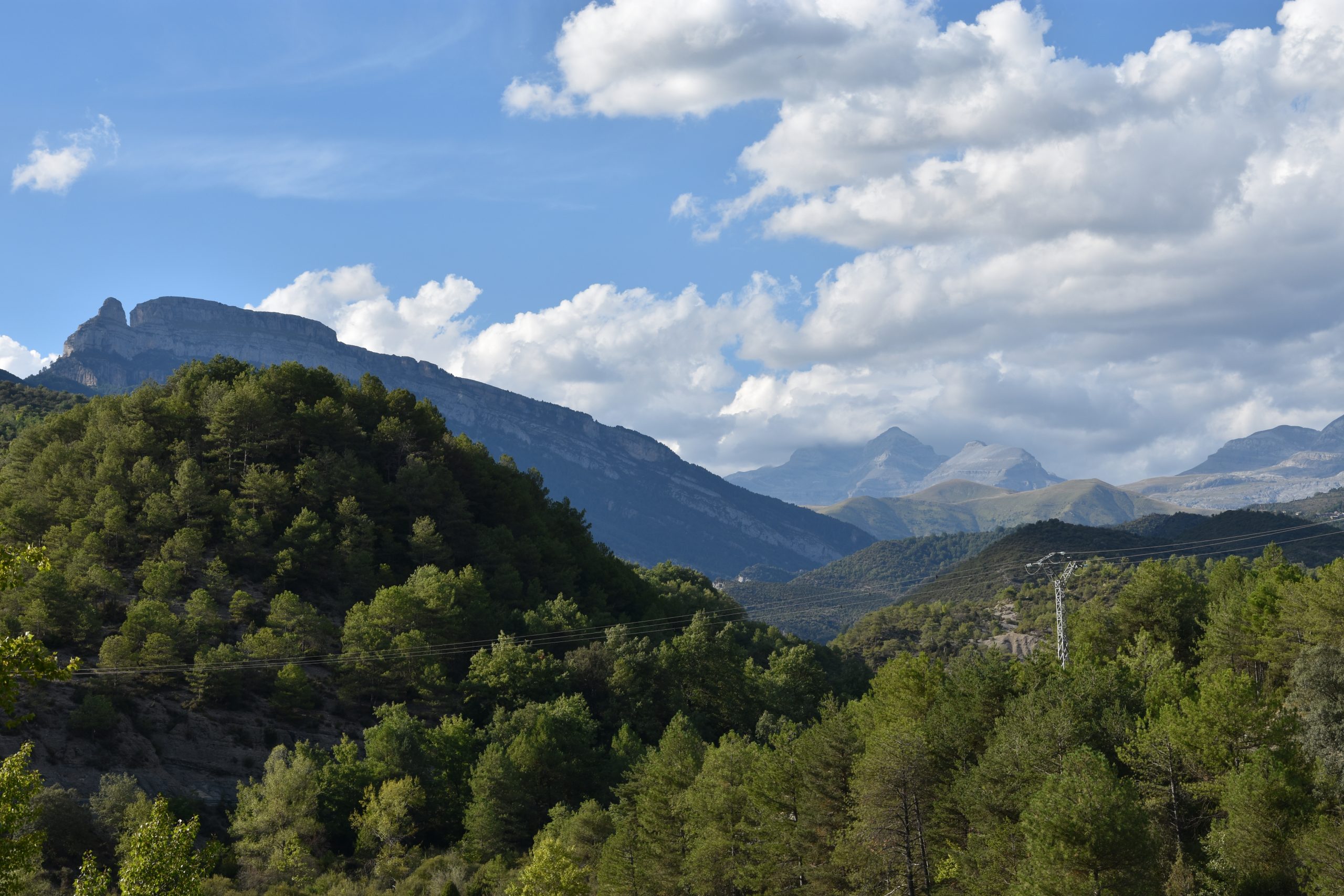
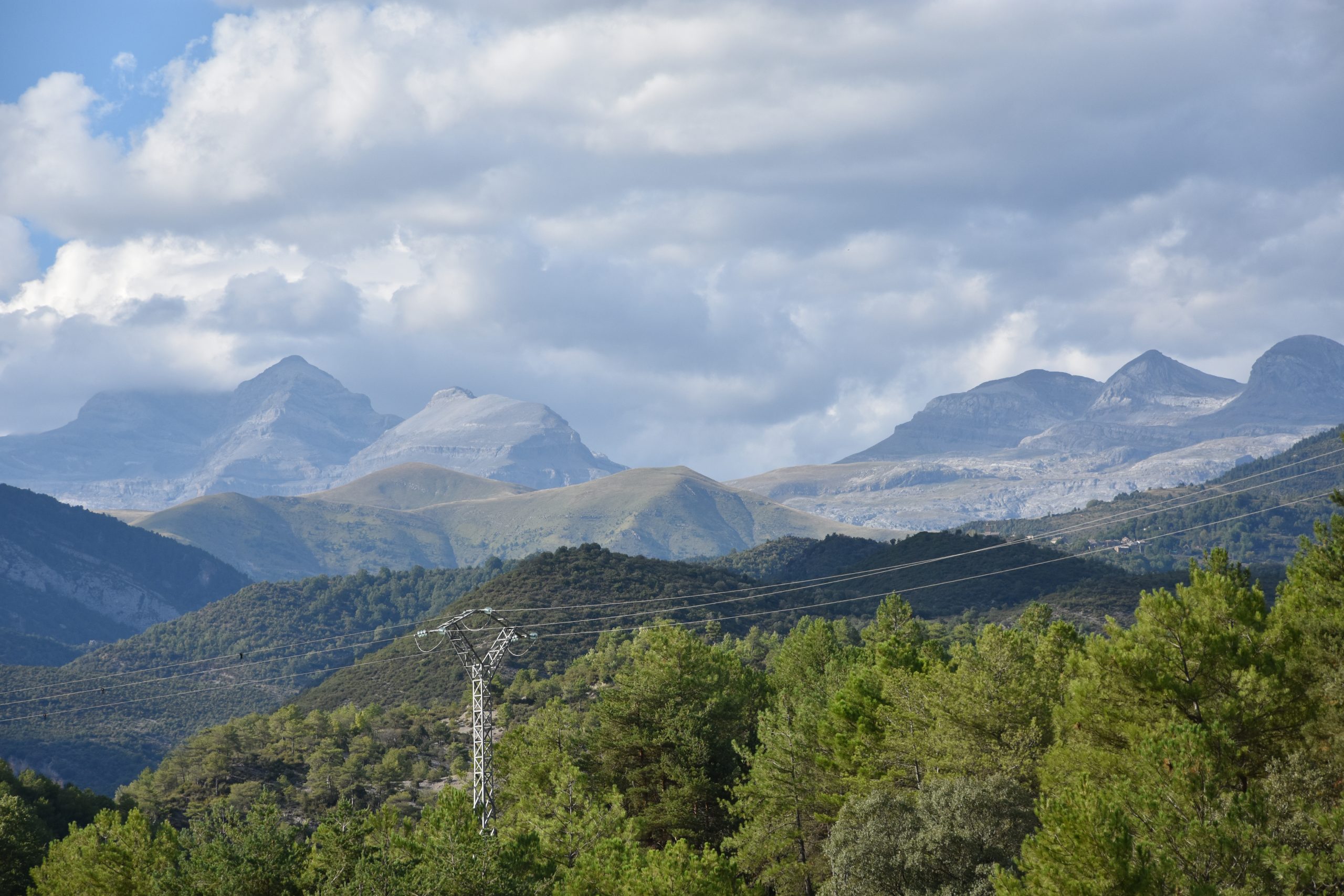
As I continue moving through the valleys, the weather puts on a dramatic show. Massive, snow-white storm clouds pile up over the distant, gray peaks of the Sierra de Guara, swelling like anvils in the pale light. The vibrant, almost stark green of the holm oaks and pines in the foreground stands in harsh contrast.
A little later, viewed from a greater distance, the Peña Montañesa reveals its full architectural splendor: its tiered cliffs look like the fortress walls of a forgotten civilization. To its right, the gateway to the inner Pyrenees opens up. In the far distance, the cloud-shrouded, mystical peaks of the true high mountains shimmer. The legendary three-thousand-meter peaks of the Monte Perdido massif outline themselves against the horizon. On the far left enthrones the striking, perfect pyramid of Cilindro de Marboré, closely flanked by the slightly flattened, awe-inspiring Monte Perdido itself, which watches majestically over the barren rocky desert of the Marboré Plateau as the third-highest mountain in the Pyrenees.
Farewell to Guara and Views of the Giants
September 6, 2022
I approach the massive south wall of the Peña Montañesa and hold my breath. From this angle, the entire, elongated rock face of the Sierra Ferrera reveals itself in its brutal beauty. On the far right, the sharp, tapering main summit pierces the clouds, while to the left, the vertically plunging limestone walls look like frozen cascades. Vast, pale scree fields—the pedreras—stretch out at their feet, merging into the dense, green pine forests like petrified rivers of debris.
The road now leads me deeper into the Ordesa y Monte Perdido National Park, where nature has torn deep wounds into the earth. I reach the entrance area of the Gargantas de Escuaín. Here, the Río Yaga has carved a monumental bed deep into the rock over millennia. Dense pine forests cling to the extremely steep slopes, interrupted by massive, light gray limestone bands that jut out from the earth like ribs.
At the viewpoints near Revilla and Escuaín, I dare to look over the edge. It is a dizzying experience. The smooth-washed limestone walls drop absolutely vertically, framed almost completely by overhanging, rich greenery. Deep below, barely audible, the Río Yaga gurgles in its eternally narrow gorge.
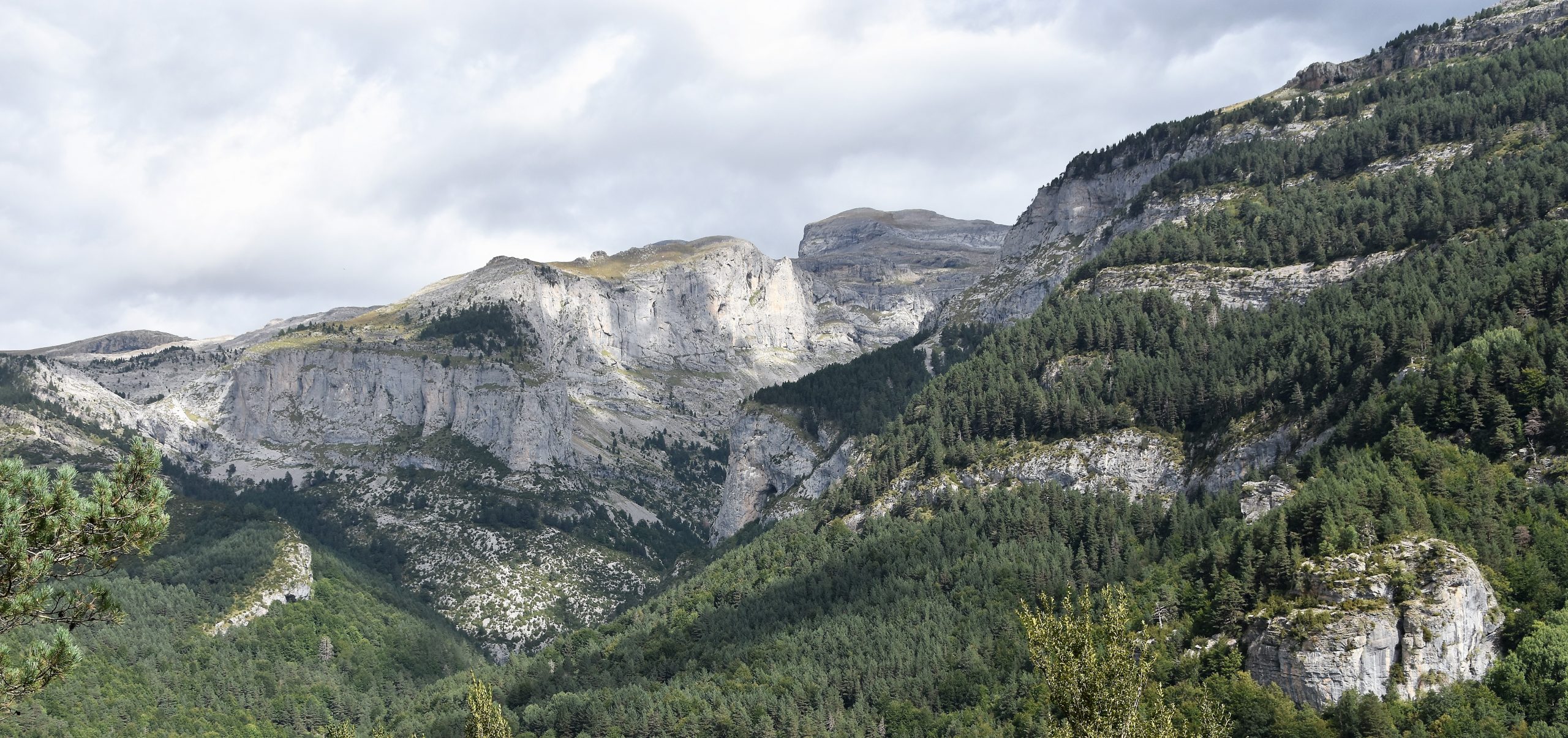
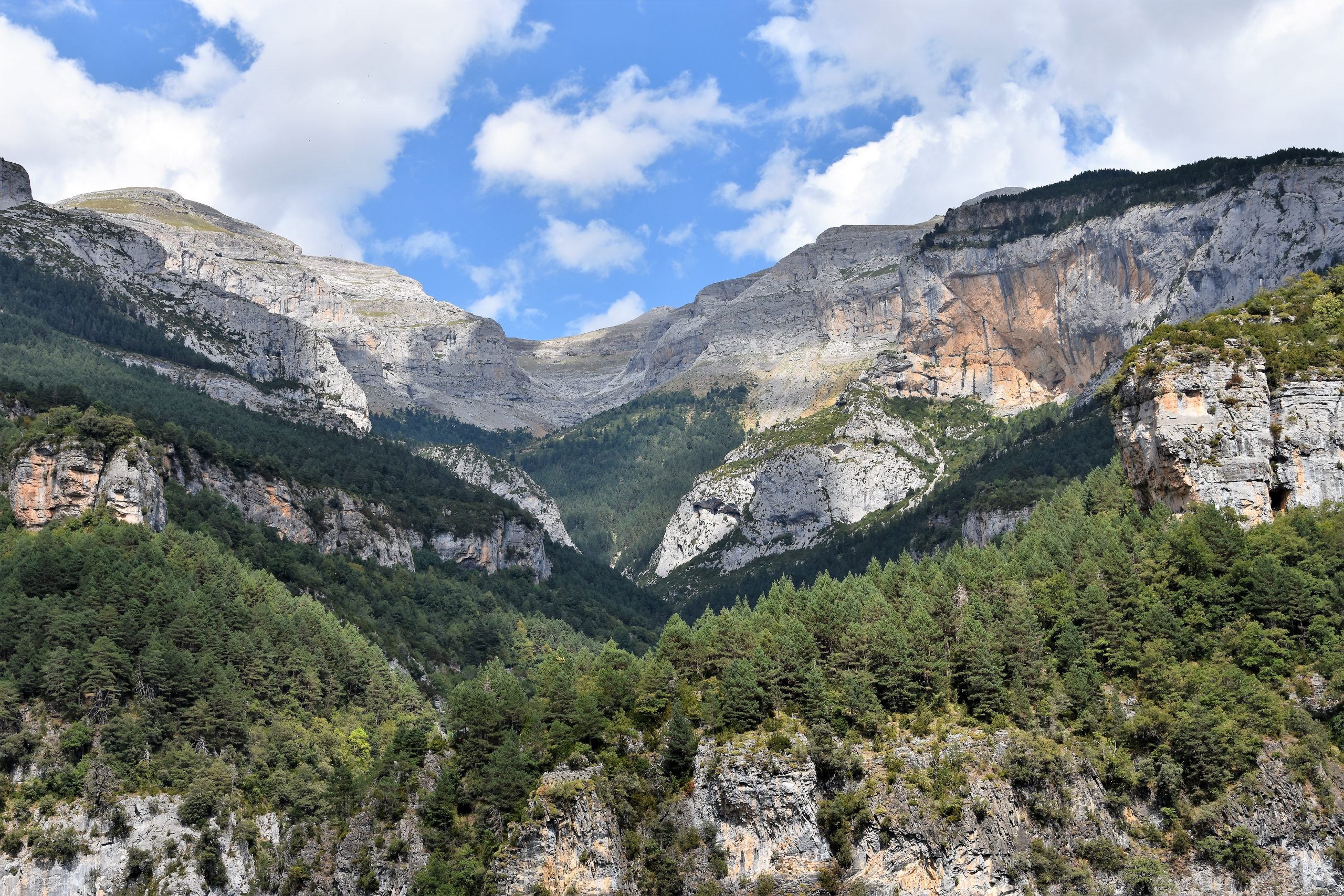
A short while later, I reach the upper section of the Cañón de Añisclo. The view into this monumental cleft is breathtaking. The valley is flanked by two gigantic rock walls: on the right rise the steep, reddish-gray cliffs of the Sestrales range, while on the left, the barren flanks of Mondoto ascend. The local pine forests form a soft, fluid transition to the bare peaks, which are streaked by sparse sunlight beneath white cumulus clouds.
At the upper rim of the canyon, I look back one last time. The deep, reddish-gray walls framing the valley of the Río Bellós drop off sharply, while far in the background, my old acquaintance reappears—the dark, mighty massif of the Peña Montañesa.
To close out the day, the mountain shows itself once more in a striking western profile. Its characteristic box-like shape becomes particularly clear from here. Right next to it, the rugged, rocky peak of Pico Nabaín reaches into the air. Tiny, lonely villages of the Sobrarbe area lie scattered deep in the valley between these two giants, while a grand, high-contrast play of clouds unfolds over the light limestone walls. The Pyrenees have definitively cast their spell on me.
Gorges and Giants of the Ordesa National Park