On Monday, November 2, 2026, my wife Hanusia, my sister-in-law Basia, and I set out to explore Casale Monferrato in the heart of Piedmont. A bright blue, cloudless sky welcomed us right from the morning, and the low, warm autumn light bathed the historic capital of the former Marquisate of Monferrato in an almost magical atmosphere.
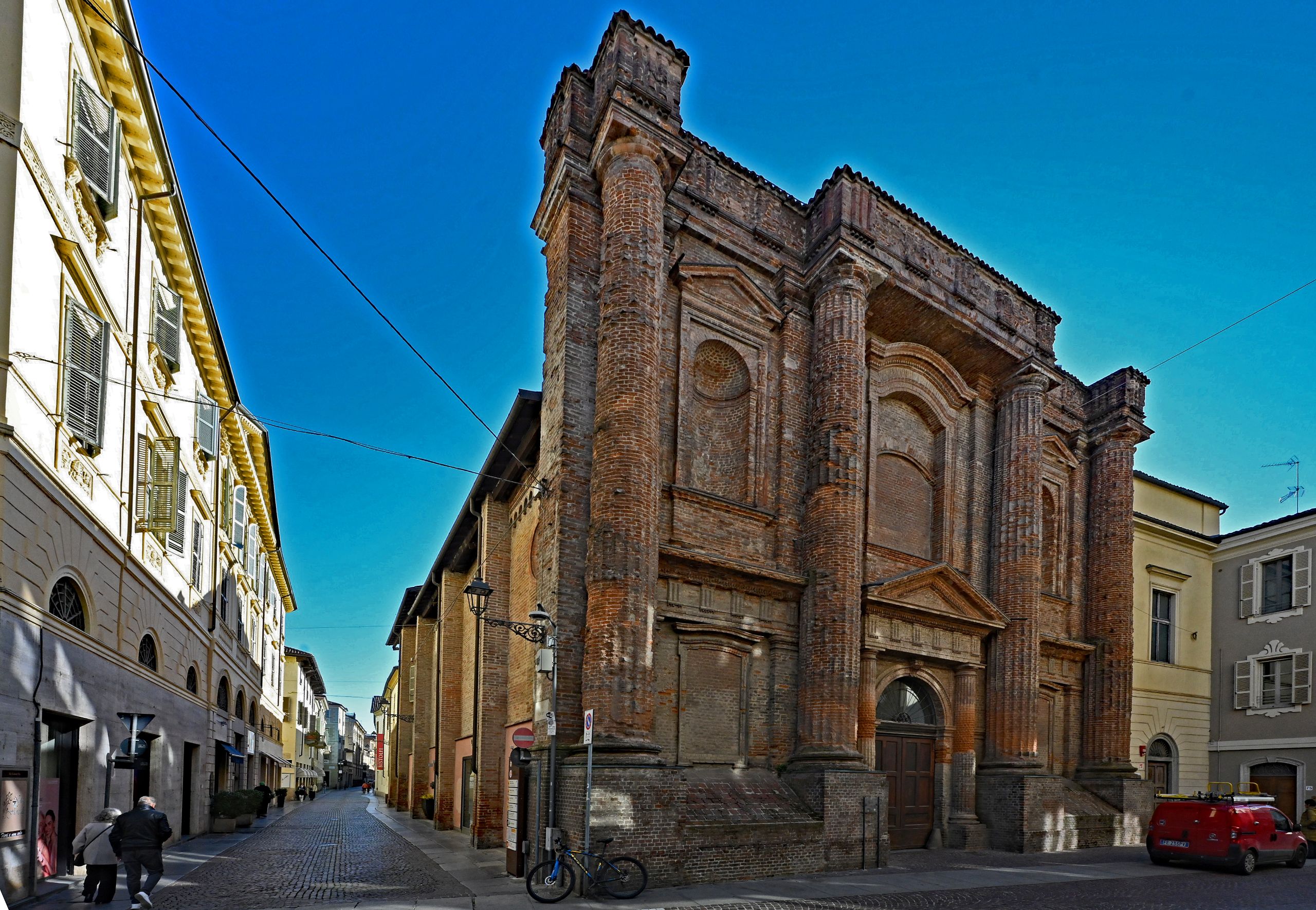
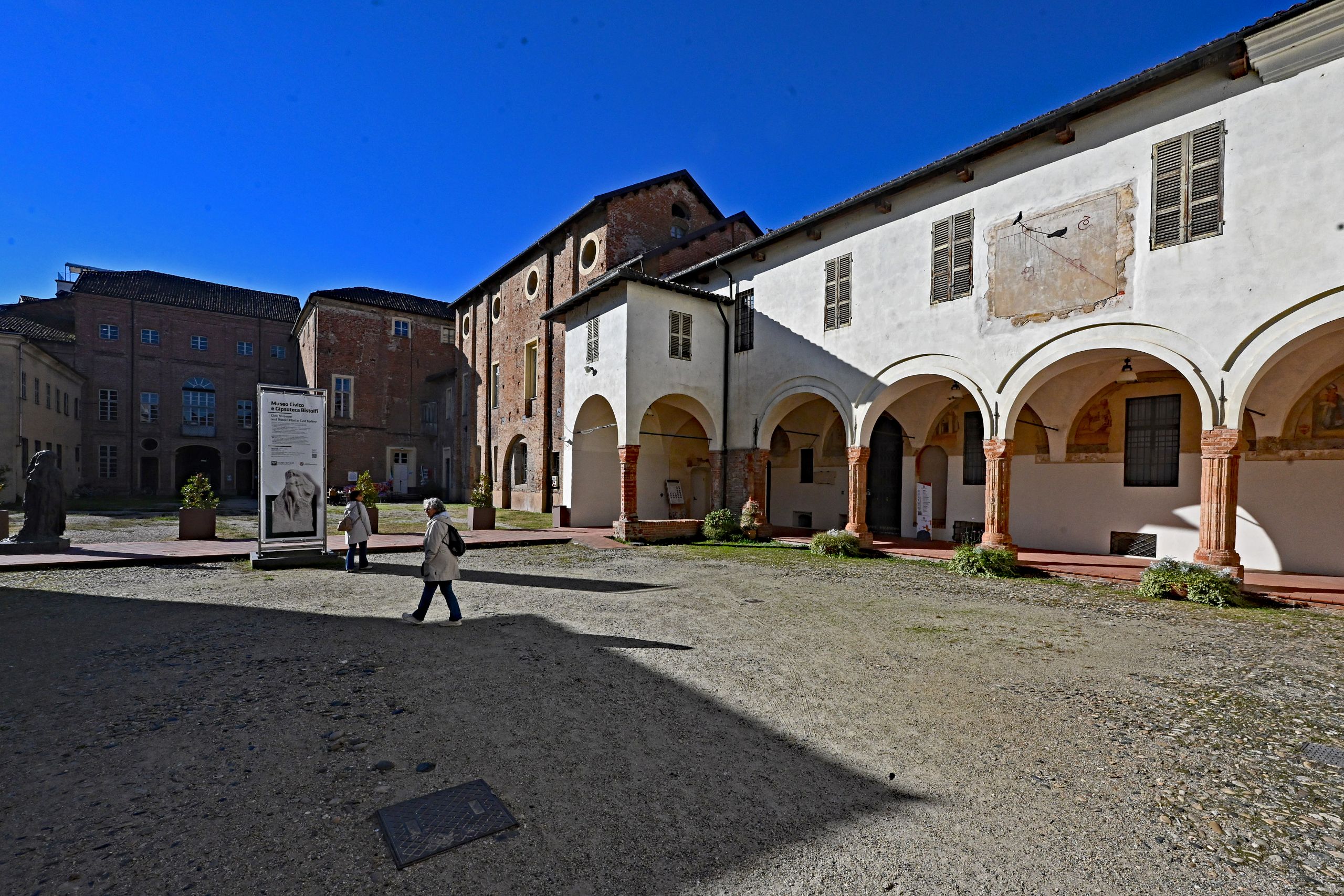
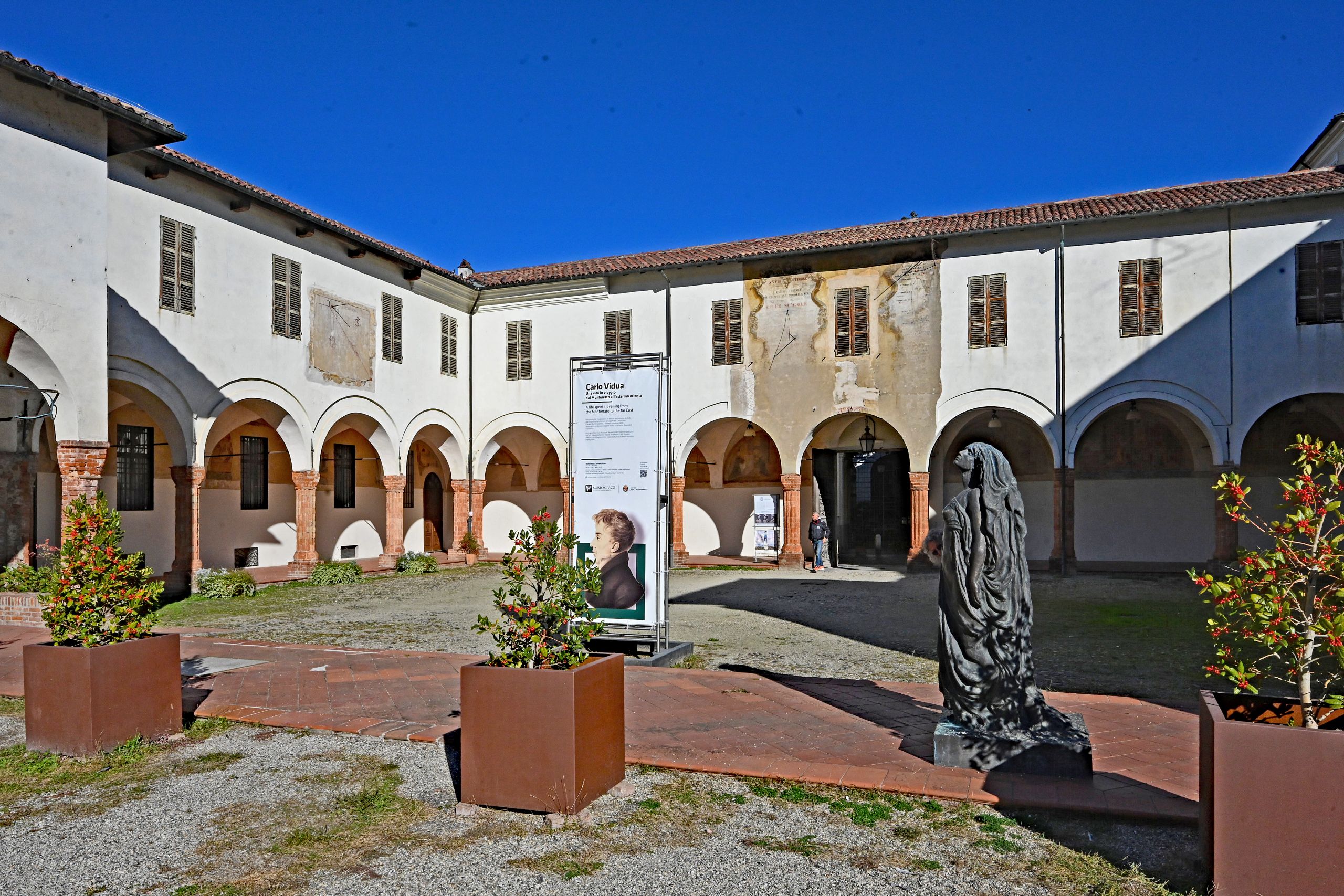
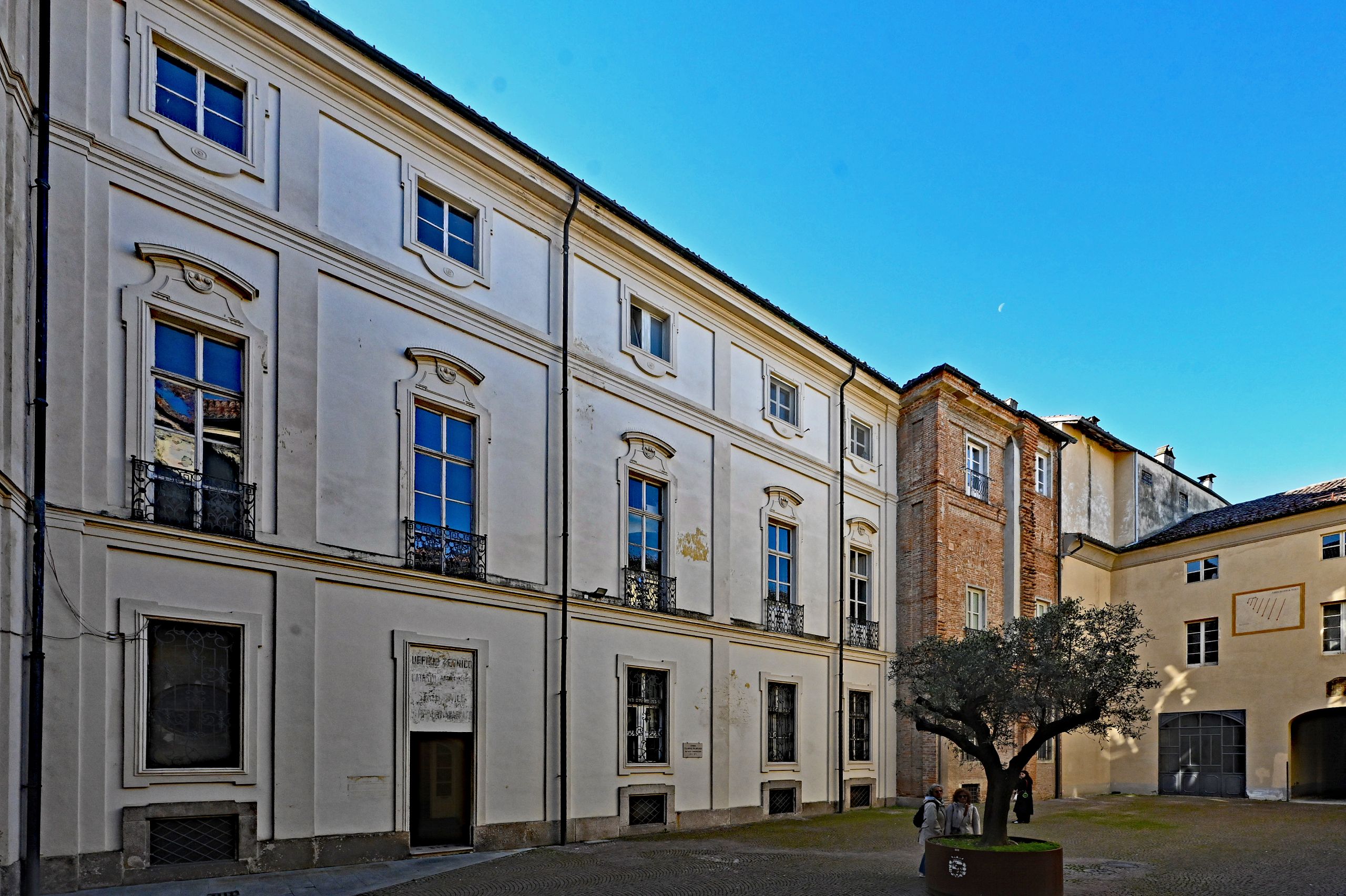
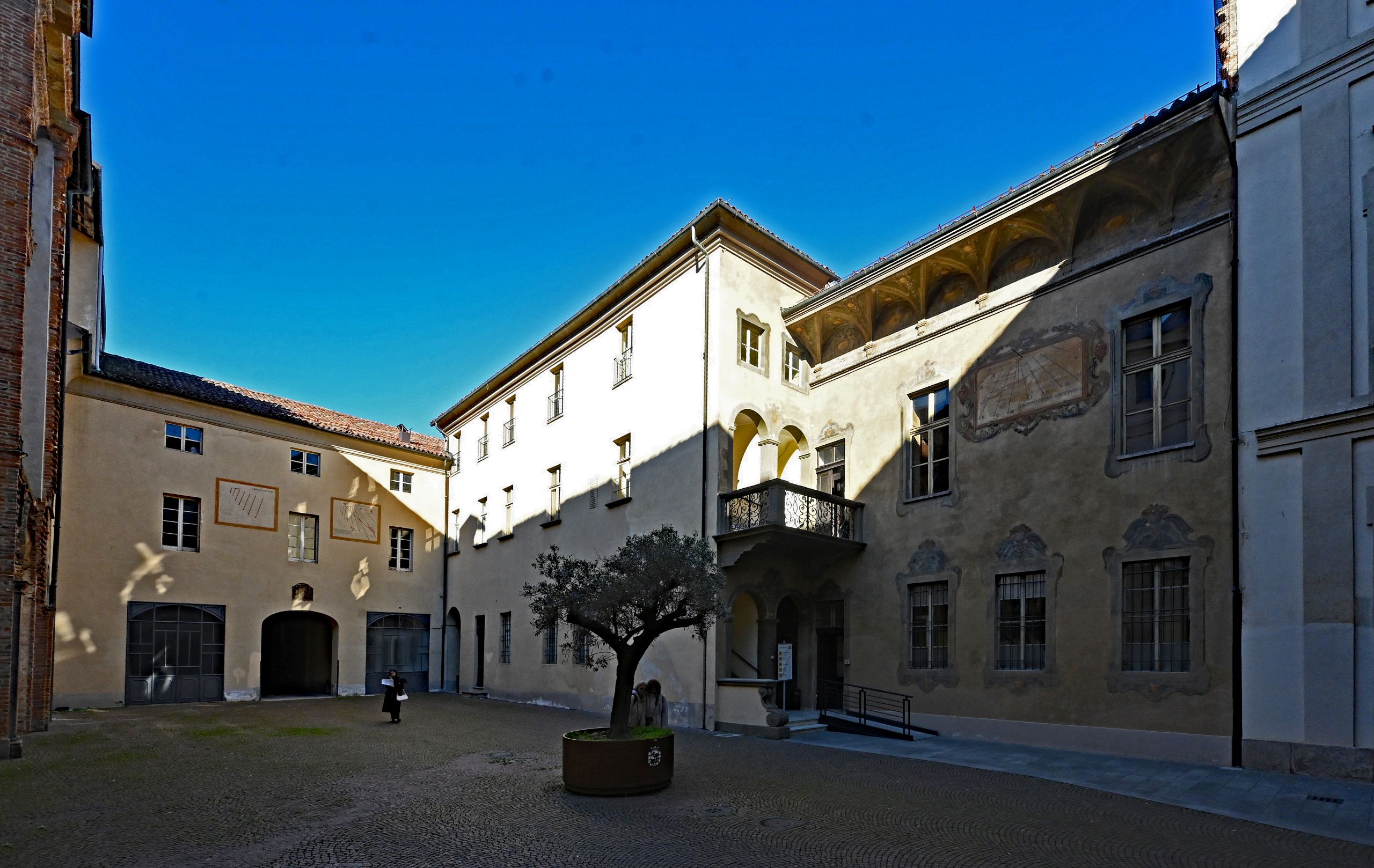
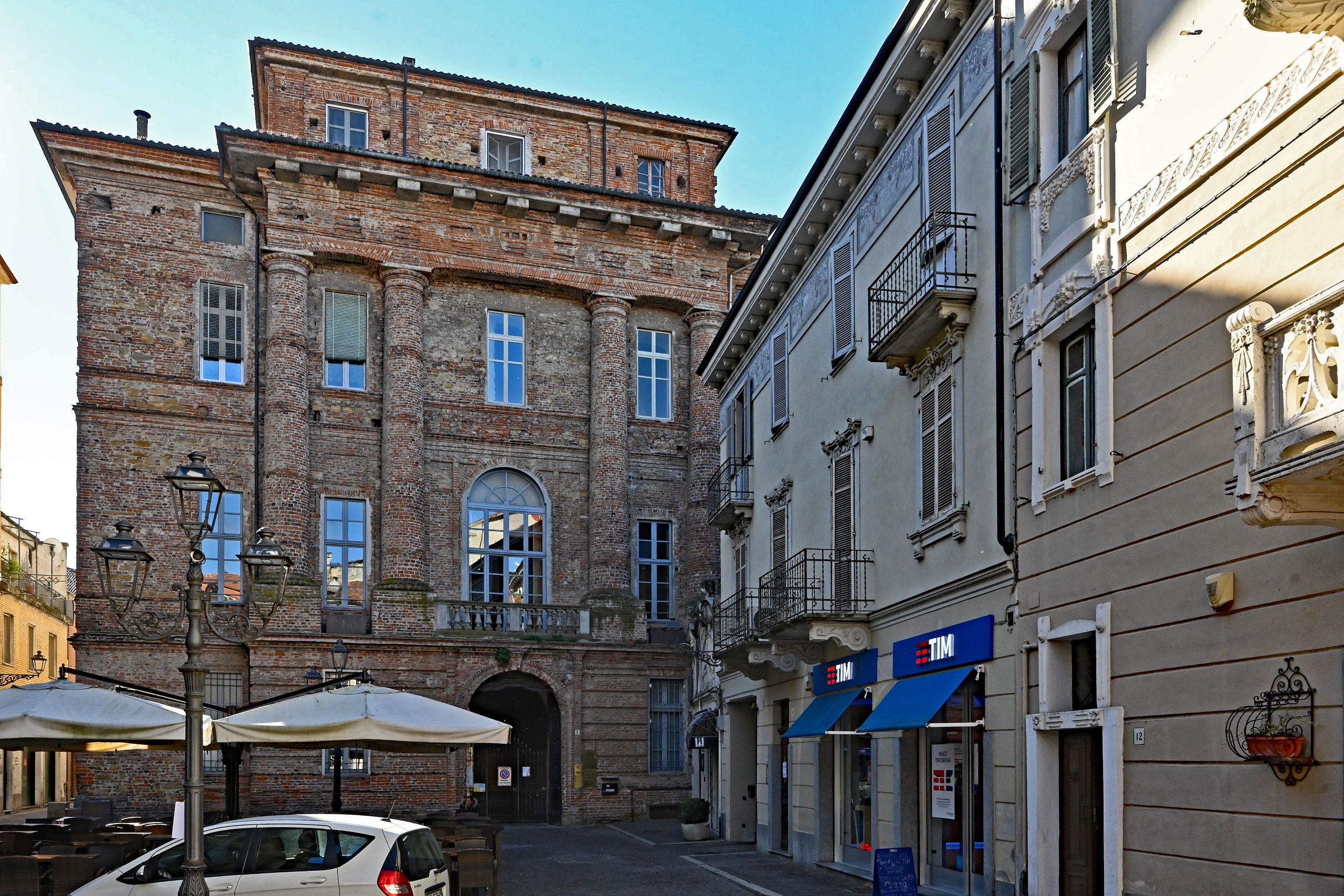
Our walking tour began right in the historic center on Via Roma, where one of the city’s most unusual landmarks immediately caught our eye: the former Church of Santa Croce. Originally dating back to the 14th century, the church received its monumental, unfinished brick facade with four massive columns in 1748, designed by local architect Francesco Ottavio Magnocavalli. Today, the former nave serves as an elegant shopping gallery. Right next door, we stepped into the spacious cloister of the former Augustinian monastery of Santa Croce, which now houses the Civic Museum and the Gipsoteca Leonardo Bistolfi. Between historic brick columns with faded wall frescoes, an old sundial on the facade, and a shrouded bronze sculpture by Bistolfi, Hanusia and Basia strolled across the gravel-covered courtyard while the low sun cast sharp shadows. Just a few steps further, we discovered another remarkably peaceful historic courtyard. Framed by an elegant palace facade with curved window pediments and wrought-iron railings, as well as three old sundials on the plastered walls, a gnarled olive tree in a large planter offered welcome shade, which the two of them used for a brief rest.
Gallery 1: Amid Brick Facades, Cloisters, and Quiet Courtyards
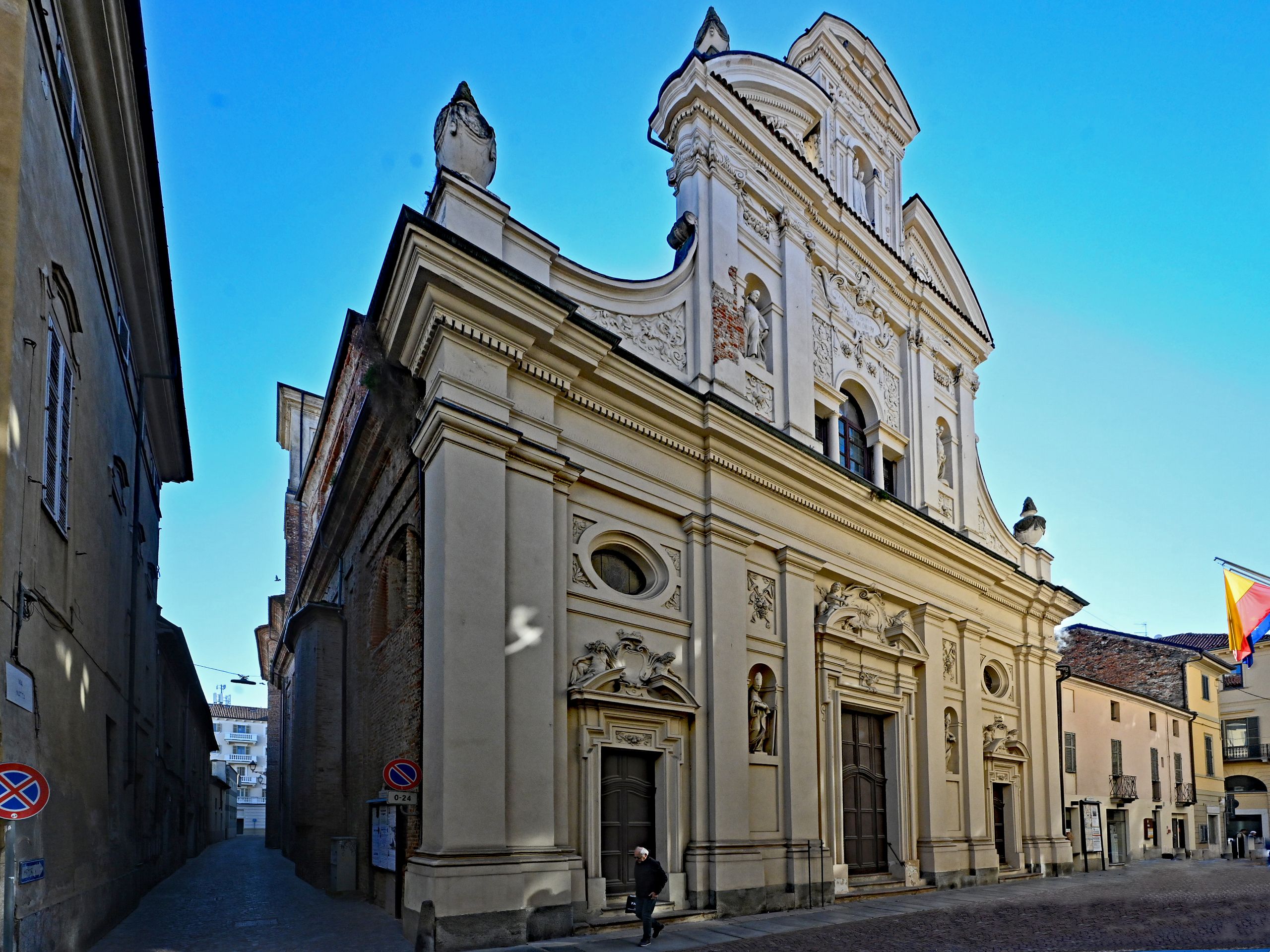
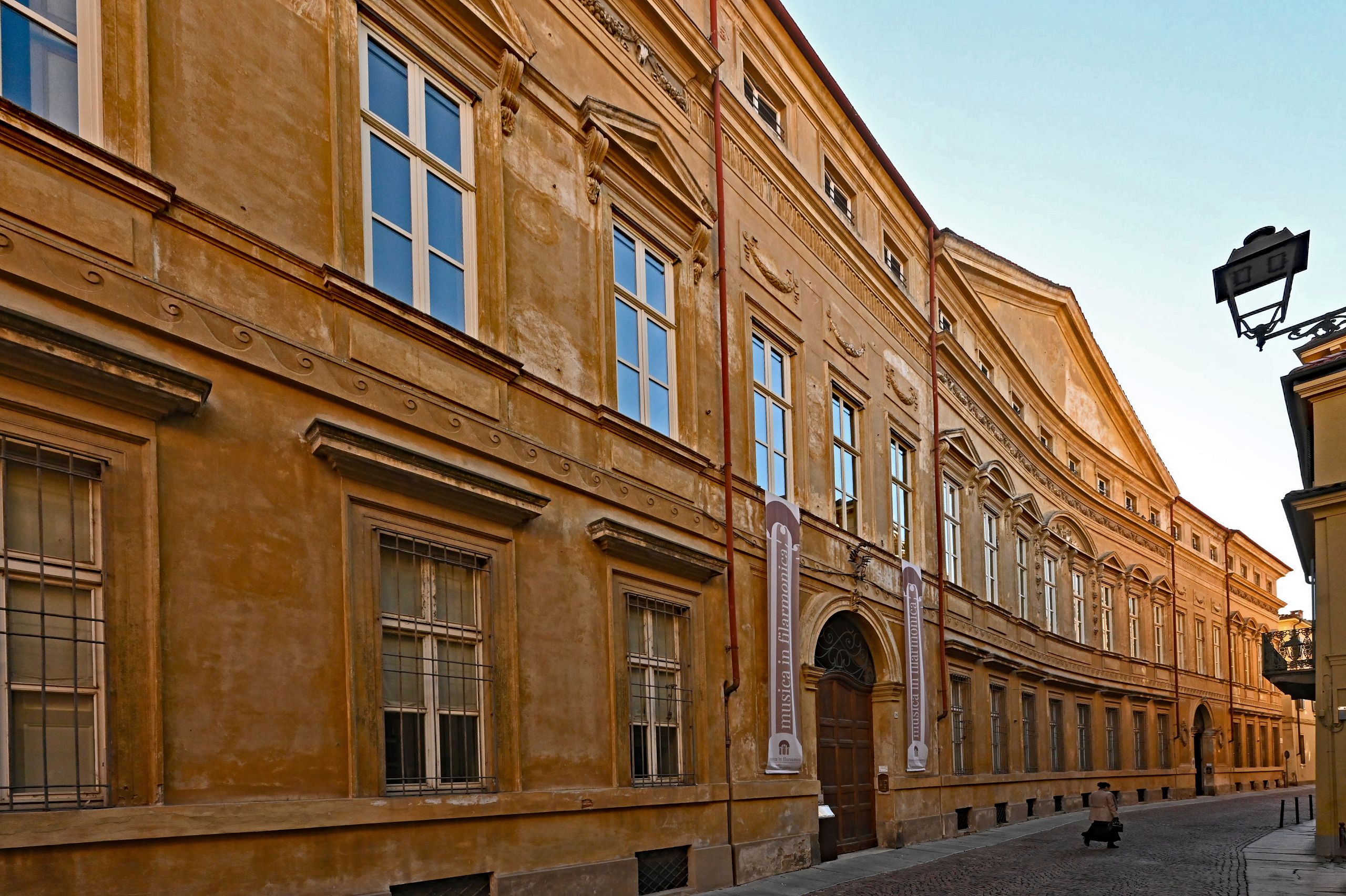
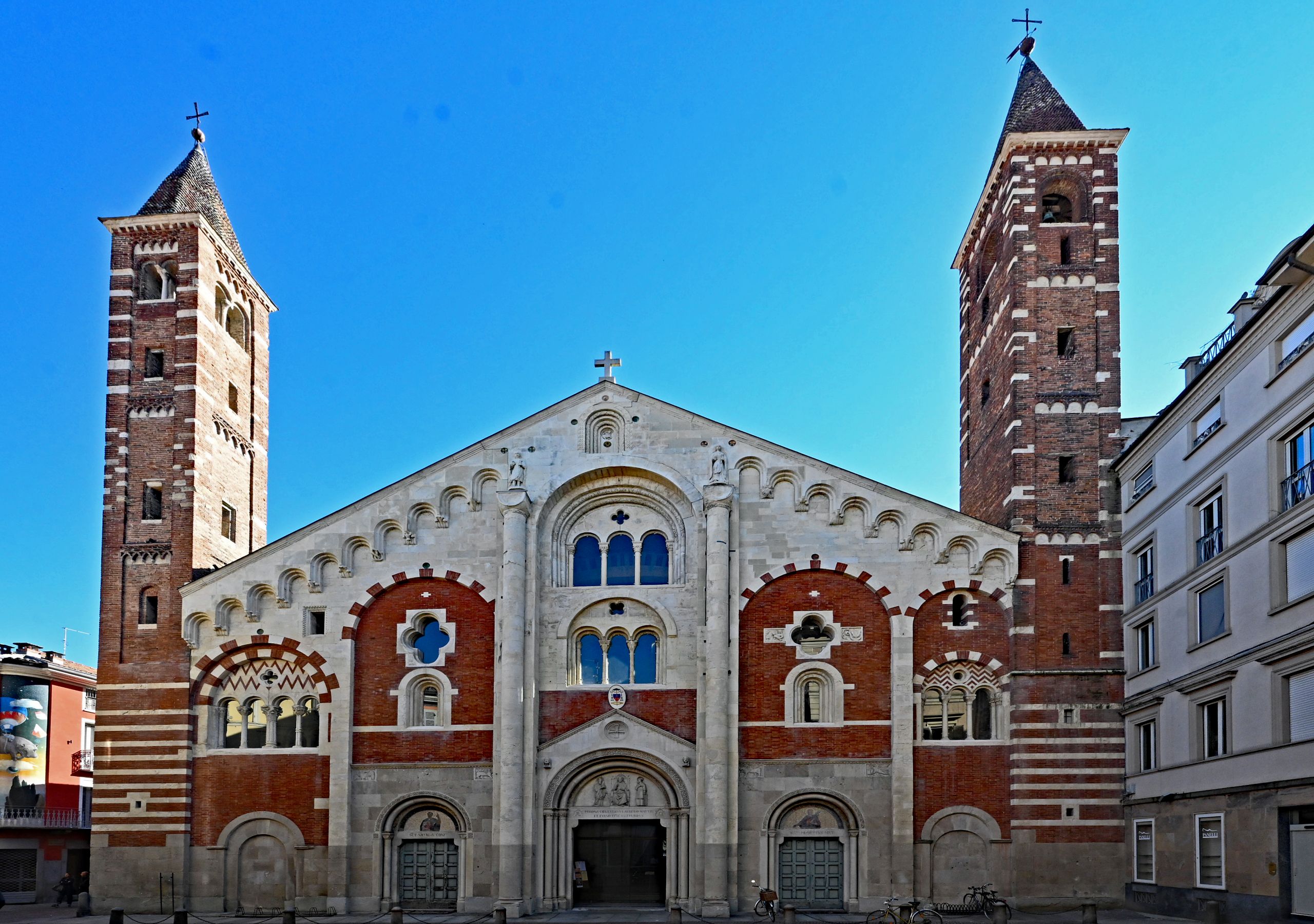
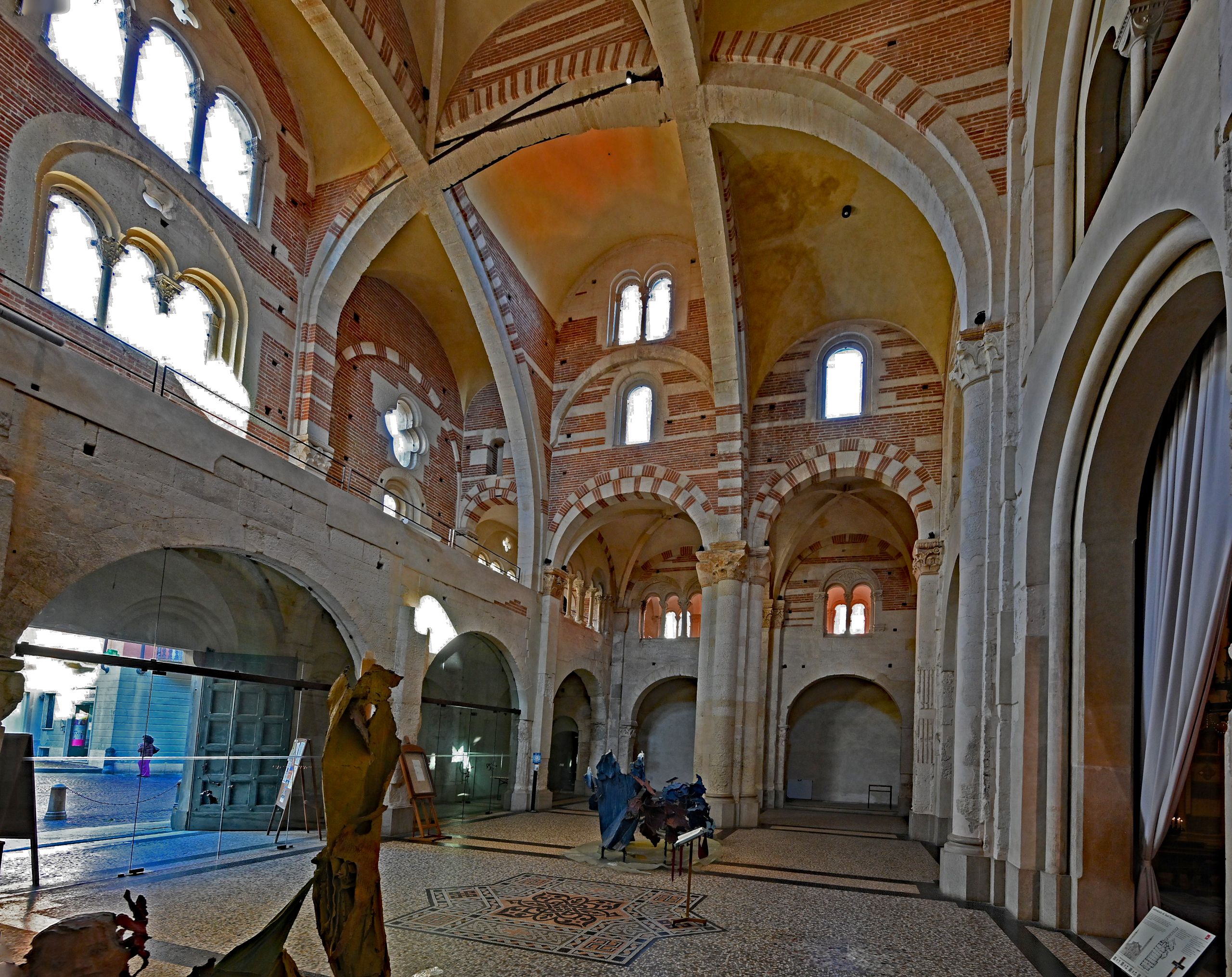
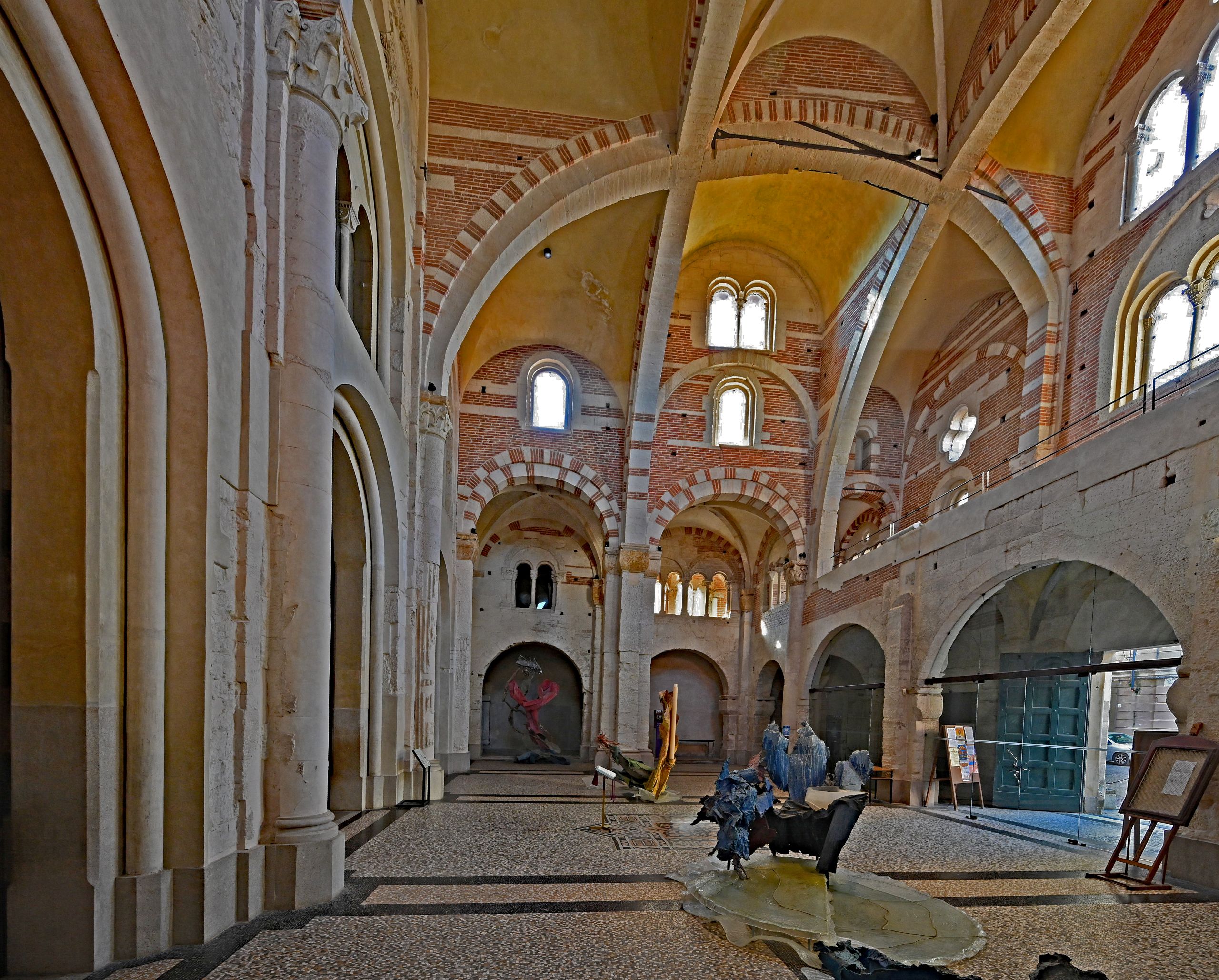
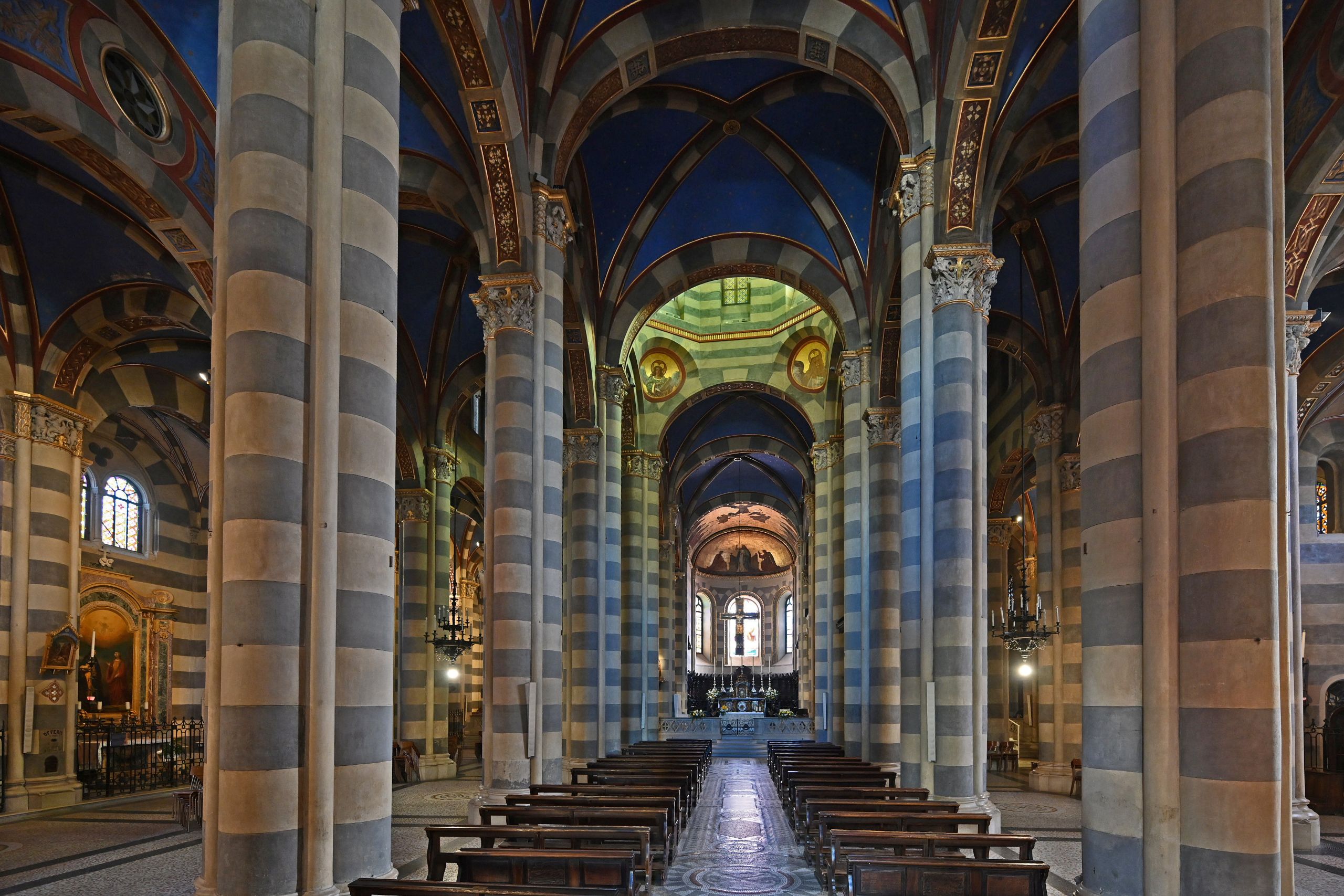
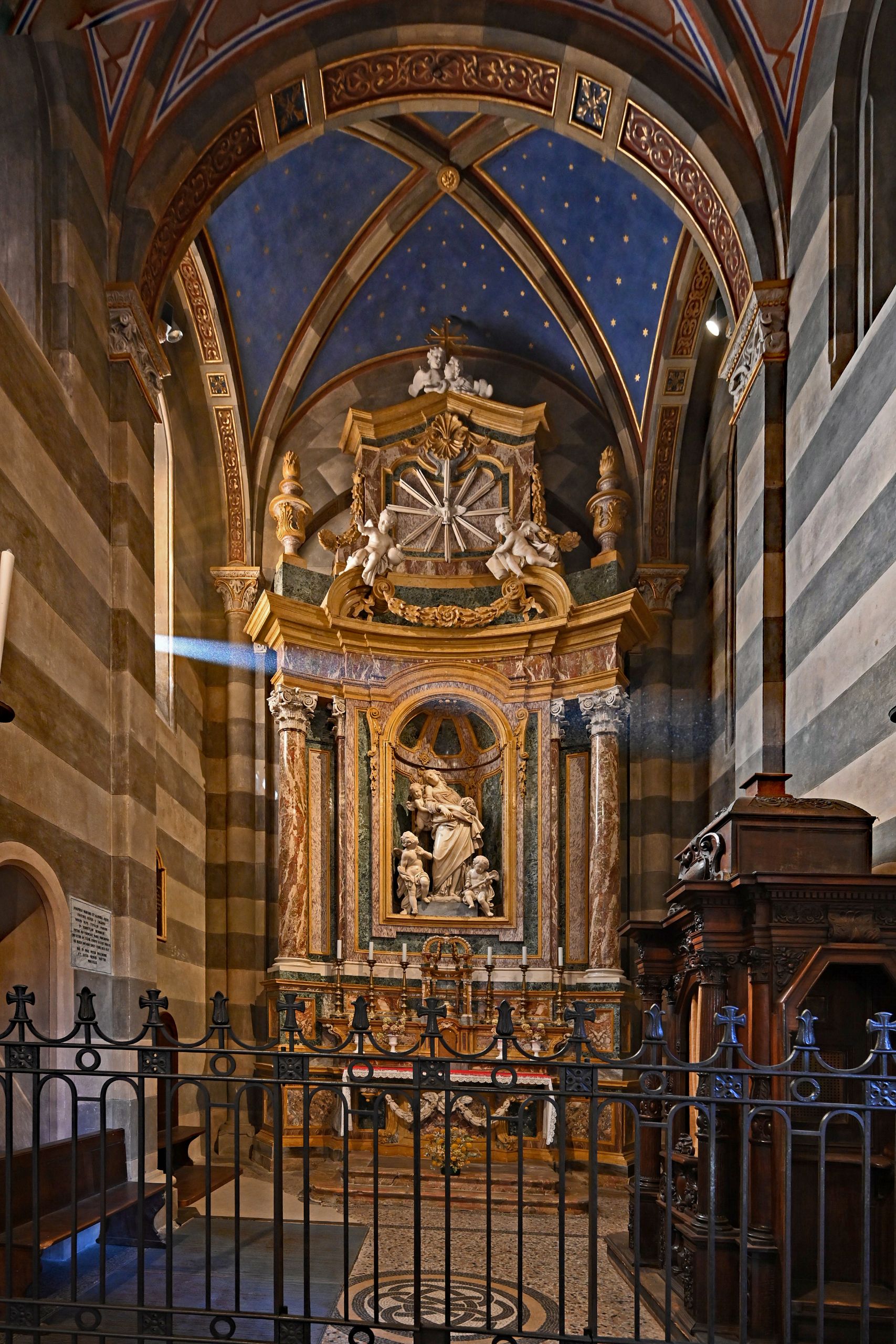
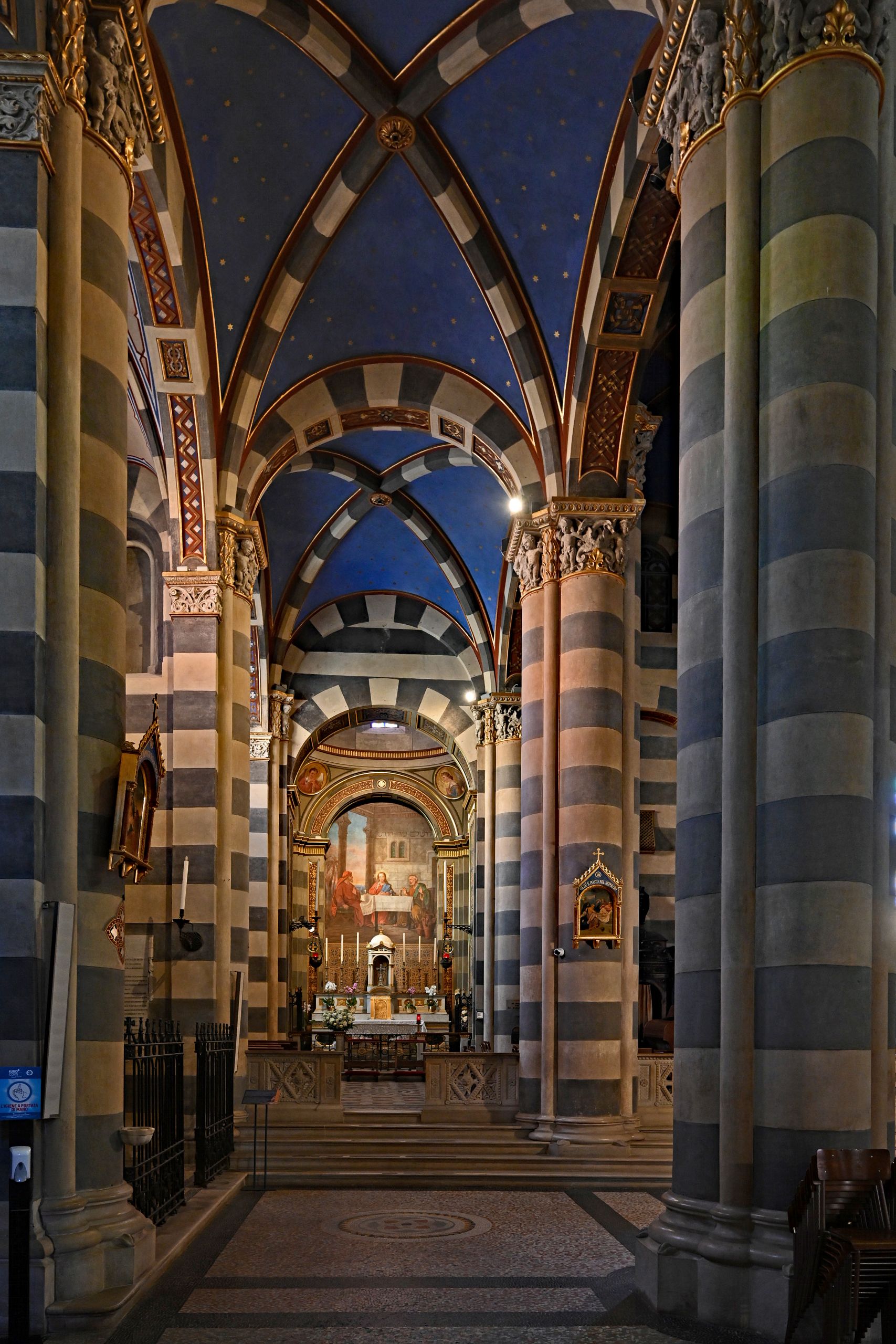
Leaving the quietude of the courtyards behind, we continued through the cobblestone alleys of the old town toward Via Goffredo Mameli. There, the magnificent two-story Baroque facade of the Chiesa di San Paolo rose before us, built starting in 1586 to designs by Lorenzo Binago. Its white-plastered front with three portals, intricate stucco work, and statues of saints in wall niches stood out crisply against the deep blue sky. Immediately afterward, an entirely different architectural masterpiece on the same street captivated us: the Palazzo Gozzani di Treville. Around 1780, architect Ottavio Bertotti Scamozzi gave this splendid 18th-century noble palace its gently curved Neoclassical facade in warm ochre, harmonizing with the curve of the street; since 1827, it has been home to the renowned Accademia Filarmonica. Finally, we stood before the city’s most significant sacred building, the Cathedral of Sant’Evasio. Built beginning in the 12th century, the cathedral impresses from the outside with its asymmetrical Romanesque west facade in a striking alternation of red brick and light sandstone. Stepping into the monumental entrance hall, the narthex, we marveled at the soaring intersecting transverse arches, the historic mosaic floor, and contemporary sculptures that created a fascinating contrast to the medieval architecture. Inside the five-aisled nave, our gaze was inevitably drawn upward: striped clustered piers support a deep blue ribbed vault painted with countless golden stars. In one of the side chapels, we even caught a delicate sunbeam falling directly onto the Baroque marble altar.
Gallery 2: Baroque Facades and the Starry Vault of Sant’Evasio Cathedral
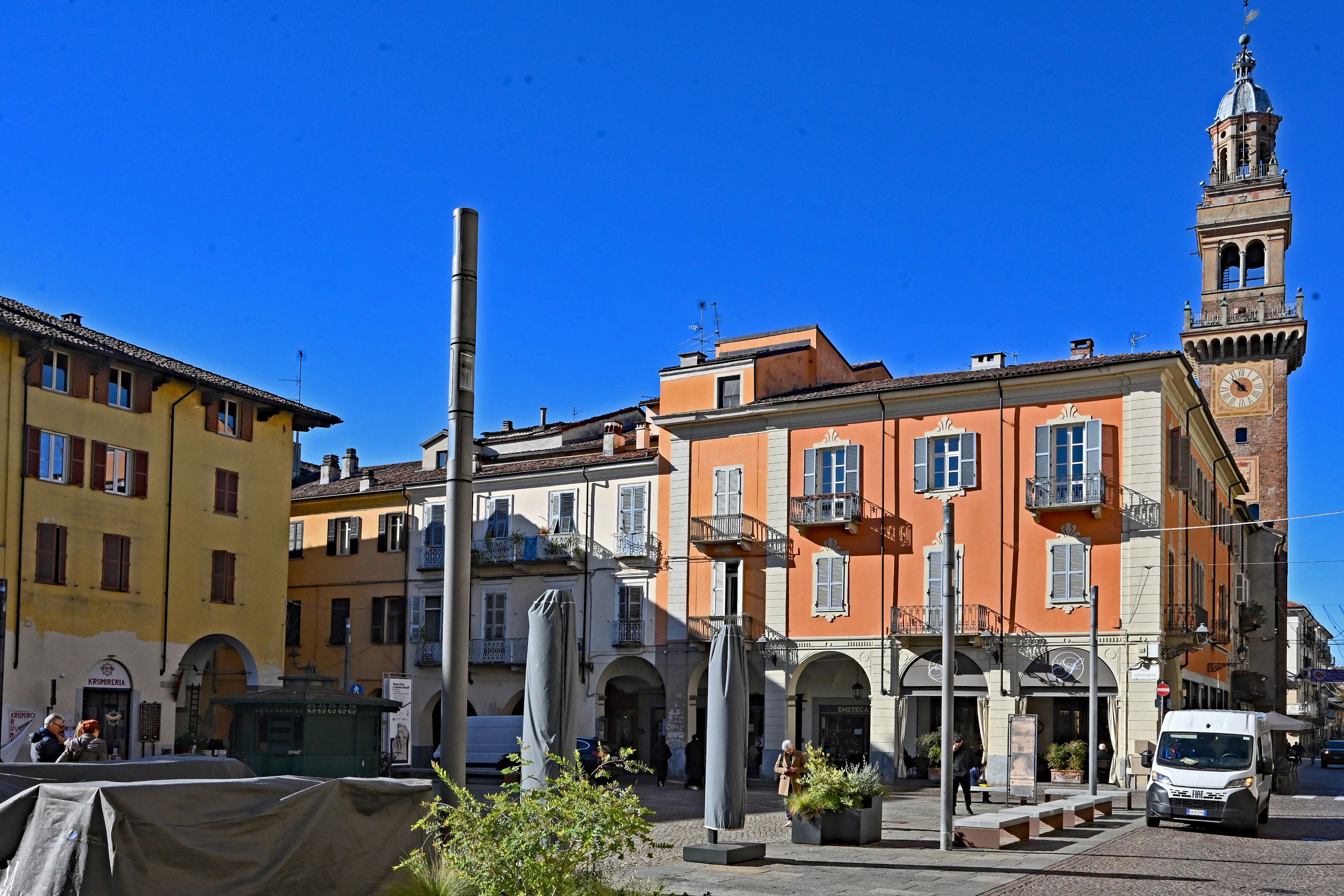
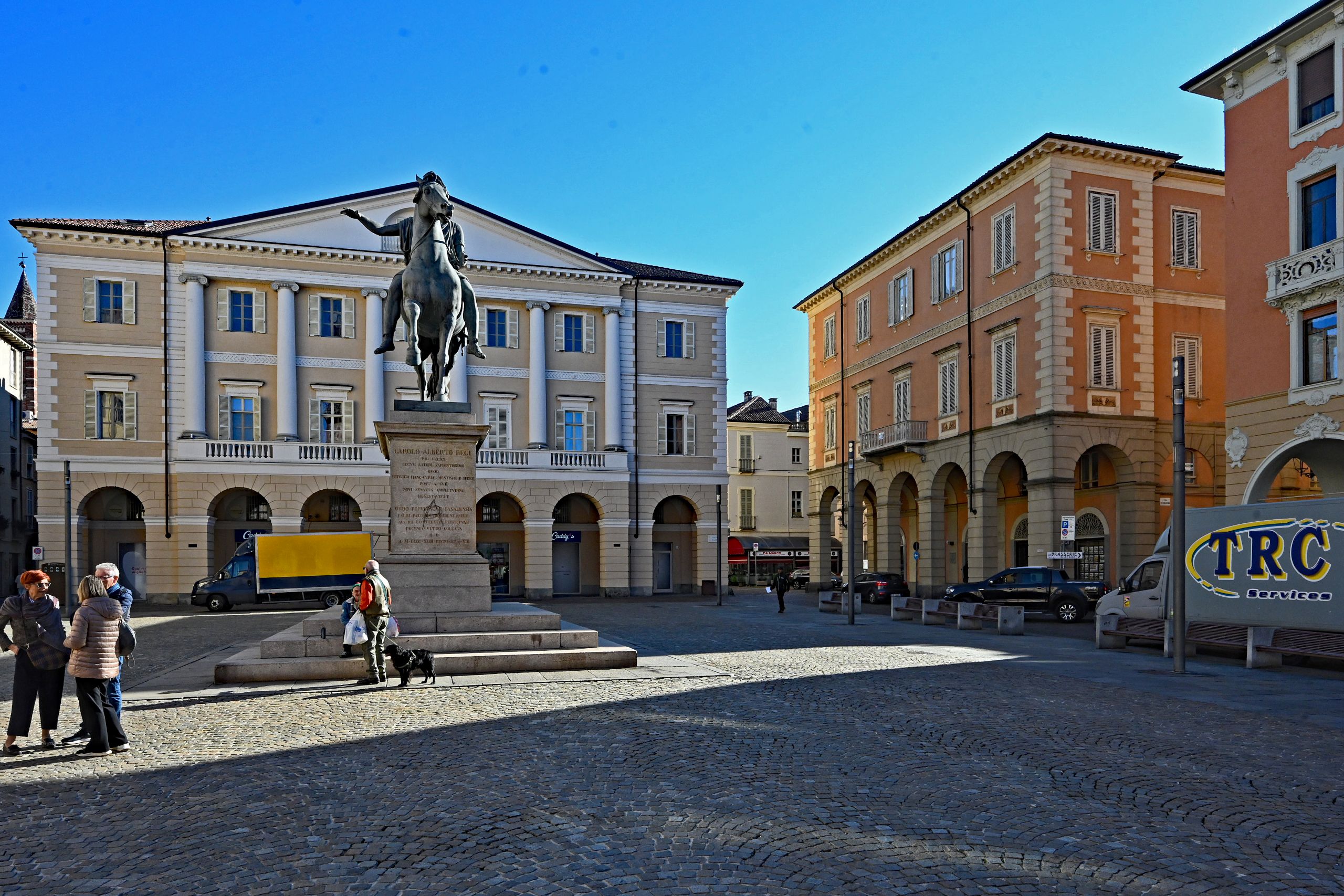
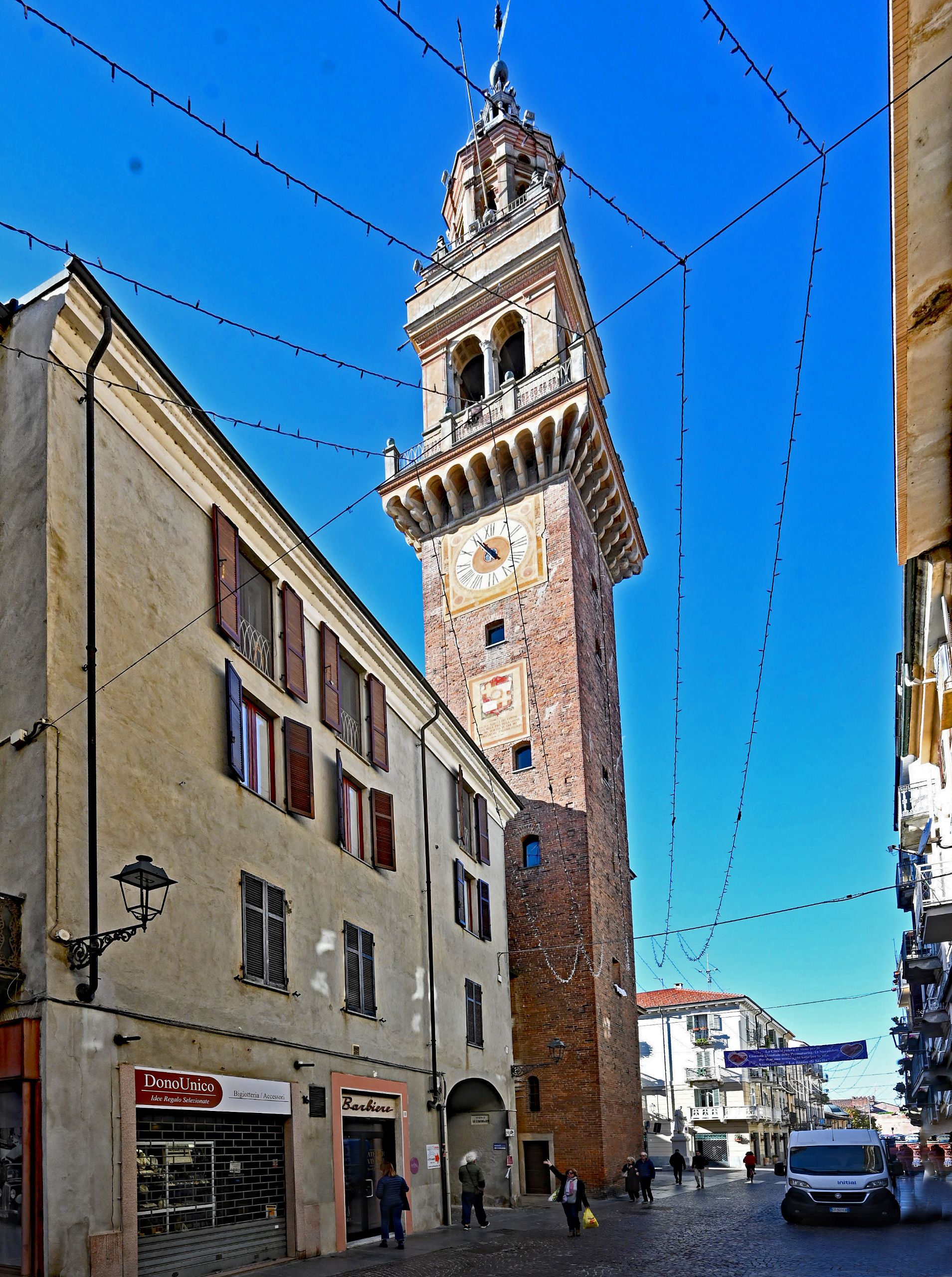
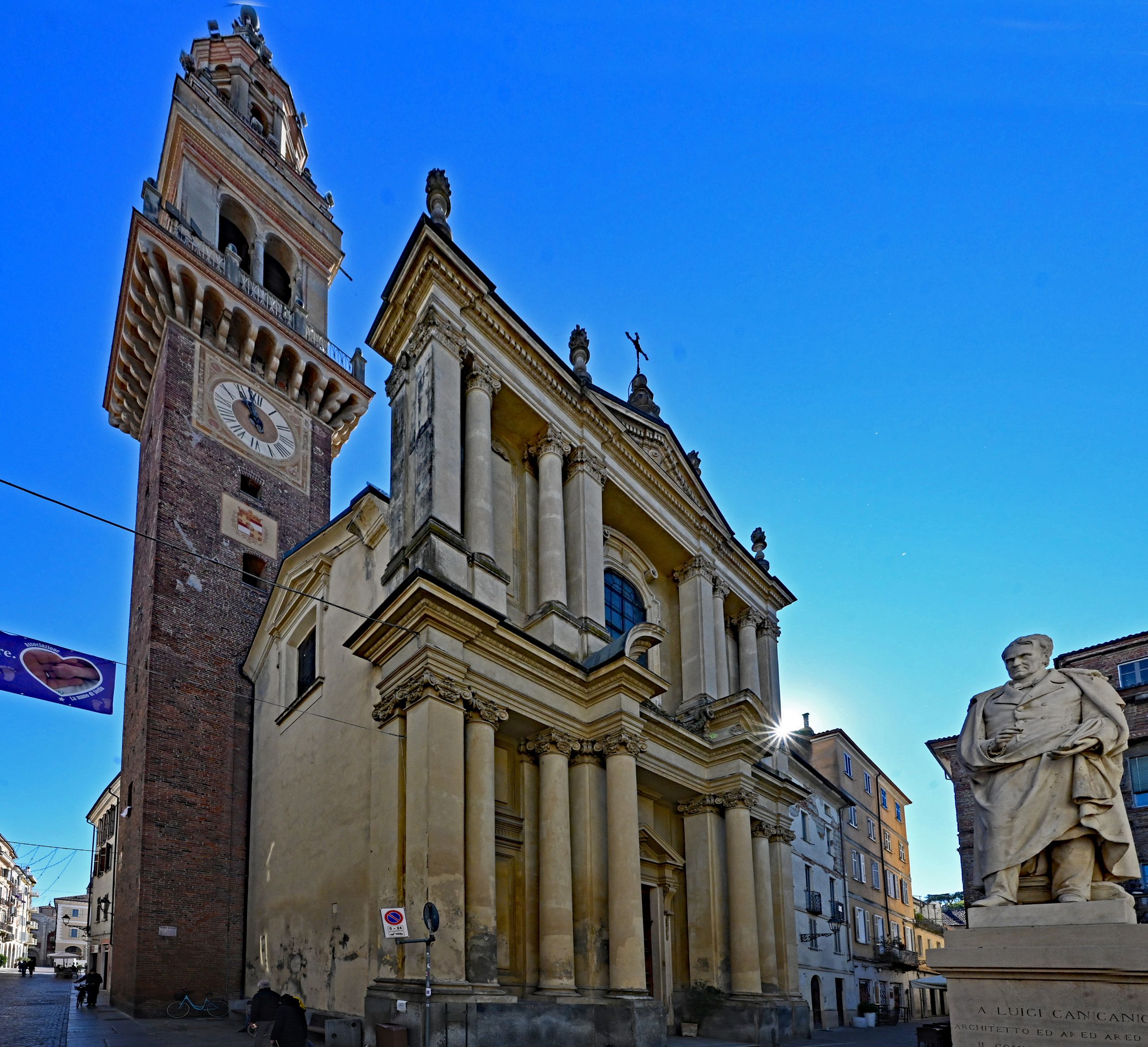
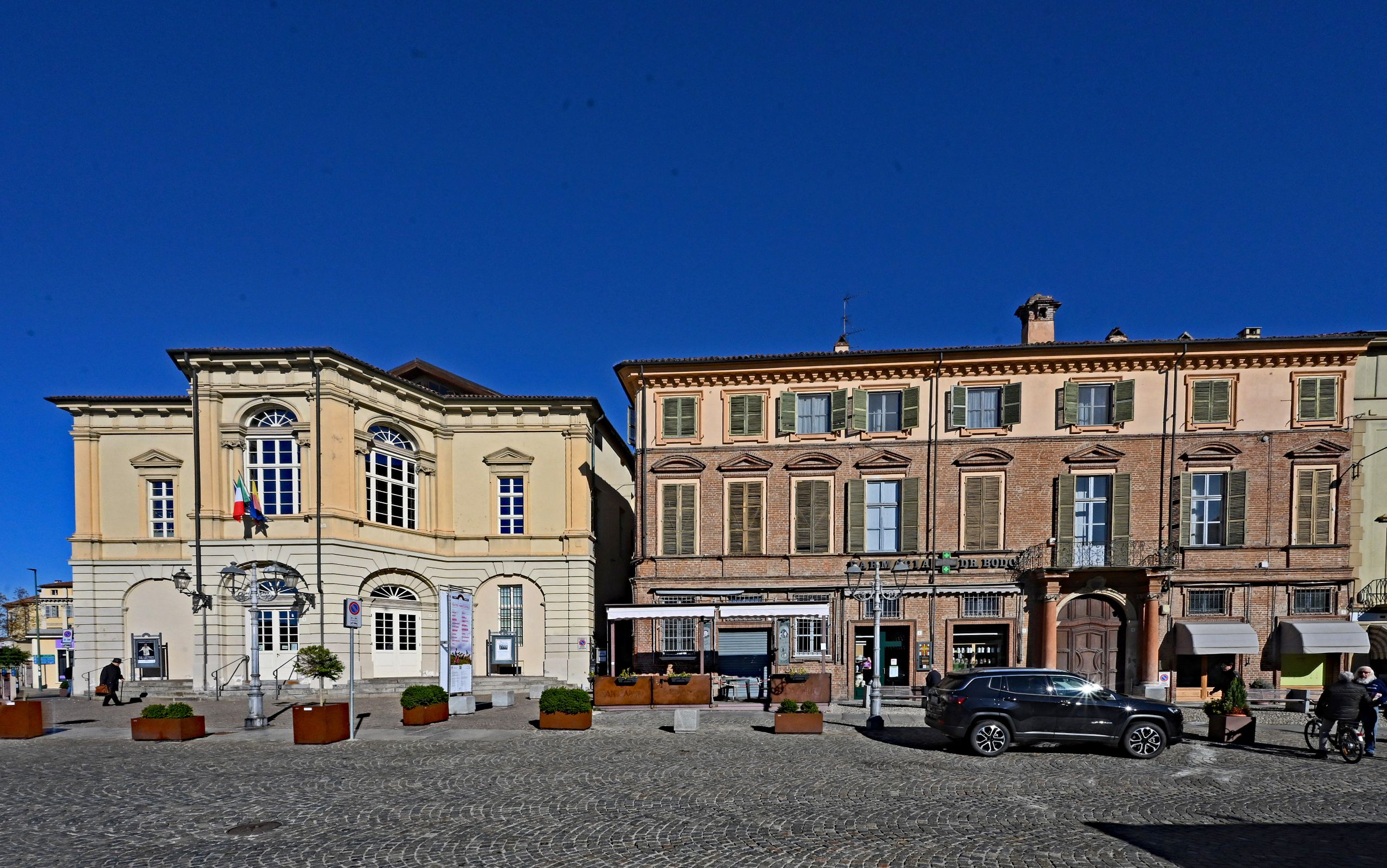
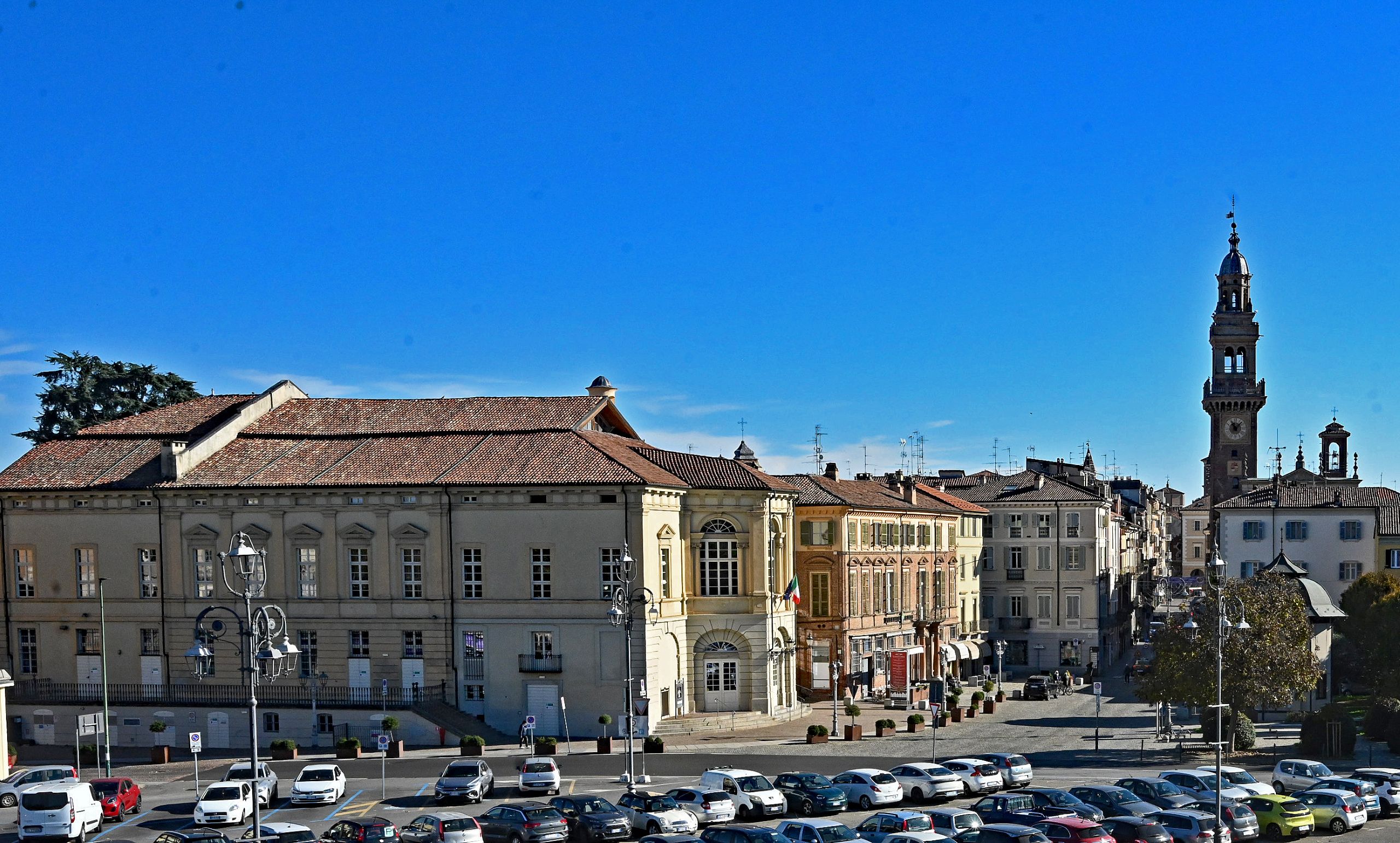
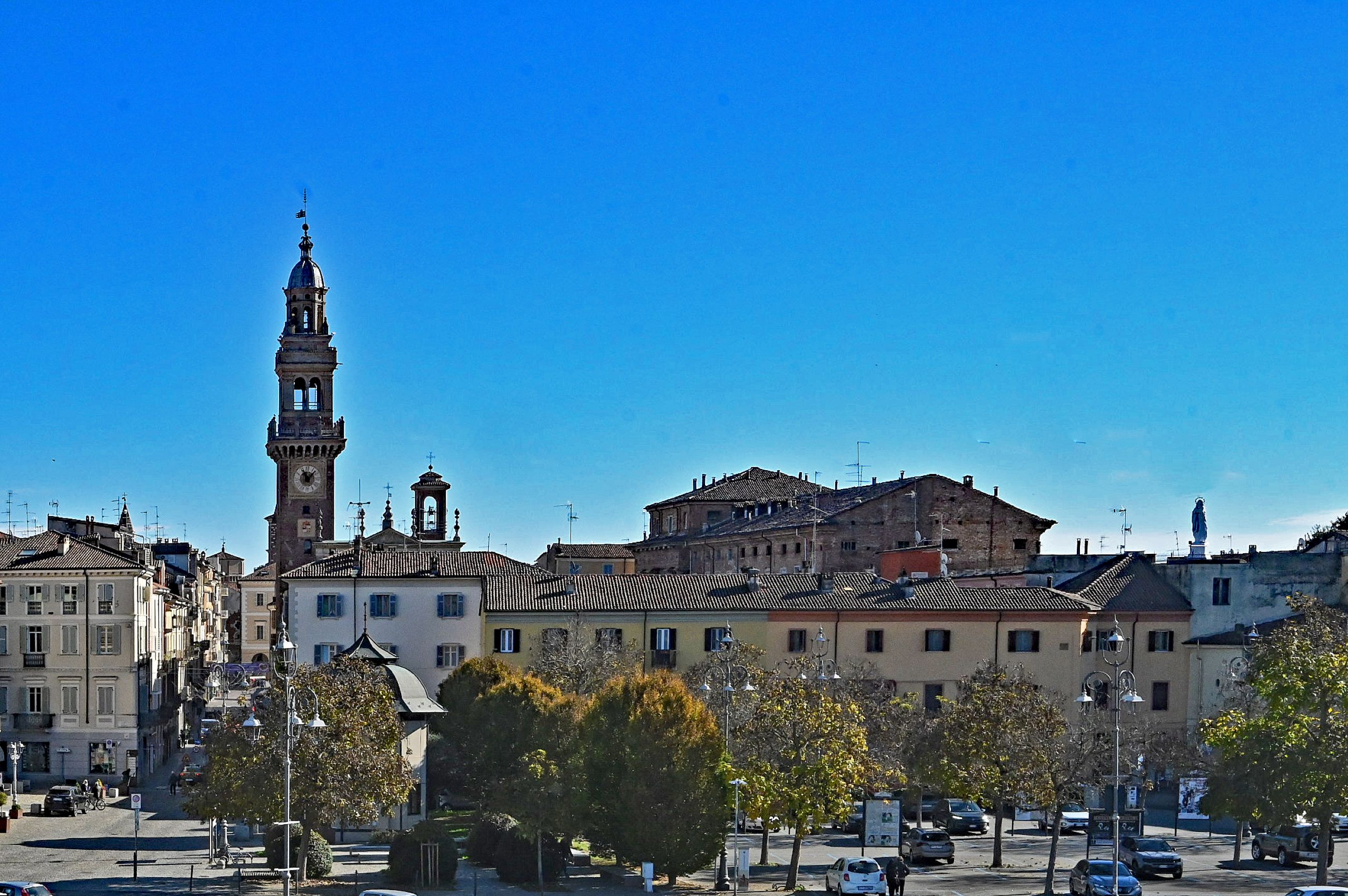
After the solemn stillness inside the cathedral, we re-entered the lively bustle of the old town and reached the expansive Piazza Giuseppe Mazzini. Framed by historic townhouses with arcaded walkways and wrought-iron balconies, the square is dominated by the imposing equestrian statue of King Charles Albert from 1843. Rising above the rooftops was Casale Monferrato’s roughly 60-meter-tall landmark: the Torre Civica, also known as the Torre di Santo Stefano, whose brick shaft dates back to the 11th century and is crowned by an ornate loggia spire. Just a few steps away on Piazza Santo Stefano, the tower appeared right next to the 17th-century Chiesa di Santo Stefano and the white marble monument honoring Luigi Canina, the famous architect and archaeologist born in Casale. From there, our path led out to the grand Piazza Castello, where the Neoclassical Teatro Municipale stands right beside a historic brick palazzo, opening up the view toward the mighty fortress.
Gallery 3: From Piazza Mazzini Past the Civic Tower to Piazza Castello
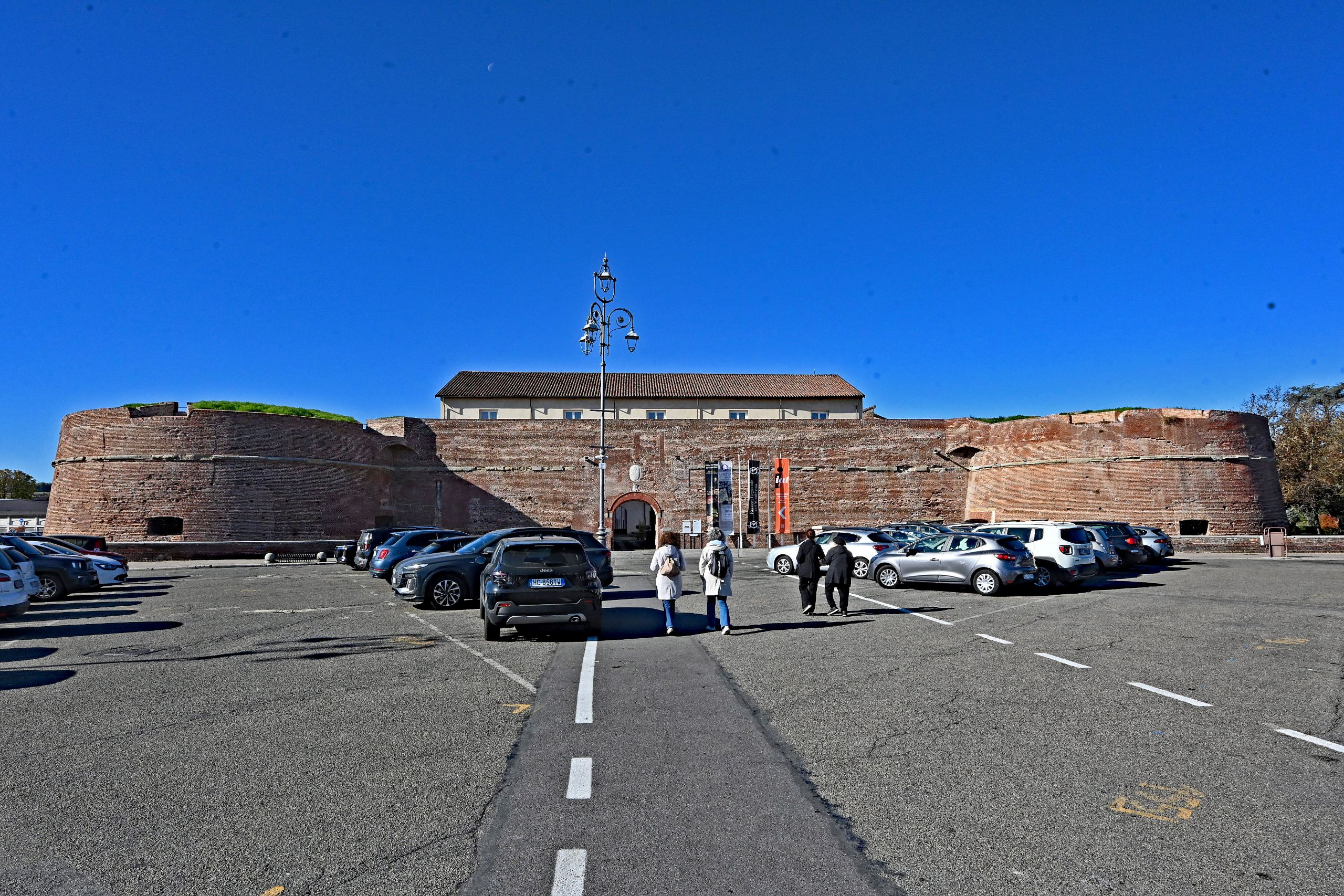
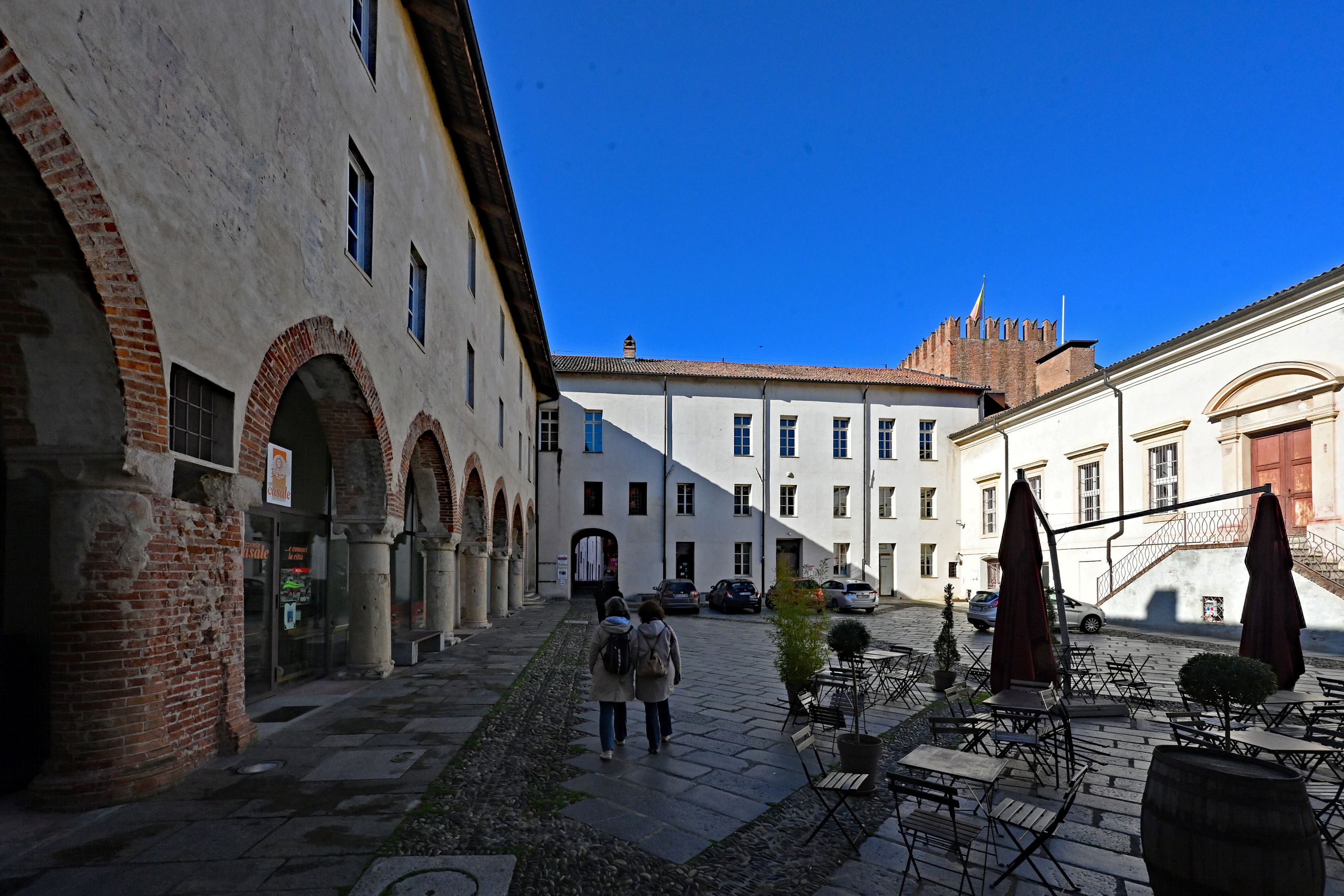
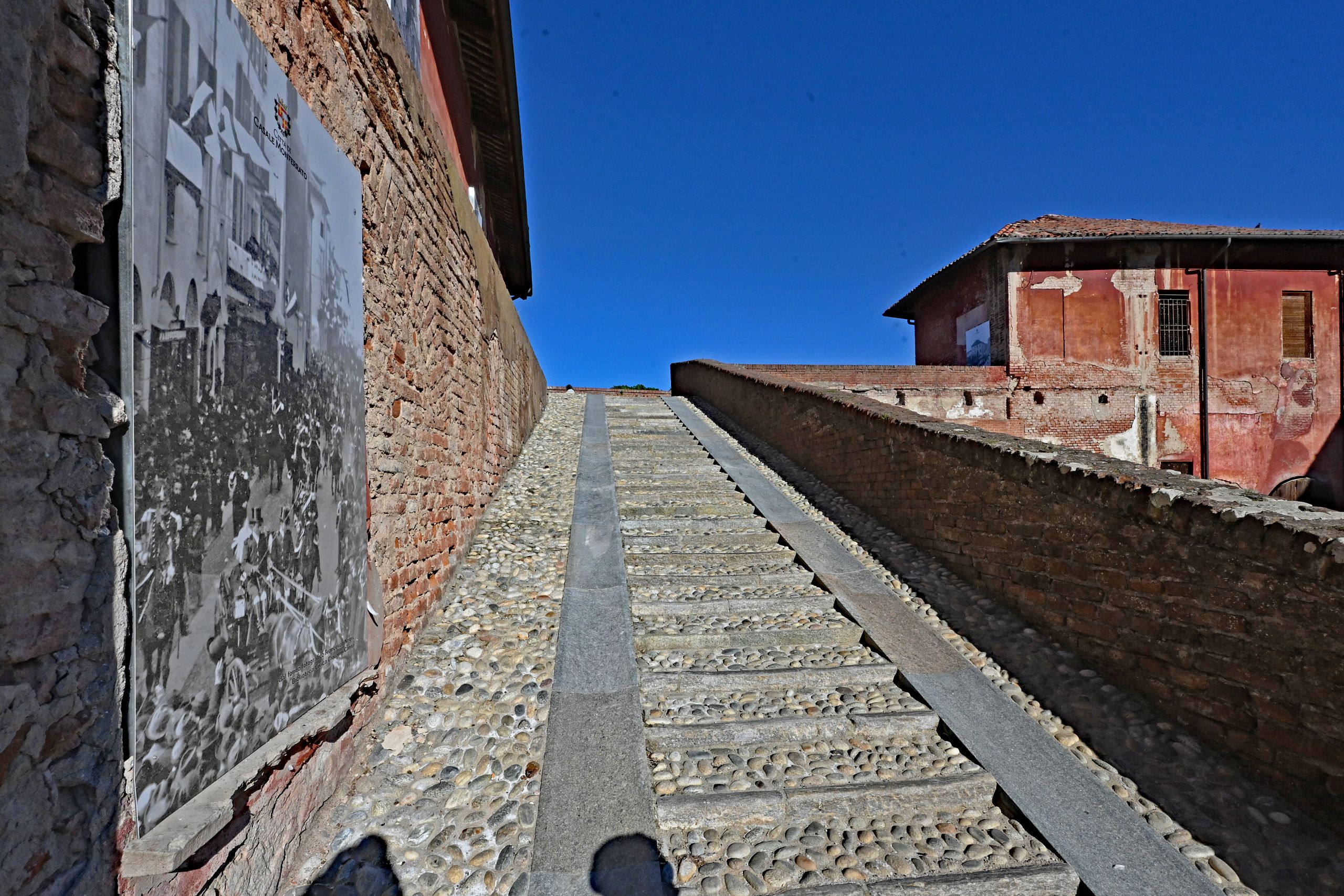
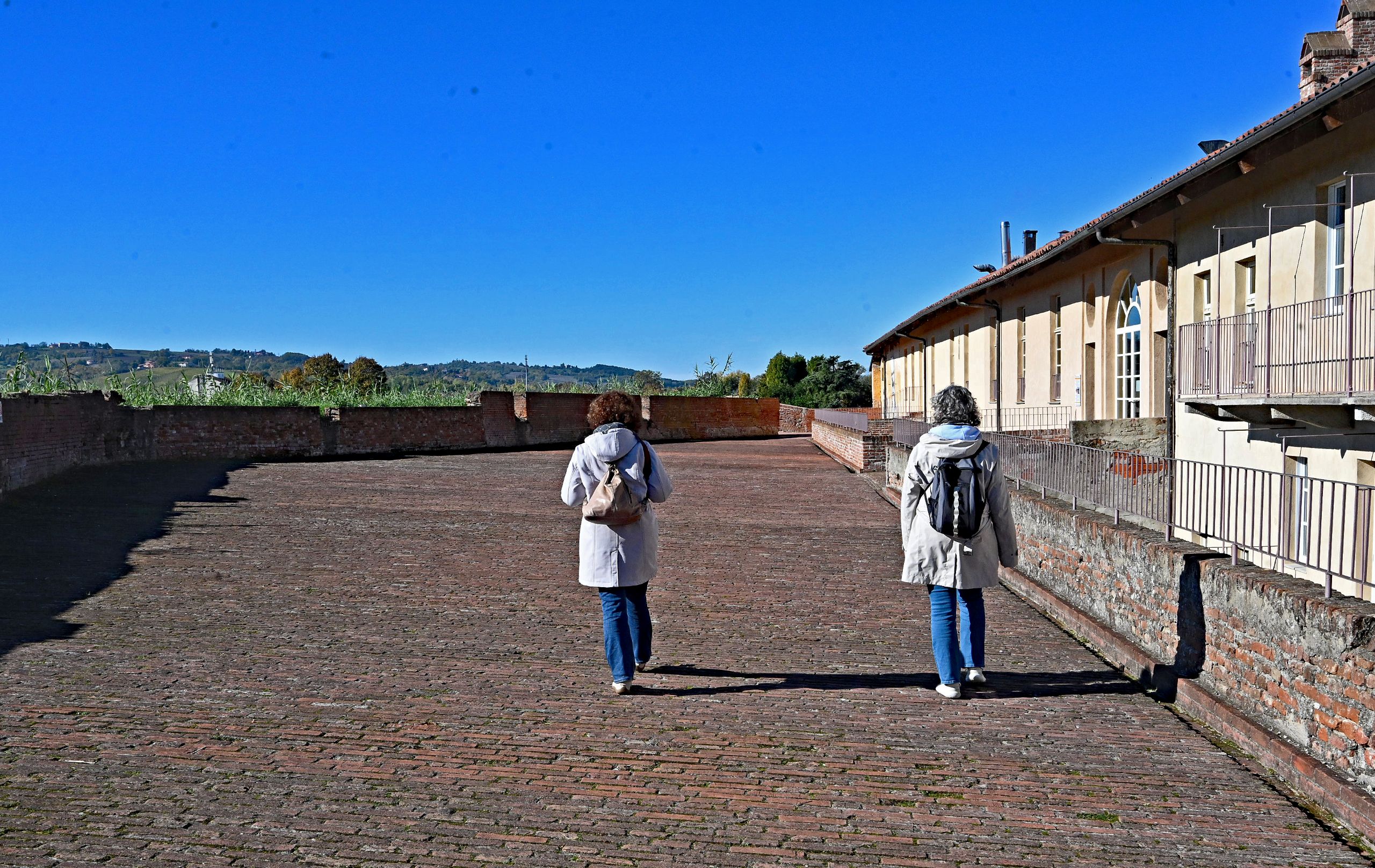
In the afternoon, we devoted our time entirely to the massive Castello del Monferrato, the former residence of the Marquises of the House of Palaiologos. Simply walking across the wide forecourt toward the bulky, rounded brick bastions and the arched main portal was impressive. Inside the spacious courtyard, historic arcaded walkways, the exterior staircase of the former castle chapel, and a towering crenellated brick tower awaited us, while the low afternoon sun drew sharp geometric lines of light and shadow across the white walls. Climbing a steep, historic cobblestone fortress ramp past large-format black-and-white photographs from the city’s history, we ascended to the wide battlements. From up here, we were rewarded with a magnificent panoramic view across Piazza Castello, the Teatro Municipale, and the Torre Civica all the way to the distinctive oval dome of the Baroque Church of Santa Caterina. As Hanusia and Basia strolled leisurely along the brick-paved bastions, our gaze wandered into the distance over the gentle autumn hills of Monferrato.
Gallery 4: On the Bastions of the Castello del Monferrato
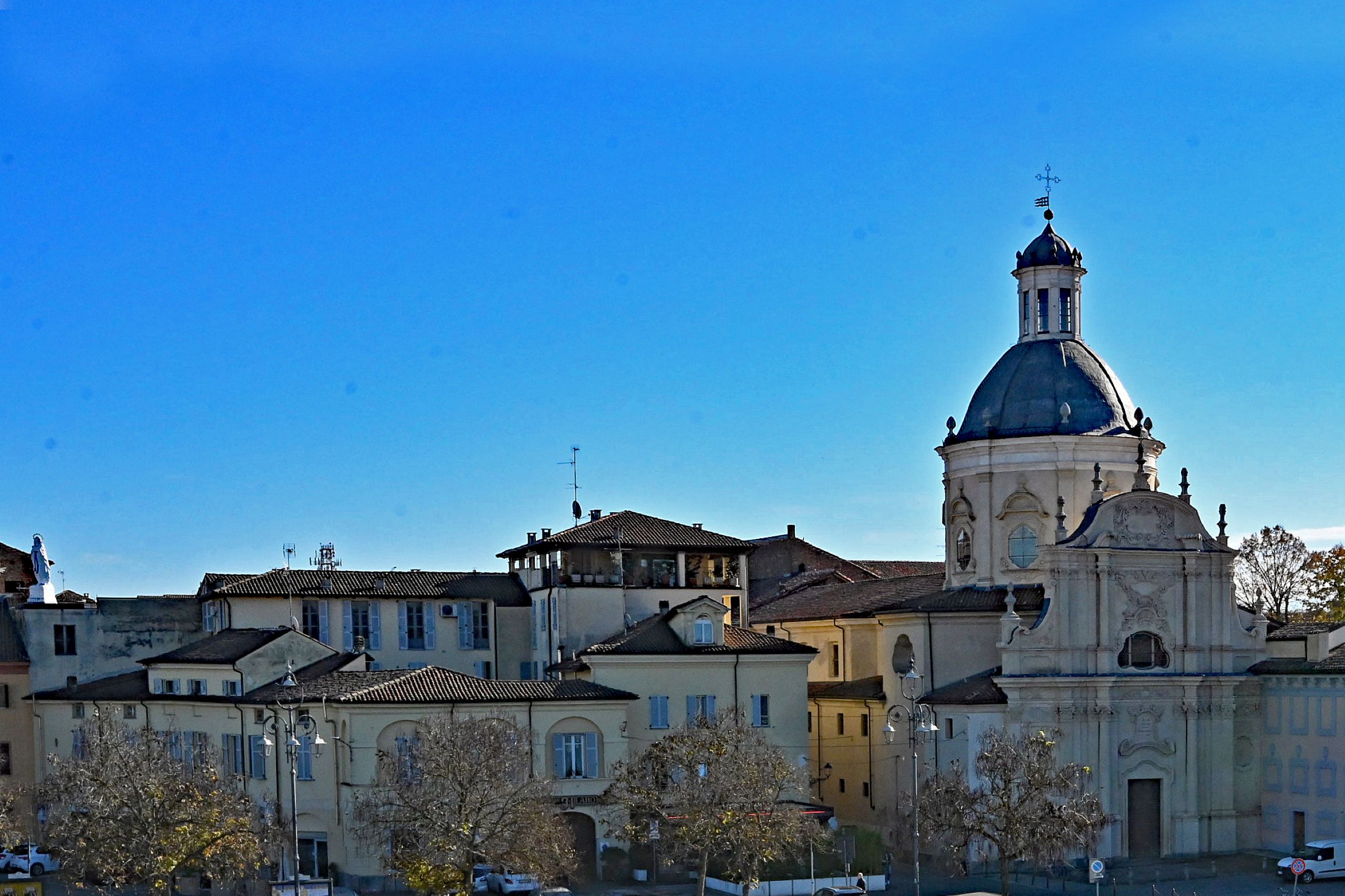
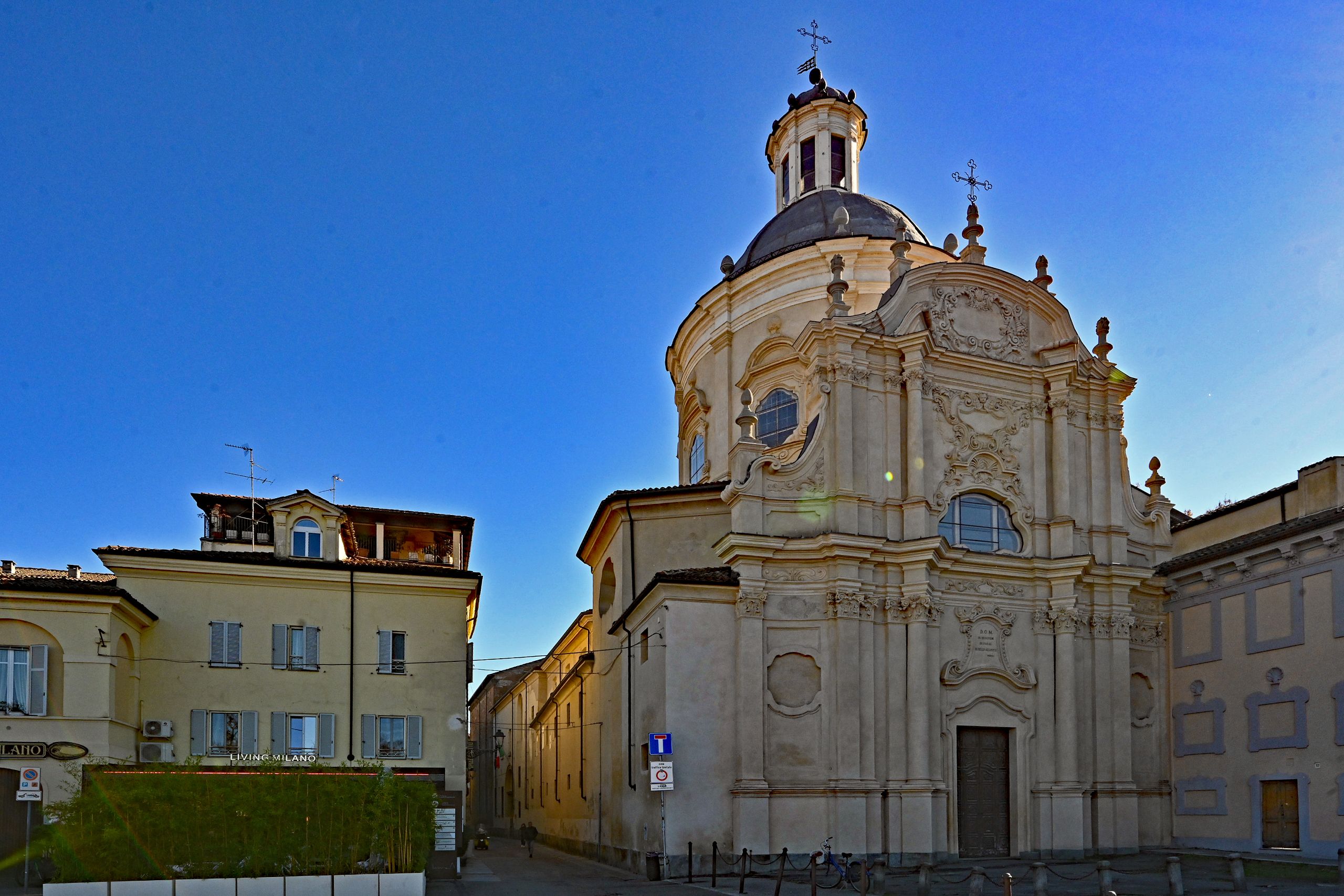
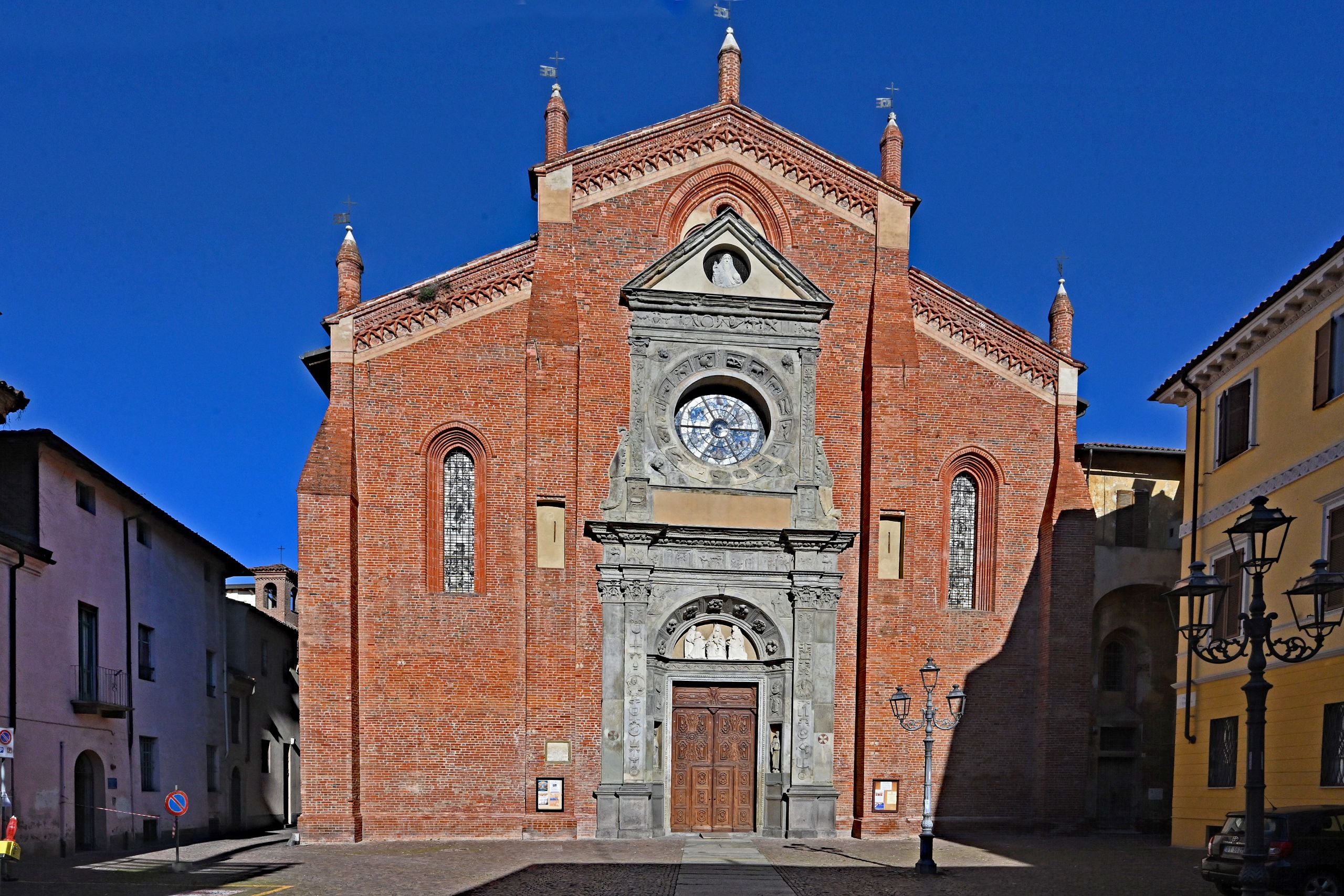
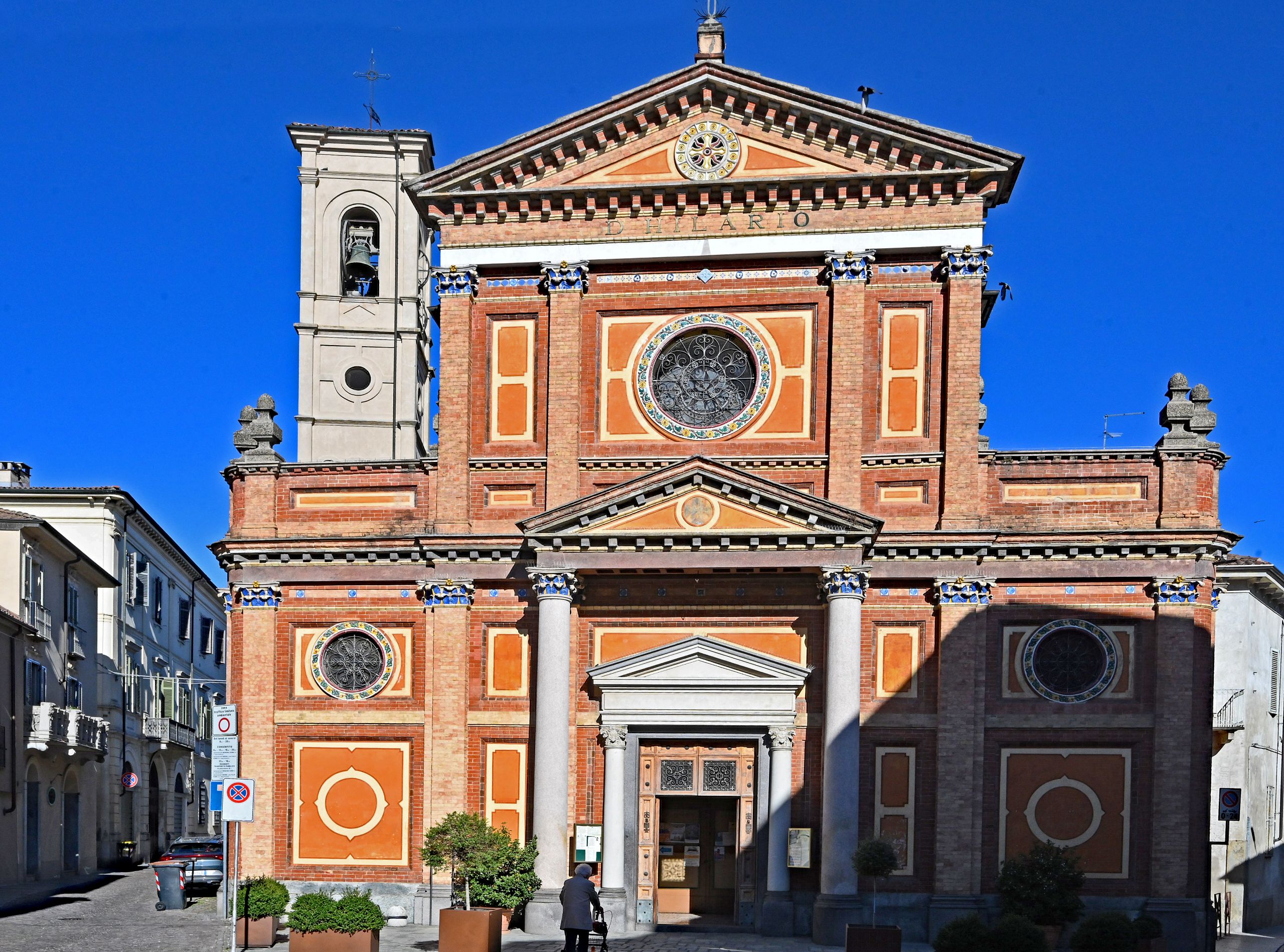
To round off our eventful day, we descended back into the streets of the old town to admire three more church gems up close. First, we stood directly in front of the 18th-century Chiesa di Santa Caterina, whose curved white Baroque facade with Corinthian columns and delicate stucco ornaments glowed in the late afternoon light. Next, we reached the quiet Piazza San Domenico, where the Dominican Church of San Domenico, built starting in 1472, greeted us with a fascinating blend of styles: its simple Gothic brick facade with slender roof pinnacles frames a magnificent two-story Renaissance portal from 1505, crowned by a rose window featuring the signs of the zodiac. Finally, the Chiesa di Sant’Ilario at the end of Via Garibaldi provided a fitting grand finale. Although it ranks among the oldest churches in the city, its Neoclassical facade—designed between 1888 and 1891 by Crescentino Caselli—delights with a colorful interplay of red brick, warm ochre surfaces, and intricate blue-and-white ceramic decorations. Brimming with wonderful impressions and memories, Hanusia, Basia, and I concluded our unforgettable autumn day in Casale Monferrato.
Gallery 5: Three Church Gems to Conclude Our City Walk