From the Valley into the Realm of the Ice Giants
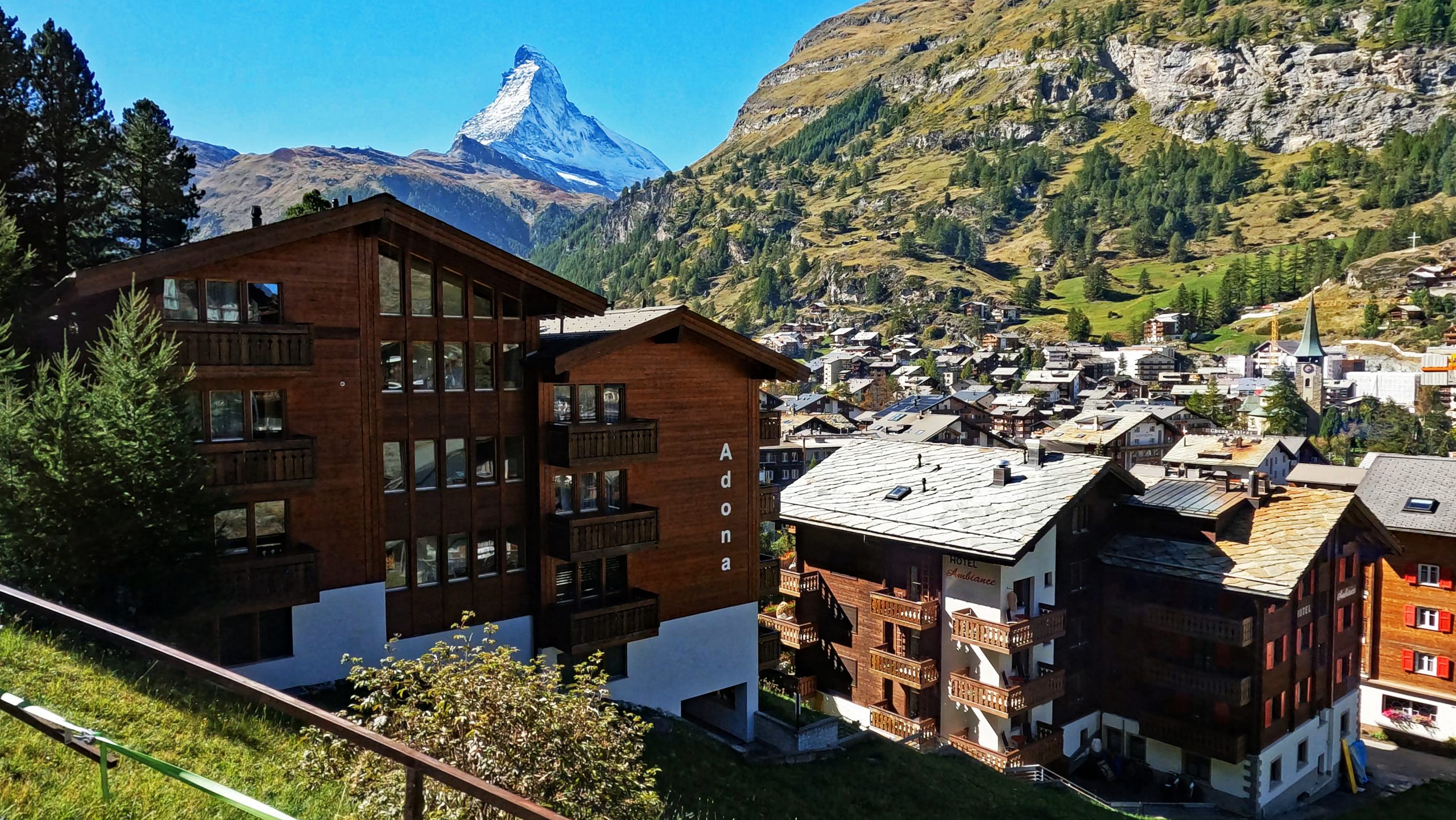
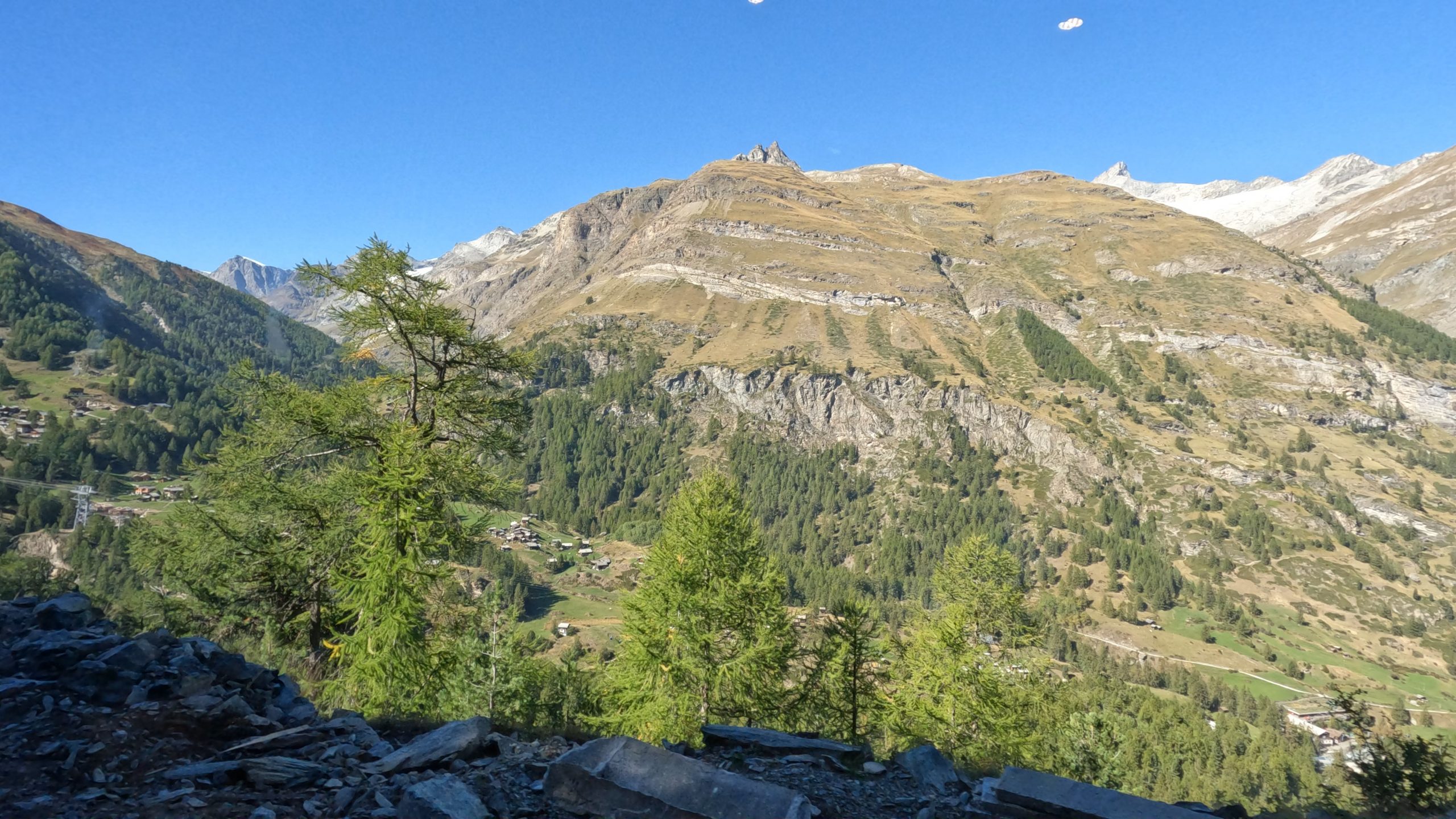
Even the ascent with the Gornergrat Railway feels like a journey into another world. Slowly, the train chugs up from the valley, passing the sun-browned wooden chalets of the alpine village of Zermatt, which spreads out far below. Right from the very first minute, the undisputed King of the Alps thrones above the roofs and modern hotel buildings: the Matterhorn. Its towering rock pyramid, dusted in white snow, pierces into the flawless, deep blue sky. As we gain altitude, the view widens. To our left, the prominent, wooded ridge of Höhbalmen passes by, its slopes rising steeply above the last houses. Further in the background, this majestic mountain range blends smoothly into the rugged heights of Triftje and the Mettelhorn chain.
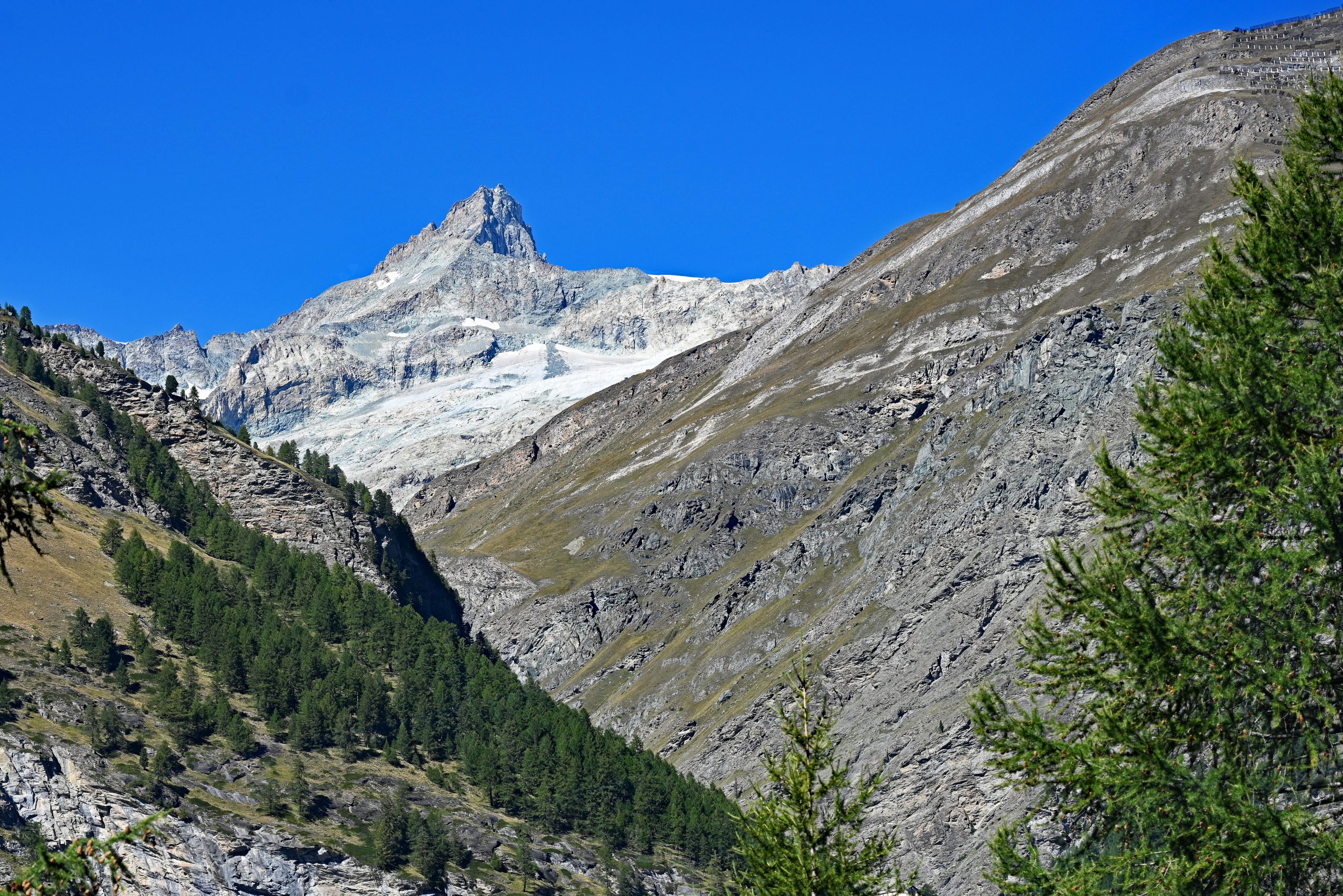
Turning our gaze to the northwest, the barren flank of the Wisshorn and Platthorn dominates the scenery. High up on the ridge, two small, rocky pinnacles stand out sharply against the light—a characteristic rock formation just below the summit of the Wisshorn, rising like a small fork into the sky. Far down in the valley floor, dense larch and Swiss stone pine forests alongside lush green pastures provide a vibrant color contrast to the grey rock. Finally, we look across the deeply carved Mattertal valley and discover the Zinalrothorn. With its sharp, needle-like rock shape, this four-thousand-meter peak fascinates every alpinist and shines in a harsh contrast between pure granite and eternal ice.
Gallery I: Departure in the Zermatt Valley


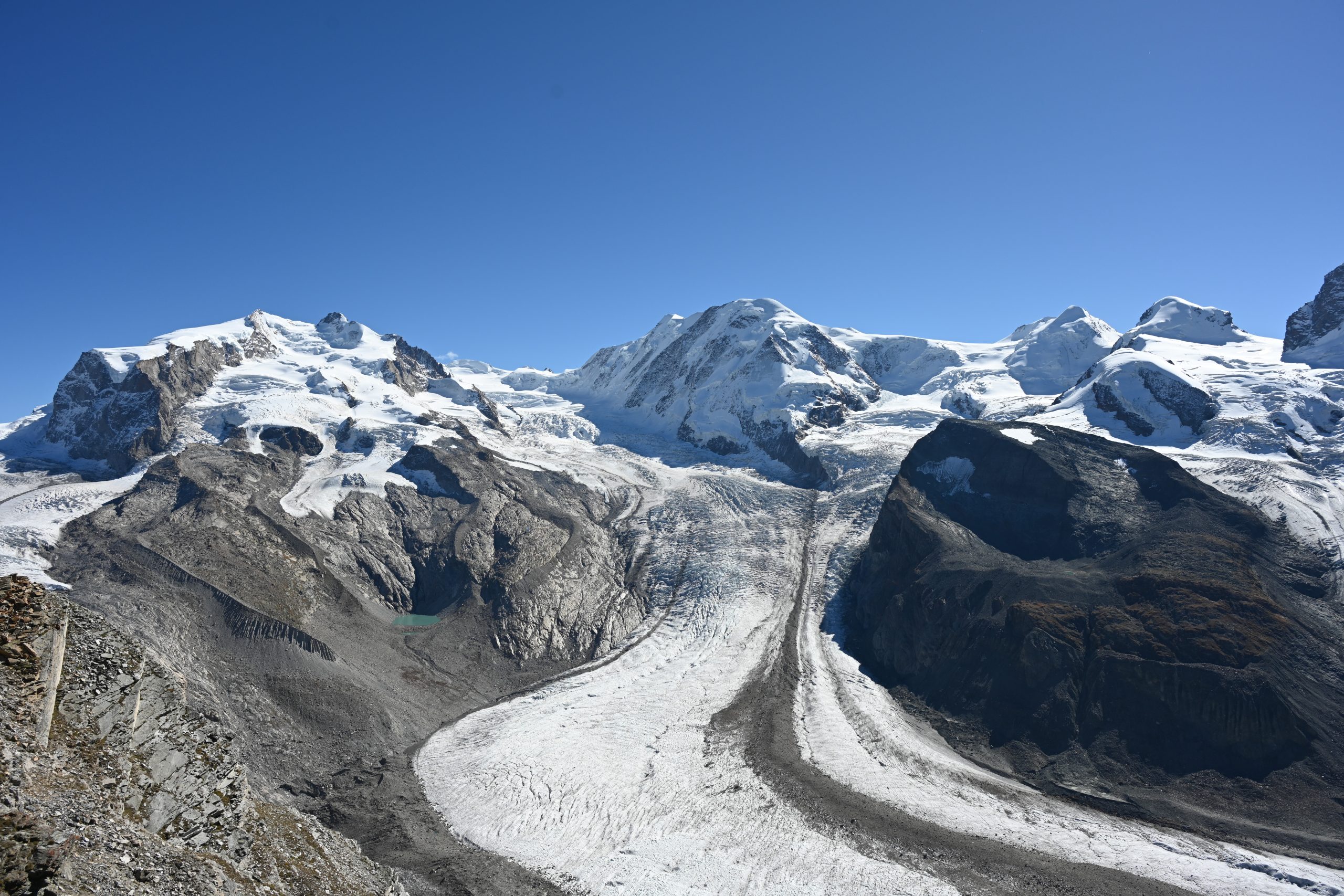
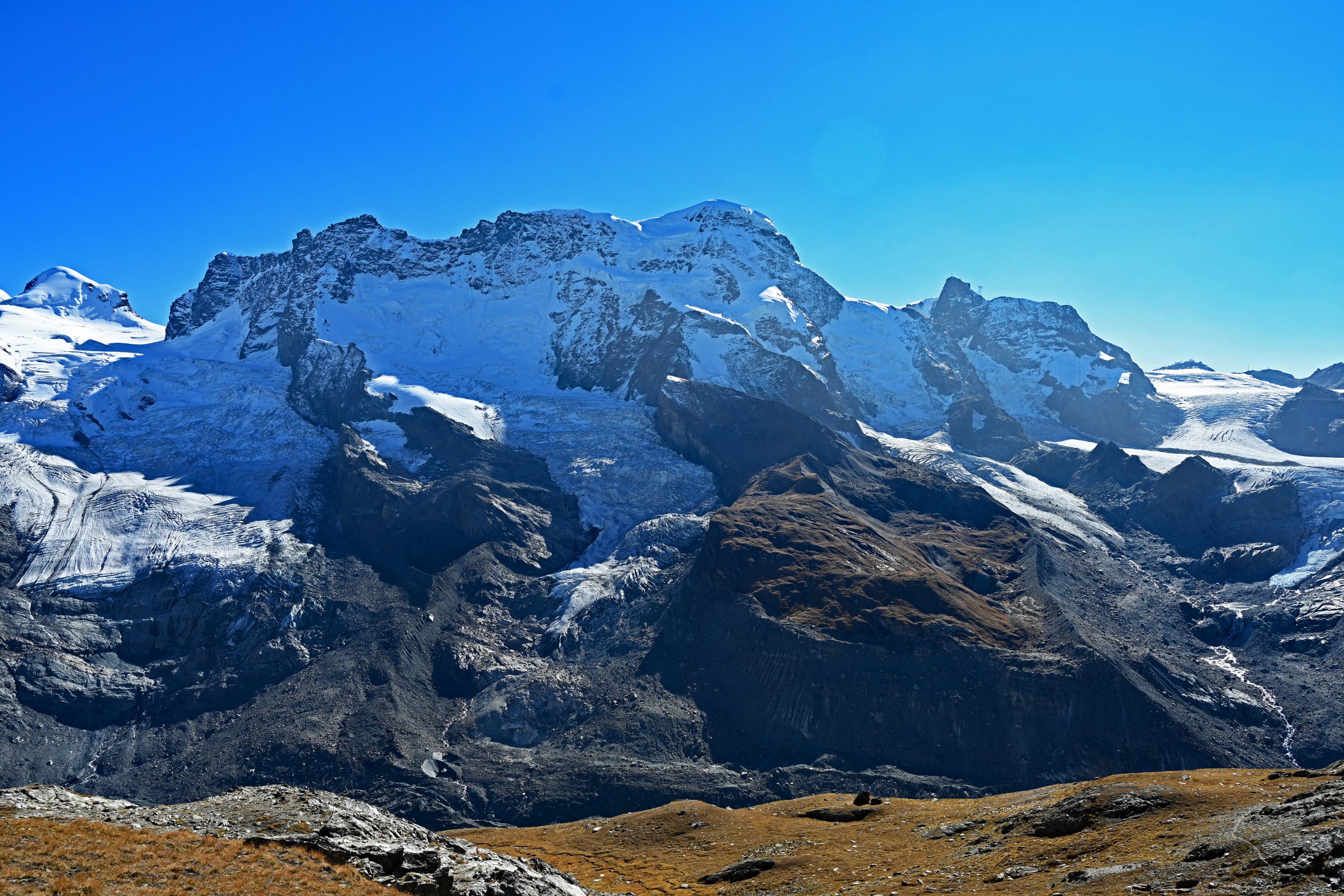
When the train doors open at the Gornergrat terminal station at 3,089 meters above sea level, it almost takes our breath away. The air up here is icy, thin, and of an incomparable clarity. Directly in front of us, the massive system of the Gorner Glacier spreads out. The wide ice stream of the Grenzgletscher flows with incredible inertia into the main glacier here, crisscrossed by dark lines of debris—the medial moraines, which look like drawn highways in the eternal ice. On the horizon, a wall of ice giants builds up: The massive, radiant white Breithorn and the softer snow twin-domes of Castor and Pollux form an endless winter landscape. At the so-called Schwarztor, the dark rock face of Roccia Nera stands out, creating a stark contrast to the wide firn fields.
We walk past the Kulmhotel Gornergrat to the observation deck, which lies another 35 meters higher. The striking hotel building is flanked by the two silver domes of the historic observatories. Up here, where light pollution is minimal and the sky is within arm’s reach, major astronomy history was written until 2010—the north tower was used for solar observation, while interstellar molecules were researched in the south tower.
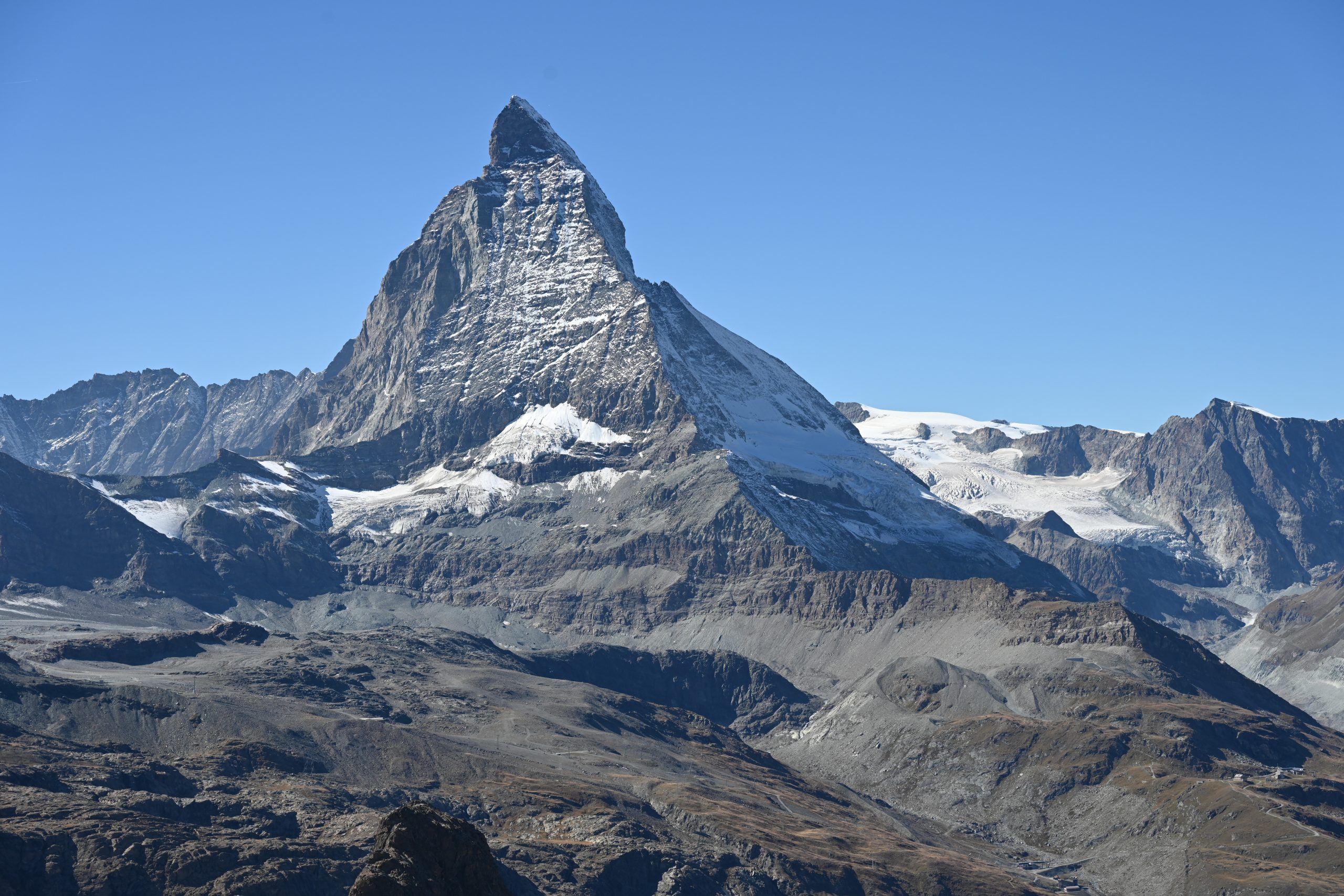
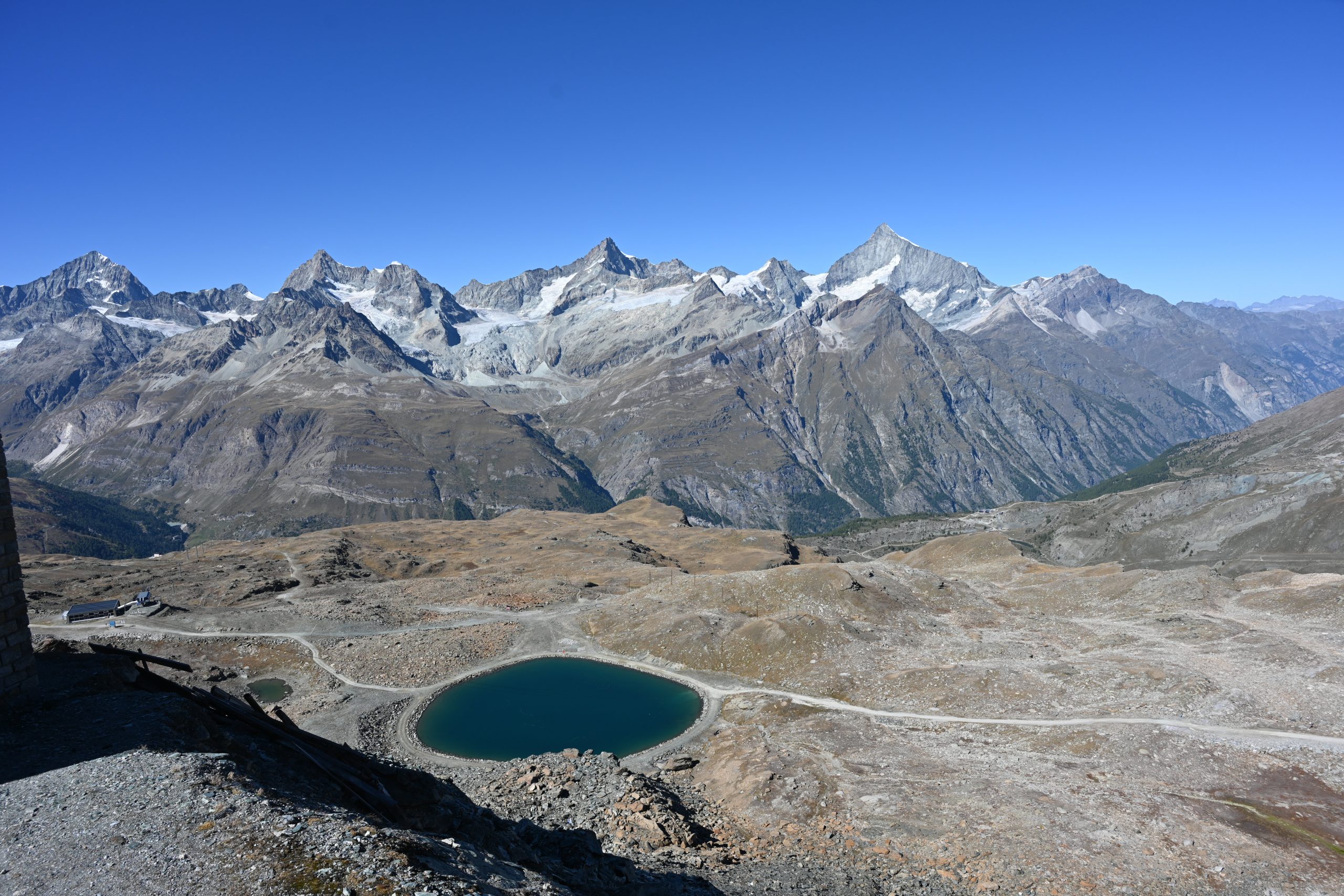
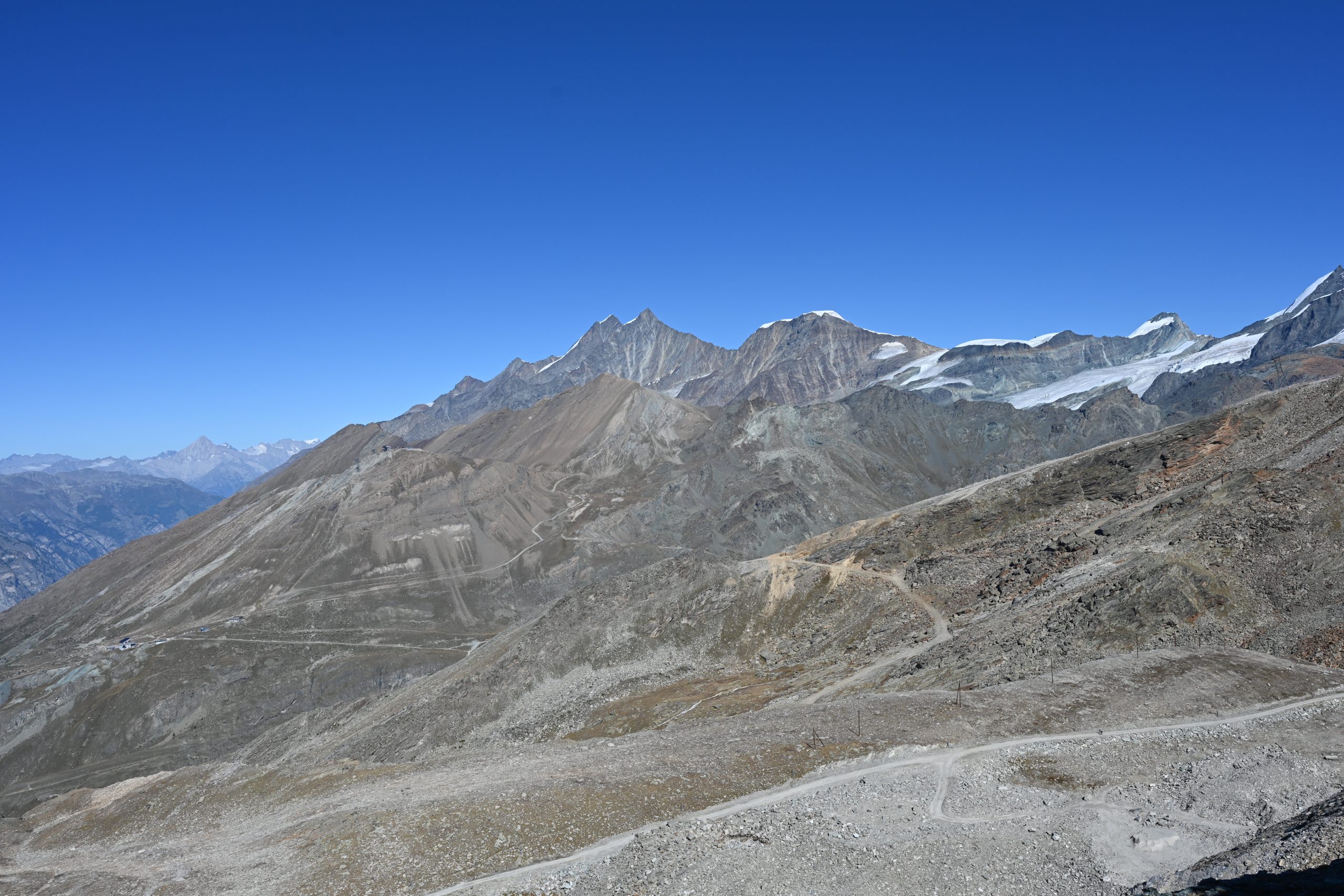
Yet, our eyes are magnetically drawn back to the Matterhorn time and again. From this perspective, the iconic pyramid stump shows itself in all its harshness. The Hörnli ridge draws a razor-sharp line from the bottom right to the summit, while the steep north face lies in cold shadow. To the right, the flat Theodul Glacier hugs the flank, embedded in a barren, moon-like stone desert of debris and moraines. Turning further to the east, the next superlative opens up: the Mischabel massif. The sharp Ober Gabelhorn, the rugged Zinalrothorn, and the flawless pyramid of the Weisshorn line up like pearls on a string. Deep below in this barren landscape, the artificially created Hohtälli reservoir glows like a deep blue sapphire. At the right end of the horizon, Dom and Täschhorn finally throne—the highest giants completely on Swiss soil. Their steep rock and ice flanks look unapproachable and wild next to the white expanses of the Alphubel Glacier, while in the direct foreground, the barren ridge of the Oberrothorn is traced by the fine switchbacks of the lonely hiking trail.
Gallery II: Peak Worlds on the Gornergrat

The Path of Reflections and Ice Walls
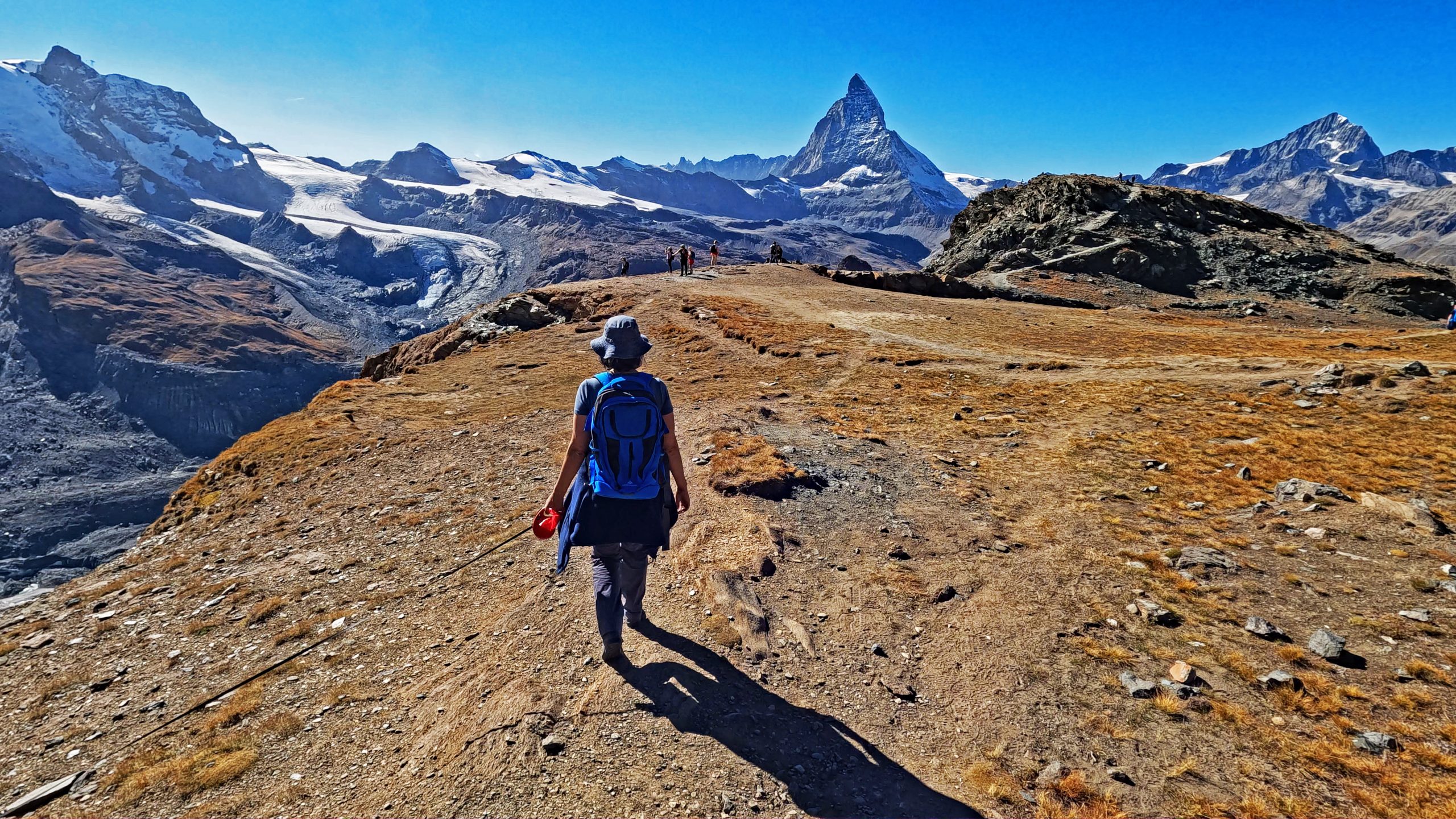
The descent from Gornergrat toward Rotenboden leads us onto a classic, scree-covered ridge path that cuts across the barren alpine plateau. The world-famous Matterhorn remains an unshakeable, central eye-catcher directly ahead, guiding our way. To the left, the fringes of the Twin Glacier and the Schwärze Glacier drop steeply and abruptly into the valley, while on the horizon above, the ice-armored heads of the Breithorn and Castor and Pollux throne. To the right, the snow-covered chain of Ober Gabelhorn and Wellenkuppe rises like a fortress of ice and granite on the opposite side of the valley.
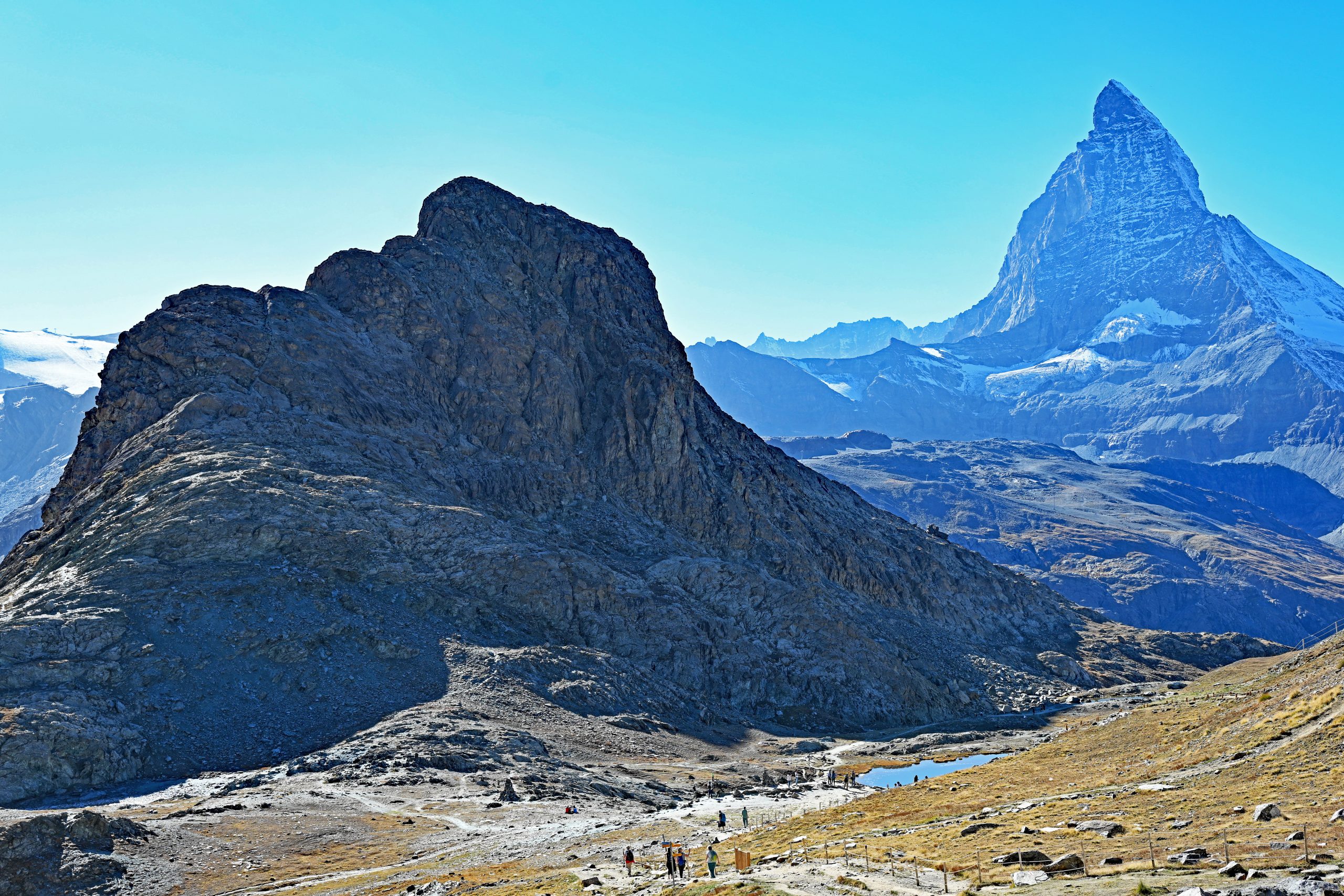
The further south we hike, the more overwhelming the view of the massive Monte Rosa massif and the Gorner Glacier below becomes. The mighty north faces of the massif, scarred by deep crevasses—above all the icy peaks of the Liskamm (4,527 m above sea level)—dominate the left half of the view. Deep in the valley floor, the majestic Grenzgletscher merges with the Gorner Glacier, an eternal stream of radiant white ice that contrasts sharply with the autumnal brown, barren high-alpine landscape and the deep blue sky. Looking up at the steep rocky drops directly below the Gornergrat observation deck, we spot two tiny silhouettes: people lingering up there to capture this eternity in pictures. Right in front of the mighty Matterhorn, the Riffelhorn (2,931 m above sea level) now pushes into view—a prominent, dark rock needle that alpinists like to use as a challenging training tour before climbing the Matterhorn. As we continue to descend, this unequal duo remains directly ahead, while to the left, the mighty rock bands of Nordend (4,609 m) and the Dufourspitze (4,634 m)—the highest peak in Switzerland—tower into the sky.
Gallery III: The Way to the Riffelhorn
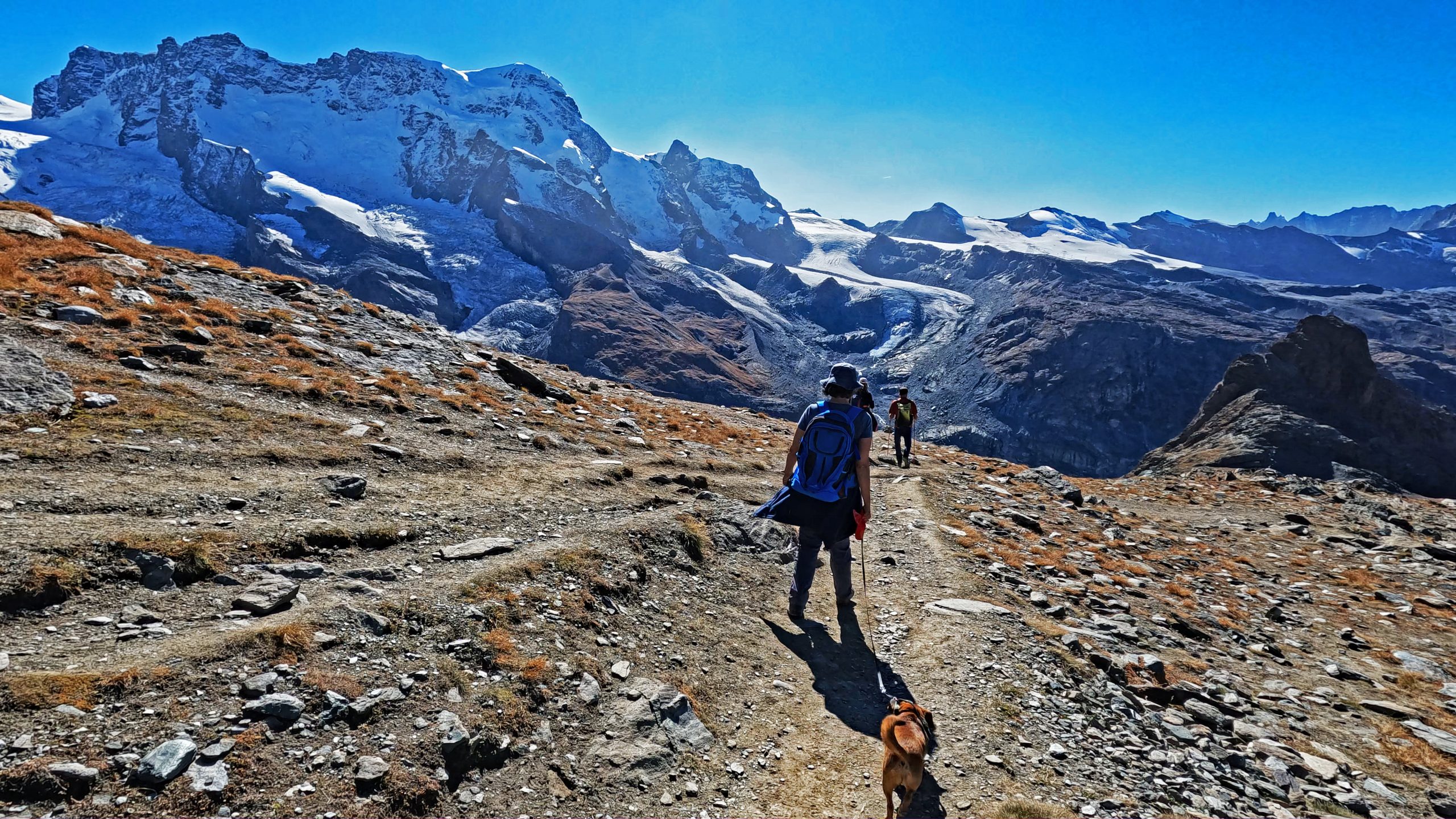
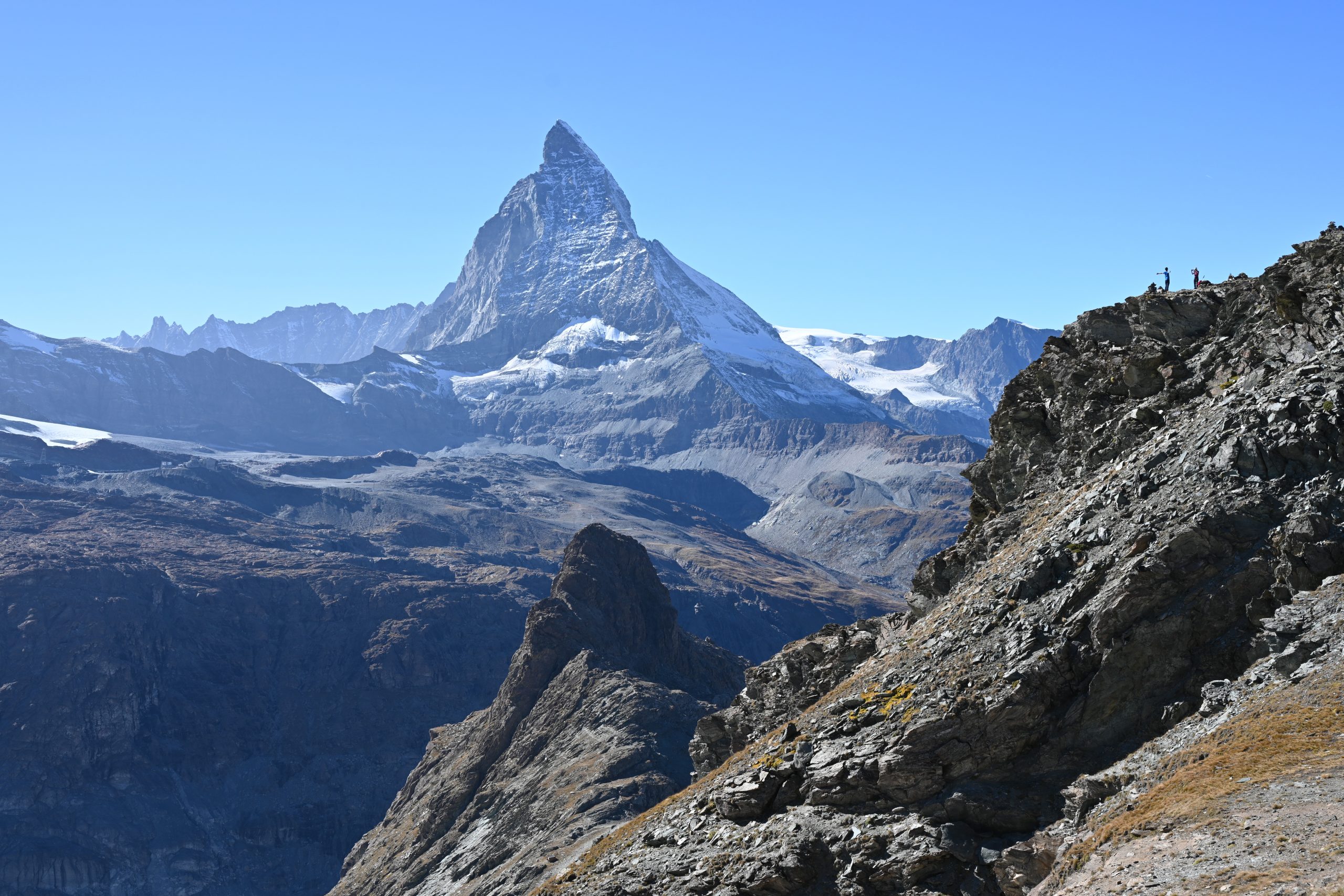
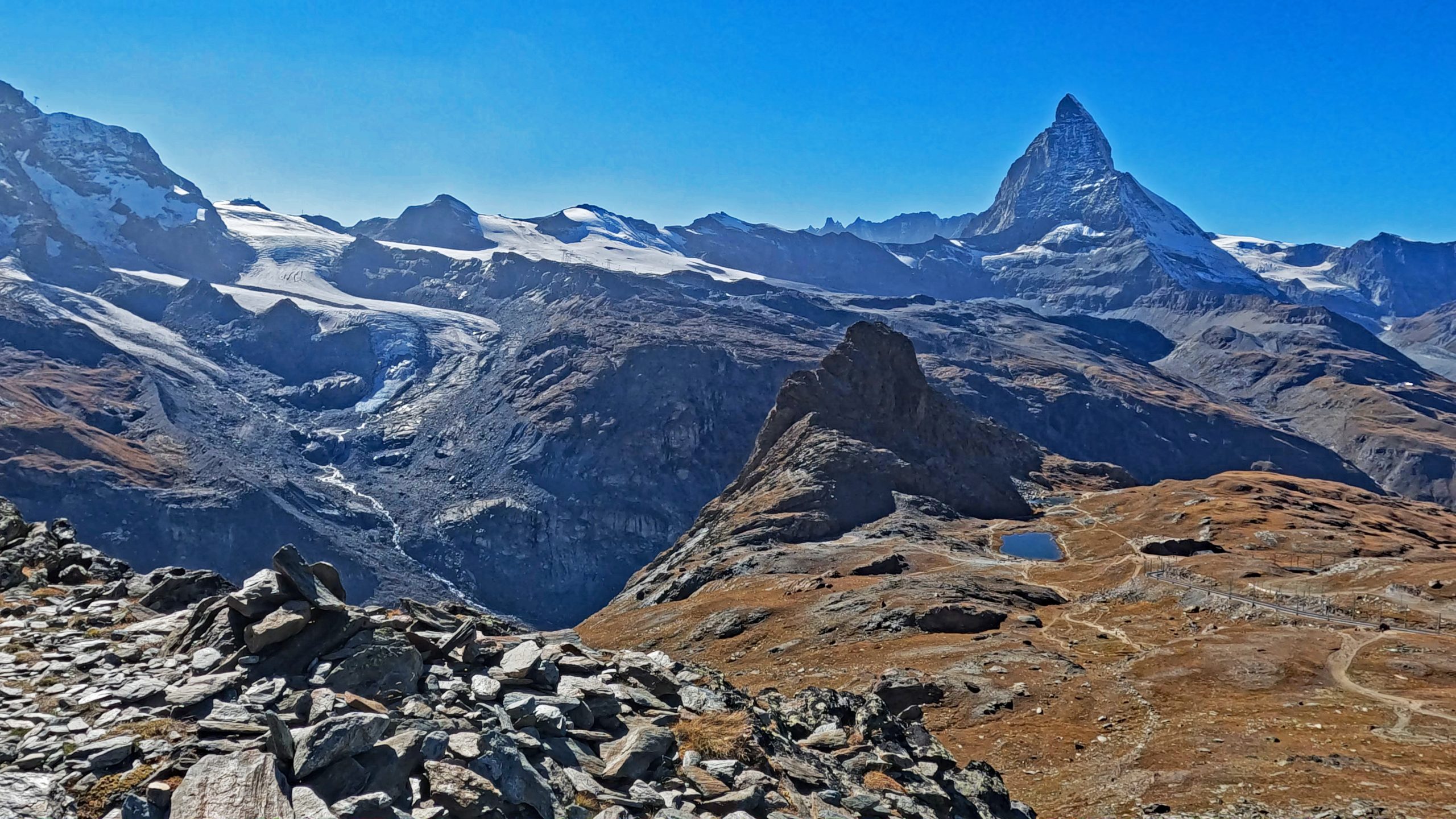
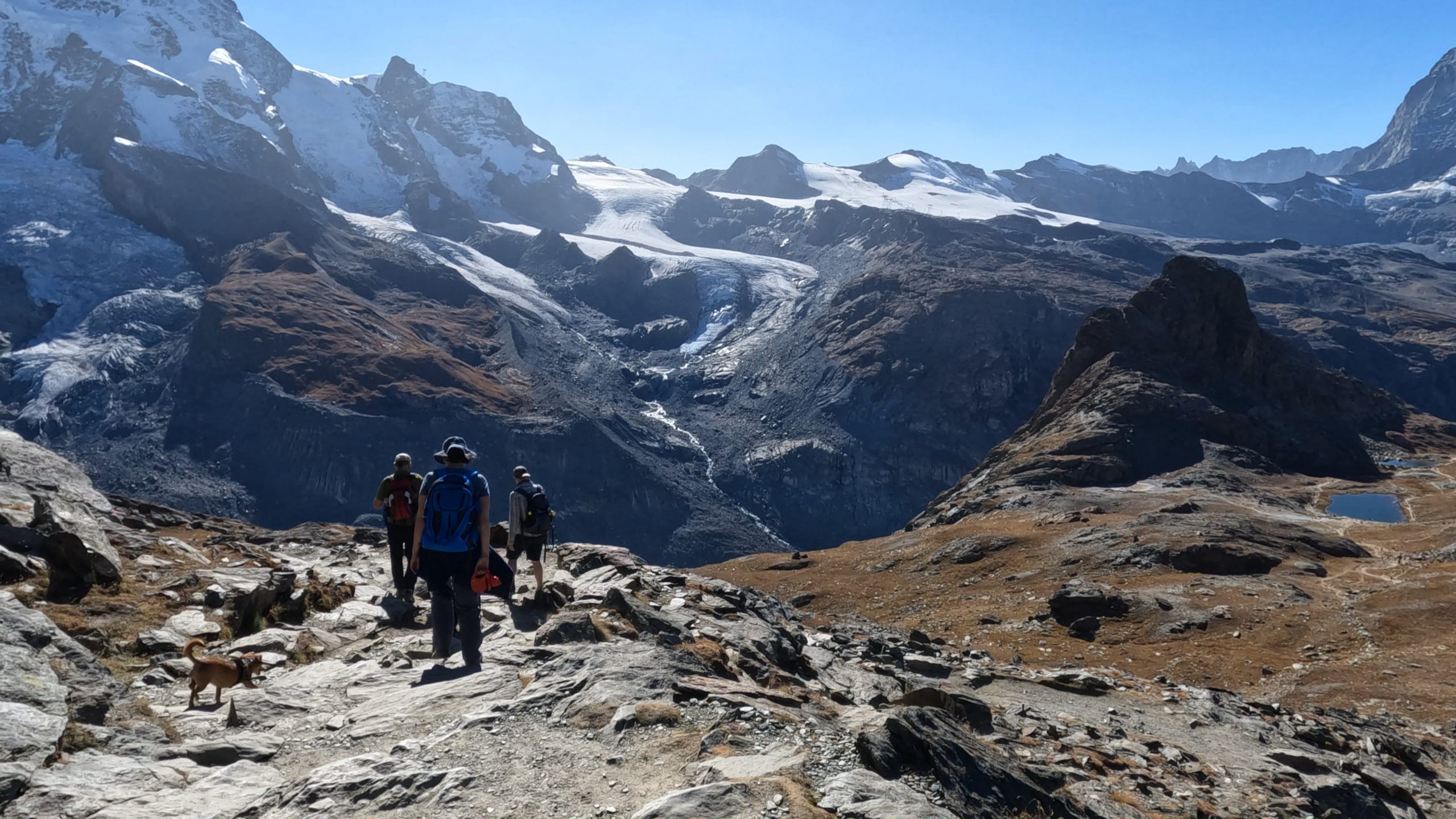
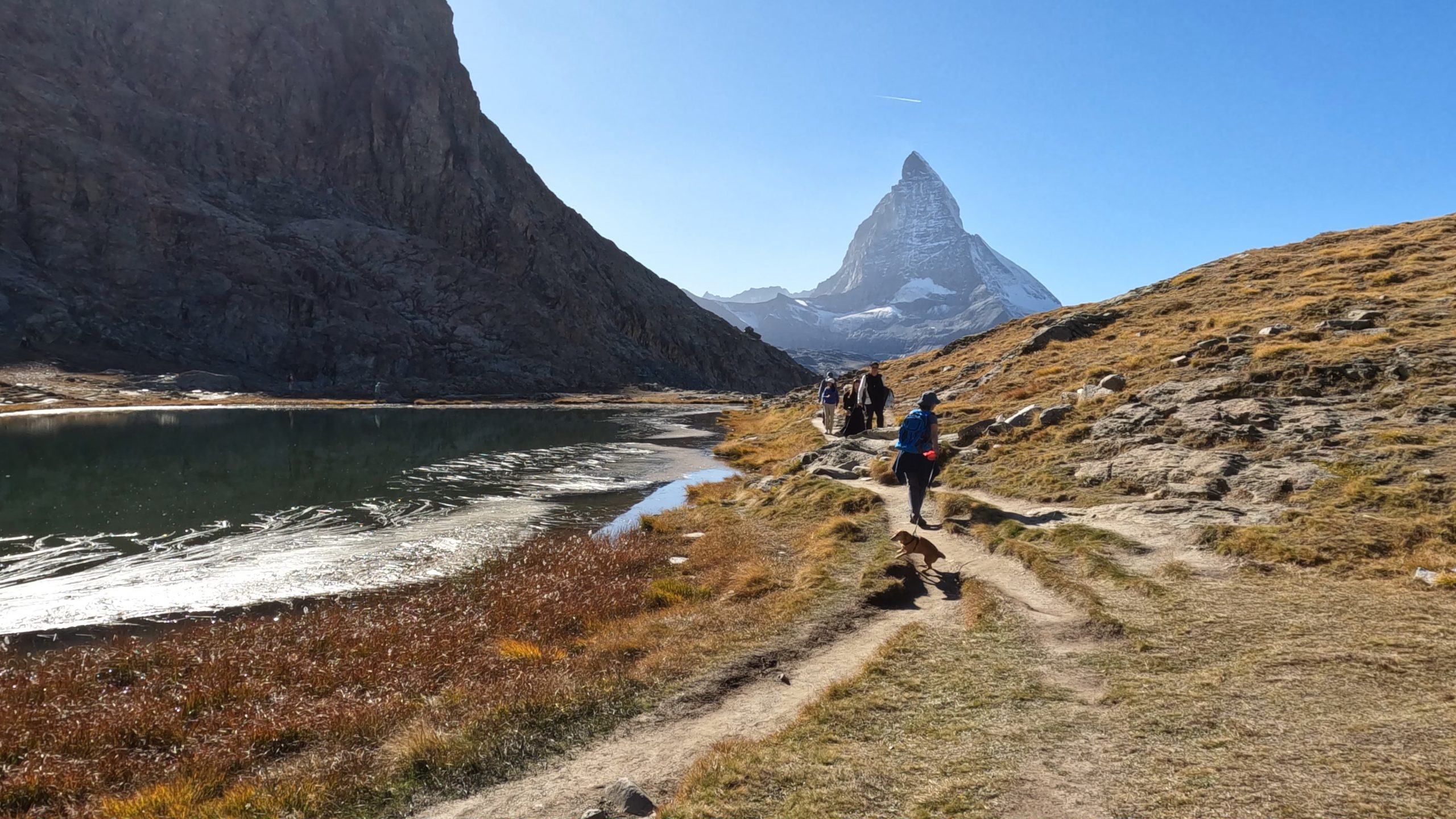
We follow the stony path, characterized by loose scree, further steeply downhill. In front of us, a deep blue eye soon glows in the barren landscape: the Riffelsee, closely followed by its smaller brother, the Lower Riffelsee. The more elevation we lose, the more massive and dominant the dark, pyramid-shaped Riffelhorn pushes into our field of vision, while the iconic, snow-covered peak of the Matterhorn (4,478 m above sea level) also appears within arm’s reach. On the left side, we are accompanied at every step by the hanging glaciers of the Breithorn massif. It is a backdrop of such untouched, sublime beauty that we feel as if we are walking through an endless alpine paradise. The Riffelhorn now looks like a mighty guardian of pure rock, shining in the golden light of late summer.
Gallery IV: Approaching the Lakes

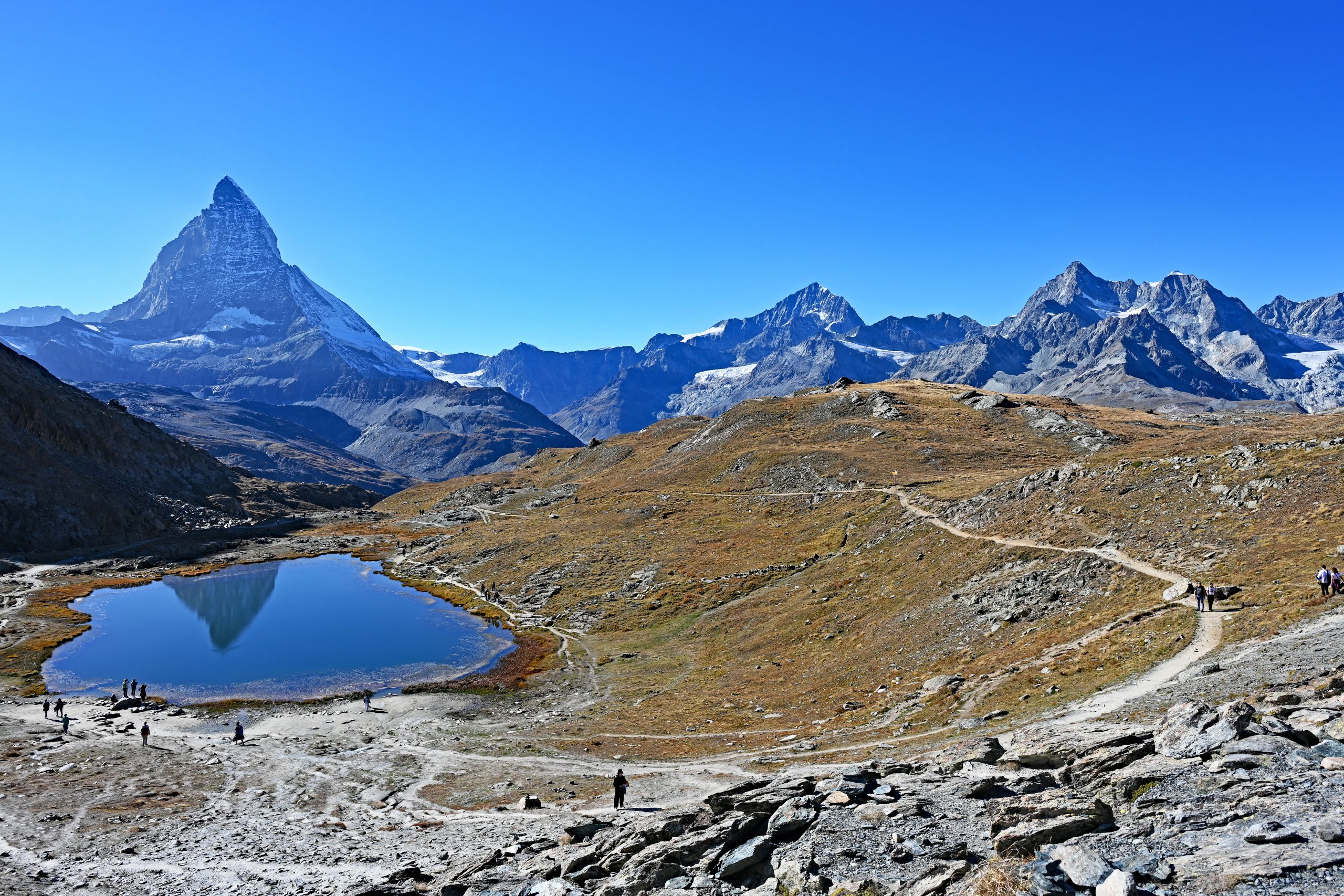
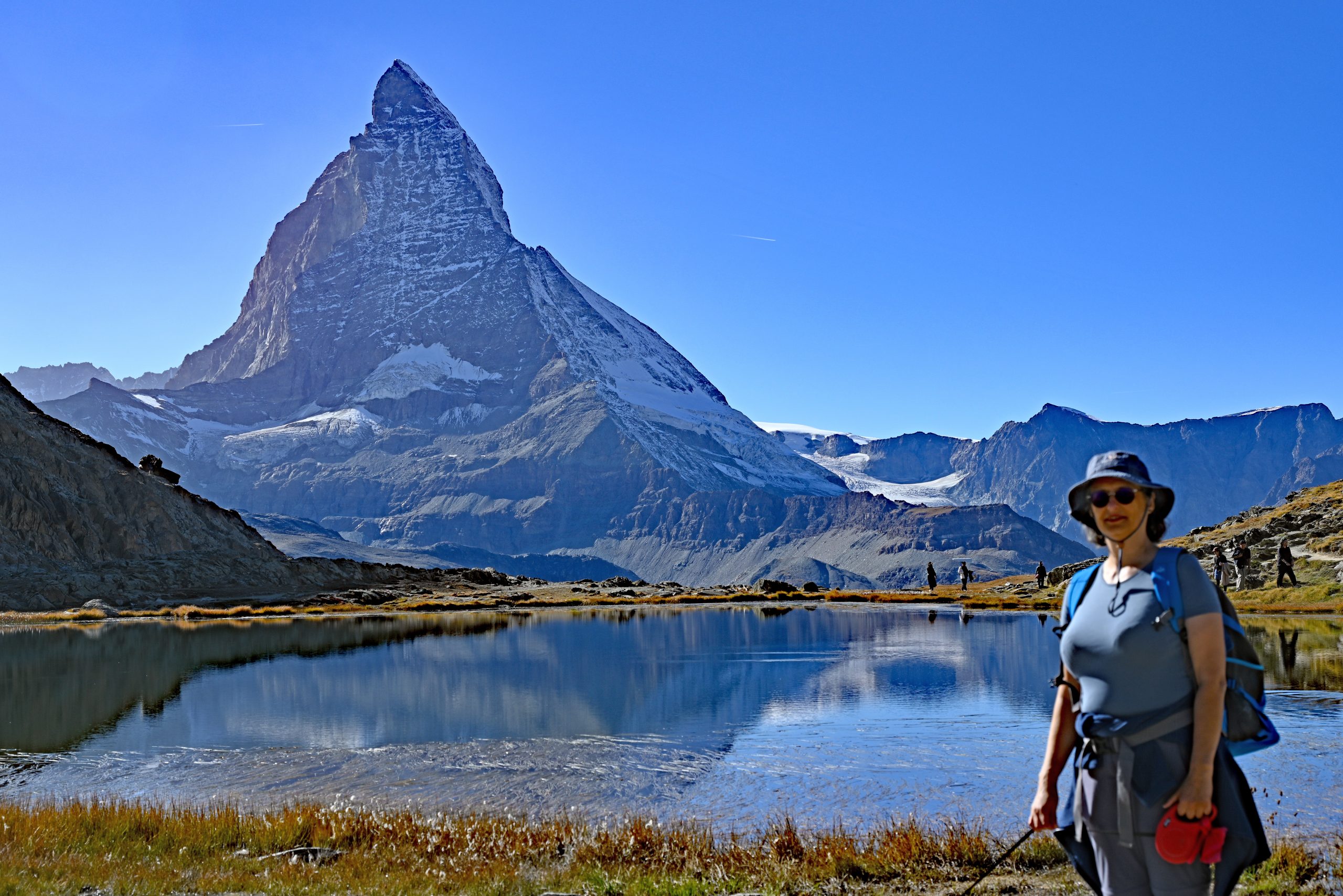
Finally, we reach the shores of the Riffelsee. The water is so crystal clear that in the shallow foreground, the fine, wavy structures of the muddy, light green-brownish lake bed can be seen in detail. Enclosed by grey stone blocks and sparse, autumn-toned alpine grass, the lake lies perfectly still before us. The water surface acts like a perfect, liquid mirror: it reflects a flawless, deep blue image of the Matterhorn and its neighboring peaks. The entire scenery is dominated by an intense azure blue that makes the sky and the water melt into each other. Walking along the shore and turning our gaze in the opposite direction to the southeast, we experience a second spectacle of nature: The massive Monte Rosa and Breithorn massifs are now also reflected in perfect symmetry in the smooth water, while between the distant peaks, the mighty white ice streams of the Grenz and Gorner Gliders move relentlessly down to the valley.
Gallery V: The Still Image of the Alps


The Wide Panorama of the Valley’s End
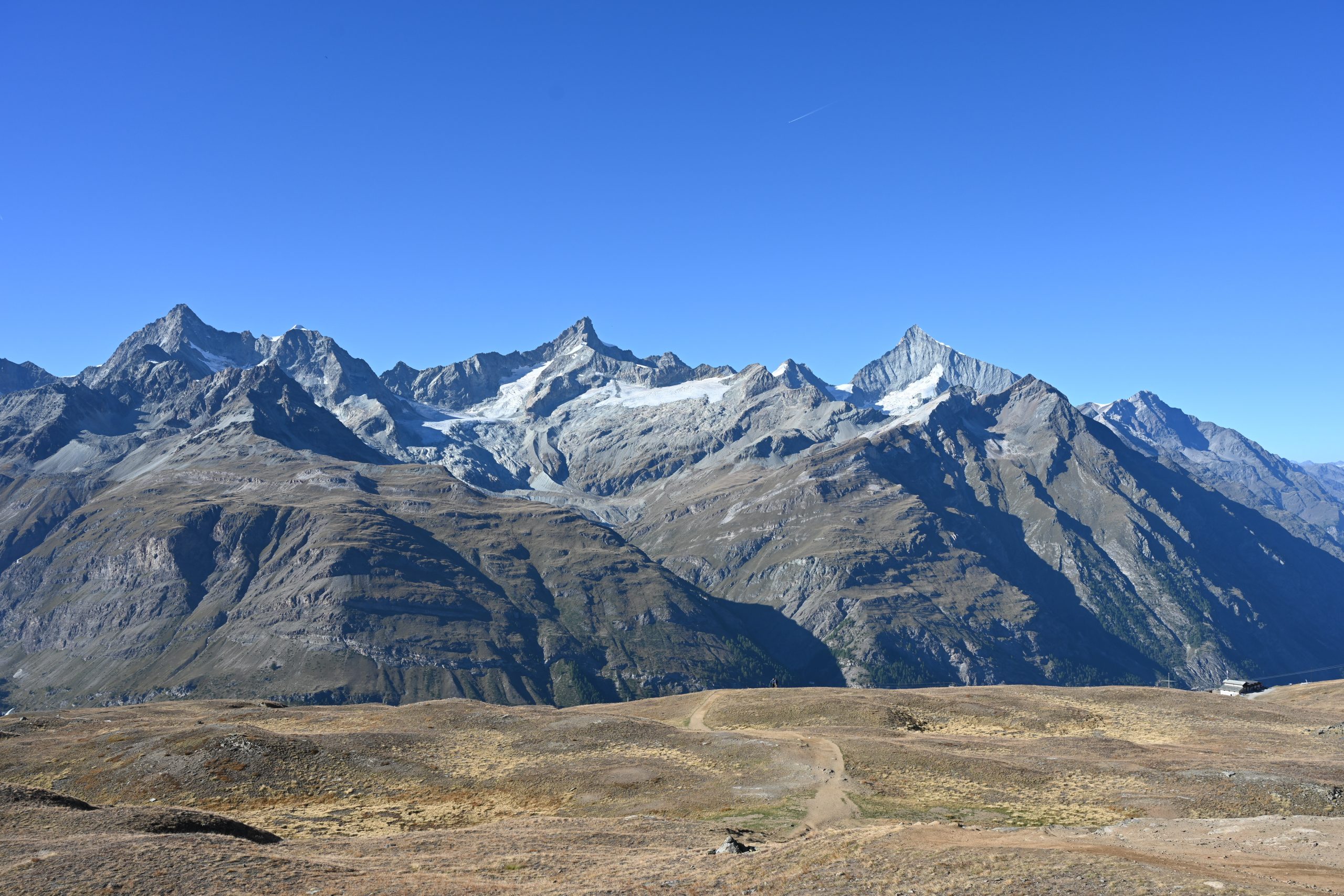
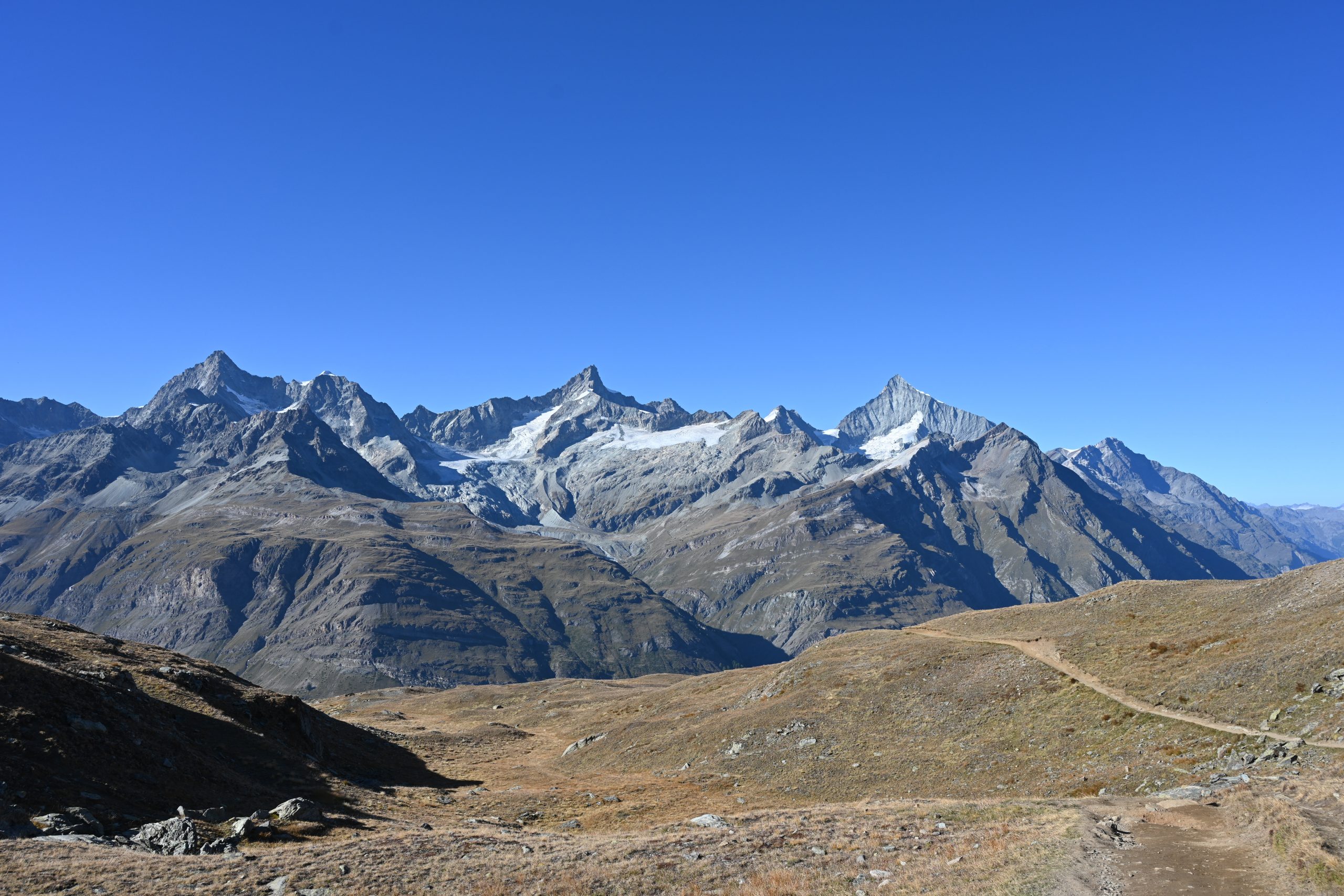
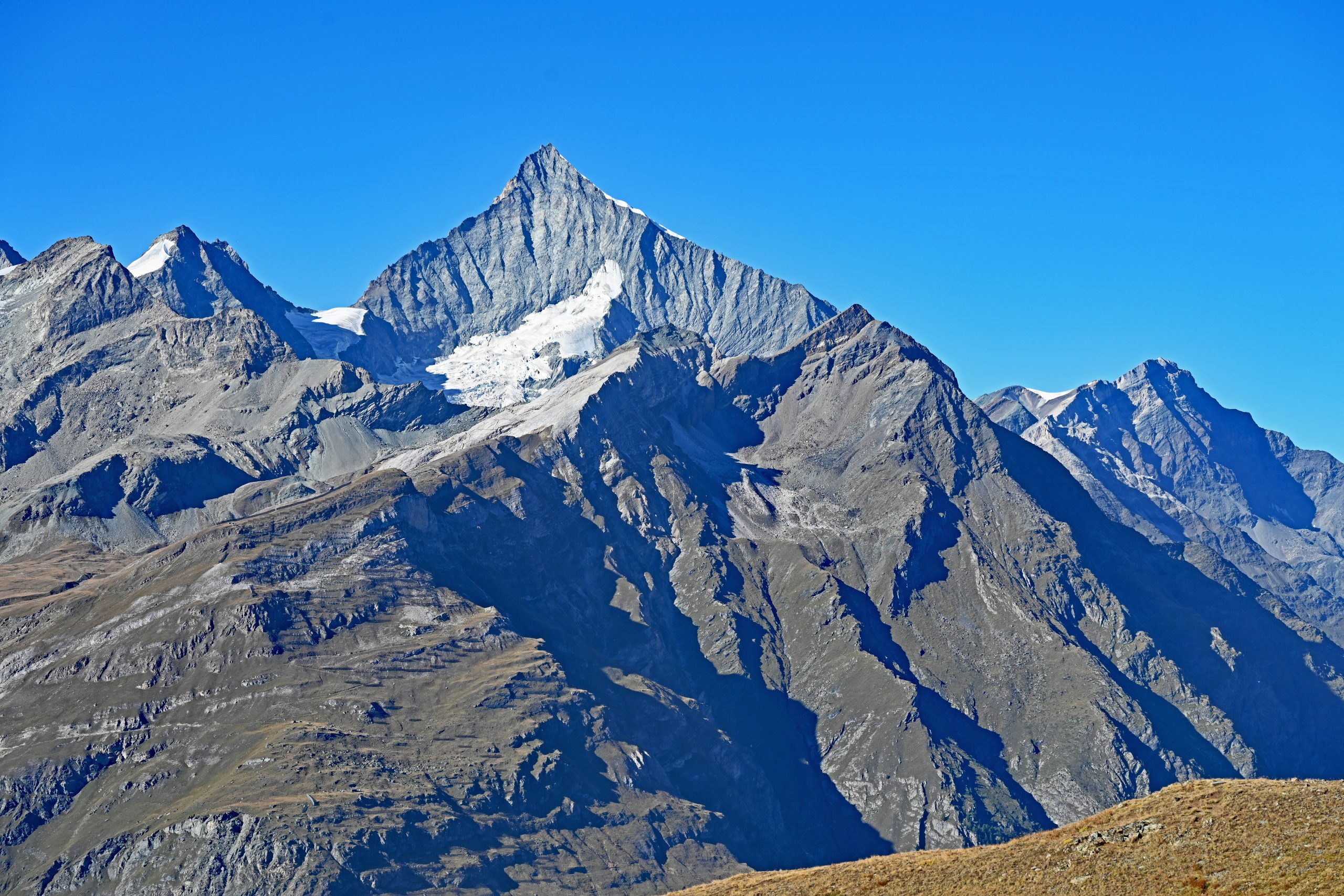
The alpine hiking trail continues to wind through the barren, autumn-brown mountain landscape and finally leads us away from the two Riffel lakes. Before our eyes, the spectacular four-thousand-meter chain of the Valais Alps opens up on the opposite side of the Zermatt valley. The mighty backdrop immediately captivates us. Letting our gaze sweep from right to left, the giants line up majestically: On the far right thrones the mighty, freestanding giant of the Dent Blanche (4,357 m), followed by the flatter, snow-covered Wellenkuppe (3,901 m) and the needle-like peak of the Ober Gabelhorn (4,063 m) towering right next to it. Further left, the rugged, rocky peak of the Zinalrothorn (4,221 m) stands out, until the chain is finally crowned on the left edge of the view by the Weisshorn (4,506 m), whose flawless, snow-covered pyramid rises like a perfect triangle into the sky.
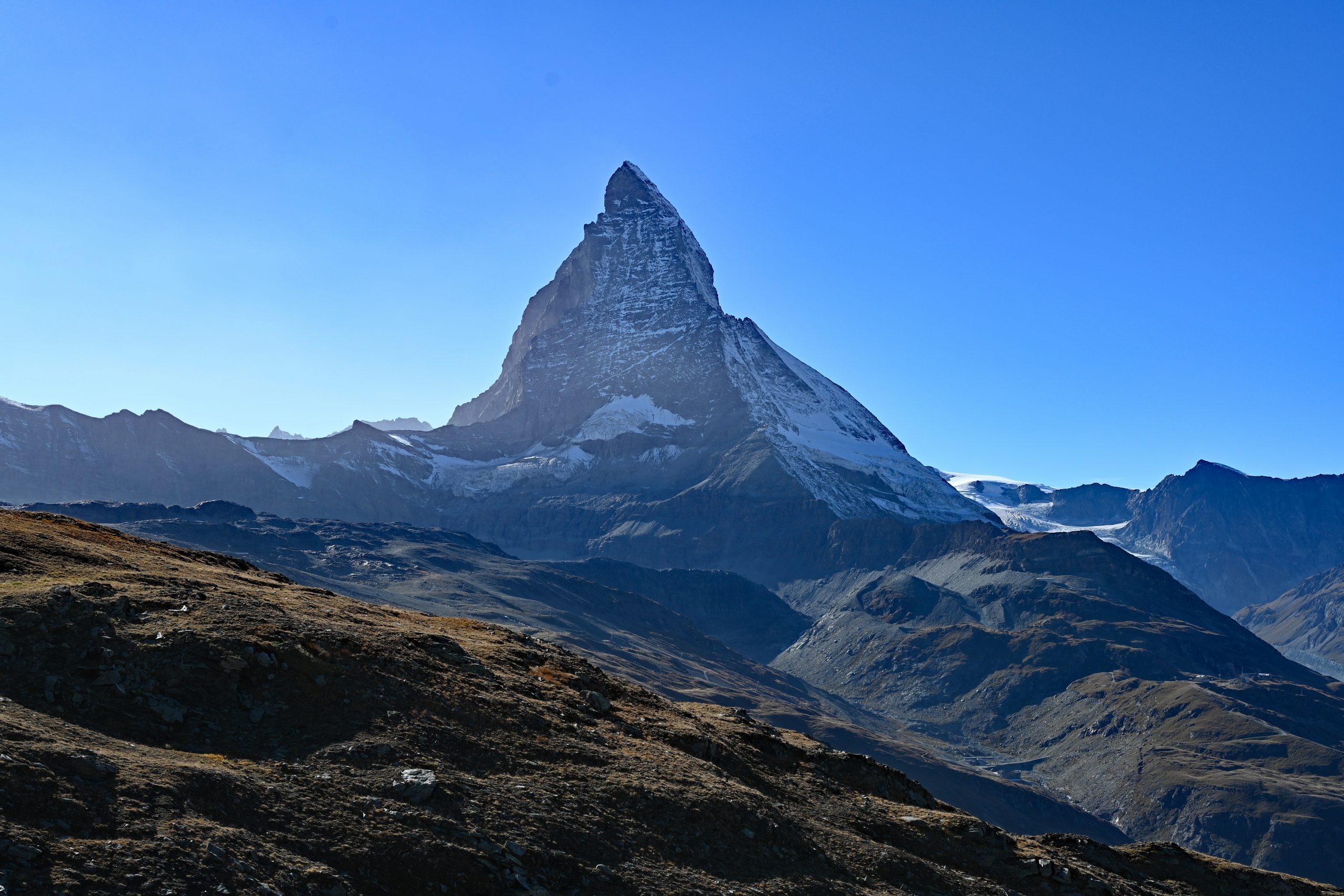
As we continue our way toward the Riffelberg station, a view of another superlative opens up on the right side of the valley. There, the massive, bulky Dom dominates the panorama. As the main peak of the Mischabel group, it is the highest mountain with its entire base located on Swiss soil. Nestled directly to the left of its flank is the Täschhorn, its slightly sharper peak standing in harsh contrast to the massive Dom. The Matterhorn doesn’t let go of us either, showing its impressive east face and the Hörnli ridge once more as we look back.
Gallery VI: The Parade of the Four-Thousand-Meter Peaks
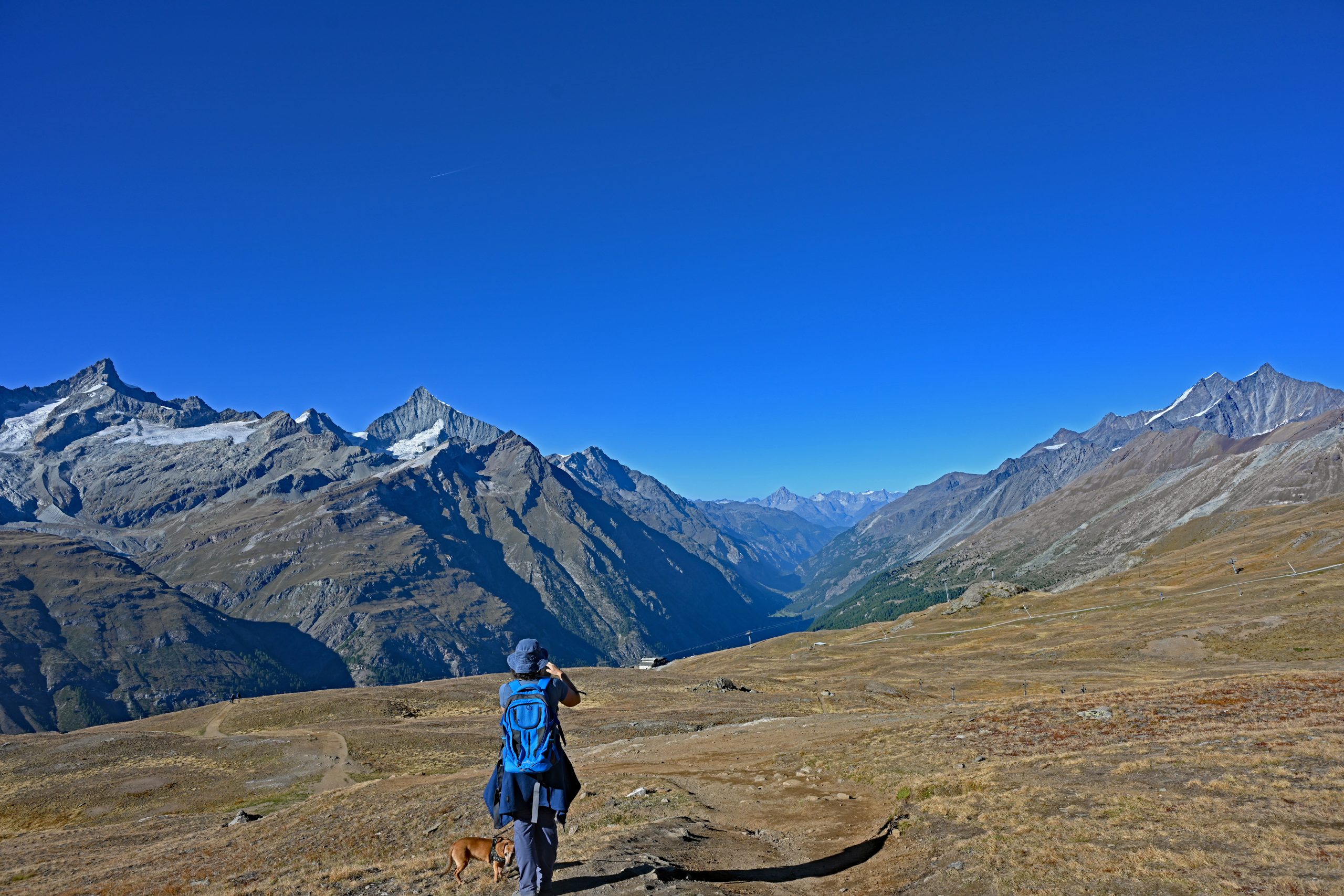
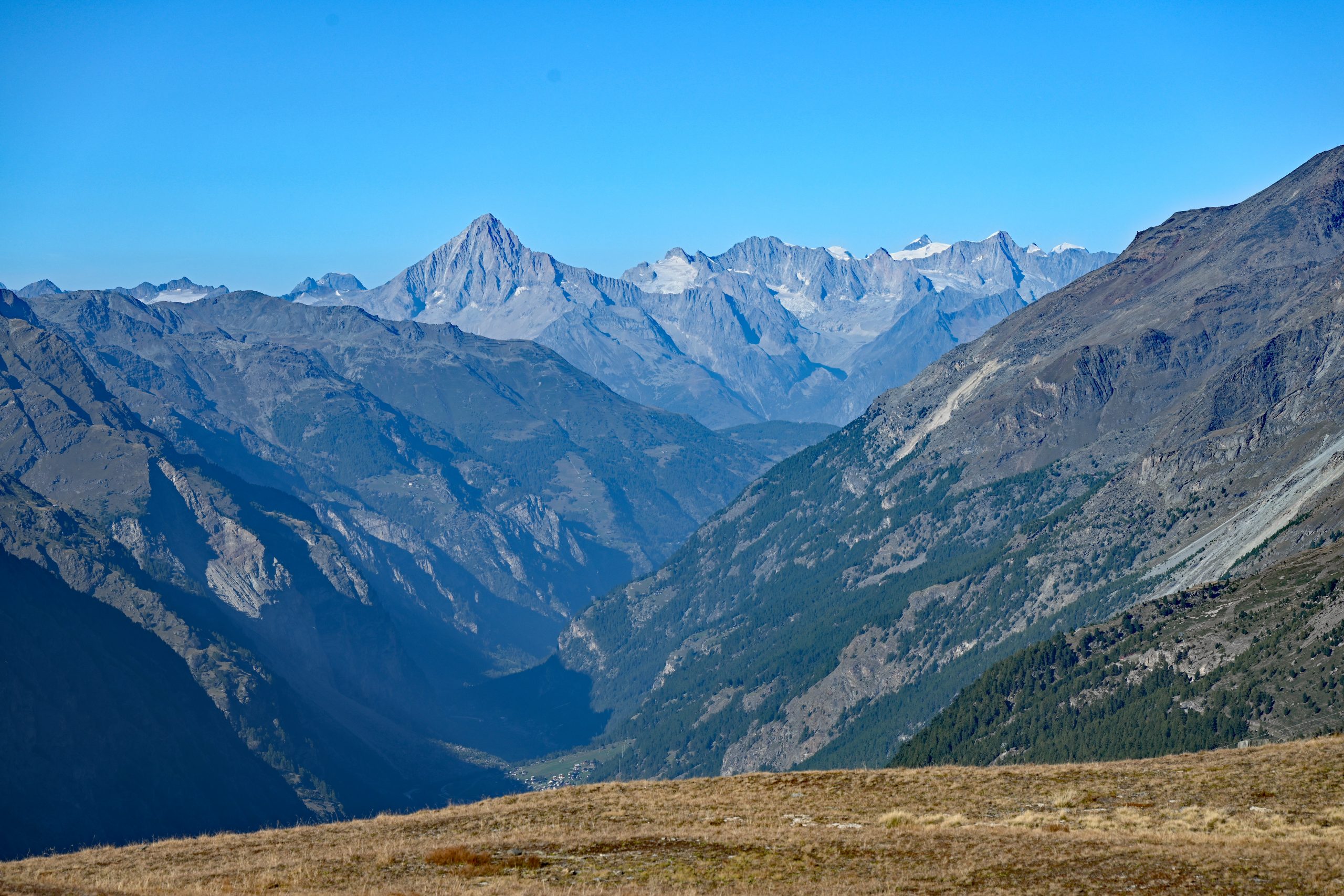
The closer we get to the Riffelberg station, the more dramatic the depth of the view becomes. Our gaze follows the deep vanishing line of the Mattertal valley to the north. Far away on the horizon, where the valley seemingly ends, the prominent, snow-covered peaks of the Bernese Alps on the opposite side of the Rhone valley frame the end of the valley. On the left side, the striking, freestanding, and sharp rock pyramid of the Bietschhorn (3,934 m above sea level) immediately catches the eye, which is completely rightly called the “Matterhorn of the Bernese Oberland” due to its elegant shape. Further right in the rear chain, the mighty, heavily glaciated Aletschhorn (4,194 m above sea level) towers up, flanked by the adjoining, ice-armored peak structures of the Schinhorn (3,796 m above sea level) and Nesthorn (3,824 m above sea level).
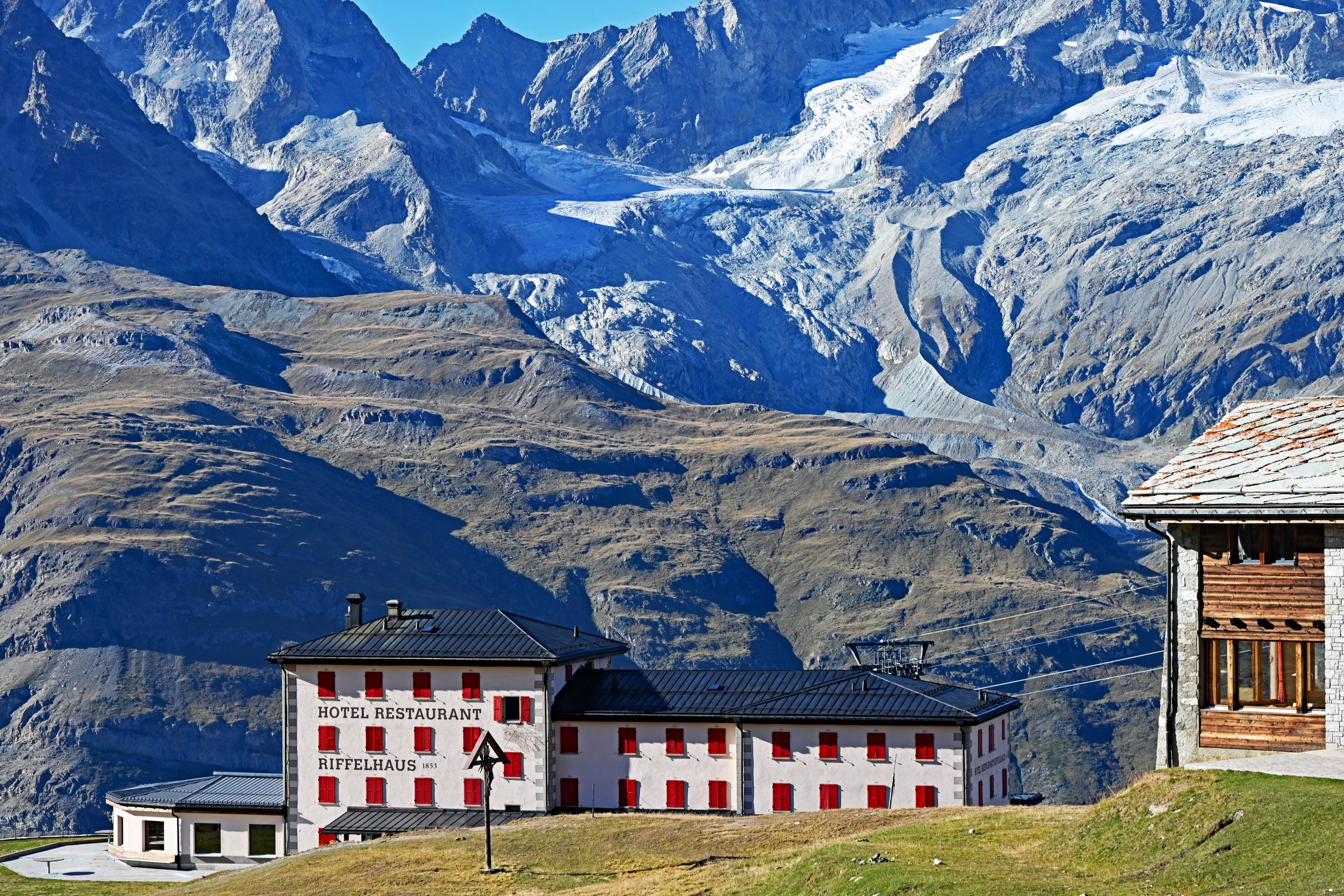
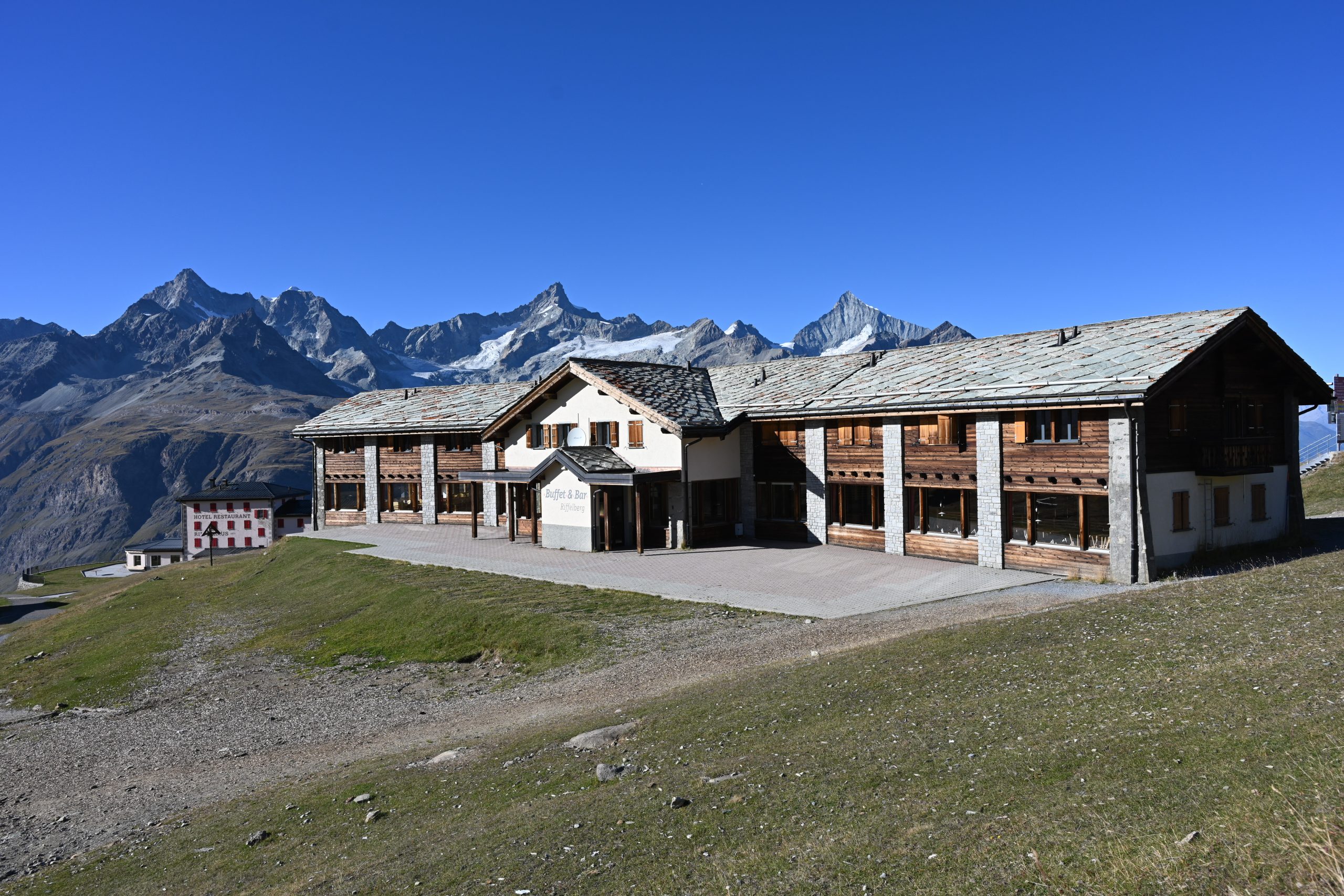
Finally, we reach the Riffelberg station at 2,582 meters above sea level. Here, the wild mountain world meets living history: The traditional Hotel Riffelhaus from 1853 and the rustic stone building of Buffet & Bar Riffelberg stand like stone witnesses to the first alpinists against the massive backdrop of eternal ice. At this history-steeped resting place, we say goodbye to a true alpine paradise—filled with the vastness of the landscape and with the firm intention of returning soon, perhaps as early as next summer.
Gallery VII: The Farewell at the Riffelberg