July 9 2026
The Morning Departure by the Still Water
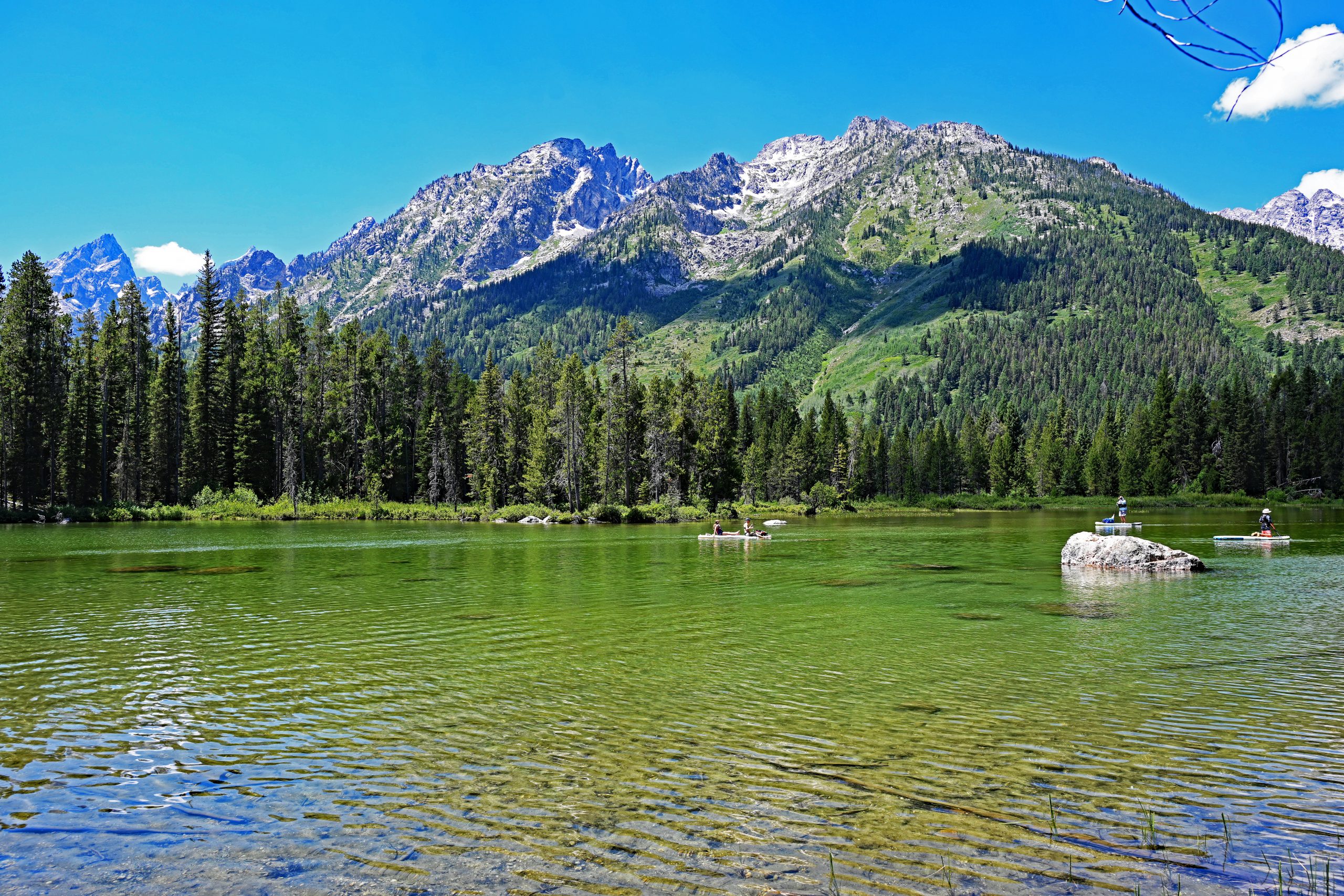
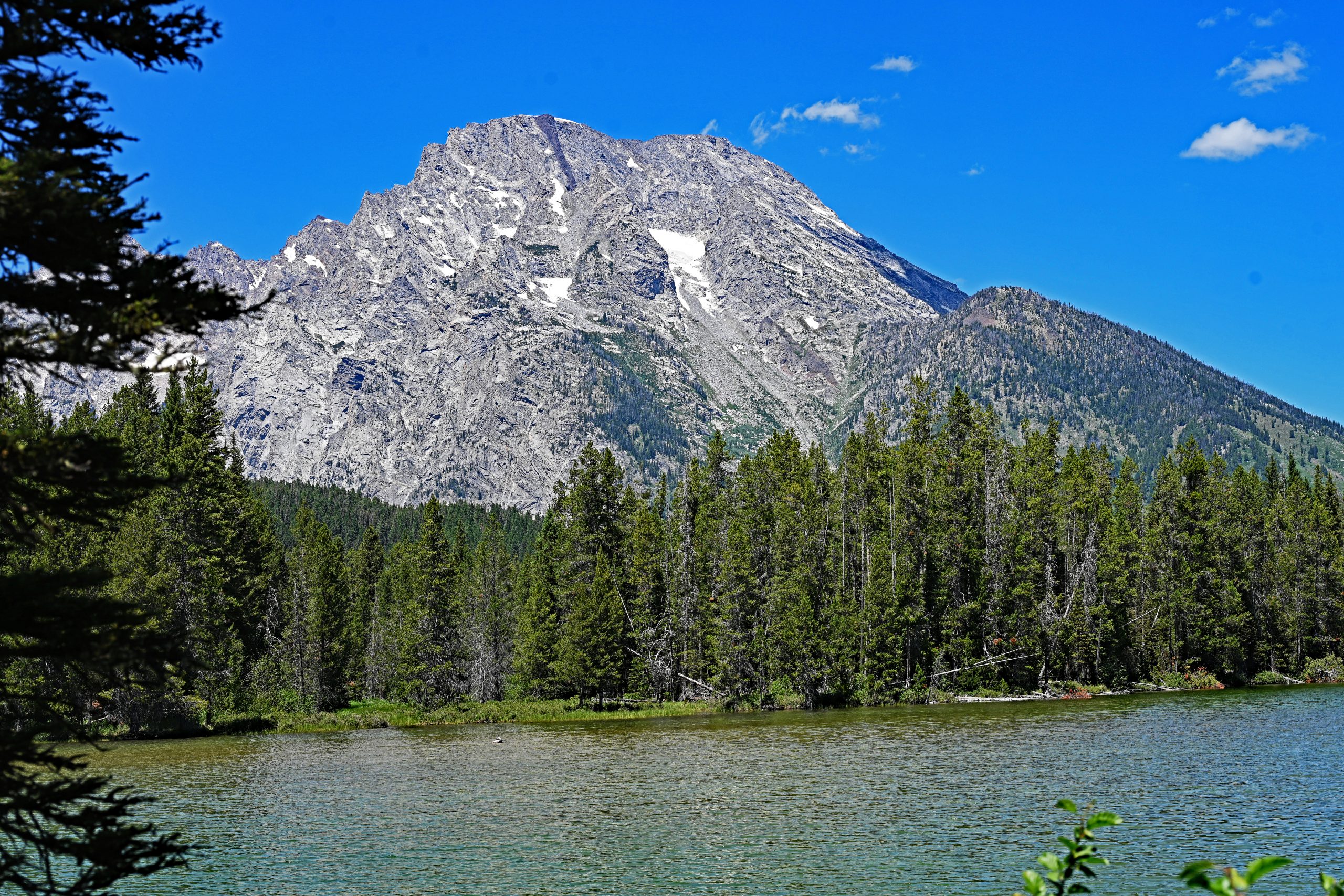
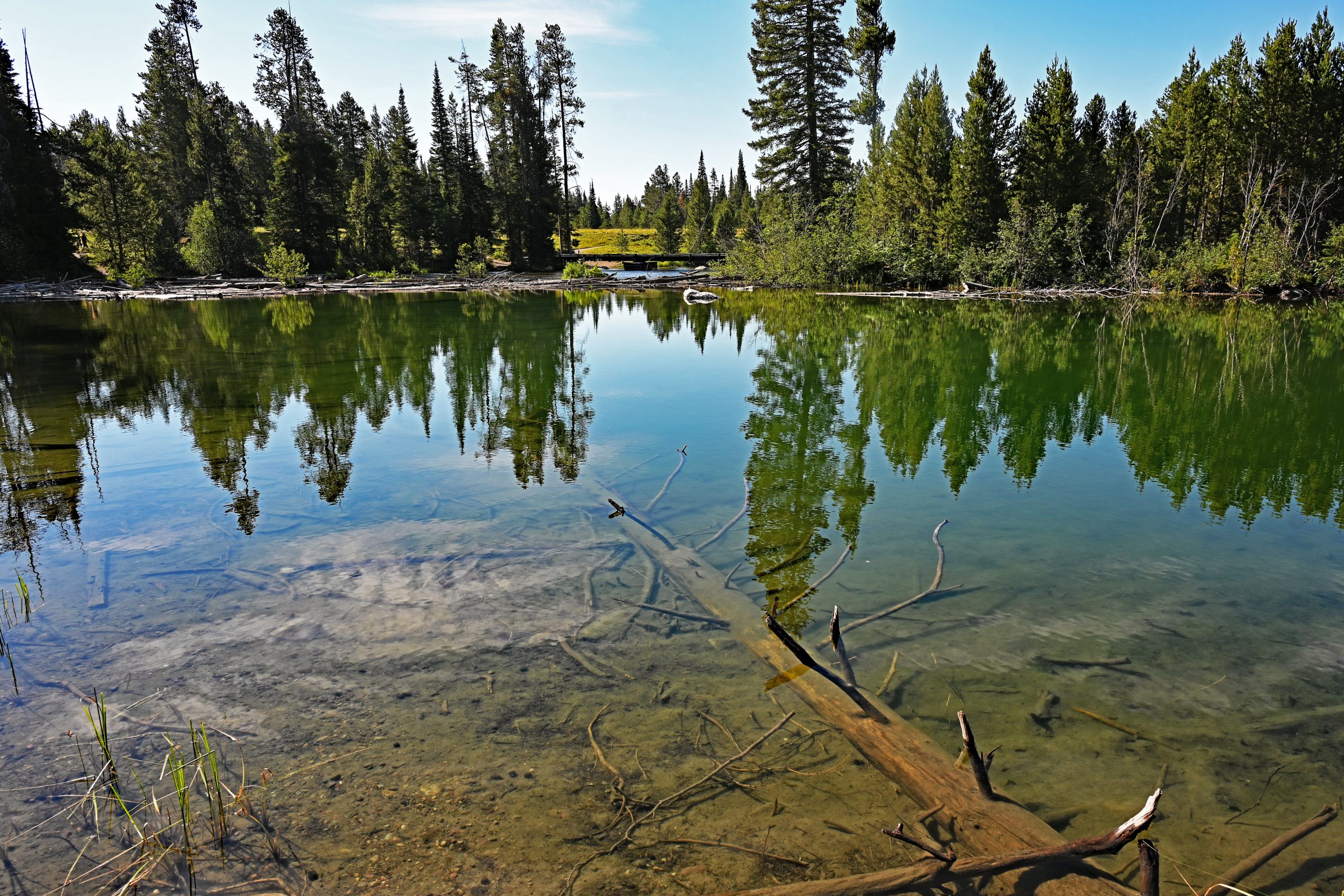
The morning in Grand Teton National Park began with a silence so deep you could hear your own breathing. Arriving at the String Lake trailhead, time seemed to stand still for a moment. The water of the lake lay as motionless as if it were liquid glass. The air was crisp and clear, filled with the resinous scent of the surrounding pine forests. On the first few meters along the shore, nature put on an unforgettable show: the surface of the lake acted like a perfect mirror, doubling the massive ridges of the looming mountain range, which were still speckled with remnants of snow. The deep green of the pine needles on the shore stood out in sharp contrast against the clean turquoise and emerald green of the shallow water. In the crystal-clear water, every single pebble and weathered log on the lake bed was visible. With every step deeper into the forest, the canopy opened up now and then, revealing the prominent, snow-dusted peaks piercing into the flawlessly blue sky. It was the perfect, peaceful prelude to an adventure that would soon lead me into much wilder regions.
Gallery I: Morning Impressions at String Lake
Into the Alpine Wilderness of the Canyon
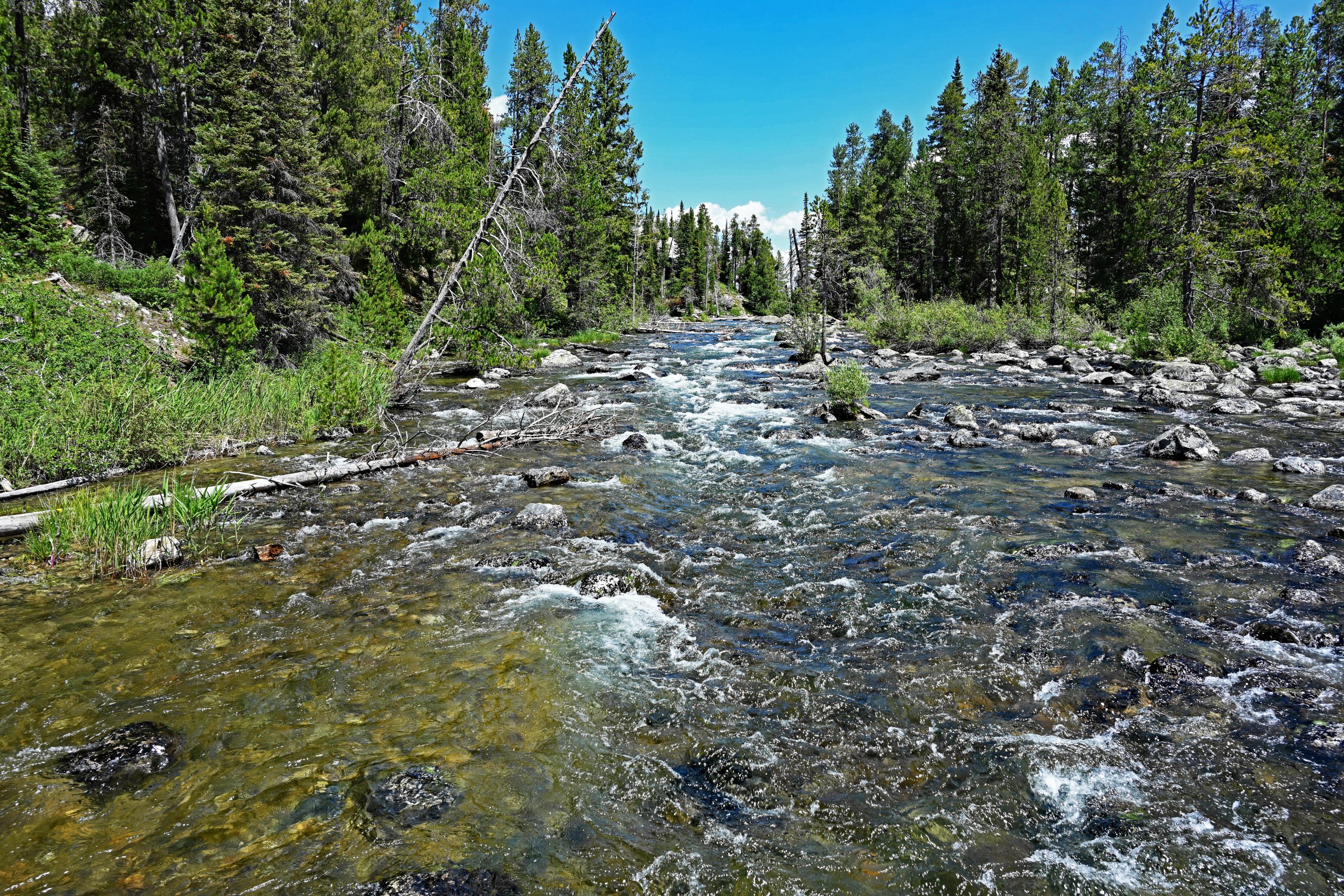
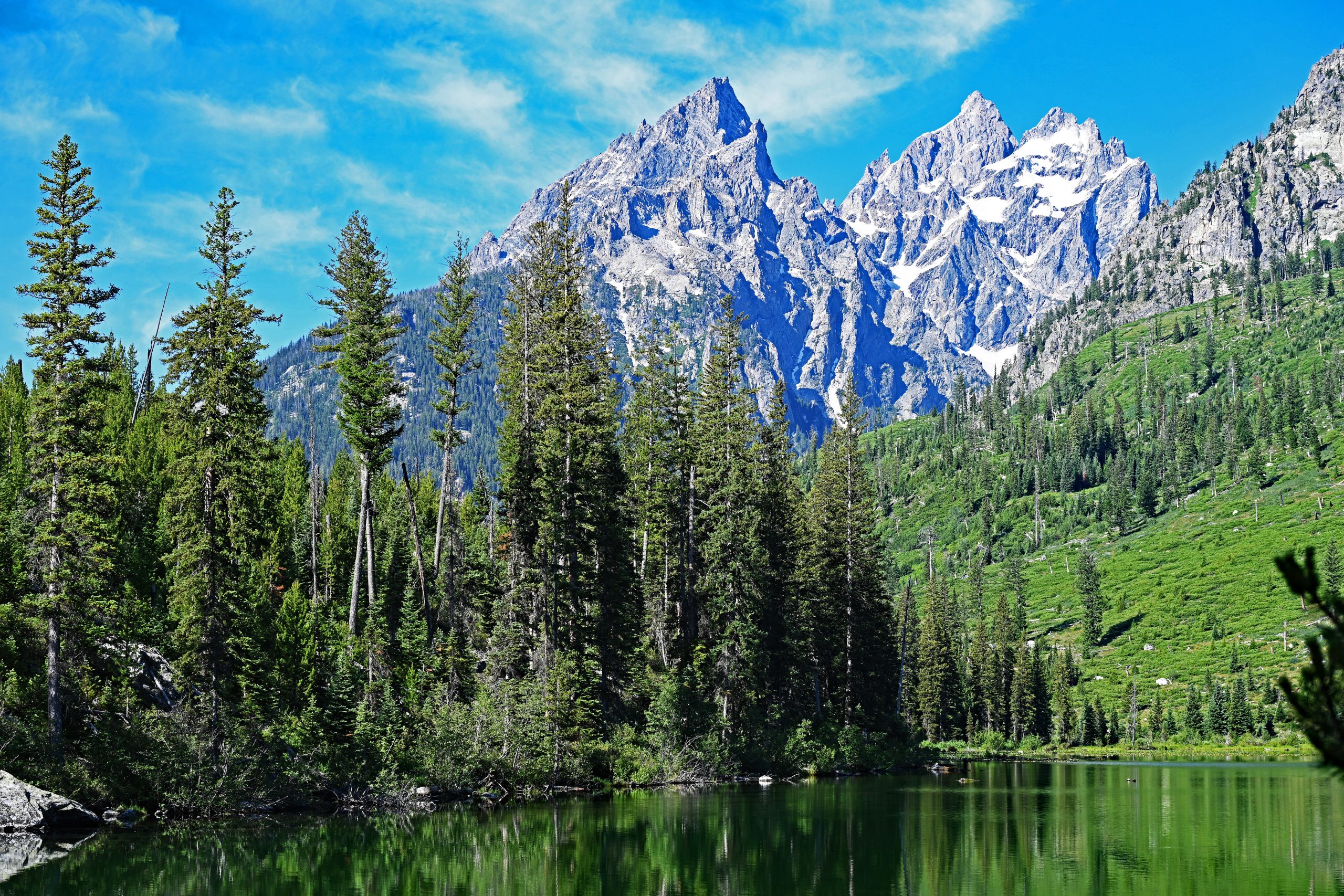
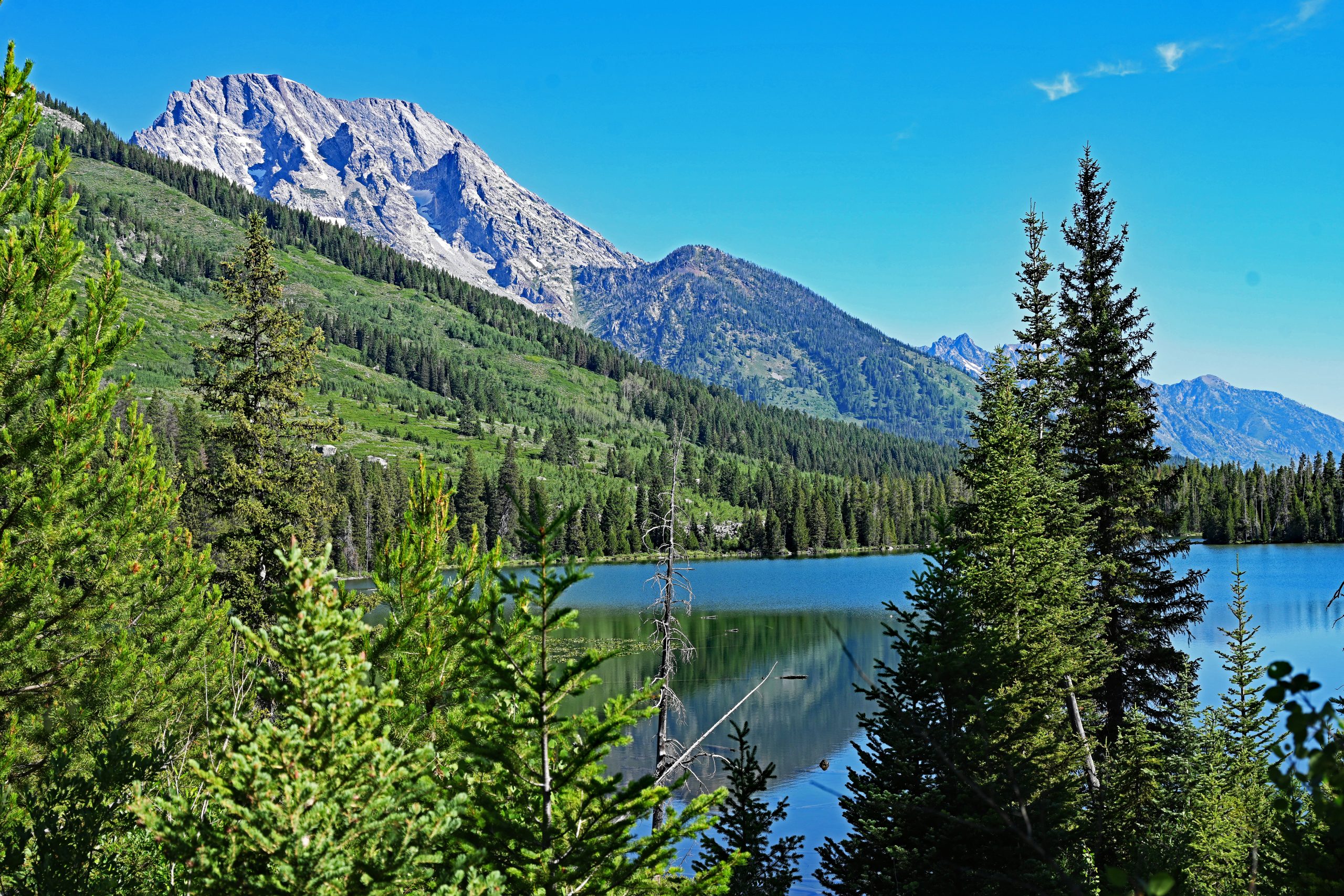
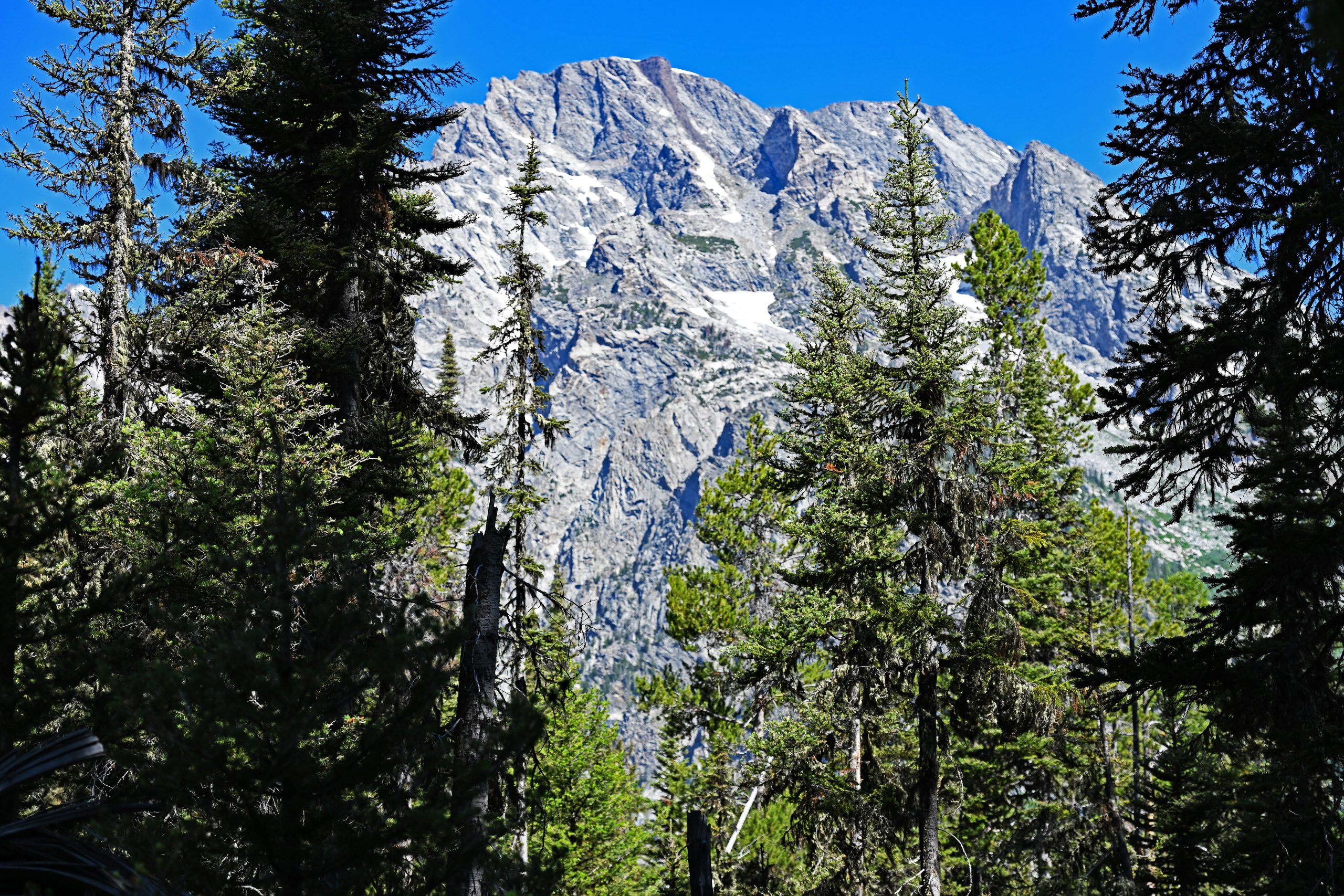
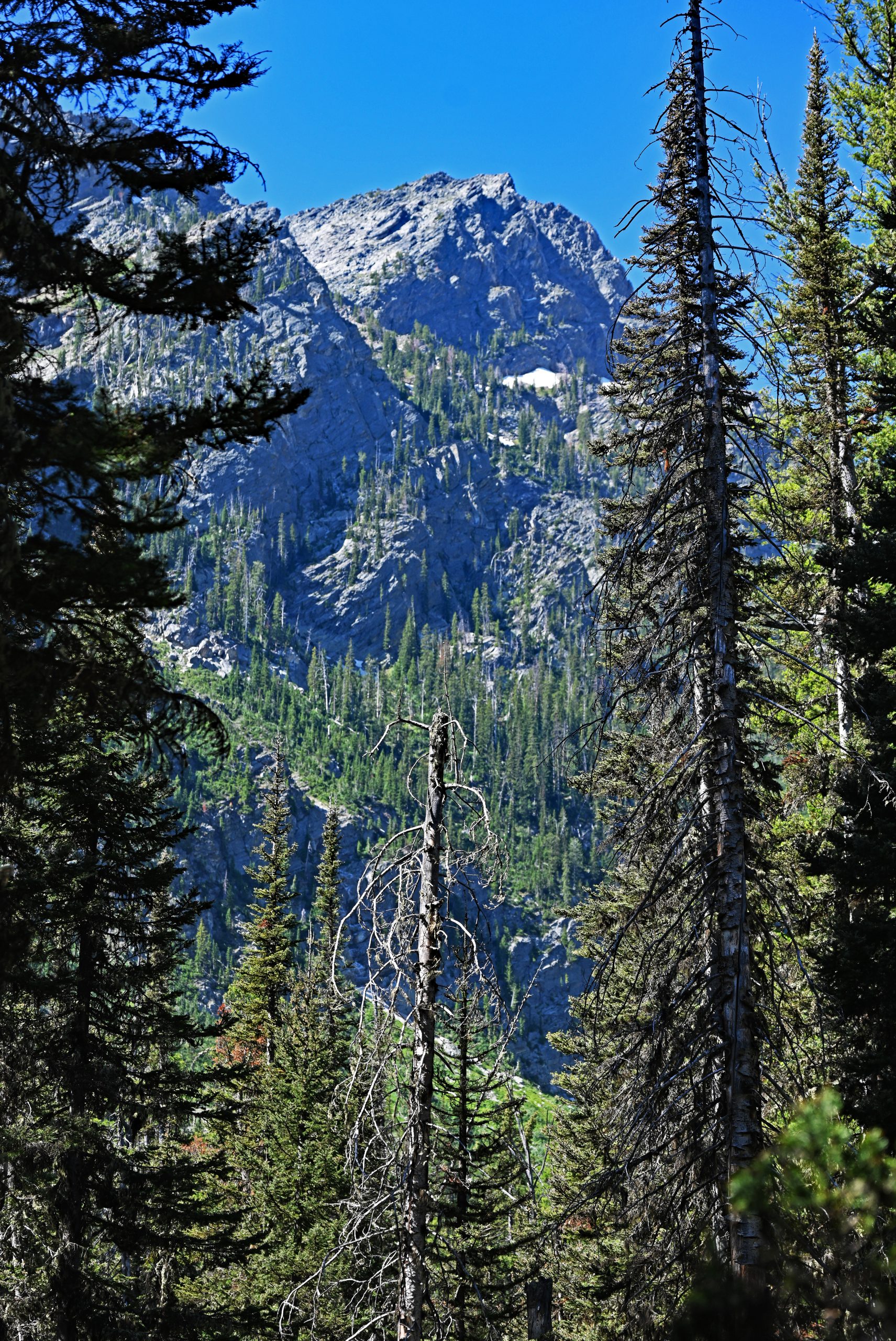
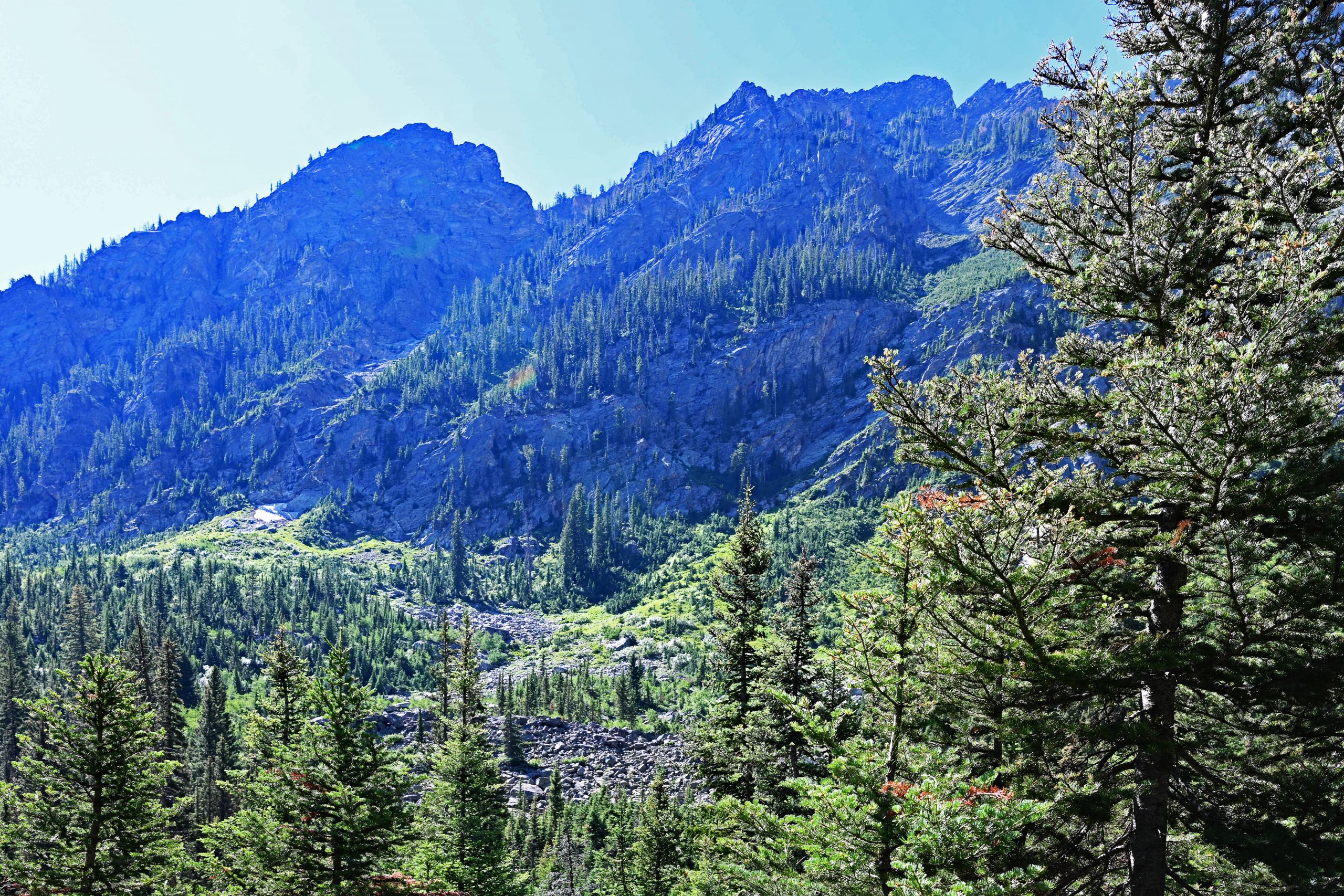
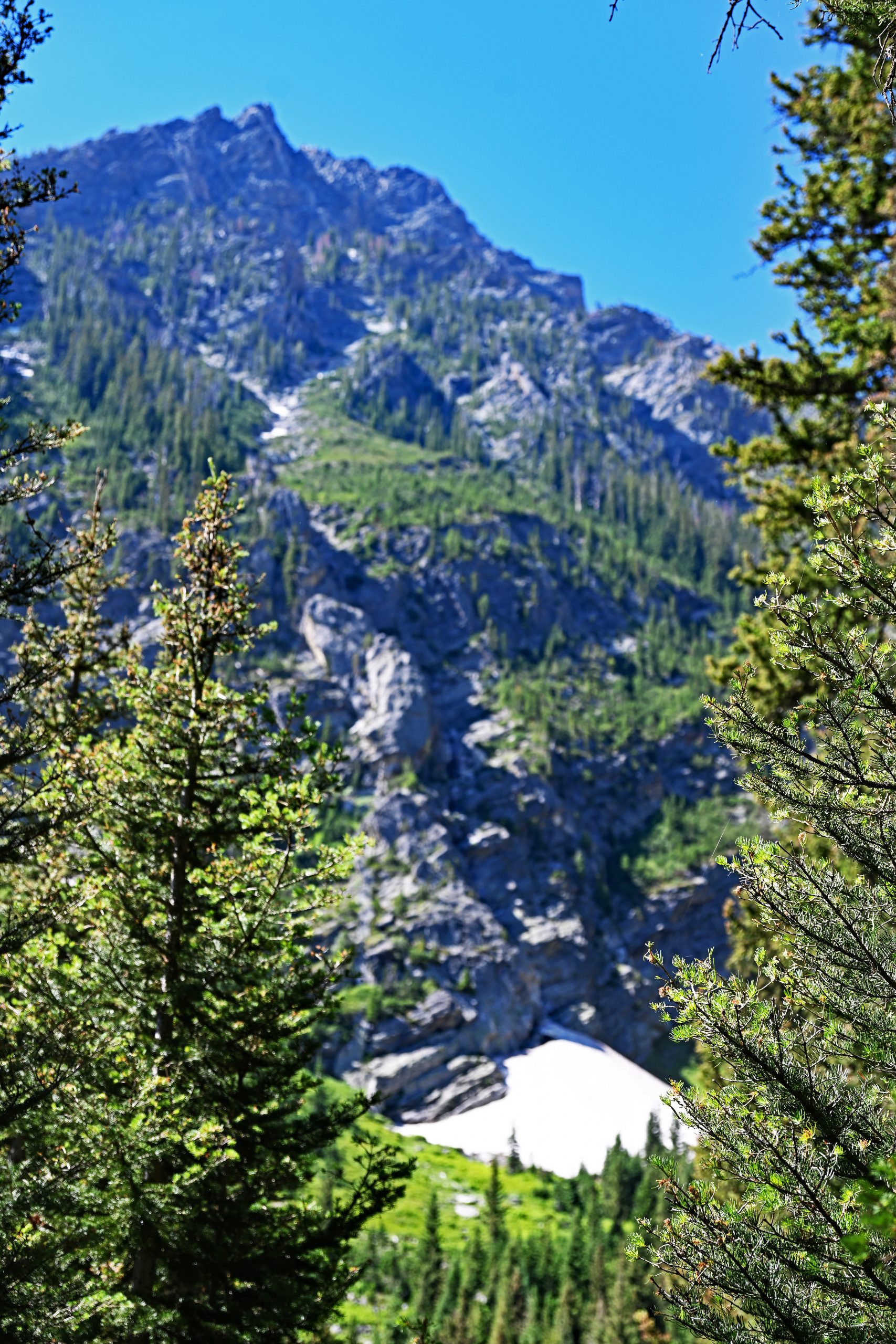
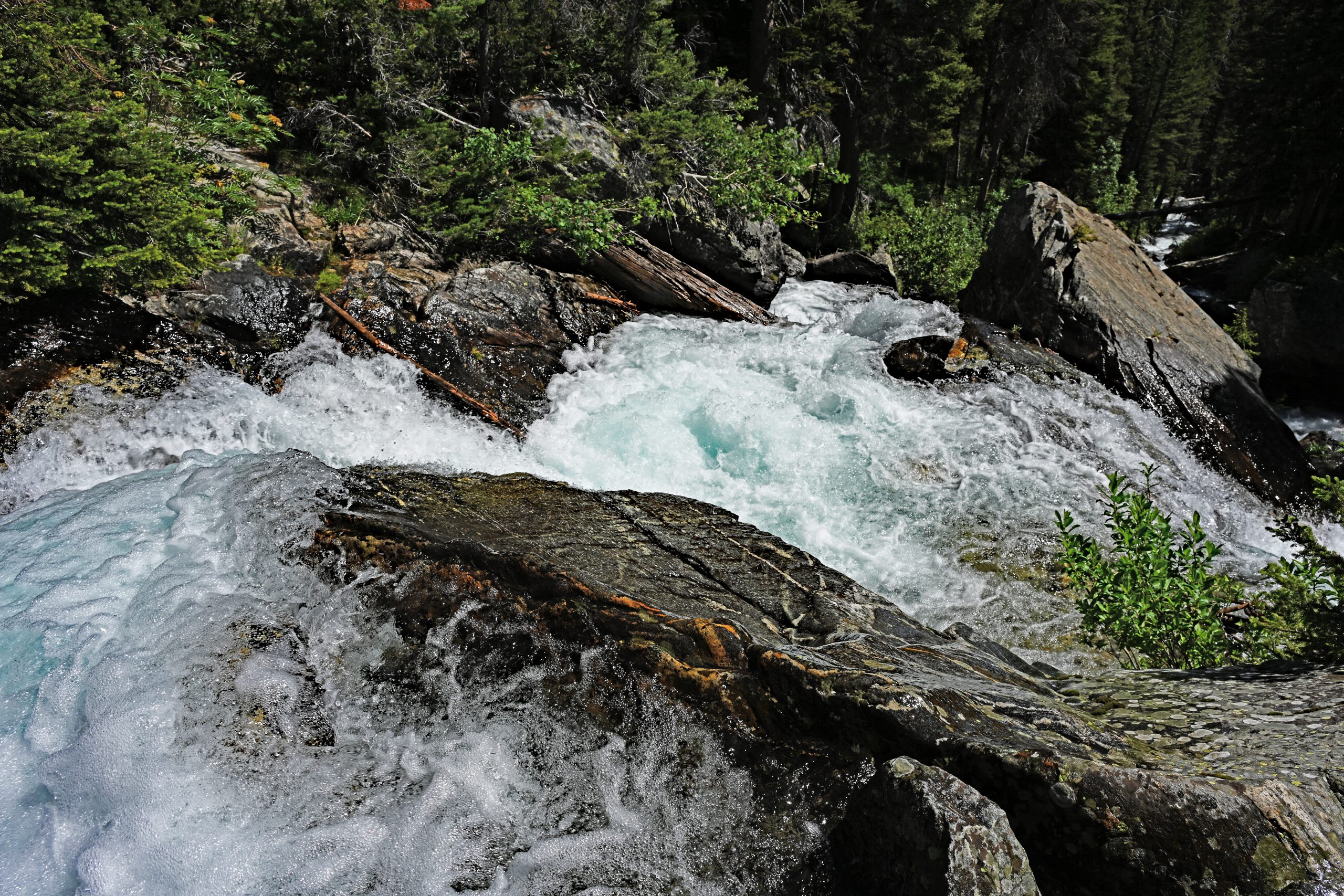
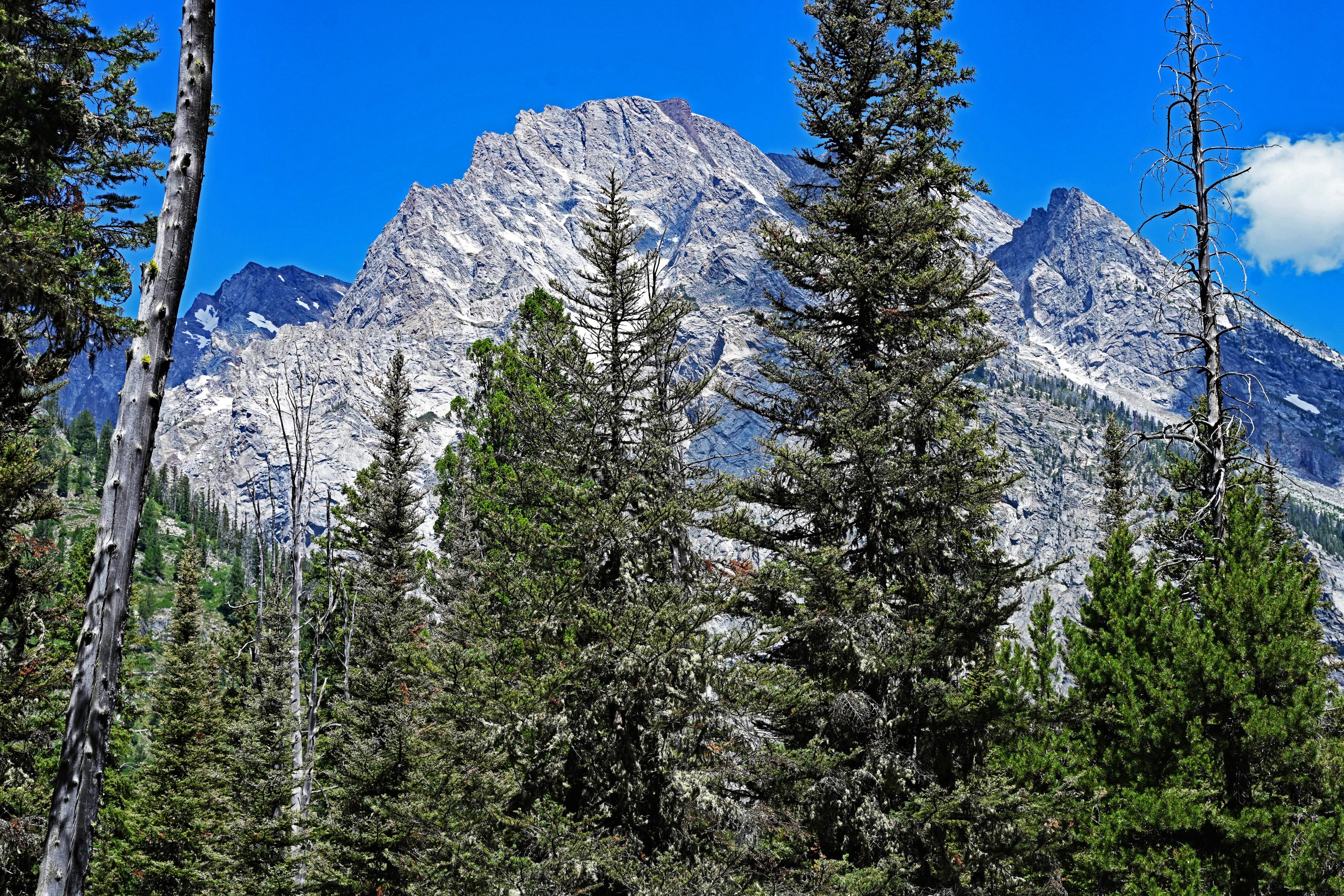
Soon I left the gentle lakeshore, and the trail began to climb noticeably as it turned into the rugged Paintbrush Canyon. Here, the landscape changed dramatically. The shady forest grew denser, and the mighty granite giants played a game of hide-and-seek with me. On the steep way up, the thicket opened up only rarely, but when it did, the views were breathtaking. As if through a natural window of dark pine tops, the massive, rugged flank of Mount Woodring suddenly flashed, its snow-covered summit glowing incredibly high up in the gleaming sunlight. On the opposite side of the canyon, the untamed power of geological history was on display in the form of Rockchuck Peak. Its steep, light gray rock walls and vast boulder fields told stories of avalanches and millennia of weathering. It was fascinating to observe how hardy, alpine conifers clung to even the steepest gullies, while further up, bare rock ruled supreme. The alpine climate became more tangible: a dull, powerful roaring announced it from afar, and finally, I stood by the cascades of Paintbrush Creek. With primal force, the ice-cold, churning meltwater rushed over darkly polished rocks down into the valley, sending over a wonderfully refreshing, fine mist.
Gallery II: The Ascent Through Paintbrush Canyon
The Highlight at Lower Paintbrush Campground
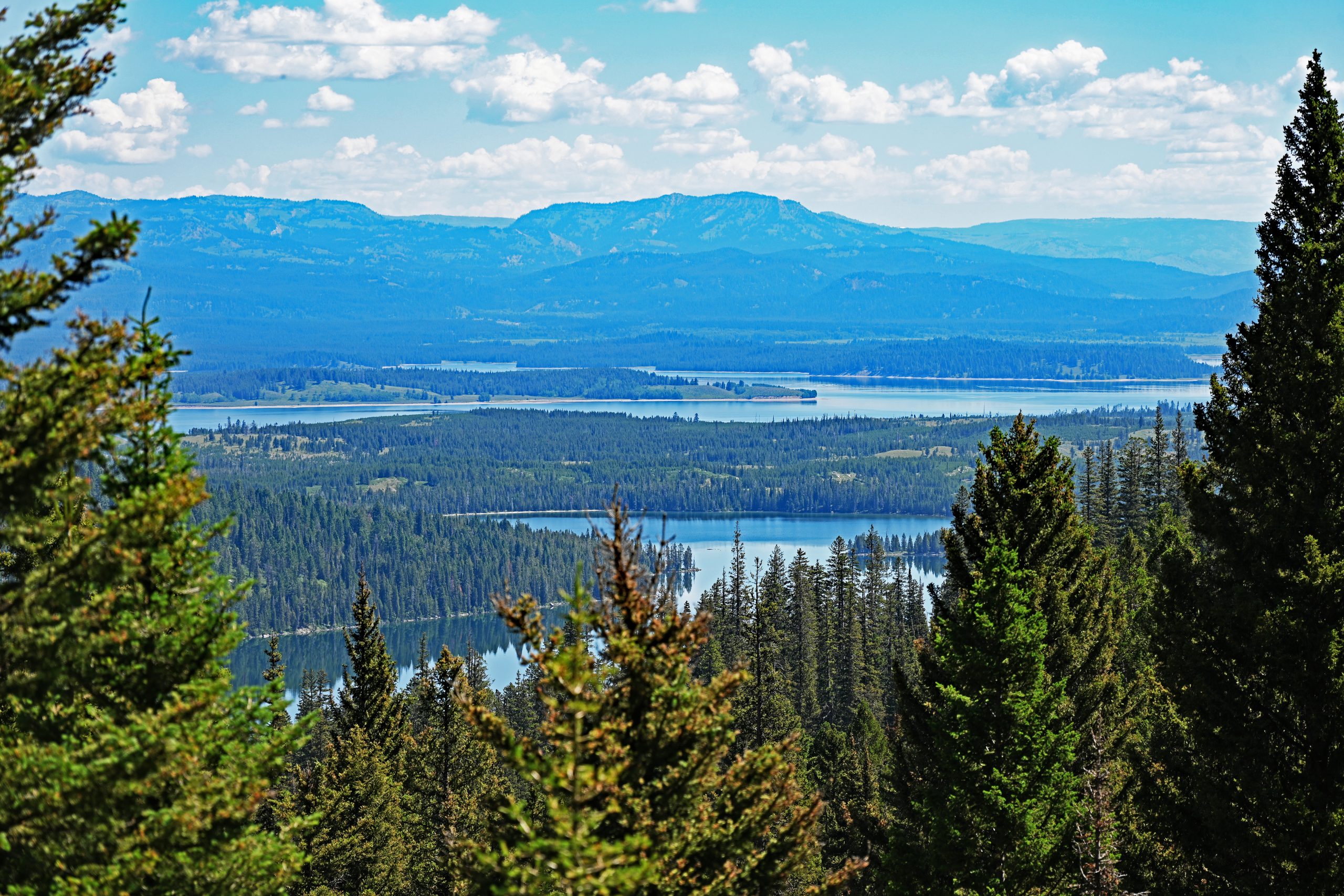
After the strenuous elevation gain, I finally reached the turning point of my tour: the Lower Paintbrush Campground. Here, high above the valley floor, the world opened up to an overwhelming panorama. The view looking back was simply breathtaking. Like blue sapphires, three huge lakes lay lined up one behind the other in the wide, forested plain: directly below me the narrow String Lake, close behind it Leigh Lake, and far on the horizon the massive Jackson Lake, its end losing itself in the haze of the distant hills. Small, white fair-weather clouds sailed across the sky, reflected as tiny dots on the blue water surfaces. But it wasn’t just the view into the distance that fascinated: turning around, the monumental, dark south face of Mount Woodring towered directly above the campsite. A sheer fortress of gray granite whose massive bulk made the tall pines in the foreground look like tiny toy trees. In this sheltered place, surrounded by the raw grandeur of the mountains, time flew by during a well-deserved rest.
Gallery: The Panorama from the Campground
The Descent on the Left Path
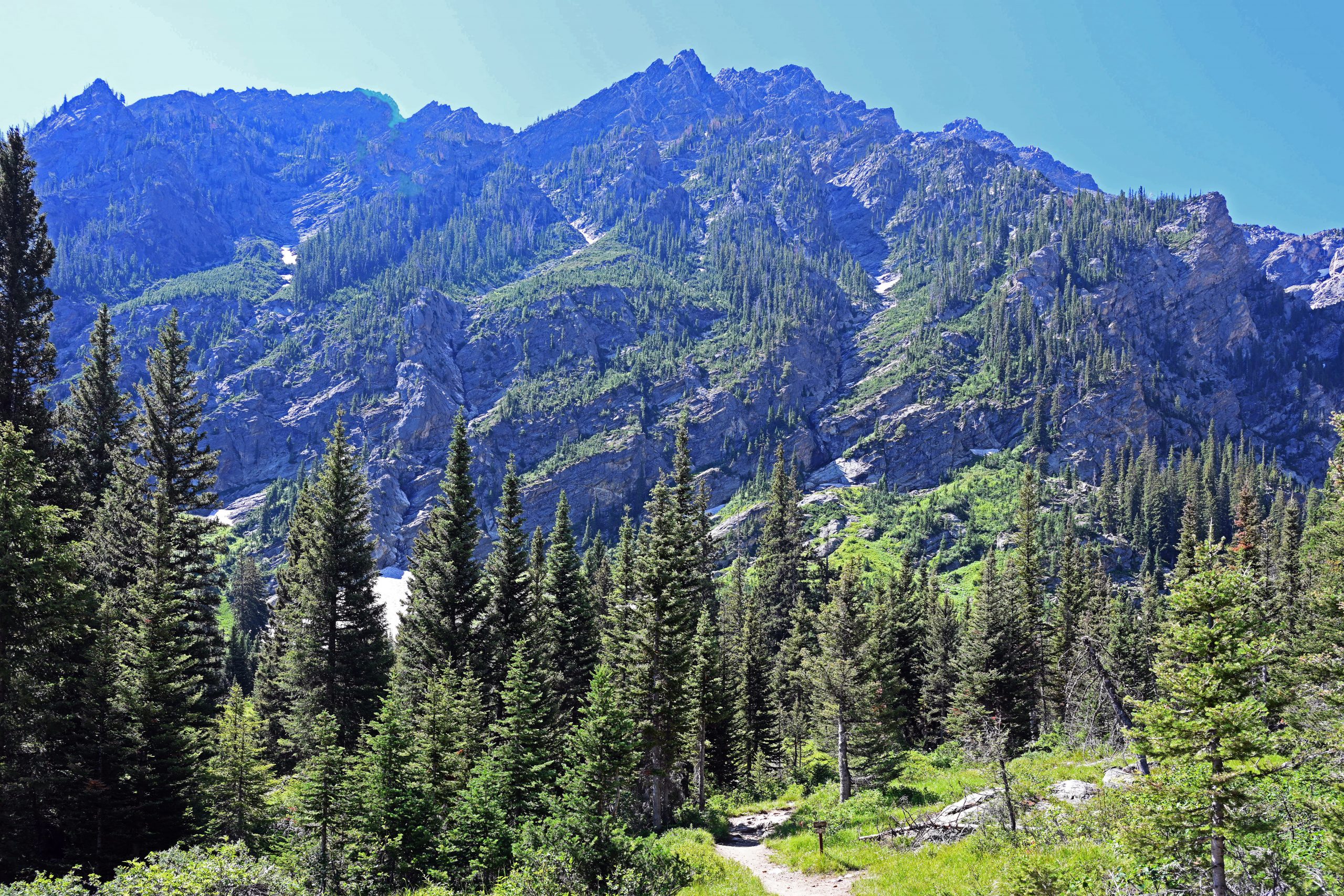
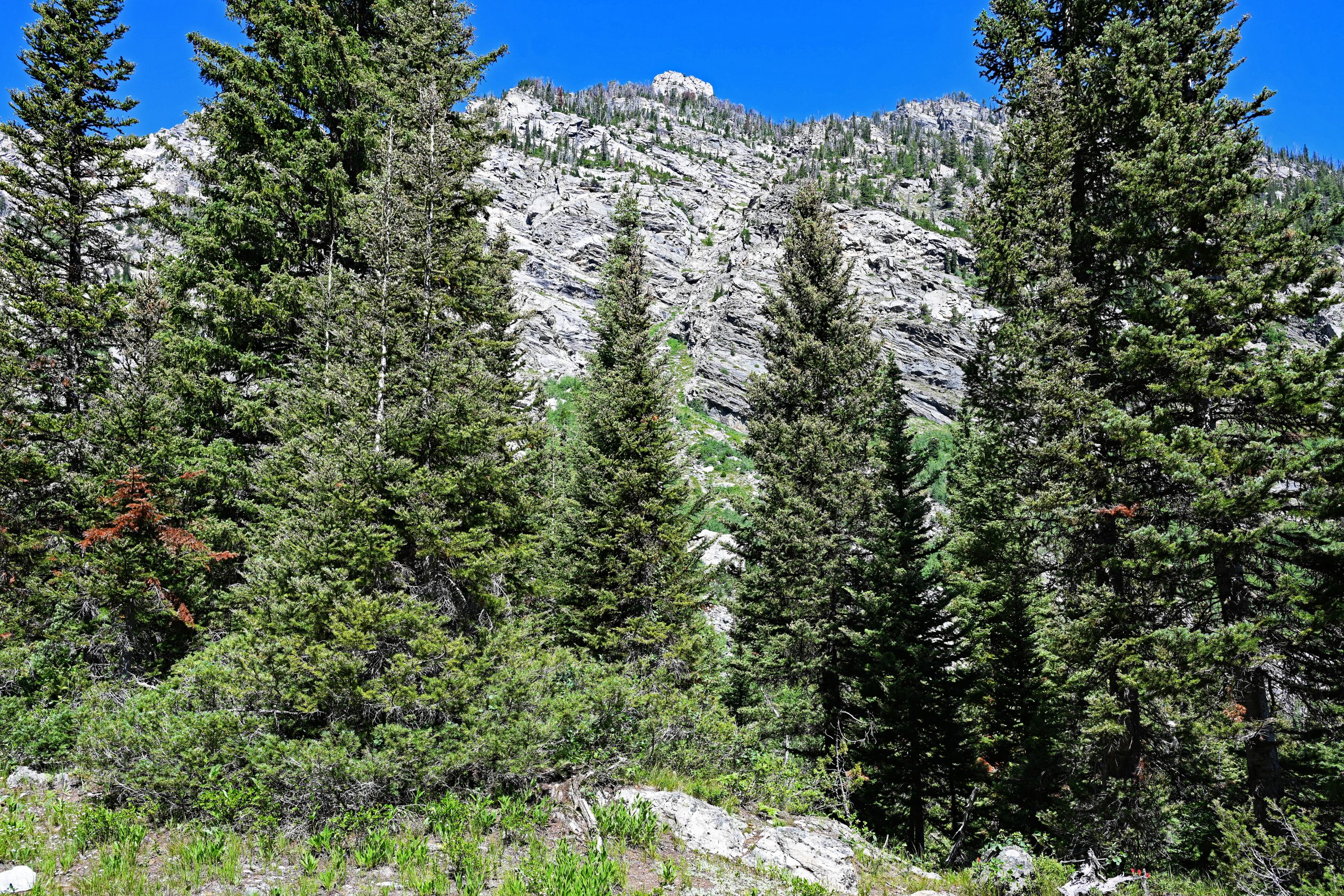
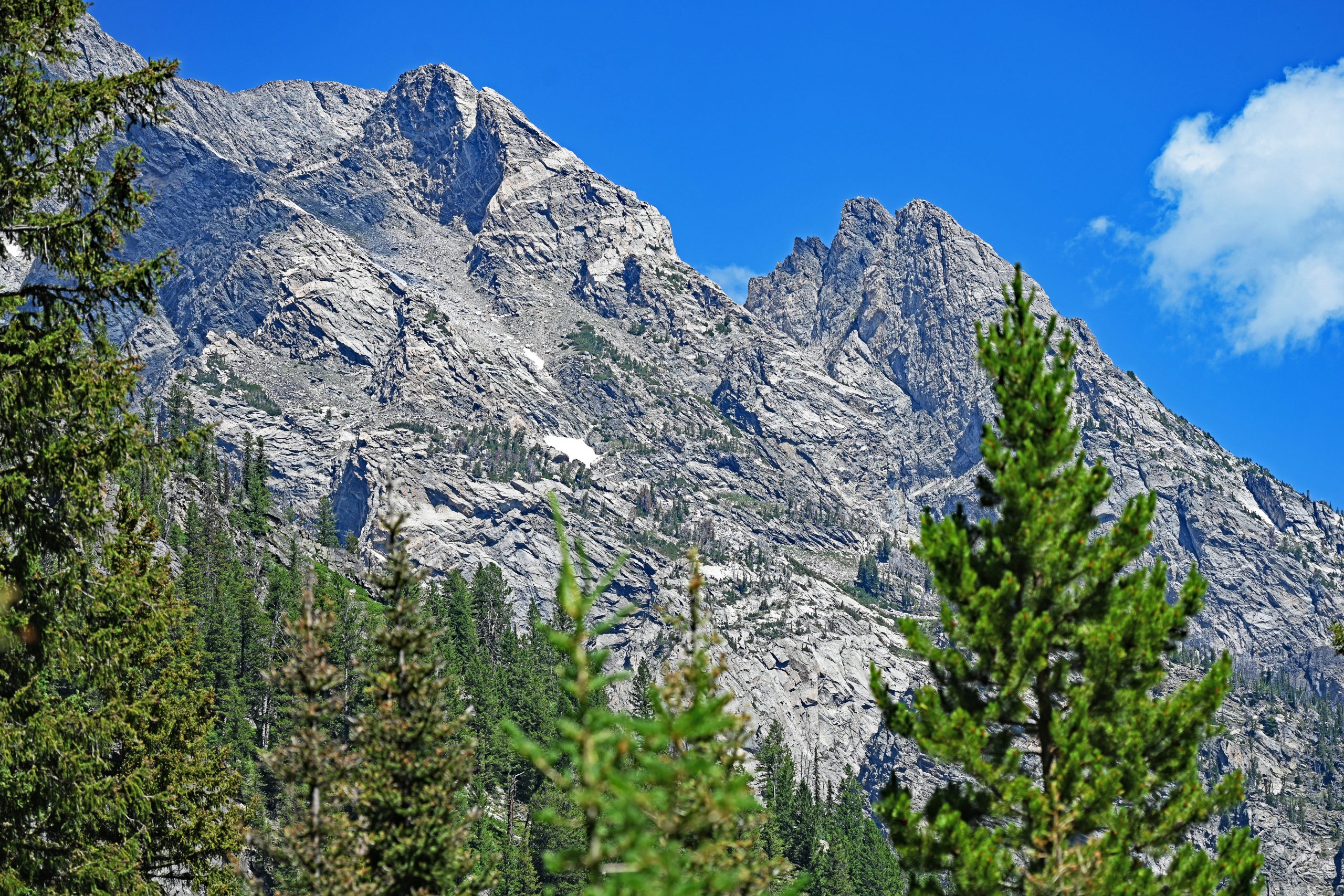
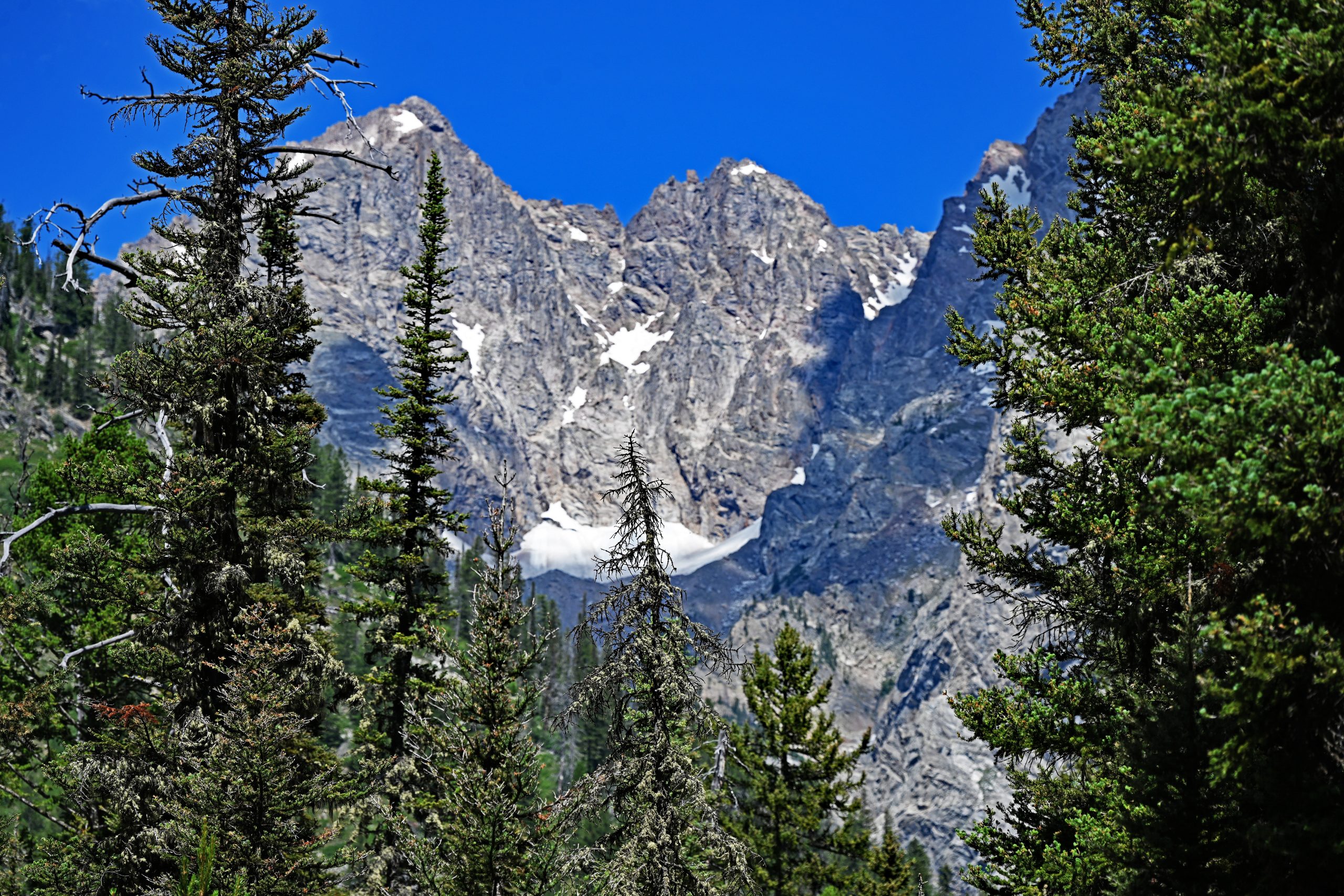
For the return journey, I chose the left path, which wound its way back down toward the valley in tight switchbacks. The forest initially closed in again, enveloping the path in pleasant shade, while the bright limestone and granite walls of Rockchuck Peak repeatedly peeked playfully through the treetops. However, the descent still held some of the most spectacular visual highlights of the entire hike. Suddenly, the terrain opened up to the south, and two fantastic, bare rock peaks of the Rockchuck massif shot into the sky like stone guardians – a perfect pyramid on the left, a sharply jagged double spire on the right. Only a short while later, the landscape opened up again, revealing a monumental view into the icy heart of the range: the deeply fissured, snow-covered north face of Mount Owen and the mighty flanks of Grand Teton presented themselves as a gigantic, natural amphitheater, with eternal snow glowing brilliant white in its shaded rocky folds. As I continued downward, Mount Woodring also showed itself from its best side once more, bidding me farewell with its imposing eastern flank, which was carved by deep gullies.
Gallery: Rock Colossi in the Backlight
Back at the Shallow Shore of String Lake
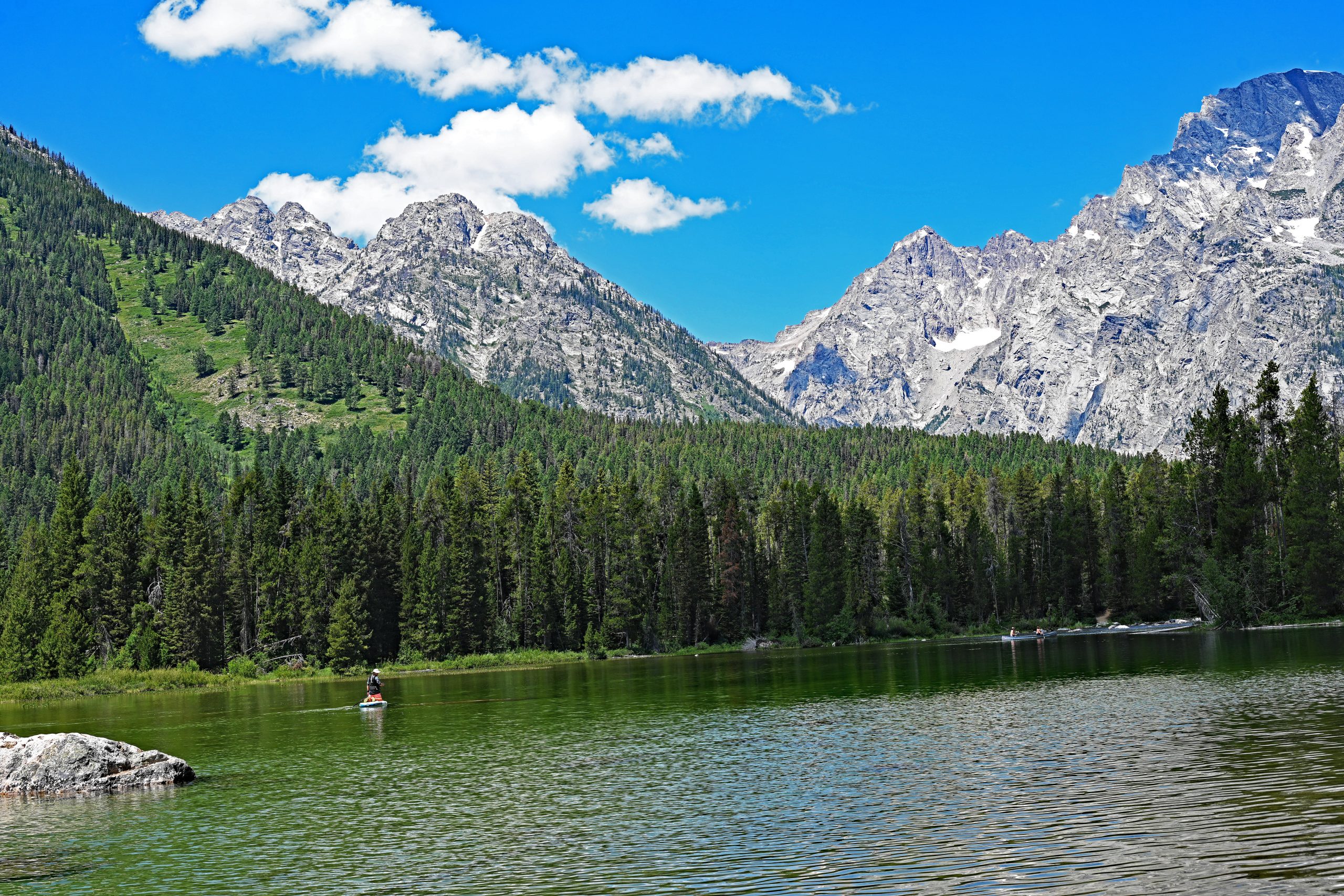
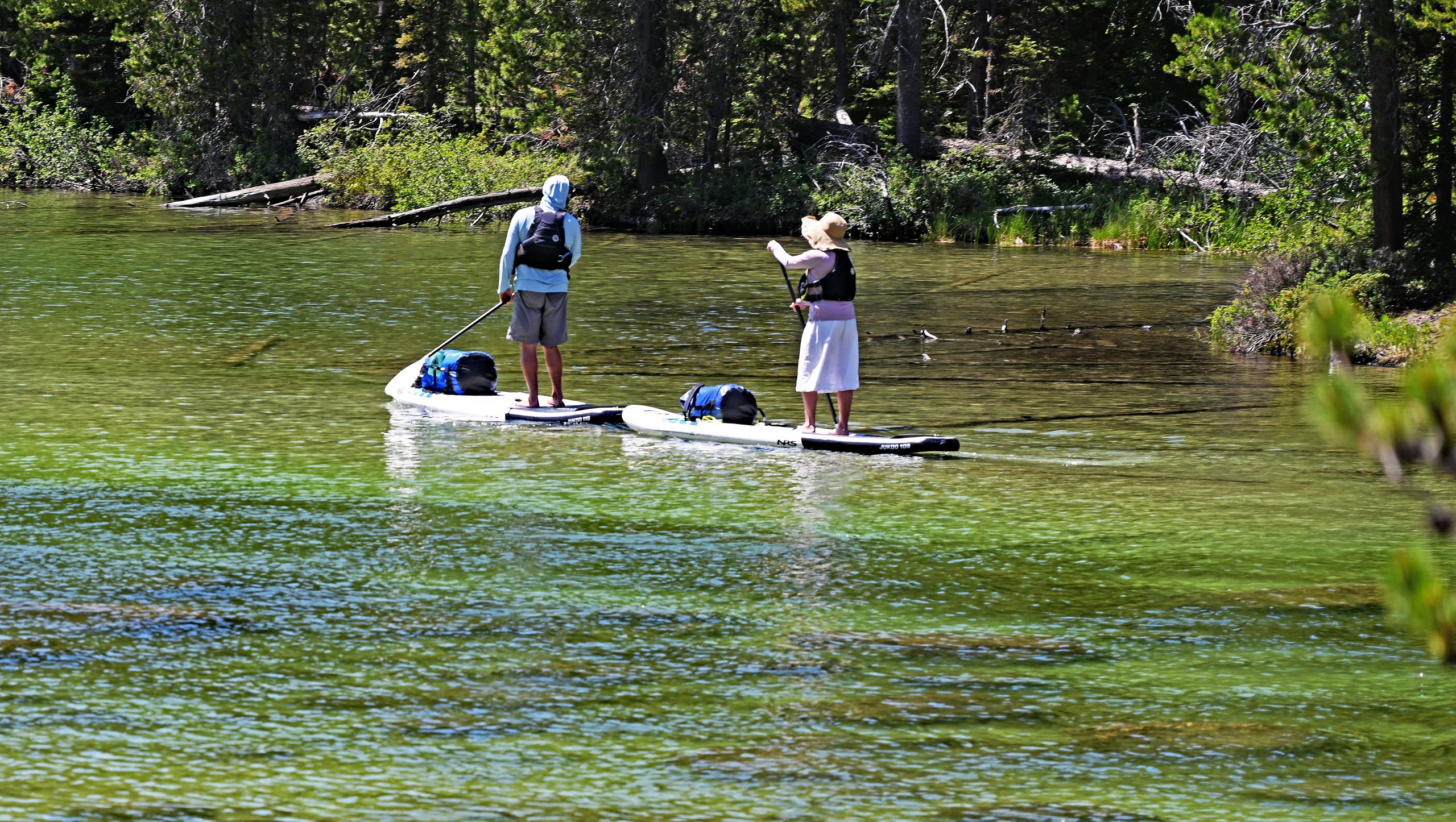
When the trail finally reached the valley floor, I crossed a rustic wooden pedestrian bridge under which Paintbrush Creek now flowed much wider and gentler over countless pebbles, merging just a few meters further with String Lake. Back at the starting point of the loop, not only the path but also the circle of impressions closed. The gentle afternoon light now bathed the lake in a warm emerald green. While the mighty silhouettes of Mount Woodring and Rockchuck Peak lined up in the background, a peaceful bustle reigned on the water. Stand-up paddlers glided silently across the shallow, crystal-clear water, with the light sandbars and green algae beds shimmering through the surface like a living carpet beneath their boards. At the very end, as I let my gaze wander far to the north one last time, the final giant of the day finally revealed itself: the bulky, majestic peak of Mount Moran throned over the dense forests of Leigh Lake, its characteristic glacial gullies forming the perfect, crowning conclusion to an incomparable day of hiking in the Grand Tetons.
Gallery: Return to Postcard Idyllics