
September 8th 2022
When I open my eyes this morning, a completely different world welcomes me than maritime Bilbao. Pamplona, the historic capital of Navarre, rests proudly on a rocky plateau high above the Arga River. The air here is noticeably drier, carried by a touch of mountain wind blowing over from the nearby foothills of the Pyrenees.
The landscape surrounding Pamplona possesses a rugged, majestic beauty. The silhouette of the mountains on the horizon—such as the prominent Monte San Cristóbal—appears more angular, almost defensive compared to the gentle waves of the Basque Country. Their slopes glow in a deep, earthy dark green, which turns into warm ocher and sand-colored tones under the harsh sunlight of Navarre. The peaks are traversed by rocky ridges that rise like natural battlements into the deep blue sky. This rugged mountain backdrop forms the perfect setting for a city that was considered an impregnable fortress for centuries.
I lace up my hiking boots. My path begins in the heart of power, at the back of the magnificent Palacio de Navarra.
Magnificent Palaces and Baroque Splendor in the Heart of the Old Town
The day starts in an oasis of symmetry, where the political history of the region becomes tangible. On the way to the central town hall square, I pass architectural masterpieces from different eras.
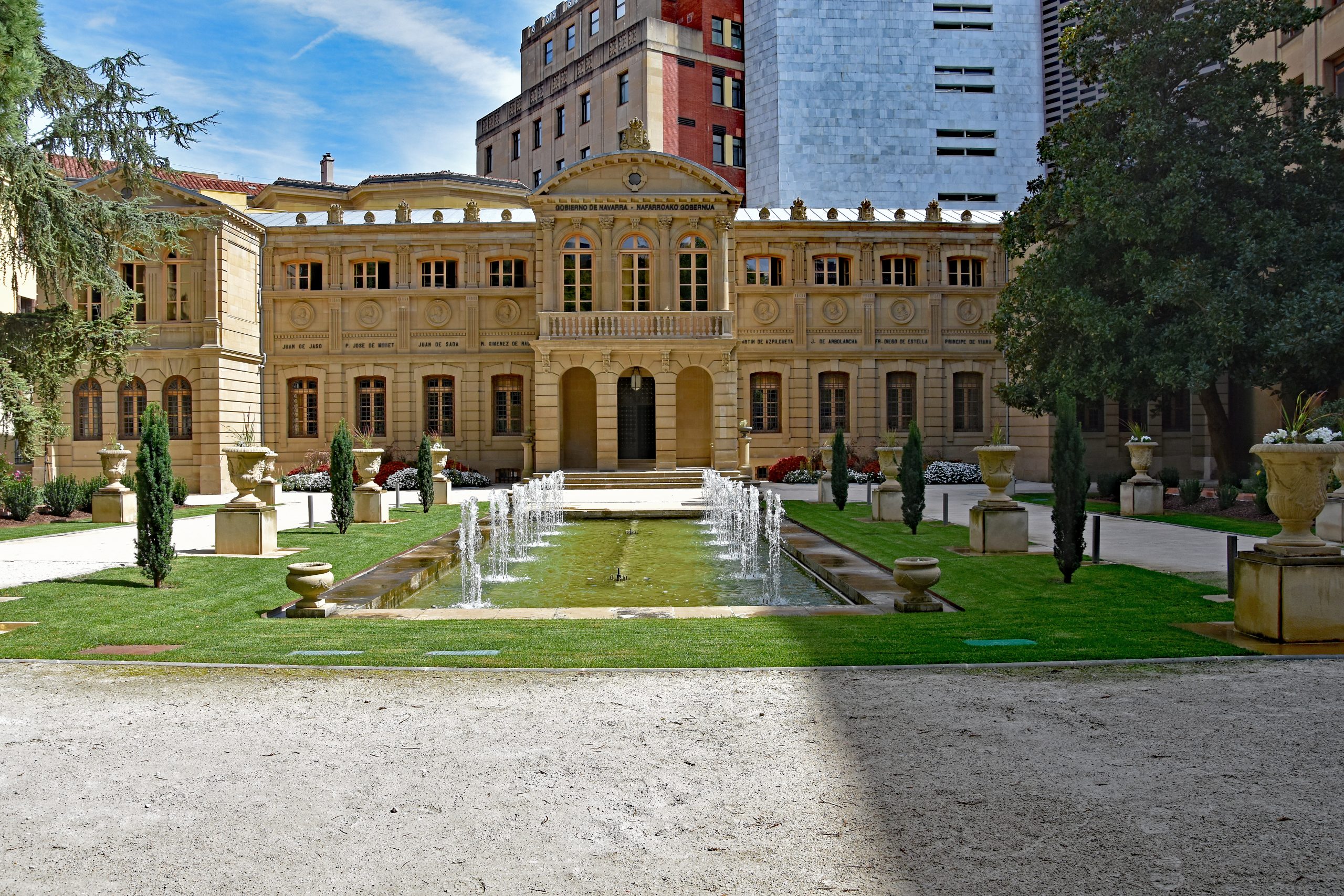
The beautiful garden area at the back of the Palacio de Navarra immediately captivates me. I look at the long, perfectly symmetrical fountain pool of the former General Archive of Navarre. On the upper cornice of the bright building, the bilingual inscription “GOBIERNO DE NAVARRA – NAFARROAKO GOBERNUA” proudly stands out, crowned by the region’s coat of arms. Along the facade, I discover fine medallions depicting famous Navarrese scholars.
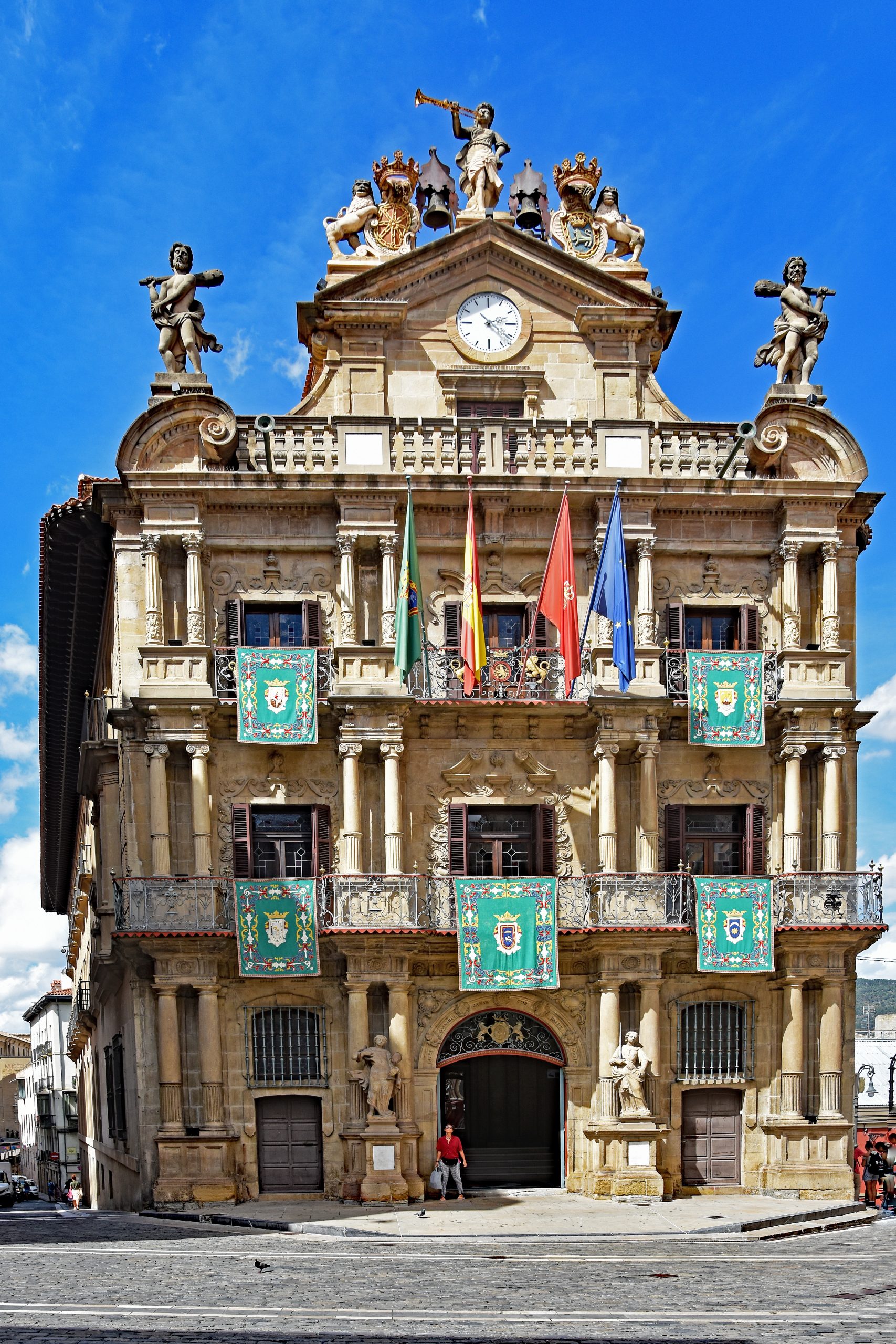
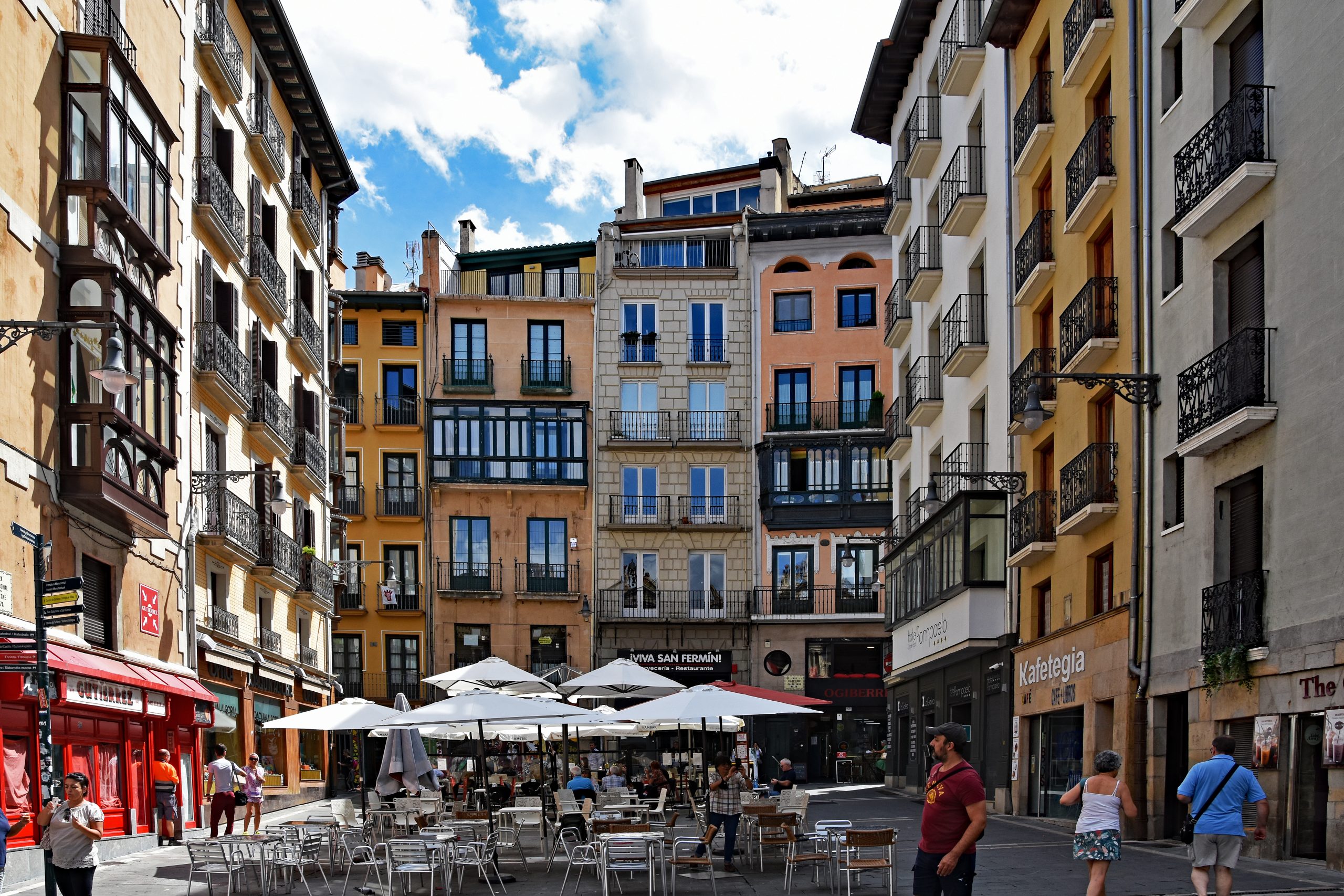
From this royal splendor, I drift further into the narrow alleys and suddenly find myself in Plaza Consistorial in front of the famous City Hall of Pamplona. Its three-story baroque facade from the 18th century is an absolute masterpiece—overflowing with angels, lions, and lion heads. I sit down in one of the welcoming street cafes on the square, not far from the traditional restaurant Viva San Fermín. While watching the colorful facade play of the residential buildings, I imagine how the rocket, the Chupinazo, opens the world-famous Sanfermines here on July 6th.
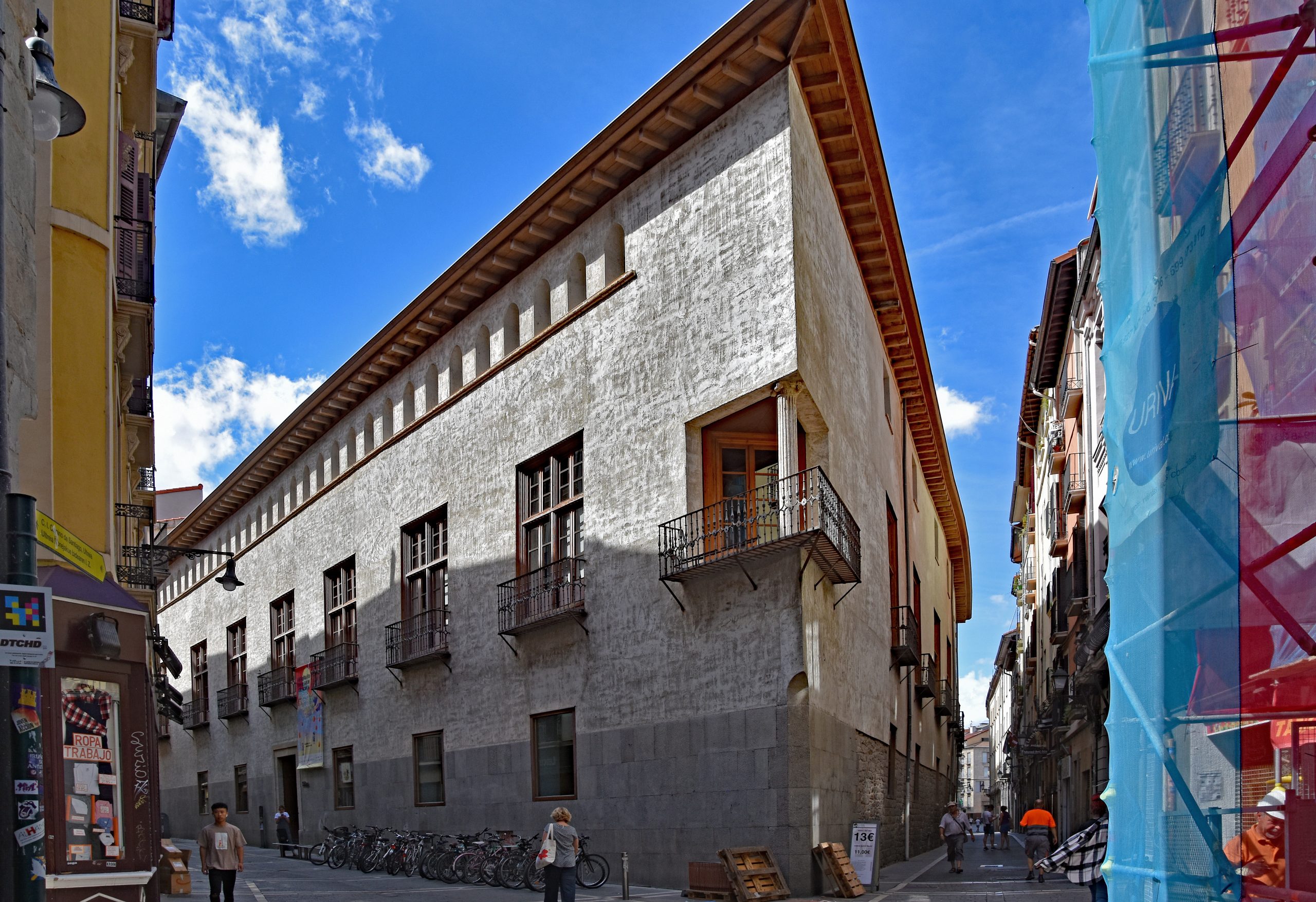
Just a few steps further, at the intersection of Calle Mayor, I come across the Palacio del Condestable. This 16th-century palace is a jewel of civil Renaissance architecture. Particularly fascinating is the prominent corner balcony with its delicate column and the fine gallery of rounded arches under the wide, overhanging wooden roof, which today houses a modern cultural center.
In the Footsteps of Art, Faith, and the Patron Saint
My walk takes me deeper into the northern part of the old town, where sacred art and the deeply rooted legend of Saint Fermín define the atmosphere.
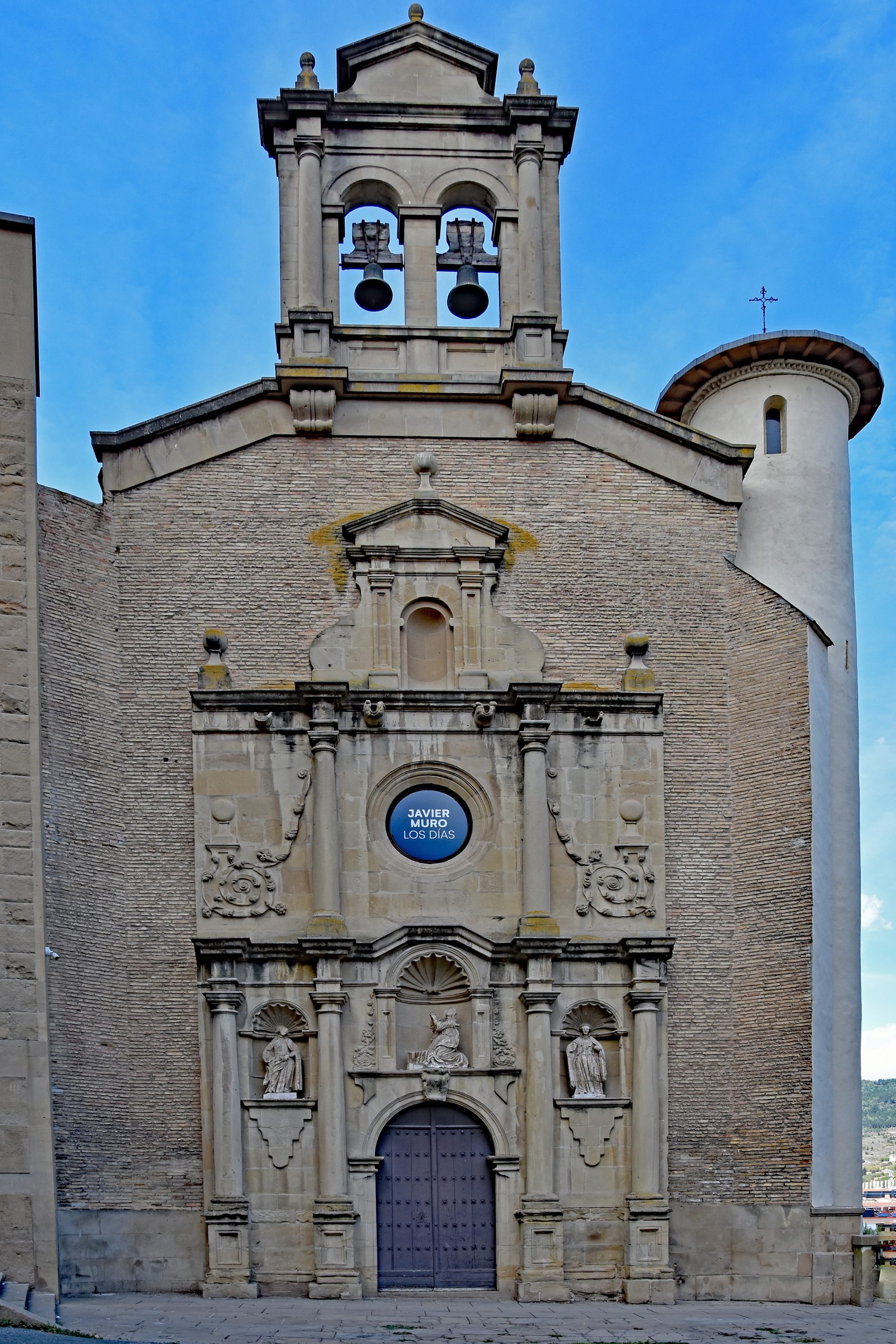
I reach the historic street Cuesta de Santo Domingo. Here, the ornate, baroque facade of the Chapel of the Museo de Navarra catches my eye. It dates back to 1733 and once belonged to an old hospital. An absolutely fascinating contrast is the modern, circular blue light installation by artist Javier Muro with the words “LOS DÍAS”, which harmonizes perfectly with the old stone.
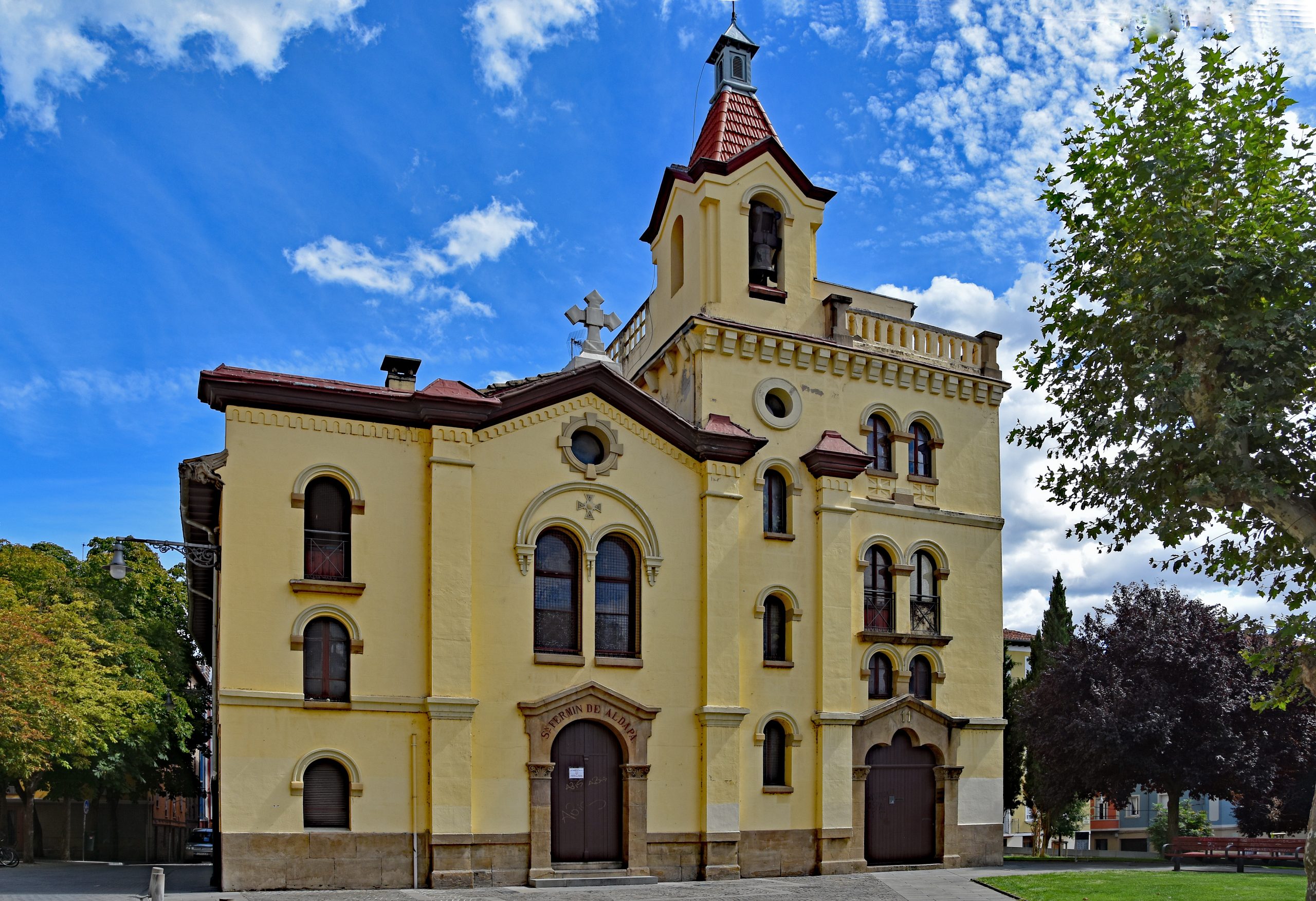
I climb up into the charming Navarrería neighborhood and stand before the striking yellow facade of the San Fermín de Aldapa church. According to legend, this baroque basilica was built on the exact spot where the birthplace of Saint Fermín—the patron saint of the city—once stood. The inscription carved into the stone above the portal radiates an almost mystical calm.
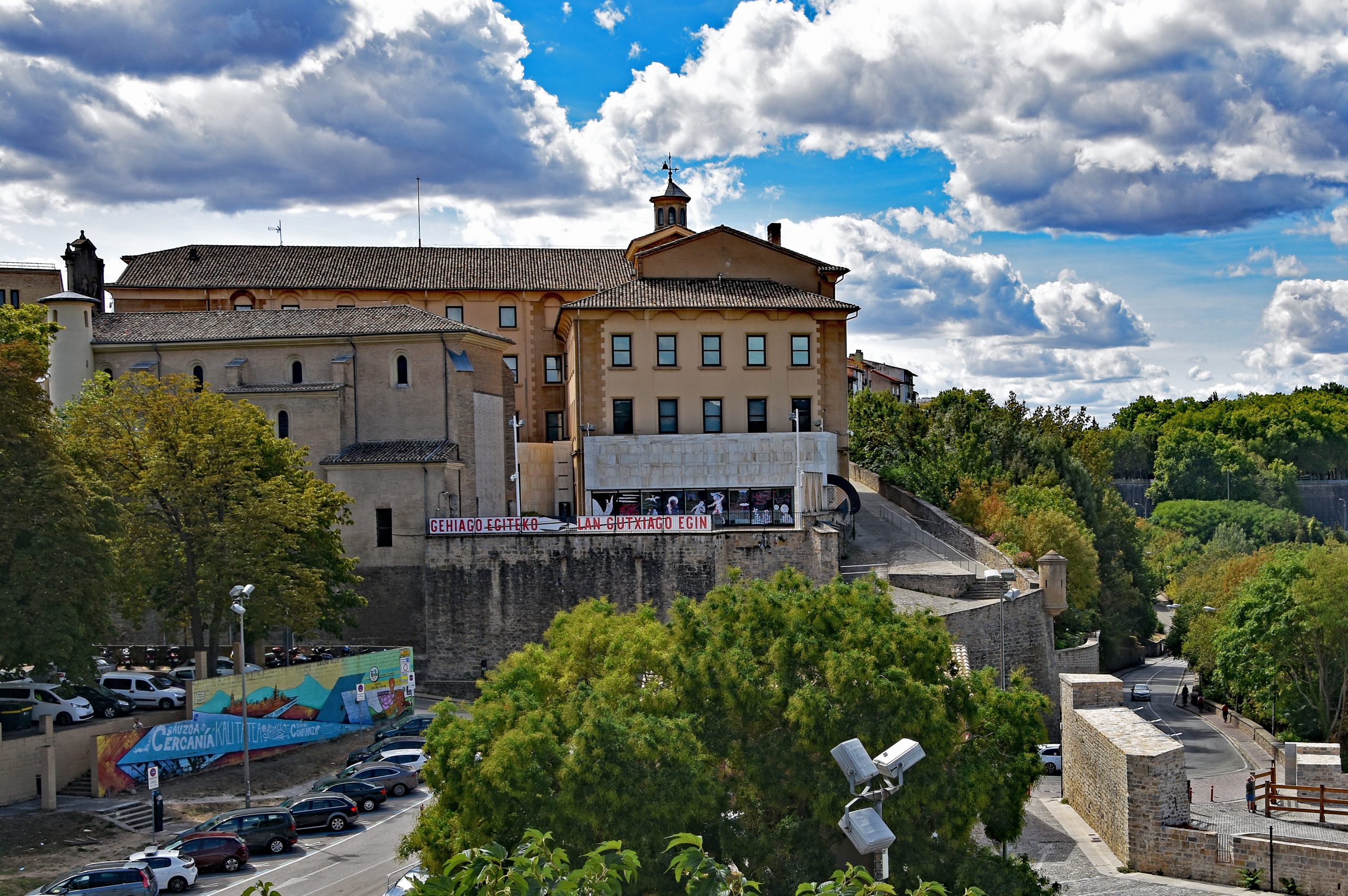
Finally, I step out onto the high ground of the old fortifications. From up here, there is a magnificent view down onto the Cuesta de Santo Domingo, where the bull runs start in July. Right next to me, the bright, flat stone facade of the Museo de Navarra blends seamlessly into the mighty city walls. On the terrace flutters a long white banner with the Basque slogan “GEHIAGO EGITEKO LAN GUTXIAGO EGIN” (“Work less – Do more”), a strong, modern accent in the midst of these centuries-old defenses.
The Gate of Pilgrims and the Ascent to the Cathedral
To conclude my day, I follow the world-famous pilgrimage path that has filled this city with life and spiritual energy for generations.
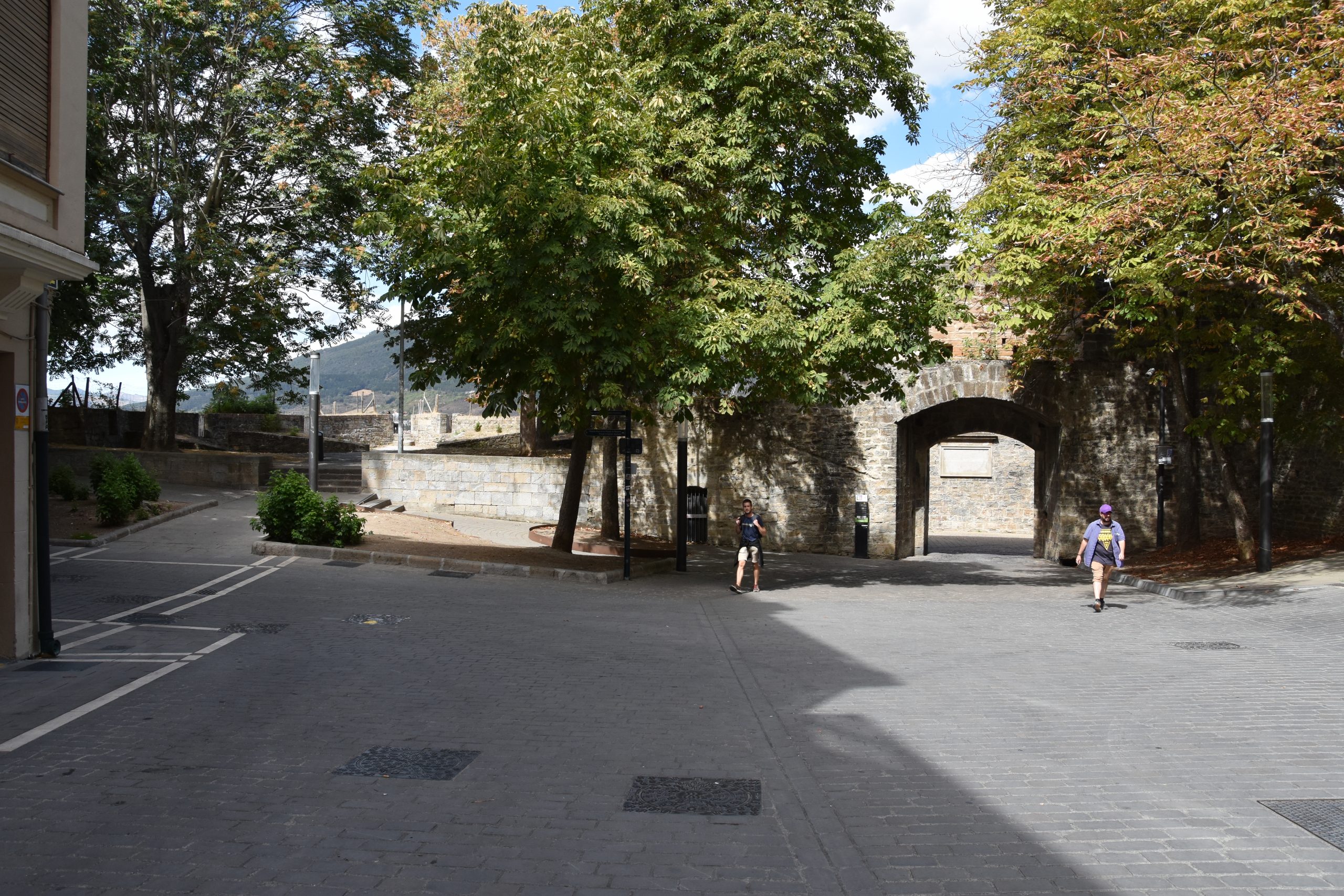
I follow the defensive walls to the Portal de Francia. This beautiful stone gate from 1553 immediately captivates me. From the outside perspective, the cobbled ascent through the massive stone blocks of the Baluarte del Redín bastion looks almost intimidating. It is a deeply moving place: for centuries, this has been the official entrance gate for pilgrims arriving on the Camino de Santiago from France. Walking through the dark stone archway, you can practically feel the sigh of relief from the countless travelers who finally found safe ground here after the harsh Pyrenean stages
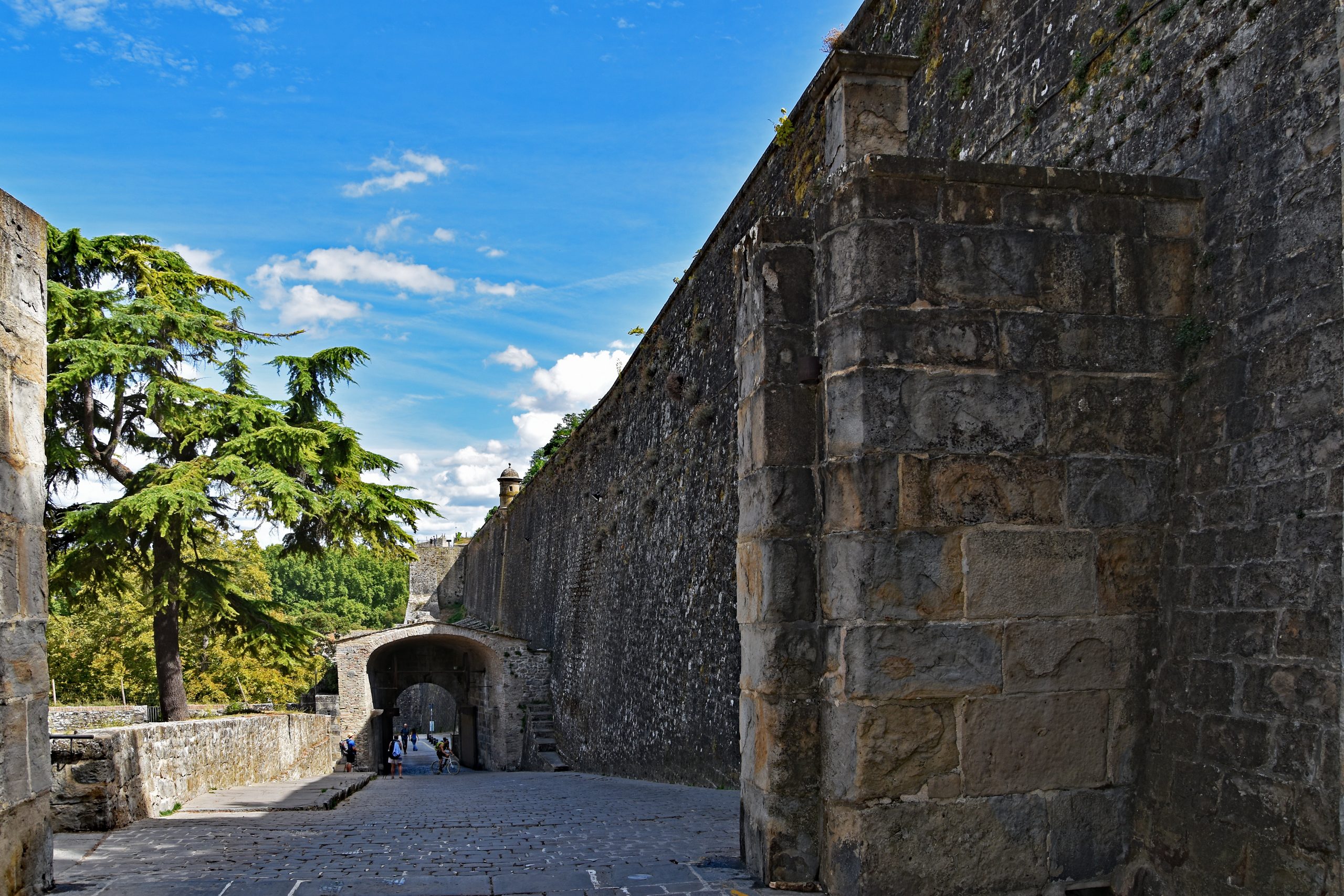
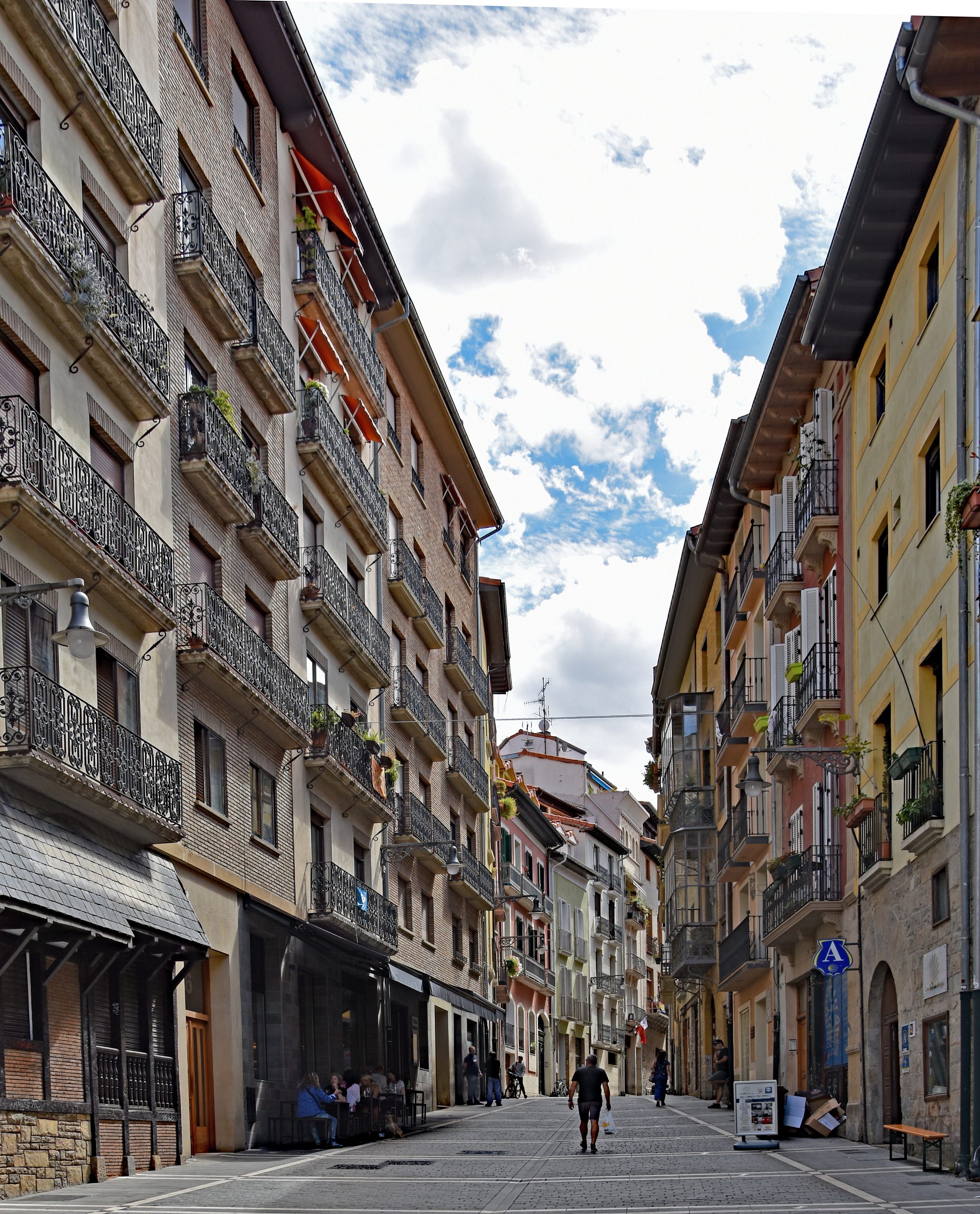
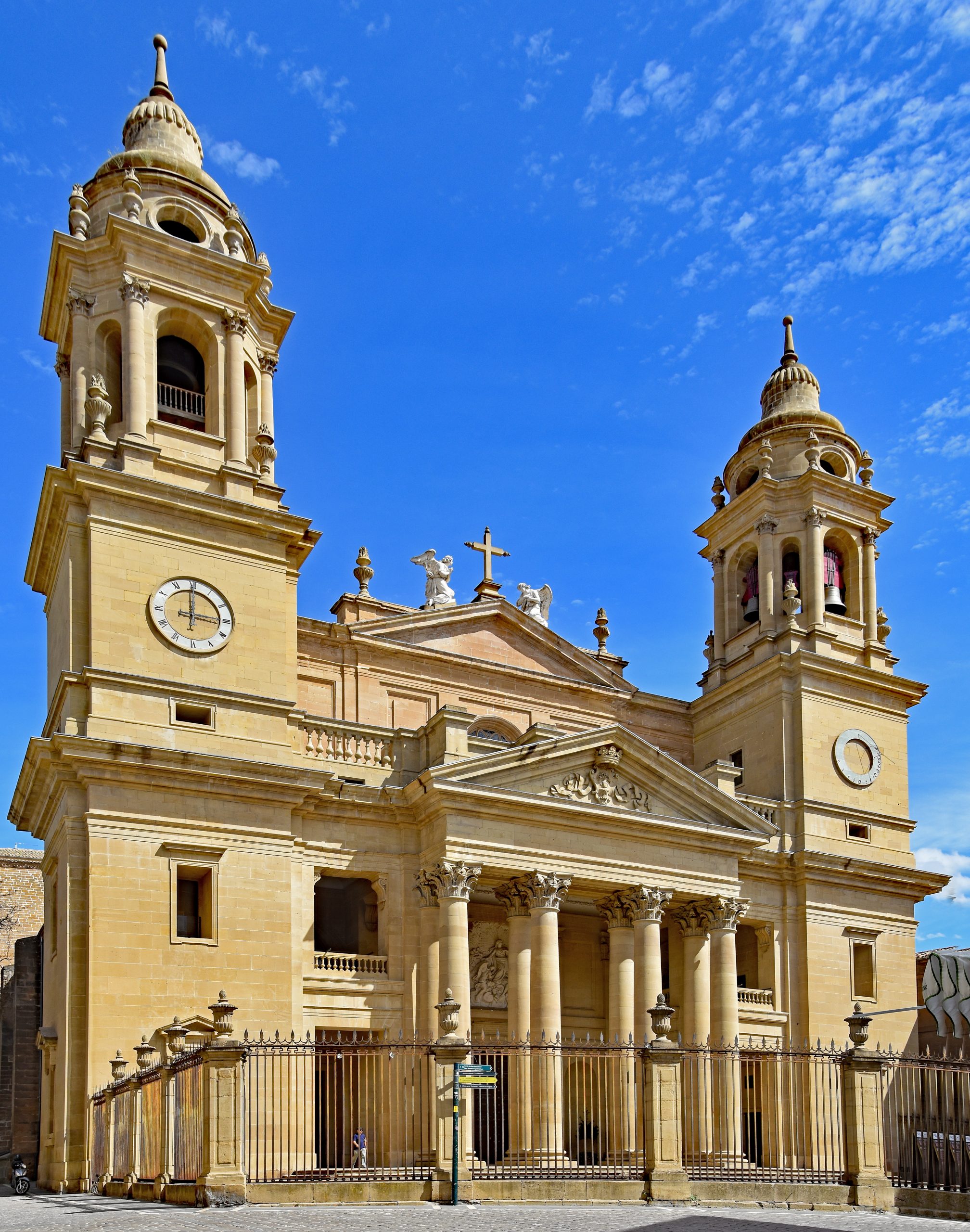
Behind the gate, I immerse myself into the Calle del Carmen. The cobblestones gleam in the sunlight, and the high residential buildings with their delicate, wrought-iron balconies reach up on the left and right. Pilgrims with scallop shells attached to their backpacks pass me silently. My path finally leads me to the majestic Pamplona Cathedral. Its monumental, neoclassical west facade with the two symmetrical bell towers looks like a temple from another time. The bright sandstone yellow of the columns radiates an incredible grandeur against the flawlessly blue sky, forming the perfect, dignified conclusion to my journey of discovery through this impregnable fortress full of life.