June 15th 2024
There are places where clocks do not just tick slower, but seemingly stand completely still. One such magical piece of earth is the Umbrian gem of Bevagna, which I visited on a radiant summer day. Nestled in a gentle valley plain, framed by silvery gleaming olive groves and dense vineyards, this small town enchants visitors with an urban fabric that proudly displays its ancient Roman roots and its magnificent medieval golden age.
The Stone Heart: At Piazza Silvestri
My walking tour began in the undisputed center of urban life, the monumental Piazza Silvestri. This square deliberately breaks with the classical Renaissance ideals of symmetry and axial alignments. Instead, an organically grown, almost intimate theatrical backdrop of raw natural stone unfolds before the visitor.
Standing right on the piazza, two architectural masterpieces of the Romanesque period face each other, radiating a rare architectural harmony. On one side towers the 13th-century Palazzo dei Consoli, its ground floor opened by Gothic pointed arches, while a wide flight of stairs leads majestically upward.
Gallery 1: The Monumental Backdrop of Piazza Silvestri
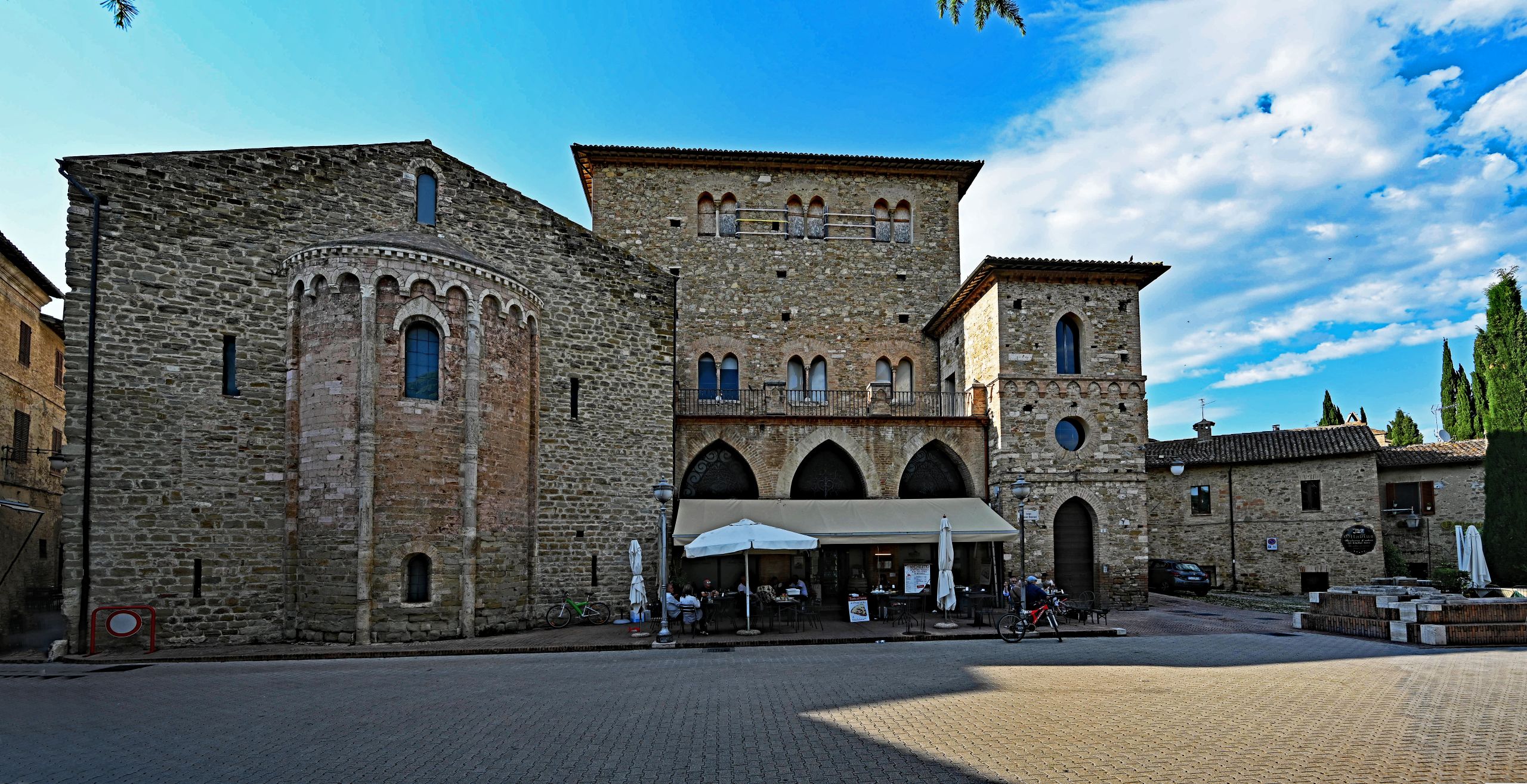
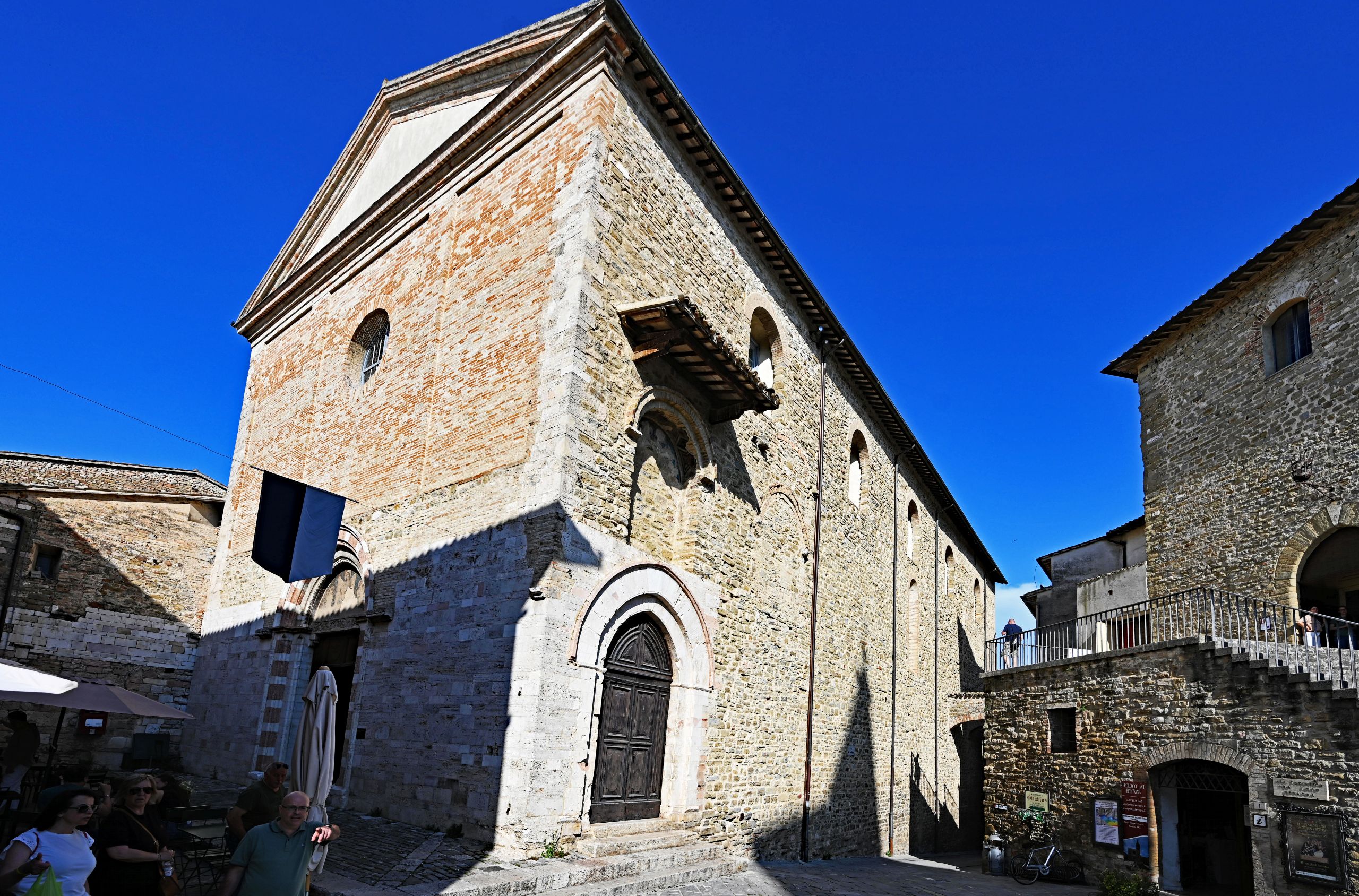
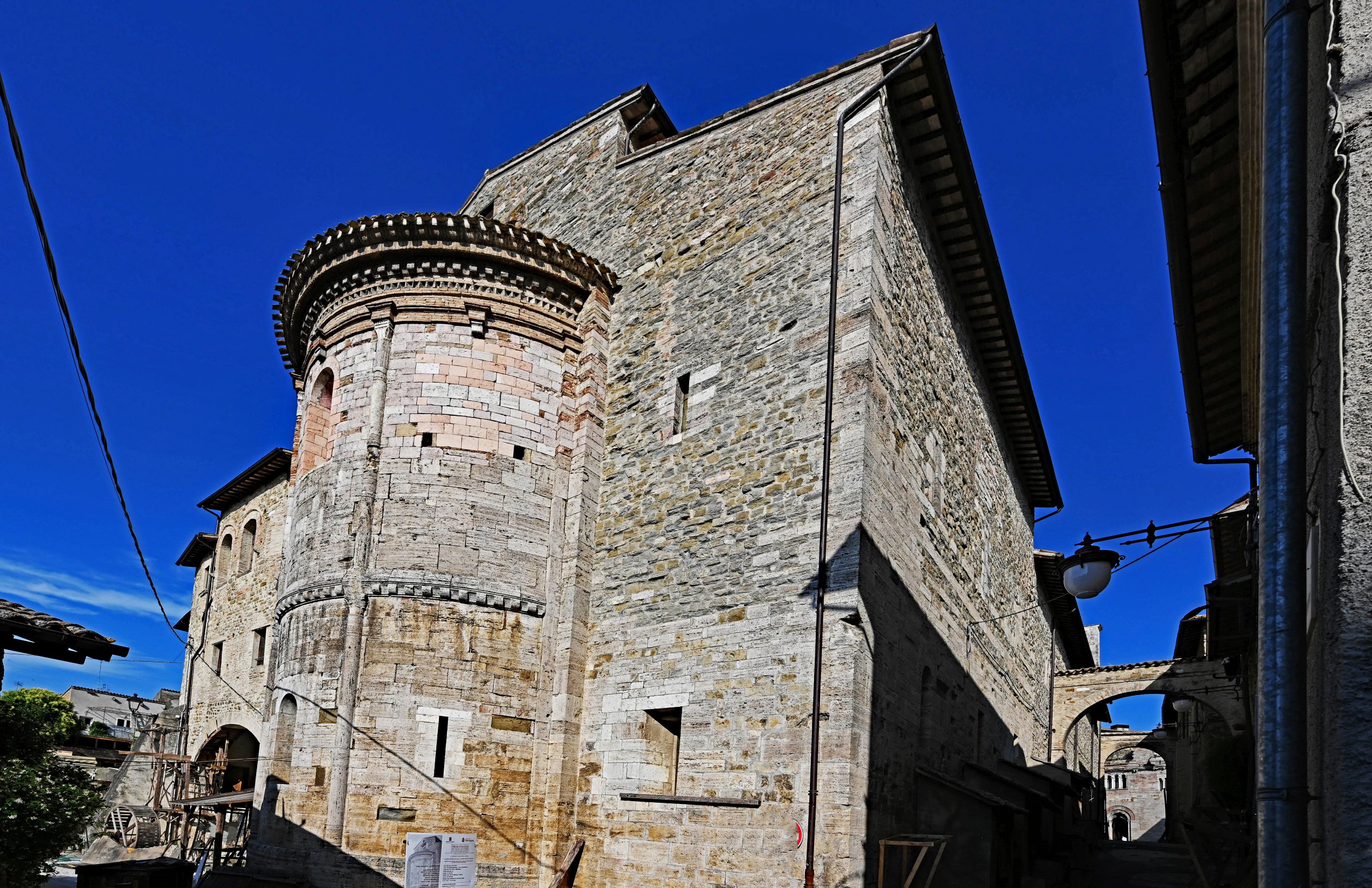
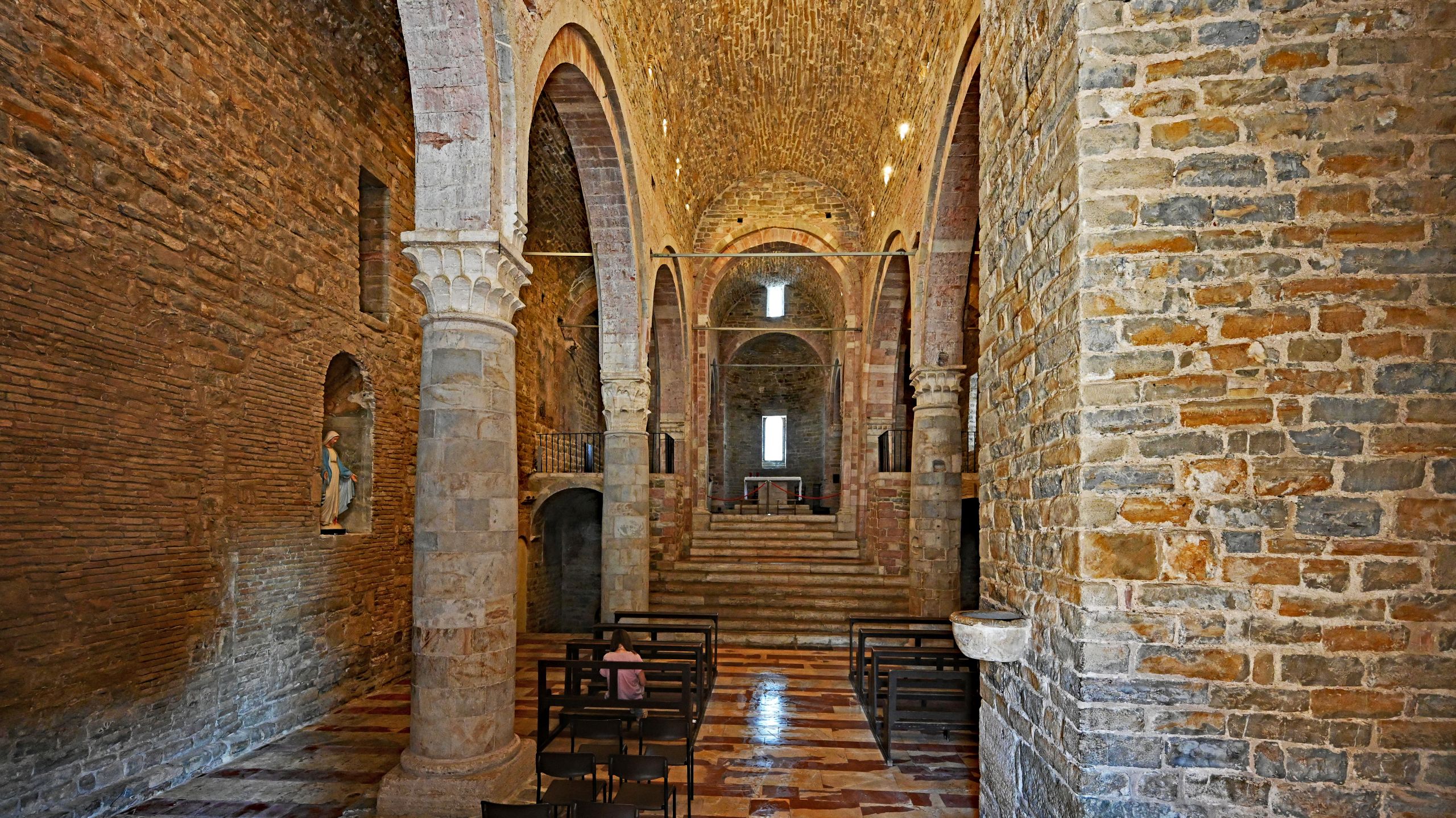
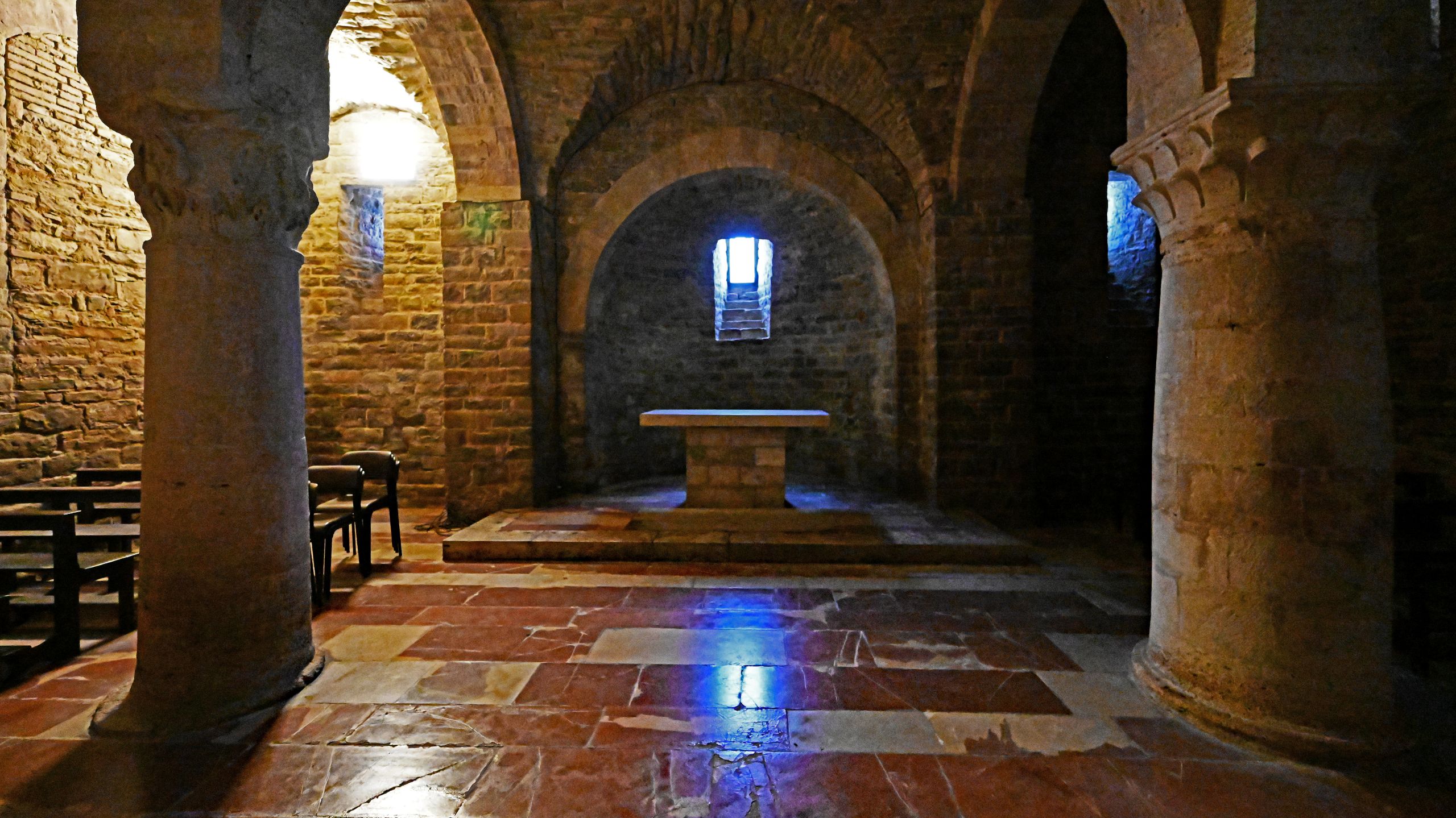
Right next to it, the church of San Silvestro nestles against the palace, built in 1195 by the famous master Binello. Its facade radiates a wonderful, almost ascetic Romanesque simplicity. Stepping through the main portal into the three-aisled interior, a solemn silence immediately envelops you. The gaze is inevitably drawn to the sharply elevated presbytery, reached by a wide stone staircase. Yet the real secret hides underground: descending the steps into the crypt, you find yourself in a mystical, dim space. Here, the heavy cross vault rests on short, sturdy columns whose ancient capitals shimmer in the faint daylight.
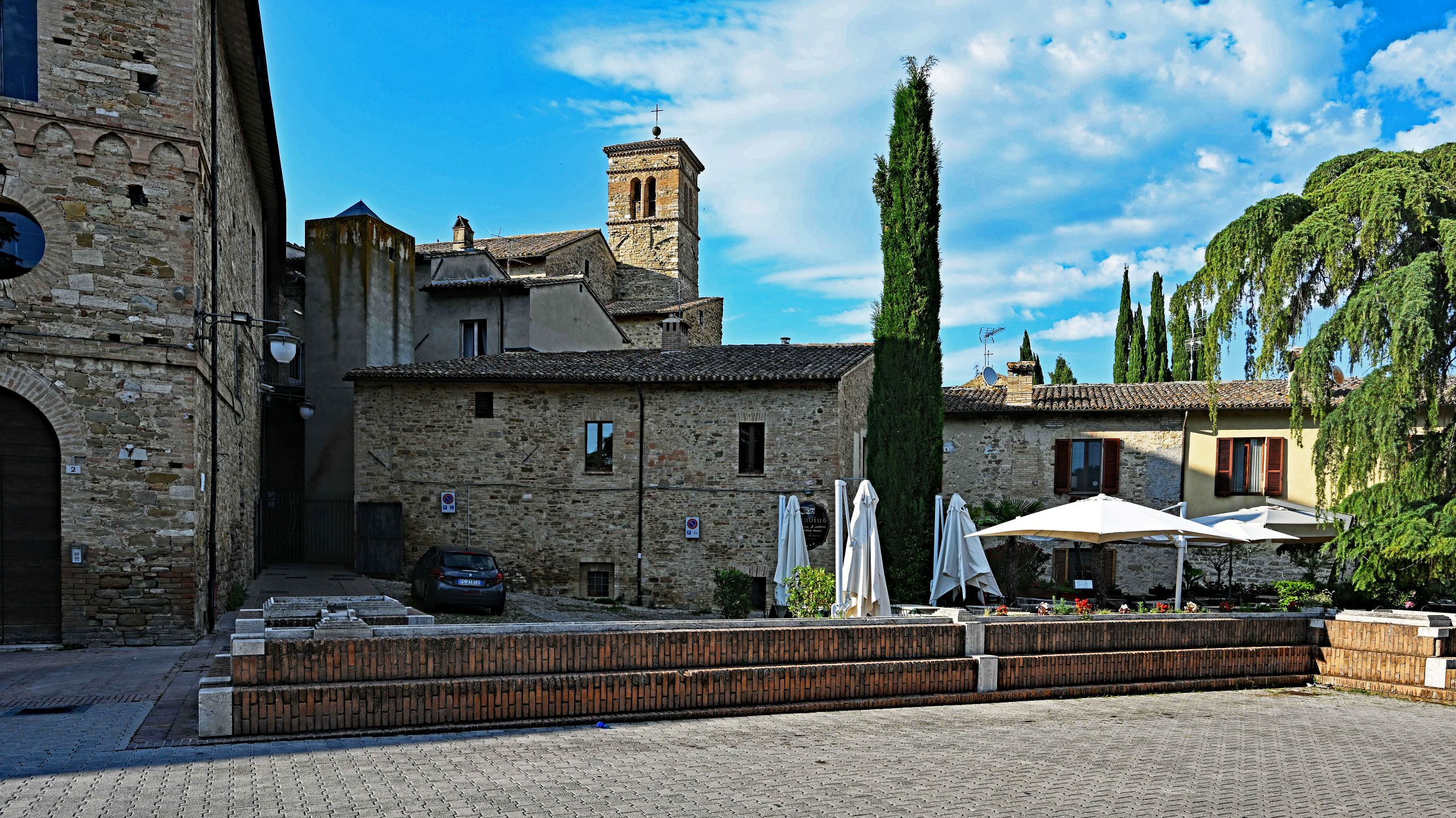
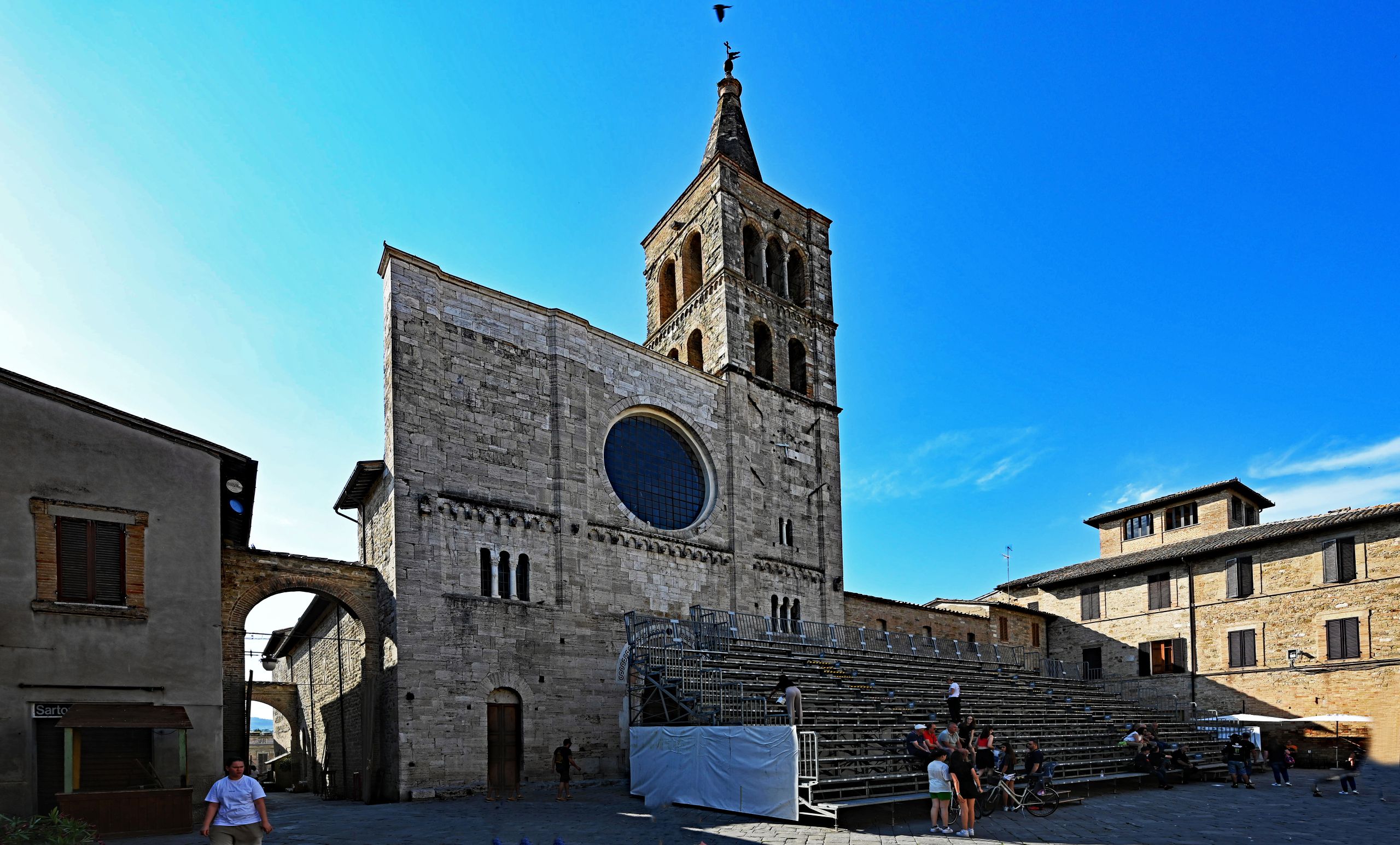
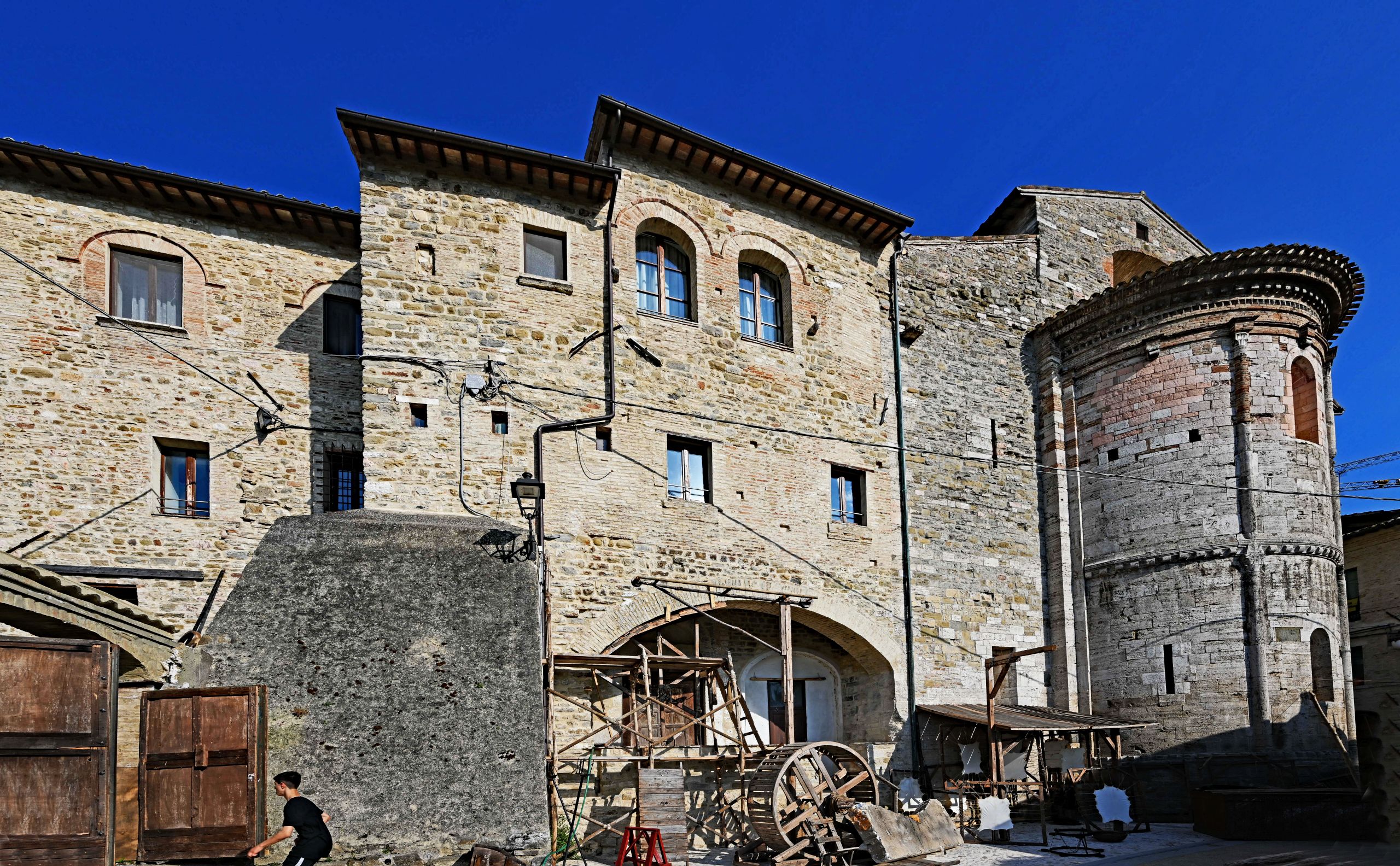
Opposite the church of San Silvestro rises the mighty collegiate church of San Michele Arcangelo. Its facade is dominated by a large, delicate rose window and a far-visible, multi-story bell tower with a pyramidal spire. During my visit, the square hummed with bustling anticipation: large wooden structures, including a monumental treadwheel, and spectator stands were being set up. These were the preparations for the famous cultural festival Mercato delle Gaite, which brings the old handicraft traditions of the Middle Ages to life every year.
Gallery 2: The glory Church of San Silvestro
Through the Alleys to Conventual Peace
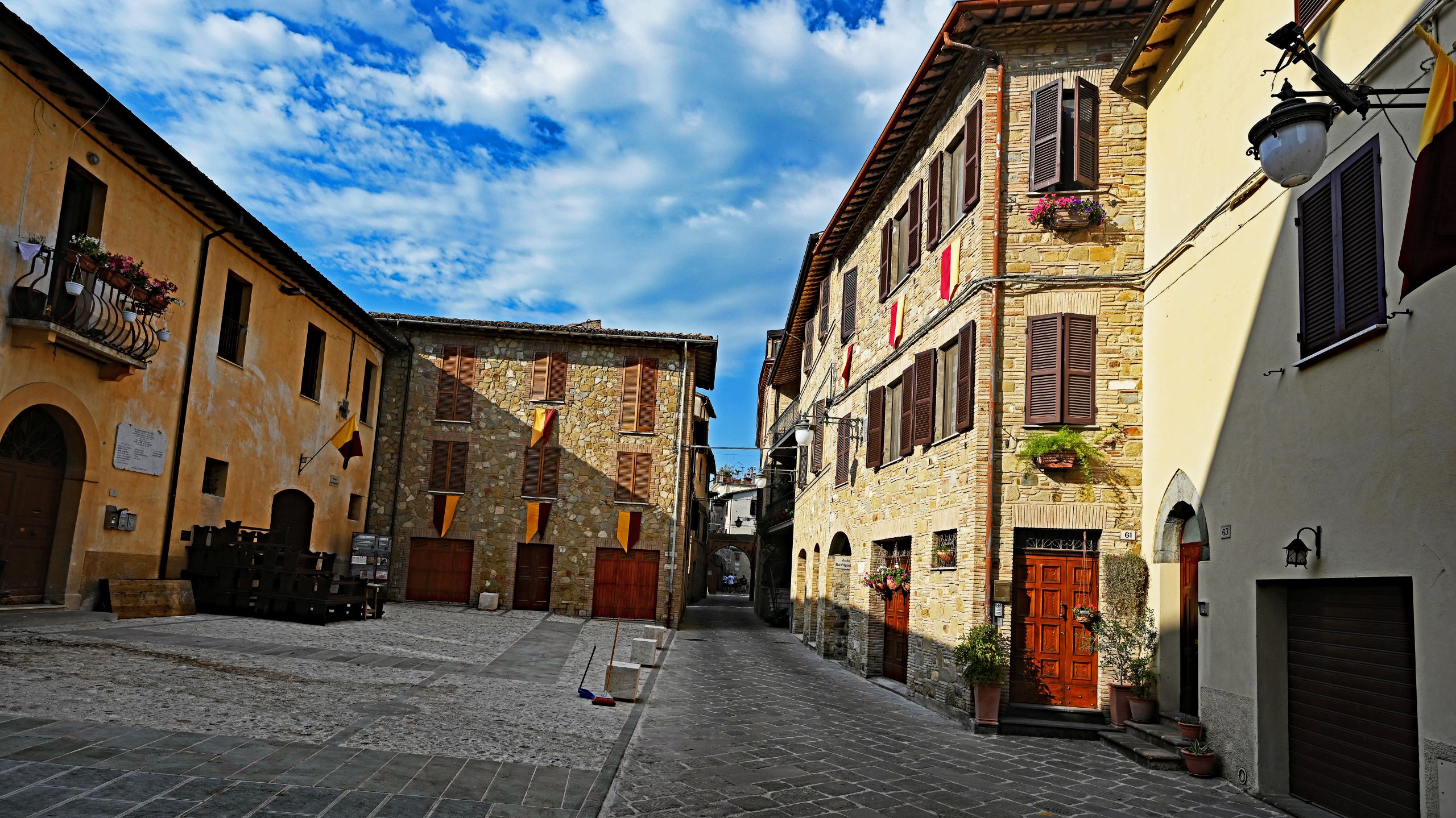
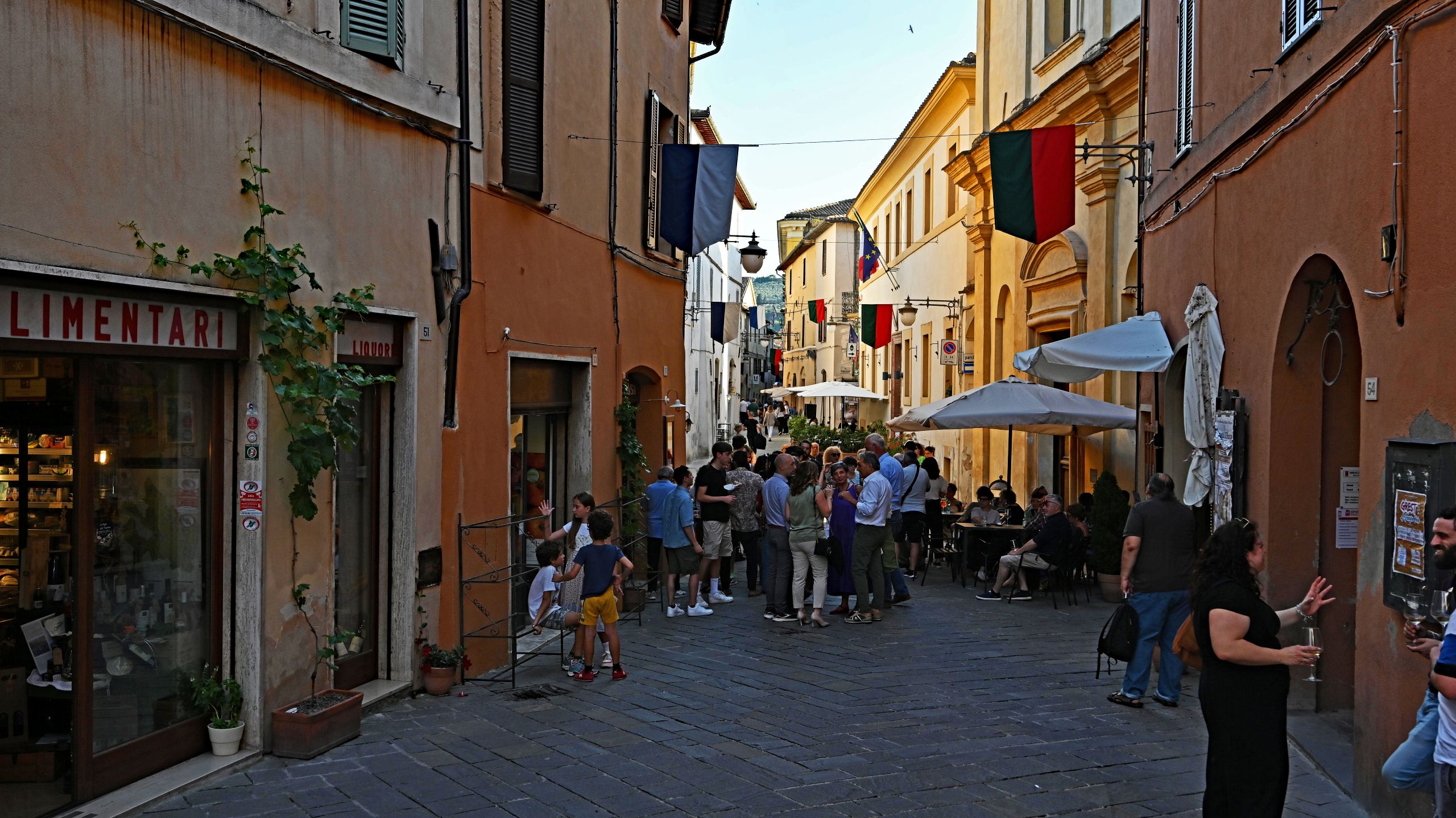
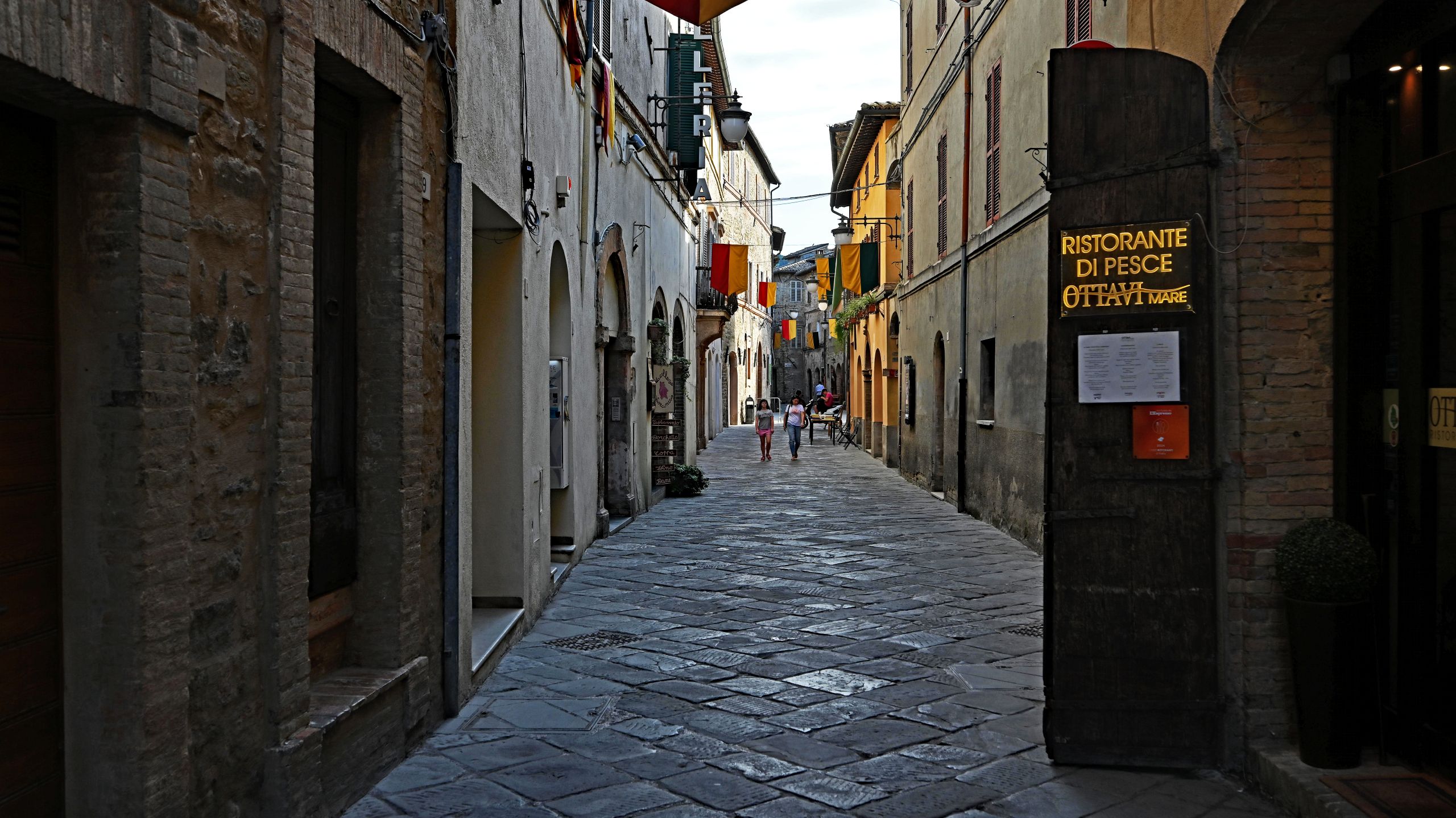
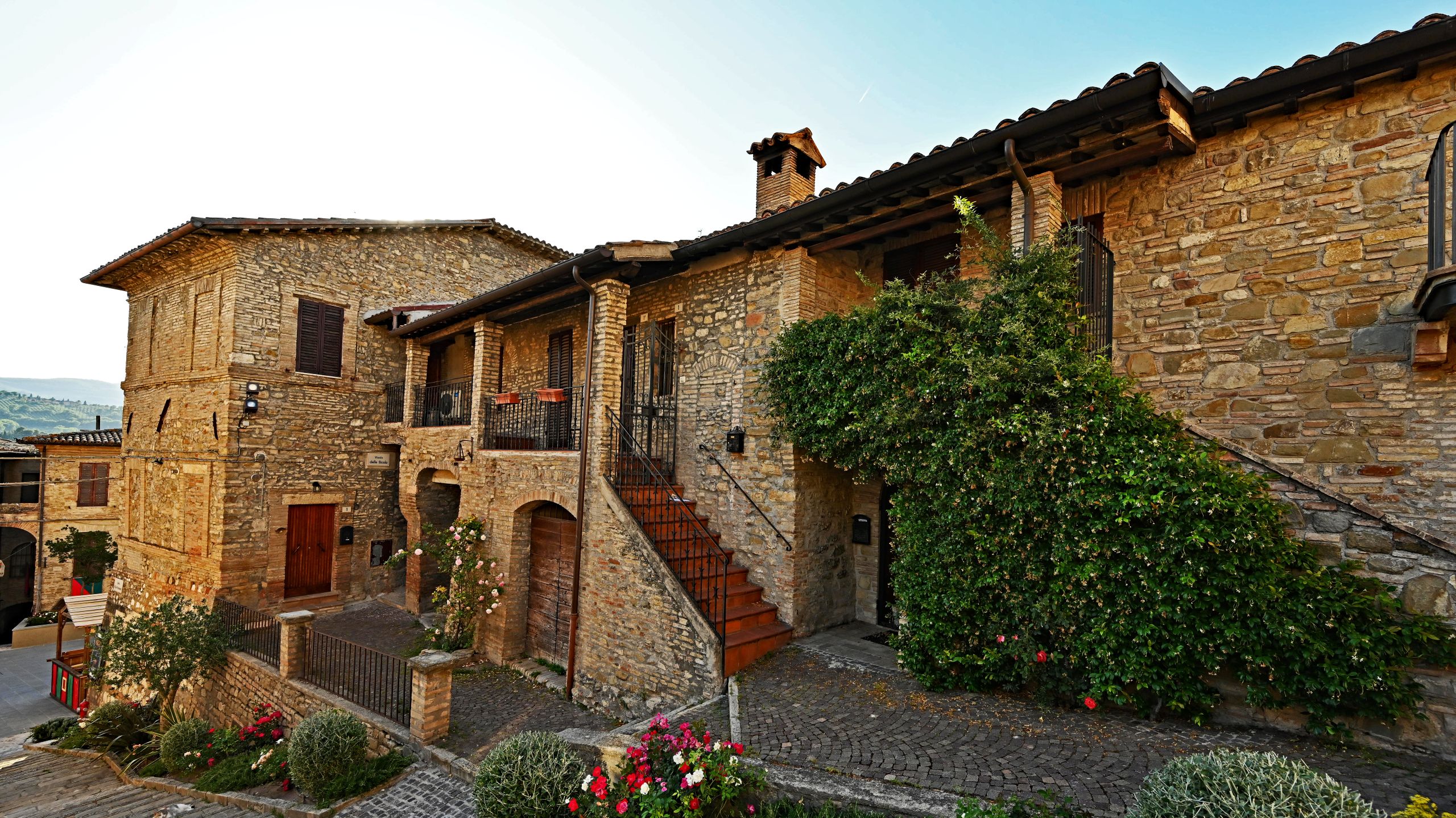
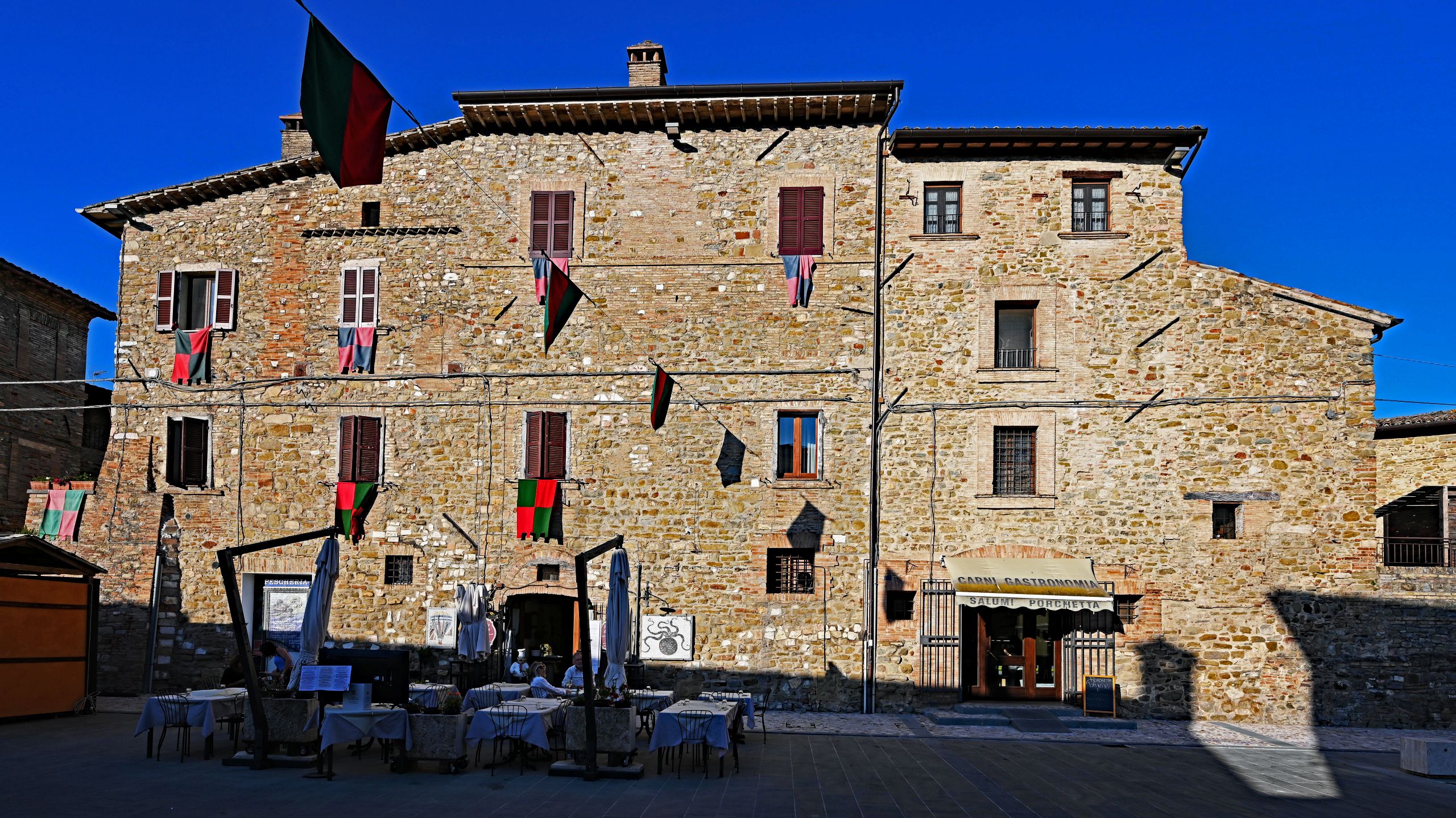
I left the wide square and let myself drift. The paved streets are lined with warm, ocher-colored facades and houses with rustic natural stone masonry. Everywhere above people’s heads hung the colorful, red-green and blue-green banners of the different town quarters (Gaite), waving gently in the summer breeze. On the corners, locals and travelers mingled, laughing, drinking wine outdoors, and exuding that infectious Italian joy of life that makes this stay so unforgettable. At a street corner, the wide-open wooden door of Ristorante Ottavi Mare caught my eye, while just a few meters away a traditional norcineria exuded the aroma of Umbrian ham.
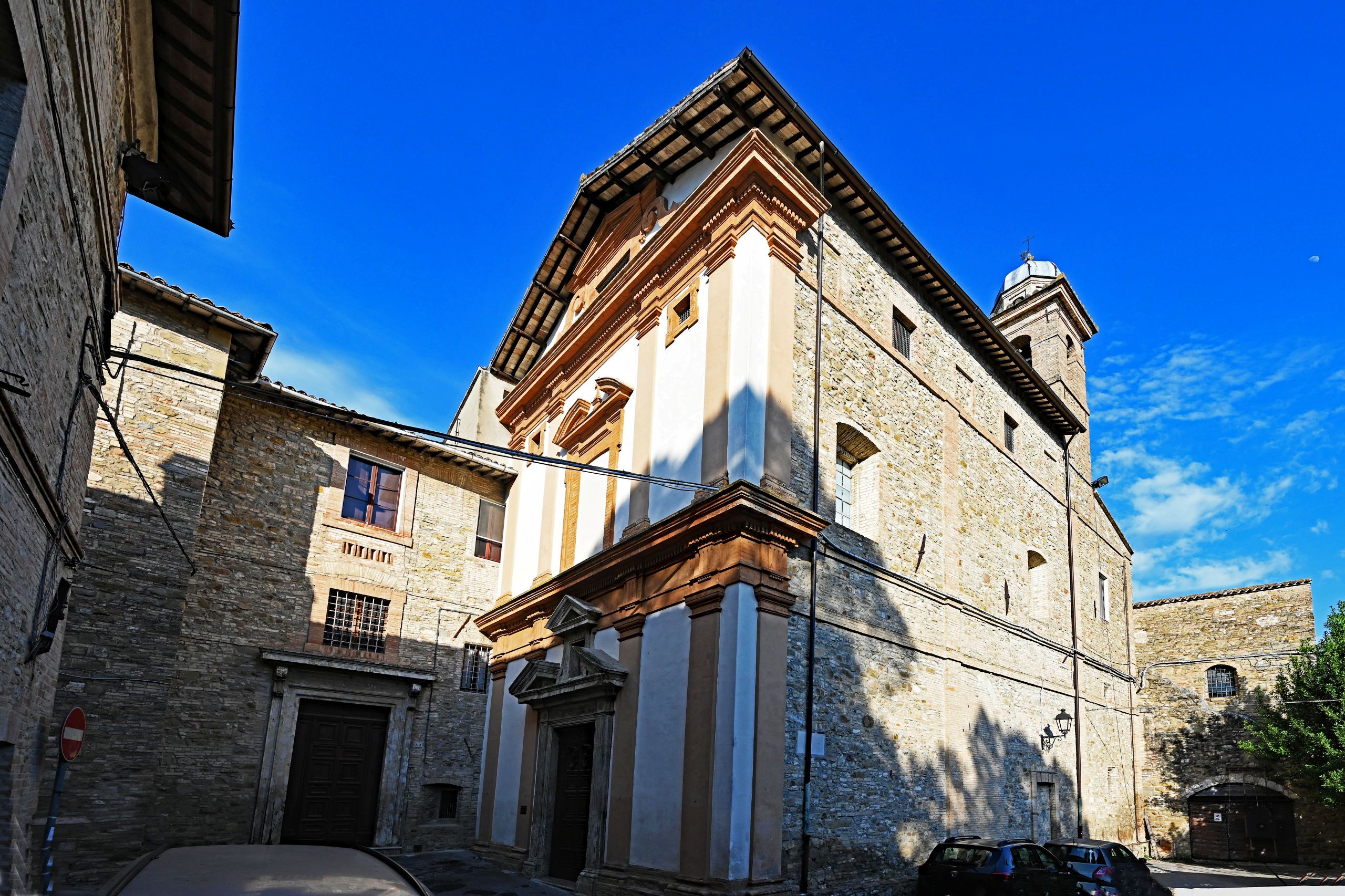
My path led me further to the church and monastery of Santa Margherita. In contrast to the austere medieval monuments, this complex surprises with fine Baroque stylistic elements. The bright, white pilasters and ocher decorations of the church facade stand out impressively against the rough stone of the adjacent monastery.
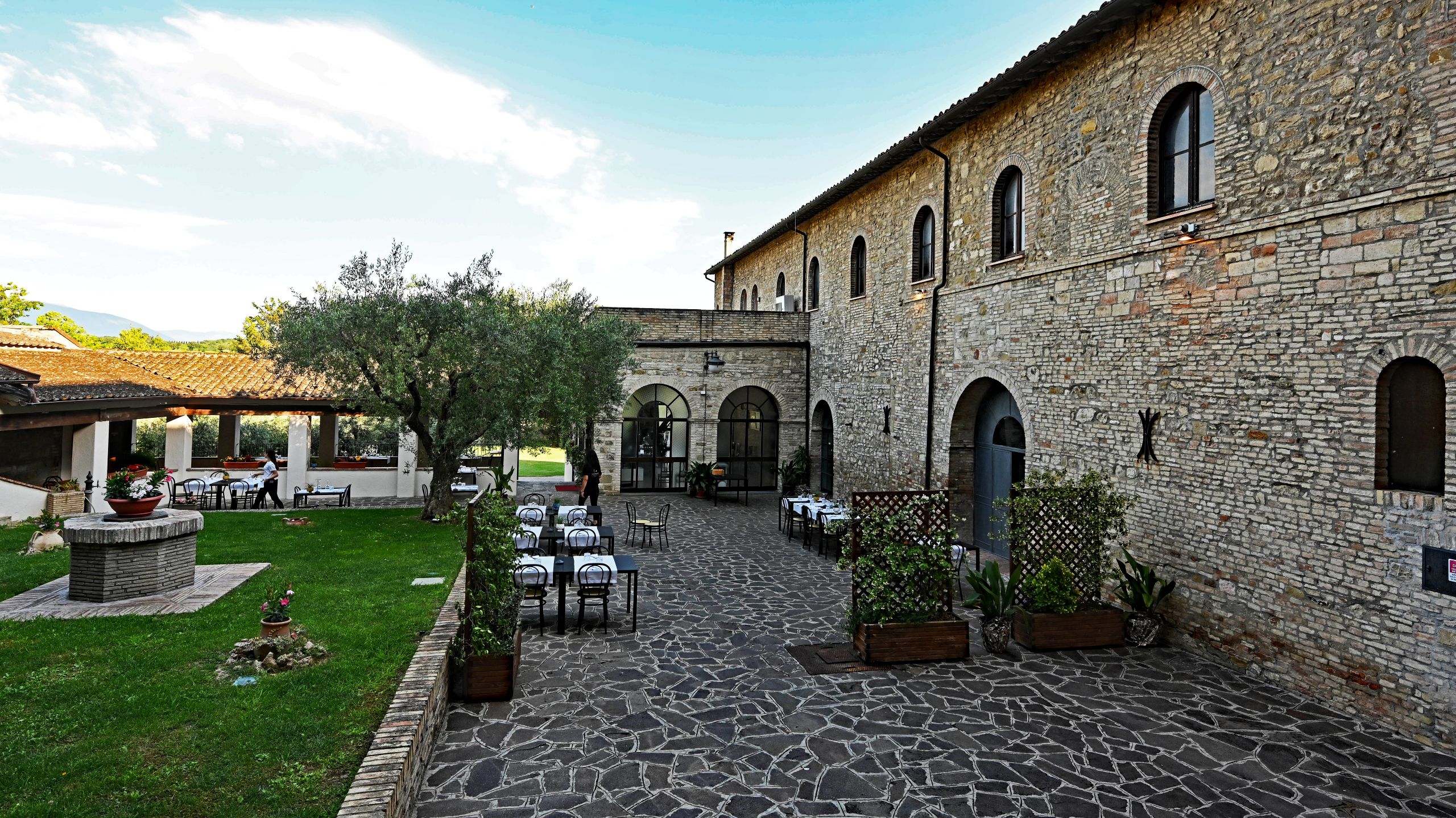
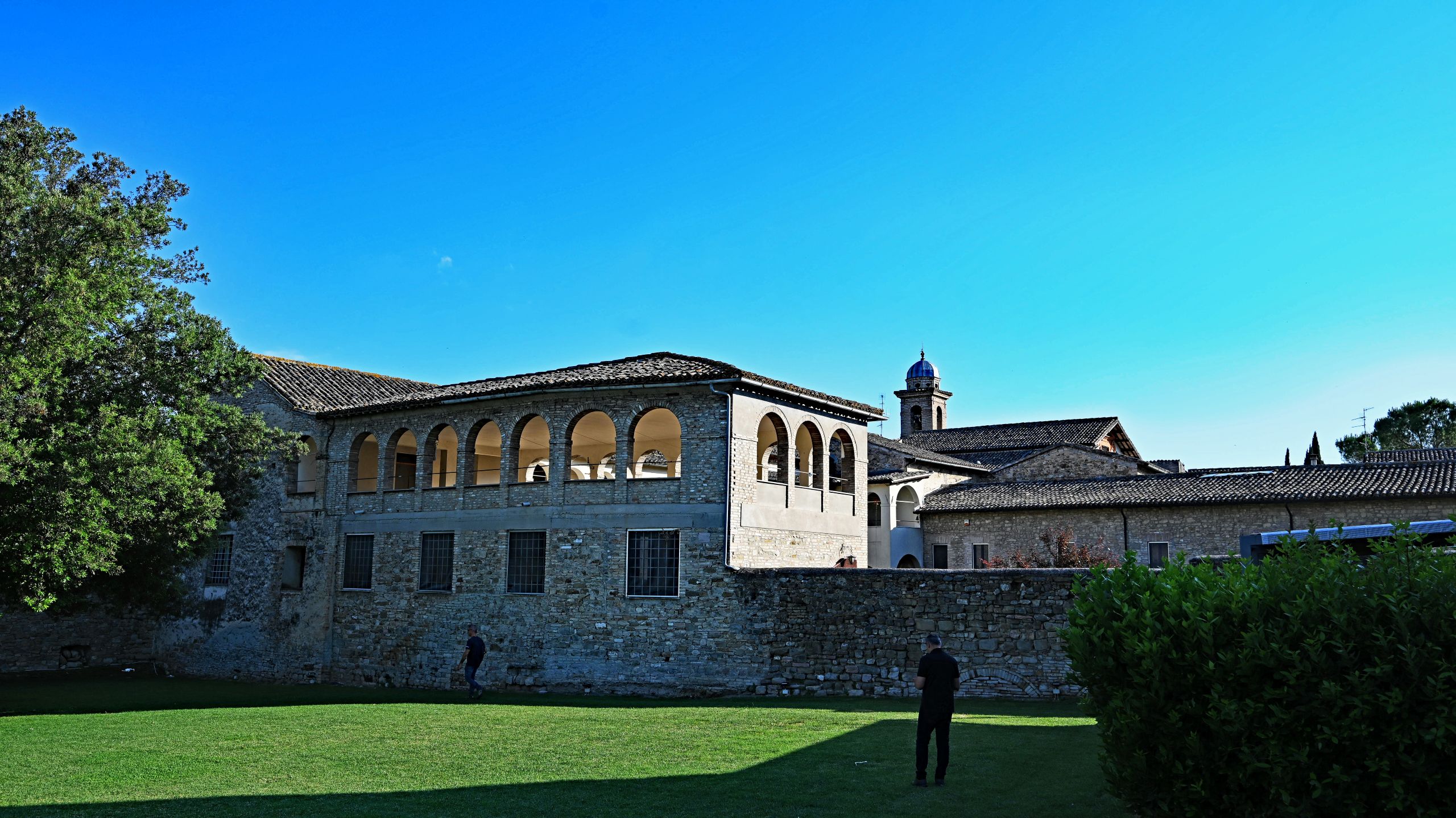
A true jewel of tranquility revealed itself to me in the expansive courtyard of the former monastery, today known as Al Monastero. Surrounded by a two-story natural stone building with elegant round-arch windows, an idyllic garden stretches out here. Between manicured lawns, shady olive trees, and an old stone well, tables were beautifully set – an oasis of peace. Viewed from the back, the monastery displays a magnificent loggia with open round-arch arcades, above which the striking, bluish dome of the bell tower rises into the azure sky.
Gallery 3: Conventual Silence and Baroque Elegance
Stone Witnesses of Fortification: The Church of San Francesco and the Town Gates
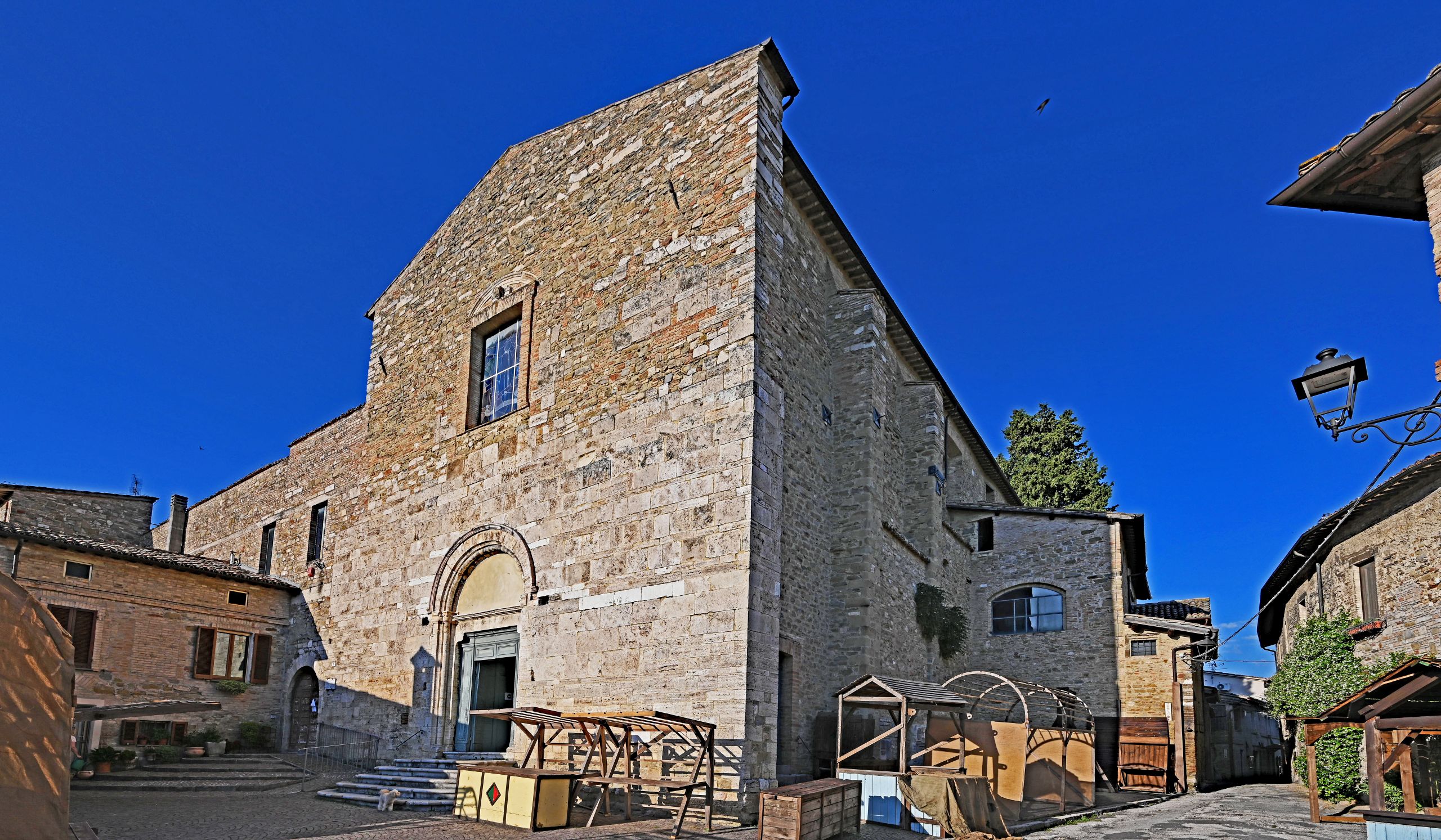
At the outer edge of the old town, I came across the church of San Francesco, which thrones on a small elevation above the remains of the old town walls. Its soaring, almost fortified-looking gabled facade made of light natural stone features a fine round-arch portal and a simple, rectangular window above it that catches the afternoon sky light. Here too, on the piazza outside, wooden market stalls heralded the approaching festival.
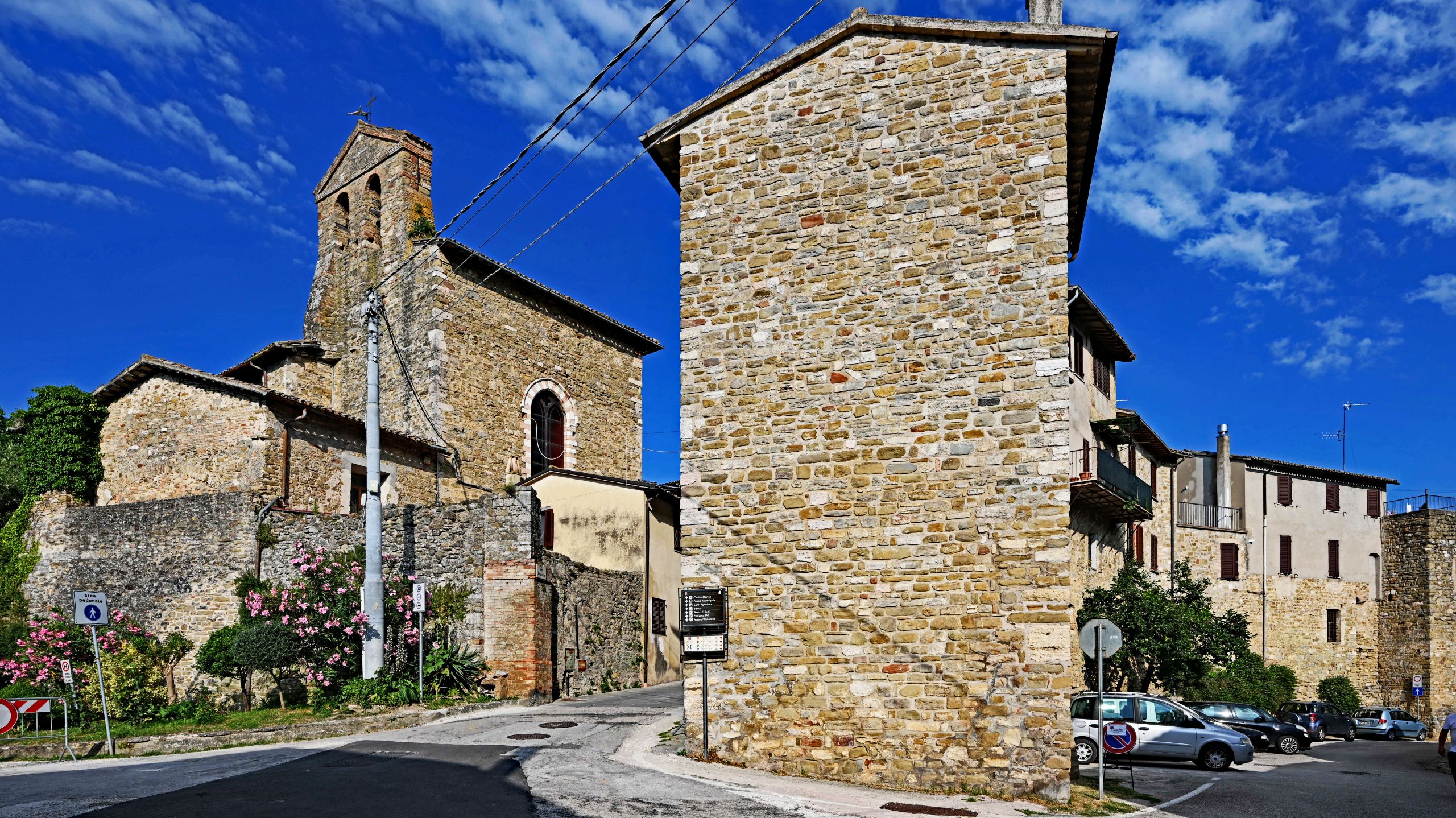
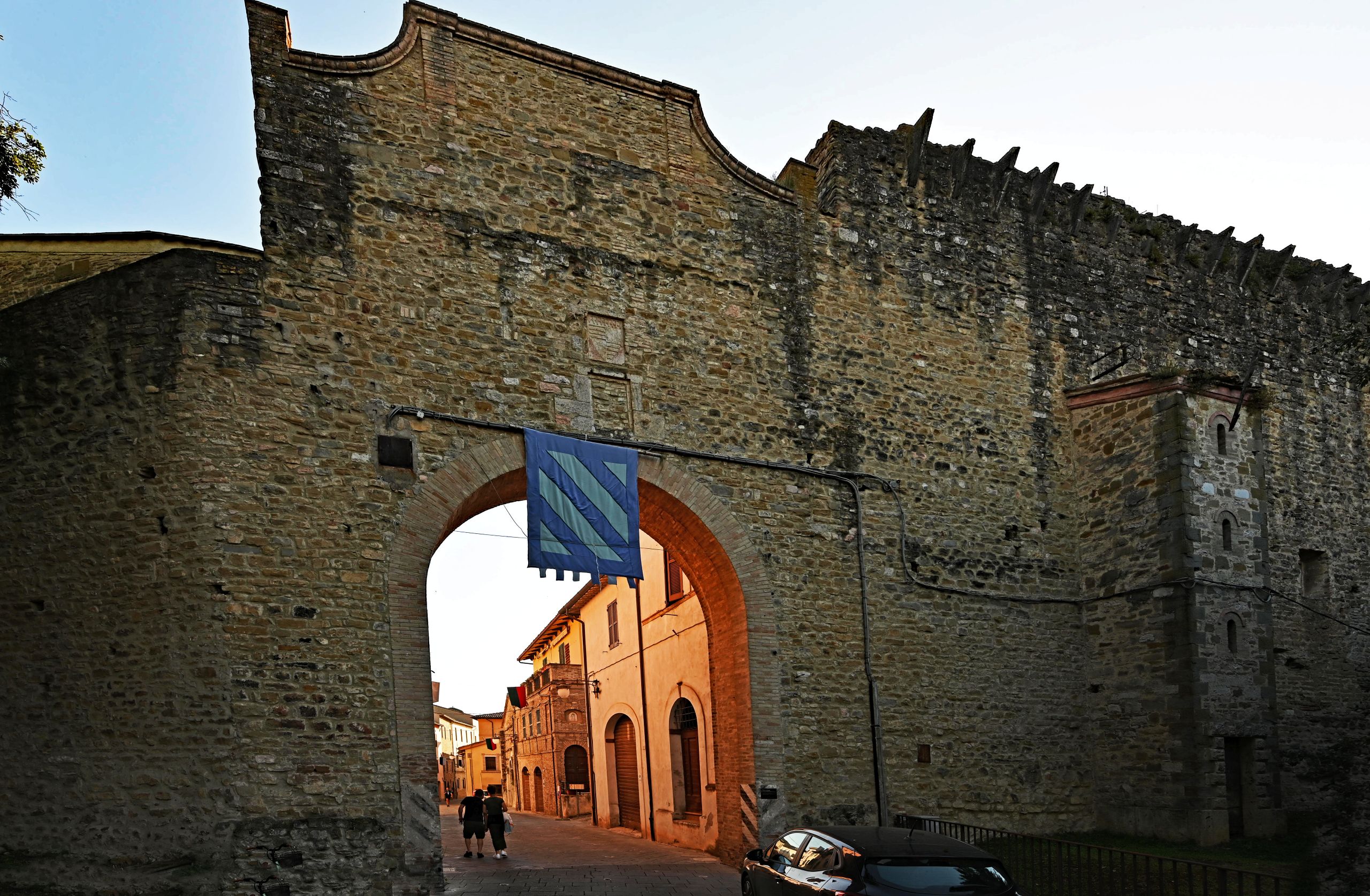
To conclude my walking tour, I wandered along the mighty fortifications that encircle the town like a protective belt. Two of the historic town gates stuck particularly in my mind. The monumental Porta San Francesco captivates with its massive round arch, which transitions seamlessly into the crenellated town wall. A blue-green striped flag was proudly displayed above the portal, through which the alleys inside shone invitingly.
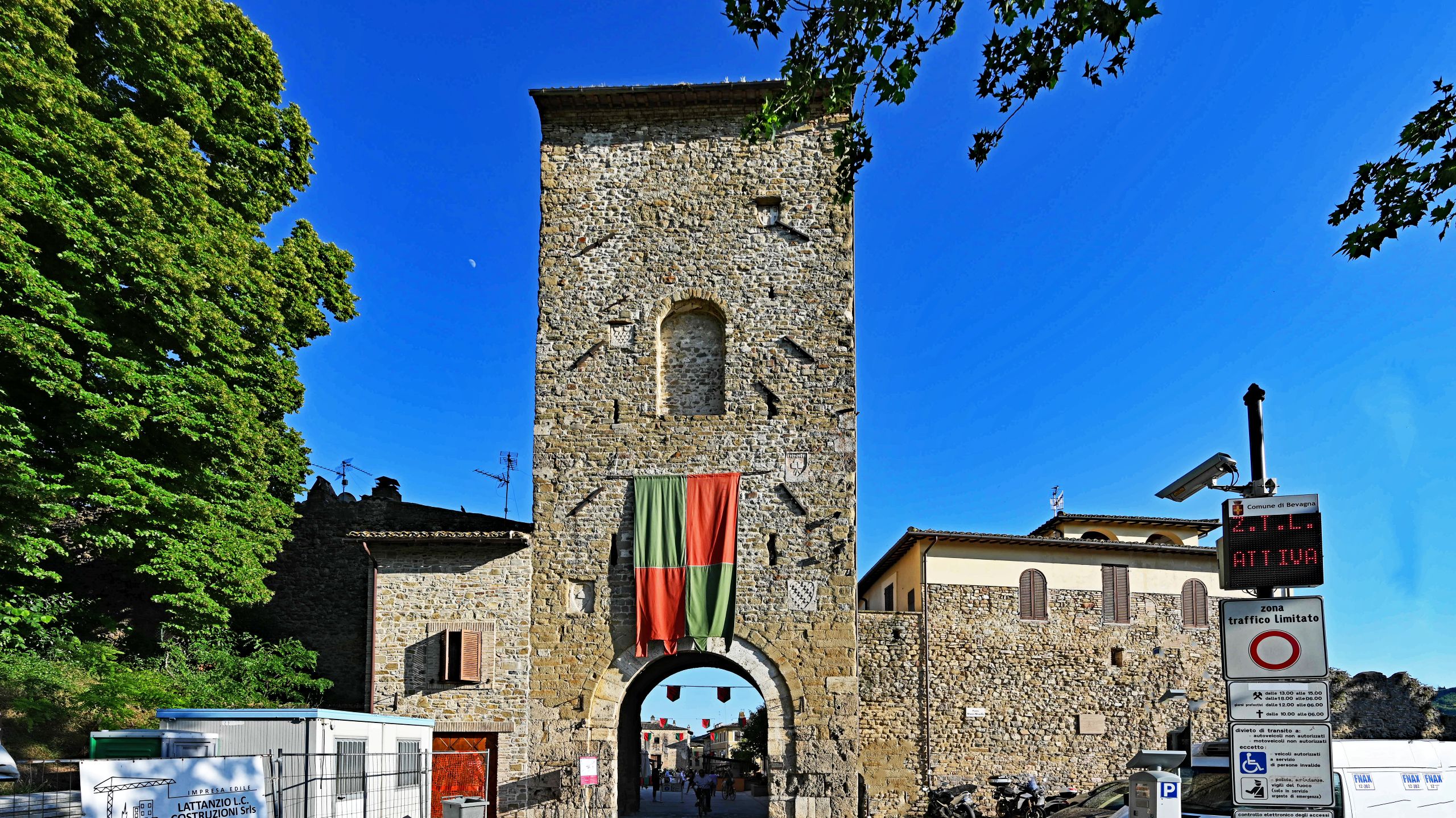
At the other end of the town, the Porta Cannara has defended the entrance for centuries. Its bulky, square watchtower made of rough natural stone looks unconquerable. A huge, red-green checkered festival banner adorned its flank, forming a wonderful contrast to the deep green trees and the modern ZTL traffic sign next to it – a charming interplay of centuries-old history and contemporary Italian life.
Gallery 4: Walls, Alleys, and Fortifications