
Discovering History, Gables, and Hidden Gems
September 18, 2026 – A late summer sky dotted with fluffy white clouds accompanied my son Simon and me as we set off today on our tour of discovery through the historic heart of Wrocław. Within the very first few meters along the time-honored Świdnicka Street, it became clear to us that this city is built like a living history book, where different eras and architectural styles blend seamlessly into one another.
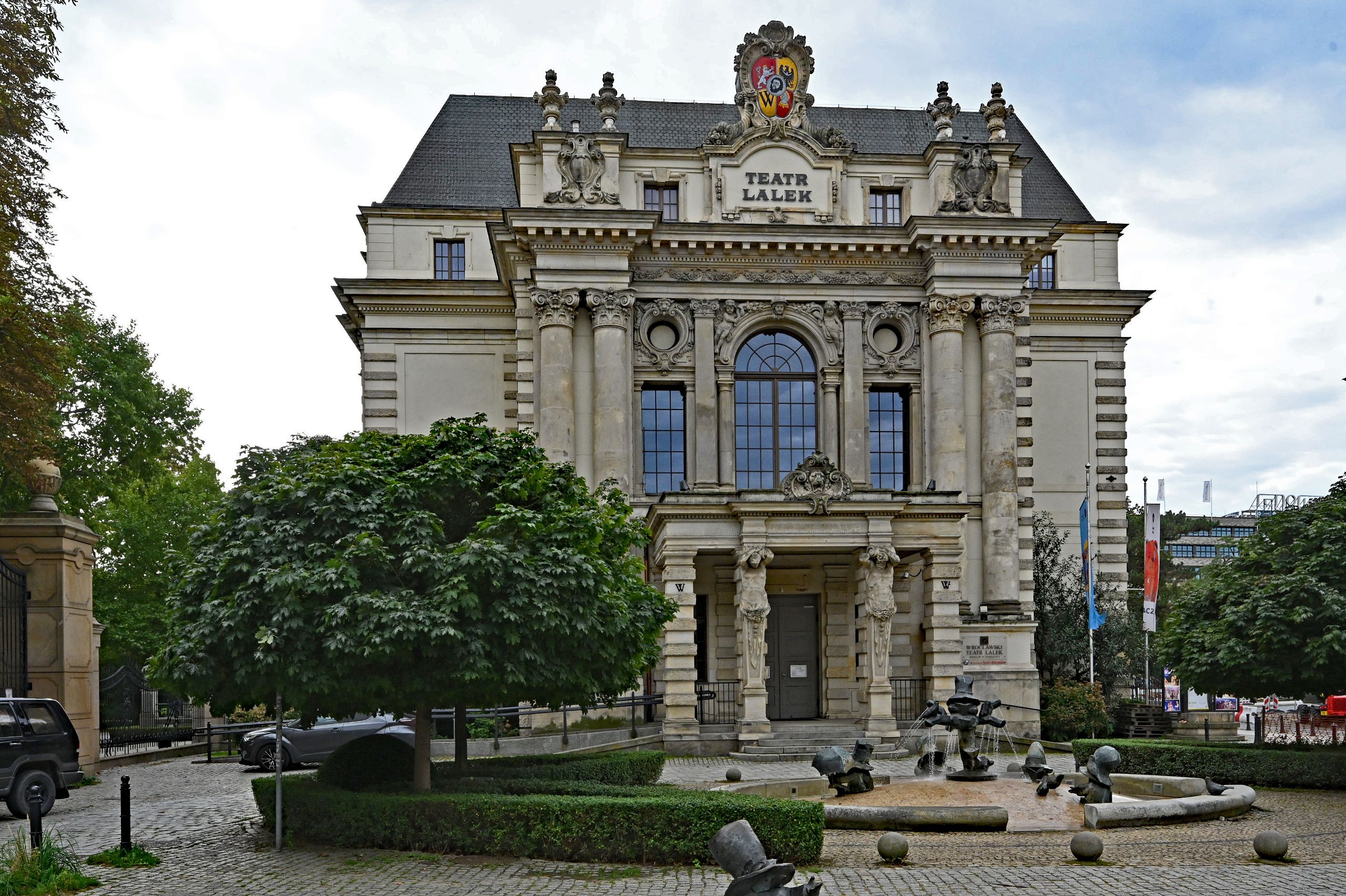
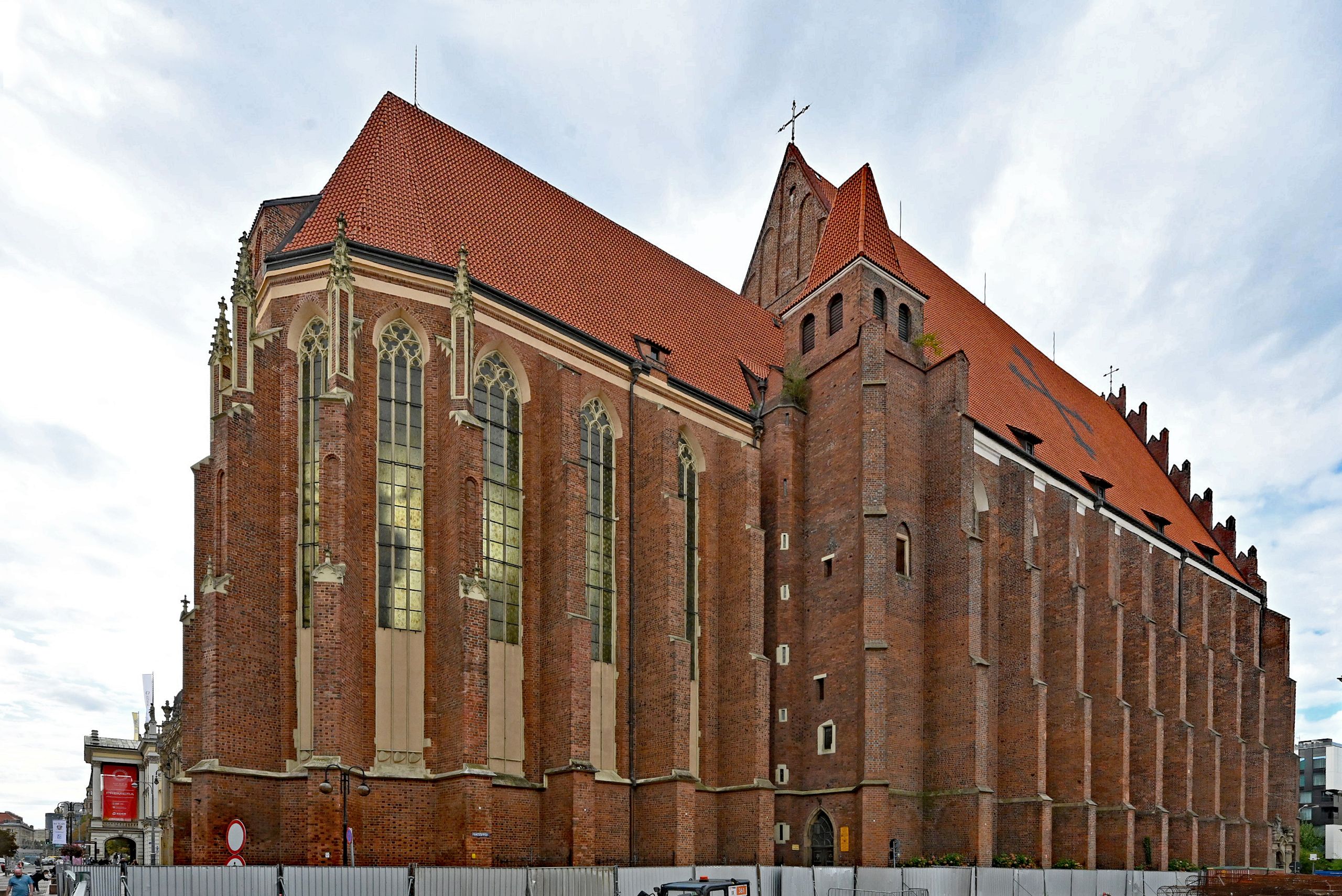
Our walk began at the tranquil Plac Teatralny in front of the Neo-Baroque facade of the Wrocław Puppet Theater (Wrocławski Teatr Lalek). While admiring its ornate gable decorations, we spotted the first of the city’s famous little bronze inhabitants playing in the basin of the Dwarf Fountain (Fontanna Krasnali) right in front of the entrance. Just a few steps further, the Neoclassical splendor of the Wrocław Opera (Opera Wrocławska) rose before us, its yellow-and-white pillared facade and Roman inscription from 1872 recalling the glamorous reconstruction of the historic opera house. Right next door, two completely different architectural worlds collided: the monumental Brick Gothic Church of St. Dorothy, St. Wenceslaus, and St. Stanislaus (Dorotheenkirche), built in the 14th century with its steep tiled roof and massive buttresses, formed a fascinating contrast to the neighboring Neo-Baroque Hotel Monopol from 1892 with its modern glass rooftop structure.
Gallery 1: Along Świdnicka Street – From Dwarf Fountains to Brick Gothic


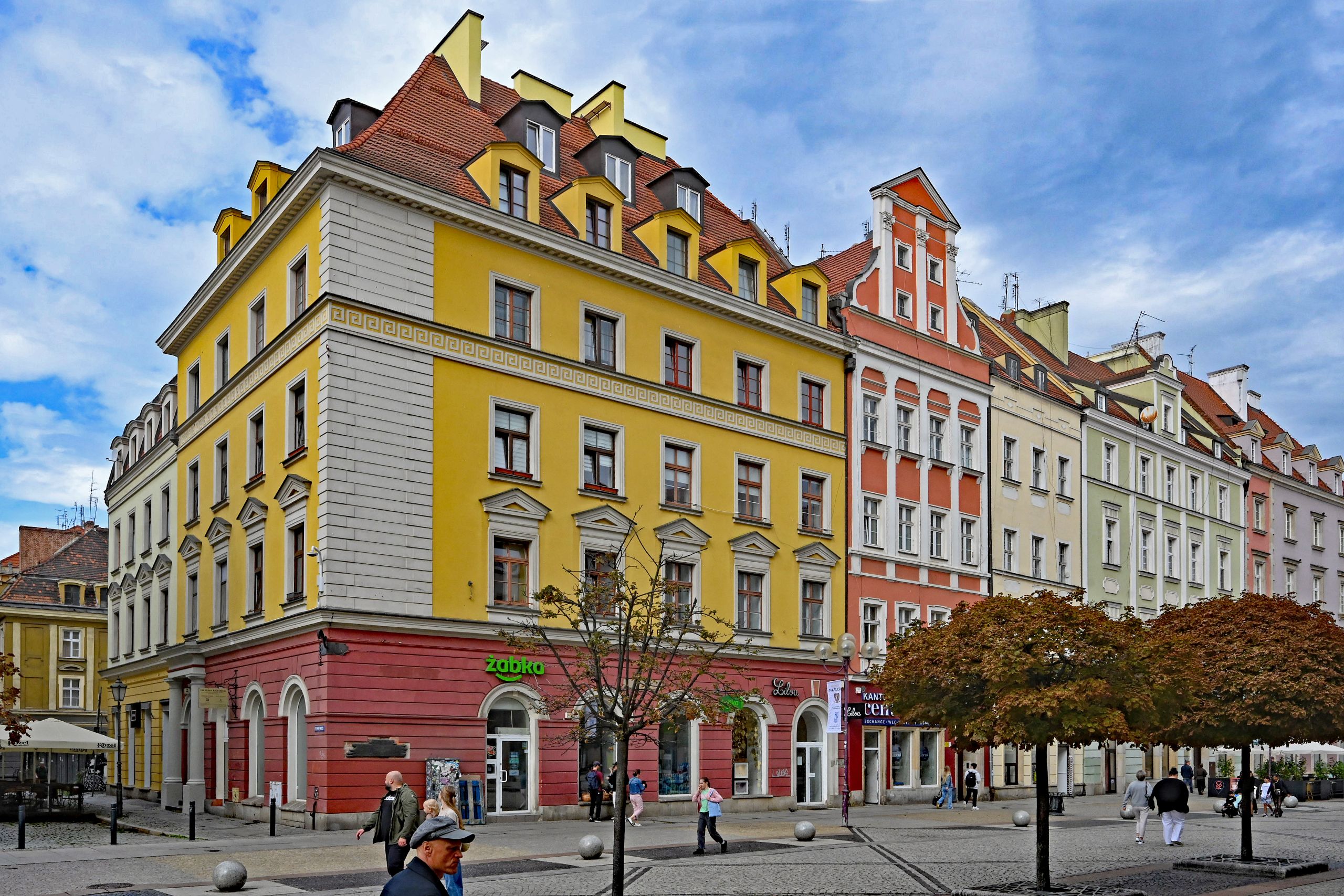
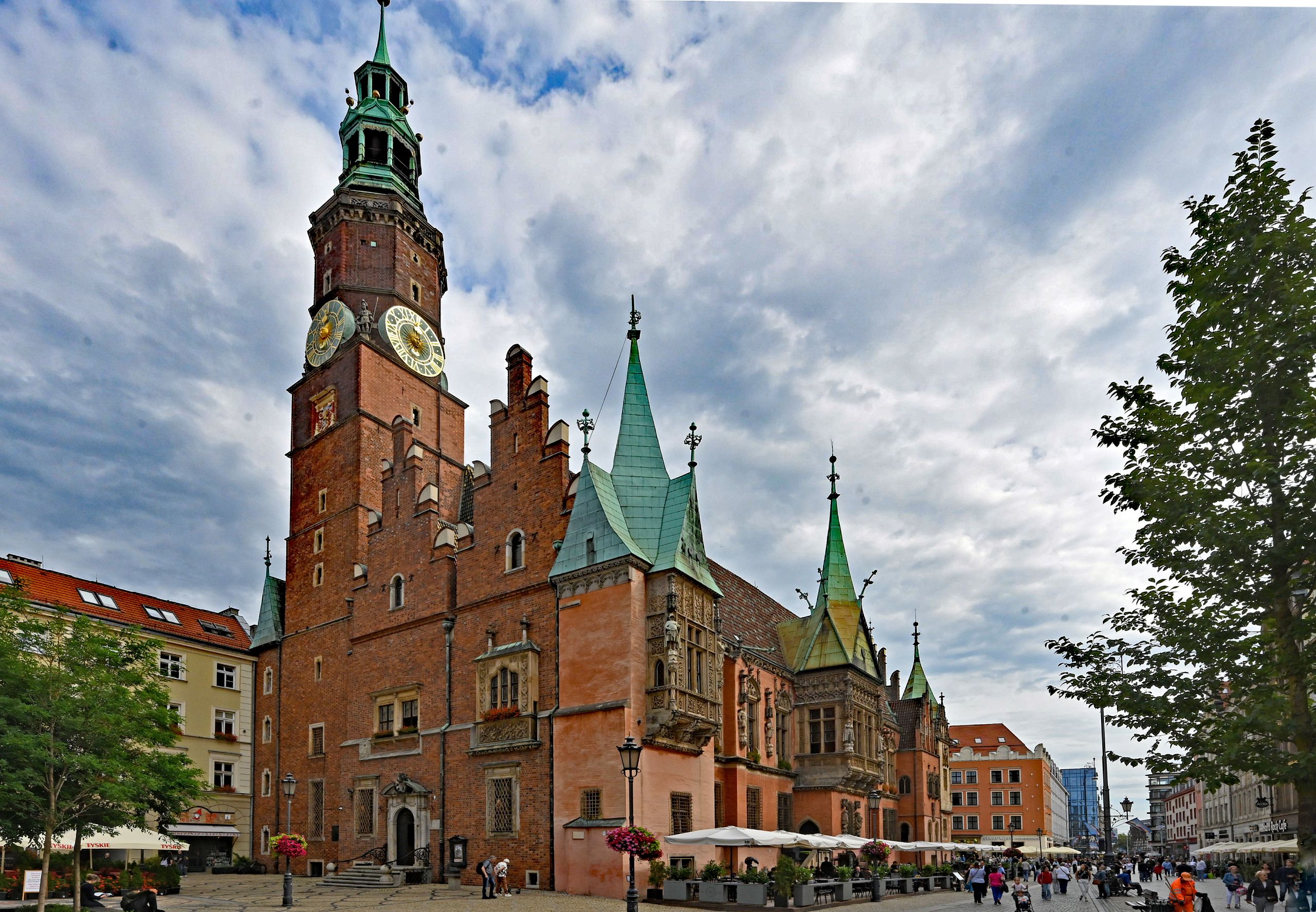
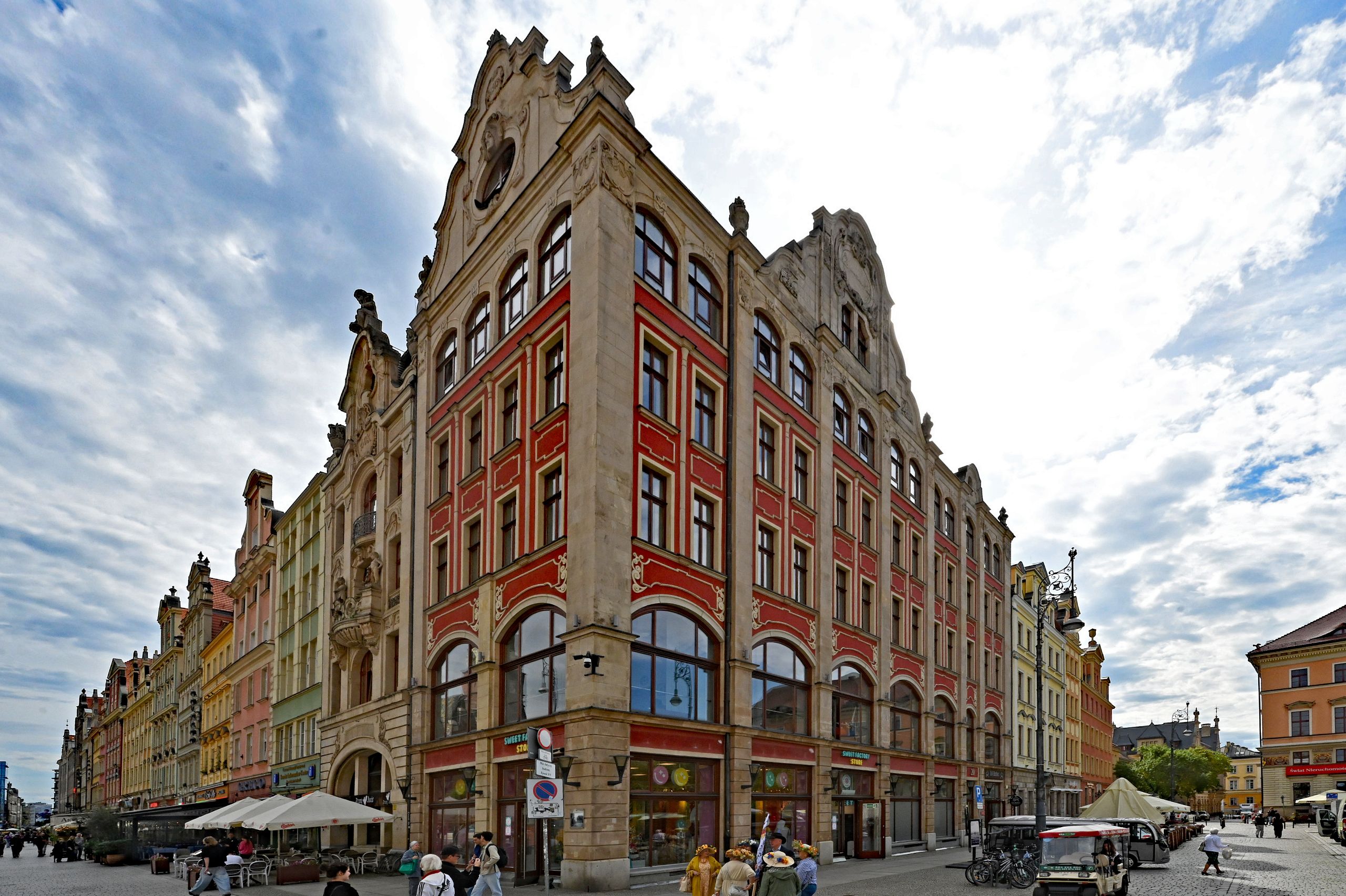
Passing colorful historic townhouses with their narrow gables and dormer windows, the vibrant heart of the Old Town finally opened up before us: the Main Market Square (Rynek). In its center stands the Old Town Hall (Stary Ratusz), a masterpiece of Silesian Gothic and Renaissance architecture. We took plenty of time to marvel at both the richly decorated eastern gable with its historic Astronomical Clock from 1580 and the 66-meter-high Town Hall tower and southern facade with its intricate stone oriels and glazed tiled roofs. Around the square, magnificent patrician and burgher houses lined up like pearls on a string – including the yellow-and-orange House “Under the Old Gallows” (Rynek 19), the Baroque house at Rynek 18, and the striking red corner building at Plac Solny 20 from 1904, which marks the transition to the neighboring Salt Square.
Gallery 2: The Heart of the Old Town – The Old Town Hall and the Main Market Square (Rynek)


Before exploring Salt Square in detail, we took a short detour to two particularly impressive landmarks on the edge of the Old Town. Along Kazimierza Wielkiego Street, the Neoclassical courtyard facade of the Wrocław Royal Palace (Pałac Królewski) gleamed in the sunlight; expanded from 1750 under Frederick II into a Prussian royal residence, it now houses the Historical Museum. Just around the corner, the former Wrocław University Library (Gmach Biblioteki Uniwersyteckiej) left us in awe: built between 1887 and 1891, this Neo-Gothic brick building with its tall clock tower and patinated green copper roofs truly lives up to its affectionate nickname, “Wrocław’s Hogwarts.”
Back at Salt Square (Plac Solny), we immersed ourselves once again in the Baroque and bourgeois elegance of this historic trading square. Here, we admired the elongated red facade of Plac Solny 20 as well as the painstakingly restored white-and-pastel-green Oppenheim House (Plac Solny 4) from the late 18th century, which once belonged to the Oppenheim banking family and now serves as a German-Polish cultural center. Right next to it, the narrow corner house at Plac Solny 5 with its pointed green turret and the bright red, yellow, and pastel-colored row of gabled houses (Plac Solny 6/7a to 11) nestle harmoniously side by side.
Gallery 3: Royal Residence, “Wrocław’s Hogwarts,” and Salt Square (Plac Solny)


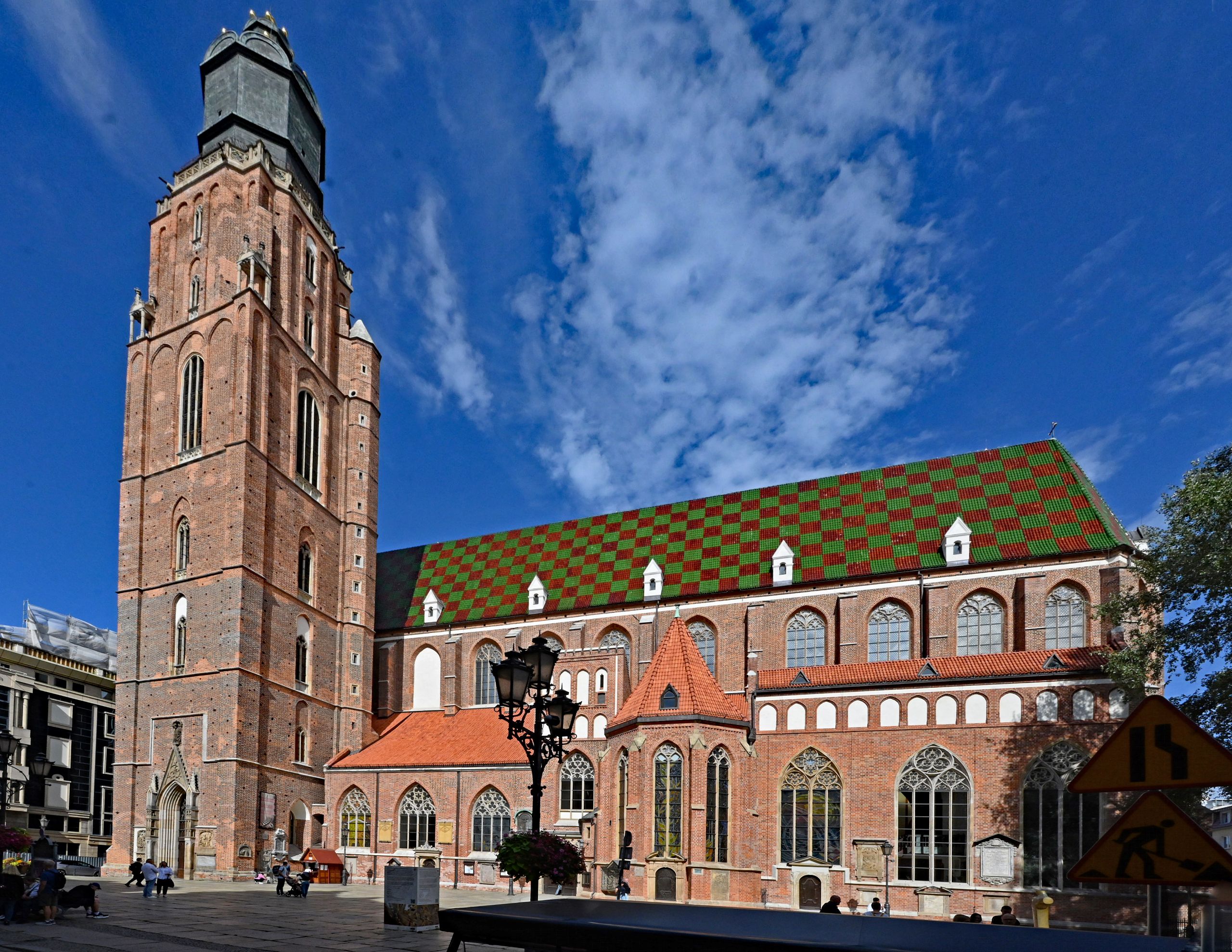
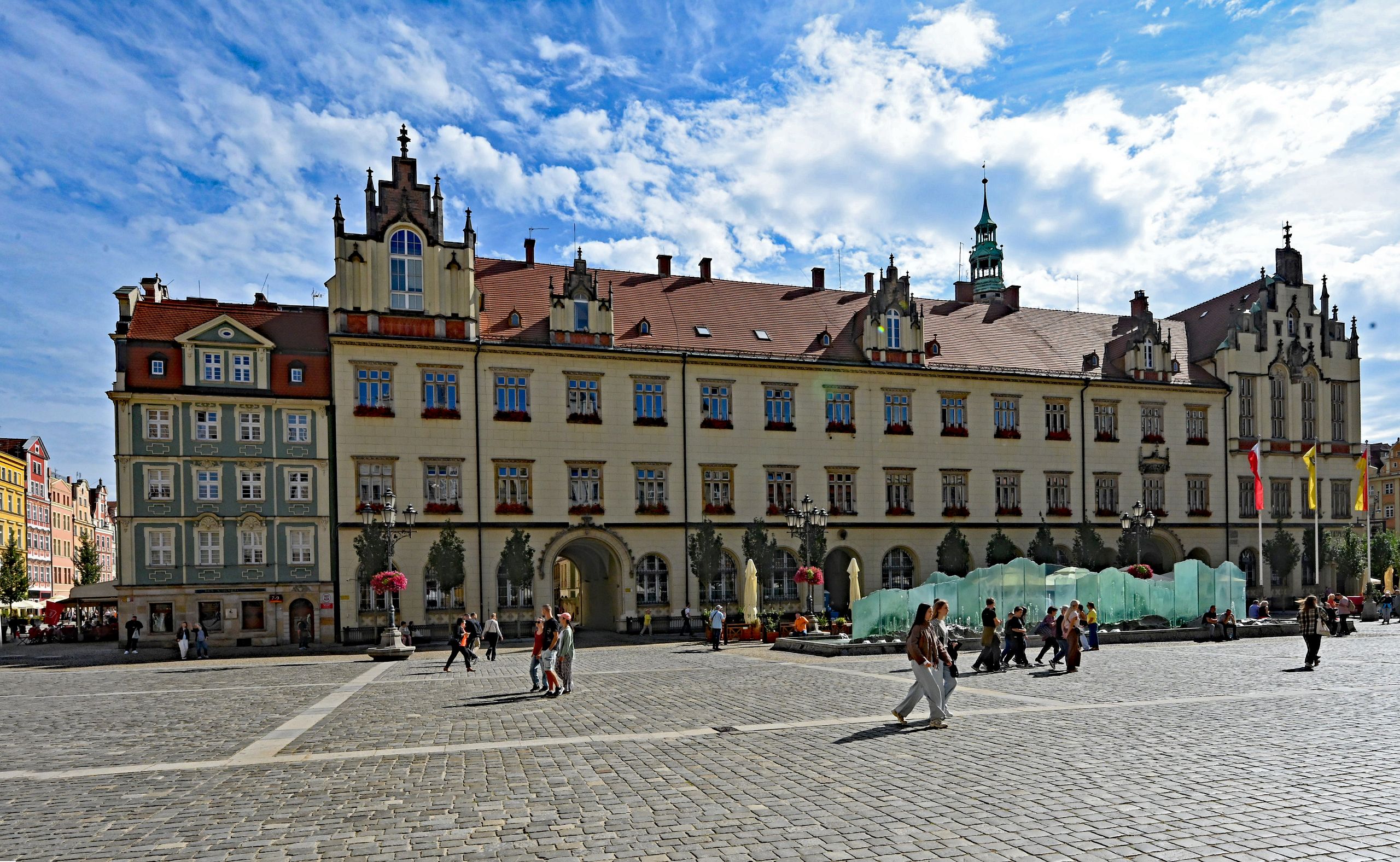
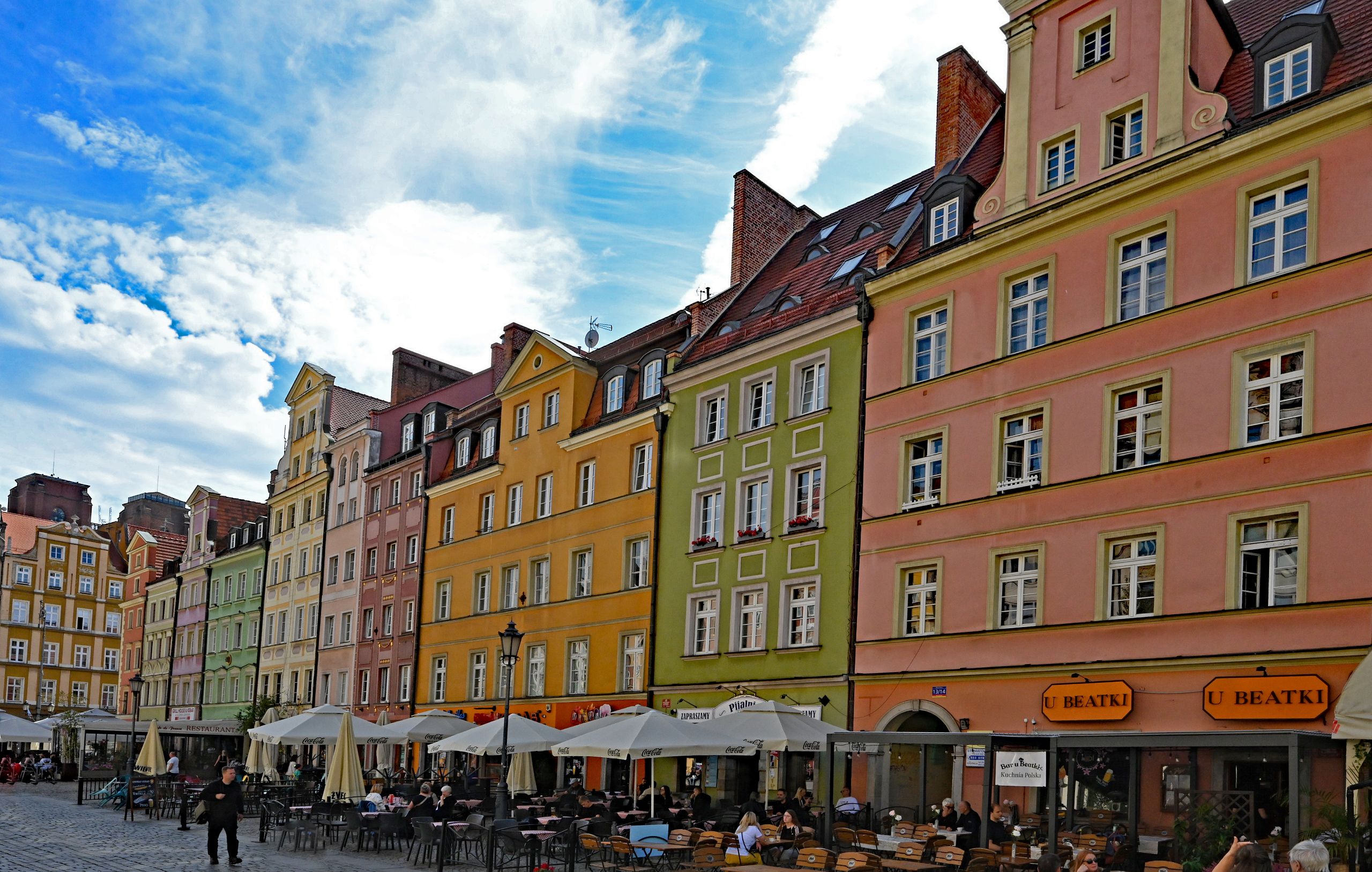
Returning to the northern and western sections of the Main Market Square, the mighty St. Elizabeth’s Church (Bazylika św. Elżbiety) immediately caught our eye. Its over 91-meter-high brick tower soared steeply into the blue sky, while the red-and-green checkered tiled roof of the nave offered an unmistakable play of colors. On the square in front of it, along the western side of the Rynek, the Neo-Gothic New Town Hall (Nowy Ratusz) and the undulating glass Zdrój Fountain (Fontanna Zdrój) placed historic architecture and modern design side by side once more. Across the way, we admired the famous row of patrician houses, led by the Mannerist House “Under the Griffins” (Rynek 2) and the House “Of the Seven Electors” (Rynek 8), painted in 1672, before strolling through the colorful rows of houses in the inner market block (Rynek-Ratusz) featuring the traditional eatery Bar U Beatki and over to the so-called Sweet Market Side (Rynek 45 to 49).
Gallery 4: Around the Rynek – St. Elizabeth’s Church, New Town Hall, and Patrician Houses



We saved the most moving moment of our day together for the intersection of Świdnicka Street and Marszałka Józefa Piłsudskiego Street. There, Simon and I came across the Monument to the Anonymous Passerby (Pomnik Anonimowego Przechodnia). Created in 2005 by Jerzy Kalina, the installation depicts life-size bronze figures from the 1970s on one side of the street – including a mother pushing a pram and a man carrying a briefcase – seemingly sinking into the sidewalk. On the opposite side of the street, seven more figures, led by an elderly woman with a walking stick, a man carrying a car tire, and a woman holding an umbrella, emerge back into the daylight. Surrounded by modern city traffic and passing blue trams, this powerful artwork reminded us of the people of the Polish underground during martial law and provided an unforgettable conclusion to our journey through Wrocław.
Gallery 5: Art and Contemporary History – The Monument to the Anonymous Passerby

